
Lese-Ansicht

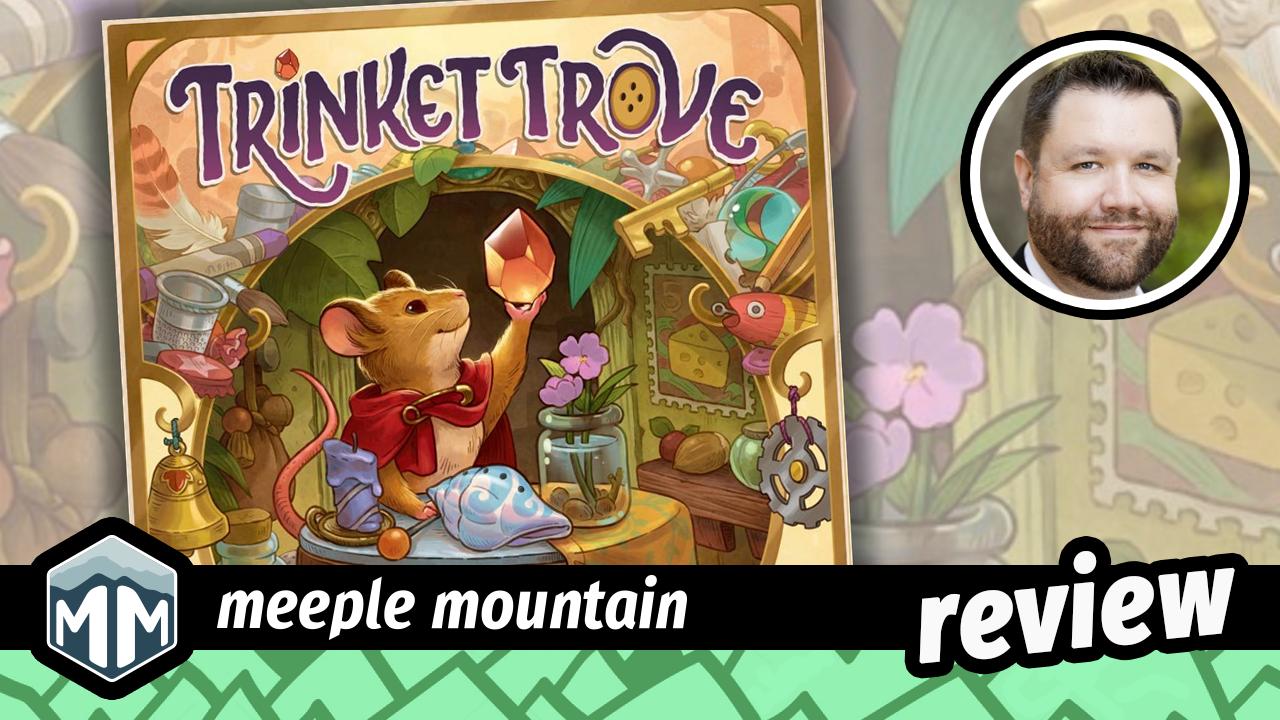
Trinket Trove Game Review

Buy Trinket Trove from Amazon

When compared to big box games, it can be easy for avid gamers to overlook games that come in a small box. Fewer components, a thinner rulebook, and smaller table presence often leads to a lighter game, which can be seen as a negative by gamers who have large collections consisting of heavier games.

Thankfully, more and more small box games are offering increasingly varied, complex, and strategic experiences that are making them more appealing to gamers that traditionally look past them.

Trinket Trove, a ‘thinky’ bidding, set collection, and drafting game for 2-6 players from Rocco Privatera, Paul Solomon, and publisher Gamehead, makes a strong argument for the ‘small box, big game’ crowd.

Bidding For Your Burrow

In Trinket Trove, players collect various trinkets across 13 types, attempting to collect sets of different types to add to their character’s ‘burrow’ and earn points before the end of the game. Trinkets are collected and sets are built through the bidding and drafting process that makes up the core loop of the game.

Each round, players bid on available lots (groups of one or more trinkets), following the bidding order of the previous round (in the first round of the game, it’s randomized) to determine…

The post Trinket Trove Game Review appeared first on Meeple Mountain.
  •  

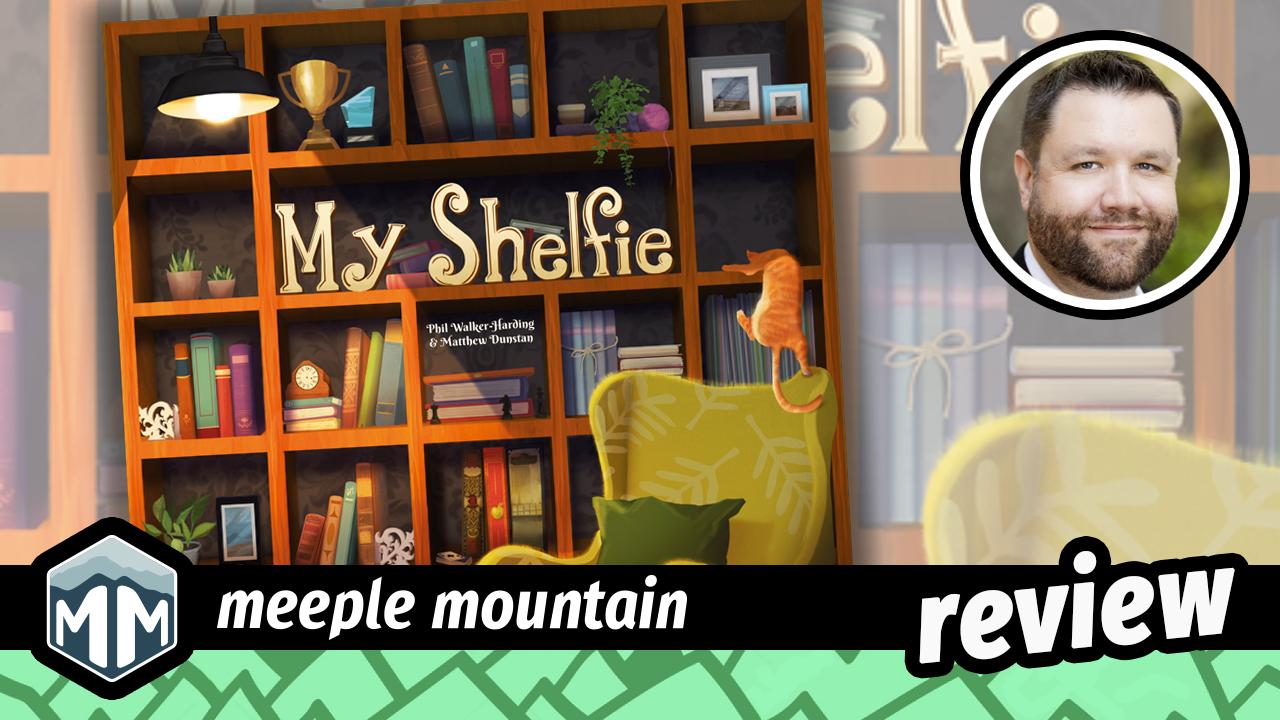
My Shelfie Game Review

Buy My Shelfie from Amazon.com

While I consider myself an avid board gamer, I also feel like that label is a bit of a conundrum. I prefer medium-weight (based on BoardGameGeek’s complexity rating scale) games, but my collection primarily consists of light to medium light-weight games. Many of those in my collection fall into the party category with simple player actions, and minimal scoring complexity.

This odd contrast between preference and reality stems from the groups that I typically game with, as they prefer lighter experiences. Unintentionally, this has led me to being somewhat of a gateway game connoisseur.

My Shelfie checks a few important boxes for what makes a great gateway game: connection to a well-known classic game, easy-to-understand mechanics, and a relatively short playtime. The big question is, does the rest of the game hold up, or does it teeter off the shelf and fall apart?

A Classic Connection

In My Shelfie, players compete to earn the most points by filling their ‘bookshelf’ with ‘items’. Each player's bookshelf is a vertically displayed grid that holds up to 30 items. After seeing the bookshelf setup, some players will already see the connection to the well-known classic game Connect Four. While the bookshelf holds square items instead of…

The post My Shelfie Game Review appeared first on Meeple Mountain.
  •  

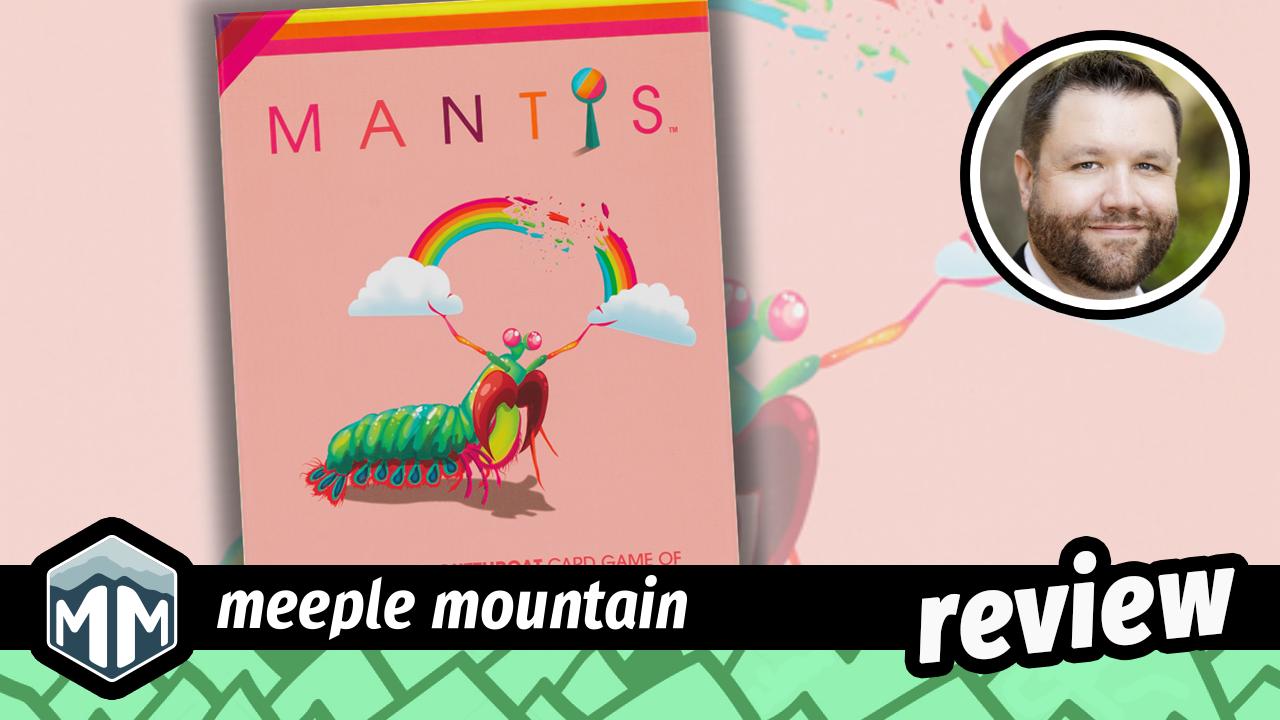
MANTIS Game Review

Buy MANTIS from Amazon.com

Colorful Card Chaos

Games heavily centered around “take that” mechanics live in a weird space for me. While I don’t have a problem with them, if I’m playing these games with one or more uber competitive, sore-loser types, the experience can be miserable.

With that understood, I approached Mantis with some hesitation. Luckily, my preconceived worries were unfounded, and the game turned out to be a hit with friends and family… even the ones who are typically sore losers.

Mantis accommodates 2-6 players and clocks in at a lightning-fast 10-15 minutes playtime.

Turns are snappy and consist of players choosing to steal or score before drawing the top card from a shared deck.

When attempting to steal, the active player draws the top card into a chosen opponent's Tank (personal play area). If the card matches the color of an existing mantis card in the opposing player's Tank, the steal is successful, and the active player moves all cards of the chosen color from the opponents Tank to their own.

In a two-player game, a successful steal additionally  grants the active player another turn.

However—and this is a major point—if a steal isn’t successful, the targeted player gets to keep the card that the active player…

The post MANTIS Game Review appeared first on Meeple Mountain.
  •  

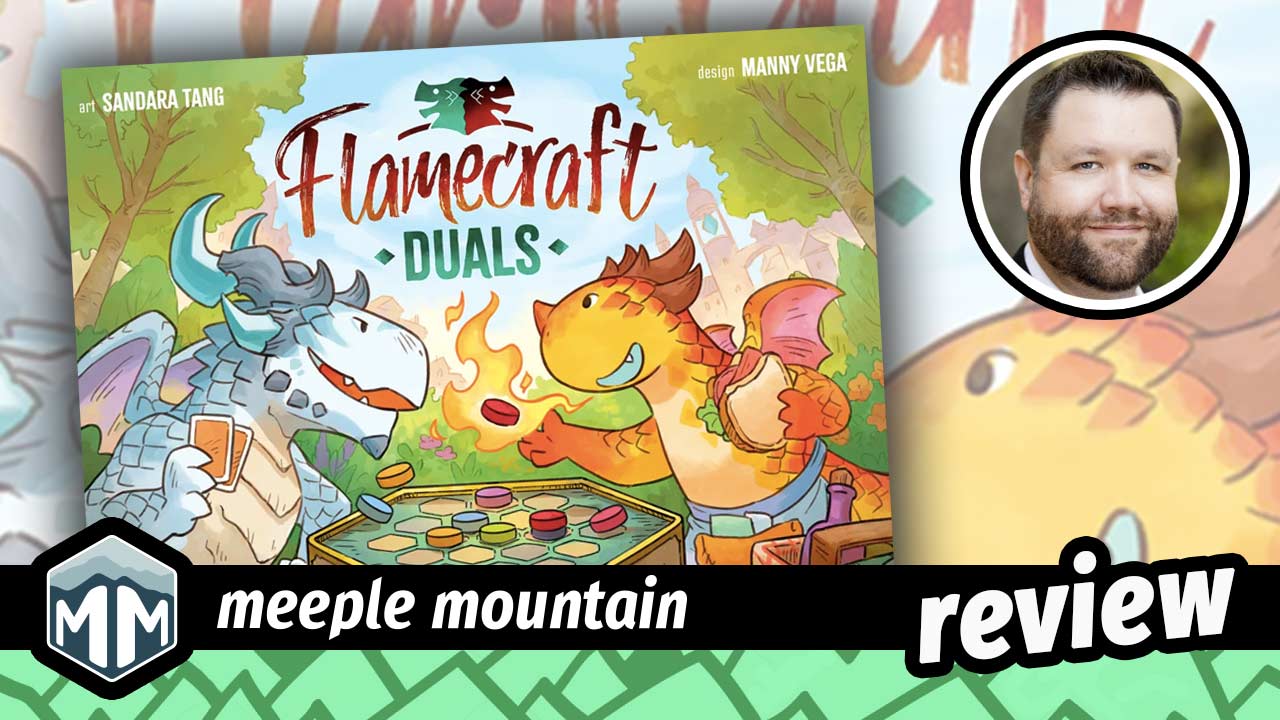
Flamecraft Duals Game Review

While “cozy” may not be a formally recognized game genre, at least according to BGG, there’s no denying the appeal of games that fall into this unofficial label. Regardless of being an official category or not, Flamecraft Duals makes a strong case for being king of the cozy crusade.

Designer Manny Vega, artist Sandara Tang, and publisher Cardboard Alchemy are all back in this follow-up to the massive 2022 hit, Flamecraft. While there’s certainly some shared DNA between Flamecraft Duals and Flamecraft, new mechanics, reduced player count, and a significantly smaller game lead to a fresh, rewarding experience.

Teaching an Old Dragon New Tricks

While Flamecraft is designed for 1-4 players and mostly revolves around worker placement, Flamecraft Duals is built for 1-2 players and focuses on tile placement and pattern building/matching.

Gameplay consists of players taking turns pulling one dragon token out of a bag and placing it onto a shared gameboard. Placement rules are simple: You can place your dragon token onto an empty space or onto a space with no more than two dragons (stacks can’t go above three).

After placing a token, players can ‘fire up’ the dragon they placed and attempt to complete one of the patterns on their two available shop cards, which grant end game points.

The game end is triggered when…

The post Flamecraft Duals Game Review appeared first on Meeple Mountain.
  •  
❌