
Normale Ansicht

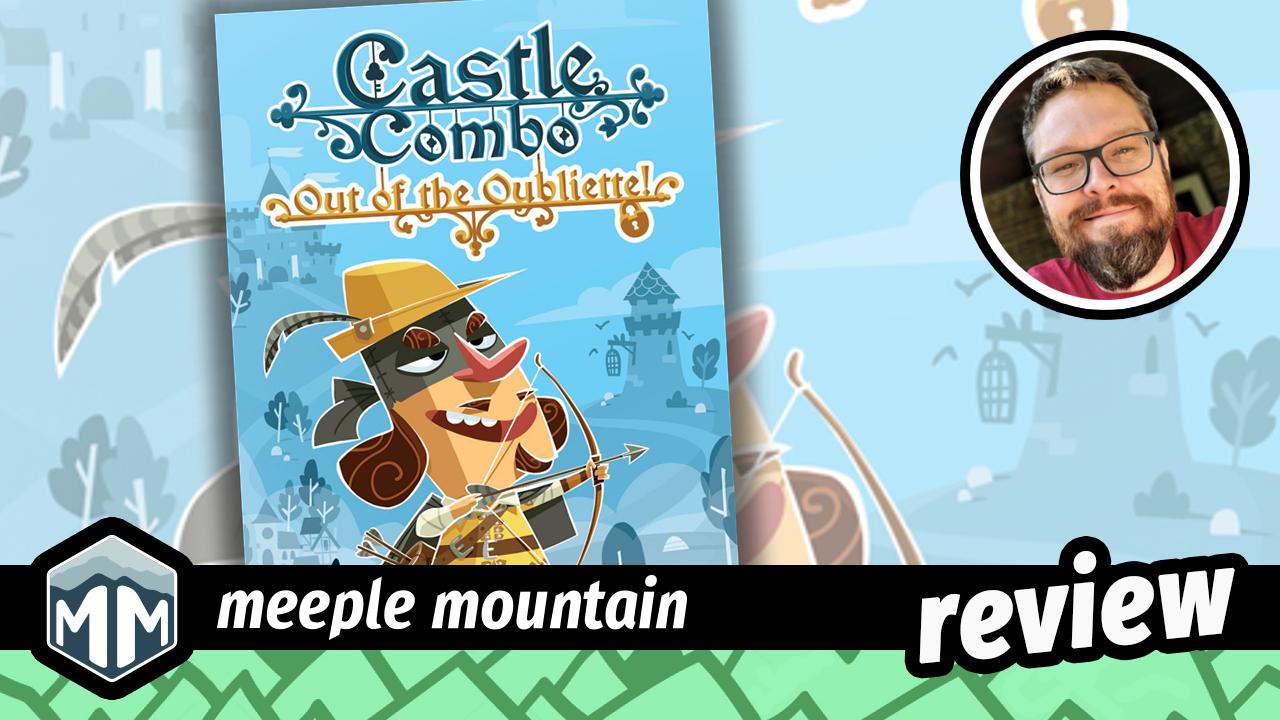
Castle Combo: Out of the Oubliette! Game Review

I sit down to write this review with two questions on my mind: first, are twelve cards worth a full review? And second, with a game as near-perfect as Castle Combo, are twelve extra cards worth the risk? I’m going to assume the first one is a yes. As for the second, maybe.  

By the way, if you don’t know Castle Combo, check out our review before moving on. 

Where’s the bubble gum in this thing?

This pack of a dozen cards adds six cards each to the Village and the Castle. Along with new characters to make you smile, these cards introduce mechanical twists and a few delayed effects. 

The delay is marked by a (free!) key that is either turned in to unlock the ability or retained for endgame scoring. Whether the cards are resetting the market (with perks) or raining blessings on the current tableau, they are in high demand as soon as they appear. As far as I can see, this will be the big knock on Oubliette, an extension of one of the few legitimate gripes with Castle Combo: when player experience depends on managing cards as they are randomly revealed, some will cry foul if their opponent is fed consistent opportunities with some of these doozies. 

As for the new mechanical twists,…

The post Castle Combo: Out of the Oubliette! Game Review appeared first on Meeple Mountain.
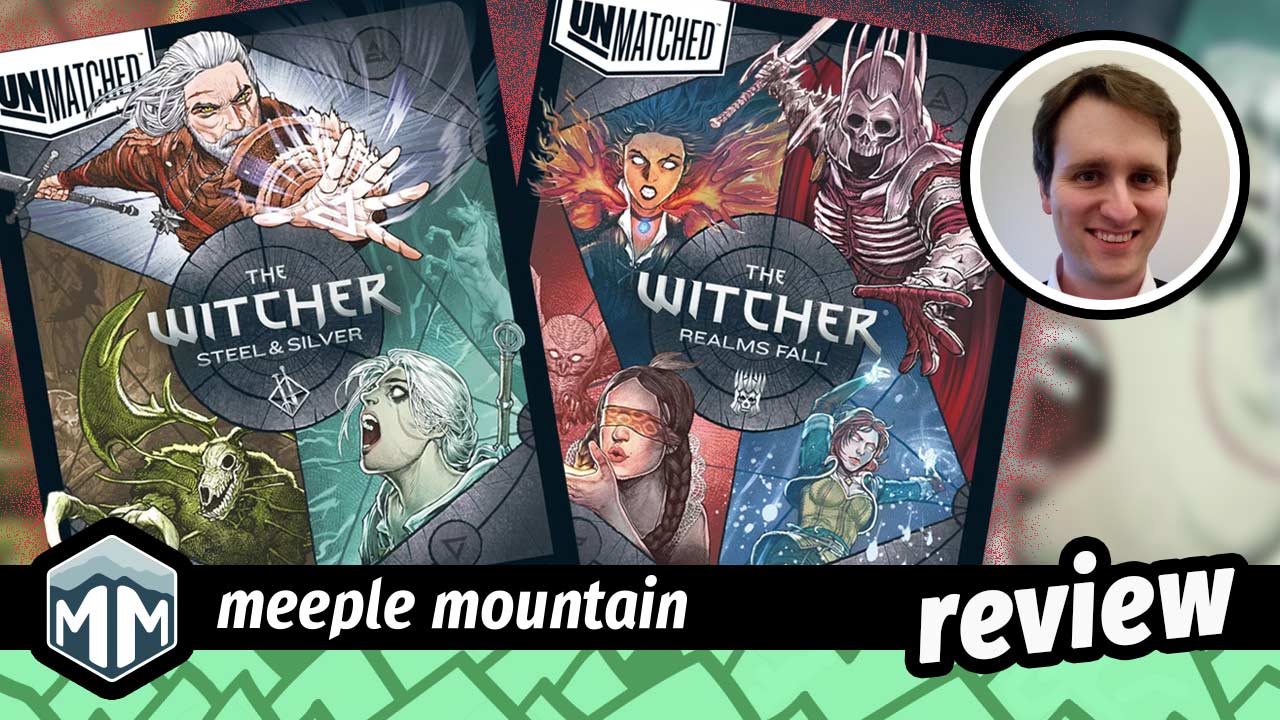
Unmatched: The Witcher – Realms Fall and Steel & Silver Game Review

Here at Meeple Mountain there’s a spectrum of opinion on the merits of Restoration Games’ Unmatched. I lean towards the positive. Partly because of the system’s easy rules, snappy fights and gorgeous production. It’s a hard game to hate.

But I’m also the ideal audience for Unmatched. I don’t play player-versus-player fighting games, as a rule. It’s the head-to-head combative nature of them; it’s just not my jam. Sure, I’ll happily block your perambulation in Tokaido, cut you off in Through the Desert and strand as many of your meeple as possible in Carcassonne. I can be ruthless as I claw towards victory, but that victory isn’t dependent on you being eliminated, just inconvenienced. Perhaps it’s less honourable than looking you square in the eyes as I punch you in the face, but a game where the entire point is to whittle you down to zero health does not my boat float.

Unmatched is the exception. With its sleek rules and sharp turns, I don’t have to invest much energy into engaging with a genre that doesn’t thrill me. The stakes are lower, which conversely means I’m more invested in enjoying the experience itself. And there’s a lot to enjoy.

Unmatched: The Witcher – Realms Fall and Steel & Silver Game Review appeared first on Meeple Mountain.
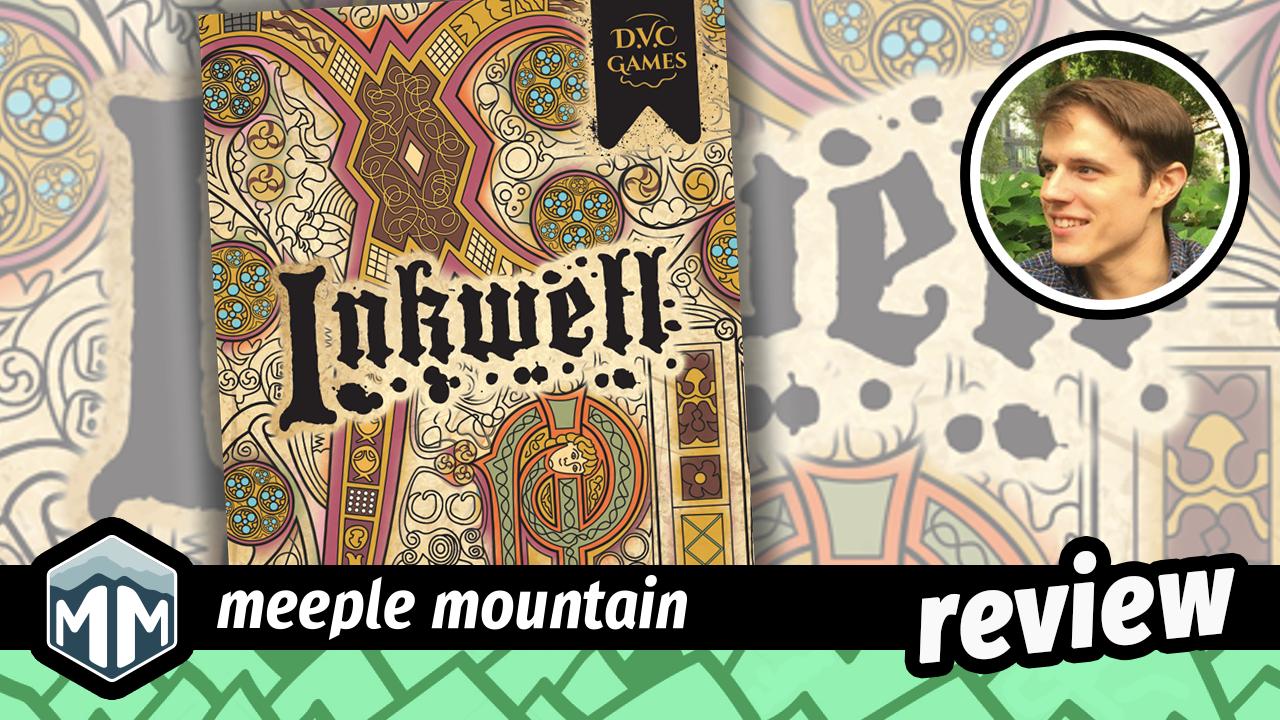
Inkwell Game Review

Inkwell, designed by Jasper Beatrix, Lewis Graye, and Joey Palluconi, and published by DVC Games, is a beautiful object. There are a handful of games centered around illuminated manuscripts, an aesthetic for which I will always be a sucker, and this is far and away the most pleasing. The title, in gold foil over a detailed illumination, is a feast for the eyes. The components in the box are no less filling, though I wish I could extend the compliment beyond the aesthetics. Inkwell is, I think, three games all at once, and it doesn’t quite succeed as any of them.

The most obvious reference point, the one I’ve seen repeated the most in BGG reviews and on social media, is Azul. While I understand the point of comparison, the games don’t really have much in common at all. You choose your bits from a public central board and put them in matching slots within your own private sphere, but that’s about it. The specifics are so different that they undermine any meaningful commonality. You could describe the games as similar, but you’d be doing both Inkwell and Azul a disservice.

When choosing ink from an inkwell, you take all the cubes, regardless of color, and add them to accommodating spots on your board. Your choices change what’s…

The post Inkwell Game Review appeared first on Meeple Mountain.
Orloj: The Prague Astronomical Clock Game Review

There was a moment late in my first game of the medium-weight strategy game Orloj: The Prague Astronomical Clock where I pretty much landed on my final thoughts about the game.

I had just taken a turn that felt pretty dope. That turn began when I took the Construction action, and spent four resources to construct the second-to-last piece of the month dial on the big clock at the center of the board. That netted me eight points, for the gold, two wood, and paint I had spent to build it. Then I placed one of my workers on the clock, and thanks to adjacency rules, scored four more points. Then I got a bonus based on the position of that completed space on an outer wheel that surrounds the clock, a track that lists bonuses on what is known as the Painter track.

That bonus gave me a free apostle. These apostle tiles are earned and placed in one of two storage slots on each player’s personal board. As a free action, I took that new apostle and placed it in a column on my personal, 12-space apostle board. It was the third apostle in one of the columns, which earned me another bonus: an Assistant tile, which went into the newly vacated storage space where that apostle…

The post Orloj: The Prague Astronomical Clock Game Review appeared first on Meeple Mountain.

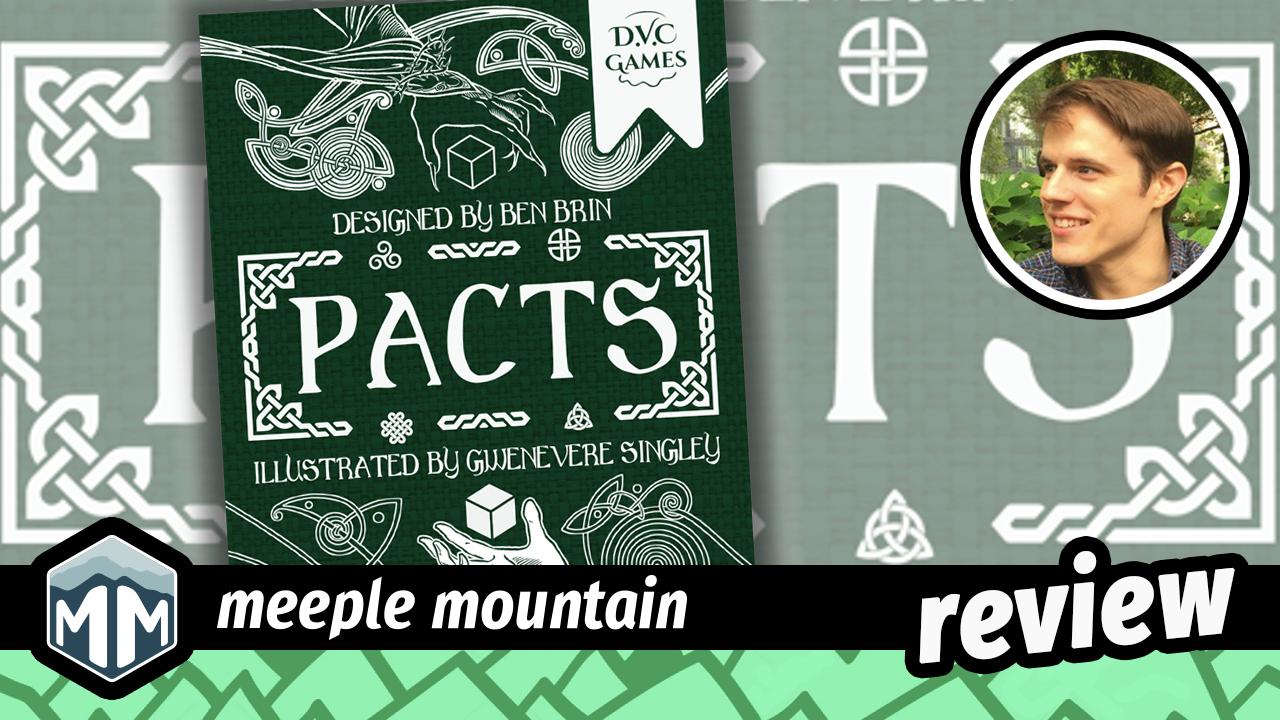
Pacts Game Review

D.V.C., as wonderful and consistent and quirky a publisher as you’ll find, largely does its own design work. With the exception of 2020’s Rosetta: The Forgotten Language, all of D.V.C.’s games up till now have been credited to house designer Jasper Beatrix. In a just world, Jasper would be unable to walk down the street without being mobbed by fans, but there are two barriers to that: we certainly don’t live in a just world, and Jasper Beatrix doesn’t exist.

Not corporeally, anyway. Good ol’ J.B. is a pseudonym for a loose collective, a merry anarchic band of creatives who work together to make these wonderful games. They’re so prolific, and release games of such high quality, that the announcement of Pacts and the realization that it was not designed by Jasper Beatrix, was quite the surprise. This area-control game for two is the work of Ben Brin, a single corporeal designer.

Well. I assume.

A square, green cloth board sits on a wooden table. The map, a rough outline of Ireland, is divided into six regions. Each contains a number of cubes and scoring tiles.

I Pick I Pick You Choose

Pacts is an exemplar of I Split, You Choose, a mechanism whose promise is often let down by…

The post Pacts Game Review appeared first on Meeple Mountain.

❌