
Normale Ansicht

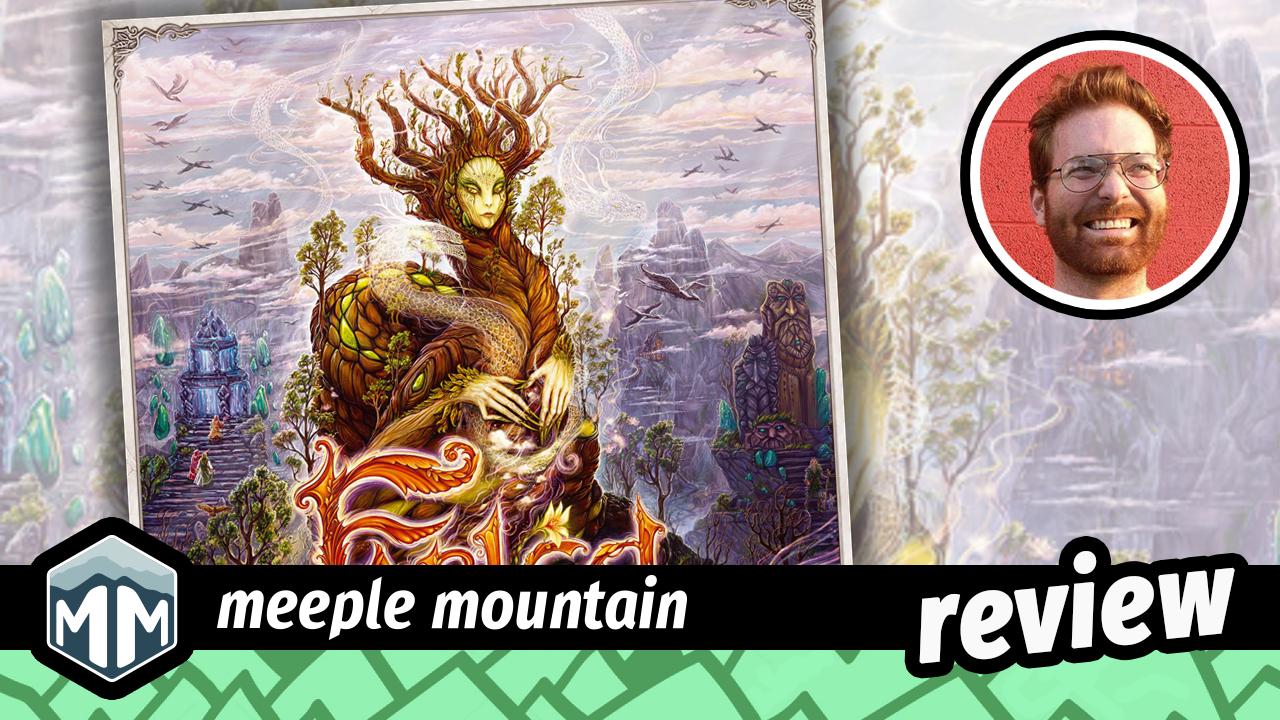
Fabled: The Spirit Lands Game Review

Rarely, I come across a game whose aesthetics overpower my critical sense. Fabled: The Spirit Lands is one of those games. It also makes moving up tracks not look and feel like moving up tracks, which is high praise from a curmudgeon like myself.

Bookington Bear

The object of Fabled: The Spirit Lands is to collect the most red books by the time the game ends. There are several scenarios that alter this formula, but ultimately, it’s a Knizian affair, where if there’s a tie for the red books, you go to the green books, then the blue books, and finally the crummy yellow books.

You can think of the books as cubes of four colors, and what you’re doing throughout most of the game is turning the books from one color to another color. It’s resource conversion at its most basic–two yellow books become a blue, two blues become a green, and two greens become a red.

The game operates with a simple formula, but it has some interesting quirks. Let’s talk tracks.

Take a hike

The game doesn’t call the map cards tracks, but tracks are what you have to work with as a player, so I’m going with it. At the beginning of the game, each…

The post Fabled: The Spirit Lands Game Review appeared first on Meeple Mountain.

Pax Illuminaten Game Review

Oh, there is something deliciously slimy—smarmy, even—about the game Pax Illuminaten, designed by Oliver Kiley. (BGG says that Pax Illuminaten is based on Kiley’s earlier title Emissary, a game I have not played.)

One pass of the rulebook for Pax Illuminaten had me very excited. I’m not a dedicated scholar of Pax games, having only played Pax Pamir Second Edition (although Pax Hispanica, Pax Emancipation and Pax Porfiriana are currently on deck here at Casa de Bell). I HAVE played Pax Viking Junior, although I am sure a purist would not count that one.

But the core Pax system of historical, card-driven play with multiple end-game conditions and a closed economy is on full display with Pax Illuminaten, and I was further excited by the relatively straightforward rules and a playtime listed as 20-30 minutes per player.

A Pax game, in about 90 minutes? Sold, I said out loud to no one after that rules readthrough.

Then I got the game to the table…and I was mostly impressed. Pax Illuminaten is for a certain kind of player, especially one who likes to understand what is mostly possible in a strategy game, with ample space for a few surprises and a boatload of secondary actions.

Sorry, When

The post Pax Illuminaten Game Review appeared first on Meeple Mountain.
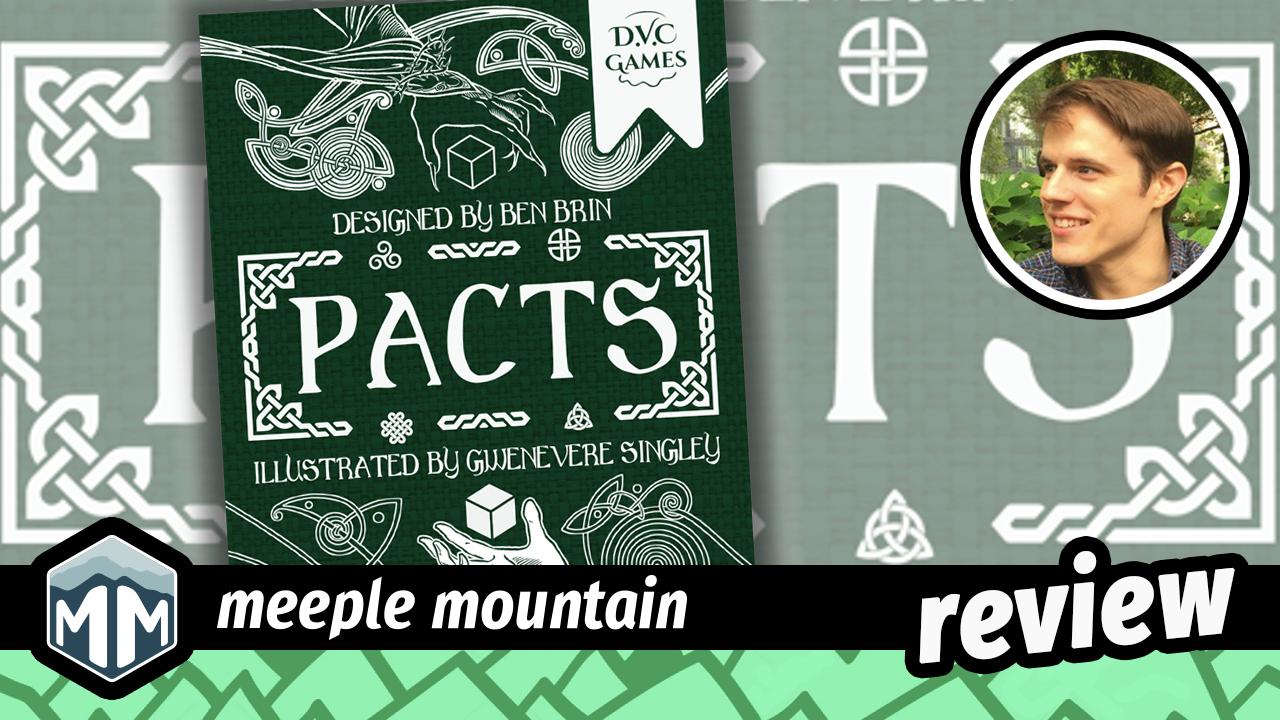
Pacts Game Review

D.V.C., as wonderful and consistent and quirky a publisher as you’ll find, largely does its own design work. With the exception of 2020’s Rosetta: The Forgotten Language, all of D.V.C.’s games up till now have been credited to house designer Jasper Beatrix. In a just world, Jasper would be unable to walk down the street without being mobbed by fans, but there are two barriers to that: we certainly don’t live in a just world, and Jasper Beatrix doesn’t exist.

Not corporeally, anyway. Good ol’ J.B. is a pseudonym for a loose collective, a merry anarchic band of creatives who work together to make these wonderful games. They’re so prolific, and release games of such high quality, that the announcement of Pacts and the realization that it was not designed by Jasper Beatrix, was quite the surprise. This area-control game for two is the work of Ben Brin, a single corporeal designer.

Well. I assume.

A square, green cloth board sits on a wooden table. The map, a rough outline of Ireland, is divided into six regions. Each contains a number of cubes and scoring tiles.

I Pick I Pick You Choose

Pacts is an exemplar of I Split, You Choose, a mechanism whose promise is often let down by…

The post Pacts Game Review appeared first on Meeple Mountain.
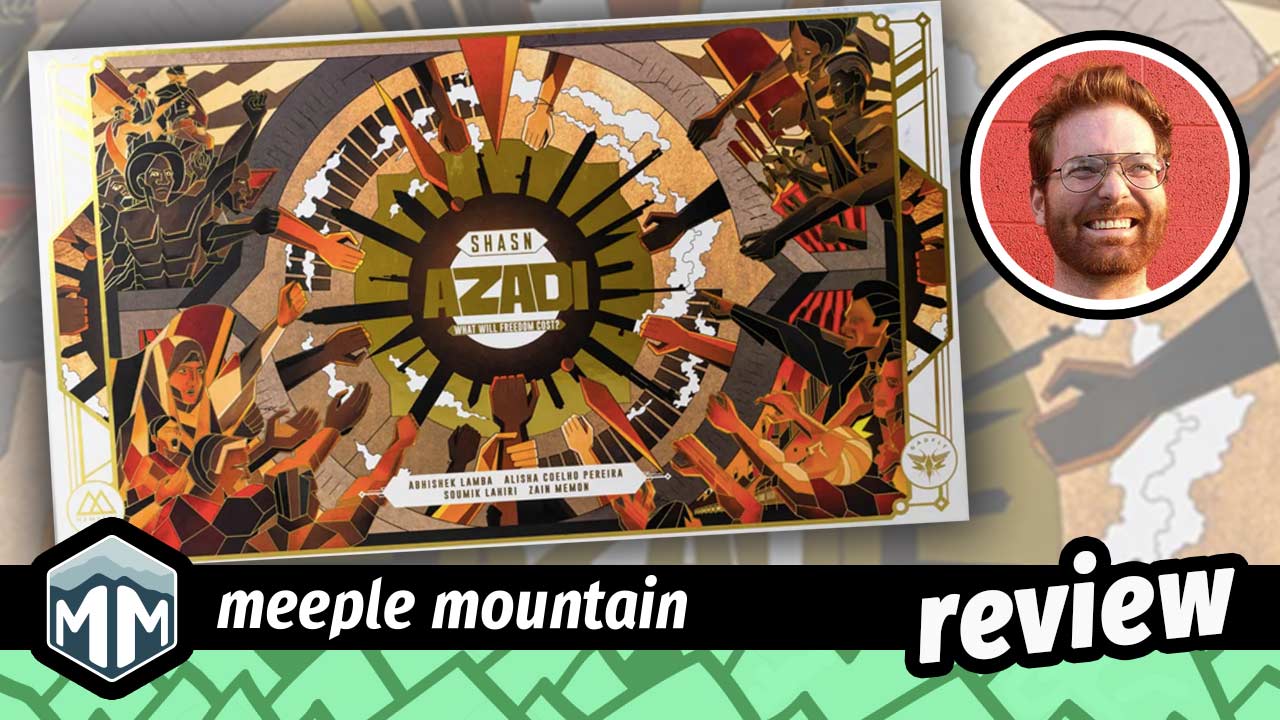
SHASN: AZADI Game Review

SHASN: AZADI is a box full of gimmicks. Those gimmicks are equal parts corny and high-minded, clever and ham-fisted. The area majority mechanism that is used to tally points is, frankly, pedestrian and simplistic. But, in spite of it all, the game is ambitious, and I admire games that are high-minded, even when that highmindedness has flaws.

Hegemony this ain’t

And that’s a good thing. AZADI is trying for something explicitly political—it is about the construction of political blocs more than it is about forcing players to accept the roles and bounds of its simulation. From where I sit, Hegemony: Lead Your Class to Victory’s conception of political economy and class is at best misguided and ignorant. AZADI doesn’t presume to gamify and fragment class struggle, casting players as some fake-o thinktank concept of the “middle class” and the “state.” Instead, players are a political ideologue constructing their own ideology out of what will best get them into the big chair. More on this in a moment.

The way you win AZADI is by forming majorities. In the version that I’m reviewing, you have a modular dual-layered map with holes in it for player pieces. Each map tile has a crosshair hole  (volatile area) and a number reading something like 11/21. Players get points for having majorities, which…

The post SHASN: AZADI Game Review appeared first on Meeple Mountain.
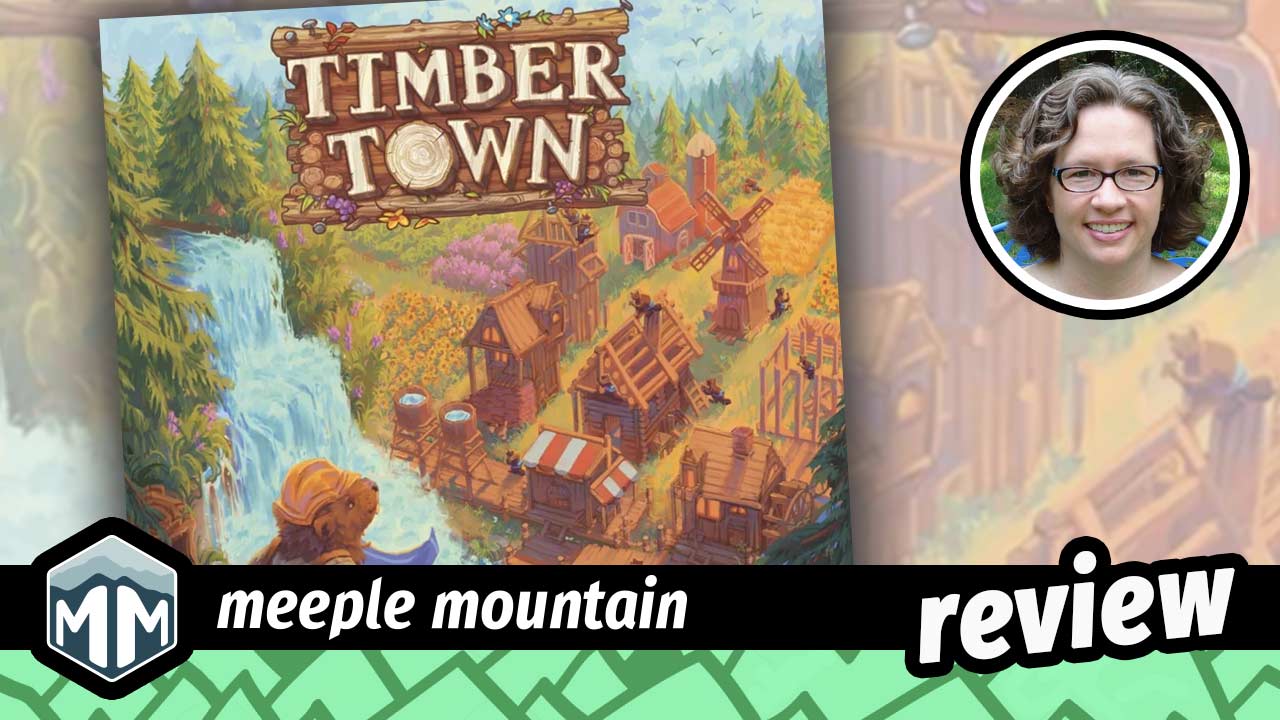
Timber Town Game Review

This is my first review for Meeple Mountain, so by way of introduction let me tell you that tile-placement games are my favorite. Carcassonne was my introduction to modern hobby games, and it's possible this created a soft spot in my heart for the genre. And if a tile-placement game also has a city-building aspect, as in Warsaw: City of Ruins, Neom, or Suburbia? That's a double win. Throw in a puzzle to be solved and wrap it all in a light- to medium-weight game, and you'll almost always have a hit with me, unless the game is mechanically flawed, bug-ugly, or offensive in some manner.

Enter Timber Town from Alley Cat Games. Timber Town is a two-player game where players are beaver architects competing to construct the best (i.e., highest scoring) town on opposite sides of the riverbank. Your eager beaver builders construct town components (in the form of tiles) upstream and then float them down the river for you to collect and place in your town. As the architect, it’s your job to place the tiles in legal and optimal scoring positions.

The trick is, the river is fast moving and components you (or your opponent) don't choose in a timely manner will fall over the waterfall, lost to you forever. This simulation is…

The post Timber Town Game Review appeared first on Meeple Mountain.
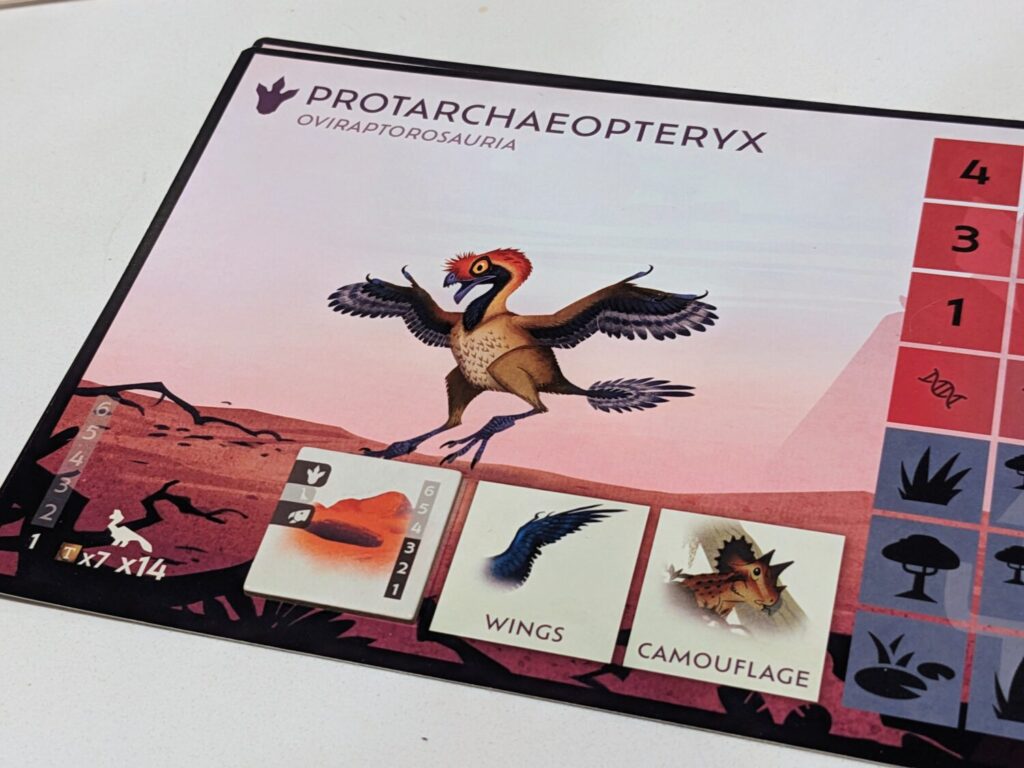
Dino Dynasty Game Review

I didn’t know there was a market for players looking for a dinosaurus skirmish game rich with history…but then the team at Ion Game Design handed me a copy of Dino Dynasty, their 2025 release designed by Ion’s Chief Creative Officer, Jon Manker. About a year prior, Manker had led a small group of media members through a demo of the game, and the most striking part about that walkthrough was the stunning dino art from artist Johan Egerkrans.

The work of Egerkrans, the author/illustrator of the book Dinosaur Dynasties, is the real star and reason to give the game Dino Dynasty a look. The game is an impressively streamlined version of more complex skirmish games, especially compared to some of the more rules-dense wargames I cover here on the site.

But the real question for me is the audience—while we had fun with our plays here, I can’t for the life of me figure out who the target audience is for the product.

This Biome Isn’t Big Enough for the Both of Us

Dino Dynasty is a very snappy “troops on a map” game for 1-6 players. The game’s incredible level of customization starts with the setup: there are more than 20 different playable dinosaur clans, 30 double-sided…

The post Dino Dynasty Game Review appeared first on Meeple Mountain.

❌