❌

Normale Ansicht

Encyclopedia of Monsters Game Review

One of my big things as a reviewer is actually not tied to total play count, although I try to get three, maybe four plays in with a game before I pass judgment on a game’s quality.

The thing I prioritize more than anything else: getting as many plays in with the same game at different player counts. If a game says that it accommodates 2-4 players, I try my best to play at two, three, and four players. (If a game says it plays 1-4 players, I try my best to get in plays at all four counts, but a game typically plays almost the same way at one player as it does with two, since the solo usually mimics a two-player experience.)

Encyclopedia of Monsters is a new family memory game for 2-4 players. Designed by a pool of the same people who designed my game of the year pick for 2024—Dead Cells: The Rogue-Lite Board Game—I had Encyclopedia of Monsters on my radar as soon as the team at publisher Scorpion Masqué showed me a mockup at SPIEL Essen last fall.

Encyclopedia of Monsters is a fully resettable campaign memory game, spread across five volumes (here known as continents) and three chapters (countries) per volume. That means you have 15 short games included in…

The post Encyclopedia of Monsters Game Review appeared first on Meeple Mountain.
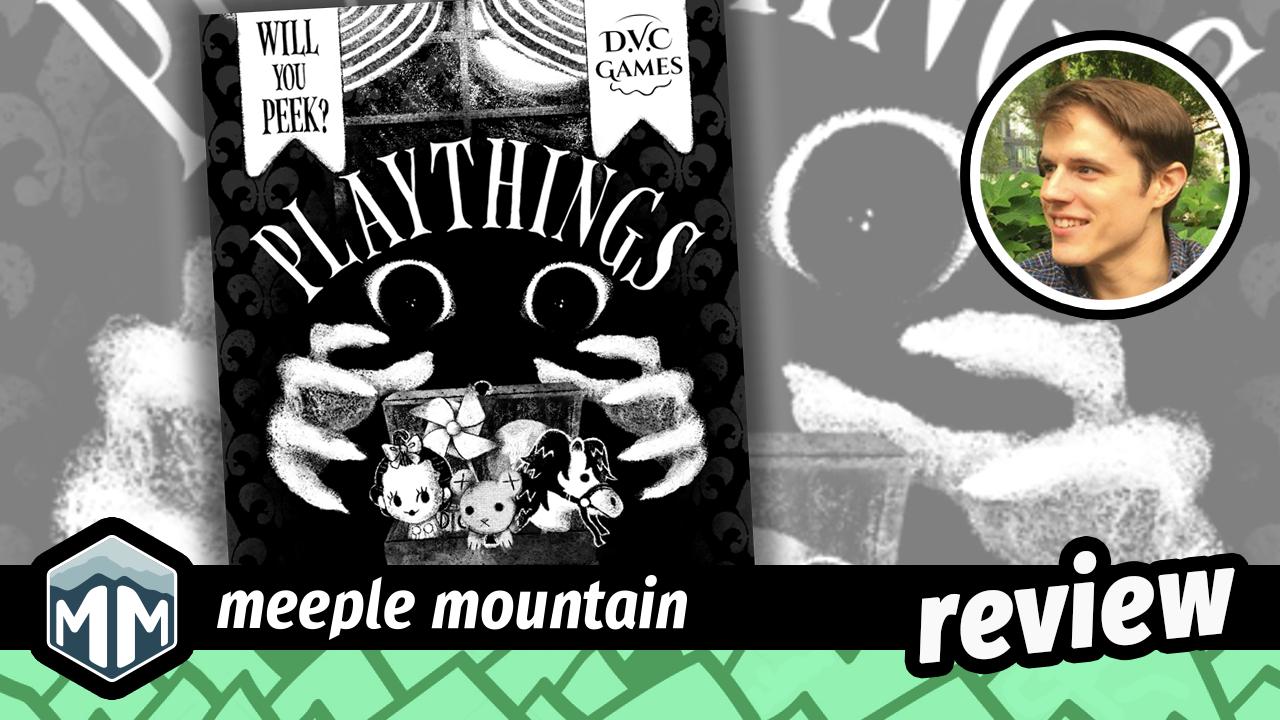
Playthings Game Review

It’s rare that a published game feels organic, but I guess that makes sense. Most authored works, regardless of medium, do not feel organic. The closest most games come is “intuitive,” which is not the same thing. “Intuitive” as applied to game criticism is more about the rules making sense and flowing. You use it when you’re talking about something that’s easy to teach and easy to learn and easy to play, about games that just. make. sense. In order for something to be intuitive, it has to build on what has come before, on a shared cultural reference or two.

That is not the case with “organic,” a word which I cannot say I have ever wanted to apply to a board game before. Strap in, folks. We’re developing a new theory. “Organic” can be as free-form as it wants. That’s probably a key feature, right? I mean, who tells an heirloom tomato how to grow? Nobody, that’s who.

A group of hands and arms float in space above the cloth Playthings board.

When I say Playthings is organic, I mean that it feels like something a group of Victorian children would come up with whilst whittling away the unending hours of the day. It feels improvised, even as…

The post Playthings Game Review appeared first on Meeple Mountain.

Out of Sorts Game Review

Out of Sorts is now the second memory game I’ve played in the last few years that isn’t really a memory game at all. Like Wilmot’s Warehouse, which uses the façade of memorization to trick players into collaborating on a story, the memorization in Out of Sorts is a distraction, a means to an end rather than the end itself. Do you want to spend twenty or thirty minutes memorizing the order of numerous abstract symbols? No, of course you don’t. That sounds awful. Do you want to spend twenty or thirty minutes in passionate debate with your friends about how a set of abstract symbols relate to one another based on three arbitrary criteria, to argue about whether and why that set of squiggles with a line through it feels more like a Reptile than it does Travel? Of course you do. That sounds joyous, and it is.

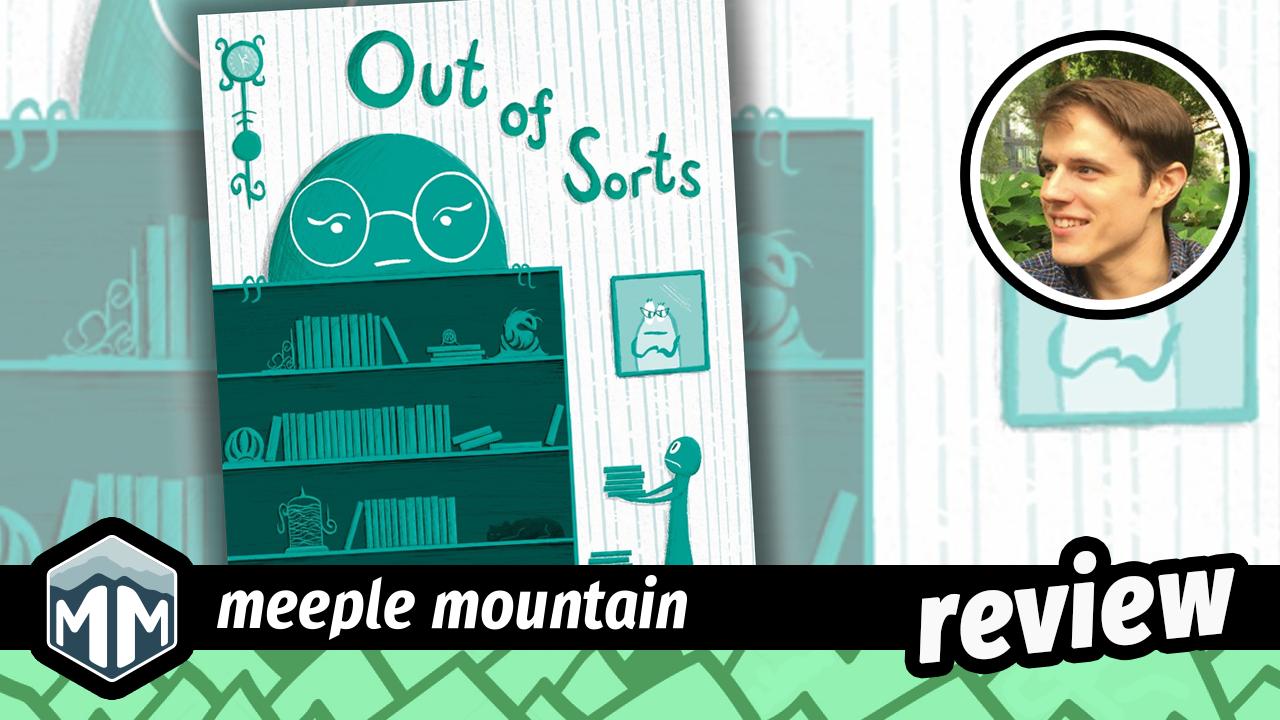
Out of Sorts is a cooperative game in which players work together to organize an alien’s library. The lot of you have been abducted for the purpose by this seafoam green monstrosity, who sits in a chair reading while you do all the work. The alien starts out not paying much attention to you…

The post Out of Sorts Game Review appeared first on Meeple Mountain.
❌