❌

Normale Ansicht

Courtroom: The Noir Trilogy Game Review

Czech Games Edition rolled the dice back in 2022 with the release of Deal with the Devil. It was the most shocking thing I played from a major publisher that year by a country mile. A strictly four-player-only, hidden role, app-driven board game from the people who gave us Codenames? It wasn’t just a departure…it was the biggest creative swing CGE has ever taken with a major release.

Deal with the Devil (and its fantastically twisted box cover art) was a big swing…but also, a big miss. You can find copies of the game online for less than $20 all the time now. The critical reception was a decidedly mixed bag. But I still stand behind CGE for that release, because I am so happy that CGE took the risk.

CGE could make a safe bet every year with their releases, but Deal with the Devil (and releases like their upcoming video game-to-board-game adaptation, Kingdom Come: Deliverance—The Board Game) prove that CGE are willing to take real chances with their biggest productions.

Courtroom: The Noir Trilogy is the newest release under the Mindclash Games’ “Play” line, the publisher’s lighter line of games that pushes a release directly to retail every fall. The previous Mindclash Play games include last fall’s Emberheart and their first release in…

The post Courtroom: The Noir Trilogy Game Review appeared first on Meeple Mountain.

Le Chocolat Game Review

I adore this little game. Absolutely adore it. Le Chocolat, from designer Mashiu, is a quick two-player I Split-You Choose game that comes in a box smaller than most chocolate bars on the market. It has lived in my bag for months now. It’s perfect for when you need a quick gaming snack, a little shock to your blood sugar levels. From setup to teardown, it takes less than ten minutes, and most of those ten minutes feel like a high-wire act. All you can do is fall.

This tiny box is full of squares of chocolate, most of which have one kind of filling or another. Pistachios, cashews, oranges, raspberries, all the hits are here. During setup, you toss and turn the pieces about to randomize what’s face-up and what’s face-down, then form them into a 5 x 7 chocolate bar.

A 5 x 7 grid of chocolate rectangles, split in half as the game begins.

You take turns splitting that bar along any line. If a break results in one or more sections with three or fewer pieces, you must take one of those sections and add it to your scoring pile. The different mixin’s score in different ways, as determined by a randomly chosen scoring card at…

The post Le Chocolat Game Review appeared first on Meeple Mountain.

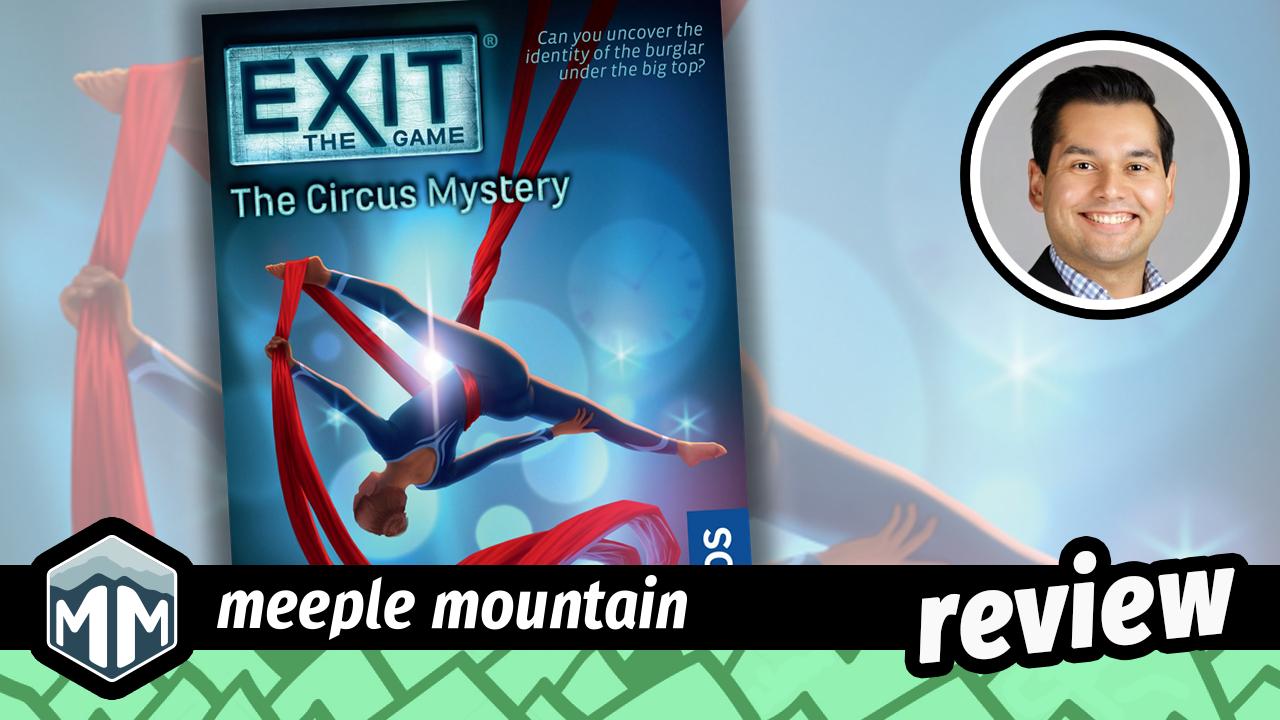
EXIT: The Game – The Circus Mystery Game Review

Exit: The Game has been synonymous with “escape room” in my circle, and though there are many similar contenders (just look at your local Walmart/Target games aisle!), Exit continues to be the gold standard for the experience.

Amazingly, so many can be cranked out so quickly with various themes and still keep the puzzles fresh. At least, I would assume so. I can’t say I’m an Exit die-hard; I’ve only played a few of them, so I can’t attest to every iteration’s uniqueness, but I’ve felt that each puzzle was wildly different from all the others I’ve played.

EXIT: The Game – The Circus Mystery has players solving a string of heists, with the common denominator being that a certain circus is in town. The components immediately jump out at you as you assemble a number of 3D trapeze artists, strange swords, and a foldable magician’s assistant. The premise sends players on a quest to explore the different circus performers’ wagons in hopes of solving the ultimate whodunnit.

Without going into spoilers, I had a great time with the puzzles. It follows the same formula of figuring out a three-digit code and then using a decoder wheel to search the answer deck and test your theories. Like past…

The post EXIT: The Game – The Circus Mystery Game Review appeared first on Meeple Mountain.
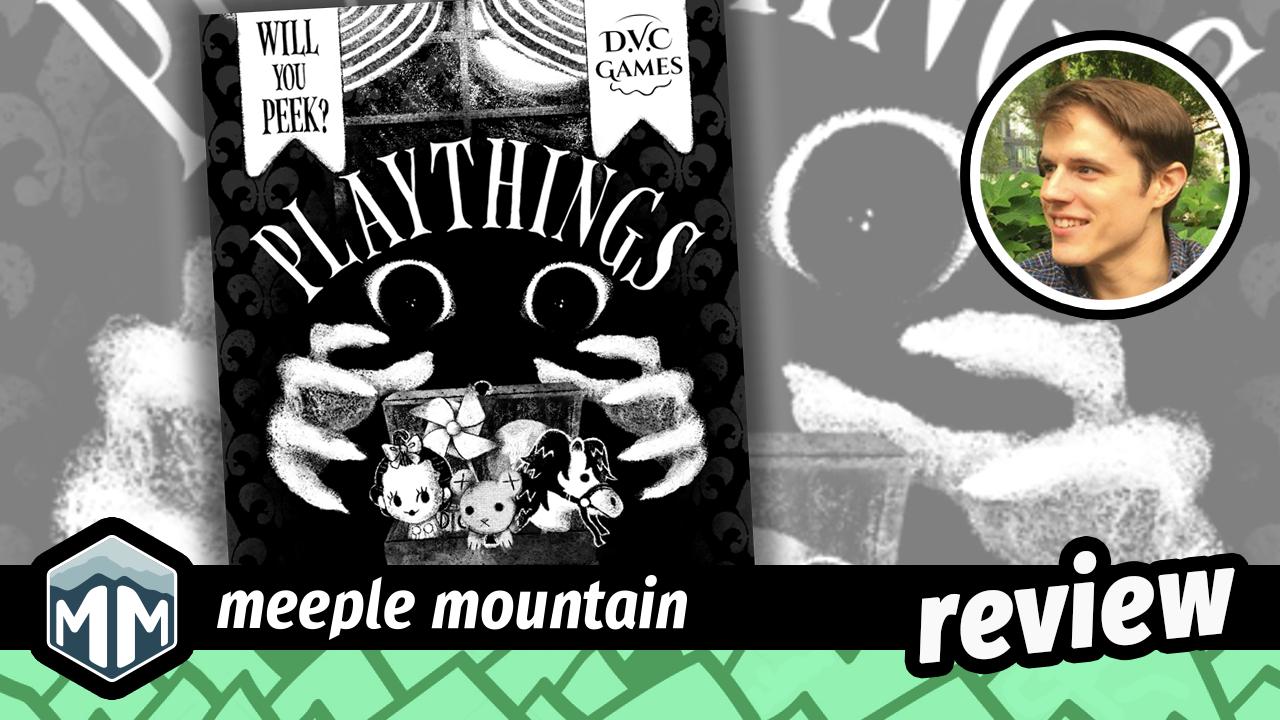
Playthings Game Review

It’s rare that a published game feels organic, but I guess that makes sense. Most authored works, regardless of medium, do not feel organic. The closest most games come is “intuitive,” which is not the same thing. “Intuitive” as applied to game criticism is more about the rules making sense and flowing. You use it when you’re talking about something that’s easy to teach and easy to learn and easy to play, about games that just. make. sense. In order for something to be intuitive, it has to build on what has come before, on a shared cultural reference or two.

That is not the case with “organic,” a word which I cannot say I have ever wanted to apply to a board game before. Strap in, folks. We’re developing a new theory. “Organic” can be as free-form as it wants. That’s probably a key feature, right? I mean, who tells an heirloom tomato how to grow? Nobody, that’s who.

A group of hands and arms float in space above the cloth Playthings board.

When I say Playthings is organic, I mean that it feels like something a group of Victorian children would come up with whilst whittling away the unending hours of the day. It feels improvised, even as…

The post Playthings Game Review appeared first on Meeple Mountain.
Computer Junkyard Game Review

I’ve had a tough tabletop gaming year. More and more, it seems like bad games—truly awful tabletop experiences—are seeking me out, not the other way around.

Computer Junkyard is a new game from a new publisher, Dream Egg Games. Designers Allan Pincus and Jared Pincus have created a title that is supposed to be about building a computer from spare parts bought at a local junkyard…or, maybe from stolen parts instead. It’s a simple race game with no other win conditions: the first player to build a computer out of the parts needed to make a working device wins.

Here was the first sign of trouble: the solo/single player game. To learn the game, I did a play using the single player rules at the back of the rulebook. The goal? Time yourself and build a working computer using the requirements shown on the player aid—your mainframe needs things like a power source, a CD-ROM drive, a monitor, etc.—and a certain number of components unique to the software, like a certain number of RAM and HDD components added through a databus on your computer’s chassis, a board where you can lock puzzle pieces together for your rig.

In solo, this is how things work: draw tiles out of a bag until you find everything you need to complete the…

The post Computer Junkyard Game Review appeared first on Meeple Mountain.
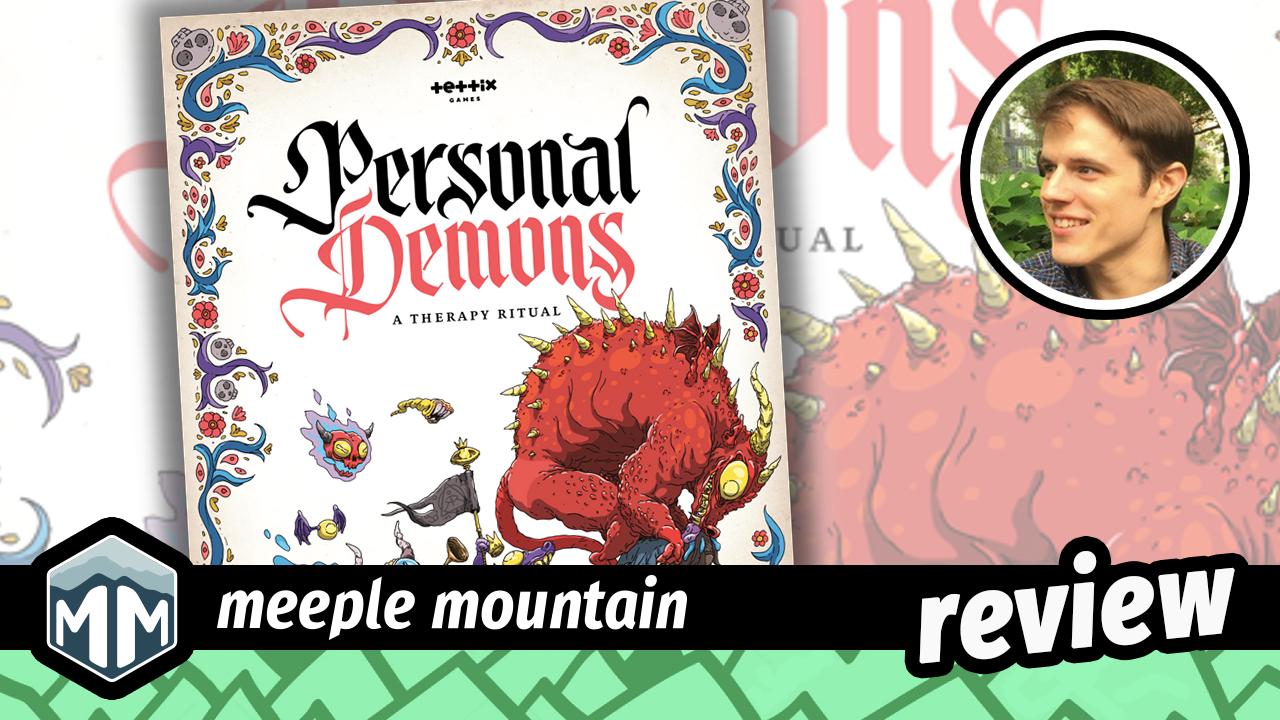
Personal Demons Game Review

When I first got into hobby gaming, Sushi Go was a hot new release, and it became a quick favorite. In the subsequent decade and change, I and millions of others have spent hours planning the perfect sushi plate. The game for which Philip Walker-Harding will be remembered is an easy game to love, especially for individuals to whom the frontiers of modern gaming are all but unknown. Sushi Go is just hooky enough to get people in, but simple enough that they can chat, smack-talk, and perform. Though I and many other hobbyists feel that we have moved beyond that game, it remains a dominant commercial force for a reason.

Be honest with me, my fellow hobbyists; don’t you miss it? Don’t you find yourself wishing you could get that same early buzz back, to revisit the times when something as simple as Sushi Go could set your brain alight? I do. I loved loving Sushi Go. I loved having that quick and reliable source of dopamine.

Personal Demons, from designer Judson Cowan of Deep Regrets fame, won’t quite take you back to those days, but it’ll get you close. The frictionless drafting of Sushi Go and its numerous imitators has been swapped out for something a little grittier, something gnarlier. Or maybe that’s just the illustrations?

…

The post Personal Demons Game Review appeared first on Meeple Mountain.
Rush Hour Duel Game Review

The new Rush Hour puzzle entry, Rush Hour Duel, arrived at my doorstep recently. I know that, because I got a confirmation by e-mail that a package had just arrived. A couple hours later, I came up from my office cave in the basement to find that the game had not only arrived, but had already been opened and played three times by my wife and 12-year-old.

Yes, friends…Rush Hour Duel was reviewed before I could even open the box myself. This has never happened before, across more than 500 review copies received since I arrived here at Meeple Mountain.

“Dad, we got a new Rush Hour Duel game, and it’s great! I beat Mom three times,” said the 12-year-old when I came upstairs.

“Well, that is a review sample that came from the publisher.”

“Really? OK. Still, it’s great, I’m glad you picked it up.” Then they ran upstairs to slip into another evening activity.

I looked around, shocked, as if someone had just made off with my wallet. Those guys got Rush Hour Duel to the table before I could, I thought. What kind of respect is that?

For the uninitiated, Rush Hour is a game series from the Ravensburger toy puzzle arm known as ThinkFun. If you have kids and regularly visit your local Target, there’s…

The post Rush Hour Duel Game Review appeared first on Meeple Mountain.
Perennial Game Review

Growing Your Garden

In Perennial, your job is to grow the best prairie garden using tools and tiles. It's a tile-placement game with set collection, drafting, pattern building, and end game bonuses tied to how well you've placed your tiles. Are you thinking you've seen this before? Maybe in Cottage Garden, or Pergola? 

You haven't. 

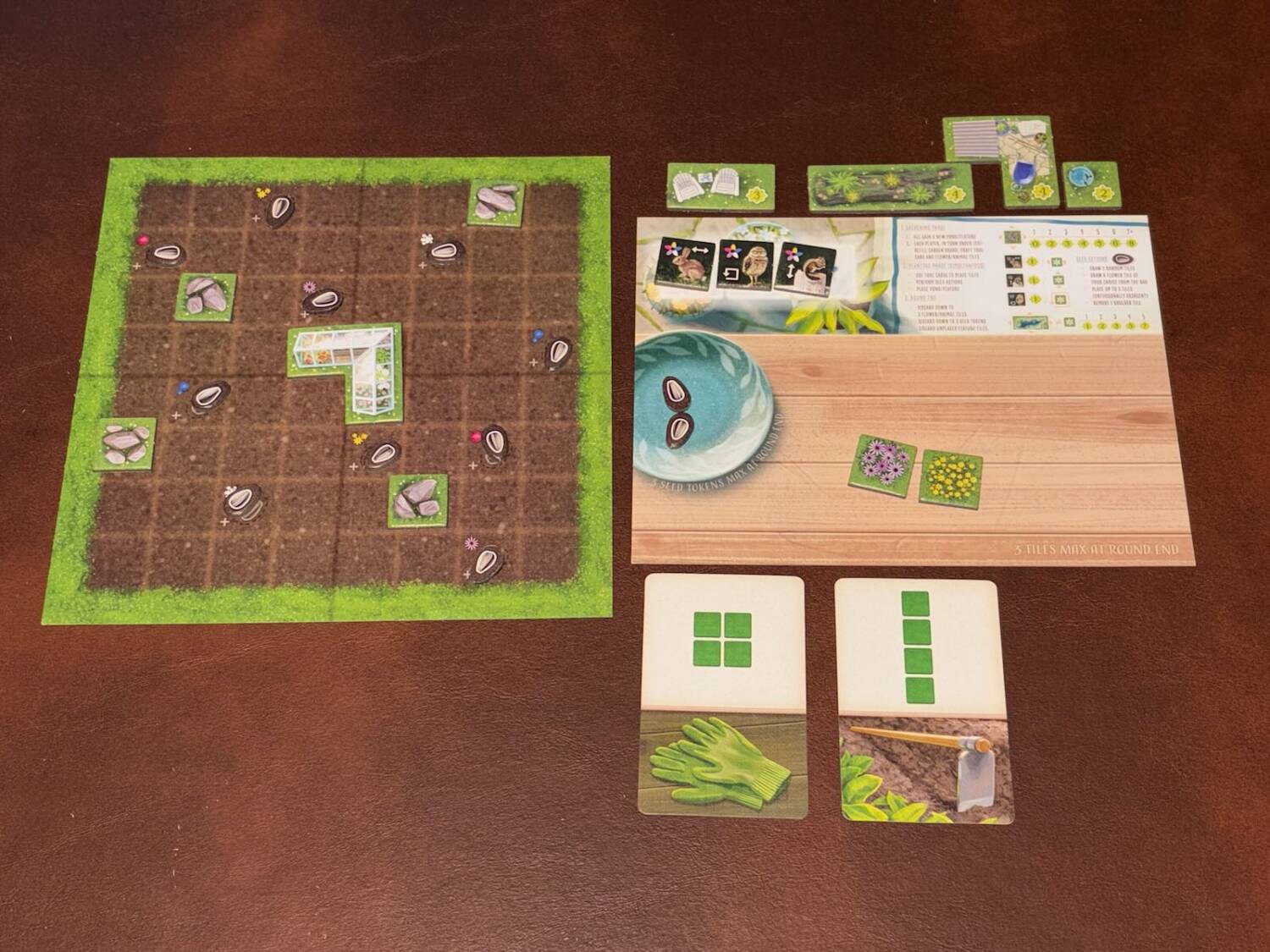
Oh, sure. The game starts in a standard fashion: Each player is given a Garden Board on which to place tiles, and a Workshop Board to store resources. The Garden Board is seeded with boulders which act as obstacles that you must build around, and actual seeds which can give you benefits later in the game. A greenhouse polyomino is placed in the middle as an anchor point for your first tile placement (and it acts as another obstacle). A square Central Drafting Board is randomly filled with Flower Tiles and Animal Tiles. Four Tool Cards are placed around the edges of the square. The Pond/Feature cards are shuffled and placed near the board, and the top one is turned over to reveal the first tile. Each player is given four Pond/Feature polyomino tiles that must be placed, one per round according to the card drawn from the deck. 

[caption id="attachment_333238" align="aligncenter" width="1500"]Individual Player Components…

The post Perennial Game Review appeared first on Meeple Mountain.
Rocking Raft Game Review

“I wish we still had our copy of Flotsam Float.”

This was the response from one of my kids after my third and final review play of the new family-weight title from our friends at Horrible Guild, Rocking Raft. Flotsam Float—a game so nice we actually reviewed it twice—was a big hit at my house for a couple years, in part because it was so much fun to stack things on raft and play through one of the best dexterity challenge games I’ve had the chance to review here at Meeple Mountain.

Both my kids and I thought that Rocking Raft might recreate some of that fantastic Flotsam Float magic. Sadly, we were wrong.

Gemboree

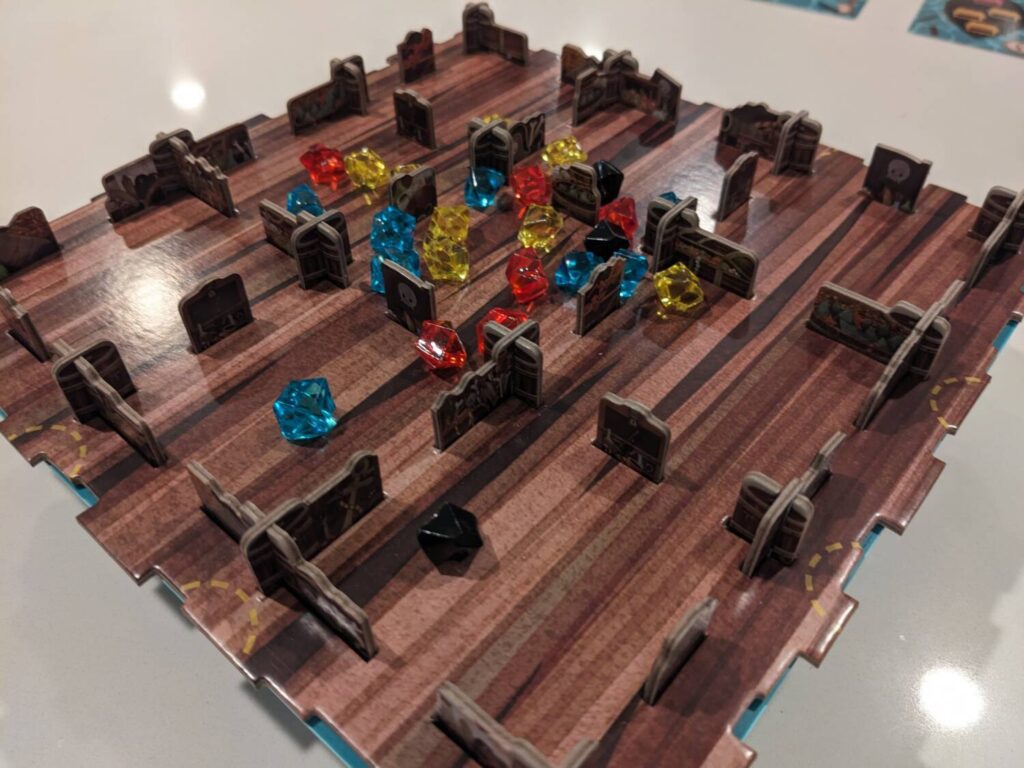
Rocking Raft is a dexterity-based order fulfillment game for 2-4 players that plays in 10-20 minutes. For this review, I played Rocking Raft once at four players with my review group, then twice with my 12-year-old, the latter because our two games took about 15 minutes in total.

The raft in question is a 3x3 grid of space on a square cardboard raft, supported by a plastic base with four flat edges. It stands comfortably in the middle of any play area. In the grid, a number of small gems in four…

The post Rocking Raft Game Review appeared first on Meeple Mountain.

Puzzle Dungeon Game Review

Dungeon Delve for One, Please

On lazy Sundays, I quite enjoy breaking out a solo game and throwing on some old records. No group bickering over game choice, no fear of another player’s analysis paralysis, just me, myself, and a deck of cards. There’s a particular joy in quieting down and figuring out a game by yourself, and Puzzle Dungeon is an ideal mix of dungeon delving and puzzle solving to keep those silent thoughts busy.

I was fortunate enough to experience the deluxe edition of the game, which comes with an overwhelming amount of heroes and baddies alike. It’s a smorgasbord of characters packed into this monster-hunting card game, so any characters mentioned here may not be present in the base game!

Puzzle Play

Puzzle Dungeon is a straightforward, solo-only hand management game that challenges players to defeat the required number and types of monsters listed on their hero’s card before their deck runs out. The monster deck is made up of five different monster types, randomly shuffled into four columns and laid out into ordered lines.

To defeat the frontmost monster in a column, players must discard cards with symbols matching that monster. These cards can be…

The post Puzzle Dungeon Game Review appeared first on Meeple Mountain.

❌