❌

Normale Ansicht

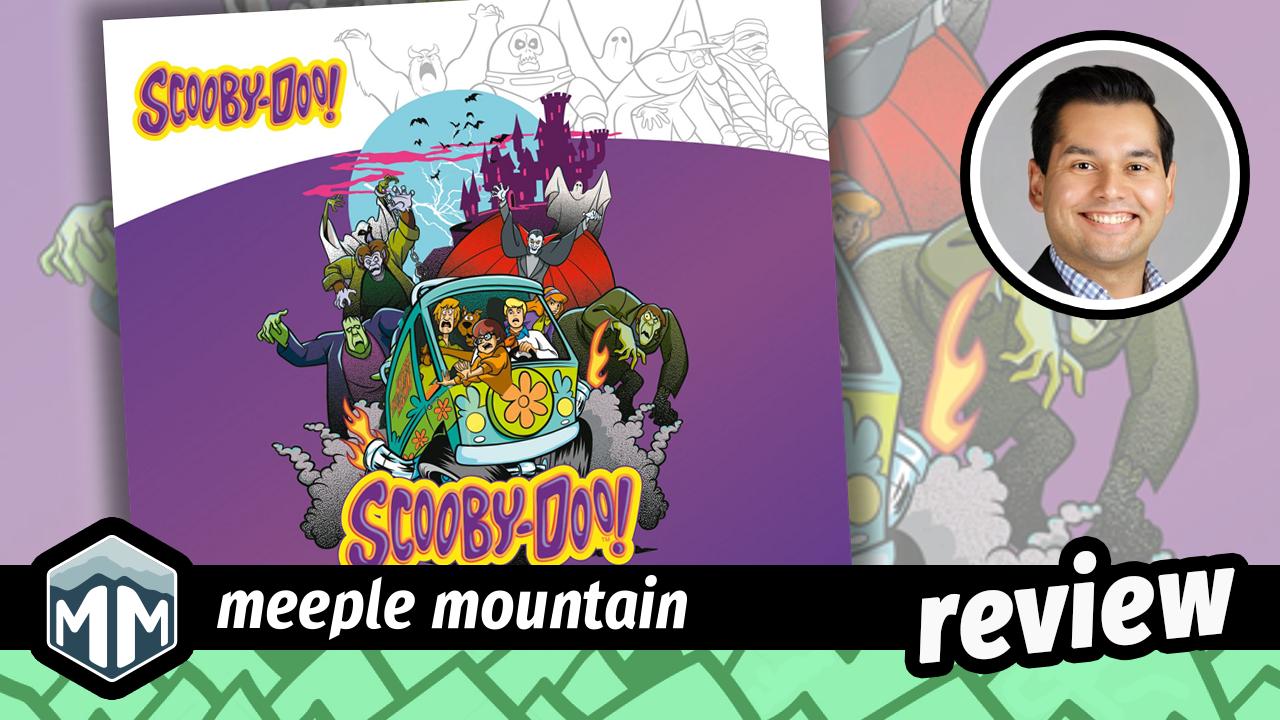
Scooby-Doo Mystery Masquerade Game Review

Scooby-Doo (along with plenty of other Hanna-Barbera cartoons) was one of my favorite shows growing up. There’s something about all the unique villains and countless oddly themed movies, including those wonderfully bizarre WrestleMania crossovers, that sits at the core of my childhood memories.

So when Scooby-Doo: Mystery Masquerade was pitched to me as a social deduction game set in the Scooby universe, I was immediately interested, though admittedly more for the IP than the mechanic.

I want to enjoy social deduction games like Blood on the Clocktower or Ultimate Werewolf, but negative experiences with both have largely steered me away from the genre. After a couple of plays of Mystery Masquerade, though, I’d say this is closer to the type of deduction found in Betrayal at House on the Hill than the social sleuthing those other games provide.

In Scooby-Doo: Mystery Masquerade, players collectively control the entire Mystery Machine gang as they attempt to figure out which villain stole the Coolsville Diamond. The culprit is hiding among a selection of 16 iconic Scooby-Doo villains.

Players begin by building the map using room tiles, which can be arranged in pretty much any configuration. Each player then receives three villain tiles that indicate which villains secretly belong to them.

…

The post Scooby-Doo Mystery Masquerade Game Review appeared first on Meeple Mountain.
Encyclopedia of Monsters Game Review

One of my big things as a reviewer is actually not tied to total play count, although I try to get three, maybe four plays in with a game before I pass judgment on a game’s quality.

The thing I prioritize more than anything else: getting as many plays in with the same game at different player counts. If a game says that it accommodates 2-4 players, I try my best to play at two, three, and four players. (If a game says it plays 1-4 players, I try my best to get in plays at all four counts, but a game typically plays almost the same way at one player as it does with two, since the solo usually mimics a two-player experience.)

Encyclopedia of Monsters is a new family memory game for 2-4 players. Designed by a pool of the same people who designed my game of the year pick for 2024—Dead Cells: The Rogue-Lite Board Game—I had Encyclopedia of Monsters on my radar as soon as the team at publisher Scorpion Masqué showed me a mockup at SPIEL Essen last fall.

Encyclopedia of Monsters is a fully resettable campaign memory game, spread across five volumes (here known as continents) and three chapters (countries) per volume. That means you have 15 short games included in…

The post Encyclopedia of Monsters Game Review appeared first on Meeple Mountain.
Mooki Island Game Review

After doing two plays of the 2025 family-weight card title Mooki Island (one play with my 12-year-old, then a play with my 9-year-old), I’m very sure of one thing: the artwork is the main reason for checking out the title.

That’s because the game itself is barely a game at all. The box hints at this as well, given that it believes it is “perfect for ages 4-10”; now that I’ve done plays, I absolutely recommend Mooki Island for a four- or five-year old child to play with an adult.

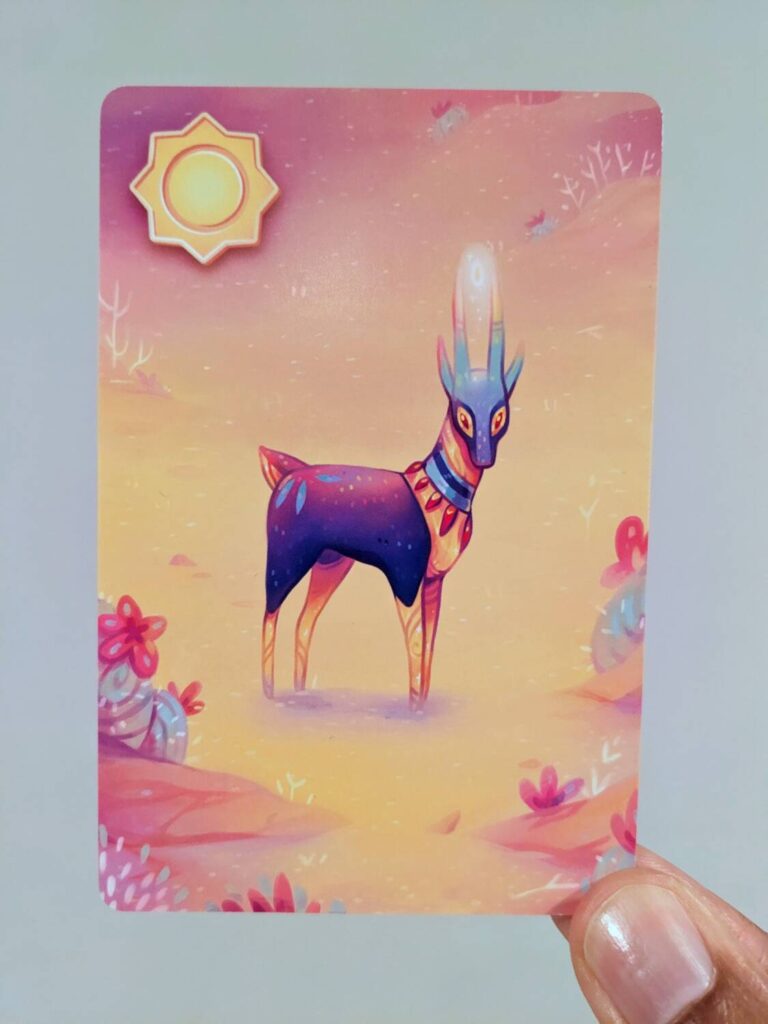
Here’s the entire game: a deck of 36 double-sided tarot cards is shuffled and split in half, creating two draw piles. There are five suits of Mookies (Sun, Moon, Fossil, Leaf, and Seashell), and there are also seven spiders in the deck. There are also five “legendary” mookies in the deck, one per suit, for the 72 total options spread across the deck.

On a turn, a player takes one of the two face-up cards, looks at both sides, then decides how to place it into their single personal scoring pile. If a spider is drawn and played, it must be played on an…

The post Mooki Island Game Review appeared first on Meeple Mountain.
Gulo Gulo Game Review

In Gulo Gulo, players compete to rescue a young gulo—a wolverine—from the evil swamp vulture. I say “evil,” but that’s unfair. The wolverine pup was trying to steal one of the bird’s eggs, after all. Is the vulture really evil, or simply a participant in larger systems that force us into binary rolesl? If the game were from the vulture’s perspective, would the gulos not be the evil ones? You could reframe Gulo Gulo as a tower defense game in which the vulture fends off a hoard of ravenous gulos and not have to change any of the facts on the ground. Games really can teach us things, if we have the heart to listen.

Philosophical implications of this exercise and its framing aside, Gulo Gulo is Candy Land with dexterity elements. To move to a new space, you pull a matching egg out of the nest, a wooden bowl full of the colorful ovoid ova. This wouldn’t be much of a challenge at all were it not for the tall and precarious stick that pokes out above the nest, its weighted end causing it to weave and wobble and constantly threaten to fall over. If the stick does fall or if you cause any eggs to fall out and hit the table, you move back to the previous…

The post Gulo Gulo Game Review appeared first on Meeple Mountain.

Trails & Tails Game Review

At the end of the day, my review criteria is really simple: is the game fun or not?

Trails & Tails is a new self-published title. (BGG does not list a designer, artist, or publishing company…only “self-published.”) It admits its hook right up front: Trails & Tails is going for a Snakes & Ladders-style gaming experience (or, if you’re a gringo like me, Chutes & Ladders), where players move their playing piece up a board all the way to the top…hopefully taking short cuts along the way to reach the top faster.

The downside of Snakes & Ladders comes when snakes appear in the space where you end your movement…because if that’s what happens, you fall backwards and/or downwards until you reach a much less desirable space lower on the board. So, keep moving forward and things will generally work out.

Trails & Tails adds spice by giving each player two starting dice, differing by player; one player gets a D4 and a D20, while another might have a D6 and a D8. In each round, players roll these dice, then get to use 1-2 dice per turn to their liking. You can add the results of two dice, move forward a number of spaces on one die, or even subtract a larger die value from a smaller one…

The post Trails & Tails Game Review appeared first on Meeple Mountain.

Rush Hour Duel Game Review

The new Rush Hour puzzle entry, Rush Hour Duel, arrived at my doorstep recently. I know that, because I got a confirmation by e-mail that a package had just arrived. A couple hours later, I came up from my office cave in the basement to find that the game had not only arrived, but had already been opened and played three times by my wife and 12-year-old.

Yes, friends…Rush Hour Duel was reviewed before I could even open the box myself. This has never happened before, across more than 500 review copies received since I arrived here at Meeple Mountain.

“Dad, we got a new Rush Hour Duel game, and it’s great! I beat Mom three times,” said the 12-year-old when I came upstairs.

“Well, that is a review sample that came from the publisher.”

“Really? OK. Still, it’s great, I’m glad you picked it up.” Then they ran upstairs to slip into another evening activity.

I looked around, shocked, as if someone had just made off with my wallet. Those guys got Rush Hour Duel to the table before I could, I thought. What kind of respect is that?

For the uninitiated, Rush Hour is a game series from the Ravensburger toy puzzle arm known as ThinkFun. If you have kids and regularly visit your local Target, there’s…

The post Rush Hour Duel Game Review appeared first on Meeple Mountain.

Rocking Raft Game Review

“I wish we still had our copy of Flotsam Float.”

This was the response from one of my kids after my third and final review play of the new family-weight title from our friends at Horrible Guild, Rocking Raft. Flotsam Float—a game so nice we actually reviewed it twice—was a big hit at my house for a couple years, in part because it was so much fun to stack things on raft and play through one of the best dexterity challenge games I’ve had the chance to review here at Meeple Mountain.

Both my kids and I thought that Rocking Raft might recreate some of that fantastic Flotsam Float magic. Sadly, we were wrong.

Gemboree

Rocking Raft is a dexterity-based order fulfillment game for 2-4 players that plays in 10-20 minutes. For this review, I played Rocking Raft once at four players with my review group, then twice with my 12-year-old, the latter because our two games took about 15 minutes in total.

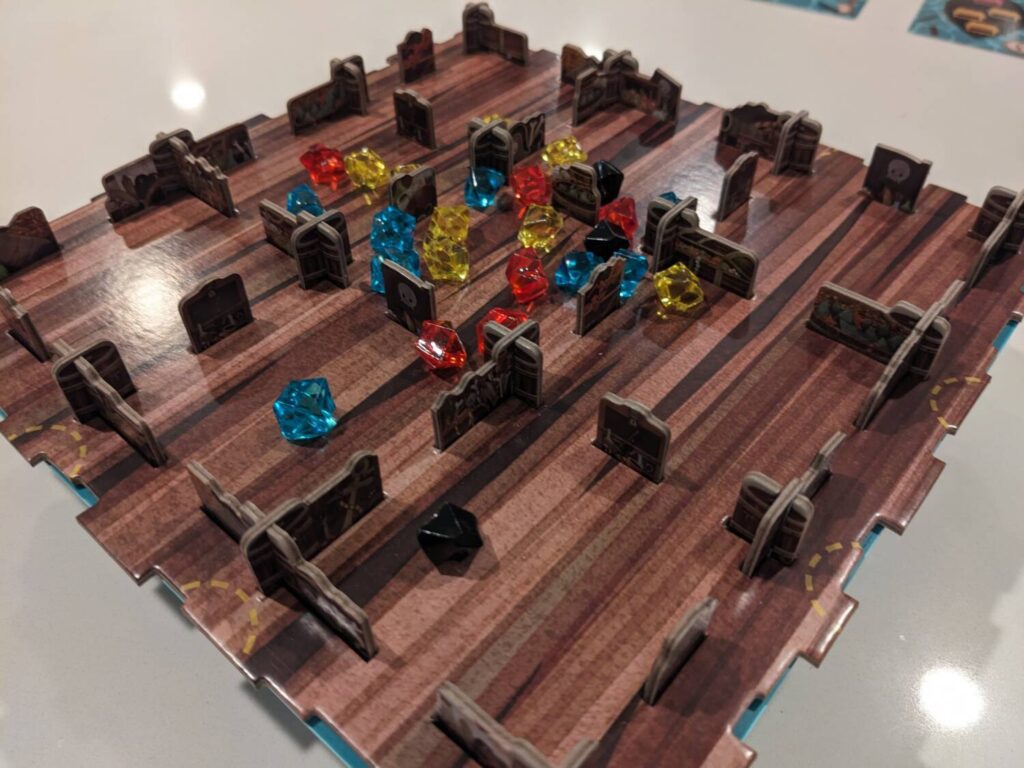
The raft in question is a 3x3 grid of space on a square cardboard raft, supported by a plastic base with four flat edges. It stands comfortably in the middle of any play area. In the grid, a number of small gems in four…

The post Rocking Raft Game Review appeared first on Meeple Mountain.

❌