When compared to big box games, it can be easy for avid gamers to overlook games that come in a small box. Fewer components, a thinner rulebook, and smaller table presence often leads to a lighter game, which can be seen as a negative by gamers who have large collections consisting of heavier games.
Thankfully, more and more small box games are offering increasingly varied, complex, and strategic experiences that are making them more appealing to gamers that traditionally look past them.
Trinket Trove, a ‘thinky’ bidding, set collection, and drafting game for 2-6 players from Rocco Privatera, Paul Solomon, and publisher Gamehead, makes a strong argument for the ‘small box, big game’ crowd.
Bidding For Your Burrow
In Trinket Trove, players collect various trinkets across 13 types, attempting to collect sets of different types to add to their character’s ‘burrow’ and earn points before the end of the game. Trinkets are collected and sets are built through the bidding and drafting process that makes up the core loop of the game.
Each round, players bid on available lots (groups of one or more trinkets), following the bidding order of the previous round (in the first round of the game, it’s randomized) to determine…
I’m doing things differently here for this one. For years now, I’ve had a rule that I don’t write reviews or previews based on digital playthroughs on platforms like Tabletop Simulator (TTS). For me, the physical experience of the game, the legibility of cards and iconography over the top of a table, and other things simply cannot be replicated over a screen. However, my good friend Marton…
“Love” for many can be a roller coaster of ups and downs. I had a six-year relationship with a woman I almost married and after that break up my friends were pushing me to go on apps because they wanted to play “swipe” (and probably have me find love). Most of them were in monogamous relationships and never got to experience Tinder, Hinge, Bumble or whatever the flavor-of-the-week app was.
No offense to my friends but I didn’t trust them to just take my phone and pick what girls I should date so I’d watch to make sure they knew what I liked before I let them play “swipe”. This concept is what inspired the design of Perfectly Imperfect. I wanted players to learn from dating profiles what each other’s red and green flags were in the form of a conversation party game.
This design spent years changing names and directions before it found its way to becoming Perfectly Imperfect. The cousin of this game was a design I attempted based on the concept of getting ghosted but I ditched the concept in 2019. In 2021, a yearish after my breakup, the first form of Perfectly Imperfect began as Date or Hate. Profiles were written to resemble public domain characters like Robin Hood. Each card was double-sided with a girl profile on one side and a boy on the other. That way you could turn the deck depending on a player’s preference. It was cute but people knew these characters. They had many pre-existing opinions and didn’t learn as much about each other as I had wanted.
So I took a second stab at the content with the help of my uncle Terry. We wrote historically bad people/fictional characters into the game. You’re now dating the worst of the worst. The problem is, not only was that not fun, people didn’t want to think about dating a tyrant even if it was written comedically.
So I tried again on my own. This time I wrote them all as gender neutral, researching names that could work for all the profiles. By this point it was 2023 and I was playtesting the game with David Gordon and TAM in New York City. We did some brainstorming and TAM suggested a new take for the look of the game. With the new gender neutral profiles I needed a name that better fit and he suggested Abstract Love. I loved the idea of leaning into something I’m very passionate about, gender identity and sexuality. As a member of the LGBTQIA+ community, I love seeing games with gender neutral writing and characters. I updated the prototype and made fun abstract art for the 60ish profiles I had made for pitching the game. The new look also got printed in a much nicer box thanks to a short sponsorship from Launch Tabletop.
The mechanics up until this point had one player as the Dater and the others as the Friends each round. Three profiles got read and players placed a yes, no or maybe token facedown under each profile. Then the Dater would place theirs and flip to see what matched. You’d score one point per match and rotate Daters each round until you played 1-3 rounds depending on player count. The only additional element was a suggestion offered by David to add a confidence token that gained you an extra point when you matched up. Funny enough, the future publisher Randolph would later relate this mechanic in what was in their successful Oh, Really? game insisting they would have added it had it not been there.
The content hadn’t changed but the facelift gave it a new fresh look that caught publishers' eyes. In 2025, at the Gathering of Friends Joël Gagnon, who I'd met two years before, sat down for a pitch between me and Randolph. When pitching, I explained the journey of the game but it was the fact that most of the content was based on reality and that I had actually done most of the playtesting of the game on actual dates that made them ask to play. I pulled out my prototype and we played. They saw the parallels between Abstract Love and Oh, Really? knowing it would perform well in Montreal at their cafes. They especially loved this game played great at two-players as well as eight-players, giving a slightly different experience but still causing laughter, conversation, and tales that left the gaming table.
Joël took a prototype and a few months later we had a contract signed with a fast turnaround for me to write the content. As most party game designers know, the written content can make or break a game so I did a lot of playtesting to get the game up to the 200 profile cards you see in the final version. Randolph had also loved the gender neutral profiles but suggested switching from real names to user names which gave me a fun way to add plenty of cheeky jokes in. They also wanted to go back to each profile having three interests and there being no images like the Date or Hate version had. We worked to balance these interests with the profile text to make the people seem interesting and allow players to focus on different details. We also added a scoring mechanism for the Dater to receive the same amount of points as the highest scoring Friend.
A challenge that came when writing the profiles was receiving a head injury when returning from Gen Con in August 2025. The passenger next to me dropped their suitcase from the overhead bin onto my head before deboarding the plane. This led to an ER visit and my fifth diagnosed concussion with a new barrier of limited to no screen time as I recovered. So I channeled my inner middle schooler and journaled my thoughts creating all the original profile drafts in my design journal then using the talk to text feature added them into a spreadsheet to share with my publisher. My friend Amanda Rivera was incredibly helpful in reviewing the profiles to fix the talk to text typos, playtesting and helping me brainstorm funny profile names. The journey of this game really showed me how important my friendships were.
Due to my head injury I was restricted in how much screen time I was allowed for months so whenever I got stuck on what to write in the next profile I’d read, call a friend or work on an art project to help with inspiration. One project included two paintings based on the art of my Abstract Love prototype that still hangs above my bedroom.
A huge hurdle came in what to call this version of the game. Abstract Love no longer made sense with the illustrations being removed and didn’t scream dating game. We spent most of September going through different name suggestions until they landed on Perfectly Imperfect which had been one of the profile user names based on the popular saying. It was short, simple, elegant and would end up being quoted many times in casual conversation still to this day by me and my friends.
The timeline for this game had been sped up due to Hachette taking the game and deciding to distribute it in English before Randolph put it out in Canada. Their goal was a Spring 2026 release so I spent August and September 2025 playtesting non-stop in my freetime and tweaking the profiles along with Randolph’s translator Matthew Legault reviewing changed content. The English edition of the game would have me as the writer while the French would be a combination of translations and original profiles that related to French Canadian locations/sayings - so no more Trader Joe’s jokes!
In October 2025 while I was traveling through France after SPIEL I was receiving proofs of the cards and box to review. The illustrator for the game was the same as Oh, Really?. MC Marquis was an incredibly talented artist that made the box look like a piece of art that should stay out indefinitely on people’s coffee tables. I e-mailed feedback from trains and pulled my friends Elizabeth Hargrave, Mattand Donna Leacock to give their thoughts while doing the final playtests in Europe. I appreciated the amount of collaboration that the Randolph team had with me to get this game to the finish line. Not all publishers let the designer be this involved but this game was years in the making and I wanted to see it through to the end.
Fast forward to New York Toy Fair 2026 I got to hold a mass production copy of the game in my hands and make a few videos about the inspiration behind this game. It’s wild to think how many bad dates went into this game between the content and the playtests. A few years ago I had made playtesting at breweries my go to first date idea. Figuring if the date didn’t go well I’d at least have a good story and some more playtesting data. I learned that the game could be just as fun with people you didn’t know as the ones you did. It also helped me learn if a second date would happen or not (there was never a second date back then). I even used the published version of the game to play with my now girlfriend to see how well we matched each other. I always hated dating apps and the pressure people put on me to use them to find love but hey, I eventually found my perfectly imperfect partner and I couldn’t be happier where that relationship or this game is going. I hope people enjoy the game as much as I do now that it’s out!
As someone who frequently goes to thrift stores, I’ve seen some games so many times they barely register in my mind. I’m referring to games like, The Game of Life, Battleship, and multiple editions of Trivial Pursuit. Occasionally, this board game treasure hunting uncovers a game I’ve never heard of that is both complete and sounds interesting. This series is about those rare finds, the ones that interested me enough to risk a few dollars on and have made their way to the gaming table. Have I found an overlooked gem? Or was one person’s junk now my junk? Read on to join in the hunt!
________________
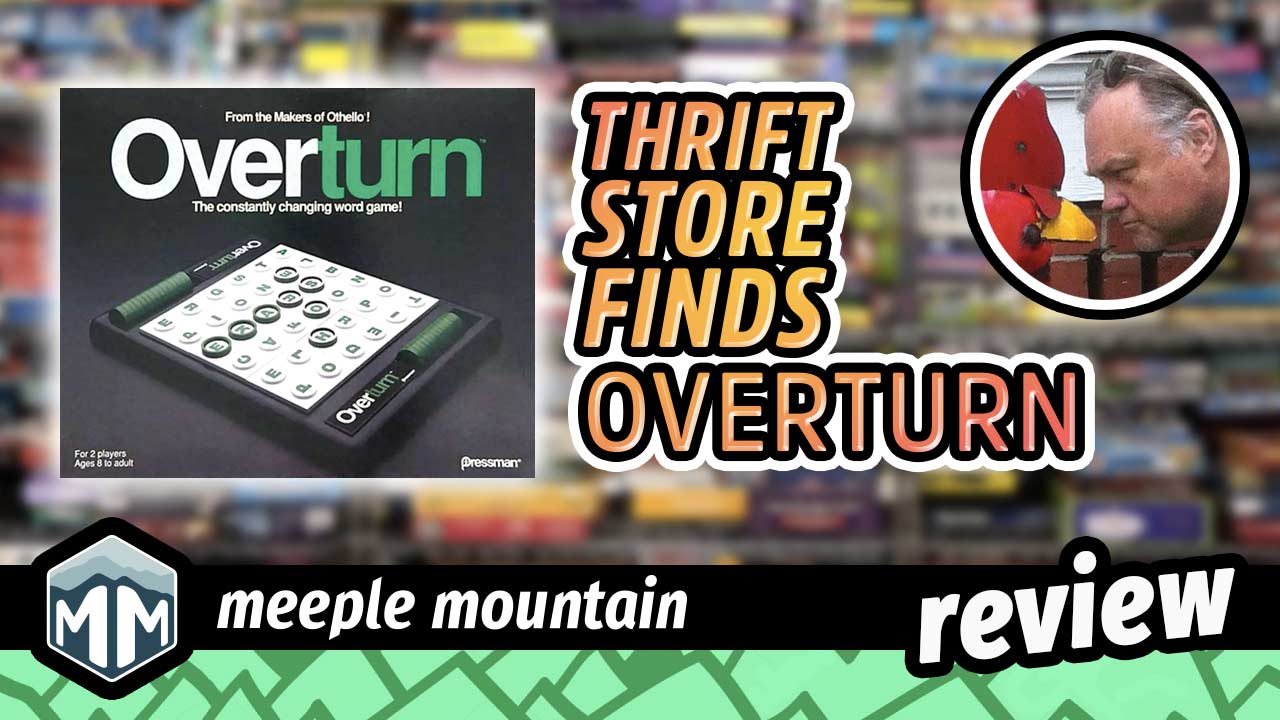
A few years ago, while scanning the game shelves of one of my favorite local thrift stores, I found a side panel to a box that reminded me of Othello. Same black base color, same font. Turns out both games are by the same publisher, Pressman, and the similarity was intentional.
Playing the Game
You play Overturn on a raised black frame featuring 18 white square tiles, each with 9 letters printed in green on raised…
The saloon doors suddenly burst open behind you as your boots skid across the dusty wooden boards of the sidewalk. A split-second later, gunfire cracks through the afternoon air, the bullet ricocheting off a pail of water, sending startled townsfolk diving for cover. Diving behind an old barrel offers you a moment of shelter, although the sound of heavy footsteps suggests your pursuer is closing in on you. Then, glass shatters somewhere near the jail, followed by the sharp whistle of a bullet passing far too close for comfort. A grin spreads across your face as you raise your revolver and prepare to return fire. Well, that's what you get when you arrive in Rattlesnake by Michael Hardacre from Osprey Games with art by Roland MacDonald.
During the lifetime of a game taster, once in a while we stumble upon unheard of games which take us by surprise. This Game is Killer: Frozen Horror is one such game for me. It is not a ground-breaking genre nor is it a highly unusual setting. It is just how well the game is put together in a concise way, plus some genius ideas thrown in.
First and foremost, this is a
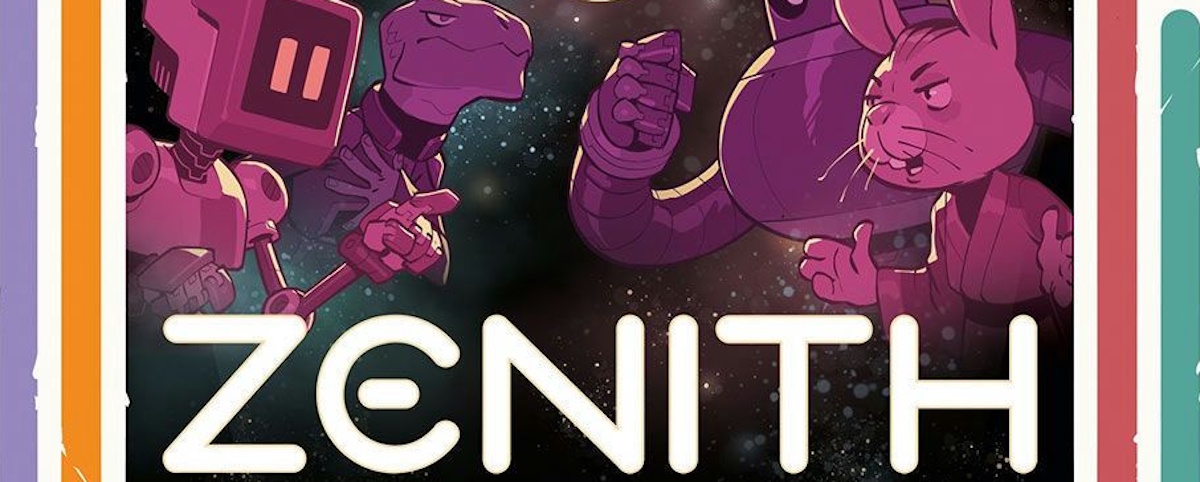
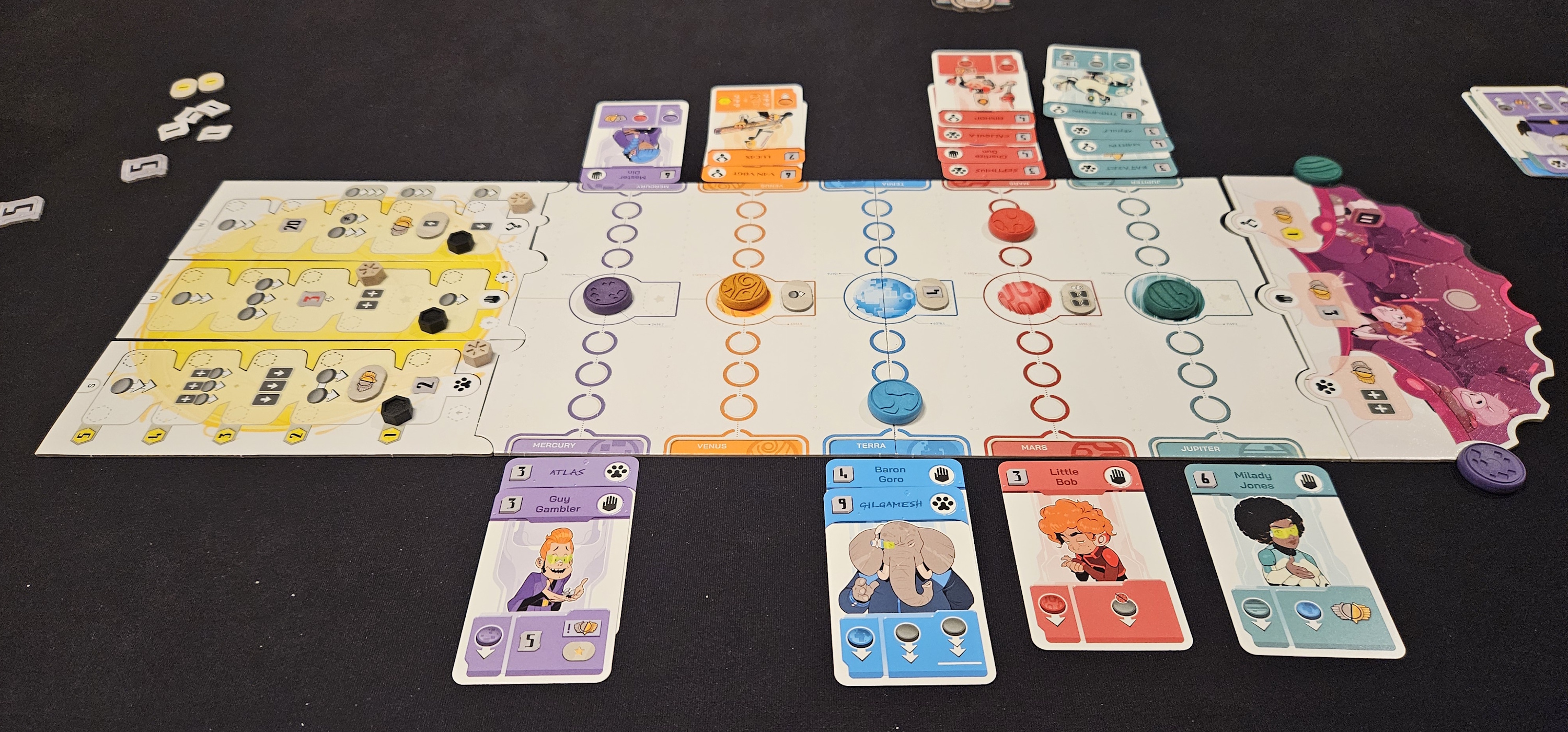
Zenith isn’t an easy game to classify. Part set collection, part lane-battler, even part paxgame, it’s full of tight contests and nasty tug-of-wars. (Tugs-of-war?) Really, though, it’s more than the sum of its parts, a strange but wonderful artifact by Grégory Grard and Mathieu Roussel that doesn’t play quite like anything else.
The presence of lanes does not imply a lane-battler. But this might be a lane-battler.
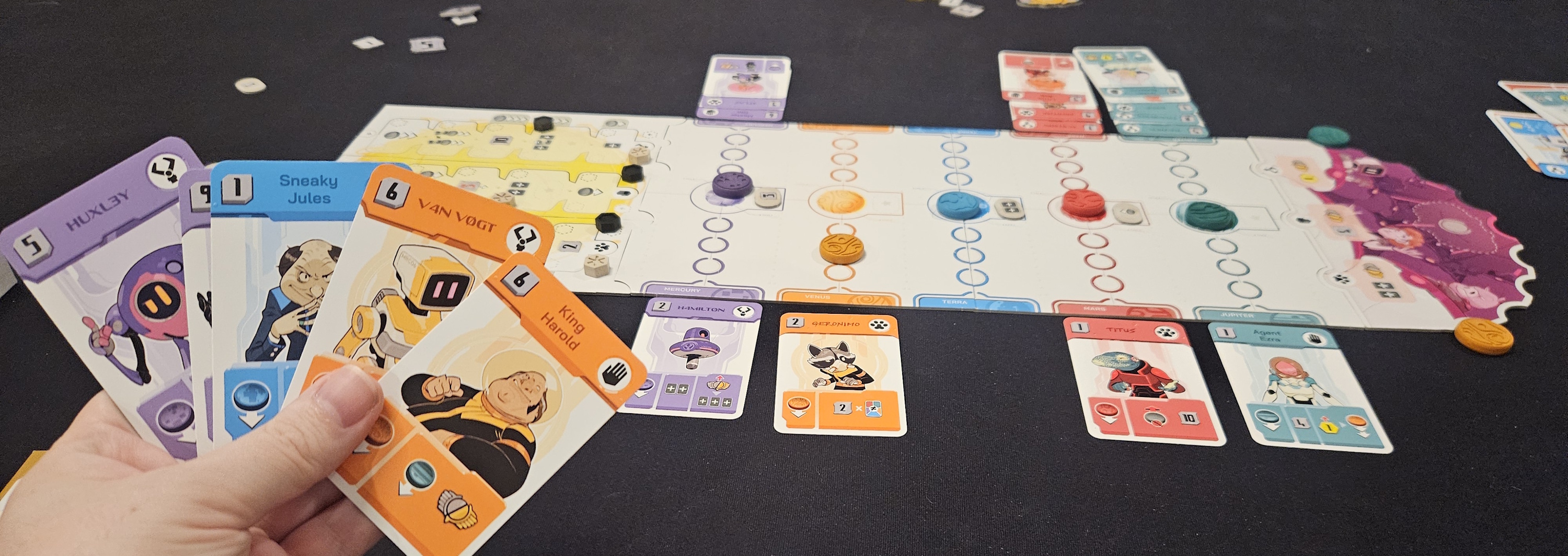
Let me introduce you to the solar system. In the far future, humankind has spread into its… well, not its farthest reaches, but pretty far. All of the inner planets are settled, and Jupiter as well. I would’ve thought we’d beeline to Saturn’s largest moon for all those juicy hydrocarbons, but hey, clearly this isn’t my roadshow.
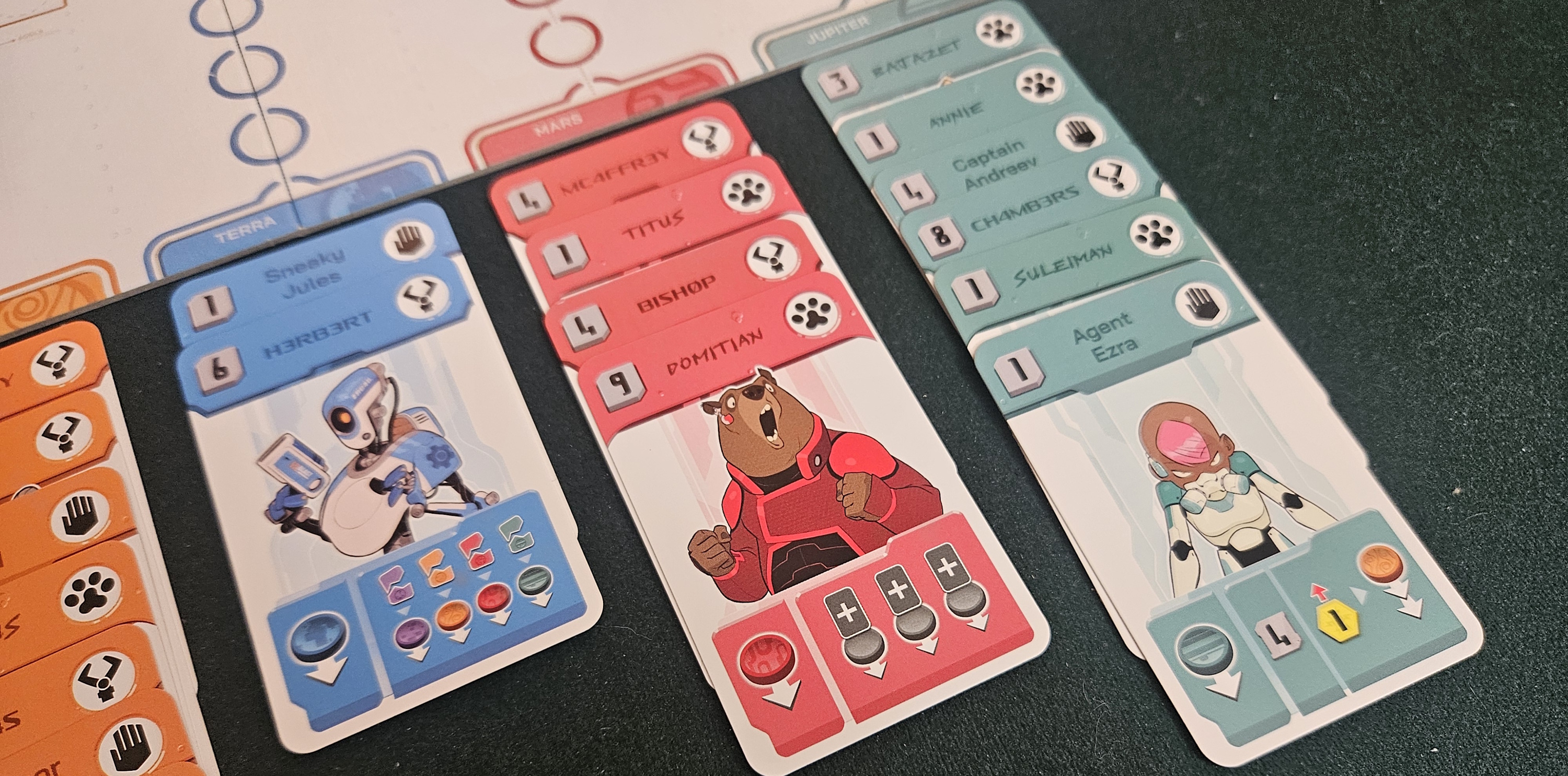
For one thing, humanity has split into three distinct species. There are humans (filthy baselines), robots (job-stealing clankers), and animods (uplifted animals, the cool kids of the bunch). Furthermore, those three types are spread across five color-coded factions that correspond to the settled planets.
Both type and color matter. Type, because humans, robots, and animals can be spent for different bonuses, and color because while this duel is a knock-down drag-out affair, nobody is willing to leave their favored planet.
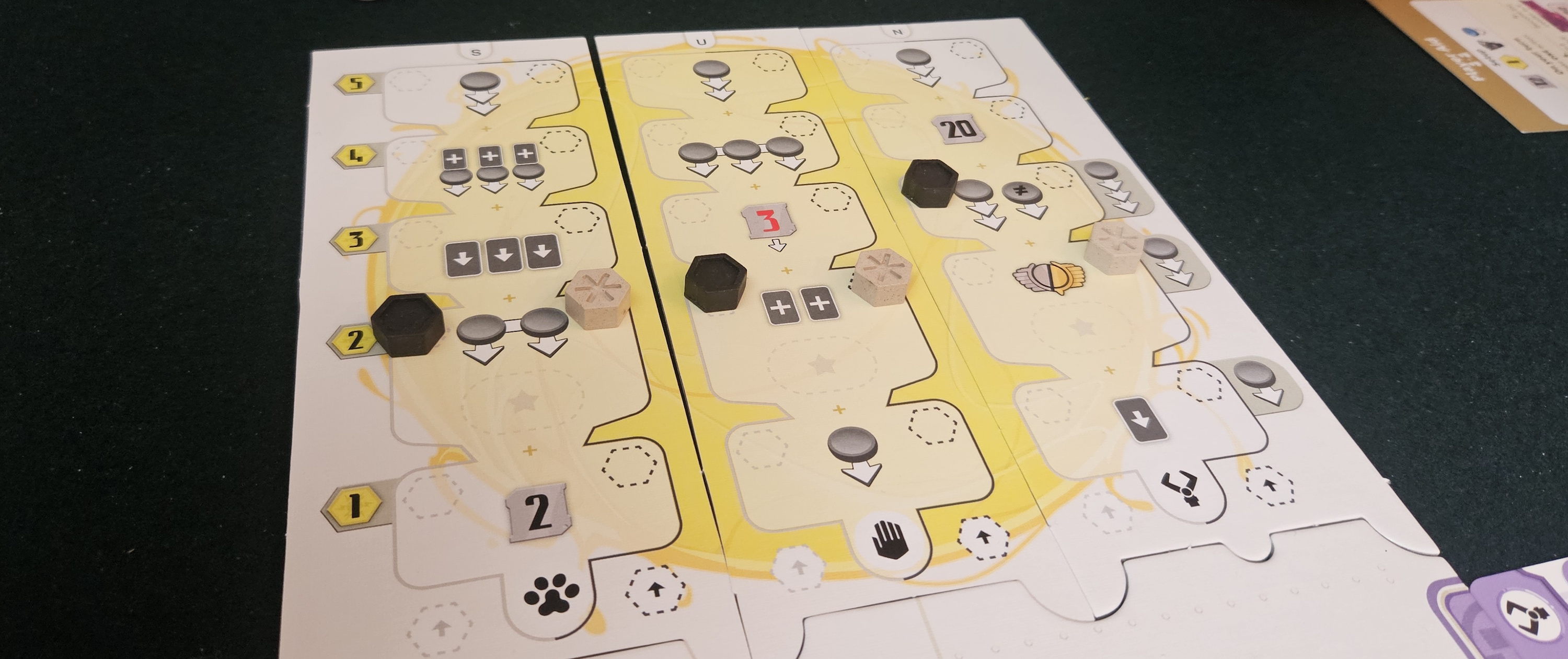
Every turn sees you spending a card. Usually one, sometimes more, but never zero. That card can be used in three ways. One, it can be recruited to its home planet as an agent. This is the most common action by far, and it’s one we’ll return to momentarily. Two, it can be discarded to gain a small bonus — some credits, some zenithium (this universe’s unobtainium), or a couple of freebie cards. Three, it can tick your faction along one of three tech trees. Yes, there’s one for animods, one for humans, one for you get the gist.
Cards become cheaper thanks to the presence of other cards.
Each of these possibilities is considerably more interesting than they initially sound.
Take, for example, those tech trees. Early on, the perks offered here are fairly minor. Two credits for animod research? That’s downright unethical! But each step along a tech tree awards not only its current bonus, but every single bonus you’ve already gained. The second level, then, influences two planets and gives you that pair of credits. Level three does the same, plus steals a trio of cards. Level four does everything plus shifts even more planets. Benefits scale in such a way that those meager early offerings suddenly look like smart investments.
Or there’s the whole “discard a card for some resources” option. This is the dump action, right? What you do when you don’t have anything better going? And, sure, it is that. But it’s also a chance to claim the badge. And the badge is a big deal because it’s the one thing in the game that will increase your hand size. Normally, upon completing your turn, you draw to four cards. With the badge, you draw to five. If you claim the badge while already holding the badge, you flip it to its upgraded size. Now you draw to six cards. In a game where mining the shared deck for powerful agents is a significant part of the strategy, that’s a potentially game-swinging advantage. Suddenly, the dump action is considerable. Even necessary.
Then there’s the big one. Playing a card to the main board. This always pulls the corresponding planet toward you, engaging in the tug-of-war that is Zenith’s principal contest. Your overall goal is to secure a certain number of planets. The exact quantity is variable. Three of the same planet, four different planets, or five mixed planets. That’s a win. There’s no escaping the need to play agents to the middle section, then. The more the better.
But even this action is smarter than it first appears. For one thing, cards are expensive. Not all of them, obviously. There are a few that cost only one or two credits. But some cost, say, ten credits. That’s a lot of scratch. But every agent costs one fewer credit for every card already in its planet slot. This means there’s a sharp ramp in what players can afford. Early on, there’s nothing stopping you from playing a powerful card. It’s just that it might wipe out your finances. With a few cards in that slot, however, things get affordable fast. It isn’t long before the big guys come out swinging, and often.
The tech tree is… fine.
The protein in this particular salad is that everything in Zenith is something of a Shepard tone, always ascending, always jangling both players’ nerves. To put it more blandly, this is about as good as multi-use cards get. Even a crummy draw can provide an advantage somewhere, if only because anything can be thrown away for a few resources and access to the game’s principal means of drawing more and better cards.
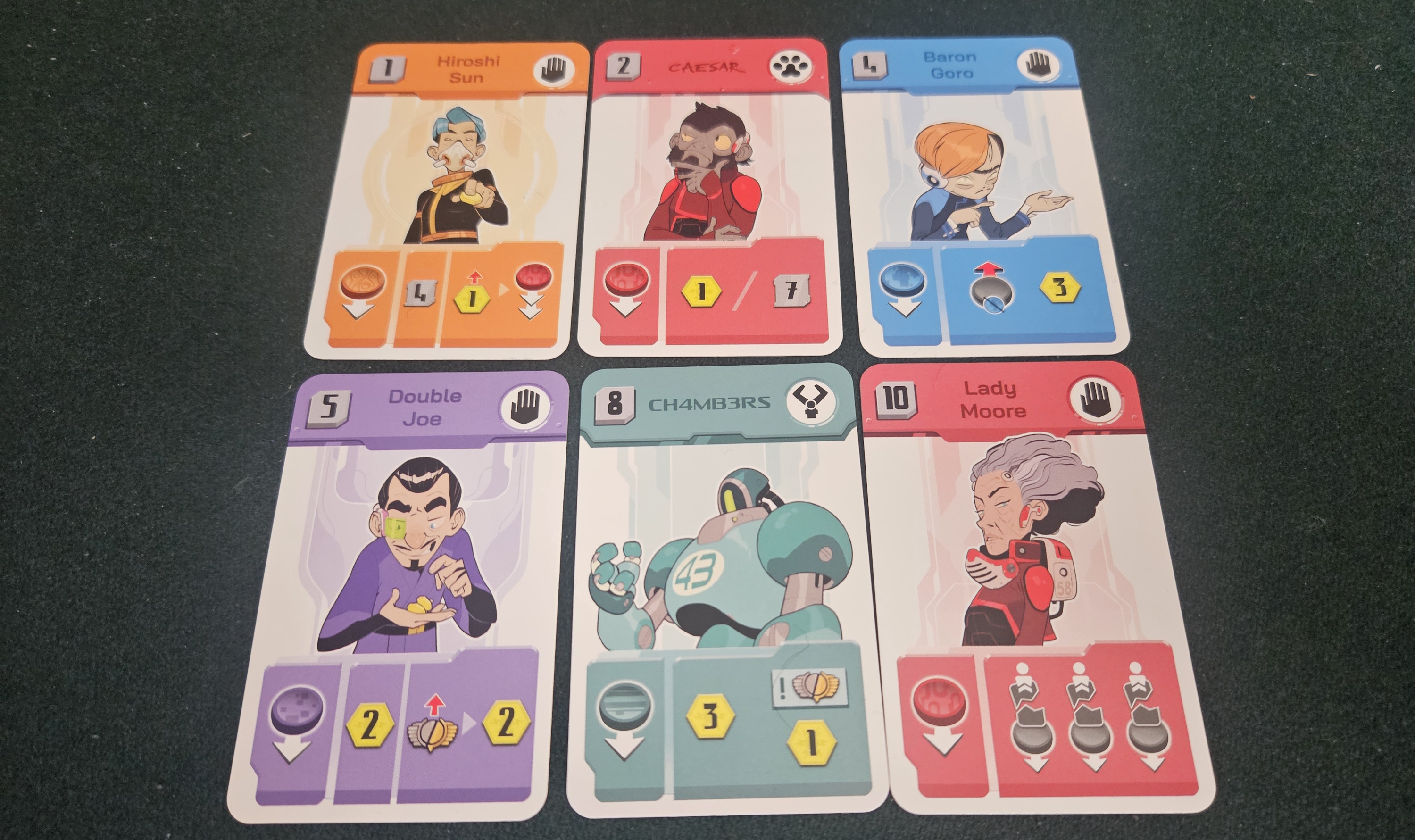
Its sense of escalation is truly something to behold, especially once the contest really gets going. I mentioned that Zenith bears some resemblance to paxgames, and that’s true whether or not Grard and Roussel have ever played one. That’s entirely thanks to the way cards are allowed to flex their powers. There are some wild abilities hidden in the deck, game-hinging swings and economic powerhouses and free techs and everything else, although the strongest require some preparation before they’re affordable. Not only in terms of cash, though, sure, there’s always cash. But also in the sense that some require you to be holding the badge, or to shift planets according to certain limitations, or yield a crucial resource to your opponent before triggering that card’s most potent ability.
This is what makes Zenith special. Or at least it’s one more brick in the powerhouse of its specialness. As a game, it’s full of genuinely hard decisions. How to spend cards. When to spend them. Where to spend them. Whether to be proactive or reactive. How to best undermine the engine your rival is assembling piston by piston.
Just a few of the game’s many cards.
If I went dredging for downsides, I suppose I would say that this openness means it’s easy to get lost a bit. More than once, I’ve watched somebody — usually myself — flub a session because they were so focused on getting more resources or moving up the tech tree that they lost sight of the ground war. Similarly, I don’t much care for the tech tree. Its look, more than its actual utility. Zenith is a handsome game, but its appeal lies in its color palette and illustrations rather than its minimalist board, and the three-pronged tech tree, which is pronged for a reason, since you can flip any of its tracks to their opposite side for some variety, still comes across as a bit chintzy.
Really, though, this is about as close to my jam as a game can get without breaking the mold. I’ve always had a preference for “falling with style” games, those that hand me a mismatched bag of tools and then ask me to make do with what I’ve got. Construct a biplane with this old rotor, a busted gas-guzzler from an old Ford, and a hyperbaric chamber? You got it, boss.
Zenith excels in this theater. I’m sure some will consider it an issue. There’s no marketplace. Everything is drawn blindly from the deck. This produces a degree of chanciness that can indeed make or break the game, although there are sufficient mitigating tools that I’d be surprised if that happened more than once in a dozen sessions. There’s always some way to get ahead. Stealing cards from your opponent. Shifting up the tech tree. Crud, just grabbing the badge and drawing more cards is a good choice when falling behind. If Zenith weren’t so tight, I’d venture to call it something of a sandbox game. It isn’t quite that, but it carries similar helices in its genetic code.
Ah. Lanes. My first love.
Taken as a whole, Zenith feels like a gift from an alternate timeline, one where lane-battlers look very different from ours and multi-use cards are radical innovations rather than perfunctory inclusions. I love this game’s textures, its swings, its vibrant colors, the clarity of its objectives and the ease with which they get lost against the backdrop of the game’s smaller struggles.
Zenith, indeed.
(If what I’m doing at Space-Biff! is valuable to you in some way, please consider dropping by my Patreon campaign or Ko-fi. Right now, supporters can read the next installment in my series Talking About Games, this time tackling the topic of what makes a good list! Naturally, the piece includes a list.)
Over the June 5-6 weekend, QuestCon 2026 took place just outside of Raleigh, NC, about four miles from my house. Honestly, I didn’t realize there were that many board gamers in my area. I knew statistically there must be some, but enough to put on a game-playing convention? Nah.
[caption id="attachment_331942" align="aligncenter" width="1024"] Apparently, I was wrong.[/caption]
I’ve been playing board games with the same group of friends for over 15 years. As a result, I haven’t looked elsewhere to find if there were other gamers in the area for a long time. Years ago, I checked out MeetUp, but going to a stranger’s house to play a game that might interest me (or at least didn’t involve dice) didn’t feel worth the time.
Turns out, over the years, that MeetUp group has been building. Meeting two Friday evenings a month, they claim to be the largest board game MeetUp group in North Carolina. They’ve been running a weekend gaming convention for the past few years that I had never heard of. Meeple Mountain’s founder, editor-in-chief, and all-around nice guy, Andy Matthews, sent me a message from Nashville, telling me about a convention right in my metaphorical backyard.
Well, it’s that time of year again! So, it’s been a few years since I came up to Columbus for the origins game show. Honestly, it is probably been since covid. However this year, the stars have aligned, and … Continue reading →
Whether you’re an avid rugby watcher, a passionate tabletop games player, or a voracious knitter, hobbies ground us. They keep us mentally healthy and active, and most people build their communities around their hobbies. According to Market Reports World, almost 1.4 billion people worldwide engage in some type of craft. A 2025 survey found 26% […]
This is happening 20-21 Jun 2026 at the Sabah Art Gallery. I will be there together with many other Malaysian game designers, and also many from overseas. Early copies of my latest game, Malaysian Holidays, published by Specky Studio, will be available! If you are in KK, come visit me!
At this point, the civilization genre needs an intervention. We could all sit in a circle on folding chairs we borrowed from the local church. Set out a little tray of cheeses and olives. Have plenty of tissues on hand for everyone. Speak in that voice we reserve for serious moments. “Hey,” someone would say, breaking the ice. “I’ve noticed you’ve been in a rut lately.”
Rising Cultures, designed by Aske Christiansen and Francesco Testini, almost begs to be described entirely via comparisons. It’s a lower-fidelity Imperium, a blown-out Ancient Realm. Clash of Cultures in how closely it sticks to an inherited form, as far as possible from Arcs on the personal-to-longue-durée matrix. Not as good as any of the bests, but neither so bad that it’s worth observing for its missteps.
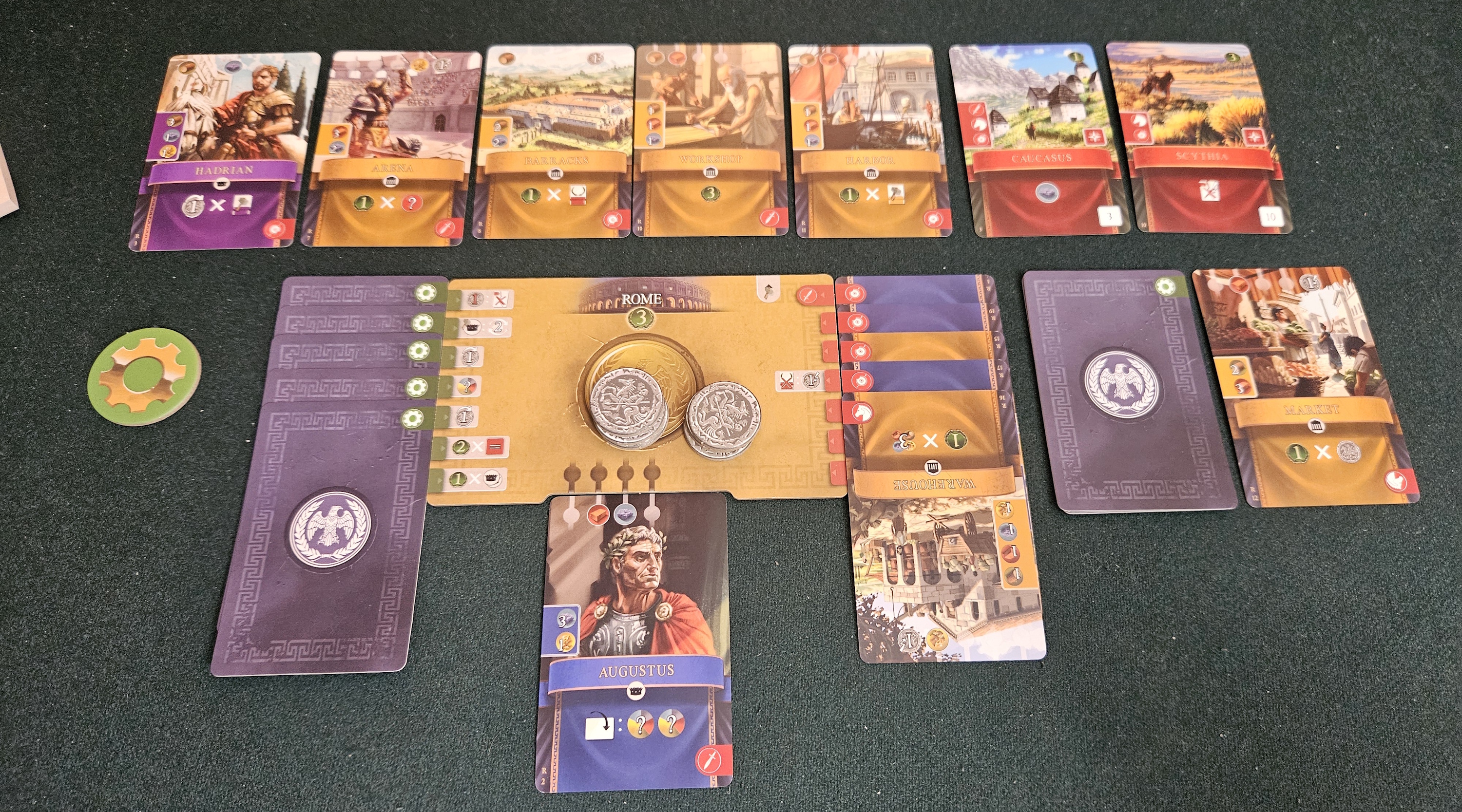
What have the Romans done for this tableau?
No sooner is its lid cracked than Rising Cultures reveals a few inborn limitations. There are four civilizations to helm, three of which are Egypt, Rome, and Persia, those old standbys that aren’t exactly going to blow anybody’s hair back. The experience is two-player-only. No solitaire, although what follows will be mostly solitary in nature, nor welcoming of a third or fourth player, although it feels like the designers could have pushed it to those heights had they really wanted to.
Also, there are heaps of icons. So many icons, in fact, that each civilization comes with its own fold-out crib sheet that translates every single line of the boards and every single card. Oh, and sometimes explains concepts in eight-point font that must be scraped from the surrounding info-spatter. Transcribing these details calls to mind City of Six Moons, another civilization game Rising Cultures is very much unlike.
From there, the gameplay grumbles into action. And it’s good action. Each round sees players figuring the best use for the four cards they’ve drawn from their hand. Scratch that; three of them will be used, the fourth will return to the top of the deck to reappear on the next go. The action economy is thus strictly limited. Three cards per round. Seven rounds per game. Nominally, that’s twenty-one actions in total.
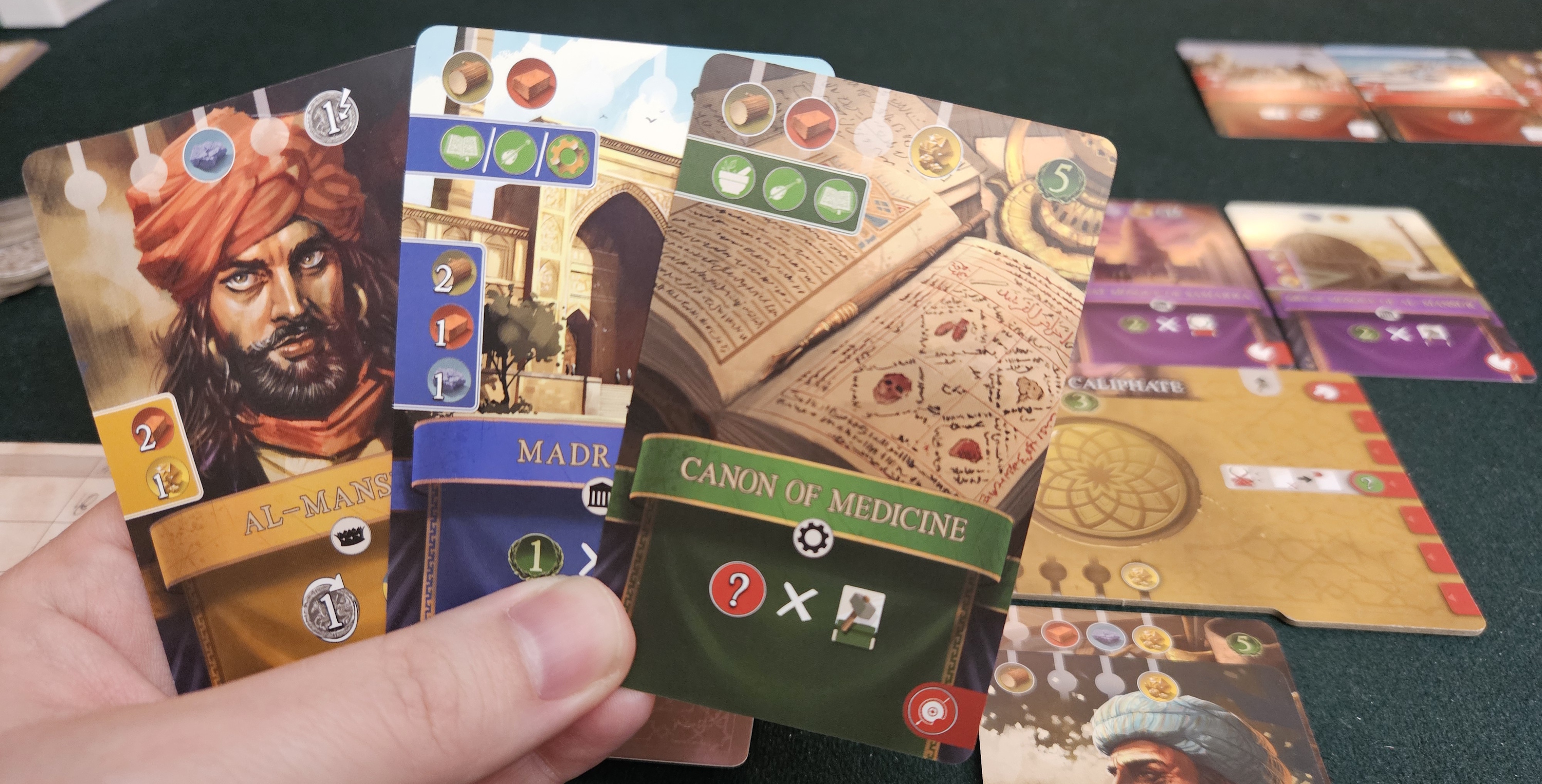
Of course, there are plenty of ways to break this rubric, although Rising Cultures isn’t quite as combo-tastic as some of its peers. At any given time, there are four main uses for each card. First — and flimsiest — you can discard it to pick up two coins. This always feels like a defeat. Second, you can slot it into your empire as resources, the bricks and stone and so forth necessary to, third, build cards into your tableau. This is the most durable option, permanently earning access to that card’s best benefits, whether scoring abilities or ongoing perks. Fourth, any card can enter your military. More on that in a moment.
Each turn revolves around a few cards.
As processes go, this is good stuff. Interesting stuff. Compelling stuff. Cards aren’t quite multi-use, in the sense that they might tempt players to wander distinct avenues. If possible, you’d probably want all of them in your main tableau. But that isn’t possible, and anyway there’s a clever tradeoff whenever you build a card. Basically, you’re given the option of flipping the bottommost resource onto your civilization board, unlocking further abilities but decreasing your overall wealth. It’s a smart move, one that goes a long way toward preventing players from falling into a formula where they spend their first few cards on resources and then keep building everything afterward.
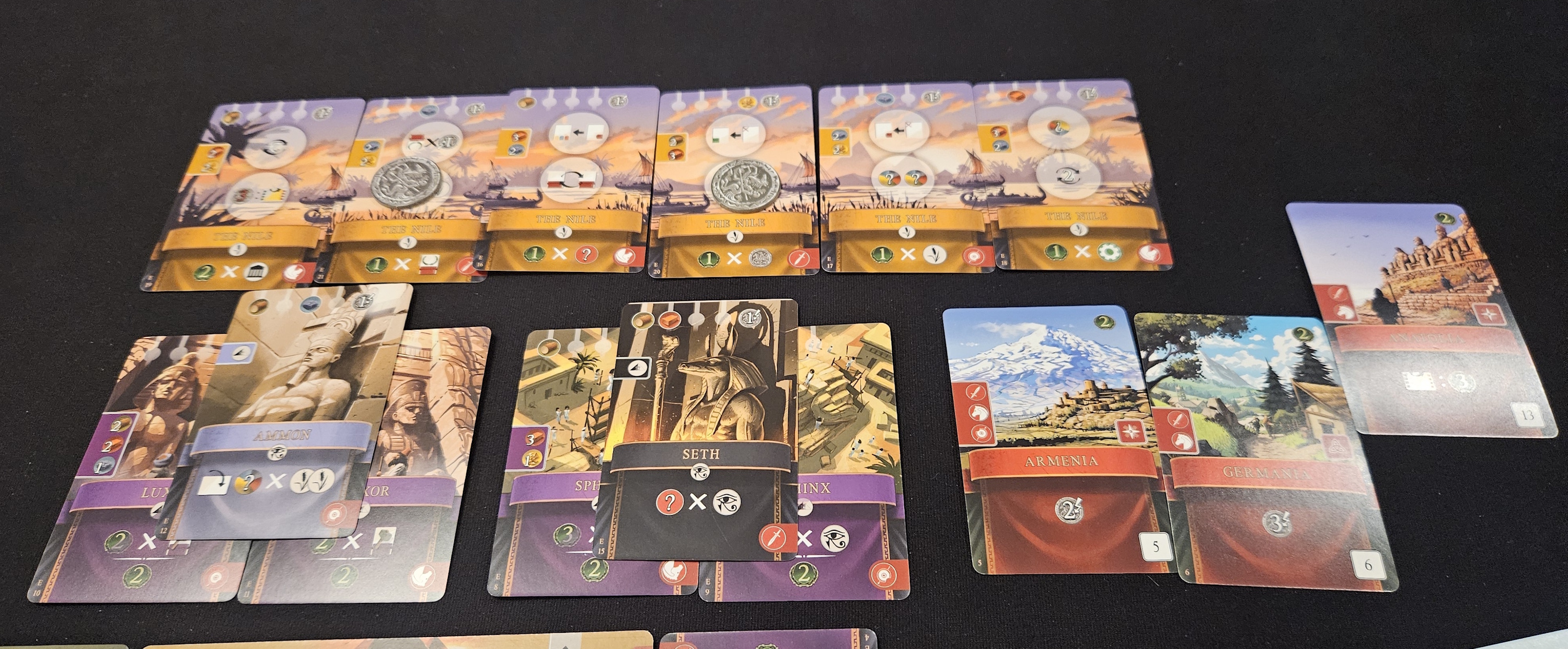
Little by little, your civilization takes shape. That shape, naturally, is largely predetermined by whichever faction you’re playing at the moment. The Romans go to war a lot. The Egyptians must manage the ebb and flow of the Nile. The whole thing feels a lot like Imperium, except you’re going through a deck once rather than cycling through and improving it over multiple stages.
At points, players are invited to glance at one another across the table. Usually this happens when gearing up for the fight that caps each round, when some province will be awarded to only one side depending on whichever civilization has assembled the most suitable army. In rare cases — okay, one case — a civilization offers bonus actions to its rival. Beyond that, this is a heads-down affair.
Which is fine. I’m not slamming multiplayer solitaire. But I am left wondering where Rising Cultures’ identity might be found. Its four civilizations each play like their own puzzle. With their cards jumbled together, all those natural synergies out of order, can you assemble them into a points engine that outpaces your opponent’s? Maybe. It depends. On the shuffle, sure, but also on whichever faction sits before you. Some are more complicated than others. Egypt has that shared Nile row going both for and against it. The Abbasid Caliphate requires some strict sequencing in order to usher in its era of science, which is notably tougher than the slapdash approaches available to Rome and Persia.
The Egyptians are in the Nile about this game.
What it never manages, unfortunately, is to stand apart. At its best, it feels like a microgame that got too big for 18 cards, or like a less generous and less flexible version of Imperium with half as many civilizations and a stricter play count. It isn’t weird or experimental, but neither is it especially standard, in the sense that it might appeal to someone who’s looking for an unvarnished civgame. The result is a middle-of-the-road title that says and accomplishes little. I don’t expect it to survive the test of time.
A complimentary copy of Rising Cultures was provided by the publisher.
(If what I’m doing at Space-Biff! is valuable to you in some way, please consider dropping by my Patreon campaign or Ko-fi. Right now, supporters can read the next installment in my series Talking About Games, this time tackling the topic of what makes a good list! Naturally, the piece includes a list.)
In the 9 years since we launched the submission form on our website, we have received nearly 3,000 game submissions, many of which were eligible based on our guidelines.
Alan reviews all submissions and shares some with me, and if I’m intrigued, we request a prototype and interact a little with the designer to see how they communicate. Finally, if we both think the game could be a Stonemaier game, we share it with the rest of the team (conceptually and on the table) to make sure we’re not overlooking anything.
Of those games, how exactly do we decide which games to publish?
It boils down to a series of questions we ask ourselves:
Will this game bring joy to tabletops worldwide? This is our mission statement. It’s a broad question, but it helps us try to picture the game on different types of tables worldwide.
Do we love the game? We spend a lot of time, energy, and resources on every game we publish, so there’s a high bar for how we feel about it from the start.
Does it feel like a Stonemaier game? There’s a certain vibe captured by our games, largely described in the 12 tenets. Just because we love a game doesn’t mean that it feels like a Stonemaier game.
Do we already publish a similar game (mechanically or thematically)? If someone submitted a winemaking game to us, even if we really liked it, it would be incredibly difficult for us to decide to publish it since we already make Viticulture.
Has another publisher already made a close facsimile to this game? Or, asked another way: If this game shares a core mechanism with another game (but with a twist), would we choose this game over the existing game?
Does it have the potential of being a big hit with evergreen potential? This is, in some ways, an unfair question. There are many games I love that have only sold a few thousand copies. But given that we average less than 2 game releases per year and that we invest heavily in every game we make, we want it to have the potential of being a big hit. This question includes the value proposition (the game’s estimated price versus what price it would need to have to be successful).
Are we excited to teach and share this game over and over? Something I learned in the early days of Stonemaier Games is that I don’t actually get to play the published versions of our games all that much. Instead, most of my involvement with our games is teaching them and talking about them. So even from the start, we try to envision ourselves doing that over and over to ensure this is a game for which we can maintain a high level of excitement.
Importantly, these questions also apply to games I try to design. There are multiple checkpoints throughout my design process when I share the status of a design (through video and playtests) with my team, and if we don’t answer the above questions affirmatively, the game does not get published.
Keep in mind that these questions are in addition to all the guidelines and tenets listed on our submission page. Many games check the submission boxes, but in the end it’s a very subjective decision. We’ve passed on games that went on to be successful with other publishers, and I’m always happy to see that they found the right home.
Also, in full transparency, I think we’ve been “wrong” about some games we’ve published in that at least one of the answers to these questions wasn’t as much of a full “yes” as we originally thought. I don’t regret publishing them, but those misses are a good opportunity for me to evaluate the process and the questions asked along the way.
What do you think of these questions? If you’re a publisher, how exactly do you decide which games to publish?
I think this is the first time I will have two major releases of my games occur at the same convention. June marks my annual trek to Columbus for Origins Game Fair. Two years ago my co-design with Danielle Reynolds, Caution Signs, premiered there. Hues and Cues would have in 2020 hadn’t it been for the shutdown. Everything else I’ve made typically debuted in the fall or was silently released into retail whenever they were ready.
I talked about boop. Shuffle previously and am anxious to see how it is accepted by the typical abstract-loving public. It was technically released in May, but this will be the first convention it will be available for sale.
The other title is being flown in from China and will be available at Origins in limited quantities – I’m told only around 100 will be for sale. Size Wise from GameHead has been in development for some time and is proof of how game design can lead from one idea to another organically.
Concept
For quite some time I had been tossing around the idea of a game about measurements. We’ve all seen plenty of trivia games where you guess how tall something is or how much it weighs. I’m not a fan of this type of game because replayability could be an issue. Over time people will memorize the answers.
I’m much more a proponent of groupthink, like Hues and Cues, where the correct answer doesn’t matter. Scoring points is about how well you match up with what other players think. This means that even if you have the same challenge in a different game, the answers might be very different depending upon the other players’ perspective.
First Crack
I began working on a game I tentatively called “Size Matters”. That progressed to “On the Scale of…” and then the final prototype name, “Banana for Scale”. It featured a board with a grid going from one to one hundred. Cards featured questions in different measurement categories with questions like “In millimeters, how long is a centipede?” and “What are the odds of aliens landing on Earth by 2050?”.
Questions could have actual answers, like the average length of a centipede, or be opinion-based like the alien one. In both cases, points are scored if you matched the answer within a range of the active player. It didn’t matter about the size of the insect or whether aliens arrived or not!
It was while doing a little dev work on this game, trying to decide what the interface would be for the consumer that I thought of the situation where a fisherman is trying to describe the size of the fish they caught using their hands as measurement tools. I knew this type of description wouldn’t work for “Banana for Scale” as it was only about size and not predictions or any of the other categories. I still felt like there was something cool about those fish tales and how it could be used in a game.
Prototypes
The game itself turned out to be rather simple, which I was fine with. I’ve learned that simple sells. Mass-market consumers don’t want long rulebooks or teach. They just want to play. Using your hands to describe the size of something is natural and familiar. How would I control the game though if I allowed the players to hold their hands up and tried to compare them?
Plus, why would they even need to buy the game if we didn’t supply a unique experience with custom components!
The first, obvious answer to me was a measuring tape. I envisioned each player having a player-color measuring tape with no markings. I figured players would extend their tapes for the lengths they were estimating and hold them next to each other to compare. I purchased a lot from Amazon to play around with. It was then I discovered something important.
Cheap measuring tapes only click and hold in certain increments. The ones I bought extended in 1.5” segments. Traditional measuring tapes like what you might have in your garage are much more accurate…and expensive.
Second Attempt
I was struggling to figure out a way to implement the ideas of this game inexpensively yet still being unique and appealing. My mind went back to the fish analogy. That’s when I thought of a bobber on a fishing line.
A ball on a string – that would work! The clasps on a bobber would allow it to slide up and down the line and become a pseudo measuring device! Off to Amazon again to shop for bobbers.
What became difficult was that bobbers are designed for thin fishing lines. At best I could use color nylon string, but that is very thin and doesn’t come in easily differentiated colors. Neither do bobbers. They’re mostly neon yellow, neon orange or white. Not nearly enough for player colors.
Third Attempt
Bobbers were out. So were tape measures. My next idea was utilizing those little spring-loading things you see on backpacks or sweatshirts (see photo above). I’m sure they have an official name, but I have no idea what it is (editor's note - spring cord locks). I managed to find a batch on Amazon to test. They didn’t hang consistently due to their odd shape and lack of weight, so comparing lengths was a bit of a chore. There was also the issue of the weight of string I was using.
Solution
Eventually, I somehow landed on shoestrings as they came in a broad range of colorful hues (see what I did there?!) and were very inexpensive. Because of the Amazon searches I had made for bobbers and balls, it magically recommended I look at beads. I found a set of ¾” diameter color beads that conveniently matched many of the shoestring colors! My hypothesis was that I could put the shoestring through the tiny bead hole and friction alone would hold it in place.
OSHA Violation
My theory was correct. Except the holes weren’t quite large enough. Using the bead holes as a pilot hole, I hand-drilled them to be larger, to the dismay of my wife who had already dialed “91” on the phone so she could complete the call to Emergency Dispatch quicker. Looking back, I admit it probably wasn’t the safest way I could have made them.
This is a case of the risk being worth the reward. They performed perfectly! I tied one end of the shoestring to a keyring and threaded the ball onto the other end. A tied knot would keep the ball from falling off and now I had player-colored measuring devices for each player!
Testing
I went through many scoring options, eventually landing on a player just not wanting to be in the extremes. Shortest and longest receive strikes. Everyone else is safe. Person with the fewest strikes wins!
Luckily, I had several design retreats, Protospiels and conventions on my schedule. “OutSized” (what I was calling it) was tested by dozens and dozens of players over the next few months. I was also able to curate a number of fun clue challenges thanks to playtester contributions. They are all mentioned in the rulebook!
Pitching
I was carrying both OutSized and Banana for Scale in my pitch bag at Pax Unplugged, mostly focused on the latter. I did show OutSized to a couple people once I got a better feel of the market and price point they were trying to hit. Paul Salomon from GameHead was one of those people. He didn’t jump right away but was obviously still thinking about it later as he followed up and told me about the company and what they were doing.
They are a newer publisher, but not new to the industry. GameHead is the publishing arm of GamerMats and they hired Paul (Honey Buzz) to act as inventor relations and developer. To his credit, the dev experience working with him has been one of the best I’ve experienced to date.
They were about to release their first six games (2025) and he was building out a slate of six potential 2026 titles. He saw the same simplicity and elegance in what I had made and committed to the game. It was now his job to turn my shoestrings and beads into something worth buying!
Done!
As you can see from the final product, he incorporated Schoolhouse Rocks styled artwork and one of the best laid out rulebooks I’ve ever been associated with! After testing a few different possible names for the game, we agreed on Size Wise.
I mentioned earlier that Size Wise will make its retail debut at Origins this month. While preparing for the show, GameHead was able to have the manufacturer make a giant-sized version to show off during demos! If the giant version is as popular as I think it will be, maybe you’ll see it available for purchase via crowdfunding! 😉It's double the size with six foot strings! How big is a donkey?!
I’ll be at both Origins and Gen Con and would love to teach it to you myself! Come by booth #1908 at Origins to grab one of the first 100 advance copies! Expect a general release at Gen Con booth #1629! See you there!
I picked up a review copy of the medium-weight, engine-building title Tundra, designed by Luc Rémond and David Simiand. Rémond is best known for one of the most popular two-player-only designs of the last 10 years, Sky Team. That, alone, made Tundra an instant “yes” when I had the chance to grab a copy during my visit with the Hobby World team at SPIEL Essen last year.
Tundra gives it to you straight. Over the course of four rounds, players take on the roles of estate managers in the fantasy world of Tundra, using workers and towers to gather resources to score the most points. Tundra, the game, begins every round with each player using the same set of die results across four dice—rolled by that round’s first player—before players use one die per turn to activate a space on one of their four action boards, known as “Order” boards.
These Order boards are not unique across the player pool, so each board does the same thing for each individual player…at least, when play begins. The tasks are very vanilla—gather one or more of the game’s three resources (firewood, peat, and rock), build towers and workers, move around a grid-based map of tiles that offer more chances for more resource gathering, or upgrade the Order boards to…
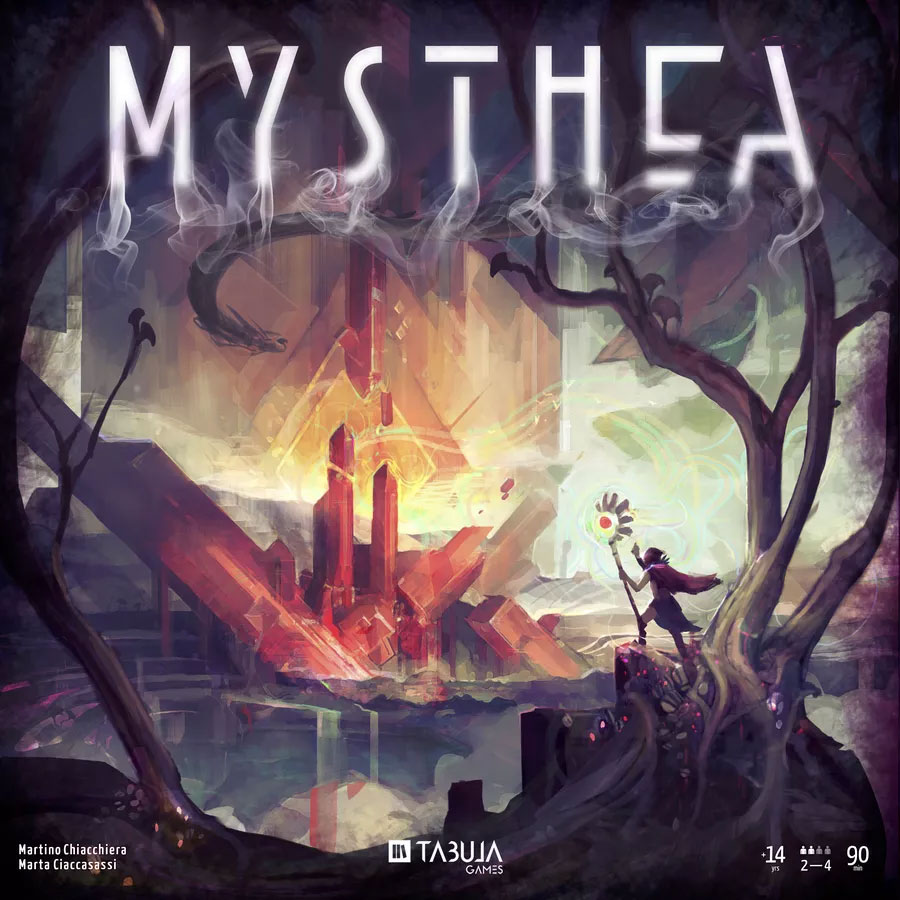
Crowdfunded board games are a saturated market space. In other breaking news, the sky is blue. That saturation means there are much-hyped games that don’t even merit being printed. It also means that there are criminally underrated games that sneak through unnoticed. To call Mysthea unnoticed is a bit of an overstatement, as it was […]

 Anmelden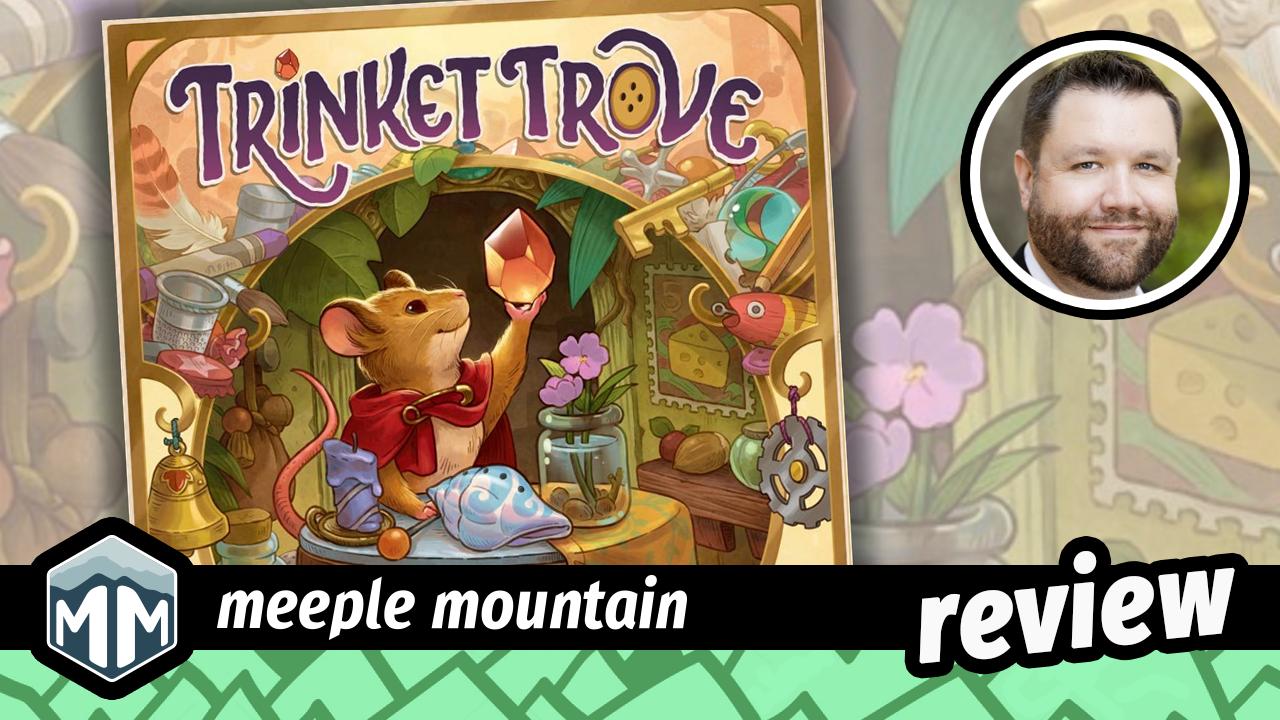


/pic9416247.png)




/pic9496662.jpg)