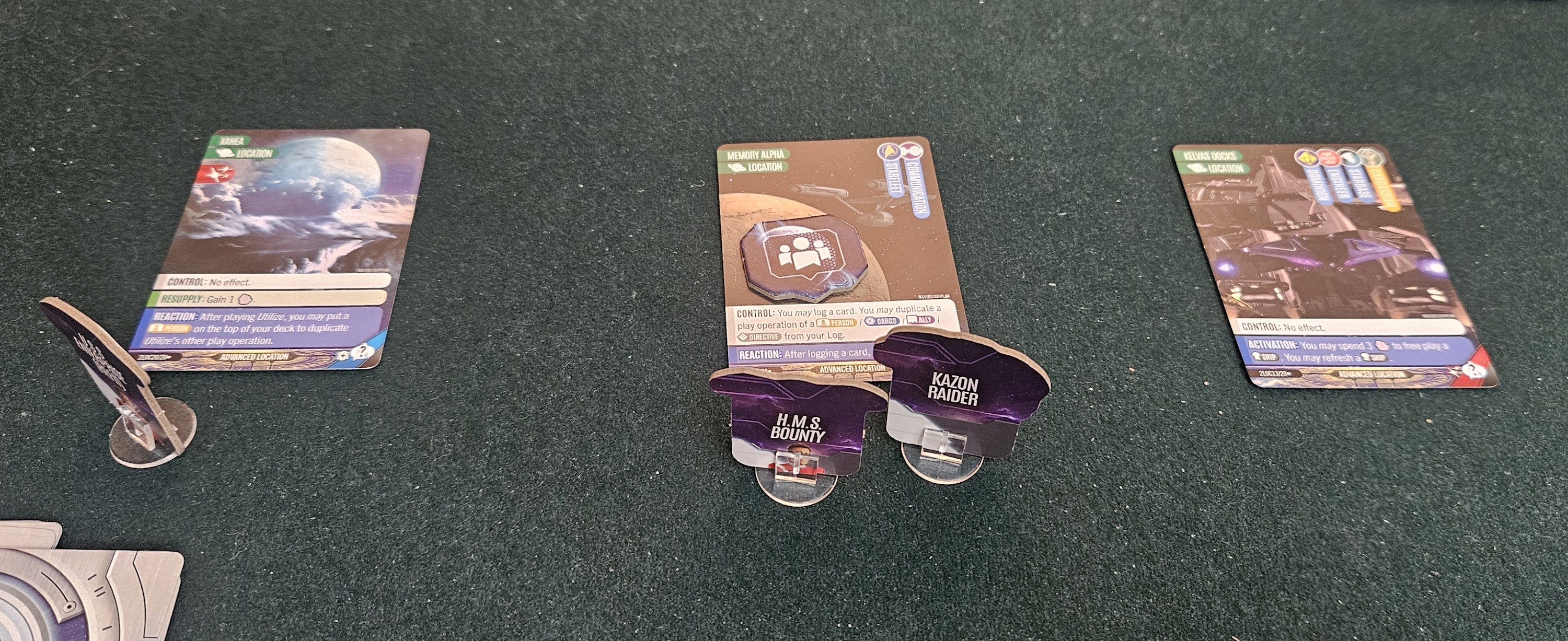
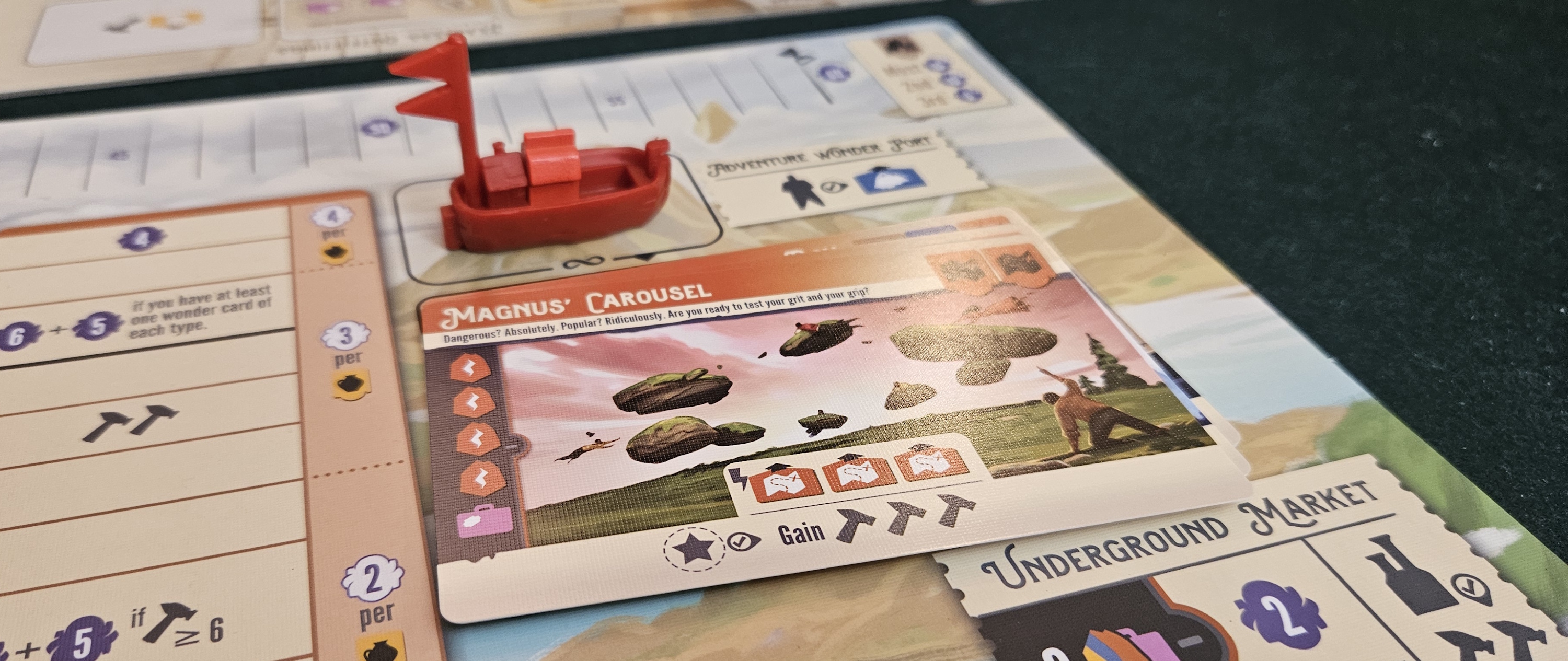
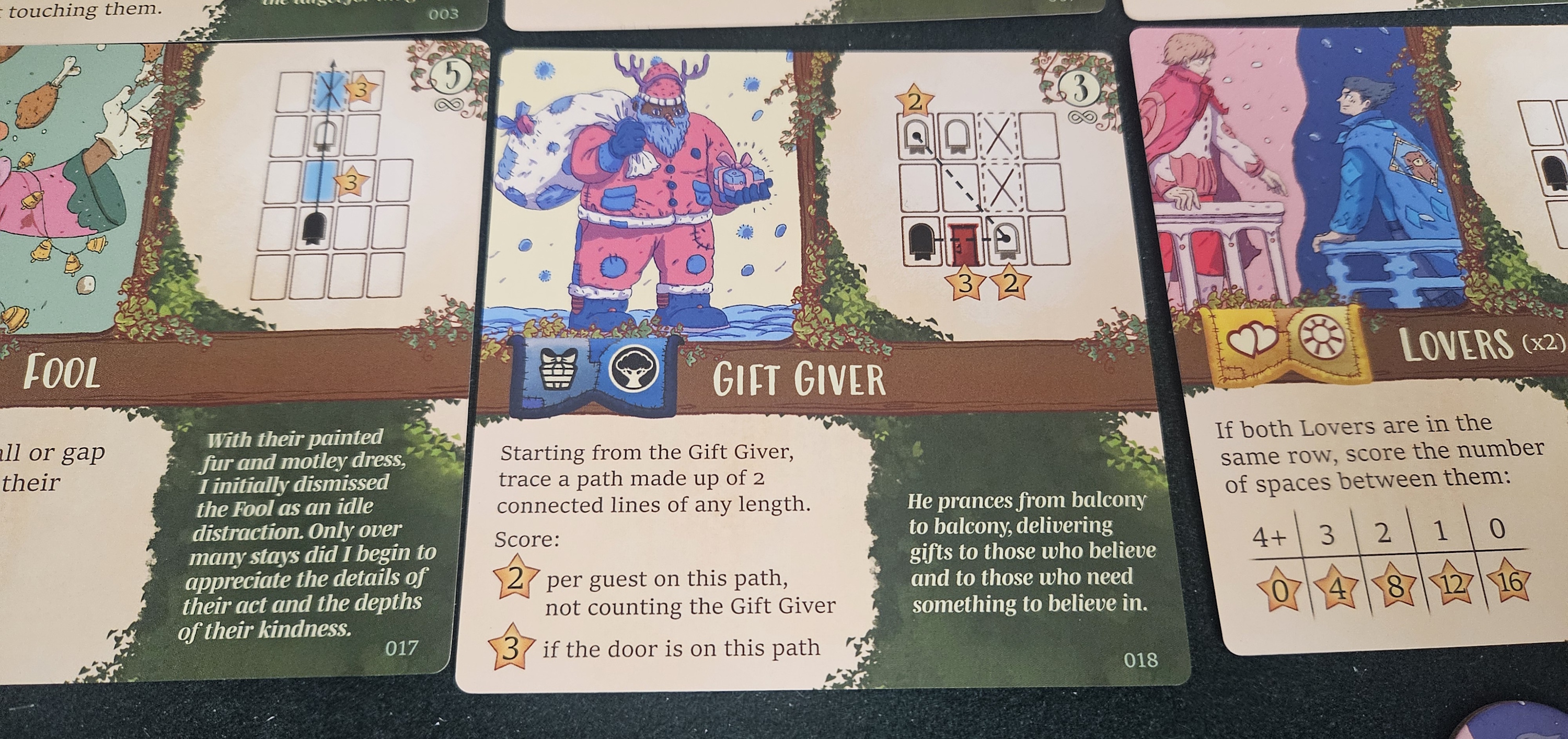
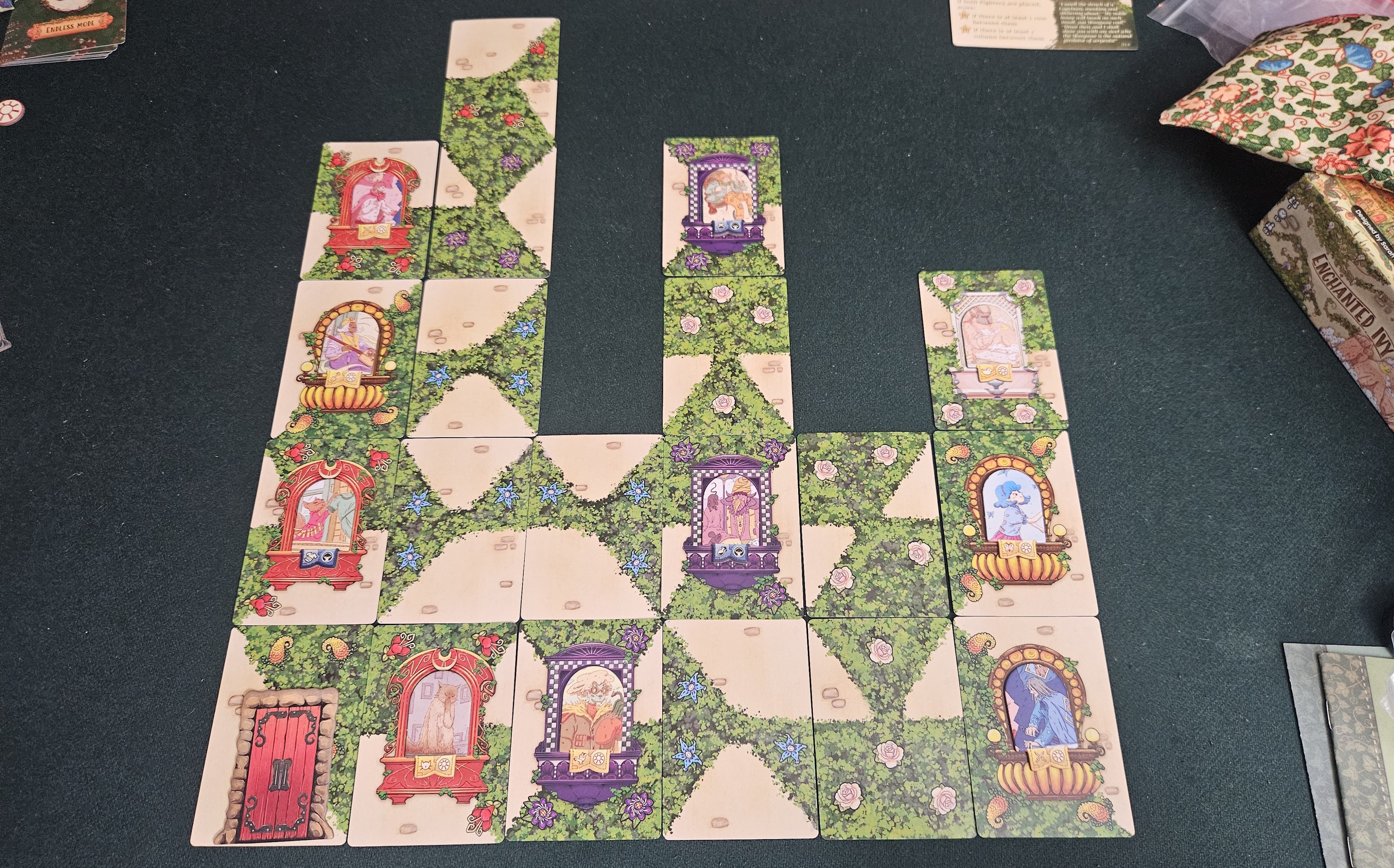
Ah, Captain’s Chair. I’ve already logged my appreciation of Nigel Buckle and Dávid Turczi’s remapping of Imperium into the Star Trek universe. Like that series, now sadly defunct thanks to the shuttering of the board-gaming side of Osprey Games, this is an information-dense deck-builder that absolutely revels in its moreishness. Quite literally. It features more icons, more decks, and more chrome-laden rules per cubic micron than any other deck-builder I can recall.
Now there’s a second-wave box, To Boldly Go. If you’ve played the original, you know what to expect. Seriously, newcomers can just read my previous review.
Kirk out here Kirking.
I really wasn’t bluffing. I’m not about to spill anything new. OR AM I? Look at me, playing like Q.
For the most part, To Boldly Go repeats the accomplishments of that original set, featuring six new captains who can either be commanded in one of the game’s default duels or faced as an opponent in the (excellent) solitaire mode. As with Imperium, these decks are what make Captain’s Chair Captain’s Chair. Like an unassimilated technological and biological lifeform, they’re distinct.
How distinct? Distinct enough that there’s good news and bad news.
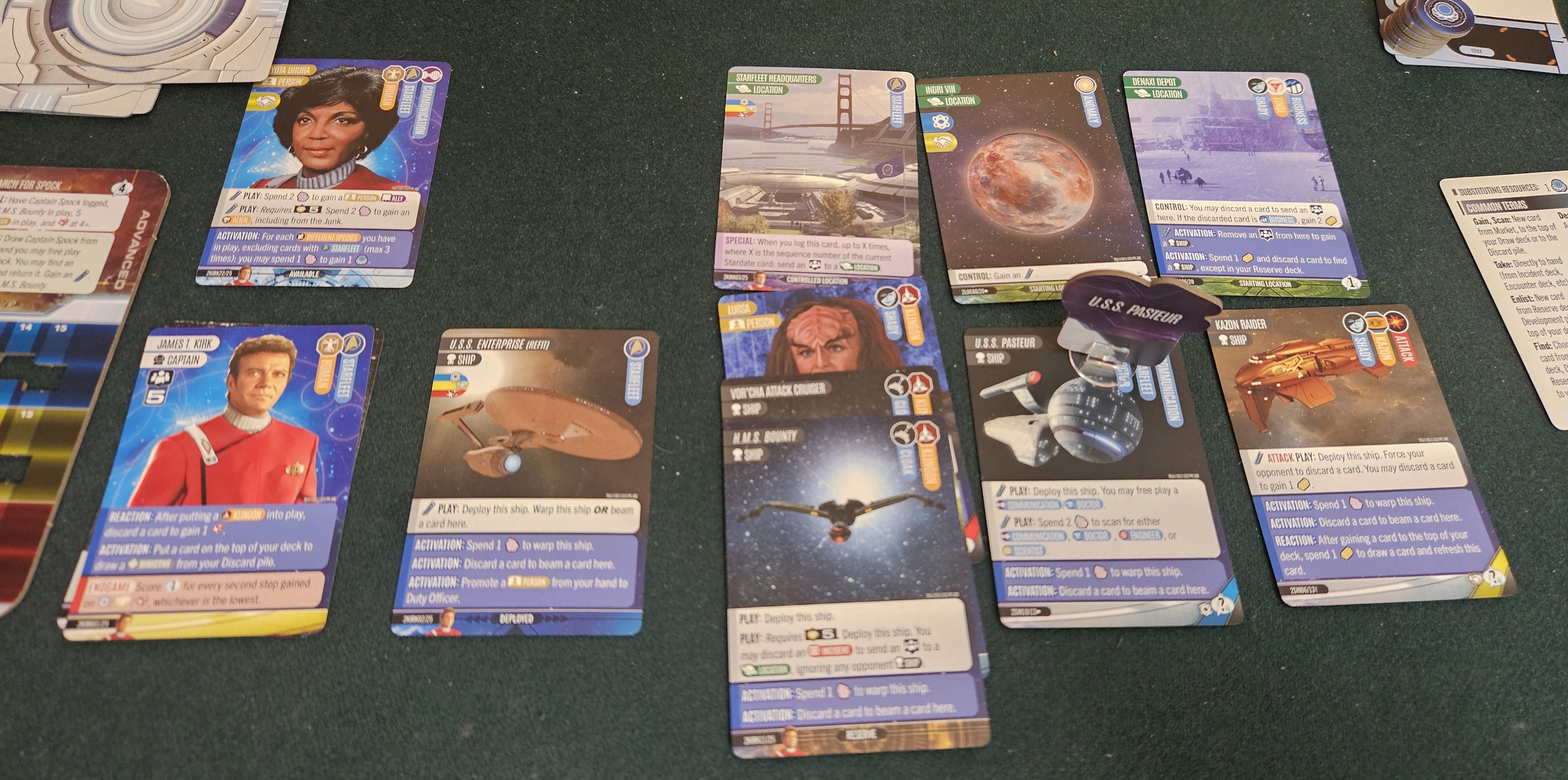
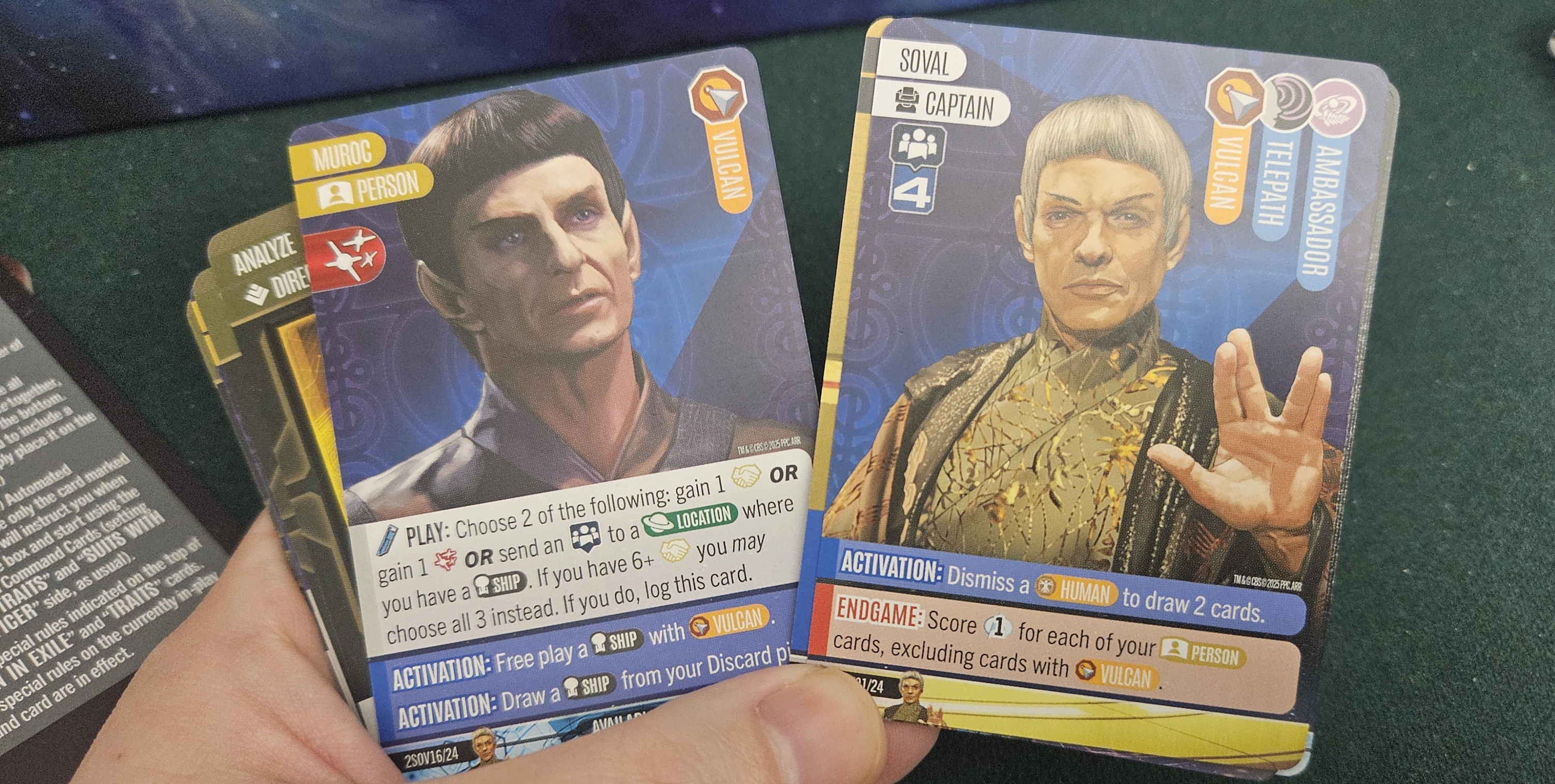
First, the good. The captains in To Boldly Go are even more dissimilar than those in the base box. Even the ones that are relatively “baseline,” like Soval, Philippa Georgiou, and the long-awaited James T. Kirk feel different on the table. Having served as an ambassador to Earth, Soval fuels his abilities by dismissing them as a species — in game terms, by literally chucking them out of his hand. Which is a bit of a double-edged ability, since he wants to fill his deck with enough exemplars of mankind to keep his better abilities churning. Kirk, meanwhile, is an all-rounder, forced to emphasize the game’s various flavors of influence equally. The flipside is that, as the grandfather of this galaxy, he’s more likely to draw encounters, the ultra-powerful scoring cards that most captains only see one or two of throughout an entire session.
The other captains are wackier, and I mean that entirely as a positive. Khan breaks the game’s usual rules, dispensing with the customary science/diplomacy/military track to instead mind-control a diverse crew and start shouting Moby Dick quotes at his enemies. No, really. He has Moby Dick quotes. Archer, being the flashback character, starts with a deck that fits in his starting hand and nearly no away team tokens for conquering planets. Instead, he has to rush to form the Federation from scratch, giving him some incredible early-game momentum but the testiness of having to forge synergies from first principles. And then there’s Rebner. I haven’t seen a single episode of Lower Decks, so I have to trust Buckle and Turczi when they inform me that Rebner’s whole deal is that he’s a total moron. He draws only three cards per turn, can’t utilize science or diplomacy at all, and his cards get stronger as they find and don big hats.
Aha, a card market!
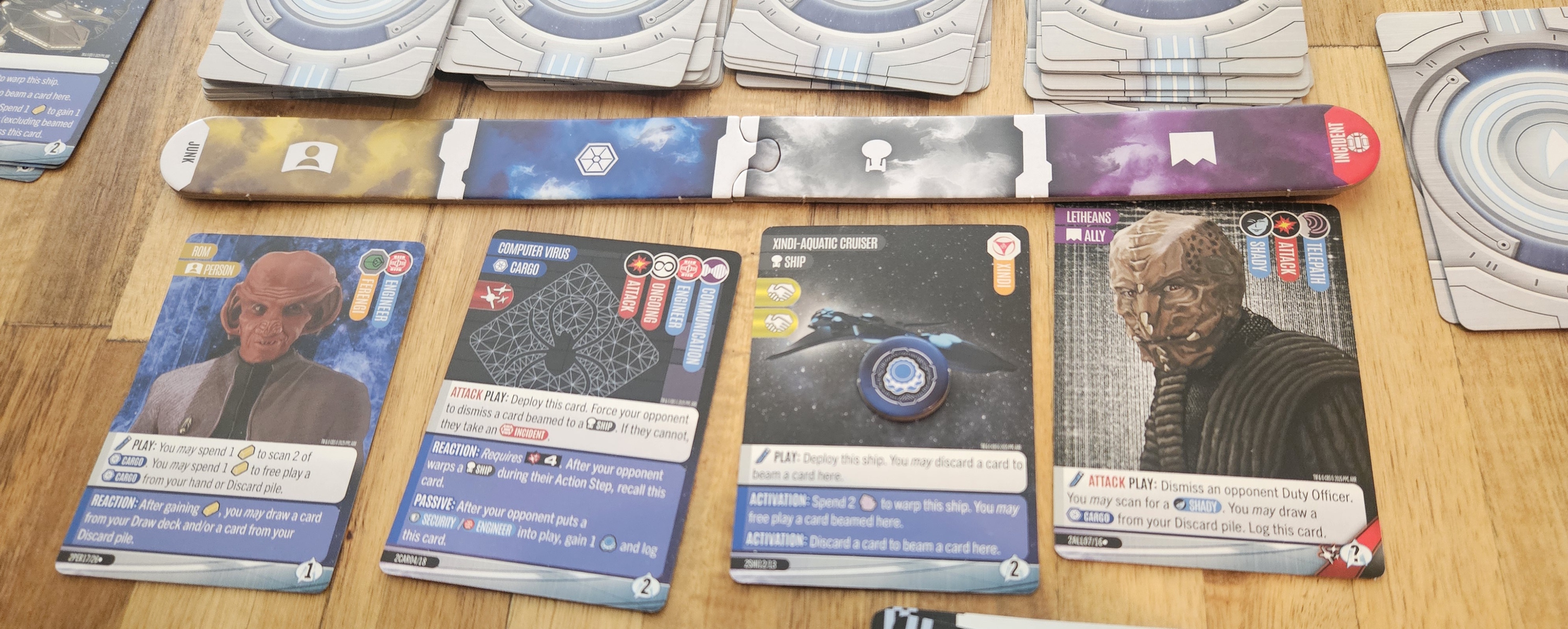
Actually, Rebner has become my object lesson for To Boldly Go at large. He’s a total hoot to play, and moreover he’s forced me to embrace a portion of the game I’ve always tended to overlook. Returnees to Captain’s Chair might already know what I’m talking about. In the market, there are four main decks that players can freely recruit from. Three of those decks — people, ships, and allies — offer immediate utility. The fourth, the one called “cargo,” has always been a little trickier to use. These are special items that… well, they do all sorts of things. Which is both the value and the drawback of cargo. You’re never quite sure what you’re going to get. Most function as attachments, things you can merge with other cards to bestow new abilities. But they aren’t always that, and sometimes their wilder effects can be more trouble than they’re worth.
Rebner, with his crew’s emphasis on securing and wearing fancy hats, makes cargo a necessity. His starting deck has a bunch of hats, both in its starting pool and for later recruitment, a stark contrast with most captains who might have one or two tucked into their reserve. What’s more, a couple of additional hats can be found in the cargo market deck. They get a “helmet” tag and everything.
But that reveals an issue with To Boldly Go. More specifically, an issue with merging To Boldly Go with the original Captain’s Chair and any forthcoming sets.
In short, the original game didn’t contain any helmets. Which means that poor stupid Rebner is going to have a heck of a time finding any hats for his crew when using the original Captain’s Chair market, whether on its own or blended with the offerings from To Boldly Go.
Of course, the issue is broader than a shortage of hats. It’s that each captain has their own objectives to pursue, and these objectives often require them to dive through the market for specific keywords. Some of these tags are standardized across sets. Roughly half the card pool has been duplicated from the original box, and there are always plenty of humans, Vulcans, and Klingons. For captains who need specialized tags, merging or crossing-over sets just became a testy proposition.
As before, the icons are nice and crisp, but also… there are tons of them.
This isn’t to say the issue is a dealbreaker. Nor that it presents an intractable problem. There have always been tools for rifling through the decks of Captain’s Chair, in particular the “scan” ability that allows players to search through a certain number of cards — even multiple market decks — to mine a specific keyword. It’s pretty rare that you’re beholden solely to whichever cards are currently on display.
But it highlights a certain jankiness to the system. Turczi has compared sets to drafting cubes. Captains function best with the cards in their box, not necessarily when merged across sets. Which, to some degree, makes the whole thing a little less appealing, at least to this guy. I’d much rather rest assured that I could have Kirk face down Koloth or Picard take on some theoretical third-wave Borg Queen without worrying about the composition of the market introducing its own subspace turbulence.
Because, yeah, Captain’s Chair is good enough, even with these bumps, that I want to keep exploring what it has to offer. Even at its most maximal — frankly, thanks to that quantity-is-quality — there’s a thrill to seeing how Buckle and Turczi can mine their deck-building system for new ways to express this particular setting. I loved the diversity of cultures in Imperium, that it was possible to have something sprawling like the Roman Empire throw down with the Olmec and the Inuit, each with their own cultural focuses, and still function at all, let alone present such a compelling contest.
Here, decks are even more distinct. Combined with the additional flexibility of a system that stretches further than its predecessor, the result is a game that keeps me coming back. Even when, on occasion, it frustrates me with its avalanche of icons, a lane-battler core that sometimes gets lost amid everything else, and now the persnicketiness of sets that don’t effortlessly merge.
Captain’s Chair is also a lane-battler. Sorta.
Maybe this was always inevitable. As Imperium grew, that system faced similar aches and readjustments. Any growing pains are only compounded by the sheer enormity of what’s contained in each box. So much for balance; then again, it was always a remote possibility with decks as varied as these.
Either way, here’s to another Captain’s Chair. Going forward, I think I’ll boldly shuffle everything together, consequences be damned.
A complimentary copy of Star Trek: Captain’s Chair: To Boldly Go was provided by the publisher.
German board game designer Mathias Wigge has pulled off an impressive feat at the Deutscher Spiele Preis – Germany’s biggest community-voted board game award – by winning with both of his first two standalone games, Ark Nova and Sanctuary.
Sanctuary claimed top spot in the annual award ahead of Pegasus Spiele’s commercial hit Boss Fighters QR and space tourism-themed worker placement title Galactic Cruise, which has already scored a string of major award wins.
The win also cements Feuerland Spiele‘s position as the most successful publisher in the Deutscher Spiele Preis since the company was founded in 2012, with four victories – twice as many as any other publisher over that period.
Feuerland scored an early DSP victory with Terra Mystica in 2013, before a flurry of three wins in eight years via Wingspan in 2019, Wigge’s debut design Ark Nova in 2022, and Sanctuary this year.
The game, released in Germany as Artengarten last year, aims to offer a shorter and more accessible take on Ark Nova’s zoo-building and wildlife conservation theme, replacing much of the original’s card-driven gameplay with tile placement.
Feuerland also positioned the game at a lower price point than Ark Nova, with a recommended German retail price of €49.90 against €64.90 for the original.
The win follows huge critical and sales success for Wigge’s predecessor design Ark Nova, which had sold more than 300,000 copies worldwide and racked up over 10 million plays on Board Game Arena according to a report from German newspaper Der Patriot in February this year – as well as being ranked in second place among all the titles on BoardGameGeek.
The app-driven cooperative game spent six years in development, with Palm and Zach revealing that extensive work was needed to ensure its QR code scanning technology operated reliably and to develop the digitally controlled bosses.
Boss Fighters QR was also nominated for this year’s Kennerspiel des Jahres, alongside Moon Colony Bloodbath and eventual winner Rebirth.
Galactic Cruise’s third place finish follows a striking awards run for the game, which was the first major release from US publisher Kinson Key Games.
The title, designed by TK King, Dennis Northcott and Koltin Thomson, had already been crowned Heavy Game of the Year at BoardGameGeek’s Golden Geek Awards in May, before taking Game of the Year, Best Strategy Game and Best Game from a New Designer at the Dice Tower Awards in August.
Germany’s Frosted Games was represented twice, through Reiner Knizia’s Kennerspiel des Jahres winner Rebirth in sixth place and Star Trek: Captain’s Chair in ninth, while Kosmos took eighth with River of Gold.
This year’s children’s Deutscher Spiele Preis went to Wojciech Grajkowski’s Toriki: The Castaway Island, published by Mirakulus, ahead of Mooki Island and Paleolino.
The Deutscher Spiele Preis, which has been presented since 1990, is decided by public voting among players in Germany, Austria and Switzerland, rather than a specialist jury.
Organisers said “many thousands” of players took part in this year’s voting. Eligible games were released in German between May 1, 2025 and April 30, 2026, with the winners announced at the Spiel Essen game fair.
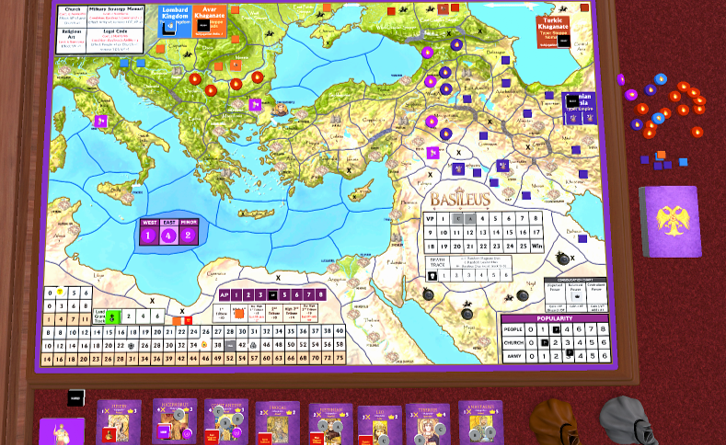
From time to time, we assist designers with getting the word out for them as they are looking for playtesters for upcoming designs. Recently, I was contacted by Douglas Walker who is working on 2 designs, one named Rubicon and the other Basileus, and was in need of assistance. He has created a Discord server for potential playtesters called “Doug Walker Playtest Server.” Here is the invite, which won’t expire: https://discord.gg/gSsQRWjPWp.
Doug has provided the following descriptions of the games:
Rubicon is a strategy game about political competition in the late Roman Republic. It is 133 B.C. The Republic of Rome overshadows the Mediterranean world, but internal discord threatens to derail its growing empire. Two political factions vie for dominance—the aristocratic and conservative “Optimates” and the populist and revolutionary “Populares.” The fragile consensus holding together Rome’s elites erodes as conflict grows ever more violent.
In Rubicon, players control a faction of Roman senators belonging to either the Optimate or Popularis faction. More than one player belongs to each faction—but only one player may win the game. Players use their political influence to win elections, gain glory in war, and shape the laws of the Republic to suit their ideology and interests. Rubicon involves simultaneous blind bidding, negotiation and hand management. A thematic push-your-luck mechanic involves violating the unwritten customs of the Republic to unlock powerful actions, at the risk of provoking a deadly pushback. Winning requires carefully balancing cooperating with one’s faction partners to advance shared objectives, such as passing laws, while simultaneously competing with them to advance the glory and reputation of one’s own characters.
It is A.D. 568, and you live in the East Roman Empire (also known as the Byzantine Empire.) Three years ago, the great emperor Justinian died and was succeeded by his nephew. As the heirs of Caesar Augustus and Constantine the Great, the emperor—or “Basileus”—enjoys total control of the Byzantine state. Yet it is clear that Justinian’s repeated attempt to reconquer lost territory in the west has overextended the empire. He succeeded in re-taking North Africa, Sicily, and Italy—but at an enormous expense in both money and soldiers. Wealthy landowners and small farmers alike are burdened by taxes. The “powerful ones” or “magnates”—men who are educated, own land, and serve the government as high-ranking officials or generals—are unhappy. Justinian’s prestige made him untouchable while alive, but his successor enjoys no such immunity.
Basileus is a card-driven strategy game for three players that simulates politics, war and diplomacy in the East Roman Empire in the 500’s AD. Players take one of two roles: one player—the “Ruler”—controls the emperor (Basileus), while the other two players—the “Magnates”—control both the wealthy and powerful Roman courtiers and non-Roman nations. Players take two actions per turn. There are a certain number of actions available every turn, while strategy cards give extra event and action possibilities to the Magnates. Action cards are chosen simultaneously and resolved in a semi-random order, making gameplay quick and unpredictable. Victory points are awarded for winning battles, conquering territory, and completing literary or artistic achievements. But there’s a catch: the Basileus-Player automatically gains a certain number of victory points each turn. The Magnates must try to make life difficult for the Ruler by lowering the Basileus’s popularity, devastating the Roman economy, leading foreign nations to victory over Roman armies, and building up disloyal characters. If they get lucky, they can initiate a rebellion against the Basileus, depose him, switch roles with the Ruler to become the new Ruler. The Ruler player must try to ensure that the Basileus remains popular with the Romans and successfully defends against foreign threats. But in a world where any failure can be interpreted as divine punishment, the margin for error is razor-thin. Basileus is a tense game where success can be fleeting and danger lurks just around the corner.
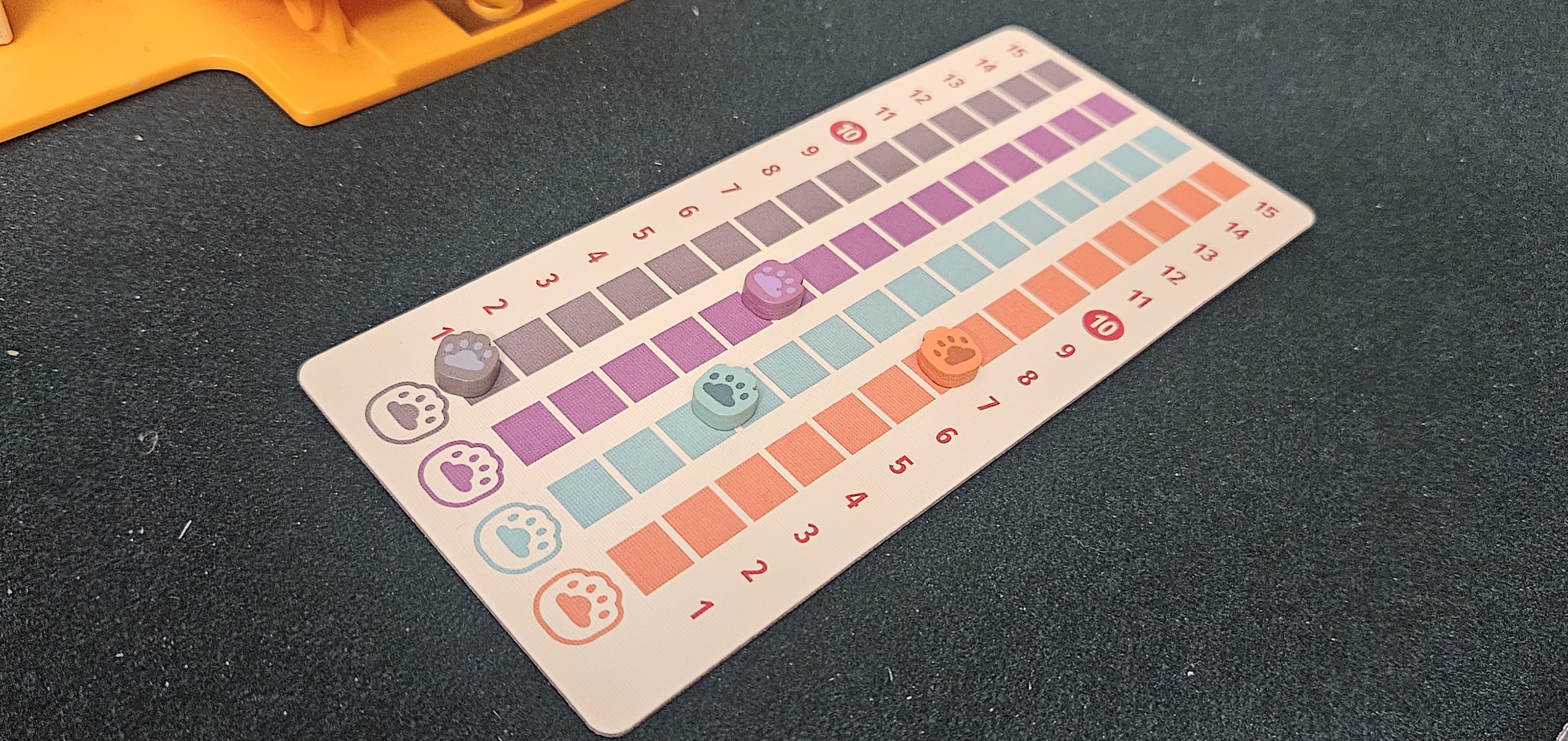
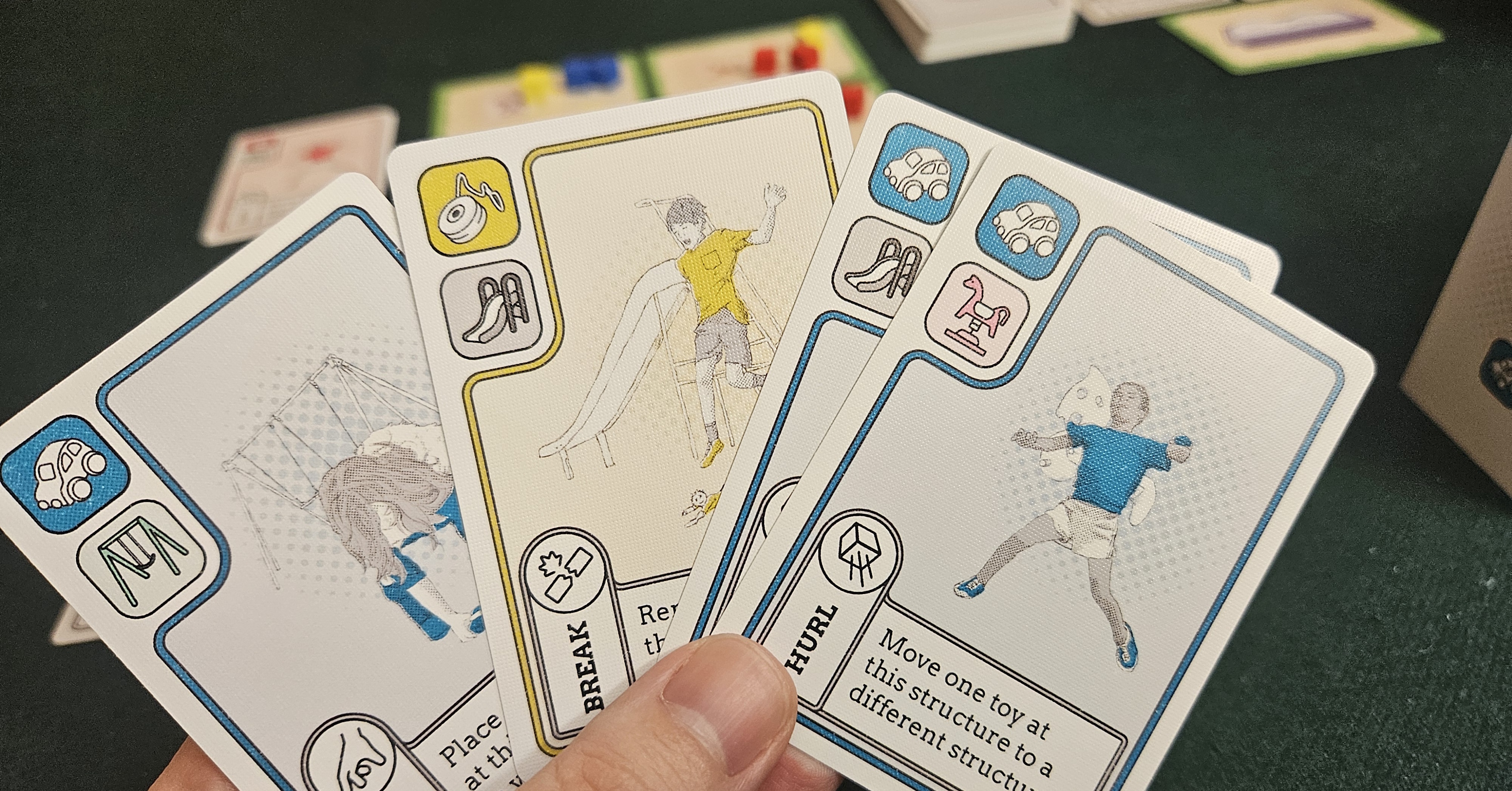
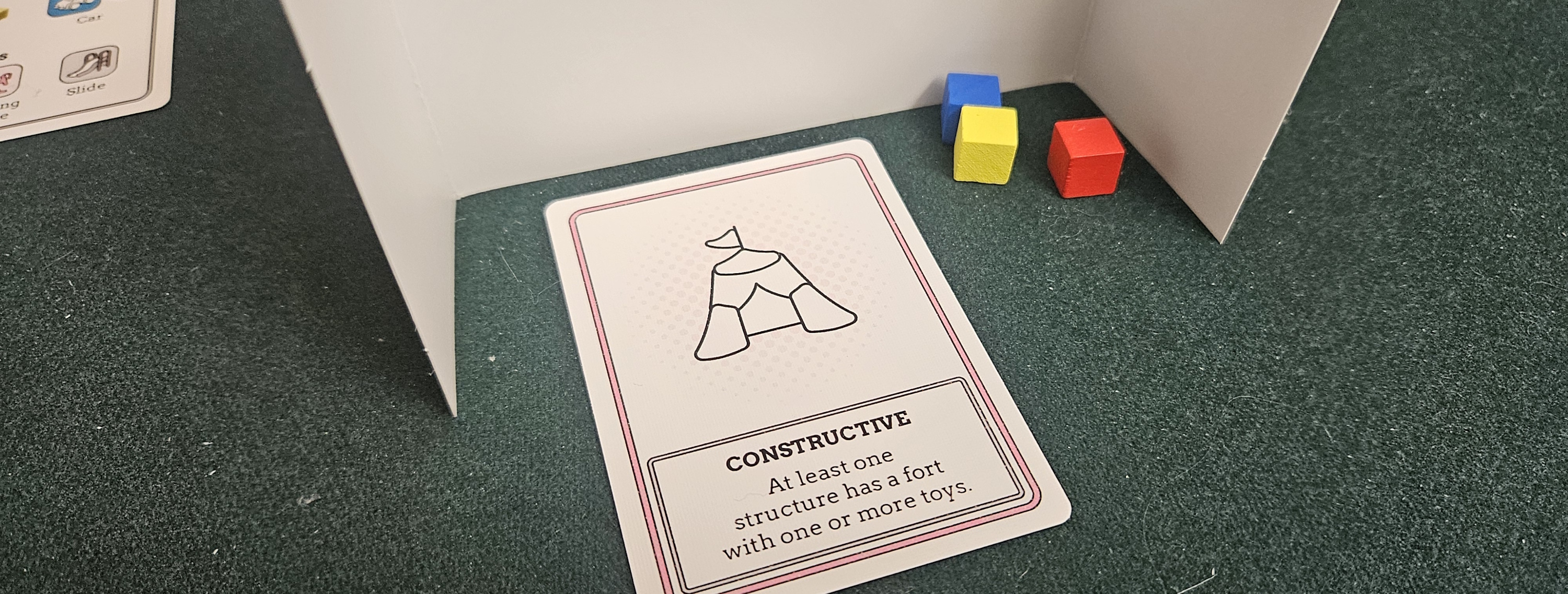
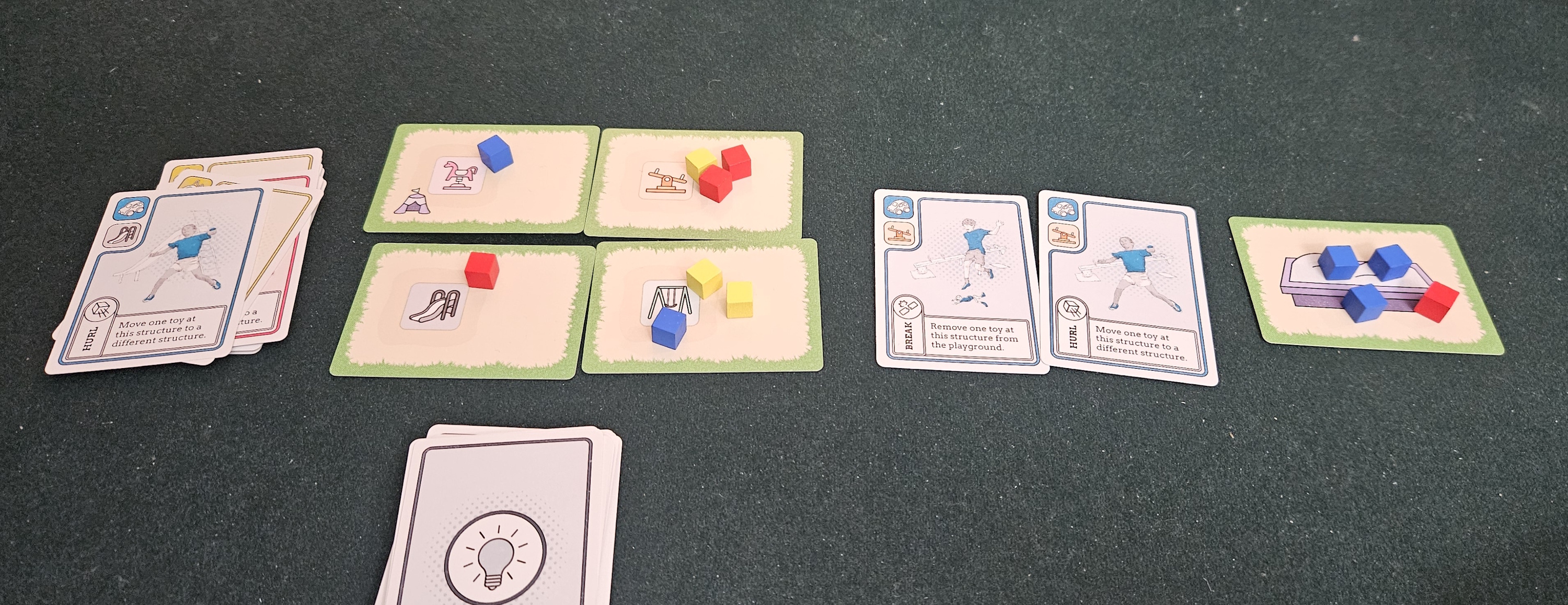
When she isn’t pretending to be a dragon, my seven-year-old pretends to be a cat. “Mrrrowrrr,” she says when she pounces on me in bed in the morning. “Raawwwrrr,” she purrs when it’s time for her to line up for second grade. “Grrrrrr,” she rumbles at bedtime, her bones suddenly transforming to jelly. If certain “news” articles were to be believed, we’d have a litter box in the bathroom.
So, as a surprise, I picked up Cats Knocking Things Off Ledges. Designed by Sen-Foong Lim and David Killing, it’s as descriptive a game as they come. My seven-year-old treats it as a tornado simulator.
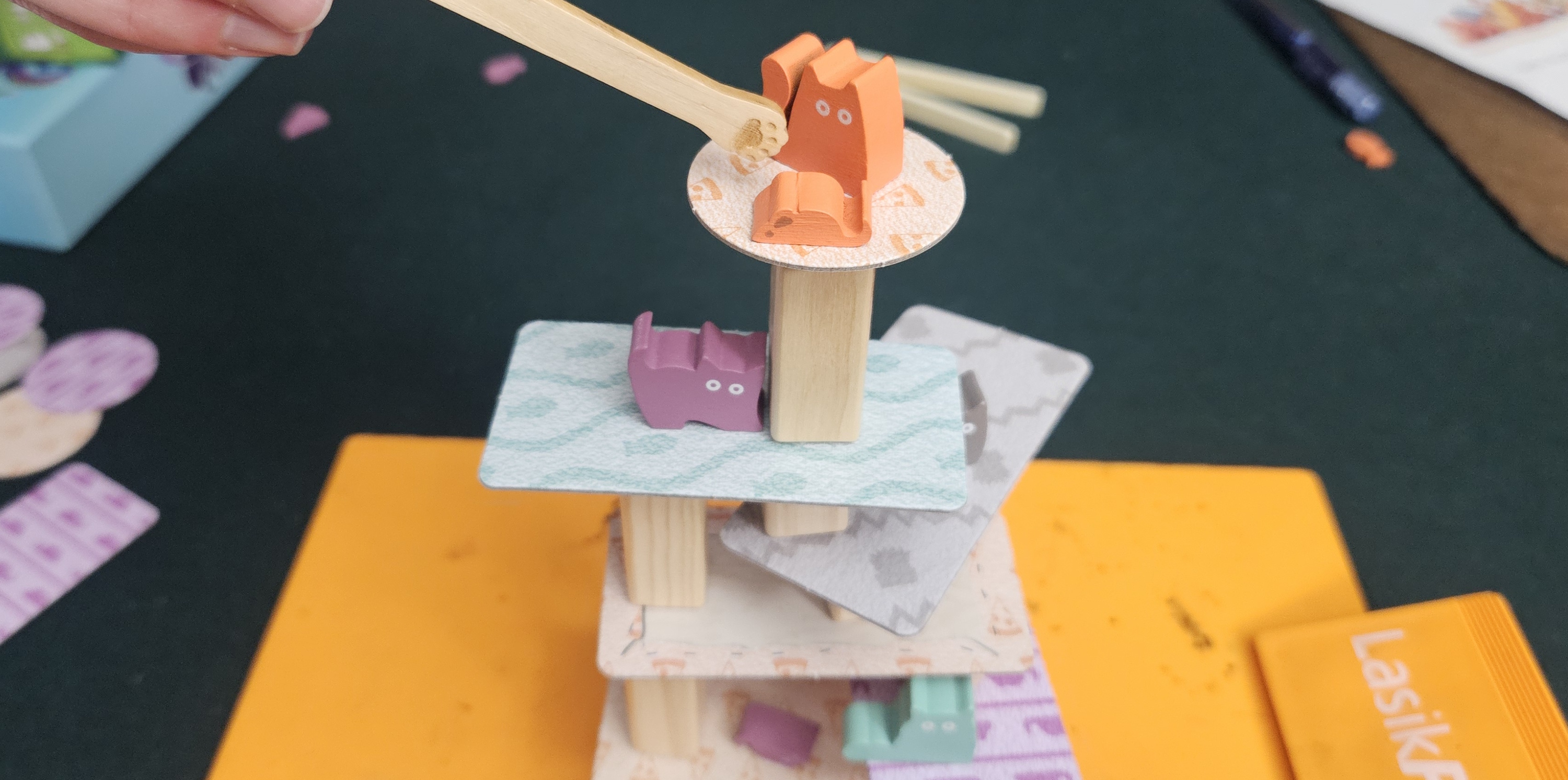
These cats love to climb.
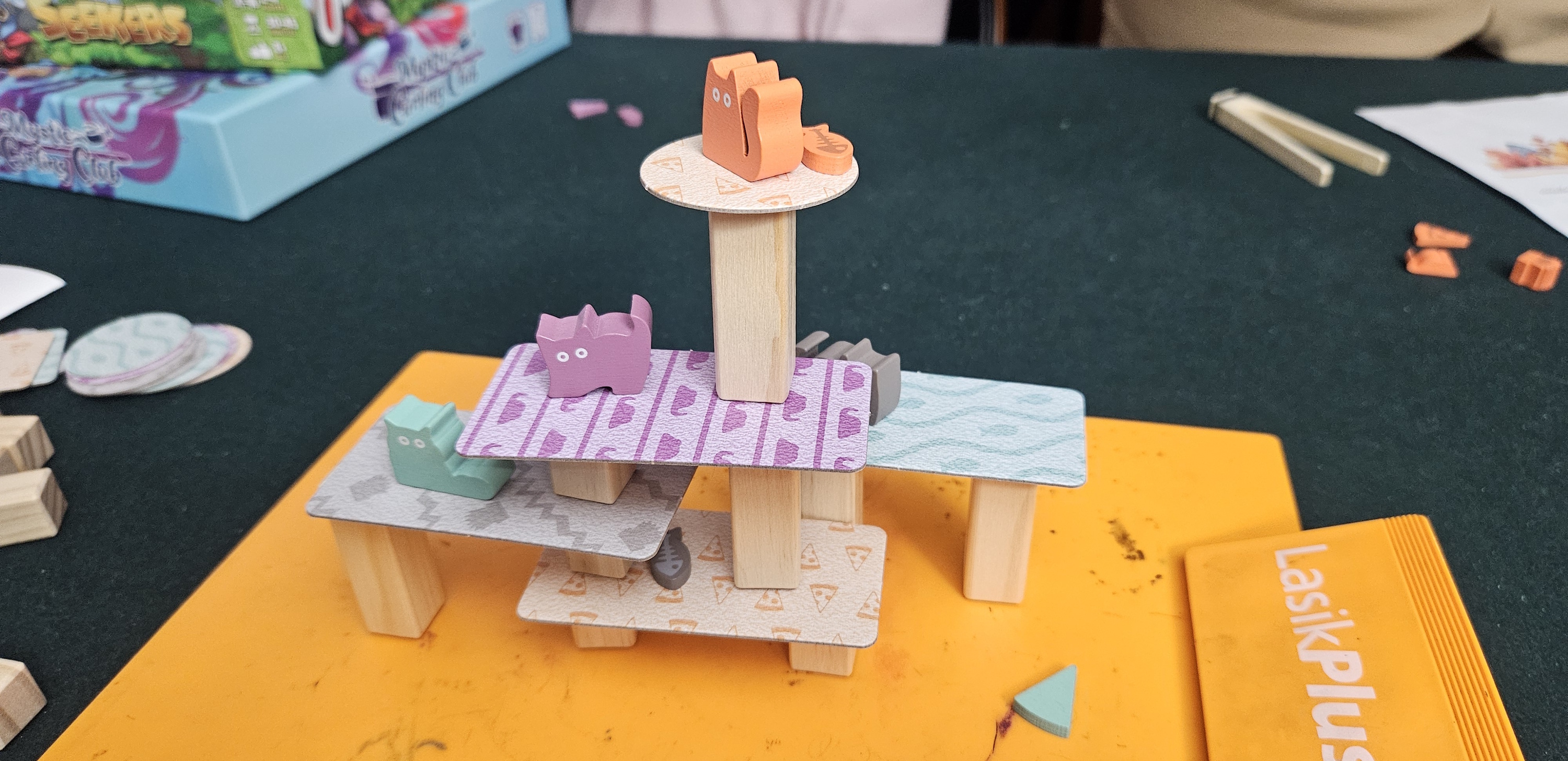
On the surface, Cats Knocking Things Off Ledges isn’t meant to be a tornado simulator. Instead, it plays like a parallel version to Rhino Hero. Turns consist of three steps. First you expand your kitties’ playspace, adding one or two pillars and a single card, whether rectangular or circular, to create a new climbing platform. Second, your kitty leaps to a new space, managed by a pair of tweezers. Third, your kitty bats a toy from their perch. If it happens to land on another platform, you score points. The greater the fall, the more the score.
It’s adorable. And not in any pejorative sense. The tweezers, for example, have little kitten paws on the inside edges. The toys are wooden versions of squeaky mice and pizza slices. The platforms show fuzzy carpet for kitties to test their claws against, but it’s really their reverse side, which reveals fabric stapled to wooden bases, that feels like something you might actually stack into a climbing tree.
That adorableness extends to the rules. They’re simple, which suits the game’s format and age target. But more importantly, they capture feline caprice. Cats, according to this game, are agents of mischief. Why do they knock things off ledges? One expects the things had it coming. If the things didn’t have it coming, the cats wouldn’t have batted them from their ledges. Simple. Circular. Incontestable.
Which does make it a shame that the components are so darn light. I think back on the original Rhino Hero, before its blown-up version or Rhino Hero Super Battle made it easier to handle, or that popsicle-stick stacking simulator Tokyo Highway that collapsed as though the slightest hand tremor was a seismic event. For little fingers to make a stacking game work — and seven isn’t especially little — the components need a certain heft.
Aw.
Sure, the box rates the game for ages 10+. Fair enough. But let’s be real: those are there to cover the publisher’s backside if a kid chokes on a meeple. No matter the specific digit on the box, Cats Knocking Things Off Ledges is what a seven-year-old who wants to be a kitten and only breaks character to insist she wants chicken nuggets for dinner wants to play. Who else would it be for? It isn’t for my twelve-year-old. She regards it coolly. She doesn’t complain. She’ll humor her younger sister. But this isn’t the sort of thing she’ll directly seek out. Who else is there? Me? My wife? Sure, we have a fine time with it. But the one who jumped up and down at the sight of the box was three years below the stated age limit.
In practice, then, Cats Knocking Things Off Ledges becomes a tornado simulator. The platforms in particular are so light that their surface warps ever so slightly, closer to cardstock than proper cardboard. Not even that heavy of cardstock either. Without proper architectural planning — and, again, let’s be real here — it isn’t long before the tower teeters and shudders. At times, that’s part of the fun. Look at our tower, barely held together with thumbtacks! But when the tower keeps collapsing, especially when it collapses from even slight errors, and doubly especially when it always collapses on the youngest kiddo’s turn, well…
Well, it becomes a tornado simulator. Because the kiddo starts knocking things over on purpose. “Mrrrowwwrrr,” she says, jabbing a pillar with the kitten-stick. Everything tumbles.
Which is fine, as these things go. I’m not about to insist she play the cats-making-a-mess game properly. But it puts the game in a strange place. She adores it. But her adoration has been tempered by the fragility of this plaything. It’s so delicate that she can’t help but break it, and so the breaking has become the game. For the rest of us, Cats Knocking Things Off Ledges becomes a game about rebuilding a similar edifice over and over again, eking out one or two points at a time, and then restarting the process.
Bump!
To be honest, I’m surprised. Lim was half of the design team behind Junk Art, one of the chunkiest stacking games on the market. If only this title had received similar care. Instead, it winds up overstaying its welcome and growing repetitive within the span of a single session.
Here’s the good news: my kiddo has repurposed the pieces for building a cat tower beyond the confines of the rules. Good initiative, kitten.
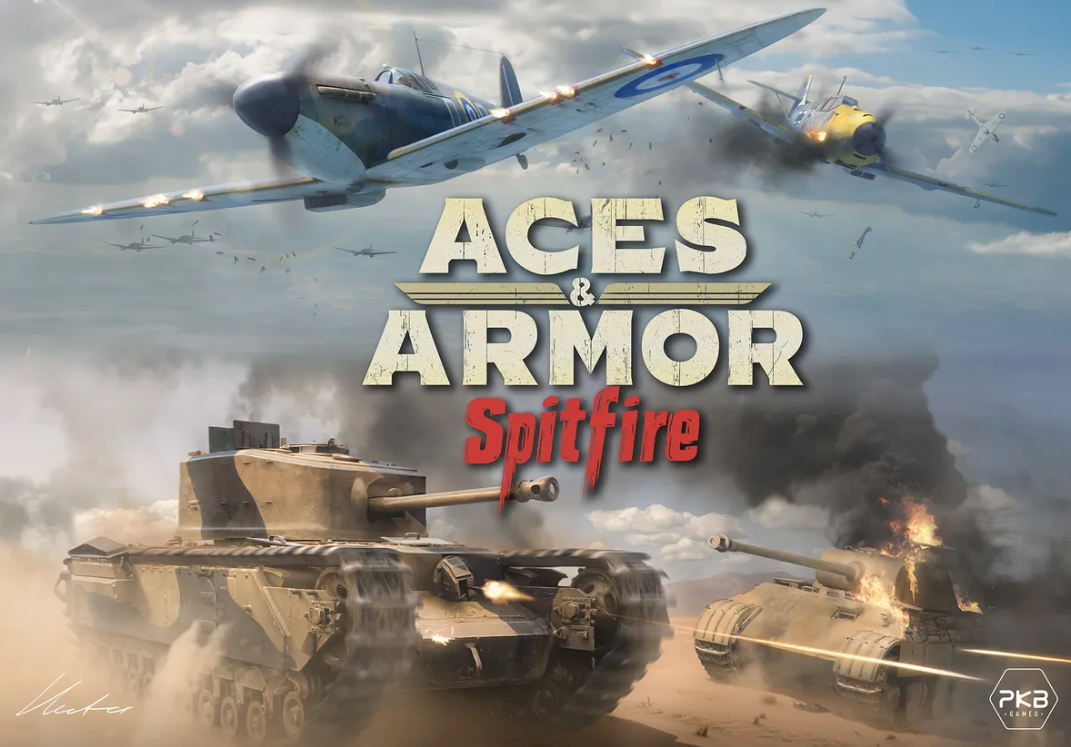
A few years back, we backed a very interesting looking miniatures based board game set in World War II called Aces & Armor from PKB Games. We played it last year and very much enjoyed the combat system as well as the way units gain experience and become more effective. That game did very well on Kickstarter and PKB Games is back with a new addition to the series called Aces & Armor – Spitfire: Battle of Britain & North Africa We reached out to the designer Philipp K. Berger to see if he could give us a look at the game and answer our questions and he was more than willing to accommodate our request.
Grant: Philipp, welcome back to our blog. What is your upcoming game Aces & Armor – Spitfire: Battle of Britain & North Africa about?
Philipp: Thanks for having me back!
Aces & Armor: Spitfire is a tactical World War II strategy game where players command infantry, tanks, artillery, and aircraft in exciting battles.
This time we’re taking the action to two very different theaters: the Battle of Britain, including the evacuation of Dunkirk, and the North African campaign.
The game combines accessible rules with quite a bit of strategic depth. You need to maneuver your troops, coordinate different unit types, capture strategic positions, and make the most of your resources. Your individual units also gain experience throughout the battle, so a rookie Spitfire pilot might eventually become a highly effective war hero!
Spitfire works as a standalone game for 1–2 players, but you can also combine it with the original Aces & Armor for battles with up to five players.
Grant: Why did you want to take your Aces & Armor System to the skies of Britain and the deserts of North Africa?
Philipp: One of the things I love about the history of World War II is how different the various theaters of war were. The original Aces & Armor focuses on land warfare in continental Europe, while the Battle of Britain and North Africa presented completely different strategic challenges.
The Battle of Britain is particularly fascinating because air superiority was absolutely crucial. Suddenly, protecting airfields, intercepting bombers, and coordinating your fighters become central elements of the game.
North Africa, on the other hand, is all about mobility and logistics. You might have the strongest tanks on the battlefield, but they’re not much use if you’ve run out of fuel and ammunition!
I also wanted to introduce the British as a playable faction. Their iconic units, especially the Spitfire, were simply too good to leave out of the series.
Grant: What is your design goal with the game?
Philipp: My main goal has always been to create games that offer meaningful strategic decisions without requiring players to spend hours studying the rules.
I love complex strategy games, but I don’t particularly enjoy unnecessary complexity. Ideally, players should understand the basic rules within 10–15 minutes while still discovering new strategies after many games.
Another important goal is making every unit feel valuable. I don’t want players to simply throw endless disposable troops at each other. Individual units can gain experience, become more effective, and develop into veterans you really want to protect.
And, of course, the game needs to be fun! Historical accuracy is important to me, but whenever historical detail and enjoyable gameplay conflict, I try to find a sensible compromise.
Grant: How have you modified the Aces & Armor System to tell the story of WWII in the Battle of Britain and North Africa?
Philipp: We kept the core mechanics that players already know from Aces & Armor, particularly the combat system, combined-arms tactics, and individual unit experience.
However, we introduced new gameplay elements to capture the distinctive challenges of each theater.
On the Battle of Britain map, aircraft play a much more prominent role. Players fight for control of the skies, defend airfields against bombing raids, and can play scenarios inspired by the evacuation of Dunkirk.
North Africa introduces an entirely new supply mechanic. Your units need access to supplies to operate effectively. This makes supply depots and supply lines strategically important, opening up possibilities such as cutting off enemy forces instead of attacking them head-on.
The result is that the two maps feel quite different, despite using the same underlying game system.
Grant: What elements do you feel are most important to model from the period?
Philipp: I believe it’s more important to capture the strategic realities of a historical conflict than to simulate every technical detail.
For the Battle of Britain, that means air superiority, fighter interception, and the importance of protecting infrastructure such as airfields.
For North Africa, it’s the enormous importance of logistics, mobility, and controlling vital supply routes across a vast desert.
Another major element is combined-arms warfare. Tanks, infantry, artillery, and aircraft become significantly more effective when working together.
I also wanted the different types of equipment to feel distinct. A heavily armored Churchill tank should play differently from a fast Daimler armored car, just as a Spitfire should serve a different purpose from a Junkers Ju 88 bomber.
Grant: What major design challenges did you encounter and how did you overcome them?
Philipp: One of the biggest challenges was introducing two very different theaters without making the rules significantly more complicated.
For example, supply logistics are fascinating from a strategic perspective, but I certainly didn’t want players to spend half their turns calculating fuel consumption and managing spreadsheets!
The challenge was to reduce these historical realities to mechanics that create interesting decisions while remaining easy to understand and manage.
Another challenge was balancing air and ground combat. Aircraft need to be powerful enough to reflect their historical importance, but not so powerful that ground forces become irrelevant.
I approached both challenges by keeping the successful core mechanics intact and adding specific rules only where they meaningfully change the gameplay. And of course gameplay testing and testing and testing!
Grant: What new units are included in this version of the game?
Philipp: Spitfire includes two factions with six different unit types each, represented by 24 detailed miniatures.
The new British faction includes infantry, the Daimler Armoured Car, the Churchill tank, the Bofors 40 mm anti-aircraft gun, the Hawker Hurricane, and, of course, the legendary Supermarine Spitfire.
The German faction features infantry, the Sd.Kfz. 251 half-track, the Panther tank, the famous 8.8 cm Flak, the Messerschmitt Bf 109, and the Junkers Ju 88 bomber.
I particularly like the selection of aircraft because it creates some interesting asymmetry between the factions. The British have two different fighter aircraft, while the Germans combine a fighter with a dedicated bomber.
Grant: How have you differentiated the capabilities of the units from those in your great game set in Europe?
Philipp: Every unit has its own characteristics, including movement speed, combat effectiveness, armor, and cost.
The original Aces & Armor includes some powerful late-war equipment, such as the German Tiger tank and Me 262 jet fighter, the American B-17 Flying Fortress, and the Soviet Katyusha rocket artillery.
Spitfire introduces a different selection of units and therefore different tactical possibilities.
The British Churchill, for example, emphasizes protection, while the Daimler Armoured Car provides mobility. The Spitfire is an excellent air-superiority fighter, whereas the German Ju 88 is particularly useful for attacking ground targets.
The German 8.8 cm Flak is another very interesting unit because it can threaten both aircraft and armored vehicles.
I wanted each faction to have its own strengths, rather than simply giving every nation the same units with different miniatures.
Grant: How can this game be incorporated into the original Aces & Armor?
Philipp: The two games are fully compatible!
You can play Spitfire completely independently, but you can also combine its factions, miniatures, and gameplay content with the original Aces & Armor.
The original game includes American, Soviet, and two German factions. Spitfire adds the British, bringing the total to five playable factions.
This creates opportunities for much larger battles, additional combinations of units, and entirely new scenarios.
I particularly enjoy the flexibility of the system. Players can recreate historically inspired confrontations or experiment with their own hypothetical battles.
Grant: How does the combat system work?
Phlipp: The combat system is probably my favorite mechanic in the game.
Each unit has an individual combat profile that determines how many dice it rolls, its chances of hitting, and how well it withstands incoming fire.
When two units fight, both players can roll their dice simultaneously, provided the defender is able to return fire.
The number of dice depends on how much damage a unit has already suffered. As units take damage, their combat effectiveness decreases. However, as they gain experience, their probability of hitting improves.
Another important element is combined-arms warfare. If your tanks attack an enemy position while supported by infantry, artillery, or aircraft, they can receive additional combat dice.
Finally, terrain and armor determine how much actual damage the hits cause.
So combat involves much more than simply comparing attack and defense values. Positioning, experience, damage, terrain, and supporting units can all significantly influence the outcome.
Grant: What drove your decision to use 12-sided dice for combat? What advantages does this give your system?
Philipp: I wanted a combat system that offers a lot of differentiation between units without requiring complicated calculations.
Using 12-sided dice gives us twelve possible outcomes, allowing much finer distinctions in hit probabilities than conventional six-sided dice. This is particularly useful because combat effectiveness changes as units gain experience. Different units can have different hit probabilities, and improving from rookie to veteran or war hero can make a noticeable difference.
Also, a higher number of dice (you roll up to 15 in one attack) and a higher number of sides per die (12) creates roll results closer to the statistical expected value which rewards players estimating the odds well and limits pure dice luck.
At the same time, resolving combat remains straightforward: roll your dice, check which results count as hits, and determine the damage.
I also think rolling a handful of D12’s simply feels great!
Grant: How is experience gained and tracked for individual units?
Philipp: Every unit begins the game as a rookie and gains combat experience by fighting.
When a unit damages an enemy, it gains one experience point. If it destroys an enemy unit, it receives two experience points instead.
After gaining enough experience, a unit advances from rookie to veteran and eventually to war hero, improving its combat effectiveness.
What makes this system special is how we track the experience. Each miniature has a small transparent holder attached to its base, where players insert colored markers for experience and damage.
This means you can immediately see the condition and experience level of every unit directly on the battlefield, without having to consult separate unit sheets.
It also creates some wonderfully memorable moments when an experienced unit survives against overwhelming odds!
Grant: What type of economy does the game use? How is money produced? What can players spend their money on?
Philipp: The game uses a relatively straightforward economy built around controlling strategic production facilities.
Players earn money from factories they have captured. These resources can then be used to recruit new units or repair damaged ones.
This creates an interesting strategic dilemma. Do you spend your resources replacing casualties, invest in additional troops, or repair your experienced veteran units?
Capturing factories is therefore important not just for victory, but also for strengthening your economy and maintaining your army.
I particularly like how the economic and military aspects interact. Sometimes capturing a strategically important factory can achieve more than destroying several enemy units.
Grant: What is the layout of the maps? How does terrain affect the game?
Philipp: Spitfire includes a large double-sided, hex-based game board featuring two very different environments.
One side depicts southern Britain, northern France, and the English Channel. This allows for combined land and air battles, including the Battle of Britain and Dunkirk scenarios.
The other side represents North Africa, with its expansive deserts, roads, mountains, and strategically important supply positions.
Terrain influences movement and combat. Roads allow ground units to move faster, forests provide defensive advantages, and natural obstacles can restrict movement.
Aircraft, of course, aren’t slowed down by ground terrain.
The North African map adds another strategic consideration: supply. With fewer natural obstacles and long distances between important positions, maintaining your logistics becomes crucial.
Grant: What do you feel the design models well from history?
Philipp: I think the game does a particularly good job of modeling the importance of combined-arms tactics.
Historically, even the strongest tanks were vulnerable when operating without adequate infantry, artillery, and air support. The game encourages players to coordinate different unit types rather than relying on one particularly powerful unit.
I also like how the North African scenario illustrates the importance of supply lines. An army can have superior equipment and still lose because it cannot maintain its operations.
And finally, I think the experience system captures something that’s often missing from tactical board games: troops aren’t interchangeable. A battle-hardened veteran unit can be much more valuable than a newly recruited replacement.
Of course, Aces & Armor is a strategy board game rather than a detailed historical simulation, but I hope it captures the important tactical and strategic decisions commanders faced.
Grant: What type of experience does the game create for players?
Philipp: I’d describe it as an accessible strategy game with a surprising amount of tactical depth.
There are plenty of exciting combat moments, but the game isn’t just about rolling dice. You need to plan your movements, coordinate your troops, control strategic locations, and decide when to attack or retreat.
The experience system also creates an emotional connection to your units. Losing a rookie infantry unit is unfortunate, but losing your heavily experienced Spitfire that has survived several battles really hurts!
I also love the way the battlefield evolves. Units move, take damage, gain experience, and new reinforcements enter the fight. The situation can change dramatically within just a few turns.
A typical game takes around 60–90 minutes, so it offers a fairly substantial strategic experience without requiring an entire afternoon.
Grant: What are some general strategies for each of the sides?
Philipp: That depends somewhat on the scenario.
In the Battle of Britain, the British player should pay particular attention to controlling the skies and protecting important airfields. Their Spitfires and Hurricanes provide considerable flexibility, but they need to be positioned carefully to respond to German threats.
The German player can take advantage of the Ju 88’s bombing capabilities while using the Bf 109 to contest British air superiority. Coordinating air attacks with ground operations can be very effective.
In North Africa, both sides need to think carefully about supply. A powerful offensive can quickly become vulnerable if the enemy manages to interrupt your supply lines.
In general, my most important advice is to use combined-arms tactics and not spread your forces too thinly. A well-coordinated group of different unit types is often much more effective than several isolated powerful units.
Grant: What has been the feedback of your playtesters?
Philipp: Playtesting has been particularly important for getting the balance between historical flavor, strategic depth, and accessible gameplay right.
One of the main things I’ve focused on is making sure the two theaters offer genuinely different experiences without forcing players to learn an entirely new game.
The air battles need to feel exciting, and the supply mechanics in North Africa need to create meaningful tactical decisions rather than unnecessary bookkeeping.
We’ve also been refining the balance between individual units and factions.
What I always look for during playtesting is whether players are making interesting decisions, developing strategies, and enjoying the tension of the battle. That’s ultimately much more important to me than adding another layer of rules.
Grant: What other designs are you currently working on?
Philipp: There are always several ideas floating around in my head!
One project I’m currently exploring is bringing the Aces & Armor game mechanics to a SciFi scenario.
I’m also thinking about where to take Aces & Armor next. World War II offers so many interesting factions, units, and theaters that there’s certainly plenty of room for future additions. And I am getting a lot of great ideas from backers of the current Kickstarter campaign. I just love this creative community and couldn’t be more grateful!
For now, though, most of my attention is on making Aces & Armor – Spitfire as good as possible and delivering another successful Kickstarter campaign.
Thank you for your time in answering our questions Phillip and also congratulations with the game funding already. I really like the look of this one and I am sure that it will be a fun gaming experience.
Imagine me in a real pickle sandwich. The middle of preview season (ho ho ho), and suddenly I come down with not one illness, but two. Something chronic, something acute. And me with a whole stack of board games to write about. Some of them time-sensitive, counting down the minutes on crowdfunding platforms as we speak.
What’s an old man to do? Write about all three in a single splash, naturally.
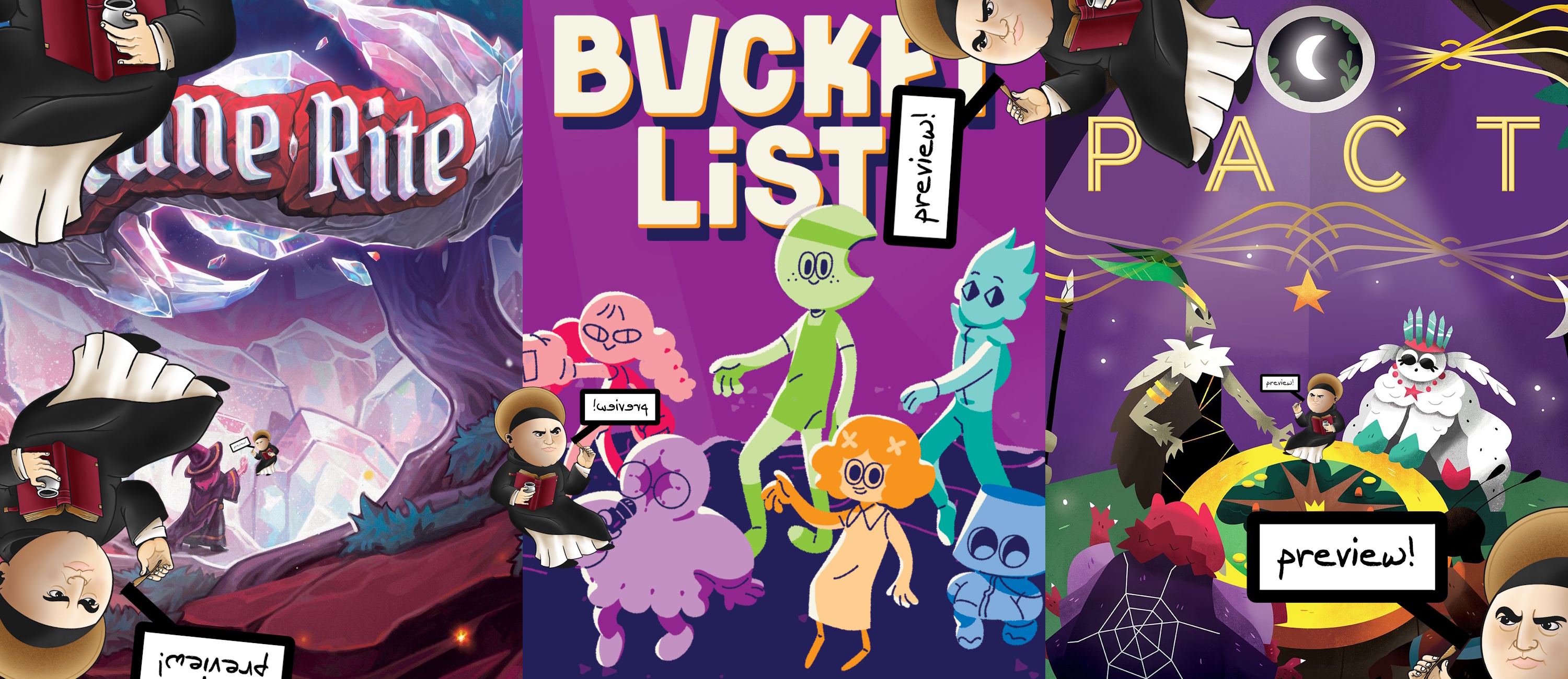
In other words, here are three very different tabletop titles, each worth a wink of your time. Come on in. Let me tell you about them. Briskly, before I’m back to bed.
Runes, crafted, so thus they may be written.
Rune Rite
At a glance, Rune Rite doesn’t look all that dissimilar from any number of other flip-and-writes. Fortunately, designer Jason Katzwinkel makes one alteration that has major implications not only for this game, but for the entire format.
Short version: you craft the card in advance.
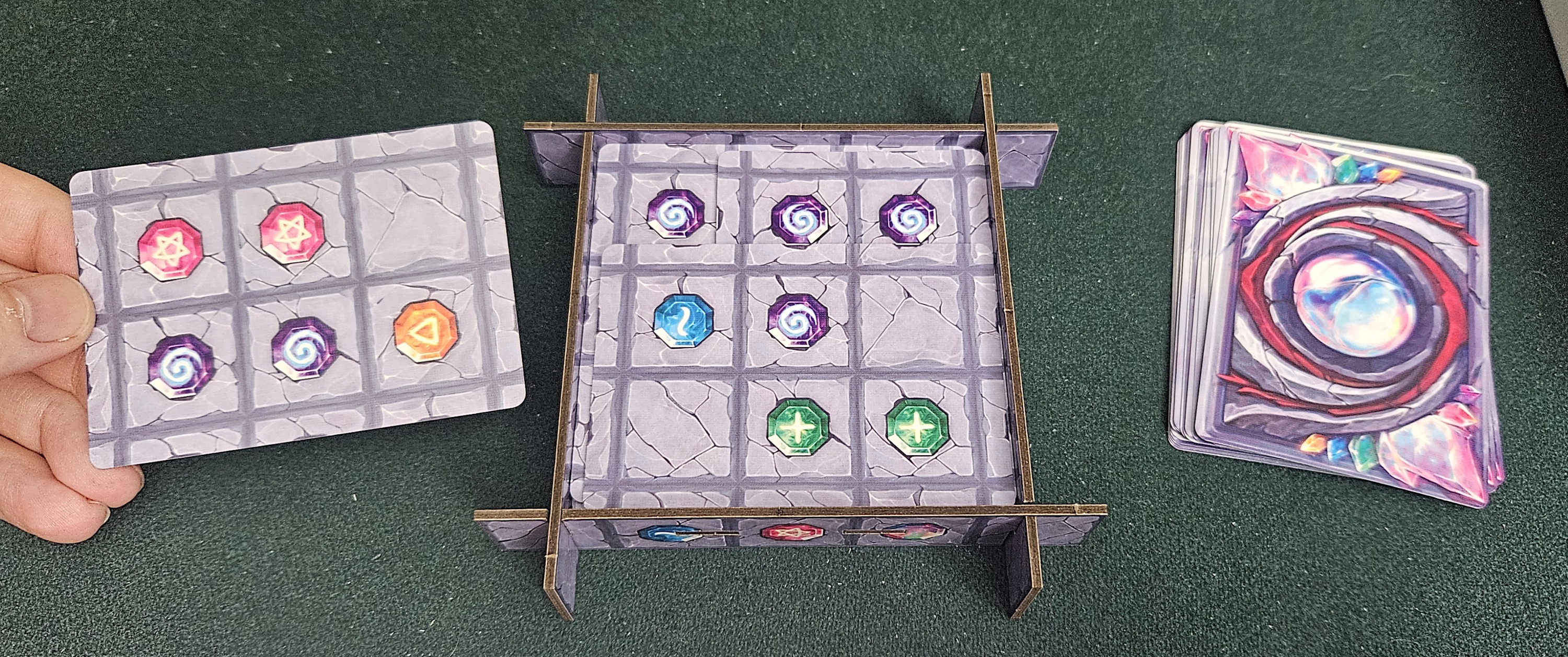
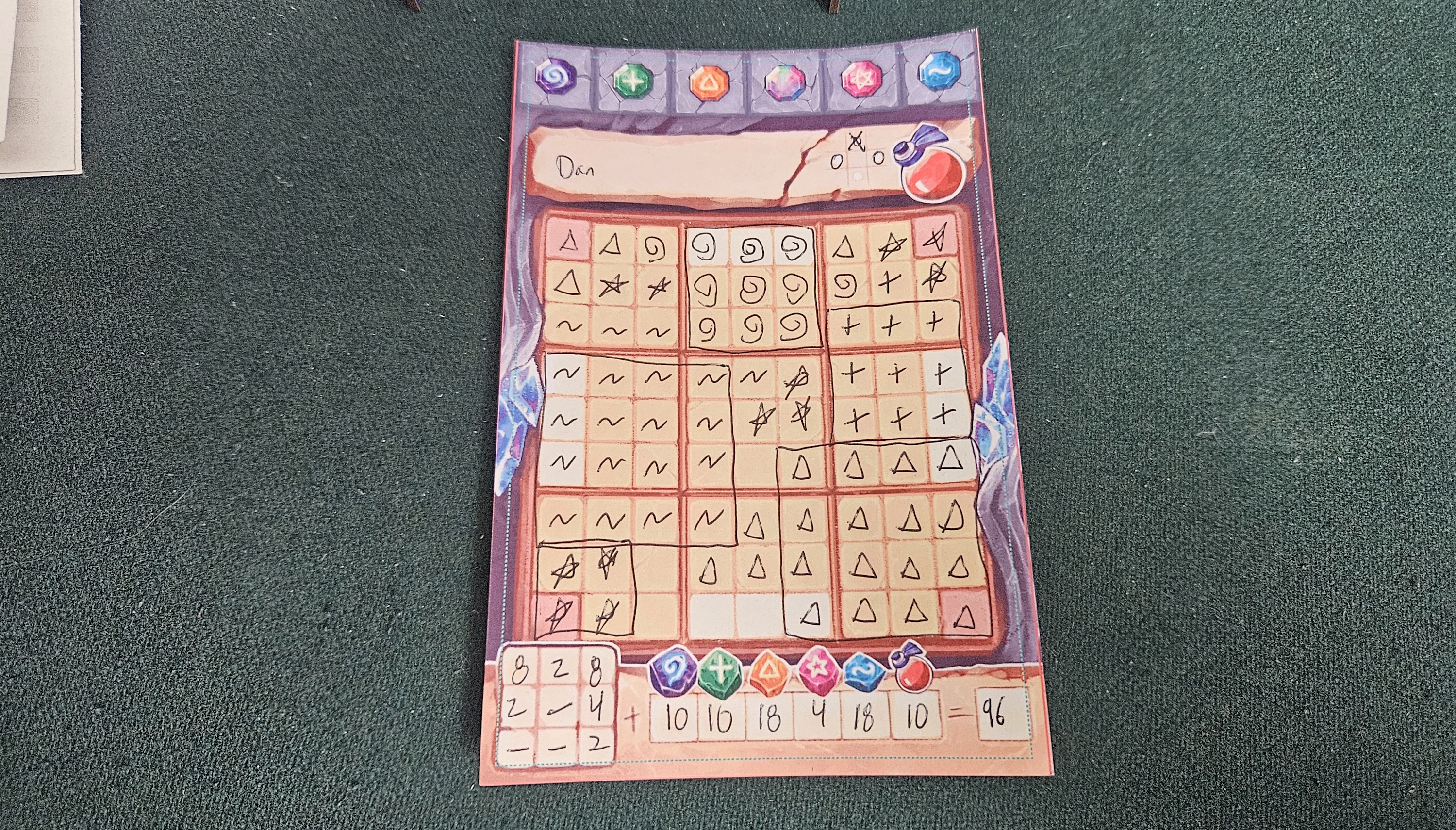
Longer version. Like every other instance of the genre, you begin your turn by flipping over a card. This shows some combination of runes — spirals, stars, tildes, triangles, and plusses, with the occasional wild that counts as anything and everything. Then everybody at the table gets to mark a cluster of those symbols onto a personal paper grid. The larger the cluster — say, a polyomino L of stars — the more you mark, all the way down to a single symbol.
The wrinkle is that drawing a card isn’t as simple as drawing a card. You draw the card, yes, right, you’re following I’m sure, but then you choose how to lay that card over the top of any previous cards, all framed within a cardboard holder to establish the selection’s outer boundaries. In more mathematical terms, every card offers a 2×3 selection, but you’re really drawing from a 3×3 grid. So the current card matters, but so do any previous cards that might still be peeking out from previous turns.
The implications are far-reaching. At the first and most obvious level, you’re given some control over which symbols — and furthermore, which shapes of symbols — you’re allowed to draw on your pad. By rotating your card, it’s possible to arrive at unusual shapes indeed.
Looks suspiciously like a flip-and-write to me.
But more than that, with some attention you can also sabotage everybody else at the table. Whatever shape the card-puller draws, nobody else is allowed to use. Sometimes this only provides access to smaller leftovers, but there’s room for devious plays. Such as noting that a rival wants a size-two combination of spirals, so instead you hand them a huge cluster of spirals instead. Go for it, bud. Overcommit.
In some ways, Rune Rite feels like a proof of concept. It’s a small game, I mean, with very little variance between sessions apart from the actual shape-crafting that occurs on each and every turn. Unlike something like Cartographers, which changes its victory conditions between sessions, the goal is always the same.
But for a proof of concept, there’s a lot to like here. There’s real tension between specialization and diversification. Points principally come from drawing boxes of similar symbols and filling other boxes with as many different symbols as possible, encouraging you to build across the pad’s boundaries. Which is to say, there’s a definite “best approach” here, but it isn’t one easily or flippantly pursued.
I’d like to see more of this. Crafting the “flip” of the flip-and-write is a stroke of brilliance, and here it’s given perhaps its purest possible expression. The result is little more than a snack, but it’s a snack that might prove transformative if everybody catches the vision. Like a Triscuit.
According to internet lore, the term “bucket list” was coined by the 2007 comedy film The Bucket List. This is a myth. My proof is a journal entry dated 14 March 2006 which reads: “Bucket List. Item #1. Prove that I, Dan Thurot, came up with the term ‘bucket list,’ not that stupid movie coming out next year.”
Many of the action items in Micah Heiselt’s Bucket List represent similar uphill battles. Spend a night in Dracula’s Castle? Sure, but bring the gauze. Buy a farm for orphaned alpacas? Nothing was ever stopping you but the fear of success. Fill the Louvre with only your art? Kid. Come on. You can’t even finish one board game preview on a site without the slightest quality control.
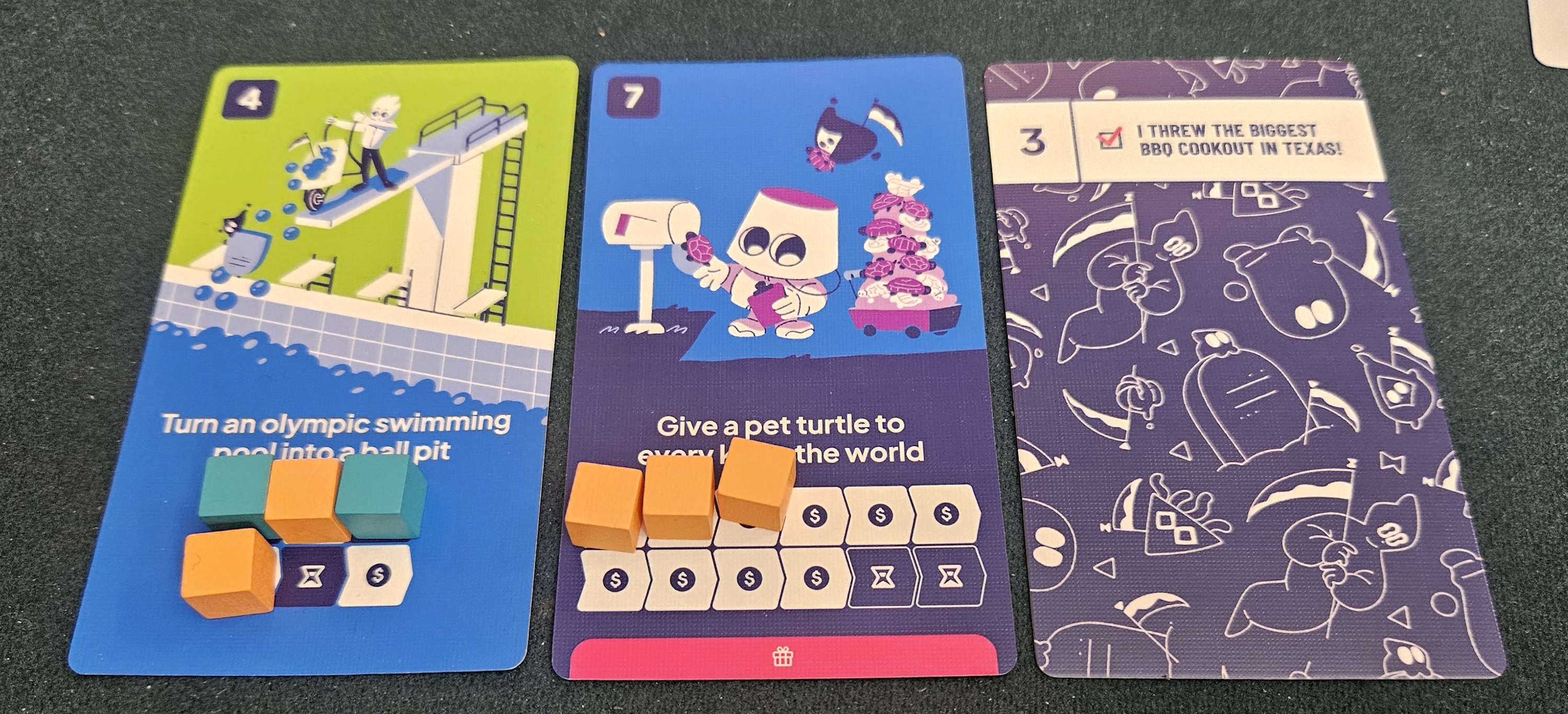
Then again, that’s much of the charm of this one. You and your friends wrote a bucket list in high school. (Presumably you graduated after 2007.) Now, with death swiftly approaching, you must tick off as many boxes as possible.
What would otherwise be a cutesy gimmick game is elevated by two factors. The first is that the gameplay is a combination of long-term planning, thinking on your toes, and careful risk management. There are only two main resources, time and money, which must be invested into a goal before it can be accomplished. That’s simple enough, but resources come from multiple sources, some more reliable than others, such as action cards versus a turn-initiating roll of the dice. You’ll get something, but whether you can put it to good use is another question. Oh, and any leftovers will anger the Grim Reaper.
Death comes for us all.
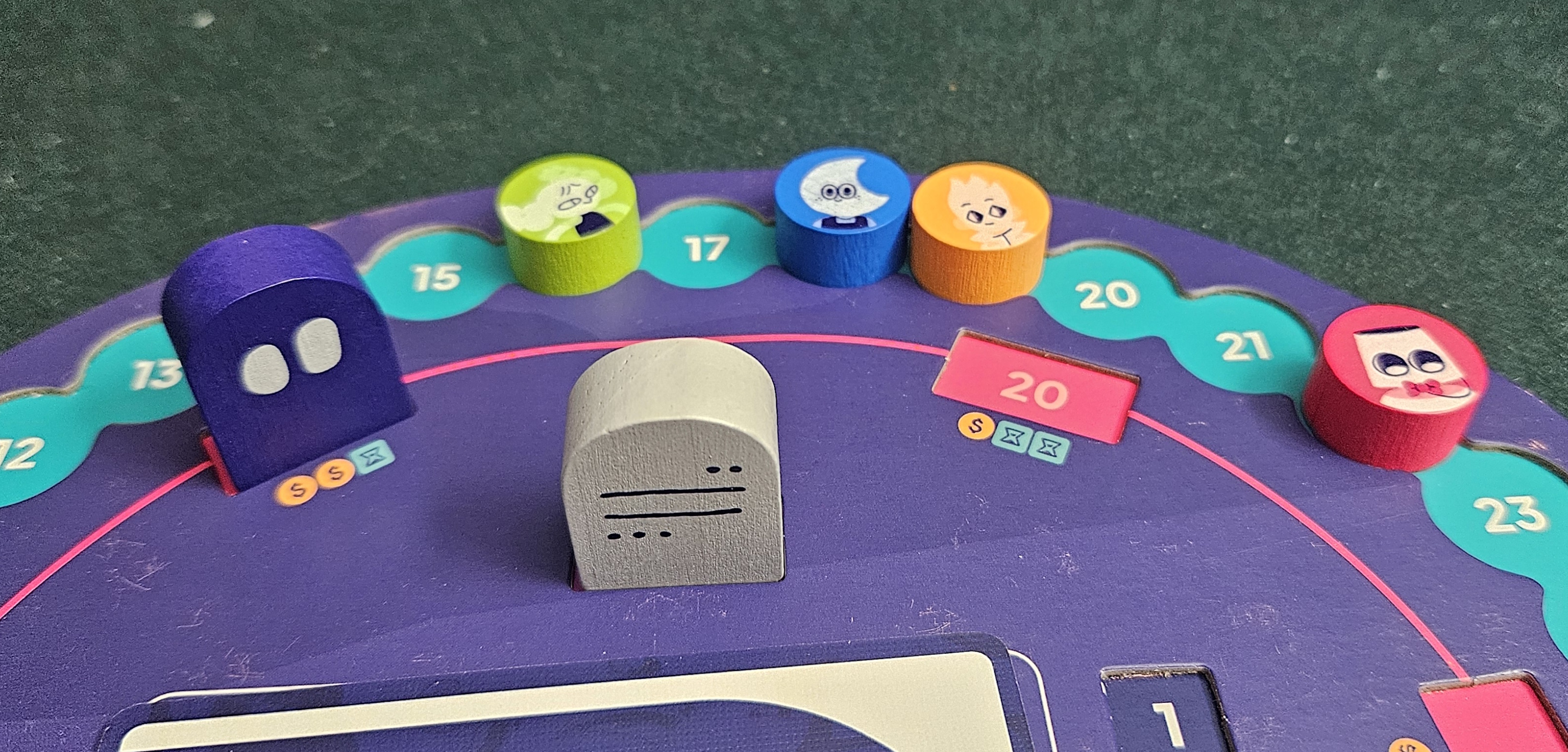
The Grim Reaper is the other shakeup to the formula. Various triggers will see old boney chasing everyone around the score track. If he catches up to the trailing player, a headstone will be placed to end the game upon the completion of the round. There are ways to cheat death, nudging the Grim Reaper back on the track and returning the headstone to its resting place… except you might not want to delay the end of the game if you’re sitting pretty at the top of the score track, leading to little tussles to delay or hasten your mortality.
It’s a bit grim. But then, so is anything associated with bucket lists. The good news is that it’s also an amusing little plaything, with more to consider than first meets the eye, and lots of goofball moments where death seems around the corner only to be delayed yet again. It’s ultimately a game about picking your battles. There isn’t time or money enough to do everything, so you’re encouraged to pad out your days with goals that can absorb whatever resources happen to come your way.
In that sense, there’s something comforting about it, almost nihilistic in its dedication to self-determination. Maybe it will even inspire me to fulfill the other entries in my bucket list. “Item #2. Change it back to Berenstein Bears before anyone notices.”
Bucket List is on Kickstarter for fifteen more days.
This tree is especially bug-infested.
Pact
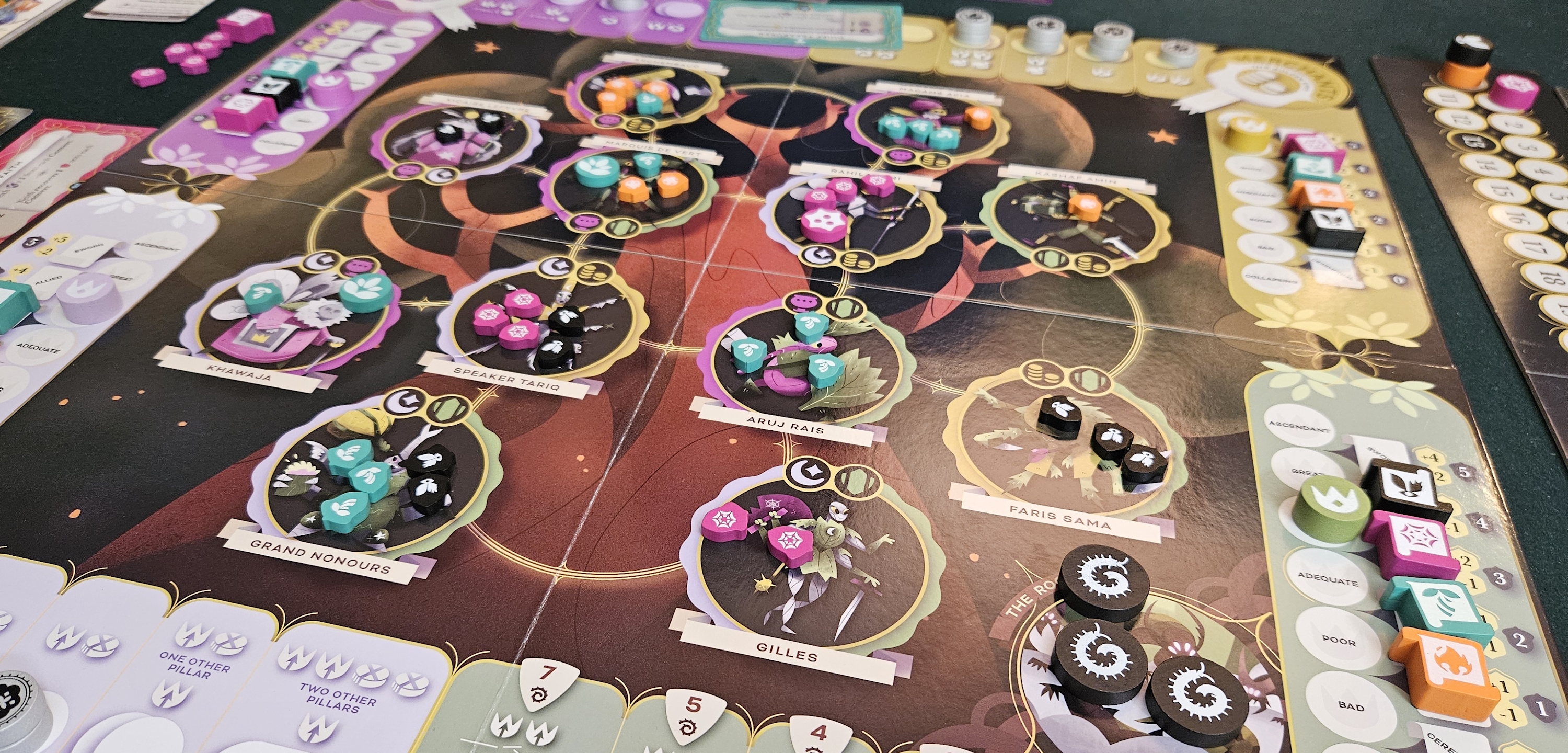
Pact is what you get when you blend the asymmetry of Root with the hard tradeoffs of a classic card-driven wargame like Twilight Struggle.
First, the Root. Four bug factions occupy the tree kingdom of Branchbourne, each with its own advantages. There’s Jenna Ermine VI, her authority thoroughly entrenched across the branches and boughs of the kingdom, but spread so thin that the slightest tension might crack her carapace. Her closest rival is the Duchesse Orich, incredibly well resourced but also over-leveraged. Somewhat farther underfoot is the revolutionary Matuk Inkclaw, capable of unleashing labor strikes that cripple the kingdom, and the heretic Weaver Neith. Mostly I remember Weaver Neith mind-controlling everybody.
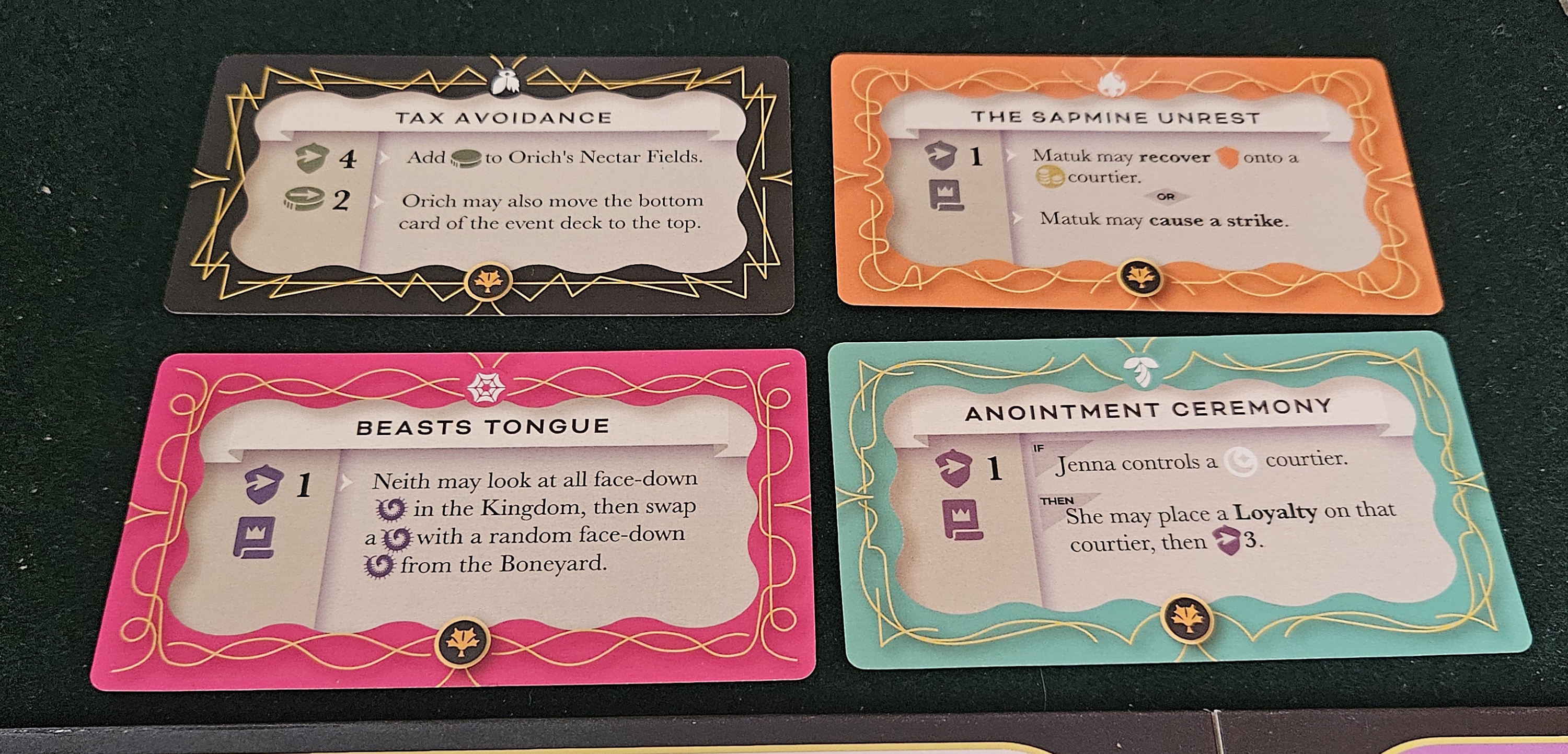
All right, asymmetry is hot right now. But the second half of the game, the card-driven wargame half, controls how things get done. Everything relies on event cards. At any given time, a handful of these are on offer in the market. Taking a turn isn’t as simple as moving pieces. Instead, you select an event. If it’s your own, you either use the card for its action points — adding tokens, moving stuff between locales, that sort of thing — or take its historical outcome, which is always weirder and often more potent, but less directed. On the other hand, if it belongs to someone else, you take the actions while they trigger the event. Pretty normal, as card-driven wargames go, but rather novel when it comes to bug-based fantasy games.
Events are the heart of Pact.
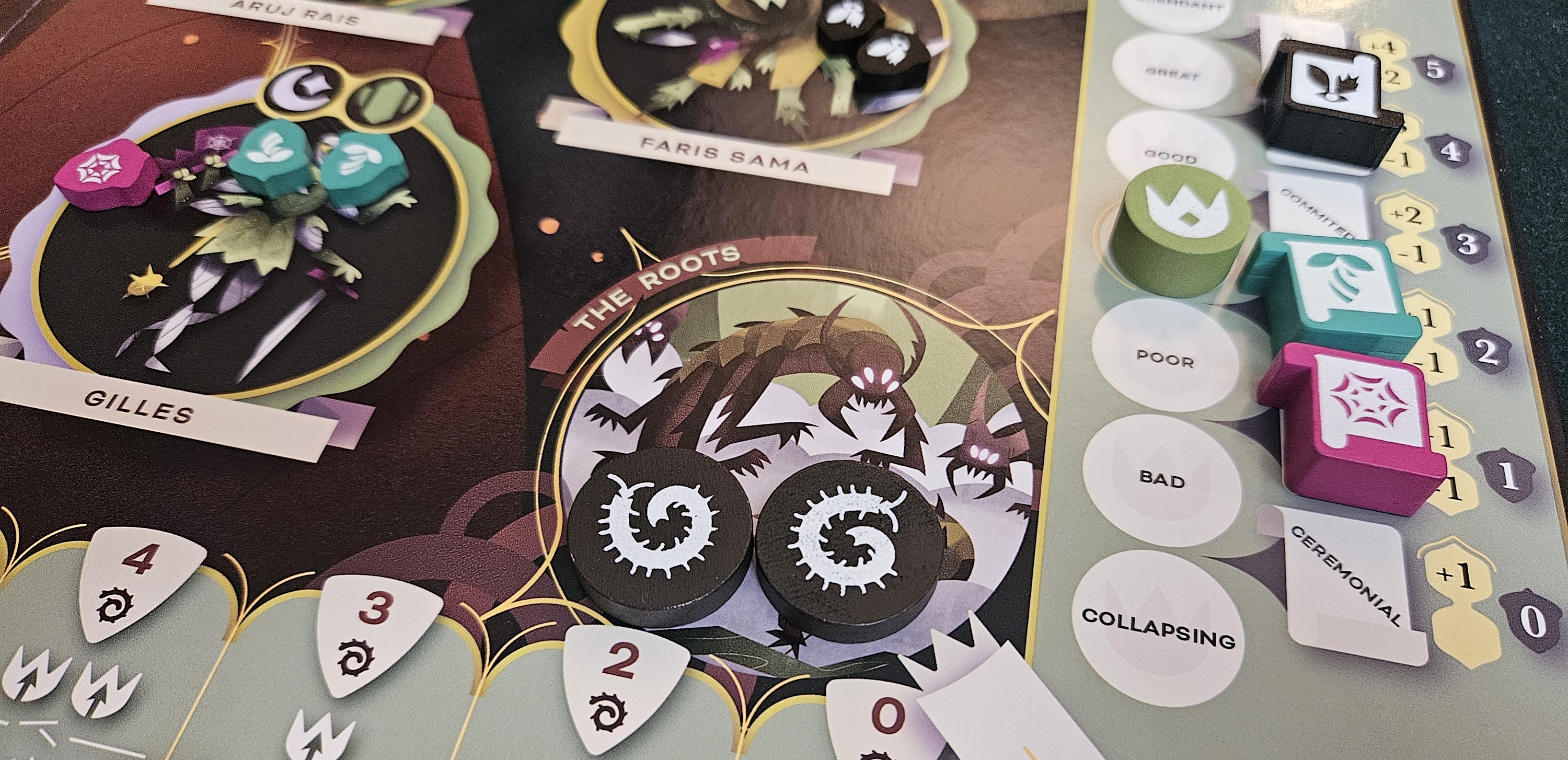
Making matters more complicated, society in Branchbourne is dominated by four “pillars,” each of which demands some measure of attention lest the kingdom fall into disrepair. These are handled by moving treasures, a nearly zero-sum economy, between their four domains. The Merchants, for instance, are how cash gets infused into the economy. By investing treasures into their domain, additional treasures wink into existence ex nihilo. Invest too much, however, and the Merchants will crash the whole dang thing, reducing the number of treasures in circulation.
Okay, so you want the Merchants to have a lot of treasures, but not so many that they wreck the economy. Except the other pillars also have their own requirements. The Nobility mostly function as parasites, destroying treasures outright, but if not placated they’ll steal treasures from the other pillars. The Church is similar; they like to gather treasures as tithes, but they can manipulate the standings of the other pillars outright. The Military, meanwhile, needs treasure. Lots of treasure. Only their threat is no paper tiger-beetle; if they don’t have enough loot in their vault when the round ends, the centipedes chewing at Branchbourne’s roots will overrun the kingdom and eat everybody.
This prompts a delicate balancing act. Your faction doesn’t only want to survive; they also make pacts (the title! oh ho!) with those pillars to see them succeed in exchange for influence at court. So, depending on how you’ve positioned your faction, you might want the bank to fail this round, since its collapse will humiliate your rival who’s aligned with them, while feeding heaps of glittery to the Church in exchange for their imprimatur on your ascending the throne.
Keep forty eye-facets on those centipedes.
Which brings us full circle to that event system, because this is where you can manipulate every little corner of Branchbourne to your advantage. The Duchesse Orich, for example, can use her hives to bestow additional treasures on various pillars of society. But when an event raises the opportunity to do so, will it align with her current goals? The same goes for the firebrand and his labor strikes, the Empress and her loyalty counters, and everything else. Pact is a game of hard tradeoffs. Direct action or powerful but perhaps misaligned events? That’s the question, baby.
All told, the result is a fable about the ever-shifting halls of power that I find mighty intriguing. Like a lot of the best games, designer Zach Hoekstra has keyed into the fact that smart design is often about limitation as much as it is about player agency. Often, turns force a choice between which goals you’ll fail at the least. It’s a lot like tacking into the wind; moving at increments that seem to go nowhere, only that bit by bit move you closer to your objective.
The result is one heady political game indeed. Of the titles on this list, Pact is the heftiest, but it’s also the one I’m most eager to see reach completion. It’s ambitious, it’s weird, it’s full of bugs.
The crowdfund had raised $2.33m from more than 7,300 backers in the early hours of its final day, equivalent to almost $319 per supporter – an average spend well above Restoration’s previous major crowdfunding campaigns, including the roughly $260 from last year’s Battle Monsters: Godzilla x Kong.
Almost three-quarters of backers who have committed to one of the game’s various versions opted to spend at least $379 on one of the Mithril tiers, with more than 2,800 people going all-in on the game’s most expensive $449 option.
Those Mithril pledges together account for about 82% of the total raised at the time of writing – a figure well above that expected by Restoration prior to the campaign’s launch, co-owner Justin Jacobson told BoardGameWire.
Restoration Games co-founder Justin Jacobson
He said the company had expected Mithril to be most popular, but had conservatively projected about three Mithril pledges for every two people committing to the base-level Limited tiers of the game
He said, “I’m not entirely surprised. We created the Limited Edition as a sort-of compromise pledge level for folks who wanted some deluxe elements but didn’t want to go all-in for the Mithril Edition.
“Ultimately, though, most Kickstarter backers are there precisely because they do want to go all in, and we try to make that pledge level as appealing as possible and as good a deal as possible.”
Despite the much higher-than-expected proportion of backers opting for Mithril, Jacobson said the campaign’s overall performance was “pretty in-line” with his expectations ahead of the campaign’s final few days – and that “in a vacuum” he would have hoped for slightly higher numbers.
He pointed to the absence of a standard retail edition from the campaign, Free League’s The One Ring RPG crowdfund running at the same time and wider global economic conditions among the factors potentially working against it.
Jacobson said the pattern of backers favouring Restoration’s most expensive option was familiar from what he described as the company’s previous “spectacle” campaigns, with all-in pledges typically outstripping other pledge levels at the close of those crowdfunds.
But King’s Gambit is generating substantially higher spending per backer compared with Restoration’s previous projects offering similarly expensive all-in options.
Last year’s Battle Monsters: Godzilla x Kong offered a $379 Mega Bundle – the same price as the basic Mithril Edition of King’s Gambit – but averaged about $260 across its 2,301 backers.
Return to Dark Tower: Expeditions went even higher with a $499 all-in pledge including the base game, its expansions and upgraded components – although as an expansion-led campaign, existing owners could enter at just $45. Its $1.49m haul from 11,665 backers amounted to an average of $128 per supporter.
King’s Gambit is currently averaging almost $319 across its backers to date – despite almost 1,000 people having committed just $5 for access to the pledge manager.
Jacobson nevertheless cautioned against seeing the campaign as evidence that $379-plus board games were likely to become commonplace.
“This campaign is unusual, and I wouldn’t expect this to become the norm,” he said. “It stems from the unique way in which the original licensing deal and co-publication arrangement came to be in the first place.”
Opening Gambit
Jacobson told BoardGameWire that the publisher decided to pitch licence holder Middle-earth Enterprises in 2023 for a new version of cult 2000 board game Star Wars: The Queen’s Gambit, but instead based on The Lord of the Rings.
Bringing Queen’s Gambit back had been an ambition for Restoration since its inception – it was the first game Jacobson suggested reviving when he approached designer Rob Daviau about founding the company in 2016, although they decided at the time that it was too ambitious for their first project. Daviau had worked on the original during his time at Hasbro.
Jacobson told BoardGameWire, “I put together a big proposal and sent it in. Meanwhile, while that proposal was under consideration, Rob was at the Cannes Game Festival and got approached by Asmodee about doing the exact same thing.
“It seemed like serendipity so we just started that conversation about working on it together. It offered a lot of benefits to both parties.
“We brought our design pedigree and Kickstarter experience, and they brought their massive team for art, sales, distribution, and more. It’s always challenging working outside your own team, but [Asmodee studio] Space Cowboys have been absolutely amazing and have helped make this game the best it can be.”
Space Cowboys plans to release a retail edition of the game next year, which while sharing the same gameplay will use smaller boards, omit the large plastic Minas Tirith and Mordor set pieces and use just two colours of plastic for its miniatures.
Kickstarter image of components planned for the game
Jacobson said, “It was important that our offering was a stark contrast to the retail edition. That edition will be what lives on for as long as the game is sold, long after the Kickstarter campaign is fulfilled. So, first things first, we had to align on what that version of the game was going to be.
“Then, we basically brainstormed all of the ways we could ‘deluxify’ that. The Limited Edition was a slight bump and the 3D plastic set pieces; the Mithril Edition was the whole list.”
When asked if there had been any concern internally over having such a large gap between the price points of the Limited and Mithril editions, Jacobson said, “Not really. There are so many variables and options in setting up any campaign. You’re never going to be 100% certain that you’ve gone the optimal path.
“That said, we were confident in the overall structure of the campaign, i.e., folks who want the cool 3D set pieces and folks who want everything.
“As I’ve always said, the price is always a function of the cost to produce. So once we determine what a pledge level includes, setting the price is relatively straightforward with some minor adjustments. For example, we actually shaved a bit off the Mithril Edition to try and make it a bit more appealing.”
He added, “It does highlight that all of the economic turmoil folks are feeling are not being felt uniformly.
“It also speaks to hobby gamers in general. When you compare it to other hobbies, it’s still a relatively good deal even at the highest end of things.”
Jacobson told BoardGameWire that Restoration deliberately looked beyond established tabletop audiences when marketing the game, in an attempt to leverage the vast fanbase of The Lord of the Rings.
About half of King’s Gambit backers are supporting a Restoration Games crowdfund for the first time, he said – a slightly higher proportion than the company has seen on some of its more recent campaigns.
“We made a concerted effort to try and reach out to influencers whose audience comprises The Lord of the Rings fans and not specifically gamers,” Jacobson said.
He believes the licence was likely part of the explanation for the campaign’s performance, although added that Restoration titles tend to come with followers even without a large IP, given the nature of the company’s strategy of taking memorable, usually long-out-of-print games and redeveloping them for the modern hobby market.
He said, “Fans of The Lord of the Rings are certainly avid and show up in large numbers, but we’ve seen similar excitement from fans of Return to Dark Tower and the like.”
Aragorn Art
Despite the campaign’s strong performance, the release has attracted a backlash from a small minority of online commenters for depicting Aragorn as Black.
That reaction has spilled into the unreleased title’s BoardGameGeek ratings, where some users have awarded it scores of 10 specifically to counter what they believe are 1 ratings motivated by objections to Aragorn’s skin colour.
Jacobson described the reaction as “disappointing but not entirely unexpected”, while stressing that not everyone who preferred a depiction closer to previous versions of Aragorn was motivated by racism.
Aragorn from Lord of the Rings: King’s Gambit || Kickstarter Image
He said, “The art team for both Space Cowboys and Restoration Games spent countless hours working on an extensively researched and thoughtful art brief for the look of the entire game along with each individual character. It’s 59 pages long!
“Our first priority is always to do something true to the source material. Within those pages though there are a number of interpretations. Ultimately, for each depiction, not just Aragorn, we were looking to do something interesting and perhaps novel that still stays true to the source material.
“I can point to details in the lore that support this depiction, but this just isn’t something I have any interest in debating.
“Great works, whether that’s a game or an epic fantasy novel or something else, only arise when the people creating them have a strong vision for what they want to make and put their full effort into realizing that vision.
“In every case, some folks won’t share that vision. But, in every case, if you set out to try and please everyone, you cannot make something extraordinary.”
He added, “There are folks who prefer a depiction more in keeping with prior ones; where other folks enjoy seeing broader depictions. Whenever you are working with an IP, the fans will have strong opinions. I want to be clear: not everyone who would prefer the former do so from a place of racism.
“That said, there are certainly racists, who are using these types of situations to espouse their abhorrent beliefs. It’s unfortunate that they muddy what can be an otherwise interesting conversation.
“As for folks on BGG rating a game a 1 before it comes out, this has been going on for a while for a host of reasons. There’s nothing we can do about it, so we press on and just make the best game we can.
“When people actually receive and start playing the game, we are confident that there will be a lot of great ratings for it that will make the current kerfuffle just so much background noise.”
UK-based Osprey Games has let go of its entire board and card game development team and cancelled its booth at the upcoming Spiel Essen game fair, five months after parent company Bloomsbury began searching for a buyer for the operation.
Osprey revealed in May that multinational book giant Bloomsbury had made the “difficult decision” to sell the board and card game segment as part of a wider “strategic refocusing” on book publishing, which would see Osprey concentrate on its wargame and RPG lines.
Two sources with knowledge of the matter told BoardGameWire at the time that Bloomsbury hoped to find a buyer willing take on the existing board and card game team in addition to its catalogue, which includes acclaimed titles such as the Undaunted and Imperium lines.
But a Bloomsbury spokesperson has now confirmed to BoardGameWire that “all our colleagues who exclusively worked on creating and manufacturing our board and card games have now left the company”.
Multiple sources spoken to by BoardGameWire said those exits were in the form of redundancies at the end of September, although the company declined to say exactly how many staff were affected.
The departures mean Bloomsbury is now seeking a buyer solely for the board and card game catalogue, rather than the department as a whole – but questions remain over exactly how the rights to its portfolio of games could be sold on to a new owner.
Undaunted: Normandy from Osprey Games, designed by Trevor Benjamin and David Thompson
BoardGameWire understands that some Osprey designer contracts include restrictions governing the transfer of publishing rights to third parties, which could complicate the sale efforts – with some agreements seeming to limit transfers to buyers acquiring all or substantially all of the imprint’s titles.
Asked about that situation by BoardGameWire, a Bloomsbury spokesperson said, “The contractual arrangements relating to Osprey Games are confidential, so we’re not able to share details of specific terms or comment on potential outcomes.
“We appreciate that these questions are important to designers and other partners, and we’ll share further information with those directly involved as soon as we’re able to.”
The spokesperson also confirmed that Osprey has multiple unreleased board and card game projects under contract at “various stages of development”, but did not say whether those titles would be published by Osprey or transferred to another buyer.
They said, “As with our published games, we will share information about the future of those projects with the relevant designers as soon as we are able to.”
Osprey’s existing games remain “well stocked”, the spokesperson said, adding that the company had no current plans for reprints “but will continue to review the situation as we move forwards”.
They said, “We remain committed to supporting our fantastic range of board and card games with sales, marketing and licensing efforts and each of our games remains available to purchase.
“Our upcoming games, Undaunted 2200: Revolution from David Thompson and Trevor Benjamin, and Upland & Prairie from Peer Sylvester will be released as planned this month.
“We are, as ever, incredibly grateful to our brilliant in-house team, to our wonderful designers and illustrators, and to everyone who has supported Osprey Games over the years.”
Upland & Prairie from Osprey Games, designed by Peer Sylvester
Osprey Games was launched in 2015 as part of Bloomsbury arm Osprey Publishing, which had a decades-long history of creating military and historical information and reference books before beginning to publish wargaming rulebooks in 2008.
The gaming arm’s early successes included Peer Sylvester’s The King is Dead and The Lost Expedition, as well as popular titles such as Hal Duncan and Ruth Veevers’ design Cryptid and the second edition of Martin Wallace’s London.
Those releases were followed by the high-profile success of the Undaunted series of deckbuilding wargames from David Thompson and Trevor Benjamin and the Imperiumgames from Nigel Buckle and Dávid Turczi.
Osprey also gained a reputation for taking chances on a range of titles with intriguing mechanisms and designs, such as Sylvester’s area control and trick-taking hybrid Brian Boru, highly asymmetric area control title Crescent Moon, card-based strategic wargame Battalion: War of the Ancients and small-box, quick-playing conflict title General Orders: World War II.
The publisher has continued releasing games in the wake of the sale process announcement, including Threaded, Flip Pick Towers and Rattlesnake earlier this year and CRAB RAGE! last month.
Bloomsbury has not specified a timetable for completing the sale, with the spokesperson telling BoardGameWire that conversations were “ongoing”.
They added, “I’m sure you’ll appreciate that this is a very complex situation, and the timelines are based around confidential conversations. We will provide updates when we can do so.”
Osprey parent Bloomsbury, which has a stock market valuation of more than £500m, announced in April that it was “streamlining its structure for further growth” – which included a reorganisation of the company’s editorial divisions and the loss of about 55 jobs. No mention of Osprey was made in the restructuring announcement.
Bloomsbury has seen its profits almost double in the last five financial years, and confirmed at its July annual meeting that it expects annual revenue of more than £350m and was on track for record adjusted pre-tax profits of £49.9m, according to Publishers Weekly.
I’ve never been to Machu Picchu, but it was the site that demonstrated to me at an uncomfortably young age that history wasn’t just one thing but many, and that those many things were subject to a wide range of interpretations. Even, possibly, that they might end friendships.
Which is appropriate, because that’s exactly what Wiñay Kawsay, designed by Alison Collins, is all about.
Machu Picchu, from above.
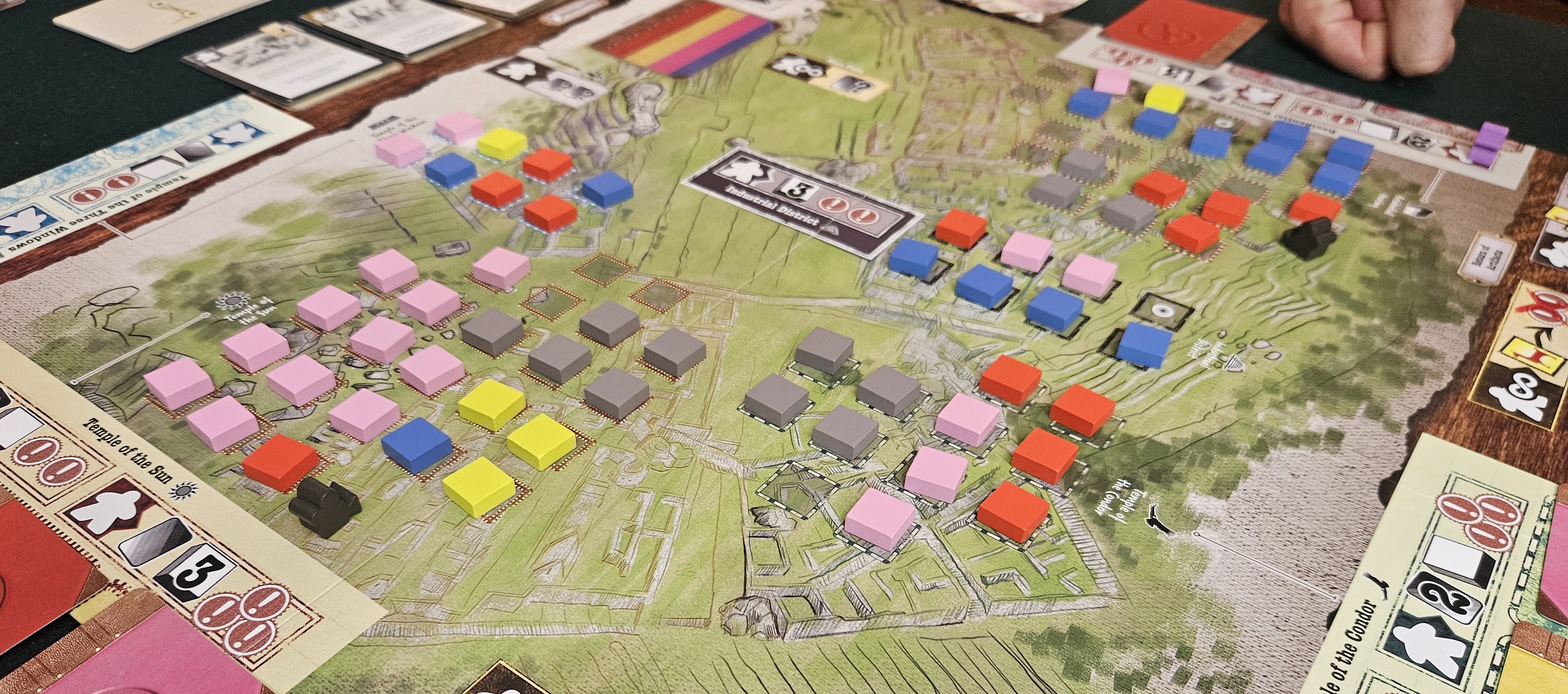
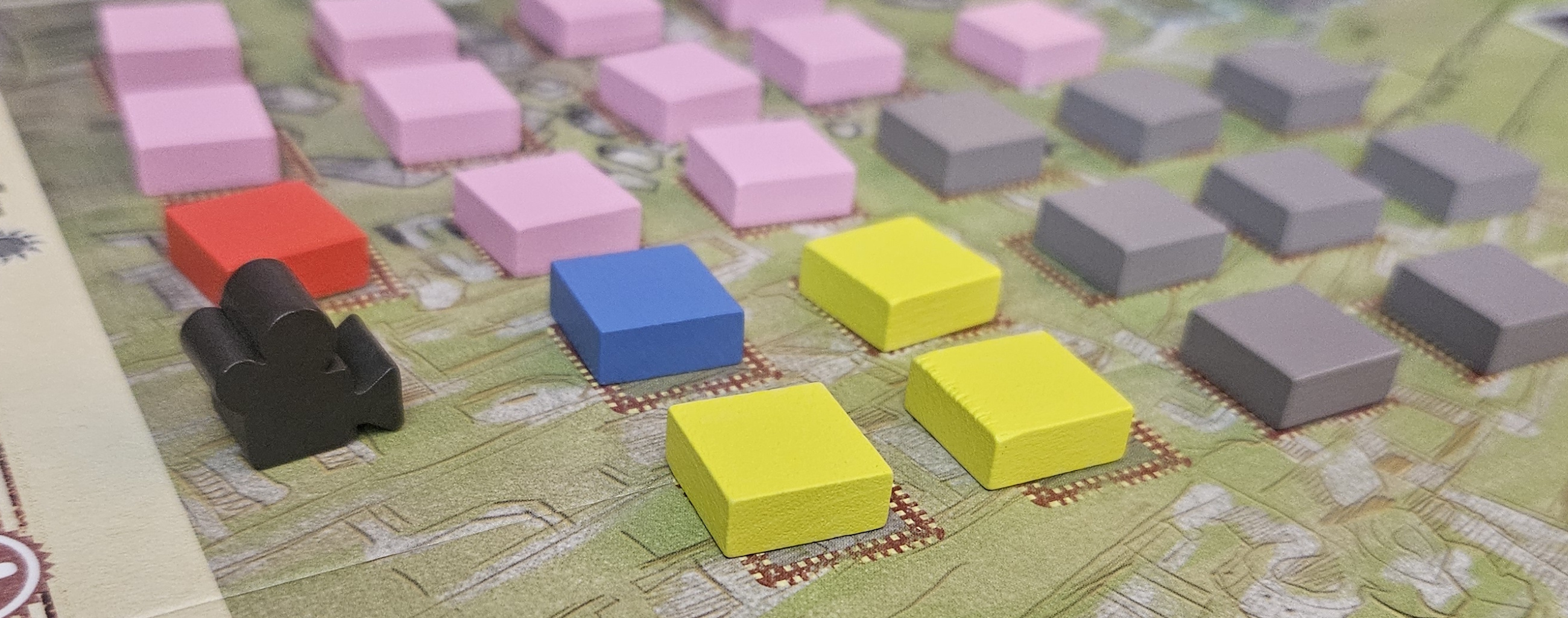
At a sky-high level, Wiñay Kawsay is set at Machu Picchu. You can see it right there. The map is even helpfully labeled with the various temples and complexes that were constructed by the Inca Empire sometime in the 15th century.
But the game is also set elsewhere: in universities and magazine offices, at dig sites and museum storerooms, and in the minds and imaginations of historians, archaeologists, students, and countless readers and viewers. For such a complicated tale, not to mention one told by a freshman designer, Wiñay Kawsay is deftly told. Collins weaves an entire warehouse of threads together with real deftness. The resultant tapestry — perhaps more appropriate, the cumbi — appears simple. In reality, it’s anything but.
Most board games would have their players build Machu Picchu. In Wiñay Kawsay you’re here to deconstruct it. To deconstruct and dig and brush away sediment, to catalogue, to publish, to argue. In its earlier incarnation, the game’s full title was “Wiñay Kawsay: Publish or Perish,” a mouthful that was nonetheless instructive. You are historians, practitioners of a 20th-century discipline rather than artisans of the 15th-century, and the mountaintop ruins have yet to yield their secrets.
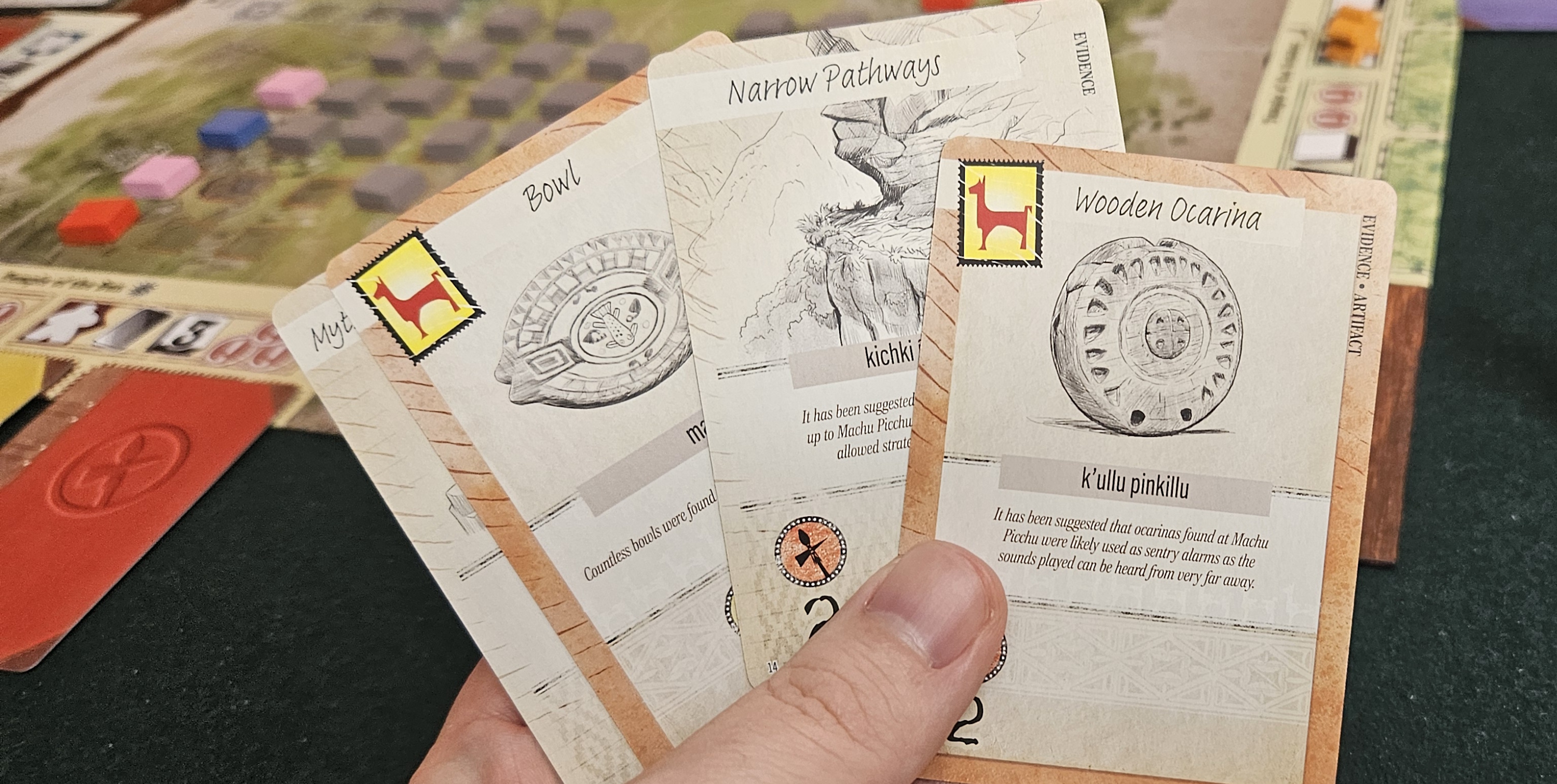
Evidence cards extracted from the dig site.
Little by little, your search scratches the surface. Gray blocks are removed from the map along with evidence cards, their backs color-coded with hints about their nature. This portion of the game is operated via worker placement, with researcher meeples deployed to recover blocks and artifacts. As the rulebook indicates, there’s an element of destruction to this process. Stones must be removed — carefully, with intention to be replaced, but removed all the same — to uncover what lies beneath. Artifacts will be removed for study and, often, displayed in far-off countries or private collections. In game terms, this translates to “impact.” For every block displaced and card recovered, you move along a track, leaving a trail of displacement in your wake.
Everything recovered reveals a function. Ornate pottery speaks to wealth. Sudden abandonment hints that the site may be one of the continent’s mythical lost cities. Guardhouses and moats and narrow bridges indicate military use. The astronomical alignment of windows and dwellings prompts thoughts of the heavens.
Very quickly, however, one thing becomes clear. There is no singular “truth.” At least there isn’t one hidden in the deck of evidence cards. There are tendencies, certainly. In the aleatory shuffle that begins each round, sometimes a corner of Machu Picchu develops in one way or another. A cluster of pink cards speaks to the site’s religious importance; a scattering of reds lends credence to the idea that this was a military citadel.
But it’s what you do with these fragments of evidence that makes Wiñay Kawsay so compelling.
Academic publishing works exactly like this.
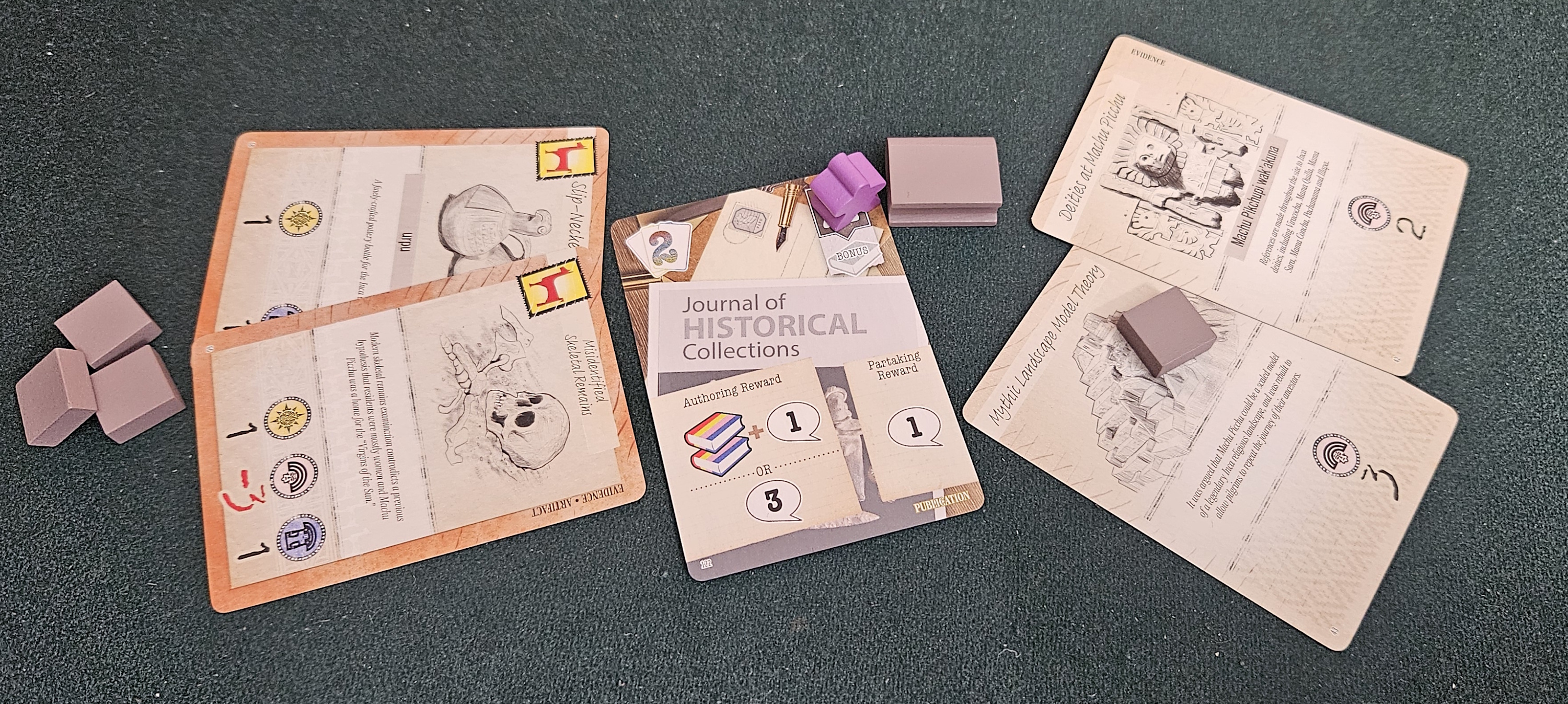
First, evidence must be published. This is presented via an atypical auction system. One player approaches a publication — a journal of military history, say, or a compendium of ancient history. They arrange their evidence cards and at least one of the gray blocks they took from the dig site. This is their bid.
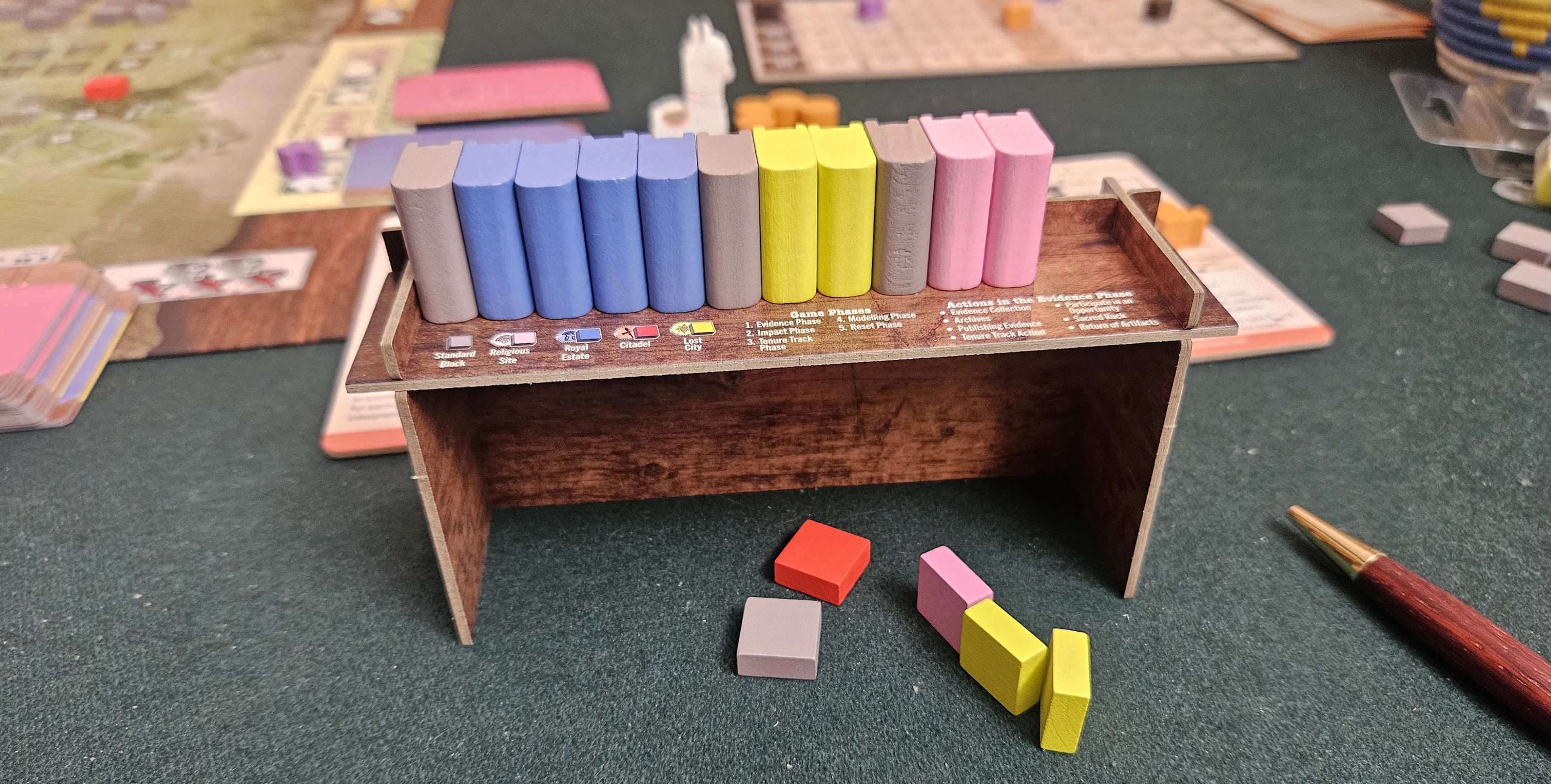
At this point, competing players are allowed to get in on the action with their own cards and blocks. When everything is revealed, this might result in competing interpretations. In fact, it’s downright common. Icons are tallied to reveal which interpretation is most favored at the moment. Then the player who submitted the bulk of the evidence in that interpretation becomes the publication’s author, adding a color-coded book or two to the professorial desk that serves as their resource shield.
In its abstraction, this auction system captures something of the discourse that is historical authorship. Ideas matter, but only in the turbulence of publication and counter-publication. Along the way, things fall through the cracks. One interpretation that seemed solid might slip out of favor, only to resurface later when its evidence card is dredged from the archives. Meanwhile, material artifacts — a broken spine, misgendered bones, grave goods — become tally marks in ideological tug-of-wars, disappear into a crate somewhere, and then are found later to be returned to Peru, usually with some gravity of ceremony to ensure your institution doesn’t get in too much trouble for pillaging somebody’s heritage.
Which is to say it’s all so very earthy. This is history as tangible product, something dug out of the earth and then fiercely argued over. History, even, as personal prejudice and petty squabbles. It’s history as the ongoing conflict between fieldwork and archive work. And the game hasn’t even unveiled its centerpiece yet.
The tenure track is fraught with frustrating requirements. Accurate.
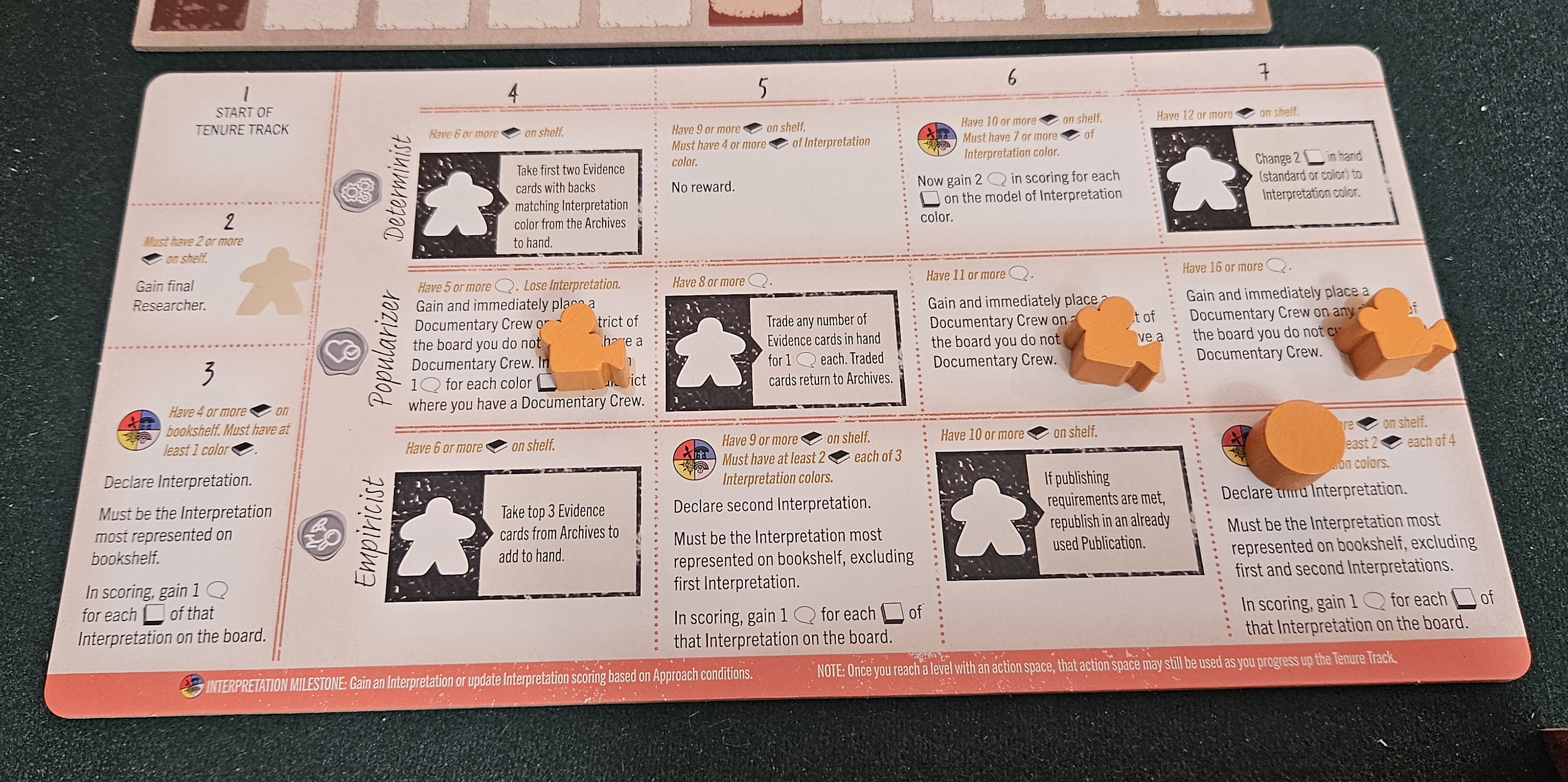
When the game opens, you haven’t yet established a favored interpretation. That occurs naturally as you publish your first papers. But then, maybe twenty minutes in, the game shifts gears. You have your interpretation. Now you’re asked how you’ll defend it.
There are three options. The first one, the one most of us would recognize as history as an ideal practice, is Empiricism. Over time, your approach to the evidence changes. This requires you to put forward and defend multiple theories — sometimes contradictory theories. By publishing books in multiple colors, your ultimate reward is a well-rounded score derived from a whole range sources.
In some ways, Empiricism is a safe bet. Any and all evidence might become valuable. But as you’ll soon discover, it’s also a precarious approach. On the opposite end of the ideological spectrum is Determinism. This approach puts forward a single theory at all costs, seeding only a single color across the map of Machu Picchu, but scoring those blocks over and over again. As a Determinist, you have the answer already in mind. The evidence is down there. All that remains is to find it. And to ignore, bury, or overwhelm any evidence to the contrary.
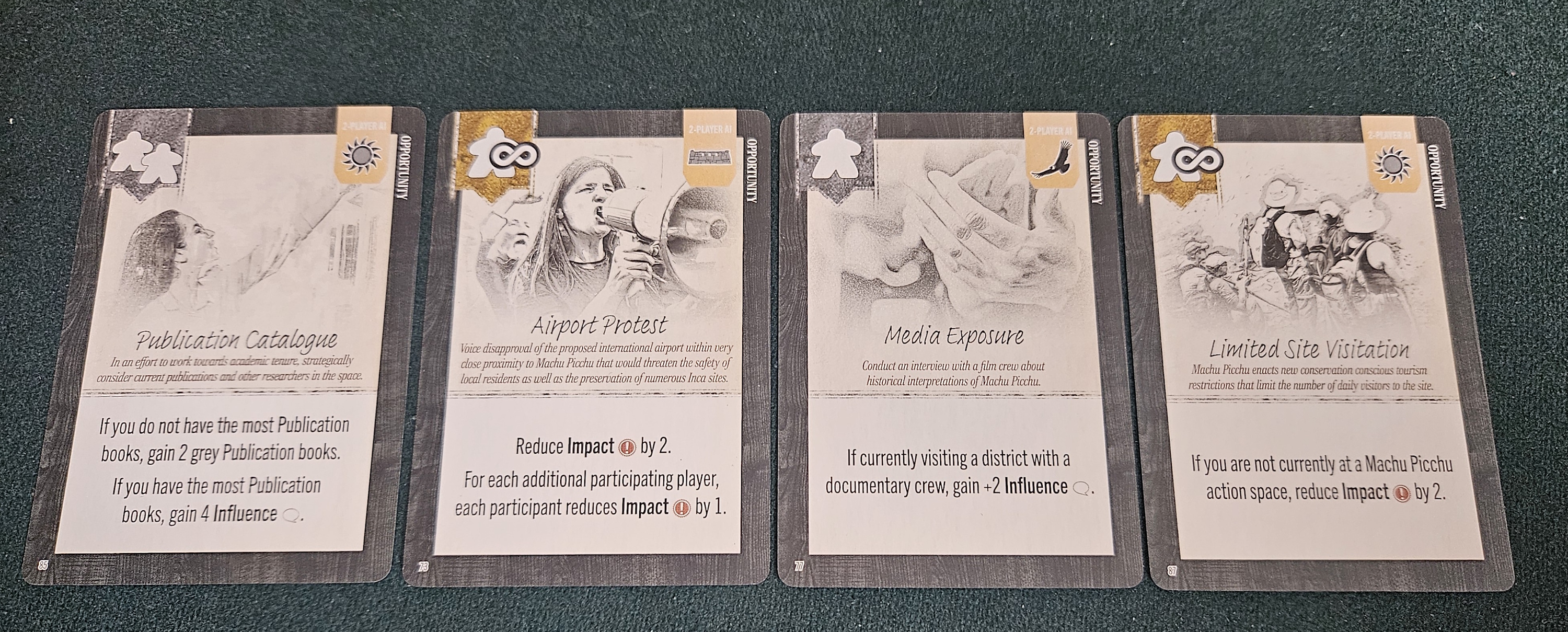
The third route sits somewhere in the middle: the Popularizer. Rather than having an interpretation at all, the Popularizer is here to talk about how cool history is. Basically, you’re the 20th-century history version of those I Fucking Love Science social media pages that share unsourced listicles about how neutron stars prove the universe is one big brain, maaan. In some ways, this is the safest route. As soon as you declare yourself a Popularizer, you ditch the burden of having an interpretation at all. Instead, you gain a documentary crew. This you place on one of Machu Picchu’s sites, where it earns points for every colored block. Not only some, like the Empiricist. Not only one, like the Determinist. All. As your popularity expands, you unlock additional film crews to cover further sites. Maybe you’ll even talk about aliens on some podcasts.
(Note: There are no aliens in Wiñay Kawsay. Thank goodness.)
“According to one article we found on the internet, the Inca preferred Easter hues.”
What’s so fascinating about the model Collins has presented here is that it demonstrates not only the process of uncovering and writing history, but also its dangers and drawbacks.
Here’s my favorite example. In one session, I was playing as an Empiricist. That meant I favored nearly all evidence, right? Well… sorta. As the game progressed, one of my rivals outed himself as a Determinist. Specifically, a Determinist for the military theory, the idea that Machu Picchu was a citadel that projected force onto the surrounding agricultural communities.
And he was doing a bang-up job of finding evidence. Red cards, the ones that support the military interpretation, were appearing all over the place. When a lull in mace-heads and splintered bones finally presented itself, our resident Determinist had already unlocked the special action that let him plunge into the archive — the discard pile, which is very much in-play throughout the entire game — to pull out cards that matched his ideological slant. The board was redder than the binding of Chairman Mao’s Quotations. Or the cover of a Dan Bullock board game. Very red indeed, is what I’m saying.
Which meant that I, the Good Guy, the One Who Accepted All Evidence, started burying red blocks every chance I got. I still earned them, of course. In the course of publishing articles about The Militant Traditions Evident in the Soil Layers of Machu Picchu, I gave the military theory its due. Still, while I was oh so impartial on paper, beneath my player shield I was hoarding red blocks rather than adding them to the map. I even scoured each round’s opportunity cards for new ways to swap one color for another. A lecture series became a chance to discuss how, yes, there were some military artifacts here and there, but they really bore religious significance. Adios red blocks, hello pink blocks. I capitalized on popular beliefs to add more yellow blocks to the Temple of the Sun. I abused radiocarbon dating to swap reds for blues in the Residential District.
And I won. By the slenderest possible margin, I took it. I’d become the very thing I supposedly despised, a vandal of the archaeological and written record. But I’d beaten my foe, and done so while remaining the very model of a modern history-writer. To the outside world, anyway.
Opportunity cards consider the broader social sphere.
I wish I could say that these abuses of history are the exception, but that hasn’t been my experience. I grew up in a culture that enthusiastically encouraged higher education for everyone… provided everyone then used that education to prove the right things.
Machu Picchu was one more bystander of that culture war. In middle school, a close friend bragged to our group about how his father was taking people on tours that proved the Book of Mormon had really happened: it had been a Nephite stronghold, a satellite kingdom of Zarahemla that was wiped out in the war against the Lamanites a few hundred years after Jesus Christ had visited the Americas. In reply, I pointed out that the latest radiocarbon dating placed its origins no earlier than 1420, and furthermore argued that it was problematic to rob an indigenous group of their history to service a white Christian millenarian narrative.
LOL. I didn’t say any of that. I didn’t know the first thing about the Inca, and I probably would have told you that “cultural appropriation” was when you really liked bratwurst. But those ruins were a long way from where my seminary teacher said Zarahemla was really located, so I bounced back with something like “That’s bonkers.” Eloquent seventh-grader fare.
Anyway, my friend got very upset. “Are you calling my dad a liar?” upset. Not-talking-for-three-days upset. So upset that he stopped eating lunch with me.
Because even when history is very badly done, it matters. That’s one of the things Collins seems to be saying in Wiñay Kawsay. These ruins are real. The artifacts we draw from them are real. But the stories we tell about them are only perceptions of reality. Better or worse, accurate or inaccurate, studious or half-baked, they were written by people who had their own versions of the Inca, or what certain items must have been used for, or how this story could be told.
My publications.
This situates Wiñay Kawsay in rare company. Plenty of games use historical settings, but not many of them are about history. Wiñay Kawsay is about history. It’s about how history is the study of primary sources and artifacts, but about how it’s also about relating a story that makes sense. The result is a warning as much as it is a love letter, a game that believes in the process of making good history — in looking at the past, the entirety of it — but which is never unaware that bad history is always close at hand, one error, oversight, or unexamined bias away. Hopefully there are correctives, found in peer review and publishing and debate. Hopefully.
At any rate, Collins has crafted something impressive, a heady blend of sharp gameplay and shaper insight that’s far simpler and more playable than anyone could rightly expect.
A complimentary copy of Wiñay Kawsay was provided by the publisher.
The global tabletop gaming industry descends on Germany once again next week for the world’s biggest board game fair, Spiel Essen – bringing together thousands of publishers, designers, distributors, retailers and other industry professionals for four packed days of new releases and networking.
This year’s SPIEL.talks programme of panel discussions will be on the main show floor for the second year running, with sessions in Hall 4 covering everything from artificial intelligence and game localisation to emerging tabletop markets, careers in the industry and the process of bringing a board game from prototype to store shelves around the world.
BoardGameWire has rounded up some of the most interesting-looking sessions for current and aspiring tabletop game industry professionals from across the four days.
Thursday, October 22
Your World, Your Rules, Your AI: Why It Should Come From Europe (German)
11:10am – 11:50am
HillcrownAI founder Oliver Mauckner lays out why he thinks artificial intelligence could be used to support tabletop gaming without replacing the physical experience – from interactive rulebooks capable of answering questions in seconds to tools for introducing new players and expanding game worlds. He will also discuss the potential benefits of publishers retaining control over their own AI systems, including technology hosted on European servers and trained to respond using official game rules rather than generating potentially inaccurate information.
Discovering Careers in Tabletop Game Industry (English)
11:50am – 12:20pm
GAMA vice president and Critical Role integrated marketing manager Ross Thompson explores the wide range of careers available in tabletop gaming beyond game design and marketing, drawing on 17 years of industry experience. Thompson, who also helps run the Tabletop Game Jobs Facebook group, returns to the SPIEL.talks stage after delivering a similar session last year.
Why Translation is not Localization (yet) and Where AI Can Help (English)
12:20pm – 1:10pm
Former Asmodee localisation head Sebastian Rapp joins a panel of experienced board game translators and localisation specialists to discuss the challenges of bringing games to international markets, from adapting rules and cultural references to the growing use of AI in translation. The panel will explore the pitfalls of localization, the need for cultural adaptation in the process, and why translation alone does not equal localization.
Media Literacy & Editorial Policy in the Boardgaming World (English)
1:10pm – 1:40pm
Board game podcaster Kenny Katayama examines some of the thornier issues surrounding tabletop gaming media, including paid partnerships, review copies, bias, AI disclosure and politics in the hobby. The session will explore how publishers, reviewers, influencers and audiences can navigate an increasingly complex media landscape, following several controversies over the past two years.
50 Years of Board Game Designer Networks – A Data Analysis (German)
2:40pm – 3:10pm
Social scientist and board game critic Johannes Blumenberg presents the findings of a study examining 50 years of board game designer networks, drawing on BoardGameGeek data covering more than 132,000 games and almost 60,000 designers. His research found that women have accounted for just 9% to 10% of board game designers since around 2020, and examines how differences in professional networks and collaboration patterns could help explain persistent gender inequalities in the industry.
Why India is the World’s Next Big Tabletop Market (English)
5:00pm – 5:30pm
Phalgun Polepalli, co-founder of Indian tabletop convention TTOX, explores the potential for the country to become a major growth market for board games, highlighting its young population, rising disposable incomes and growing gaming communities. He will discuss consumer behaviour, gaps in the country’s retail infrastructure, localisation challenges and what international publishers often misunderstand about the Indian market.
Board Games Insider… We Make You… The Insider! (English)
5:30pm – 6:30pm
Spiel Essen managing director Carol Rapp joins industry veterans Ignacy Trzewiczek of Portal Games, former Stronghold Games president Stephen Buonocore and Corey Thompson for a special live edition of the Board Games Insider podcast. The session promises a look behind the scenes of the world’s biggest board game fair, drawing on Rapp’s experience running SPIEL and her previous senior roles at Kosmos and Asmodee.
Friday, October 23
Game Studies – Why Is It Needed as an Independent Academic Discipline? (German)
12:10pm – 12:40pm
Institute for Ludology director and German Society for Game Studies board member Jens Junge explores the case for establishing game studies as an independent academic discipline, and what greater recognition of games in education and cultural policy could mean for the tabletop industry. Junge, who has worked in the board game sector since 1984, will discuss the newly founded German Society for Game Studies and its efforts to raise the profile of games in academic research and public policy.
Teaching Game Design: What We Know and Where We’re Going (English)
6pm – 6:30pm
NYU Game Center associate professor Basil Lim and TU Dublin lecturer John Healy explore how game design education is evolving to prepare the next generation of designers for an industry being reshaped by technological advances and changing demographics. The session will examine how universities can balance practical industry skills with creative and critical thinking, and how teaching across both analog and digital games can equip aspiring designers for careers in an increasingly interconnected industry.
Saturday, October 24
From Player to Leader: Building a Career in Tabletop Through Community (English)
12:20pm – 12:50pm
A panel of senior industry executives including Asmodee US commercial distribution head Julien Sharp, former Funko Games and Moose Toys executive Deirdre Cross, and ACD Distribution marketing director Danni Loe explore how networking, mentorship and professional communities can help build careers in tabletop gaming. The discussion, organised around Women in Toys, Licensing & Entertainment, will examine how professional relationships have helped shape the panellists’ paths into industry leadership.
From Prototype to Store Shelf — How a Concept Makes Its Way Through a Global Studio (English)
3:50pm – 4:50pm
Designers from major tabletop publishers including Asmodee studios Zygomatic and Libellud, LEGO board game partner Dotted Games and Star Wars: Unlimited developer Fantasy Flight Games explore what happens after a game prototype is accepted by a publisher. The panel, which also features prolific freelance designer Matthew Dunstan, will examine why promising designs get rejected, how games change during development and the challenges of preparing a title for release in 15 languages.
No Extra Lives Needed; Inclusion by Design (English)
5:20pm – 5:50pm
Blood on the Clocktower creator and Pandemonium Institute CEO Steven Medway explores how board game design choices can make games more inclusive and encourage players to return. Drawing on his experience developing the hit social deduction game, Medway will discuss how components, rules, strategies, artwork and presentation can help create welcoming social experiences without making inclusivity feel like an overt design feature.
Sunday, October 25
Analog Meets Digital: What Connects Games and What They Can Learn From Each Other (German)
2:10pm – 3pm
Spiel Essen managing director Carol Rapp and Ubisoft Europe head Ralf Wirsing lead a panel exploring the similarities and differences between board games and video games, and what the two industries can learn from each other. Joined by game researcher Jens Junge and Darmstadt University of Applied Sciences professor Stephan Jacob, the discussion will examine differences in game design, business models and player experiences, as well as the opportunities emerging from hybrid games and closer collaboration between the analog and digital sectors.
The full schedule of panels, which run from Thursday 22 to Sunday 25 October, is available here.
On not-so-rare occasions, I get to play board games before they’re fully polished. There’s something about seeing a game struggle through its growing pains, watching its knobbly limbs grow lithe and athletic, its protrusions smooth and frictionless, that recalls editing a novel for publication or appraising frames for the final cut. Most of the time, this process is a hard one. “Murder your darlings,” Sir Arthur Quiller-Couch said of an author’s finest phrases. Cut them down to size. That’s what it takes to make something great.
Only I’m not convinced we don’t sometimes murder a little too liberally. Sometimes I’ll play a finished game only to discover that the essential soul that made its earlier incarnation worth experiencing has been killed along with the wobbly iconography and degenerative action states. Somewhere in the process, development has sanded down the knobs and protrusions — and left little more than a burnished stick. Good for a walk, perhaps, but not especially notable.
Which brings us to Braided Skies, created by Dan Germain and Stonemaier Games.
When I say a game has “topography,” I don’t usually mean it literally.
Ever played a board game about operating a tour company that whisks hard-earned customers to exotic locales aboard custom pleasure craft? That’s Braided Skies. Or, well, Braided Skies is the other one. The one that isn’t Galactic Cruise. It’s a gentle game. Strait-laced. Customary.
Literally. In an era when worker placement has the air of either a past fad or something that complements other systems rather than standing on its own, Braided Skies puts the concept front and center. Turns consist of taking an airship, of which you own three, and sending it to a destination. Most of the time, these placements are completed without restriction. Only on occasion do you need to pay attention to the vessel’s little flags, whether one, two, or three, to determine whether it can safely navigate to a particular port.
There are variables on the formula, as you might expect. The mainstay is the game’s approach to topography. When Braided Skies opens, a thick cloud layer covers most of the board. Technically it’s two layers of additional cardboard, buckled against one another with the help of hidden magnets, but you get the gist. These layers conceal additional ports that are only gradually uncovered as you visit the spots on top of them. The clouds part to reveal some bonus — an extra card, one of the multi-colored “tapstones” that function as airship fuel, maybe a few seeded points at a location to incentivize a visit — and then, underneath, a new location brimming with resources to exploit.
Adding workers to my workers.
Similarly, ships and ports alike exist to be upgraded. Since they function as your workers, the former are the real highlight, permitting both a sailor and a little factory to come along for the ride. (A little loosely, it must be said. It would have been preferable for them to snap into place rather than wobbling over the side at the slightest nudge. Crewing an airship is no joke.) These upgrades goose the value of the ports you visit. Similarly, many ports can be staffed with outposts for another helping.
Which is all to say, where your early airships feel a little underwhelming, it isn’t long before you’re fielding — floating? — absolute resource-guzzlers. Every time you descend into port, your hold swells with tapstones and tourists. This in turn initiates a little… I wouldn’t call it a minigame. It’s far too light for that. But a mini-minigame, one where your newfound cargo must be loaded into the proper slots or get left behind. It’s always free to load cargo into the ship that did the hauling, provided there’s room. Loading stuff onto other ships costs grit, a more abstract resource, and might be worthwhile if you’ve added the right outfitting cards to a ship.
Look, this is all a mouthful, but in practice it’s silky smooth. Ships go out and pick up resources. Resources go into your ships. The more outfittings a ship has, the more it can hold. The real highlight, though, is what those outfittings do when you bring a ship back home.
Recalling your ships is maybe the best part of the game.
Recall turns have long been the bane of worker-placement games, and if there’s any one thing that Stonemaier Games has set out to solve, it’s the recall turn. Germain has done as good a job as any, and likely better. The idea is that returning ships trigger all their outfittings, but only if they’re full of resources. This is how you… well, everything. Speed along the tracks that act as game timers and make your card icons more valuable in the endgame. Earn points. Gain passive trickles of resources. Add extra outposts to the map. More often than not, it’s the return trip that’s the more exciting of Braided Skies’ tidal phases. Going out, you get resources. Coming back, you put those resources to work.
Naturally, resources don’t only serve that one purpose. The real spills of points are found on the map, mostly in the form of wonders. Basically, these are the destinations you’re delivering passengers to, provided you haven’t forgotten about them in your distraction with other shiny possibilities, which I’m somewhat pleased to report has happened to me on more than one occasion.
This in turn produces a certain tension. Should you spend all those resources to secure access to another wonder? Or ensure your recall turn will be as stocked as possible? As generous as Braided Skies is, it isn’t uncommon to find oneself just short of having enough resources to have it both ways.
Eventually you’ll have to actually take tourists to tourist places.
Which isn’t the same as saying there’s any stress to these decisions. Like much of Stonemaier’s output these days, Braided Skies is as buffed of friction as possible. There’s a certain arc to the game that rarely deviates from its appointed path. Early on, everybody stocks their ships with factories and crew. Later, they onboard huge amounts of resources and churn them into points. Every so often — but not often enough to make it really matter — someone will require a specific ship to visit a particular port.
But this doesn’t extend to wonders, nor to any of the actual points-scoring locales. The result is an endgame gold rush for points, one with hardly any consideration for, say, sweeping something out from under a rival. There’s no sacrifice to anything. No dangerous headwinds to navigate; no spots that sacrifice a shipboard factory for a heap of points. If anything, the board seems to develop from one side to the other. Halfway through the game, the spaces along the bottom are all but obsolete. Why visit them? You’ll never need to crew up again. The time for new outfittings has passed. Now is the time to gather and spend resources.
Really what I’m trying to say is that Braided Skies is rewarding but hollow. Every move gives you something, but it isn’t often that something will be demanded in return. I have no idea if there was a more rough-and-tumble version of this game at some point. One where blocking mattered. One where a keen move could upend an opponent’s plans with purpose rather than incidentally. But I hope so. If only because Braided Skies truly is impressive, in its way, full of systems that feel good to manage and some smart ideas about how to evolve a map and make recall turns exciting. Those parts of the game deserved extra kindling. Something they could spark against.
Braided Skies sure is a looker.
On the whole, then, Braided Skies is a feel-good game that struggles to elicit grander emotions than the muted pleasure of adding more tokens to your stockpile, ticking along a scoring track, or ticking along a different scoring track. It’s lighter than the titles that usually get pegged as too light for “serious” play, the Wingspans and Wyrmspans and Finspans. If not in terms of rules — a caveat I add entirely for the sake of Wingspan Pocket — then in terms of consequence.
Still, I’ve enjoyed my time soaring across this particular cloud-banked continent. Enjoyed and forgotten. But enjoyed all the same.
A complimentary copy of Braided Skies was provided by the publisher.
Bryan Bornmueller’s two The Lord of the Rings: Trick-Taking Game releases, which were judged as a single title, triumphed over Dewan and Pondscape in the connoisseur games category, handing a win to Asmodee studio Office Dog.
This year’s expert game prize, meanwhile, went to White Goblin Games’ Dutch-language edition of River of Gold – which saw off competition from Ants and Yokohama. That title was also originally published by Asmodee studio Office Dog in English.
Asmodee’s Yke Rietveld and Hidde van Maurik collect the award for the publisher’s Lord of the Rings trick taking titles || Photo Credit: Henk Rolleman
Take Time’s victory means this is only the second time in five years that the Dutch family game award has not gone to a Spiel des Jahres winner, with Cascadia, Sky Team and Bomb Busters each having claimed both prizes in 2022, 2024 and 2025 respectively.
The result saw three-year-old Dutch publisher DSV Games miss out on a prize despite securing a trio of nominations this year – 12 months after picking up its first win in the contest with Tomáš Holek design SETI.
This year’s entire shortlist was shared between just three publishing groups in Asmodee, White Goblin Games and DSV.
Game line manager Auguste Lecoeur told BoardGameWire, “As soon as the game’s prototype was shown to us and signed, it became an internal priority, with resources and manpower being redirected from other projects to Take Time.”
The title sees players attempting to place cards around a series of clock faces while meeting increasingly challenging conditions, with limited opportunities to discuss their plans before playing.
More than 100 Dutch-language board and card games were assessed by a jury of experts for this year’s Nederlandse Spellenprijs, which is now in its 26th year. Games were assessed on their quality, originality and replayability.
This year’s ceremony marked a change in leadership for the awards, with Anna Wassenburg taking over as chair from Niek Ederveen, who stepped down after nine years in the role.
Another change this year was the physical format of the awards themselves, which are now shaped like pawns with windmill sails.
It’s almost too obvious to state aloud, but there’s a lot to be said for the games we actually play. Case in point, Enchanted Ivy, the solitaire game by Sarah Joshua. When I sat down this morning to begin writing this review, I went through the usual steps. Picking and editing the images. Uploading the template and arranging everything into logical order. Glancing through a few notes.
But then I thought to myself, maybe I don’t understand this game yet. Even though I’ve played it well over thirty times. One more session. In endless mode with randomized guests. Just one extra play to make sure I know what I’m talking about.
And then, with such inevitability that I’m not sure why I ever thought differently, I played it twice. That’s Enchanted Ivy for you.
Some of these guests are fighting. Perfect for playing my mandolin!
Enchanted Ivy is about building an inn. It’s a magical inn, always shifting, and covered with ivy and blossoms. The arrangement of that ivy is the first layer of the game’s challenge. The more interconnected the ivy — the fewer gaps in its protective foliage — the more points you score.
But Enchanted Ivy isn’t only about the structure. It’s also about the guests who will inhabit it. Every card can be flipped over. One side shows the ivy growing along the plaster and brickwork. The other shows the same, but with the addition of a balcony. These are the spaces for your guests to inhabit.
Turns are simple. You draw two cards and two guests. Both cards will be placed: one on its bare side, the other for its balcony. Onto the balcony you’ll place a single guest. Then you draw back to two cards and two guests. Simple.
Picking which fussy goofball to welcome into the inn.
Except the only simple thing about Enchanted Ivy is its turn structure. Your guests are the real challenge. To a one, they’re fussy. Fussy and wonderful. And since most sessions require you to balance the needs of ten or so guests, whether you’re tackling one of the game’s ten scenarios or tinkering with the randomized endless mode, their needs clash almost immediately.
For example, today I was faced with some tough conflicting imperatives. Some of my guests were all about proximity. Such as the Dog, who wants to keep his three heads affixed to as many guests as possible, and the Gift Giver, a Santa knockoff who can only be bothered to walk in two straight lines through the inn, but scores quite a few points for every room he leaves a present at. Others, though, wanted room to spread out. Like the Adventurer with his grappling hook, ready to swing across gaps to say hello, or the Washer, needing another window somewhere across the way to suspend her clothesline from — the farther all the better for hanging additional wet underthings — or the Firebreather, determined to regurgitate flames against empty diagonals.
At times, the sheer bulk of these needs — having to house an Astrologer who wants an unobstructed view of the night sky next to a Cat that intends to wander from sill to sill — can seem overwhelming. Especially when you first reveal all those guests. Ten! Ten! How am I going to keep ten people straight?
Each guest has their own scoring objective.
To its credit, this is where Enchanted Ivy really shines. The scenarios, which present a lovely little tale about coming to accept one’s changing identity (I smell a metaphor!) introduces guests steadily but not so quickly that they become overwhelming. And really, the whole thing is brief enough that it usually demands a second session to see how many extra points can be wrung from a set now that you know your guests’ peccadilloes.
Very quickly, I developed favorites. The Fighters, paired guests who must be kept apart at all costs. The Raven Keeper, observing the comings and goings from above. The Architect and his invisible lines across the way. Of course, there were also those guests for whom my welcoming smile was more of a rictus. The Fool and his juggling. The Mystery Knight insisting that his bath demands privacy. The Justice’s demand for absolute symmetry of guest placements. That hag.
No matter the combination, though, there’s a fairness to the process. Sure, it’s possible for a bad draw to smash your plans. I’m speaking in a more holistic sense. Before Enchanted Ivy jumbles the pieces together, it shows you the parameters. The guests who must be housed. The shape your inn will take today. Who’s going to be a problem. If you’re playing a scenario, which optional challenges you can tackle. And then you take those pieces and make something beautiful.
I always take a moment to look over my completed inn.
Lots of board games are about making something beautiful, whether visually or mathematically. Enchanted Ivy lets you do both. But more than that, it asks you to linger. To spend an extra minute. To observe the flaws in your creation and appreciate them.
Which is to say that even after all those sessions, even after learning how to manage the game’s thirty-odd guests, after checking off every scoring goal and special objective in the campaign, I keep coming back for one more visit. This is one of the finest solitaire games I’ve played in… well, in ever.
A complimentary copy of Enchanted Ivy was provided by the publisher.
Steamforged Games is facing mounting criticism from crowdfunding backers over unresolved refunds and dwindling updates across its undelivered projects, in the wake of the publisher cutting about a third of its workforce and refocusing towards its Warmachine miniatures line earlier this year.
That left Steamforged with nine campaigns with outstanding fulfilment obligations, which together raised almost £19m including late pledges. The biggest of those is Monster Hunter World: Iceborne, which pulled in almost £6.3m from almost 15,000 backers and was originally estimated to be delivered almost two years ago, in November 2024.
Steamforged said in a Kickstarter update in January this year that it was aiming to deliver the title to all regions in July, but has provided just two updates since.
The first, in April, said things were “back up and running following Chinese New Year” and promising “more substantial updates” in the coming months, while another at the end of July read:
“We’d like to start by apologising for the lack of a formal update recently. We had intended to have concrete fulfilment information ready for you this month, but this update is waiting on some key information from partners which is still pending.
“In the meantime, we wanted to let you know we are working hard behind the scenes and will have an update to share as soon as we possibly can.”
Steamforged’s sparse status updates have led to rising discontent from backers across the comment sections of its crowdfunds and on its official Discord channel, which members say has been abandoned by company staff since the refocus towards Warmachine.
Backers across those channels are now questioning whether their games will ever arrive, with some reporting waits of weeks or months for responses to refund requests. Multiple backers have now turned to PayPal disputes and credit card chargebacks to recover their money.
At least one of Steamforged’s commercial partners has also expressed concerns. Hearts of Iron IP owner Paradox Interactive confirmed in June that it was in contact with Steamforged and working to ensure customers received their games as soon as possible.
A spokesperson for Paradox told BoardGameWire earlier this week, “Paradox has been closely tracking the progress of the Hearts of Iron board game. We are in talks with Steamforged Games to find the best way to get the game completed.
“We are not ready to comment on or commit to a specific course of action on the situation at Steamforged.”
Hearts of Iron: The Board Game || Gamefound campaign image
A spokesperson for Feuerland Games, the publisher of Terra Mystica which teamed up with Steamforged for the special edition crowdfund, declined to comment on the situation to BoardGameWire.
Multiple sources who spoke to BoardGameWire in June on condition of anonymity said the latest Steamforged staff cuts affected departments including the creative, game design, production, project management, QA, marketing and commercial teams – adding that they feared the cutbacks would lead to problems delivering long-term projects.
But Steamforged told BoardGameWire at the time that the “vast majority” of creative work on its crowdfunded board games was complete, described the staff reduction as “carefully considered”, and said the company “retain[s] both the internal resource and the external capabilities needed to deliver on our commitments”.
BoardGameWire has attempted to contact Steamforged CEO Rich Loxam multiple times across August, September and October about the ongoing situation at the publisher, and to ask questions about refunds, production and delivery schedules and whether the restructuring had affected the company’s ability to complete its existing projects – but has received no response.
Terra Mystica Special Edition || Gamefound campaign image
Loxam previously told BoardGameWire during Steamforged’s Terra Mystica Special Edition campaign last November that “backers need to feel heard, valued, and understood, which is why we spend so much time in the comments”.
Reflecting on the difficult fulfilment of Dark Souls: The Board Game, Loxam said in a 2022 blog post that one of Steamforged’s “bigger mistakes” had been handling problems “behind closed doors” and only speaking publicly when it felt there was something important to say.
“We were wrong,” he wrote, adding that Steamforged had “learned the hard way that transparency with supporters, backers, and fans is always the right choice”, and promising to communicate as much as possible to build trust and its reputation.
Steamforged signalled a change in its approach following June’s disclosure of the redundancies, telling BoardGameWire that “in the past, we would post updates once-a-month even during quieter periods for a project”.
“Moving forward, our focus is on providing key updates,” it added.
But the sharp decline in communication has extended beyond crowdfunding updates, with several of Steamforged’s public community channels now restricted or, like the Discord, no longer actively used by staff.
Comments are disabled on Steamforged’s YouTube videos – although the company has not uploaded anything to the channel for eight months – while posts on its Facebook page currently carry a notice saying it has “limited who can comment on this post”.
Despite the absence of staff activity on the Steamforged Discord channel, employees have remained active in the company’s dedicated Warmachine server – where the company has told users not to raise questions about its outstanding crowdfunds.
In a September 23 message on the Warmachine Discord, Steamforged’s head of marketing Chynna-Blue Perkins acknowledged that crowdfunding backers were turning to the server for answers, but said it was not the appropriate place to discuss the company’s outstanding projects.
She wrote, “As much as I understand going where you can to seek answers, I am going to have to draw a line under future Kickstarter queries in this server.
“Everyone’s been respectful considering the topic at hand, and I appreciate that, but this is a Warmachine server and it isn’t the right place for crowdfunding queries.
“The campaign pages are where any and all updates will be shared. I wish I could give you more information, but even if I could, this wouldn’t be the place for it.”
The reduction in communication has left backers increasingly having to divine for themselves exactly what is happening at Steamforged, with discussions in its Discord ranging from questions about whether to withdraw from campaigns and advice on procuring refunds, to speculation about the company’s financial stability.
Backer concerns around the latter were exacerbated at the beginning of last month when Companies House, the UK government agency responsible for company registrations, began compulsory strike-off proceedings against Steamforged Games and its parent company due to their overdue accounts, which were due on June 30.
We’re aware some of you have seen a First Gazette notice relating to Steamforged Games, and we’re sorry for any concern it’s caused.
This is a routine notice Companies House issues when a filing is overdue. Our filing was delayed as a result of the company restructuring work we announced earlier this year and is now being resolved.
To be clear, all business activities are continuing as normal.
While the publisher’s latest accounts remain unavailable, data from Steamforged investor Foresight offers some insight into the company’s recent performance.
The investment house cut the valuation of its Steamforged holdings by almost 74% in the first half of 2026 across its Foresight VCT and Enterprise VCT investment vehicles, from £3.68m to just over £960,000 – although that does not represent the valuation of Steamforged as a whole.
Foresight, which invested £5m in Steamforged in 2019 across those vehicles and a third investment fund, said in an end of June update that the publisher had experienced “a few disappointing crowdfunding campaigns over the last 12 months” and was looking to transition away from that part of the market to focus on its higher-margin Iron Kingdoms business.
Steamforged picked up Warmachine – which is set in the Iron Kingdoms IP – P3 Paints and the Iron Kingdoms RPG from Privateer Press in 2024.
A spokesperson for Steamforged told BoardGameWire in June that Warmachine and P3 Paints revenue had tripled in the prior 21 months, despite significant stock constraints in its first year of ownership due to heavy demand.
They said at the time “Demand has been high and we’ve scaled production to meet it. Our US production capacity for Warmachine has increased by 70% since last March, with a 25% increase in Europe since August and new production facilities introduced in the UK in February 2026.”
But communication problems have also extended to P3 Paints. Backers of the Wave 2 crowdfund have complained about a lack of updates and unanswered refund requests, after Steamforged revealed in May that production problems with metallic colours had pushed expected fulfilment from June 2026 into 2027.
Steamforged has so far completed non-US fulfilment of Horizon Forbidden West: Seeds of Rebellion and Euthia: Cruel Frost this year, as well as the pre-order campaign for 6: Siege – which it picked up from now-liquidated crowdfunding major Mythic Games early last year.
The last crowdfunding campaigns substantially or fully completed by the publisher are all from last year, including Elden Ring: The Board Game, the original P3 Paints campaign and the Iron Kingdoms-set Strangelight Workshop RPG.
Of the handful of things I appreciate about Pax Playground, the most significant is the way it reminds me of recess. Its very existence is playful — this is, after all, a Pax game that lasts twenty minutes and bucks tradition by refusing to touch history with a ten-foot pole, let alone compose loopy footnotes about it.
More importantly, David Masnato, who previously did the art for Matilda Simonsson’s Turncoats and Pax Penning, uses Pax Playground to reproduce the anxieties of childhood. Like a child, you step into the game buoyed by possibility — and weighted down by it. As a game about play, it’s playful; as a game about becoming yourself, it’s as fretful as a kid trying to decide which sweet to pick out at the store.
Who will rule the playground? Not you. Playgrounds are for playing, not ruling.
When Pax Playground opens, you’re presented with the titular playground. There are five locations in all, four of which, the slide, swings, teeter-totter, and rocking horse, are also considered structures. These locations begin with some number of toys. There are three types: blue for cars, yellow for yo-yos, and red for dolls. The schools I attended as a youngster never permitted toys, forcing us to manage our own black-market trade in Pogs and Matchbox cars and eventually Magic: The Gathering cards. Swap out a few nouns and the whole thing becomes achingly familiar.
Your objective is twofold. First, you want to make friends. Second, you want to stay true to yourself. Or maybe those should be the other way around. First, stay true to yourself. Second, make friends. Perhaps it’s a question of priorities.
As any kid can tell you, making friends isn’t as easy as you think it is, MOM. At any given time, the playground has a favorite toy, determined by which of those three colors wields the most majorities across those five locations. You also have a favorite toy. This one is tallied based on the cubes in your possession and the cards you’ve banked face-down. When the game concludes, if your favorite toy and the playground’s favorite toy are in alignment, you’ve struck up some friendships based on shared interests. Otherwise, you’re the weird kid performing yo-yo tricks while everyone else is playing with dolls.
Meanwhile, staying true to yourself is a question of fulfilling the objective card that was dealt to you in secret during setup. These offer a variety of goals, all tied in some way to the state of the playground. A picky child, for example, might want to ensure there’s only one type of toy at their favored location, while a determined child stacks a whole pile of toys together in one place.
The many ways to play.
Easier said than done. Thanks to a truly devious card system redolent of the stones from Turncoats, every action spends something from your possession and beckons you slowly but surely toward the game’s conclusion. Your hand opens with five cards. You’ll never draw or draft a replacement. Furthermore, a card only triggers its action if it matches either the toy or the location in the discard pile. For such a short game, expect to spend a lot of time studying your cards for worthwhile plays.
The only way around this limitation is to throw a tantrum. This sends you to the sandbox, the playground’s fifth and normally inaccessible location, where a selection of market cards can break the usual symbol-matching problem. The hitch is that throwing a tantrum spends a toy from your backpack. However, this also presents an opportunity. Because the sandbox can only be adjusted by children having a meltdown, a tactical tantrum can tweak the playground’s favorite toy to your liking without having to play nice with the other children. Future business majors, here’s your life lesson: sometimes it pays to be bad.
In all cases, these limitations are the beating heart of Pax Playground’s gameplay. It’s hard to play cards, and even harder to make them do what you want. It’s even possible that you’ll be forced to play on your own for a while, daydreaming about your favorite toy even if it undermines your long-term strategy. For a game that appears so lighthearted, the mechanical principles are uncompromising.
Then again, I suspect that’s the point. Adults often look back on childhood as a period without cares or responsibilities. This is only true if one considers their principal responsibilities to be economical: rent, bills, employment. Everything else — and I mean everything, from one’s moral behavior to their social obligations to the frightening burden of who you’re becoming minute by minute — is not only every bit as large and intimidating to a child as to an adult, but significantly larger.
Will you stay true to yourself? Possibly.
In one respect, Masnato softens the blow. While Pax Playground asks its players to think through the ramifications of every move, it takes a loose hand when it comes to victory conditions. Like a few recent titles, there’s no definite win-state, only the lingering question mark around whether you made friends and/or stayed true to yourself.
Here’s the old man in me speaking: at times, victorless games strike me as a brand of ludic malpractice. As fun as it can be to sit around and engage in directionless play, the medium that we call board games generally requires some guiding principle. That direction, more often than not, is most clearly expressed through victory conditions.
Now, I’m sprinkling qualifiers around for a reason. There are some perfectly wonderful victorless games out there. I’ve even recommended some of them. What’s more, I’m not sure the objection applies to Pax Playground. For one thing, it does feature objectives, and they result in fairly natural rankings at the table. While there might be some quibbling over one player making friends but betraying their values while another stays true to themselves but remains lonesome, it’s reasonably easy to say that meeting one objective is better than none and accomplishing both is pretty dang great.
Even setting that aside, Pax Playground succeeds because it raises one of the most pressing concerns of human life, whether on the playground, in the workplace, or really anywhere else: the tension between conformity and individualism. What’s more, it asks the question in a way that doesn’t result in a cliché “conformity bad, individualism good.” As a social creature, it’s healthy to foster friendships, even if we sometimes have to feign interest in a friend’s new hobby. On the flipside, the personal values listed on the cards aren’t things like honesty or generosity. They’re attributes like pickiness, indecision, or the pressing need to erect a fort around the seesaw.
The sandbox is for time-outs.
Which isn’t to say those traits can’t be worthwhile! I’ve built more forts as a parent than I ever did as a kid. It’s just that Pax Playground declines to put down stakes. Instead, Masnato has crafted a system that’s challenging to operate but allows any errors to fall on soft ground. As a feat of design, it’s quite the thing to behold, simultaneously painstaking and without immediate consequence.
In that sense, Pax Playground is a game about childhood. About the pressure to become yourself, about the wide-open frontier that is your future, so vast and uncharted as to be terrifying. But it’s also about having the liberty to mess up now and then. It is, in both senses of the word, a sandbox. And every so often, it’s worth the time-out to throw a hissy fit.
A complimentary copy of Pax Playground was provided by the publisher.
(If what I’m doing at Space-Biff! is valuable to you in some way, please consider dropping by my Patreon campaign or Ko-fi. Right now, supporters can read the next installment in my series Talking About Games, this time tackling the topic of what makes a good list! Naturally, the piece includes a list.)
Dungeons & Dragons and Magic: The Gathering workers are moving to unionise after alleging rising workloads, unpaid overtime and job insecurity at Wizards of the Coast – despite the business having become the main profit engine of toy and game giant Hasbro.
Workers on Dungeons & Dragons, D&D Beyond and Wizards’ Studio X – which develops tabletop Magic: The Gathering and Duel Masters – plan to unionise with the Communications Workers of America, having secured the backing of a “public supermajority” of employees.
The move comes after several years of soaring sales and profits at Wizards, which has increasingly become the financial powerhouse of Hasbro amid struggles at the company’s traditional toys business – which includes Nerf guns, Transformers and Peppa Pig toys.
That performance was driven by hugely successful Universes Beyond releases including Final Fantasy, Avatar: The Last Airbender and Marvel’s Spider-Man, alongside strong backlist and Secret Lair sales.
D&D workers, meanwhile, said growing workloads without corresponding increases in headcount had left some teams regularly “crunching” simply to complete planned releases – describing crunch as “intense and mandatory unpaid overtime”.
They are also seeking contractual protections around job security, pay and career progression, saying, “Many of us are bringing home less money every month, adjusted for inflation, than we did when we were hired years ago. That needs to change.”
An open letter from those workers added that employees “live in fear of suddenly losing their jobs, with no warning and through no fault of their own”, and that Wizards prioritising in-office work had left workers “unsure of whether their current living situation is tenable for their role”.
Hasbro cut about 1,900 jobs across two rounds in 2023, including at Wizards, after a sharp downturn in its core consumer products business. That segment saw revenue fall 19% in 2023, swinging to a $64.7m operating loss, while Wizards revenue rose 10%.
Further cuts have followed since, including four Wizards employees during Hasbro-wide redundancies in October 2024, and about 30 developers – roughly 90% of the team working on Wizards’ now scrapped Sigil D&D virtual tabletop – in March 2025.
Hasbro cut roughly 150 more jobs three months later, including D&D staff, and last month D&D community manager LaTia Jacquise and Magic social media manager Jordan Hopkins publicly confirmed their layoffs – with Hopkins describing his departure as part of a “greater restructure”. Wizards has not disclosed the total number of jobs affected.
Magic rules manager Eric Levine said of the union effort, “Everyone I work with makes our company, our game, and our community stronger by bringing their talent, expertise, and effort to making Magic.
“Those incredible people deserve fair compensation, remote protections, clear career progression, and more. Supporting the people who make the game will ensure that Magic keeps getting better for years to come.”
The unionisation push also called for protections for work employees create in their free time, with the D&D workers’ announcement saying, “Currently, if an employee makes anything creative in their free time, with their own resources, Hasbro can claim ownership. What we do in our free time should not be dictated by the company, and what we make in our free time should belong to us.”
The D&D team also used its unionisation letter to reveal tension between Hasbro and Wizards over the use of generative AI, saying, “As pressure has ramped up from Hasbro to adopt LLMs and Gen AI tools in various aspects of our work, WOTC has resisted these efforts and kept AI out of our games.
“That’s good! We want to preserve this commendable stance through a union contract that ensures our games will always be made by people for people.”
Hasbro CEO Chris Cocks was openly enthusiastic about bringing AI into the D&D ecosystem in September 2024, saying at Goldman Sachs’ Communacopia conference that Hasbro was already using AI “significantly and liberally internally as both a knowledge worker aid and as a development aid” – but was more excited about its potential in play.
He added, “I play with probably 30 or 40 people regularly. There’s not a single person who doesn’t use AI somehow for either campaign development or character development or story ideas. That’s a clear signal that we need to be embracing it.”
Hasbro CEO Chris Cocks
In an interview with The Verge in March this year, however, Cocks said that while Hasbro was deploying AI widely across the company, he acknowledged there was resistance to its use in Wizards’ games.
He said, “There are some brands that the audience, the creators, just don’t want it, so we don’t even have it in our pipelines for our video games or for Magic: The Gathering, or D&D.”
Cocks added that he personally used huge amounts of AI-generated animation, images, text, sound effects and voice cloning in his personal D&D games, telling interviewer Nilay Patel there was so much on his home PC that it would “floor” him.
He added that AI was being used extensively elsewhere at Hasbro, including in toy design and as a general productivity tool across the company, and estimated it could save more than one million hours of work this year.
Cocks also told Verge that he did not believe the technology would cost creative workers their jobs, saying, “I see it only making the quality of the creative we have better.”
Other demands from the unionisers include better support for working parents, changes to healthcare provision and greater financial transparency, to aid the unions in collective bargaining.
More than 100 Arena workers announced their unionisation drive in April, with Wizards declining their request for voluntary recognition. The group subsequently won a National Labor Relations Board election in June, formally establishing the first union at Wizards.
D&D and Studio X workers – who are also organising under the United Wizards of the Coast-CWA – have asked Wizards and Hasbro to voluntarily recognise their respective units by an October 13 deadline, and have filed an election petition with the NLRB to allow the certification process to proceed if that does not happen.
They are also calling for Hasbro and Wizards to adopt a labour neutrality agreement allowing other workers at the company to organise without fear of retaliation.
D&D senior game designer Joey Haeck said they were organising “because scared workers are neither happy nor productive”.
Haeck said, “By organizing to negotiate a fair contract on issues of layoff protections, forced relocation protections, equitable pay and career advancement, mandatory AI use protections, parental support, and more, we make our game better by investing in our human creators and resisting the churn and brain drain caused by roller-coaster layoffs.”
CMON has found a route to getting one of its delayed projects into customers’ hands without having to fund the remaining costs itself, as the financially-troubled publisher continues its attempt to recover from almost $23m of losses across 2024 and 2025.
Long-time CMON manufacturing partner Top Games has agreed to take ownership of The Adventurers in exchange for covering the remaining production and fulfilment costs for the pre-order title, with CMON continuing to “provide support”, a joint statement from the pair said.
They added that production of The Adventurers had now been completed, with finished games packed at the factory and ready for shipment.
Copies of The Adventurers ready for shipment || Photo Credit: CMON / Top Games
CMON said in January that IP sales and licensing deals were among the routes it was pursuing to secure fulfilment of its large backlog of outstanding projects, as part of its efforts to stabilise its finances.
But the publisher received a major financial boost last month by completing a $19m capital raise – having entered August with just $368,000 in bank and cash balances.
That new funding is needed for far more than clearing its project backlog, however. About 40% has been earmarked for “working capital” over the coming 12 months, including staff costs, royalties, shipping and distribution, while another 20% is set to go towards repaying borrowings and other liabilities.
Another 25% of the new money is slated for expansion in existing and new markets, while 15% will go towards potential acquisitions as part of a push into digital gaming.
Its team has worked in tabletop manufacturing since 2009, and the Chinese company established its own plastics manufacturing facility in Dongguan in 2018.
Cthulhu: Death May Die – Fear of the Unknown || Kickstarter image
Top Games stressed in the announcement that manufacturing will remain the foundation of its business, and said its involvement with The Adventurers had the specific goal of getting the project completed and delivered to customers.
The Adventurers is CMON’s revival of the adventure game series from Guillaume Blossier and Frédéric Henry, which began with The Adventurers: The Temple of Chac in 2009 – originally published by AEG and Dust Games. That title was followed by followed by Dust Games and Fantasy Flight Games’ The Adventurers: The Pyramid of Horus in 2011.
CMON launched a Gamefound pre-order in March 2025 featuring new editions of both games alongside a new entry in the series, The Adventurers: Tomb of the Pirate Queen, with delivery of the project estimated for December that year.
Those losses are almost 5.5-times the company’s profits from the preceding nine years combined – although the company’s recent restructuring efforts have seen its losses for the first half of 2026 narrow sharply, to just over $2m.
CMON’s revenue has fallen dramatically from its pandemic-era highs, dropping to $9.9m in 2025 from between $37m and $45m in each of the previous four years.
The company has blamed that decline on factors including a slowdown in crowdfunding, weaker consumer demand and disruption from US tariffs, leaving it trying to cut costs and reshape a business built around significantly higher sales.
Its 2026 releases continue that trend via Renier Knizia design KumoKumo Park and Atrah from Jérémy Ducret and Johannes Goupy, while the company has also highlighted Grow Sky as another release it says is ‘coming soon’.
KumoKumo Park, designed by Reiner Knizia || Photo Credit: CMON
The company has not completed fulfillment of a crowdfunding project since Zombicide: White Death in mid-2025, but did manage to deliver pre-orders for Cthulhu: Dark Providence, Marvel United: Witching Hour and Dune: Desert War in the first half of this year.
CMON said in March that it planned to resume crowdfunding in the second half of 2026 – although its latest financial report stopped short of repeating that commitment, saying instead that new titles would be launched selectively depending on market conditions, available financial resources and project readiness.
When Cole Wehrle first unveiled An Infamous Traffic way back in 2016, it was a scrappy little devil. Not only was it Wehrle’s second design, it was also among the earliest releases from Hollandspiele. As such, its constraints were stark: a handful of counters and dice, a paper map, and one of the worst rulebooks ever written. (That last one was included in the contract: “The designer will include a horrible rulebook that doesn’t explain the game in the slightest.”)
Now a second edition is on the way. Much like Wehrle’s second stabs at both Pax Pamir and John Company, this is the work of a designer who knows what he wants to say. More importantly, it’s the work of a designer who’s spent the intervening decade learning how to use the curious medium of tabletop board games, simultaneously one of our ancientest and most recent arts, to paint a compelling and damning landscape of 19th-century business.
Econ 101: supply chains.
An Infamous Traffic functions as a prologue. To the single most profitable good of the British Empire across the entire 19th century. To two state-backed drug wars, the establishment of Hong Kong, and the Chinese Century of Humiliation. To the association of opium with Chinese immigrants, from Sherlock Holmes to the first anti-drug law in United States history, passed in San Francisco in 1875 to curb the rising popularity of smoking dens.
And it all begins with supply and demand.
When the game opens, Christian missionaries and a handful of smugglers have brought opium into Canton. From your perspective as a well-to-do mercantile family, the immiseration of those hooked on the drug represents an opportunity.
As in the original game, this largely means filling supply chains with tokens that fulfill the demand for opium. The raw bales, produced in India; the vessels used to transport them across the sea; the merchants who sell them locally. In this last case, that can be your own agents, smugglers, or corrupt diplomats happy to look the other way for a cut of the profits.
Of course, this process isn’t as easily done as said. There are complications. The right opportunity needs to present itself, abstracted by dice that must be matched between a special pool and the region where you’re peddling your product. There must be sufficient demand to pay the prices you’re asking, sometimes resulting in little bidding wars — an example of Adam Smith’s invisible hand driving down prices to favor the consumer, if you want to be cynical about it. Eventually, the danger of enforcement rears its heads. But that’s a way out.
At this level, An Infamous Traffic functions much as the original edition did. It’s a game about the early decades of capitalism as not only a theory but as a practice. As a natural right, as the Crown would argue when its gunboats later forced the Qing to open their ports to an addictive poison.
Travel and events both play an expanded role in the second edition.
But there were problems with the first edition. Quite a few, some of them apparent more in hindsight than at the time of the game’s authoring. This new edition rectifies these problems, both mechanically and narratively, to craft a better-rounded experience, not to mention one that’s shorn of the madcap silliness that sometimes marked the original.
The most visible transformation is one of scope. An Infamous Traffic was always cosmopolitan in scale. Your objective wasn’t really to sell opium. Rather, it was to take the profits from slinging dope to improve your standing in polite society back in London. At the end of each round, players would send their family scions back home to compete for various rewards. The latest fashions, highborn marriages, or in some cases terrible hunting accidents, all served to tweak your family’s fortunes. The more profits you’d clawed out of China, the better your reward.
The second edition keeps most of that intact, and does so by adjusting the lens to show not only China, but India and London as well. Your current position is shown by a moveable pawn. Just as a 19th-century merchant was likely to expend a third of their lives at sea, your pawn spends a not-insignificant portion of its time shifting between locales. To India you sail to secure poppy contracts. Over to China to manage your supply lines. Then back to London in time to throw a fancy party. There are questions of timing to consider, such as whether you’ll dally too long in one port and therefore miss out on an opportunity elsewhere. Sometimes seniority matters, as when one firm reaches China before the others and can therefore pounce on an opening.
Along the way, Wehrle ameliorates, or at least numbs, some of the issues that harangued the first edition. It’s still possible to undersell a rival, but the original game’s race to the bottom has been dulled by the need to actually take on debt to recreate an opponent’s network. Gone, too, are the “industry leader” positions that previously protected one from these little predations.
But that’s all granular stuff that won’t matter to newcomers. The point is that An Infamous Traffic now operates sans the bechromed rules that were necessary in the original game, and does so in such a way that makes both its gameplay and its core arguments cleaner and more impactful.
This time around, you must manage business connections.
For the most part, Wehrle accomplishes this by altering the nature of An Infamous Traffic altogether. Where the original limited its components to a counter-sheet and a handful of dice, the production has expanded to include four decks of cards. Each setting — London, India, and China — now feature decks where players can make and take advantage of business connections, turning the game into a minor tableau-builder.
It works like this. While located in one of these spots, you might choose to delve into the deck. You draw three cards from the corresponding deck, select one to keep, and place the other two back on top. It’s surprisingly similar to the system Wehrle used in Oath, keeping certain cards in circulation. You’re not only getting a glimpse at the business opportunities your firm can take advantage of, but those your rivals are likely to capitalize upon at any moment. The alternative is to forego a selection altogether, instead burying the draw at the bottom of the deck.
Once secured, cards become the activities you can take at their location. London tends to produce sturdy ships and enterprising individuals. India, of course, is packed with sources of opium. (Production was enforced by the East India Company and later the British Raj, lest anybody get the idea that opium was a uniquely Indian vice. Let’s not shift our blame only halfway to where it belongs.)
Over time, these cards generate a tableau of business connections. Sometimes, you’ll establish a leapfrog network from London to Shanghai, requiring your attention in dribs and drabs at each locale. At other times, it pays to specialize. If you hold the monopoly on cheap poppy production, while your rivals can only secure expensive secondhand products back in Britain, you could turn India into a one-stop shop before setting sail once again for China.
There are other possibilities in each deck. In London, you might gain the prime minister’s ear, letting you noodle with parliament’s view of China or take direct command over any ensuing opium wars. The investment of an Indian prince could allow you to warehouse a few extra tiles in between decades, while a plantation of your own makes it harder for opponents to undersell your product. The deck in China, meanwhile, is special abilities all the way down: local bodyguards for scaring off rivals, pirates for protecting your vessels, bandits willing to strangle a rival’s activities. An Infamous Traffic no longer requires the former edition’s persnickety rules because every exception has been offloaded to a card. It’s a blunt-force approach, but it’s one that gives each player their own bespoke selection of advantages, not to mention makes the rules considerably easier to keep straight.
Here comes a century of humiliation.
This system also adds little moments where player agency is suddenly, sharply undermined. For instance, mixed in among the China deck is Lin Zexu, the imperial commissioner who cracked down on the opium trade. His appearance is never welcome, ruining the current player’s turn and tossing an extra chit into the event bag.
Speaking of which, the entire event system has been overhauled. In the first edition, the players’ opium firms wielded outsized, even comical command over the course of events in China. Now these events are drawn from a bag, which makes Lin Zexu’s intervention all the more untimely. Events might not matter in the slightest. Or they could throw the entire course of the game into disarray. An ill-timed crackdown can unravel an entire supply chain. Rebellions can plunge regions into chaos. Even the whims of parliament might rear their head, bringing about an opium war, your chance to fling open a free port where your cartels can freely sling their product, or keeping parliament at a simmer that never quite boils over.
All the while, your objective remains consistent. The fourth and final deck merges this game’s first edition with the second edition of John Company. These are the rewards your merchants hope to secure back home. Beautiful estates, sturdy marriages, fat children. Sometimes these rewards are conditional. In one session, I was an insufferable Christian accelerationist whose money went toward assisting the Taiping Heavenly Kingdom gain a toehold in China. In another, a friend desperately sought a marriage card so he could realize a bevy of ambitions that wouldn’t trigger until he achieved holy matrimony. Naturally, the rest of us conspired to prevent any eligible ladies from falling into his orbit.
In all cases, these elements are as sobering as they are compelling. When you realize an ambition card — say, by siring a son with an interest in joining the clergy, or penning a self-aggrandizing memoir, or even retiring to Grosvenor Square — the cost of these luxuries becomes apparent. These are nice things, to be sure. Comfortable arrangements. Desirable ornaments. And they only cost another few thousand addicts. Another back-alley knifing. Another cannon-shot war. Another starving orphanage. Another century of humiliation. You didn’t force the milk down anybody’s throat. You didn’t light the fuse. You didn’t withhold the bread. All you did was conduct business.
Rebellion can be a profitable business.
In every way that counts, the second edition of An Infamous Traffic is superior to the original. It produces a more robust history, plays more smoothly, and argues more clearly.
That argument, as presented here, is an asymmetry of comfort and misery that never lingers far from mind. Far from being limited to a bygone century, it’s as relevant today as it was when Lin Zexu wrote to Queen Victoria. Here is your drug. Here is your fruit company. Here is your gambling app. Here is your plagiarism machine. Here is your extraction from the many for the sake of the few. Here is your war fought to preserve the right of the rich to grow richer. Again. Again. Again.
A prototype of An Infamous Traffic was provided by the designer/publisher.
(If what I’m doing at Space-Biff! is valuable to you in some way, please consider dropping by my Patreon campaign or Ko-fi. Right now, supporters can read the next installment in my series Talking About Games, this time tackling the topic of what makes a good list! Naturally, the piece includes a list.)
Hasbro has extended its wide-ranging licensing deal with Renegade Game Studios, continuing a years-long partnership which has seen the hobby publisher take over and develop a growing collection of the toy giant’s board game brands.
Renegade’s work with Hasbro has also spread to subsidiary Wizards of the Coast, with the publisher announcing a new edition of Dungeons & Dragons board game Lords of Waterdeep and its Scoundrels of Skullport expansion last year, and set to bring the long out-of-print Castle Ravenloft board game back to retail in 2027.
Scott Gaeta, the founder and president of Renegade, said, “We’re extremely pleased to extend and expand our relationship with Hasbro. From our beginnings with Power Rangers to our most recent projects on Dungeons & Dragons Lords of Waterdeep, working with the teams at Hasbro and Wizards of the Coast has been a pleasure.
“It’s an honor to be entrusted with bringing these iconic brands to tabletops worldwide.”
Renegade’s relationship with Hasbro began via an unexpected route in 2018, when the publisher signed a licensing deal with Saban Brands to make Power Rangers tabletop games.
Hasbro expanded its Renegade partnership to G.I. JOE, Transformers and My Little Pony in 2020, and two years later handed the publisher responsibility for established tabletop lines previously associated with Avalon Hill, including Axis & Allies and Diplomacy.
Heroscape followed in 2023, just months after Hasbro’s own attempt to revive the miniatures game through its HasLab crowdfunding platform failed to reach the 8,000 pledges needed to enter production. Renegade has since developed the game into an ongoing miniatures line with new armies, terrain, organised play and regular expansions.
The Heroscape Master Set from Renegade Game Studios
The companies also added Nexus Ops, Vegas Showdown, Risk 2210 AD and Risk: Godstorm to the agreement in 2023, with Renegade saying at the time it planned to preserve the original gameplay while refreshing the games’ presentation and making minor quality-of-life improvements.
Renegade has also increasingly mixed Hasbro’s entertainment properties with the tabletop systems it now publishes, including G.I. JOE: Battle for the Arctic Circle – the first game in its ‘Powered by Axis & Allies’ line – and a G.I. JOE range for Heroscape.
The publisher also revealed more details for Power Rangers: Impossible Odds last week during Renegade Con, its regular online showcase for upcoming games and expansions. The cooperative boss-battling dice game is due for release in April 2027.
Renegade’s wider Hasbro agreement continues to cover Transformers, G.I. JOE, Power Rangers, M.A.S.K., My Little Pony, JEM and the Holograms and ROM the SpaceKnight.

 Anmelden