Normale Ansicht

Zed’s Dead — All Over Again

11. August 2026 um 07:36

cue the axe gang dance from Kung Fu Hustle

There was a run there, between the aughts and the teens of the current century, when Victory Point Games published multiple of the best solitaire board games ever. Banger after banger. Then it was sold and chopped up for parts.

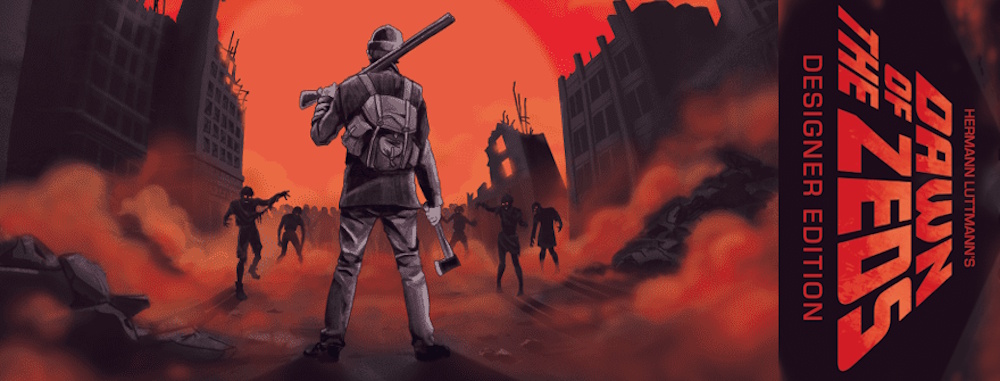
Perhaps the best title to emerge from that golden age was Hermann Luttmann’s Dawn of the Zeds. This baby merged the strategic considerations of the States of Siege line with some cinematic flair. So much cinematic flair that its overstuffed third edition aped not only the dramatic beats of cinema but also the notion that it was a movie being directed by the player. A tonal mismatch if ever there was one.

Here’s the good news: Hermann Luttmann is back with a new version of Dawn of the Zeds. Dubbed the Designer Edition, and divorced from the vultures who gobbled up Victory Point, it’s a revamp of the system from top to bottom. It isn’t as good as I remember. It’s better.
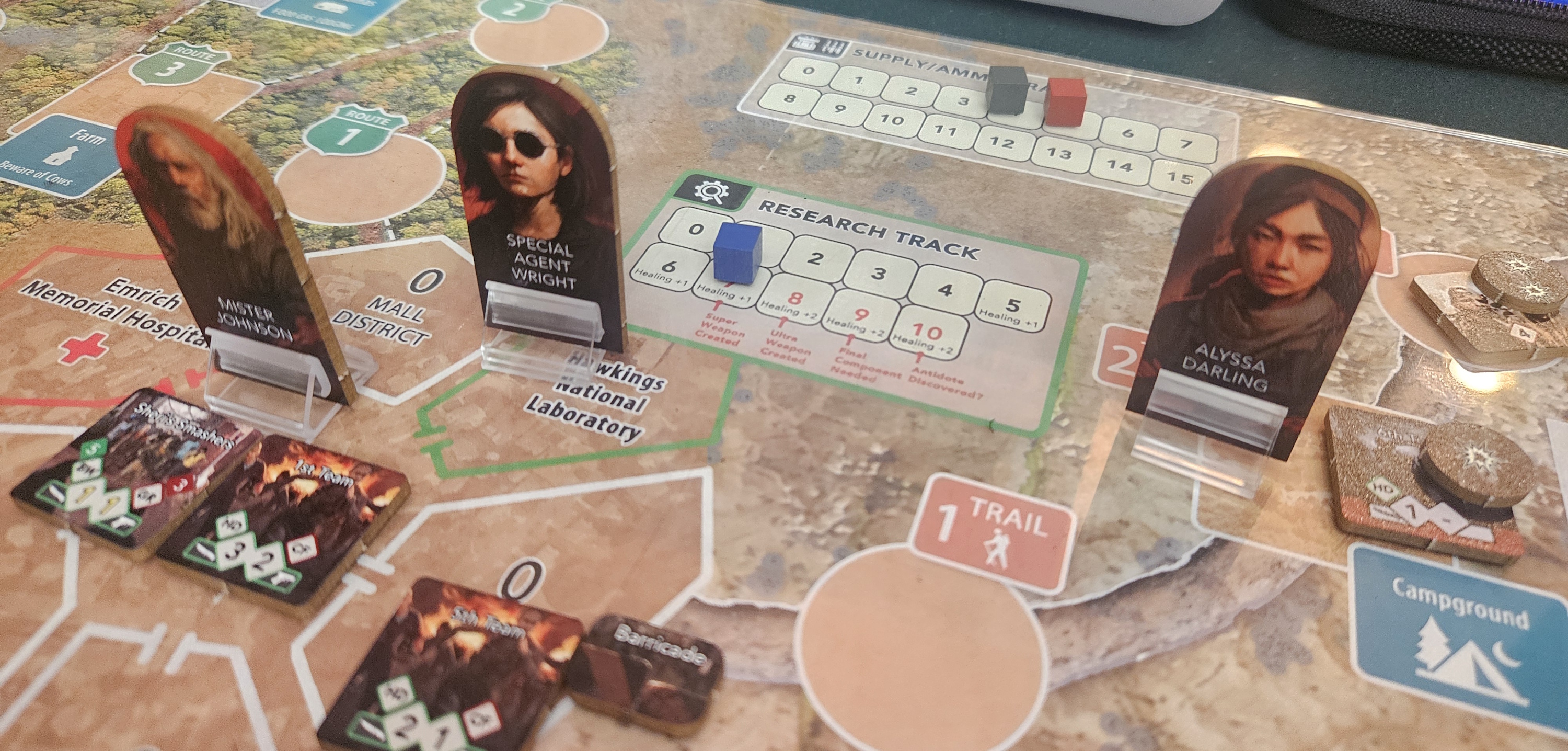
better than Batman

The heroes we need. And deserve. And got. Cool.

Unlike any number of internet specialists, I have no idea what a “real” zombie apocalypse would look like. But the scenario presented by Dawn of the Zeds feels real enough, at least in the moment. It begins on the periphery, slowly, Farmingdale’s outlying communities stubbornly refusing to listen to reason. Then the levy breaks and the tidal wave comes all at once. Defenders panicking over the radio. Refugees crowded on the interstate. Infections concealed among the survivors, ready to bloom into a fresh horde of killers. It isn’t long before the bodies are piling against the barricades.

Drawing on its lineage from the States of Siege system, Dawn of the Zeds offers a bird’s eye perspective that lends it a certain credence. At a tangible level, you play as a specific group of survivors. There’s some wiggle room there, including a multiplayer mode, but the classic setup is four heroes selected at random from a generous pool. These heroes, to put it bluntly, are not created equal. One session might provide Professor Agee, already on the cusp of inventing an antidote, and Captain Piazza, the sniper whose ranged attacks and booby traps make her a force of nature at any range. Then the next will give you Pickles the dog. Poor dumb Pickles. He’s the best boy. Just not, you know, the best at zombie invasions.

But these inequalities — some might call them “imbalances” — are not only to be expected from Dawn of the Zeds; they’re the whole reason it works. Better get used to it, in any case. Every round begins with an event card that dictates not one but four phases. One of them, the RRRR phase, is really four phases folded into one, letting you usher refugees to safety, shove raiders across the countryside, and invite any passing Army Rangers to help your community. There’s a fourth R in there, but I’ll be damned if I can remember what it stands for. Compared to that, the actual action phase, which usually sees your characters taking a measly one action each, is often brisk. Certainly you’ll wish you had more time. What do you mean Emily Orozco, golf pro, can drive balls into an oncoming horde or shuttle defenders around in her golf cart, but not both?

The sense that you’re drowning in a rickety submarine, four new leaks springing each turn while you only have enough hands to patch three, has been the default state of solitaire and cooperative gameplay ever since Matt Leacock standardized it in Pandemic. But where Dawn of the Zeds excels is at making that formula feel more natural than elsewhere. Flipping an event card doesn’t merely present a problem; it hits you with a full-spectrum crisis. Whether refugees can retreat. The threshold for yet another outbreak that will bring new zombies onto the board. How far you can stretch your tins of beans. Whether your heroes can muster some extra oomph today, that little bit of extra effort to earn a more generous action allotment.
dice, mayhaps?

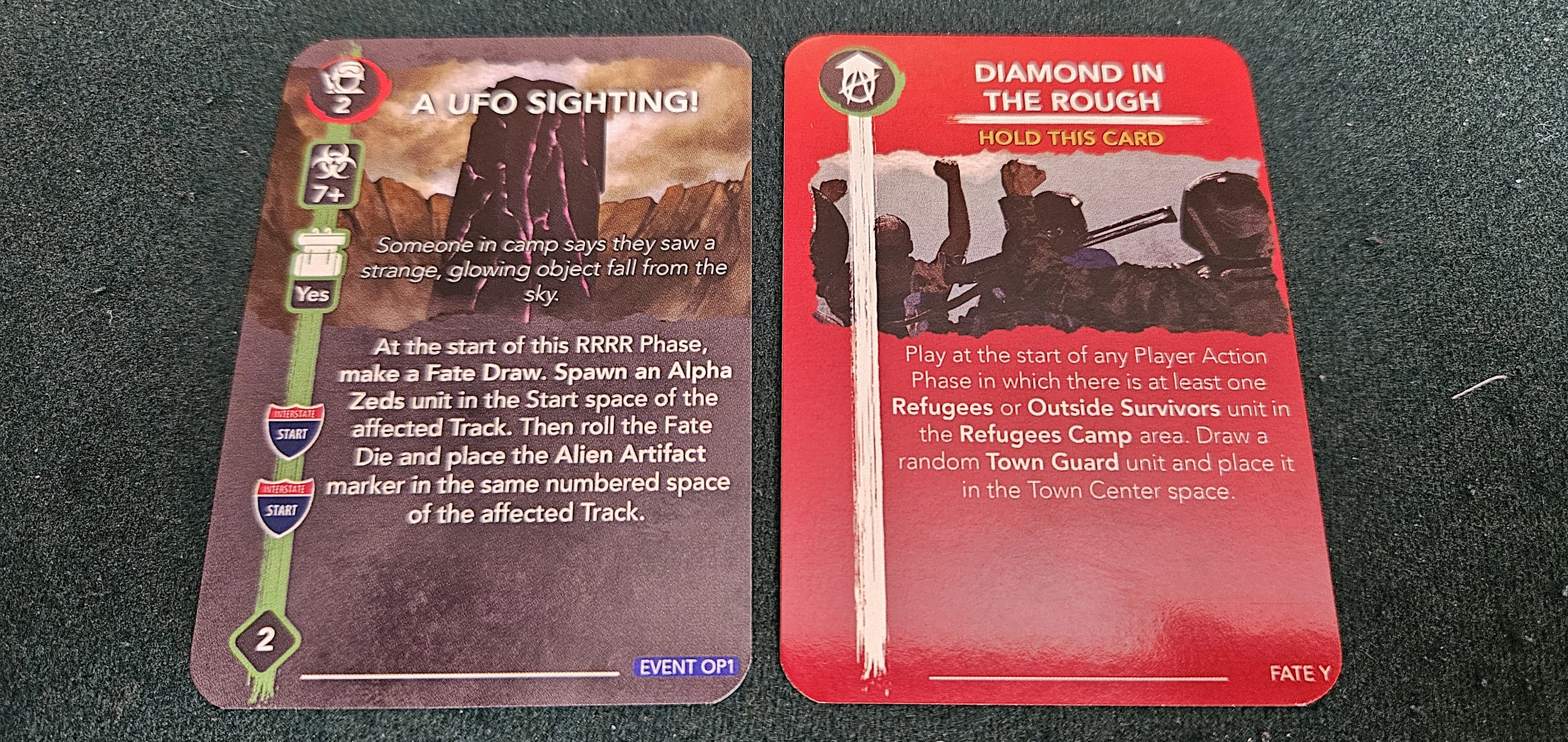
There’s nothing quite like an event deck.

Not least of all, which lanes will come under assault today. This being a glorified States of Siege game, the entire map is divided into four lanes that spiral around and eventually terminate at Farmingdale. If any zeds reach the town, it’s game over.

So you play football. Or tug of war. Some calorie-burning metaphor is appropriate. Each lane has its own tendencies, not to mention spaces that are crucial to your survival but which will very quickly succumb to the horde. The suburbs are defensible but populated with noncombatants who must be protected lest they turn into zombie chow. The interstate is mostly open but for the town’s nuclear plant. The mountains and farmlands both feature zones where food and ammunition can be harvested more readily, if only you can hold them. It doesn’t help that zombie territory must be painstakingly reclaimed lest any future zeds spawn that much closer to your town center.

For the most part, this turns Dawn of the Zeds into a game of fire response. One of your outlying settlements’ defenders falls too soon, so you send loony old Mister Johnson and his shotgun to help bushwhack the zeds back a few steps. Supplies are dwindling, so it’s time for Big Wheels Carter to plow through the crowd with his big rig to bring a few crates back home. Injuries are piling up, so Agent Carter retreats from the front lines to help out in the hospital. Too many zombies are at the gates, so Pickles runs out and ignores the zombies, but also doesn’t really help behind the lines either. Good job, Pickles. Who’s the best boy?

Fortunately, there are plenty of tools to aid in these efforts. Barricades can be erected. Refugees can be rearmed and turned into zed-killing professionals. Antidotes and super-weapons can be manufactured. Indeed, it’s now pretty rare to not leave at least one hero back in town, at least for the first half of the session, just to keep a handle on the hospital and laboratory.
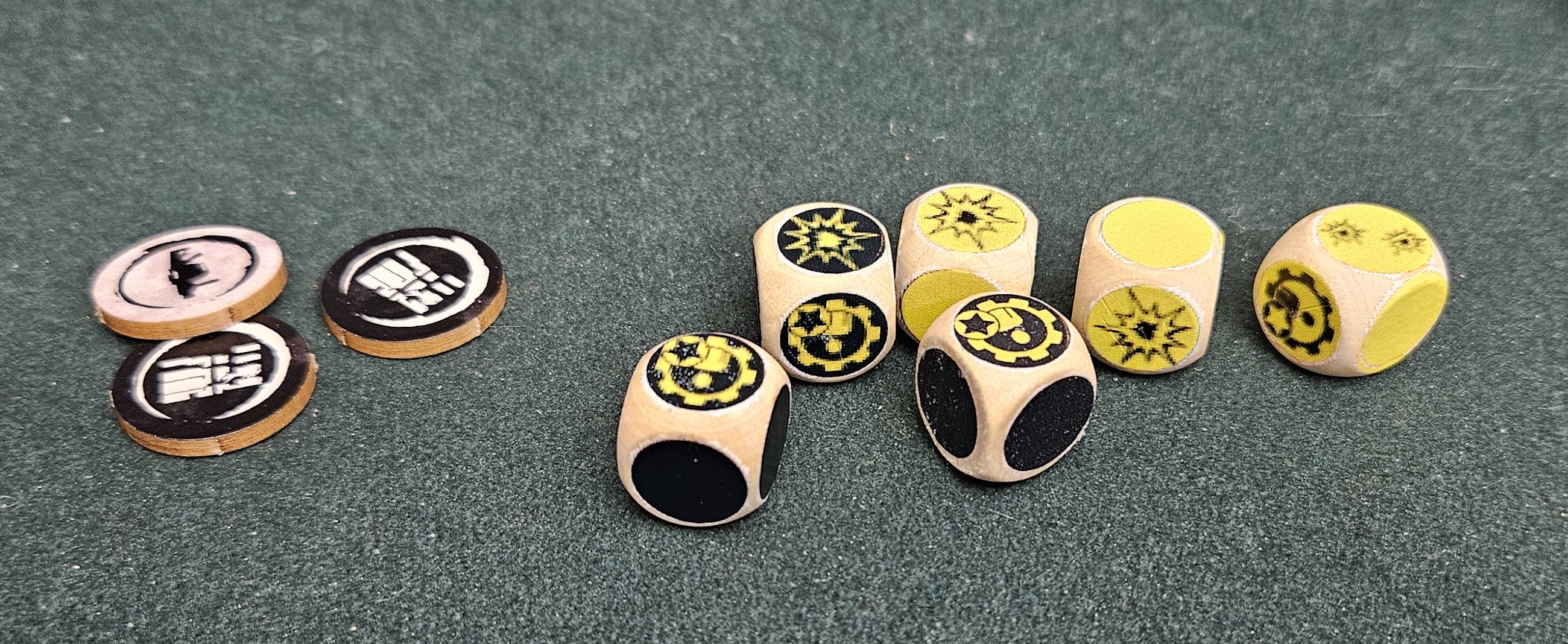
also shown: extra dice and reroll tokens

The Designer Edition’s biggest change… dice.

In the meantime, the underlying logic has changed somewhat from the game’s previous incarnations. Since its earliest days, Dawn of the Zeds betrayed its wargaming roots by employing old-school combat results tables. The dreaded CRTs. Anytime zeds entered a space with humans, you would compare their relative values, then check those values against a table that would tell you the outcome. It was a question of sums. My defenders have two strength, plus one for defending a named location, plus another for that supporting unit, plus two for Colonel Kingman’s enhanced barricade… against the combined zed strength of three plus four… now check the table… and that means we inflict two hits and the zeds retreat one space, but we take two hits in return. Wait, since Deputy Schmidt is on the scene, we get a positive shift on the table. Even better. Except, wait, we were looking at the ranged table when we were in hand-to-hand combat.

In other words, the combat system was functional, but not always very exciting.

It seems Luttmann has learned a few tricks in the years since the third edition, perhaps courtesy of experiments like The Plum Island Horror. The CRTs are out. And I mean all the way out. Nowhere to be seen. Instead, zeds now deal a static attack value — usually two to five — that can be blocked with shields, while human forces roll dice to inflict injuries or trigger special abilities.

The consequences are far-reaching. First of all, hero abilities are more manageable. In the third edition, heroes had half a dozen abilities each, all written in long-form text, all necessary for using them to their fullest capacity. Now heroes have two passive abilities plus perks that trigger when they get the right results on their dice. It’s tidy by comparison, preventing those obnoxious “oh shoot, I forgot to do this one thing” moments that were so common in previous editions, but also ensuring everybody feels like their own member of the team.

More importantly, combat is no longer something that can be summed out in advance. No longer can you park the right cluster of heroes and town defenders on a space and trust the CRT to provide. Sometimes you’ll roll five dice and flub the whole set. Other times Pickles will pounce on a pair of chits and somehow obliterate the entire stack with his lone yellow die. This can be frustrating, and there’s a whole optional reroll system in there for those who are, like me, little brats about bad tumbles. But this also pushes the game in a direction that’s more organic, more freewheeling, with unexpected twists and turns. It feels more like a series of triumphs and catastrophes and less like we’re pausing every thirty seconds to look at another dang chart.

It helps, too, that combat now includes little moments of player agency, especially where retreats are concerned. Previously, the CRT was everything. Injuries, retreats, the CRT might as well be God handing down tablets from Mount Sinai. Now it’s up to you whether to retreat from a space to ignore an injury or suck it up and hold your ground. This still won’t save a squad from a total overrun, but it’s a nice decision to leave in the player’s hands. Will you absorb a few extra losses to hold onto that important district, or cut your losses and hopefully outrun the zeds? It’s a toughie.
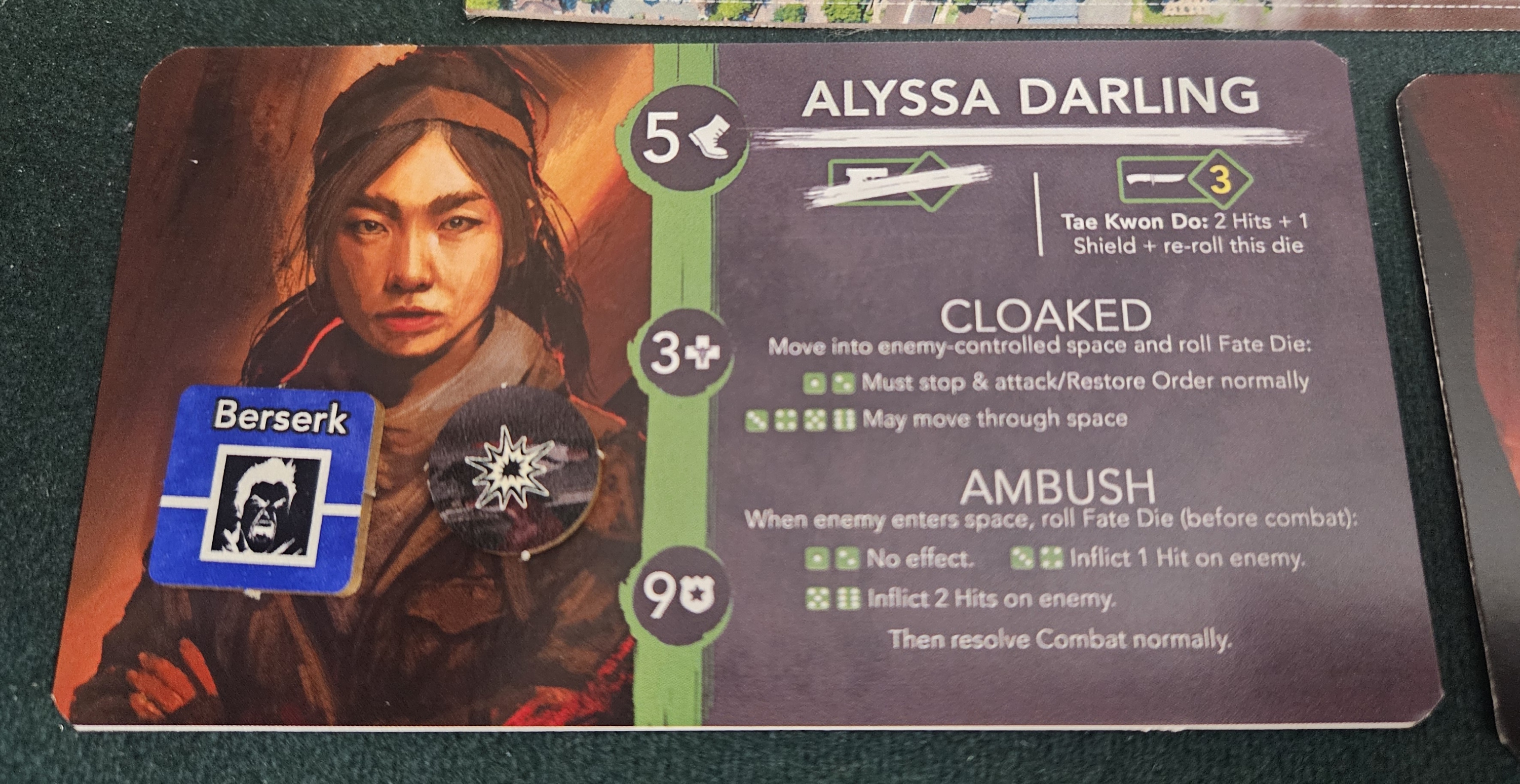
gonna go nutso banano on them

Want to ambush a zombie horde?

To be clear, Dawn of the Zeds is still a cluttered design in some ways. There are still tables, just not combat results tables. You check separate rubrics to see if your hero succeeded at foraging, healing, or researching the zombie virus. Chits still show little letter codes that designate their special abilities. Above all, there are still absolute heaps of special modifiers that might be applied to units. What’s the difference between flaming zeds, smelly zeds, and beta zeds? That isn’t the start of a joke. Those are actual traits that might be added to a chit to modify the threat it poses to Farmingdale’s defenders.

For the most part, though, the beauty of the Designer Edition is that it hits the sweet spot between complexity and ease of entry. It’s a little easier than before, both complexity- and difficulty-wise. But for all its streamlining, there’s still texture here. Flaming zeds are incredibly dangerous, but they’re also self-damaging. Smelly zeds repel your defenders if they share a space after combat. Beta zeds move faster and hit harder. Now that you know those ones, what about infected vermin, dirty zeds, smart zeds? Most of these traits won’t appear in a single session. But the beauty of this system is that they might. This is still a kitchen sink design, but it’s a kitchen sink design by a kitchen sink designer who’s come to really know his kitchen sinks.

And what a kitchen sink it is. After all these years, I had some trepidation going back into Dawn of the Zeds. Like its comrades in the old Victory Point Games catalog, it was a product of its time. That second edition, arguably the high-water mark for the old versions, shipped in a folio-sized ziplock. Its cutouts smelled of wood smoke from the workshop laser cutter. The rules were scattered and frenetic, a little homebrew. Opening the box for this edition, I wasn’t exactly thrilled to discover that that’s apparently how Luttmann’s brain functions.

But even after all this time, Dawn of the Zeds feels fresh. Fresher, actually, now that the States of Siege titles are a thing of the past rather than regular attendees of the alternative wargaming scene. The closest comparison from the past few years is The Plum Island Horror, but while that game has left a few visible fingerprints on this one, the two are more like cousins than siblings. All in all, this has the hallmarks of the same game Luttmann designed fifteen years ago. It’s still weathered and wild-eyed, the buttons of its overcoat still loose, but it’s every bit as indomitable as ever.
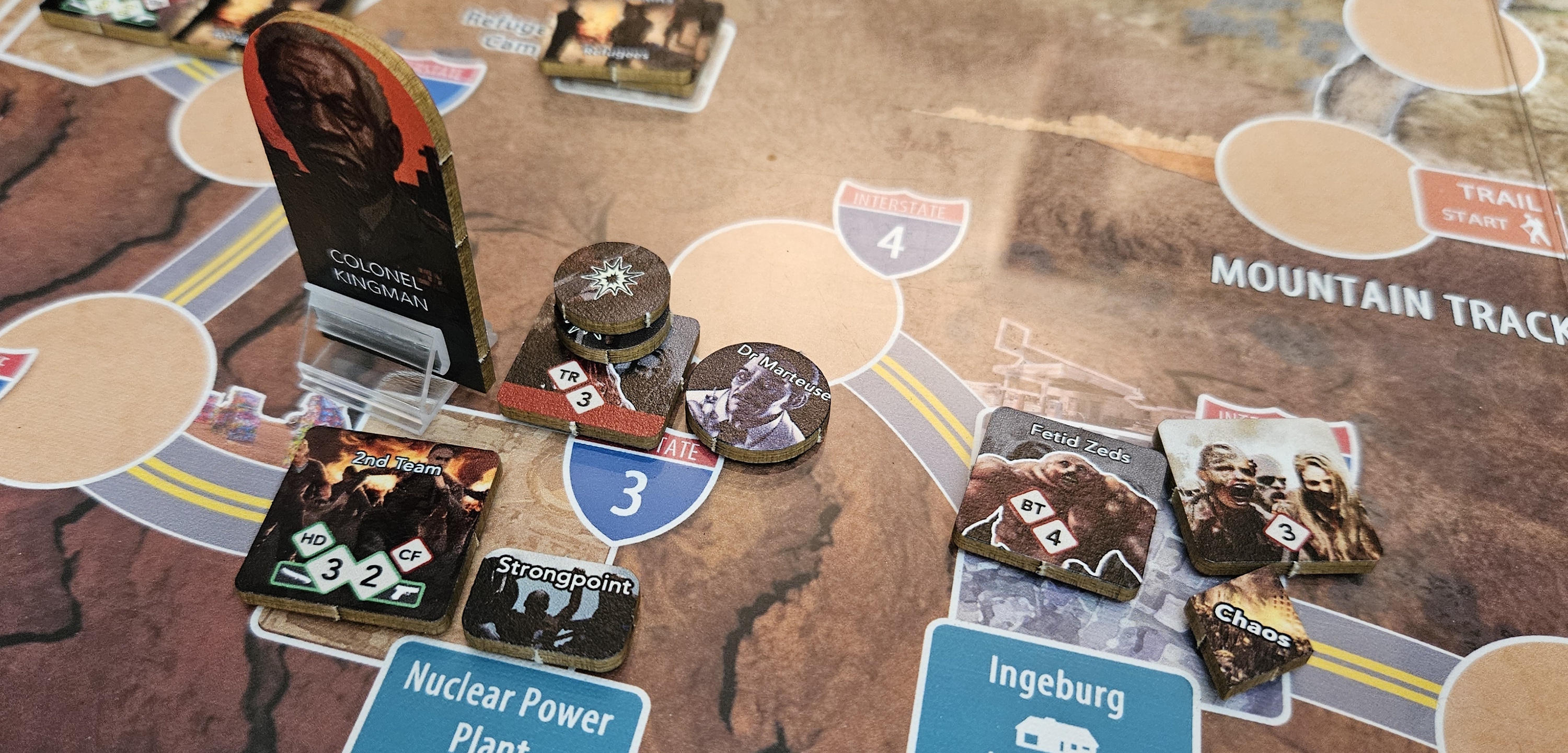
"Not if I arrest you first!" Dr. Mabuse shouts. Both parties then stare, awkwardly. Dr. Mabuse has always ranked in the bottom fifth percentile for social interactions.

“You’re under arrest, Dr. Mabuse!”

At least I hope it is. Some part of me wonders if Dawn of the Zeds has grown too far out of step with the modern hobby scene. It’s challenging and woolly and random. Even more random thanks to the dice combat.

But it’s also one of the most exciting and interesting solitaire games of its age. Once a week over the past month or so, I’ve sat with it in the evening, watching my defenders fail or rally, my heroes dart from one peril to the next. And it was perhaps the most relaxed I’d been in as much time. It felt like coming home. Not to the janky and over-stuffed version that I’d grappled with when I reopened the third edition last year. Instead, a version that was still expansive in what could happen, but more manageable and vivid in the moment. The past as I remember it rather than the past as it was.

Even when Pickles showed up only to promptly hurl himself into an unwinnable fight. Especially then. Good boy, Pickles. Good game, Dawn of the Zeds.


A complimentary copy of Dawn of the Zeds: Designer Edition was provided by the publisher.

(If what I’m doing at Space-Biff! is valuable to you in some way, please consider dropping by my Patreon campaign or Ko-fi. Right now, supporters can read the next installment in my series Talking About Games, this time tackling the topic of what makes a good list! Naturally, the piece includes a list.)

Fifty-Two-Card Squick-Up

29. Juni 2026 um 20:01

can I buy this deck please

Thus it came to pass that Postmark Games graduated from dice to cards. After some of the finest print-and-plays in recent memory — after Voyages, Aquamarine, Waypoints, and Scribbly Gum — I suppose we were overdue for a title where the input isn’t limited to six sides.

How about fifty-two random numbers instead? Using nothing but an ordinary deck of cards, which surely you have lying around the house somewhere, 52 Realms: Adventures generates an entire dungeon dive. In a vacuum, it’s quite the accomplishment. If only vacuums weren’t so chilly.

This is somebody's lucky pebble. Which by the transitive property means... I... am somebody's lucky pebble.

That pebble is me. It is I.

It begins with a dungeon. Or maybe it begins with a menu of items. On the surface, 52 Realms: Adventures is about exploring a dungeon. Ostensibly, your objective is to reach the final chamber and slay the boss monster therein. Really, though, it’s to reach the highest score possible, accumulated one loot card at a time.

As with their previous titles, designers Matthew Dunstan and Rory Muldoon plumb their system to its maximum depth. It’s truly impressive how much mileage they cover with just a single deck of cards. The deck, you see, governs everything. A single card might indicate the monster you face when stepping into another room, tallying their health pool and type. As battle unfolds, additional cards become instructions for said monster: how hard it hits, whether it slinks away to heal, the amount your attacks are reduced by when it raises its limbs in defense.

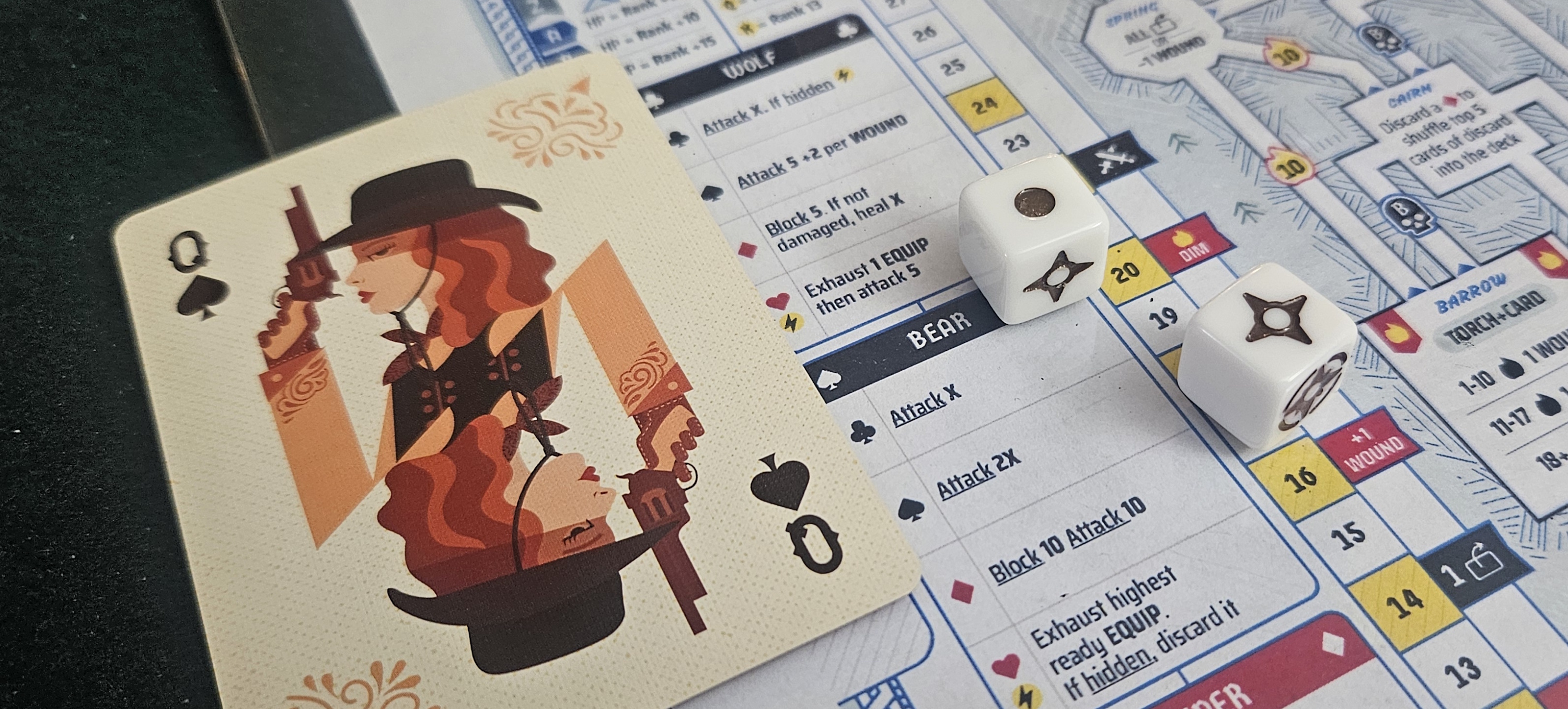
Those same cards also become the tools your hero utilizes to overcome the dungeon. When placed to the side of your character sheet, a card’s suit indicates an item, whether a generic potion for the basic starting heroes, a vial of dragon blood for someone more masochistic like the Fell Knight, or ingredients in an Alchemist’s pouch. Beneath the sheet, the cards are instead transformed into “equipment,” a catch-all term for what are really your action cards and the closest thing the game has to experience points or leveling up.

The function of cards isn’t limited to enemies and equipment. It’s also the game timer, ticking away one card at a time, punishing your hero for every enemy they spend too many rounds grappling with and every detour on the path to the boss chamber. Aces become events, nasty surprises that exhaust your equipment or inflict wounds.

And, of course, there’s loot. Loot is dull on its own, a face-down pool that determines the lion’s share of your score. In a game that packs its corners with interesting tidbits, a scoring pile is almost surprising in its deficit of pizazz. Call it a necessary evil.

"BARBAR!" shouts the Barbarian. Not because it's an actual word in his tongue. He's offering a sly commentary on the way his language is gutturalized by the so-called "civilized" folk who dwell in this village.

There are plenty of heroes to use.

For the most part, Dunstan and Muldoon pitch their delves as miniature races. Your goal is to slay the boss while amassing a minor fortune, but the constant depletion of the deck means there isn’t time to dally. It isn’t actually that difficult to conclude a scenario, provided you beeline for the exit. But anyone who’s played even one video game can tell you that heading straight for the final room is a surefire way to miss out on all the stuff that makes these things worth experiencing. Hence the game’s core tension. Sure, it’s possible to race to the end and secure a safe but measly score. But it’s more rewarding by far to push yourself to the absolute limits, spending resources like crazy and never pausing for breath, only to watch in despair as your efforts are rewarded with the boss peeling a few too many cards off the deck.

Glancing at the ratings for 52 Realms: Adventures, one of the more common complaints is the system’s chanciness. To be sure, those fifty-two cards produce quite a range of outcomes. Unlike the and-then nature of Dunstan and Muldoon’s roll-and-move titles, where a flub means a lower score rather than a premature game over, it isn’t uncommon for a delve to terminate thanks to a few too many injuries. Which reminds me: Cards also represent damage values. Absorb too many hits and you die.

Personally, the game’s long odds aren’t one of its problems. If anything, the possibility of an early grave is a suitable nod to the game’s roguelike roots. Sometimes the first three monsters you meet are face cards. Sometimes the rewards they offer are barely worth collecting. Sometimes you draw two aces in a row. That’s the nature of the beast. It helps that a full session only lasts twenty minutes. That includes a stretch break. I can handle a loss that comes three minutes into a session.

Bear indeed. Mama bear.

Enemies are randomly generated.

What I miss, though, are those earlier games’ shared nature. Don’t get me wrong, I enjoy solitaire games. But while Voyages, Aquamarine, and Waypoints included solo modes, they shone in multiplayer, everyone at the table utilizing those shared inputs to see where their private adventures took them. By its nature, 52 Realms: Adventures is solitaire-only. I’m sure someone could bash this thing into a shared mode, but it would be a wonky solution. There are simply too many card-flips, too many cases where a theoretical extra player would desynchronize with their partner.

Without that partner, 52 Realms: Adventures is nice for a visit, but doesn’t really compel me to return over and over again to maximize my score. The problem lies in the dungeons themselves. There are four in all, but the way they function lends them to feeling like two separate games that use a single system. The first two are linear with branching paths, your hero marching relentlessly toward the boss chamber, backtracking forbidden. This gives those dungeons a choose-your-own-adventure feel, choose A or B, left or right.

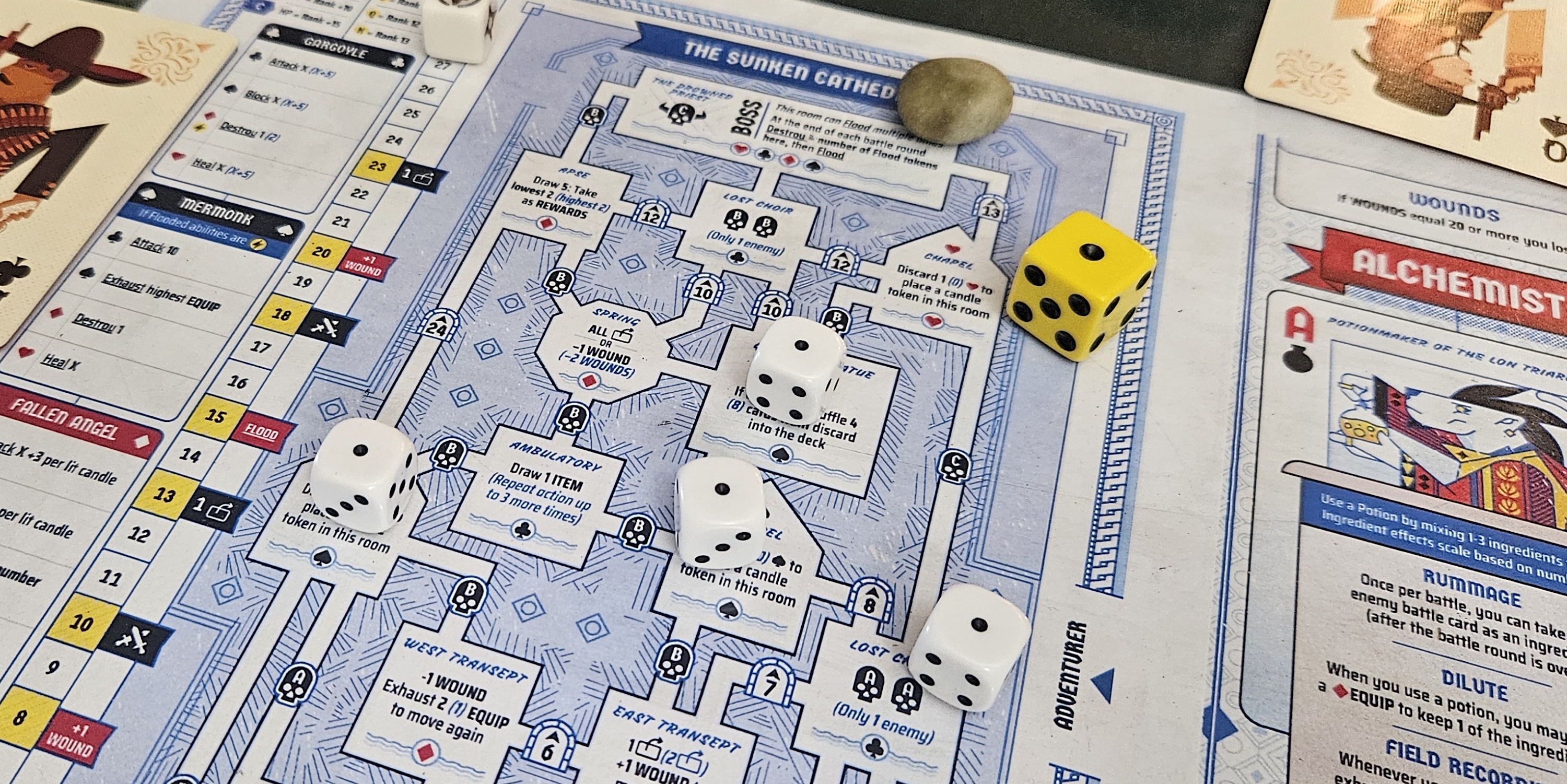
The latter two are more interesting, in no small part because they widen the one-way lanes to proper two-way corridors. One, a clockwork labyrinth, allows your adventurer to approach the central chamber only to boot them back out to the periphery. The other, a watery cathedral, is slowly flooding, its rising waters granting advantages but also empowering the local beasties. In both cases, the player is given more freedom, with little side objectives that might pad their score or beef up their hero for the final encounter.

The main outcome of this series is that I now kinda want to design a flip-and-write.

Two of the dungeons are especially interesting.

Even so, 52 Realms: Adventures never quite feels as elegant or freeform as those earlier Postmark titles. The game’s innate chanciness means that one score is hard to differentiate from another. Sadly, the game declines to provide a target. Is 48 a good score? How about 67? It probably depends on the map, or maybe the hero. But where Dunstan and Muldoon’s earlier efforts allowed players to compare their outcomes, here I’m tabulating a number that exists only in that aforementioned vacuum. Barring many repeat plays, that is. And the core gameplay loop isn’t strong enough to bring me back for more than two or three wins per map.

This squeezes the game into an unfortunate corner. It’s interesting to look at, and I’m duly impressed by the system. But I also wish it had been a little more ambitious, whether by letting multiple players share a challenge or by producing a fuller-fledged adventure. Good for a delve or two, but for now I’ll keep my feet warm by the fire.


Access to the files to print 52 Realms: Adventures was provided by the publisher.

(If what I’m doing at Space-Biff! is valuable to you in some way, please consider dropping by my Patreon campaign or Ko-fi. Right now, supporters can read my first-quarter update of 2026: the best board games, movies, books, and more!)

Biffing Balatro

22. Juni 2026 um 22:42

Somebody do Wee Aquinas in noodle-arm mode.

Ready for a confession? I didn’t love Balatro, the roguelike poker deck-building game from a couple years back. Don’t get me wrong, the number-go-up part of my brain adored Balatro. But the rest, the foam of consciousness so certain it’s in control of the mammalian beast, the me suspicious of anything hypnotic, found the whole process incredibly off-putting. Which, of course, is why I played it for (oh no) 76.9 hours, about which I cannot tell you a single anecdote. Which, incidentally, is also why I hate it.

Rolling Deep is the forthcoming solitaire board game by Peter C. Hayward. Given his explicit efforts to emulate Balatro, which he’s detailed at length in a series of design diaries, one might suppose that Rolling Deep is not my jam. The Anti-Dan, as it were. But having played it a handful of times, I’ve come away with the opposite impression. Yes, this is more or less Balatro: The Board Game. But it’s so much more than that.

It’s better than Balatro, for one thing.

Warning: You cannot take away their FACES, just their faces. Their non-FACE faces.

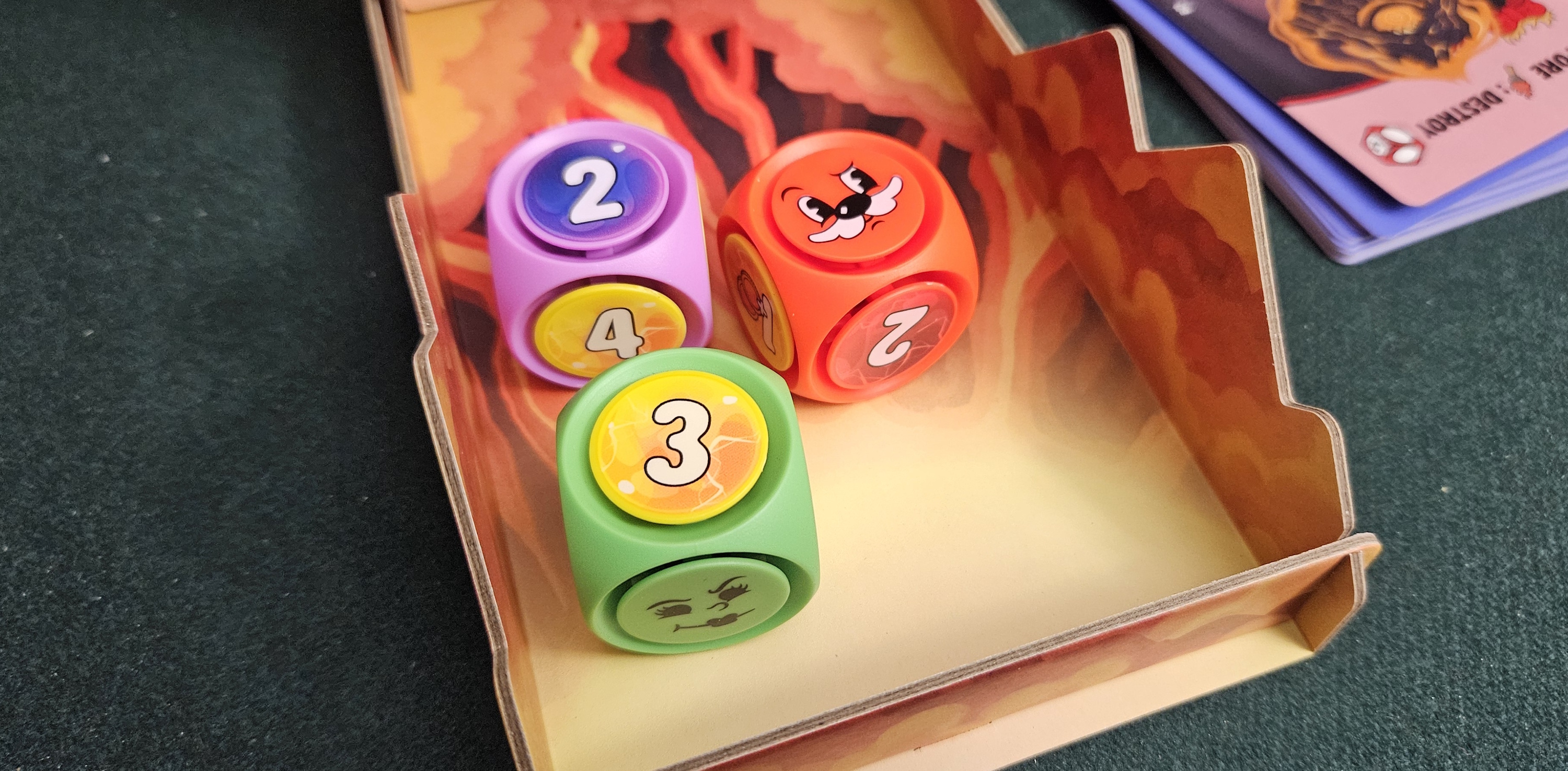
Gosh, I love being able to change a die’s faces.

What so many people in this medium call “theme” is a funny old thing. Rolling Deep is the sort of game with a “theme,” in the sense of being this discrete veil divorced from and layered atop the game’s mechanisms. What is that theme? It doesn’t matter. I mean, it matters in the sense that it provides some context for the game’s actions, looks pleasant with its Cuphead-esque homage to early Disney and Fleischer Studios animation, and justifies a portion of the game’s budget. But it simultaneously doesn’t matter to the story being told by the artwork or the proper nouns in the rulebook. At no point did I flip a card and say, “Oh no! An evil mushroom!” Instead, the story is wholly mechanistic. At the card’s turn, I would say, “Oh no! How am I going to deal with this new probabilistic conundrum?”

That might sound like a bad thing, especially given my usual emphasis on the stories that arise when we play games. But, to be clear, this is a story. It just doesn’t happen to be a story about how three dice-headed adventurers reached the center of the Earth.

Instead, Rolling Deep is the story of how I transformed three meager dice into powerhouses that rolled seventy-nine in a single go. This moment was a triumph of careful resource management, broken combo-building, sly damage mitigation, and no small amount of luck. It was exciting, tangible, and, in the game’s sharpest departure from its inspiration, memorable.

What a jerk!

Each boss sets the tone for the round.

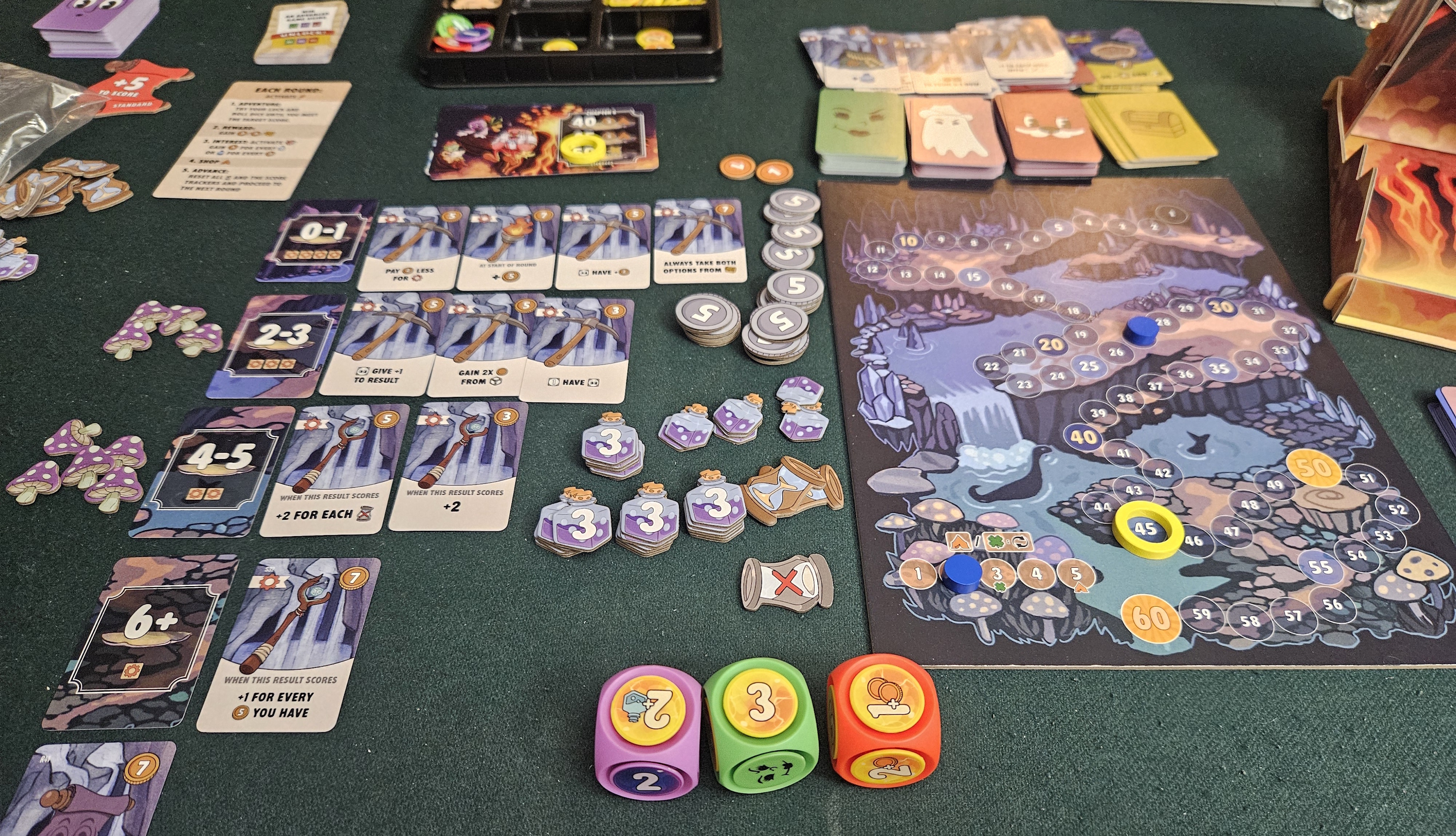
Every round in Rolling Deep goes like this. You’re facing a challenge that happens to be a number. Say, twenty-three. Last round, the number was lower. Twenty. Next round, it will be higher. Twenty-seven. Steadily it climbs, round by round, increasing the pressure at a steady pace, like a numerical hyperbaric chamber.

You have three rolls, all summed together, to meet that number.

But there’s a problem. At the game’s outset, reaching those later targets is impossible. These dice, you see, have rather low digits. At best, you can roll a 2. More likely, you’ll roll a 1 or even a 0, albeit perhaps a 1 or 0 that also grants you a coin or a reroll potion. Over three rolls, that means you can maybe hit a target of eighteen. And that’s with some pretty extreme luck.

Fortunately, there are two solutions to this problem.

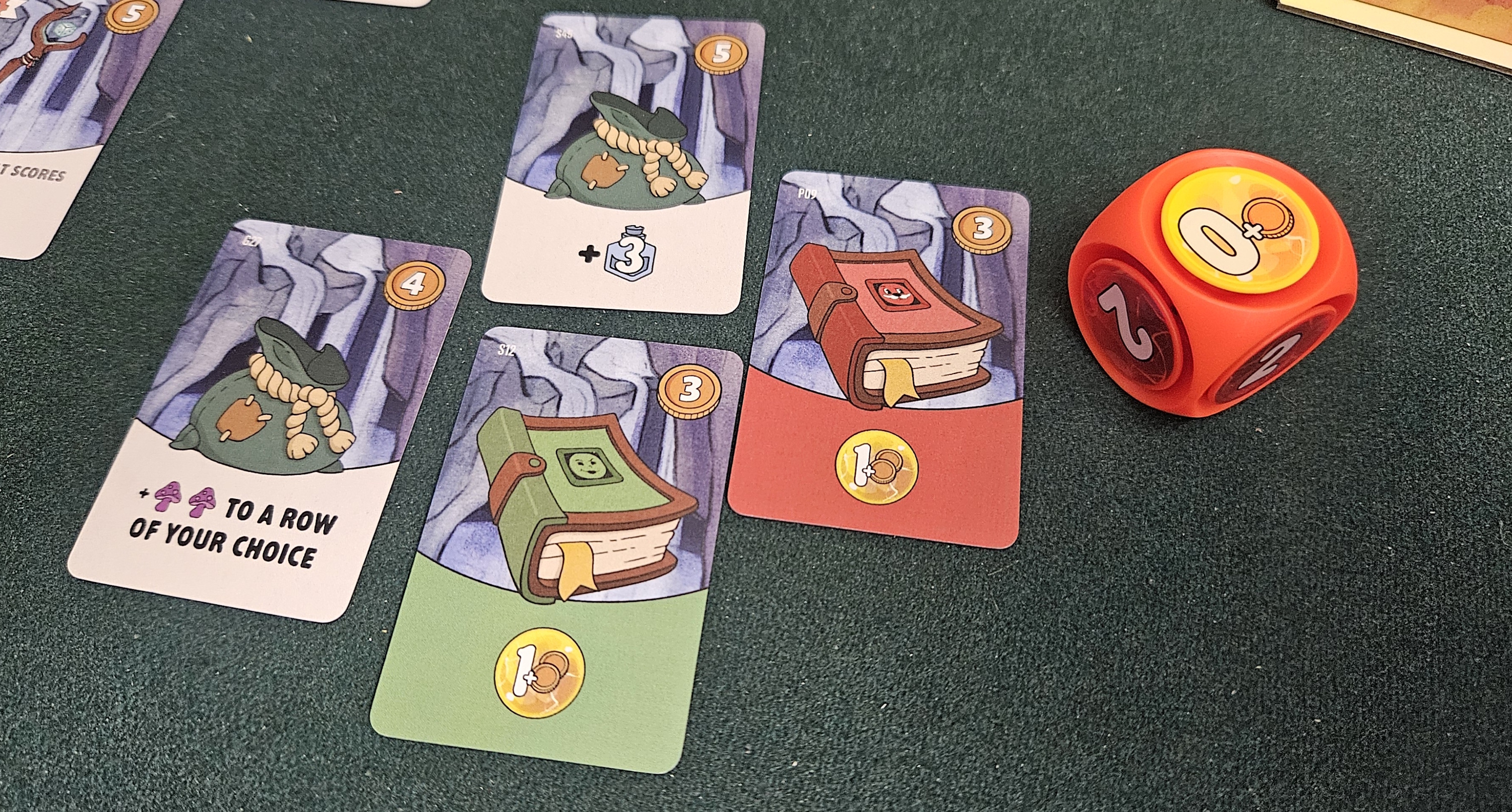
First, the faces of your dice have custom faces that can be swapped out. Picture the dice from Tom Lehmann’s Dice Realms, but way easier to handle, without the weird LEGO-breaker tool for prying faces away from the frame. Here everything clicks into and out of place with a breezy snap. Out with the 0, in with a 2 plus a potion. Click. Sayonara 1 with a pity coin, hello whopping 5. Click. Oops, now you’re rolling too high — yes, that might be a thing — so let’s turn that 5 into a 3 with a coin. Click.

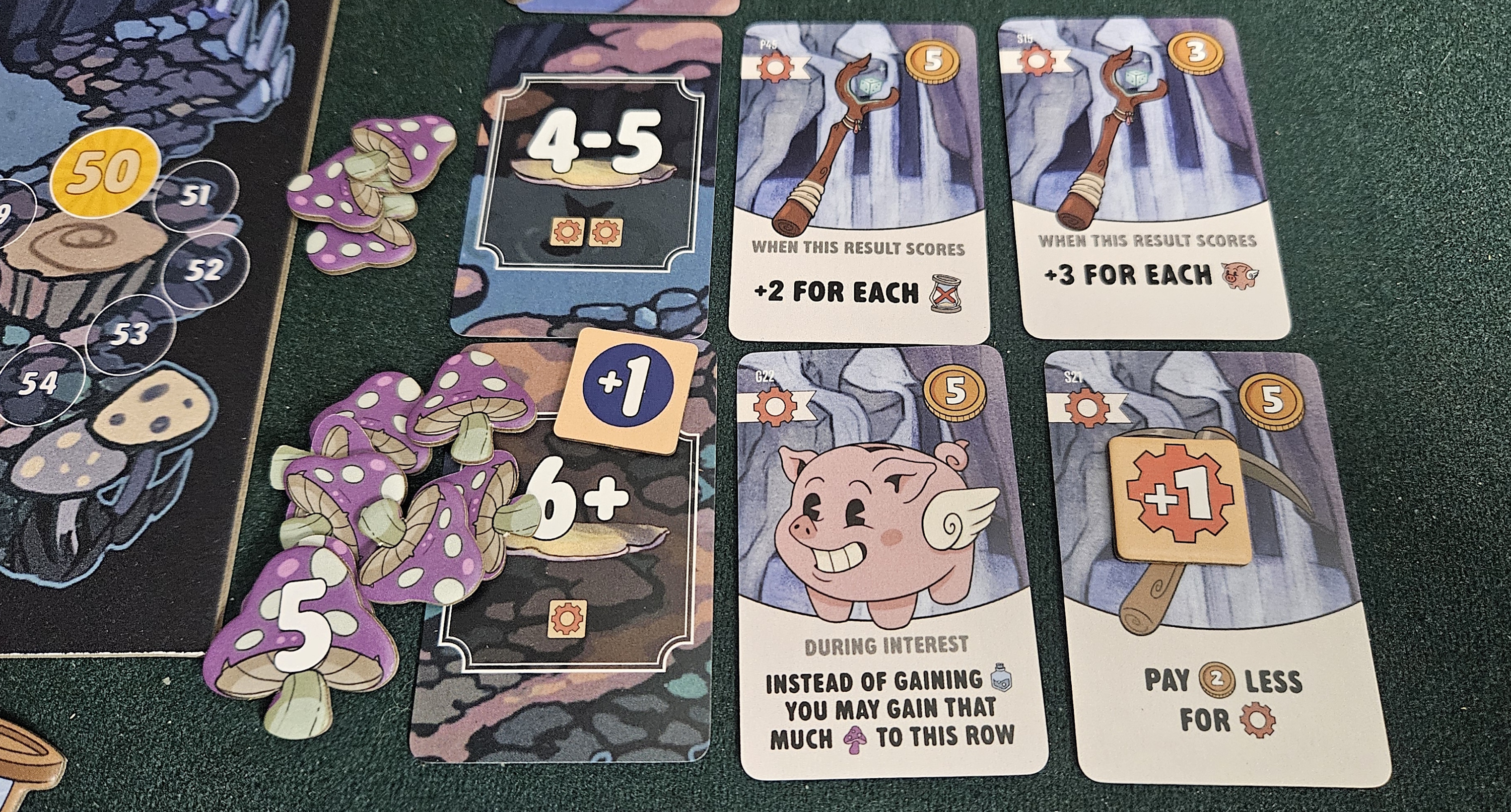
Second, the way you purchase these new faces also offers a way to improve your performance by other means. By a lot of means. You could purchase an upgrade that gives a permanent +2 to every roll. That’s the easy stuff. You might also earn a wand that only triggers with a natural roll of 4-5, and awards +3 for every piggy bank ability. Now you have a synergy going. That wand, plus as many piggy banks you can afford from the market.

That piggy gave me a zillion mushrooms by the last few rounds.

Little by little, your cards produce an engine. (Hopefully.)

Thus the game’s irresistible tempo. You roll, perhaps spend potions or use your upgrades to massage the numbers, and add that total to your sum. If you reach the target number after three tries, you gain a prize, earn interest on any leftover cash and potions, reveal and purchase upgrades from the market, and then do it all over again with a higher target number.

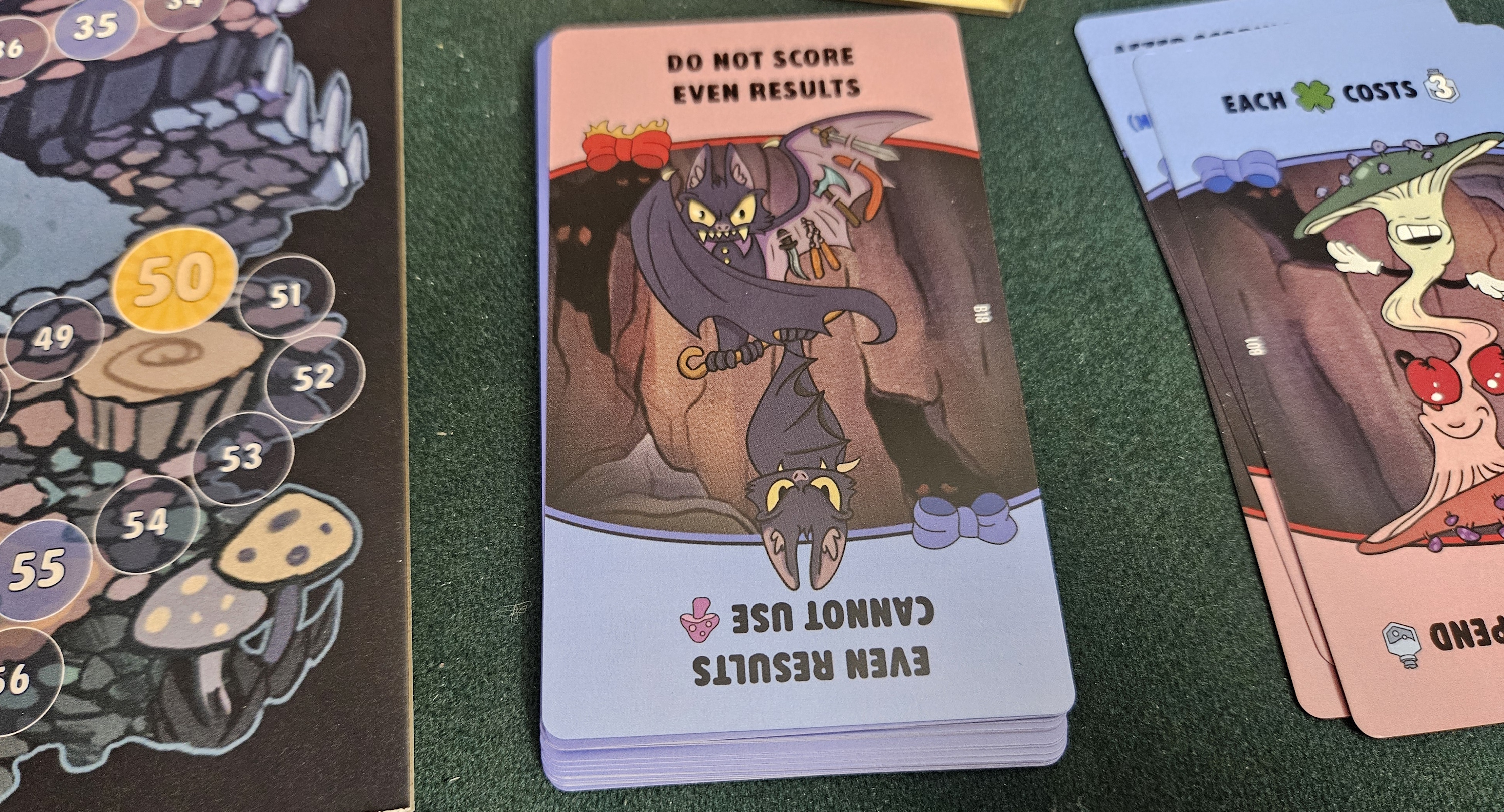
Every third round, you face a boss with an obnoxious special ability. Like, for example, a cartoon bat who prevents you from scoring results that are even. Or a cartoon mushroom that makes it harder to spend potions for crucial rerolls. Or a different cartoon mushroom that destroys some of your upgrades. Nasty stuff, but nasty stuff you see coming for a couple rounds before it hits you. Nasty stuff you can prepare for.

If this sounds like Balatro — well, look, Hayward isn’t concealing Rolling Deep’s influences. The dice faces are your poker deck. The upgrades are jesters. The mushrooms that boost your sum before withering are… I guess multipliers? There aren’t actual multipliers in Rolling Deep, probably because the game’s numerical targets increase linearly rather than exponentially. The possibility of expanding how many upgrades you can hold are akin to Balatro’s spectral cards. It’s all familiar. It even has achievements and unlocks. Beat the game on easy mode, you earn access to tougher delves. Break the game in one way, you gain tools that are a little weirder than the starting kit. I won’t spoil the wilder unlocks, but they’re in there for the sickos.

But if this is all so familiar, why do I say it’s better than Balatro? I knew you’d ask.

Are there other games with these dice now? They're such a massive improvement over the ones from Dice Realms.

Buying new options at the market.

For one thing, the medium itself demands a very different sort of attention from a digital game. Where Balatro hypnotizes, Rolling Deep focuses. Sure, I suppose I could zone out. But as soon as I’m asked to shift my tally along the target track, flip some upgrade cards, or shift resource tokens from one place to another, my feet are given purchase on solid ground again. If that doesn’t do it, sure as shooting the alteration of a die face will. Click.

This breeds an entirely different headspace. At no point did I awaken from a three-hour binge. Instead, the processes — the ones that are concealed behind the dazzling lights of Balatro — are entirely my responsibility. I must count the numbers or nothing happens. I must pay attention to my bonuses lest I lose them. There’s no option to glaze over and make number go up. Every upgrade must be considered, weighed against my tableau’s current strengths and gaps, and ultimately purchased or discarded. Very quickly, the physical actions that are automated in a video game become loci of concentration and even pleasure. It helps that Hayward has developed this game until it’s smooth as cream. But the remaining points of friction, some of them inherent to the medium, give me purchase in the real world.

And that extends to the gameplay itself. Because Rolling Deep is more grounded in the real, its challenges are presented as tangible, applied things, rather than wholly abstract. It’s the difference between being told some measurements and shown them against the wall or along the motor’s belt. When I assess my odds, I physically heft one of those chunky plastic dice and turn it around in my fingers. When determining where to slot an upgrade, I slot the card into a physical representation of where my rolls have aggregated. The medium becomes the gameplay and vice versa.

It helps, too, that Rolling Deep’s limited format gives it a more intimate edge. It never disappears into n-space, its numbers beyond intuitive human comprehension. My dumb animal brain grasps the gap between 23 and 41 better than that of 23,749,011 out of 41,000,000, even though they’re fundamentally similar. By scrapping the sky-high escalations of Balatro, Hayward turns Rolling Deep into a puzzle that doesn’t slide off the brain like so much oil.

There are spoilers in this picture, so don't look too closely if you care about that sort of thing.

For such a wild game, Rolling Deep never spirals into too much complexity.

And it is memorable. I mean that. Not as much as a story, not as much as something with characters or relatable confrontations. But thinking back on my sessions with Rolling Deep, I can remember specific problems and the solutions I forged to face them. I could never tell you what had happened in any given session of Balatro even a few minutes after it ended. Something about a banana? Getting a shiny joker? Opening a few card packs?

Rolling Deep is excellent. It’s a very particular kind of excellent, to be sure, a mathematical solitaire game that’s long on odds and probabilities and sums rather than story beats. But within that window, it not only matches the ambition of its inspirations, but exceeds them. Balatro who? This is Rolling Deep, baby.


A prototype copy of Rolling Deep was temporarily provided by the publisher.

(If what I’m doing at Space-Biff! is valuable to you in some way, please consider dropping by my Patreon campaign or Ko-fi. Right now, supporters can read the next installment in my series Talking About Games, this time tackling the topic of what makes a good list! Naturally, the piece includes a list.)

Scribbly Koalas

04. Juni 2026 um 03:34

Weird bugs of Australia, the board game. "KOALAS AREN'T BUGS." Nah, pretty sure they are.

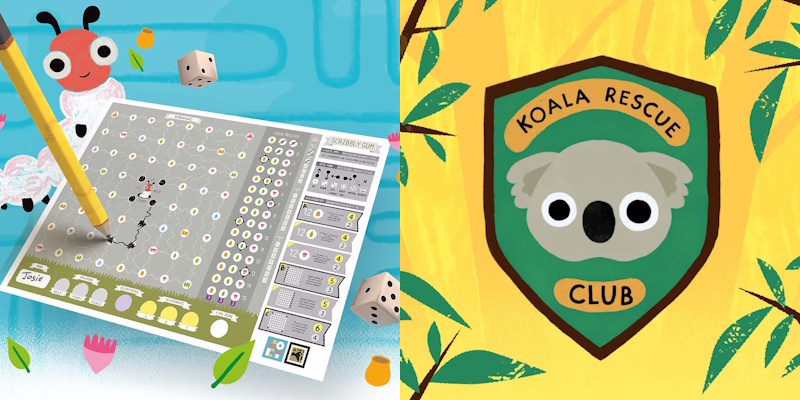
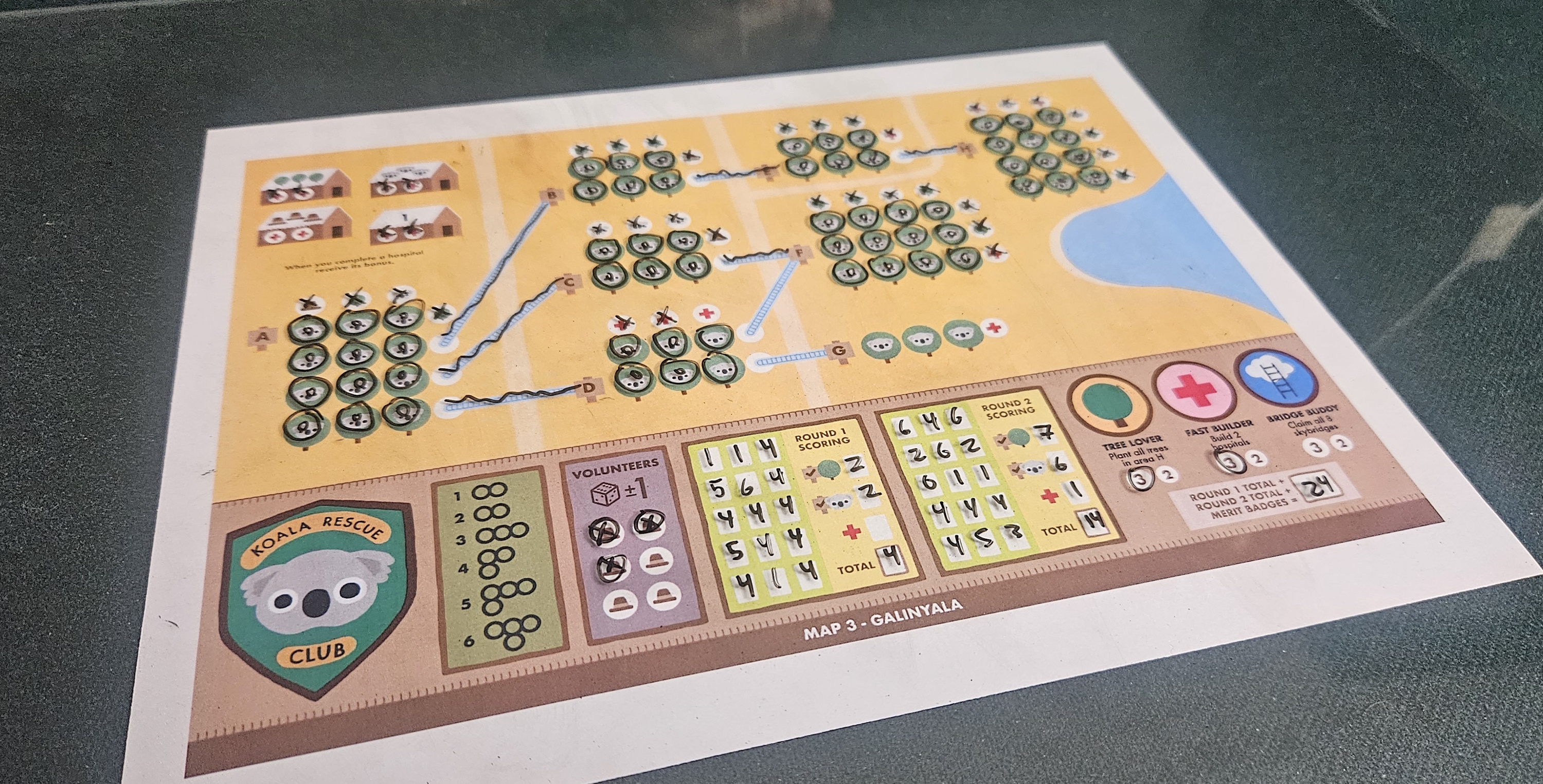
My odyssey through Postmark’s catalog of single-sheet print-and-play games continues. This week’s titles are none other than Scribbly Gum and Koala Rescue Club, both designed and illustrated by Phil and Meredith Walker-Harding.

You can tell we’ve reached the really good games when I’m covering them two at a time. Although this makes for a good twist, because one of them is pretty dang solid. For babies. I mean that in a good way.

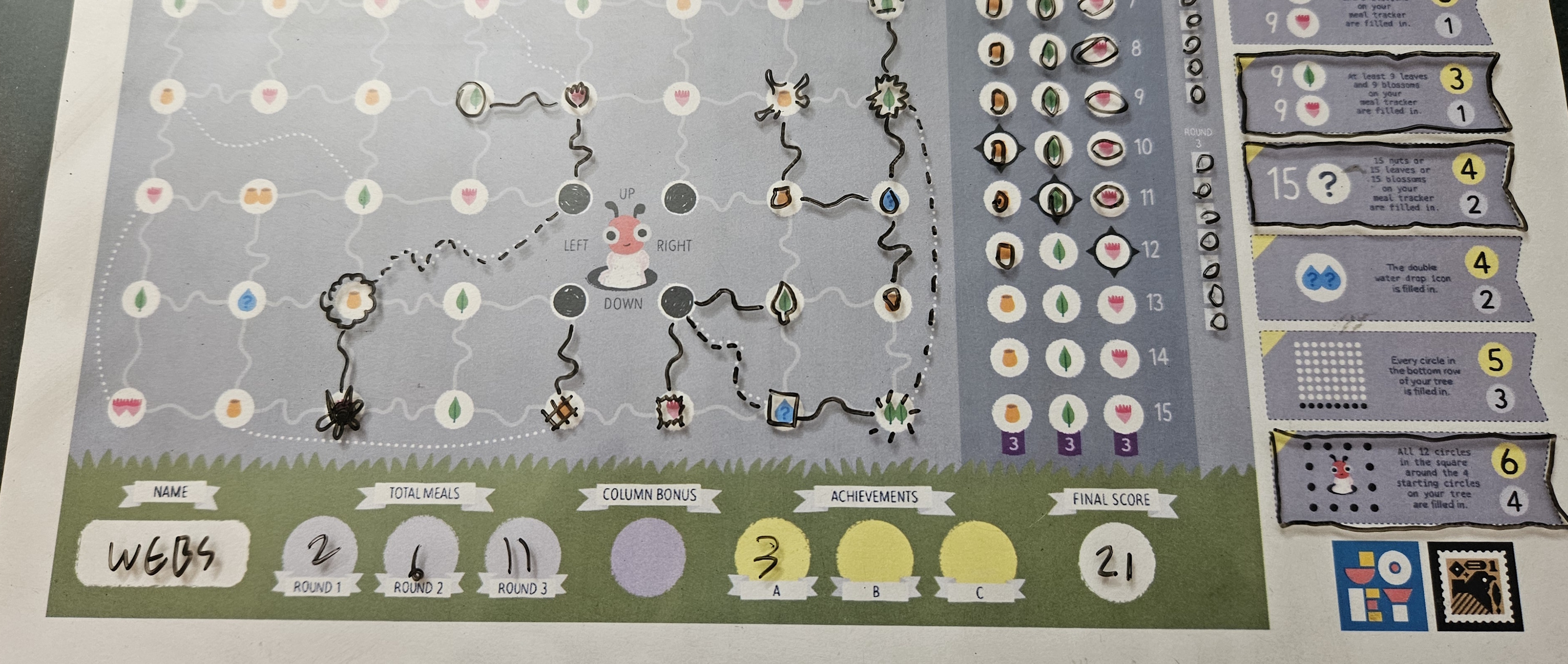
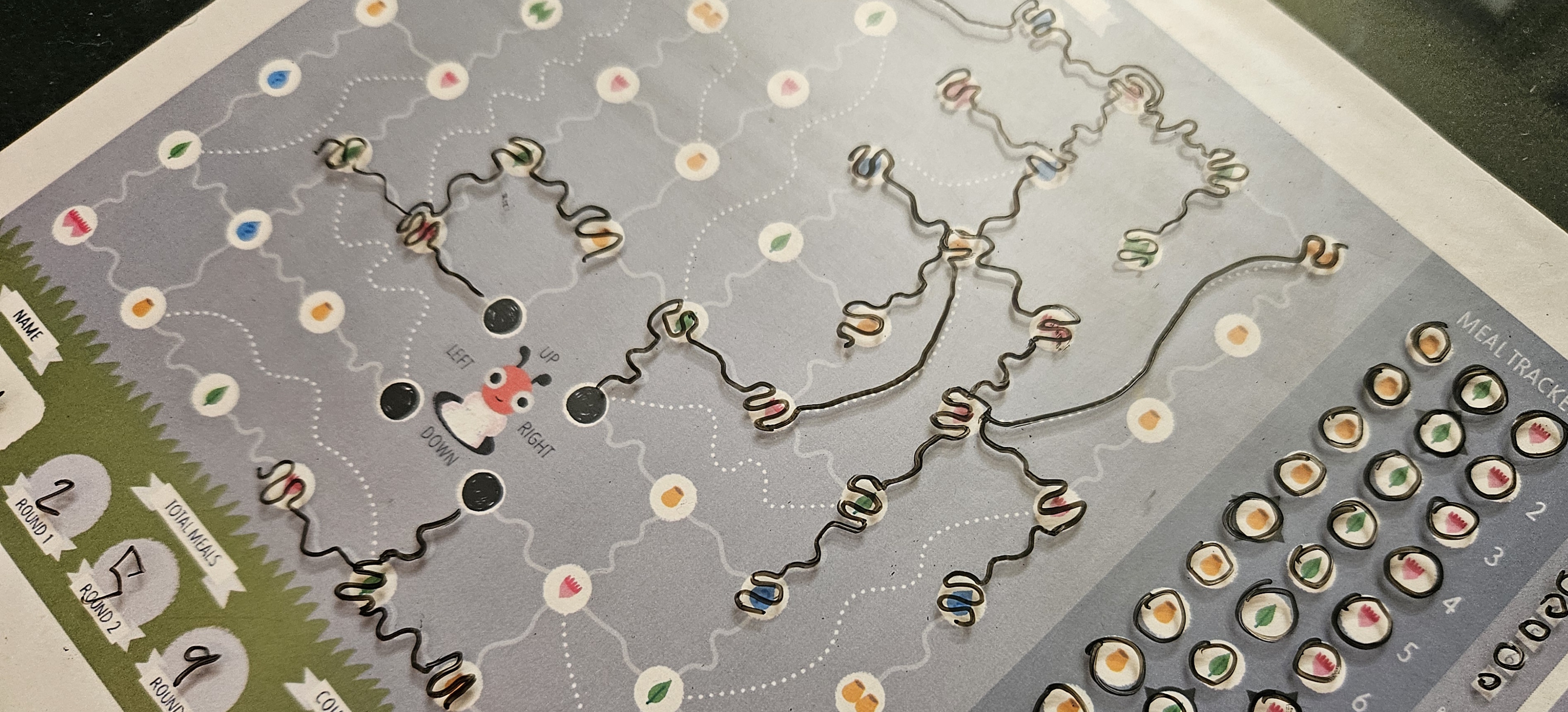
As you can see, my twelve-year-old is better at marking a sheet than her old dad.

Scribbles!

Scribbly Gum

For those of us who slept through botany class — huh? this school offers botany? — Scribbly Gum refers to the Eucalyptus haemastoma tree, whose colloquial name is derived from the lovely “scribbles” left behind by the chewing of the Ogmograptis moth in its larval stage. In this one, you’re chewing this way and that through the tree’s soft bark to secure meals that will permit you to grow from non-lepidopterophobia-triggering larvae into the Ogmograptis‘s hideous adult form.

The concept couldn’t be simpler. You roll two dice, then choose one of the results to permit movement. The rubric is straightforward. A roll of one lets you move up, two moves you down. Three and four correspond to left and right. Five, meanwhile, lets you follow a rare dotted line, usually forging a shortcut. Sixes are dead rolls, but don’t worry about rolling two of the things, because any double is a wild move that lets you go anywhere.

Turns, then, consist of rolling dice, choosing a direction to move, and securing the nut, blossom, leaf, or water in the space you just reached. Little by little, you spread across the page, leaving behind cutesy scribbles.

There’s a little more to it than that, but not by much. Certain spaces on the food track permit extra moves, and there are optional scoring bonuses for meeting little thresholds. These vary by map, but they usually conform to “eat a certain number of blossoms” or “chew up every space on the left side of the sheet.” It’s simple stuff. Baby’s first roll-and-write.

Dang it, kiddo.

Even more scribbles!

That might sound like faint praise, but when I used Scribbly Gum in its intended fashion by plopping it in front of my twelve-year-old, she was so charmed that we played all four maps in a single sitting.

Now, she isn’t quite a baby, and this isn’t her first time around the block. She’s played a few games of this ilk before. Paper Dungeons is a favorite, and her official review of Flip Pick Towers was “It’s like Paper Dungeons but not as good.” Reasonable marks coming from her.

But Scribbly Gum caught on because its rules are so darn simple that they get out of the way almost immediately. Which in my daughter’s case, meant she could get down to the serious business of triggering free actions with alarming frequency. Oh, and making her scribbles nice and cute.

This is a minor offering from Postmark, especially compared to its opening trio by Rory Muldoon and Matthew Dunstan. But it’s a pleasant minor offering, a gentle experience that doesn’t burn brains or exclude the little ones. While I’d rather tackle the seas, whether above or below, or a scenic hike, it wasn’t as though I begrudged my time in the presence of these squirmy art-bugs.

Those koalas, on the other hand…

brrr, they're even worse than moths

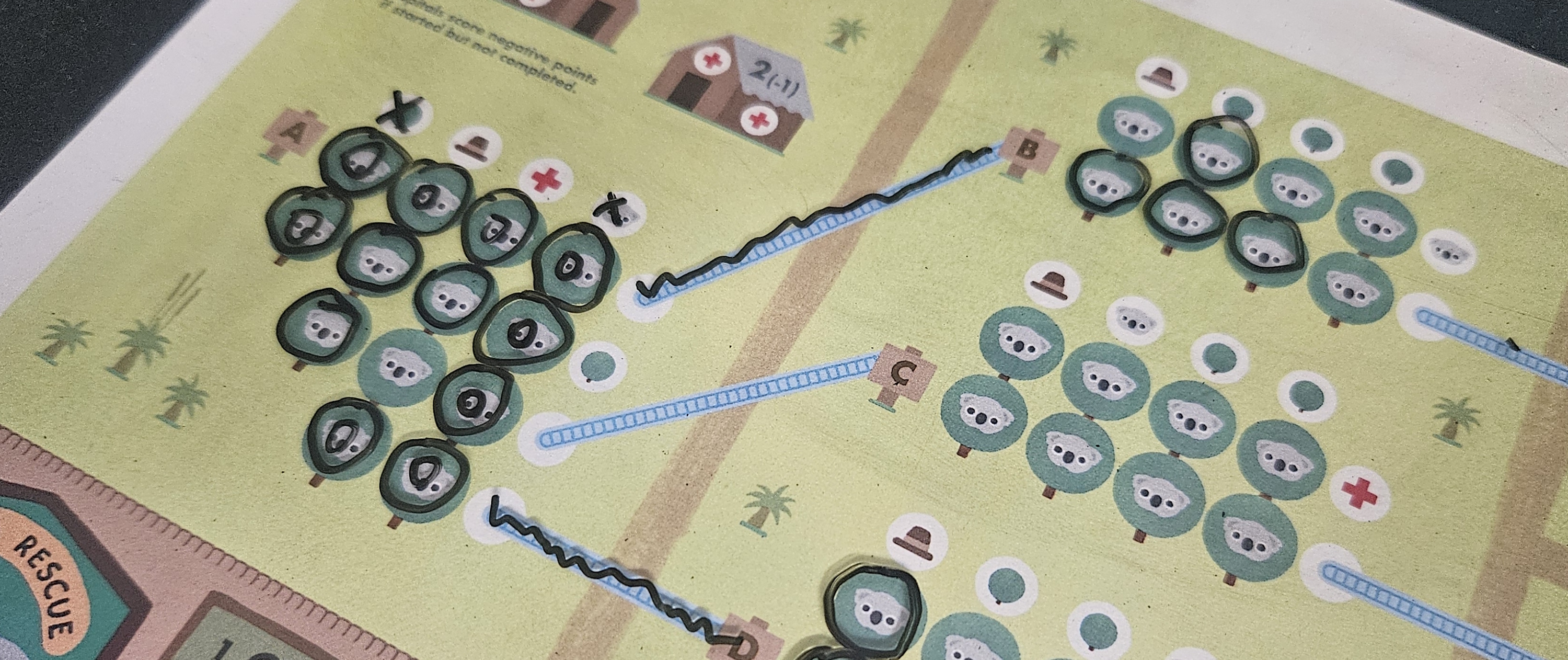
Saving some horrible koalas.

Koala Rescue Club

Koalas are horrible creatures, their natural cuteness belying some truly awful biological processes that I shan’t elaborate here. Koala Rescue Club dresses you into the high-visibility vest of a volunteer planting eucalyptus trees and rehoming the little guys, which would be a wonderful objective if the game weren’t so dull.

This is, once again, a game that opens each turn with a rolled die, although here that roll signifies which shape you can place on your sheet. It’s polyomino placement, in a sense, with the caveat that you’re really placing each shape twice. Once for the trees, another time for the koalas who will dozily munch their leaves. This results in tidy rows of circles: a big one for the tree itself, a smaller one within the tree for the koala.

As with Scribbly Gum, there are bonuses to be chased. Filling a column or row with koalas awards a perk. Extra trees and koalas are the norm, useful for filling in spaces earlier left blank. Volunteers allow you to adjust the value of the roll. Skybridges travel across the road to neighboring eucalyptus groves. And koala hospitals earn points. Or in the later maps, trigger bonuses of their own. Optional merit badges offer a few extra points for, say, planting all the trees in Grove C or building all the skybridges.

Especially when printed in color. For those of us with crappy printers shackled to the ink cartels, low-ink versions are much appreciated.

Like all of Postmark’s productions, it does look nice.

Koala Rescue Club is suitably cute, but the problem is that it isn’t very interesting. In the opening turns, before you have volunteers for adjusting rolls or extra groves for placing any larger shapes that won’t fit among your starting trees, you’re more or less beholden to the roll of a single die. This makes the early stages listless, like one of those games where everybody takes a matching move in the opening turn or two.

Affairs improve as more options are unlocked, but not so much that it often feels like you’re being confronted with hard tradeoffs. The shapes are so simple that matching them into a space is generally a trivial task. The merit badges are unexciting and nearly always repeat themselves. Even the possibility that this might be used as an educational game is somewhat let down by the two-layered shape placement. Where Scribbly Gum could pass for baby’s first roll-and-write, I harbor doubts about Koala Rescue Club.

The upside, I suppose, is that in solitaire it’s a nice enough way to kill a few minutes. Unlike most of the Postmark catalog, where the solitaire mode comes across as an afterthought, here it seems like the right way to play. Maybe that’s because my twelve-year-old declared it boring after one play and insisted we tackle Scribbly Gum again. Still, my few solitaire sessions were markedly more enjoyable than watching her put her head down on ink-marked plexiglass.

In other words, Koala Rescue Club needed rescuing. But who rescues the koala rescuers? I dunno. I just needed an outro.


Access to the files to print Scribbly Gum and Koala Rescue Club was provided by the publisher.

(If what I’m doing at Space-Biff! is valuable to you in some way, please consider dropping by my Patreon campaign or Ko-fi. Right now, supporters can read my first-quarter update of 2026: the best board games, movies, books, and more!)

Forget the Flippers

01. Juni 2026 um 22:00

I love the art style, at least.

It wouldn’t be an exaggeration to call Steven Aramini one of our hobby’s finest designers of small-format board games. Whether we’re talking about microgames like Sprawlopolis and Ancient Realm, or Fliptown, still perhaps the finest flip-and-write game ever designed, Aramini has a keen talent for compressing big ideas into small packages.

Flip Voyage, then, is his followup to Fliptown by way of Nemo’s War — although in a rare Aramini miss, this one surfaced too quickly and contracted the bends.

I have been led to understand that living on a submarine is a clammy, cramped experience, devoid of the wide-open viewing ports, expansive libraries, and world-class luxuries that such a fantastical vessel should offer. Sounds like a skill issue. Get on it, submarine designers.

We all live on an ordinary blue submarine.

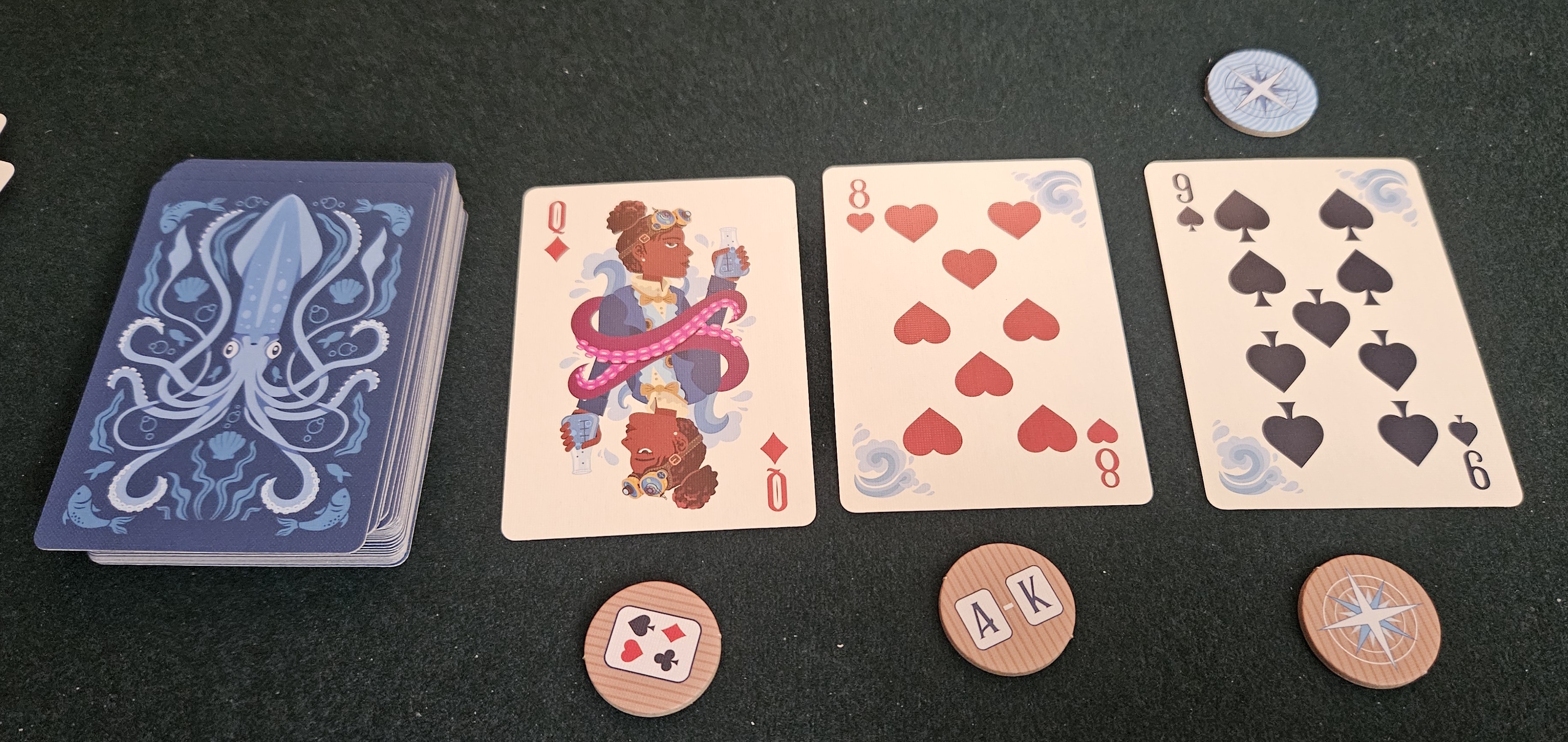
If you’ve played Fliptown, the basic conceit behind Flip Voyage will be familiar, if perhaps also baffling in its pared-down nature. Like that game, Flip Voyage is a combo-heavy flip-and-write that sees everybody at the table — whether one player or fifty, with the box providing enough dry-erase boards for four — turning three cards at a time from an ordinary deck of playing cards. Everyone uses that trio according to their own individual goals and position, and then, after awkwardly signaling to one another that they’re done, moves onto the next set. For our signal, my group has taken to sticking up a thumb. That or asking Geoff whether he’s wrapped up his turn, because eighty percent of the time he’s the last one anyway.

In Fliptown, the template was straightforward enough, while still offering a range of options. You would choose one card for its suit, to indicate which of four activities your cowboy would undertake that turn. Another card offered up its rank, setting the strength and/or destination for that activity. The final card became part of a poker hand, an ongoing bid to earn extra points and cash at the conclusion of five flips. Since everybody knows poker hands, from movies if not from personal experience, the relative value of each splay was given an intuitive value.

There are no giant squids in this game. Pity.

Three cards are revealed at a time. How will you use them?

This time around, the value of any given card is more wishy-washy.

For one thing, there are no poker hands. That’s fine. Fliptown was a cowboy game. Per contractual obligation, every cowboy game must feature poker. Flip Voyage, though, is about journeying under the sea in a submarine based on Captain Nemo’s / Jules Verne’s Nautilus, undertaking such anti-colonial activities as sinking imperial vessels and liberating captives from slaver camps.

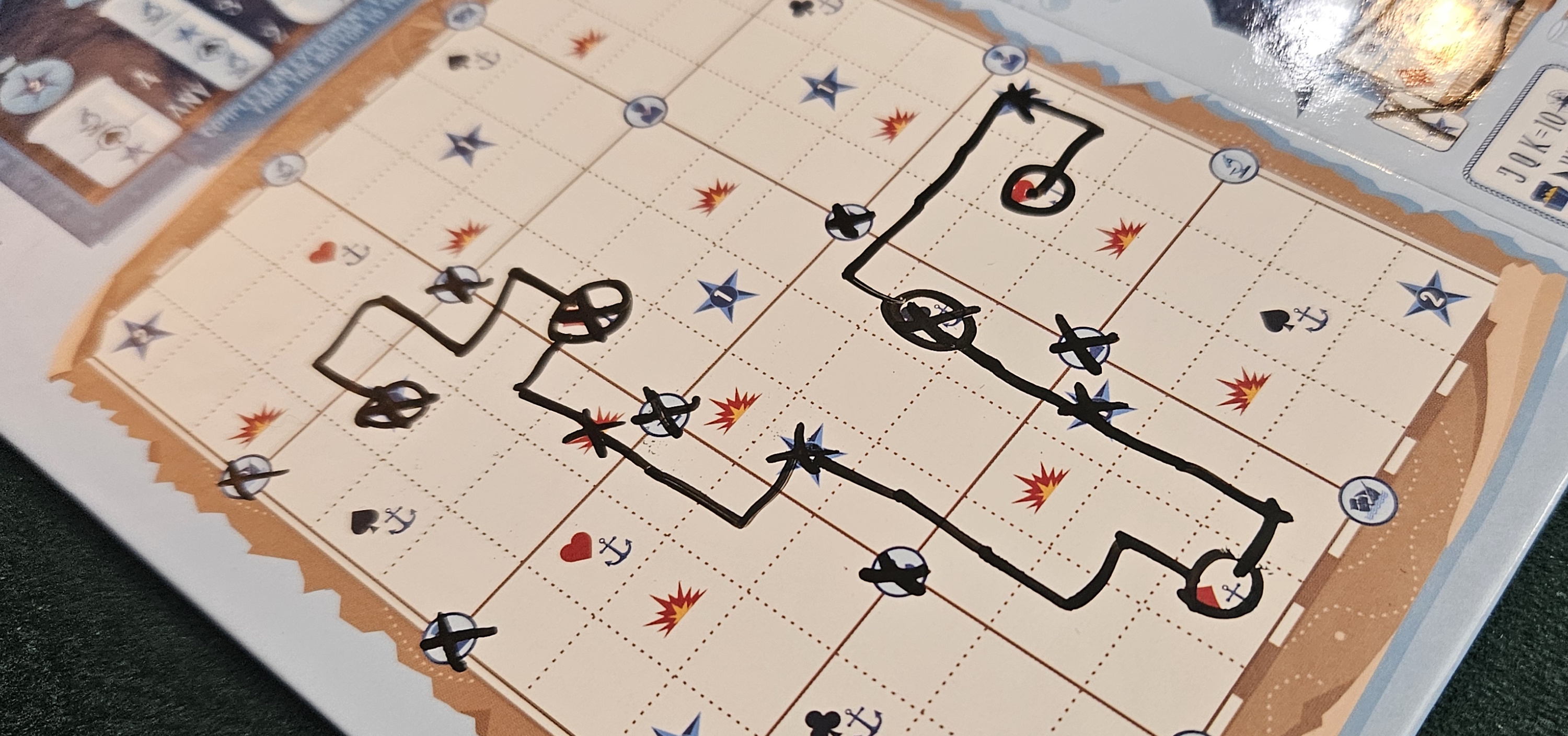
As such, while two of each round’s three cards are spent undertaking those activities, that final card is instead used to travel across a simple grid map. These journeys are both critical, setting the tone for each trio of cards, and somewhat disappointing in their straightforwardness. Certain spaces award stars — points, basically, here called “notoriety” — while others incur damage to your vessel. Various lines can be crossed to earn resources, and there are ports where weighing anchor earns you a free action in one of the game’s four suits.

The gist is that you take your chosen card’s rank and travel that many spaces, generally steering across stars, avoiding damage, and ensuring you halt in a spot that will permit one of those free actions. Meanwhile, criss-crossing the map is a surefire way to earn extra resources, but you’re also lightly incentivized to keep your journey pacey thanks to a “most efficient” award doled out at the end of the session. Coal is expensive, I suppose.

Meanderin' around.

Charting your course.

Perhaps I would have felt more kindly toward Flip Voyage’s voyaging had I not recently played three different titles that handled navigation so much more cleverly, but the map is never as interesting as it could have been. Damage is easily avoided, while the ease of pulling U-turns and adjusting your current range with a spent resource both serve to eliminate any hard decisions. For the most part, the toughest part of navigation is remembering to tally how far you moved on the score track.

The activities, meanwhile, are considerably easier than those found in Fliptown. There’s a tonal quality to the distinction. In Aramini’s former game, each activity was pitched as a wager, requiring players to decide how far they wanted to press themselves in an attempt to secure greater rewards. By contrast, the activities in Flip Voyage are considerably blander.

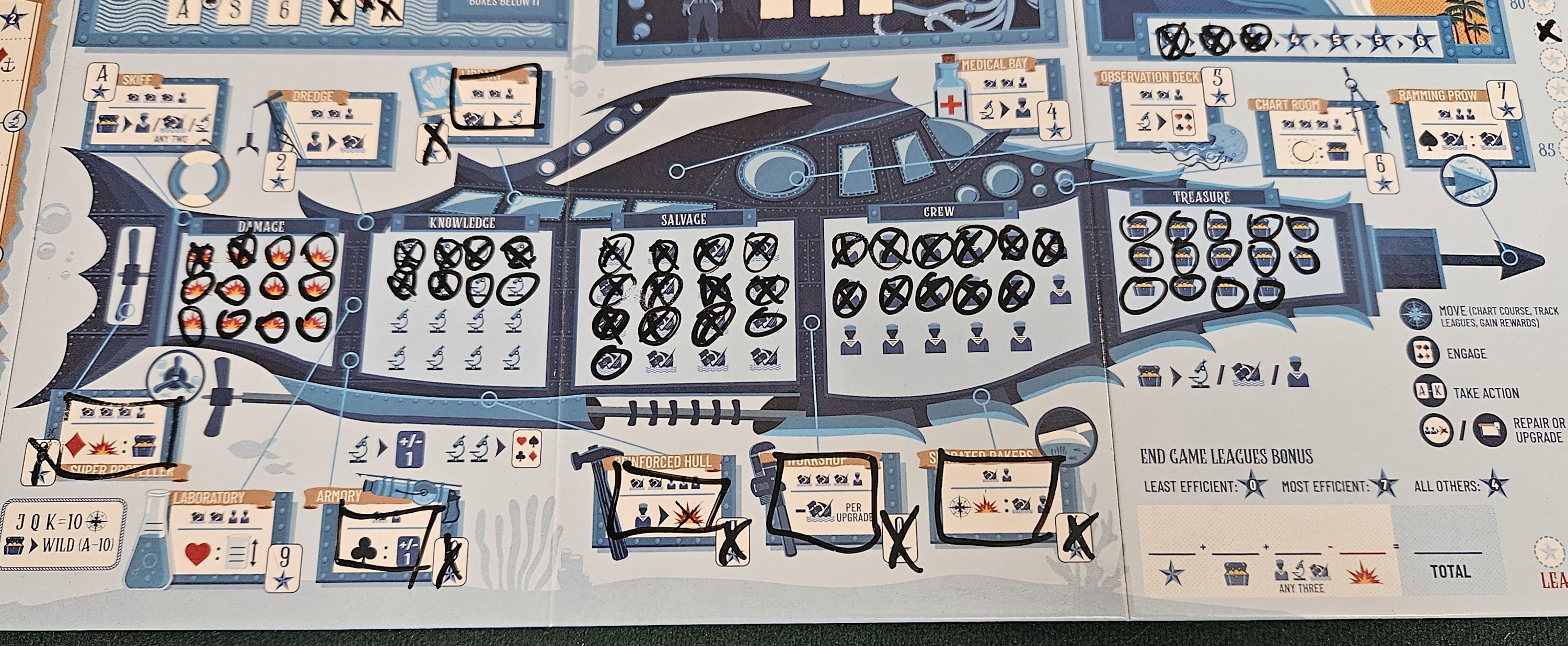
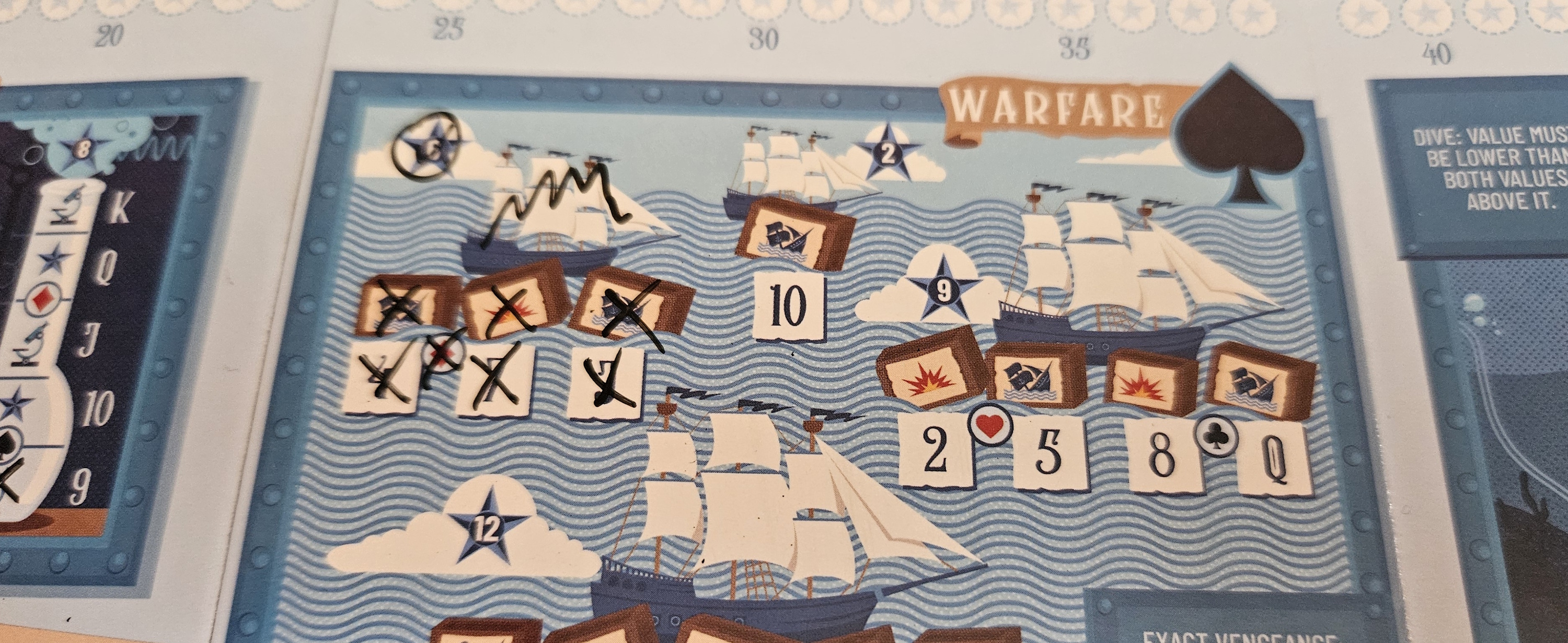
As before, there are four, each corresponding to the deck’s French suits. Using a heart takes you to the science lab, where you must fill beakers in rank order. Next door is the warfare track, where spending cards will punch holes in imperial warships, either earning salvage or damage. Diamonds are for adventure on the ocean floor to retrieve treasure or damage. And clubs are for raiding slaver camps, liberating new crewmates or, again, taking damage.

Against all odds, Flip Voyage makes sinking a wooden warship dull.

Sink to the bottom… without me.

If you couldn’t tell, there’s a lot of taking damage in Flip Voyage. Three of four activities will ding your Nautilus Jr. in some way or another, and there’s no skipping a turn to loot graves like in Fliptown. This has a flattening effect on the game. There are fewer peaks and troughs than before. Instead, you’re usually guaranteed some upside to go with your downside, or vice versa. A resource here, a scratch there, bit by bit, until the game concludes and everyone tallies their score.

There are upgrades to consider, little perks that adjust your activities. Some are formidable, like the serrated rakers that encourage you to steer into damaging spaces on the map or the super propeller and ramming prow that earn extra resources from their related activities. But a number of upgrades are surprisingly dull. Oh, the dredge lets me turn crew into salvage? The library turns salvage into research? Sorry, I nodded off. I hate to keep resorting to contrast, but these are a far cry from the shops and hotels of Fliptown’s tumbleweed town.

It’s possible to consider these alterations in a generous light. Fliptown had moments of profound chance, especially when two players attempted to, say, rob a stagecoach on the same turn, an endeavor that required both highwaymen to draw their own card to determine their success. Flip Voyage is less beholden to Lady Luck. Apart from the trio that opens the turn, there are no flipped cards here. I’m sure there are those who prefer their flip-and-writes to limit their luck to inputs rather than outputs, to borrow Geoff Engelstein’s delineation between flavors of chance.

I’m not one of those people. The beauty of Fliptown was its willingness to allow both modes. You could push your cash into the center of the table by sticking up trains, speculating on land, and chasing bounties. Or you could keep to safer trails by mining gold, riding duster, or robbing corpses. Even without the inclusion of random outcomes, there was so much to do that every session felt like a fresh adventure. After about one and a half plays, Flip Voyage has shown all it has to offer.

I also have the Fliptown expansion ready to go. Hopefully it's better than this one.

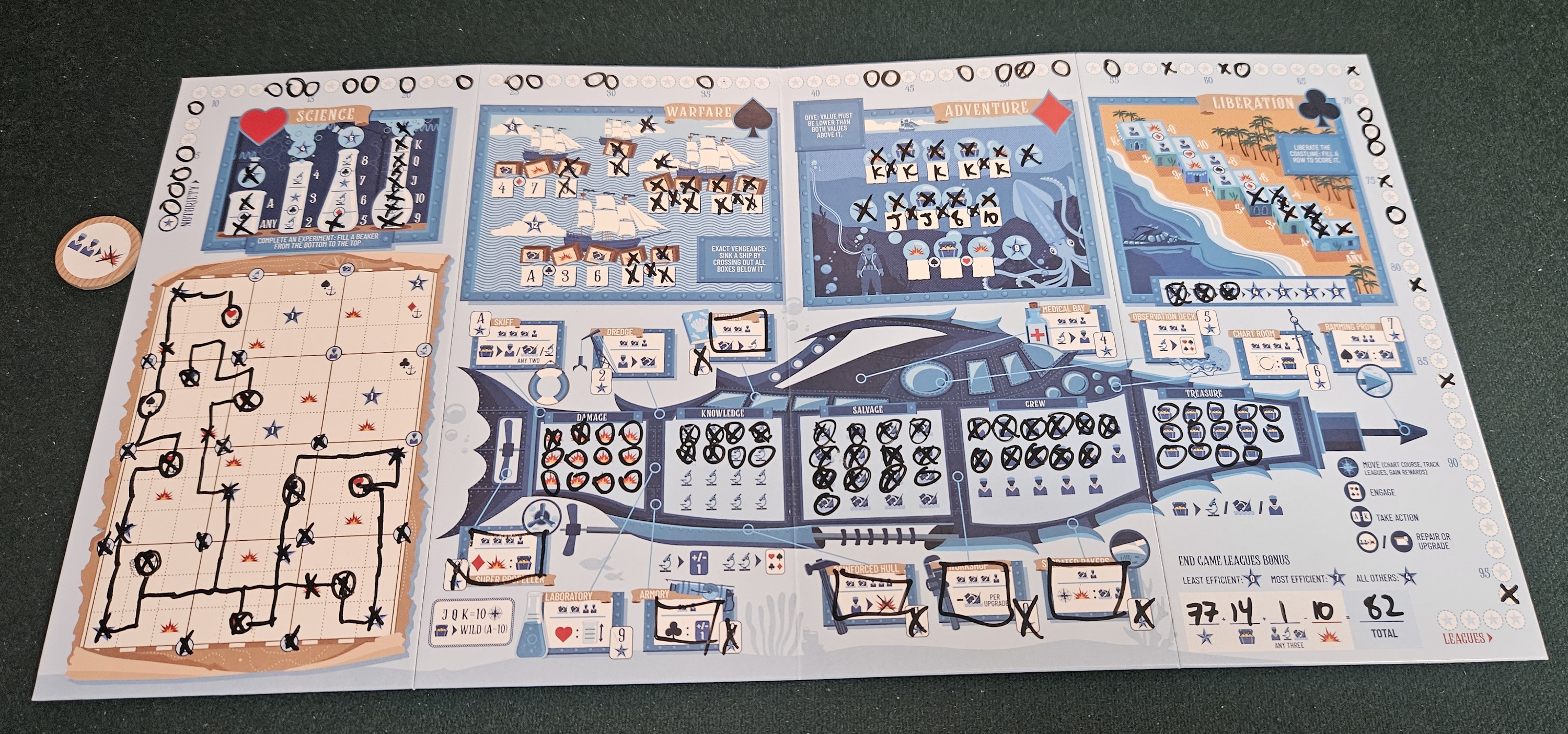
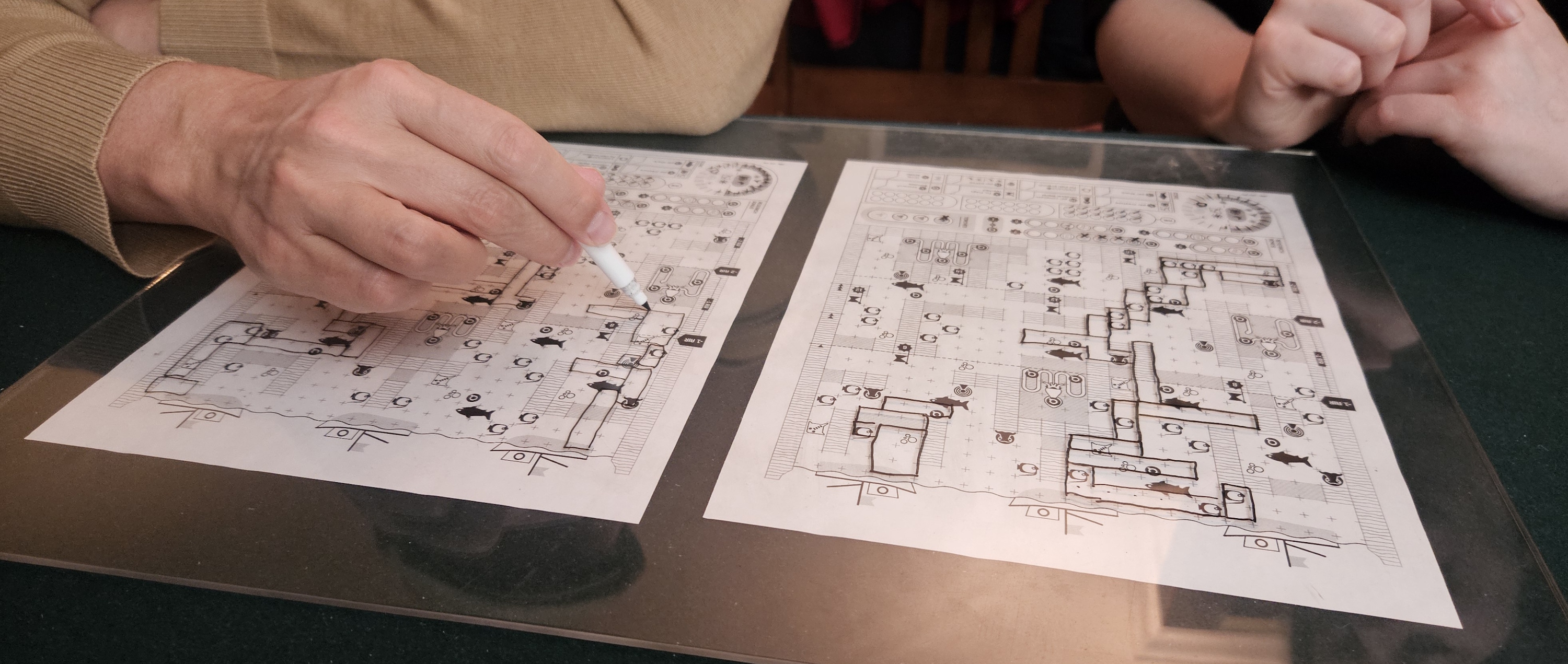
Ahh, a marked-up board.

Still, the process of filling in the board is enjoyable enough. That’s some faint praise, I know, but it would be a lie to say that this game is devoid of its pleasures. Figuring out how to put those cards to use is still a strong core for such a game.

But twenty thousand leagues is a great distance to cover under such pressure, and this hull has sprung more than a few leaks. There are plenty of better options, including many designed by Aramini. To quote Captain Nemo, “Oh Almighty God! Enough! Enough!”


A complimentary copy of Flip Voyage was provided by the publisher/designer.

(If what I’m doing at Space-Biff! is valuable to you in some way, please consider dropping by my Patreon campaign or Ko-fi. Right now, supporters can read my first-quarter update of 2026: the best board games, movies, books, and more!)

Combat Results Postcard

26. Mai 2026 um 03:52

Battle (underline) Card

Battle Card is as apt as descriptions get. Designed by David Thompson and Nils Johansson, this is the fourth project in the Postmark Games lineup. Like its earlier peers — Voyages, Aquamarine, and Waypoints — this is a print-and-play title that can be produced with functionally zero budget. Unlike those projects, however, Battle Card is billed as a wargame on a single postcard-sized sheet.

That’s true enough. With a few dice and a smidgen of experience to help interpret the rules, Battle Card covers six engagements from the Second World War. And their format is indeed very small, highlighting some real resourcefulness on their designers’ part in compressing battles and even campaigns into ten-minute experiences.

But unlike those other titles, Battle Card is a mixed bag. I’ll give an example.

Their national anthem, I believe.

Rock on, Canada.

The second of Battle Card’s six scenarios sees Commonwealth forces waging a fighting retreat against Imperial Japanese troops shortly after the attack on Pearl Harbor. Over the course of two months, these forces staggered their positions along the Malay Peninsula, gradually ceding ground in an attempt to withdraw a portion of their forces. Historically, the campaign was catastrophic for the Allies, revealing Japanese air superiority and rapid infantry. (Mounted on bicycles!)

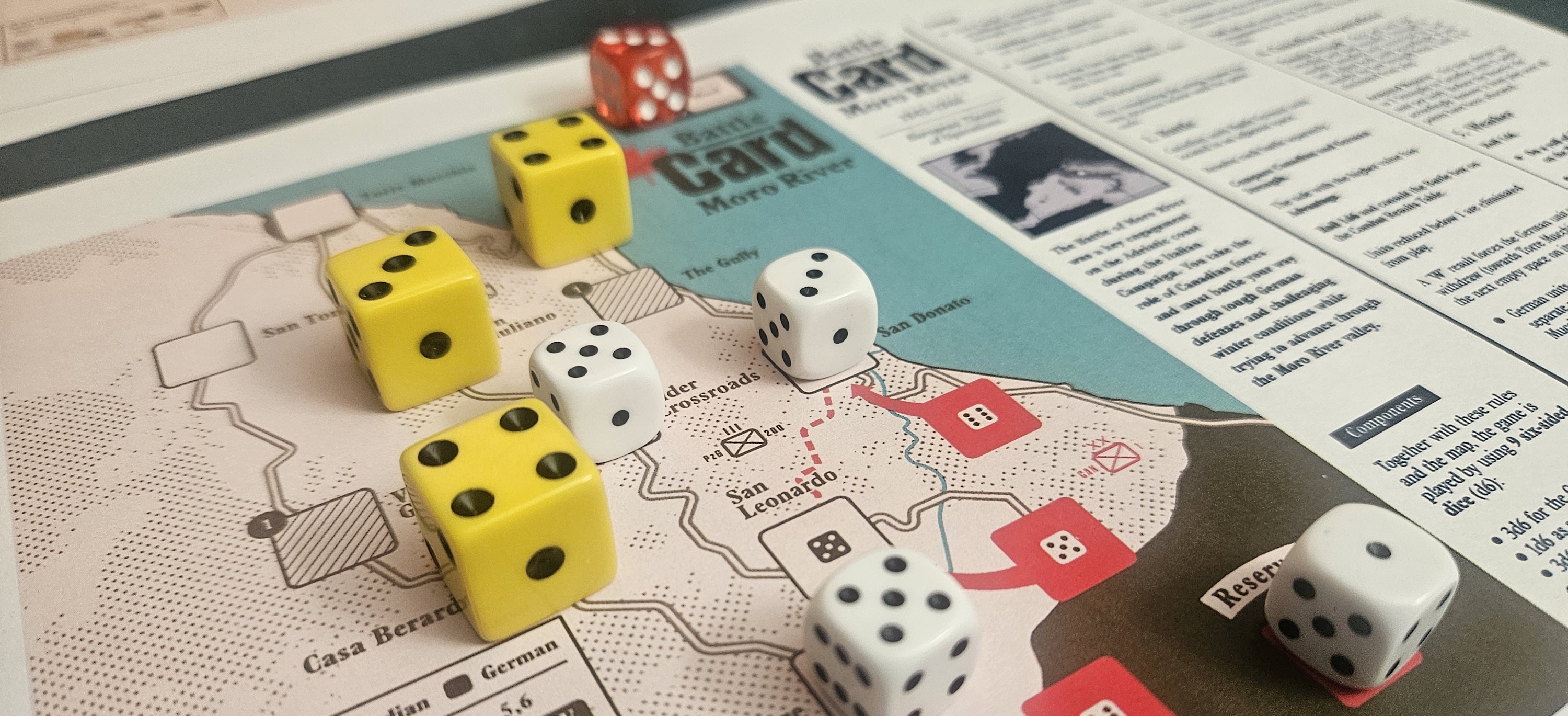
In Battle Card, the situation isn’t much better. Dice represent the armies on both sides, with their pips indicating their current strength. These armies engage in battle — determined by the roll of another die — and shift positions along the twin roads along the peninsula.

Here, the situation is relatively static. As the leader of the Commonwealth forces, your options mostly revolve around when to retreat, whether to defend your position or mount a counterattack, and which units to gradually pull back toward Singapore. No matter the outcome of any individual roll, the game has been fixed, much as it was historically. It isn’t a question of whether the Japanese will overtake your position, but how swiftly.

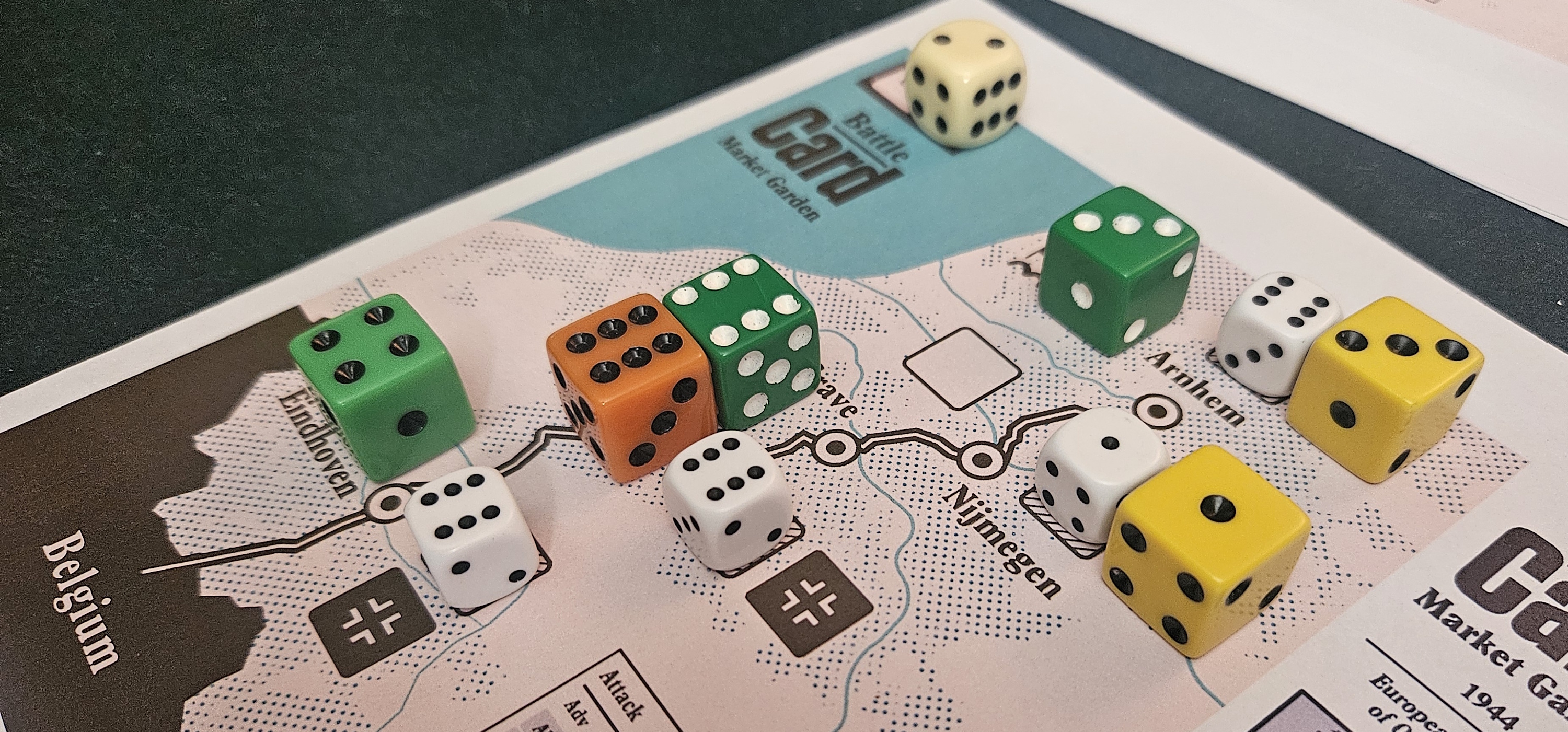
The smaller dice designate control. None of the other scenarios bother. This was a wise omission.

The Market Garden scenario is ostensibly a demo, but it’s fiddlier than those that come afterward.

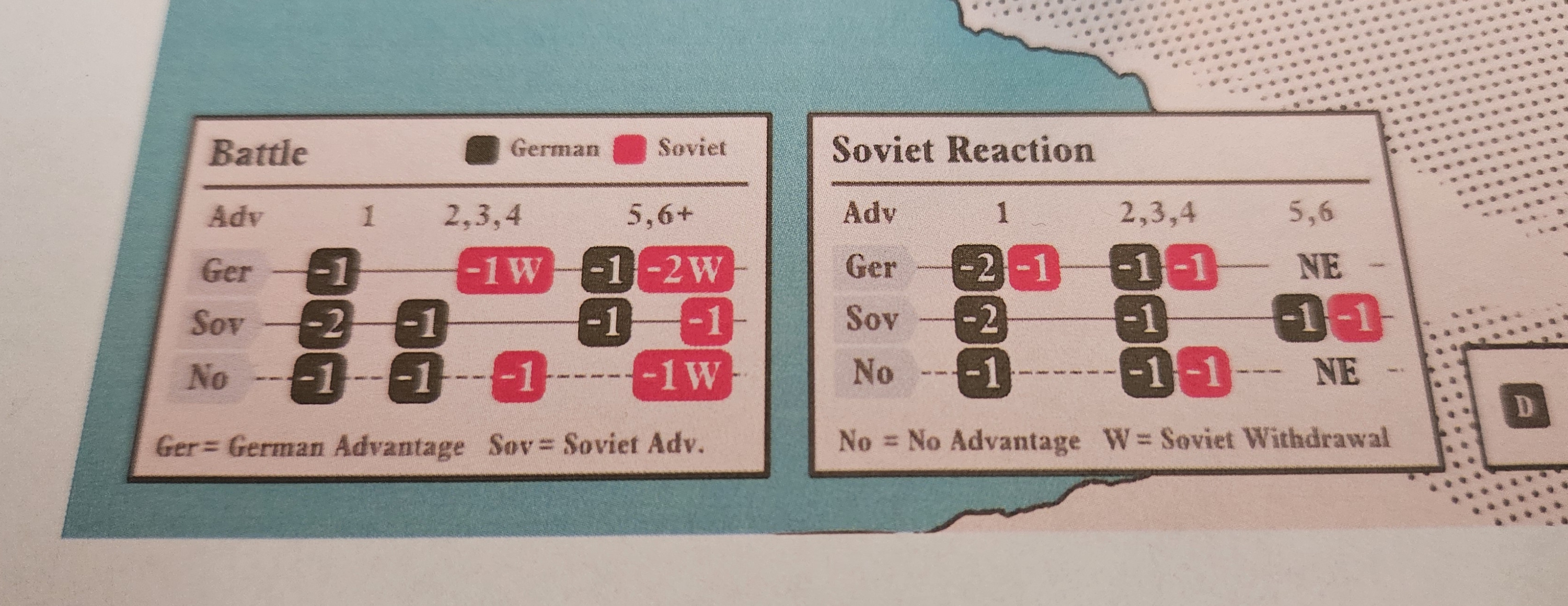
What follows is a strong indication of both the system’s strengths and weaknesses. Your choices, such as they are, are as bite-sized as the game’s footprint. Retreat or hold; defend or attack; withdraw a die along a road. The roll-offs are governed by small combat results tables that factor in whether one side has an advantage — meaning one side’s die has more pips than that of their enemy. As advertised, it’s fast. And, to its credit, the minimalist design does lend some sense of the geography and the central conundrums of the conflict.

In this case, your objective is to withdraw three pips to Singapore, and the way to accomplish this goal is closer to a puzzle than anything offering operational flexibility. Either you stick your troops behind the right line in the sand or you don’t. Either you withdraw in time or you don’t. Either you make high enough rolls or you don’t. No matter the scenario, this is more or less how Battle Card functions. There’s a solution here. That solution still requires the bulk of the rolls to go your way, but that’s the solution, and there’s no deviating from it. Perhaps most damningly, once you’ve uncovered that solution, there’s really nothing else to see.

Yes, yes, I’m the guy who wrote that replayability is overrated. But there are slender games and then there are slender games. Battle Card is the latter. Each play lasts between five and ten minutes. Scenarios are also compact, as befits a game called Battle Card, meaning there aren’t many subtleties to any given fight. If you don’t figure out the trick on your first play, you’re bound to have a strong suspicion heading into your second. After that, it’s really a matter of getting the right rolls.

Magnifying glass not included.

Combat results tables! We got ’em!

This isn’t to say the whole enterprise is doomed. The best scenarios offer some wiggle room between maneuver and chance. As the Canadians make a three-pronged drive up the Italian boot in the Moro River scenario, they must pause to reinforce any divisions that took a beating. As the Germans plunge toward the Caucasus oil fields, they need to decide when to split their forces into smaller but more vulnerable columns. Choosing where to fire your artillery at Mortain is… well, it isn’t the most complicated decision, but it would also be inaccurate to call it straightforward.

Again, though, that’s about as much mileage as anyone will get out of these print-and-plays. I’ve run through the entire series twice now, and the second time I found myself growing weary. This stands in strong contrast to those other Postmark titles. As score-chasers, there was always a reason to return for another attempt. Here, the entire format feels too compressed, like a States of Siege game without the chrome-laden considerations that made that series so interesting. Mostly, it was a nice way to organize my dice by color and size.

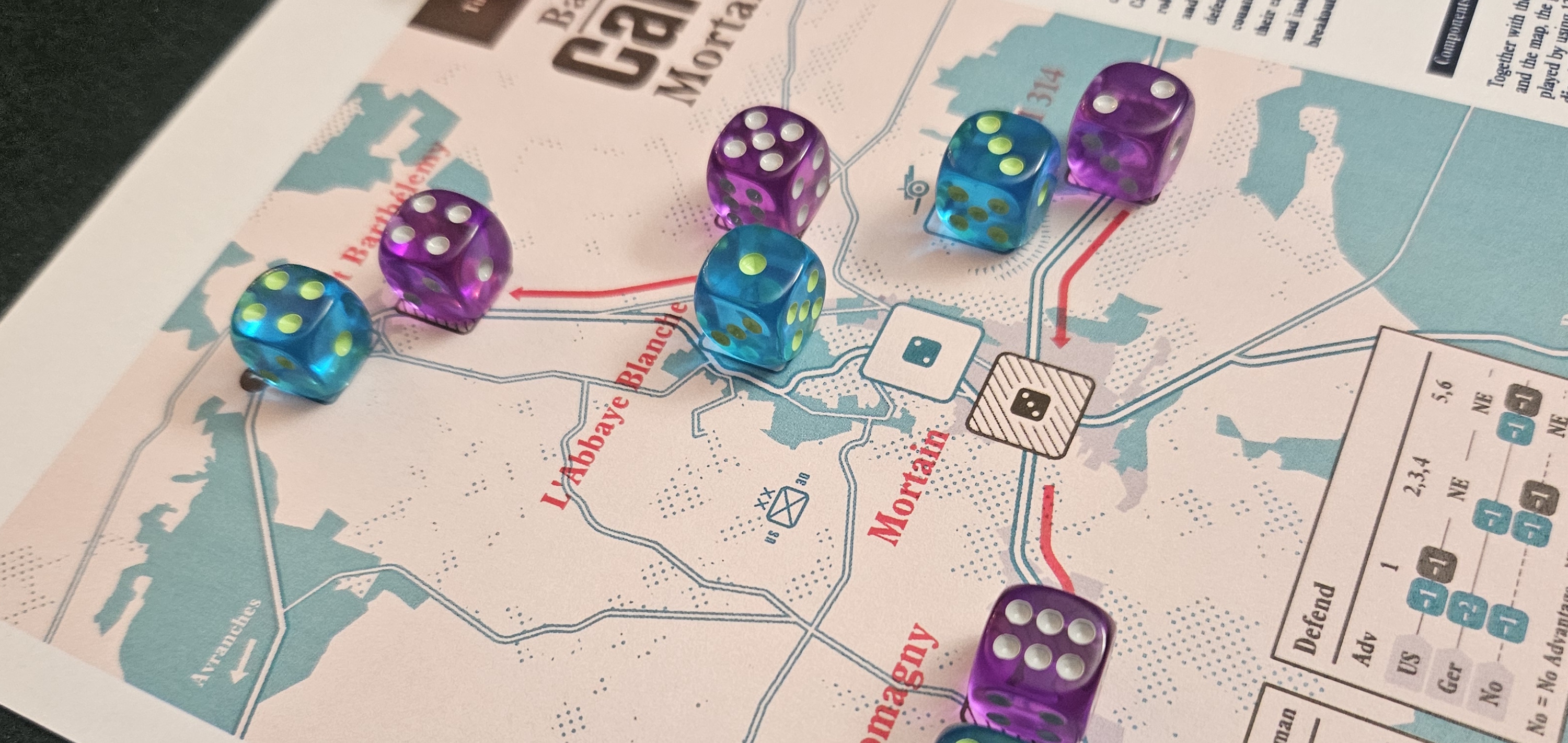
Step one: fire arty at bad guys threatening arty. Step two: fire arty at other bad guys.

Firing the arty.

In a way, Battle Card isn’t that far off from looking at an animated battle map. All those little arrows and company designators. The towns changing hands. The roads, the weather. The relative strength of any given column. Battle Card is that with some marginal interactivity. As a middle-aged white guy, that’s my ken. But the joke’s on Battle Card. I already own a book of WWII battle maps. This is one instance where pushing the pieces across the board — sorry, the card — isn’t enough of an improvement.


Access to the files to print Battle Card was provided by the publisher.

(If what I’m doing at Space-Biff! is valuable to you in some way, please consider dropping by my Patreon campaign or Ko-fi. Right now, supporters can read my first-quarter update of 2026: the best board games, movies, books, and more!)

Touch Grass (Metaphorical)

19. Mai 2026 um 01:00

at last, a use for this darn orienteering merit badge

Voyages, the first of Matthew Dunstan and Rory Muldoon’s single-sheet print-and-play roll-and-write games, used three dice. Aquamarine used two. Waypoints continues the trend by using a single die.

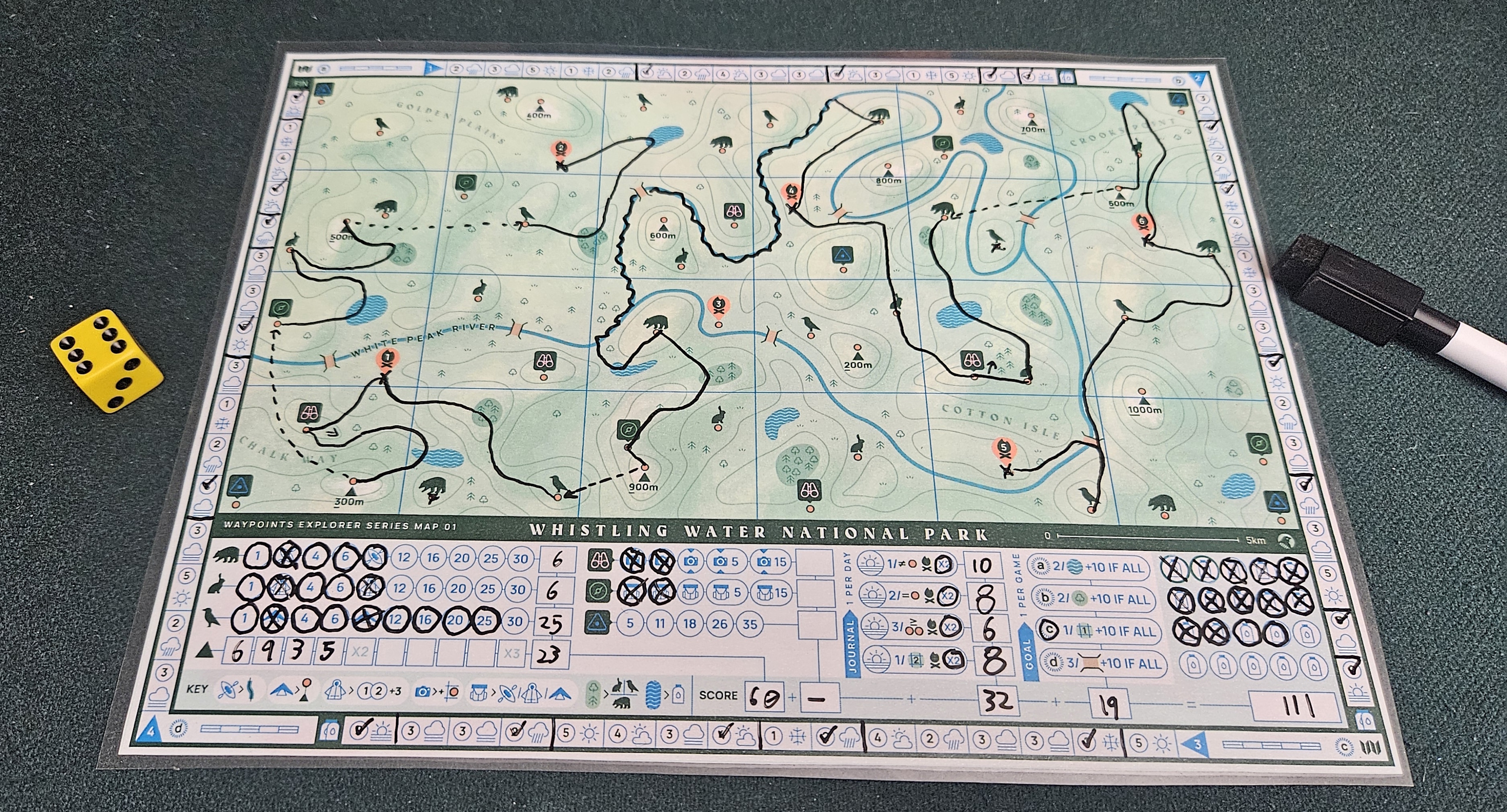
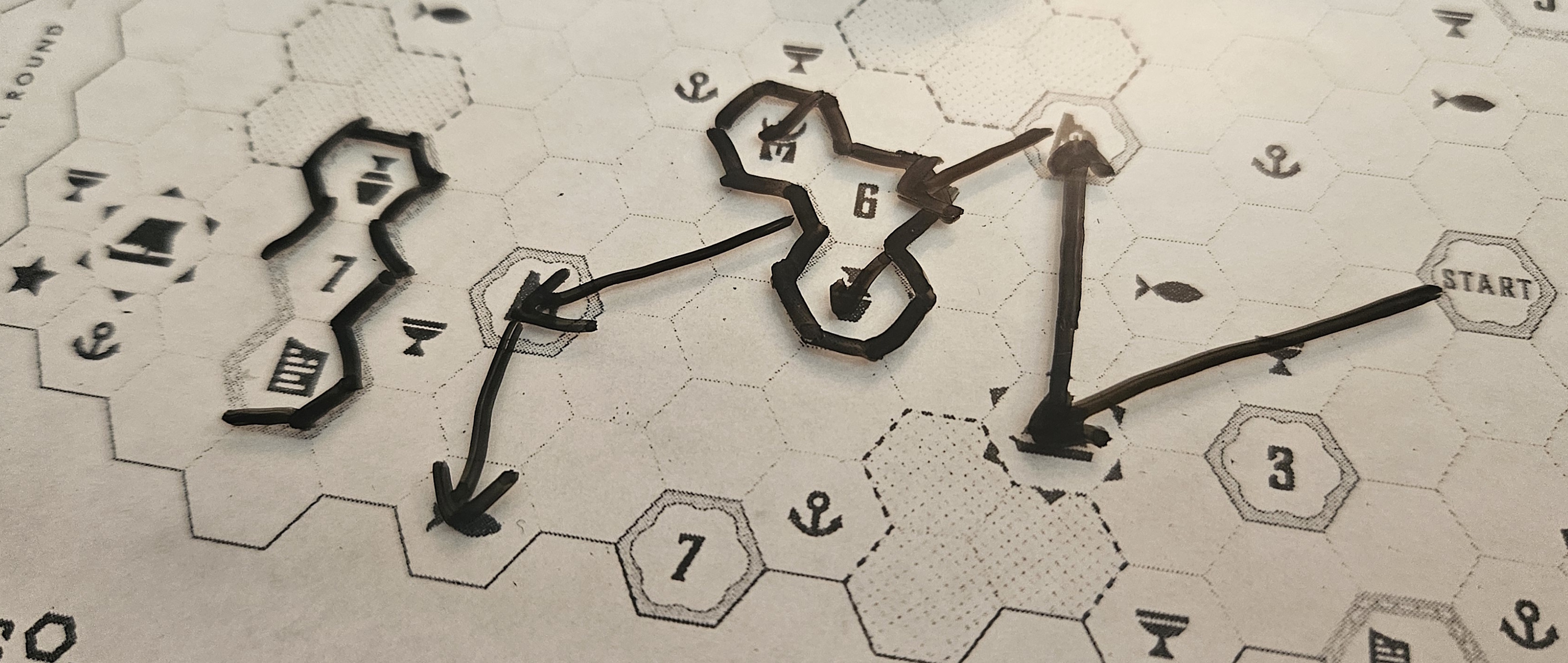
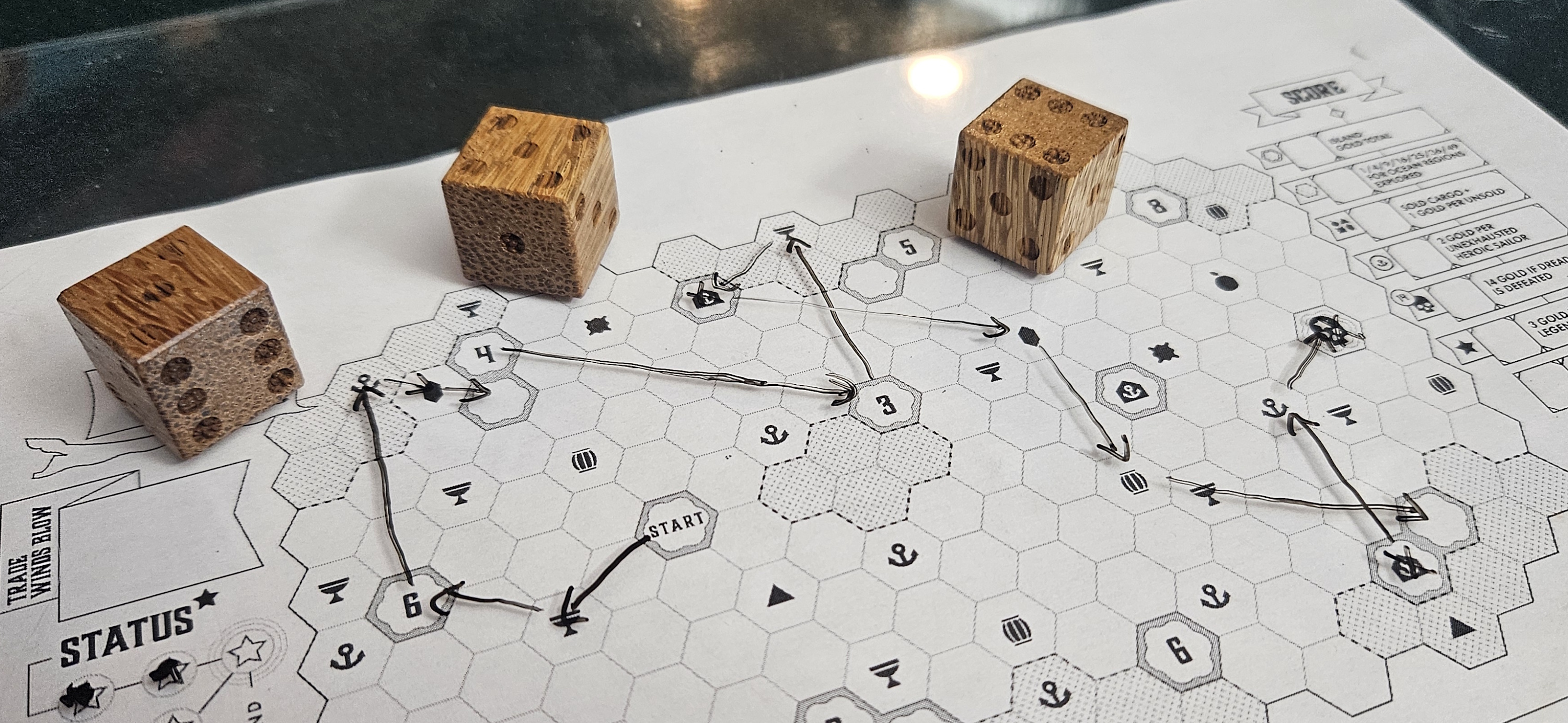
That’s cool in its own right. But that isn’t what makes Waypoints special. What makes Waypoints special is the way it handles the movements generated by its rolls. Where those other titles — and let’s face it, most board games — featured straight movements, point to point, A to B, nearly every move in Waypoints is the sort of move you might actually make while traversing an open space.

Here, I’ll show you.

I attempted to draw my route in the spirit of Fabio Bracht on BoardGameGeek. His penmanship (squigglemanship?) in this game is super impressive.

A glimpse of the first map and the many places it might take you.

You’ve taken the Internet’s advice to touch grass. And with gusto, because rather than go to the park or something, you’re opting for a four-day wilderness expedition. Hopefully you aren’t prone to hay fever.

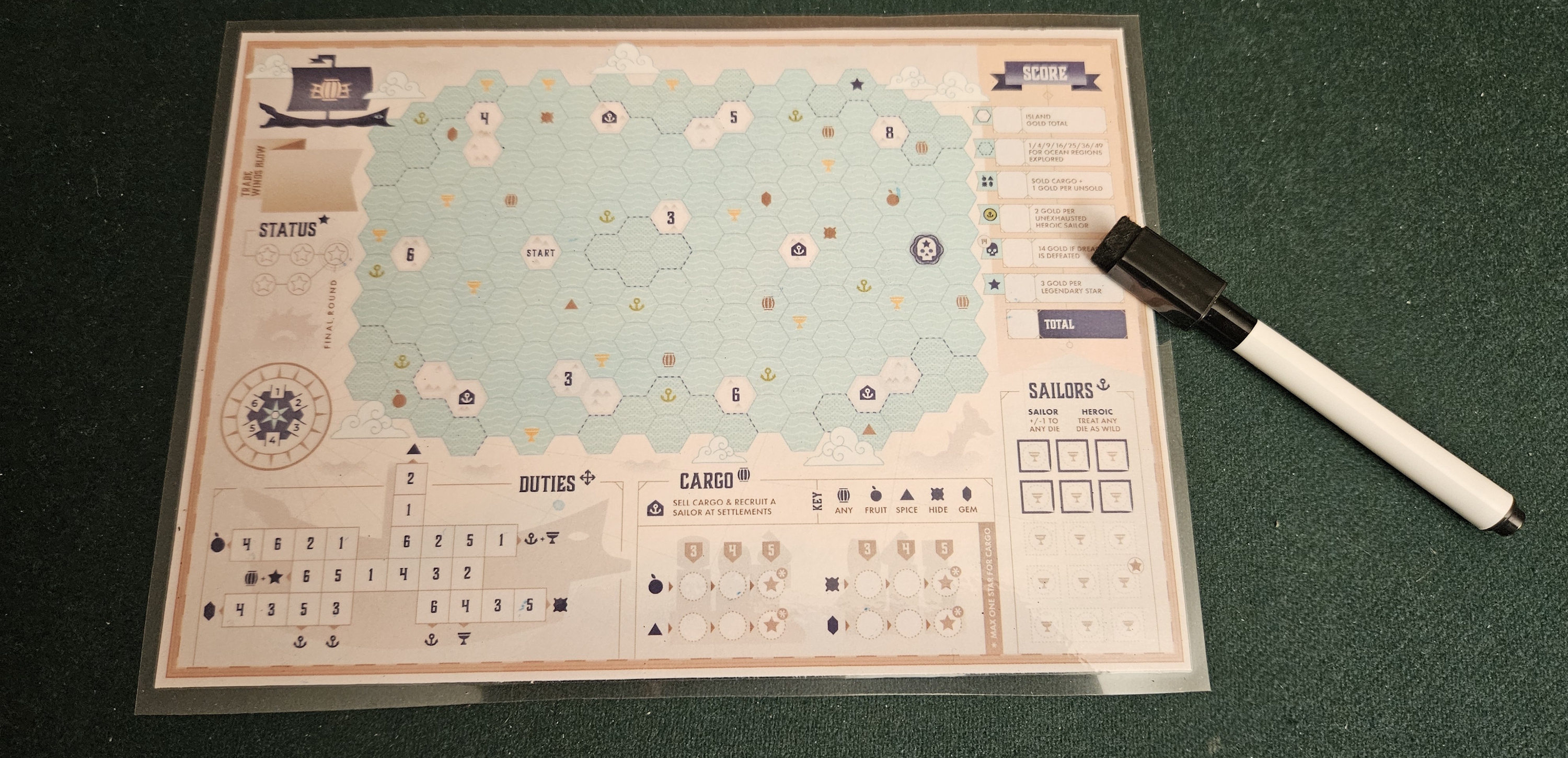
The gist behind Waypoints is that every turn you’re allotted some number of movement points. The number itself depends on the weather, and isn’t as simple as rolling the die and moving as far as it indicates. Instead, your roll shifts you forward along a track and reveals the current turn’s weather for everybody at the table. Inclement showers or storms might confer only a single pip of movement, while sunny afternoons offer a full five points. You also have a limited supply of water, which can be spent to stretch yourself to greater distances.

Every move begins and ends at a waypoint. When the game opens, that’s a campsite. Turn by turn, that might mean a wildlife site, a peak, a hot spring, a scenic overlook, or any number of other destinations. There are plenty to discover, and across the game’s five scenarios there’s a fair bit of variety. Along the way, you might swing by special features, like water sources or forests, but these aren’t waypoints, just side destinations on your way to the main thing. If you can’t reach another waypoint, that’s fine, but it means you’ll be stuck at your starting point pumping some extra water instead of moving anywhere at all.

As for those movement points, they’re spent by crossing lines. Latitude and longitude? That’s a point. Elevation? Another point. A long-distance trek involving multiple map segments and lots of hiking up and down ravines? That’s possible, but you’ll probably need a decent stretch of good weather. That or guzzle tons of water.

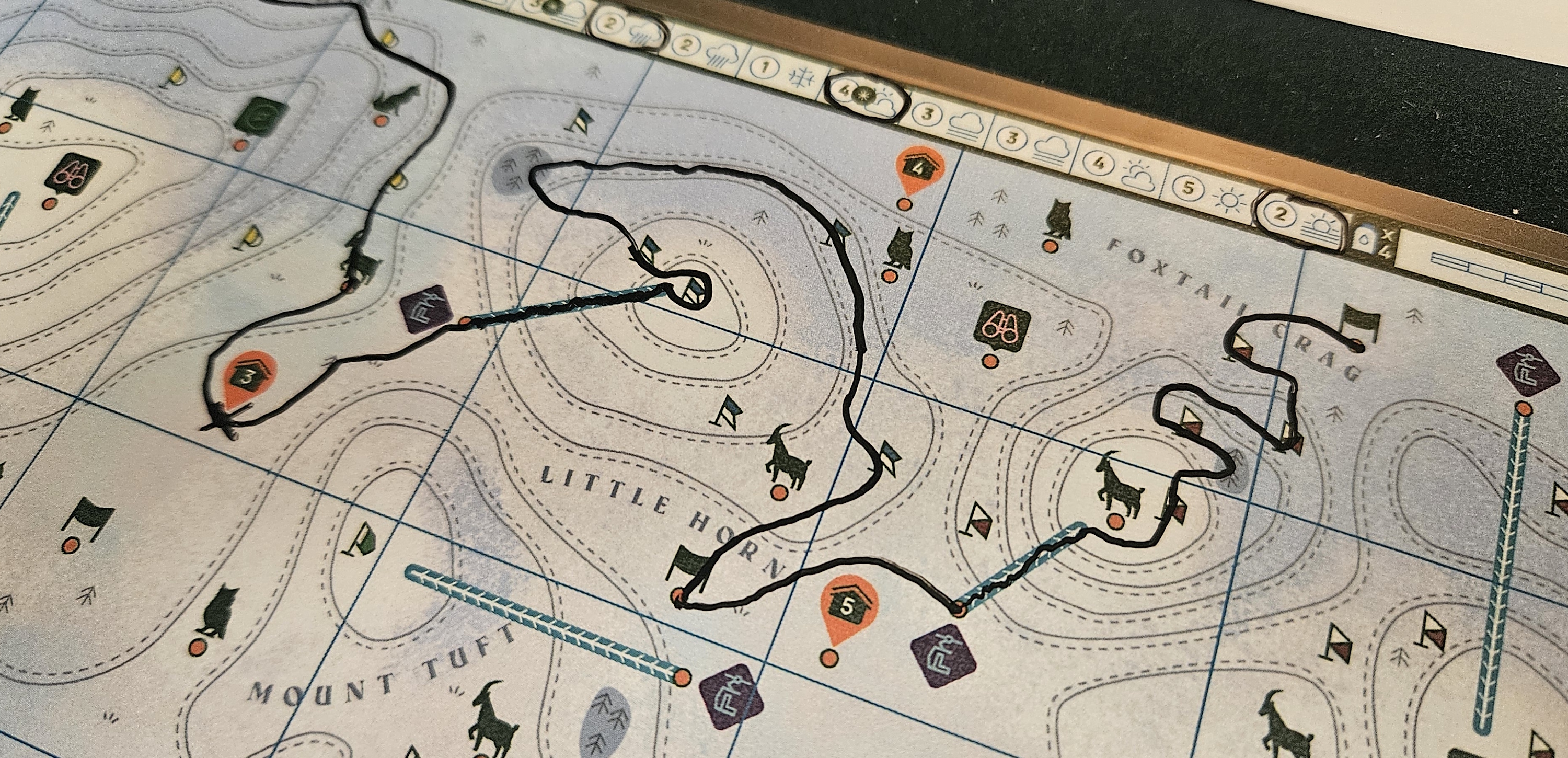
The skill here is avoiding goats.

Each map prioritizes a different skill.

Very quickly, these inbuilt limitations give your movements a certain naturalistic beauty. Rather than dealing in straight lines, as the crow flies, Waypoints challenges you to think like a gravity-bound creature. You’ll scurry along ridges, stick to gullies between rises, find open stretches of flat ground for traveling long distances, march up inclines in short spurts.

Of course, saving energy is only half the game. You’re here to see things. And the things most worth seeing outdoors are liable to be hard to reach. There’s a balance to be struck, then, between conserving your strength and pushing yourself to see the best sights.

But the result is a creativity of space, energy, and distance that’s rarely expressed in a medium as literalistic and rules-bound as board games. Often, the best route will be circuitous, the one that loops the long way around a peak. Or one that swings down a hill to collect some water, across a meadow to investigate a forest, and then around and up an incline where you’ll deploy a hang glider to soar to your next destination.

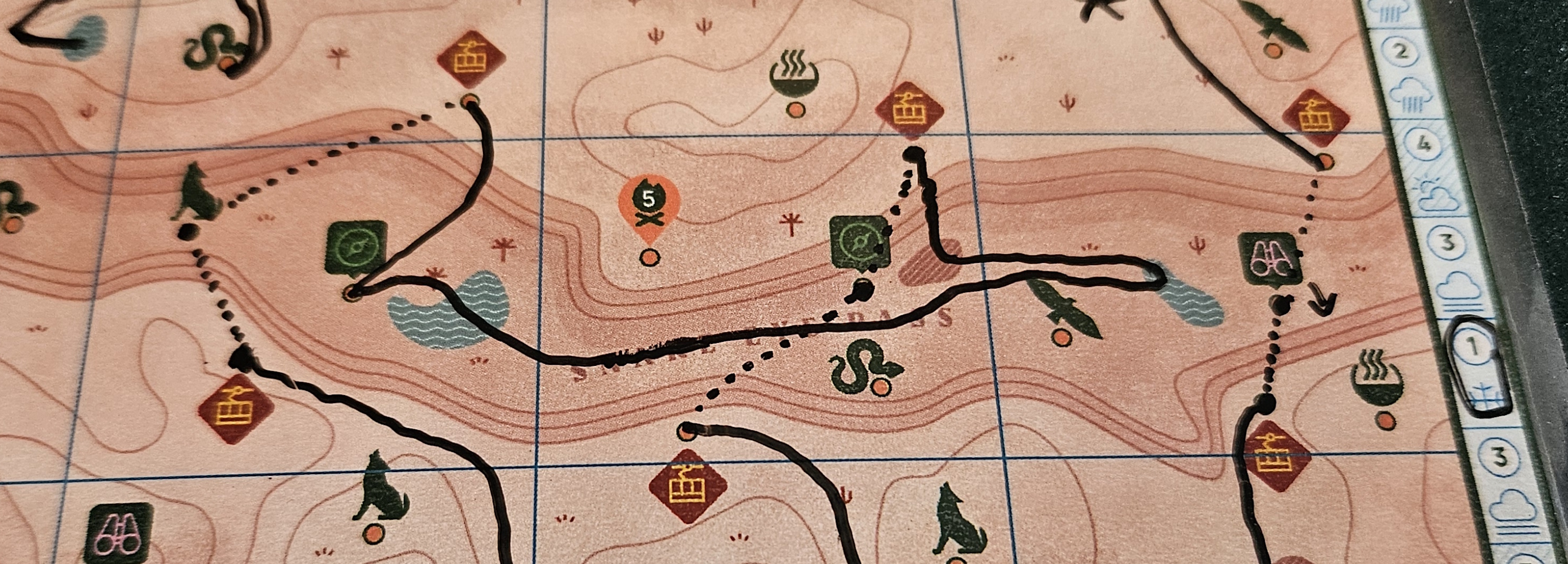
Because of course there are special abilities. In the first map, you quickly avail yourself of hang gliders and kayaks for covering great stretches of the outdoors. On other maps, your tools might include climbing ropes, cable cars, bicycles, snorkel gear, dinghies, ski lifts, or ferries. This produces fresh conundrums for each scenario. More impressively, these differences are also visible in the lines you draw on the map. In the desert, you tend to travel in spurts, sticking to shade or rationing your movement around the great canyon bisecting the map. On the ski slopes, shuffling upward is more difficult than gliding downhill, resulting in sharp rises followed by sweeping, switchbacked movements that visit feature after feature before arriving at the turn-concluding waypoint. In Waypoints, your mode of transportation is written directly onto the page, visible in the sweep of each route.

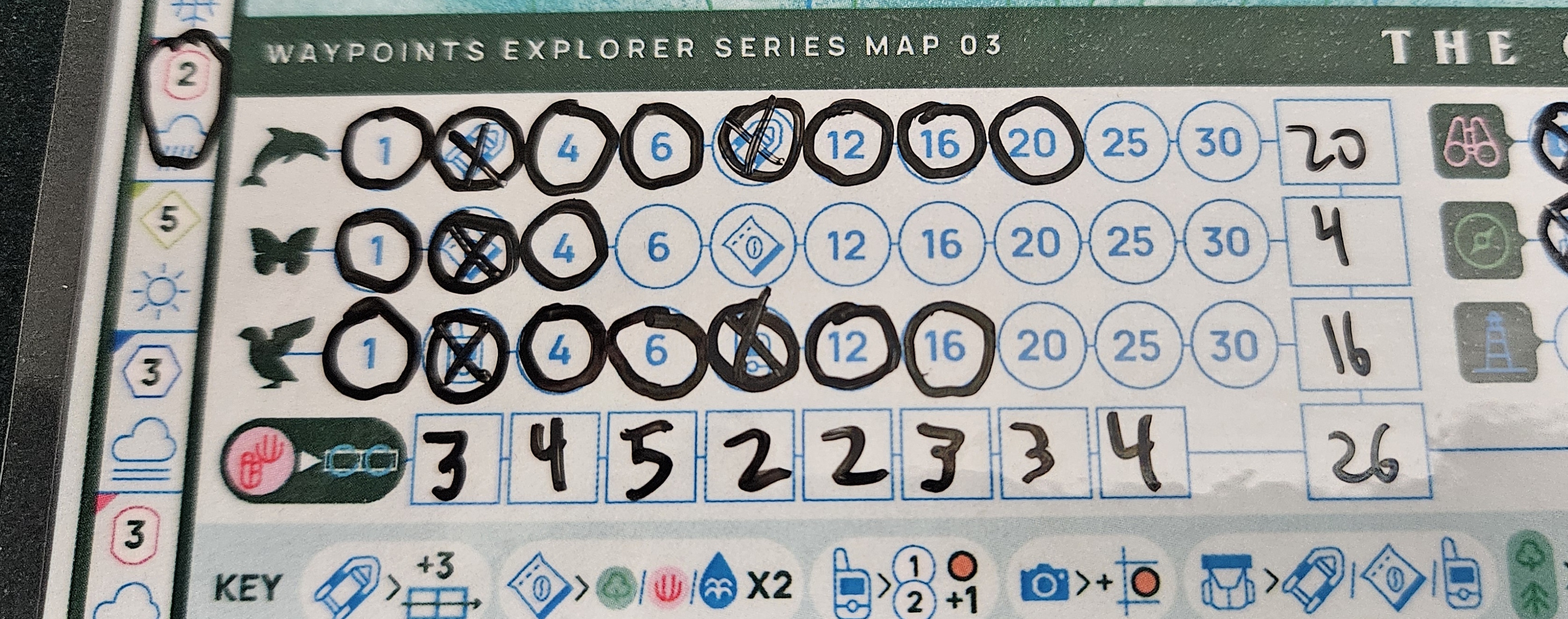
butterflies become granola... curious.

Meeting wild animals confers a wide range of benefits.

Like the previous entries in Dunstan and Muldoon’s movement trilogy, Waypoints is heavy with scoring opportunities. Fortunately, also like Voyages and Aquamarine, the scoring is interesting at all points.

The main commonality between maps is wildlife. There are always three types to see, and apart from occasional oddities — on the coastal map, the majority of my dolphin sightings occur in forests — it’s rewarding to watch your appreciation tick upward, earning not only points but also additional tools to make traversal easier. Beyond that, maps grow more playful. In one, reefs earn additional points later in the day, creating a situation where you’re incentivized to visit them late, but not so late that you get stranded when the day unexpectedly comes to its end. In another, you parcel out slugs of whisky between visiting local breweries or slogging through lochs in search of monsters.

Perhaps the one sour note is yet another repeat: the solitaire mode is a letdown. As with Voyages and Aquamarine, this is one roll-and-write that’s far more interesting to experience with other human minds. The problem is that the solo objective is incredibly easy in a vacuum, asking you to ensure that you conclude each day at a campsite. When that’s your primary objective, it’s a thing easily accomplished.

With fellow trekkers, the real goal is to wring every last point out of an imperfect day. Some hikes will be cut short, the caprice of the dice only offering a small handful of turns before the sunset brings your trek to a close. Others might even go long, your hiker hovering around a natural concluding point, only to find themselves distracted by extra sights. Regardless, there’s something satisfying about facing challenge after challenge, feeling like everything is going wrong, only to look at a rival’s sheet to discover that, you know what, your journey was rather remarkable in the end.

And scored forty-something points for it. Boom, baby. I still lost.

That time I scaled the Grand Canyon eight times in a day.

That’s the last great thing about Waypoints. In the minute between scoring and erasure, you get to look back on this thing, this little journey, and behold what you’ve accomplished. The strange loops, the reversals, that time you got stranded at a lighthouse for the night. The stories this game tells are small and gentle, but that’s also what makes them worth tracing one last time. This is no battle. There are no foes to vanquish. Only you, a fellow player or ten, and the routes you penned onto a map.

It’s a rare game that lets its players be so expressive. That Waypoints does so much with a sheet, a pen, and a die is nothing short of wonderful. I liked both Voyages and Aquamarine; against all odds, this one outdoes both of them at their best.


Access to the files to print Waypoints was provided by the publisher/designer.

(If what I’m doing at Space-Biff! is valuable to you in some way, please consider dropping by my Patreon campaign or Ko-fi. Right now, supporters can read my first-quarter update of 2026: the best board games, movies, books, and more!)

Better Citizens than Netizens

14. Mai 2026 um 03:48

I've been reading the latest book in Adrian Tchaikovsky's Children series, and there's a very good chance it has colored my impression of this game for the better.

Citizens of the Spark feels like it was custom-made with me in mind. It’s a tableau-builder (yes) designed by Philip duBarry and illustrated by Diego Sá (yes) seeded with a small selection from a huge pool of cards (yeeesss) that happens to be populated with anthropomorphic animals (eh, fine). Those animals, it turns out, are not your usual medieval-ish fare, but scientists, scholars, performers, and everything else, jumbled together to form a polis of intersecting interests and vocations.

Which is to say, it brought me around in the end.

No mantis shrimp? Where is my Cato?

Ah, my pleasant animal polis.

It begins with a shuffle. Such a big shuffle, in fact, that my relatively broad hands ache at the strain of holding so many cards. There are thirty flavors of citizen in the box, a generous spread. Depending on your player count, you’ll take seven to ten of those sets, each set ten cards in size, and riffle them together until your knuckles crack.

And then you try to get them to work together.

Even in its earliest moments, there’s a tinge of something primal to Citizens of the Spark. Not primal in the sense of cavemen striving against the mammoth. Primal in the way the game asks you to create a society from these dissimilar peoples. This is the question that hovers over all of civilization. Can people who don’t see eye to eye live beside one another and strive toward a shared goal? It’s visible in Sá’s artwork. The Judge is a chicken. Not in the sense that she’s a coward hiding behind the bench and his robes. She’s literally a chicken. A hen. A producer of eggs. Tasty in peanut oil. She might share a city with one of her natural predators. An Agitator who happens to be a fanged reptile. A Soldier who is a bear. The tiger Scientist. To thrive, one presumes the city is governed by détente. No eating the judges.

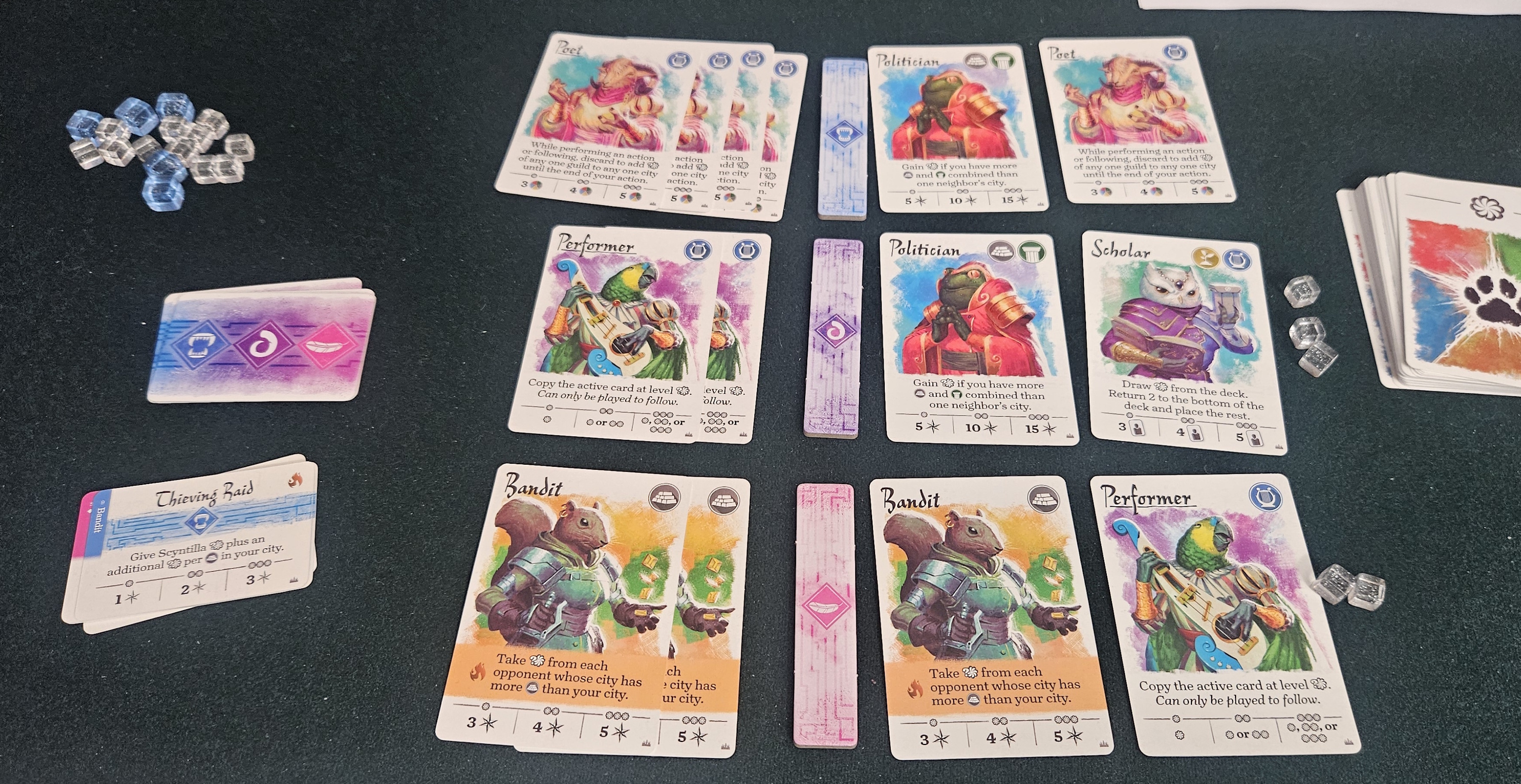
As lovely as those illustrations are, duBarry encodes these dissimilarities into the cards themselves. In any given session, you might be presented with a society of Tyrants and Executioners. Yikes! But those dangerous creatures may soon prove paper tigers in the face of Traders and Politicians. Your task is to take these cards, measure their worth, and try to piece together something functional. There are natural imbalances, of course, but nearly any combination is playable, with the sole exception that you shouldn’t use more than a few underlined citizen sets at once. It’s impressive, both conceptually and as a way to ensure that every session presents a fresh conundrum for players to puzzle over.

This is the way it appears in the solitaire mode, but it's more interesting, just visually speaking, than the ordinary multiplayer setup.

Cards are drafted from rows that gain more sparks as their denizens are neglected.

For all that, the actual gameplay is snappy and rules-light. First you choose a few creatures to add to your incipient polis. These are offered three rows at a time, each containing two or three cards, again depending on player count. As rows go unclaimed, perhaps because they include cards that don’t boast the same natural synergies as their peers, they accumulate sparks, the game’s currency of victory points. After a while, even outcasts accrue enough value to make them tempting.

As your city swells with citizens, you might want to trigger their actions. There are quite a few of these, attacks and defenses and trades and swaps and conversions, but their one commonality is that every action grows more potent with larger numbers of citizens. Here’s a simple example. If you have a Merchant, you can trigger its action to gain sparks for every brick icon in your city. With only one Merchant, that’s one spark per brick. With the maximum of three Merchants, that’s three sparks.

The limitation, though, is twofold. First, that citizen will depart your city forever. So there’s an element of press-your-luck to the whole thing, a barrage of micro-decisions over whether to activate your citizens right now, or wait until you have a bunch of them to trigger their more powerful effects.

Second, everybody else at the table also gets the chance to activate that citizen type. Sure, maybe we’ve tapped out the supply of Merchants, so I’m eager to earn a few points. But if your city is housing three times as many of the guys, or more of the icons they score with, then it’s entirely possible I’ve just handed you a powerful opportunity on your off-turn. Tradeoffs, tradeoffs.

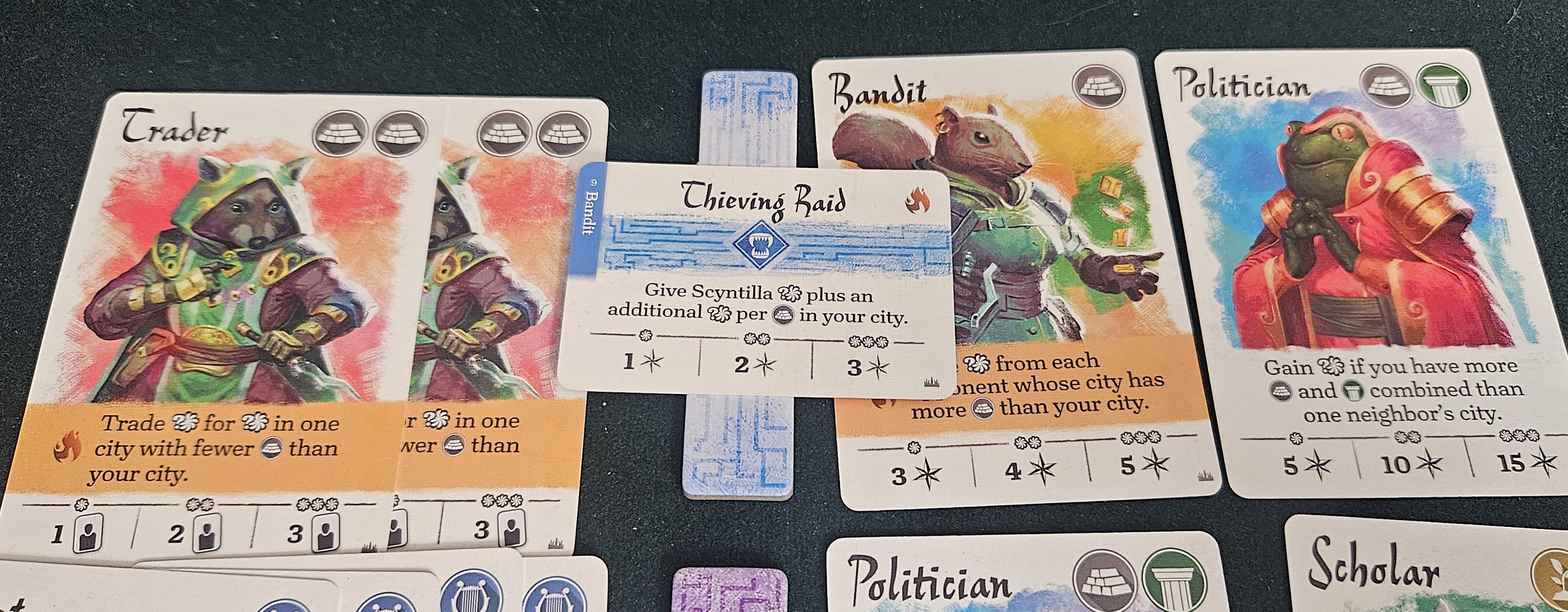
Cluttering this headspace even further is the fact that the Merchant is about as simple as citizens get. The Scientist functions similarly, earning increasing points with more duplicates. But they also force another citizen to abandon your city entirely. Controversial research, perhaps. The Warrior earns points, but only if your city has greater military strength than a neighbor. The Bandit steals points, but you need to have fewer bricks than your victim; as a complicating factor they also provide the very same brick icon they’re trying to have fewer of.

I think I can probably beat it... some day.

The solitaire mode is bastard-hard.

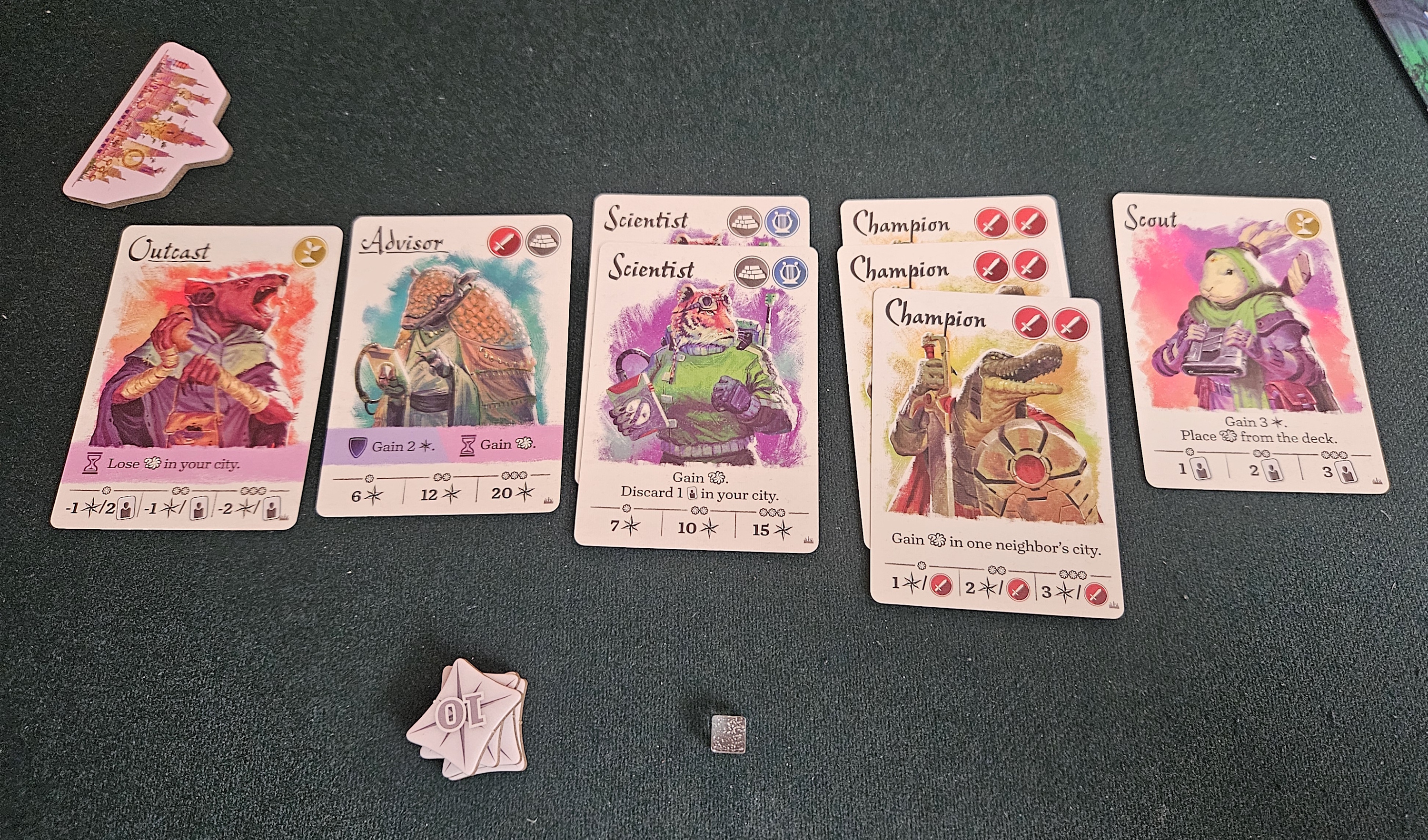
Put together, Citizens of the Spark is the sort of game that’s rife with imbalances, but those imbalances are the very thing that make it so riveting to explore. It’s almost unthinkable that any assemblage of citizens won’t come with at least one or two stinkers. Philosophers who don’t have anyone to philosophize to. Defensive Advisors and Diviners when there are hardly any attacks to defend from. Poets and Outcasts, the gummy citizens that steadfastly refuse to be put to productive use.

But that’s precisely when the game becomes interesting. Maybe everybody will squabble over the most valuable citizens, thus spreading them between too many cities to be valuable. Or maybe a few cards will sit in the offer so long that they become worth quite a bit more than their printed value. I’m already on the record as believing that “balance” is perhaps the most oversung element of board game design. In duBarry’s hands, the imbalances between citizens become the game’s most essential texture.

To be clear, Citizens of the Spark is a subtle game. It isn’t flashy. There are big swings, but they’re swings of points, a card moving from there to here, more points. There are plenty of turns that consist of grabbing cards, glancing at your tableau, and deciding that, y’know what, there aren’t any actions you want to take right now. Similarly, it’s a rather chancy game. Get ready to listen to that guy complain that no good cards are ever available on his turn.

Still, I can’t help but appreciate this one. I like its gentle ebbs and flows. I like how it feels warm despite its cutthroat tendencies. I like how it can wipe out a player’s city in the early stages, then still, more often than not, pave the way for a comeback with some grit and maybe some whining. I even like the solitaire mode, with its card-shifting and ability-triggering meanie of a bot.

Most of all, I like these dang cards. Their imbalances and chanciness, the way they reward focus and diversification at the same time. The fiction of them. They call to mind any number of successful cultures, from Persia to Star Trek to the Panspecificity, that fashioned functional states despite the vast differences between their subjects. Or maybe the most successful city on the table will be a government of predators. That’s how it goes sometimes. I like that, too.

Lots of bricks today. Bricks for miles. Who do we think we are, ancient Sri Lanka?!

It’s a while before repeat combos show up.

Ultimately, Citizens of the Spark is a pleasant little thing, not groundbreaking or liable to show up in every game store, but still a quiet and compelling artifact of play that grows deeper and cleverer with each session. It’s the sort of game that feels like the beginning of something. More citizens? New modes? Another game inspired by this one’s muted success? Who knows. For now, it’s a game I’ll break out when I want to show somebody what can be accomplished with unassuming systems and some imagination.


A complimentary copy of Citizens of the Spark was provided by the publisher.

(If what I’m doing at Space-Biff! is valuable to you in some way, please consider dropping by my Patreon campaign or Ko-fi. Right now, supporters can read my first-quarter update of 2026: the best board games, movies, books, and more!)

Dive Tables

12. Mai 2026 um 06:51

The fish is inside the dive suit. It has become the diver. When it returns to the surface, it will have its vengeance.

Here’s something you probably didn’t know about old Dan Thurot: I’m a scuba diver rated for search and recovery. There aren’t many of us here in the desert, which is probably why I receive unexpected calls to dredge the ponds of local golf courses whenever there’s a Silver Alert. Thus far, I have declined these requests. Those waters are, like, four feet deep. That’s a job for snorklers. Or a tall guy with hip waders.

Instead, I mostly use this as qualification to comment on scuba stuff. That cave rescue in Thailand? Legitimate. The roll-and-write shenanigans of Aquamarine? Um. Okay, look, Aquamarine isn’t the most robust scuba simulation. But as another print-and-play title from Postmark Games, it’s a worthy followup to Voyages.

Yes, real scuba divers can use air bubbles from the ocean floor to preserve the contents of their oxygen tank. Anyone who tells you otherwise is trying to keep you in newbspace.

This is exactly what scuba diving is like.

Like Voyages before it, Aquamarine is a dice-heavy game of movement, positioning, and exploration by Matthew Dunstan and Rory Muldoon. Unlike that game, Aquamarine is played with two dice instead of three. What will those loony bastards think of next, a movement game that uses only one die?

(Since I’m late to the party, the answer is “Yes.” But that’ll have to wait till next time.)

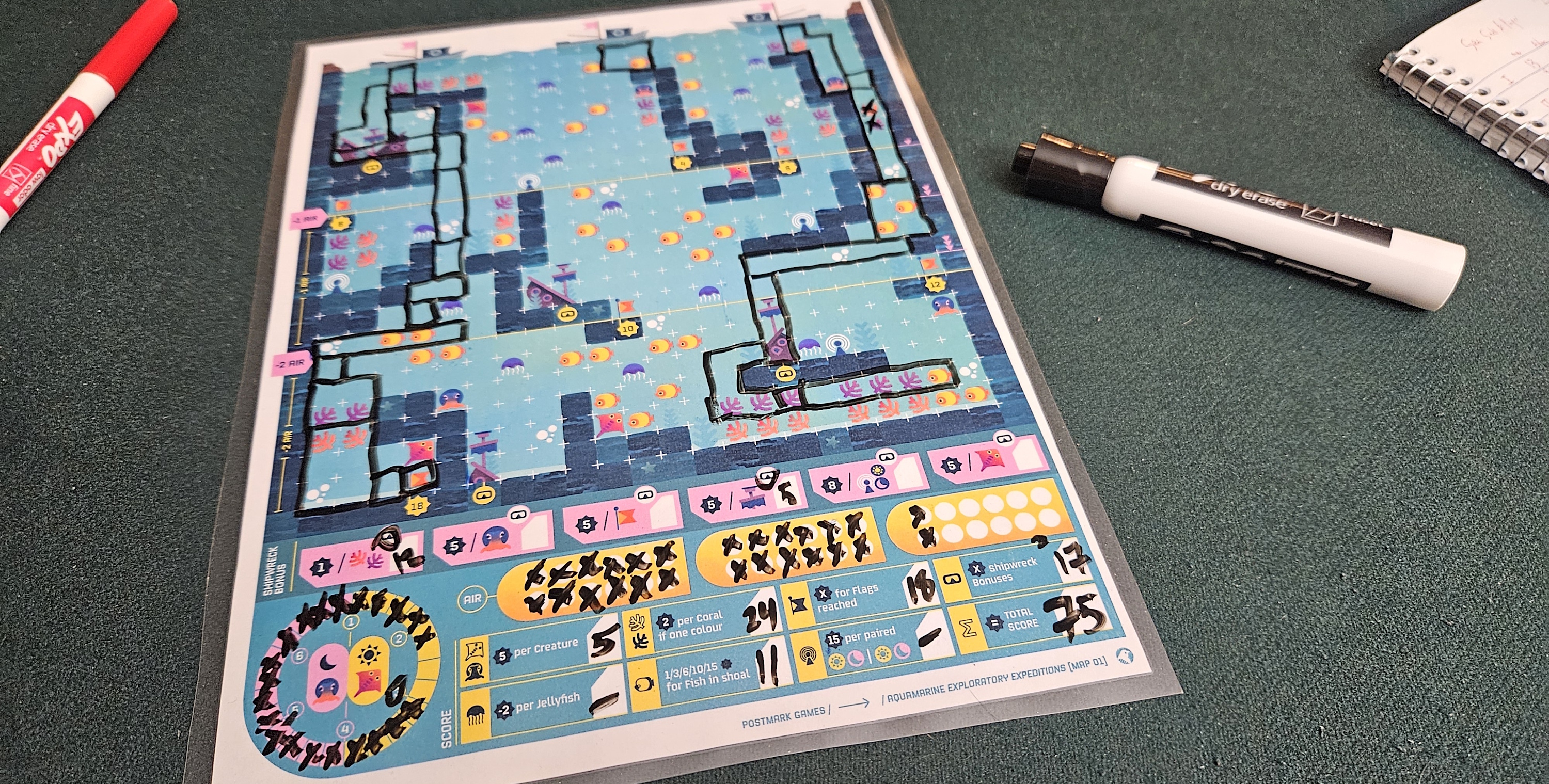
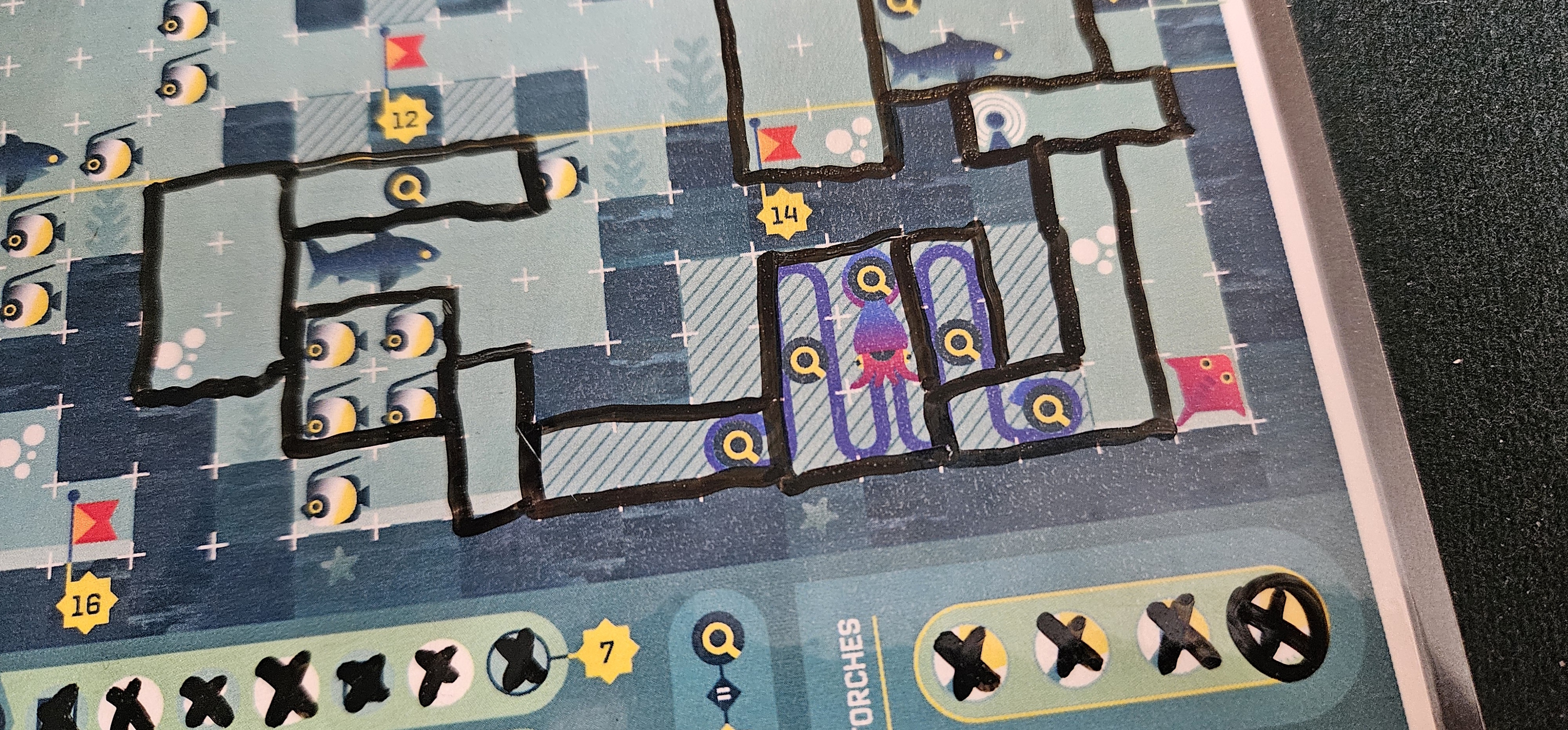
As before, the gist of Aquamarine is elegant in its simplicity. You roll the dice, then use one of them to move your diver. Here those movements are represented as enclosed boxes. Enclosing something — some coral, a school of fish, a stinging jelly — means scoring it when the game ends.

Of course, it couldn’t be that breezy. Dunstan and Muldoon are all about encoding necessary and enlivening limitations into their print-and-plays.

In this case, the first of those limitations is that you only have access to one die out of that rolled pair. Bigger rolls mean bigger enclosed areas, but that also means depleting oxygen equal to the difference between the lower and higher die. So while it might be tempting to use that 6 rather than the piddly 2, covering the larger area means hoovering up four units of precious oxygen. Making matters tougher, deeper dives consume more air, adding time pressure right when the sea’s aquatic life is at its most interesting. Similarly, you’re constrained in which shapes you’re allowed to draw. Mostly long rectangles rather than jagged freeform polyominoes, although there are moments of squiggly liberation that emerge whenever doubles are rolled.

I want to use dice that are appropriate to each game. For Voyages, I played entirely with my cool palm-wood dice. For this one, these goofy aluminum ones. But as for Waypoints... I'm not telling. (Because I don't know yet.)
Weird aluminum dice not included.

These triplet pressures are the shared system underpinning everything in Aquamarine. Much like the headings in Voyages, everything arises from those constraints. Travel too fast or linger too long at depth, and your waning oxygen will force you to start a new dive. Paint yourself into a corner with your shapes, and you might find your next move taking you in the wrong direction.

From there, the game’s selection of maps tinkers with the formula. As before, the inaugural outing sets the template. Schools of fish are worth increasing amounts of points as more of them are enclosed in a box; certain creatures only emerge during daylight or nighttime hours, requiring you to parcel out your time accordingly; special beacons and flags reward those who travel to the corresponding depths.

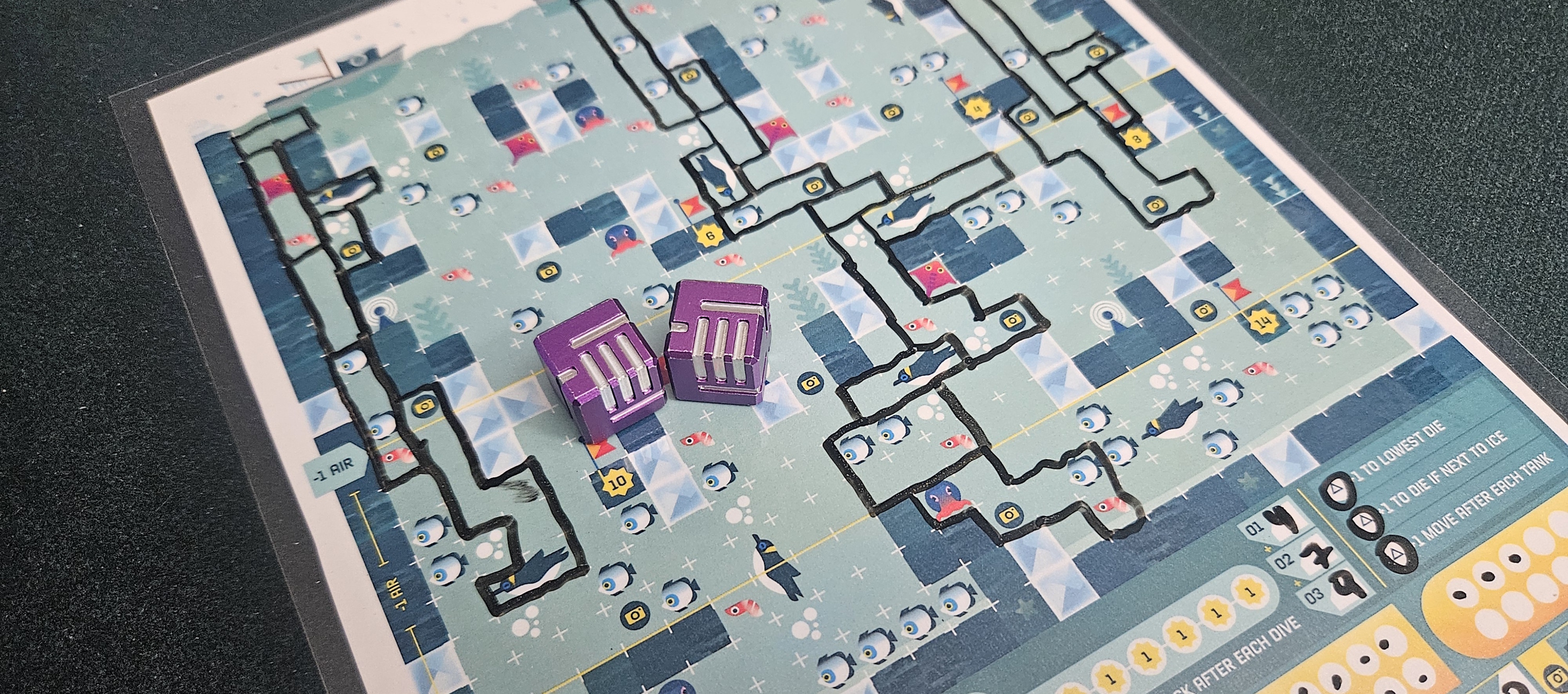
But there’s tremendous variety within that blueprint. My personal favorites are found on the second map and fourth map. In the former case, undersea caverns can be readily explored during daytime, but at night gradually deplete a limited stock of flashlights; meanwhile, researching sharks and giant squids ticks you up along a selection of bonus tracks. And in the latter, arctic ice threatens your air supply, but snapping pictures of frolicking penguins and icon-improving shrimp can net scores of points that keep ramping upward.

This time around, there are troughs to accompany the peaks. In particular, two of the maps — a double-sheet deep-sea excursion and a fossil hunt in ancient waters — are too persnickety for my tastes, asking the player to make minute adjustments that don’t always play well with the need to ration air or count spaces.

This is how all of my actual sheets look. Many thanks to Rob Cramer for letting me borrow his nicer printed options!

As before, low-ink options are included.

Some of that has to do with the inherent limitations of the game’s movement system. Where Voyages — and our next installment — are more freewheeling with their range allotments, maneuverability in Aquamarine is downright torpid. Unless you’re starting a fresh dive, each box must attach to the previous one. This makes total sense, but also keeps the game more snugly straitjacketed. If I were a generous man, I’d call it more bite-sized; but because these are aquatic adventures — and because I’m not a generous man — they instead come across as suffocating, at least sometimes.

But while Aquamarine is the flimsiest of Dunstan and Muldoon’s roll-and-move trio, it’s hardly a poor example of the form. If anything, it’s another testament to how much can be accomplished with a sheet of paper, a pen or pencil, some lamination or a plexiglass, and dead simple rules. When the game slips into its groove, it’s immensely satisfying.

Especially in multiplayer mode, it should be said. That’s another shortcoming imported from Voyages. Here, the solitaire rules are disappointing, asking you to reach certain depths. Child’s play. The real challenge lies in sitting across from one to ninety-nine partners and seeing who can wring the most out of those shared inputs. In that mode, there’s nothing quite like glancing smugly (or despairingly) at a fellow player’s sheet to see where your routes departed. Who veered parallel to the ocean floor to preserve oxygen, who ventured much on the outcome of future rolls, who spent their dive observing shockingly large schools of fish. Or, in my case, who got stung by a bunch of jellyfish because they thought they were pushing themselves to more rewarding depths, only to tap zero on their dive meter. I’ve never gotten the bends in real life, but I’m pretty sure my diver in Aquamarine has made some testy ascents.

Those hickeys are from my Canadian girlfriend. You wouldn't know her.

I’m making new friends down there.

In short, Aquamarine is a mixed experience compared to its peers, but to evaluate it solely as a comparison misses out on what makes it such a rollicking time. I prefer Voyages; I prefer Waypoints. But given the option between Aquamarine and nothing, this is still exactly what I want from a print-and-play game.


Access to the files to print Aquamarine was provided by the publisher/designer.

(If what I’m doing at Space-Biff! is valuable to you in some way, please consider dropping by my Patreon campaign or Ko-fi. Right now, supporters can read my first-quarter update of 2026: the best board games, movies, books, and more!)

It’s Always the Ides of March Somewhere

05. Mai 2026 um 20:06

... wait, that isn't how time works.

I would describe my feelings toward Regicide as “appreciation,” despite it finding dedicated fans all around me. For years it was in regular rotation on my wife’s phone; my sister-in-law bought the fancy custom deck rather than just using a generic deck of playing cards. My own interest had more to do with the game as an act of repurposement: the clever casting of face cards as mad royals who needed to be put down, the suits transformed into character classes for blocking attacks or repairing injuries.

Regicide Legacy, designed by the same trio as the original — Paul Abrahams, Luke Badger, and Andy Richdale — is very nearly the exact opposite of the original game, at least in terms of form factor. Where the previous Regicide could be played with any old deck scrounged from a vacation bag, this edition is something of a throwback. It’s a genuine legacy title, for one thing: torn cards, stickers, micro-expansions, all of it. Its cooperative/solitaire campaign is generous. Moreover, it’s hard, significantly harder than is the norm in our current obliging hobby. It isn’t uncommon for a chapter to take two, three, half a dozen tries before your band of mercenaries is permitted to move on to their next target.

Now that I’ve wrapped it up, I can squarely say that the ordeal was thrilling, brilliant, and exhausting.

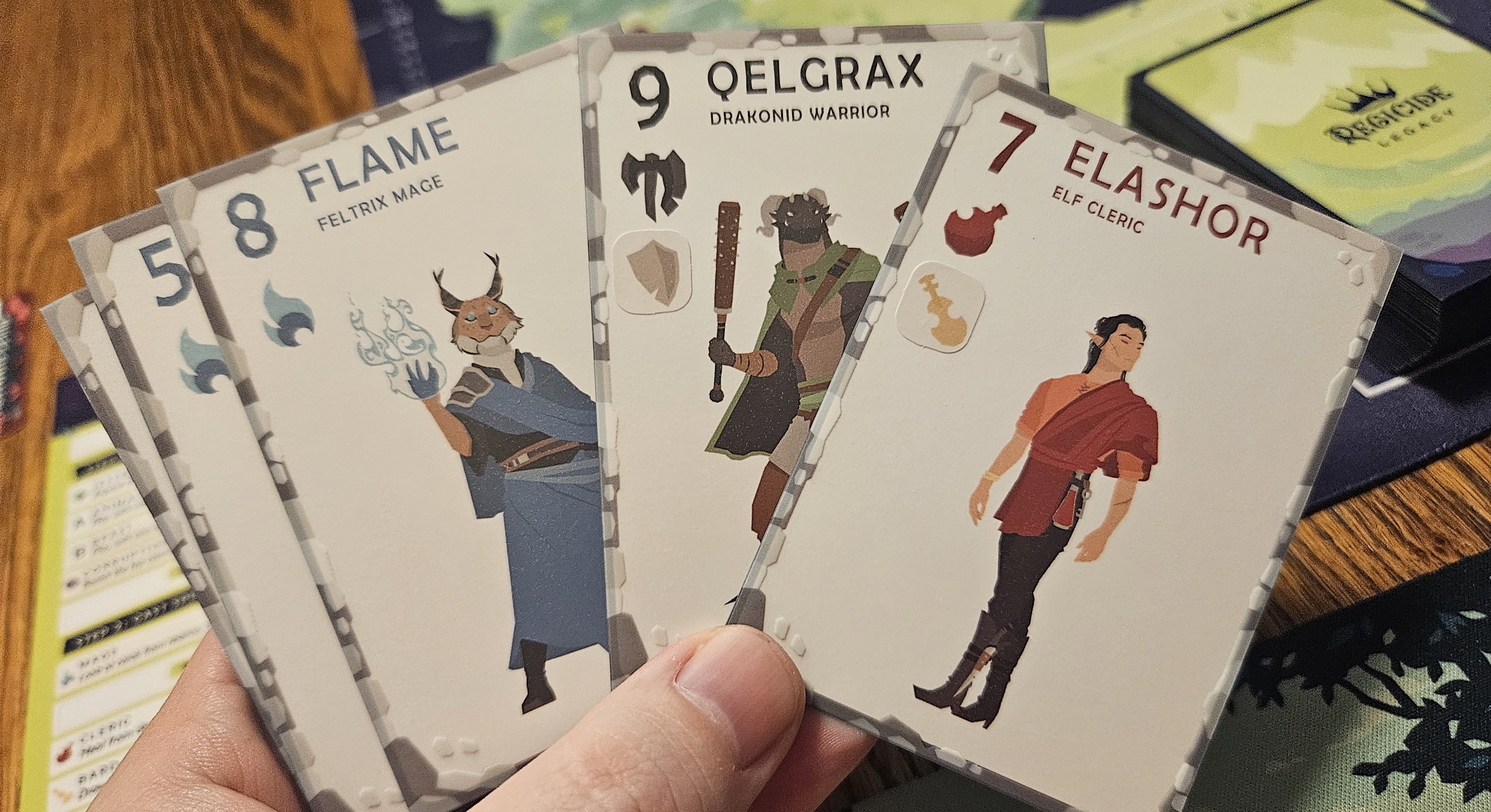
Pretty sure every single character in this game inhabits a polycule.

Hey there. We spotted you from across the bar and liked your vibes.

If you haven’t played the original Regicide… first, maybe give it a try. The rules are freely available, and as noted earlier you can play with a deck of cards that costs five bucks at the supermarket. That’s if you don’t have one handy already.

Regicide Legacy begins with Regicide. As in, its first chapter is the base game with only the slightest of modifications. Your crew, a band of adventurers, comprises the forty non-face cards of an ordinary playing deck, plus perhaps one or two goblins depending on player count. Their strength ranges from one (for an ace) to ten, across four classes that have been given their own iconography rather than repeating the regular French suits.

The face cards, meanwhile, become a deck of targets. First you’ll face the jacks, then the queens, then the kings, ideally lining them up for the guillotine. This is no easy feat. Each royal has a sturdy pool of health points, and punches back after each attack, requiring you to spend cards from your hand to absorb the blow.

The cardplay is impressive. Depending on your chosen attacker, your crew avails themselves of an ability. Warriors deal double damage to your target. Paladins block return damage. Clerics cycle discards back into your deck, which Bards then use to refill everybody’s hands. There’s a life cycle to this process. Some cards can be paired, such as aces, here styled as animal companions, or duplicate ranks whose strength would sum to ten or less. Success demands a delicate balance, between offense and defense, between healing and aggression, between risk and caution.

It’s pretty much inevitable that you will lose.

And now there are two more Regicides?! I'm behind the times.

In contrast to the original Regicide, Regicide Legacy is all premium.

That inaugural failure, though, demonstrates the ways that Regicide Legacy intends to depart from its predecessor. Rather than shuffling the cards and giving it another try, you’re invited to open the first of the set’s many boxes. Within, you discover mercenaries: multi-rank cards that can be readily paired with more of their peers than usual, heavy hitters, maybe an extra goblin or two. Each merc has a cost in its corner. One loss means you have one gold to spend.

So you buy a card, add it to your deck, and take another stab at toppling the divine right of kings.

Again, failure is largely inevitable. It’s just a little less inevitable than before. Second loss, two gold. You grab a couple new fighters. Shuffle. Again.

Another loss. That’s three more gold. Now your company is becoming noticeably tougher. Maybe you were struggling with damage output; some extra Warriors will make up the difference. Or perhaps you found it difficult to manage your hand; that’s where Clerics and Bards come in. Whatever your particular weakness, there’s a patch for it.

At some point, the odds turn in your favor. Inside the first chapter box there is a sealed booster pack with its own instructions. Your mercenaries depart. New cards are introduced. Another chapter presents a new set of bosses, each tougher than the last.

Seems like this could have been paper, but I won't deny there's a childlike appeal to splitting open a booster.

Opening the post-game expansion pack.

Along the way, a few things become apparent.

First, Regicide Legacy wants you to succeed. Even if only belatedly, after spending heaps of gold on up-powered mercenaries who round out your company’s deficiencies. Where the original game bordered on the misanthropic, booting you back to the beginning at even the slightest trip, the ability to pad your deck with repeat failures is a wonderful tool. Some make it easier to pair cards, or add wild aces, or, eventually, strip even the toughest bosses of their natural immunities to your character abilities.

Next, Regicide Legacy earns that second ligature. This is a legacy game through and through. In its earlier stages, this means variable card sleeves. To offer only the lightest of spoilers, the members of your company can become corrupted, adorning themselves in the thorn-framed sleeves usually reserved for royals, and incurring a penalty when played. Not long after that, you’ll encounter more transformative effects. Stickers that dual-class cards, minigames for randomly determining which character succumbs to a story beat, and, yes, eventually the dreaded moment that was so transgressive back in Risk Legacy, the command to rid yourself a card for good.

Go ahead. Tear it up. Don’t let your squeamishness show. Don’t let your fingers tremble. Don’t check how much the reset box costs. Uh oh. You looked. That’s as much as, like, fifteen decks of playing cards. But who would buy that many playing cards? You’re here for the drama, baby, and there’s no drama quite like drama that inflicts lasting damage.

This one happens to like Tal Bachman.

Each boss presents its own conundrums.

The main highlight is the procession of new character classes that are added to your ever-expanding band. To the original four — the original six if you count animal companions and goblin jesters — there’s enough to more than double the roster. I won’t spoil the surprise, but the way your deck morphs from one thing into something else entirely is quite the sight to behold. There’s wild magic to be uncovered, risky operators who might help or hinder your goals, heroes who always seem to show up in the nick of time, and complicated figures who require constant reminders.

Because Regicide Legacy, already a tangled, difficult game, only grows more tangled and more difficult as additional chapters are unlocked. More complicated, too. Sequencing matters. The subtle distinctions between two defensive classes matter. Whether cards are discarded or banished, which abilities a boss blocks, how cards are shifted across the board in this particular scenario — everything matters.

In our case, we played nearly the entire campaign four-handed. There was me, of course, plus my wife and sister-in-law. I doubt I would have survived by excluding the fanatics. We were also joined by my mother-in-law, a veteran of countless trick-takers. Her inclusion highlighted both the game’s strengths and its weaknesses.

Strengths first. Across the duration of the campaign, Regicide Legacy held our interest. Even my mother-in-law’s interest. Even when we were tired from battering ourselves against a particularly difficult chapter. (The worst offender, we discovered, had been nerfed post-release.) At our weekly dinner, the group was eager to see what came next. Not so much in the story, which is the usual fantasy muddle of proper nouns. But in the interplay of cards and abilities. In the composition of our deck. In which sticker would be appended to which character. In the developing shape of the thing.
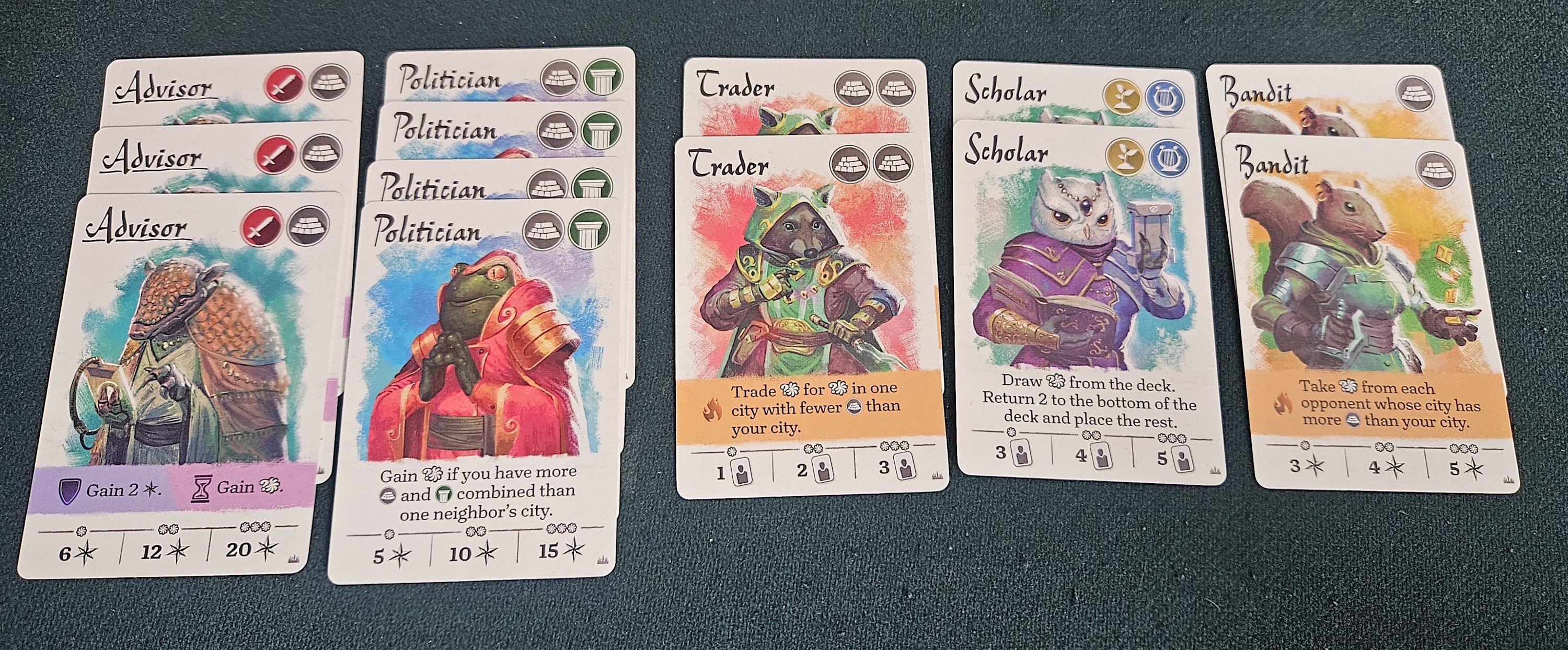
But these strengths are attended by problems. Foremost, that Regicide Legacy soon gets too big for its britches. My mother-in-law spent the back half of the campaign showing her hand to whichever daughter was seated beside her, effectively requiring someone to play two hands simultaneously. She recalled the starting classes well enough, and even remembered a few of the later outliers. But as for the distinction between a Mage and a Reaver or between a Druid and a Chanter, no player aid was sufficient to fill every gap.

It's so heavy. You could kill somebody by dropping it off a high rooftop. Post-campaign, the rulebook recommends using it as a tool of actual regicide.

That’s one packed box.

Perhaps this sounds like an issue of age. To some degree, it was, as my mother-in-law would freely admit. But even those of us inured to modern hobby games and RPG classes and this particular brand of cardplay sometimes found our minds snowed in by the game’s avalanche of intersecting triggers. It isn’t only the character classes; there are also the bosses to consider, plus the special rules that govern this chapter, plus, often, the lingering rules from last week’s session, finally cemented in time to be discarded with the previous tuckbox. Most of the time, I had to run the turn-by-turn action, and even then it wasn’t uncommon for someone to stab back that my reminder necessitated a counter-reminder because of such-and-such character or some lingering effect from the scenario instructions.

Is it too much? We finished the campaign. We survived. We succeeded. But we also stumbled along the way. Sometimes we realized two rounds later that we’d flubbed a rule earlier. More than once, we restarted a session altogether, the rules suddenly clear where previously they had been opaque.

Personally, this process was many things. Frustrating at times; exhausting at others.

But it was exciting, too, and exciting in a way that very few games have been before. We developed favorites — dual-classed Elashor, Vegarian the Vegetarian, my crush Lierin — and groaned at the appearance of others — Dinky, may you be damned to the underworld for eternity for how often you have betrayed us. We laughed a lot, especially when a new boss crushed us to powder, or when somebody stared at the problem before them, eyes glazed over, only for someone to recall the exact rule that would save us from a doomed situation.

The remaining question is whether we’ll return. Some of us already have; my sister-in-law has launched her second campaign with another group, spreading the good word to unwitting converts. There’s an entire post-game to tackle, justification for the potential waste of a discarded core box, and I can confirm that it’s a smart system, randomly doling out enemies and modifiers and boons that will test the hardy company that was forged over the previous thirty battles.

My secret goal every game was to get Lierin in my hand and then never spend her. I succeeded maybe thrice.

Lierin is my Canadian girlfriend you’ve never met.

So. Will we? Return, that is?

I don’t know. Maybe someday. I plan to keep the box, despite my doubts that we’ll remember the class abilities if we go more than a month without a session. Even if we don’t, I can’t help but regard Regicide Legacy with fondness. I can’t remember a single story beat from the narrative. But the stories it told above the table — the way our deck transformed along with our aptitude as players, the inside jokes we developed, the characters whose named we pronounced five different ways — those are worth keeping around. That’s the real legacy here. That’s what makes me consider Regicide Legacy such an unlikely success. Torn cards? Stickers? Psh. I’m only interested in the stickers of the soul. The torn cards of our feelings.

And with those strained metaphors, I think that’s enough Regicide Legacy for one sitting.


A complimentary copy of Regicide Legacy was provided by the publisher.

(If what I’m doing at Space-Biff! is valuable to you in some way, please consider dropping by my Patreon campaign or Ko-fi. Right now, supporters can read my first-quarter update of 2026: the best board games, movies, books, and more!)

High O’er the Billows We Are Wafted Along

04. Mai 2026 um 20:00

let's make this header as ink-hungry as possible, hmm? because I know some of you readers are PRINTING EVERY SINGLE ARTICLE for some reason.

Let it not be said that I don’t take requests. A number of readers have pointed out that it’s been a long time since I’ve covered any print-and-play games. Too true. But there’s a reason for that. Voyages, the six-map design by Rory Muldoon and Matthew Dunstan and the launchpad title from Postmark Games, is both an illustration of my reticence and a roundhouse kick to that same reticence’s noggin.

nice!

How Voyages really ought to look.

This is how Voyages is supposed to look. Soft hues, perfect for covering with pencil marks. (Or, if you’re a consummate professional, a dry-erase marker.) Weathered at the edges, giving it the feel of a brine-worn map. Crisp, with sharply defined edges, all the better for making out the proper boundaries of everything, from the sea’s hexes to the spaces for tracking the depletion of your sailors.

And this is how my version of Voyages looks:

less nice! but in a way I can actually print, so, nice!

In my hands, how it actually looks.

Gray. Somewhat dull. Concealed beneath a much-abused plexiglass. Dice not included.

This is a very good thing. Because my main hangup with print-and-play games is that I only own a black-and-white printer. It works roughly a quarter of the time. The ink is sold at a premium by a cartel with armed enforcers and semi-legal firmware updates that mark my bootleg cartridges as empty until I bend a plastic doohickey, perform a hard reset, and offer three Our Emperors to the Omnissiah.

Discussing business practices isn’t very sexy. There’s a reason I don’t talk much about the publishers or marketing schemes behind the games I feature here. But in the case of Postmark Games, the business practice is the format. Buying a game gives you access to a Dropbox folder. That folder includes assets for both high- and low-ink printers. It’s as indie as it gets. A little fly-by-night. Shabby, if you’re the sort of person who demands a custom link to everything.

But the beauty of this format is that it’s also easy to use. Even with my wonky printer, I was able to get everything working in about two minutes. After another hard reset, I even had the rules sheet and a few warm maps ready to go.

This is probably the messiest map of the group, but it's deeply impressive how Voyages turns into a light survival horror game.

Sometimes your crew’s duties are tough, such as when you keep plowing into icebergs.

The gameplay, as befits a one-sheet roll-and-write game, is elegantly simple. You roll three dice and then assign them to three roles. One is your ship’s heading, which of six compass directions it will travel. The second is your speed, how far you’ll travel. You know, provided you don’t run aground on an island, hit a reef, or smack into the map’s edge. Between these two assigned dice, you’ll steer around the map to… well, it depends on the map.

Which brings us to that third die. This one governs your crew’s duties. But those duties differ from map to map. In the first map, this is a simple number-crossing game. If your third die shows a 3, you scratch off a 3 on your sheet. If this happens to finish a row or column, you earn a bonus. Easy.

But as the maps progress, the rules grow increasingly tricky. Not hard, exactly. Just tricky. Frankly, it’s impressive how much territory Muldoon and Dunstan are able to cover. Where one map sees your vessel racing to ignite beacons on lonely islands, another becomes a hard-bitten game of survival in arctic waters. The first map has some simple pick-up-and-deliver gameplay. Basic stuff. But another is all about catching the wind to drift between coral arches.

More often than not, these extra rules are handled by the die you assign to your ship duties. Repairing your vessel when it rams into icebergs or gets swatted by a whale. Tacking into the wind. Diving for treasure. Scavenging artifacts.

It’s a lovely system, surprisingly open-ended despite the stark limitation of three dice, and while there’s obviously a great deal of luck involved, it’s open to manipulation thanks to sailors who can be exhausted to ensure you don’t drift endlessly back and forth. More than once, I found myself thinking back to The Guild of Merchant Explorers, another flux-and-write game that threaded the needle between limitation and expression. That’s not exactly a coincidence, given that Dunstan co-designed that one with Brett Gilbert, but it’s notable how Voyages manages to produce an entirely different tale under similar constraints. To sail these waters is to be both buffeted by the winds and master of your own fate. It’s a wonderful paradox.

And dodging as many scoring opportunities as possible, apparently.

Charting invisible islands.

At first, my assumption was that Voyages would be a solitaire game. Because that’s what print-and-play games are for, right? And it is. A solitaire game, I mean.

But the solo mode is merely okay, a race to unlock three objectives (out of five) before sixteen turns have expired. Personally, I found that goal not only achievable, but usually laughable, barring a series of becalmed rolls. Anyway, what’s the fun of rushing all the time? The seas are full of things to discover. I’d rather take the time to poke around a corner before darting off to the next objective-indicating star.

Where Voyages shines is in multiplayer. The race element is still present, with those aforementioned objectives triggering the conclusion of the session, but the emphasis on scoring feels more natural to both the format and the setting. In this mode, there’s room to explore some more, everybody keeping one eye on their own heading and another on their opponents’ progress toward those objective stars. There’s also the pleasure of seeing what someone else did with the same rolls that caused you so much trouble. I was delighted by how quickly Summer picked up those first couple of maps, sailing gracefully from one isle to the next, scooping up sailors from their rafts and weaving between hazards. Compared to my bumbling from one island to the next, it was quite the sight. Also, her dry-erase lines are really sharp. Apparently I smush the felt into the plexiglass like some sort of ape.

If Voyages shines with multiple hands, it really glows when strung together in a campaign. This adds a little bit of everything. There are moonshot objectives to pursue, like visiting every single special zone on a single map or ensuring a half-dozen members of your crew upgrade to elite status. Stars can now be exchanged for upgrades, adding new ways to score points or mitigate a bad roll. And these newfound abilities are offset with the presence of a nemesis that adds increasingly difficult restrictions to the rules.

In the case of our campaign, our nemesis was Scar. Early on, he threatened to snipe any sailors we rescued from the water. Not too bad, given his shoddy marksmanship. But in the campaign’s later stages, he sent us sailing straight through islands rather than stopping automatically and eventually turned our three dice into a measly pair plus a duplicate. At the apex of our power, we found ourselves forced to wring every advantage from our abilities just to make a pit stop or sail the proper currents. The result was another careful dance between limitation and permissibility, stretching the system but never so far that it snapped.

palm wood!

These are my “thematic” dice.

On the whole, I came away deeply impressed. With the business model, with the design, with the way the game actually came out okay on my cartel-operated printer. Crud, even with the way Voyages manages to be a roll-and-write that isn’t just sums and filling in test-sheet bubbles. As much as I enjoy some of those titles, free-ranging movement has its own organic appeal. I’ll go where I want, winds be damned.

Or tacked into, anyway. As I’ve noted before, Voyages is a masterclass in the way board games excel when they lean into the limitations of their medium rather than trying to escape them altogether. Voyages is something special. It seems I’ll be getting back into print-and-play games.


Access to the files to print Voyages was provided by the publisher/designer.

(If what I’m doing at Space-Biff! is valuable to you in some way, please consider dropping by my Patreon campaign or Ko-fi. Right now, supporters can read my first-quarter update of 2026: the best board games, movies, books, and more!)

❌