❌

Normale Ansicht

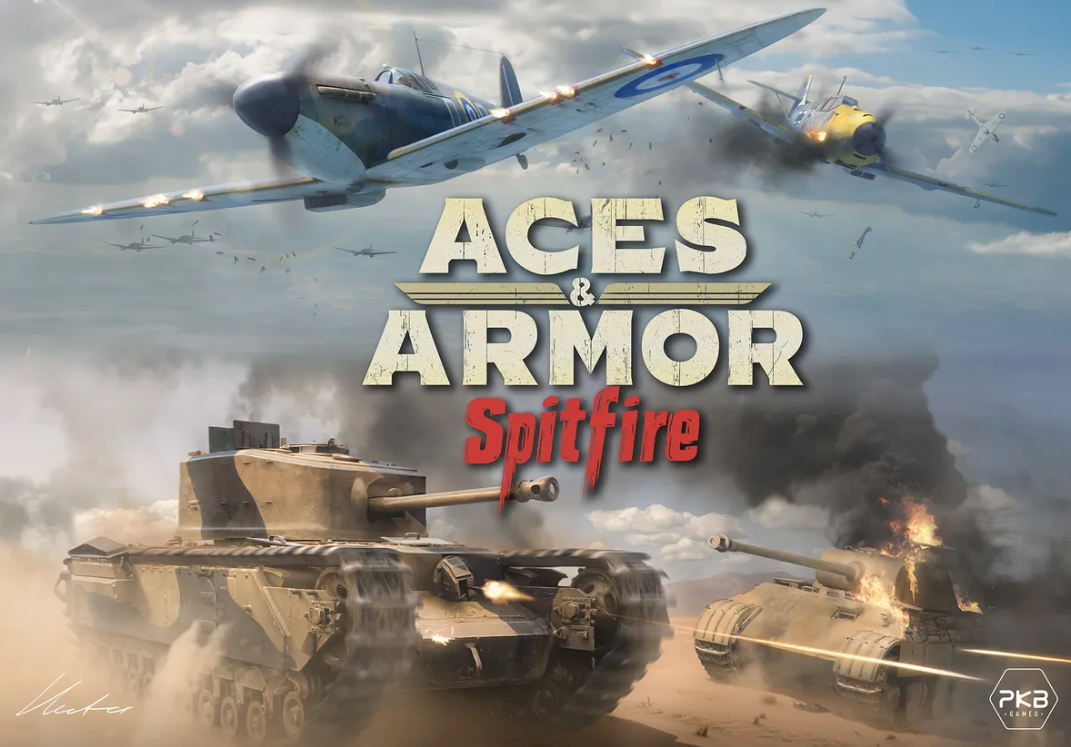
Interview with Philipp K. Berger Designer of Aces & Armor – Spitfire: Battle of Britain & North Africa from PKB Games Currently on Kickstarter

Von: Grant
26. Oktober 2026 um 13:00

A few years back, we backed a very interesting looking miniatures based board game set in World War II called Aces & Armor from PKB Games. We played it last year and very much enjoyed the combat system as well as the way units gain experience and become more effective. That game did very well on Kickstarter and PKB Games is back with a new addition to the series called Aces & Armor – Spitfire: Battle of Britain & North Africa We reached out to the designer Philipp K. Berger to see if he could give us a look at the game and answer our questions and he was more than willing to accommodate our request.

If you are interested in Aces & Armor – Spitfire: Battle of Britain & North Africa, you can back the project on the Kickstarter campaign page at the following link: https://www.kickstarter.com/projects/trench-club/aces-and-armor-spitfire

Grant: Philipp, welcome back to our blog. What is your upcoming game Aces & Armor – Spitfire: Battle of Britain & North Africa about?

Philipp: Thanks for having me back!

Aces & Armor: Spitfire is a tactical World War II strategy game where players command infantry, tanks, artillery, and aircraft in exciting battles.

This time we’re taking the action to two very different theaters: the Battle of Britain, including the evacuation of Dunkirk, and the North African campaign.

The game combines accessible rules with quite a bit of strategic depth. You need to maneuver your troops, coordinate different unit types, capture strategic positions, and make the most of your resources. Your individual units also gain experience throughout the battle, so a rookie Spitfire pilot might eventually become a highly effective war hero!

Spitfire works as a standalone game for 1–2 players, but you can also combine it with the original Aces & Armor for battles with up to five players.

Grant: Why did you want to take your Aces & Armor System to the skies of Britain and the deserts of North Africa?

Philipp: One of the things I love about the history of World War II is how different the various theaters of war were. The original Aces & Armor focuses on land warfare in continental Europe, while the Battle of Britain and North Africa presented completely different strategic challenges.

The Battle of Britain is particularly fascinating because air superiority was absolutely crucial. Suddenly, protecting airfields, intercepting bombers, and coordinating your fighters become central elements of the game.

North Africa, on the other hand, is all about mobility and logistics. You might have the strongest tanks on the battlefield, but they’re not much use if you’ve run out of fuel and ammunition!

I also wanted to introduce the British as a playable faction. Their iconic units, especially the Spitfire, were simply too good to leave out of the series.

Grant: What is your design goal with the game?

Philipp: My main goal has always been to create games that offer meaningful strategic decisions without requiring players to spend hours studying the rules.

I love complex strategy games, but I don’t particularly enjoy unnecessary complexity. Ideally, players should understand the basic rules within 10–15 minutes while still discovering new strategies after many games.

Another important goal is making every unit feel valuable. I don’t want players to simply throw endless disposable troops at each other. Individual units can gain experience, become more effective, and develop into veterans you really want to protect.

And, of course, the game needs to be fun! Historical accuracy is important to me, but whenever historical detail and enjoyable gameplay conflict, I try to find a sensible compromise.

Grant: How have you modified the Aces & Armor System to tell the story of WWII in the Battle of Britain and North Africa?

Philipp: We kept the core mechanics that players already know from Aces & Armor, particularly the combat system, combined-arms tactics, and individual unit experience.

However, we introduced new gameplay elements to capture the distinctive challenges of each theater.

On the Battle of Britain map, aircraft play a much more prominent role. Players fight for control of the skies, defend airfields against bombing raids, and can play scenarios inspired by the evacuation of Dunkirk.

North Africa introduces an entirely new supply mechanic. Your units need access to supplies to operate effectively. This makes supply depots and supply lines strategically important, opening up possibilities such as cutting off enemy forces instead of attacking them head-on.

The result is that the two maps feel quite different, despite using the same underlying game system.

Grant: What elements do you feel are most important to model from the period?

Philipp: I believe it’s more important to capture the strategic realities of a historical conflict than to simulate every technical detail.

For the Battle of Britain, that means air superiority, fighter interception, and the importance of protecting infrastructure such as airfields.

For North Africa, it’s the enormous importance of logistics, mobility, and controlling vital supply routes across a vast desert.

Another major element is combined-arms warfare. Tanks, infantry, artillery, and aircraft become significantly more effective when working together.

I also wanted the different types of equipment to feel distinct. A heavily armored Churchill tank should play differently from a fast Daimler armored car, just as a Spitfire should serve a different purpose from a Junkers Ju 88 bomber.

Grant: What major design challenges did you encounter and how did you overcome them?

Philipp: One of the biggest challenges was introducing two very different theaters without making the rules significantly more complicated.

For example, supply logistics are fascinating from a strategic perspective, but I certainly didn’t want players to spend half their turns calculating fuel consumption and managing spreadsheets!

The challenge was to reduce these historical realities to mechanics that create interesting decisions while remaining easy to understand and manage.

Another challenge was balancing air and ground combat. Aircraft need to be powerful enough to reflect their historical importance, but not so powerful that ground forces become irrelevant.

I approached both challenges by keeping the successful core mechanics intact and adding specific rules only where they meaningfully change the gameplay. And of course gameplay testing and testing and testing!

Grant: What new units are included in this version of the game?

Philipp: Spitfire includes two factions with six different unit types each, represented by 24 detailed miniatures.

The new British faction includes infantry, the Daimler Armoured Car, the Churchill tank, the Bofors 40 mm anti-aircraft gun, the Hawker Hurricane, and, of course, the legendary Supermarine Spitfire.

The German faction features infantry, the Sd.Kfz. 251 half-track, the Panther tank, the famous 8.8 cm Flak, the Messerschmitt Bf 109, and the Junkers Ju 88 bomber.

I particularly like the selection of aircraft because it creates some interesting asymmetry between the factions. The British have two different fighter aircraft, while the Germans combine a fighter with a dedicated bomber.

Grant: How have you differentiated the capabilities of the units from those in your great game set in Europe?

Philipp: Every unit has its own characteristics, including movement speed, combat effectiveness, armor, and cost.

The original Aces & Armor includes some powerful late-war equipment, such as the German Tiger tank and Me 262 jet fighter, the American B-17 Flying Fortress, and the Soviet Katyusha rocket artillery.

Spitfire introduces a different selection of units and therefore different tactical possibilities.

The British Churchill, for example, emphasizes protection, while the Daimler Armoured Car provides mobility. The Spitfire is an excellent air-superiority fighter, whereas the German Ju 88 is particularly useful for attacking ground targets.

The German 8.8 cm Flak is another very interesting unit because it can threaten both aircraft and armored vehicles.

I wanted each faction to have its own strengths, rather than simply giving every nation the same units with different miniatures.

Grant: How can this game be incorporated into the original Aces & Armor?

Philipp: The two games are fully compatible!

You can play Spitfire completely independently, but you can also combine its factions, miniatures, and gameplay content with the original Aces & Armor.

The original game includes American, Soviet, and two German factions. Spitfire adds the British, bringing the total to five playable factions.

This creates opportunities for much larger battles, additional combinations of units, and entirely new scenarios.

I particularly enjoy the flexibility of the system. Players can recreate historically inspired confrontations or experiment with their own hypothetical battles.

Grant: How does the combat system work?

Phlipp: The combat system is probably my favorite mechanic in the game.

Each unit has an individual combat profile that determines how many dice it rolls, its chances of hitting, and how well it withstands incoming fire.

When two units fight, both players can roll their dice simultaneously, provided the defender is able to return fire.

The number of dice depends on how much damage a unit has already suffered. As units take damage, their combat effectiveness decreases. However, as they gain experience, their probability of hitting improves.

Another important element is combined-arms warfare. If your tanks attack an enemy position while supported by infantry, artillery, or aircraft, they can receive additional combat dice.

Finally, terrain and armor determine how much actual damage the hits cause.

So combat involves much more than simply comparing attack and defense values. Positioning, experience, damage, terrain, and supporting units can all significantly influence the outcome.

Grant: What drove your decision to use 12-sided dice for combat? What advantages does this give your system?

Philipp: I wanted a combat system that offers a lot of differentiation between units without requiring complicated calculations.

Using 12-sided dice gives us twelve possible outcomes, allowing much finer distinctions in hit probabilities than conventional six-sided dice. This is particularly useful because combat effectiveness changes as units gain experience. Different units can have different hit probabilities, and improving from rookie to veteran or war hero can make a noticeable difference.

Also, a higher number of dice (you roll up to 15 in one attack) and a higher number of sides per die (12) creates roll results closer to the statistical expected value which rewards players estimating the odds well and limits pure dice luck.

At the same time, resolving combat remains straightforward: roll your dice, check which results count as hits, and determine the damage.

I also think rolling a handful of D12’s simply feels great!

Grant: How is experience gained and tracked for individual units?

Philipp: Every unit begins the game as a rookie and gains combat experience by fighting.

When a unit damages an enemy, it gains one experience point. If it destroys an enemy unit, it receives two experience points instead.

After gaining enough experience, a unit advances from rookie to veteran and eventually to war hero, improving its combat effectiveness.

What makes this system special is how we track the experience. Each miniature has a small transparent holder attached to its base, where players insert colored markers for experience and damage.

This means you can immediately see the condition and experience level of every unit directly on the battlefield, without having to consult separate unit sheets.

It also creates some wonderfully memorable moments when an experienced unit survives against overwhelming odds!

Grant: What type of economy does the game use? How is money produced? What can players spend their money on?

Philipp: The game uses a relatively straightforward economy built around controlling strategic production facilities.

Players earn money from factories they have captured. These resources can then be used to recruit new units or repair damaged ones.

This creates an interesting strategic dilemma. Do you spend your resources replacing casualties, invest in additional troops, or repair your experienced veteran units?

Capturing factories is therefore important not just for victory, but also for strengthening your economy and maintaining your army.

I particularly like how the economic and military aspects interact. Sometimes capturing a strategically important factory can achieve more than destroying several enemy units.

Grant: What is the layout of the maps? How does terrain affect the game?

Philipp: Spitfire includes a large double-sided, hex-based game board featuring two very different environments.

One side depicts southern Britain, northern France, and the English Channel. This allows for combined land and air battles, including the Battle of Britain and Dunkirk scenarios.

The other side represents North Africa, with its expansive deserts, roads, mountains, and strategically important supply positions.

Terrain influences movement and combat. Roads allow ground units to move faster, forests provide defensive advantages, and natural obstacles can restrict movement.

Aircraft, of course, aren’t slowed down by ground terrain.

The North African map adds another strategic consideration: supply. With fewer natural obstacles and long distances between important positions, maintaining your logistics becomes crucial.

Grant: What do you feel the design models well from history?

Philipp: I think the game does a particularly good job of modeling the importance of combined-arms tactics.

Historically, even the strongest tanks were vulnerable when operating without adequate infantry, artillery, and air support. The game encourages players to coordinate different unit types rather than relying on one particularly powerful unit.

I also like how the North African scenario illustrates the importance of supply lines. An army can have superior equipment and still lose because it cannot maintain its operations.

And finally, I think the experience system captures something that’s often missing from tactical board games: troops aren’t interchangeable. A battle-hardened veteran unit can be much more valuable than a newly recruited replacement.

Of course, Aces & Armor is a strategy board game rather than a detailed historical simulation, but I hope it captures the important tactical and strategic decisions commanders faced.

Grant: What type of experience does the game create for players?

Philipp: I’d describe it as an accessible strategy game with a surprising amount of tactical depth.

There are plenty of exciting combat moments, but the game isn’t just about rolling dice. You need to plan your movements, coordinate your troops, control strategic locations, and decide when to attack or retreat.

The experience system also creates an emotional connection to your units. Losing a rookie infantry unit is unfortunate, but losing your heavily experienced Spitfire that has survived several battles really hurts!

I also love the way the battlefield evolves. Units move, take damage, gain experience, and new reinforcements enter the fight. The situation can change dramatically within just a few turns.

A typical game takes around 60–90 minutes, so it offers a fairly substantial strategic experience without requiring an entire afternoon.

Grant: What are some general strategies for each of the sides?

Philipp: That depends somewhat on the scenario.

In the Battle of Britain, the British player should pay particular attention to controlling the skies and protecting important airfields. Their Spitfires and Hurricanes provide considerable flexibility, but they need to be positioned carefully to respond to German threats.

The German player can take advantage of the Ju 88’s bombing capabilities while using the Bf 109 to contest British air superiority. Coordinating air attacks with ground operations can be very effective.

In North Africa, both sides need to think carefully about supply. A powerful offensive can quickly become vulnerable if the enemy manages to interrupt your supply lines.

In general, my most important advice is to use combined-arms tactics and not spread your forces too thinly. A well-coordinated group of different unit types is often much more effective than several isolated powerful units.

Grant: What has been the feedback of your playtesters?

Philipp: Playtesting has been particularly important for getting the balance between historical flavor, strategic depth, and accessible gameplay right.

One of the main things I’ve focused on is making sure the two theaters offer genuinely different experiences without forcing players to learn an entirely new game.

The air battles need to feel exciting, and the supply mechanics in North Africa need to create meaningful tactical decisions rather than unnecessary bookkeeping.

We’ve also been refining the balance between individual units and factions.

What I always look for during playtesting is whether players are making interesting decisions, developing strategies, and enjoying the tension of the battle. That’s ultimately much more important to me than adding another layer of rules.

Grant: What other designs are you currently working on?

Philipp: There are always several ideas floating around in my head!

One project I’m currently exploring is bringing the Aces & Armor game mechanics to a SciFi scenario.

I’m also thinking about where to take Aces & Armor next. World War II offers so many interesting factions, units, and theaters that there’s certainly plenty of room for future additions. And I am getting a lot of great ideas from backers of the current Kickstarter campaign. I just love this creative community and couldn’t be more grateful!

For now, though, most of my attention is on making Aces & Armor – Spitfire as good as possible and delivering another successful Kickstarter campaign.

Thank you for your time in answering our questions Phillip and also congratulations with the game funding already. I really like the look of this one and I am sure that it will be a fun gaming experience.

If you are interested in Aces & Armor – Spitfire: Battle of Britain & North Africa, you can back the project on the Kickstarter campaign page at the following link: https://www.kickstarter.com/projects/trench-club/aces-and-armor-spitfire

-Grant
Crowdfunding Campaigns of the Week – 10/26/26

26. Oktober 2026 um 12:31
Crowdfunding Campaigns of the WeekWelcome to this week’s batch of crowdfunding campaigns. We have a variety of offerings here, so we hope you will find something that catches your eye. Also, if you want to chat with the BGQ team, join our Discord Server where we talk about games, movies, sports, and other fun stuff. Check it out and […]

Source

Crowdfunding-Wochenschau KW 44: Final Fantasy und Tanares

26. Oktober 2026 um 09:38
Crowdfunding-Wochenschau KW 44: Final Fantasy und Tanares

Die Woche vom 20. bis zum 26. Oktober 2026 war eine der dichtesten Crowdfunding-Wochen des Jahres: Allein auf Gamefound sind binnen vier Tagen zwei große Kampagnen gestartet, dazu kommt auf Kickstarter ein offiziell lizenziertes Final-Fantasy-Brettspiel und eine Zombie-Abwehr mit Garten-Deko. Auf der Spieleschmiede bleibt die Ausgabe dagegen leer: Dort ist diese Woche keine neue oder laufende Kampagne gestartet, die unsere Kriterien erfüllt. Arkham Horror Remastered (Vault Series), ebenfalls diese Woche auf Gamefound gestartet, haben wir bereits in einem eigenen, laufend aktualisierten Artikel behandelt und führen es deshalb hier nicht noch einmal auf. Wir haben die vier übrigen Kampagnen herausgefiltert, die für deutsche Brettspielerinnen und Brettspieler wirklich zählen.

Crowdfunding-Wochenschau KW 44: Final Fantasy und Tanares

Dungeons of Tanares

Mit Dungeons of Tanares schließt Dragori Games die Trilogie um die Welt Tanares ab, nach Arena: The Contest und Tanares Adventures. Ein bis vier Heldinnen und Helden erkunden eine lebende Welt zwischen den Quests, rüsten ihr Arsenal mit bis zu vier Angriffsarten aus und passen sich unvorhersehbaren Gegnern an, die ihr Verhalten je nach Spielsituation ändern. Gestartet am 20. Oktober 2026, hat die Kampagne ihr Ziel in wenigen Minuten gesprengt und mittlerweile mehr als zwanzigmal überschritten, mit neuen Gegner-Miniaturen als Stretch Goals fast im Stundentakt. Als Designer nennt BGG Alexandre Aboud. Welche Sprachen der Pledge Manager am Ende anbietet, steht in den abgerufenen Kampagnendaten ebenfalls nicht. Ob die beiden Vorgängerkampagnen der Trilogie, Arena: The Contest und Tanares Adventures, pünktlich und wie versprochen ausgeliefert wurden, lässt sich aus den abgerufenen Daten nicht beurteilen.

Eckdaten zu Dungeons of Tanares

  • Spieleranzahl: 1 bis 4
  • Spielzeit: etwa 120 Minuten
  • Alter: ab 16 Jahren
  • Designer: Alexandre Aboud (laut BGG)
  • Verlag: Dragori Games
  • Plattform: Gamefound
  • Kampagnenstand: 2.021 % von 50.000 US-Dollar, 2.448 Unterstützer, Laufzeit bis 5. November 2026 (Stand: 26.10.2026, 8 Uhr)
  • Einstiegspreis: ab 109 US-Dollar für den günstigsten Einstieg in die Gesamtkampagne (Stand: 26.10.2026)
  • Liefertermin: nennt Dragori Games in den abgerufenen Kampagnendaten nicht
Crowdfunding-Wochenschau KW 44: Final Fantasy und Tanares

Grimdark Future: Jade & Claw

One Page Rules legt mit Grimdark Future: Jade & Claw nach der erfolgreichen Broken-Truth-Kampagne die nächste Zweispieler-Battle-Box seines kostenlosen Tabletop-Regelwerks vor. In der Box stehen sich die Eternal Dynasty und die Alien Hives gegenüber, mit vorbemalten Kunststoffminiaturen, Geländeteilen zum Flachpacken und allem, was für ein Duell auf Anhieb nötig ist. Die Kampagne lief am 20. Oktober 2026 an und hat ihr Ziel inzwischen mehr als verdreifacht. Das Grimdark-Future-Regelwerk geht auf den Designer Gaetano Ferrara zurück, der One Page Rules gegründet hat. Eine deutsche Fassung der Regeln nennt One Page Rules in der Kampagne nicht. Zur Lieferung äußert sich die Kampagnenseite selbst: Laut eigener Angabe wurde Broken Truth innerhalb von sechs Monaten erfüllt.

Eckdaten zu Grimdark Future: Jade & Claw

  • Spieleranzahl und Spielzeit: nennt One Page Rules nicht, üblich für Tabletop-Skirmish-Systeme ohne feste Partiegröße
  • Designer: Gaetano Ferrara (Grimdark-Future-Regelwerk)
  • Verlag: One Page Rules
  • Plattform: Gamefound
  • Kampagnenstand: 367 % von 50.000 US-Dollar, 549 Unterstützer, Laufzeit bis 6. November 2026 (Stand: 26.10.2026, 8 Uhr)
  • Einstiegspreis: ab 99,95 US-Dollar für die Starter-Pledge (Stand: 26.10.2026)
  • Liefertermin: nennt One Page Rules in den abgerufenen Kampagnendaten nicht
Crowdfunding-Wochenschau KW 44: Final Fantasy und Tanares

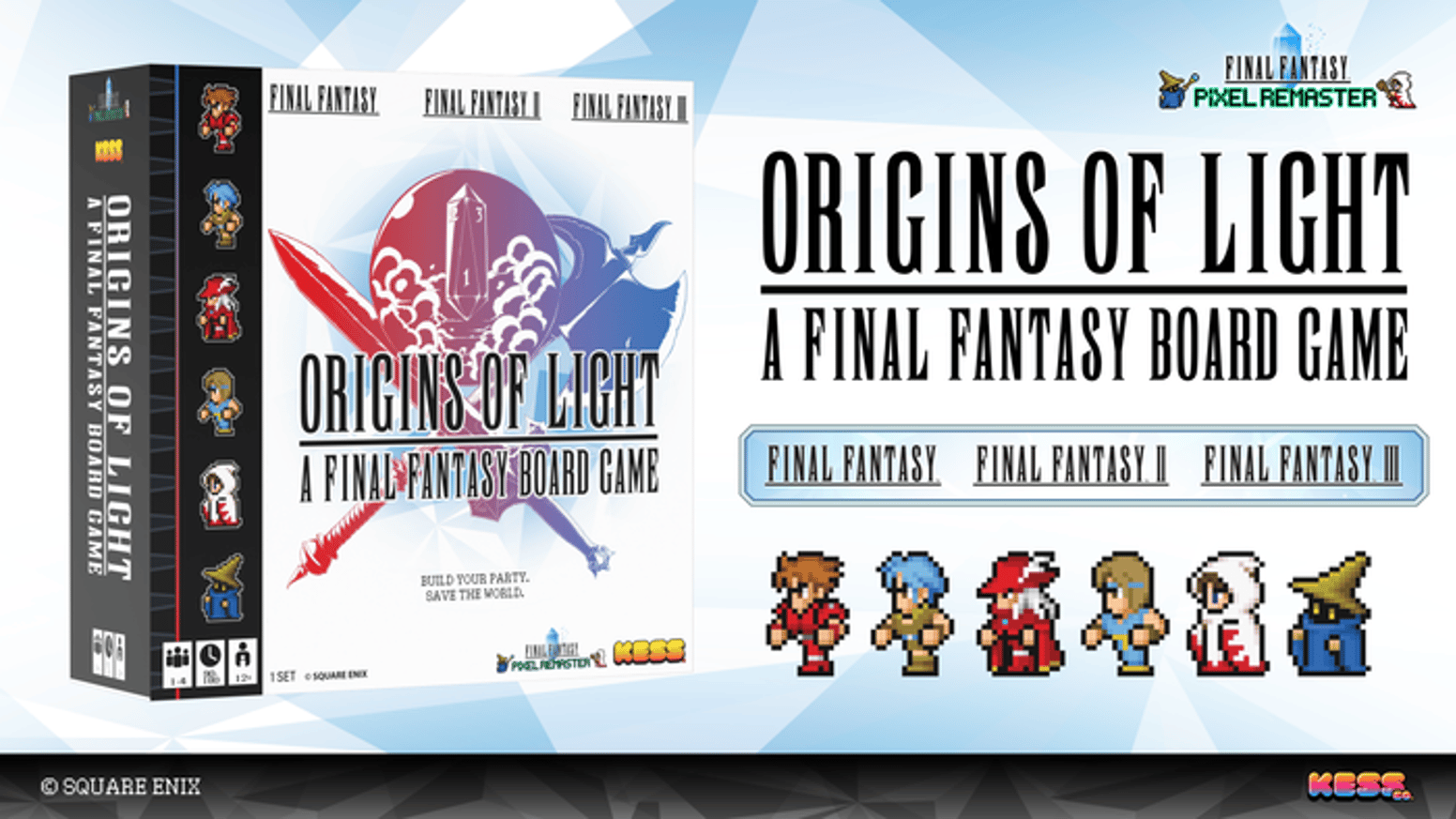
Origins of Light: A Final Fantasy Board Game

KessCo bringt mit Origins of Light ein offiziell von Square Enix lizenziertes Final-Fantasy-Brettspiel auf Kickstarter. Ein bis vier Spielende stellen eine Heldentruppe zusammen, statten sie mit Zaubern und Ausrüstung aus und ziehen in Dungeons gegen Bosse aus Final Fantasy I bis III, die sich an den Pixel-Remaster-Fassungen orientieren. Die Kampagne startete am 20. Oktober 2026 und hat ihr vergleichsweise niedriges Ziel von 10.000 US-Dollar binnen Stunden um ein Vielfaches überschritten. Als Designer nennt BGG Alex Kessler. Eine deutsche Fassung erwähnt KessCo in der Kampagne nicht, Versandkosten werden erst nach Kampagnenende über den Pledge Manager abgerechnet.

Eckdaten zu Origins of Light: A Final Fantasy Board Game

  • Spieleranzahl: 1 bis 4 (laut BGG)
  • Spielzeit: 90 bis 180 Minuten (laut BGG)
  • Alter: ab 12 Jahren
  • Designer: Alex Kessler (laut BGG)
  • Verlag: KessCo (lizenziert von Square Enix)
  • Plattform: Kickstarter
  • Kampagnenstand: 8.587 % von 10.000 US-Dollar, 2.800 Unterstützer, Laufzeit bis 18. November 2026 (Stand: 26.10.2026, 8 Uhr)
  • Einstiegspreis: ab 100 US-Dollar für die Retail-Pledge (Stand: 26.10.2026)
  • Liefertermin: Juli 2027 (laut Pledge-Beschreibung)
Crowdfunding-Wochenschau KW 44: Final Fantasy und Tanares

Plants vs. Zombies: The Board Game

Mantic Games setzt mit Plants vs. Zombies: The Board Game die PopCap-Lizenz kooperativ um: Ein bis vier Spielende verteidigen ihren Garten mit Sonnenblumen, Erbsenschleudern und Walnuss-Wällen gegen anrückende Zombiehorden, mit vorbemalten Miniaturen in der Deluxe-Fassung. Gestartet bereits am 14. Oktober 2026, läuft die Kampagne außerhalb unseres Sieben-Tage-Fensters für Neustarts, qualifiziert sich aber über ihr Volumen: Mehr als 750.000 britische Pfund bei über 5.500 Unterstützern sind für den deutschen Markt eine Hausnummer. Einen einzelnen Designer nennt Mantic nicht, auch BGG führt keinen Designer-Credit. Welche Sprachen Mantic am Ende anbietet, wählen Unterstützer laut Kampagnenseite erst im Pledge Manager nach Kampagnenende.

Eckdaten zu Plants vs. Zombies: The Board Game

  • Spieleranzahl: 1 bis 4
  • Spielzeit: nicht genannt
  • Alter: nicht genannt
  • Designer: nicht genannt (auch BGG führt keinen Designer-Credit)
  • Verlag: Mantic Games (Lizenz von PopCap Games)
  • Plattform: Kickstarter
  • Kampagnenstand: 3.031 % von 25.000 britischen Pfund, 5.535 Unterstützer, Laufzeit bis 5. November 2026 (Stand: 26.10.2026, 8 Uhr)
  • Einstiegspreis: ab 40 britische Pfund für die Standard-Pledge (Stand: 26.10.2026)
  • Liefertermin: September 2027 (laut Pledge-Beschreibung)

Welche Kampagne reizt uns?

Uns zieht es diese Woche zu Dungeons of Tanares: Die Kampagne schließt eine Trilogie ab, die sich bislang sauber durch drei Kampagnen gezogen hat, auch wenn die Lieferbilanz der beiden Vorgänger für uns noch offen ist. Origins of Light ist der Titel mit dem breitesten Publikum, Final Fantasy zieht auch Leserinnen und Leser an, die sonst selten crowdfunden. Grimdark Future und Plants vs. Zombies sind dagegen eher etwas für die bereits eingeschworene Zielgruppe ihrer jeweiligen Marke.

Weiterlesen

Korrektur vom 27.10.2026: Als Designer von Origins of Light stand zunächst Anthony Thorp mit einer Liste angeblicher Vorarbeiten (One Piece, Spy x Family, Sonic the Hedgehog), ohne dass sich diese Angabe einer Quelle zuordnen ließ. BGG, eine der zitierten Quellen dieses Artikels, nennt stattdessen Alex Kessler als Designer. Der Artikel wurde entsprechend korrigiert.

NEWS: Crowdfunding für Die Zwerge-Rollenspiel endet bald

25. Oktober 2026 um 15:14

Die Zwerge ist ursprünglich eine Fantasy-Romanreihe mit neun Büchern von Markus Heitz. Nun hat der Squink-Verlag ein Rollenspiel daraus gemacht. Mit den D&D 5.5e Regeln spielt man Zwerge, deren Aufgabe es ist, das Geborgene Land zu schützen. Noch kann das Projekt auf Kickstarter unterstützt werden.

Dieser Beitrag wurde von Ayleen Schmidt geschrieben

Ryugu Preview – Everything’s better down where it’s wetter

Von: Adam
21. Oktober 2026 um 18:10

An early prototype of Ryugu was kindly provided by 14Games. All artwork and rules are subject to change. Thoughts & opinions are my own. Ryugu The Fleeting Paradise, to give it its full name, is a clean, colourful new worker-placement game from 14Games, the studio that brought us Snow Planner (read my review of that here). Following the trend of Japanese Euro games doing things slightly…

Source

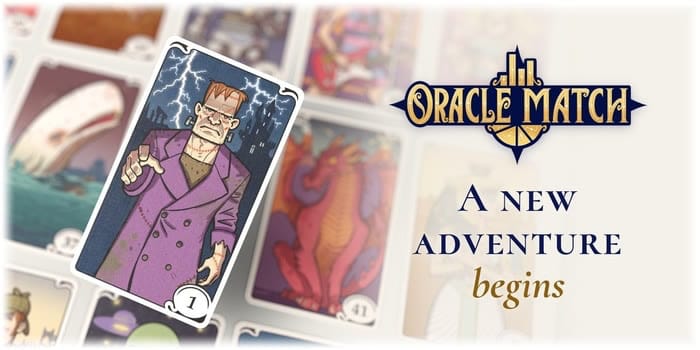
Tablescope kündigt zweites Spiel „Oracle Match“ an

20. Oktober 2026 um 11:16
Tablescope kündigt zweites Spiel „Oracle Match“ an

Das Grazer Studio Tablescope hat mit „Oracle Match“ sein zweites Spiel angekündigt, wie Mitgründer Leo in einem Kickstarter-Update vom 19. Oktober 2026 mitteilte. Einen konkreten Kampagnenstart nennt das Update nicht. Aktuell gibt es dafür nur eine Follow-Seite auf Kickstarter. Tablescopes Debüt „Light Speed: Arena“ hatte 2024 auf Kickstarter 53.879 € bei einem Ziel von 5.000 € eingespielt (1.274 Unterstützende, Staff Pick), wie Würfelreich berichtete.

Light Speed: Arena ist laut BGG seit 2025 auch tatsächlich erschienen, unter anderem in regulären Verlagsausgaben bei Pegasus Spiele, Cranio Creations und Lucrum Games. Die Kickstarter-Kampagne hat ihr Lieferversprechen damit eingelöst.

Tablescope kündigt zweites Spiel „Oracle Match“ an

Was Oracle Match sein soll

Oracle Match ist ein digital-hybrides Partyspiel für zwei bis sechs Personen ab acht Jahren, in dem angehende „Seher“ die Antwort eines Orakels erraten und den Tisch von ihrer Deutung überzeugen sollen. Was „digital-hybrid“ für Oracle Match konkret bedeutet, sagt das Update nicht. Bei Tablescopes erstem Spiel „Light Speed: Arena“ lief das laut BGG über eine Begleit-App am Tisch. Das Orakel wird laut Update aus einer weltweiten Umfrage unter hunderten Communityspielenden gebildet und von Tablescope selbst als „Dixit trifft Family Feud“ beschrieben (Family Feud ist im deutschen Fernsehen als „Familien-Duell“ bekannt).

Die Kernmechanik steht laut Update bereits fest. Verfeinert werden noch ein kooperativer, ein teambasierter und ein kompetitiver Modus.

Das Team hinter Oracle Match

Das Design stammt von den Tablescope-Mitgründern Leo und Emanuele gemeinsam mit Silvano Sorrentino, der laut BGG als Mitdesigner der Escape-Room-Kartenspielreihen Deckscape und Decktective bekannt ist. Für die Illustration ist laut Update Marco Salogni zuständig, die Grafikdirektion liegt bei Marianna Rossi.

Spielbar auf der SPIEL Essen, Details noch offen

Oracle Match soll laut Tablescope erstmals am eigenen Messestand auf der SPIEL Essen (22. bis 25. Oktober) spielbar sein, am Stand 4D415, der laut einem SpielList.com-Eintrag zu einem anderen Tablescope-Titel am selben Messestand in Halle 4 liegt. Eine Spieldauer nennt das Update nicht. Da die Kickstarter-Kampagne noch nicht gestartet ist, stehen auch Stretch-Goals und Pledge-Stufen noch nicht fest. Während der Kampagne will Tablescope zudem die Community über Charaktere und Szenarien mitentscheiden lassen.

“I wouldn’t expect this to become the norm”: backers overwhelmingly choose King’s Gambit most expensive tiers, power crowdfund past $2.3m

19. Oktober 2026 um 17:02

Restoration Games is no stranger to crowdfunding backers pledging hundreds of dollars for premium versions of its games – but its Kickstarter for The Lord of the Rings: The King’s Gambit has taken that to an entirely new level.

The crowdfund had raised $2.33m from more than 7,300 backers in the early hours of its final day, equivalent to almost $319 per supporter – an average spend well above Restoration’s previous major crowdfunding campaigns, including the roughly $260 from last year’s Battle Monsters: Godzilla x Kong.

Almost three-quarters of backers who have committed to one of the game’s various versions opted to spend at least $379 on one of the Mithril tiers, with more than 2,800 people going all-in on the game’s most expensive $449 option.

Those Mithril pledges together account for about 82% of the total raised at the time of writing – a figure well above that expected by Restoration prior to the campaign’s launch, co-owner Justin Jacobson told BoardGameWire.

Restoration Games co-founder Justin Jacobson

He said the company had expected Mithril to be most popular, but had conservatively projected about three Mithril pledges for every two people committing to the base-level Limited tiers of the game

He said, “I’m not entirely surprised. We created the Limited Edition as a sort-of compromise pledge level for folks who wanted some deluxe elements but didn’t want to go all-in for the Mithril Edition.

“Ultimately, though, most Kickstarter backers are there precisely because they do want to go all in, and we try to make that pledge level as appealing as possible and as good a deal as possible.”

Despite the much higher-than-expected proportion of backers opting for Mithril, Jacobson said the campaign’s overall performance was “pretty in-line” with his expectations ahead of the campaign’s final few days – and that “in a vacuum” he would have hoped for slightly higher numbers.

He pointed to the absence of a standard retail edition from the campaign, Free League’s The One Ring RPG crowdfund running at the same time and wider global economic conditions among the factors potentially working against it.

Jacobson said the pattern of backers favouring Restoration’s most expensive option was familiar from what he described as the company’s previous “spectacle” campaigns, with all-in pledges typically outstripping other pledge levels at the close of those crowdfunds.

But King’s Gambit is generating substantially higher spending per backer compared with Restoration’s previous projects offering similarly expensive all-in options.

Last year’s Battle Monsters: Godzilla x Kong offered a $379 Mega Bundle – the same price as the basic Mithril Edition of King’s Gambit – but averaged about $260 across its 2,301 backers.

Return to Dark Tower: Expeditions went even higher with a $499 all-in pledge including the base game, its expansions and upgraded components – although as an expansion-led campaign, existing owners could enter at just $45. Its $1.49m haul from 11,665 backers amounted to an average of $128 per supporter.

King’s Gambit is currently averaging almost $319 across its backers to date – despite almost 1,000 people having committed just $5 for access to the pledge manager.

Jacobson nevertheless cautioned against seeing the campaign as evidence that $379-plus board games were likely to become commonplace.

“This campaign is unusual, and I wouldn’t expect this to become the norm,” he said. “It stems from the unique way in which the original licensing deal and co-publication arrangement came to be in the first place.”

Opening Gambit

Jacobson told BoardGameWire that the publisher decided to pitch licence holder Middle-earth Enterprises in 2023 for a new version of cult 2000 board game Star Wars: The Queen’s Gambit, but instead based on The Lord of the Rings.

Bringing Queen’s Gambit back had been an ambition for Restoration since its inception – it was the first game Jacobson suggested reviving when he approached designer Rob Daviau about founding the company in 2016, although they decided at the time that it was too ambitious for their first project. Daviau had worked on the original during his time at Hasbro.

Jacobson told BoardGameWire, “I put together a big proposal and sent it in. Meanwhile, while that proposal was under consideration, Rob was at the Cannes Game Festival and got approached by Asmodee about doing the exact same thing.

“It seemed like serendipity so we just started that conversation about working on it together. It offered a lot of benefits to both parties.

“We brought our design pedigree and Kickstarter experience, and they brought their massive team for art, sales, distribution, and more. It’s always challenging working outside your own team, but [Asmodee studio] Space Cowboys have been absolutely amazing and have helped make this game the best it can be.”

Space Cowboys plans to release a retail edition of the game next year, which while sharing the same gameplay will use smaller boards, omit the large plastic Minas Tirith and Mordor set pieces and use just two colours of plastic for its miniatures.

Kickstarter image of components planned for the game

Jacobson said, “It was important that our offering was a stark contrast to the retail edition. That edition will be what lives on for as long as the game is sold, long after the Kickstarter campaign is fulfilled. So, first things first, we had to align on what that version of the game was going to be.

“Then, we basically brainstormed all of the ways we could ‘deluxify’ that. The Limited Edition was a slight bump and the 3D plastic set pieces; the Mithril Edition was the whole list.”

When asked if there had been any concern internally over having such a large gap between the price points of the Limited and Mithril editions, Jacobson said, “Not really. There are so many variables and options in setting up any campaign. You’re never going to be 100% certain that you’ve gone the optimal path.

“That said, we were confident in the overall structure of the campaign, i.e., folks who want the cool 3D set pieces and folks who want everything.

“As I’ve always said, the price is always a function of the cost to produce. So once we determine what a pledge level includes, setting the price is relatively straightforward with some minor adjustments. For example, we actually shaved a bit off the Mithril Edition to try and make it a bit more appealing.”

He added, “It does highlight that all of the economic turmoil folks are feeling are not being felt uniformly.

“It also speaks to hobby gamers in general. When you compare it to other hobbies, it’s still a relatively good deal even at the highest end of things.”

Jacobson told BoardGameWire that Restoration deliberately looked beyond established tabletop audiences when marketing the game, in an attempt to leverage the vast fanbase of The Lord of the Rings.

About half of King’s Gambit backers are supporting a Restoration Games crowdfund for the first time, he said – a slightly higher proportion than the company has seen on some of its more recent campaigns.

“We made a concerted effort to try and reach out to influencers whose audience comprises The Lord of the Rings fans and not specifically gamers,” Jacobson said.

He believes the licence was likely part of the explanation for the campaign’s performance, although added that Restoration titles tend to come with followers even without a large IP, given the nature of the company’s strategy of taking memorable, usually long-out-of-print games and redeveloping them for the modern hobby market.

He said, “Fans of The Lord of the Rings are certainly avid and show up in large numbers, but we’ve seen similar excitement from fans of Return to Dark Tower and the like.”

Aragorn Art

Despite the campaign’s strong performance, the release has attracted a backlash from a small minority of online commenters for depicting Aragorn as Black.

That reaction has spilled into the unreleased title’s BoardGameGeek ratings, where some users have awarded it scores of 10 specifically to counter what they believe are 1 ratings motivated by objections to Aragorn’s skin colour.

Jacobson described the reaction as “disappointing but not entirely unexpected”, while stressing that not everyone who preferred a depiction closer to previous versions of Aragorn was motivated by racism.

Aragorn from Lord of the Rings: King’s Gambit || Kickstarter Image

He said, “The art team for both Space Cowboys and Restoration Games spent countless hours working on an extensively researched and thoughtful art brief for the look of the entire game along with each individual character. It’s 59 pages long!

“Our first priority is always to do something true to the source material. Within those pages though there are a number of interpretations. Ultimately, for each depiction, not just Aragorn, we were looking to do something interesting and perhaps novel that still stays true to the source material.

“I can point to details in the lore that support this depiction, but this just isn’t something I have any interest in debating.

“Great works, whether that’s a game or an epic fantasy novel or something else, only arise when the people creating them have a strong vision for what they want to make and put their full effort into realizing that vision.

“In every case, some folks won’t share that vision. But, in every case, if you set out to try and please everyone, you cannot make something extraordinary.”

He added, “There are folks who prefer a depiction more in keeping with prior ones; where other folks enjoy seeing broader depictions. Whenever you are working with an IP, the fans will have strong opinions. I want to be clear: not everyone who would prefer the former do so from a place of racism.

“That said, there are certainly racists, who are using these types of situations to espouse their abhorrent beliefs. It’s unfortunate that they muddy what can be an otherwise interesting conversation.

“As for folks on BGG rating a game a 1 before it comes out, this has been going on for a while for a host of reasons. There’s nothing we can do about it, so we press on and just make the best game we can.

“When people actually receive and start playing the game, we are confident that there will be a lot of great ratings for it that will make the current kerfuffle just so much background noise.”

The King’s Gambit’s crowdfunding campaign ends at 8.30am EDT on October 20.

The post “I wouldn’t expect this to become the norm”: backers overwhelmingly choose King’s Gambit most expensive tiers, power crowdfund past $2.3m first appeared on .

Crowdfunding Campaigns of the Week – 10/19/26

19. Oktober 2026 um 14:50
Crowdfunding Campaigns of the WeekWelcome to this week’s batch of crowdfunding campaigns. We have a variety of offerings here, so we hope you will find something that catches your eye. Also, if you want to chat with the BGQ team, join our Discord Server where we talk about games, movies, sports, and other fun stuff. Check it out and […]

Source

Crowdfunding-Wochenschau KW 43: Renaissance & Opium

19. Oktober 2026 um 11:34
Crowdfunding-Wochenschau KW 43: Renaissance & Opium

Diese Ausgabe der Crowdfunding-Wochenschau blickt auf die Kalenderwoche 43 des Jahres 2026 und fasst zusammen, was in den vergangenen sieben Tagen auf Kickstarter und Gamefound neu gestartet ist oder durch seine Zahlen auffällt. Im Mittelpunkt stehen diesmal drei Projekte: eine Zehn-Jahres-Neuauflage eines bekannten Worker-Placement-Spiels, ein kleines satirisches Kartenspiel über deutsche Dauerbaustellen und die von Kickstarter als Staff Pick ausgezeichnete zweite Edition von Root-Designer Cole Wehrles Wirtschaftsspiel über den historischen Opiumhandel. Mehrere weitere Kampagnen, die diese Woche ebenfalls liefen, etwa Nemesis: Legacy, Satisfactory: The Board Game oder Die Dänen, hat Würfelreich bereits in eigenen Artikeln oder der vorherigen Wochenschau-Ausgabe behandelt. Sie werden deshalb hier nicht erneut aufgeführt.

Crowdfunding-Wochenschau KW 43: Renaissance & Opium
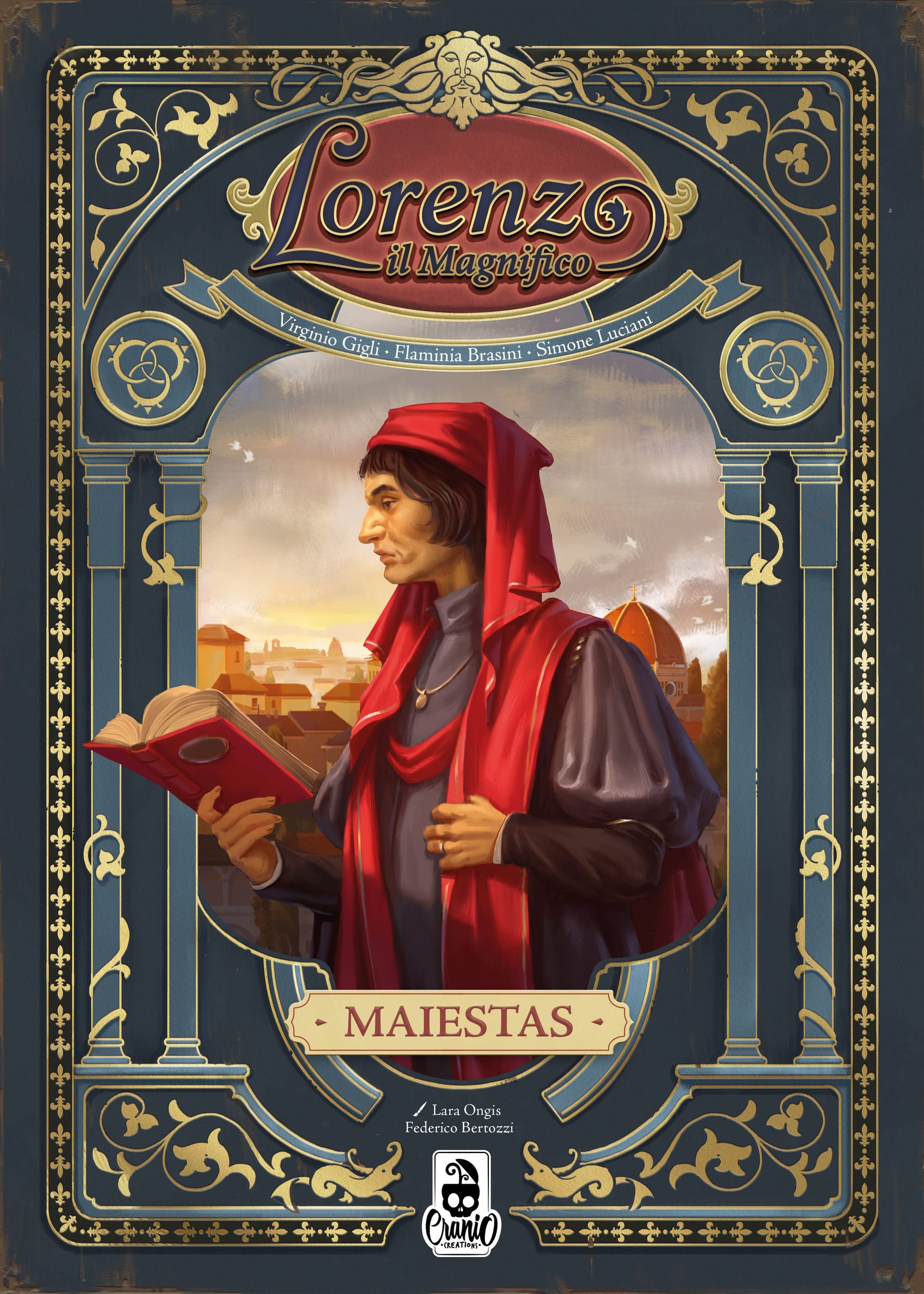
Lorenzo il Magnifico - Prima Lux. Abbildung: Cranio Creations / Gamefound

Lorenzo il Magnifico - A New Renaissance

Lorenzo il Magnifico - A New Renaissance ist am 13. Oktober auf Gamefound gestartet. Stand 19.10.2026: rund 940 Prozent finanziert, Restlaufzeit noch etwa 11 Tage bis zum 30. Oktober.

In Lorenzo il Magnifico führen die Spielenden eine Familie im Florenz der Renaissance. Familienmitglieder, dargestellt durch Würfel, werden auf Aktionsfeldern der Stadt eingesetzt, um Rohstoffe zu beschaffen, Anführerkarten zu rekrutieren, Gebäude zu errichten und den Forderungen der Kirche nachzukommen. Das Spiel ist damit ein Worker-Placement-Spiel mit Würfeln als Arbeiter, bei dem Timing und Ressourcenmanagement über den Punktestand am Ende entscheiden.

Cranio Creations bringt zum zehnjährigen Jubiläum zwei getrennte Editionen heraus. Prima Lux bündelt das Grundspiel mit den Erweiterungen Houses of Renaissance und The Pazzi Conspiracy sowie Promo-Inhalten in überarbeiteter Optik, bleibt aber nahe am Original und ist für 2 bis 4 Personen ausgelegt. Maiestas geht weiter: Der Kartenpool wächst auf 144 Entwicklungskarten, von denen pro Partie nur 96 verwendet werden, der Markt verändert sich von Runde zu Runde, und Anführerkarten spielen eine größere Rolle. Maiestas bietet laut BoardGameGeek zusätzlich einen Solo-Modus für 1 bis 4 Personen, bei Prima Lux ist dagegen keiner gelistet.

Für Prima Lux listet BoardGameGeek zusätzlich die Mechaniken „Auction: Fixed Placement“ und „End Game Bonuses“, der oft mitgenannte Begriff Tableau-Aufbau taucht dort nur als Themen-Schlagwort auf, nicht als eigenständige Mechanik. Bei Maiestas führt BoardGameGeek keine der drei auf.

Designer beider Editionen sind Flaminia Brasini, Virginio Gigli und Simone Luciani, Illustrationen stammen von Lara Ongis. Mit 140.959 Euro bei einem Finanzierungsziel von 15.000 Euro und 1.156 Unterstützenden steht die Kampagne zwar prozentual sehr hoch, das Ziel war allerdings auch vergleichsweise niedrig angesetzt, was bei einer bereits etablierten Spielmarke mit bestehender Fangemeinde wenig überrascht. Wie stark sich Maiestas im Vergleich zu Prima Lux tatsächlich anders spielt, lässt sich vor Erscheinen nicht beurteilen.

Die Einzeleditionen Prima Lux und Maiestas kosten als Pledge jeweils 49 Euro, die Doppelbox Bibliotheca mit beiden Spielen 89 Euro, die Variante Gloria mit zusätzlicher Deluxe-Box 139 Euro, jeweils laut Kampagnenseite reduziert gegenüber dem späteren Ladenpreis. Zu Liefertermin, Versandzielen und -kosten sowie zu einer möglichen deutschen Sprachausgabe äußert sich die Kampagnenseite in den abgerufenen Daten nicht. Cranio Creations existiert seit 2009 und hat zuvor bereits mehrfach erfolgreich auf Kickstarter finanziert, unter anderem Barrage, das inzwischen im Handel erhältlich ist.

Crowdfunding-Wochenschau KW 43: Renaissance & Opium
Staustelle, ein Zweipersonen-Kartenspiel über deutsche Autobahnbaustellen. Abbildung: Didact Games / Kickstarter

Staustelle

Staustelle von Didact Games startete ebenfalls am 13. Oktober, diesmal auf Kickstarter. Stand 19.10.2026: erst rund 13 Prozent eines mit 2.500 Euro vergleichsweise niedrig angesetzten Ziels, Restlaufzeit bis zum 17. November.

Staustelle ist ein Kartenspiel für genau 2 Personen auf einem 5x5-Raster, das eine Autobahnbaustelle darstellt. In der ersten Phase legen beide Seiten Baustellenkarten aus und platzieren Wertungsmarker auf dem Raster. In der zweiten Phase bewegt sich je eine Arbeiterfigur Feld für Feld, wobei das Betreten eines Feldes dort liegende Wertungsmarker entfernt, unabhängig davon, wem sie gehören. Manche Streckenabschnitte schützen Marker vor den Arbeitern, sodass abgewogen werden muss, ob man die eigene Baustelle ausbaut oder die gegnerische stört.

Am Ende, bei der sogenannten Schlussinspektion, zählt jeder verbliebene eigene Marker einen Punkt.

Das kleine taktische Spiel von Designern Daniel Hitzing und Erik Robert persifliert den deutschen Alltag mit Dauerbaustellen auf Autobahnen. Es erscheint auf Deutsch und wird laut Kampagnenseite ausschließlich innerhalb Deutschlands versendet. Mit 324 Euro von 13 Unterstützenden ist der bisherige Erfolg, wie auch von Brettspielbox.de eingeordnet, noch recht verhalten. Das ändert nichts daran, dass die Kampagne formal neu und für Fans kompakter Zweipersonenspiele mit Lokalkolorit eine Randnotiz wert ist.

Der Pledge für ein Exemplar kostet 20 Euro, Kickstarter nennt als Liefertermin Oktober 2027.

Crowdfunding-Wochenschau KW 43: Renaissance & Opium
An Infamous Traffic: Second Edition, die überarbeitete Neuauflage. Abbildung: Buried Giant Studios / Kickstarter

An Infamous Traffic: Second Edition

An Infamous Traffic: Second Edition läuft bereits seit dem 6. Oktober auf Kickstarter. Stand 19.10.2026: rund 1.151 Prozent finanziert, Restlaufzeit noch etwa 11 Tage bis zum 30. Oktober.

Das Spiel behandelt den britischen Opiumhandel mit China im frühen 19. Jahrhundert. Die Spielenden übernehmen die Rolle konkurrierender Kaufleute, bauen gemeinsam mit rivalisierenden Handelsfirmen Lieferketten auf und verwalten parallel ihre eigenen Geschäfte, während die Qing-Dynastie zunehmend ins Wanken gerät. Laut BoardGameGeek dauert eine Partie für 1 bis 5 Personen etwa 1 bis 2 Stunden nach rund 20 Minuten Regelerklärung. Für die zweite Edition wurden Regeln, historische Details, Grafik und Komponenten überarbeitet, hinzu kommt ein neuer Solo-Modus, der laut Kampagnenseite von Richard Wilkins gestaltet wurde.

Designer ist Cole Wehrle, bekannt für vielschichtige historische Konflikt- und Wirtschaftsspiele wie Root und Pax Pamir. Auf BoardGameGeek wird als Verlag Buried Giant Studios genannt, das Spiel ist dort mit einer Rangnummer von 10.463 bislang moderat gelistet, was zur jungen Neuauflage passt. Mit 575.592 US-Dollar bei einem Ziel von 50.000 US-Dollar und 6.146 Unterstützenden gehört die Kampagne zu den finanziell auffälligsten dieser Woche, Kickstarter hat sie zudem als Staff Pick markiert. Dass es sich um eine überarbeitete zweite Auflage statt eines komplett neuen Spiels handelt, mindert den Neuigkeitswert etwas, die genannten inhaltlichen Überarbeitungen gehen aber über eine reine Neuauflage ohne Substanz hinaus.

Der Pledge für das Grundspiel kostet 75 US-Dollar bei einem späteren Ladenpreis von 95 US-Dollar, Kickstarter nennt als Liefertermin Oktober 2027 und laut Kampagnenseite einen Versand weltweit. Die Ausgabe erscheint ausschließlich auf Englisch, eine deutsche Fassung kündigt die Kampagnenseite nicht an.

Buried Giant Studios wurde erst 2026 von Cole Wehrle gemeinsam mit Kyle Ferrin, Drew Wehrle und Ted Caya gegründet, nachdem die vier zuvor bei Leder Games tätig waren. Die erste eigene Kickstarter-Kampagne des neuen Studios, Erweiterungen zu Arcs, startete erst im Frühjahr 2026, eine abgeschlossene Lieferbilanz als eigenständiger Verlag gibt es also noch nicht. Wehrle selbst hat über Leder Games mit Root, Pax Pamir: Second Edition und Oath mehrere erfolgreich ausgelieferte Titel vorzuweisen.

Die drei Projekte dieser Woche zeigen ein vertrautes Muster: Auf Gamefound dominieren große, bereits etablierte Marken mit Jubiläums- oder Neuauflage-Charakter, während kleinere, frische Konzepte wie Staustelle vor allem auf Kickstarter und mit deutlich geringeren Unterstützerzahlen unterwegs sind. Hohe Finanzierungsquoten sagen dabei wenig über die Qualität der fertigen Spiele aus, sie spiegeln oft eher niedrige Zielsummen oder eine bereits vorhandene Fangemeinde. Für die kommende Woche kündigen sich mit Arkham Horror Remastered, Dungeons of Tanares, Grimdark Future: Jade & Claw und Ordinary Magic gleich vier weitere Gamefound-Starts an, die dann Thema der nächsten Ausgabe sein dürften.

Dice Throne Nexus: Kickstarter-Kampagne schnell finanziert

13. Oktober 2026 um 20:15
Dice Throne Nexus: Kickstarter-Kampagne schnell finanziert

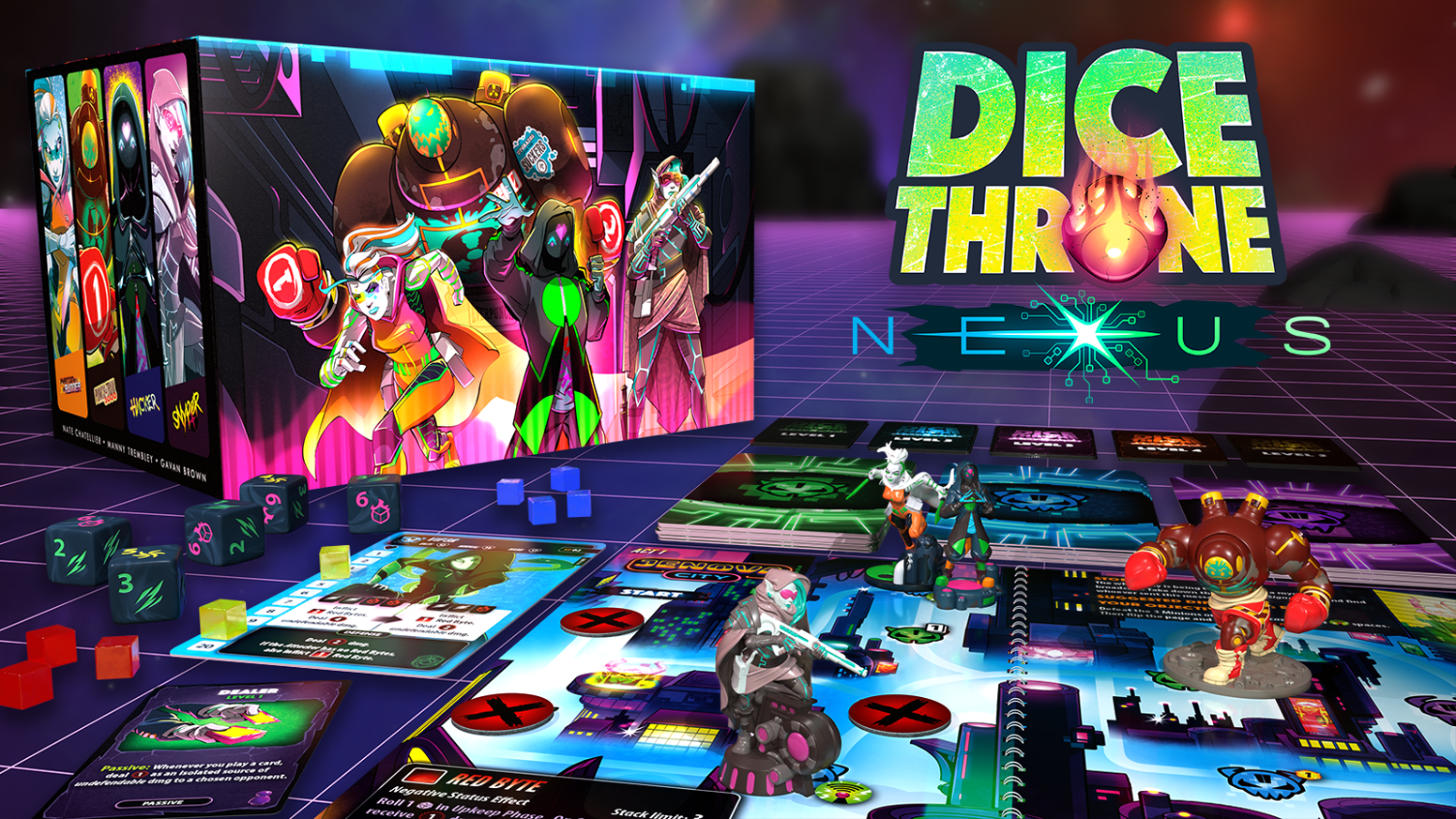
Dice Throne Nexus ist seit dem 13. Oktober 2026 live auf Kickstarter. Das 50.000-Dollar-Ziel war laut Plattform binnen wenigen Minuten erreicht, und Kickstarter zeichnete das Projekt zusätzlich als „Staff Pick“ aus. Stand: 13.10.2026, 18:14 Uhr UTC, liegt das Projekt bei 438.481 US-Dollar und rund 877 Prozent des Ziels, unterstützt von 2805 Personen. Die Kampagne läuft noch bis zum 4. November 2026.

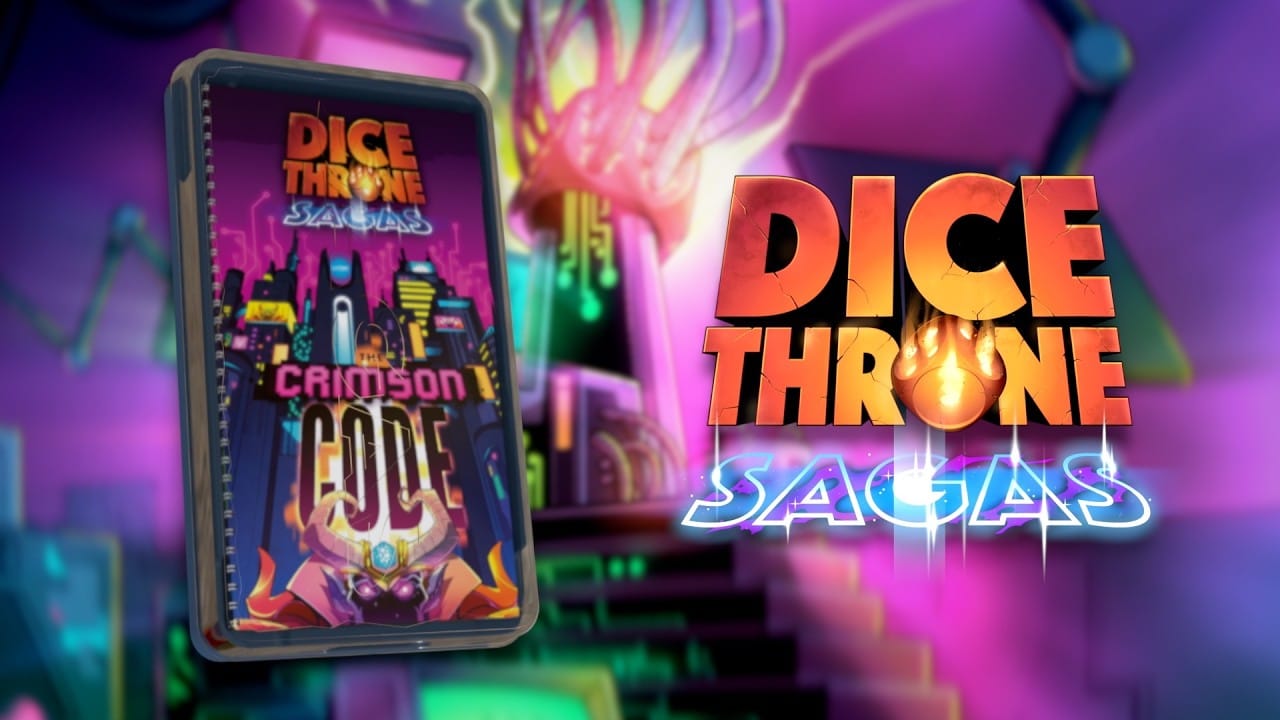
Wir haben die Vorschau zu SAGAS: The Crimson Code bereits am 9. Oktober vorgestellt, damals noch ohne Kickstarter-Rahmen. Jetzt zeigt sich: SAGAS ist nicht das Hauptprodukt, sondern nur ein Baustein innerhalb der breiter angelegten Nexus-Kampagne.

Vier neue Helden tragen die Kampagne, SAGAS ist nur ein Zusatz

Kern von Dice Throne Nexus sind laut Kampagnenseite vier neue Heldinnen und Helden fürs Hauptspiel: der Nahkämpfer Punch-A-Tron 3000, für den keine Quelle einen vergleichbaren Fachbegriff nennt, die Scharfschützin Snyper mit Ricochet-Mechanik und Intel-Marken, die Hackerin mit Viren-Markern gegen gegnerische Fähigkeiten sowie Phantom Runner, die über Ecto-Klingen zusätzlichen Schaden austeilt und mit dem Ethereal-Status eingehenden Schaden reduziert. Wer die vier Helden konkret entworfen hat, nennt aber keine der Quellen. ScreenRant führt Nate Chatellier und Manny Trembley weiterhin als Erfinder der Dice-Throne-Reihe. Für SAGAS: The Crimson Code wird dort separat John Heidrich genannt.

Dice Throne SAGAS: The Crimson Code, die kooperative Geschichte aus der Vorschau, taucht in der aktuellen Kampagne nur als eigenständiges 20-Dollar-Zusatzprodukt auf. Spielbar ist sie laut Verlag mit jeder beliebigen Dice-Throne-Heldin oder jedem Helden. Ein bestehendes Dice-Throne-Set ist für die vier neuen Helden laut boardgamearchive.com nicht nötig: Jeder Held bringt alle benötigten Komponenten selbst mit. Gespielt werden kann bereits mit zwei beliebigen Helden.

Gespielt wird das Grundsystem laut boardgamearchive.com mit 2 bis 6 Personen in 20 bis 40 Minuten pro Partie. Einen eigenen Solo-Modus für die vier neuen Helden nennt dagegen keine Quelle. Kooperativ spielbar ist laut Kampagne nur das separate SAGAS-Zusatzprodukt. Ob die neuen Helden das aus der Serie bekannte, zugängliche Schwierigkeitsniveau verschieben, sagt ebenfalls keine Quelle.

OR10N oder Mad King, und was die Pledges bringen

Die Kampagnenseite nennt zusätzlich einen „colossal threat“ namens OR10N, der die Strongbox-Deckelgrafik sowie ein eigenes Playmat der höchsten Pledge-Stufe ziert. Ob OR10N mit dem Mad King identisch ist, der laut ScreenRant als Bösewicht aus Dice Throne Adventures in die SAGAS-Geschichte zurückgekehrt ist, oder ob es sich um zwei getrennte Figuren handelt, nennt keine der verfügbaren Quellen.

Unterstützende wählen zwischen drei Pledge-Stufen: Level 1 für 60 Dollar bringt die Nexus-Strongbox mit Helden-Upgrades, acht neuen Mythic Cards und vier Promo-Karten. Level 2 für 145 Dollar ergänzt vier Zubehör-Packs und Dice Throne SAGAS: The Crimson Code. Level 3 für 295 Dollar fügt fünf Playmats, ein Alt-Art-Heldentableau-Set und ein Würfeltablett hinzu. Dazu kommt eine reine Anzahlungs-Pledge für den Handel über 45 Dollar.

Lieferung ist für alle Haupt-Pledges auf September 2027 angesetzt. Zu einer deutschen Lokalisierung oder einem deutschen Vertriebspartner äußert sich die Kampagnenseite bislang nicht.

Rebirth II: Knizia kündigt Kickstarter für Februar an

13. Oktober 2026 um 16:13
Rebirth II: Knizia kündigt Kickstarter für Februar an

Reiner Knizia hat einen Starttermin für die Kickstarter-Kampagne zu Rebirth II genannt: Sie soll am 16. Februar 2027 live gehen. Rebirth II steht bei Erscheinen dieses Artikels auf Platz 1 der BGG-Hotness-Liste, noch vor dem eigentlichen Kampagnenstart. Das eigenständige Nachfolgespiel baut auf Rebirth auf, das 2026 zum Kennerspiel des Jahres gekürt wurde.

Zwei neue Karten, ein neues Stadtstaaten-System

Thematisch führt Rebirth II laut BGG-Beschreibung einen Orden von Oraklen an, der nach einer Katastrophe zersplitterte Stadtstaaten beim Wiederaufbau anführt. Die Grundmechanik bleibt wie im Original: Spielende ziehen Plättchen und legen sie auf die Karte. Neu ist laut Verlag das City-State-System, bei dem die Karte in mehrere selbstverwaltete Regionen aufgeteilt ist. Rebirth II bringt dafür zwei eigenständige neue Karten mit, Griechenland und Italien, die dieses System jeweils unterschiedlich nutzen.

Auf der Griechenland-Karte gibt es kein festes Raster für Farmen. Stattdessen verändert ein neues „Exploration-Token“-System die Karte im Spielverlauf. Punkte gibt es vor allem für alleinigen Einfluss in einzelnen Stadtstaaten. Die Italien-Karte dreht sich stattdessen um Ämter: Siedlungen ermöglichen die Wahl eines Arbitrers mit staatsspezifischer Fähigkeit, Klöster gewähren einmalige Segen-Effekte.

Komplett neu ist das Stadtstaaten-Prinzip laut BGG-Mechanik-Kategorie allerdings nicht: Schon das Original setzte auf „Area Majority / Influence“, dieselbe Mehrheiten-Mechanik wie Rebirth II. Wie stark sich das neue System davon tatsächlich unterscheidet, lässt sich erst am fertigen Spiel beurteilen.

Design-Team und offene Fragen

Design stammt wie beim Original von Reiner Knizia. Das Boxcover stammt laut Mighty Boards von Vesna „vesner“ Redesiuk, zusätzliche Illustration und Grafikdesign von Max Kosek sowie laut Verlag von Christopher Borg und Mark Casha, wobei nur Kosek und Redesiuk auch auf BGG als Artists gelistet sind. Gespielt wird von 2 bis 4 Personen ab 10 Jahren. Einen Solo-Modus gibt es laut BGG nicht, eine Spielzeitangabe ebenfalls noch nicht.

Eine BGG-Komplexitätsbewertung gibt es für Rebirth II ebenfalls noch nicht. Das Original liegt dort bei 1,97 von 5.

Auf BoardGameGeek steht Rebirth II bereits auf rund 315 Wunschlisten, ein Hinweis auf das Interesse der bestehenden Rebirth-Fanbase. Mighty Boards zeigt das Spiel laut eigenen Angaben zudem am eigenen Stand auf der SPIEL Essen 2026.

Einen Liefertermin für Unterstützende nennt Mighty Boards in der aktuellen Ankündigung noch nicht. Eine deutsche Ausgabe hat BGG für Rebirth II ebenfalls bislang nicht gelistet. Einziger Verlag ist bisher Mighty Boards selbst. Das Original erschien auf Deutsch bei Frosted Games.

Korrektur vom 14.10.2026: Im Griechenland-Abschnitt stand faelschlich "Exploration-Tile"-System. Richtig laut BGG-Beschreibung: "Exploration-Token"-System.

Crowdfunding Campaigns of the Week – 10/12/26

12. Oktober 2026 um 14:45
Crowdfunding Campaigns of the WeekWelcome to this week’s batch of crowdfunding campaigns. We have a variety of offerings here, so we hope you will find something that catches your eye. Also, if you want to chat with the BGQ team, join our Discord Server where we talk about games, movies, sports, and other fun stuff. Check it out and […]

Source

Interview with Brian Asklev Co-Designer of Napoléon 1870: The Collapse of the Second French Empire from Shakos Currently on Kickstarter

Von: Grant
12. Oktober 2026 um 14:00

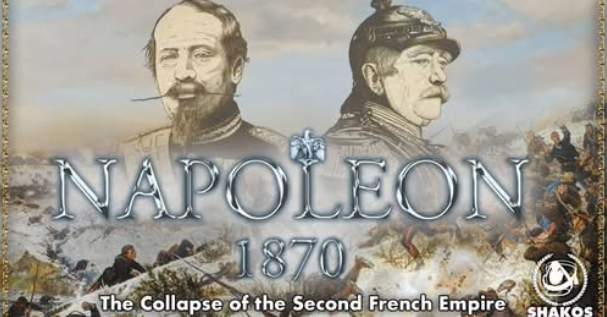
I do love a good Napoleonics wargame and The Conquerors Series from Shakos is really very good as we have played a few games over the years. They have a new volume in that series on Kickstarter that is designed by a tandem of great designers in Brian Asklev (Baltic Empires from GMT Games and 1812: Napoleon’s Fateful March from VUCA Simulations) and Fred Serval (A Gest of Robin Hood and Red Flag Over Paris from GMT Games as well as A Very Civil Whist from PHALANX) called Napoléon 1870: The Collapse of the Second French Empire from Shakos. This game is set in a different period but uses the same system to tell the story of the collapse of the Second French Empire during the Franco-Prussian War of the 1870’s. We reached out to Brian to get some answers to our questions and he was more than interested in working with us.

If you are interested in Napoléon 1870: The Collapse of the Second French Empire, you can back the project on the Kickstarter page at the following link: https://www.kickstarter.com/projects/shakos/napoleon-1870-the-collapse-of-the-second-french-empire?

Grant: Brian welcome back to the blog. What is your new upcoming game Napoléon 1870 about?

Brian: Thanks – Its nice to be back 😊As the title hints at its about the Franco-Prussian War of 1870-71, and covers the opening weeks of that war.

Grant: Why was this a game that you wanted to design?

Brian: As a Frenchman and a Dane, Fred Serval (my co-designer) and I talked about how the wars of German unification (vs. Denmark in 1864, Austria in 1866 and France in 1870) are massively overlooked in our hobby, and we decided to go about to fix this.

I am a sucker for conflicts which had a decisive impact on history as well as wars where the belligerents have very asymmetric strengths and weaknesses at both the tactical and operational levels so 1870 fits this bill perfectly. The 2nd Schleswig War in 1864 would also fit this bill but is a far less interesting topic for a game due to its static nature. This leaves out 1866 and I might just return and do that campaign in this series 😊

Grant: What does the subtitle “The Collapse of the Second French Empire” mean?

Brian: The opening battles in August 1870, which led to most of the French army being trapped and besieged at Metz, was a crippling blow to the French Second Empire under Napoleon III (nephew to the way more famous Emperor of the First Empire, Napoléon Bonaparte). His attempts to salvage the situation led to the remaining part of the army and the emperor himself being trapped at Sedan and France becoming a republic again on September 4th.

Grant: Why does The Conquerors Series work for this battle in the Franco-Prussian War of the 1870’s?

Brian: It’s a very flexible system so it can easily be adapted to different periods. Its fatigue system and uncertain movement system is perfectly suited to show some of the difference between the French and Prussian armies in this campaign

Grant: What unique challenges to this well-tried and highly acclaimed campaign system are explored here?

Brian: We have added Objective Cards which allow each player to secretly draw one of their sides 5 Objective Cards before play begins. This card then lists some additional ways of earning VP’s for your side and thus you will play differently in each game depending on what you are trying to achieve besides the usual VP’s for losses and controlling specific locations.

In addition, Event Cards allowed us to add some aspects, such as logistics, which we felt was underrepresented in previous games in the series. As the Event Card use in the system is so flexible we could add this without any additional rules to the series as such.

Grant: Who is your co-designer on this effort? What has their experience brought to the table?

Brian: Fred Serval of Red Flag over Paris and A Gest of Robin Hood fame. We work very well together and find it easy to build upon the ideas of the other as well as stop those ideas that only worked well in our heads 😊
In addition, he has a lot of knowledge about the period as well as being able to read and understand French sources.

Grant: What was the division of labor between the 2 of you?

Brian: The design started when we lived in the same town and saw each other regularly, so it was easy for us to have brainstorming sessions and test ideas so we only divided the labor between us for the design of the various scenarios once we were sure the main scenario and the decks worked as we wanted them to. Besides this we decided it would be best if Fred did the translation into French 😊

Grant: How does designing a game in an established system work? Any constraints on your thoughts for the battle?

Brian: I love designing in established series as I have a solid framework from the start and can do all my reading and thinking from the perspective of the series ruleset. This was also how I started as a designer (with GMT´s Musket & Pike Series). In many ways I am probably more of a tinkerer than a designer as I always start with one or more established systems as my basic framework and then expand, merge and tweak those gradually until I end up with something that is very different from my starting point.

If a suitable system is chosen for the conflict the designer seeks to model there should be few constraints apart from the basic parameters of the series in terms of what it does, and what it does not, focus on. One of my only critiques of The Conquerors Series is the lack of logistics and supply rules as I really like such rules both as a player and as a designer (as anyone who has played 1812: Napoleon´s Fateful March will know). Luckily, The Conquerors Series is very flexible and as noted above, we could easily represent the logistic challenges of the war by the inclusion of Event Cards.

Grant: What did you need to make sure to model from the Franco-Prussian War?

Brian: We needed to include and highlight the asymmetry of both of the armies involved: The French had a massively superior rifle called the Chassepot that in and of itself could have won them the war, while the Prussians had far superior artillery. In addition, the French command was very chaotic and disorganized while the Prussians were remarkably well organized and planned considering they were technically the defending side in the war.

Grant: What sources did you consult to get the historical details correct? What one must-read source would you recommend?

Brian: Fred and I consulted several sources, with Fred having the major advantage here of being French speaking.
We actually made our own draft versions of the decks and then compared to see where we agreed and where we differed in our choice of focus. To me this was my favorite part of the design process as its very enlightening to see how another person interprets the same source info into card effects and special rules. I would recommend Geoffrey Wawro´s The Franco-Prussian War as a good one-volume book on the conflict.

Grant: What is your overall design goal and thesis with the game?

Brian: My main design goal is always to produce a game that is a solid model of the historical conflict, show players their historical counterpart´s objectives as well as the restrictions they operated under, while being capable of producing plausible alternative outcomes.

When designing in an existing series I naturally adopt that series’ focus and design philosophy, so here we have a system that excels at showing a lot of the friction of war that commanders have little control over and must continually adapt their plans to. Movement rates and combat performance are never certain and both sides have plenty of events that interfere in the operations and capabilities of the other side as well as Must-Play events that can upset the plans of both sides. Historically everything went badly for the French as they were horribly unprepared for the war they started. Within a few days it was obvious that they had to change their overall plan from one of advancing into Germany to one of saving their army from destruction.

I wanted the game to represent this and give the French a chance of winning a sudden death victory by advancing into Germany and repelling their advance forces (and thus shaking up the internal cohesion of the Prussian alliance with the other German states), so the Prussian player is forced to act with some caution in the early phase.

Poor French planning & coordination (represented by initial fatigue levels, pesky Prussian Event Cards and low movement values on their cards) will then often create a situation where the French are in danger of being outmaneuvered and encircled and this next phase in the game will often see the French army trying to fall back in good order and utilize its defensive advantages.

Grant: How does combat work in the design?

Brian: Combat in this series is simple, smooth and elegant. Each side draws a number of cards from their deck and checks the symbols in the bottom corner to see how many losses and fatigue points they cause to the opponent. The number of cards you draw depend on the number of units you have present, their strength and their Fatigue levels. Good defensive terrain as well as unit specific bonuses (clearly shown with icons on the units) may increase the number of cards you draw as well. The two decks are intentionally different. The French deck causes more losses to represent the effect of their Chassepot rifle while the Prussian deck causes more fatigue to represent their superior breechloading artillery.

Grant: What is the area covered by the board? What strategic challenges does it present?

Brian: The game covers only the first phase of the war and thus covers the area of France from (and a bit beyond) the border to Prussia in the east to the area just west of Metz. The fortress of Metz is a key terrain feature on the map and a lot of the late game revolves around it. In game terms it is impassable for the Prussians who have to go around it and control the areas behind it to besiege it. But Metz is not the only VP area on the map and the Prussians have to advance along several axis as well as prevent the French from advancing into their rear and capturing the VP areas inside Prussia. Depending on the Objective Cards drawn for each side some areas may have their VP value further increased, which will make them more important.

Grant: What role does Fatigue play in the design? How do you track this aspect?

Brian: Fatigue is a critical aspect of the system and each unit´s Fatigue Level is tracked on an off-map display which also serves to track its current strength. The Fatigue Track goes from 1 to 8. If a unit´s Fatigue Level goes beyond 4 you draw one less card for the unit in battle, and at the end of the turn if will lose a strength point.
If Fatigue reaches 8, the Cohesion of the unit collapses completely and it is eliminated. Players can discard cards at the end of the turn to recover 1 or 2 Fatigue Levels on a unit and units that do nothing for a full turn get to remove all their Fatigue at the end of the turn.

Grant: How does the game use cards? Can you share a few examples with us and explain how they work?

Brian: The series uses cards for movement, combat, Fatigue recovery and for events during your own and the opponents turn, so it is very much a card driven system 😊

Whenever you wish to move a stack you declare who is moving and then draw a card – the number in the upper-right corner is the stacks movement points (with some modifiers from leader presence and the size of the stack)

The icon in the upper left corner show when a card´s event (the text in the middle) is playable:

  • Cards with a sabre icon are battle events that are (as the name implies) playable during battles.
  • Cards with your side´s flag are playable when its your turn to move units while cards with the opposing side´s flag are playable in their turn.
  • Cards with their title in a blue box are played at the start of the turn and generally add reinforcements or effects that last throughout the turn.
  • Cards with their title in a red box are played immediately and usually represent bad stuff, outside the control of the historical commanders, happening. This could be bad weather but also logistical problems.
  • The icons in the lower right section show how many fatigue points you get to remove from a unit if you discard this card at the end of the turn while the icons in the lower left section shows how many losses and fatigue points you cause if this card is drawn to resolving a battle.

Disclaimer: The cards below are low-resolution images from the pre-proofreading so they contain small errors that have already been corrected. Blue background cards are from the French Deck while grey background cards are from the Prussian Deck.

Grant: How is victory obtained?

Brian: Victory is obtained by capturing VP cities and causing losses as in the other games in the series.
In addition to that we, as mentioned above, added Objective Cards that give players options for scoring additional VP’s by fulfilling the conditions on them.

Grant: What are some general strategies for each of the sides?

Brian: The French are definitely the weaker side in this campaign and will be fighting to prevent their army from being destroyed and the Prussians from placing Metz under siege. But on a unit-on-unit basis the French are usually superior, especially when defending, and in the early game have a chance to inflict enough losses on the Prussians to win a sudden death victory. So the Prussians are on a tight schedule and have a lot to do – but also have to be careful in how they to it.

Grant: What different scenarios are included?

Brian: The main scenario covers the period from the start of the war up to encirclement of Metz and then we have a short scenario covering the battles on the border in the opening days of the war and a short scenario covering the battle of Mars-la-Tour and Gravelotte.

Assuming we reach all the stretchgoals, there will also be a hypothetical scenario covering the same period as the main scenario but assuming the French command and logistics were better planned and organized.
All the scenarios come in a fixed setup version and a free setup version.

Grant: What do you feel the design excels at?

Brian: I think we achieved our goal of showing the different strengths and weaknesses of the two armies.
The French, with their accurate and long-ranged Chassepot rifles, will usually cause more losses than they suffer but be forced to fall back to prevent their units’ cohesion from collapsing under the weight of the effective artillery and superior numbers of the Prussians.

Grant: What other designs are you currently working on?

Brian: WAY too many!

I am working on a new Operational level game series with Fred Serval which will include little gamed topics on a vide variety of conflicts in the 1900-1990 time frame. Once we launch this series, we will likely be able to put out titles quickly as we already have several games that are ready to go now.

I am co-designing Enlightenment Empires: Power and Politics in Eastern Europe, 1725-1795 from GMT Games (the sequel to Baltic Empires) with Roman Rogov.

I am both designer and developer on 3 new games in VUCA Simulation’s Marshals & Quartermasters Series, which currently only consists of 1812: Napoleon´s Fateful March but will soon include games on the 1813 German campaign (by me), 1814 invasion of France (by Pete Manning), 1796 in Italy (by Antonello Salvatucci) and 1812 in Iberia (by me).

For Academy Games I am (hopefully) finalizing games in the Birth of Series on the Vietnam War and the 2nd Punic Wars. The latter is a co-design with Jose Rivero.

I am also working on new games in VUCA Simulation’s War Chronicles Series I started with Thirty Years of Misery that is just coming out now. One of these will also be a co-design with Jose Rivero on Al-Andalus (medieval Spain).

Lastly, I am also doing final testing on The 38th Parallel in Bellica 3rd Generation’s criminally overlooked Campaign Commander Series 😊

If you want to learn more about the game, you can watch this preview video put together by co-designer Fred Serval for the Kickstarter page:

If you are interested in Napoléon 1870: The Collapse of the Second French Empire, you can back the project on the Kickstarter page at the following link: https://www.kickstarter.com/projects/shakos/napoleon-1870-the-collapse-of-the-second-french-empire?

-Grant

Crowdfunding-Wochenschau KW 42: Nemesis Legacy

12. Oktober 2026 um 10:15
Crowdfunding-Wochenschau KW 42: Nemesis Legacy

Kalenderwoche 42 steht im Zeichen eines einzelnen Ausreißers: Nemesis: Legacy von Awaken Realms ist mit über fünf Millionen Euro die mit Abstand größte Kampagne der letzten Monate. Daneben haben zwei kleinere, aber ebenfalls deutlich überfinanzierte Projekte am selben Tag gestartet. Für die Spieleschmiede hat sich auch in dieser Woche kein neuer Brettspiel-Kandidat gefunden, der die Aufnahmekriterien dieser Ausgabe erfüllt.

Nemesis: Legacy

Crowdfunding-Wochenschau KW 42: Nemesis Legacy

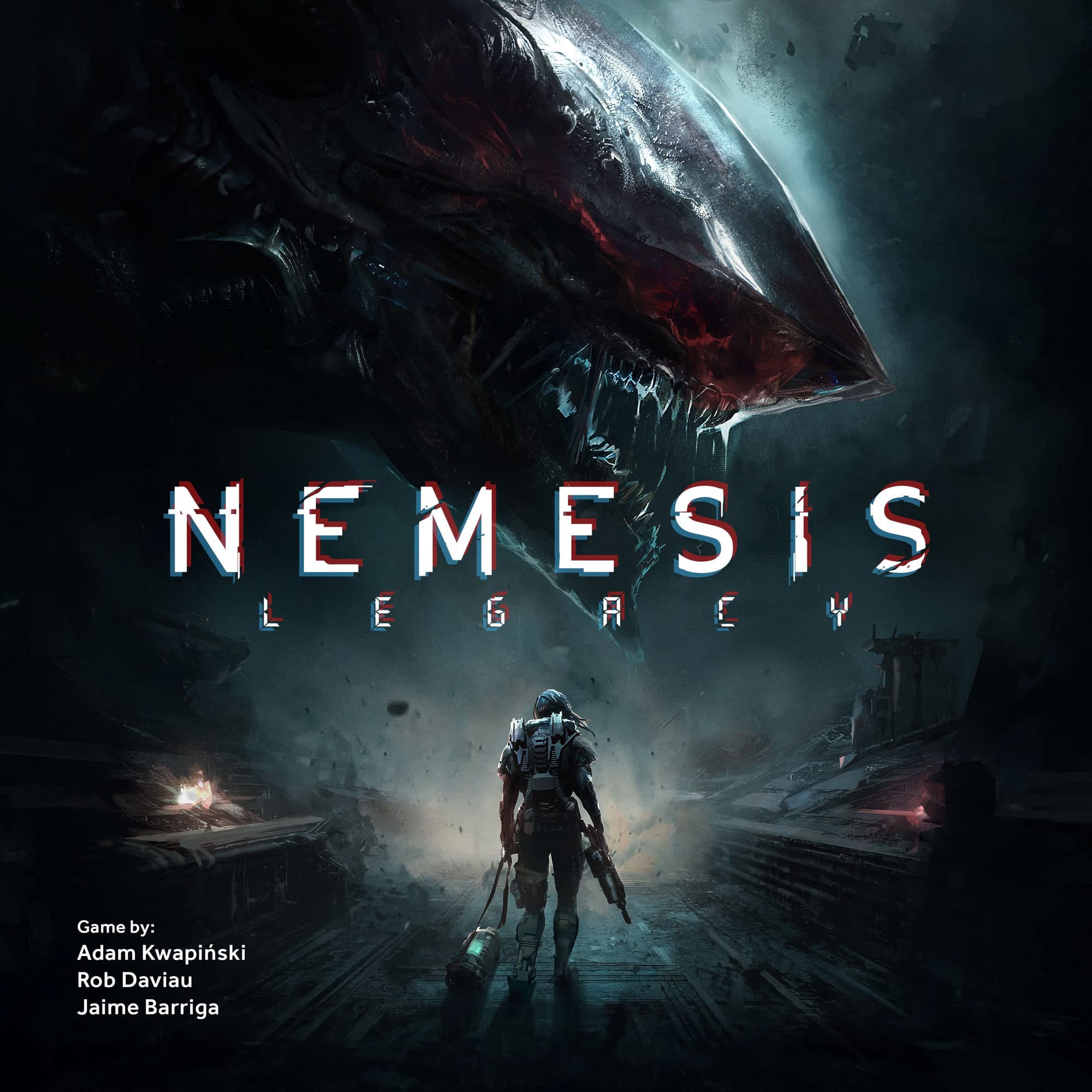
Mit Nemesis: Legacy bringt Awaken Realms die erste durchgehende Kampagne für die Nemesis-Reihe. Das Kampagnen- und Legacy-System stammt von Rob Daviau und Jaime Barriga, die Grundregeln bauen auf Adam Kwapińskis Nemesis: Retaliation auf. Die Überlebenden kämpfen in miteinander verknüpften Szenarien gegen die Intruder, Entscheidungen und Materialveränderungen wirken dauerhaft über die gesamte Kampagne hinweg. Gespielt wird von ein bis fünf Personen bei 120 bis 180 Minuten.

Ob ein eigener Solo-Modus existiert, nennt BGG nicht ausdrücklich. Die Vorgängertitel der Reihe sind bei Asmodee auf Deutsch erschienen, zur Sprachversion von Nemesis: Legacy selbst äußert sich die Kampagnenseite bislang nicht.

Die Gamefound-Kampagne startete am 6. Oktober 2026 und war laut Zeitstempel bereits nach 54 Sekunden durchfinanziert. Stand 12.10.2026 steht sie bei rund 5.202.000 Euro und 10.404 Prozent des Ziels von 50.000 Euro, getragen von fast 15.000 Unterstützenden. Der günstigste Einstieg ist die Core Pledge Standard Edition für 89 Euro, einen Auslieferungstermin nennt die Kampagnenseite nicht. Nemesis: Legacy läuft noch bis zum 27. Oktober 2026.

Excursions

Crowdfunding-Wochenschau KW 42: Nemesis Legacy

Mit Excursions erweitert Kinson Key Games das Worker-Placement-Universum von Galactic Cruise um einen eigenständigen, zugänglicheren Ableger von Designer Ben Rosset mit Illustrationen von Ian O'Toole. Als Cruise Director wählt die aktive Person eine von sieben Aktionen an einer drehbaren Raumstation, die alle gleichzeitig ausführen, während nur sie selbst einen zusätzlichen Bonus erhält. Gespielt wird von ein bis sechs Personen bei 60 bis 90 Minuten, ein Solo-Modus ist laut BGG vorgesehen. In Deutschland soll das Spiel laut Brettspielbox beim PD-Verlag erscheinen.

Die Kickstarter-Kampagne startete am 6. Oktober 2026 und steht, Stand 12.10.2026, bei rund 376.000 US-Dollar und 1255 Prozent des Ziels von 30.000 US-Dollar, getragen von über 3200 Unterstützenden. Die reguläre Handelsausgabe kostet 39 US-Dollar, die Deluxe-Edition 59 US-Dollar, geschätzte Auslieferung ist für beide August 2027. Excursions läuft noch bis zum 30. Oktober 2026.

Bride of Spooktacular

Crowdfunding-Wochenschau KW 42: Nemesis Legacy

Mit Bride of Spooktacular erweitert Level 99 Games das eigene Horrorspiel Spooktacular von Designer D. Brad Talton Jr. um zehn neue Filmmonster, ohne neue Spielpläne oder sonstige Änderungen am Grundspiel. BGG führt den Titel als reine Erweiterung ohne eigene Spielpläne, vermutlich bleibt das Grundspiel Spooktacular damit für die Erweiterung erforderlich. Gespielt wird von ein bis fünf Personen bei etwa 40 Minuten, ein Solo-Modus ist laut BGG vorgesehen.

Eine deutsche Sprachversion nennt die Kampagnenseite nicht, BGG listet bislang nur eine englische Edition.

Die Gamefound-Kampagne startete am 6. Oktober 2026 und steht, Stand 12.10.2026, bei rund 207.000 US-Dollar und 415 Prozent des Ziels von 50.000 US-Dollar, getragen von über 2500 Unterstützenden. Der günstigste Einstieg in die neuen Inhalte kostet 40 US-Dollar, einen Auslieferungstermin nennt die Kampagnenseite nicht. Bride of Spooktacular läuft noch bis zum 29. Oktober 2026.

Dice Throne SAGAS: The Crimson Code startet am 13. Oktober auf Kickstarter

10. Oktober 2026 um 01:36
Dice Throne SAGAS: The Crimson Code startet am 13. Oktober auf Kickstarter

Dice Throne erweitert sein Würfel-Duell-Franchise um eine neue Reihe: SAGAS: The Crimson Code startet am 13. Oktober 2026 auf Kickstarter. Das kündigte der Hersteller in einem offiziellen Trailer an. Die Geschichte spielt in der Nexus, einer futuristischen virtuellen Realität, in der ein Bösewicht namens Mad King mit dem titelgebenden Crimson Code die Spielwelt nach seinem Willen umformt. Erste Vorberichte der Fachpresse führten das Projekt noch unter dem Arbeitstitel „Dice Throne Nexus“, offiziell heißt die neue Reihe nun SAGAS: The Crimson Code.

Neues Bytes-System statt klassischer Statuseffekte

SAGAS ist laut Verlag als fokussiertere, schnellere Variante der Dice-Throne-Formel gedacht, solo oder zu viert im Koop spielbar. Statt der bisherigen Vielzahl an Statuseffekten nutzt das neue System laut Designer John Heidrich nur noch rote und blaue „Bytes“ als vereinheitlichte Marker. CEO Casey Sershon erklärt, ein einzelner Statuseffekt könne je nach Spielfeld und Gegner unterschiedlich wirken.

Gewürfelt wird, um Fähigkeiten auszulösen. Erfüllte Ziele bringen Erfahrungspunkte, und ab 10 Punkten steigt man eine Stufe auf. Vier neue Heldinnen und Helden sind bereits bestätigt: der boxende Arbeiterroboter Punch-A-Tron 3000, die Scharfschützin Snyper, die holografische Hackerin sowie Phantom Runner, ein Geist, der durch feste Materie phasen kann.

Fünf Akte gegen den Mad King

Der Mad King und seine Schergen werden über fünf Akte hinweg in Bosskämpfen bekämpft, die sich laut Entwicklerteam am Begegnungssystem der bisherigen Missions-Erweiterung orientieren. Vorhandene Heldinnen und Helden aus der Hauptreihe lassen sich laut Verlag ebenfalls in die Nexus mitnehmen, zusätzlich zu den vier neuen Charakteren.

Weitere Details zu Spielzeit, Pledge-Stufen, Preis und Lieferdatum nennt Dice Throne vor dem Kampagnenstart nicht. Zu einer deutschen Lokalisierung oder einem deutschen Vertriebspartner äußert sich bislang weder der Trailer noch die Fachpresse. Die Kickstarter-Projektseite ist inzwischen online und sammelt Vorab-Anmeldungen für den Kampagnenstart am 13. Oktober. Einen eigenen BGG-Eintrag gibt es weiterhin nicht.

Steamforged crowdfunding concerns grow as updates dry up, refund requests go unresolved

09. Oktober 2026 um 15:34

Steamforged Games is facing mounting criticism from crowdfunding backers over unresolved refunds and dwindling updates across its undelivered projects, in the wake of the publisher cutting about a third of its workforce and refocusing towards its Warmachine miniatures line earlier this year.

BoardGameWire reported in June that the UK-based company, which made its name adapting video games such as Dark Souls into multi-million-dollar board game Kickstarters, was reducing its crowdfunding activity following a second set of redundancies in three years.

That left Steamforged with nine campaigns with outstanding fulfilment obligations, which together raised almost £19m including late pledges. The biggest of those is Monster Hunter World: Iceborne, which pulled in almost £6.3m from almost 15,000 backers and was originally estimated to be delivered almost two years ago, in November 2024.

Monster Hunter World: Iceborne || Gamefound campaign image

Steamforged said in a Kickstarter update in January this year that it was aiming to deliver the title to all regions in July, but has provided just two updates since.

The first, in April, said things were “back up and running following Chinese New Year” and promising “more substantial updates” in the coming months, while another at the end of July read:

“We’d like to start by apologising for the lack of a formal update recently. We had intended to have concrete fulfilment information ready for you this month, but this update is waiting on some key information from partners which is still pending.

“In the meantime, we wanted to let you know we are working hard behind the scenes and will have an update to share as soon as we possibly can.”

That lack of communication about the status of projects has been repeated across Steamforged’s other outstanding crowdfunds, which include the £3.2m Helldivers 2 campaign, the £1.8m-raising Elden Ring: Rot & Sorcery and £1.2m Hearts of Iron: The Board Game.

Its other unfulfilled campaigns include the US production and shipping of Horizon Forbidden West: Seeds of Rebellion and Euthia: Cruel Frost, both of which were postponed due to tariffs uncertainty last year, and the second wave of its P3 Paints crowdfund, which has been delayed by up to a year due to a production issue with the metallic colours.

CampaignFunding including late pledgesInitial expected delivery date
Monster Hunter World: Iceborne£6,261,436November 2024
Helldivers 2£3,239,140October 2026
Horizon Forbidden West: Seeds of Rebellion£2,117,290May 2025*
Elden Ring: Rot & Sorcery£1,839,406July 2027
Euthia: Cruel Frost£1,446,056November 2025*
Hearts of Iron: The Board Game£1,240,053June 2026
Terra Mystica Special Edition£1,055,530April 2027
Bardsung: Tale of the Forsaken Glade£910,735April 2026
P3 Paints Wave 2£720,817June 2026
Total£18,830,463
*US fulfilment yet to take place

Steamforged’s sparse status updates have led to rising discontent from backers across the comment sections of its crowdfunds and on its official Discord channel, which members say has been abandoned by company staff since the refocus towards Warmachine.

Backers across those channels are now questioning whether their games will ever arrive, with some reporting waits of weeks or months for responses to refund requests. Multiple backers have now turned to PayPal disputes and credit card chargebacks to recover their money.

At least one of Steamforged’s commercial partners has also expressed concerns. Hearts of Iron IP owner Paradox Interactive confirmed in June that it was in contact with Steamforged and working to ensure customers received their games as soon as possible.

Three months later, Paradox Development Studio Gold’s studio manager described the situation as “truly unfortunate”, saying the project “seemed to be going well, until it wasn’t” and that “it’s not a fast process by any means, but solutions are being discussed”.

A spokesperson for Paradox told BoardGameWire earlier this week, “Paradox has been closely tracking the progress of the Hearts of Iron board game. We are in talks with Steamforged Games to find the best way to get the game completed.

“We are not ready to comment on or commit to a specific course of action on the situation at Steamforged.”

Hearts of Iron: The Board Game || Gamefound campaign image

A spokesperson for Feuerland Games, the publisher of Terra Mystica which teamed up with Steamforged for the special edition crowdfund, declined to comment on the situation to BoardGameWire.

Multiple sources who spoke to BoardGameWire in June on condition of anonymity said the latest Steamforged staff cuts affected departments including the creative, game design, production, project management, QA, marketing and commercial teams – adding that they feared the cutbacks would lead to problems delivering long-term projects.

But Steamforged told BoardGameWire at the time that the “vast majority” of creative work on its crowdfunded board games was complete, described the staff reduction as “carefully considered”, and said the company “retain[s] both the internal resource and the external capabilities needed to deliver on our commitments”.

BoardGameWire has attempted to contact Steamforged CEO Rich Loxam multiple times across August, September and October about the ongoing situation at the publisher, and to ask questions about refunds, production and delivery schedules and whether the restructuring had affected the company’s ability to complete its existing projects – but has received no response.

Terra Mystica Special Edition || Gamefound campaign image

Loxam previously told BoardGameWire during Steamforged’s Terra Mystica Special Edition campaign last November that “backers need to feel heard, valued, and understood, which is why we spend so much time in the comments”.

Reflecting on the difficult fulfilment of Dark Souls: The Board Game, Loxam said in a 2022 blog post that one of Steamforged’s “bigger mistakes” had been handling problems “behind closed doors” and only speaking publicly when it felt there was something important to say.

“We were wrong,” he wrote, adding that Steamforged had “learned the hard way that transparency with supporters, backers, and fans is always the right choice”, and promising to communicate as much as possible to build trust and its reputation.

Steamforged signalled a change in its approach following June’s disclosure of the redundancies, telling BoardGameWire that “in the past, we would post updates once-a-month even during quieter periods for a project”.

“Moving forward, our focus is on providing key updates,” it added.

But the sharp decline in communication has extended beyond crowdfunding updates, with several of Steamforged’s public community channels now restricted or, like the Discord, no longer actively used by staff.

Comments are disabled on Steamforged’s YouTube videos – although the company has not uploaded anything to the channel for eight months – while posts on its Facebook page currently carry a notice saying it has “limited who can comment on this post”.

Despite the absence of staff activity on the Steamforged Discord channel, employees have remained active in the company’s dedicated Warmachine server – where the company has told users not to raise questions about its outstanding crowdfunds.

In a September 23 message on the Warmachine Discord, Steamforged’s head of marketing Chynna-Blue Perkins acknowledged that crowdfunding backers were turning to the server for answers, but said it was not the appropriate place to discuss the company’s outstanding projects.

She wrote, “As much as I understand going where you can to seek answers, I am going to have to draw a line under future Kickstarter queries in this server.

“Everyone’s been respectful considering the topic at hand, and I appreciate that, but this is a Warmachine server and it isn’t the right place for crowdfunding queries.

“The campaign pages are where any and all updates will be shared. I wish I could give you more information, but even if I could, this wouldn’t be the place for it.”

The reduction in communication has left backers increasingly having to divine for themselves exactly what is happening at Steamforged, with discussions in its Discord ranging from questions about whether to withdraw from campaigns and advice on procuring refunds, to speculation about the company’s financial stability.

Backer concerns around the latter were exacerbated at the beginning of last month when Companies House, the UK government agency responsible for company registrations, began compulsory strike-off proceedings against Steamforged Games and its parent company due to their overdue accounts, which were due on June 30.

Steamforged posted to its Facebook two days later:

We’re aware some of you have seen a First Gazette notice relating to Steamforged Games, and we’re sorry for any concern it’s caused.

This is a routine notice Companies House issues when a filing is overdue. Our filing was delayed as a result of the company restructuring work we announced earlier this year and is now being resolved.

To be clear, all business activities are continuing as normal.

The strike-off proceedings were discontinued by Companies House four days later, although Steamforged’s accounts are still listed as overdue on the agency’s website.

While the publisher’s latest accounts remain unavailable, data from Steamforged investor Foresight offers some insight into the company’s recent performance.

The investment house cut the valuation of its Steamforged holdings by almost 74% in the first half of 2026 across its Foresight VCT and Enterprise VCT investment vehicles, from £3.68m to just over £960,000 – although that does not represent the valuation of Steamforged as a whole.

Foresight, which invested £5m in Steamforged in 2019 across those vehicles and a third investment fund, said in an end of June update that the publisher had experienced “a few disappointing crowdfunding campaigns over the last 12 months” and was looking to transition away from that part of the market to focus on its higher-margin Iron Kingdoms business.

Steamforged picked up Warmachine – which is set in the Iron Kingdoms IP – P3 Paints and the Iron Kingdoms RPG from Privateer Press in 2024.

A spokesperson for Steamforged told BoardGameWire in June that Warmachine and P3 Paints revenue had tripled in the prior 21 months, despite significant stock constraints in its first year of ownership due to heavy demand.

They said at the time “Demand has been high and we’ve scaled production to meet it. Our US production capacity for Warmachine has increased by 70% since last March, with a 25% increase in Europe since August and new production facilities introduced in the UK in February 2026.”

But communication problems have also extended to P3 Paints. Backers of the Wave 2 crowdfund have complained about a lack of updates and unanswered refund requests, after Steamforged revealed in May that production problems with metallic colours had pushed expected fulfilment from June 2026 into 2027.

Steamforged has so far completed non-US fulfilment of Horizon Forbidden West: Seeds of Rebellion and Euthia: Cruel Frost this year, as well as the pre-order campaign for 6: Siege – which it picked up from now-liquidated crowdfunding major Mythic Games early last year.

The last crowdfunding campaigns substantially or fully completed by the publisher are all from last year, including Elden Ring: The Board Game, the original P3 Paints campaign and the Iron Kingdoms-set Strangelight Workshop RPG.

The post Steamforged crowdfunding concerns grow as updates dry up, refund requests go unresolved first appeared on .

CMON to give up The Adventurers ownership to get delayed project delivered as it works to stabilise finances

06. Oktober 2026 um 20:31

CMON has found a route to getting one of its delayed projects into customers’ hands without having to fund the remaining costs itself, as the financially-troubled publisher continues its attempt to recover from almost $23m of losses across 2024 and 2025.

Long-time CMON manufacturing partner Top Games has agreed to take ownership of The Adventurers in exchange for covering the remaining production and fulfilment costs for the pre-order title, with CMON continuing to “provide support”, a joint statement from the pair said.

They added that production of The Adventurers had now been completed, with finished games packed at the factory and ready for shipment.

Copies of The Adventurers ready for shipment || Photo Credit: CMON / Top Games

CMON said in January that IP sales and licensing deals were among the routes it was pursuing to secure fulfilment of its large backlog of outstanding projects, as part of its efforts to stabilise its finances.

Those undelivered projects comprise eight crowdfunding campaigns which raised more than $14m, including DC Super Heroes United, DCeased and Massive Darkness: Dungeons of Shadowreach, and four pre-order campaigns including The Adventurers.

CMON warned in the summer that its core business was suffering a “prolonged structural downturn” and was still consuming more cash than it generated, despite a drastic restructuring which has seen the company halve its workforce, sell off some of its biggest game IPs and halt new crowdfunding campaigns.

But the publisher received a major financial boost last month by completing a $19m capital raise – having entered August with just $368,000 in bank and cash balances.

That new funding is needed for far more than clearing its project backlog, however. About 40% has been earmarked for “working capital” over the coming 12 months, including staff costs, royalties, shipping and distribution, while another 20% is set to go towards repaying borrowings and other liabilities.

Another 25% of the new money is slated for expansion in existing and new markets, while 15% will go towards potential acquisitions as part of a push into digital gaming.

Top Games has been a major manufacturing partner for CMON over the years, working on more than a dozen of its games including Cthulhu: Death May Die – Fear of the Unknown, Massive Darkness 2: Hellscape and Zombicide: Undead or Alive, as well as Project: ELITE, Munchkin Dungeon and Starcadia Quest.

Its team has worked in tabletop manufacturing since 2009, and the Chinese company established its own plastics manufacturing facility in Dongguan in 2018.

Cthulhu: Death May Die – Fear of the Unknown || Kickstarter image

Top Games stressed in the announcement that manufacturing will remain the foundation of its business, and said its involvement with The Adventurers had the specific goal of getting the project completed and delivered to customers.

The Adventurers is CMON’s revival of the adventure game series from Guillaume Blossier and Frédéric Henry, which began with The Adventurers: The Temple of Chac in 2009 – originally published by AEG and Dust Games. That title was followed by followed by Dust Games and Fantasy Flight Games’ The Adventurers: The Pyramid of Horus in 2011.

CMON launched a Gamefound pre-order in March 2025 featuring new editions of both games alongside a new entry in the series, The Adventurers: Tomb of the Pirate Queen, with delivery of the project estimated for December that year.

Just a month later, however, the publisher announced it was laying off staff and halting new game development and campaign launches, citing the ongoing unpredictability in US tariffs.

A week after that, CMON revealed it had slumped to a loss of more than $3m in 2024 – a figure subsequently dwarfed by the publisher’s 2025 losses, which spiralled to nearly $20m.

Those losses are almost 5.5-times the company’s profits from the preceding nine years combined – although the company’s recent restructuring efforts have seen its losses for the first half of 2026 narrow sharply, to just over $2m.

CMON’s revenue has fallen dramatically from its pandemic-era highs, dropping to $9.9m in 2025 from between $37m and $45m in each of the previous four years.

The company has blamed that decline on factors including a slowdown in crowdfunding, weaker consumer demand and disruption from US tariffs, leaving it trying to cut costs and reshape a business built around significantly higher sales.

Massive Darkness: Dungeons of Shadowreach, which completed a $2.85m crowdfund on Gamefound early last year, was CMON’s last before it scrapped its future crowdfunding plans two months later.

The company has pivoted in the interim to releasing several smaller-box games direct to retail, including Collect!, Peanuts Talent Show, Fairy Perfume, Rocket Punch and Yokai Carnival.

Its 2026 releases continue that trend via Renier Knizia design KumoKumo Park and Atrah from Jérémy Ducret and Johannes Goupy, while the company has also highlighted Grow Sky as another release it says is ‘coming soon’.

KumoKumo Park, designed by Reiner Knizia || Photo Credit: CMON

The company has not completed fulfillment of a crowdfunding project since Zombicide: White Death in mid-2025, but did manage to deliver pre-orders for Cthulhu: Dark Providence, Marvel United: Witching Hour and Dune: Desert War in the first half of this year.

CMON said in March that it planned to resume crowdfunding in the second half of 2026 – although its latest financial report stopped short of repeating that commitment, saying instead that new titles would be launched selectively depending on market conditions, available financial resources and project readiness.

The post CMON to give up The Adventurers ownership to get delayed project delivered as it works to stabilise finances first appeared on .

Excursions – An Opinionated Preview

06. Oktober 2026 um 15:45
Once upon a time, there was a tiny company located in a small town in Tennessee…and through hard work and careful planning and taking the time to get it right, they managed to produce a game that won multiple awards … Continue reading →

Crowdfunding Campaigns of the Week – 10/5/26

05. Oktober 2026 um 15:09
Crowdfunding Campaigns of the WeekWelcome to this week’s batch of crowdfunding campaigns. We have a variety of offerings here, so we hope you will find something that catches your eye. Also, if you want to chat with the BGQ team, join our Discord Server where we talk about games, movies, sports, and other fun stuff. Check it out and […]

Source

Crowdfunding-Wochenschau KW 41: Herr der Ringe und Conan

05. Oktober 2026 um 12:03
Crowdfunding-Wochenschau KW 41: Herr der Ringe und Conan

Kalenderwoche 41 bringt gleich vier große Starts vom selben Wochenende: Drei Kickstarter-Kampagnen und eine Gamefound-Kampagne sind am 29. September live gegangen. Mit dabei ist auch ein deutscher Verlag in eigener Sache: Queen Games aus Bonn bringt mit Orlando den 13. Teil seiner Stefan-Feld-Städtereihe an den Start. Für die Spieleschmiede hat sich in dieser Woche kein neuer Brettspiel-Kandidat gefunden, der die Aufnahmekriterien dieser Ausgabe erfüllt.

Crowdfunding-Wochenschau KW 41: Herr der Ringe und Conan

The Lord of the Rings: The King's Gambit

Mit The King's Gambit bringt Restoration Games unter Leitung von Rob Daviau eine Neuauflage von Star Wars: The Queen's Gambit in die Welt von Mittelerde. Auf vier parallel laufenden Schauplätzen, darunter die Pelennor-Felder, Minas Tirith und der Weg durch Mordor, kämpfen die Reiter von Rohan, die Verteidiger Gondors und Frodo mit Sam gegeneinander beziehungsweise gegen die Zeit. Gespielt wird von ein bis vier Personen bei 90 bis 120 Minuten, ein eigener Solo-Modus wird auf der Kampagnenseite nicht erwähnt. Die aufwendige Kickstarter-Edition enthält dreidimensionale Nachbauten von Minas Tirith und Mordor, eine schlankere Handelsausgabe soll 2027 über Asmodee erscheinen.

Die Kickstarter-Kampagne startete am 29. September 2026 und steht, Stand 05.10.2026, bei rund 1.658.000 US-Dollar und 332 Prozent des Ziels von 500.000 US-Dollar, getragen von fast 5000 Unterstützenden. Die günstigste reguläre Spielausgabe kostet 199 US-Dollar, geschätzte Auslieferung ist Oktober 2027. The King's Gambit läuft noch bis zum 20. Oktober 2026.

Crowdfunding-Wochenschau KW 41: Herr der Ringe und Conan

Conan by Monolith: Tales of Tortage and Zamora

Mit Tales of Tortage and Zamora erweitert Monolith sein seit 2016 laufendes Conan-Brettspiel um zwei neue Schauplätze: das Piratennest Tortage und das von Kulten durchsetzte Zamora samt Turm des Elefanten. Die Kampagne bringt sechs neue Szenarien für den Abenteuermodus sowie sechs weitere für Solo- und Koop-Partien mit, dazu erscheint parallel eine neue Box mit Inhalten aus der Rollenspielreihe Conan: The Hyborian Age. Gespielt wird im Grundspiel von zwei bis fünf Personen bei rund 90 Minuten pro Szenario. Eine deutsche Sprachversion nennt die Kampagnenseite nicht.

Die Kickstarter-Kampagne startete am 29. September 2026 und steht, Stand 05.10.2026, bei rund 612.000 Euro und 816 Prozent des Ziels von 75.000 Euro, getragen von mehr als 3300 Unterstützenden. Der günstigste Einstieg in die neuen Inhalte ist der Board Game New Content Pledge für 99 Euro, geschätzte Auslieferung ist September 2027. Die Kampagne läuft noch bis zum 15. Oktober 2026.

Crowdfunding-Wochenschau KW 41: Herr der Ringe und Conan

Orlando

Mit Orlando legt der Bonner Verlag Queen Games den 13. Teil seiner Stefan-Feld-Städtesammlung vor. Ein bis vier Personen bauen einen eigenen Freizeitpark mit Attraktionen, Einschienenbahn und wachsendem Schloss, gesteuert über acht 16-seitige Würfel mit je zwei Aktionen pro Seite. Eine Partie dauert laut BGG 60 bis 90 Minuten.

Wie gut sich das Spiel solo spielt, nennt die Kampagnenseite nicht. Mehrere Pledge-Stufen bringen dreidimensionale Spielkomponenten wie Miniatur-Gebäude statt flacher Pappmarker mit.

Die Kickstarter-Kampagne startete am 29. September 2026 und steht, Stand 05.10.2026, bei rund 102.000 Euro und 1021 Prozent des Ziels von 10.000 Euro, getragen von über 600 Unterstützenden. Die günstigste Spielausgabe kostet 68 Euro, geschätzte Auslieferung ist August 2027. Orlando läuft noch bis zum 12. Oktober 2026.

Crowdfunding-Wochenschau KW 41: Herr der Ringe und Conan

Defenders of the Realm: Definitive Edition

Mit der Definitive Edition legt Greater Than Games das kooperative Fantasyspiel von Designer Richard Launius überarbeitet neu auf. Ein bis sechs Heldinnen und Helden verteidigen gemeinsam Monarch City gegen Monster, Dämonen und uralte Schrecken, deren Truppen sich von Runde zu Runde weiter ausbreiten. Jede Aktion am Tag drängt die Angreifer zurück, macht die nächtliche Vergeltung aber auch gefährlicher.

Gespielt wird von ein bis sechs Personen bei 90 bis 150 Minuten. Ob es einen eigenen Solo-Modus gibt, nennt die Kampagnenseite nicht.

Die Gamefound-Kampagne startete am 29. September 2026 und steht, Stand 05.10.2026, bei rund 89.000 US-Dollar und 89 Prozent des Ziels von 100.000 US-Dollar, das Ziel ist damit noch nicht erreicht. Der günstigste Einstieg kostet 60 US-Dollar, einen Auslieferungstermin nennt die Kampagnenseite nicht. Die Kampagne läuft noch bis zum 29. Oktober 2026.

❌