❌

Normale Ansicht

CMON to give up The Adventurers ownership to get delayed project delivered as it works to stabilise finances

06. Oktober 2026 um 20:31

CMON has found a route to getting one of its delayed projects into customers’ hands without having to fund the remaining costs itself, as the financially-troubled publisher continues its attempt to recover from almost $23m of losses across 2024 and 2025.

Long-time CMON manufacturing partner Top Games has agreed to take ownership of The Adventurers in exchange for covering the remaining production and fulfilment costs for the pre-order title, with CMON continuing to “provide support”, a joint statement from the pair said.

They added that production of The Adventurers had now been completed, with finished games packed at the factory and ready for shipment.

Copies of The Adventurers ready for shipment || Photo Credit: CMON / Top Games

CMON said in January that IP sales and licensing deals were among the routes it was pursuing to secure fulfilment of its large backlog of outstanding projects, as part of its efforts to stabilise its finances.

Those undelivered projects comprise eight crowdfunding campaigns which raised more than $14m, including DC Super Heroes United, DCeased and Massive Darkness: Dungeons of Shadowreach, and four pre-order campaigns including The Adventurers.

CMON warned in the summer that its core business was suffering a “prolonged structural downturn” and was still consuming more cash than it generated, despite a drastic restructuring which has seen the company halve its workforce, sell off some of its biggest game IPs and halt new crowdfunding campaigns.

But the publisher received a major financial boost last month by completing a $19m capital raise – having entered August with just $368,000 in bank and cash balances.

That new funding is needed for far more than clearing its project backlog, however. About 40% has been earmarked for “working capital” over the coming 12 months, including staff costs, royalties, shipping and distribution, while another 20% is set to go towards repaying borrowings and other liabilities.

Another 25% of the new money is slated for expansion in existing and new markets, while 15% will go towards potential acquisitions as part of a push into digital gaming.

Top Games has been a major manufacturing partner for CMON over the years, working on more than a dozen of its games including Cthulhu: Death May Die – Fear of the Unknown, Massive Darkness 2: Hellscape and Zombicide: Undead or Alive, as well as Project: ELITE, Munchkin Dungeon and Starcadia Quest.

Its team has worked in tabletop manufacturing since 2009, and the Chinese company established its own plastics manufacturing facility in Dongguan in 2018.

Cthulhu: Death May Die – Fear of the Unknown || Kickstarter image

Top Games stressed in the announcement that manufacturing will remain the foundation of its business, and said its involvement with The Adventurers had the specific goal of getting the project completed and delivered to customers.

The Adventurers is CMON’s revival of the adventure game series from Guillaume Blossier and Frédéric Henry, which began with The Adventurers: The Temple of Chac in 2009 – originally published by AEG and Dust Games. That title was followed by followed by Dust Games and Fantasy Flight Games’ The Adventurers: The Pyramid of Horus in 2011.

CMON launched a Gamefound pre-order in March 2025 featuring new editions of both games alongside a new entry in the series, The Adventurers: Tomb of the Pirate Queen, with delivery of the project estimated for December that year.

Just a month later, however, the publisher announced it was laying off staff and halting new game development and campaign launches, citing the ongoing unpredictability in US tariffs.

A week after that, CMON revealed it had slumped to a loss of more than $3m in 2024 – a figure subsequently dwarfed by the publisher’s 2025 losses, which spiralled to nearly $20m.

Those losses are almost 5.5-times the company’s profits from the preceding nine years combined – although the company’s recent restructuring efforts have seen its losses for the first half of 2026 narrow sharply, to just over $2m.

CMON’s revenue has fallen dramatically from its pandemic-era highs, dropping to $9.9m in 2025 from between $37m and $45m in each of the previous four years.

The company has blamed that decline on factors including a slowdown in crowdfunding, weaker consumer demand and disruption from US tariffs, leaving it trying to cut costs and reshape a business built around significantly higher sales.

Massive Darkness: Dungeons of Shadowreach, which completed a $2.85m crowdfund on Gamefound early last year, was CMON’s last before it scrapped its future crowdfunding plans two months later.

The company has pivoted in the interim to releasing several smaller-box games direct to retail, including Collect!, Peanuts Talent Show, Fairy Perfume, Rocket Punch and Yokai Carnival.

Its 2026 releases continue that trend via Renier Knizia design KumoKumo Park and Atrah from Jérémy Ducret and Johannes Goupy, while the company has also highlighted Grow Sky as another release it says is ‘coming soon’.

KumoKumo Park, designed by Reiner Knizia || Photo Credit: CMON

The company has not completed fulfillment of a crowdfunding project since Zombicide: White Death in mid-2025, but did manage to deliver pre-orders for Cthulhu: Dark Providence, Marvel United: Witching Hour and Dune: Desert War in the first half of this year.

CMON said in March that it planned to resume crowdfunding in the second half of 2026 – although its latest financial report stopped short of repeating that commitment, saying instead that new titles would be launched selectively depending on market conditions, available financial resources and project readiness.

The post CMON to give up The Adventurers ownership to get delayed project delivered as it works to stabilise finances first appeared on .

CMON schließt Kapitalerhöhung über 19 Millionen Dollar ab

28. September 2026 um 12:58
CMON schließt Kapitalerhöhung über 19 Millionen Dollar ab

CMON hat die im Sommer 2026 gestartete Kapitalerhöhung abgeschlossen und dabei rund 19 Millionen US-Dollar, etwa 150,5 Millionen Hongkong-Dollar, eingesammelt. Das meldet BoardGameWire. Die Bezugsrechtsemission wurde durch den Platzierungsagenten Yuen Meta abgewickelt.

Von den angebotenen Bezugsrechten zeichneten bestehende Aktionäre nur 7,76 Prozent. Mehr als 92 Prozent des Kapitals, über 17,5 Millionen Dollar, kamen damit von außenstehenden Investoren. Anfang September hatte CMON diese Kapitalerhöhung angekündigt und laut BoardGameWire vor sinkenden Kassenreserven gewarnt: Zu Beginn des Monats August lagen Bankguthaben und liquide Mittel des Unternehmens bei lediglich 368.000 Dollar.

Die Kapitalerhöhung ist der jüngste Schritt in einem längeren Turnaround-Versuch. CMON hatte in den Jahren 2024 und 2025 zusammen fast 23 Millionen Dollar Verlust gemacht, die Belegschaft in der Folge etwa halbiert und einige seiner größten Spiele-Marken verkauft. Im ersten Halbjahr 2026 lag der Verlust laut BoardGameWire noch bei rund 2 Millionen Dollar, nach 7 Millionen Dollar im Vergleichszeitraum 2025. Offen bleiben laut Bericht acht noch nicht ausgelieferte Crowdfunding-Projekte mit zusammen 14 Millionen Dollar ausstehenden Verpflichtungen gegenüber Unterstützenden.

Ob die frischen 19 Millionen Dollar reichen, um diese Verpflichtungen zu bedienen und den Turnaround zu stabilisieren, dürfte sich erst in den kommenden Quartalsberichten zeigen.

CMON succeeds with $19m capital raise in major boost to financially-troubled publisher’s turnaround

24. September 2026 um 14:40

Financially-troubled board game publisher CMON has secured a $19m injection of new capital as it battles to turn around years of heavy losses and dwindling cash reserves – which had left it with just $368,000 in bank and cash balances at the start of August.

The huge investment from new shareholders gives the crowdfunded board game giant much-needed financial breathing room, as it continues its attempt to recover from losses of almost $23m across 2024 and 2025.

CMON warned in the summer that its core business was suffering a “prolonged structural downturn” and was still consuming more cash than it generates, despite a drastic restructuring which has seen the company halve its workforce, sell off some of its biggest game IPs and halt new crowdfunding campaigns.

Those efforts dramatically reduced its losses, with the company reporting a loss of just over $2m for the first half of this year, compared to almost $7m for the same period in 2025.

But CMON’s balance sheet remained under pressure at the end of June, with $7.34m more in short-term liabilities than short-term assets, up from $6.89m at the end of 2025.

A significant part of CMON’s liabilities relates to eight crowdfunded games whose campaigns raised $14m from backers, but which the company has yet to deliver – including DC Super Heroes United, which raised more than $4.4m, and DCeased, which brought in over $2.5m.

DC Super Heroes United, designed by Andrea Chiarvesio || Crowdfunding image

CMON’s directors in its H1 report that the liabilities position had caused the company’s directors to give “careful consideration to the future liquidity and performance of the group and its available sources of financing in assessing whether the group will have sufficient financial resources to continue as a going concern”.

The directors added that they believed CMON would be be able to continue operating – but central to that assessment was the success of the planned share sale, which was designed to raise up to HK$150.5m, or about $19m.

Existing shareholders agreed to buy just 7.76% of the new shares offered to them by the August deadline, leaving CMON looking to raise more than $17.5m from other investors through the rights issue – a figure approaching 2.5-times the valuation of the entire company implied by its last share sale in February this year.

But the company has now revealed that placing agent Yuen Meta managed to sell every remaining share on offer, giving the business the full $19m it had been seeking – a significant mark of belief in the beleagured business.

That capital injection is more than 50-times CMON cash balance from early August, and almost double the $9.9m in revenue CMON generated across the whole of last year, although it pales in comparison to the $37m to $45m revenues it posted each year between 2021 and 2024.

CMON said it plans to use 40% of the newly-raised money to fund its day-to-day operations across the next 12 months, including staff costs, royalties, shipping and distribution, professional fees and other administrative and operating expenses.

Of that slice, about 30% – which works out to $2.28m – was set to go towards staff costs including salaries, bonuses and allowances, 30% towards selling and distribution expenses, and 35% towards general administrative and operating expenses, including its sales operation, utilities, insurance, government registration and filing fees, listing fee, repairs and maintenance. The the final 5% was earmarked for paying professional fees

That news could provide some relief to the tens of thousands of backers still waiting for their games via CMON’s heavily-delayed crowdfunding campaigns – although the publisher has not specified exactly how much of the capital will be used to deliver the overdue titles, or whether the capital is enough to ensure all eight will be fulfilled.

Zombicide: White Death

CMON has not completed fulfillment of a crowdfunding project since Zombicide: White Death in mid-2025, but did manage to deliver pre-orders for Cthulhu: Dark Providence, Marvel United: Witching Hour and Dune: Desert War in the first half of this year.

Four other pre-order titles: Assassin’s Creed Role Playing Game, The Adventurers, The Dead Keep and Super Fantasy Brawl Reborn, all remain undelivered, although the first of those is currently slated for completion in Q3.

GameAmount raised
Number of backers
Fundraise completedInitial delivery estimateLatest delivery estimate (as of September 24, 2026)
Mordred$669,9765,687July 2023August 2024Q4 2026
Masters of the Universe: The Board Game – Clash for Eternia$719,6644,182January 2024November 2024Q1 2027
DCeased$2,564,78912,787December 2023April 2025Q1 2027
DC Super Heroes United$4,478,98914,040August 2024August 2025Q1 2027
God of War$832,9454,388May 2024June 2025Q2 2027
Massive Darkness: Dungeons of Shadowreach$2,854,5539,842February 2025March 2026Q3 2027
A Song of Ice & Fire: Tactics$1,886,5096,406February 2024February 2025Q3 2027
Degenesis: Clan Wars$339,7421,232June 2024July 2025n/a
Total Dollars$14,347,167

About 20% of CMON’s newly-raised capital is earmarked for repaying debts and other outstanding liabilities, including $2.46m owed to a CMON director and $385,000 of unsecured advances from employees, as well as outstanding production, shipping, royalty and other operating costs.

CMON has slated 25% of the new money for expansion in existing and new markets, including strengthening the company’s presence in Europe through marketing and potential attendance at events including Spiel Essen and Cannes, as well as targeting growth in Japan and the Philippines.

The company added that it plans to put 15% of the new capital towards potential acquisitions as part of a push into digital gaming, although said it had not yet identified any targets.

CMON said it intends to look for between one and three businesses, primarily in Asia-Pacific, valued at between about $1.3m and $2.5m each, which could help it develop digital adaptations of its existing games, companion apps and other digitally-enabled features.

The publisher stressed that it intends to retain physical tabletop games as its core business, with the digital push designed to complement rather than replace them.

CMON’s capital raise has also radically reshaped the ownership of the company, with chairman and CEO Ng Chern Ann ceasing to be the largest shareholder after his overall stake was diluted down from about 20% to just over 5%.

The capital raise has made investor Yip Ka Ki Cherry CMON’s largest disclosed shareholder with a roughly 19% stake, personally and via her investment holding company Legend One.

Yip was already an investor in CMON before the rights issue, with a stake of about 4.8%. Her other previous investments through Legend One include Japanese entertainment business TryHard Holdings.

CMON has also strengthened its board following the capital raise, appointing two new independent non-executive directors – veteran financial management, corporate governance and audit executive Chan Ka Kit, and corporate communications, marketing and investor relations specialist Claire Luk.

The post CMON succeeds with $19m capital raise in major boost to financially-troubled publisher’s turnaround first appeared on .

Queen Games setzt auf 3D-Druck gegen die Lieferketten-Krise

21. September 2026 um 07:50
Queen Games setzt auf 3D-Druck gegen die Lieferketten-Krise

Der Troisdorfer Verlag Queen Games hat bei seiner Herbstneuheiten-Präsentation am 19. und 20. September in Bonn angekündigt, Spielmaterial künftig teilweise in Eigenregie mit 3D-Druckern herzustellen. Das berichtet das Fachmagazin Reich der Spiele. Rund 40 geladene Gäste konnten die kommenden Titel bei der Präsentation in Bonn bereits probespielen. Verlagschef Rajive Gupta reagiert damit auf blockierte und teure Lieferwege aus Fernost, von wo ein Großteil der Branche ihr Spielmaterial bezieht.

Von der Maßnahme verspricht sich Queen Games vor allem eine verlässlichere Zeitplanung in der Produktion, unabhängig von Reederei-Kapazitäten und schwankenden Zöllen. Reich der Spiele wirft zudem die Frage auf, ob sich daraus künftig auch ungewöhnlicheres, individuelleres Spielmaterial ergeben könnte. Welche Komponenten konkret künftig gedruckt statt importiert werden und ab wann, nannte der Verlag bislang nicht.

Kostendruck trifft die ganze Branche

Queen Games ist nicht der erste Verlag, der wegen wirtschaftlichen Drucks umsteuert. Bereits im Frühjahr 2025 hielt Asmodee trotz Zoll-Unsicherheit an seinem Expansionskurs fest und wich unter anderem auf neue Fertigungsstandorte in Asien aus, ein Druck, der wie bei Queen Games direkt von unsicheren Fernost-Lieferketten ausgeht. Deutlich anders liegt der Fall beim Crowdfunding-Spezialisten CMON: Er kämpft laut eigenem Halbjahresbericht mit einem „anhaltenden strukturellen Abschwung“ und sucht seit September mehr als 17,5 Millionen US-Dollar von Investoren, nachdem er bereits seine Belegschaft halbiert, den Hauptsitz in Singapur geschlossen und mehrere Marken verkauft hatte. Anders als bei Queen Games und Asmodee nennt CMON selbst keine Lieferketten- oder Zollprobleme als Ursache.

Diversifizieren, schrumpfen oder selbst produzieren

Die drei Fälle zeigen unterschiedliche Antworten auf wirtschaftlichen Druck in der Branche, aber nicht immer auf dieselbe Ursache. Asmodee nutzt seine finanzielle Stärke, um Produktion geografisch zu streuen und Importe flexibel zu steuern, als direkte Reaktion auf Zoll- und Lieferkettenunsicherheit. CMON fehlt für einen vergleichbaren Umbau schlicht das Kapital, und der Verlag reagiert auf eine breitere strukturelle Krise mit Personalabbau, Markenverkäufen und der Suche nach frischem Geld. Queen Games wählt einen dritten Weg und reagiert wie Asmodee konkret auf Lieferketten-Druck aus Fernost: Statt Fertigung geografisch zu verlagern, will der Verlag Teile davon ganz ins eigene Haus zurückholen.

Ob sich 3D-Druck für einen Verlag der Größe von Queen Games wirtschaftlich trägt, wird sich erst zeigen, wenn die ersten so gefertigten Komponenten tatsächlich in Spielschachteln liegen. Als Signal an Fachhandel und Fans wenige Wochen vor der SPIEL '26 kommt die Ankündigung jedenfalls zur rechten Zeit.

CMON sucht 17,5 Millionen Dollar von Investoren

14. September 2026 um 06:14
CMON sucht 17,5 Millionen Dollar von Investoren

CMON warnt in seinem Halbjahresbericht 2026 vor einem „anhaltenden strukturellen Abschwung“ und sucht mehr als 17,5 Millionen US-Dollar von externen Investoren. Eine Bezugsrechtsemission an die Altaktionäre wurde nur zu 7,76 Prozent gezeichnet, das berichtet das Fachportal BoardGameWire am 9. September 2026.

Der Verlust im ersten Halbjahr 2026 liegt bei 2,1 Millionen Dollar, deutlich niedriger als der Verlust von 7 Millionen Dollar im ersten Halbjahr 2025, bei einem Umsatz von 3,68 Millionen Dollar. Die Barreserven lagen zum 4. August 2026 bei rund 368.000 Dollar, im Juni 2025 waren es noch 900.000 Dollar. Nach eigener Einschätzung reicht das verbleibende Geld für unter einen Monat Betrieb.

CMON hat seine Belegschaft bereits halbiert, den Hauptsitz in Singapur geschlossen und mehrere Marken verkauft, darunter Zombicide und Cthulhu: Death May Die an Asmodee sowie Blood Rage. Neue Crowdfunding-Kampagnen sind gestoppt, gegenüber Unterstützenden bereits laufender, aber noch nicht ausgelieferter Kampagnen stehen laut Bericht rund 14 Millionen Dollar aus.

Wofür CMON das Geld einsetzen will

Vom gesuchten Kapital sollen laut Plan 40 Prozent in den laufenden Betrieb (Personal, Lizenzgebühren, Versand) fließen, 20 Prozent in die Schuldentilgung, 25 Prozent in die Markterweiterung in Asien und Europa und 15 Prozent in ein bis drei Übernahmen im Digitalspiele-Bereich im Wert von 1,3 bis 2,5 Millionen Dollar. Zur Europa-Erweiterung zählt laut CMON auch eine mögliche Teilnahme an der SPIEL Essen und dem Festival International des Jeux in Cannes.

Der Vorjahresbericht hatte für 2025 einen Verlust von 19,9 Millionen Dollar ausgewiesen. Asmodee erweitert sein Portfolio derweil auf mehreren Wegen: Erst Anfang September übernahm der Konzern mit Welcome To… eine weitere Reihe vom französischen Verlag Blue Cocker, zuvor hatte er bereits Sheriff of Nottingham und den Verlag Japon Brand von CMON erworben.

CMON warns of ‘prolonged structural downturn’ as it seeks up to $17.5m from investors

09. September 2026 um 17:37

CMON has warned that its core business is suffering a “prolonged structural downturn” and is still consuming more cash than it generates, despite a drastic restructuring which has seen the board game crowdfunding major halve its workforce, sell off some of its biggest game IPs and halt new crowdfunding campaigns.

The warning comes amid an extraordinary period of upheaval for one of tabletop gaming’s biggest crowdfunding publishers, which suffered losses of almost $23m across 2024 and 2025 and is still working to deliver a string of heavily-delayed campaigns that raised more than $14m from backers.

CMON has spent the past 18 months attempting to stabilise its finances by cutting staff and other costs, selling high-profile IP including Zombicide, Blood Rage and Cthulhu: Death May Die, divesting its Singapore office and raising fresh money from investors.

Those efforts have now dramatically reduced its losses, CMON’s newly-released H1 financial report shows – with the company reporting a loss of just over $2m for the first half of this year, compared to almost $7m for the same period in 2025.

CMON’s revenue also rose more than 7% year-on-year in H1, up to $3.68m from $3.43m in the first six months of 2025, while its selling and distribution expenses more than halved from $1.83m to $859,000, and its general and administrative expenses fell from $4.37m to $2.37m.

But that improvement has failed to make the underlying business self-sustaining. CMON’s cash reserves, which stood at $3.9m at the end of 2022, had fallen to $2.1m by the end of 2024, and slipped again to just over $900,000 by June 2025.

CMON revealed last month that it had about $368,000 in bank and cash balances as of August 4, which it described as enough to cover less than a month of its daily operating expenses.

Crowdfunding Commitments

Despite the sharp reduction in its losses, CMON’s balance sheet remained under pressure at the end of June – with $7.34m more in short-term liabilities than short-term assets, up from $6.89m at the end of 2025.

A significant part of CMON’s liabilities relates to eight crowdfunded games whose campaigns raised $14m from backers, but which the company has yet to deliver.

They include DC Super Heroes United, which raised more than $4.4m, and DCeased, which brought in over $2.5m. Both of those campaigns were initially due to be delivered last year, but fulfillment has been pushed back several times since and both are now scheduled for the first quarter of 2027.

CMON has not completed fulfillment of a crowdfunding project since Zombicide: White Death in mid-2025, but has managed to deliver pre-orders for Cthulhu: Dark Providence, Marvel United: Witching Hour and Dune: Desert War in the first half of this year.

Four other pre-order titles: Assassin’s Creed Role Playing Game, The Adventurers, The Dead Keep and Super Fantasy Brawl Reborn, all remain undelivered, although the first of those is currently slated for completion in Q3.

Funding Push

CMON said in its H1 report that the liabilities position had caused the company’s directors to give “careful consideration to the future liquidity and performance of the group and its available sources of financing in assessing whether the group will have sufficient financial resources to continue as a going concern”.

Those directors believe CMON will be able to continue operating – but central to that assessment is a major share sale designed to raise up to HK$150.5m – about $19m.

CMON first announced the rights issue fundraise in June, proposing to offer existing shareholders the opportunity to buy three new shares for every share they already owned in an attempt to raise the capital.

The plan was approved by shareholders in late July and the formal offer opened in mid-August – but existing shareholders took up just 7.76% of the new shares offered to them by the August deadline.

That leaves CMON looking to raise more than $17.5m from other investors through the rights issue – a figure approaching 2.5-times the valuation of the entire company implied by its last share sale in February this year.

CMON said it plans to use 40% of the money raised to fund its day-to-day operations for roughly the next year, including staff costs, royalties, shipping and distribution, professional fees and other administrative and operating expenses.

Another 20% is earmarked for repaying debts and other outstanding liabilities, including $2.46m owed to a CMON director and $385,000 of unsecured advances from employees, as well as outstanding production, shipping, royalty and other operating costs.

CMON has earmarked 25% for expansion in existing and new markets, including strengthening the company’s presence in Europe through marketing and potential attendance at events including Spiel Essen and Cannes, as well as targeting growth in Japan and the Philippines.

Digital Ambitions

The company added that it plans to put 15% of the new capital towards potential acquisitions as part of a push into digital gaming, although said it had not yet identified any targets.

CMON said it intends to look for between one and three businesses, primarily in Asia-Pacific, valued at between about $1.3m and $2.5m each, which could help it develop digital adaptations of its existing games, companion apps and other digitally-enabled features.

The publisher stressed that it intends to retain physical tabletop games as its core business, with the digital push designed to complement rather than replace them.

That announcement comes just a few weeks after CMON terminated its planned $2.1m investment in NFT video game maker Blissful Link, an investment it had previously said formed part of a digital shift necessary to remain “relevant” in the games industry and expand its revenue stream.

That plan had included transitioning the company’s titles such as Massive Darkness and Super Fantasy Brawl Reborn into “high-quality digital assets” – with CMON saying the group would “continue to supplement this digital transformation as physical games would still offer a ‘screen break’ for individuals as well as foster direct face to face interaction”.

The proposed investment would have valued Blissful Link at more than $95m. Blissful Link made a loss of about $197,000 in 2024, on revenues of just over $408,000, and had net liabilities of about $889,000, according to unaudited figures provided by CMON in April. It did not include finances for 2025.

CMON said in the rights issue offer, “Under prevailing high-interest lending conditions, traditional bank borrowings and debt financing carry heavy interest and securing such financing would severely strain the group’s remaining liquidity.

“Accordingly, equity financing via the rights Issue is the most viable strategic path to recapitalize the group’s capital base without increasing debt distress.”

The directors’ assessment that CMON can remain a going concern also takes into account continued financial support from some of its directors, progress fulfilling its outstanding contract liabilities and further restructuring aimed at reducing cash outflows.

Revenue Collapse

CMON’s latest figures also reveal the scale of the collapse in its North American and European revenues over the past five years, transforming the geographical make-up of what remains of its business.

North America alone generated more than $8.6m for CMON in the first half of 2021, making up 57% of its roughly $15.1m H1 revenue. By the first half of this year, however, revenue from North and South America combined had fallen to just $642,000.

Europe has undergone a similarly dramatic contraction, with revenue from the region falling from about $4.5m in the first half of 2021 to just $982,000 in the latest six-month period.

Asia has consequently become CMON’s largest market by a considerable margin, generating more than $2m in the first half of this year and accounting for about 55% of its total revenue, compared with less than 10% in the same period of 2021.

That reversal has not been driven by Asian growth, however. CMON generated $3.22m from Asia in the first half of 2022, marking a roughly 37% decline since – but a far more resilient performance than the steep falls recorded in North America and Europe over the same period.

The publisher said in its H1 2026 report, “The group intends to continue developing its distribution and market presence in Asia while supporting its established markets in Europe.

“The group will also continue to monitor trade and tariff conditions affecting the US market, and maintain a prudent approach to allocate resources to markets and projects.”

CMON said in March this year that it intended to resume crowdfunding in the second half of 2026, but its latest interim results stop short of repeating that commitment, saying instead that new titles will be developed and launched selectively depending on market conditions, available financial resources and project readiness.

The final result of the rights issue is due to be announced on September 15.

The post CMON warns of ‘prolonged structural downturn’ as it seeks up to $17.5m from investors first appeared on .

Asmodee übernimmt Flip-and-Write-Reihe Welcome To... von Blue Cocker

03. September 2026 um 15:24
Asmodee übernimmt Flip-and-Write-Reihe Welcome To... von Blue Cocker

Asmodee übernimmt die komplette Welcome-To-Reihe, Marke und geistiges Eigentum, vom französischen Verlag Blue Cocker. Der Konzern setzt damit seine im November 2024 angekündigte Übernahmestrategie fort, für die er nach eigenen Angaben eine Pipeline von mehr als 20 möglichen Zielen aufgebaut hat. Finanzielle Details zur Transaktion nannten beide Seiten nicht. Das berichtet das Fachportal BoardGameWire.

Welcome To... geht auf Benoit Turpins Durchbruchsspiel „Welcome to Your Perfect Home“ von 2018 zurück und gilt als Wegbereiter des Flip-and-Write-Genres: Statt eines Würfelwurfs teilen sich alle Mitspielenden dieselben aufgedeckten Karten und tragen ihre Wahl gleichzeitig ein. Die Reihe wuchs seither um die eigenständigen Fortsetzungen „Welcome to the Moon“ und „Welcome to New Las Vegas“ und verkaufte sich nach Angaben von BoardGameWire mehrere hunderttausend Mal. Allein auf der Plattform Board Game Arena kommt die Serie auf mehr als 3 Millionen gespielte Partien und im Schnitt über 3.000 individuelle Spielende pro Tag. Auf Deutsch erscheint die Reihe bei Pegasus Spiele.

Teil einer größeren Einkaufstour

Welcome To... reiht sich in eine Serie von Zukäufen ein, mit denen Asmodee seine 2024 angekündigte Rückkehr zur aktiven Übernahmepolitik untermauert. 2025 sicherte sich der Konzern bereits Zombicide und Cthulhu: Death May Die vom finanziell angeschlagenen Verlag CMON. In diesem Jahr kamen die bis zu 250 Millionen Euro schwere Übernahme von ATM Gaming, der Kauf von Sheriff of Nottingham und des Verlags Japon Brand von CMON, der Erwerb von Time’s Up! vom Verlag R&R Games sowie die restlichen 45 Prozent an Exploding Kittens hinzu, über dessen bisherige Chefin Carly McGinnis Würfelreich zuletzt berichtete. Konzernchef Thomas Kœgler hatte bei der Ankündigung der Strategie gesagt, man kenne viele der Übernahmeziele durch bestehende Geschäftsbeziehungen bereits „in- und auswendig“ (übersetztes Zitat, Auszug).

Finanziell hat Asmodee für weitere Zukäufe Spielraum: Der Umsatz stieg im Geschäftsjahr bis Ende März um 23 Prozent auf 1,68 Milliarden Euro, das bereinigte EBITDA legte um rund 25 Prozent auf 285,4 Millionen Euro zu. Die Nettoverschuldung lag zum Ende Juni beim 1,6-Fachen des bereinigten EBITDA, unter Einbeziehung laufender Übernahmeverpflichtungen beim 1,7-Fachen, deutlich unter der selbst gesteckten Grenze vom 2,5-Fachen und niedriger als ein Jahr zuvor.

Von der Garage zum Fünf-Personen-Verlag

Blue Cocker wurde 2013 vom ehemaligen Luftfahrtingenieur Alain Balay gegründet. Der Erfolg von Welcome To... erlaubte es dem zunächst als Ein-Personen-Betrieb geführten Verlag, bis 2019 auf fünf Beschäftigte zu wachsen, wie Balay der französischen Zeitung La Gazette du Midi sagte. Sein Exportanteil sei damals auf 60 Prozent des Umsatzes gestiegen, angesichts globaler wirtschaftlicher und politischer Unsicherheiten aber inzwischen auf rund 10 Prozent gefallen. Neben der Welcome-To-Reihe verlegt Blue Cocker unter anderem Medieval Academy (2014), Meeple War (2016), The Last Droids (2025) und das Wirtschafts-Deckbuilding-Spiel SAN als Haupttitel des laufenden Jahres.

Asmodees Bereichsleiter Mathieu Aubert sieht in der Übernahme mehr als nur eine starke Marke fürs eigene Portfolio: „Wir sehen großes Potenzial, das Welcome-To-Universum zu erweitern, und das Team hat bereits viele Ideen, um das umzusetzen. Ich freue mich darauf, im kommenden Monat mehr über unsere Projekte zu berichten“ (übersetztes Zitat). Asmodees SVP Tabletop Games, Benoit Clerc, würdigte die Reihe als „Meilenstein des modernen Brettspiels, der elegantes Spieldesign mit außergewöhnlicher Zugänglichkeit verbindet“ (übersetztes Zitat).

Balay selbst zeigte sich zuversichtlich: „Wir sind unglaublich stolz auf alles, was Welcome To... in den vergangenen Jahren erreicht hat, und sind zuversichtlich, dass Asmodee die Marke nun weiterträgt und noch mehr Menschen weltweit damit erreicht“ (übersetztes Zitat). Wie genau sich die Reihe unter dem neuen Dach weiterentwickelt, will Asmodee nach eigenen Angaben in den kommenden Wochen genauer vorstellen.

Von 2 Win bis Quando: 9 Kartenspiele im Schnelldurchlauf

16. August 2026 um 15:47

Kein Gesabbel – hier geht es direkt los mit der Vorstellung von neun Kartenspielen:

2 Win

Alle wählen gleichzeitig zwei ihrer Handkarten mit Werten von 1 bis 9 aus, um daraus eine zweistellige Zahl zu legen. Runde für Runde muss ich meine Zahl aus der Vorrunde überbieten. Der Kniff dabei: Ich darf nur dann Karten nachziehen, wenn ich bestimmte Bedingungen erfülle. Wenn ich beispielsweise eine Schnapszahl ablege oder die größte Zahl der Runde habe. Gehen mir die Karten aus, scheide ich aus. Wer in diesem feinen Spiel vorausschaut und taktisch agiert, hält am längsten durch und gewinnt.

2 Win

2 Win | Spiel für alle | Pegasus Spiele | Florian Racky | 2 bis 6 Personen | ab 8 Jahren | 10 bis 20 Minuten | Spielanleitung | Meine Bewertung: ★★★ (gut)

Burst

Ein Spiel, das von Schadenfreude lebt: Die zentrale Kartenauslage explodiert, wenn die Summe aller Werte über 21 steigt. Wer das nicht verhindern kann, geht mit einer Null aus der Runde. Alle anderen schreiben die Summe ihrer Werte auf den Handkarten auf. Daraus ergibt sich ein Dilemma: Hohe Zahlen versprechen Punkte, erhöhen aber auch die Wahrscheinlichkeit der Knock-outs. Negative Werte, Zusatzaktionen und ein gutes Handkartenmanagement wirken zu meinen Gunsten – und mischen taktisches Gespür ins Kartenglück.

Burst | Spiel für alle | Pegasus Spiele | Cameron Ring, Corey Schrimpl, H. C. Schrimpl | 3 bis 6 Personen | ab 8 Jahren | 25 bis 35 Minuten | Spielanleitung | Meine Bewertung: ★★ (ordentlich)

Clear 4

Ein weiterer Uno-Klon, bei dem es schlicht darum geht, seine Karten loszuwerden? Nein! Clear 4 verlangt taktische Entscheidungen, ohne dabei kompliziert zu werden. Und es hat ein Zockerelement. Denn ein Teil meiner Karten wird zu Beginn als Auslage vor mir platziert. Vier Stapel mit jeweils drei Karten, nur die jeweils oberste ist aufgedeckt. Alle weiteren muss ich erst freispielen, wobei die untersten erst in dem Moment aufgedeckt werden dürfen, wenn ich mich zum Ausspielen genau einer dieser Karten entscheide. Aber wann? Die oberste Karte in der Mitte darf ich nicht überbieten, sonst muss ich alle Karten aus der Mitte aufnehmen. Hilfreich ist, in der Ablage ein Quartett zu bilden. Das räumt die Ablage ab und ich habe noch einen weiteren Zug. Ein cleverer Mechanismus!

Clear 4 | Spiel für alle | Schmidt Spiele | Joe & Christine Ward | 2 bis 6 Personen | ab 8 Jahren | 15 Minuten | Spielanleitung | Meine Bewertung: ★★★ (gut)

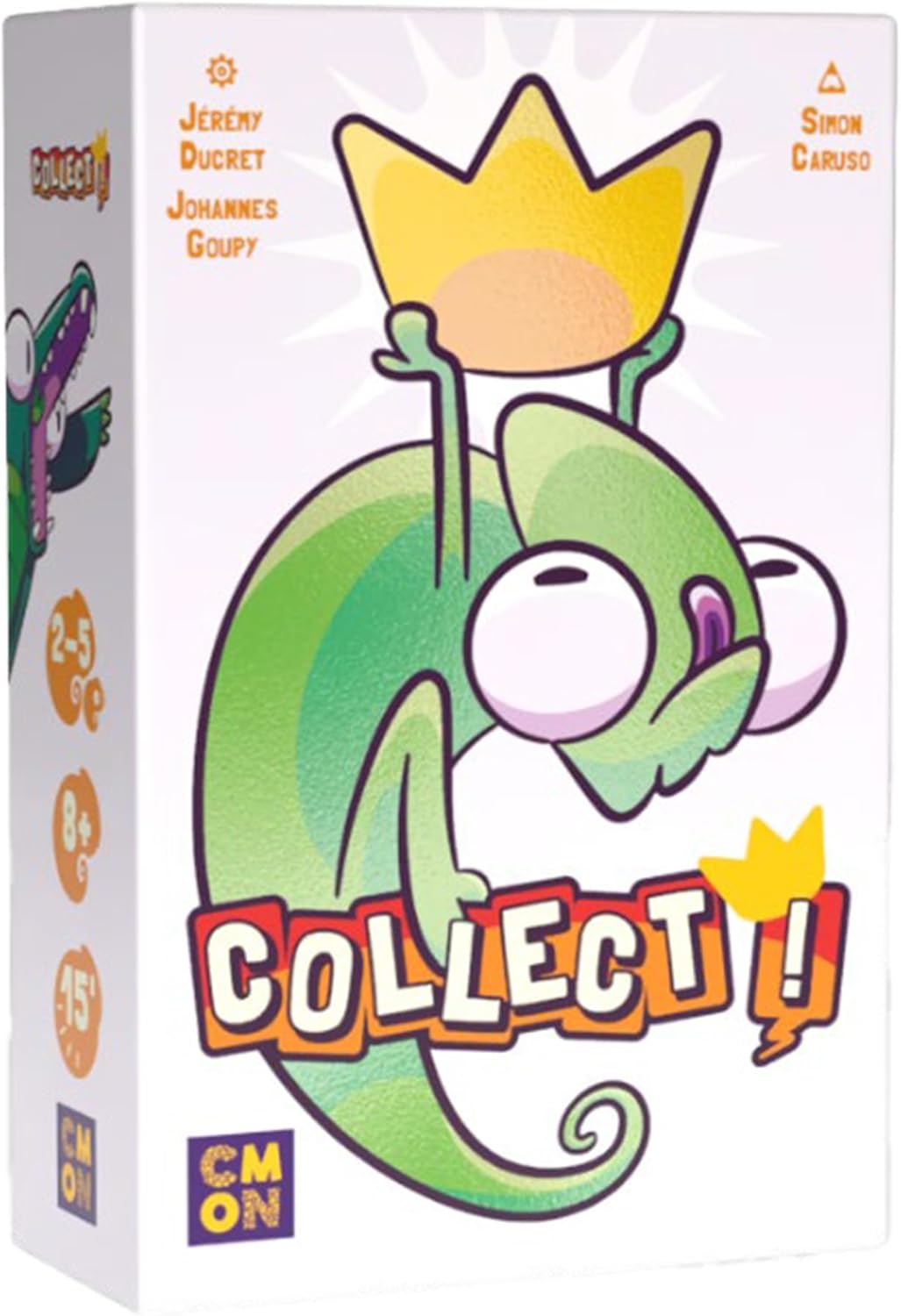
Collect!

Wir legen glitzernde Tierkarten vor uns ab und nutzen deren Effekte. Ziel: Ich möchte vier gleiche Tiere nebeneinander in meiner Reihe liegen haben. Clever: Gefällt mir die gezogene Karte nicht, lege ich sie auf einen der beiden Stapel zurück und spiele die oberste des anderen Stapels aus. Bitte Memo-Modus einschalten! In manchen Durchgängen löst der Spielverlauf Emotionen aus, aber in vielen anderen eben auch nicht. Hmm.

Collect! | Spiel für alle | CMON | Jérémy Ducret und Johannes Goupy | 2 bis 5 Personen | ab 8 Jahren | 15 Minuten | Spielanleitung | Meine Bewertung: ★★ (ordentlich)

Ninety Nine

Der Titel gibt das Ziel vor: 99 (oder mehr) Punkte bedeuten den Sieg. Diese Punkte erhalte ich, indem ich farbige Zahlenkarten mit Werten von 0 bis 9 ablege. Zunächst eine in meine persönliche Auslage, danach so viele wie möglich auf drei zentrale Stapel. Die Regeln dafür wirken bürokratisch, sind aber schnell verinnerlicht. Je schneller und häufiger ich meinen regelmäßig aufzufüllenden Nachziehstapel leer spiele, desto mehr Punkte kassiere ich. Empfehlenswert ist es, direkt die Profi-Variante zu wählen. Denn dann erlebe ich mitunter Glücksgefühle durch eine Art belohnender Kettenzüge.

Ninety Nine | Spiel für alle | Kendi Games | Reinhard Staupe | 2 bis 4 Personen | ab 8 Jahren | 30 Minuten | Meine Bewertung: ★★ (ordentlich)

Odin

Wer sich durch die in der Startauflage grausige Spielanleitung durchgekämpft hat, wird mit einem guten Spiel belohnt. Um meine Handkarten loszuwerden, muss ich die Zahl meines Vorgängers erhöhen. Entweder, indem ich gleich viele Karten oder genau eine Karte mehr ausspiele. Wichtig: Spiele ich mehrere Karten aus, müssen entweder alle Zahlen oder alle Farben identisch sein. Die Krux dabei: Ich muss eine der zuvor abgelegten Karten auf die Hand nehmen. Lieber passen? Bei Odin ist auch Timing wichtig. Zumal jede Karte, die ich am Rundenende auf der Hand habe, einen Strafpunkt zählt. Hat jemand 15 Miese erreicht, wird final abgerechnet.

Odin | Spiel für alle | Helvetiq | Gary Kim, Hope S. Hwang, Yohan Goh | 2 bis 6 Personen | ab 7 Jahren | 15 Minuten | Spielanleitung | Meine Bewertung: ★★★ (gut)

Paper World

In der Mitte sind mehrere Stapel, von denen ich mich bedienen darf. Entweder nehme ich alle Karten derselben Farbe oder alle mit derselben Zahl. Alternativ kann ich nach vergleichbaren Regeln meine gesammelten Handkarten auf persönliche Stapel in einem 3×3-Raster ausspielen, wobei jeder bei 1 beginnt und bestenfalls mit 5 endet – und selbstverständlich aus gleichfarbigen Karten mit aufsteigenden Werten bestehen muss. Wer effizient agiert, klug die Überspringen-Aktion nutzt und auch konkrete Ziele im Blick behält, gewinnt dieses wunderschön gestaltete Kartenspiel.

Paper World | Spiel für alle | Huch! | Alexandre Aguilar, Benoit Turpin | 2 bis 4 Personen | ab 8 Jahren | 20 Minuten | Spielanleitung | Meine Bewertung: ★★★ (gut)

Quabbl

Vorwärts buchstabiert (FLUGZEUG), rückwärts buchstabiert (GUEZGULF) und jeweils zwei unterschiedliche Bildmotive – so werden bei Quabbl jeweils vier Karten für ein und denselben Begriff gestaltet. Nach und nach werden die Karten aufgedeckt. Sobald ein mögliches Paar sichtbar ist, gilt es, auf die schon länger im Kartenpool offen liegende Karte zu schlagen. Ein lustiges Reaktionsspiel, das typisch ist für den Anfang des Jahres 2026 verstorbenen Autors Jacques Zeimet. Wer so etwas kann, mag es. Wer so etwas nicht kann, guckt dumm aus der EHCSÄW.

Quabbl | Spiel für alle | Drei Magier | Jacques Zeimet | 2 bis 6 Personen | ab 8 Jahren | 15 Minuten | Spielanleitung | Meine Bewertung: ★★ (ordentlich)

Quando

Am Ende eines Durchgangs sollte die Summe meiner Karten am kleinsten sein, um keine Strafpunkte zu kassieren. Bin ich dran, lege ich entweder Straßen aus drei Karten oder mehrere Karten mit identischem Wert ab. Was ich auch tue, danach muss ich eine Karte nachziehen. Und nun wird der Umstand wichtig, dass die Karten beidseitig mit unterschiedlichen Zahlen bedruckt sind. Gefällt mir die sichtbare Zahl auf dem Nachziehstapel nicht, nehme ich sie mit der anderen Seite auf die Hand. Schön ist der Ärgerfaktor: Spielt jemand einen Drilling aus, müssen alle anderen eine Null umdrehen. Spielt sich schnell und hat eine schöne taktische Note.

Quando | Spiel für alle | Kendi Games | Jannik Walter, Reinhard Staupe | 2 bis 6 Personen | ab 8 Jahren | 20 Minuten | Spielanleitung | Meine Bewertung: ★★★ (gut)

CMON stoppt NFT-Investment in Blissful Link

29. Juli 2026 um 15:26
CMON stoppt NFT-Investment in Blissful Link

Der Brettspielverlag CMON, bekannt für Miniaturenspiele wie Zombicide und Blood Rage, zieht sich aus einem Ausflug in die Blockchain zurück. Wie das Branchenmagazin BoardGameWire am 23. Juli 2026 unter Berufung auf eine Pflichtmeldung an die Börse Hongkong berichtet, kündigt CMON das im April 2026 angekündigte Investment von 2,1 Millionen US-Dollar in den NFT-Spieleentwickler Blissful Link wieder auf.

Capverse: Was Blissful Link mit NFT-Charakteren plante

Blissful Link entwickelt Capverse, laut Unternehmensangaben ein Play-to-earn-Videospiel auf Blockchain-Basis. Spielerinnen und Spieler kaufen darin NFT-Charaktere namens Sumer und lassen diese online gegeneinander antreten. Der Reiz für den Käufer liegt weniger im Spiel als im Handel: Die Figuren sind digitale Besitztitel, die weiterverkauft werden können. Die Namen des Entwicklerteams hinter Blissful Link nennt die Meldung nicht.

Warum CMON den Blissful-Link-Deal abbläst

Als Grund für den Rückzug gibt CMON an, die Bedingungen für den Vollzug seien nicht erfüllt worden. Konkret nennt der Verlag laut Bericht offene Punkte bei der Prüfung von Finanzen und Rechtsstruktur von Blissful Link sowie bei vertraglichen Gewährleistungen. Welche Prüfung im Detail scheiterte, legt CMON nicht offen.

Der ursprüngliche Deal bewertete Blissful Link mit über 95 Millionen Dollar. Dem stehen magere Zahlen gegenüber: Für 2024 weist das Unternehmen einen Verlust von rund 197.000 Dollar bei einem Umsatz von gut 408.000 Dollar aus, dazu Nettoverbindlichkeiten von etwa 889.000 Dollar. Die Angaben sind ungeprüft, Zahlen für 2025 fehlen. Ziel des Investments war es laut CMONs Verwaltungsrat, „relevant in der Spielebranche zu bleiben" und den Umsatz zu verbreitern: Marken wie Massive Darkness und Super Fantasy Brawl Reborn sollten als digitale Assets in die Blockchain wandern.

CMON in der Krise: Verluste, Markenverkäufe, wartende Backer

Der Rückzug fällt in eine angespannte Lage. CMON summierte 2024 und 2025 rund 23 Millionen Dollar Verlust, mehr als das Fünffache der Gewinne der neun Jahre davor. Die Wirtschaftsprüfer äußerten Zweifel am Fortbestand des Unternehmens. Um Liquidität zu sichern, verkaufte CMON zentrale Marken: Zombicide und Cthulhu: Death May Die gingen an Asmodee, Blood Rage, Rising Sun und Ankh an Tycoon Games.

Parallel warten Unterstützer auf Ware. Kampagnen wie DC Super Heroes United (4,4 Millionen Dollar) und DCeased (2,5 Millionen Dollar) sind noch nicht ausgeliefert, CMON erwartet die Lieferung nun für das vierte Quartal 2026. Neue Crowdfunding-Projekte hatte der Verlag im April 2025 wegen der US-Zölle auf in China gefertigte Spiele pausiert, ein Wiederanlauf ist für Ende 2026 geplant.

Schlechtes Timing: der NFT-Markt seit 2021

Der Zeitpunkt für den NFT-Einstieg wäre ohnehin heikel gewesen. Der NFT-Hype erreichte 2021 seinen Höhepunkt, die Spekulationsblase platzte bereits ein Jahr später: Viele Token verloren über 90 Prozent ihres Höchstwerts. Kickstarter verbietet NFT-Inhalte weiterhin: Die Kampagne Wonders of the First musste 2024 genau daran scheitern.

CMON scraps $2.1m NFT game maker investment, three months after betting on deal to expand revenue, remain ‘relevant’

24. Juli 2026 um 00:35

Financially-troubled board game publisher CMON has terminated its planned $2.1m investment in NFT video game maker Blissful Link, three months after pinning its future on a push into digital game development and blockchain-based projects.

CMON’s board had planned to transition the company’s titles such as Massive Darkness and Super Fantasy Brawl Reborn into “high-quality digital assets” through the investment, saying the move was necessary for it to “continue to be relevant in the games industry and to expand the group’s revenue stream”.

But the board game publisher has now terminated the deal according to a new filing it submitted to the Hong Kong stock exchange, saying the conditions necessary to complete the investment had not been fulfilled.

CMON did not disclose which conditions had not been satisfied, nor whether it intends to pursue alternative investments as part of the announced digital strategy.

Super Fantasy Brawl Reborn || CMON crowdfunding image

The conditions of the deal included CMON being satisfied with the results of due diligence of Blissful Link’s finances, assets and legal structure – particularly around its Capverse game – approval of both parties, and warranties related to the agreement “remaining true and accurate and not misleading at completion”.

Capverse is a play-to-earn video game built on blockchain technology, in which players buy NFT ‘Sumer’ characters to battle with online.

The proposed investment would have valued Blissful Link at more than $95m. Blissful Link made a loss of about $197,000 in 2024, on revenues of just over $408,000, and had net liabilities of about $889,000, according to unaudited figures provided by CMON in April. It did not include finances for 2025.

CMON was mocked in multiple places online after it announced the NFT deal in April, with commentors largely expressing that they believed the deal was not financially sound, and questioning CMON’s decision to bank on NFT and web3 technology to fix its financial problems.

The veteran crowdfunding giant’s $23m losses across 2024 and 2025 were almost 5.5-times larger than its profits from the preceding nine years combined, and have pressed the company into a string of asset sales as it attempts to fulfill more than $14.3m of as-yet-undelivered crowdfunding campaigns.

Those IP sales included parting with its most famous and profitable title Zombicide – which has raised more than $40m on Kickstarter since its 2012 launch – to Asmodee, as well as Blood Rage, Rising Sun and Ankh to Tycoon Games.

It followed those by selling the IP for former Mythic Games titles Anastyr and Hel: The Last Saga to Don’t Panic Games in September, and parting with the lucrative Cthulhu: Death May Die IP to Asmodee a month later – the latter a series which has raised almost $10m from backers to date.

Earlier this year an independent auditor hired by the company questioned whether it CMON had the resources to stay in business for the foreseeable future, saying the publisher’s $19.9m annual loss, its net liabilities of more than $3.5m and contract liabilities of over $7.5m “indicate a material uncertainty which may cast significant doubt about the group’s ability to continue as a going concern.”

CMON’s directors had a different view, however, saying in the company’s 2025 financial report that it “should be able to continue as a going concern” thanks to a trio of factors.

They include financial support from some of the directors “sufficient to finance CMON’s working capital requirements”, the roughly $2.4m proceeds from selling its Singapore office that it received in January, and about $1.25m of gross proceeds from a successful share sale in February.

CMON’s hefty liabilities are largely due to its eight undelivered crowdfunding campaigns, which are not recognised as revenue on the company’s books until they are fulfilled to backers.

They include DC Super Heroes United, which raised more than $4.4m, and DCeased, which brought in over $2.5m. Both campaigns were initially due to be delivered last year, but are now expected to be delivered in Q4 of 2026, according to CMON’s latest estimates.

DCeased || CMON crowdfunding image

CMON also has several undelivered pre-order campaigns on its books, including Super Fantasy Brawl Reborn and the Assassin’s Creed Role Playing Game. The company is currently in the process of fulfilling a trio of other pre-orders including Dune Desert War, Cthulhu: Dark Providence and Marvel United: Witching Hour.

The company pulled the plug on crowdfunding launches and new game development in April 2025, citing the economic uncertainty created by US tariff hikes – which at the time had reached 145% for China, where the vast majority of hobby board games are manufactured.

But CMON announced in March this year that it plans to relaunch its halted crowdfunding operations later in 2026.

NFTs, which emerged out of cryptocurrency technology such as Bitcoin, exploded into the public eye in 2021 thanks to big-money speculative purchases – such as an NFT of Twitter founder Jack Dorsey’s first tweet selling for $2.9m.

That speculative bubble had already burst a year later, however with many of the digital assets involved losing more than 90% of their peak value. The Dorsey tweet NFT, for example, received a high bid of $6,800 when it was put back on the market in April 2022.

Other board games that have pushed into NFTs are few and far between, with one of the highest profile examples being SolForge Fusion, which allows players to mint decks as digital assets in addition to playing the game in physical form.

Two years ago CCG project Wonders of the First had to pull a $1.4m campaign from Kickstarter after falling foul of the crowdfunding platform’s ban on NFTs. The game went on to raise about $1.2m after relaunching without NFT content.

The post CMON scraps $2.1m NFT game maker investment, three months after betting on deal to expand revenue, remain ‘relevant’ first appeared on .

Collect!

03. Juli 2026 um 16:00

CMON, Asmodee, 2026
Autoren: Jérémy Ducret & Johannes Goupy
2–5 Spieler:innen, ab 8 Jahre, 15 Minuten

Im Dschungel ist die Krone frei, und plötzlich benehmen sich alle Tiere so, als hätten sie schon immer Anspruch darauf gehabt. Vor euch wächst eine kleine Reihe aus Tierkarten, irgendwo fehlen nur noch ein oder zwei passende Karten, und genau in diesem Moment greift euch jemand dazwischen. Eine Karte verschwindet, eine andere rutscht an die falsche Stelle, und euer schöner Plan liegt wieder etwas schiefer auf dem Tisch. „Collect!“ macht daraus ein sehr schlankes Wettrennen. Ihr sammelt Tiere in eurer Auslage und versucht, vier gleiche Karten nebeneinanderzubekommen. In der Box stecken 64 Karten, acht Tierarten und Kronenplättchen. Die Idee ist nicht groß, aber sie trägt gut: Karten sammeln, Lücken schließen, andere ausbremsen, schneller sein als der Rest.

Wer am Zug ist, deckt eine Karte von einem der beiden Stapel auf und entscheidet dann, ob diese Karte behalten wird oder ob lieber die verdeckte Karte vom anderen Stapel genommen wird. Anschließend legt ihr die Karte links oder rechts an eure Reihe an. Das klingt fast zu einfach, bekommt aber durch die Tierfähigkeiten seinen Biss. Einige Tiere verschieben Karten, andere tauschen, entfernen oder verändern die eigene Auslage und die der Mitspieler:innen. Die Regel erlaubt diese Fähigkeiten direkt nach dem Ausspielen der Karte. Dadurch steht ihr ständig vor kleinen Entscheidungen. Nehme ich die sichtbare Karte, obwohl sie gerade nicht perfekt passt? Riskiere ich die verdeckte? Baue ich weiter an meiner eigenen Reihe oder nutze ich die Fähigkeit, um jemand anderem den sicheren Siegzug kaputtzumachen? Besonders reizvoll sind die Momente, in denen ihr seht, dass jemand fast durch ist. Dann wird aus einem harmlosen Kartenziehen plötzlich ein kleiner Angriff auf die Tischordnung. Der Spielfluss bleibt dabei angenehm schnell. Lange Grübelpausen entstehen kaum, weil die Entscheidungen klein bleiben und der nächste Zug sofort wieder interessant werden kann. Das Spiel lebt weniger von tiefem Planen als von Tempo, Timing und der Freude daran, im richtigen Moment eine fiese Karte zu spielen.

Am stärksten ist dieses Spiel, wenn es euch zum kurzen Aufstöhnen, Lachen oder Ärgern bringt. Es ist ein gutes Zeichen, wenn nach der ersten Partie sofort noch eine Runde folgt. Genau dieses Gefühl stellt sich hier schnell ein. Der Ablauf ist zugänglich, die Regeln sind rasch erklärt, und trotzdem sitzt ihr nicht nur da und zieht Karten. Ihr müsst abwägen, was ihr behaltet, was ihr aufgebt und wann ihr eure Mitspieler:innen stört. Der Zufall ist deutlich spürbar. Manchmal ziehen alle um euch herum genau die Karten, die sie brauchen, während ihr selbst nur unpassende Tiere auf die Hand beziehungsweise in die Auslage bekommt. Das kann ärgerlich sein, weil sich das Spiel dann kurz so anfühlt, als laufe es einfach an euch vorbei. Für ein kurzes Familienspiel ist dieser Glücksanteil aber meist gut verkraftbar. Die Partien sind schnell genug vorbei, und gerade die Tierfähigkeiten sorgen dafür, dass ihr euch nicht völlig ausgeliefert fühlt. Die Interaktion ist der Kern des Spaßes. Wer es nicht mag, wenn eigene Pläne wieder zerlegt werden, wird hier weniger Freude haben. Wer aber gern kleine Gemeinheiten verteilt und auch einstecken kann, bekommt ein lebendiges Kartenspiel mit schönem Tischgefühl. Der Ärger bleibt leicht, nicht bitter. Das ist wichtig, denn das Spiel will keine große taktische Schlacht sein, sondern ein flinker Schlagabtausch mit Tierkarten. Optisch funktioniert das Thema gut. Die Tiere sind freundlich, bunt und leicht zugänglich, ohne dass das Spiel dadurch beliebig wirkt. Die Kartenqualität liegt bei gutem Durchschnitt. Sie erfüllt ihren Zweck, wirkt aber nicht besonders luxuriös. Da das Spiel häufig gemischt und schnell gespielt wird, wären besonders robuste Karten ein Plus gewesen. Übersichtlichkeit und Symbolik gehen in Ordnung, auch wenn die Fähigkeiten anfangs kurz nachgeschlagen werden müssen. Für Familien, Gelegenheitsspieler:innen und als Absacker ist dieses Spiel sehr gut geeignet. Vielspieler:innen sollten keine große Tiefe erwarten, können aber trotzdem Spaß daran haben, wenn sie etwas Kurzes, Direktes und Interaktives suchen. Wenn ihr schnelle Kartenspiele mögt, bei denen ihr nicht nur nebeneinander sammelt, sondern euch gegenseitig charmant in die Parade fahrt, werdet ihr hier viele unterhaltsame Viertelstunden finden.

Metal Gear Solid: The Board Game v1

05. Mai 2026 um 06:13

I’m just a man who’s good at what he does. Killing.

Control Solid Snake with your Metal Gear Solid: The Board Game rules and reference!

Popular game publisher CMON has been having a rough time of it post-tariff-idiocy period, forced to sell of their most profitable IPs and stop new campaigns, but to their credit they really did seem to hunker down and concentrate on getting promised crowdfunded games out to backers while slowly rebuilding the company. I think I’m even getting my Dune: Arrakis expansions soon, finally.

Metal Gear Solid: The Board Game is one of their underrated gems. I played the original computer game way, way back when, but these stealth and action mechanics are so solid, and feel so good, they could have been attached to any similar theme. The bonus for Metal Gear Solid fans is that the scenarios follow the first game’s beats so closely, which supplies a fun nostalgia hit. And like a video game, the scenarios introduce rules and new situations as you go, so you’re not overloaded from the start.

This game is nicely produced, plays smoothly (despite a long-winded and badly organised rulebook), and just works. Stealth mechanics are hard to get right sometimes, especially when you add patrolling guards and security cameras into the mix, but MGS nails it. In between there are some fun boss battling segments that use a deck of custom behaviours to give the antagonists personality. Apparently the crowd-funded version came with a comic book which fleshed out the scenarios, and it is missed here, but you can easily live without the bonus big walker miniature.

In the end, I’d trade one really solid, fun, well-designed game like this for shed-load of useless Zombicide and Marvel-themed plastic crack, but that’s just me. Definitely recommended!

❌