The Design & Play (DNP) game design competition is back! This is a competition open to all Malaysians. It is organised by Malaysia Boardgame Design (MBD). This was first held in 2025, so this is the second year we are doing this. We have the same team of six judges - all local designers and indie publishers. This year, the criteria is a little different. Instead of being limited to
Xeno Counterstrke is the second and final expansion in Race for the Galaxy's Xeno arc. Introduced in the Xeno Invasion expansion, the Xenos are a violent xenophobic alien race that cannot be negotiated with.
Taking place after their invasion of galactic space, Xeno Counterstrike portrays the galactic empire's expansion through the frontier zone into Xeno space.
Xeno Counterstrike features two play experiences: a frontier game, with powerful new worlds to explore and settle, and a bonus counterstrike game, which continues the invasion game from Xeno Invasion and takes the fight to the Xeno worlds.
The Xeno Invasion expansion is recommended but not required for the frontier game, which can be played by 2-4 players with just the RFTG base set. The counterstrike game requires Xeno Invasion, which also adds a 5th player option to both experiences.
Frontier Ho!
The frontier game adds 46 frontier worlds divided into two separate decks of Near and Far frontier worlds, plus a new Frontier Settle action card.
Frontier worlds are located in the starry rift section of space that separates the galactic empires from Xeno space. These worlds are populated by a mix of pioneers, outlaws, and worlds previously conquered by Xenos.
Xeno Counterstrike uses several concepts introduced in Xeno Invasion: * mix-with-hand for all Explore actions, * Xeno worlds -- worlds already conquered by the Xenos, * specialized military vs. Xenos (similar to military vs. Rebels), and * the Anti-Xeno "keyword" -- groups opposing the Xenos.
Initially, players can choose to settle only Near frontier worlds. Once an empire has grown to 5+ cards in tableau, it can settle either Near or Far frontier worlds.
Settling a frontier world is a plunge into the unknown. To do so, a player plays Frontier Settle (triggering a normal Settle phase for the other players) and draws 3 cards from a frontier deck. They can choose to play and pay for or conquer one of them, discarding the other two worlds face down to that deck's discard pile. (Unlike a normal settle, they don't draw a card afterwards, as their card bonus is the card they drew.)
If the player is unable or chooses not to settle any of them, they keep one card for a later normal settle or card payment; thereby losing a tableau-building tempo, but gaining a card.
However, this risk is balanced by the frontier worlds being cosiderably better than similar cost regular game worlds. Deciding when you are ready to settle frontier worlds and whether they should be Near or Far ones adds new decisions to the game.
Some cards have powers that help you settle frontier worlds and some 6-cost developments reward players for settling frontier worlds.
Thematically, settling frontier worlds is a resource committment across considerable time and space, so each player can do so only every other round (their used Frontier Settle card is tucked under their start world for one round to mark this). When playing the experienced 2-player variant, players may do a Frontier settle every round.
Design Considerations
Mechanically, having frontier worlds be separate decks, instead of adding them to the game deck, solves two potential expansion issues:
First, in an expansion, players want new, fun cards to play. Satisfying this desire often leads to "expansion creep", where expansion cards are just better than the original cards. By placing the better worlds in separate decks with a risk-reward mechanism to obtain them, I can give players access to lots of really great worlds without diminishing the base game worlds (as players still need to build up to afford frontier worlds and also need worlds to settle when other players call Frontier settle).
On the development side, the higher military defenses in the Far frontier deck creates a need for more military cards, allowing me to make a few fun but costly military cards:
Second, single-deck games (such as Race for the Galaxy) have the "sample variation problem" where, as the deck grows in size, the odds that a player draws a bunch of one type of cards (say, developments) and none of another type (say, worlds) increases with each expansion that adds more cards, increasing the luck of the draw.
This issue, along with a desire to tell different stories, led me to create separate expansion arcs.
With almost half this expansion's cards in the frontier decks, I could design a lean addition of 6 start worlds and 25 game cards to the main deck, concentrating on interesting variations of existing cards that didn't produce expansion creep:
These cards had to provide enough Xeno Worlds, military vs Xenos, and Anti-Xeno keywords so that Xeno Counterstrike could work without Xeno Invasion.
Testing revealed an issue: namely, the game was a bit too short for the powers of Far frontier worlds to have an impact, as by the time players had built up and acquired them, it was often over.
The solution was to add some VPs to the initial common pool (15, not 12, VPs per player) and to play to 15, not 12, cards in tableau to make the game 1-2 rounds longer. This still keeps the frontier game reasonably short and snappy, but allows those big Far frontier worlds a chance to strut their stuff.
The Empires Strike Back
Beyond depicting a varied frontier, I wanted Xeno Counterstrike to continue Xeno Invasion's storyline: what happens after the invasion is repulsed? Can the empires then take the fight to the Xeno hive worlds? Could I give this an epic feel?
The optional counterstrike game begins as a combined frontier and Xeno Invasion game until the invasion is successfully repulsed (if the Xenos win, the players all lose). Then it shifts into the counterstrike game, replacing the invasion game tiles and cards with the counterstrike versions.
To ensure that this game doesn't end prematurely, I greatly enlarged the VP pool (to 30 VPs per player) and eliminated tableau size as an end condition. Players have to either exhaust this larger VP pool, conquer all the Xeno systems (which scale with number of players), or have a combined military vs. Xenos that is equal to or greater than the Xeno conquest value, as shown on this track:
After a successful repulse, play resumes, except that now the players are on the attack and the Xenos, if at least one Xeno system isn't attacked each round, carry out retaliatory strikes (similar to the old invasions, but with a new deck).
The Xeno systems are a deck of Sattelite and Hive worlds of varying strengths.
To attack them, an empire plays their Frontier Settle card, using its conquest portion, provided they have either 16+ cards in tableau or contain at least one Far frontier world. A failed Xeno system conquest increases their retaliation strengths that round.
Some Xeno retaliation strengths and all Hive world strengths are equal to the the attacking empire's military + military vs. Xenos + 2-6 more. To defeat them, the empire must have at least 9 military vs. Xenos and additional temporary military equal to the card's extra 2-6 military.
Thematically, this represents Xeno swarming tactics, where they bring more than the opposing force to overwhelm them. Only surprise tactics, represented by temporary military, can defeat them.
The extra awards for successful defeat of retaliating forces is the reverse of Xeno Invasion, which favored being the smallest military capable of holding them off. Now, the military that defeats the largest attacking force gets the extra awards.
Players can win either by military conquest or by churning out massive war production represented by VPs (as all empires are now assumed to be on a fully mobilized war footing).
The optional counterstrike game changes Race for the Galaxy considerably, as tableaus of 20-25 cards are not unusual and game time is roughly doubled. This is the version for the players who want a longer, more epic version of Race for the Galaxy against a common foe.
Finishing Touches
In developing Xeno Counterstrike, I was aided by my long-time partner Wei-Hwa Huang, his wife Trisha Huang, and Chris Lopez. They tirelessly playtested both versions and made many useful suggestions. Thanks!
With more than 75 different card illustrations, this was a demanding assignment for the illustrators, Martin Hoffmann and Claus Stephan, and the graphic artist, Mirko Suzuki. This product marks more than 20 years we have worked together. I would like to thank them for all their contributions over the years.
Jay Tummelson of Rio Grande Games, as always, was very supportive. Bringing games to market during these times is quite difficult and I deeply appreciate his efforts in doing so.
It's been a privilege to work on Race for the Galaxy and be able to tell different stories. I'd like to thank all the fans for their interest and support. I hope you enjoy the stories of exploring the frontier and defeating an xenophobic race that Xeno Counterstrike offers. Enjoy!
The humidity clings to your skin as neon reflections shimmer across rain-slick streets. The city is strangely alive with quiet ambition and louder dreams. Towering skylines loom above bustling districts, each corner a promise of profit, each landmark a prize waiting to be claimed. Deals are struck with uneasy confidence, plans unfold behind knowing smiles, and every move carries the weight of opportunity. In this restless urban theatre, only the sharpest minds will rise above the crowd. Welcome to Singapore Showdown by Eugene Lim from Genie Games with art by Marcus Quek.
Pantheon is an expansion for 7 Wonders Duel. Allen came across this at Cash Converters in Singapore, and it was a fantastic deal, SGD3.00! That's less than MYR10.00. As a game buyer I’m thrilled about these great deals. At the same time as an indie publisher it’s a little sad to see slightly older games get the stock clearance treatment. I guess to view it positively it is a good
While “cozy” may not be a formally recognized game genre, at least according to BGG, there’s no denying the appeal of games that fall into this unofficial label. Regardless of being an official category or not, Flamecraft Duals makes a strong case for being king of the cozy crusade.
Designer Manny Vega, artist Sandara Tang, and publisher Cardboard Alchemy are all back in this follow-up to the massive 2022 hit, Flamecraft. While there’s certainly some shared DNA between Flamecraft Duals and Flamecraft, new mechanics, reduced player count, and a significantly smaller game lead to a fresh, rewarding experience.
Teaching an Old Dragon New Tricks
While Flamecraft is designed for 1-4 players and mostly revolves around worker placement, Flamecraft Duals is built for 1-2 players and focuses on tile placement and pattern building/matching.
Gameplay consists of players taking turns pulling one dragon token out of a bag and placing it onto a shared gameboard. Placement rules are simple: You can place your dragon token onto an empty space or onto a space with no more than two dragons (stacks can’t go above three).
After placing a token, players can ‘fire up’ the dragon they placed and attempt to complete one of the patterns on their two available shop cards, which grant end game points.
Enemies & Lovers: The Crown of Elfhame - Justin Bell
I ran into AJ Porfirio of Van Ryder Games at SPIEL Essen 2025. During our catch-up, he handed me a copy of Enemies & Lovers, a game based on the Folk of the Air series written by Holly Black, who also designed this card game. The cover art, not to mention the illustrations on the handsome tarot-sized cards, is beautiful, and when I did a play with my family (wife, two kids, ages 12 and 9), everyone loved the look and feel of the cards.
The game was a mixed bag. Enemies & Lovers comes with a deck of 51 cards, a mix of action cards, court character cards, and a single crown card. The goal is to play cards from hand face-down into a tableau (known as your “Court’), with a winner named as soon as anyone can get a Prince, Coercion, and Conspirator to join that Crown in their personal Court. Of course, every action card in the deck makes that a challenge, with players regularly attacking everyone else…Enemies & Lovers becomes pure chaos quickly.
The second you play even a second card into your Court, someone will swoop in to assassinate one of…
Watching our kids grow up is kind of bittersweet. Sometimes you wish they could stay young forever, other times you just want them to grow out of whatever difficult phase they’re currently in! One benefit of your kids growing out of their really little stage is the joy of teaching them new board games, so […]
“Someone else always has to carry on the story.” -Bilbo Baggins, The Fellowship of the Ring, J.R.R. Tolkien
Disclosure: played 6 time, beat the game in legendary
We’re both The Lord of the Rings fans (the extent of which we’ve mentioned in this other LotR game review). When we were looking for games to get at Spiel Essen ‘25 on the Spiel app, we saw that a game called The Lord of the Rings: Fate of the Fellowship was going to be available there. We found out that it’s co-op and by Matt Leacock, so we decided to add it to our list of potential buys. Unfortunately, it was already out of stock when we arrived at the publisher’s area, but the world made us feel better by allowing us to say “Hi” to Matt Leacock and get a signed poster from him.
We finally got ourselves a copy from a friendly local game store earlier this year. We were very excited. The box isn’t too big, but it has plenty of components inside. The first thing we did was to assemble the dice tower. We were thinking about how well-made the cut-outs were. It was beautiful, but when we tested it with three dice, a die got stuck inside. We followed the instructions to a T and made sure that all the parts were in place*. We checked everything, nothing wrong with the assembly, there just happened to be a shelf inside that dice could get stuck on, especially when throwing in more than two dice.
The components
We also liked the other components, especially the wooden troops; they were so cute. We also liked the wooden standees and the other wooden tokens. After checking out the components, we set up the board and assembled the Nazgûl miniatures. It was a bit frustrating because some of them didn’t fit the stands well. We were thinking about adding glue just so they wouldn’t fall off the stands (but we haven’t yet, so we just have to deal with it occasionally when we play). The game board is big and some of the cards are bigger than regular-sized cards. As such, setting it up needs a lot of space (at least 100 x 125 cm for two players).
Wooden troops (shadow troops not included)
During setup, there are two markers that players need to put on the board: the Hope marker and the Threat Rate marker. The Hope marker goes to the Hope track; this
determines how much hope the characters have left. If the marker goes down to zero, the game is lost. It’s really nice that they use the term “hope”. If the characters lose hope, the world falls apart. This is a great mechanical representation of the importance of hope in LotR. The Threat marker, on the othre hand, goes to the Threat track, which tells the player how many Shadow cards from the Shadow deck need to be drawn. The more cards you draw, the higher the likelihood that a troop will spawn, a troop will move to conquer havens, and the Nazgûl will search Frodo. Higher Threat speeds up the loss of Hope. We like how the Shadow deck works. Most Shadow cards have two different sections. The section to resolve is determined by whether the top of the deck has a banner or a flag, which we think give more variety to the game and makes it less predictable than the original Pandemic.
For the intro level, each of us must play two characters. Frodo and Sam (considered to be one character, just like Merry and Pippin) should be played in all games. For the first game, the set of characters is assigned to each player, but for subsequent games, the other three characters are determined by the randomly chosen objectives or are chosen randomly. We’ve never really been fans of not being able to choose a character freely, but we understand that it’s that way to make it more unpredictable for players to know what’s going to happen in a game session, which does increase replayability.
The number of objectives that need to be completed is based on the level of difficulty chosen. Regardless of difficulty, the ‘Destroy the One Ring’ objective is always the final objective. The other objectives, which must be fulfilled before finishing the final one, are chosen randomly. We really liked the objectives, how thematic they are and how tied the characters are to them. The objective cards made each of our games very different. LotR nerds can easily see how much they want to be loyal to the books (Legolas has brown hair in this game!) while also keeping the game’s mechanisms interesting and balanced.
On our turn, each of us can only perform five actions in total. One action must be performed by one character and four actions are performed by the other character. We liked this mechanism since it allows us to think more carefully in terms of the allocation of actions. This game doesn’t have a communication limit, so we were able to talk about strategies and help each other decide how to use our actions. There are six standard actions that almost any character can take, and characters can have additional abilities and actions on their character card. After performing their actions for the turn, the player draws two player cards.
The player card deck contains randomly selected event cards, Skies Darken cards, and region cards. The event cards allow the player to do an event any time in the game, even on another player’s turn. They serve as free actions. The Skies Darken cards increase the Threat level and can, in the wrong circumstances, even decrease the Hope level. The region cards contain symbols, which are required to perform some actions, to re-roll dice, or to remove extra troops after a battle. One interesting symbol is called Resistance, which is represented by a ring symbol. We assume it symbolizes resisting the power of the One Ring.
After finishing a Legendary game
We won the introductory game, but lost the standard game the first time. We won again and won the other difficulty levels as well. The first game was quite difficult, but it got a bit easier as we played more, even when we increased the level of difficulty. But in a way we felt that we were just lucky whenever we won because of the dice-rolling mechanism that happens (which is dependent on how low Hope is and how many Nazgûl there are in Mordor, which means that if the Hope meter is full and there are no Nazgûl in Mordor, then no roll is required) once Frodo and Sam reach Mount Doom and Frodo tries to destroy the Ring using five Resistances.
Our Final Thoughts:
Fate of the Fellowship is a really good game. One can see the amount of effort that was put into it. Despite the slightly underwhelming fulfillment we felt whenever we won, all the games that we had were fun. The different possible sets of objectives and events, and the way the Shadow cards work, made us more engaged and excited. Sometimes we would smile, thinking about how different the paths and choices our characters took were from how it happened in the books. It’s like the characters are in alternate worlds but the only thing that is necessary and can never change is the destruction of The One Ring. Even if the final objective is always the same, the variety from the objectives and the choices we made made for a very fun game each time. As they say, it’s sometimes about the journey, not the goal.
What we like:
assembly and storage of dice tower
randomized sets of objectives
theme-mechanism relationship
mechanism of the Shadow Deck
emergent story-telling
the concepts/keywords
Legolas’ hair
What we do not like:
the final dice roll (if required) sometimes doesn’t matter
some wobbly Nazgûl
What Kaysee also likes:
well-written rulebook
What Kaysee also doesn’t like:
Legendary level doesn’t feel significantly more difficult than the standard level
Winning doesn’t feel rewarding sometimes
What Max also likes:
replayability
Kaysee’s rating: 4/5
Max’s rating: 4/5
Combined rating: 4/5
*It’s not. We flipped one of the pieces, and now it’s fixed. Please see boardgamegeek.com/thread/3542211/anyone-with-problem… for more info in case you experienced something similar for more info in case you experienced something similar.
Reference:
Tolkien, J. R. R.(1991). The Fellowship of the Ring. HarperCollins.
Title: The Lord of the Rings: Fate of the Fellowship
Game Design: Matt Leacock
Illustration: Jared Blando, Cory Godbey
Publisher: Z-Man Games
May is here and the grass is growing, birds and bees are out busily going about their lives and summer is just around the corner. And with all of this change, there are tons of new games that are appearing on both pre-order and as new releases that I am looking forward to getting on my table. Now, if I could only have more time or discover a time manipulation method! This month for the Wargame Watch, I was able to find 25 games (including the 5 games from our sponsor Sound of Drums). I was also able to find 4 games being offered on Crowdfunding through Kickstarter.
This month we have a sponsor for the Wargame Watch feature in Sound of Drums who has made some really great games over the past few years including their History of the Ancient Seas Trilogy (HOTAS: HELLAS, HOTAS: DIES IRAE and HOTAS: MARE NOSTRUM), 1793: Patriots & Traitors, Eylau 1807 and a few others. Sound of Drums really has a great approach to game design and they also are committed to high quality production with great components, fantastic art and really sharp graphic design. They are definitely a publisher to keep an eye on and you should give their games a try!
Most recently, they released the first volume in their Napoleonic Wars tactical level Battle Commander Series designed by Card Paradis called Battle Commander Volume I – Napoleon’s Italian Campaigns. The Battle Commander Series recreates historical 18th-19th century battles and features a fresh framework focused on providing two key aspects: command decision and maximum playability. In Volume I, the player takes on the role of an Army Commander in a series of six dramatic Battles fought during Napoleon’s two Italian campaigns. Volume II will cover engagements of the Second and Third Coalitions, including the Battle of Austerlitz and the Battle of the Pyramids.
In Carl’s own words, here is what the game is focused on and attempting to model:
The system is at Brigade/Division scale, is very playable, with no downtime or complex computations or mechanics. I am a game component maniac, so the package will be super-deluxe, using a very large box, allowing the 2-sided mounted maps to be folded only once (think of the 70’s Avalon Hill flatboxes maps), game pieces will be painted-on wood blocks of different shapes, so no annoying stickers to apply, you’ll have a couple dozen blocks per side in a game, often less. Also, no dice, almost no markers, the emphasis is on the gameplay!
The crux of the game engine will be ( 1 ) the deck of event cards, that will also take care of all the combat results and other dice functions, and ( 2 ), the cube-pull mechanism, that will manage player unit activations, but also turn end, when combat and rally happens, and other similar game happenstances. It’s all a very granular affair. The whole package has a definite “Kriegspiel” look, with all the graphics done in a contemporary Napoleonic style, with a very different way of maneuvering units on the field of battle compared to other Napoleonic games.
They also recently released the Assault Sicily ’43 – Primosole BridgeExpansion for the Assault Sicily ’43 base game. We got a chance to play a scenario from this one with the designers Wolfgang Klein and Erich Rankl while attending Essen Spiel last fall and we had a great time with the new innovations and mechanics as well as the beautiful new production of the expansion.
The big new game that Sound of Drums is offering on pre-order at this time is the Designer Edition of No Retreat! The Russian Front 1941-1945 from designer Carl Paradis.
I am very much looking froward to this one as we have played the Deluxe Edition from GMT Games several years ago and very much enjoyed the system and its narrative on this titanic confrontation on the Eastern Front of World War II. I am interested to see what they change, both mechanically and graphically, and how the final product turns out. The cover though is simply amazing and shows off the skill of their graphic designer Marc von Martial and new artist Wouter Schoutteten.
From the Sound of Drums website, we read the following:
No Retreat! The Russian Front – Designer’s Edition is the definitive evolution of Carl Paradis’ acclaimed Eastern Front wargame.
Building upon the original 2008 release and its later Deluxe editions, this new version refines gameplay, streamlines core systems, expands the Event Card deck to a full 70 cards, enhances solitaire play, and introduces upgraded visuals by renowned artists Marc von Martial and Wouter Schoutteten.
With dual maps, optional historical-symbol counters, dual layered Army Mats, and deluxe player aids, the Designer’s Edition represents Paradis’ final, authoritative vision for his landmark design.
This isn’t just a reprint. It’s the version the designer always dreamed of — crafted after 45 years of studying the Russian Front.
They also have lots of games in the oven and we got a look at a few of them at Essen Spiel including Operation Valkyrie, which is a solitaire game that simulates the events immediately after the attempt to assassinate Hitler on July 20, 1944 and The Great Escape, which is a cooperative game about the escape attempt from the infamous Stalag Luft III POW Camp during WWII. Both look amazing and there are preview pages already published on Gamefound so I would expect them to kickoff sometime in the near future.
As you can see, Uwe Wallentin and his team at Sound of Drums are busy working on some great projects and I cannot wait to see where they go and what they attempt to tackle in the future.
But now onto the games for May!
Pre-Order
1. Foxes and Lions: Renaissance City-States in the Age of Machiavelli from GMT Games
We have played all of the games in the series designed by Ed Beach, including Here I Stand (multiple times), Virgin Queen (multiple times but not as many as HIS) and Tanto Monta (once) with our most recent play being a full 5-player game in March while attending Buckeye Game Fest, and the series is just special. The card driven mechanic simply makes the series and it really is a bit of a sandbox as you can win in various and sundry ways. Recently, GMT announced the fourth entry in the series called Foxes and Lions:Renaissance City-States in the Age of Machiavelli designed by the duo of Paul Wright and Liz Davidson. This one looks to be epic and is set during the Italian Wars. I am very keen on a new addition to the series and look forward to diving in and learning more about the game over the next year or so.
From the game page, we read the following:
Foxes and Lions: Renaissance City-States in the Age of Machiavelli is the next game in the series that includes Here I Stand, Virgin Queen, and Tanto Monta. Focused on the warring city-states and dominions of Renaissance Italy during the era known as the “Italian Wars” (specifically, the period from 1494 to 1527), this game zooms in on the Italian peninsula. Unlike many other games on the Italian Wars, Foxes and Lions puts the focus on Italian experiences of this era of enormous upheaval, which also saw some of the greatest cultural splendors that we now associate with the period known (not without controversy) as the Renaissance. The game depicts the political, military, economic, religious, and cultural affairs of five key Italian powers brought to life by players (Florence, Milan, Naples, the Papacy, and Venice).
Players will struggle to create political legitimacy for themselves while contending with both Italian rivals and external great powers intent on conquest of their own objectives in Italy (France, Spain, the Holy Roman Empire, and the Ottoman Empire). For those who have played other series games, much will be familiar mechanically, but there are many new concepts and mechanics to enjoy, including experimenting with different government types, managing local sentiment, and gathering precious florins to pay for mercenaries and their fickle condottieri captains.
Furthermore, players will be faced with the possibility of collective defeat to the great powers. Players will individually pursue Virtù Points, drawing on Machiavelli’s famously pliable conception of political ability and military strength, while at the same time striving to avoid collective defeat by loss of Italian Virtù. Dwindling Italian Virtù embodies Machiavelli’s abiding fear of great power domination of Italy. Players will each attempt to win without Italy falling into the subjection that was historically its fate, and should they fail to prevent that, the game ascribes blame to the specific players viewed as the scourge of Italy and the new lapdog of the great powers. Can you thread the needle between your Italian rivals’ ambitions and the threat posed by the great powers of Europe?
In case you thought that maybe they are squishing a square peg into a round hole or just copying the tried and true system then you will be glad to find out there is lots of new to explore in the design.
Concepts and Features New to the Series
Political traditions—These are the governments (current and past) that define the political character of any given space in the game (featuring merchant republics, feudal aristocracies, princedoms, theocracies, tribute states, and vassals). In keeping with Machiavelli’s respect for founders of institutions, lawgiving will be an available action that permits you to attempt to alter governments in your dominion. Each space under your control may have a very different political arrangement, which affects its prosperity, unit construction capability, and many other things. Your central government (that of your capital) may also change over time.
Sentiment—This captures the current attitude of the local population to the government overseeing it. The scale of sentiment reflects Machiavelli’s own terminology, ranging from “Hated” to “Feared,” to “Feared and Loved” (the latter an ideal Machiavelli thought hard to achieve, opting instead for being “Feared” whenever a choice between fear and love was unavoidable).
New unit types—Regulars are split into citizen militia and feudal levies, alongside a more detailed look at mercenaries (with elite variants including the Swiss reisläufer and the Imperial landsknechte).
Condottieri captains—Twenty of the colorful, talented, and sometimes treacherous mercenary captains of the era will be available to players in competitive blind bidding for their services, with each captain reflecting unique battlefield abilities, vulnerabilities, and other surprising game impacts. Captains are essential to success in the game, and if not properly paid and retained, will go up for auction again; they may even be suborned and taken from you by nefarious rival actions. Among the captains are the infamous Cesare Borgia, Fabrizio Colonna, Giovanni delle Bande Nere, and “El Gran Capitán” himself, Gonzalo Fernández de Córdoba.
Money economy—Alongside the high-level political capital of command points (CP) already familiar to CDG players, Foxes and Lions features the cold, hard cash that mercenaries and dominions crave. Florins are collected by a trade action connected to the prosperity of the various governments in one’s dominion. The florin economy will be necessary not only to pay or bribe mercenaries and captains, but also for espionage, government maintenance, and more. Player treasuries are hidden behind a screen, so no one is ever quite sure of a rival’s wealth. Should you run out of florins for a required or desired expenditure, the banks will be available to lend to you at exorbitant interest rates, and failure to repay may cost you dearly.
Espionage available from turn one—Nefarious measures are available to players from the outset of the game, including familiar operations from Virgin Queen like Gain Intel and Assassination, now supplemented with Pacification, Foment Rebellion, Sabotage Fortifications, and Suborning others’ employed condottieri to your cause.
New patronage systems and figures—For those familiar with Virgin Queen, patronage now features three tracks (artists, scientists, and humanists) with 10 figures of each type. Patronage targets may now be selected rather than randomly drawn, and each affords unique game effects. Among the 30 patronage subjects are figures such as Michelangelo, Da Vinci, Botticelli, Copernicus, Pacioli, Paracelsus, Machiavelli, Manutius, and even a prying poet-courtesan, Tullia d’Aragona.
New ruler dynamics—Each player will have an often-volatile lineup of rulers who will transition based on circumstances in the game (26 rulers in total across five player powers). In the case of the Papal States, a conclave procedure involving all five players will determine the next pope whenever the current pope dies (however mysteriously).
Variable impulse order—Players may bid their florins to change the impulse order for a given turn, creating dynamic opportunities for surprising your enemies—or lying in deadly wait for them.
More opportunities to declare war mid-action phase—No game about Machiavelli’s era would be complete without the temptations and risks of back-stabbing rivals, even erstwhile allies, including in the middle of a turn. Great coalitions (like the historical “Holy League”) may form, but no alliance is ever truly safe.
2. Chariots of the Gods: A Module for the Great Battles of History Chariots of Fire Game from GMT Games
My experience with the Great Battles of History Series is not very deep. I own SPQR Deluxe Edition and have played it and enjoyed it and it is a beautiful monster with around 6 full counter sheets and 6 double sided maps with 19 scenarios. There is a lot of game here in each of the volumes in the series! The series is really very deep and there are a lots of rules and exceptions based on the different units that are included in each scenario. The game system really emphasizes the important role of command on the ancients battlefield. Leaders are the most important counters in the game and consequently without leader’s order, the player will find that their very powerful and important phalanx and legions will not be able to take any actions, even moving closer to the enemy. There is a new expansion module that was recently announced that deals with Ancient India covering the period of 1700 to 1800 BCE called Chariots of the Gods.
From the game page, we read the following:
Chariots of the Gods (CG) simulates tactical-level combat in the period of India’s ancient Vedic era. Covering a period extending from roughly 1700 to 800 BCE, the age of Vedic India was one of sweeping battles between great kingdoms for supremacy over northern India. This was the age of the chariot-knight, whose prowess with the compound bow from his speeding war-car inspired legends. Often the bravery of the charioteer, whose skill in commanding the vehicle safely through the chaos and danger of the ancient battlefield was no less legendary.
Given the heroic nature of the age, the Chariots of Fire Heroes rules have been expanded to portray the fighting styles in the Vedic poems. All scenarios feature Heros and Heroic Challenges. Rather than Heroes engaging in personal combat only on foot, the Vedic heroes duel each other from a moving chariot wielding their bows. The Hero counter represents not only the Hero, but his Charioteer, and his Chattra (banner) all of which may be hit by his opponent.
CG introduces three new unit types:
Javelin Infantry: Javelin/light spear armed troops with no armor and no missile capability, fighting in loose formations. These units provide the shock power for most of the tribes.
Dismounted Chariots: Noted on the reverse side of the CH-2 counter, these are the knights on foot rather than in their chariots. This mode is mostly useful for traversing rivers and other non-chariot favorable terrain.
Lance Armed Cavalry: Early light cavalry armed with lances with limited Shock capability.
There are special rules for river crossings, strongholds, and given the coalition type armies in the larger battles, rules for Tribal Flight.
Battles included in the Module
Hariyupiya River (ca. 1660), the Anu vs. the Vrcivans
Invasion of the Purus (ca. 1540), the Puru-Bharata vs. the Turvasha-Yadu
Battle of the Dasyus (ca. 1500), the Puru-Bharata vs. the Dasyus
Khandava Expedition (ca. 1415) the Bharata vs. the Kikatas
Parushni River (ca. 1400), Tritsu and Bharata vs. the Kings of the Puru Confederation
Yamuna River (ca. 1400), Tritsu and Bharata vs. the Kings of the Puru Confederation
The typical tribal army consists of mixture of Chariots, bow armed infantry, and javelin armed infantry with minimal shock capability. The Vrcivans, Dasyu, and Kikatas are infantry armies composed of Shock or Barbarian infantry along with bow armed infantry. The battles against the Daysu and Kikatas play out on rough terrain which tends to neutralize the Chariots mobility. The Vrcivans, on the other hand, need to force their way across a river and then contest the chariots in open terrain. The other three battles are set piece affairs occurring on mostly chariot friendly terrain showcasing the full capabilities of that weapons system and the dueling Heroes of legend.
If you are interested in Chariots of the Gods: A Module for the Great Battles of History Chariots of Fire Game, you can pre-order a copy for $37.00 from the GMT Games website at the following link: https://www.gmtgames.com/p-1230-chariots-of-the-gods.aspx
3. Liberty! A Military History Survey of the American Revolution from GMT Games
In our travels to several gaming conventions over the years we have made some great friends, which include gamers, designers, publishers, other content creators, etc. While attending the World Boardgaming Championships a few years ago, we had the chance to interview Mark Miklos who is the creator of the Battles of the American Revolution (BoAR) Series. We also have interviewed Mark several times for new volumes in the BoAR Series, including for Volume XI: The Battle of Green Spring: Prelude to Yorktown, July 6, 1781, Vol. X Battle of White Plains as well as play several of the games in the series at WBC and SDHistCon including Savannah and Germantown. Mark is a very enthusiastic student of the American Revolution and has now taken all of that knowledge and written a book on the subject that was offered up for pre-order by GMT Games this past month called Liberty! A Military History Survey of the American Revolution.
From the page, we read the following:
War has been defined in many ways; as a continuation of politics by other means, as the locomotive of history, and as Hell. Whatever your definition, war is undeniably a spectacle. And in all the spectacle of war, the conflict variously known as the American Revolution, the Revolutionary War, or the War of American Independence has seldom been equaled for its cosmopolitan nature or for the allure it has on the popular imagination.
Here the Ancient Regime, the New World, and the world of the indigenous First Nations collided across oceans and in forest depths, in urban centers and on the frontier, atop mountains, on fertile plains, and across great rivers. Faith and great doctrines were tested. This was the Age of Reason which saw a reexamination of politics, economics and science and, with the vigor of a fledgling leaving its nest, took umbrage against the constraints of a still-enduring older social order.
What began as an assertion of the rights of Englishmen transformed into a movement for independence that ultimately led to a second world war in as many decades. An erudite debate that included statements such as, “Those who would give up essential liberty, to purchase a little temporary safety, deserve neither liberty nor safety,” or, “If this be treason, make the most of it,” led to a sanguine test of arms and yet fully one third of the people in the American colonies simply asked to be left alone to live a common life as it had commonly been led.
Just in time to help celebrate the 250th anniversary of American Independence, Mark Miklos, in his new book, Liberty! A Military History Survey of the American Revolution presents us with the arc of this epic story, a story of the quest for Liberty. Alternating between a 20,000-foot overview and comprehensive detailed analysis, this book informs what you may not know and refreshes what you may already know about the military perspective of the American Revolution.
Anchored on the original essays that appeared in his Battles of the American Revolution Series by GMT Games, Mark has expanded upon his original work to include new chapters, summaries, and transitions which present a compelling and cogent story. Mark has researched the most comprehensive chronological listing of over 600 battles, sieges, engagements, skirmishes, raids, ambush and sanguine quarrels across the nine-year duration of the war which provide context for the primary chapters.
The book features a foreword by Harold Buchanan, designer of GMT Games’ Liberty or Death and the creative force behind the SDHistCon franchise, as well as appendices, comprehensive endnotes, a bibliography, twenty four maps and dozens of illustrations.
As Mark writes, “The dawn of the American Revolution was a period much like others in human history. There was famine and plenty, avarice and charity, misery and joy. Yet something else unique and profound was manifesting, the spark of Liberty.”
Follow that journey in quest of Liberty. Revisit the great battlefields. Renew your acquaintance with heroes, villains and scoundrels along the way, and enjoy the story as Mark takes you on the journey in Liberty! A Military History Survey of the American Revolution.
4. Cuba Libre: Castro’s Insurgency, 1957-1958 5th Printing from GMT Games
Any time a game is on its 5th Printing that should tell you something right there. The game is interesting. The game is fun to play. The game teaches some really great history. Well, in the case of Cuba Libre, all of the before are true and then some. The 2nd game in the COIN Series, Cuba Libre is the smallest of the series in map spaces although All Bridges Burning comes close. This game is usually put forward as a good starting point for the series for new players and we would wholeheartedly agree with that, although I would say even above that is that you should have a passion and interest in the history first and foremost.
From the game page, we read the following:
Following up on GMT Games’ Andean Abyss, the COIN Series next volume, Cuba Libre, takes 1 to 4 players into the Cuban Revolution. Castro’s Marxist “26 July Movement” must expand from its bases in the Sierra Maestra mountains to fight its way to Havana. Meanwhile, anti-communist student groups, urban guerrillas, and ex-patriots try to de-stabilize the Batista regime from inside and out, while trying not to pave the way for a new dictatorship under Castro. Batista’s Government must maintain steam to counter the twin insurgency, while managing two benefactors: its fragile US Alliance and its corrupting Syndicate skim. And in the midst of the turmoil, Meyer Lansky and his Syndicate bosses will jockey to keep their Cuban gangster paradise alive. Cuba Libre will be easy to learn for Andean Abyss players—both volumes share the same innovative COIN system. Like Volume I, Cuba Libre is equally playable solitaire or by multiple players up to 4—and with a shorter time to completion than Andean Abyss. But Cuba Libre’s situation and strategic challenges will be new.
Here is a link to our most recent COIN Series Ranking Video:
5. Panzer: The Game of Small Unit Actions and Combined Arms on the Eastern Front 4th Printing from GMT Games
Panzer is a well regarded system that I have personally never played even though I like tactical games and combined arms is always fun because you get to use tanks. That is sad but one day I will get to it. GMT recently announced a new 4th Printing of the game and maybe this is my chance.
From the game page, we read the following:
Panzer is a complete game system designed for small unit actions from platoon to battalion-sized formations in World War II. The primary focus is Armored Warfare simulation, but Leg (Infantry) and Towed units are also part of the game. Each 7/8” double-sided counter represents a single vehicle, towed gun or aircraft. The 5/8″ double-sided leg unit counters represent squads, half-squads and sections, including their attached weapons.
It’s a modular rules system with Basic, Advanced and Optional rules, which the players can mix and match according to taste – you can keep it simple or make it as complex as desired. All Unit data is included on the full-color Data Cards. The streamlined chit-based command system moves the action along at a brisk pace.
The base game comes with 10 Scenarios, some of which are aimed at new players and use only the Basic rules.
Note on 4th Printing: This will be a straight reprint of the previous printing, with any known errata corrected.
If you are interested in Panzer: The Game of Small Unit Actions and Combined Arms on the Eastern Front 4th Printing, you can pre-order a copy on the GMT Games P500 game page for $65.00 at the following link: https://www.gmtgames.com/p-1228-panzer-4th-printing.aspx
6. Combat! Blitzkrieg from Compass Games
Compass has been churning out new volumes for the Combat! Series over the past few months with volumes focused on Crete, Arnhem and the Eastern Front. I love that there is such a variety in the topics and settings of these solitaire tactical level wargames and look forward to seeing how the system branches out to involve other historical conflicts but also to see how they innovative and make each volume feel like it belongs to the period with new mechanics and unit types. This month, they announced the newest volume in the series called Combat! Blitzkrieg. This volume focuses on squads of Polish, French, or early-war German soldiers and the fighting ranges from the open fields of Poland to the snowy woods of Norway, to the villages and cities of Belgium and France. The game comes with 11 scenarios, 6 bonus Armor scenarios, a competitive 2-player mode, a comprehensive Random Scenario Generator which is always a good innovation to add variety to any game, a Campaign Game and the ability to combine with other 2nd-generation Combat! Series volumes.
From the game page, we read the following:
Combat! Blitzkrieg is a stand-alone solitaire game of man-to-man combat in World War II. This game depicts the countless squad-level actions that were fought as part of the first campaigns of the war, with the player commanding a squad of Polish, French, or early-war German soldiers in those engagements.
In the 11 scenarios, the fighting rages from the open fields of Poland to the snowy woods of Norway, to the villages and cities of Belgium and France. It is bursting with value, whether enjoyed on its own or combined with other games in the series, such as Combat! Eastern Front, Combat! Tunisia & Sicily, or Combat! Crete. The comprehensive Random Scenario Generator (and Campaign Game) further expands your gaming possibilities. With this tool, players can generate a limitless supply of unique scenarios for Combat! Blitzkrieg.
Combat! Blitzkrieg also includes new easy-to-use Armor rules, along with 6 extra Armor scenarios. Tanks, anti-tank guns, and infantry anti-tank weapons are included for the French, Poles, and Germans, as well as the Italians, British, Soviets, and Americans, for use with previous series games.
One of the things that I do like about this system and the various volumes is that it is not just cookie cutter churning out new games but each game has their own unique elements modeled into the game play as special rules or changes to account for the history of the setting. Here is a look at the changes in this new volume:
Other new features in Combat! Blitzkrieg include:
New Terrain types, including a Steeple, Graveyard, Fence, and Barricades.
Flamethrowers for use against enemy defenses.
Competitive Play rules for head-to-head battles!
Combined rulebook containing the special rules from previous Combat! volumes.
Plus, you get rules for air support, fortifications, city fighting, light mortars, weather, fire, and much more, making this the most comprehensive Combat!volume yet published!
7. Iberian Tide: The Spanish Civil War from Compass Games
Recently, we have been playing a lot games on the Spanish Civil War. It is a fascinating period of history leading up to the start of World War II and we have really played some great games on the subject including most recently Crusade & Revolution from Compass Games and The Republic’s Struggle from NAC Wargames. The Tide Series is the brain child of Gregory M. Smith and he is now working with a newer designer in Michael Vitale to tell the story of the Spanish Civil War in a Card Driven Game with the newest volume in the series called Iberian Tide: The Spanish Civil War.
From the game page, we read the following:
Iberian Tide is a 2-player operational-level game that places you in command of either the Nationalists (Franco and his German/Italian support) or the Republicans (Government troops and their Soviet/International support) during the Spanish Civil War. Many would point to this conflict as a ‘warm-up’ for World War II.
Starting with “Viva La Muerte” in 1936, the Nationalists try to quickly knock out the Government by attempting to capture Madrid, all while each side tries to organize amidst the chaos of the Coup.
Each turn, or ‘Block’ is about 3-6 months long, during which multiple card plays occur. These give the players movement, combats, ‘Dug-In’ positions, units and other actions or items. At the end of each Block, players must make critical decisions on which cards to re-buy in an attempt to win the game. Iberian Tide is based on the popular, action-packed “Tide” system of card-driven games (Pacific Tide, Imperial Tide, Rebel Tide, Desert Tide), with many combat and strategic decisions to challenge players in just a single evening’s game.
While the game is probably best as a 2-player game, there is a dedicated solitaire mode.
While Iberian Tide is designed as a 2-player experience, an additional option for solitaire play is provided by the inclusion of a Solitaire Bot. This “Bot” creates action priorities for the non-human player, and has the advantage of being simple enough to implement without spending an inordinate amount of time as the non-player
8. To Kyiv! The Russian Invasion of Ukraine from Compass Games
I know that many designers and publishers have a strict “no current ongoing war designs allowed” policy. I also understand that not all games are for all gamers and that is fine. With that being said, with the events in Ukraine over the past 4+ years, it is just a matter of time before we get several of these designs (this being the 3rd I am aware of with the other 2 games being 2022: Ukrainefrom Conflict Simulations Limited and Defiance: 2nd Russo-Ukrainian War 2022-? from GMT Games). The situation in Ukraine is a study in modern warfare and I for one am glad that this game is coming to light. The newest game to tackle this ongoing conflict is To Kyiv! The Russian Invasion of Ukraine from Compass Games designed by Ivan Notario.
From the game page, we read the following:
A Card-Driven Wargame of the 2022 Russian Invasion of Ukraine. On February 24, 2022, the Russian Federation launched a full-scale invasion of Ukraine, aiming to rapidly seize Kyiv and replace the country’s government. The campaign soon stalled in the face of determined Ukrainian resistance, exposing deep flaws in Russian planning and logistics.
To Kyiv! simulates this modern conflict at the brigade level, covering the chaotic early months of the invasion and the prolonged struggle that followed. Players alternate playing event and action cards that drive military, political, and logistical developments across the theater of war.
The game features variable turn lengths, reflecting the fluctuating tempo of operations, from rapid breakthroughs to extended periods of stalemate. Success requires balancing offensive ambition with the hard realities of supply, morale, and international support.
Designed as a serious historical simulation, To Kyiv! seeks to model the strategic and operational dynamics of the war as faithfully and respectfully as possible. It does not glorify or justify the conflict, but rather aims to help players better understand its complexity and consequences.
I am very much looking forward to this design and to see how it explores a conflict that has so recently been, and continues to be, in the headlines! I also love a good CDG and this one looks very promising.
I normally don’t highlight non-wargames in this Wargame Watch but this next game is just too juicy looking to not share. Do you love a good pirate game? With broadsides, walking the plank, scurvy, boarding parties and booty? Well, you are not alone and there will soon be another great game on the market to quench that thirst for mayhem and adventure with Pirate Hunter: 1718 designed by Joe Carter. I think that the best part about this game is that it is a solitaire game and Joe Carter is a very good designer who is doing a lot of them great titles.
I do own the first game in this series called Golden Age of Piracy: 1718 but have not had a chance to get it played yet as it sits atop my very high and ever growing pile of “to be played” games. A shame really as it looks amazing!
From the game page, we read the following:
Pirate Hunter: 1718 is a solitaire, tactical-level, open-ended sandbox game—being part wargame, part adventure game, and part RPG. As captain of a Royal Navy ship during the year 1718, you are tasked with hunting down and defeating pirates, with your ultimate goal being to attack and shut down the notorious pirate town of Nassau!
Ship-to-ship combat, boarding parties, and the search for buried treasure are to name but a few of the adventures that await you on your patrols across the high seas. But beware of lurking dangers such as the destructive Kraken or the haunting Ghost Ship, all the while you sail the crystal blue waters in pursuit of marauding pirates, fame, and fortune.
10. Rebel Tide: The U.S. Civil War, 1861-1865 from Compass Game Currently on Kickstarter
There is no secret that we really enjoy Gregory M. Smith designs and we also count him as a close friend so take that for what it is worth. He is a great designer and has put together some of our favorite narrative-driven solitaire wargames, such as Silent Victory, The Hunters and The Hunted, but also has done some great 2-player strategic level games on various historical periods including Imperial Tide, covering WWI, and Pacific Tide, taking on the Pacific Theater of WWII. His new game in the Tide Series deals with the American Civil War and is called Rebel Tide.
From the game page, we read the following:
Rebel Tide: The U.S. Civil War, 1861-1865 is a two-player strategic level game that places you in command of either the USA (Union) or CSA (Confederacy) during the Civil War. Each turn consists of a year, during which multiple card plays occur. These give the players movement, combats, entrenchments, and other actions. At the end of each year, players must make critical decisions on which cards to re-buy in an attempt to win the war outright or to win by placing the other side in a disadvantageous position by 1865. Rebel Tide is based on the popular, action-packed Imperial Tide/Pacific Tidegame system by Gregory M. Smith, with many combat and strategic decisions to challenge players in just a single evening’s game.
The core of the game is the unique card re-buy system, in which players take their annual production (adjusted for blockades and blockade runners) and decide which cards they need for the upcoming year. Cards not only provide for reinforcements, but allow for movement, combat, and entrenchment. Which cards to rebuy is without question one of the key decisions the player must make to prepare for next year’s operations.
The game has infantry units for all of the major participants, cavalry, and artillery units. Naval operations are mainly abstracted, although the Confederate player must worry about Farragut invading a port from the sea. Besides the focus on card play, the game features a small footprint (one standard map) and also is designed to be played in just a single evening – estimated at 3 hours for experienced players to fight the entire war.
But don’t worry because the game is not just a reskin of the same system used in those other two games, although the system is really interesting, but instead attempts to create new mechanics and elements to tell the proper story of the struggle for the soul of the country in the 1860’s.
One new mechanic in Rebel Tide is the Political Track, which is an abstract measure of the support of England and/or France to the Confederacy. If this track reaches the maximum early in the war, it can trigger an early CSA victory.
Another new key mechanic in the game system is the addition of historical Leaders, who range in ability from excellent (5) to poor (2). Bad leaders may be “sacked” and removed from the game and randomly replaced by the expenditure of a movement action. Leaders are vital in advancing after combat and also can add strength to an attack’s total combat power.
While attending WBC a few summers ago, we had a chance to sit down with Gregory M. Smith to cover a few of his upcoming designs and Rebel Tide was included in that discussion. Here is a look at our video interview with Greg:
As of May 1st, the Kickstarter campaign has funded and raised $9,098 toward its $2,500 funding goal with 101 backers. The campaign will conclude on Monday, May 4, 2026 at 10:00am EDT.
11. Battle Box – Age of Sail from Feral Wizard Currently on Kickstarter
Small and unique wargames are a rare commodity in our hobby of large and bloated 1,000 counter and multiple map monster games. Nothing wrong with bloated but sometimes it is nice to have a simple and quick to set-up game that is interesting and fun to play. Well, I found this offering on Kickstarter called Battle Box – Age of Sail and it simply looks amazing. It fits into a mint tin and seems to have a lot of flexibility and interest.
From the game page, we read the following:
Battle Box – Age of Sail is a complete naval wargame within a small tin box that fits in your pocket, perfect for a quick game on the go or even full naval campaigns.
The game in full display.
Battle Box – Age of Sail includes ships, battle mat, dice, scenarios, and cards for in-game effects such as critical hits and special ship rules.
4 ships and tracking tokens in different colors.
3 double-sided sections of a hexagonal grid battle mat; with open sea on one side and terrain features such as coastline, island and shoals on the other side.
4 dice and 1 set of rules to play in under 30 minutes while capturing the tactics and flavour of age of sail warfare.
18 cards with ship status tracking, critical effects, ship upgrades, narrative scenarios based on real events, a wind rose (plus wind token), and advanced rules for frigate duels.
And all of it fits within a small and neat tin box!
The set of 4 ships, each of a different colour, are used to represent generic men-of-war and merchant ships. The status, crew quality, ship upgrades, and critical hits on each ship are tracked by means of cards and a token matching the ship’s colour.
Ship Cards – Track ships status and bonuses/penalties deriving from it, such as an eager crew aboard a frigate, or a merchant ship so damaged that can’t sail effectively.
Upgrade Cards – Special rules that can be assigned to each ship for special scenarios, such as a fighting captain or a weatherly ship.
Critical Effect Cards – Attached to a ship as reminder of the critical conditions she is suffering, such as a raging fire or a mast going down.
As of May 1st, the Kickstarter campaign has funded and raised $10,175 toward its $270 funding goal with 230 backers. The campaign will conclude on Thursday, May 21, 2026 at 9:01am EDT.
12. Old School Tactical Volumes II and III: The Pacific and WestReprint from Flying Pig Games
Old School Tactical from Flying Pig Games is a tactical combat system that focuses on World War II to date. The game focuses on the simulation of small unit combined arms engagements where historical units, weapons, armor and vehicles will duke it out on a beautifully crafted board full of hexes. During a turn, players will go back and forth using an Impulse Point System to activate units to either Move, Assault Move or Fire. The players will play through a predetermined amount of rounds and at the end, victory points and casualty points will determine which side is the victor.
The first volume in the series was Old School Tactical Volume 1 Eastern Front 1941/1942 and focused on battles between the Russians and Germans. Old School Tactical Volume 2 West Front 1944/1945 was a follow-up effort and focused on the titanic struggle in Europe following the D-Day landings in 1944 with battles between the Americans and Germans. Then came Old School Tactical Volume 3 Pacific 1942/1945 which includes battles between the Japanese and their Special Naval Landing Force and the American Marine Corps. Since that time they have done Volume 4: The Italian Theater and Volume 5 German invasion of France during 1940. But, they are now doing a reprint campaign for Volumes II and III and it is currently on Kickstarter.
From the game page, we read the following:
War is often remembered in sweeping movements across maps and history books, but it is decided in far smaller moments—when a single squad holds the line, when a machine gun nest refuses to fall, or when a bold maneuver turns confusion into opportunity. Old School Tactical is built to capture those moments. It is a squad-level system that places you in direct command of infantry, leaders, heavy weapons, and armored support, where every decision carries weight and every action can alter the course of a battle.
This Kickstarter brings together four outstanding entries in the acclaimed Old School TacticalSeries: two core games and two expansions that span the European and Pacific Theaters of World War II. Together, they offer a complete and deeply immersive tactical experience built on a system known for its accessibility, tension, and replayability.
At the heart of Old School Tactical is a design philosophy focused on clarity and engagement. The rules are streamlined without sacrificing meaningful decision-making, allowing players to quickly grasp the system while still exploring its tactical depth. Each turn is driven by an impulse-based structure that keeps both players involved, eliminating downtime and ensuring that every moment at the table feels active and consequential. The system emphasizes maneuver, firepower, leadership, and timing—core elements of battlefield command—while remaining intuitive and fast-playing.
This reprint Kickstarter offers four different games including Vol. III: Pacific War 1942–1945, Hell Bent Expansion, Vol. II: West Front 1944–1945 and Ghost Front Expansion.
Here are links to some of our content on these 2 fine games.
Video: So What is Old School Tactical? – A Look at the Old School Tactical System from Flying Pig Games:
Video Review: Old School Tactical Volume II with Airborne Expansion:
For my part, I think that Old School Tactical is one of the finest tactical systems out there. Its ability to generate the gory details of close quarters squad level combat while keeping the game rules relatively lite and intuitive is quite miraculous. We love it and I would definitely highly recommend the system to anyone that hasnt tried it.
As of May 1st, the Kickstarter campaign has funded and raised $62,668 toward its $12,000 funding goal with 280 backers. The campaign will conclude on Tuesday, May 5, 2026 at 12:00 noon EDT.
13. Blitz Creed – The Card Game from Blitzcreed Currently on Kickstarter
I love a good card based wargame. They are definitely a change of pace and a lot of the times are really great experiences. This past week, I found a new and interesting looking card based wargame called Blitz Creed – The Card Game on Kickstarter and wanted to make sure to share it with you.
From the game page, we read the following:
In the wake of global conflict, powerful countries fight for supremacy. Territories shift hands, alliances crumble and soldiers await their commands. Enter Blitz Creed where players engage in intense battles and use their wits to emerge victorious in this world of relentless warfare.
Blitz Creed is a fast-paced, military-themed card game where players battle for global dominance. Set in a world of strategic warfare, players control countries and deploy soldiers to engage in battles and conquer regions. The game combines elements of military strategy, outsmarting opponents and anticipating the moves of others in a contest of wits and power.
In Blitz Creed, you use a deck of 110 cards that include countries, soldiers, dispute cards and reinforcements. You’ll strategically play your cards to deploy soldiers, attack other countries while protecting your regions. Each country has a strength which determines it’s ability to win or lose a battle. There are also special cards like Regional Strike, which let you unleash powerful attacks on your enemies.
The goal is simple: conquer and secure 3 regions by collecting the required number of countries. The first player to secure 3 regions becomes world leader & wins the game.
As of May 1st, the Kickstarter campaign has funded and raised $4,346 toward its $2,625 funding goal with 75 backers. The campaign will conclude on Thursday, May 21, 2026 at 6:54am EDT.
14. Cry Havoc– Medieval Man to Man Combat from Footsore Miniatures & Games Currently on Kickstarter
Nostalgia is a real thing and we have it for many of the things from our childhood. Sometimes that nostalgia is kind of like fool’s gold, meaning that we see something differently than it really was and have a favorable memory of it because it might have been one of our first tries of something that we love. But, nostalgia doesn’t always mean that those feelings are not real and true. Well, I recently came across one of these “nostalgia grab” wargame Kickstarters for a game that originally published in 1981 called Cry Havoc – Medieval Man to Man Combat from Footsore Miniatures & Games. I have looked into this one, even though I didn’t play it during my formative years, and have jumped on the bandwagon and backed the project. Word of warning though. The Kickstarter page is quite sparse and you really cannot get a good feel for what the game is other than a few beautiful pictures of what appears to be lovingly hand drawn boards and art.
From the game page, we read the following:
The original game of medieval combat returns in a fantastic remastered edition, featuring new art from Gary Chalk. Time to bring dramatic clashes of mail-armored knights to your tabletop.
The original 1981 edition of Cry Havoc
In 1981, Gary Chalk and Standard Games collaborated to create Cry Havoc!, combining simple rules with gorgeous hand-drawn art and compelling narrative scenarios. The game became the introduction to wargaming for many gamers worldwide, and the original version can still be found on many tabletops, a testament to the game’s quality and presentation.
Fast forward to 2026, and Gary has collaborated with his friend Mark Farr at Footsore Miniatures to clean up and remaster the original game with new artwork, maps and tokens. The game remains the same classic wargaming experience, and is completely compatible with the original 1981 version (if you’ve still got one on your shelf or tucked away in an attic).
I love the look of this one and even if the game is lacking having the beautiful boards and art in my possession will be worth the $80 I will pay for the game.
As of May 1st, the Kickstarter campaign has funded and raised $50,162 toward its $20,267 funding goal with 624 backers. The campaign will conclude on Sunday, May 3, 2026 at 1:14pm EDT.
New Release
1. A Mad Endeavor: The Fight for Stoney Point, July 16, 1779 from High Flying Dice Games
With this year being the 250th Anniversary of the Declaration of Independence and the start of the American Revolutionary War here in America, I would expect to see a bunch of Am Rev focused wargames being released and to date this year we have seen 3 new ones (Trying Men’s Souls from Against the Odds Magazine and Battle of Pensecola 1781 from Strategy & Tactics Magazine) with the most recent of the bunch being A Mad Endeavor: The Fight for Stoney Point from High Flying Dice Games. I ordered a copy of this one and it arrived last week and looks to be a pretty good little game. Paul Rohrbaugh specializes in these little known and smaller scale battles throughout history and he uses an interesting card activation system that adds some of the unknown to the game and keeps it lite and interesting.
From the game page, we read the following:
The British outpost at Stony Point along the Hudson River prevented any movement by the Americans along this crucial waterway. It also allowed the British nearly unfettered transit that could cut off the New England colonies from the rest of United States. Such a position had to be taken and reduced. To that end, General Washington ordered General “Mad” Anthony Wayne to assemble a strike force to take Stoney Point by assault. What ensued was one of the most daring assaults in the Revolutionary War.
Can you as the British player hold off the Rebel’s attack at Stony Point? Will you as the Americans take the Loyalist stronghold to help secure New England’s position in the revolution? Learn and enjoy!
If you are interested in A Mad Endeavor: The Fight for Stoney Point, July 16, 1779, you can order a copy for $18.95 from High Flying Dice Games website at the following link: https://www.hfdgames.com/stoney.html
2. Cuius Regio: The Thirty Years War 1618-1648 from GMT Games
We have been collaborating with Francisco Gradaille a bit over the past few years as we have posted interviews for his first published design Plantagenet: Cousins War for England, 1459-1485, Onoda from Salt & Pepper Games as well as some other more generic game design and scenario articles. He now has a new game being fulfilled at the end of May called Cuius Regio: The Thirty Years War 1618-1648.
From the game page, we read the following:
Cuius Regio explores the operational military aspects of the pivotal period in European history called The Thirty Years War and focuses on the maneuvers and battles that shook Europe for three decades.
The Thirty Years War unfolded in four main phases: the Bohemian Revolt from 1618 to 1625, the Danish intervention from 1625 to 1630, the Swedish intervention from 1630 to 1635, and the French intervention from 1635 to 1648. It concluded with the Peace of Westphalia in 1648, which finally established a new status quo in Europe, the concept of the sovereignty of states, and shifted the focus of continental politics from southern Europe to the northern states.
The game is an operational scale game and contains all the grandeur you would expect on such an interesting and compelling conflict.
For two players, Cuius Regio is played on an operational-strategic scale. Each turn covers one year, and each hex is approximately nine miles across. Infantry and Cavalry strength points represent approximately 1000 men each, and an Artillery strength point is approximately five guns. Each leader has a Leadership Rating that affects how many troops he can lead and his effectiveness as a leader. Players maneuver their leaders and their armies around Central Europe, conquering cities, engaging in battles, gathering supplies, and preparing armies for yearly campaigns to gain control of the cities of the Holy Roman Empire.
The game includes scenarios covering the Bohemian Revolt, the Danish intervention, the Swedish intervention, the French intervention, and a Thirty Years War campaign of 31 turns lasting from 1618 to 1648. Each scenario has a unique character, and the game can be played in as little as an hour and a half (for a short scenario) or can be a multi-session game for the full campaign.
The turns are divided into two seasons (summer and winter), and each turn has a variable duration that depends on the number of armies activated. In addition, armies can conduct operations several times but become less effective as they accumulate fatigue during each action.
Combat is an integrated system for field battles and sieges and is resolved by a die roll, modified by each army’s leadership, composition, and condition, on a simple Battle Results Table.
If you are interested in Cuius Regio: The Thirty Years War 1618-1648, you can order a copy for $71.00 ($45.00 if you order quickly before they are shipped near the end of May) from the GMT Games website at the following link: https://www.gmtgames.com/p-971-cuius-regio-the-thirty-years-war.aspx
3. Empire of the Sun, 5th Printing from GMT Games
If you have followed us for long you know that we really love Empire of the Sun and have played it several times. The game is simply fantastic and really implements the CDG mechanic perfectly with the events of the Pacific Campaign of World War II. Furthermore, if a game is on its 5th Printing now especially with the 4th Printing having been announced at the end of 2020, that says something about it.
From the game page we read the following:
Empire of the Sun is Mark Herman’s third card driven design since he introduced the system to the hobby in We The People. EotS is a strategic level look at the entire War in the Pacific from the attack on Pearl Harbor until the surrender of Japan. EotS is the first card driven game (CDG) to move the system closer to a classic hexagon wargame, while retaining all of the tension and uncertainty people have come to expect from a CDG. Players are cast in the role of MacArthur, Yamamoto, Nimitz, and Mountbatten as you direct your forces across the breadth of the globe from India to Hawaii and from Alaska to Australia. This is represented on a single map based on a 1942 equal area projection of the entire theater of conflict.
As in other games using the CDG system, players try to maximize the impact of their cards even as they hide their intentions and traps from their opponent. The player is faced with a wide set of clear strategic choices. The focus of EotS is on directing major offensive axes of advance. The Japanese early in the game are challenged to achieve their historical expansion as Allied forces battle the clock to react with their in-place forces trying to achieve maximum damage to the hard-to-replace Japanese veteran units.
If you don’t have this one, you need to get it now. Not only is the price right but the game is simply amazing. And it will be in a near perfect form with the 5th Printing.
We have lots of content on our blog and channel for you to choose from but here are a few of those pieces.
Empire of the Sun – Basic Training Episode 1 – Card Anatomy Video:
Empire of the Sun – Basic Training Episode 2 – Counter Anatomy Video:
If you are interested in Empire of the Sun: The Pacific War, 1941-1945, 5th Printing, you can order a copy for $88.00 ($56.00 if you order quickly before they are shipped near the end of May) from the GMT Games website at the following link: https://www.gmtgames.com/p-1114-empire-of-the-sun-5th-printing.aspx
4. The British Way: Counterinsurgency at the End of Empire 2nd Printing from GMT Games
I have said it before but Stephen Rangazas is a rockstar! Plain and simple. He has done some yeomen’s work over the past few years with games like Fall of Saigon: A Fire in the Lake Expansion, Sovereign of Discord: A Fire in the Lake Expansion and the recently released The British Way. The British Way is a really clean and quick playing 2-player COIN in a quad pack and we just love it. And it is now getting a 2nd Printing.
The British Way: Counterinsurgency at the End of Empire covers four British counterinsurgency campaigns during the process of decolonization immediately following World War II. These include campaigns against larger insurgencies that sought to contest territory and topple colonial rule through armed conflict, such as in Kenya and Malaya, but also smaller more clandestine armed groups that sought to wear down British prestige to force a withdrawal as in Cyprus and Palestine.
From the game page, we read the following:
The British Way: Counterinsurgency at the End of Empire is the first of several COINSeries Multipacks, containing four separate games exploring a series of thematically related insurgencies. Between 1945 and 1960, the British fought four major “emergencies,” as they referred to their counterinsurgency campaigns, each trying to manage their retreat from empire. The four games in this pack focus on exploring British counterinsurgent responses to a variety of different opponents, including communist insurgents in Malaya, militant nationalists in Kenya, and smaller and more clandestine terrorist organizations in Palestine and Cyprus. The games adjust the core COIN Series mechanics to provide a compelling new way of handling two-player conflicts, while also streamlining several mechanics to quicken gameplay. The British Way offers an approachable introduction to the COIN Series for new players, while presenting experienced players with four mechanically distinct games to explore and compare.
The four games in one box is a tried and true method as in the old SPI Quads and recently has had somewhat of a return with not only this new COIN Series Multipack format but with other publishers such as Compass Games and Brief Border Wars I, Brief Border Wars II and Brothers at War: 1862.
The British Way and the COIN Series Multipack has the following highlights:
Four full games in one box: Explore four different conflicts set during the twilight of the British Empire in the 1940’s and 1950’s. Each game uses a unique ruleset building on the same general mechanical structure, ensuring that they are easy to pick up while still offering a distinctive experience.
A new adaptation of the classic COIN system: Improved two-player sequence of play and a versatile Political Will track for determining victory.
Unique mechanisms reflecting the British approach to each conflict: New Villages in Malaya, the ‘Pipeline’ in Kenya, Curfews in Cyprus, and Mass Detention in Palestine.
Small board footprint with quick-but-deep gameplay: Each game plays in under 90 minutes and takes place on a single 17×22” board.
An “End of Empire” Campaign: A campaign scenario allowing players to play the four games in a linked series with a cumulative scoring system, random ‘external’ events relating to British decolonization, and new mechanics to integrate each game into the campaign.
As you know, I love the COIN Series, and this new multi-pack format is very exciting as it provides us more access to smaller, lesser gamed subjects that are fast playing. It also provides to us as players a comparable view at different types of conflict and how they affect the populace and the overall success of these efforts. I think this type of approach won’t work with every conflict and many conflicts will be better served in the framework of the larger COIN Series as their own standalone games. In speaking with Stephen on this very subject, he has shared that his “…hope is that a series of multipacks might provide new ways for wargamers to think about conflict and help cover some topics that would be difficult to design or sell as standalone products”.
5. The British Way: Enemy of My Enemy from GMT Games
In April 2024, we got the announcement that the first entry in the COIN Series Multi-PackThe British Way got a new expansion called The British Way: Enemy of My Enemy and more than that there were to be variants for the existing conflicts covered in the game.
From the game page, we read the following:
The British Way: Enemy of My Enemy is an expansion for The British Way, including two entirely new games on “prequel” conflicts using the Malaya and Palestine maps and expanding the base game experience with new variants for all four conflicts originally covered. The British Way: Japanese Occupation puts the British and the Malayan Communist Party (MCP) on the same side in their efforts to resist the Japanese occupation of Malaya during World War II. The British Way: Arab Revolt allows players to explore the brutal suppression of the Arab Revolt (1936-1939) that preceded the Jewish insurgency covered by the original Palestine game. The two new games involve entirely new mechanics to capture the unique features of each conflict and can each be linked to the original Palestine and Malaya games, which also allows them to feed into the “End of Empire” Campaign Scenario. The two new games in the expansion allow players to explore how British attempts to combat earlier threats to colonial rule involved collaborating with local armed groups that they would later end up fighting against (Jewish paramilitary groups in Palestine and the MCP in Malaya), ironically strengthening and preparing these groups for two of the conflicts featured in the The British Way.
So 2 new games in The British Way: Japanese Occupation and The British Way: Arab Revolt that use 2 of the existing boards. But there is more. The variants to me seem like the most interesting part as they add new elements to all of the 4 base games. For Palestine, they are adding a free functioning Lehi insurgency that does some neat looking things (I am not sure if these are a type of Bot or if it is controlled by the player). In Malaya, they add additional Jungle bases for the insurgents that make them harder to get to and the British get SAS units that can do that job, plus an additional 4 new Event Cards. In Kenya, we get a new British Detention Deck and the Mau Mau get a few leaders. And finally in Cyprus, are added some new Turkish group cell pieces to hinder the British. These expanded elements look very interesting and I think continue the focus of the game on studying the types and form of insurgency/counterinsurgency at the end of the British Empire across the world. Just fantastic!
If you are interested in The British Way: Enemy of My Enemy Expansion, you can order a copy for $67.00 ($42.00 if you order quickly before they are shipped near the end of May) from the GMT Games website at the following link: https://www.gmtgames.com/p-1107-the-british-way-enemy-of-my-enemy.aspx
6. Air & Armor: V Corps, Tactical Armored Warfare in Europe from Compass Games
Another Cold War Gone Hot game. A look at 1985. This topic always makes for a fantastic wargame as there is lots of armor, aircraft and support technologies that pits the United States and NATO against Russia and the Warsaw Pact powers in the late Cold War period in 1985. It seems there have been lots of these games come out in the last few years or so and I always welcome a new one. Air & Armor: V Corps, Tactical Armored Warfare in Europe is an entry in the Operational Air & Armor Series that specifically focuses in on the the famed U.S. V Corps.
From the game page, we read the following:
Air & Armor is a highly realistic game system designed to simulate modern warfare at a grand tactical level. In the Cold War Series, set in 1986, players simulate a hypothetical Soviet attack on NATO forces in West Germany. V Corps depicts the collision of two Soviet armies, the 28th Army and the 1st Guards Tank Army, with the famed U.S. V Corps in ferocious battles from Fulda to Frankfurt. The U.S. 3rd Armored and 8th Infantry Divisions, covered by the 11th Armored Cavalry Regiment, attempt to halt the advance of four Warsaw Pact motor rifle divisions and five tank divisions in a titanic struggle for the approaches to Frankfurt.
Air & Armor employs a highly interactive game system with asymmetric rules, modeling each alliance’s different command-and-control capabilities. The game simulates all major aspects of modern warfare, including reconnaissance, combined arms operations, air, helicopter, and artillery strikes, chemical and electronic warfare, and combat engineering. Multiple levels of hidden intelligence produce a true “fog of war” experience and provide plenty of opportunities for deception, surprise, and ambush. Play this game to experience what it would have been like to command a Cold War division in battle.
V Corps includes 12 scenarios, each depicting a unique battle situation, most of which are playable in a single sitting. Players can choose to play the game in Open Mode or Hidden Mode. In Open Mode, each player knows his own unit strengths but cannot see his opponent’s. In Hidden Mode, unit strengths remain a mystery to both players until the moment of contact. Hidden Mode makes for highly entertaining solitaire play.
As usual, thanks so much for reading along and sticking with me this month as I navigated through the many websites and game pages looking for new and interesting games to share.
Finally, thanks once again to this month’s sponsor Sound of Drums!
Considering how often the supervillains incarcerated at Arkham Asylum mount successful escapes, we’d do better to confine them inside a Chuck E. Cheese. At least that way they’d have to contend with food poisoning and sticky benches.
Still, the idea behind DC Breakout: Arkham Asylum is a strong one. Designed by Geoff, Sydney, and Brian Engelstein, this is another entry in the “wacky race” genre, marking it as the fourth such title in the past year. How does its coterie stack up against bun bangers, slippery bananas, and underdog brontos? I’ll put it this way: in any other race, it might have won a medal.
Me, a comics agnostic: oh hey, I can name two of these people.
DC Breakout opens with one heck of a great idea. Rather than having everybody out for themselves, what if our supervillains decided to work together? Not all together, obviously. These are the bad guys. If cooperation was their strong suit, they’d have stomped the Bat decades ago. But two at a time? A three-legged race? Evil duos temporarily setting aside their differences to escape the slammer? Sure. They can do that.
I wouldn’t be surprised if the game’s pitch was that you’re playing Magical Athlete with two characters at a time, because that’s pretty much how events proceed. During setup, everybody receives a hand of supervillains. There will be two races, with the winner of the first receiving some advantage in the second race. Now you pick your duos and head for the starting line.
As openers go, this is as good as they come. There are heaps of villains to choose from. Forty. That’s the number. Forty villains, each with their own ability. It helps, too, that Batman’s rogue’s gallery is probably the most recognizable in comics history. This gives the Engelsteins room to play, but even more importantly ensures that the abilities are able to map to what we expect of any given character.
More or less, anyway. Some are more familiar than others. The Riddler, for instance, turns his movement roll into a bluffing game. Sure. That’s Riddler shit. Talia al Ghul can flip her die to its opposite side. Sure. She’s tricky. Hugo Strange lets other players reroll their dice, but earns extra movements whenever they take him up on the offer. Sure. He’s always manipulating people to get ahead. Scarecrow rotates the tile he’s on, flipping the leader to the reverse and anyone in the rear forward. Sure. That’s his fear toxin causing hallucinations.
Others are less direct. Catwoman takes an extra turn when she ends on a triangle space. That one requires some explanation. Basically, Arkham Asylum is a series of shaped rooms. Most are squares, fewer are circles, and fewer still are triangles. So Catwoman is there to play the odds, hoping to land on the rarest of spaces in order to leap forward again. Which, yeah, that’s kinda Catwoman-ish, I suppose. Close enough.
Watch your back, cat! He intends to stick you into a canopic jar!
But what does it mean when Cluemaster moves another team forward to add one to his roll? Or when the Penguin massages his die roll up or down by one pip? Or when Killer Moth… look, I’m not going to pretend to know who Killer Moth is. But what about Condiment King? Why does he get extra movement when he’s trailing? Is this a condiment thing? Is pickle relish associated with losing? Don’t answer that.
Of course, what these abilities mean is that there’s only so much creativity that can be crammed into the system presented here. Fair enough. Not every supervillain can be transformative. For every Joker, there’s gonna be an Egghead. Except the joke’s on us, because the Joker is sort of a bummer in this one. He forces other teams to reroll. I guess the Joker is about chaos. Still, that’s not exactly what I was hoping for from the Clown Prince of Crime.
To be fair, there’s a huge range of abilities on display. Some villains use henchmen. Calendar Man, for example. He starts with one henchman, and can set his die to however many henchman he has at the current moment. If he does, he adds another henchman. Aha! He’s progressing through the days of the month! Good thing we locked him up. Poison Ivy, meanwhile, spends her tokens to force rival duos to move toward her instead of toward the finish line. Cleavage! The strongest of the fundamental forces.
Simultaneously, there are gadgets to consider. Gadgets are single-use powers that can be earned whenever you stop on an armory space or by earning a solid placement in the first race. There are quite a few of these. Fewer than the number of villains, but still, for a deck without any duplicates, there’s a solid range to potentially draw.
Which brings us back around to that core idea. Two villains. A handful of gadgets. A simple roll-and-move race to the exit. What could possibly go wrong?
Gadgets allow you to break the game even further.
It’s tempting to say “plenty,” but the more honest answer is that DC Breakout: Arkham Asylum is surprisingly solid. It’s just that it isn’t as solid as its competitors in this unexpectedly crowded field.
At heart, DC Breakout is about breaking the game. With the right combination of villains and tools, it’s possible to… well. I’ve watched as one duo created a near-unbroken loop of extra turns. Another duo was able to reuse items and draw a bunch from the gadget deck, permitting a series of teleports and adjusted rolls that was so unfair that its rivals were still way back at the starting line when it was peeling out toward Gotham City. These races were “unfair.” Hilariously so. Infuriatingly so. But they were also the result of previous prep work. Sacrifices in the first race to acquire extra gadgets. Or the opposite, a hard-fought initial race in order to acquire better tools and a boosted villain draft.
Or, right, dumb luck. DC Breakout is full of that. Again, fair enough. That’s the genre.
But what’s interesting to me is the way this game’s chance feels more chancy than the chance in something like Magical Athlete. Not only more chancy, but more irritating. Perhaps it’s the veneer of skill overlaid atop the dice rolls. Or maybe it’s the way gadgets intrude into the regular process of play. A bad roll is a bad roll. But when you get a good roll and another player deploys an item that overturns it? Or worse yet, flips the entire map around so that they’re in the lead? I’m not going to get mad about it. But a scrunchy face? Sure, I’ll make a scrunchy face. Wacky races, as a genre, are full of bullshit moves. But there’s bullshit and then there’s bullshit. DC Breakout is full of the latter.
Which is fine, as these things go. Part of the game’s fun lies in not only getting lucky, not only in building the right supervillain pairs, not only, even, in managing the micro-decisions that occur during the race. But also in bullshit-proofing your team from rival shenanigans. Some of those unsexy abilities start to look mighty tempting when you realize they boast a stronger immune system to outright cancellation. Most of my best combos, for instance, have arisen from characters I was only dimly aware existed. Cameos from video games, footnotes or curiosities, late-night fan-wiki deep-dives, those were often the characters I needed to leap forward to victory.
The winner of the first escape leads the second.
The result is a game that’s sometimes very good and sometimes so lopsided that it stops being interesting at all. When multiple players are breaking the game in sync, busted powers firing all over the place, it’s a hoot. But when one duo skip-teleports to the finish line while everybody else huddles around the office water cooler, the problem isn’t that the game is unfair. It’s that it’s boring. It’s like watching a race between a prize stallion and a certain unnamed sciatic board game reviewer. Also, the prize stallion just played a gadget that made the sciatic board game reviewer run backwards for ten seconds. Whee.
Which is to say, there are moments of real brilliance here. The range of abilities in the game’s generous cast. The delight of watching a guy with a ketchup nozzle defeat a mobster who was so uninventive that he named himself after his matte facewear. Even just the idea of pairing racers to become even more idiosyncratic and game-breaking. There’s a ton of good stuff in DC Breakout.
But it’s a game whose peaks don’t always justify its troughs. Not only in relation to Magical Athlete, Hot Streak, and Dino Racer — in relation to itself.
A complimentary copy of DC Breakout: Arkham Asylum was provided by the publisher.
(If what I’m doing at Space-Biff! is valuable to you in some way, please consider dropping by my Patreon campaign or Ko-fi. Right now, supporters can read my first-quarter update of 2026: the best board games, movies, books, and more!)
I recently had an excellent, candid, meandering chat with Peter Vaughan (Cardboard Alchemy), facilitated by Will from the Hungry Gamer YouTube channel. Peter highlighted some really important reasons that publishers–even experienced publishers–consider crowdfunding, including a revelation about changes in distribution and localization.
I believe that crowdfunding remains an incredible tool for all types of publishers, especially newer creators, established publishers who are undergoing an important change, and publishers who want to offer super deluxe version priced beyond the limits of retailers. Here’s a quick checklist of considerations for new creators considering crowdfunding.
There isn’t just one way to serve customers, and I love seeing publishers trying and refining different methods to accomplish that goal, even if their methods are different than ours (we wait until our products are ready to ship before launching them on our webstore, like with the upcoming Finspan: Sharks & Reefs and Euphoria Essential, both on May 13).
Feel free to check out our 35-minute chat if this is a topic that interests you or that you’ve been debating. I’d love to hear your thoughts in the comments!
Maybe it's my old age catching up with me, but I don't have time for 3-hour marathons unless it's something truly special, like Hegemony. A Familiar Find caught my eye with wonderful artwork and stellar graphic design, with the box promising a fun family experience in under an hour. So when Darrington Press offered a review copy, I said yes.
You play as a fantasy familiar gathering ingredients for an adventurer. The game is apparently set in a fictional campaign world from Critical Role, although my connection to that entire media empire is a glowing 404 error. The core mechanic has you claiming one of three available card piles per turn, with players seeding those piles from their hand to set themselves up for a future turn or nudge an opponent toward something they don't want. Not every card is a gift or even face up, making the game feel like a "pick your poison" for a good portion of the time.
Familiar Territory
Winning is as straightforward as the premise. You're collecting ingredients into sets, either 2 sets of 4 or 4 sets of 2, for example. There's also an instant win condition where collecting 3 Astral Essence cards ends the game in your favor. The flip side…
While I’ve had my share of visits to art galleries and spent a reasonable amount of time reading the tiny placards or wall explainers of exhibits, I can’t say that I’ve ever looked into some of the well-known rivalries. I may be a heathen in admitting this but when I looked at the premise for […]
Under normal circumstances, it might seem a bitter irony that Paolo Mori and Alessandro Zucchini’s partnership will be lauded for Toy Battle over the supernal Battlefields of the Napoleonic Wars. But these are no normal circumstances. Not when Toy Battle is currently up for a Golden Geek alongside its crunchier sibling, which I’m sure has infuriated a certain class of grognard, but strikes me as maybe the perfect encapsulation of that silly award. (If you needed further proof that the Golden Geeks aren’t especially rigorous, my podcast is also up for one. “LOL,” as the kids say.)
It helps, too, that Toy Battle is a tremendous little plaything. I’d even say it’s good in much the same way that Old Boney’s Battlefields is good, threading an uncommon needle between strategy and chance, heft and approachability. Or maybe I’m just saying that because it’s colorful, feels great on the fingertips, and my twelve-year-old can give as good as she gets.
Watch out for Daddy Warducks.
For those who aren’t in the know, Toy Battle is effectively Toy Story 6, a joke that will grow even further out of touch when in a half decade they wheel Tom Hanks and Tim Allen out of the crypt for yet another unexpectedly delightful coming-to-terms with mortality. Basically, the toys have mobilized for war. Why? They are toys. War is their raison d’être.
From its very first moments, Mori and Zucchini pack the box — which is surprisingly small — with so many goodies that to call it a toy chest would be appropriate, if far too cute for any self-respecting critic. In addition to two full armies, staffed by mismatched rubber duckies, painted unicorns, green army women, and many others besides, there are eight full maps to wage conflict over. It’s nothing if not generous.
The basic concept is so simple that it would only clutter the game to describe. My six-year-old figured it out from two minutes of standing on the sidelines. But in short, toys can be placed on any space that traces ownership back to your base, but only if their target space is empty or, if occupied, their strength exceeds that of any unit already there. There are two main ways to win, whether by chaining your toys to your opponent’s base or encircling spaces to earn a certain number of star badges. Both approaches are viable, and indeed may prove distractions from their opposite number, prompting little tussles where a rival is so busy with logistics that you merrily gobble enough stars to sweep the rug out from under their feet.
In every case, this feels wonderful. Everything about Toy Battle feels wonderful. Every map has its own special rule, like a cursed cemetery that keeps popping units out of your graveyard or a volcanic jungle where untimely eruptions frighten troops into hasty retreats. The same goes for the units. There are eight types in rotation — with plenty of duplicates, naturally — and there isn’t a single extraneous member in the entire roster. There’s a monkey that paratroops behind enemy lines, a fire-breathing tyrannosaur whose entire thing is that he’s a fire-breathing tyrannosaur, a punch-robot for slaying enemies and a wind-up robot for slaying enemies but in the opponent’s hand rather than the battlefield. Some, like the skeleton, seem brittle until they circle around to being exactly the tool you need for the pickle you’re in at this very moment.
Portrait of a battlefield on fire.
It’s tempting to leave the game there. Toy Battle doesn’t require belaboring. It has that childlike spark to it, the quality that makes me recoil ever so slightly when I see people discussing the breadth of its strategies or the unexpected combinations it permits.
But those are a not-insignificant portion of its elegance. Because while Toy Battle straddles the line between adolescence and adulthood, it doesn’t feel like it was designed for the under-fourteen demographic. Not only for them, at least. There are real considerations here. Logistics, for instance. Having to trace a line back to your base in order to keep the troops rolling out is every bit as relevant here as in a denser wargame, and as prone to disruption, too. I mentioned the airborne monkey, right? These stuffed apes aren’t the toughest grunts in your roster, but as delaying and disrupting tactics, they can’t be beat. There’s also a plastic army woman named Cap’n, whose combat number is the second-lowest in your company, but who permits another unit to be added to the map afterward. She’s effectively her own Red Ball Express, especially if you can deploy multiple copies to swiftly encircle multiple objectives.
In its own way, the game even includes resources and the need to rest your army before another push, though in this case both concepts are represented as the troops in your tray. Most turns consist of placing a unit, but you’ll see plenty of pauses to draw a pair of new tiles. If this were a WWII game with periodic breaks to refuel armor columns, we would laud it for its careful modeling of the operational situation. Instead, you just recruited a rubber ducky that can defeat anything on the table and a unicorn with light reinforcement potential. Special forces and combat engineers, anyone?
Of course, I’m half-joking about the game’s potential as a Serious Battlefield Simulator. The half that’s not joking is the part that believes this to be a surprisingly deep experience despite all appearances, which I hope you don’t think I’m knocking, and its sub-ten-minute duration. For example, I just played a four-minute session on Board Game Arena to make sure I wasn’t misusing a particular piece. I won the session by bum-rushing the enemy base and then hoovering up badges while my opponent scrambled to regain territory. Like everything else in Toy Battle, it felt great. Even the randomness of the draw, while not inconsiderable, is one of the game’s highlights. In this case, I sincerely hope the randomness eased the thrashing I delivered to my foe. It wasn’t your fault, Tristi7. It was the pieces you drew. Promise.
Gulp!
Honestly? I hope Toy Battle sweeps the wargame category in the Golden Geeks. Not out of spite, mind you. Popularity contests serve a special purpose in any hobby, and I don’t begrudge the Golden Geeks for that.
Rather, it’s because Toy Battle is every bit as smart and as forward-thinking as Battlefields of the Napoleonic Wars. It’s a game that feels obvious in retrospect, a perfect little gem that must have always been there, only it took many decades and two veteran designers at the top of their game to fashion one of the best expressions of both childlike delight and groggy combat simulation. This one is perfect. I think I’ll tackle another five-minute session right now.
(If what I’m doing at Space-Biff! is valuable to you in some way, please consider dropping by my Patreon campaign or Ko-fi. Right now, supporters can read my first-quarter update of 2026: the best board games, movies, books, and more!)
Lying about Money (Book by Dan Davies) — This book on financial fraud is great (assuming you want to read about that). Found this from an article on “Bits about Money.” It’s more about institutional aspects than con men (although con men make plenty of appearances). Here’s a “Today I learned” style tidbit/quote.
As far back as the early 2000s, the left-wing economist Doug Henwood coined a monetary policy rule that “any time Donald Trump is able to borrow money or build anything, interest rates are probably too low.” (in ‘Ch 3: The Long Firm1‘, p 65 in the hard back)
Men without Women — This collection of Hiraki Murakami’s short stories caught my eye at the library, so I decided to try it, as he is one of the most famous novelists in the world. Excellent. After that I started another collection of short stories (“First Person Singular“) and also like what I’ve read. I am less enamored of 1Q84, which is a doorstopper I couldn’t get into.
Sicario — Well done movie about an ugly subject. Nice cinematography. Dennis Villeneuve directs.
Maybe
Ad Astra — “Direct to Streaming Inception” visually quite nice (I thought the Mars indoors cinematography particularly good), some interesting scenes; but deeply, deeply stupid about space. They did at least get the Earth-Neptune distance correct (looking at you, Prometheus).
Bohemian Rhapsody — Didn’t do anything groundbreaking … understood the assignment.
Last One Laughing (Amazon) — Funny but awkward show. 10 (UK) Comedians tasked to spend 6 hours together and make each other laugh, but since they are all trying not to laugh, it’s cringe and makes it hard (for me) to enjoy. But there seems to be on exceptionally funny moment every 30 minute episode, often from the bizarre mind of Sam Campbell.
Project Hail Mary — The first time I’ve seen a theater mostly full. Even Dune (1 and 2) weren’t as crowded. Didn’t see this opening weekend because tickets were all sold out at 11am. That being said, this movie is the epitome of “did the thing” or “understood the assignment” more than “excellent movie.” It’s just that the bar has been so low for so long that everyone is praising it to the heavens. This is like Independence Day in the 90s, a great popcorn flick. To be fair, this is the best of all the maybes. (And, a few weeks after I wrote this, I think I might have been too harsh).
Weapons — I liked this horror movie for the vibe and feeling, but honestly this felt like a good idea for a X-files episode stretched out to two hours (minus Mulder and Scully). And the reveal is not nearly as interesting as the setup (a typical problem in Horror). If you’d let Vince Gilligan punch up this script (back in the 90s), he’d have made this a Top 10 episode, probably by not trying to explain anything.
Maybe Not
Born a Champion — An explicitly right-wing sports/fighting movie (Brazilian Ju-Jitsu). What’s weirder is that the main character is explicitly the favorite (overdog?) in every fight and the only issues are his age, injuries, and morals (in a sometimes immoral sport). I liked it, but its an odd movie.
War Machine (Netflix) — A “Direct to Streaming” Predator knockoff that I assume had significant DoD funding/help (like Top Gun did) due to the pro-US Army Ranger slant. It doesn’t understand what made Predator such a big hit (and also … its 40 years later, we’ve seen it before) so not great, but an OK popcorn flick. Checks the required boxes. A few of the touches are nice. Alan Ritchson is going full Reacher, but that works for something like this.
Nope
Sunshine — This 2007 movies cast was mostly unknown (or has been) in 2007. In 2026 it’s a murderer’s row of well know names. Cillian Murphy, Chris Evans, Michelle Yeoh, Benedict Wong, Rose Byrne … but it’s a terrible, deeply stupid movie.
Bonus Quote — “Etymologically, a ‘long firm’ has little to do with either length or firms. It first appears in printed English in dictionaries of slang and thieves’ cant, and both words are used in archaic senses. “Long” has a meaning from the Anglo-Saxon gelang meaning “fraudulent” and referring to fault or failure, while “firm” (like the Italian firma) referred to a signature …. so a “long firm” is a “gelang firma,” one Saxon word and one Latin, and refers to the crime of signing a fraudulent bill of goods. And if you understand the long firm, you arguably understand a lot more than most professional economists about the way that business is really done.” p28 ︎
▪️ Hachette Boardgames USA has been on it with announcing new games! Today, I will highlight some of the smaller games coming out in the next several months.
[imageid=8969959 medium Rep]▪️ Canal Houses just released this April and should already be hitting the stores. From the Gigamic catalog, Canal Houses is a 20-minute game where you build up the beautiful streets of Amsterdam. The colorful houses and charming artwork are used for scoring at the end of the game. From the newsletter:
Each round, players pick a card from their hand and build it simultaneously, then pass the remaining cards to the next player. Refresh your hand by drawing a new card type—base, floor, or roof, and keep crafting your architectural masterpiece.
To complete a house, you’ll need to build from the ground up: start with a base, stack any number of floors, and top it off with a roof. Simple to learn and quick to play, Canal Houses is the perfect mix of strategy and charm.
▪️ Another new release from Gigamic is Pirate King! this June! Pirate King is a push-your-luck card game for 2-5 players and will play in about 15 minutes. Pick your captain and build your deck, but don't be too greedy, or you just might bust out.
Every round, players will reveal cards simultaneously, one by one, from their own deck. Revealed swords lets players gain creatures with special powers. Revealing gold allows players to draft treasures into their decks. Be careful though, reveal 3 skulls and you bust!
With its wacky effects, unpredictable treasures, and monsters to battle, Pirate King offers a dynamic experience blending tactics, luck, and dirty tricks. Ideal for groups looking for a fast-paced, fun, and slightly chaotic game.
▪️ Leaf It! is a new dexterity game from Edition Spielwiese releasing this June. Leaf It plays 2-4 players and takes about 10-20 minutes. There is a mix of memory and dexterity as you have to assemble the canopy and then dismantle it, collecting the most valuable animals as you do.
From the newsletter:
Leaf It! requires a mix of steady hands, a good memory, and a little bit of luck. When it's your turn, you must place a card onto the growing canopy, making sure it doesn't collapse.
The Rule: You must always cover the animal on the previous card. The Strategy: Try to remember exactly where you (and your opponents) placed the cards with the most valuable animals!
After all cards have been placed it's time to Dismantle the Tree!
Players take turns carefully drawing cards back out of the treetop. Grab the cards you remember having the most points. Be careful: the canopy is highly unstable. If you cause it to collapse, you will be penalized!
▪️ HUCH! is a new partner with Hachette, and they just announced 3 mini games releasing this May! All of the games support 2-5 players and can be played in about 15 minutes.
In Blue Penguin, each player tries to attract the cutest penguins—the smaller they are, the cuter they are! The problem is that penguins always follow the bigger ones.
On their turn, each player places a “penguin” card and draws a new one. The player who plays the card with the highest number collects all the cards played that round and becomes the first player for the next turn.
The game ends once all cards have been played, and scores are calculated based on colors, not numbers.
In Meteo, players try to pick the best weather conditions for a last-minute vacation. At the start of the game, six visible “weather” cards are randomly paired with hidden “sky” cards of different colors, and each player gets to secretly look at one.
The “sky” cards are revealed one by one. At any moment, a player can interrupt the process by saying “I’m going!” to stop the reveals and claim the cards they think will earn them the most points.
In Wool Street, players buy and sell cards representing woolen garments in six different types, hoping to collect those that score points while selling off those that bring penalties.
On their turn, players draw a card and must place it on a pile of the same garment type (e.g., sweaters with sweaters). Then, they can choose to sell a garment card by placing it in the center of the table or buy one from the center. The first pile to reach 7 cards scores 2 points per card of that type for players who bought them; the second pile scores 1 point, but the fourth and fifth piles result in point losses!
If you are on the go or are looking for some quicker games for the collection, these seem like they would fit the bill.
 Anmelden







/pic9530302.png)

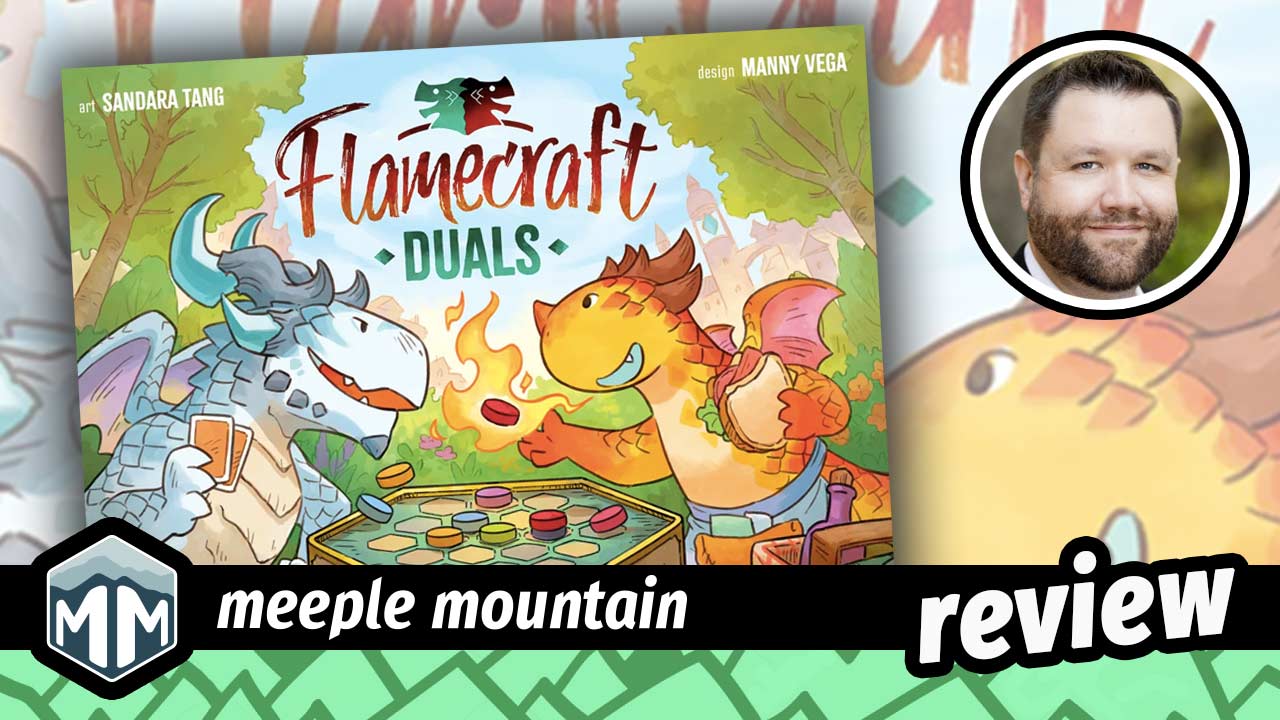





/pic7268927.png)