

Normale Ansicht

Sanibel Game Review

In Elizabeth Hargrave’s latest game, Sanibel, players take turns walking down the beach and stopping to collect a variety of shells and shark teeth. You’ll score points by dropping these treasures into your bag so they ‘fall’ in alignment with other items already there. Have the most points at the end of the walk, and you win the game.

Setup

To start, unfold and line up the three sections of the board. On the left, place the section with the beach chairs; to the right, place the section with the lighthouse. The section without a special area at either end goes in between these two.

Players then take a token of their chosen color and the corresponding board with a bag printed on it. You’ll place everyone’s tokens in random order in the upper left corner of the central board on the right, just above the beach chairs. Place the Wave token to the far left of the player tokens.

Shuffle the zig-zag-shaped pieces and deal two to each player. These are your Lighthouse tiles and will offer additional scoring opportunities once you reach the Lighthouse midway through the game. Read these carefully, as they may help you determine which shells you want to concentrate on.

Above the shoreline…

The post Sanibel Game Review appeared first on Meeple Mountain.
Ave Uwe: Portals Game Review

From the rulebook: “Shadera is no ordinary world. A great cataclysm has shattered the world of the fairy creatures. Where once there were no borders, an impenetrable veil now divides the home of the gnomes, wolper-squirrels and mermaids into many different Shard Worlds. In order to be able to continue to exchange raw materials, make trade agreements, and visit old friends, the Portal Guild was created — an association of all those magicians who can use their magic to open portals between the worlds.

You are part of this guild: adepts who, after long and thorough training, have come together today to prove their skills. Your master has decided that you will compete against each other in a duel to show that you can gather enough energy to open portals through the veil to the Shard Worlds. The first person to complete 20 tasks will be awarded Shadera’s highest honor, the title of Portal Guard.”

If, having just read all that, you’re crossing your eyes trying to make sense of it, you’re not alone. The story is nonsensical. Somehow, though, it seems appropriate because Portals is a game that defies easy explanation, especially if you try to attach a story to it.

How It Works

Published in 2024, Uwe Rosenberg’s Portals puts the players in the roles of Portal…

The post Ave Uwe: Portals Game Review appeared first on Meeple Mountain.
Neuroshima Hex Game Review

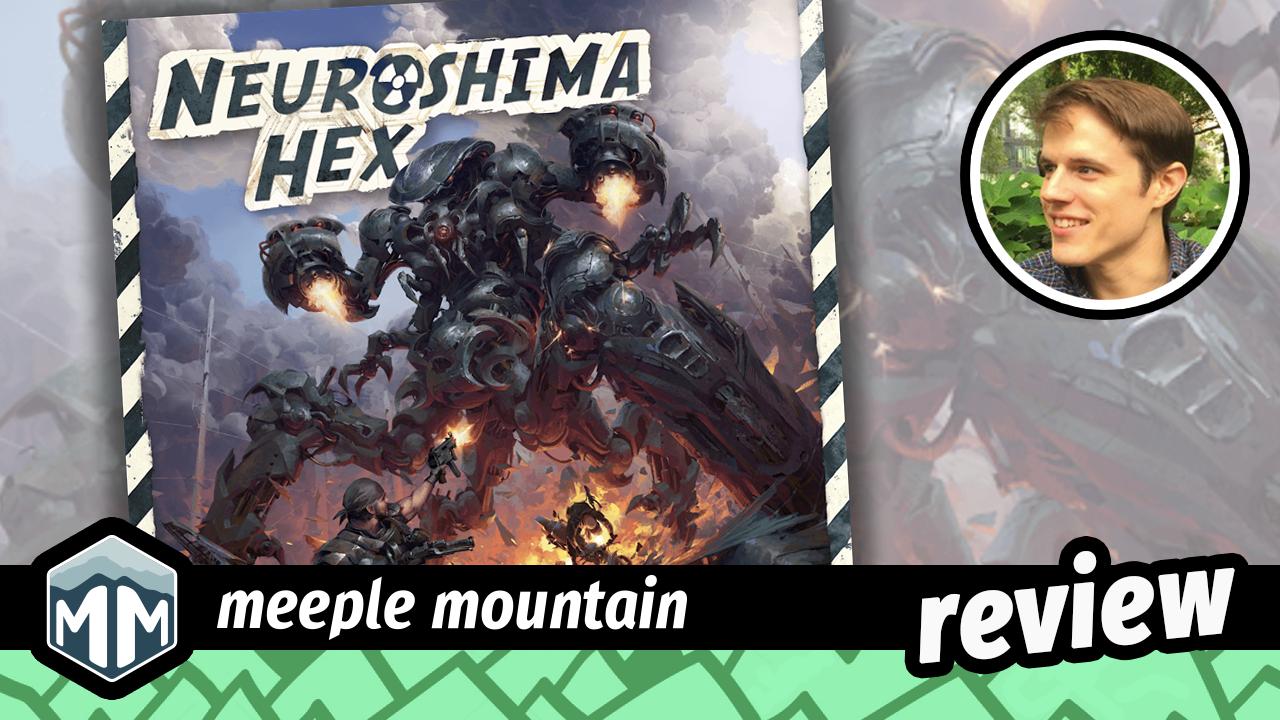
Neuroshima Hex has known three previous editions, each ultimately widening the pool of available factions and improving on what was already a very good design. Now, on the occasion of its 20th anniversary, publisher Portal Games has rebooted the line again. Blessed are we who live to see such times. Finally, you can own a base set of Neuroshima Hex with a box that doesn’t look like absolute butt. Aesthetics was never the point of all this, but goodness.

Inside that box, you’ll find four factions’ worth of tiles with which to play this marvelous game. Do the tiles look better? Listen, there are limits to what you can manage when designing a game that has to convey a large amount of information in a small amount of space. Do the tiles look good? No. Do they look bad? No! They’re a miracle of legibility. Don’t worry about it.

The basic idea is pretty straightforward: on your turn, you draw up to three tiles, discard one, and then play, discard, or save the others. Your tiles are a mix of Troops that attack and hinder your opponent, Modules that provide buffs and debuffs to the pieces on the board, and Actions, which can do all variety of things depending on the faction. As the game progresses, the board gets…

The post Neuroshima Hex Game Review appeared first on Meeple Mountain.
Smitten 2 Game Review

I recently had the chance to pull in a review copy of the Stonemaier title Origin Story, a game I first learned about during SPIEL Essen 2025. As a bonus, Stonemaier threw in a free copy of a small card game called Smitten 2, based on the game Smitten, a title I was not aware of. When Smitten 2 arrived, I broke it out and did a couple solo plays.

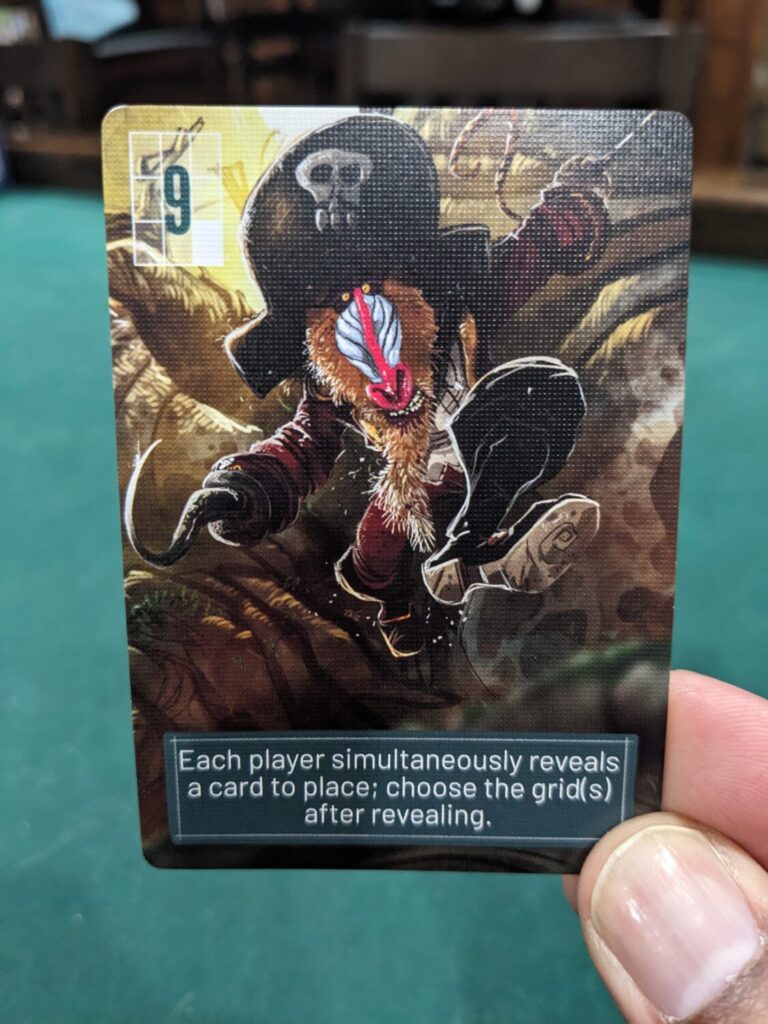
The setup is quick, and the goal is simple: using a small hand of cards, players must build two matching 3x3 grids of cards, with the win condition tied to placing 17 of the 18 cards in the deck. During setup, all cards are shuffled with one being left out, unseen…in solo, the player manipulates two hands and has to play each tableau off each other, using the card powers aligned with each card and its specific playable position in the grid. (The 5 card can only be played in the middle of each tableau, while the 1 card can only be played in the upper left corner, for example.)

Across those first two plays, I didn’t win, but some interesting choices were on offer. Each card’s placement rules make for a fun puzzle, and I came close…

The post Smitten 2 Game Review appeared first on Meeple Mountain.
Herd Game Review

I have more than once mentioned puzzle-maker extraordinaire Blaž Gracar's work in the same breath as releases from Rush Hour purveyor Thinkfun. I have rarely mentioned them together as a matter of direct comparison. These are different products for different audiences. Gracar makes pencil-and-paper puzzle books that are only for the sweatiest adults, while Thinkfun cranks out charming toyetic brain teasers that keep children well-and-truly occupied. The connection comes from Gracar’s gift for imbuing his puzzles with a sense of discovery that brings me back to my childhood, when I had a massive collection of Thinkfun games under my bed. With the release of Herd, Gracar’s publisher Letibus and Thinkfun now warrant direct comparison.

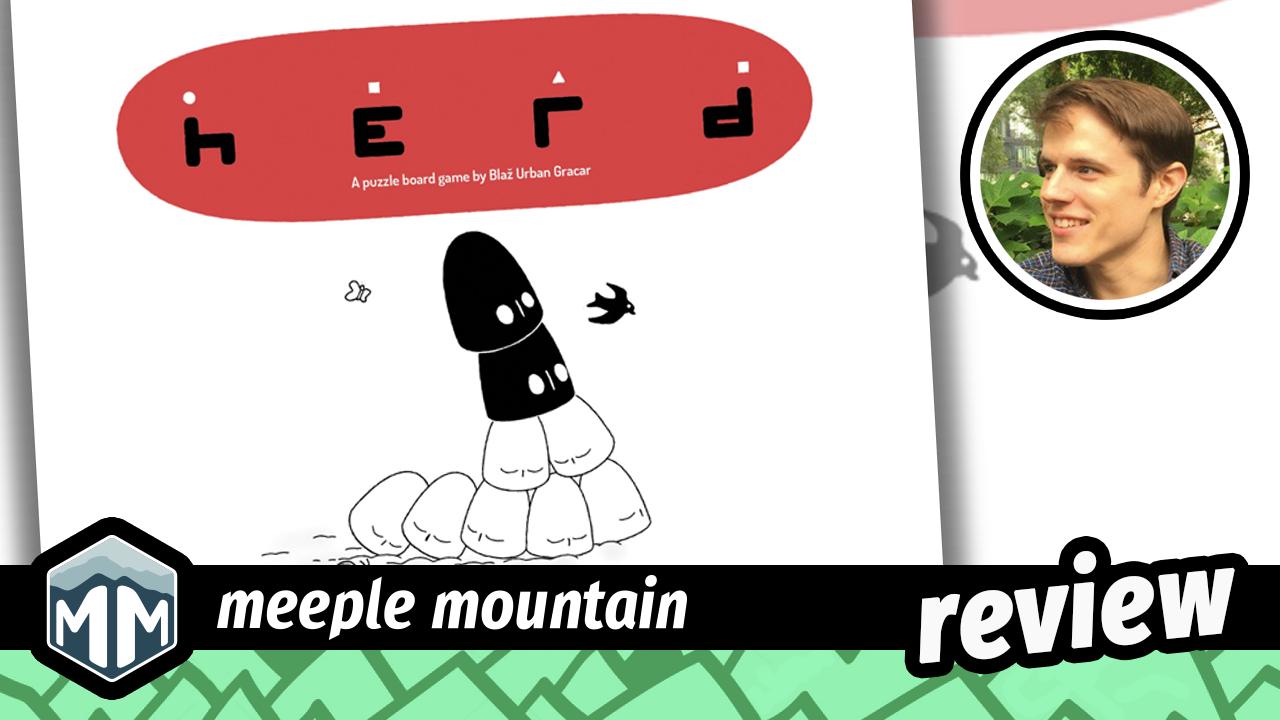
Rather than drawing lines or shading in boxes, Herd has you shifting Shepherds around a grid. These delightful, hollow black cones have wonderful neutral facial expressions and a pronounced indifference to your failures. It’s a good thing, because in trying to get them from a designated Point A to a designated Point B, you will fail often. And fail. And fail again.

A lone black cone sits on an empty grid.

Herd is a patient exercise, though I wouldn’t necessarily call it meditative. There is a flow state to be found in moving the pieces about,…

The post Herd Game Review appeared first on Meeple Mountain.

Chicken Fried Dice Game Review

What’s on the Menu?

It’s been a long time coming.

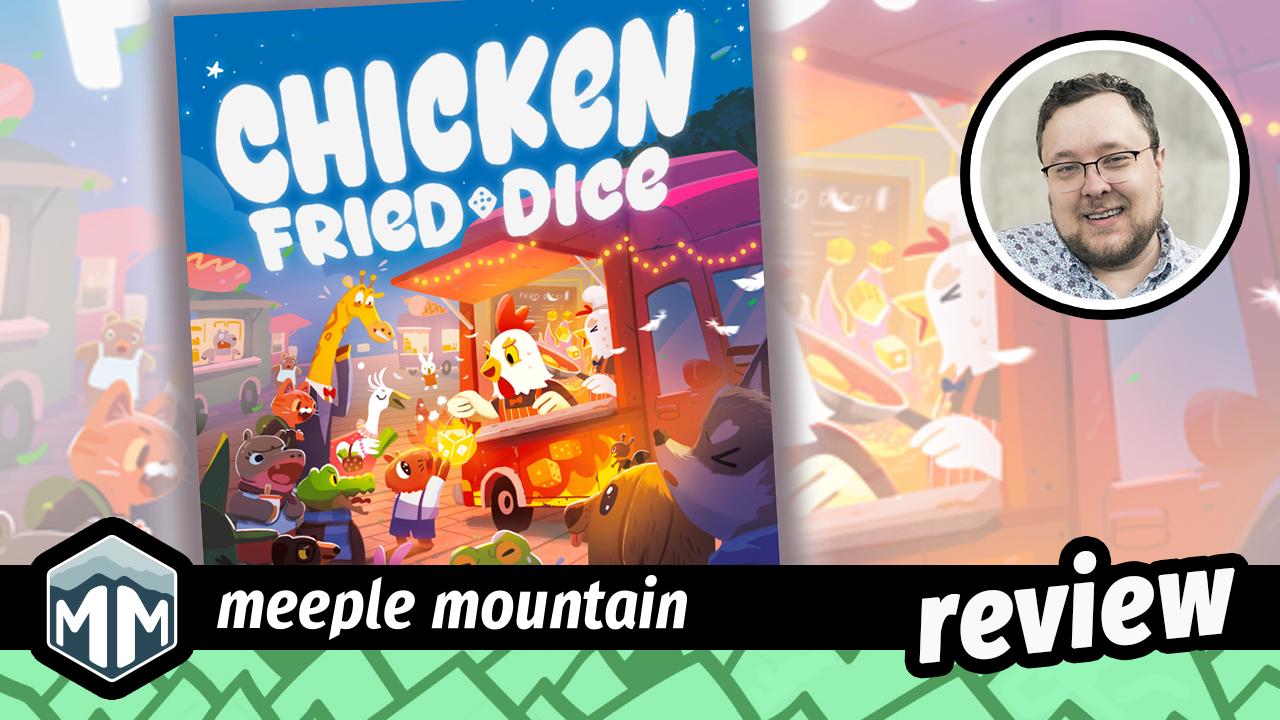
I remember when I first encountered Chicken Fried Dice way back at PAX Unplugged 2024. At the time, I gave it the award of “Game That Made Me Fall in Love With a Mechanic I Thought I Hated” (roll and write) and promised a more in-depth review once it hit Kickstarter in a few months. Then those few months turned into more months, and then tariffs wrecked our industry, and then more delays… but FINALLY, I was able to catch up with designer Ashwin Kamath at TantrumCon 2026, where he handed me an almost-final production copy of the game. Later that evening, I gathered some friends, and Ashwin walked us through our first play. Puns were flying, people were giggling, and everyone at the table was having a great time.

Since then, I’ve sat down with friends to put the game through its paces. The concept is cute and simple - you’re trying to become the Top Chef at a food truck competition by serving your customers delicious meals. The more complex their order, the more points you stand to gain. However, the longer you take to finish their order, the more stars they dock you on their review. The better you do, the quicker…

The post Chicken Fried Dice Game Review appeared first on Meeple Mountain.

❌