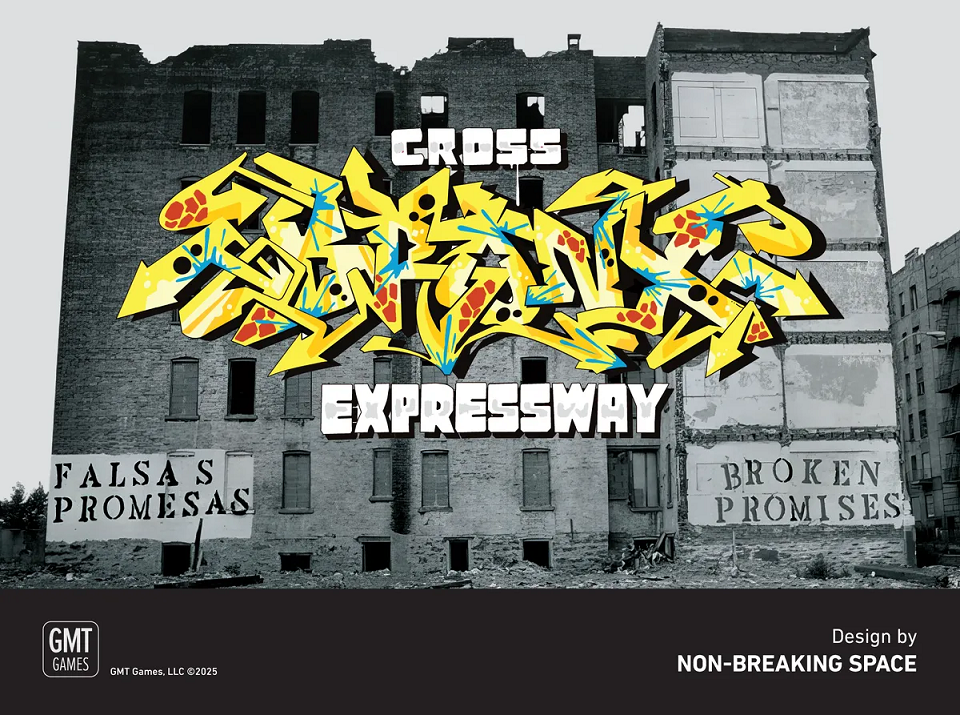
As an independent games designer and producer, a lot of my time involves visiting conventions to meet gamers and, ideally, sell my games to them. When I do so, it’s always a surprise how little crossover there is between people who play board games, roleplaying games and miniatures games, which is a pity since I think all of them have something special to offer. So I’d like to take this chance to explain exactly what I think is so special about miniatures games for anyone who doesn’t necessarily play, or even consider them.
The opening sequence of Martin Scorsese’s Taxi Driver depicts a New York with enough grit that you can feel it on your teeth. It’s a feral hour of the night. DeNiro’s sedan is cruising down a street awash in the radiant soul of the city. There’s a shot of the vehicle’s quarter panel. Beads of…
This is another great expansion from Stonemaier Games, with lot of extra bits to change the game, but not too drastically. To start with and importantly for me is the fact that it all fits in the main box and you get a new card holder that is more like the one that you get with Wingspan, to replace the old smaller holder.
8 You gain 5 new guilds and their cards. You also gain a whole load of Dragons that have some cool new powers which can make putting them in Caves easier if you reach the requirments. one of the new dragon types is called a fledgling, these will make your games that much more interesting. As with most expansions or games for that matter it is best to explore the game and see how you can make the most of them. If you do not like the game, then I am afraid but this wont fix that, but it will make the game more complex and fun.
Before we dive into the content of the playlist, some general observations:
All of the songs in the playlist were popular during the Weimar Republic (1918—1933). Yet as music recording was still in its infancy at that time, many of the songs in the playlist are later recordings (and some rare ones were recorded even before 1918!).
As the playlist is only 2:21 hours long, your Weimar game will probably last longer (if you don’t crash the republic on the first or second round), but there’s no reason not to listen to these songs two or three times – they’re fascinating historical documents.
The playlist is thematically sorted. That helps you find similar songs, but makes for somewhat monotonous listening (until you come to the next group of songs). I therefore recommend you turn shuffle on.
Now, what awaits you in the playlist?
#1: The National Anthem
It seems like a no-brainer to include the German national anthem of the time, yet it’s not so simple: The Lied der Deutschen (Song of the Germans) had been written in 1841, but had since then only been a patriotic song among many – until the first president of the republic, Friedrich Ebert, declared it the national anthem in 1922. The song’s three stanzas were variedly popular: Ebert favored the third stanza with its liberal ideals of unity, justice, and freedom, his right-wing opponents preferred the “Deutschland über alles” (Germany Above Everything) first stanza. I have included an instrumental version. If you feel patriotic, you can sing along.
The Weimar Republic did not come into existence in a vacuum. It inherited German cultural traditions like folk songs (“Wem Gott will rechte Gunst erweisen” (Whom God Wants to Favor), song #2).
And, of course, the Weimar Republic succeeded the German Empire with its national feeling (“Die Wacht am Rhein” (The Guard on the Rhine), song #2), dominant Protestantism (Martin Luther’s classic “Ein feste Burg ist unser Gott” (A Mighty Fortress Is Our God), song #5), and monarchy (“Heil dir im Siegerkranz” (Hail to Thee In the Victor’s Crown), song #7 – the quasi-anthem of the German Empire).
The republic’s midwife was the First World War – whose experience shaped its veterans and provided the cultural context even for those who had not been adults during the war yet (“Wildgänse rauschen durch die Nacht” (Wild Geese Rush Through the Night), song #8, written in 1916, was immensely popular among the Weimar Republic youth movement). The war also cast its shadow over Weimar Germany as many had lost their husbands, sons, fathers, brothers, and friends in the war (“Ich hatt’ einen Kameraden” (I Had a Comrade), song #9, the traditional German soldiers’ lament).
The liberal republic proved fertile ground for satirical treatments of the new developments: Otto Reutter made fun of the big and small war profiteers with “Seh’n Sie, darum ist es schade, dass der Krieg zu Ende ist” (See, that’s why it’s a pity that the war is over, song #10), and Claire Waldoff called for replacing the men in power with women in “Raus mit den Männern aus dem Reichstag” (Kick the Men Out of Parliament, song #11), playing on masculine anxieties after the introduction of women’s suffrage.
Even in a time and place as politically charged as the Weimar Republic, not everything was politics. The average Hans and Gretel may have cared less about their preferred ideology and more about how to have good time on a Saturday night… and the new cultural scene, especially in the big cities like Berlin, provided ample opportunities.
The more sophisticated artists like the Comedian Harmonists succeeded with witty wordplay and erudite vocal harmonies. Others played on the classics – alcohol (“Wir versaufen unser Oma ihr klein’ Häuschen“ (We Blow Grandma’s Little House on Booze, song #19) and sexual innuendo („Fräulein, Woll’n Sie nicht ein Kind von mir“ (Miss, Don’t You Want a Child By Me, song #22). There was even the equivalent of a (generalized) diss track: “Du bist als Kind zu heiß gebadet worden” (You Have Been Bathed Too Hot As a Child, song #23) indicates that this neglect of bath safety led to lasting brain damage in the interlocutor.
#26-33: Film, Theater, and Opera Music
The Weimar Republic’s vibrant cultural scene led to cross-pollination between diverse forms of artistic expression. The new medium of film was pioneered in Germany, and once it had left its silent infancy behind, movie songs became hits. Marlene Dietrich, starring in The Blue Angel, enticed with “Ich bin von Kopf bis Fuß auf Liebe eingestellt (I’m Set to Love From Head to Heel, song #26), but warned “Nimm dich in Acht vor blonden Frau’n“ (Beware of Blonde Women, song #27).
More traditional art forms like the theater also adapted. Die Dreigroschenoper (The Threepenny Opera)’s acerbic critique of capitalism would not have been as successful without its catchy songs, the most famous of which is the “Moritat of Mackie Messer” (Ballad of Mack the Knife, song #31).
Even the most classic and highbrow form of entertainment modernized: “Jonny spielt auf” (Jonny Plays It Big, song #33) introduced jazz into the world of the opera… which brings us to our next category.
#34-41: Jazz and Blues
Traditionally, the United States had received and emulated European fashions, not the other way around. Yet by the early 20th century, America had become the largest economy in the world, its war entry in 1917 tipped the scales of the war further in favor of the Allies, and the increased presence of Americans in Europe meant that the United States turned from an importer to an exporter of culture. Jazz took Europe by storm – both in the form of American (and nascent European) bands and by the new medium of the music record. The Weimar Republic was no exception. Jazz fueled the parties in any larger city of 1920s Germany.
Of course, not everyone loved jazz, and the controversy over its unorthodox dissonances, the more expressive, individualistic, and eroticized dancing style accompanying the music, and, of course, the race of its performers entered the contemporary culture wars – exemplified by Weimar’s double use of Louis Armstrong, illustrating both the SPD’s “The New Rhythm” and the DNVP’s “Nicht Deutsch” (“Not German”) event cards.
The “Tiger Rag” (song #41) is also used in The Tin Drum, German writer Günter Grass’s epic about the rise, fall, and persistence of Nazism: The youthful protagonist Oskar Matzerath who always carries his eponymous tin drum plays the Tiger Rag at a NSDAP rally in his hometown Danzig. The mesmerizing rhythm has the audience sway and dance, exposing the Nazis to ridicule.
#42-47: Workers’ Songs
The aggressive ethno-nationalism of Nazism was one of the two most dynamic political movements of the Weimar Republic (at least once the 1929 crash had plunged vast parts of the German population into a crisis of material and identity). The other was the workers’ movement, both in its reformist Social Democratic and its revolutionary Communist form. As the workers had been traditionally excluded from the public in imperial Germany, dominated by aristocracy and bourgeoisie, they created their own political parties (SPD, later USPD and KPD), economic associations (the trade unions), and social and cultural associations – from workers’ sport clubs to workers’ singing societies. Their milieu was bound together not only by their shared economic experience, but also by this cultural connection, of which the workers’ songs formed an important part.
Classics from imperial times like “Die Internationale” (The Internationale, song #42) remained important, but the movement also adopted new songs written by the numerous socialist poets and composers like Bertolt Brecht, Hanns Eisler, or Ernst Busch. Whereas some of these became new classics (like the “Solidaritätslied” (Solidarity Song, song #46), others aged badly: “Der Marsch ins Dritte Reich” (The March to the Third Reich, song #47) poked fun at the alleged inability of the Nazis to take power after their electoral setback at the Reichstag election of November 1932. First recorded in December 1932, the song was horribly overtaken by events just a month later when Hitler was elected chancellor in January 1933.
Thus, we conclude our playlist. It contains the traditional and the modern, entertainment and politics, left and right – except for the very right, but I don’t want to listen to Nazi songs while playing board games, and I’m sure that neither do you.
Do you like to play music in the background while playing board games? What’s your favorite song from this playlist? Let me know in the comments!
Before we dive into the content of the playlist, some general observations:
All of the songs in the playlist were popular during the Weimar Republic (1918—1933). Yet as music recording was still in its infancy at that time, many of the songs in the playlist are later recordings (and some rare ones were recorded even before 1918!).
As the playlist is only 2:21 hours long, your Weimar game will probably last longer (if you don’t crash the republic on the first or second round), but there’s no reason not to listen to these songs two or three times – they’re fascinating historical documents.
The playlist is thematically sorted. That helps you find similar songs, but makes for somewhat monotonous listening (until you come to the next group of songs). I therefore recommend you turn shuffle on.
Now, what awaits you in the playlist?
#1: The National Anthem
It seems like a no-brainer to include the German national anthem of the time, yet it’s not so simple: The Lied der Deutschen (Song of the Germans) had been written in 1841, but had since then only been a patriotic song among many – until the first president of the republic, Friedrich Ebert, declared it the national anthem in 1922. The song’s three stanzas were variedly popular: Ebert favored the third stanza with its liberal ideals of unity, justice, and freedom, his right-wing opponents preferred the “Deutschland über alles” (Germany Above Everything) first stanza. I have included an instrumental version. If you feel patriotic, you can sing along.
The Weimar Republic did not come into existence in a vacuum. It inherited German cultural traditions like folk songs (“Wem Gott will rechte Gunst erweisen” (Whom God Wants to Favor), song #2).
And, of course, the Weimar Republic succeeded the German Empire with its national feeling (“Die Wacht am Rhein” (The Guard on the Rhine), song #2), dominant Protestantism (Martin Luther’s classic “Ein feste Burg ist unser Gott” (A Mighty Fortress Is Our God), song #5), and monarchy (“Heil dir im Siegerkranz” (Hail to Thee In the Victor’s Crown), song #7 – the quasi-anthem of the German Empire).
The republic’s midwife was the First World War – whose experience shaped its veterans and provided the cultural context even for those who had not been adults during the war yet (“Wildgänse rauschen durch die Nacht” (Wild Geese Rush Through the Night), song #8, written in 1916, was immensely popular among the Weimar Republic youth movement). The war also cast its shadow over Weimar Germany as many had lost their husbands, sons, fathers, brothers, and friends in the war (“Ich hatt’ einen Kameraden” (I Had a Comrade), song #9, the traditional German soldiers’ lament).
The liberal republic proved fertile ground for satirical treatments of the new developments: Otto Reutter made fun of the big and small war profiteers with “Seh’n Sie, darum ist es schade, dass der Krieg zu Ende ist” (See, that’s why it’s a pity that the war is over, song #10), and Claire Waldoff called for replacing the men in power with women in “Raus mit den Männern aus dem Reichstag” (Kick the Men Out of Parliament, song #11), playing on masculine anxieties after the introduction of women’s suffrage.
Even in a time and place as politically charged as the Weimar Republic, not everything was politics. The average Hans and Gretel may have cared less about their preferred ideology and more about how to have good time on a Saturday night… and the new cultural scene, especially in the big cities like Berlin, provided ample opportunities.
The more sophisticated artists like the Comedian Harmonists succeeded with witty wordplay and erudite vocal harmonies. Others played on the classics – alcohol (“Wir versaufen unser Oma ihr klein’ Häuschen“ (We Blow Grandma’s Little House on Booze, song #19) and sexual innuendo („Fräulein, Woll’n Sie nicht ein Kind von mir“ (Miss, Don’t You Want a Child By Me, song #22). There was even the equivalent of a (generalized) diss track: “Du bist als Kind zu heiß gebadet worden” (You Have Been Bathed Too Hot As a Child, song #23) indicates that this neglect of bath safety led to lasting brain damage in the interlocutor.
#26-33: Film, Theater, and Opera Music
The Weimar Republic’s vibrant cultural scene led to cross-pollination between diverse forms of artistic expression. The new medium of film was pioneered in Germany, and once it had left its silent infancy behind, movie songs became hits. Marlene Dietrich, starring in The Blue Angel, enticed with “Ich bin von Kopf bis Fuß auf Liebe eingestellt (I’m Set to Love From Head to Heel, song #26), but warned “Nimm dich in Acht vor blonden Frau’n“ (Beware of Blonde Women, song #27).
More traditional art forms like the theater also adapted. Die Dreigroschenoper (The Threepenny Opera)’s acerbic critique of capitalism would not have been as successful without its catchy songs, the most famous of which is the “Moritat of Mackie Messer” (Ballad of Mack the Knife, song #31).
Even the most classic and highbrow form of entertainment modernized: “Jonny spielt auf” (Jonny Plays It Big, song #33) introduced jazz into the world of the opera… which brings us to our next category.
#34-41: Jazz and Blues
Traditionally, the United States had received and emulated European fashions, not the other way around. Yet by the early 20th century, America had become the largest economy in the world, its war entry in 1917 tipped the scales of the war further in favor of the Allies, and the increased presence of Americans in Europe meant that the United States turned from an importer to an exporter of culture. Jazz took Europe by storm – both in the form of American (and nascent European) bands and by the new medium of the music record. The Weimar Republic was no exception. Jazz fueled the parties in any larger city of 1920s Germany.
Of course, not everyone loved jazz, and the controversy over its unorthodox dissonances, the more expressive, individualistic, and eroticized dancing style accompanying the music, and, of course, the race of its performers entered the contemporary culture wars – exemplified by Weimar’s double use of Louis Armstrong, illustrating both the SPD’s “The New Rhythm” and the DNVP’s “Nicht Deutsch” (“Not German”) event cards.
The “Tiger Rag” (song #41) is also used in The Tin Drum, German writer Günter Grass’s epic about the rise, fall, and persistence of Nazism: The youthful protagonist Oskar Matzerath who always carries his eponymous tin drum plays the Tiger Rag at a NSDAP rally in his hometown Danzig. The mesmerizing rhythm has the audience sway and dance, exposing the Nazis to ridicule.
#42-47: Workers’ Songs
The aggressive ethno-nationalism of Nazism was one of the two most dynamic political movements of the Weimar Republic (at least once the 1929 crash had plunged vast parts of the German population into a crisis of material and identity). The other was the workers’ movement, both in its reformist Social Democratic and its revolutionary Communist form. As the workers had been traditionally excluded from the public in imperial Germany, dominated by aristocracy and bourgeoisie, they created their own political parties (SPD, later USPD and KPD), economic associations (the trade unions), and social and cultural associations – from workers’ sport clubs to workers’ singing societies. Their milieu was bound together not only by their shared economic experience, but also by this cultural connection, of which the workers’ songs formed an important part.
Classics from imperial times like “Die Internationale” (The Internationale, song #42) remained important, but the movement also adopted new songs written by the numerous socialist poets and composers like Bertolt Brecht, Hanns Eisler, or Ernst Busch. Whereas some of these became new classics (like the “Solidaritätslied” (Solidarity Song, song #46), others aged badly: “Der Marsch ins Dritte Reich” (The March to the Third Reich, song #47) poked fun at the alleged inability of the Nazis to take power after their electoral setback at the Reichstag election of November 1932. First recorded in December 1932, the song was horribly overtaken by events just a month later when Hitler was elected chancellor in January 1933.
Thus, we conclude our playlist. It contains the traditional and the modern, entertainment and politics, left and right – except for the very right, but I don’t want to listen to Nazi songs while playing board games, and I’m sure that neither do you.
Do you like to play music in the background while playing board games? What’s your favorite song from this playlist? Let me know in the comments!
Long ago, spirits and demons stirred in the land of the rising sun, wreaking havoc upon crops, rivers, and villages, unseen and unstoppable. As an Onmyoji, a practitioner of ancient cosmology, you learned to capture these restless entities, restoring balance where others faltered. Yet word came that your own village suffered, and another Onmyoji had been called to intervene, an affront to your duty and skill. With careful calculation and swift action, you must outwit your rival, claiming mastery over chaos. You must ensnare the seven spirits, the Yokai Septet by Muneyuki Yokouchi from Ninja Star Games with art by U.
Recently broke 50 (FTF) games of 1846 … I counted all of 18xx for one entry for my 50 by 50 project, which was kind of a cheat (I suspect I have 50 plays of 1830, but most of them before I started logging), but not I definitely have two titles with 50+ plays, as 1862 was already past.
So if I ever do a sixty by sixty a) I’d only need to add 10+ plays to 51 odd games and b) someone shoot me.
Played another game of Moon Colony Bloodbath. Still indifferent, but fine in a once in a while kind of way. Unlike my first game (where everyone survived until the “end game” event) this one ended with two players losing on the same turn, with the winner having one surviving colonist, presumably with a harmonica.
Played Knarr. It was fine. Actually, I was pleased with game, which packs a reasonable number of decisions into a quick time. But the obvious strategy I tried won easily my first time playing, so I’m not sure there’s much depth. So — Indifferent but might play again. It keeps showing up to game night ….
As per my “No prototypes at conventions rule1” I haven’t played Dark Pact, but its Tom Lehmann and appears to be an autobuy when I see it. Not sure any other games coming recently/soon are.
So, open thread …. what are you getting for Christmas (or slightly later).
Although these days its really more of a guideline. ︎
Recently broke 50 (FTF) games of 1846 … I counted all of 18xx for one entry for my 50 by 50 project, which was kind of a cheat (I suspect I have 50 plays of 1830, but most of them before I started logging), but not I definitely have two titles with 50+ plays, as 1862 was already past.
So if I ever do a sixty by sixty a) I’d only need to add 10+ plays to 51 odd games and b) someone shoot me.
Played another game of Moon Colony Bloodbath. Still indifferent, but fine in a once in a while kind of way. Unlike my first game (where everyone survived until the “end game” event) this one ended with two players losing on the same turn, with the winner having one surviving colonist, presumably with a harmonica.
Played Knarr. It was fine. Actually, I was pleased with game, which packs a reasonable number of decisions into a quick time. But the obvious strategy I tried won easily my first time playing, so I’m not sure there’s much depth. So — Indifferent but might play again. It keeps showing up to game night ….
As per my “No prototypes at conventions rule1” I haven’t played Dark Pact, but its Tom Lehmann and appears to be an autobuy when I see it. Not sure any other games coming recently/soon are.
So, open thread …. what are you getting for Christmas (or slightly later).
Although these days its really more of a guideline. ︎
You might want to wait to include your holiday gaming, but if you can’t, our annual Year Stats are available now!
After all the options added last year, still more is possible this year! Optionally change lists to Artists, Categories and/or Mechanics.
When you’ve updated to version 6.7, you will see the Year Stats banner on the main overview screen of the app. Tap this banner to go directly to your Year Stats! (depending on your stats and device this may take a little while)
The Year Stats will be created from your Insights, with the period 2025. The default sorting of the list of games will be on Play count.*
You can go to Insights from your Year Stats, change any filters you want and go back to the Year Stats through the Share menu, option “Year Stats“. Here you can for instance use the new Digital play tag!**
Example BG Stats Year Stats 2025
If you’ve accidentally closed the banner you can enable it by going to Settings –> View and Share your 2025 stats.
Don’t forget to mention us and use #bgstats when you share!
* Your previously selected Insights settings like filters and sorting are temporarily replaced. When you leave the Year Stats and Insights screen without making adjustments, the next time you open Insights your original settings will be restored. ** available with the Power expansion.
Options on the Year Stats screen
The options on the Year Stats screen are the same as on the Stats-o-grapic. You can read all about these options here: Stats-o-graphic. Below the differences and new options are described. These new options will also be available on the Stats-o-graphic from now on!
Background
Year Stats have their own background. You can choose to keep this (Option ‘Standard‘) or change it to the option ‘Game‘.
Game: the background will automatically be generated from the cover image of your top game.
Standard: choose this to use the standard Year Stats background colour.
New list options
Two options are added. Here you can select what is to be displayed in the top and bottom lists. When opening the Year Stats the app estimates which list could be interesting for you. You can always change this:
Display (top)
Here you can select the following options:
Bar chart
Designers
Artists
Categories
Mechanics
And (bottom)
Here you can select the following options:
Designers
Artists
Categories
Mechanics
Combining lists
Really only interested in one of the list options? Select it for both the options and the lists will be combined.
How are Designers/Artists/Categories/Mechanics calculated?
The percentage shown for these is over all your unique played Games, not plays.
Easy to overlook options
Picture grid
You can tap the grid to hide a picture. Other stats are not recalculated when you do this.
Stats grid
These options are also available in the green gear menu on the Display line.
Tap Players to toggle between named players and all players.
Tap the Hours/Days row to get the option to hide it.
Tap any list to toggle between showing/not showing “(uncredited)”
I am destined for greatness, but those in power only see me as a sword.
Peter and Dylan play Armoured Clash, the epic scale tabletop miniatures game from Warcradle!
Warcradle really hit this epic scale arame out of the park – Armoured Clash is a great game, especially with a design team including ex-Games Workshop designer James Hewitt. I’ve been meaning to film a battle report for the game and here it is finally. Enjoy!
Making high quality tabletop gaming content at the EOG takes time and money. Please consider becoming a Patreon supporter or making a donation so I can continue this work! Thankyou!
It was like herding cats. As soon as you put one kitten down, the two nearest to it moved further away. The same when you tried to add a cat to the bundle of feline fluff. Some of the cats and kittens even decided to jump off the quilt completely. It was impossible to get everyone on there at the same time. What was cute though, was how each cat and kitten tapped their noses together and went Boop by Scott Brady from Smirk & Dagger Games with art by Curt Covert.
To celebrate our Winter 2026 issue of Casual Game Insider, we're giving away amazing prizes worth over $500 to 31 lucky winners! Don’t miss your chance to win—enter today!
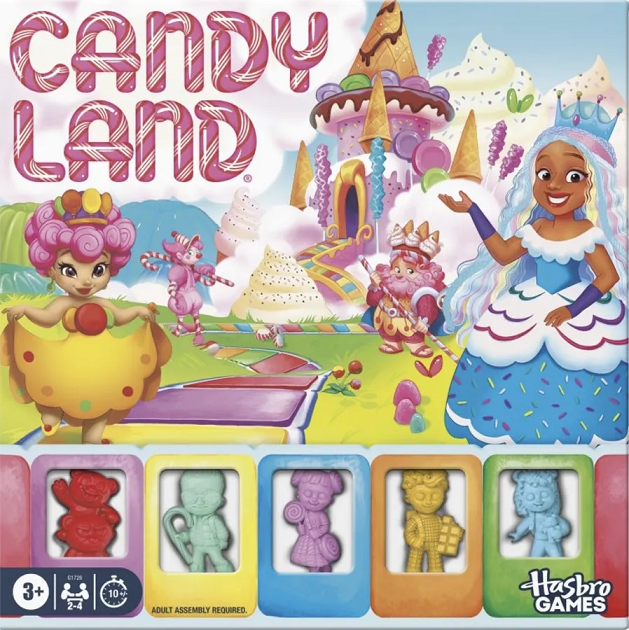
There’s this thing that people say which rips my skin like 60 grit sandpaper. “That was fun, but it’s not much of a game.” Games require decisions. Meaningful ones. At least, that’s what a portion of the hobby community believes. Candy Land isn’t a game they say, it’s an activity. There’s an obvious implication that…
Balance in board games is one of those much-talked-about topics that keeps cropping up. Some people want games to be perfectly balanced, so that players' only advantage comes from their skill and hours of practice and graft. Others relish highly unbalanced games, where it's nigh-impossible to win, but when you do win, it feels amazing. Yet, balance in board games is much more complex and subtle than that. In this article, I want to look at the role that balance plays in board game design.

 Anmelden