Long-time readers of this blog know my infatuation with Colleen McCullough’s Masters of Rome series. I have been reading the series since 2018 at the appropriately epic pace of one book per year (and last year, I skipped). Masters of Rome reading was always a highlight of my literary year – the high drama, the broad historical canvas painted with a myriad of characters, events, and microplots, and, most of all, McCullough’s readiness to engage the ancients on their own terms, with ever so many pages dedicated to this legislation or that campaign.
McCullough had planned to end the series after the sixth instalment (The October Horse, which covers the years 44 to 42 BCE). Only her fans’ pleas convinced her to write Antony and Cleopatra. Maybe that shows a little bit – the book takes a long time (say, the first 200 pages) to hit its stride, and never quite reaches the heights of previous instalments. Yet that mostly shows how good these books were (peaking with novel #5, Caesar), as this conclusion to the drama of the late Roman Republic was still one of my favorite historical novels in 2025.
Clarissa Oakes (Patrick O’Brian)
I’m continuing my re-read of the Aubrey-Maturin series, that delightful panorama of life at sea (and land!) during the Napoleonic Wars. Among the Aubrey-Maturin novels which I read this year, my favorite was #15 – Clarissa Oakes.
Jack Aubrey and Stephen Maturin want just one thing: Leave New South Wales and its mixture of brutal government (instigating clashes between the officers and men) and anti-Irish fervor (which gets Stephen into trouble). However, when the ship is out at sea, they realize that one of the younger officers has smuggled out a convict from the penal colony – an enigmatic young woman, who is bound to attract the attention of several of the men. No other book in the series makes so good on the premise of the characters being confined to a small ship, unable to avoid each other. And Clarissa, the escapee, is not just a plot device, but a complex and compelling character in her own right.
And my favorite historical novel of this year was…
A Gentleman in Moscow (Amor Towles)
„Where is it now?“, asks the poem which kicks off the book – “it” being purpose. Having been written after the failed Russian revolution of 1905, the poem is widely seen as a call to action and inspires Russia’s revolutionaries… and thus they do not sentence the aristocratic author Count Alexander Rostov to death when he returns to Russia after the October Revolution. Under house arrest at the Hotel Metropol in Moscow, he will spend the next thirty years rethinking and rediscovering his purpose. It will not count as a spoiler that he finds it in putting his abilities to good use and connecting with his fellow human beings – of course he does. Yet the point of the book is not the goal, but the winding way there, told with grace, nuance, and originality.
While the ending might be a bit kitschy, the unique protagonist, the cast of intriguing side characters and the delightful prose made this my favorite historical fiction read of the year.
Have you read any of these books – and, if so, what did you think? And what were your favorite historical novels of the year? Let me know in the comments!
Long-time readers of this blog know my infatuation with Colleen McCullough’s Masters of Rome series. I have been reading the series since 2018 at the appropriately epic pace of one book per year (and last year, I skipped). Masters of Rome reading was always a highlight of my literary year – the high drama, the broad historical canvas painted with a myriad of characters, events, and microplots, and, most of all, McCullough’s readiness to engage the ancients on their own terms, with ever so many pages dedicated to this legislation or that campaign.
McCullough had planned to end the series after the sixth instalment (The October Horse, which covers the years 44 to 42 BCE). Only her fans’ pleas convinced her to write Antony and Cleopatra. Maybe that shows a little bit – the book takes a long time (say, the first 200 pages) to hit its stride, and never quite reaches the heights of previous instalments. Yet that mostly shows how good these books were (peaking with novel #5, Caesar), as this conclusion to the drama of the late Roman Republic was still one of my favorite historical novels in 2025.
Clarissa Oakes (Patrick O’Brian)
I’m continuing my re-read of the Aubrey-Maturin series, that delightful panorama of life at sea (and land!) during the Napoleonic Wars. Among the Aubrey-Maturin novels which I read this year, my favorite was #15 – Clarissa Oakes.
Jack Aubrey and Stephen Maturin want just one thing: Leave New South Wales and its mixture of brutal government (instigating clashes between the officers and men) and anti-Irish fervor (which gets Stephen into trouble). However, when the ship is out at sea, they realize that one of the younger officers has smuggled out a convict from the penal colony – an enigmatic young woman, who is bound to attract the attention of several of the men. No other book in the series makes so good on the premise of the characters being confined to a small ship, unable to avoid each other. And Clarissa, the escapee, is not just a plot device, but a complex and compelling character in her own right.
And my favorite historical novel of this year was…
A Gentleman in Moscow (Amor Towles)
„Where is it now?“, asks the poem which kicks off the book – “it” being purpose. Having been written after the failed Russian revolution of 1905, the poem is widely seen as a call to action and inspires Russia’s revolutionaries… and thus they do not sentence the aristocratic author Count Alexander Rostov to death when he returns to Russia after the October Revolution. Under house arrest at the Hotel Metropol in Moscow, he will spend the next thirty years rethinking and rediscovering his purpose. It will not count as a spoiler that he finds it in putting his abilities to good use and connecting with his fellow human beings – of course he does. Yet the point of the book is not the goal, but the winding way there, told with grace, nuance, and originality.
While the ending might be a bit kitschy, the unique protagonist, the cast of intriguing side characters and the delightful prose made this my favorite historical fiction read of the year.
Have you read any of these books – and, if so, what did you think? And what were your favorite historical novels of the year? Let me know in the comments!
As my board game collection grows, the chances of the same game being played regularly decrease. As a reviewer, that's fine, because I'm here to play new games and critically evaluate them. However, it's also sad that more and more of my games just sit there on the shelves unplayed, while the latest, shiny game barely lands before it makes it to the table. For many of us, playing board games isn't just about the games themselves, but the experiences we create with them and the people we share them with. So in this article, I want to look at the benefits of playing a small handful of games regularly, instead of briefly sampling many games once or twice, considering the psychological, social, and financial aspects that shape our hobby.
As the year comes to a close, I’ll do my usual end-of-year posts: My personal top three in a range of categories. As tradition commands, we’ll begin with the games that I played for the first time this year. Here are the best three.
I’m not much of a Formula 1 fan – from my point of view, nothing much happens during the races (after the start, that is), and in many years, even the championship as such is a bore because one driver/car combo is just too dominant. (This year has been excitingly different in that regard.)
In the box: Another close finish!
Heat, however, takes just the exciting parts of racing and puts them together in an enthralling package of evocative mechanisms – downshifting before corners (and upshifting afterward), and the delicate balance of how to deal with the psychological stress on the driver and the physical stress on the car (the eponymous heat). And as the main planning phase is done simultaneously, there’s minimal downtime even with the full six players.
I’m excited to learn new things from and with games. One topic I knew next to nothing about is the 14th century in India. That, however, has changed a bit now due to Vijayanagara, a COIN-lite treatment of the collapse of the Delhi Sultanate’s hegemony under the challenge of invasion from the north (Timur’s Mongols) and centrifugal forces in the south (the nascent Bahmani Kingdom and Vijayanagara Empire). Every game of Vijayanagara tells a variation of that story.
The Delhi Sultanate (black) is under heavy pressure from the Vijayanagara Empire (yellow) and the Bahmani Kingdom (turquoise). From the implementation on Rally the Troops!
Chaos – some games hate it, others, like Time of Crisis, embrace it. Whoever wants to be Roman emperor in the tumultuous third century must be prepared to deal with a whole whirlwind of challenges: Angry mobs want to drag your governors into the gutter, Barbarian tribes stand ready to cross the border into your provinces, and, worst of all, the rest of the Roman elite wants to be emperor, too, and will gleefully take whatever you possess.
Red has declared himself emperor! Yet Yellow runs a compact dominion in the east, ready to move into Italy or break away from the empire. From the implementation on Rally the Troops!
I have been thwarted in my imperial aspirations by my fellow bloggers Alexander and Grant from The Players’ Aid as well as Dave and Michal, and have been loving every minute of it. Time of Crisis has been my most-played game overall this year (with 14 individual plays of it), and rightly takes the crown in this category.
What were your favorite new-to-me games this year? Let me know in the comments!
As the year comes to a close, I’ll do my usual end-of-year posts: My personal top three in a range of categories. As tradition commands, we’ll begin with the games that I played for the first time this year. Here are the best three.
I’m not much of a Formula 1 fan – from my point of view, nothing much happens during the races (after the start, that is), and in many years, even the championship as such is a bore because one driver/car combo is just too dominant. (This year has been excitingly different in that regard.)
In the box: Another close finish!
Heat, however, takes just the exciting parts of racing and puts them together in an enthralling package of evocative mechanisms – downshifting before corners (and upshifting afterward), and the delicate balance of how to deal with the psychological stress on the driver and the physical stress on the car (the eponymous heat). And as the main planning phase is done simultaneously, there’s minimal downtime even with the full six players.
I’m excited to learn new things from and with games. One topic I knew next to nothing about is the 14th century in India. That, however, has changed a bit now due to Vijayanagara, a COIN-lite treatment of the collapse of the Delhi Sultanate’s hegemony under the challenge of invasion from the north (Timur’s Mongols) and centrifugal forces in the south (the nascent Bahmani Kingdom and Vijayanagara Empire). Every game of Vijayanagara tells a variation of that story.
The Delhi Sultanate (black) is under heavy pressure from the Vijayanagara Empire (yellow) and the Bahmani Kingdom (turquoise). From the implementation on Rally the Troops!
Chaos – some games hate it, others, like Time of Crisis, embrace it. Whoever wants to be Roman emperor in the tumultuous third century must be prepared to deal with a whole whirlwind of challenges: Angry mobs want to drag your governors into the gutter, Barbarian tribes stand ready to cross the border into your provinces, and, worst of all, the rest of the Roman elite wants to be emperor, too, and will gleefully take whatever you possess.
Red has declared himself emperor! Yet Yellow runs a compact dominion in the east, ready to move into Italy or break away from the empire. From the implementation on Rally the Troops!
I have been thwarted in my imperial aspirations by my fellow bloggers Alexander and Grant from The Players’ Aid as well as Dave and Michal, and have been loving every minute of it. Time of Crisis has been my most-played game overall this year (with 14 individual plays of it), and rightly takes the crown in this category.
What were your favorite new-to-me games this year? Let me know in the comments!
Lantern lifted, I stepped into the Crimson Cavern where a Tawny Steppe Wyvern crouched over a cache of meat and a single gleaming amethyst. It watched me calmly, dust motes swirling around its tawny wings. In the Golden Grotto, a Bellicose Firevern crackled with heat, sparks skittering across piles of scorched stone as it let out a low rumble. Finally, in the Amethyst Abyss, a Subterranean Basilisk hatchling blinked up at me, tiny and glittering, nestled among crystal shards. Once they got accustomed to me, the three dragons allowed me to go about my dracologist business and measure their Wyrmspan by Connie Vogelmann from Stonemaier Games with art by Clémentine Campardou.
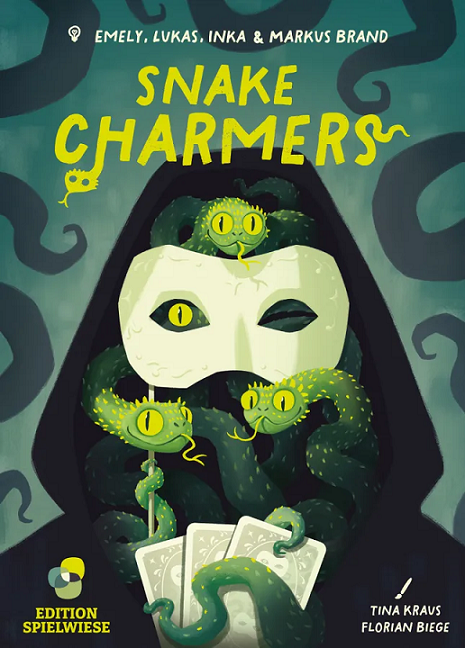
A crafty salesperson would push Snake Charmers as a cross between Cockroach Poker and The Resistance. This allusion is a strong sell, as it ties this new release to two of the best bluffing and deduction games ever designed. Fortunately, it is a reasonably accurate comparison, even if Snake Charmers can’t quite deliver the impact…
As an independent games designer and producer, a lot of my time involves visiting conventions to meet gamers and, ideally, sell my games to them. When I do so, it’s always a surprise how little crossover there is between people who play board games, roleplaying games and miniatures games, which is a pity since I think all of them have something special to offer. So I’d like to take this chance to explain exactly what I think is so special about miniatures games for anyone who doesn’t necessarily play, or even consider them.
The opening sequence of Martin Scorsese’s Taxi Driver depicts a New York with enough grit that you can feel it on your teeth. It’s a feral hour of the night. DeNiro’s sedan is cruising down a street awash in the radiant soul of the city. There’s a shot of the vehicle’s quarter panel. Beads of…
This is another great expansion from Stonemaier Games, with lot of extra bits to change the game, but not too drastically. To start with and importantly for me is the fact that it all fits in the main box and you get a new card holder that is more like the one that you get with Wingspan, to replace the old smaller holder.
8 You gain 5 new guilds and their cards. You also gain a whole load of Dragons that have some cool new powers which can make putting them in Caves easier if you reach the requirments. one of the new dragon types is called a fledgling, these will make your games that much more interesting. As with most expansions or games for that matter it is best to explore the game and see how you can make the most of them. If you do not like the game, then I am afraid but this wont fix that, but it will make the game more complex and fun.
Before we dive into the content of the playlist, some general observations:
All of the songs in the playlist were popular during the Weimar Republic (1918—1933). Yet as music recording was still in its infancy at that time, many of the songs in the playlist are later recordings (and some rare ones were recorded even before 1918!).
As the playlist is only 2:21 hours long, your Weimar game will probably last longer (if you don’t crash the republic on the first or second round), but there’s no reason not to listen to these songs two or three times – they’re fascinating historical documents.
The playlist is thematically sorted. That helps you find similar songs, but makes for somewhat monotonous listening (until you come to the next group of songs). I therefore recommend you turn shuffle on.
Now, what awaits you in the playlist?
#1: The National Anthem
It seems like a no-brainer to include the German national anthem of the time, yet it’s not so simple: The Lied der Deutschen (Song of the Germans) had been written in 1841, but had since then only been a patriotic song among many – until the first president of the republic, Friedrich Ebert, declared it the national anthem in 1922. The song’s three stanzas were variedly popular: Ebert favored the third stanza with its liberal ideals of unity, justice, and freedom, his right-wing opponents preferred the “Deutschland über alles” (Germany Above Everything) first stanza. I have included an instrumental version. If you feel patriotic, you can sing along.
The Weimar Republic did not come into existence in a vacuum. It inherited German cultural traditions like folk songs (“Wem Gott will rechte Gunst erweisen” (Whom God Wants to Favor), song #2).
And, of course, the Weimar Republic succeeded the German Empire with its national feeling (“Die Wacht am Rhein” (The Guard on the Rhine), song #2), dominant Protestantism (Martin Luther’s classic “Ein feste Burg ist unser Gott” (A Mighty Fortress Is Our God), song #5), and monarchy (“Heil dir im Siegerkranz” (Hail to Thee In the Victor’s Crown), song #7 – the quasi-anthem of the German Empire).
The republic’s midwife was the First World War – whose experience shaped its veterans and provided the cultural context even for those who had not been adults during the war yet (“Wildgänse rauschen durch die Nacht” (Wild Geese Rush Through the Night), song #8, written in 1916, was immensely popular among the Weimar Republic youth movement). The war also cast its shadow over Weimar Germany as many had lost their husbands, sons, fathers, brothers, and friends in the war (“Ich hatt’ einen Kameraden” (I Had a Comrade), song #9, the traditional German soldiers’ lament).
The liberal republic proved fertile ground for satirical treatments of the new developments: Otto Reutter made fun of the big and small war profiteers with “Seh’n Sie, darum ist es schade, dass der Krieg zu Ende ist” (See, that’s why it’s a pity that the war is over, song #10), and Claire Waldoff called for replacing the men in power with women in “Raus mit den Männern aus dem Reichstag” (Kick the Men Out of Parliament, song #11), playing on masculine anxieties after the introduction of women’s suffrage.
Even in a time and place as politically charged as the Weimar Republic, not everything was politics. The average Hans and Gretel may have cared less about their preferred ideology and more about how to have good time on a Saturday night… and the new cultural scene, especially in the big cities like Berlin, provided ample opportunities.
The more sophisticated artists like the Comedian Harmonists succeeded with witty wordplay and erudite vocal harmonies. Others played on the classics – alcohol (“Wir versaufen unser Oma ihr klein’ Häuschen“ (We Blow Grandma’s Little House on Booze, song #19) and sexual innuendo („Fräulein, Woll’n Sie nicht ein Kind von mir“ (Miss, Don’t You Want a Child By Me, song #22). There was even the equivalent of a (generalized) diss track: “Du bist als Kind zu heiß gebadet worden” (You Have Been Bathed Too Hot As a Child, song #23) indicates that this neglect of bath safety led to lasting brain damage in the interlocutor.
#26-33: Film, Theater, and Opera Music
The Weimar Republic’s vibrant cultural scene led to cross-pollination between diverse forms of artistic expression. The new medium of film was pioneered in Germany, and once it had left its silent infancy behind, movie songs became hits. Marlene Dietrich, starring in The Blue Angel, enticed with “Ich bin von Kopf bis Fuß auf Liebe eingestellt (I’m Set to Love From Head to Heel, song #26), but warned “Nimm dich in Acht vor blonden Frau’n“ (Beware of Blonde Women, song #27).
More traditional art forms like the theater also adapted. Die Dreigroschenoper (The Threepenny Opera)’s acerbic critique of capitalism would not have been as successful without its catchy songs, the most famous of which is the “Moritat of Mackie Messer” (Ballad of Mack the Knife, song #31).
Even the most classic and highbrow form of entertainment modernized: “Jonny spielt auf” (Jonny Plays It Big, song #33) introduced jazz into the world of the opera… which brings us to our next category.
#34-41: Jazz and Blues
Traditionally, the United States had received and emulated European fashions, not the other way around. Yet by the early 20th century, America had become the largest economy in the world, its war entry in 1917 tipped the scales of the war further in favor of the Allies, and the increased presence of Americans in Europe meant that the United States turned from an importer to an exporter of culture. Jazz took Europe by storm – both in the form of American (and nascent European) bands and by the new medium of the music record. The Weimar Republic was no exception. Jazz fueled the parties in any larger city of 1920s Germany.
Of course, not everyone loved jazz, and the controversy over its unorthodox dissonances, the more expressive, individualistic, and eroticized dancing style accompanying the music, and, of course, the race of its performers entered the contemporary culture wars – exemplified by Weimar’s double use of Louis Armstrong, illustrating both the SPD’s “The New Rhythm” and the DNVP’s “Nicht Deutsch” (“Not German”) event cards.
The “Tiger Rag” (song #41) is also used in The Tin Drum, German writer Günter Grass’s epic about the rise, fall, and persistence of Nazism: The youthful protagonist Oskar Matzerath who always carries his eponymous tin drum plays the Tiger Rag at a NSDAP rally in his hometown Danzig. The mesmerizing rhythm has the audience sway and dance, exposing the Nazis to ridicule.
#42-47: Workers’ Songs
The aggressive ethno-nationalism of Nazism was one of the two most dynamic political movements of the Weimar Republic (at least once the 1929 crash had plunged vast parts of the German population into a crisis of material and identity). The other was the workers’ movement, both in its reformist Social Democratic and its revolutionary Communist form. As the workers had been traditionally excluded from the public in imperial Germany, dominated by aristocracy and bourgeoisie, they created their own political parties (SPD, later USPD and KPD), economic associations (the trade unions), and social and cultural associations – from workers’ sport clubs to workers’ singing societies. Their milieu was bound together not only by their shared economic experience, but also by this cultural connection, of which the workers’ songs formed an important part.
Classics from imperial times like “Die Internationale” (The Internationale, song #42) remained important, but the movement also adopted new songs written by the numerous socialist poets and composers like Bertolt Brecht, Hanns Eisler, or Ernst Busch. Whereas some of these became new classics (like the “Solidaritätslied” (Solidarity Song, song #46), others aged badly: “Der Marsch ins Dritte Reich” (The March to the Third Reich, song #47) poked fun at the alleged inability of the Nazis to take power after their electoral setback at the Reichstag election of November 1932. First recorded in December 1932, the song was horribly overtaken by events just a month later when Hitler was elected chancellor in January 1933.
Thus, we conclude our playlist. It contains the traditional and the modern, entertainment and politics, left and right – except for the very right, but I don’t want to listen to Nazi songs while playing board games, and I’m sure that neither do you.
Do you like to play music in the background while playing board games? What’s your favorite song from this playlist? Let me know in the comments!
Before we dive into the content of the playlist, some general observations:
All of the songs in the playlist were popular during the Weimar Republic (1918—1933). Yet as music recording was still in its infancy at that time, many of the songs in the playlist are later recordings (and some rare ones were recorded even before 1918!).
As the playlist is only 2:21 hours long, your Weimar game will probably last longer (if you don’t crash the republic on the first or second round), but there’s no reason not to listen to these songs two or three times – they’re fascinating historical documents.
The playlist is thematically sorted. That helps you find similar songs, but makes for somewhat monotonous listening (until you come to the next group of songs). I therefore recommend you turn shuffle on.
Now, what awaits you in the playlist?
#1: The National Anthem
It seems like a no-brainer to include the German national anthem of the time, yet it’s not so simple: The Lied der Deutschen (Song of the Germans) had been written in 1841, but had since then only been a patriotic song among many – until the first president of the republic, Friedrich Ebert, declared it the national anthem in 1922. The song’s three stanzas were variedly popular: Ebert favored the third stanza with its liberal ideals of unity, justice, and freedom, his right-wing opponents preferred the “Deutschland über alles” (Germany Above Everything) first stanza. I have included an instrumental version. If you feel patriotic, you can sing along.
The Weimar Republic did not come into existence in a vacuum. It inherited German cultural traditions like folk songs (“Wem Gott will rechte Gunst erweisen” (Whom God Wants to Favor), song #2).
And, of course, the Weimar Republic succeeded the German Empire with its national feeling (“Die Wacht am Rhein” (The Guard on the Rhine), song #2), dominant Protestantism (Martin Luther’s classic “Ein feste Burg ist unser Gott” (A Mighty Fortress Is Our God), song #5), and monarchy (“Heil dir im Siegerkranz” (Hail to Thee In the Victor’s Crown), song #7 – the quasi-anthem of the German Empire).
The republic’s midwife was the First World War – whose experience shaped its veterans and provided the cultural context even for those who had not been adults during the war yet (“Wildgänse rauschen durch die Nacht” (Wild Geese Rush Through the Night), song #8, written in 1916, was immensely popular among the Weimar Republic youth movement). The war also cast its shadow over Weimar Germany as many had lost their husbands, sons, fathers, brothers, and friends in the war (“Ich hatt’ einen Kameraden” (I Had a Comrade), song #9, the traditional German soldiers’ lament).
The liberal republic proved fertile ground for satirical treatments of the new developments: Otto Reutter made fun of the big and small war profiteers with “Seh’n Sie, darum ist es schade, dass der Krieg zu Ende ist” (See, that’s why it’s a pity that the war is over, song #10), and Claire Waldoff called for replacing the men in power with women in “Raus mit den Männern aus dem Reichstag” (Kick the Men Out of Parliament, song #11), playing on masculine anxieties after the introduction of women’s suffrage.
Even in a time and place as politically charged as the Weimar Republic, not everything was politics. The average Hans and Gretel may have cared less about their preferred ideology and more about how to have good time on a Saturday night… and the new cultural scene, especially in the big cities like Berlin, provided ample opportunities.
The more sophisticated artists like the Comedian Harmonists succeeded with witty wordplay and erudite vocal harmonies. Others played on the classics – alcohol (“Wir versaufen unser Oma ihr klein’ Häuschen“ (We Blow Grandma’s Little House on Booze, song #19) and sexual innuendo („Fräulein, Woll’n Sie nicht ein Kind von mir“ (Miss, Don’t You Want a Child By Me, song #22). There was even the equivalent of a (generalized) diss track: “Du bist als Kind zu heiß gebadet worden” (You Have Been Bathed Too Hot As a Child, song #23) indicates that this neglect of bath safety led to lasting brain damage in the interlocutor.
#26-33: Film, Theater, and Opera Music
The Weimar Republic’s vibrant cultural scene led to cross-pollination between diverse forms of artistic expression. The new medium of film was pioneered in Germany, and once it had left its silent infancy behind, movie songs became hits. Marlene Dietrich, starring in The Blue Angel, enticed with “Ich bin von Kopf bis Fuß auf Liebe eingestellt (I’m Set to Love From Head to Heel, song #26), but warned “Nimm dich in Acht vor blonden Frau’n“ (Beware of Blonde Women, song #27).
More traditional art forms like the theater also adapted. Die Dreigroschenoper (The Threepenny Opera)’s acerbic critique of capitalism would not have been as successful without its catchy songs, the most famous of which is the “Moritat of Mackie Messer” (Ballad of Mack the Knife, song #31).
Even the most classic and highbrow form of entertainment modernized: “Jonny spielt auf” (Jonny Plays It Big, song #33) introduced jazz into the world of the opera… which brings us to our next category.
#34-41: Jazz and Blues
Traditionally, the United States had received and emulated European fashions, not the other way around. Yet by the early 20th century, America had become the largest economy in the world, its war entry in 1917 tipped the scales of the war further in favor of the Allies, and the increased presence of Americans in Europe meant that the United States turned from an importer to an exporter of culture. Jazz took Europe by storm – both in the form of American (and nascent European) bands and by the new medium of the music record. The Weimar Republic was no exception. Jazz fueled the parties in any larger city of 1920s Germany.
Of course, not everyone loved jazz, and the controversy over its unorthodox dissonances, the more expressive, individualistic, and eroticized dancing style accompanying the music, and, of course, the race of its performers entered the contemporary culture wars – exemplified by Weimar’s double use of Louis Armstrong, illustrating both the SPD’s “The New Rhythm” and the DNVP’s “Nicht Deutsch” (“Not German”) event cards.
The “Tiger Rag” (song #41) is also used in The Tin Drum, German writer Günter Grass’s epic about the rise, fall, and persistence of Nazism: The youthful protagonist Oskar Matzerath who always carries his eponymous tin drum plays the Tiger Rag at a NSDAP rally in his hometown Danzig. The mesmerizing rhythm has the audience sway and dance, exposing the Nazis to ridicule.
#42-47: Workers’ Songs
The aggressive ethno-nationalism of Nazism was one of the two most dynamic political movements of the Weimar Republic (at least once the 1929 crash had plunged vast parts of the German population into a crisis of material and identity). The other was the workers’ movement, both in its reformist Social Democratic and its revolutionary Communist form. As the workers had been traditionally excluded from the public in imperial Germany, dominated by aristocracy and bourgeoisie, they created their own political parties (SPD, later USPD and KPD), economic associations (the trade unions), and social and cultural associations – from workers’ sport clubs to workers’ singing societies. Their milieu was bound together not only by their shared economic experience, but also by this cultural connection, of which the workers’ songs formed an important part.
Classics from imperial times like “Die Internationale” (The Internationale, song #42) remained important, but the movement also adopted new songs written by the numerous socialist poets and composers like Bertolt Brecht, Hanns Eisler, or Ernst Busch. Whereas some of these became new classics (like the “Solidaritätslied” (Solidarity Song, song #46), others aged badly: “Der Marsch ins Dritte Reich” (The March to the Third Reich, song #47) poked fun at the alleged inability of the Nazis to take power after their electoral setback at the Reichstag election of November 1932. First recorded in December 1932, the song was horribly overtaken by events just a month later when Hitler was elected chancellor in January 1933.
Thus, we conclude our playlist. It contains the traditional and the modern, entertainment and politics, left and right – except for the very right, but I don’t want to listen to Nazi songs while playing board games, and I’m sure that neither do you.
Do you like to play music in the background while playing board games? What’s your favorite song from this playlist? Let me know in the comments!
Long ago, spirits and demons stirred in the land of the rising sun, wreaking havoc upon crops, rivers, and villages, unseen and unstoppable. As an Onmyoji, a practitioner of ancient cosmology, you learned to capture these restless entities, restoring balance where others faltered. Yet word came that your own village suffered, and another Onmyoji had been called to intervene, an affront to your duty and skill. With careful calculation and swift action, you must outwit your rival, claiming mastery over chaos. You must ensnare the seven spirits, the Yokai Septet by Muneyuki Yokouchi from Ninja Star Games with art by U.
You might want to wait to include your holiday gaming, but if you can’t, our annual Year Stats are available now!
After all the options added last year, still more is possible this year! Optionally change lists to Artists, Categories and/or Mechanics.
When you’ve updated to version 6.7, you will see the Year Stats banner on the main overview screen of the app. Tap this banner to go directly to your Year Stats! (depending on your stats and device this may take a little while)
The Year Stats will be created from your Insights, with the period 2025. The default sorting of the list of games will be on Play count.*
You can go to Insights from your Year Stats, change any filters you want and go back to the Year Stats through the Share menu, option “Year Stats“. Here you can for instance use the new Digital play tag!**
Example BG Stats Year Stats 2025
If you’ve accidentally closed the banner you can enable it by going to Settings –> View and Share your 2025 stats.
Don’t forget to mention us and use #bgstats when you share!
* Your previously selected Insights settings like filters and sorting are temporarily replaced. When you leave the Year Stats and Insights screen without making adjustments, the next time you open Insights your original settings will be restored. ** available with the Power expansion.
Options on the Year Stats screen
The options on the Year Stats screen are the same as on the Stats-o-grapic. You can read all about these options here: Stats-o-graphic. Below the differences and new options are described. These new options will also be available on the Stats-o-graphic from now on!
Background
Year Stats have their own background. You can choose to keep this (Option ‘Standard‘) or change it to the option ‘Game‘.
Game: the background will automatically be generated from the cover image of your top game.
Standard: choose this to use the standard Year Stats background colour.
New list options
Two options are added. Here you can select what is to be displayed in the top and bottom lists. When opening the Year Stats the app estimates which list could be interesting for you. You can always change this:
Display (top)
Here you can select the following options:
Bar chart
Designers
Artists
Categories
Mechanics
And (bottom)
Here you can select the following options:
Designers
Artists
Categories
Mechanics
Combining lists
Really only interested in one of the list options? Select it for both the options and the lists will be combined.
How are Designers/Artists/Categories/Mechanics calculated?
The percentage shown for these is over all your unique played Games, not plays.
Easy to overlook options
Picture grid
You can tap the grid to hide a picture. Other stats are not recalculated when you do this.
Stats grid
These options are also available in the green gear menu on the Display line.
Tap Players to toggle between named players and all players.
Tap the Hours/Days row to get the option to hide it.
Tap any list to toggle between showing/not showing “(uncredited)”
I am destined for greatness, but those in power only see me as a sword.
Peter and Dylan play Armoured Clash, the epic scale tabletop miniatures game from Warcradle!
Warcradle really hit this epic scale arame out of the park – Armoured Clash is a great game, especially with a design team including ex-Games Workshop designer James Hewitt. I’ve been meaning to film a battle report for the game and here it is finally. Enjoy!
Making high quality tabletop gaming content at the EOG takes time and money. Please consider becoming a Patreon supporter or making a donation so I can continue this work! Thankyou!

 Anmelden