Normale Ansicht

Slay the Spire II Initial Thoughts with Spoilers

17. März 2026 um 17:12

Expanding on the Spoiler Free thoughts I had a week ago. Putting the rest in an expandable block, (in case you want to not see).

(For reference, I have cleared Ascension 7 with all characters but the NecroMancer, and have now played a half dozen ish games of co-op, including a brutal floor six loss.

Expand to view StS II Thoughts

When I said “I liked what was missing” I was referring to:

A) Cards that double, like Catalyst or Limit Break. Because often those cards provide such massive scaling (being geometric) that they are often auto-selects in in archetype using it (and are sometimes worth taking “blind” in hopes of getting poison/strength). Sadly there is at least one new doubler (Voltaic) and it does indeed solve the endgame by itself (with one upgrade and any support).

B) Huge swing cards/artifacts (like Corruption or Biased Cognition) that have an outsized value. Those particular two are still there, but are no longer “mere” rare card rewards but boss relics, which seems reasonable. Both are also been reduced in value because some of their complements (Dead Branch and artifact charges, respectively) are missing.

It’s an early access game, so the card balance is off in a few points, but overall I still like it. In particular:

  • Focus being mostly until end of turn (Defragment is still in, but rare) means the defect’s most solid and boring build is gone. The temporary focus cards are interesting, and with more cards that load up orbs (or evoke) make a nice change.

I agree with the complaints that the elites do not feel notably distinct from the hallway fights. One of the the things that Slay the Spire 1 nailed was that different fights attacked different deck archetypes (mostly with Boss/Elite fights, but not always). For example “Time Eater” destroys card spam. “Reptomancer” requires a bunch of fast All out attack. Big Giant Head took out decks that dish out consistent damage but can’t scale, etc. The game lobbed Bombs in the Jonathon Degann game design sense.

You do see that, for example “Entomancer” punishes a bunch of small attacks. But the “Hunter Killer” hallway fight punishes card spam. Too many of the Act I elites are kind of “samey” … the game is missing (for example) having to deal with Gremlin Nob crushing skill decks and needing to hit it for ~80 before the end of T3. It’s just “bigger numbers.” The Bygone Effigy feels like the worst offender on that. You need to do the same by T3, but if you fail it’s just brutal death.

Part of the problem is that the relic pool is a bit “meh.” It’s good that the card pool is such that you can make a build to kill the Act III boss and then just grab a potion for a weakness, and that you then skip a few elites to lower variance. But that could get boring (and Asc 10 is double final boss, so that’s an issue).

But that’s a balance issue. Also, I do like the events that are “here are two choices that may both be bad, and no you can’t skip.”

Co-op: Have played (2p) and I stand by my earlier comment, its well done, considering. Some fights are much easier, some fights are much harder (the Phantasmal Gardners can absolutely tank a run early if you aren’t prepped for them), but I’ve mostly won (granted my co-op ascension is still quite low). The co-op only cards seem wildlly unbalanced, but that’s ok.

Anyway, still enjoying it.

Designer Diary - Pampero: Nature - More theme, more mechanics

17. März 2026 um 15:00

by Julián Pombo


Nature
Wind farms in Uruguay incorporate mandatory environmental conservation policies, including impact prevention, ecological compensation, habitat restoration, and continuous monitoring, generating additional environmental benefits beyond clean energy production.

The installation of wind farms in Uruguay is coordinated with DINACEA (National Directorate for Quality and Environmental Assessment), the objectives of SNAP (National System of Protected Areas), and national climate policies, integrating renewable energy generation with biodiversity conservation, ecological restoration, and compliance with the country's environmental commitments.

The State: creates fiscal and contractual conditions to attract private investment that provides clean energy, reduces energy costs, meets climate targets, and finances environmental conservation measures.

This is what Pampero: Nature is about...

Why an expansion?

Nature was a part of the base game. A shorter track and the usual rules.

I thought the theme alone should be enough to attract players to follow this strategy.
I was wrong, nobody liked that.
Actually, someone did, Vital Lacerda. I tried to make it work cause if Vital likes it, it's a keeper. Despite all my efforts the Nature Reserve was being ignored so I decided to leave it on pause for the time being.

While I was researching Remote locations, i.e. small settlements not connected to the electrical network, I discovered that those areas have the best winds for installing wind farms. Also, they are inhabited by a lot of wildlife, which in turn affects many flora and fauna.

The focus wasn't to have a system that punished players but to show how wildlife is affected and how companies are incentivized by the government to protect it. In the process of doing it, I wanted to keep it simple - not adding many steps and components to an already busy game.

Since the Nature reserve strategy wasn't working on its own, the most thematic approach seemed to be to unite it with the Remote. So, instead of adding another income track I decided to put them together.


The joint track system with both income markers jumping each other worked out great and Nature was included in the final version of the game.


As you may have noticed I wasn't willing to let the Nature reserve go. The message is important to me. Every bit of Pampero is important to me.


Cardal
Uruguay has already completed the transition in power generation — with a very high share of renewables. The current bottleneck is something else: the grid that moves that energy. The challenge is not generating energy, but delivering it when and where it is needed.
That’s where Cardal comes in.


The Punta del Tigre–Cardal 500 kV transmission line

The transmission line reduces curtailment — clean energy that would otherwise be wasted due to lack of transmission capacity. Without this kind of infrastructure, the transition remains incomplete.

The energy transition does not stop at electricity generation. It requires electrifying sectors that still depend on fossil fuels: electric transport, energy-intensive industry, replacing gas and fuel oil for heat. This demands firm capacity, a strong grid, and system resilience.

The Cardal substation: Increases overall system capacity, adds redundancy (“a second transmission path”) and allows demand growth without increasing blackout risk. It reduces fossil fuel dependence during critical periods: low wind conditions, droughts and peak demand events
A stronger, more interconnected grid: improves energy redistribution, optimizes the use of renewable generation and reduces the need to dispatch thermal plants

I started researching this just by chance, as I was biking as usual and noticed that the old wooden poles were being replaced by newer ones.

“A second transmission path”
One of my goal when designing a game is to keep players involved when is not their turn. One of these situations in Pampero happens when a player takes a contract that is connected through a "red line". That gives the following player the opportunity to gain a connection tile. I wanted to push this even further, to keep more players interested.


Electric Poles

Now, the following players have the chance to place Electric Poles and earn money based on the previously placed Transformers. This was one of the few elements of the game that was an instant success.

Once again, thank you for reading!

Julián

Designer Diary: Expanding Lands of Galzyr

17. März 2026 um 15:00

by Sami Laakso


[heading]Delving back to Galzyr[/heading]

Creating Lands of Galzyr was a huge effort. Designing the engine was one thing, but making the game’s open world work took years of effort crafting the necessary stories. Despite the game being a complete, intricate package, we still made sure it could be expanded later if such a time ever came. And that time is now!

We couldn’t jump into making the expansion right away, even if we wanted to. We needed a break to work on other things for a bit, but more importantly we wanted to give the players a chance to experience the game and the stories. Only then could we have a better idea of what we and the players want from the expansion. Let’s see where we ended up.

Lands of Galzyr the base game ready to be explored!


[heading]Determining the scope[/heading]
One of the very first questions was the scope the expansion should have in terms of content and components. During the base game’s development, we had rough plans to make a single expansion of 240 cards (compared to 480 in the base game) and 2 new adventurers (compared to four in the base game). Those plans changed quickly when we started actually working on the expansion, however.

Adding exactly two new adventurers in total was a figure pretty much set in stone. Those two were already featured in the base game’s artwork, it would round out the game’s skill system nicely (each adventurer representing one of the 6 skills), and it’s the number the box and certain game mechanics can accommodate. However, we found out that the necessary content to add both of them would take up roughly 120 cards, half of the planned budget. That wouldn’t have left enough room for other content we wanted to include.

The upcoming adventurers, Noko & Umi and Yamej

So we decided to go bigger, which left us with another choice to make: make one huge expansion or make two smaller ones. We settled on the latter option and a plan of creating two, 240-card expansions, both with one new adventurer and a ton of other content. The base game’s box has just enough room for all of this, even sleeved. The upsides are clear. We can develop the first expansion faster, the players get to play it faster, and we can keep the monetary barrier to entry lower. It just takes some more effort on our part to make sure all combinations of the base game and expansions integrate nicely and provide a good experience. But that was an effort we were glad to spend for the other benefits in this approach.

[heading]Seeking and Receiving Feedback[/heading]
Dreams and Mysteries being a straight-up expansion, we wanted to make sure it would serve its audience, the fans of Lands of Galzyr. So, we sought out a lot of feedback, from our own Discord server, comments here on BGG, reviews, etcetera. Even more importantly, we created a survey where we asked direct feedback from players.

One additional, unique avenue for data was the game’s digital storybook. Normally, you don’t get to know how many times a game has been played or what decisions players made while playing. However, with the game storybook being digital, we’ve been receiving some gameplay information from those who have not disabled sharing their gameplay data. With this data, we can identify which scenes have been played the most and the least, which decisions players have made during the stories, and more. For example, we could introduce more variety to the most commonly played scenes to lessen repetition.

Player feedback: what players would like to see in the expansion

The survey received over 400 responses. We asked players to rank different kinds of content based on how much they wanted more of it. We also asked for general feedback on what they wanted or didn’t want to see in the expansion. Overall, it gave us a good idea of what people wanted from the expansion.

The main takeaway for us was that players wanted more long-form content. More specifically, a lot of people asked for a bigger hook or reason to continue playing, a greater sense of purpose you could say. Some players also wished to gain more power through mechanical character progression, but that would go against the game’s core design. Still, we sought to address that feedback in other ways.

On the other hand, players generally did not hunger for new game mechanisms, as the level of mechanical depth seemed to have hit its mark for a story-driven game for many. The responders generally loved the game and just wanted more story content.

Player feedback: general feedback organised based on type

[heading]Dreams and Mysteries[/heading]
After thoroughly going through the feedback, we were ready to start designing and creating the expansion content. There are four aspects I’ll highlight in this design diary, and how I think they improve the experience without compromising the game’s identity.

As mentioned earlier, the expansion includes a new adventurer. While it technically makes it possible to play with five players at once, it more importantly gives one more character and save slot to allow more players to jump in and out between sessions. Smaller groups likely also enjoy an alternative character and storyline to experience, perhaps when the mood for mischief strikes.

The expansion box is stuffed full of content

Perhaps the biggest new addition is the extended personal stories for all adventurers. We wanted to keep them short in the base game so they would serve as an introduction, not railroad the player and dominate the experience for a long time. That would have taken away from the open-world feel of the game. Still, a lot of people wanted more from them, so we’ll now serve longer stories that are broken up into multiple games. It’s a personal goal to work towards, for both the player and the adventurer they’re playing.

Tied to the extended stories are the new adventurer special abilities. These are alternatives to the existing special abilities, since significant power increases are off the table, but they do still spice up the experience and feel like rewarding character growth during the personal stories.

Noko & Umi are ready to join the adventures

The last thing is a new grand storyline. While the base game already has one large over-arching story, players clearly wanted more. This one also unravels slowly, and the players can influence it a lot. We hope these things together makes it even more fulfilling to come back to Galzyr time and time again.

[heading]Conclusion[/heading]
Those were our plans for the first expansion and how we arrived there. I believe we have been able to address the feedback and make the game even better for those who already enjoyed it. In the end, the total amount of stories in the storybook grew from the base game's roughly 700,000 words to well over one million words. That's pretty crazy!

The expansion is now available at our online store and selected retailers.

What are some of your absolute favourite expansions and why?

Sami Laakso

Tabletop Codex – Now You Can See What’s New!

17. März 2026 um 05:04

Unfortunately, no one can be told what the Matrix is. You have to see it for yourself.

My Tabletop Codex app gets its first functionality update!

If you haven’t tried out my fantastic rules app Tabletop Codex yet, what are you thinking? Go download it now! And now is the perfect time because I’ve just invested more in it by adding a great functionality update. Watch the video to find out more, and find the easy links to download it for Android or Apple phones and tablets at tabletopcodex.com.

Making high quality tabletop gaming content at the EOG takes time and money. Please consider becoming a Patreon supporter or making a donation so I can continue this work! Thankyou!

Top 5 Games of Gamers Ranch 2026: Why These Types of Games Shine at Events

16. März 2026 um 22:53

I spent the last weekend hosting friends at the Gamers Ranch, a gaming-focused vacation property in the middle of Missouri. I had an amazing time, and I loved seeing the power of the tabletop community in action, especially in seeing different gaming friends intermingle.

As I reflected on the weekend, I realized that among the dozens of games played, there were 5 games that hit the table more than any others. I thought I’d briefly look at each of those games to see what made them work particularly well for events and conventions, which can sometimes be the difference for a game to break out.

Moon Colony Bloodbath: I taught and played this 6 times over the weekend, and nearly everyone played again later. Even though it’s heavier than the other games on this list, the single deck of cards (flip a card and everyone does what it says) helps a teacher to guide everyone through the first few turns. It’s also entirely simultaneous, so there’s no downtime. There’s also the dark humor of the theme and the bold name, which seemed to attract curiosity from those who hadn’t played.

Lord of the Rings Trick-Taking: The cooperative nature of this game creates a sense of camaraderie; camaraderie is often a primary motivator for someone to attend a gaming event. Also, the short playing time and the variety of each chapter–all based on a simple core system–created a “just one more game” mentality.

Bomb Busters: I’ll continue what I said above about the Lord of the Rings trick-taking game, as this applies to both: I’ve noticed at gaming events that many people are hesitant to commit to a 3-hour game, yet they’ll end up playing short, escalating, cooperative games like Bomb Busters for hours. I love the idea of breaking a longer game into bite-size pieces.

Magical Athlete: Everything about the product design of this whimsical racing game lends itself to events. While it asks players to make a key decision before the game starts (which characters you select in the draft), the rules are so bare-bones that this isn’t a problem. I noticed that people seemed to gravitate towards this game after playing a heavier game, as it’s a great brain break.

Mindbug: This snappy two-player dueling game has a unique hook that seemed to intrigue people (twice per game when your opponent plays a card, you can claim it as your own instead). An accessible, quick 2-player game is really nice for an event when a few people are waiting for longer, larger-group games to finish.

Also note that all of these games are super fast to set up.

One other commonality between these games is that they all had someone championing them. This can make a huge difference at an event or convention: If there’s someone visibly excited to play a game they already know, people will gravitate towards that game.

Have you noticed a game spreading like wildfire at events or conventions? What is it about that game or the situation that resulted in the game returning to the table over and over?

***

Here are the events and conventions in which Stonemaier Games is participating in 2026.

If you gain value from the 100 articles Jamey publishes on this blog each year, please consider championing this content! You can also listen to posts like this in the audio version of the blog.

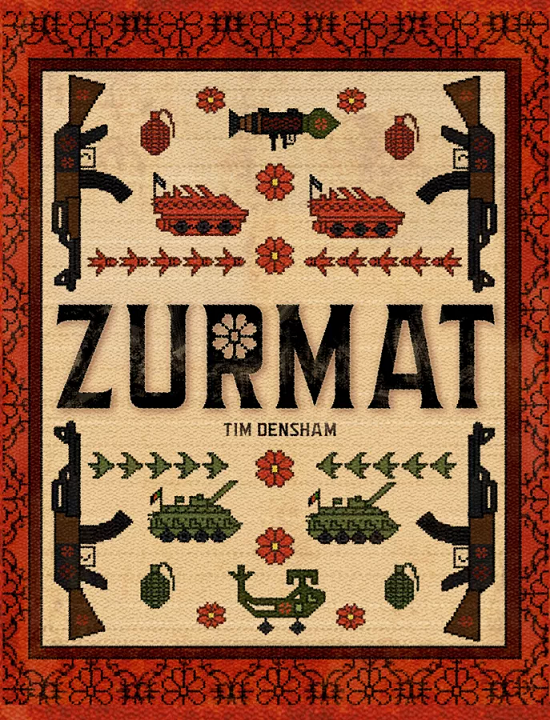
A Personal Affair – Zurmat: Small Scale Counterinsurgency in Review

16. März 2026 um 14:00
Zurmat is a small Pashtun district south of Kabul. In 2007, It was a tense region with a fragile sense of order. The Taliban moved throughout the villages and roads at night, issuing threats to dissuade cooperation with the Afghan government. Zurmat is also a wargame. Some soldiers write about their experience. Tim Densham designs.…

Read more →

Dice N Dine event 14-15 Mar 2026

The past weekend was the Dice N Dine event at Lalaport, Kuala Lumpur, organised by The Magic Rain. It was not entirely a boardgame event. There were art booths and some cosplaying too. Surprisingly not many local game designers set up booths this time. Normally we have more. The venue is the Level 4 food court. The Dice N Dine concept is to run smallish events at food courts, because there

Yeah, It's Your Turn

by Justin Bell

My latest obsession on Board Game Arena is Nucleum, the Board&Dice production currently in alpha. I thought Nucleum was pretty good as a board game, but playing it twenty more times on BGA—in addition to plays and reviews I’ve now done of two expansions, Nucleum: Australia and Nucleum: Energy Research Institute—has made it become one of my favorite games. After chatting with Nucleum co-designer Dávid Turczi at SPIEL Essen last fall, I have it on good authority that we are going to get more Nucleum games for years to come, so I’m just as invested as the designers are.

I wish I had more time for two-hour live plays of Nucleum, but such is the way with work travel, family life, and “IRL” game nights. So, I do my Nucleum plays async on BGA, meaning I take a turn, then the next player has a window of time—a day, maybe two—to take their turn.

On paper, I always think that means I’ll take at least one turn of my current game of Nucleum every day. The reality is quite different. That’s because right now, while reading this article, there’s someone in Reykjavik, Dhaka, Tuscaloosa or Le Mans waiting for you to log onto BGA and take care of your business.

Yeah, it’s your turn.

***

I am not normally obsessed with my phone; often, I leave my Pixel phone flipped over (Google calls this “Flip to Shhh”) because I don’t want to be bothered. This changes when I’m doing async plays on BGA, stressing my next move. That makes me a phone obsessive, as I stare at my phone between meetings waiting to see if it’s my turn on table #811104232.

I always start async plays with the best of intentions, setting up games with other people who have 100% positive reputations on Board Game Arena. I try to remember asking opponents upfront to join only if they are willing to take at least one, ideally two turns a day…let’s try to keep this thing moving.

How hard can that be?, I ask myself. We’re talking about relatively simple decisions in a game of, say, The White Castle. Pick a die, pick a spot, take the action. Bing, bang, boom!

And usually, everything starts off well enough. Depending on the game, players select their faction, pick a personal milestone card, select their starting hex, and make other pre-game choices to set up whatever game we’ve chosen. They take their first couple of turns within a few hours of getting the e-mail notification, that simple reminder that it is, in fact, your turn.

But sometimes, players don’t take their turn. Sometimes, they agree to start a new game, and only after joining a game do they chase down a rules video or a full read-through of the game’s manual, helpfully linked right on the game’s main page. That takes a day. They open an e-mail notification, then delete it instead of using the link to take them directly into the game. They fiddle over whether or not to take a certain action, then head off to dinner and drinks before coming back to the game the next morning…late the next morning, at that.

Given my obsession, I go back to the virtual game table from time to time, to monitor the game’s progress. I tell myself I’m doing that to see what other players have done on their turn, to help narrow my own choices when it gets back to being my turn again. I use the notes function (gosh, I love the notes function!) to gauge my thoughts, so that I can quickly take my turn when it comes around again.

But mostly, I sit. I think to myself, Next time, just carve out 90 minutes and play the freakin’ game live. Then you don’t have to obsess over all this, and you can sleep better, because you won’t hit the sack dreaming about “what ifs” tied to your most recent turn.

I think about doing these live plays…then, I don’t. I wallow in my own misery, as I wait for other players to stop enjoying their real life and focus on taking their Board Game Arena turns. Because, that’s all that really matters: my obsession, not your social life. Right? RIGHT??

***

It’s finally my turn again on table #811104232.

I wonder if, this time, I should make everyone else suffer for making me wait so long to take my turn. I click here, I hover the mouse pointer there, I double check that I’ve done everything I wanted to do on my turn before I click the “Confirm” button. (Thankfully, most of the new titles on BGA have both the Confirm action and the Undo Turn action, so that I don’t have to curse the sky because I clicked too many buttons too quickly.)

But then, the cycle repeats itself. My favorite is when I see that the next player in turn order has their “green light” on, indicating that they are online at this very moment. Even though they might be playing any of the platform’s other 1400+ games (nah, they MUST be sitting in this game, just itching to take their turn, right?), I sit there after finishing my async turn, hoping I get to watch them execute their own magic right in front of me.

Until they don’t. Or they do, and after their turn wraps up, the next player is offline. Or the next player lurks in the room for a few minutes, then logs off as if they just wanted to start planning their next turn before going to bed.

Luckily, there are dozens of solo games on BGA, so I can keep myself warm at night by jumping into a quick play of anything from Railroad Ink to Ark Nova. But the thrill of human vs. human competition is the beauty of the platform, challenging players from around the world.

So, I’ll wait around…anxiously.

Designer Diary: The Trials and Journey of Aetherium: The Forgotten Duel

Von: dirty_d
15. März 2026 um 07:00

by daryl durston


I began designing Aetherium: The Forgotten Duel about a year and a half ago, and it all started with something unexpectedly simple: a photo I saw on social media. It was just stones resting on a cloth, but the moment I saw it, one thought hit me immediately: “This would be such a cool ancient-looking game.”

From there, my imagination took over. I became obsessed with creating something that felt like it could have existed centuries ago—an artifact from a lost civilization. That inspiration shaped my first design rule: no cardboard, no cards, no modern-looking components. I wanted everything to feel timeless, like it was carved from history rather than printed in a factory. Around the same time, I remembered games that used a drawstring mat—where the play surface doubled as storage, with all the pieces kept inside. That concept fit perfectly with the ancient aesthetic I was chasing.

And just like that, the journey began.

In Aetherium, there are two paths to victory. A player can either:
• Connect four matching elemental colors across the tops of the columns, or
• Guide the powerful Aether token to their end of the Aether track.

Building the game around the four classical elements, with Aether representing something beyond the physical world, helped deepen the mythology. It became more than strategy—it felt like a symbolic duel between nature and the unknown.

From the beginning, I knew it needed to be universal: no words, only symbols. I wanted turns to stay simple, but decisions to feel deep. That’s where the power tokens came in, adding replayability and new layers of strategy.

With the concept in place, things moved fast. Within two days, I had a rough but playable prototype. A few days later, I brought it to my first real playtest with my close friend Yvonne. That moment felt huge—Aetherium was leaving my head and becoming real on the table.

The first draft looked like this:

And the most important thing happened: we had fun. But even then, some mechanics felt weak, and certain moments lacked the weight I wanted.
That playtest opened the door to months of cutting, adjusting, and rebuilding. Version after version began to emerge.

Around this time, my good friend Ruel Gaviola introduced me to the indie board game market. He explained how conventions often host indie sections where designers can showcase their games, connect with players, and gather feedback. When I found out Dice Tower West would have an indie market this March, it felt like the perfect opportunity. Aetherium had the atmosphere and uniqueness to stand out.

As the gameplay evolved, the physical design did too. The mat went through countless iterations, and one action space became a recurring problem—it simply wouldn’t work no matter how many times I reworked it. Eventually, I solved it.

And then I made my next big decision: I decided the game should be handcrafted entirely out of clay. Honestly? That was a bad choice.

Clay was messy, inconsistent, and nearly impossible to reproduce at scale. Pieces cracked, warped, and varied too much. What I thought would make the game feel more authentic was actually making it less sustainable.

That’s when my friend Katie helped me see the truth: the goal wasn’t just to make something that looked ancient… It was to make something people could actually play and return to again and again. That realization changed everything. Once I let go of clay, the project opened up. I shifted toward resin, which solved one problem—but introduced new challenges, especially with the mat.

It needed to be affordable, durable, and still match the weathered aesthetic. I tested countless fabrics before finally finding one that worked. At first, I tried stamping the fabric for a rustic look, but it still didn’t feel professional enough. Later, I found heat-press transfer sheets, which sped up the process while keeping the style I wanted. Even then, making everything by hand was no small task.

Then I discovered how time-consuming resin production really was: mixing, pouring, curing, sanding—creating even one full prototype took hours. Producing 30 full sets of resin pieces, preparing the mats, adding the rope—it all took far longer than I expected. It was exhausting at times, but it was also incredibly rewarding. Watching the game slowly transform from a simple idea into a real physical object made every long night worth it. After all the iterations—mechanics, materials, prototypes, playtests—I finally arrived at something complete: Aetherium: The Forgotten Duel.

Now, as Dice Tower West approaches, Aetherium is no longer just an idea sitting on my table. It’s real.

Bringing it to the indie market feels like the next step in its story—not because the game is finished, but because it’s finally ready to be discovered. I’m excited to watch new players sit down, touch the pieces, learn the symbols, and experience the same sense of mystery and strategy that inspired it from the start. Aetherium has already come farther than I ever expected from that first spark of inspiration.

Now hoping it won’t be easily forgotten.

For more information, you can visit begamingames.com

Flip Pick Towers (Saturday Review)

14. März 2026 um 12:43

In the kingdom of Pilipalod, a wild, evil magic had erased the royal castle, leaving only the foundations visible. Queen Blodwen, King Llew, and Princess Dillie surveyed the empty hill where their home once was with some despair, but mostly patient resolve. Word of the disaster spread, and soon magical creatures gathered to offer their help, and the finest designers of the Magical Architect Alliance arrived, promising that a new home would rise again. Their first task was to rebuild the Flip Pick Towers by Rob Fisher and Adam Porter from Osprey Games with art by Beatrix Papp.

The post Flip Pick Towers (Saturday Review) appeared first on Tabletop Games Blog.

Creating moments in Pilgrim Poker - why I make games

Over the Chinese New Year holidays I managed to get some friends and family to help me playtest Pilgrim Poker. The rules were more or less final, but I wanted to get more different people to try it, to see whether there were any issues I hadn't detected. This is stress testing the game. When you get people who have never played a game to try it, you can discover situations you have never seen

❌