Lese-Ansicht

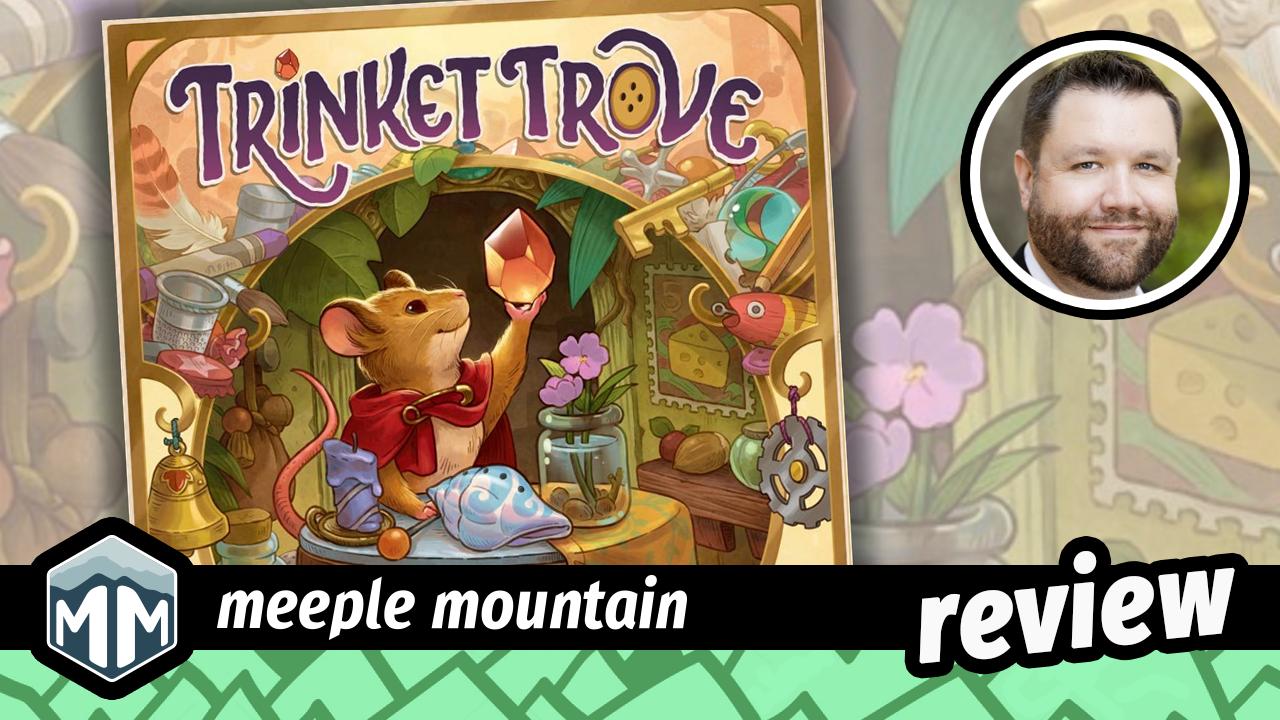
Trinket Trove Game Review

Buy Trinket Trove from Amazon

When compared to big box games, it can be easy for avid gamers to overlook games that come in a small box. Fewer components, a thinner rulebook, and smaller table presence often leads to a lighter game, which can be seen as a negative by gamers who have large collections consisting of heavier games.

Thankfully, more and more small box games are offering increasingly varied, complex, and strategic experiences that are making them more appealing to gamers that traditionally look past them.

Trinket Trove, a ‘thinky’ bidding, set collection, and drafting game for 2-6 players from Rocco Privatera, Paul Solomon, and publisher Gamehead, makes a strong argument for the ‘small box, big game’ crowd.

Bidding For Your Burrow

In Trinket Trove, players collect various trinkets across 13 types, attempting to collect sets of different types to add to their character’s ‘burrow’ and earn points before the end of the game. Trinkets are collected and sets are built through the bidding and drafting process that makes up the core loop of the game.

Each round, players bid on available lots (groups of one or more trinkets), following the bidding order of the previous round (in the first round of the game, it’s randomized) to determine…

The post Trinket Trove Game Review appeared first on Meeple Mountain.
  •  

Rattlesnake (Saturday Review)

The saloon doors suddenly burst open behind you as your boots skid across the dusty wooden boards of the sidewalk. A split-second later, gunfire cracks through the afternoon air, the bullet ricocheting off a pail of water, sending startled townsfolk diving for cover. Diving behind an old barrel offers you a moment of shelter, although the sound of heavy footsteps suggests your pursuer is closing in on you. Then, glass shatters somewhere near the jail, followed by the sharp whistle of a bullet passing far too close for comfort. A grin spreads across your face as you raise your revolver and prepare to return fire. Well, that's what you get when you arrive in Rattlesnake by Michael Hardacre from Osprey Games with art by Roland MacDonald.

The post Rattlesnake (Saturday Review) appeared first on Tabletop Games Blog.

  •  

Circadia Game Review

Hisashi Hayashi is the designer of a quick new card game called Circadia. I was initially interested because Hayashi has done some great work for the Bell household, namely in the form of Yokohama and Railway Boom, the latter of which was on my list of the top 10 games of 2025.

As you may know, lots of publishers are pushing out new card games, for the reasons one might expect: this is a much cheaper way to get a game to market, and it could satisfy the needs of many types of players in an environment where players are apparently spending less on their games.

Enter Circadia. There’s a theme loosely tied to Dreaming Paths, Spirit Creatures, and becoming the “Keeper of the Eternal Cycle” for the person lucky enough to win the game.

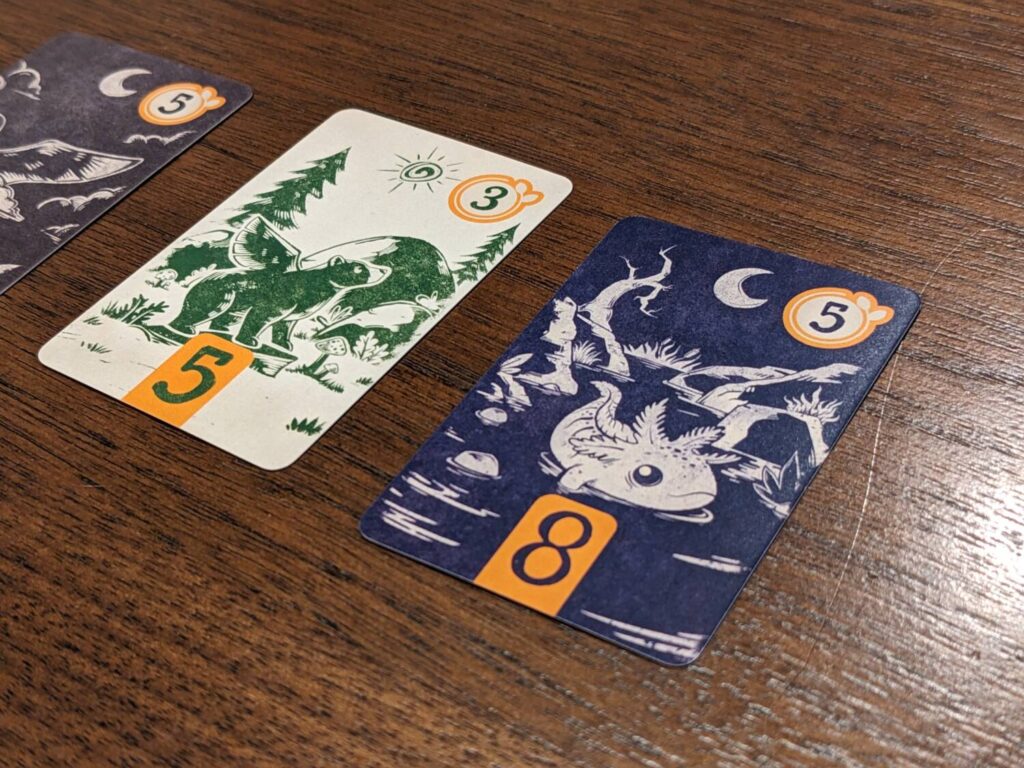
The reality is that Circadia is much, much simpler than even the loose framework. Setup only takes three steps. Players manage a hand of cards (never more than eight), trying to build up sets of cards across three types of Spirit Creatures: bear, axolotl, and goose.

Sets are played from hand based on the value of the cards, so a player who wants to play twos can play any card with…

The post Circadia Game Review appeared first on Meeple Mountain.

  •  

La Habana Game Review

Vibrant, Historic, Rhythmic, Soulful, Crumbling.

With its colonial mansions and mid-century modern buildings suffering from decades of neglect, Havana needs someone with the skill and cunning to collect the right materials and rebuild the structures that make the town the cultural, vibrant city it once was.

To win, you’ll need to collect the right materials to claim building cards that add up to a sliding total based on player count. With limited access to your cards/actions, this is not going to be an easy job.

Let’s get La Habana to the table to see what I mean.

Getting Ready to Rebuild

Start by separating the three types of cards, placing each in its own pile. Put the bag of bricks within easy reach of all players.

Shuffle the Building cards and lay out, side-by-side, two rows of six cards.

Give each player 1 peso coin, 1 grey brick, and a deck of 13 cards with the color backing of their choice. Place the Central Display card on the table and seed it with 3 pesos and three random bricks drawn from the bag.

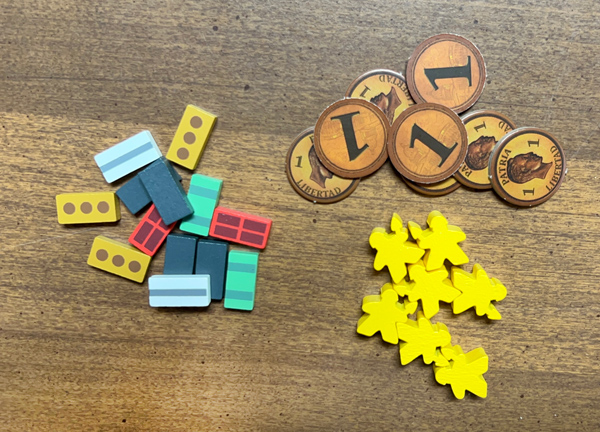
[caption id="attachment_331165" align="aligncenter" width="600"]The four different bricks and the dark gray rubble, Pesos, and yellow workers. The four different bricks and the dark gray rubble, Pesos, and yellow…

The post La Habana Game Review appeared first on Meeple Mountain.
  •  

Roller Disco (Saturday Review)

Electric-blue leg warmers stretched over striped socks, sequins sparkling beneath a giant mirror ball, while clouds of hairspray drifted through the air. Synth-pop booms from oversized speakers as skaters practise one last spin, one last shuffle, one last gravity-defying move before the judges arrive. It's November 1983, and the biggest competition of the year is about to begin. Jam skaters from around the world have gathered beneath the glittering lights, hoping their best moves will earn them the championship crown. They want to become the next champion of the Roller Disco by Mike Petchey from Huff No More with art by Joss Petchey.

The post Roller Disco (Saturday Review) appeared first on Tabletop Games Blog.

  •  

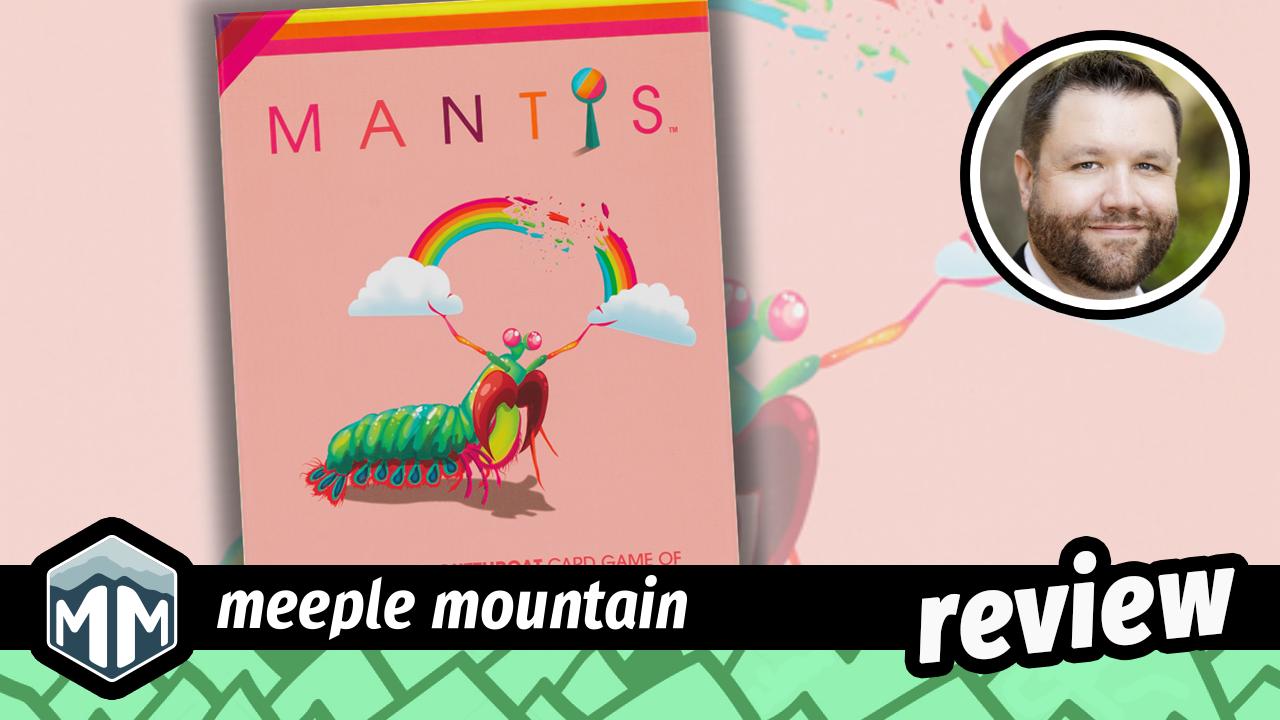
MANTIS Game Review

Buy MANTIS from Amazon.com

Colorful Card Chaos

Games heavily centered around “take that” mechanics live in a weird space for me. While I don’t have a problem with them, if I’m playing these games with one or more uber competitive, sore-loser types, the experience can be miserable.

With that understood, I approached Mantis with some hesitation. Luckily, my preconceived worries were unfounded, and the game turned out to be a hit with friends and family… even the ones who are typically sore losers.

Mantis accommodates 2-6 players and clocks in at a lightning-fast 10-15 minutes playtime.

Turns are snappy and consist of players choosing to steal or score before drawing the top card from a shared deck.

When attempting to steal, the active player draws the top card into a chosen opponent's Tank (personal play area). If the card matches the color of an existing mantis card in the opposing player's Tank, the steal is successful, and the active player moves all cards of the chosen color from the opponents Tank to their own.

In a two-player game, a successful steal additionally  grants the active player another turn.

However—and this is a major point—if a steal isn’t successful, the targeted player gets to keep the card that the active player…

The post MANTIS Game Review appeared first on Meeple Mountain.

  •  

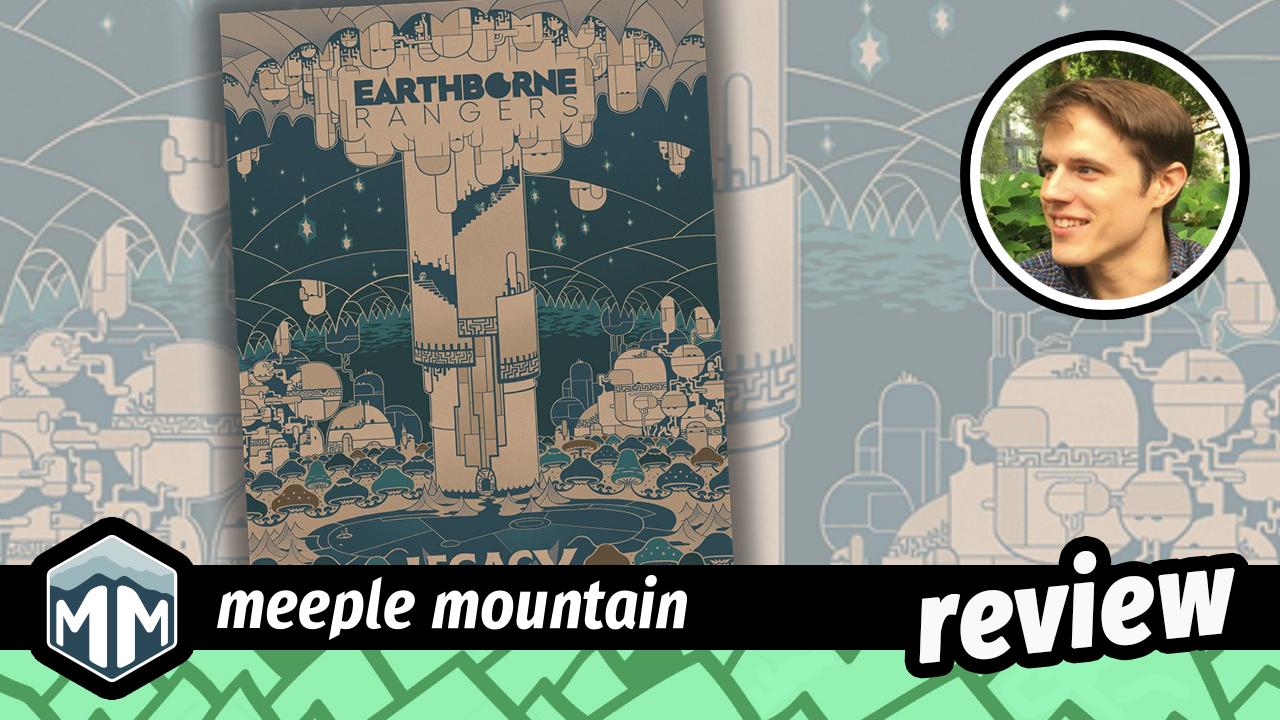
Earthborne Rangers: Legacy of the Ancestors Game Review

A new Earthborne Rangers campaign? You don’t have to tell me twice. It is hard to get me to play the same game more than a few times, but I will drop any and everything to spend more time in—or, in this case, under—the Valley.

While the base game of Earthborne Rangers—one of the greatest gaming experiences of my life, and an experience with which this review will assume you are familiar—takes place across a wide range of beautiful landscapes, Legacy of the Ancestors sends players into the depths of the Arcology, the ruins of a lost civilization that used to inhabit the Valley. This is the sensible choice, a natural development coming out of the first game. The first campaign leaves the Arcology, a consistent splash of harder sci-fi tech in a sea of solarpunk, barely explained, and the underground tunnels are as strong a contrast in setting as it’s possible to have. No more sweeping vistas for you, no no. Best you can hope for is a spot of bioluminescence.

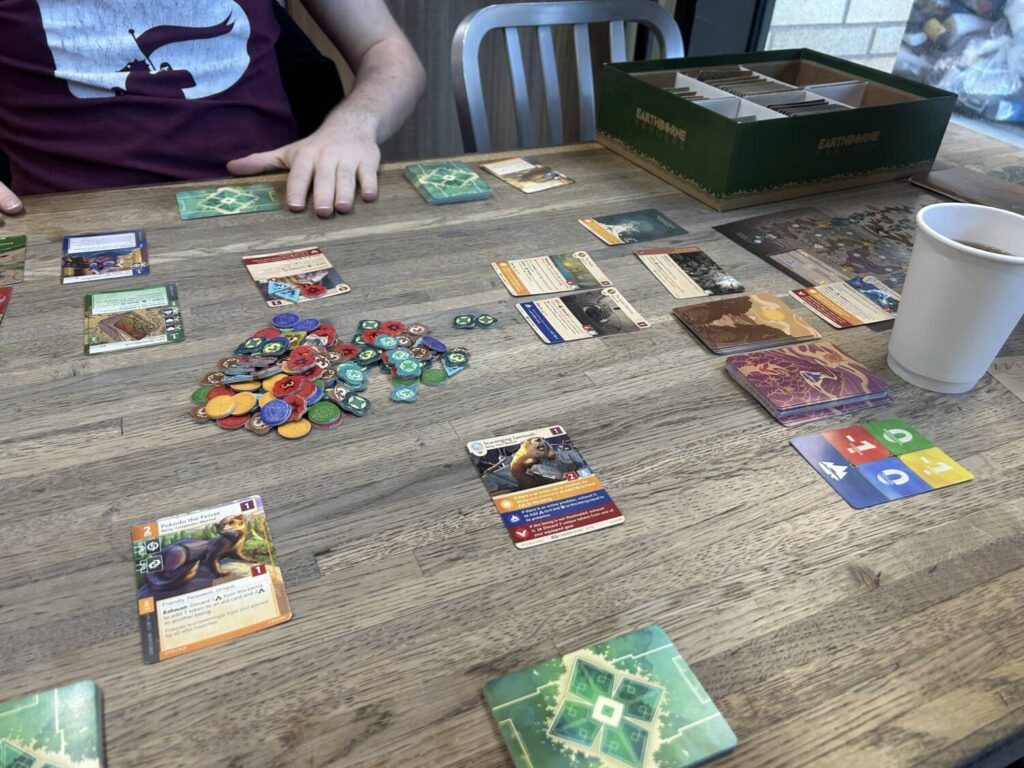
A table full of cards, cards in all directions.

“We Got Distracted by the Ooze”

The cornerstones of what make Earthborne Rangers great are still here. The caverns of the Arcology teem with life and discoveries. There…

The post Earthborne Rangers: Legacy of the Ancestors Game Review appeared first on Meeple Mountain.

  •  

Legendary Encounters: The X-Files Deck Building Game v1

I want to believe.

Trust no one – except your Legendary Encounters: The X-Files Deck Building Game rules summary!

My friend Dylan enjoys the Legendary Encounters games, and a while back created this summary for me for The X-Files version (after previously creating the Aliens one). After sitting in my ‘to do’ pile for far too long, I gave it an editing pass and the layout treatment and here it is!

In this incarnation, players play through three seasons of the iconic TV show, working together generate leads and uncover evidence in a bid to defeat enemies and conspiracies. I can’t imagine the amount of work it took to make a coherent game out of a couple of hundred episodes (the game covers the first 9 seasons), but according to reviews, the game is very thematic and replayable, and particularly popular with solo gamers. Enjoy!

  •  

First Tracks (Saturday Review)

Snow drifted from the pine branches as the last chairlift carried us slowly, but steadily, towards the summit. As we looked back, the mountain below was being draped in silver moonlight and covered in fresh powder snow. We couldn't see it, but we knew that, back in the village, steam curled from bowls of ramen waiting for our return. Yet, nobody was ready to leave the silence of the peaks just yet. We all wanted to hit the slopes one more time before calling it a night. At the same time, we already knew what we would do tomorrow. Tomorrow, we would return to the peak and lay the First Tracks by Blake Erickson and Megan Ryan from Sayonara Ski Co.

The post First Tracks (Saturday Review) appeared first on Tabletop Games Blog.

  •  

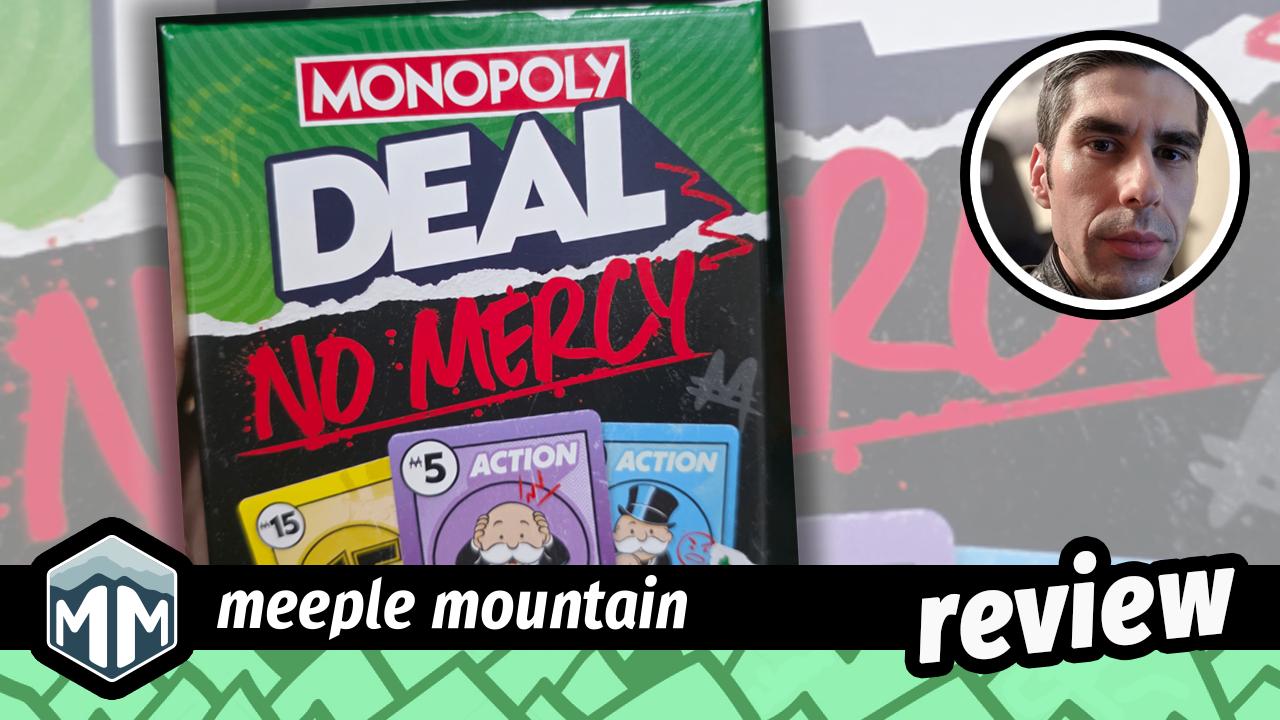
Monopoly Deal No Mercy Game Review

I have a secret to tell you. I like Monopoly Deal. Not love, not champion, just like. In the crowded basement of casual card games, it earns its keep. Put it this way, given the choice between Monopoly Deal, Exploding Kittens, and UNO, Deal is getting picked every time.

Yet there is a trend quietly taking over the casual card game space where publishers are releasing meaner, nastier versions of their existing games. UNO Show 'Em No Mercy, Flip 7 with a Vengeance, and now Monopoly No Mercy are all cut from the same cloth. More take-that and suffering for the people sitting across from you. Where this trend is coming from, I genuinely have no idea.

Cruel Details

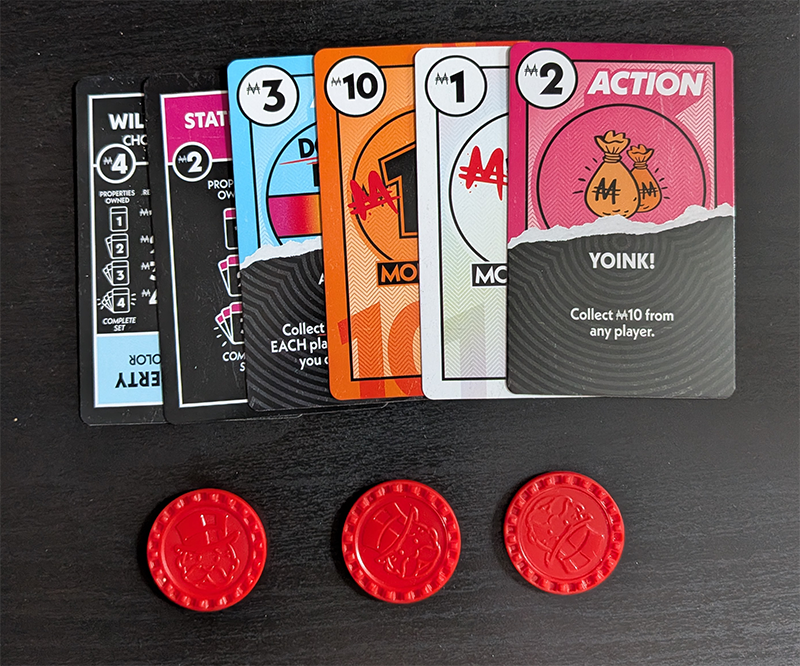
The goal hasn't changed from the original. Collect three complete property sets, build your own portfolio while raiding everyone else's, and be the first to get there. What has changed is the action cards, some of which would qualify as war crimes in certain jurisdictions, and the addition of debt chips.

Debt chips are the most radical departure from the original formula. Money flows in and out fast in Monopoly No Mercy, and there will be moments where you simply cannot cover what you owe. That is…

The post Monopoly Deal No Mercy Game Review appeared first on Meeple Mountain.

  •  

Counterpoint Game Review

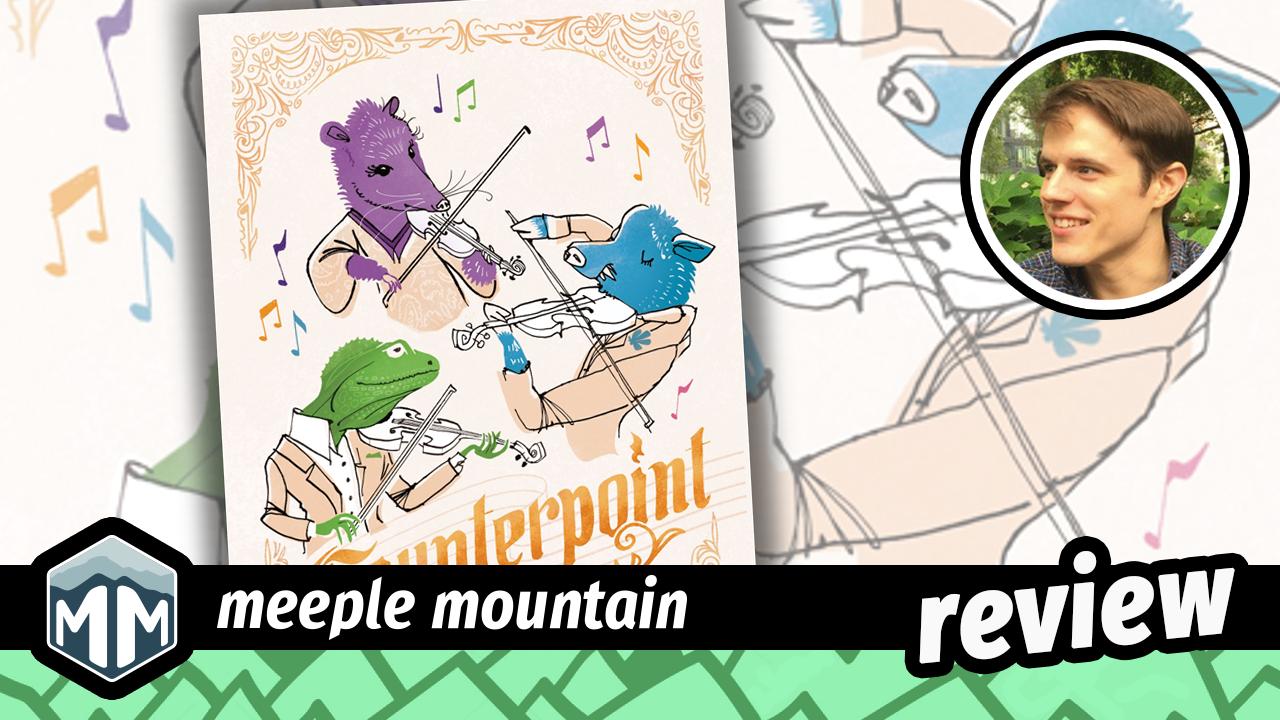
I have never before given much thought to the ways in which music composition and game design are similar. Like all creative arts, both share the goal of trying to communicate and share an experience with their audience. As disciplines, music has notes and rhythms while game design has rules and mechanisms, but both are about taking those disparate ingredients and making them cohere into something whole, something that vibrates with inevitability.

Ted Mann Schaller’s Counterpoint is a must-follow cooperative trick-taker with bidding and a trump-suit. A blessing, to live to see such times as those in which I can write that sentence and assume much of the audience will understand. Each player is a member of an animal chamber trio–to-quintet, be they an iguana violinist or an armadillo pianist. Such is the quality of Brandon Campbell's illustration work here that fights will break out over who gets to be what. The cooperative nature of the game follows the template laid out by blockbuster predecessors The Crew and The Lord of the Rings: The Fellowship of the Ring - Trick-Taking Game: over a series of performances, scenarios named after pieces in the chamber music canon, players attempt to complete certain challenges while also ensuring that everyone makes or exceeds their bid.

There are a few twists on the formula,…

The post Counterpoint Game Review appeared first on Meeple Mountain.

  •  

Crisps! (Saturday Review)

The pub was quiet after the lunchtime rush. It was a chilly autumn afternoon, so the hearty lunch just hit the spot. Now we were sitting there, playing a card game, with a pint each by our sides. While the meal had filled us up, we still fancied something savoury. We just needed a small snack that the two of us could share. Nothing fancy. Something simple would do. Of course, it had to be Crisps! by Shreesh Bhat from Little Dog Games with art by Sai Beppu.

The post Crisps! (Saturday Review) appeared first on Tabletop Games Blog.

  •  

TROK

Trok is set in the universe of another game - Nidavellir. I think that's a good product and marketing strategy. This is building an intellectual property and a brand. Attract your existing fans and supporters. Nidavellir is a game about dwarfs, and Trok is the popular card game played by dwarfs in taverns in the world of Nidavellir.  The cards in the game are numbered 1 to 7, with

  •  

High Society Game Review

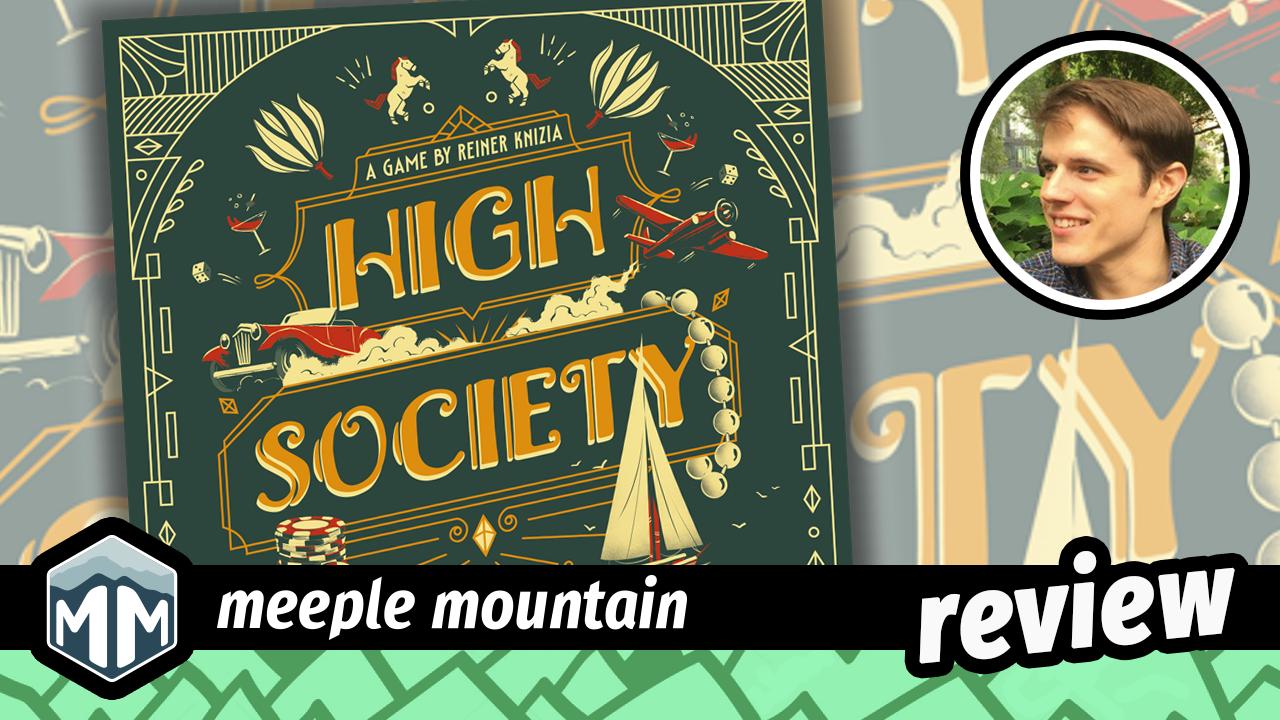
In the broadest possible strokes, games are created out of three or four things: what you can do, what you can’t do, what you want, and, occasionally, what you don’t want. Not every game includes something you don’t want as a category unto itself. You don’t want to end up with few resources in Catan, sure, but that’s just the inversion of what you want: resources with which to build things. I’m talking about things like running out of food in Agricola, where there is a specific punishment meted out by the rules.

In High Society, a fabulous auction game for three-to-five players by designer Reiner Knizia and recently out in a new edition from publisher Allplay, those four categories are crystal clear. That’s never a bad thing. Many of the best games provide clear, succinct definitions for each of them. High Society is a masterpiece not only because it provides ready definitions, but they work, delightfully, at cross-purposes.

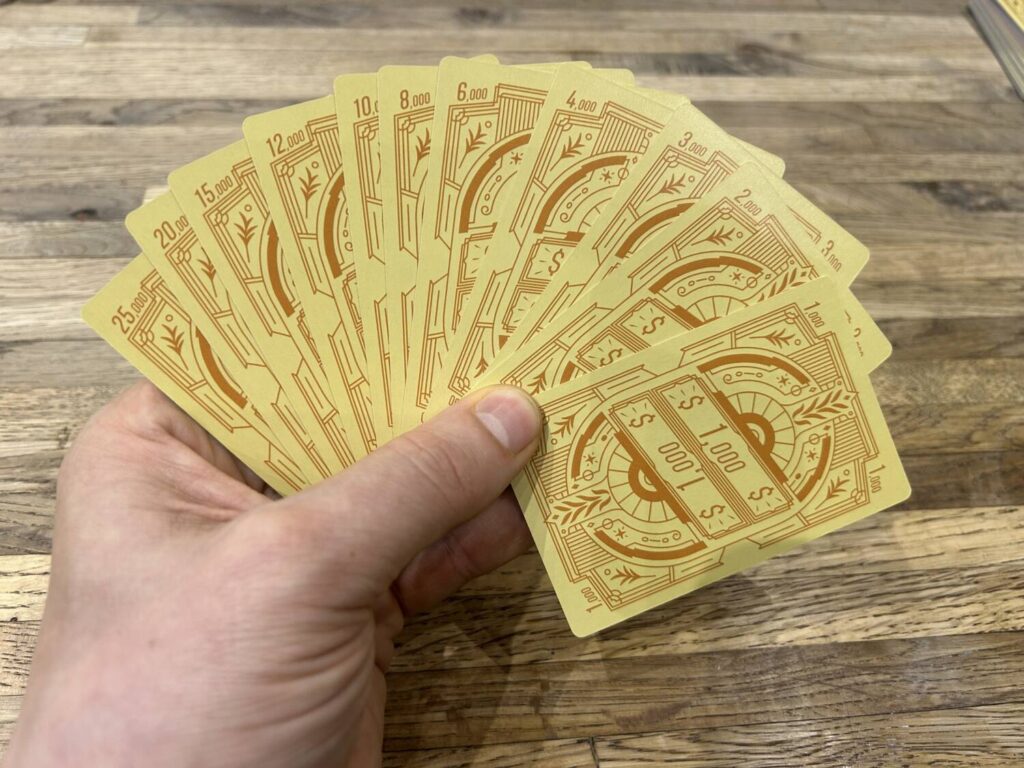
A handful of money cards.

The goal of High Society is, of course, to have the most points at the end of the game. There we have our first definition:

What do you want? To have the most points.

Points are accrued through the purchase of various cards, revealed from the…

The post High Society Game Review appeared first on Meeple Mountain.

  •  

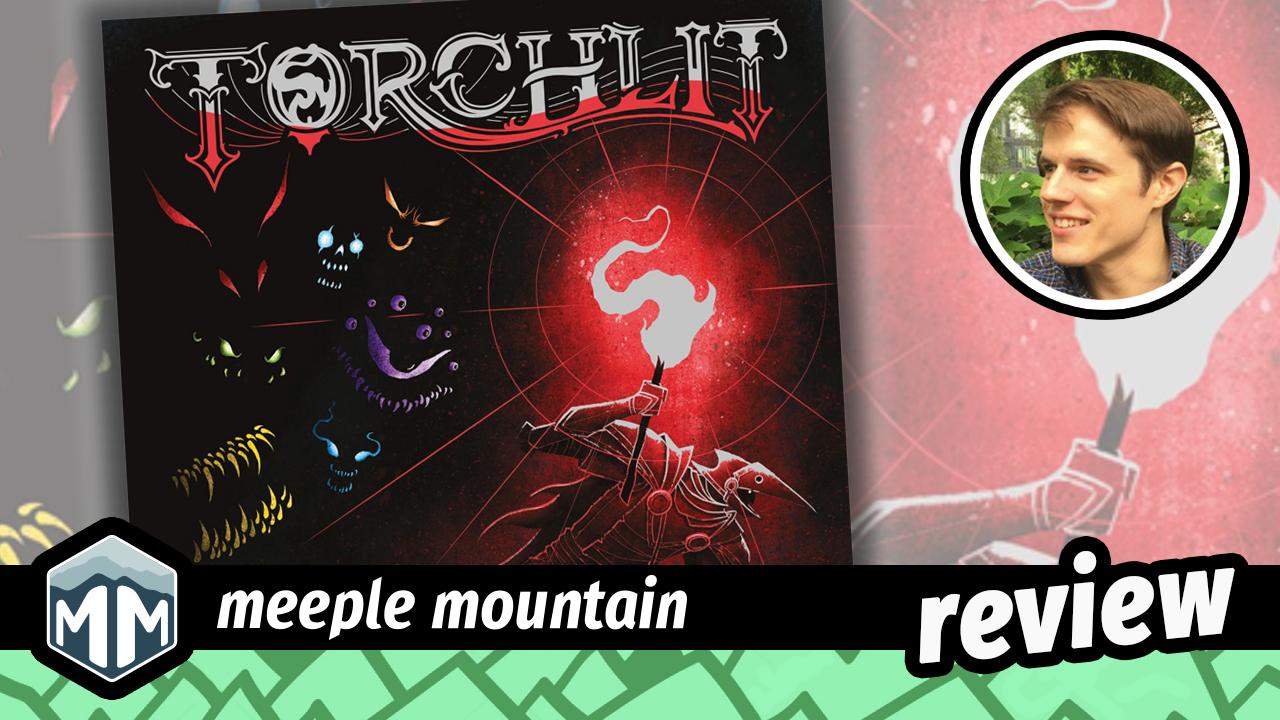
Torchlit Game Review

Whoever walked away from a hand of trick-taking and thought, “Hey, you know what would make this better, is if we had to guess how many tricks we would win beforehand,” has my eternal gratitude. I like to think bidding came about as a party trick. “Françoise is really good at tarot, I bet he can guess exactly how many tricks he’ll win. Guess, Françoise, guess.”

However bidding started, it has long been a cornerstone of trick-taking, and is reliably my favorite way to engage with the mechanic. Card games are inherently subject to tremendous amounts of luck, of course, but bidding shifts the balance a bit closer to skill. More skill means more agency. More agency means more investment. More investment means more fun for everyone.

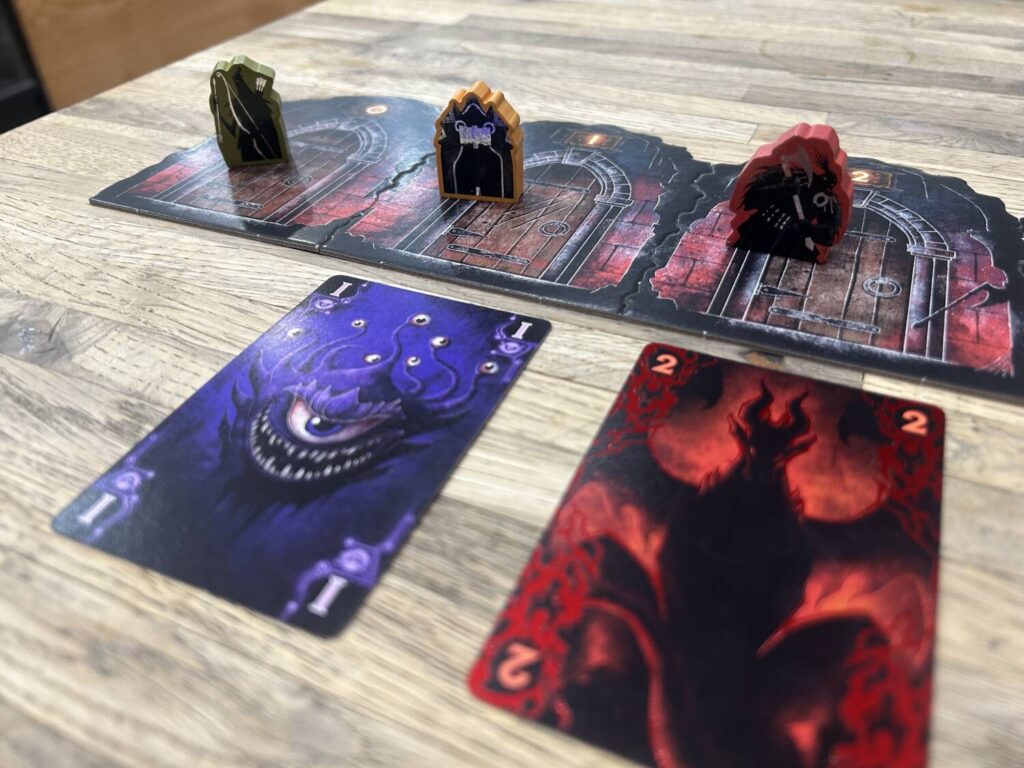
Torchlit is, above all, a bidding game, though it’s a strange one. The deck is dealt out, and every player chooses a card from their hand to put face-down on the table in front of them. The numbers on those cards, which run from 0-7, correspond to a series of dungeon door tiles placed out in the center of the table in numerical order. Whichever card you put down, the matching door is where you want to end up by the end of the hand.

A series…</p>
<p>The post <a href=Torchlit Game Review appeared first on Meeple Mountain.
  •  

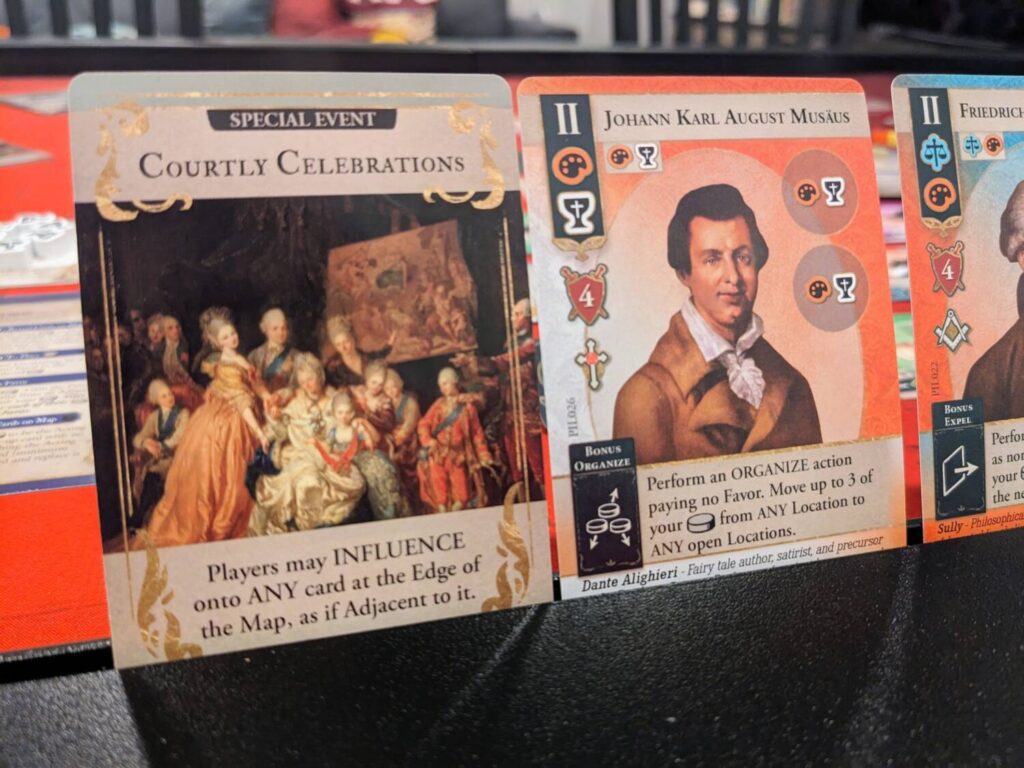
Pax Illuminaten Game Review

Oh, there is something deliciously slimy—smarmy, even—about the game Pax Illuminaten, designed by Oliver Kiley. (BGG says that Pax Illuminaten is based on Kiley’s earlier title Emissary, a game I have not played.)

One pass of the rulebook for Pax Illuminaten had me very excited. I’m not a dedicated scholar of Pax games, having only played Pax Pamir Second Edition (although Pax Hispanica, Pax Emancipation and Pax Porfiriana are currently on deck here at Casa de Bell). I HAVE played Pax Viking Junior, although I am sure a purist would not count that one.

But the core Pax system of historical, card-driven play with multiple end-game conditions and a closed economy is on full display with Pax Illuminaten, and I was further excited by the relatively straightforward rules and a playtime listed as 20-30 minutes per player.

A Pax game, in about 90 minutes? Sold, I said out loud to no one after that rules readthrough.

Then I got the game to the table…and I was mostly impressed. Pax Illuminaten is for a certain kind of player, especially one who likes to understand what is mostly possible in a strategy game, with ample space for a few surprises and a boatload of secondary actions.

Sorry, When

The post Pax Illuminaten Game Review appeared first on Meeple Mountain.

  •  

Symbiosis Game Review

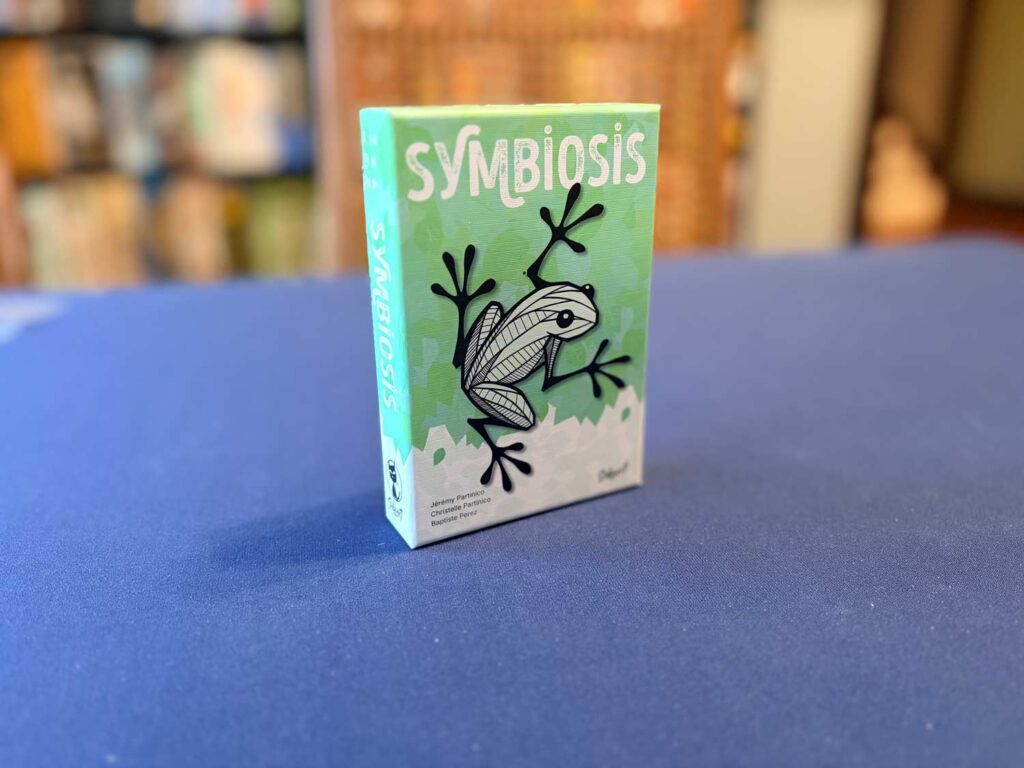
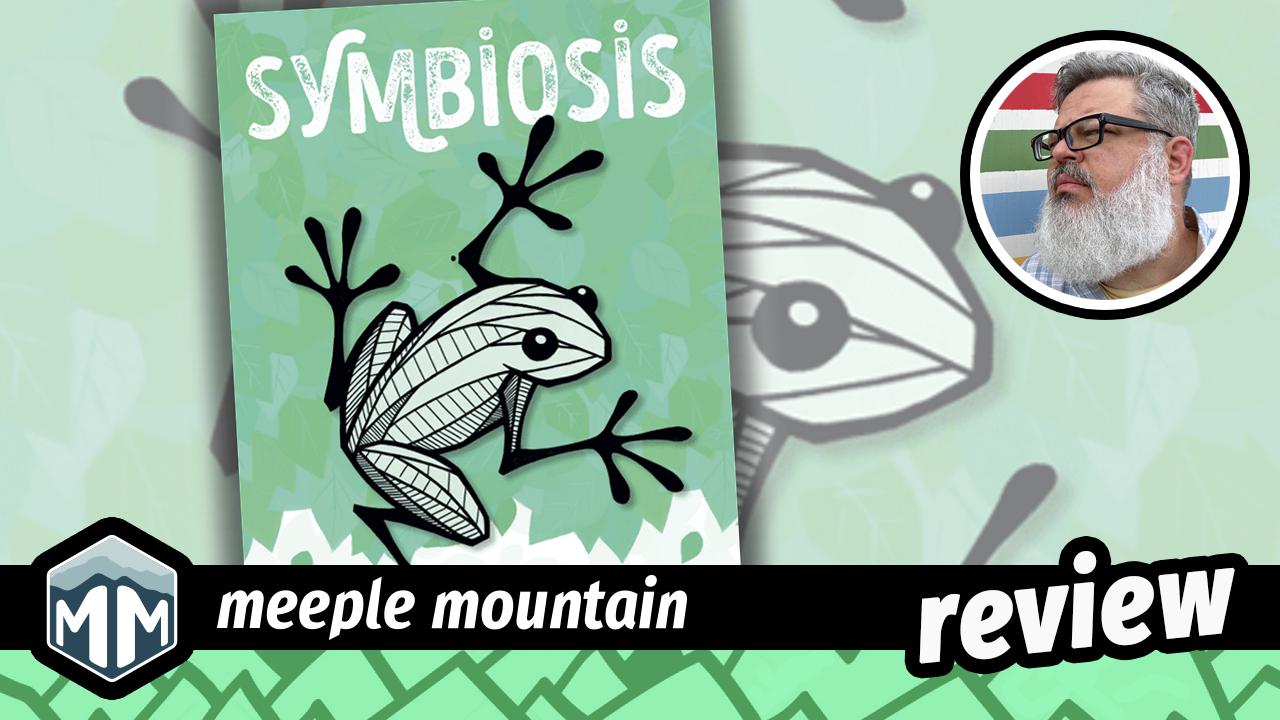
At this year's GAMA Expo I had the opportunity to play Symbiosis with some industry folks. I was charmed by it's artwork and card size, and delighted by the simple decision space and speedy game play. I brought home a copy and reviewed it for you. Check it out!

What is Symbiosis?

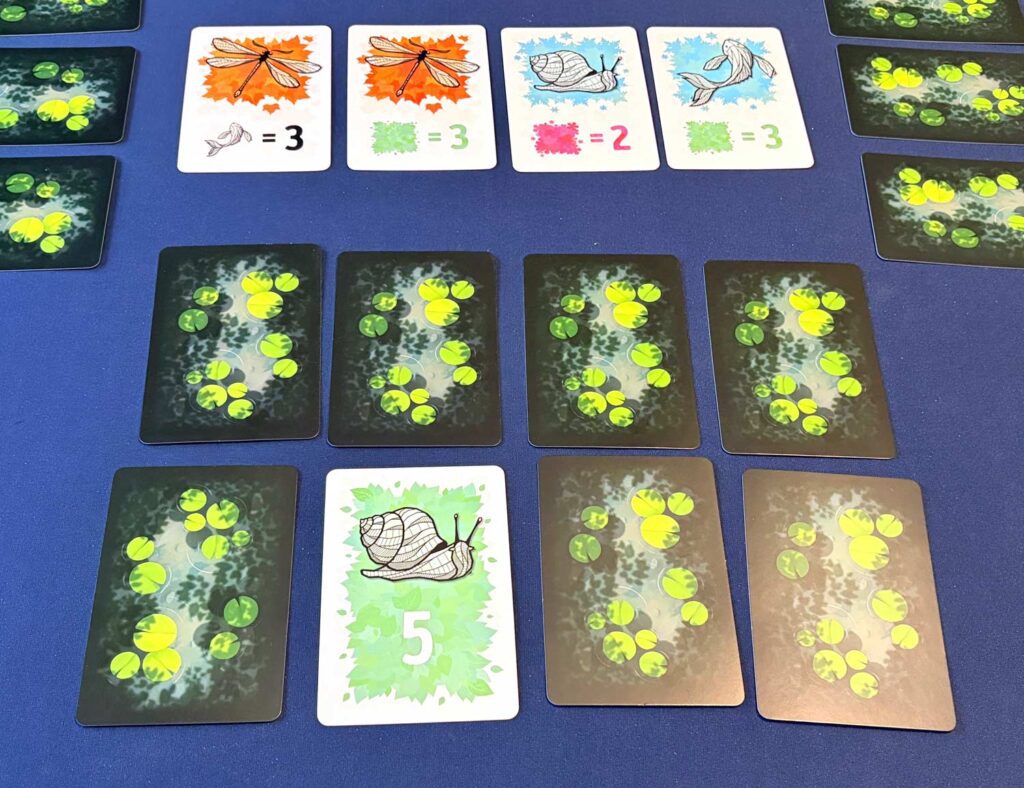
In Symbiosis players are growing and improving their pond in an attempt to earn the most points. They start with a 4 x 2 grid of face down cards, 1 of which is turned over at the beginning of the game. An additional 4 cards are turned face up in the center of the table, and serve as the market.

On your turn you select a card from the market and do one of two things:

Replace one of your face down pond cards with the card you selected from the market. Your pond card is placed face up into the market and becomes available for other players to select.

Alternatively you can take one of your face up cards and swap it with a face up market card. If you do this, you must flip one of your remaining face down cards face up.

“Why”,…

The post Symbiosis Game Review appeared first on Meeple Mountain.

  •  

Citizens of the Spark Game Review

Tabling Tableaus

I once asked W. Eric Martin at GAMA Expo, “What’s your favorite game?” He replied instantly: Innovation. I hadn’t heard of it at the time, but I quickly tracked down a copy and have since played that wild tableau-building civilization card game many, many times. It has shot up to become one of my favorite games, so keep an eye out for my review of Innovation Ultimate in the near future.

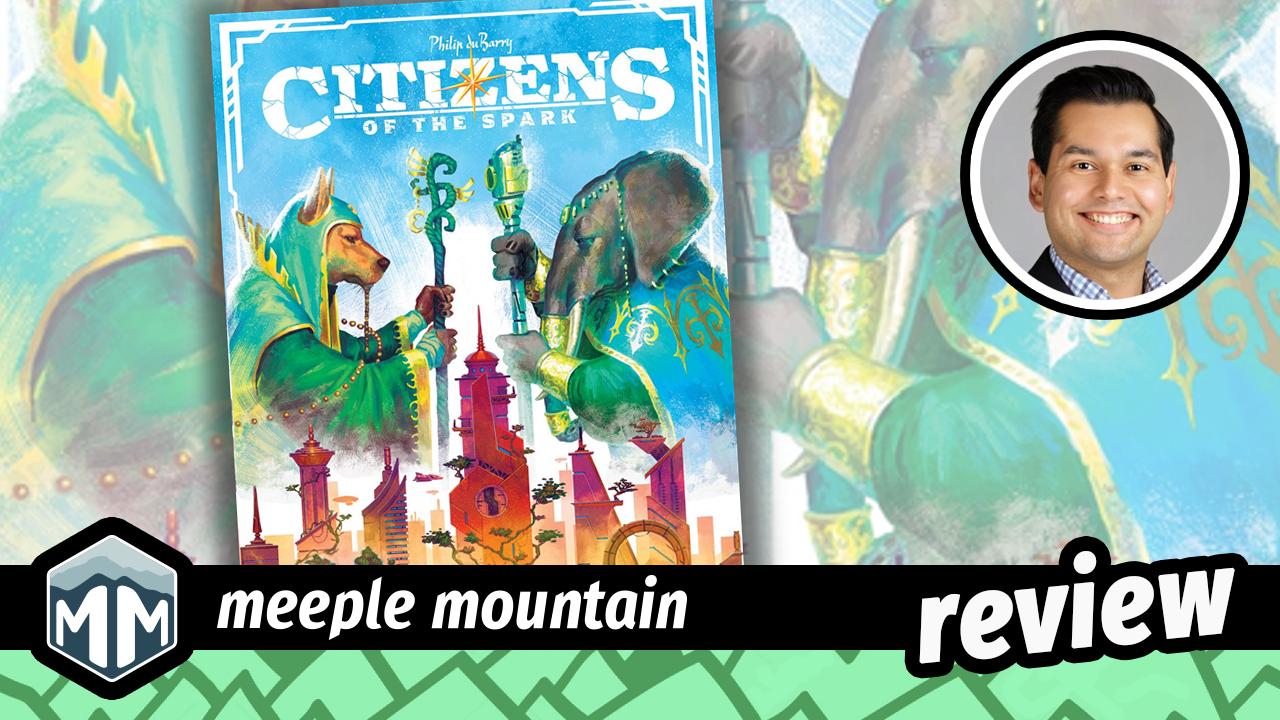
But this isn’t Innovation—though it’s close in some very interesting ways. I was handed this review copy by fellow mountaineer Justin Bell at Gen Con last year, and I went in with absolutely no context for what to expect.

To my surprise, there’s a lot here that feels reminiscent of Innovation (and even Dominion), but with enough twists to make Citizens of the Spark one of my favorite new-to-me games of 2026.

Regular readers may know that tableau building is one of my favorite mechanisms, so when a game is built around that idea, I’m already interested.

Spark Plugs

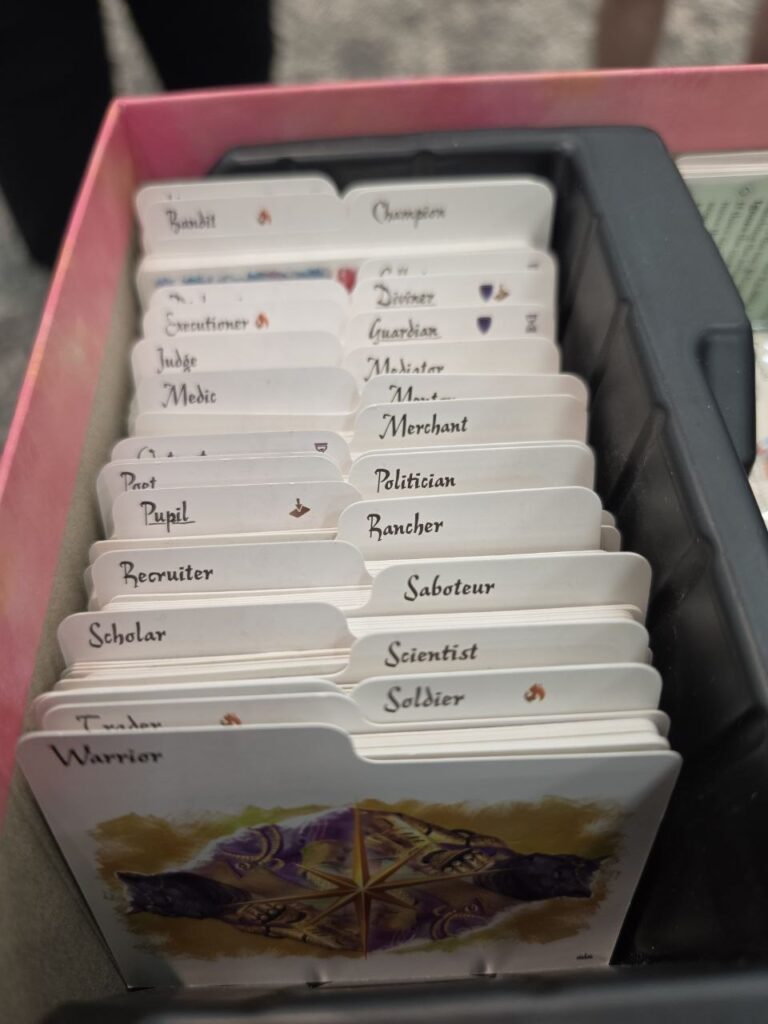
Citizens of the Spark includes 30 different citizen sets, with 7 to 10 used in a given game depending on player count. Players collect sparks, which serve as points, and the game…

The post Citizens of the Spark Game Review appeared first on Meeple Mountain.

  •  

Movie Tricks Game Review

I picked up a copy of the new trick-taker Movie Tricks during my visit to SPIEL Essen 2025. It has a box cover that made at least one person in my circles wonder if the cover was generated by AI…not because of the illustrations by credited artist Eirik Belaska, but because the title, characters, explosion and car bursting out of the middle of the cover image feel so generic.

This is also to say: expectations were low for Movie Tricks. My 12-year-old thought that the game’s title was terrible, even if we all agreed that the title was pretty accurate: Movie Tricks is a trick-taking game where players take turns playing cards to the table, with each trick’s winner getting first pick of market cards that get added to their personal movie tableau.

The trick-taking is standard fare—Movie Tricks is a “must follow” game with a trump suit that may or may not change after each trick. Over the course of 10-13 tricks, players will build up their tableau to score points using a set collection mechanic (Props), a majority mechanic (Soundtracks), a simple scoring multiplier (CGI), and a slightly different set collection scoring tool with a balance component (Roles). In addition, players score based on their “Best Movie”—aligned with the highest scoring row of cards across…

The post Movie Tricks Game Review appeared first on Meeple Mountain.

  •  

Singapore Showdown (Saturday Review)

The humidity clings to your skin as neon reflections shimmer across rain-slick streets. The city is strangely alive with quiet ambition and louder dreams. Towering skylines loom above bustling districts, each corner a promise of profit, each landmark a prize waiting to be claimed. Deals are struck with uneasy confidence, plans unfold behind knowing smiles, and every move carries the weight of opportunity. In this restless urban theatre, only the sharpest minds will rise above the crowd. Welcome to Singapore Showdown by Eugene Lim from Genie Games with art by Marcus Quek.

The post Singapore Showdown (Saturday Review) appeared first on Tabletop Games Blog.

  •  
❌