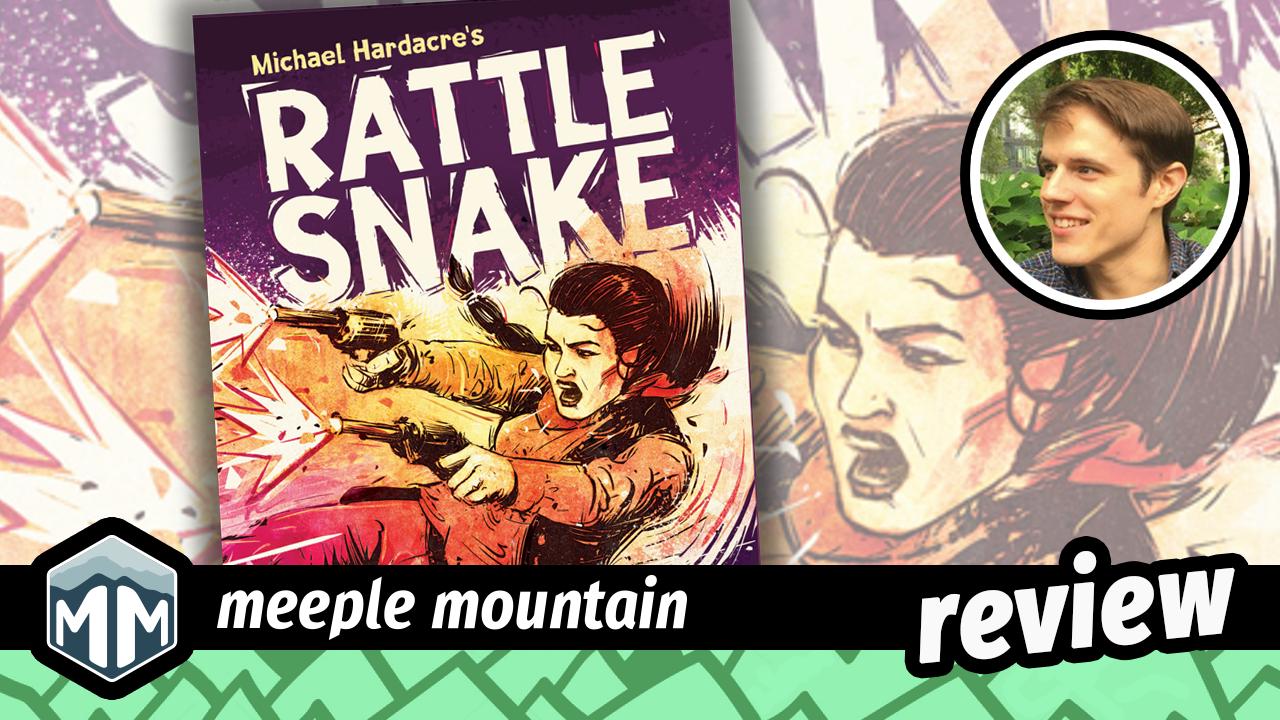
Michael Hardacre’s Rattlesnake, a two-player card game about a gun fight in the wicky-wicky-wild Wild West, is a fabulous marriage of setting and mechanisms. This thing is lean, mean, and jumpy. More sting than a scorpion and more bite than a…well, you know. It is tense enough that the components list should include brow sweat. And it’s so small! For form factor, this no-frills set of cards—with a gun token for flavor—is my favorite thing to come along sinceHigh Tide. There’s nothing quite like a big game in a small box.
The goal of the game is simple enough: kill your opponent. Well, I shouldn’t say “kill.” Pokémon has taught us that death isn’t always the end result of [checks notes] running out of health. Strictly speaking, your goal is to hit your opponent four times. Death is not the dictated outcome. Maybe all those hits grazed you. Maybe they missed organs. Maybe your opponent rushes you off to a hospital, where the gangrene can do its slow, ante-antibacterial work. I’m not a historian.
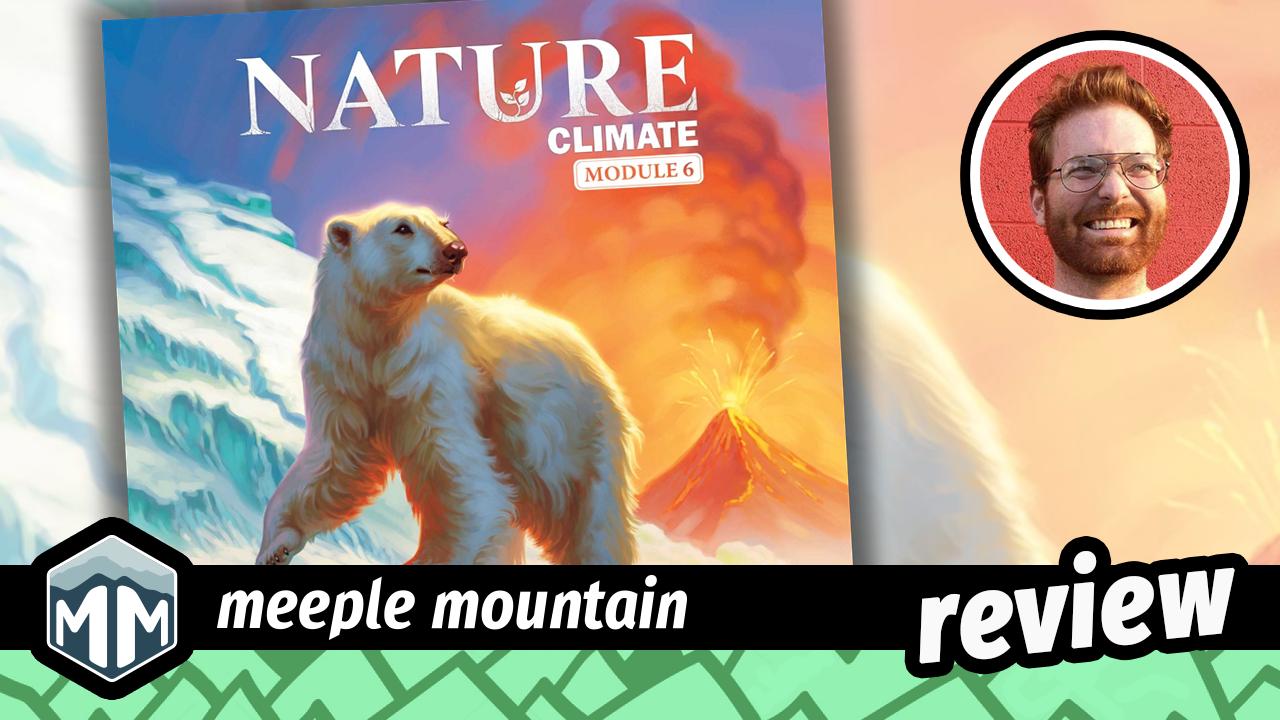
I’m going to hop into this review and almost completely agree with Andrew’s review of Nature. I don’t have that much to add to his assessment. I’ve played Evolution, Oceans, and now this, and I like what this series does mechanically, I think it provides a sharp, competitive experience that scales well with player count, and offers the possibility of drama without requiring players to understand a billion card interactions to jump in and start kicking each other in the teeth.
I’ll cover what the upcoming Climate module adds to the experience, and then I’ll play around in my ivory tower and conclude with some thoughts about edutainment products. I’m going to assume you have a sense of how the game works.
Get cooked (or frozen)
The Climate module for Nature adds variability to the amount of food that appears each round. Because of the game’s modeling of timescale, it’s doing big chunks of time between each round, so you have some pairing of the setting of the game with a mechanism. When the climate tracker moves toward an ice age or a scorching age, there will be less food available for everyone to compete over, and there is a new survival mechanism that every player will…
Gen Con 2026 – Thunderworks Games Gen Con 2026 is over (as well as the fall school kick-off) and I’ve come back up for air, just in time to ramp up the annual Gen Con run-down here at OpinionatedGamers. Will … Continue reading →
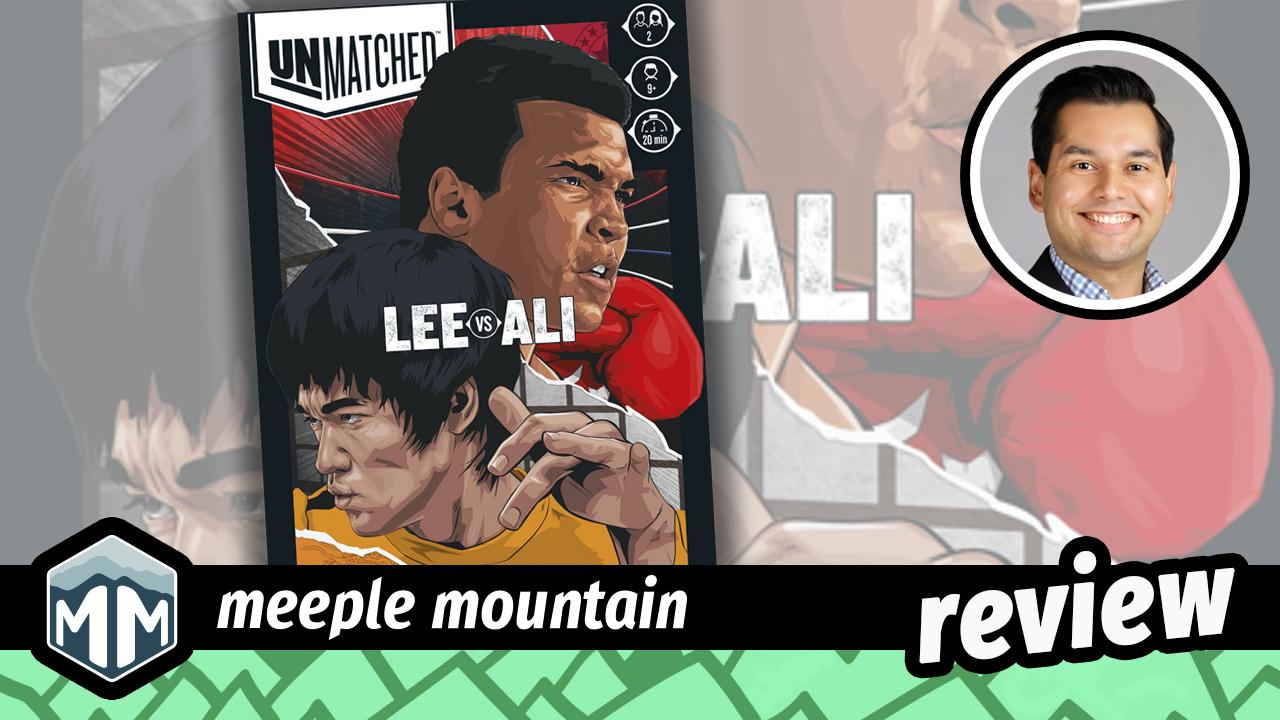
Fellow Meeple Mountaineer Andrew Holmes recently published a review covering Unmatched: The Witcher - Realms Fall and Steel & Silver, and his opening comment mentioned that we at Meeple Mountain differ on our opinions of the Unmatched franchise. But that makes sense as different reviewers covering differently themed sets are going to land differently on their thoughts.
(The correct opinion is that Unmatched is awesome)
However, Andrew is right that Unmatched is a great system because of its simplicity, quick pace, and heavily contrasting roster of fighters. And like him, I’m the ideal demographic, but for different reasons. The original game, Star Wars: Epic Duels, was played dozens upon dozens of times by my friends in middle school and me. We even found custom heroes online and printed them out, and though they were wildly unbalanced, it was a blast nonetheless.
Fans of Unmatched will recognize Bruce Lee as a highly sought-after expansion, being the first single-character pack and, at times, running upwards of $250 on the secondary market. Fortunately for those patient enough, Bruce Lee has returned in both an affordable and memorable set, going toe-to-toe with the famous boxer Muhammad Ali. I wasn’t alive during their height of fame, but their quotes, stories, and larger-than-life personas live on through pop…
Snow muffled every footstep until the only sounds were distant birds and the steady crunch beneath our boots. The silence stretched in every direction: left to right, ahead and behind, as well as all the way up into the thermosphere. We were far away from anywhere. Yet, we knew we were safe. As the darkness settled all around us, we could finally see it: the Borealis: Arctic Expeditions by Dariusz Mindur from Lucky Duck Games with art by Rodrigo Camilo Alves De Almeida, Kevin Sidharta, Inês Toczyska and Ariadna Żytniewska.
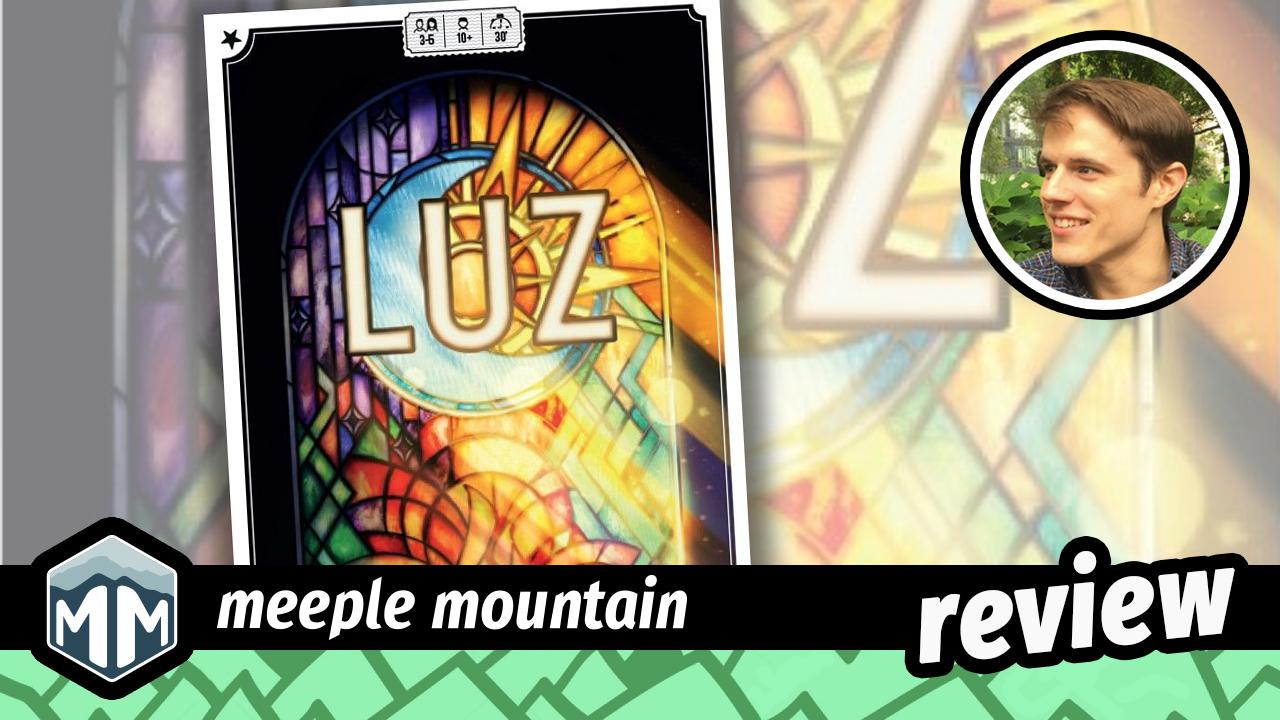
With a title like LUZ, Spanish and Portuguese for “light,” you’d expect this Taiki Shinzawa trick-taking game to have a bit more clarity. Silly you. Silly me! LUZ is a game of shadows and half-knowns, a trick-taker that casts a shadow of uncertainty.
Given that Shinzawa is responsible for the likes ofGhosts of Christmas, a trick-taker in which you play three or four must-follow tricks at the same time while the trump suit shifts with player behavior, I should clarify that LUZ isn’t that opaque. It’s all relative. If Ghosts of Christmas is a few standard deviations outside the mean, LUZ is safely within the bell part of the curve.
This is a must-follow trick-taking game where players bid before the hand begins. You have the choice of making an exact bid, which requires you to hit the nail squarely on the head in order to score, or a more forgiving bid that gives you one trick’s worth of wiggle room in exchange for scoring half the points. Higher risk, higher reward.
This doesn’t sound so different from whist, other than the room for some wiggle in your wager. The opacity comes from the last two rules: the back of each card indicates what suit that card belongs to, and you never know the values of your…
Let’s play poker but in a different way. There has been several modern hobby
games which make use of poker hands, e.g. The Gang. The good thing
about these games is they use an aspect which most people are already familiar
with. It will be easier for us gamers to convince our non gamer friends to try
modern boardgames with us.
Half of All-In: Predictions is
There has been quite a few Lord of the Rings games in recent years. I think that's a good thing. I hope this brings more people into the boardgame hobby. There are two games in the Lord of the Rings Trick-Taking Game series so far - The Fellowship of the Ring and The Two Towers. I have only played some of the missions in The Fellowship of the Ring. I was told The Two Towers is
A small hand reaches into the tin, fingers excitedly hovering over the treats inside. The choice should be simple: take a biscuit, any biscuit. But no: two biscuits are better than one, and three better than two. Yet, if the little hand takes too long to make up its mind, the little burglar will be discovered. Well, it's time to Risk It For A Biscuit by Jessica Metheringham from Dissent Games.
Trading card games are one of the anchor pillars of the tabletop hobby. Whether it’s something mainstream like Magic: The Gathering, Lorcana, or Flesh and Blood, something a little more niche like One Piece Card Game or Final Fantasy Trading Card Game, or the crazy phenomenon that is still Pokémon, TCGs will always run parallel to board gaming.
The downside is that TCGs can require a heavy financial investment, and there’s always a risk surrounding the game’s longevity. Unlike staples like Magic and Pokémon, many TCGs fizzle out soon after release, becoming another name on the tombstone. Is anyone still playing Altered?
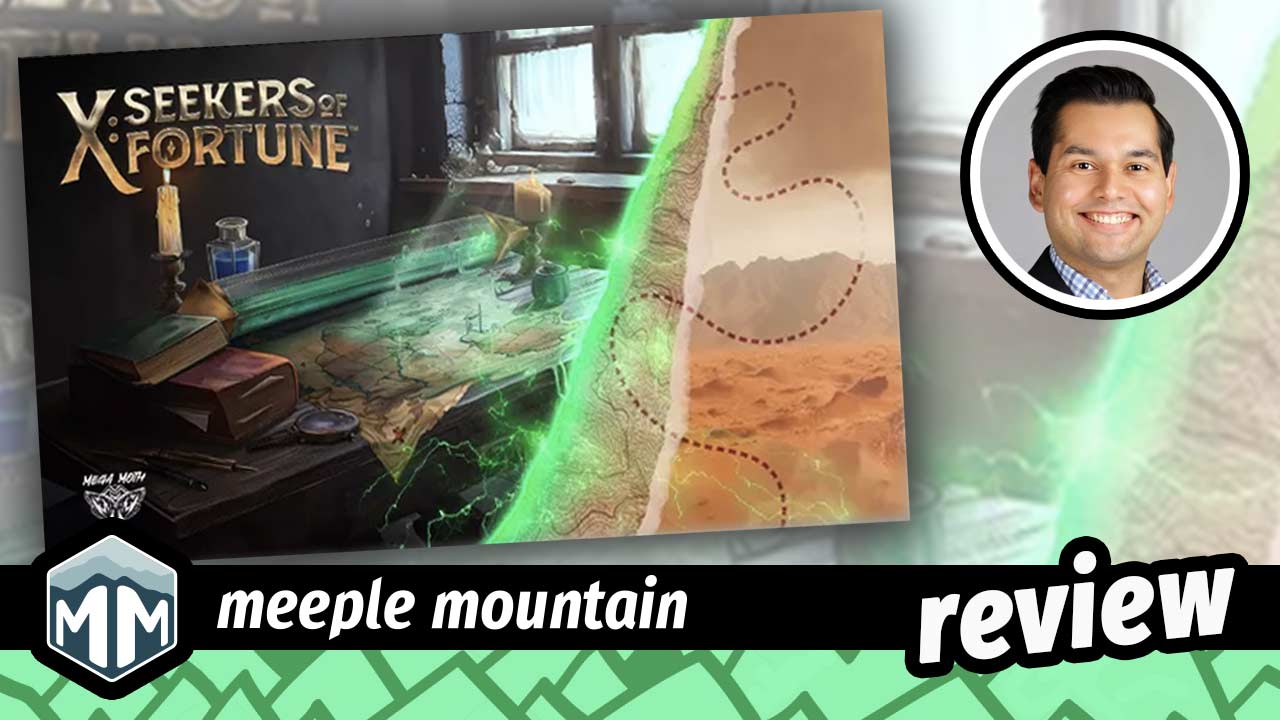
X: Seekers of Fortune is a card game that simulates the feeling of a TCG with no continued investment, no chase cards to pull, and no meta deck-building. That’s a huge draw for me since I love the playstyle of TCGs, but I’d rather have a self-contained experience like Compile or Mindbug.
The folks at Mega Moth Studios were nice enough to send over the deluxe version of the game, which includes crisp playmats and even a first edition booster pack to mix into the base game. Hmm…do I smell a system being built here?
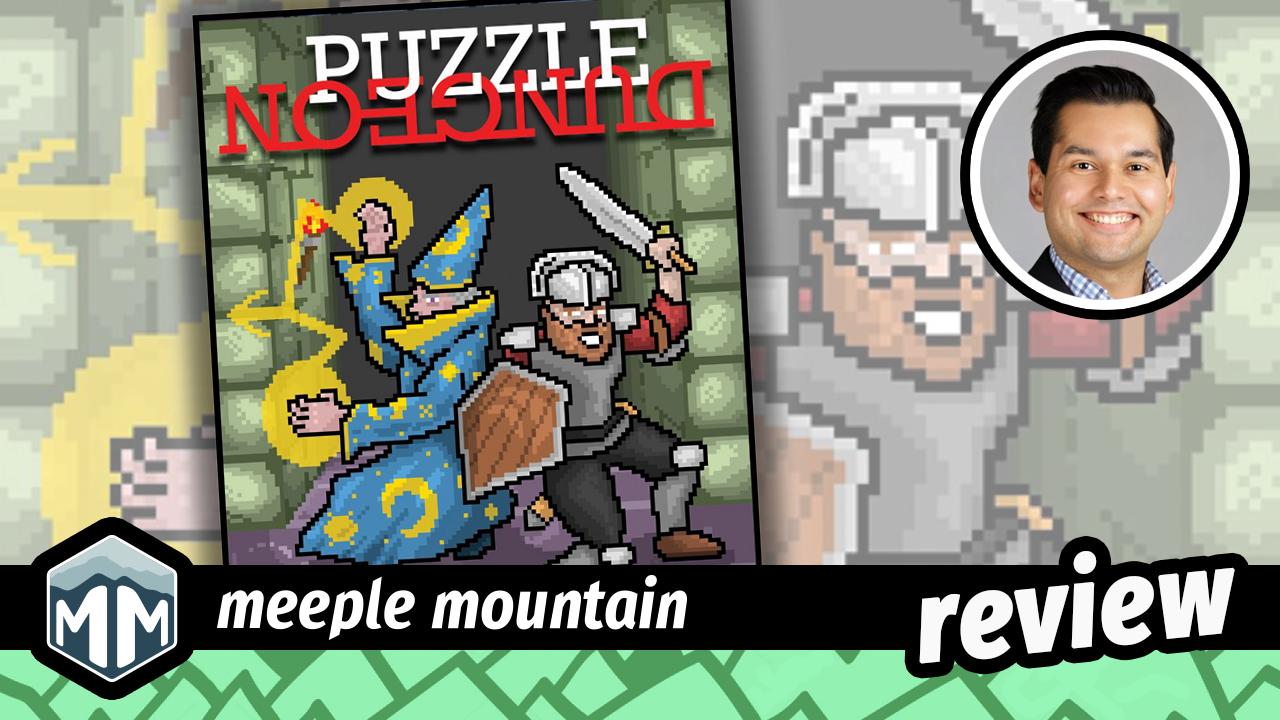
On lazy Sundays, I quite enjoy breaking out a solo game and throwing on some old records. No group bickering over game choice, no fear of another player’s analysis paralysis, just me, myself, and a deck of cards. There’s a particular joy in quieting down and figuring out a game by yourself, and Puzzle Dungeon is an ideal mix of dungeon delving and puzzle solving to keep those silent thoughts busy.
I was fortunate enough to experience the deluxe edition of the game, which comes with an overwhelming amount of heroes and baddies alike. It’s a smorgasbord of characters packed into this monster-hunting card game, so any characters mentioned here may not be present in the base game!
Puzzle Play
Puzzle Dungeon is a straightforward, solo-only hand management game that challenges players to defeat the required number and types of monsters listed on their hero’s card before their deck runs out. The monster deck is made up of five different monster types, randomly shuffled into four columns and laid out into ordered lines.
To defeat the frontmost monster in a column, players must discard cards with symbols matching that monster. These cards can be…
You put down a bowl of soft food, and moments later, you hear the jingle of her collar. Here she comes! First, she pauses at the conservatory door and watches you for a while. You eagerly point at the wonderfully fresh food, enticing her to come in and eat. She turns away to look out into her domain, our back garden. Eventually, she strolls over - in her own time. Of course, whether she's ready for her lunch, when she eats, or indeed, where she eats, is all her own choice. As her pet dad, you just Take Cat by Gareth Edwards from Gibsons with art by Juliana Eigner.
Part of the fun of engaging with a system built around different characters, classes, species, or any other mode of substantive differentiation, is finding the build that’s right for you. Everyone who likes Root has a favorite faction, everyone who plays Magic has a favorite color, and the wonderful thing is that these preferences are almost always deeper than mechanics. If you’re lucky, if everything clicks, your chosen avatar feels like an extension of yourself. There is something about playing as the Lizard Cult that elicits a deeper joy for me. Am I going to win? Probably not, but boy I’m going to have a great time. Blue may leave me with no friends, but I’m enjoying myself.
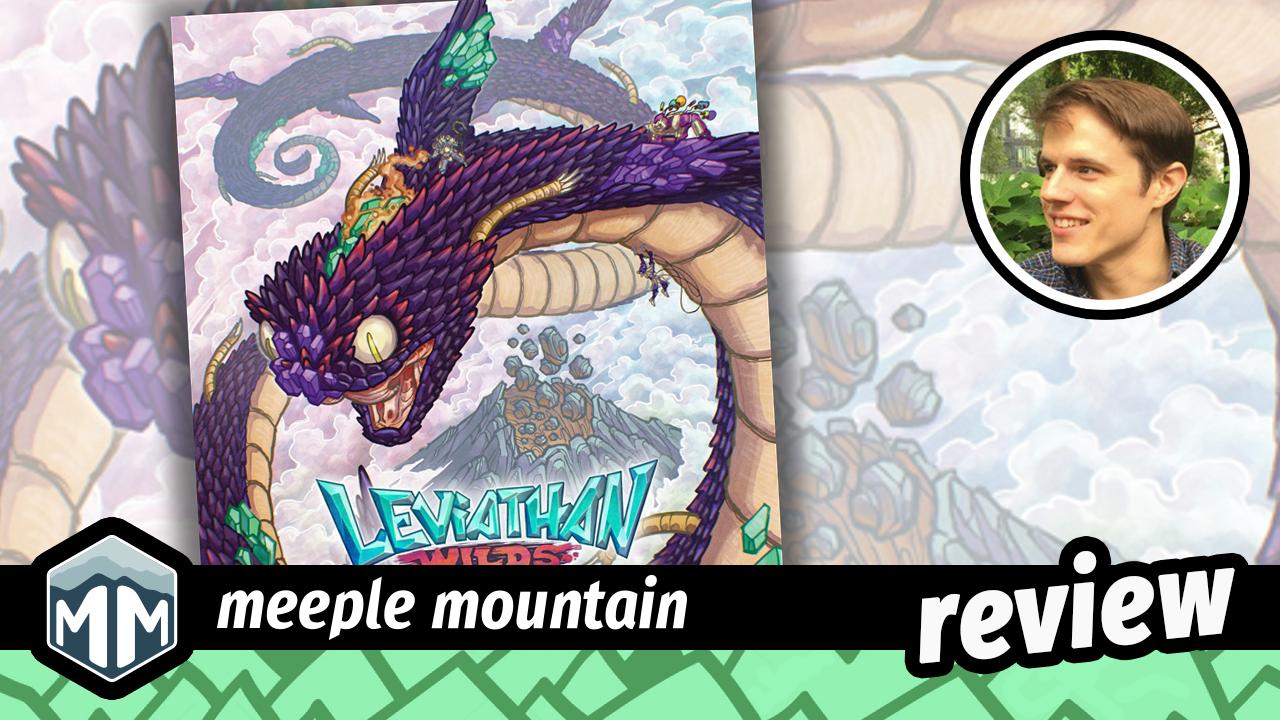
Leviathan Wilds has been my favorite cooperative game for a while now, and while I was equally fulsome in my praise of the first expansion, it is only now with second expansion Shattered Peak that I can say I have found the Class for me. The Geomancer, one of three new Classes that join three new Climbers and eleven new Leviathans in this box, feels like home. All the builds in Leviathan Wilds are about running around and smashing infectious crystals, but the Geomancer is the first to mess with those troublesome fungal blooms. He can manipulate their values…
The escape pod rattles violently as it tears through the atmosphere, before the noise suddenly fades away. A rough landing throws you against the restraints, leaving only silence until the hatch finally creaks open and fresh air rushes in with a long hiss. After you take off your helmet, you can smell unfamiliar scents. As you climb out of the pod, you can see a landscape unlike anything you have ever seen before. There are giant mountains that disappear into the clouds, strange plants that sway gently in the breeze, and countless mysteries that are waiting to be uncovered. You notice that you crashed high on a lonely hill, giving you a really good Vantage by Jamey Stegmaier from Stonemaier Games with art by Valentina Filic, Sören Meding and Emilien Rotival.
As trading card games continue to drive growth across the tabletop industry, hobby retailers are increasingly looking beyond games themselves to the accessories that support organised play and competitive communities. In this sponsored article, TCG and board game accessories maker Sanseking explains how changing player behaviour is influencing retailers’ approach to inventory, merchandising and long-term store strategy, and why competitive accessories are becoming a more important part of the European hobby market.
A growing crossover between board gaming and trading card games is beginning to reshape hobby retail strategy across Europe according to TCG, board game, and collectible accessories maker Sanseking, with competitive accessories emerging as an increasingly important category for stores.
What was once a relatively clear divide between casual board game retail and competitive TCG communities has evolved into a far more interconnected ecosystem, the company says, where stores are expected to serve multiple types of players simultaneously.
Sanseking production manager Ding Guang
That shift is particularly visible in the accessories market according to Sanseking production manager Ding Guang, who says retailers are increasingly treating competitive sleeves and protective products as core components of long-term business planning rather than simple add-on purchases.
“Accessories used to be viewed mainly as supplementary sales,” Guang told BoardGameWire. “But competitive communities create repeat purchasing behaviour that changes how retailers think about stability, inventory, and customer retention.”
Hobby retailers now commonly operate within a mixed environment that includes casual board gamers, organised play communities built around titles such as Magic: The Gathering, Pokémon and Yu-Gi-Oh!, and players who actively move between both spaces.
That convergence has become especially visible at events such as Spiel Essen, where accessory brands increasingly exhibit alongside publishers and competitive card players mix naturally with broader tabletop audiences.
But for retailers, the two customer groups behave very differently.
Board games typically generate one-off purchases tied to seasonal launches or major releases, while competitive TCGs create recurring engagement cycles through tournaments, deck rebuilding, league play and shifting formats – and those cycles also generate consistent accessory demand.
Competitive players replace sleeves far more frequently than casual players, Sanseking points out, adding that frequent shuffling, tournament preparation, the need for consistency and sensitivity to tactile feedback all contribute to repeat purchases.
That rise in accessory demand has also been driven by the stellar growth of TCGs more generally, with long-time heavyweights such as Pokemon, Magic: The Gathering and Yu-Gi-Oh! joined more recently by a flurry of other successful entrants to the market, including One Piece, Disney Lorcana and Star Wars Unlimited.
That demand pushed the overall value of the global TCG market to $7.8bn last year according to veteran research firm BCC, which projects the segment will reach $11.8bn by 2030 with a CAGR of 7.9%.
In many European hobby stores, tournament nights now represent some of the most reliable recurring foot traffic. Players attending weekly organised play events increasingly view accessories not as optional extras, but as part of their competitive equipment.
According to Guang, that recurring demand can help retailers smooth revenue fluctuations during slower periods in the board game release calendar. But at the same time, competitive players also tend to be far more selective.
“They pay attention to things casual players may never think about,” Guang said. “Edge structure, shuffle consistency, durability over repeated use, and manufacturing consistency between batches all matter.”
The Growing Importance of Segmentation
That growing attention to performance characteristics is also pushing retailers to rethink how accessories are presented in-store, according to Sanseking.
Historically, sleeves were often treated as largely interchangeable products differentiated mainly by colour or price point.
But as organised play communities mature, stores are increasingly recognising that accessories serve multiple functional segments, ranging from casual ‘kitchen table’ play, to hobby-level regular play and competitive or sanctioned environments.
Retailers that fail to distinguish between those categories can create unnecessary friction, Sanseking says.
The company points out that a product optimized for softness and casual handling may not satisfy a competitive player seeking predictable shuffle feedback. Conversely, a structure-focused sleeve may feel unnecessarily rigid or specialized for a board gamer.
As a result, some retailers are beginning to adopt more structured merchandising approaches, using clearer pricing tiers, competitive-focused shelving, and staff recommendations tailored to different player types.
“The stores performing well are usually the ones creating clarity,” Guang said. “Not necessarily carrying the most SKUs, but helping customers understand which products fit which type of play.”
Risk, Inventory, and Shelf Strategy
From a commercial perspective, competitive accessories also offer several advantages compared to boxed games, including lower unit cost, a smaller shelf footprint, faster turnover when tied to active communities and strong repeat purchase potential.
Retailers can still perceive the category as niche, however – particularly when shelf space is limited. According to Sanseking, the most effective approach is usually a balanced one – not one that offers endless fragmentation, but a core range which covers general use, alongside clearly identified competitive-focused options for players who care about performance.
The importance of organised play also continues to shape purchasing behaviour, with competitive events a significant driver of repeat store visits, even amid wider economic pressure on hobby spending.
Within those communities, accessory choices increasingly function as part of player identity.
“Players often become loyal to specific performance characteristics rather than just aesthetics,” Guang said. “That creates opportunities for retailers to position themselves as serious competitive venues.”
Some stores are already leaning into that approach by highlighting ‘competitive-ready’ accessory sections, aligning certain products with tournament nights, and using more technical product descriptions instead of purely visual merchandising.
The growing overlap between board game audiences and competitive TCG players is also accelerating the trend, according to Sanseking’s experience of the market.
The firm said that many customers who first enter hobby stores through board games gradually become exposed to organised play environments, while competitive card players often purchase board games for more social settings.
Accessories sit directly at the centre of that crossover, with protective products one of the few categories that naturally serve both audiences while still supporting different performance tiers, it added.
For retailers, that makes accessory strategy not just an operational decision, but a bridge between communities, Sanseking says.
As Europe’s tabletop market continues to evolve, Guang believes accessories will become more strategically significant across the retail landscape.
“Players are becoming more informed about performance trade-offs, and retailers are having to serve more diverse communities across the same limited shelf space,” he said. “Clear segmentation and clear communication are becoming much more valuable.”
For brands, that means designing products with defined use cases rather than relying on broad universal claims. And for retailers, Guang argues, success may depend less on scale than structure.
“In a market where casual and competitive audiences increasingly overlap, clarity is often more important than simply offering more products.”
LUZ is a trick-taking game. The twist here is you can’t see your own
cards. You don’t know exactly what cards you have, but you can see everyone
else’s cards. However you know the suits of your cards, because the cards have
different coloured backs following their suits. At the start of a round, based
on knowing everyone else’s cards and the suits of your own, you must predict
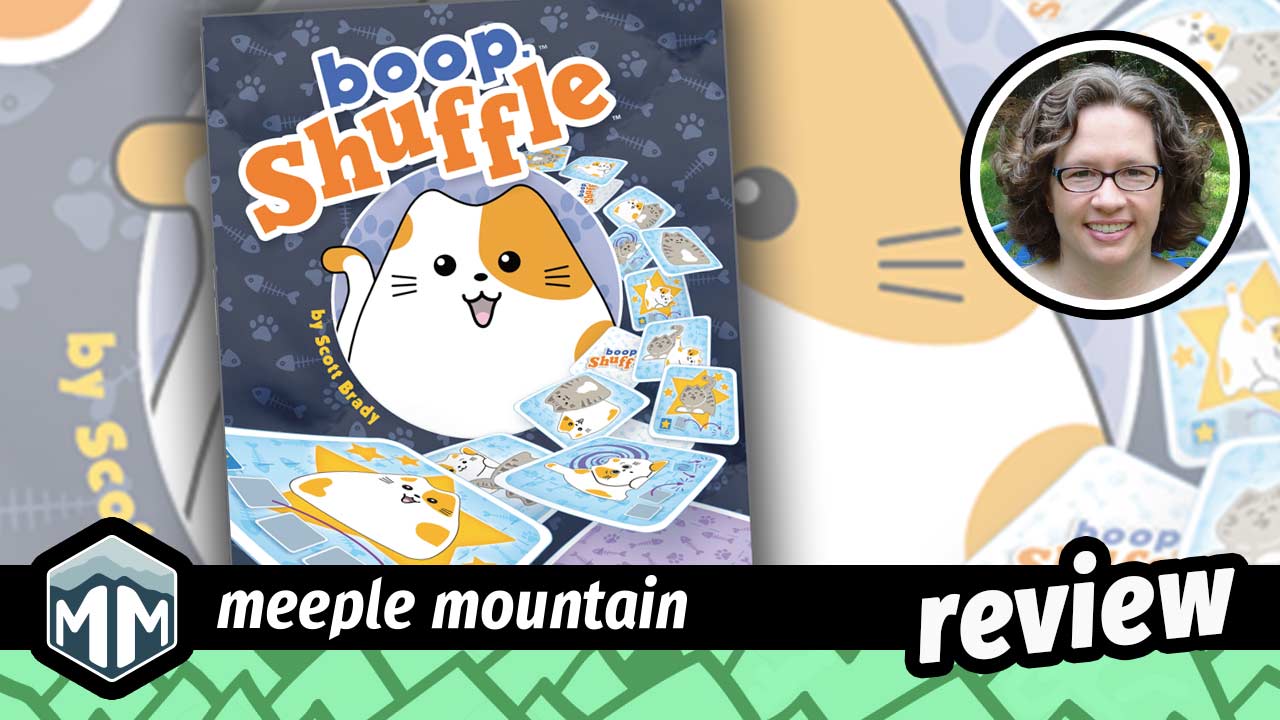
The basic idea of boop Shuffle is the same as the original boop. You're placing Kittens out on the board in hopes of getting three of your color in a row so that you can graduate them into the Cats necessary to win the game. However, as Cats and Kittens are being played onto the table, they boop the cards next to them into adjoining spaces, or possibly off the table altogether. In order to win, you must get three Cats of your color in a row, or have all eight of your Cats out on the board. These win conditions are the same for both versions. That’s where the similarities end.
boop Shuffle is a card game, with cards taking the place of the cat meeples in the original. Each turn you will draw a card from the deck and place it into the 6x6 grid on the table. The placed card will boop any adjacent cards away from itself according to the rule of the placed card. If you run out of cards, reshuffle the discards and begin drawing again.
[caption id="attachment_332475" align="aligncenter" width="1500"] Kitten cards and Blankie[/caption]
This isn’t simply a card game with the exact mechanisms of the original game, however.…
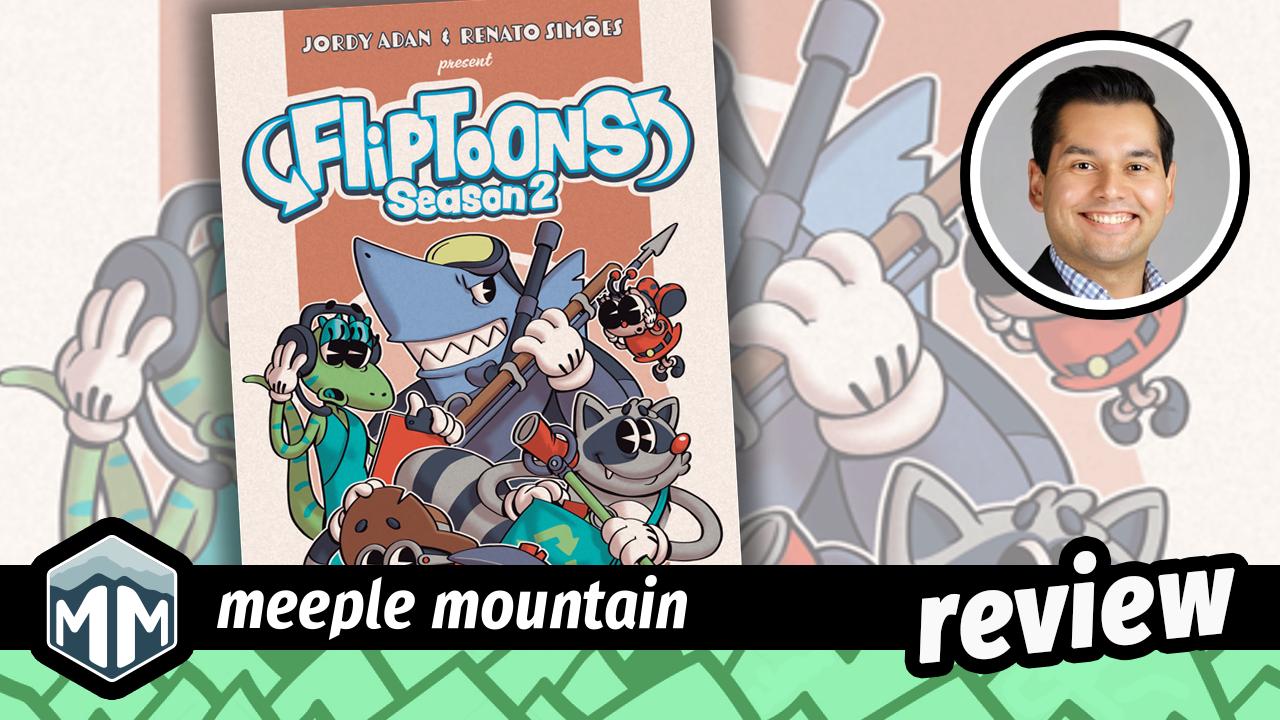
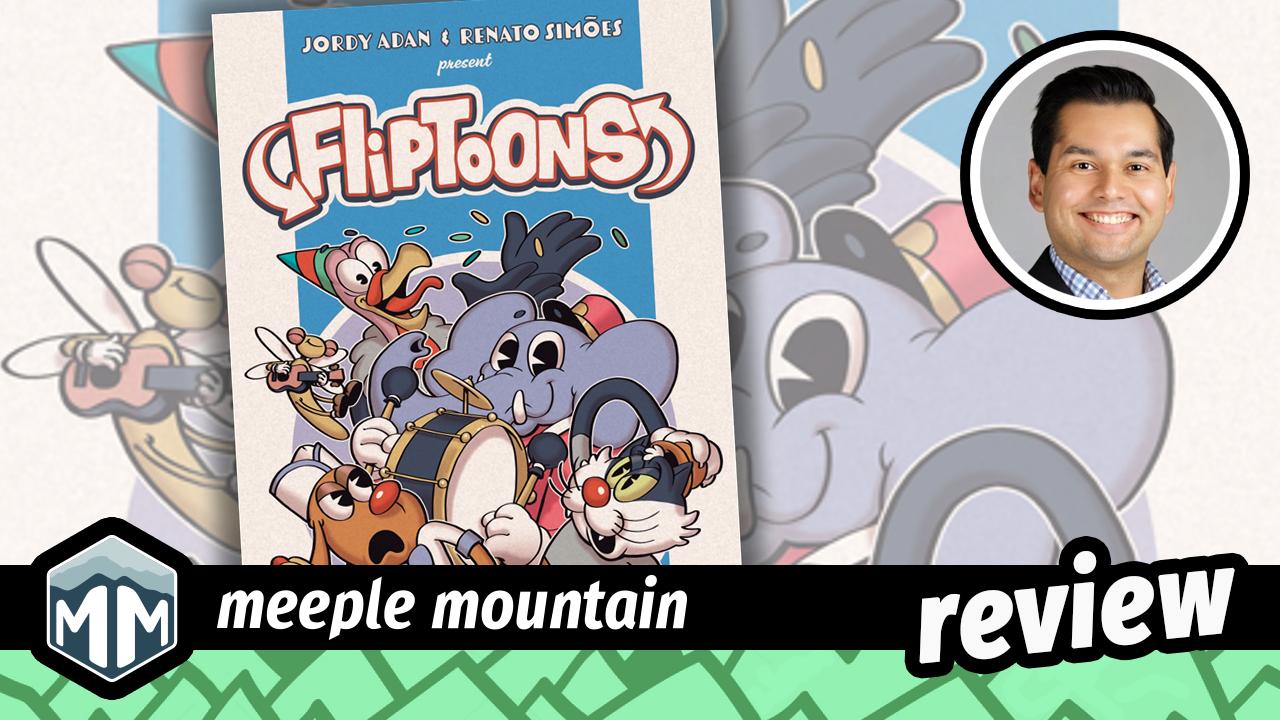
Fliptoons is BACK! I was fortunate to experience the new iteration a few months early, and it was quite hard to keep the excitement under wraps until the reveal.
The first set of Fliptoons was a grand time, and mechanically, there wasn’t much that needed fixing. But Thunderworks Games has doubled down on a framework that’s ripe for expansion. A game built around goofy card effects, conditional scoring, and unpredictable tableau chaos is the perfect stage for a new batch of characters to join the cast. More toons mean more combos, more dramatic reveals, and more opportunities for rounds to go completely sideways.
Thunderworks Games returns to the studio with Fliptoons: Season 2, bringing a new cast of cards while keeping the same breezy energy that made the original such an easy table hit. This standalone expansion is as exciting as an anticipated season premiere: familiar structure, new faces, and plenty of room for the fame race to get wacky.
Previously on Fliptoons…
Fliptoons: Season 2 is still very much Fliptoons. Players are building a little cast of cartoon animals, flipping cards into a 3x2 grid, and trying to squeeze as much fame out of those cards as possible.
I’m a sucker for an old-timey aesthetic, especially when it comes to cartoons. Growing up, my father showed me some of his favorites, like Popeye the Sailor Man and Woody Woodpecker. I think there’s still a real appetite for the animation style of yesteryear, especially in the modern age, as evidenced by the massive video game success of Cuphead and Mouse: P.I. for Hire.
The board game world is no stranger to this style either, with titles like Vagrantsong, Townsfolk Tussle, Vegetable Stock, Magical Athlete, and even the video game spinoff Cuphead: Fast Rolling Dice Game. Fliptoons from Thunderworks Games fits nicely into that ever-growing family, and I’ll always be drawn to every title in it.
Flip-Flip-Flipadelphia
Fliptoons is a fast-paced card-drafting game where the player who generates the most fame points after a final flip becomes the top toon.
Players start with identical decks of basic toons that are played one by one, creating a 3x2 grid of cards. Cards have various effects depending on their position, adjacency, game state, or other conditions in the grid, including other players’ grids. Some of these effects increase value, flip cards to void a previously played card, dismiss other cards, and so much more.
Unmatched is a modern classic. Unmatched, you might say, in the genre of miniature combat games. Accessible rules, punchy fights, card art that turns heads. It’s fun, especially for those of us who don’t generally enjoy player-versus-player miniature fighting games.
And then there’s Unmatched Adventures, a cooperative take on the system. The best of both worlds: all the fun of combat but working together to defeat a common enemy.
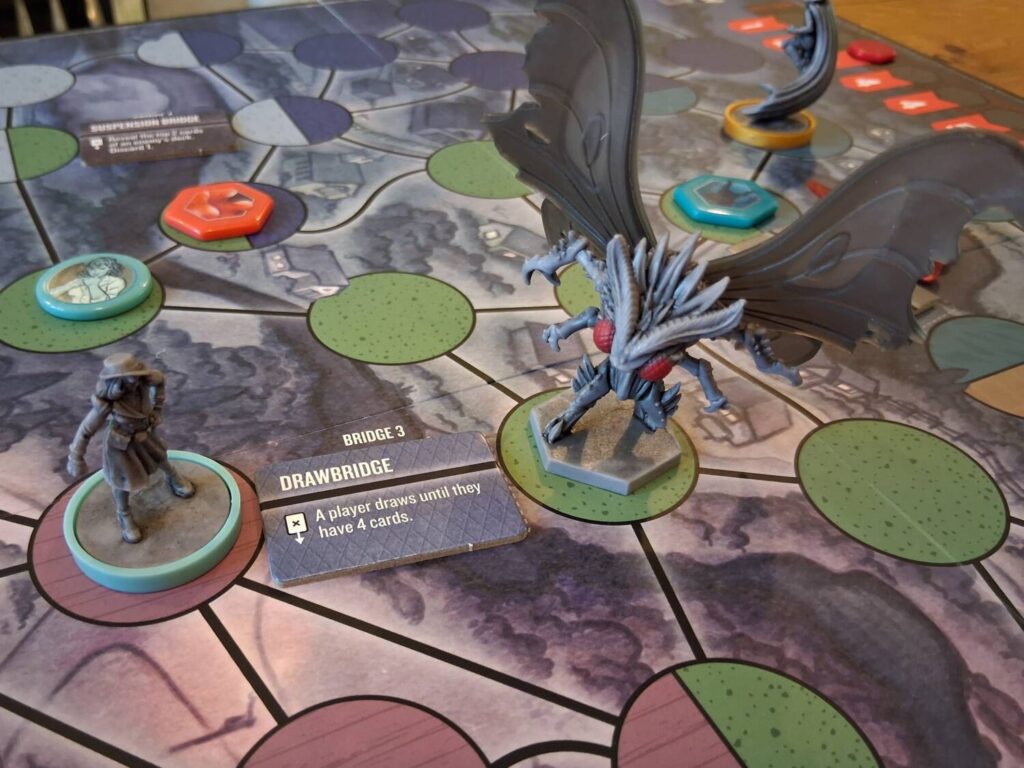
A lazy design studio might simply have created automated opponents and left it at that. Restoration Games is not a lazy design studio. Yes, the bulk of the game is indeed an automated boss and its minions fighting the players until one side is defeated. But the team pushed beyond that basic experience, adding little pressure points that influence how you approach defeating the big baddie.
A downside is that each villain is restricted to its own scenario, tied to a specific board and rules additions. You can’t mix-and-match villains in the same way as you can with the heroes. Mothman always tries to destroy the bridges of Point Pleasant, presumably to cause transportation chaos and highlight America’s overreliance on the automobile. Meanwhile, the Martian Invader is exclusively focussed on dropping aliens into the cornfields of McMinnville…

 Anmelden