Remember the Reach with your Halo: Flashpoint rules & reference!
As mentioned in yesterday’s video, I’ve updated my Halo: Flashpoint rules & reference to encompass the two new expansions, Rise of the Banished and Feet First Into Hell! But if you were quick and immediately downloaded it, check again, because I discovered a keyword was missing and have updated it again to v2.1. Enjoy!
Let me be clear from the start: there is no such thing as a "good game". I know, it sounds controversial. After all, at the end of every year and often many times during the year, lots of people publish lists of the best games and regale you with how "good" these games are. If you're seen as the board game expert in your family circle or friendship group, you will be asked what "good game" they should buy or play next. Yet, "good" by itself is pretty meaningless - but let me explain.
Nobody asks to be a hero, it just sometimes turns out that way.
Peter unboxes two new expansions for Halo: Flashpoint by Mantic Games!
It’s great to see more stuff coming out for Mantic’s Halo: Flashpoint game, and I’m especially happy to see more aliens on the battlefield. Check out the new stuff – Rise of the Banished and Feet First Into Hell!
Making high quality tabletop gaming content at the EOG takes time and money. Please consider becoming a Patreon supporter or making a donation so I can continue this work! Thankyou!
Popcorn is a game about running your own cineplex. You buy screening rights for movies, you attract cinema-goers and you upgrade your cinema halls to provide great movie experiences. You have to keep your list of movies fresh, taking down movies before customers completely dry up and showing new movies to attract customers. While scoring points (points are called popcorn here), you need to
I recently talked to a publisher friend about something they had never encountered before: They were completely caught up at work. In fact, they were well ahead of schedule but their coworkers were not, so they wanted to resist their instinct to simply create another game, at least for a while.
Being completely caught up at work is a luxury that some of us may never experience, but perhaps you can relate to brief times when you’ve completed all time-sensitive tasks. After filling every spare moment with Vantage for nearly 8 years, I had that feeling when it was complete. I suddenly went from feeling perpetually behind to having an ample amount of time.
So today I thought I’d brainstorm a few ways to spend extra hours or even days when you’re caught up on work, particularly in creative roles. I’d love to hear what you do in these rare situations.
Serve customers: When in doubt, I ask myself, “What could I do right now to serve our customers?” This can be private or public. For example, I could email some of our most frequent customers to thank them for their support. I could hang out in any online community for our games, or search for our games on Instagram to comment on the posts instead of just liking them. Or I could make a video (recorded or live) to help people learn one of our games.
Research and learn: There’s more knowledge in the world than I can ever possibly know. I can spend extra time studying game design (from books, podcasts, articles, YouTube, etc) or even playing games (tabletop and digital). In fact, I so rarely play digital games because I always feel like I should be working, but I learn something about game design every time I do.
Support existing products: As fun as it is to release something new, most of the games we sell are reprints. Among many different ways of supporting existing products is to share special challenges or variants (like Vantage’s recent Valentine’s-themed custom cards). I can even revisit older rulebooks with a fresh, unrushed perspective. Also, even if I’m ahead of schedule, it never hurts to playtest a prototype again.
Create content: If there’s a topic on my mind that might add value to people or start a conversation, I can write an article about it, record a podcast, or film a video. It doesn’t need to be a commitment to creating regular content–it’s perfectly fine to create a singular post on a topic.
Attend an event: I rarely travel to conventions or even attend events at local game stores/cafes. Perhaps that’s just my introversion, but part of it is the other work I always feel I should be doing. But if I have extra time, there are plenty of places I could go–near and far–to play games and meet people outside of my social circle.
Make something just for fun: Sometimes I give myself permission to brainstorm a game (and even prototype it) just for fun, and I’m almost always glad I did. The lack of pressure to create something publishable is incredibly freeing.
Help someone else: I’ve heard that one of the best things for our mental health is to help someone else. Whether it’s a coworker, a friend in the industry, or a new creator, there’s always someone out there who might be looking for a little time, feedback, or words of encouragement.
Connect with someone locally: I typically take a 30-minute lunch break at my home office, then it’s back to work! I hardly ever go out to lunch, but there are lots of people–friends and peers–in the area that I could be more intentional about sharing lunch with from time to time.
Be good to yourself: There’s no rule saying that an absence of work needs to instantly be filled by more work. I can go for a walk, take care of a personal task I’ve delayed, treat myself to a movie, etc.
Start the next project: I’m putting this last because despite my inclination to always be creating something new, we don’t always need to make more games. Especially when we already have plenty of games in the pipeline and when adding something new could put a burden on already-busy coworkers. That said, it’s nice to start on a new game without any time pressure.
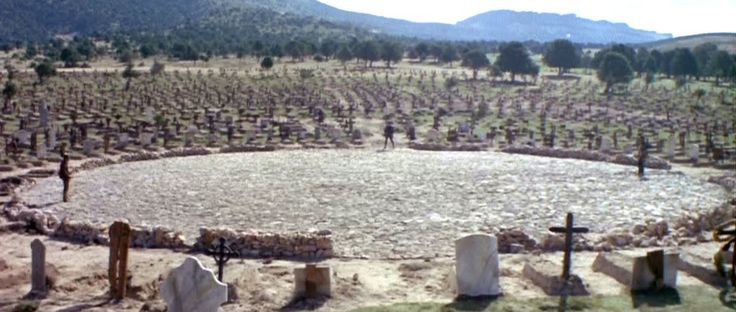
I remember the first time I saw The Good, the Bad, and the Ugly. I was a teen, sitting in front of a small CRT in a small living room. I was wholly unaware of what the next three hours of my life would entail. I hadn’t yet learned to trust my dad. And while…
The Soviet Union was one of the great dictatorships of the 20th century. It applied an immense amount of coercion on its own citizens as well as many of its neighboring countries. Yet the almost seventy years between the Soviet Union’s founding from the ashes of the Russian Civil War in 1922 and its fragmentation into 15 nation-states in 1991 are no monolith of unfreedom. There were two distinct periods of liberalization around a generation apart from each other – one that began under General Secretary Nikita Khrushchev in the 1950s, and one that began under General Secretary Mikhail Gorbachev in the 1980s. Let’s look at them, beginning with Khrushchev’s thaw, in terms of domestic, foreign, and economic policy. The post on Gorbachev’s reforms will follow in two weeks. As always, there will be board games along the way.
Freedom of Thought, Speech, and Political Expression
Joseph Stalin’s Soviet Union curtailed its citizens’ expression dramatically. Historiography has recounted Stalin’s reign of terror in detail, yet the best-known expression of the totalitarian control to which the Soviet Union aspired from the 1930s on is George Orwell’s dystopian novel 1984: Its one-party state does not only control citizens’ access to information (they are being exposed to constant propaganda and expected to keep up with its frequently changing, often contradictory contents), but demands active participation in the daily reconstruction of the system, ranging from institutionalized “two-minute hate” against political enemies to unlimited devotion to the “Big Brother” at the top of the pyramid.
The Soviet equivalent to the “Big Brother,” of course, was Stalin who was exalted in an official cult of personality as a wise and infallible leader, working tirelessly for the security and well-being of the Soviet Union. Whatever went wrong on the Soviet Union’s inexorable march of progress was the fault of an inept underling or a shadowy enemy.
When Stalin died, his lieutenants fought briefly, but viciously over his succession. Nikita Khrushchev emerged victorious. Khrushchev had been as loyal to Stalin as his chief rivals and immediatly used Stalinist methods to depose Lavrentiy Beria, the powerful Minister of Internal Affairs (and thus chief of the domestic security services). Beria was charged with treason, put through a mock trial, and executed.
Khrushchev’s skillful power politics could also swing the other way, though. He prepared a report on Stalin’s crimes which he delivered to a stunned audience at the 20th Congress of the Communist Party of the Soviet Union on February 25, 1956. For four hours, Khrushchev detailed Stalin’s party purges, his deportation of whole peoples deemed unloyal, and, most of all, how Stalin had established a cult of personality in which he was almost worshipped like a god.
Khrushchev’s de-Stalinization drive did not stop at mere proclamations. The late 1950s and early 1960s saw a lessening of censorship: Alexander Solzhenitsyn was allowed to publish his Gulag novel One Day in the Life of Ivan Denisovitch.
There were limits, however: Criticism of Stalin’s Gulags was one thing, criticism of the October Revolution another. Boris Pasternak’s Doctor Zhivago was not published in the USSR. When Pasternak won the Nobel Prize in literature for it, he and his family were threatened by agents of the state. Cowed, Pasternak did not travel to Stockholm to accept the prize.
Still, Khrushchev’s pivot represented an important turn in the state’s relationship with violence. While Soviet citizens were still routinely surveilled and subjected to coercion, it was neither with the overwhelming force of Stalinism nor with its unpredictability. The age of escalating purges, in which the accusers of today would be the accused of tomorrow was over.
Peaceful Coexistence and Khrushchev’s Many Other Schemes
Khrushchev’s 1956 speech was meant to remain secret, known only to its direct recipients and the allied Communist governments in Eastern Europe, but a member of the Polish Communist party smuggled a copy abroad via the Israeli embassy in Warsaw. From there, it soon gained wide circulation, and while Khrushchev had intended it to be a domestic power play only (it delegitimized his rivals Georgy Malenkov and Vyacheslav Molotov), he now also reaped benefits abroad: The post-Stalinist Soviet Union was naturally a more attractive ally and role model for both the socialist movements in Europe and the decolonizing and freshly independent nations in Africa and Asia.
This unintended benefit is the focus of the foreign-policy heavy Twilight Struggle‘s De-Stalinization card: The Soviet player may move up to four points of influence around on the globe. That may seem like a zero-sum game – after all, the influence is not added, but only moved. But the Soviet Union typically has a lot of spare influence in Eastern Europe after the first one or two turns, and De-Stalinization is the earliest and best way to gain access to faraway continents, chiefly South America (and, to a lesser degree, Africa).
Even before Khrushchev’s speech was leaked, his approach to foreign policy markedly differed from Stalin’s last years. When the relationship with the Soviet Union’s erstwhile allies had deteriorated after the end of World War II, Stalin had adopted a confrontational stance based on the assumption that the world was split in two hostile camps. Khrushchev, on the other hand, approached the western powers under the new motto of peaceful coexistence. Socialism and capitalism could both inhabit the same world. Of course, Khrushchev as a convinced Communist believed that his system would eventually triumph. Until then, peaceful coexistence would not only foster peace, but also make socialism more attractive, and free up resources for economic development and consumer goods (more on that below).
The economic (factory icon) and especially ideological (socialist – man with flat cap icon) bonuses are nice, but what sets the Peaceful Coexistence event in Wir sind das Volk! – 2+2 (Richard Sivél/Peer Sylvester, Histogame) apart is the ability to advance peace (dove icon) – indispensable when the world is sliding toward nuclear war!
Khrushchev was always better at initiating things than at seeing them through. Peaceful coexistence gave way to other projects – be that the support of nationalist movements in the global south or a re-newed competition with the West over Central Europe. And while Khrushchev thought that the Soviet Union and the western powers could live next to one another, that tolerance did not extend to heterodox socialist ideas within his own sphere of influence: When the Hungarian Socialist Workers’ Party announced to withdraw the country from the Warsaw Pact and hold free elections, Khrushchev had the reform movement quashed by Soviet tanks.
The Soviet economy under Stalin had been tuned to increase heavy industrial output to achieve a fast industrialization on the one hand and provide the basis for the country’s military security. This approach was validated by the country’s survival of the Nazi invasion and its eventual military victory in 1945. The proponents of this economic policy which usually went together with ideological mobilization and a confrontational foreign policy were called to adhere to politika. Yet after Stalin’s death, the rival faction of tekhnika gained ground: Its advocates favored a less aggressive foreign policy, less ideological mobilization, and, most of all, more market elements in the economy which would then produce more consumer goods.
Khrushchev positioned himself in the middle: Heavy industry would have priority (the Soviet Union was in a nuclear arms race with the United States whose economy was around three times as large as the Soviet, after all), but more attention would be given to consumer goods than before. Soviet citizens enjoyed a limited amount of prosperity with radios, washing machines, and sometimes even cars. Khrushchev saw this also as an instrument in the systemic competition of the Cold War: Material comfort and personal lifestyles would influence people’s allegiances as much as military strength or ideological treatises.
Khrushchev’s confidence in that regard led him to agree with the United States on mutual national exhibitions which would showcase their respective country to the citizens of the other. The confidence, however, was not quite justified: The Soviet exhibition in New York aroused curiosity, but the American one in Moscow was positively overrun. It also produced one of the iconic pictures of the Cold War with Nikita Khrushchev and US Vice President Richard Nixon debating the merits of their respective systems surrounded by American household appliances – the “Kitchen Debate.”
Some Soviet citizens might have dreamed of living in America, but their personal lifestyles already became more akin to those of Americans under Khrushchev. Even more important than the new consumer goods were their living conditions: Housing in big Soviet cities had been dominated by kommunalkas – large apartments from pre-revolutionary times which had been split to accommodate several families, each living in a single room and sharing the kitchen and bathroom with the others. These crammed living spaces afforded their inhabitants no privacy whatsoever. Only the elites of Stalin’s Soviet Union had apartments to themselves. Khrushchev started an ambitious housing program based on prefabricated, concrete-paneled apartment buildings which allowed millions of Soviet citizens to move into an apartment just for their own family for the first time.
As with foreign policy, Khrushchev started more economic reform projects than he saw through. The ambitious “Virgin Lands” campaign which aimed at alleviating Soviet food shortages by cultivating vast swathes of Siberia and northern Kazakhstan petered out after a few years. His scheme to introduce an Iowa-style corn belt fared even worse, discrediting both corn and Khrushchev in the Soviet Union.
Khrushchev’s Ouster
The economic starts and shifts of Khrushchev’s tenure undermined his position, as did his foreign policy unpredictability ranging from arms control to confronting the United States over Cuba. Most damaging to him, however, were his constant shuffles in the Communist Party. Disaffected cadres who feared they might lose their offices overthrew Khrushchev in October 1964. They installed the less fickle Leonid Brezhnev as new General Secretary of the Communist Party of the Soviet Union. The conservative Brezhnev would tone down some of Khrushchev’s domestic reforms, resulting in a more restricted cultural and literary climate, but stuck with Khrushchev’s economic reforms and conducted foreign policy along the lines of détente with the West.
Not everything about Khrushchev was as cuddly as this bear which he received when visiting an East German electronics factory, but his rule made the Soviet Union a better place to live and furthered its international power and prestige. Image from Wir sind das Volk! – 2+2.
In the end, Khrushchev himself was one of the beneficiaries of the liberalization he had pushed: Unlike the victims of the purges of the 1930s (or even Beria), he was not subjected to a mock trial and executed. Instead, he officially resigned for health reasons and was allowed to live out his days at a comfortable dacha in the countryside.
The authoritative biography remains Taubman, William: Khrushchev. The Man and His Era, Norton, New York City, NY 2004.
A magisterial mosaic of Soviet social, economic, and cultural life is Schlögel, Karl: The Soviet Century. Archaeology of a Lost World, Princeton University Press, Princeton, NJ 2023.
On the suppression of the Hungarian revolution and its impact on Soviet and western foreign policy, see Békés, Csaba: The 1956 Hungarian Revolution and World Politics, (Cold War International History Project Working Paper No. 16), Washington, D.C. 1996.
On the politika/tekhnika split, see Priestland, David: Cold War Mobilization and Domestic Politics: the Soviet Union, in: Leffler, Melvyn P./Westad, Odd Arne (eds.): The Cambridge History of the Cold War. Volume I. Origins, 5th edition, Cambridge University Press, Cambridge 2013, pp. 442-463.
The Soviet Union was one of the great dictatorships of the 20th century. It applied an immense amount of coercion on its own citizens as well as many of its neighboring countries. Yet the almost seventy years between the Soviet Union’s founding from the ashes of the Russian Civil War in 1922 and its fragmentation into 15 nation-states in 1991 are no monolith of unfreedom. There were two distinct periods of liberalization around a generation apart from each other – one that began under First Secretary Nikita Khrushchev in the 1950s, and one that began under General Secretary Mikhail Gorbachev in the 1980s. Let’s look at them, beginning with Khrushchev’s thaw, in terms of domestic, foreign, and economic policy. The post on Gorbachev’s reforms will follow in two weeks. As always, there will be board games along the way.
Freedom of Thought, Speech, and Political Expression
Joseph Stalin’s Soviet Union curtailed its citizens’ expression dramatically. Historiography has recounted Stalin’s reign of terror in detail, yet the best-known expression of the totalitarian control to which the Soviet Union aspired from the 1930s on is George Orwell’s dystopian novel 1984: Its one-party state does not only control citizens’ access to information (they are being exposed to constant propaganda and expected to keep up with its frequently changing, often contradictory contents), but demands active participation in the daily reconstruction of the system, ranging from institutionalized “two-minute hate” against political enemies to unlimited devotion to the “Big Brother” at the top of the pyramid.
The Soviet equivalent to the “Big Brother,” of course, was Stalin who was exalted in an official cult of personality as a wise and infallible leader, working tirelessly for the security and well-being of the Soviet Union. Whatever went wrong on the Soviet Union’s inexorable march of progress was the fault of an inept underling or a shadowy enemy.
When Stalin died, his lieutenants fought briefly, but viciously over his succession. Nikita Khrushchev emerged victorious. Khrushchev had been as loyal to Stalin as his chief rivals and immediatly used Stalinist methods to depose Lavrentiy Beria, the powerful Minister of Internal Affairs (and thus chief of the domestic security services). Beria was charged with treason, put through a mock trial, and executed.
Khrushchev’s skillful power politics could also swing the other way, though. He prepared a report on Stalin’s crimes which he delivered to a stunned audience at the 20th Congress of the Communist Party of the Soviet Union on February 25, 1956. For four hours, Khrushchev detailed Stalin’s party purges, his deportation of whole peoples deemed unloyal, and, most of all, how Stalin had established a cult of personality in which he was almost worshipped like a god.
Khrushchev’s de-Stalinization drive did not stop at mere proclamations. The late 1950s and early 1960s saw a lessening of censorship: Alexander Solzhenitsyn was allowed to publish his Gulag novel One Day in the Life of Ivan Denisovitch.
There were limits, however: Criticism of Stalin’s Gulags was one thing, criticism of the October Revolution another. Boris Pasternak’s Doctor Zhivago was not published in the USSR. When Pasternak won the Nobel Prize in literature for it, he and his family were threatened by agents of the state. Cowed, Pasternak did not travel to Stockholm to accept the prize.
Still, Khrushchev’s pivot represented an important turn in the state’s relationship with violence. While Soviet citizens were still routinely surveilled and subjected to coercion, it was neither with the overwhelming force of Stalinism nor with its unpredictability. The age of escalating purges, in which the accusers of today would be the accused of tomorrow was over.
Peaceful Coexistence and Khrushchev’s Many Other Schemes
Khrushchev’s 1956 speech was meant to remain secret, known only to its direct recipients and the allied Communist governments in Eastern Europe, but a member of the Polish Communist party smuggled a copy abroad via the Israeli embassy in Warsaw. From there, it soon gained wide circulation, and while Khrushchev had intended it to be a domestic power play only (it delegitimized his rivals Georgy Malenkov and Vyacheslav Molotov), he now also reaped benefits abroad: The post-Stalinist Soviet Union was naturally a more attractive ally and role model for both the socialist movements in Europe and the decolonizing and freshly independent nations in Africa and Asia.
This unintended benefit is the focus of the foreign-policy heavy Twilight Struggle‘s De-Stalinization card: The Soviet player may move up to four points of influence around on the globe. That may seem like a zero-sum game – after all, the influence is not added, but only moved. But the Soviet Union typically has a lot of spare influence in Eastern Europe after the first one or two turns, and De-Stalinization is the earliest and best way to gain access to faraway continents, chiefly South America (and, to a lesser degree, Africa).
Even before Khrushchev’s speech was leaked, his approach to foreign policy markedly differed from Stalin’s last years. When the relationship with the Soviet Union’s erstwhile allies had deteriorated after the end of World War II, Stalin had adopted a confrontational stance based on the assumption that the world was split in two hostile camps. Khrushchev, on the other hand, approached the western powers under the new motto of peaceful coexistence. Socialism and capitalism could both inhabit the same world. Of course, Khrushchev as a convinced Communist believed that his system would eventually triumph. Until then, peaceful coexistence would not only foster peace, but also make socialism more attractive, and free up resources for economic development and consumer goods (more on that below).
The economic (factory icon) and especially ideological (socialist – man with flat cap icon) bonuses are nice, but what sets the Peaceful Coexistence event in Wir sind das Volk! – 2+2 (Richard Sivél/Peer Sylvester, Histogame) apart is the ability to advance peace (dove icon) – indispensable when the world is sliding toward nuclear war!
Khrushchev was always better at initiating things than at seeing them through. Peaceful coexistence gave way to other projects – be that the support of nationalist movements in the global south or a re-newed competition with the West over Central Europe. And while Khrushchev thought that the Soviet Union and the western powers could live next to one another, that tolerance did not extend to heterodox socialist ideas within his own sphere of influence: When the Hungarian Socialist Workers’ Party announced to withdraw the country from the Warsaw Pact and hold free elections, Khrushchev had the reform movement quashed by Soviet tanks.
The Soviet economy under Stalin had been tuned to increase heavy industrial output to achieve a fast industrialization on the one hand and provide the basis for the country’s military security. This approach was validated by the country’s survival of the Nazi invasion and its eventual military victory in 1945. The proponents of this economic policy which usually went together with ideological mobilization and a confrontational foreign policy were called to adhere to politika. Yet after Stalin’s death, the rival faction of tekhnika gained ground: Its advocates favored a less aggressive foreign policy, less ideological mobilization, and, most of all, more market elements in the economy which would then produce more consumer goods.
Khrushchev positioned himself in the middle: Heavy industry would have priority (the Soviet Union was in a nuclear arms race with the United States whose economy was around three times as large as the Soviet, after all), but more attention would be given to consumer goods than before. Soviet citizens enjoyed a limited amount of prosperity with radios, washing machines, and sometimes even cars. Khrushchev saw this also as an instrument in the systemic competition of the Cold War: Material comfort and personal lifestyles would influence people’s allegiances as much as military strength or ideological treatises.
Khrushchev’s confidence in that regard led him to agree with the United States on mutual national exhibitions which would showcase their respective country to the citizens of the other. The confidence, however, was not quite justified: The Soviet exhibition in New York aroused curiosity, but the American one in Moscow was positively overrun. It also produced one of the iconic pictures of the Cold War with Nikita Khrushchev and US Vice President Richard Nixon debating the merits of their respective systems surrounded by American household appliances – the “Kitchen Debate.”
Some Soviet citizens might have dreamed of living in America, but their personal lifestyles already became more akin to those of Americans under Khrushchev. Even more important than the new consumer goods were their living conditions: Housing in big Soviet cities had been dominated by kommunalkas – large apartments from pre-revolutionary times which had been split to accommodate several families, each living in a single room and sharing the kitchen and bathroom with the others. These crammed living spaces afforded their inhabitants no privacy whatsoever. Only the elites of Stalin’s Soviet Union had apartments to themselves. Khrushchev started an ambitious housing program based on prefabricated, concrete-paneled apartment buildings which allowed millions of Soviet citizens to move into an apartment just for their own family for the first time.
As with foreign policy, Khrushchev started more economic reform projects than he saw through. The ambitious “Virgin Lands” campaign which aimed at alleviating Soviet food shortages by cultivating vast swathes of Siberia and northern Kazakhstan petered out after a few years. His scheme to introduce an Iowa-style corn belt fared even worse, discrediting both corn and Khrushchev in the Soviet Union.
Khrushchev’s Ouster
The economic starts and shifts of Khrushchev’s tenure undermined his position, as did his foreign policy unpredictability ranging from arms control to confronting the United States over Cuba. Most damaging to him, however, were his constant shuffles in the Communist Party. Disaffected cadres who feared they might lose their offices overthrew Khrushchev in October 1964. They installed the less fickle Leonid Brezhnev as new First Secretary of the Communist Party of the Soviet Union (an office soon to be re-named to General Secretary, like under Stalin). The conservative Brezhnev would tone down some of Khrushchev’s domestic reforms, resulting in a more restricted cultural and literary climate, but stuck with Khrushchev’s economic reforms and conducted foreign policy along the lines of détente with the West.
Not everything about Khrushchev was as cuddly as this bear which he received when visiting an East German electronics factory, but his rule made the Soviet Union a better place to live and furthered its international power and prestige. Image from Wir sind das Volk! – 2+2.
In the end, Khrushchev himself was one of the beneficiaries of the liberalization he had pushed: Unlike the victims of the purges of the 1930s (or even Beria), he was not subjected to a mock trial and executed. Instead, he officially resigned for health reasons and was allowed to live out his days at a comfortable dacha in the countryside.
The authoritative biography remains Taubman, William: Khrushchev. The Man and His Era, Norton, New York City, NY 2004.
A magisterial mosaic of Soviet social, economic, and cultural life is Schlögel, Karl: The Soviet Century. Archaeology of a Lost World, Princeton University Press, Princeton, NJ 2023.
On the suppression of the Hungarian revolution and its impact on Soviet and western foreign policy, see Békés, Csaba: The 1956 Hungarian Revolution and World Politics, (Cold War International History Project Working Paper No. 16), Washington, D.C. 1996.
On the politika/tekhnika split, see Priestland, David: Cold War Mobilization and Domestic Politics: the Soviet Union, in: Leffler, Melvyn P./Westad, Odd Arne (eds.): The Cambridge History of the Cold War. Volume I. Origins, 5th edition, Cambridge University Press, Cambridge 2013, pp. 442-463.
In Miams (I think it means yummy in French) you roll five dice and try to get combinations which will score you points. Normally you get one reroll, and you get to choose which dice to reroll. Throughout the game you gain abilities which let you manipulate the dice and do other things which help you score points. The game ends when anyone reaches 50 points.
The die faces
Staring at the art in front of them, next to a number of words, the group was trying to figure out which noun fit the paintings best. Someone read out a single word and explained their theory. Suddenly, everyone wanted to share their own opinion, some confident, some cautious. I listened to what everyone had to say. Only I knew which word was the right answer. After all, I had chosen it, based on The Vibe by Jacob Jaskov from Uloomi.
Welcome to the Dungeon — A cute little push-your-luck filler, kind of like “Name that tune.” “Well, I can beat that dungeon that has five monsters!” “Six monsters” “Six monsters but I’ll leave my vorpal sword behind!” etc. Does not overstay its welcome, at least with three players. Not earth shattering, but I got it for $5, so sure. Indifferent.
Magical Athlete — I was sure I had played this before when it was announced, but it turns out that I was thinking of Monster Derby. This one reminds me of Mrs. Tao’s name for Strat-o-matic Baseball: “Bunco for Boys.” It’s an amusing way to spend rolling dice for 30 minutes. This one comes closer to overstaying its welcome. (But we played with six players). Great production values with “Kids Educational Cartoon” style coloring, drawing and meeples. I’m sure if you brought this out with chits it would lose ~3 BGG rating points, deservedly so. Indifferent.
Welcome to the Dungeon — A cute little push-your-luck filler, kind of like “Name that tune.” “Well, I can beat that dungeon that has five monsters!” “Six monsters” “Six monsters but I’ll leave my vorpal sword behind!” etc. Does not overstay its welcome, at least with three players. Not earth shattering, but I got it for $5, so sure. Indifferent.
Magical Athlete — I was sure I had played this before when it was announced, but it turns out that I was thinking of Monster Derby. This one reminds me of Mrs. Tao’s name for Strat-o-matic Baseball: “Bunco for Boys.” It’s an amusing way to spend rolling dice for 30 minutes. This one comes closer to overstaying its welcome. (But we played with six players). Great production values with “Kids Educational Cartoon” style coloring, drawing and meeples. I’m sure if you brought this out with chits it would lose ~3 BGG rating points, deservedly so. Indifferent.
Years ago I was wrong about pledge managers, and I’m still learning the full scope of my short-sightedness about them.
For the way we sell new products there’s only a few weeks at most between the launch date and shipping, so we don’t use pledge managers. But I noticed a surprising data point after the recent 5-day launch period for Wingspan Americas and Viticulture: Bordeaux.
Both products sold well on our webstore during that time: 20,260 copies of Wingspan Americas and 6,353 copies of Viticulture: Bordeaux. However, in terms of the 5-day revenue, these products comprised of only half of of webstore sales. The other half of revenue came from older products.
You read that correctly. Nearly for every dollar of a sparkly new product, customers spent another dollar on an older product. Perhaps this is to consolidate shipping (we offer $10 flat-rate shipping)? Or the new products provided a nice excuse to browse the webstore?
This is what I underestimated and misunderstood about pledge managers years ago when Backerkit originally created this extension of the campaign. My backer mentality was that I’m there for the new product–if I wanted a company’s older products, I would have already purchased them, right?
But that’s not the case. The pledge manager is just an optional, non-pushy service to customers. After all, everything is shipping from the same fulfillment centers. It’s an opportunity for discovery and shipping consolidation. And, in some cases, it’s a chance for a publisher to try to move slower-selling products.
This was also a reminder to me that having related products in stock (i.e., Wingspan and Viticulture products for the recent launch) is really important, and that requires planning at least 6 months in advance.
What do you think about this? Do you ever add products to your cart in pledge managers that you weren’t planning to buy? Are you typically happy with that choice?
***
Also check out Jet Bridge, a Shopify extension that can act similarly to a pledge manager for crowdfunders who use Shopify for ongoing sales. Ben Harkins at Floodgate shared this with me after I posted this article.
The Minerva Tabletop Games avatars are from their game Crumbs! The Sandwich Filler Game with art from BG Stats avatar veteran Rory Muldoon.
The Steinbock Brettspiele avatars are from their games Der König des Waldes and Bobbidi Boom with art from respectively Roland Deaconu and Lorenzo Fornaciari.
image by Roland Deaconu from Der König des Waldes
images by Rory Muldoon, from Crumbs! The Sandwich Filler Game
Please see our Score sheet page here: Requesting score sheets for an update on requesting score sheets.
I have long been fascinated by historical board games. I was never very good at history in school, but whenever I play a board game with a historical setting, I feel I learn something. Often, I feel compelled to find out more about the events that took place back then. No class in school ever evoked that curiosity in me. These days, I look at historical board games from an additional angle: the human element. While war games rarely identify individuals and often work on a larger scale, there is a new breed of historical games that bring players closer to the human experience. In this article, I want to explore these games further,
Conquer worlds with your Epic Warpath rules & reference!
It’s been a bumper time for fans of epic scale wargaming lately, and Mantic Games has got in on the act by Kickstarting an entire range – 8 factions – for their own epic system, Epic Warpath. I received the starter set, a couple of large resin models, and some epic scale building sets for review, and as I write the painting is finally done and I played my first game last week – and had a blast!
The rules are a nice mixture between old and new, using the command dice system from Deadzone and the order tokens pioneered in GW’s original Adeptus Titanicus and still used in their recent epic scale game Legions Imperialis. Order and combat tokens do a very nice job of tracking each unit’s current status during the game, so you can see what’s going on at a glance, and the combat system is straightforward and effective. It wasn’t long before the rules began to recede into the background during our first game and we could concentrate on what was happening on the table. The order of the rules in the book is a bit clunky however, and I’ve tried to improve comprehension with my rules & reference. Stayed tuned for a battle report video as soon as I get an opportunity!
The miniatures look great and there’s a minimum of fiddly construction, which is good to see. For me the big draw here over GW’s offering is the variety and distinctness of the available factions – and the fact they’re all available up front. While GW seems obsessed with their Horus Heresy, Mantic is having fun putting space rats, dwarves, zombies and weird aliens together on the tabletop, and to me that’s far more enjoyable than civil war amongst space marines.
To see what you get in the starter set, check out my unboxing. More to come!
Last year around this time, a coworker shared that they would feel valued by a Stonemaier company retreat. After asking other coworkers about the idea and hearing that they were supportive of it, I started the year-long process of planning the trip, which culminated in roughly 3 days in Phoenix last week.
The main feature of the retreat was that it was the first time all 8 of us have ever been in the same place at the same time, as we all work well from home in Missouri, Oregon, Florida, Nevada, and Minnesota. My happy place is at my desk at work, but I was happy to serve my coworkers by arranging and participating in this trip.
Details about exactly how the trip worked are in the article I wrote in June. Basically, I found a location (Phoenix) that met the environmental preferences of all coworkers and was within a direct flight for almost all of us, and I found a rental property where we could all have our own rooms to meet privacy, introversion, and sleeping needs. The trip was only for Stonemaier employees, and the focus was on each other and Stonemaier Games (opposed to nearly everything else we do, which is focused on our customers). The trip was during the week, as it was a work trip–I wanted everyone to be able to return home for a weekend with their families and friends.
Two things that evolved after I wrote that article in June are as follows:
Food: I heard some good advice about food planning–make it easy for everyone–that I took to heart. For breakfast, we picked up a few basic items from the grocery store on the first day. For lunch, I researched nearby restaurants from which we could order delivery or pickup. For dinner, I made reservations at a few local places that met everyone’s dietary preferences.
Schedule: I heard some other good advice about having some sort of structure to each day, shared in advance so everyone has a clear vision and can plan accordingly. Here’s how it looked:
casual breakfast individually at the house
mornings are free time to do anything you want in and out of the house: work, sightsee, meet outside the house with local friends, relax, etc.
order in together for lunch
stay at the house for the afternoon (not necessarily for anything in particular, but just to create the potential of working together if there are things to playtest, discuss, or just play for fun)
go out together for dinner
play games together, hang out at night, and/or have quiet time
The only last-minute changes involved (a) those of us in St. Louis getting a huge snowstorm just before the trip, resulting in a longer flight and a much later arrival than planned on Tuesday and (b) we rented an 8-passenger van rather than taking rideshares around the city.
Before the trip, I printed/assembled a bunch of prototypes and packed them along with a submission and some pre-production copies. We spent the majority of the two afternoons (plus one evening) playtesting and discussing these games.
My coworkers shared a wealth of feedback for me to consider and implement, which was as helpful as it was exhausting (if you’ve ever run a playtest of one game for a few hours, you know how much mental and emotional energy it requires–this was six games over a total of at least fifteen hours). This resulted in me returning from the trip with a staggering amount of work. Their feedback was great, though, so I’m navigating how to better include coworkers in the playtesting and product design process in a more spaced-out, remote, and independent way.
I think my favorite couple of hours during the retreat happened on the last night after the final playtest session. We were tired enough to go to bed, but instead we drifted one by one into the living room and talked. Just 8 people hanging out, joking, sharing, opining, etc. It was really nice to have that idle time with such delightful folks.
I’m sharing all this partially to close the loop I opened in June’s article and partially to offer an alternative template to traditional corporate conferences filled with speeches and teambuilding activities and intense meetings. We essentially just got together in a nice place and worked/playtested for a few days.
Would I do it again? I’m not sure. I’m definitely not looking to add another job to my job, and this was no small effort for me to plan, coordinate, and execute; I also returned with far more work than when I arrived. I think we work well remotely (in fact, in many ways this was a reminder of why I prefer to work from home, especially as an introvert), and much of the product design discussions can happen virtually on a rolling basis. Three of my coworkers are here in St. Louis and already participate in playtesting (though I could do a better job of inviting them more often). The idle time was intangibly important, though, so every few years I think it would be nice to get together for that purpose, even if it’s just a quiet evening before Design Day when most people are in St. Louis anyway.
I’m curious to hear your reactions, thoughts, and questions to this style of work retreat–feel free to share in the comments!
We were looking for a very special gem, a gem that, according to rumours, promised eternity. Nobody knew exactly where it could be found - or rather, when, because this gem was lost in time. We opened portals like doors in a chronological corridor, using our technology to help us speed up our search, but to no avail - we are always a heartbeat too late. We were in a battle, chasing each other through ancient eras, sabotaging each other's signals, and stealing minutes. Yet, at last, I knew I had done it. The clock had finally aligned. I reached out, my hands shaking, and finally won the gem of Eternitium by Thomas Carlier from Haumea Games with art by Baptiste Perez.

 Anmelden