
Normale Ansicht

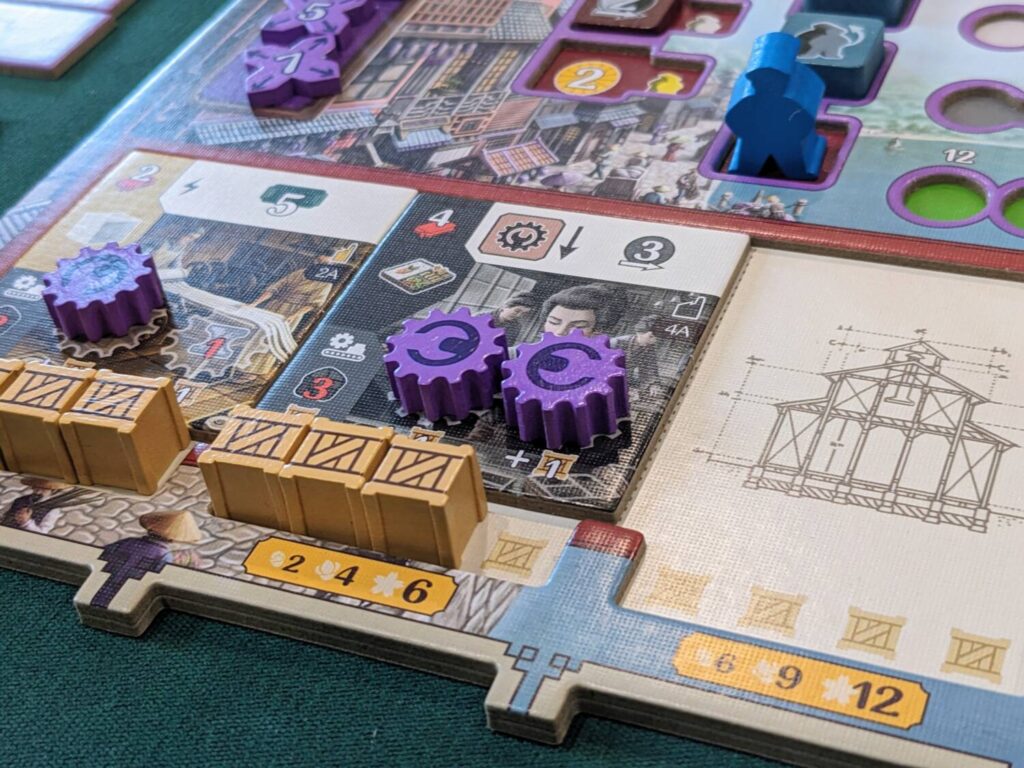
Nippon: Zaibatsu Game Review

Ever since I slept on Bestiary of Sigillum: Collector’s Edition a couple years ago, I decided that CrowD Games should be closer to the top of my list of favorite publishers. As a result, I’ve spent a lot of time with their catalog over the last two years, playing through every single game the team at CrowD would send my way.

With very limited exceptions, CrowD has always delivered the goods…and with the recent fulfillment of the medium weight strategy title Nippon: Zaibatsu (based on the 2015 game Nippon), I’m ready to shout it to the masses: people should be following CrowD’s every move.

About a year ago (around the time that the original Zaibatsu campaign went up on crowdfunding platforms), I began playing Nippon on Board Game Arena, mainly to see if this was the kind of game I wanted to back when the campaign for Nippon: Zaibatsu went live. I liked what I saw out of the 2015 original, enough to put down some money for a copy of Zaibatsu.

Then, life punched me in the gut. I was laid off from my full-time job, and I shut down any talk of backing not only this game, but buying any board games for a few…

The post Nippon: Zaibatsu Game Review appeared first on Meeple Mountain.
Nippon: Genro Game Review

Nippon: Zaibatsu—2026’s updated version of the 2015 original, Nippon—is so hot in my gaming circles that I had the chance to play the base game three times over the course of a week, and it seemed like the game was popping up at game nights all over Chicago for the first couple months after it hit the market.

After drafting my initial review of the game, I learned that the game’s first expansion, Nippon: Genro, is hitting crowdfunding in late June of this year. A couple prototypes were floating around the US, so I reached out to CrowD Games to see if I could grab a pre-production copy to play for about a week, and I’m excited to share that CrowD obliged.

Nippon: Zaibatsu is a relatively easy game to learn, but it is a very difficult game to play well. By that, I mean that the game’s high volume of timing decisions make for a tricky gaming affair, and I’m surprised how often I had a plan to get all my ducks in a row during each play only to have an opponent snipe end-game turn order, or mid-game area control elements, or the perfect worker color for my consolidation plans just before I could.

Nippon: Zaibatsu may come across as a cutthroat area majority experience. Moving…

The post Nippon: Genro Game Review appeared first on Meeple Mountain.
Tundra Game Review

I picked up a review copy of the medium-weight, engine-building title Tundra, designed by Luc Rémond and David Simiand. Rémond is best known for one of the most popular two-player-only designs of the last 10 years, Sky Team. That, alone, made Tundra an instant “yes” when I had the chance to grab a copy during my visit with the Hobby World team at SPIEL Essen last year.

Tundra gives it to you straight. Over the course of four rounds, players take on the roles of estate managers in the fantasy world of Tundra, using workers and towers to gather resources to score the most points. Tundra, the game, begins every round with each player using the same set of die results across four dice—rolled by that round’s first player—before players use one die per turn to activate a space on one of their four action boards, known as “Order” boards.

These Order boards are not unique across the player pool, so each board does the same thing for each individual player…at least, when play begins. The tasks are very vanilla—gather one or more of the game’s three resources (firewood, peat, and rock), build towers and workers, move around a grid-based map of tiles that offer more chances for more resource gathering, or upgrade the Order boards to…

The post Tundra Game Review appeared first on Meeple Mountain.
Circadia Game Review

Hisashi Hayashi is the designer of a quick new card game called Circadia. I was initially interested because Hayashi has done some great work for the Bell household, namely in the form of Yokohama and Railway Boom, the latter of which was on my list of the top 10 games of 2025.

As you may know, lots of publishers are pushing out new card games, for the reasons one might expect: this is a much cheaper way to get a game to market, and it could satisfy the needs of many types of players in an environment where players are apparently spending less on their games.

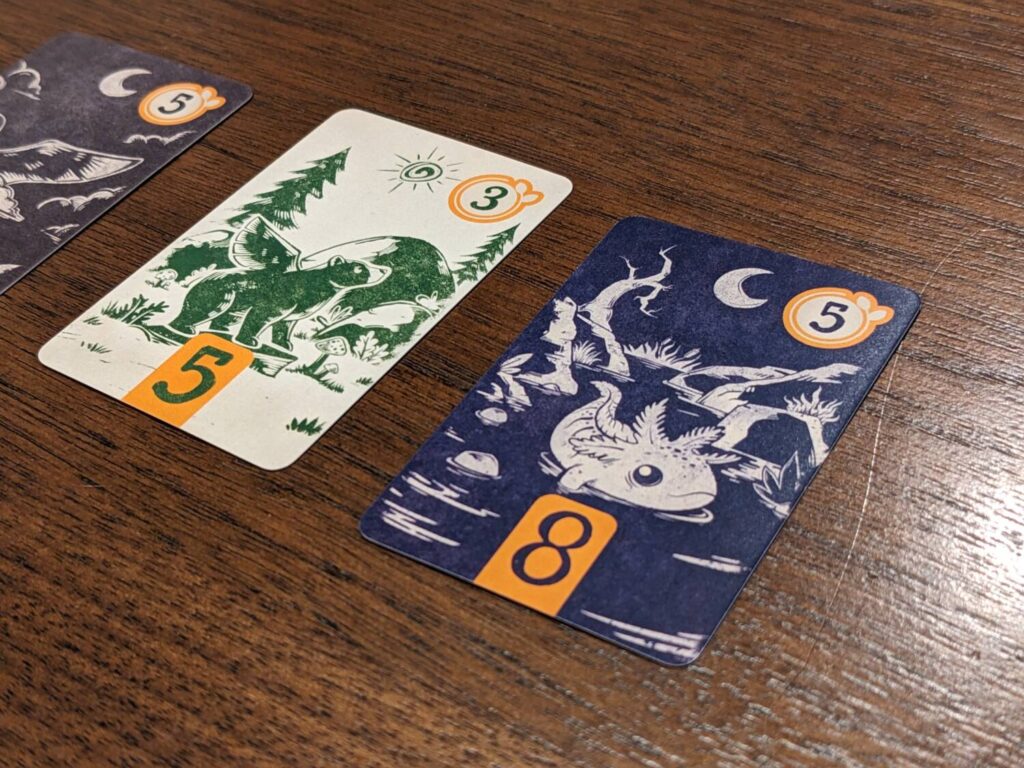
Enter Circadia. There’s a theme loosely tied to Dreaming Paths, Spirit Creatures, and becoming the “Keeper of the Eternal Cycle” for the person lucky enough to win the game.

The reality is that Circadia is much, much simpler than even the loose framework. Setup only takes three steps. Players manage a hand of cards (never more than eight), trying to build up sets of cards across three types of Spirit Creatures: bear, axolotl, and goose.

Sets are played from hand based on the value of the cards, so a player who wants to play twos can play any card with…

The post Circadia Game Review appeared first on Meeple Mountain.
City of the Great Machine Game Review

From time to time, I use my meetings with publishers at conventions to intentionally pick up older games from their catalog. I usually need them for the new tabletop release doldrums of spring. That’s because publishers hit all of us hard with new titles in “Convention Season”, which for my money starts at Gen Con, peaks at SPIEL Essen, and stays warm through PAX Unplugged. (Shows like UK Games Expo and the Tokyo Game Market have new releases, but the noise level is a bit more muted.)

At last year’s Gen Con, I picked up a couple games from the team at CrowD, including City of the Great Machine, released in 2023. I had heard good things about it, and I liked the idea of its “one versus many” gameplay. Spring has arrived, and I pushed City of the Great Machine to the table for a couple plays.

My Spidey Sense was on point. City of the Great Machine—at least, its multiplayer version—rocks. (Solo is another story, which we’ll get to.)

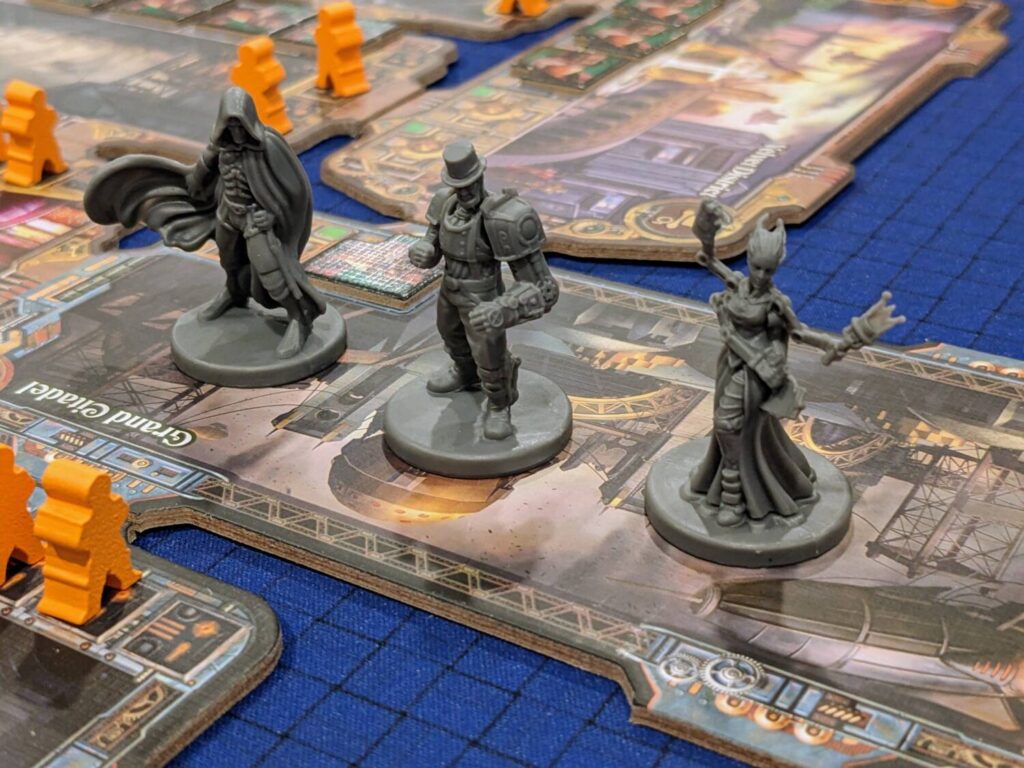
Steampunk, Anyone?

City of the Great Machine, depending on player choices and headcount, is a hand management, hidden movement game for 1-4 players. It can be played solo, cooperatively with up to three players, or competitively with…

The post City of the Great Machine Game Review appeared first on Meeple Mountain.
Whistle Mountain Game Review

Whistle Mountain (2020, Bezier Games) looks like it should be the direct sequel, or maybe the spiritual successor, to Whistle Stop, an earlier release that focused on a Euro-style train game complete with powers, shares, goods delivery, and a race to go west as quickly as possible.

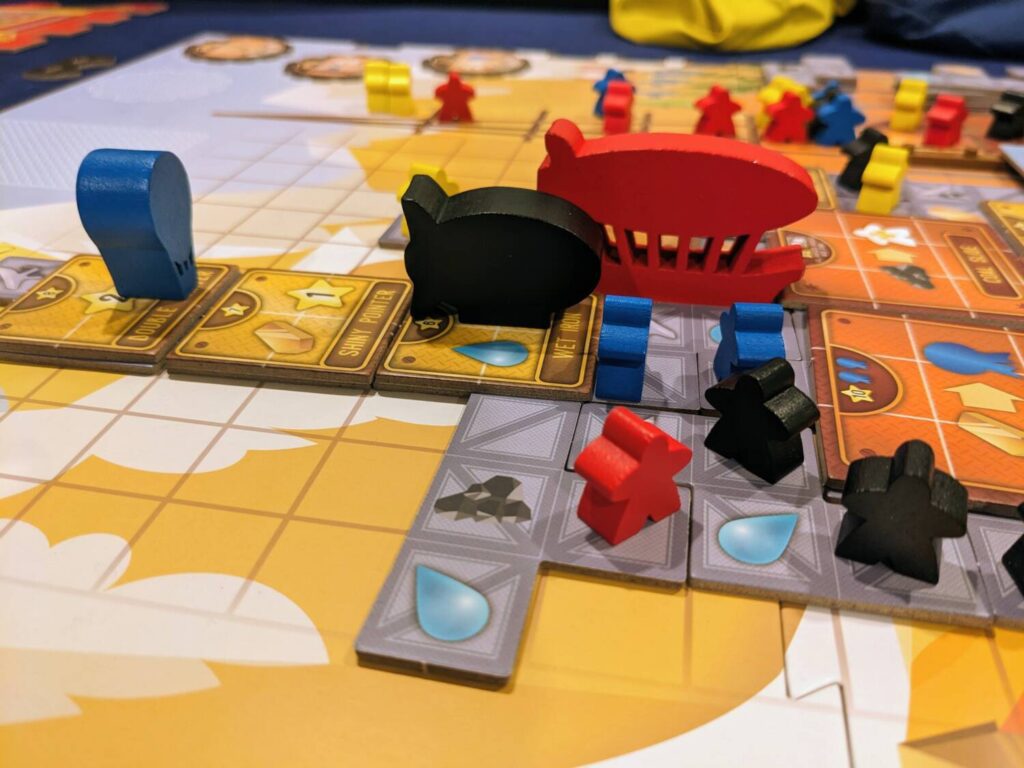
Whistle Mountain is not that, at all. Designed by the same person who designed Whistle Stop, Scott Caputo, as well as designer Luke Laurie (Andromeda’s Edge, Cryo), Whistle Mountain is a somewhat themeless tile placement game with triggering effects that align with a worker placement mechanic, as players compete for the most points by placing…wait for it…hot air balloons on a map full of scaffolding tiles while trying to evacuate construction workers from both a barracks location and a whirlpool.

Honestly, I don’t get the theme behind this one at all. Luckily, the gameplay is so good that you won’t bother to realize that saving the lives of your construction workers is the main trigger for the endgame!

Total Recall

Whistle Mountain is a tile-laying, worker placement, Euro-style adventure game for 2-4 players that runs about two hours at the highest player counts.

Whistle Mountain takes place in a future state “years…since your successful foray across the great America…

The post Whistle Mountain Game Review appeared first on Meeple Mountain.
Rebuilding Chicago Game Review

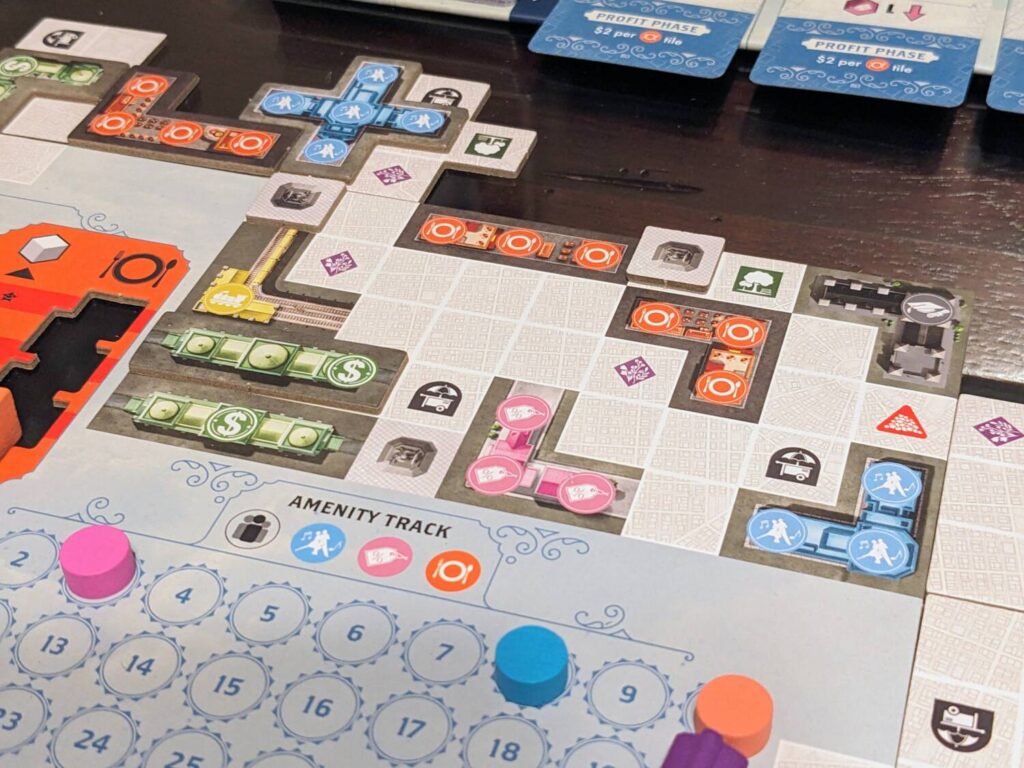
I’m not quite sure what to make of the new game Rebuilding Chicago, the second game in a series from the team at WizKids that began with the 2023 release Rebuilding Seattle. Like the first game (which I have not played), Rebuilding Chicago puts players in the shoes of local officials tasked with rebuilding a major city after a tragic event—here, the Great Chicago Fire of 1871.

Except…well, it’s not really about that at all. Rebuilding Chicago is a three-round tile-laying affair that takes place in three specific years: 1893, 1933, and 2016. I get the first two, since those are tied to the two World Fairs hosted by the city and they are widely celebrated as years when Chicago celebrated itself for rebuilding large parts of the city’s infrastructure. But 2016? That’s when the Chicago Riverwalk opened.

The Riverwalk is a blast. I’m just not sure I would call it a major rebuilding event across the city’s previous 125 years.

I’ve lived in Chicago since 2012, in a suburb just west of the city limits. When I first saw the round structure for Rebuilding Chicago, I kind of laughed. I wasn’t sure what the designer of the game, Quinn Brander, was going for with the Chicago framing. (Brander…

The post Rebuilding Chicago Game Review appeared first on Meeple Mountain.

Schlock!: B-Movie Magnate Game Review

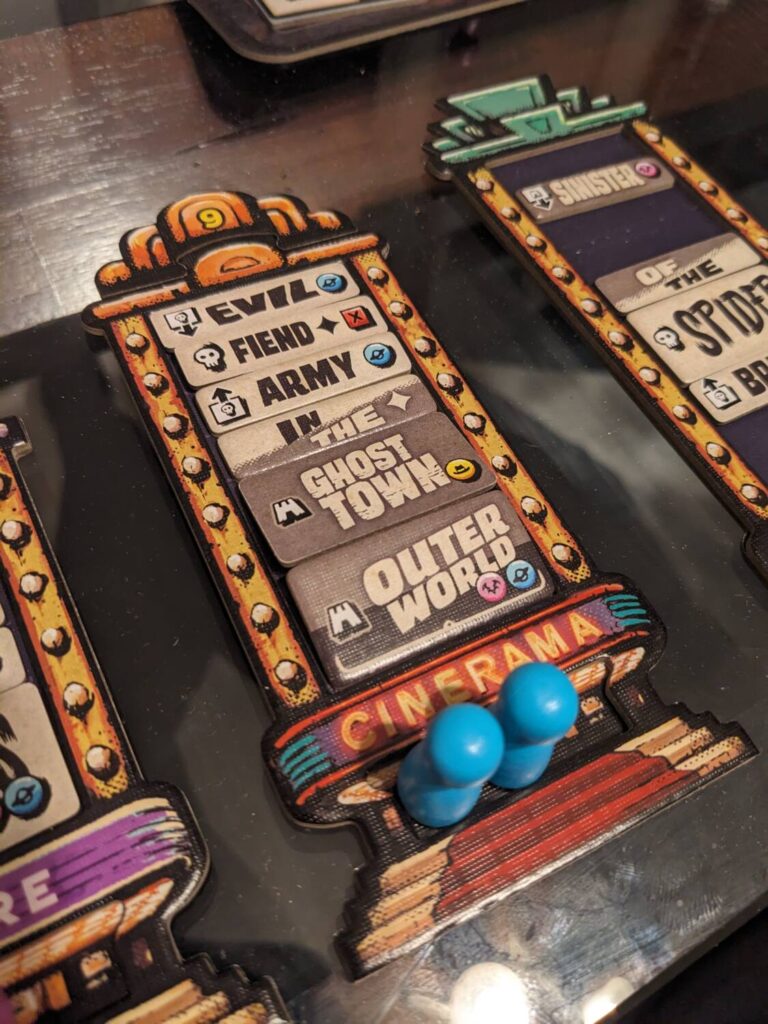
The prototype for the upcoming game Schlock!: B-Movie Magnate (designed by Rob van Zyl and Simon Weinberg, and published by Pleasant Company Games) made the rounds on our Slack’s review copy channel without being picked up. I waited until other Meeple Mountain contributors had first-crack at this game before raising my hand. I think I’m the biggest movie nerd on the team, but still, maybe someone else wanted to talk shop and play a game that leaned into something they love more than I do.

But no one bit. I received a copy of Schlock! a few weeks before the game’s crowdfunding campaign, but I couldn’t finish three plays before the campaign launched. That’s because I was only able to initially do a solo play and a two-player game of Schlock!, and the rules are a little different with three or four players.

Now that I’ve finished a third play, with four players, I’m ready to share my story. Schlock! has the look and feel of a word game I can get behind. But the production value of this prototype’s high notes are balanced with a game that simply comes down to matching colors to achieve victory. I wish more of the game’s theme pushed into the game’s win conditions.

The post Schlock!: B-Movie Magnate Game Review appeared first on Meeple Mountain.
Shackleton Base: Below. Within. Above. Game Review

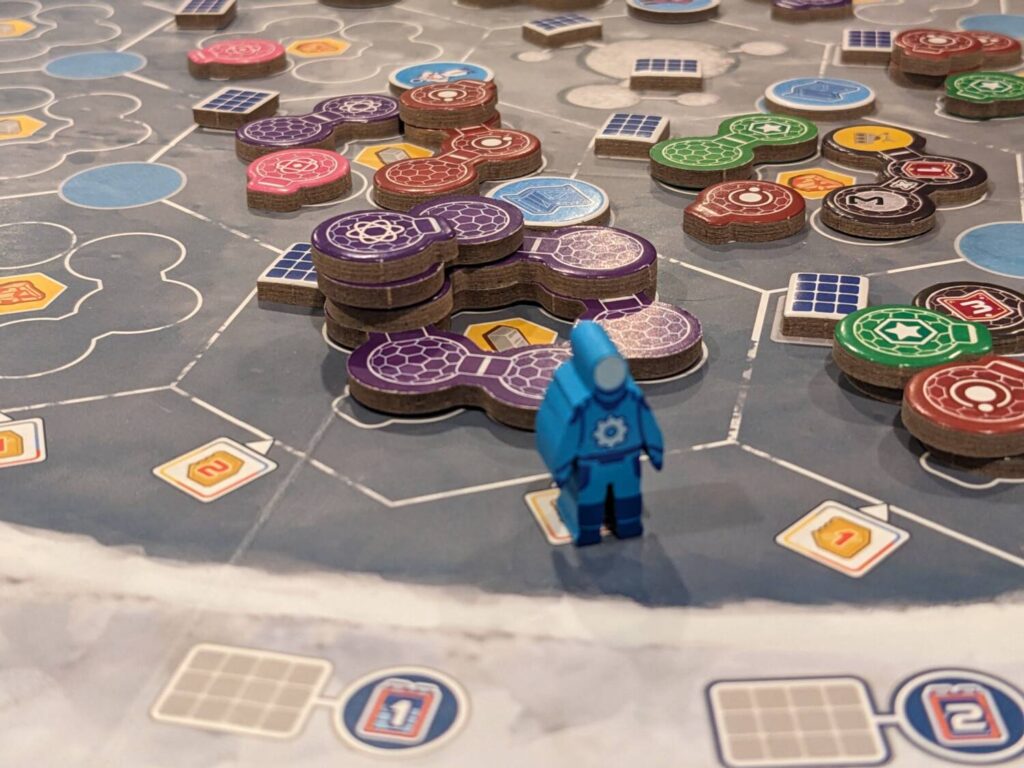
No upcoming expansion had me more excited than the arrival of Shackleton Base: Below. Within. Above., the first expansion for one of the five best games I played in 2024, Shackleton Base: A Journey to the Moon.

“Shack Town”, as it is known in my circles, has hit my tables a whole lot since the late summer of 2024, thanks to receiving an advance copy from the team at Sorry We Are French (from overseas, no less, in the Before Tariff Times). The medium-weight Euro is a crowded field, and Shackleton Base stood out because it does a lot of things right, thanks in part to the seven different corporations included in the base game.

Almost any number of extra corporations would spice up the base game for me. I’m not exhausted with any of the base game corporations yet, but the mix can always get sweeter with more set-up options that shake up the meta.

Let’s talk about the new stuff. (For anyone new to Shack Town, you can check out my review of the base game to learn more.) Also, please note: the new stuff barely—and I mean, barely—fits in the base game box, assuming you keep the cute tuckboxes that make setting up the game a cinch.

[caption id="attachment_331255" align="alignnone" width="1024"]

The post Shackleton Base: Below. Within. Above. Game Review appeared first on Meeple Mountain.
The Dusty Euro Series: Thebes

The guys in my Wednesday gaming group started a push to play more of the old, dust-covered games at the bottom and backs of our respective game closet shelves. The premise was simple: let’s try to remember why we keep all these old games when all we ever play now are the newest, shiniest things in shrink.

Right on the spot, the Dusty Euro Series was born, and I’ve enlisted multiple game groups to help me lead the charge on covering older games.

In order to share some of these experiences, I’ll be writing a piece from time to time about a game that is at least 10 years old that we haven’t already reviewed here at Meeple Mountain. In that way, these articles are not reviews. These pieces will not include a detailed rules explanation or a broad introduction to each game. All you get is what you need: my brief thoughts on what I think about each game right now, based on one or two fresh plays.

Thebes: What Is It?

Thebes is a press-your-luck set collection game featuring rondel-style movement mechanics for 2-4 players. In the vein of Raiders of the Lost Ark, or any board game that features “competitive archaeology”, players…

The post The Dusty Euro Series: Thebes appeared first on Meeple Mountain.
Tricky Treats Game Review

Here’s something spooky: I don’t own any Halloween-themed board games…not a single one. Now, I’m excited to say that I own one I’ll keep handy for at least the next few pumpkin seasons.

Tricky Treats, a family-weight title published by Cranio Creations last year, hit my table for a couple plays recently. Although I picked this up in Germany right before Halloween, other, buzzier titles hit my table first, so I didn’t play Tricky Treats this past Halloween and let the game sit for a while.

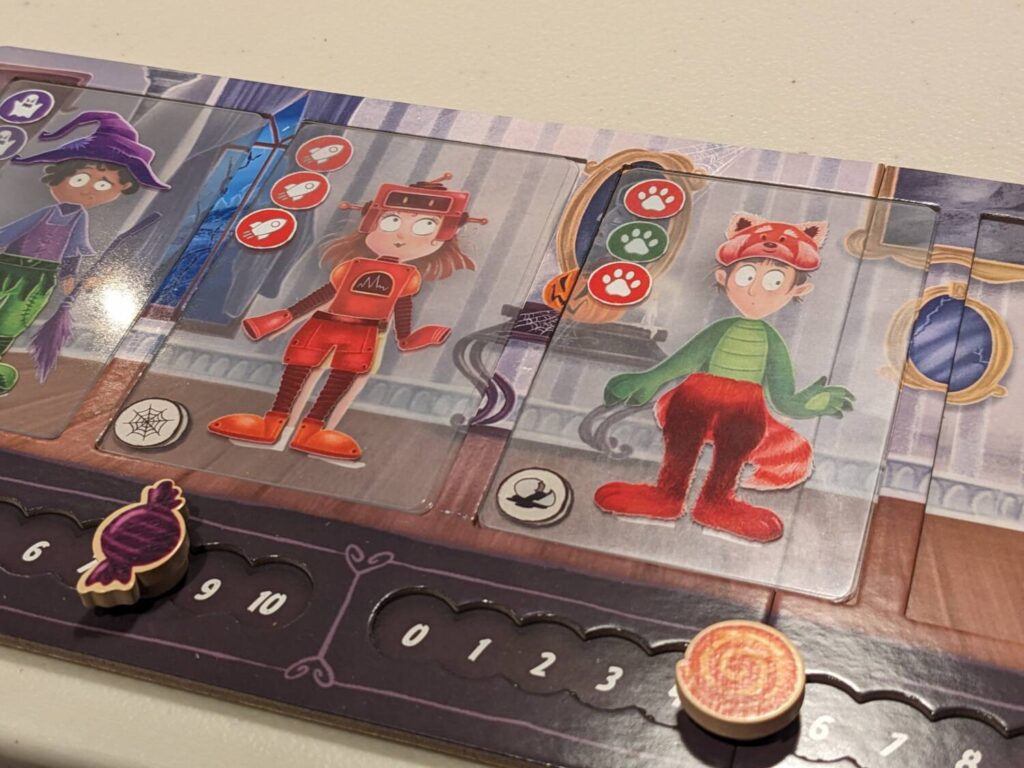
After breaking the game out with my family, then with my review crew, I’m a bit surprised that Tricky Treats is not getting more buzz. The game is a solid family title, with a fun gimmick that reminded both myself and other players of another recent title featuring transparent cards.

Do You Have 20 Minutes?

Tricky Treats is a set collection, card drafting game for 2-4 players that plays in about 30 minutes, longer if you are playing with my nine-year-old, who loves to take his sweet time as he makes his way through each turn of any game, not just this one.

Players manage a small posse of five kids getting ready for Halloween. There’s a grid of nine “treat” houses where…

The post Tricky Treats Game Review appeared first on Meeple Mountain.
Origin Story Game Review

One pass of the rules and I could tell that the new Stonemaier trick-taking, engine-building game Origin Story was right up my alley.

That’s because after the handsome production and cool art from illustrator Clémentine Campardou fades to the background, there’s a fun game under the hood of designer Jamey Stegmaier and Pete Wissinger’s new creation. Over the course of five rounds, players engage in standard trick-taking mechanics—eight-card hand, must-follow rule-set, four suits with one always representing a trump suit—with a very nice twist: in each round, the rules change just a little for every player, thanks to the ability to use “stamina” tokens to trigger player board and card effects for each of the 2-5 players in the game. (Origin Story does accommodate solo play, but that was my least favorite of the three plays I did for this review, at solo, three-, and four-player counts.)

Each player is a character, with a somewhat basic ability that can be activated as many as two times per trick-taking round with those stamina tokens. Nothing about the base characters is anything to write home about. But a huge deck of Story cards offer players a chance to craft their own trick-taking monstrosity. For each of the first four rounds, players are dealt a set of three Story cards, each with…

The post Origin Story Game Review appeared first on Meeple Mountain.
Pax Illuminaten Game Review

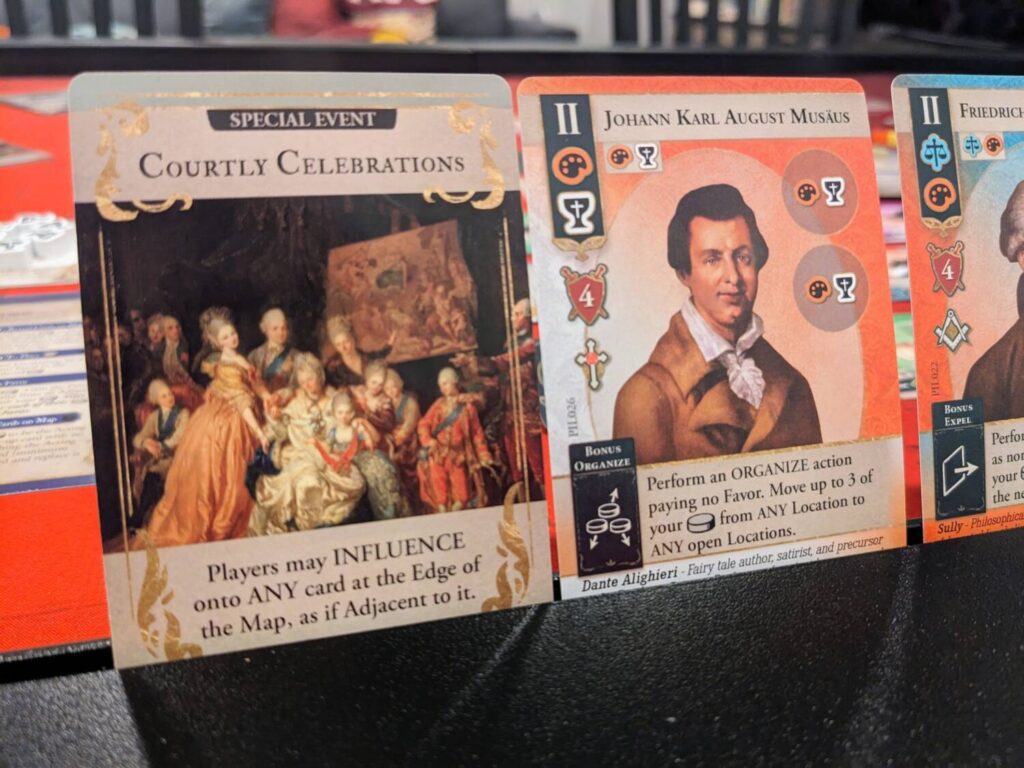
Oh, there is something deliciously slimy—smarmy, even—about the game Pax Illuminaten, designed by Oliver Kiley. (BGG says that Pax Illuminaten is based on Kiley’s earlier title Emissary, a game I have not played.)

One pass of the rulebook for Pax Illuminaten had me very excited. I’m not a dedicated scholar of Pax games, having only played Pax Pamir Second Edition (although Pax Hispanica, Pax Emancipation and Pax Porfiriana are currently on deck here at Casa de Bell). I HAVE played Pax Viking Junior, although I am sure a purist would not count that one.

But the core Pax system of historical, card-driven play with multiple end-game conditions and a closed economy is on full display with Pax Illuminaten, and I was further excited by the relatively straightforward rules and a playtime listed as 20-30 minutes per player.

A Pax game, in about 90 minutes? Sold, I said out loud to no one after that rules readthrough.

Then I got the game to the table…and I was mostly impressed. Pax Illuminaten is for a certain kind of player, especially one who likes to understand what is mostly possible in a strategy game, with ample space for a few surprises and a boatload of secondary actions.

Sorry, When

The post Pax Illuminaten Game Review appeared first on Meeple Mountain.
Movie Tricks Game Review

I picked up a copy of the new trick-taker Movie Tricks during my visit to SPIEL Essen 2025. It has a box cover that made at least one person in my circles wonder if the cover was generated by AI…not because of the illustrations by credited artist Eirik Belaska, but because the title, characters, explosion and car bursting out of the middle of the cover image feel so generic.

This is also to say: expectations were low for Movie Tricks. My 12-year-old thought that the game’s title was terrible, even if we all agreed that the title was pretty accurate: Movie Tricks is a trick-taking game where players take turns playing cards to the table, with each trick’s winner getting first pick of market cards that get added to their personal movie tableau.

The trick-taking is standard fare—Movie Tricks is a “must follow” game with a trump suit that may or may not change after each trick. Over the course of 10-13 tricks, players will build up their tableau to score points using a set collection mechanic (Props), a majority mechanic (Soundtracks), a simple scoring multiplier (CGI), and a slightly different set collection scoring tool with a balance component (Roles). In addition, players score based on their “Best Movie”—aligned with the highest scoring row of cards across…

The post Movie Tricks Game Review appeared first on Meeple Mountain.

Quick Peaks – Enemies & Lovers: The Crown of Elfhame, Majolica, Minos: Dawn of Faith, Arkham Horror: The Card Game, Discworld: Ankh-Morpork

Enemies & Lovers: The Crown of Elfhame - Justin Bell

I ran into AJ Porfirio of Van Ryder Games at SPIEL Essen 2025. During our catch-up, he handed me a copy of Enemies & Lovers, a game based on the Folk of the Air series written by Holly Black, who also designed this card game. The cover art, not to mention the illustrations on the handsome tarot-sized cards, is beautiful, and when I did a play with my family (wife, two kids, ages 12 and 9), everyone loved the look and feel of the cards.

The game was a mixed bag. Enemies & Lovers comes with a deck of 51 cards, a mix of action cards, court character cards, and a single crown card. The goal is to play cards from hand face-down into a tableau (known as your “Court’), with a winner named as soon as anyone can get a Prince, Coercion, and Conspirator to join that Crown in their personal Court. Of course, every action card in the deck makes that a challenge, with players regularly attacking everyone else…Enemies & Lovers becomes pure chaos quickly.

The second you play even a second card into your Court, someone will swoop in to assassinate one of…

The post Quick Peaks – Enemies & Lovers: The Crown of Elfhame, Majolica, Minos: Dawn of Faith, Arkham Horror: The Card Game, Discworld: Ankh-Morpork appeared first on Meeple Mountain.

Cytress Game Review

The toughest games to review are the ones that are right on the line. They are generally not bad, maybe even a hair better than that, and don’t really stand out. Often, games like this end with one or more players being asked what they thought, and those players doing an exaggerated shoulder shrug, as if to say “yeah, it was…good? Well, I mean, it was…alright? I’d play it again, but only if you wanted to. What are we playing next?”

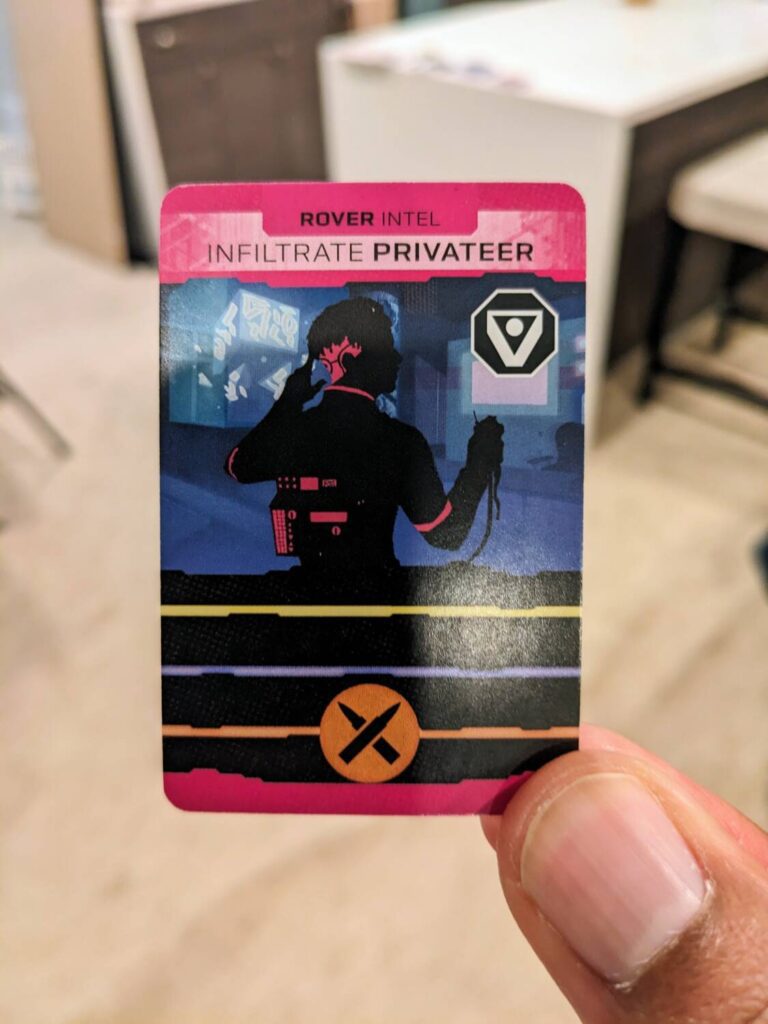
Cytress, designed by Sean Lee and published in 2025 by Good Games, broadly fits this description. Cytress is a cyberpunk-themed, engine-building worker placement game. You’ll build an engine using cards that can be purchased at one of four locations to increase your income or make trading deals progressively sexier. You’ll place a worker—either a Leader token or one of your three cute, futuristic-looking cardboard car tokens—on a space to trigger an effect. With the car spaces, any other player can also use the action, so there’s no worry or tension tied to opponents blocking the space you want.

When players buy cards and add those to the engine, they also place a crew member on a mini-map, representing the area below the great city of Stratos. This placement…

The post Cytress Game Review appeared first on Meeple Mountain.

Winnie the Pooh: Serious Detective Game Review

Yes…this is a review of a game called Winnie the Pooh: Serious Detective.

As almost anyone who remembers Winnie the Pooh books as a kid will tell you, there ain’t nothin’ serious about Winnie the Pooh. Nothing resembling detective work. Usually, the only “crime” that needed solving was on what page Winnie would be found sitting in the Hundred Acre Wood with a pot full of honey. Rabbit, Piglet, Eeyore, Owl, Kanga, Roo, and of course, Christopher Robin…check, check, check.

In other words, there shouldn’t be any mysteries at all. But when I saw that the folks at CrowD were releasing a Winnie the Pooh game FOR ADULTS, I set my sights on grabbing a copy at SPIEL Essen last fall. Because I only approached publishers for review copies on the Sunday of that show, I came up empty in Germany because CrowD had sold all copies of the game earlier that weekend. A few months later, I reached out to get a copy by mail, and one arrived a few weeks ago.

My wife and I have played—which means I have written about—dozens of “one shot” mystery/escape room-style games, so I consider myself a bit of an expert in the category. Winnie the Pooh: Serious Detective’s description lined up with my interests: three cases, each of…

The post Winnie the Pooh: Serious Detective Game Review appeared first on Meeple Mountain.

Orloj: The Prague Astronomical Clock Game Review

There was a moment late in my first game of the medium-weight strategy game Orloj: The Prague Astronomical Clock where I pretty much landed on my final thoughts about the game.

I had just taken a turn that felt pretty dope. That turn began when I took the Construction action, and spent four resources to construct the second-to-last piece of the month dial on the big clock at the center of the board. That netted me eight points, for the gold, two wood, and paint I had spent to build it. Then I placed one of my workers on the clock, and thanks to adjacency rules, scored four more points. Then I got a bonus based on the position of that completed space on an outer wheel that surrounds the clock, a track that lists bonuses on what is known as the Painter track.

That bonus gave me a free apostle. These apostle tiles are earned and placed in one of two storage slots on each player’s personal board. As a free action, I took that new apostle and placed it in a column on my personal, 12-space apostle board. It was the third apostle in one of the columns, which earned me another bonus: an Assistant tile, which went into the newly vacated storage space where that apostle…

The post Orloj: The Prague Astronomical Clock Game Review appeared first on Meeple Mountain.

Wunderwaffen Game Review

It’s still early in 2026, but I think I’ve already played the game that will end the year with the widest array of opinions within my review crew.

Wunderwaffen was one of my targets at SPIEL Essen 2025, so I was eager to get it home and put it in front of my team. I was attracted to the game for a few reasons, chief amongst them the game’s publisher. Ares Games has done great work in steadily tight packages, from the Quartermaster General series to family-friendly fare such as TEDOKU and Builders of Sylvan Dale. Ares’ reprint of the Mega Civilization series, Mega Empires, didn’t hurt the cause.

Wunderwaffen is a fragile system, one that worked wonderfully for some players while landing badly for others. But as a very straightforward game that plays in about an hour at its full player count, it is certainly worth a look, especially for wargame lovers looking for a weeknight game they can table with both hobbyists and casual players.

Nazis, You Say?

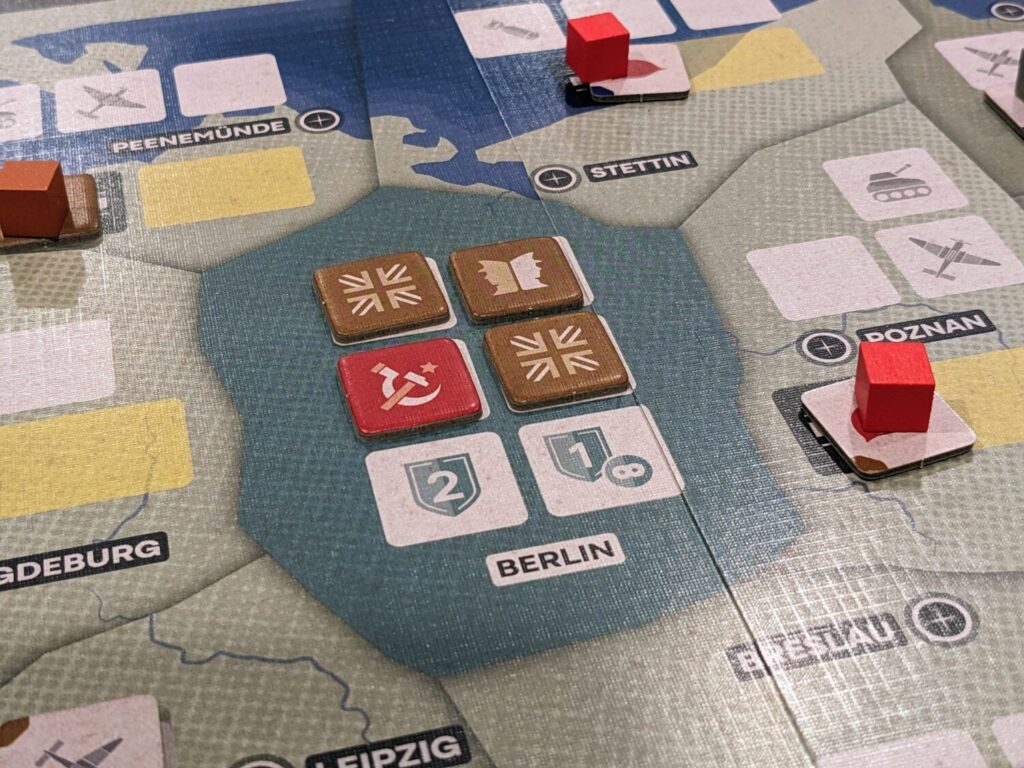
Wunderwaffen looks, on the surface, like a one-versus-all wargame for strictly two OR four players. There are four playable factions in the box: Germany, the United Kingdom, the United States, and the Soviet…

The post Wunderwaffen Game Review appeared first on Meeple Mountain.

Yotei Game Review

I think many of us in the tabletop media space have a particular set of rules when it comes to reviewing games; everyone takes a different approach.

One of my big things is to get my three, maybe four, plays of a review copy with different groups as often as I can, ideally at different player counts. This is especially true with new game properties (expansions are a little easier to cover, and usually I have superfans of a base game who are better equipped to share their thoughts on an expansion if they know the original game).

I played the upcoming Mighty Boards game Yotei (up on crowdfunding now) with three different groups: my review crew on a Monday, then three friends from my Wednesday gaming group, then my nine-year-old on Saturday. That meant three plays with three different groups spread across six days in the same week, thanks to a tighter-than-normal turnaround time to get this review up.

As a result, I had a range of opinions to measure against my own. Here’s the only thing everyone agreed on: the card and token illustrations by Maria Kato are absolutely gorgeous.

But after that?

Please Pass the Potatoes

Yotei is a tableau-building set collection game for 2-4…

The post Yotei Game Review appeared first on Meeple Mountain.

❌