❌

Lese-Ansicht

Maestro Media opens its crowdfunding, manufacturing, retail infrastructure to other publishers and designers


Maestro Media is opening up the publishing, licensing, manufacturing and retail infrastructure behind its own games to outside designers and publishers, including companies looking for a North American publishing partner.

The Binding of Isaac: Four Souls and Clash of Clans: The Epic Raid publisher has launched Overture by Maestro Media, through which it plans to co-publish games from other companies, partner with them during development or production, or potentially acquire titles outright.

Maestro founder and CEO Javon Frazier said, “The hardest part of this industry has never been the ideas. It is everything after them. Getting your design in front of a publisher, funding the development, entering distribution, landing it on a shelf.

“We built a machine to do that for our own titles alongside some of the largest licensors in the world. Overture by Maestro Media opens that machine to everybody else.”

Maestro says Overture will allow other companies to use its existing operations for areas including development and licensing, production, manufacturing, crowdfunding, direct-to-consumer sales and retail distribution.

The company has already struck several deals along those lines, including announcing in the summer that it would publish a new North American edition of Zoch Verlag’s Ghost Blitz from January 2027.

It is also partnering with Nighthawk Interactive on Richard Garfield and Ken Jennings’ trivia game Half Truth: Second Guess, and working with Brazilian tabletop publisher D20 Culture to co-publish The Lord of the Rings: Foes of Middle-Earth and the Justice League Unlimited RPG worldwide and in multiple languages.

Frazier said of the Ghost Blitz deal ahead of unveiling the game at this year’s Gen Con, “Ghost Blitz has sold more than one million copies in 20-plus languages over 15 years. Most North American families have never seen it on a shelf. That’s not a demand problem. It’s a distribution problem.

“That’s the gap we built Maestro Media to close. Crowdfunding, direct-to-consumer, and retail working as one engine, with distribution partners already in place across North America.”

Peterson Rodrigues, CEO of D20 Culture, said, “We’re excited to work with Maestro because we see the same opportunity they do: great games shouldn’t be limited by borders.

“Bringing these titles to players around the world, in their own languages and through partners who understand their markets, is exactly the kind of collaboration we want to be part of.”

Game designers will get their first opportunity to pitch original tabletop games via the new operation through a month-long submission window running from January 1 to 30 next year.

Maestro made its name in tabletop through its 2018 Kickstarter for The Binding of Isaac: Four Souls, which raised more than $2.6m, followed three years later by a further $6.7m for its Requiem expansion.

The company says it has worked with more than 40 licensed properties to date, and shipped more than 400,000 products, while Frazier has raised more than $16m across 16 crowdfunding campaigns – although almost 60% of that total comprises the two Binding of Isaac projects.

Maestro has expanded its distribution network significantly in recent years, signing an exclusive deal with Asmodee last year covering its English-language products in the US, UAE and South Africa, followed by an agreement making Zatu Games its exclusive distributor in the UK and Ireland.

The company added that Ryan Lumax has been promoted to vice president and head of games at the company, having joined last year after almost eight years at Canadian distributor Lion Rampant Imports.

Lion Rampant was acquired by Asmodee in 2019, when Lumax was working as head purchaser. He became a purchasing manager at the business in 2023.

Lumax said, “I spent eight years on the buying side, and the games that didn’t make it were almost never the bad ones.

“They were good games whose creators ran out of road somewhere between the prototype and the pallet. That is the gap Overture by Maestro Media closes.”

The post Maestro Media opens its crowdfunding, manufacturing, retail infrastructure to other publishers and designers first appeared on .

  •  

Solis Game Studio makes ‘major step forward’ through US retail distribution push with Southern Hobby

California tabletop publisher and game development studio Solis Game Studio is expanding its reach into US hobby retail through a new distribution deal with Southern Hobby, following several years of building its own catalogue through crowdfunding and direct sales.

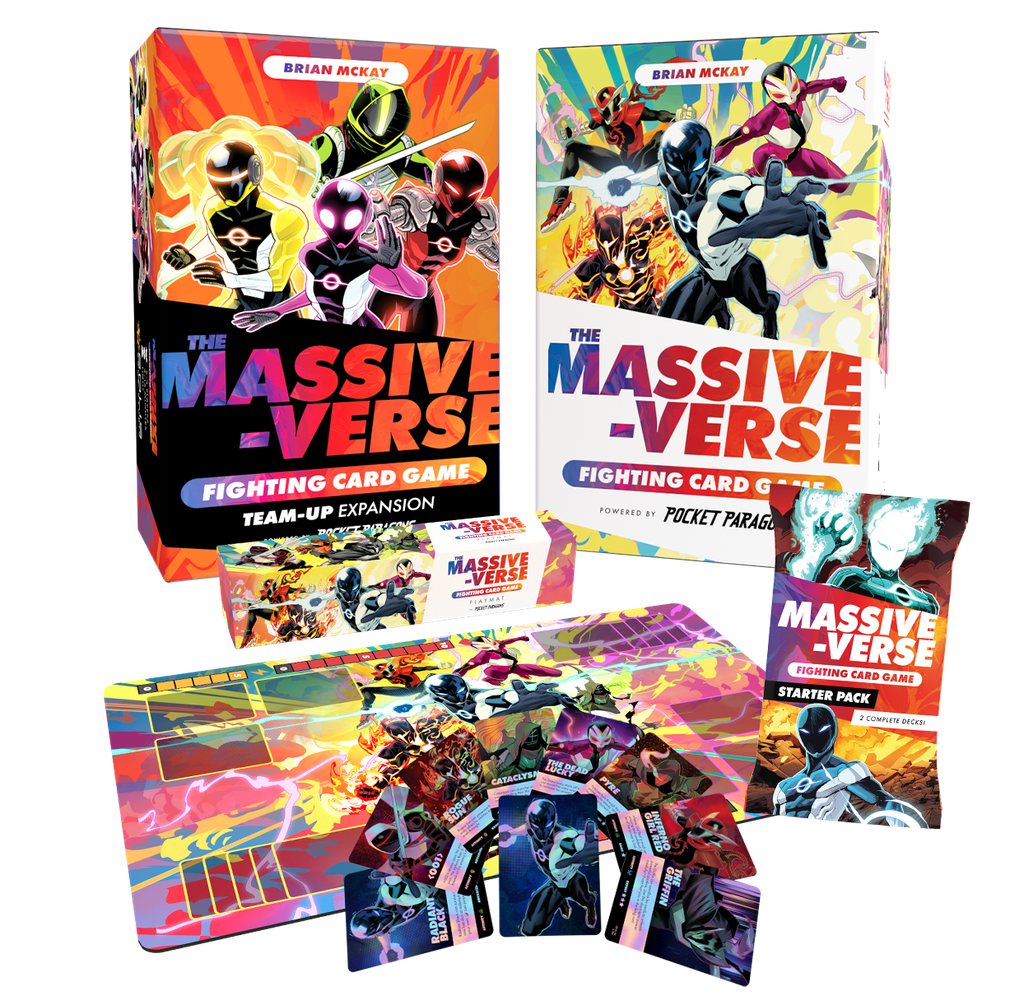
Solis, which was founded in 2020, has published games including Pocket Paragons, Space Lion, Treat, Please! and The Massive-Verse Fighting Card Game, while also carrying out development and production work for other tabletop companies.

The Massive-Verse Fighting Card Game, designed by Brian McKay, from Solis Game Studio

Its contracting work has included projects such as the Cyberpunk TCG, with Solis having led game design and development of a prototype that secured licensing for a new game.

The Cyberpunk TCG ultimately raised more than $28m from 50,000 backers through a huge Kickstarter campaign by publisher WeirdCo earlier this year.

Solis also did development work on Emerson Matsuuchi-designed Metal Gear Solid: The Board Game, and last month announced it would be the developer for the official card game of battle royale video game PUBG.

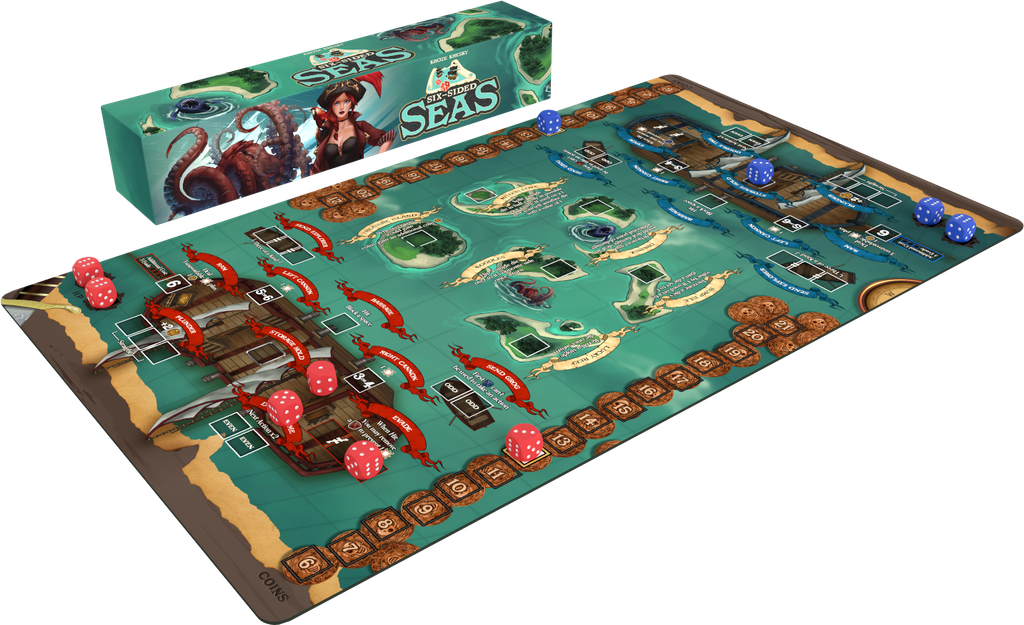
The company said Southern Hobby will distribute new Solis release Six-Sided Seas, as well as Treat, Please! and The Massive-Verse Fighting Card Game, describing the deal as a “major step forward” for the business.

The publisher has previously used crowdfunding to bring several of its games to market, with its biggest success to date 2024’s licensed Massive-Verse Fighting Card Game, designed by Brian McKay, which raised just over $50,000 from about 800 backers.

Its first Pocket Paragons Kickstarter raised around $22,000 from 432 backers in 2020, while Space Lion: Divide and Conquer raised just under $18,000 from 343 backers and Treat, Please! brought in about $14,000 from 169 backers.

Solis has also already been selling directly to retailers through its own wholesale programme.

The publisher’s newest release, push-your-luck worker placement game Six-Sided Seas, will enter US distribution on October 2 with a $24.95 MSRP.

The two-player pirate game, designed by Kroze Kresky, is built around an unusual component format, consisting of 32 dice and a 14in by 24in edge-stitched playmat which is rolled inside the game’s box – allowing the title to be presented vertically, horizontally, or with a collapsible hangtab in retail.

Solis has previously said the idea grew from a visit to game stores in Thailand, where Chris Solis saw a store employee laminating a game board to protect it and began considering whether the board itself could instead be made from playmat material.

He said in the blog post, “When I returned home I issued an internal design challenge to my community. What does a game that is a playmat and single component look like?

“We explored a ton of really interesting designs and even did a limited release for one of them but none captured me like Six-Sided Seas by Kroze.”

Solis launched the game at Gen Con earlier this month, and said it sold all the copies it brought to the convention. Several of its scheduled learn-to-play sessions at Gen Con also sold out, according to the convention’s event listings.

In addition to founder and owner Chris Solis, the studio’s team includes developer Bryan McKay, business operations specialist John Brieger, graphic designer Katherine Boils, marketing manager Courtney Shernan, convention manager Sara Jordan and community manager Antonio Gil.

The post Solis Game Studio makes ‘major step forward’ through US retail distribution push with Southern Hobby first appeared on .

  •  

French board game distributor, publisher Atalia enters liquidation, blames market saturation and battle for bestsellers

French board game distributor and publisher Atalia has entered compulsory liquidation, saying an increasingly saturated market, the limited capacity of retailers and the loss of distribution rights to bestselling titles left the business unable to remain viable.

A statement posted to Atalia’s Facebook page said the rapid expansion of the tabletop market since the company was founded in 2015 had created a tougher commercial environment for smaller distributors, despite the industry’s continued growth.

Atalia said that despite soaring numbers of players in that time, “so many new games are being released today that the market has become saturated. Shops no longer have the space, the time or the cash flow to stock all the games arriving each week”.

It added, “They therefore naturally turn to distributors with the biggest marketing budgets, some of whom invest sums each year that exceed Atalia’s annual turnover.

“This year, Atalia has lost the distribution rights for its latest bestsellers, as their publisher has chosen to entrust them to a distributor offering greater financial and marketing resources.

“We naturally respect these decisions, but we cannot hide our regret. Without these bestsellers, it has become increasingly difficult to finance new releases and ensure the company’s long-term viability.

French board game distribution is dominated by industry heavyweights Asmodee and Hachette, the latter via its Gigamic and Blackrock subsidiaries.

Atalia was founded in 2015 as a French board game distributor, before expanding into localisation and then publishing in 2021. It distributed games to hundreds of specialist retailers across France and neighbouring francophone territories.

The company says on its website that it deliberately maintained a relatively small catalogue, so individual games entrusted to it would not be “lost amongst an overwhelming number of titles”.

Earlier this year Atalia revealed it was halting its own distribution operations to focus on publishing and localisation, with its distribution being handled by MAD from May.

Atalia’s previously published releases include French localisations of games including Underwater Cities and Lorenzo il Magnifico, while recent titles published by the company include The Royal Society of Archeology and Hands Off!.

The company had also faced financial difficulties in 2019, despite a prior year in which it had generated revenues of more than €1.8m and continued profitability.

Atalia’s decision to double its headcount to six amid that success backfired when the publisher of Limite Limite, a French adaptation of Cards Against Humanity which accounted for about half Atalia’s revenue, switched to a new distributor in 2019 with no prior warning.

The company placed itself into receivership the same year, but emerged intact from that process in early 2020, citing strong sales of its bestsellers including Punto and Dreamscape, and receiving court-ordered compensation from the publisher of Limite Limite for the abrupt termination of its distribution deal.

Atalia founder Cesare Mainardi

The company’s liquidation announcement today came a month after Atalia founder and managing director Cesare Mainardi revealed it was “facing an extremely difficult period”, and cancelled its planned attendance at the Paris est Ludique festival, citing financial difficulties and organisational constraints.

Atalia officially entered compulsory liquidation on July 8 via Nanterre Commercial Court.

The company’s assets, including stock, brand and customer database, will now be offered for sale by the liquidator. Mainardi said interested parties should contact him via private message on Facebook.

He said in the Facebook post, “Today, we turn the page with our heads held high, feeling immense pride in everything we have built together.

“The people we’ve met, the games we’ve played and the memories created during this adventure will remain with us forever.”

The post French board game distributor, publisher Atalia enters liquidation, blames market saturation and battle for bestsellers first appeared on .

  •  

“The Magic flywheel is firing on all cylinders”: veteran TCG tops $500m quarterly revenue for first time

Magic: The Gathering‘s record-breaking growth continues despite a surge of high-profile competitors, with the TCG soaring past $500m in quarterly revenues for the first time in its 33-year history.

The veteran card game has been on a tear over the past four years, evolving from parent company Hasbro‘s first $1bn-brand into the toy and entertainment giant’s primary source of growth.

That powerful rise has been built upon the already hugely popular TCG’s expansion into licensed crossovers through its Universes Beyond line since 2021, which has seen it bring out sets for franchises including The Lord of The Rings, Final Fantasy and Avatar: The Last Airbender.

The game’s success now underpins Hasbro’s fortunes, with Magic’s strong performance repeatedly leading the line in the company’s quarterly results – as well as offsetting underperformance in other parts of the business.

Magic’s revenue grew 32% in Q2 of this year compared to the same period in 2025 according to Hasbro’s latest results report, reaching a record $545m on the back of strong sales of Secrets of Strixhaven and Marvel Super Heroes – the latter of which the company described as a “record-breaking debut”.

That result means Magic alone outstripped Hasbro’s entire consumer products segment – which includes Nerf guns, Transformers and Peppa Pig toys – which recorded revenues of $463m in the same period, up 5% year-on-year.

The consumer products segment made an operating loss of about $14.5m in Q2, compared to an operating profit of $270m from Wizards of the Coast, the business arm which includes Magic, Dungeons & Dragons and its digital games such as Monopoly Go!.

Hasbro ascribed the consumer products losses to “incremental tariff expense, entertainment-related mix shifts, and normal seasonality”, as well as the fallout from a cyberattack in March which saw unspecified parties gain unauthorized access to its network.

The company said the cyberattack reduced second-quarter revenue by an estimated $25m while generating $11m in direct costs as order processing, shipping and invoicing were disrupted, particularly on the consumer products side. Hasbro said those operations had now returned to normal, although it expects to incur additional costs related to the incident in future periods.

Hasbro CEO Chris Cocks

Hasbro CEO Chris Cocks said in the results report, “With strong indications for our remaining releases and line of sight to continued growth in 2027, the Magic flywheel is firing on all cylinders.”

Wizards revenue was also up 27% across the first six months of 2026, with Magic revenue climbing 34% thanks to continued growth across tabletop and digital products, Universes Beyond releases, Secret Lair products and back catalogue sales.

That continued growth comes despite the emergence of several high-profile challengers in the trading card game market over the past few years, including Disney Lorcana, Star Wars: Unlimited, Altered, Flesh and Blood and One Piece Card Game – as well as the ongoing power of fellow TCG veterans Pokémon and Yu-Gi-Oh!.

Magic’s performance was strong enough for Hasbro to increase its full-year guidance, with the company now expecting total revenue growth of between 5% and 7%, up from its previous forecast of 3% to 5%.

The post “The Magic flywheel is firing on all cylinders”: veteran TCG tops $500m quarterly revenue for first time first appeared on .

  •  

How competitive TCG accessories are influencing hobby retail strategy in Europe: Sanseking [Sponsored]

As trading card games continue to drive growth across the tabletop industry, hobby retailers are increasingly looking beyond games themselves to the accessories that support organised play and competitive communities. In this sponsored article, TCG and board game accessories maker Sanseking explains how changing player behaviour is influencing retailers’ approach to inventory, merchandising and long-term store strategy, and why competitive accessories are becoming a more important part of the European hobby market.

A growing crossover between board gaming and trading card games is beginning to reshape hobby retail strategy across Europe according to TCG, board game, and collectible accessories maker Sanseking, with competitive accessories emerging as an increasingly important category for stores.

What was once a relatively clear divide between casual board game retail and competitive TCG communities has evolved into a far more interconnected ecosystem, the company says, where stores are expected to serve multiple types of players simultaneously.

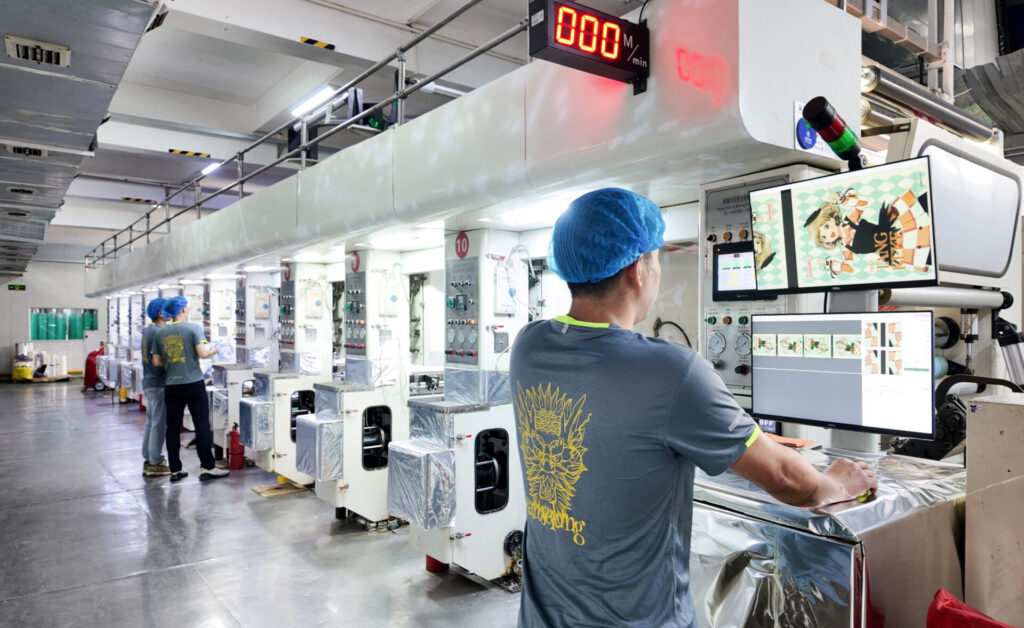
Sanseking production manager Ding Guang

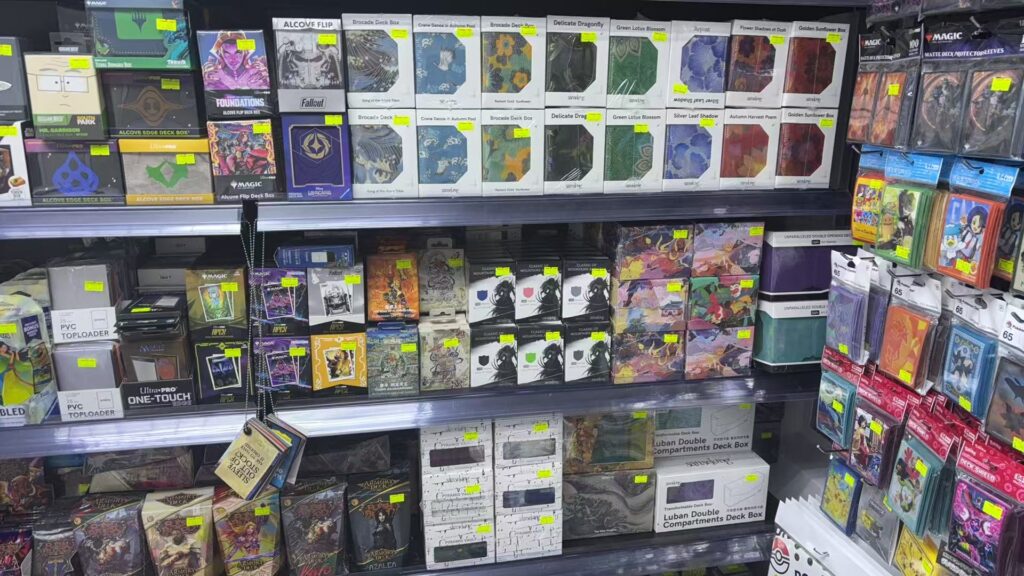
That shift is particularly visible in the accessories market according to Sanseking production manager Ding Guang, who says retailers are increasingly treating competitive sleeves and protective products as core components of long-term business planning rather than simple add-on purchases.

“Accessories used to be viewed mainly as supplementary sales,” Guang told BoardGameWire. “But competitive communities create repeat purchasing behaviour that changes how retailers think about stability, inventory, and customer retention.”

Hobby retailers now commonly operate within a mixed environment that includes casual board gamers, organised play communities built around titles such as Magic: The Gathering, Pokémon and Yu-Gi-Oh!, and players who actively move between both spaces.

That convergence has become especially visible at events such as Spiel Essen, where accessory brands increasingly exhibit alongside publishers and competitive card players mix naturally with broader tabletop audiences.

But for retailers, the two customer groups behave very differently.

Board games typically generate one-off purchases tied to seasonal launches or major releases, while competitive TCGs create recurring engagement cycles through tournaments, deck rebuilding, league play and shifting formats – and those cycles also generate consistent accessory demand.

Competitive players replace sleeves far more frequently than casual players, Sanseking points out, adding that frequent shuffling, tournament preparation, the need for consistency and sensitivity to tactile feedback all contribute to repeat purchases.

That rise in accessory demand has also been driven by the stellar growth of TCGs more generally, with long-time heavyweights such as Pokemon, Magic: The Gathering and Yu-Gi-Oh! joined more recently by a flurry of other successful entrants to the market, including One Piece, Disney Lorcana and Star Wars Unlimited.

That demand pushed the overall value of the global TCG market to $7.8bn last year according to veteran research firm BCC, which projects the segment will reach $11.8bn by 2030 with a CAGR of 7.9%.

In many European hobby stores, tournament nights now represent some of the most reliable recurring foot traffic. Players attending weekly organised play events increasingly view accessories not as optional extras, but as part of their competitive equipment.

According to Guang, that recurring demand can help retailers smooth revenue fluctuations during slower periods in the board game release calendar. But at the same time, competitive players also tend to be far more selective.

“They pay attention to things casual players may never think about,” Guang said. “Edge structure, shuffle consistency, durability over repeated use, and manufacturing consistency between batches all matter.”

The Growing Importance of Segmentation

That growing attention to performance characteristics is also pushing retailers to rethink how accessories are presented in-store, according to Sanseking.

Historically, sleeves were often treated as largely interchangeable products differentiated mainly by colour or price point.

But as organised play communities mature, stores are increasingly recognising that accessories serve multiple functional segments, ranging from casual ‘kitchen table’ play, to hobby-level regular play and competitive or sanctioned environments.

Retailers that fail to distinguish between those categories can create unnecessary friction, Sanseking says.

The company points out that a product optimized for softness and casual handling may not satisfy a competitive player seeking predictable shuffle feedback. Conversely, a structure-focused sleeve may feel unnecessarily rigid or specialized for a board gamer.

As a result, some retailers are beginning to adopt more structured merchandising approaches, using clearer pricing tiers, competitive-focused shelving, and staff recommendations tailored to different player types.

“The stores performing well are usually the ones creating clarity,” Guang said. “Not necessarily carrying the most SKUs, but helping customers understand which products fit which type of play.”

Risk, Inventory, and Shelf Strategy

From a commercial perspective, competitive accessories also offer several advantages compared to boxed games, including lower unit cost, a smaller shelf footprint, faster turnover when tied to active communities and strong repeat purchase potential.

Retailers can still perceive the category as niche, however – particularly when shelf space is limited. According to Sanseking, the most effective approach is usually a balanced one – not one that offers endless fragmentation, but a core range which covers general use, alongside clearly identified competitive-focused options for players who care about performance.

The importance of organised play also continues to shape purchasing behaviour, with competitive events a significant driver of repeat store visits, even amid wider economic pressure on hobby spending.

Within those communities, accessory choices increasingly function as part of player identity.

“Players often become loyal to specific performance characteristics rather than just aesthetics,” Guang said. “That creates opportunities for retailers to position themselves as serious competitive venues.”

Some stores are already leaning into that approach by highlighting ‘competitive-ready’ accessory sections, aligning certain products with tournament nights, and using more technical product descriptions instead of purely visual merchandising.

The growing overlap between board game audiences and competitive TCG players is also accelerating the trend, according to Sanseking’s experience of the market.

The firm said that many customers who first enter hobby stores through board games gradually become exposed to organised play environments, while competitive card players often purchase board games for more social settings.

Accessories sit directly at the centre of that crossover, with protective products one of the few categories that naturally serve both audiences while still supporting different performance tiers, it added.

For retailers, that makes accessory strategy not just an operational decision, but a bridge between communities, Sanseking says.

As Europe’s tabletop market continues to evolve, Guang believes accessories will become more strategically significant across the retail landscape.

“Players are becoming more informed about performance trade-offs, and retailers are having to serve more diverse communities across the same limited shelf space,” he said. “Clear segmentation and clear communication are becoming much more valuable.”

For brands, that means designing products with defined use cases rather than relying on broad universal claims. And for retailers, Guang argues, success may depend less on scale than structure.

“In a market where casual and competitive audiences increasingly overlap, clarity is often more important than simply offering more products.”

Anyone interested in working with Sanseking can visit their website for more details about what they offer, and contact them here.

The post How competitive TCG accessories are influencing hobby retail strategy in Europe: Sanseking [Sponsored] first appeared on .

  •  

GAMA seeks hobby shops setting the standard for design, innovation in 2027 Power Retail Awards

Tabletop gaming trade organisation GAMA has opened nominations for its 2027 Power Retail Awards, inviting gamers and industry professionals from around the world to spotlight stores and cafés they believe represent the industry’s best.

The annual awards, which have now been running for 17 years, aim to act as a showcase and celebration of business practices, community-building and operational innovations that other hobby retailers can learn from.

More than 750 retailers were submitted for inclusion in last year’s awards, with nominations coming from Friendly Local Game Store (FLGS) customers before being voted on by a GAMA committee of retailers and emeritus ‘team retail’ members.

The awards cover four categories: Retailer of the Year, Innovation in Games (Retail), Outstanding Contribution to Games Industry (Retail) and Outstanding Store Design, with winners of each receiving a one year GAMA membership, recognition in its online database and in the Spring issue of its Around the Table magazine.

That prize was reduced by GAMA last year, with retailer of the year having also previously receiving $1,000 and the other category winners $500 each.

Any tabletop retail business can be nominated regardless of country or GAMA membership status, although US-based businesses have heavily dominated the awards since they were launched in 2010, picking up 50 out of the 63 wins to date.

That total does not include the 2021 Retailer of the Year award, which was presented to every GAMA retailer member at the time to recognise and celebrate them having survived the impact of the Covid-19 pandemic.

Arizona-based Silver Dragon Games scooped Retailer of the Year in the 2026 awards, adding to the Innovation In Games (Retail) and Outstanding Store Design titles it won at the same awards in 2024.

They were joined this year by Illinois-based Fantasy Books and Games, which won the Innovation in Games (Retail) award, Minnesota’s The Gamers Den, which sealed Outstanding Contribution to the Games Industry (Retail), and Wisconsin-based Oddwillow’s Game Haven, which won Outstanding Store Design.

Team Members from Oddwillow’s Game Haven, the winner of this years’ Outstanding Store Design Power Retail Award || Photo Credit: GAMA

UK retailer Eclectic Games remains the only non-US winner in the past two award cycles, having scooped Outstanding Contribution to the Games Industry in 2025, while Mexico City-based La Piramide is the only store from outside of the US, Canada or the UK to win an award, which it claimed during the inaugural contest in 2010.

Nominations are open to stores that have been operating for at least one full year, while previous winners cannot win the same category twice.

Anyone interested in nominating an outstanding hobby retailer can do so here.

The post GAMA seeks hobby shops setting the standard for design, innovation in 2027 Power Retail Awards first appeared on .

  •  
❌