❌

Normale Ansicht

Schon mehr als 22.000 Spiele auf spielescout.info

24. September 2026 um 00:00

GESUCHT – GEFUNDEN.  Die Spielebranche produziert auf Teufel komm raus. Mit der Aufnahme von einigen weiteren Herbstneuheiten von Pegasus haben wir diese Woche die Marke von 22.000 Brett- und Kartenspielen in der besten deutschsprachigen Online-Datenbank überschritten. 


Weiterlesen …

History Behind the Cards – A Look at Checkpoint Charlie from GMT Games – Card #6: General Clay Steps In

Von: Grant
03. September 2026 um 14:00

I love a different style and focus of wargame. A game that takes a look at an important but somewhat obscure or rarely addressed historical topic, such as espionage or intelligence, and creates a gaming experience tailored around the events to highlight and evoke the difficulties and tension that would have been present. In January 2026, GMT Games announced such a game in Checkpoint Charlie, which is a solo or cooperative game focused on SIS espionage missions in Berlin in the 1960’s designed by Russell Brown. We have posted an interview with Russel and it was very well received and he has now agreed to create a series of History Behind the Cards to highlight the events of the 1960’s Cold War struggle in West Germany but also to share aspects about the game play and how it models the history.

*Note: The cards highlighted in this series and their event text, as well as any pictures used showing any of the various components, are still in the design and development process and as such event effects and text might still change prior to final development and publication. Also the art and layout of the cards are only for playtest purposes at this point and the game will enter the art department as it nears publication.

History Behind the Cards – Checkpoint Charlie from GMT Games – Card #6: General Clay Steps In

US General Lucious D. Clay was appointed as military governor of the United States zone of Berlin from 1945 until 1949. He was best known, especially to the people of Berlin, as the person responsible for the Berlin Airlift, which fed and supplied the people of Berlin from the air when the Soviets cut off all access to the city for eleven months, from June 1948 to May 1949. Without the airlift, the west would have been left with two terrible options – allow West Berlin to be starved into submission and annexation, or invade East Germany to open a supply corridor, almost certainly starting an all-out war with the Soviets.

In the early 1960’s, US President Kennedy turned to the now retired General Clay and called on him to deal with serious issues that arose in Berlin, like the faceoff between tanks at Checkpoint Charlie (card #4). Clay understood Berlin and had the respect of its people, so Kennedy brought him along on his famous visit to the city, during which the president gave his “Ich bin ein Berliner” speech (card #7).

The General Clay Steps In card in Checkpoint Charlie represents the retired general being sent by Kennedy to resolve issues in West Berlin. Playing the card removes an event marker from the city and is the only way many of the event markers can be removed during a mission. It is especially useful for removing the Faceoff marker or a troublesome Stasi Stakeout.

In the next article in this series, we will take a look at Ich bin ein Berliner Speech by President John F. Kennedy.

In my opinion, this game looks extremely interesting and I am very much excited to learn more about it. I am appreciative to Russell and his efforts to bring us these cards and to write these entries to share with our readers. I am also very glad that this topic is being covered in a game and look forward to playing this one day soon.

We published an interview with the designer Russell Brown on the blog and you can read that at the following link: https://theplayersaid.com/2026/02/23/interview-with-russell-brown-designer-of-checkpoint-charlie-from-gmt-games/

You can catch up on the posts in this series to date by following the below links:

Card #1: Cousins Operation

Card #2: Cuban Missile Crisis

Card #3: Demonstrations

Card #4: Faceoff with the Soviets

Card #5: Berlin Film Festival

If you are interested in Checkpoint Charlie, you can pre-order a copy for $48.00 from the GMT Games website at the following link: https://www.gmtgames.com/p-1211-checkpoint-charlie.aspx

-Grant

History Behind the Cards – A Look at Checkpoint Charlie from GMT Games – Card #5: Berlin Film Festival

Von: Grant
20. August 2026 um 14:00

I love a different style and focus of wargame. A game that takes a look at an important but somewhat obscure or rarely addressed historical topic, such as espionage or intelligence, and creates a gaming experience tailored around the events to highlight and evoke the difficulties and tension that would have been present. In January 2026, GMT Games announced such a game in Checkpoint Charlie, which is a solo or cooperative game focused on SIS espionage missions in Berlin in the 1960’s designed by Russell Brown. We have posted an interview with Russel and it was very well received and he has now agreed to create a series of History Behind the Cards to highlight the events of the 1960’s Cold War struggle in West Germany but also to share aspects about the game play and how it models the history.

*Note: The cards highlighted in this series and their event text, as well as any pictures used showing any of the various components, are still in the design and development process and as such event effects and text might still change prior to final development and publication. Also the art and layout of the cards are only for playtest purposes at this point and the game will enter the art department as it nears publication.

History Behind the Cards – Checkpoint Charlie from GMT Games – Card #5: Berlin Film Festival

Every summer since 1951, Berlin had hosted the international Berlin Film Festival (the Berlinale) and awarded the Golden Bear to the best film in each of five categories. Venues in both East and West Berlin were used for screening of films. As summer approached in 1962, Berlin found itself cut in two by the Berlin Wall amid growing tensions between East and West. It seemed there were any number of events that could trigger a war over the city. And yet, the Film Festival was held, entirely in West Berlin this time. The festival drew thousands of visitors to the city, including Hollywood stars like Jimmy Stewart and Tony Curtis. Screenings took place in venues throughout the city and, we can assume, brought a much-needed sense of normalcy and continuity to the residents of West Berlin and perhaps a sense of what was lost to those in the east.

The festival took place every year throughout the Cold War, and after reunification it once again began film screenings in the former East Berlin. The festival continues and this year the Golden Bear award for best film went to “Yellow Letters.”

The Berlin Film Festival card in Checkpoint Charlie assumes the Berlin Hilton is full up with visitors and cannot function as a Honey Trap. The card also assumes that the extra traffic in the city, including thousands of additional pedestrians trying to get a glimpse of celebrities, negates any Ongoing Card Effects that allow additional movement during the Movement step.

In the next article in this series, we will take a look General Clay Steps In as he is appointed by President Kennedy to resolve issues in West Berlin.

In my opinion, this game looks extremely interesting and I am very much excited to learn more about it. I am appreciative to Russell and his efforts to bring us these cards and to write these entries to share with our readers. I am also very glad that this topic is being covered in a game and look forward to playing this one day soon.

We published an interview with the designer Russell Brown on the blog and you can read that at the following link: https://theplayersaid.com/2026/02/23/interview-with-russell-brown-designer-of-checkpoint-charlie-from-gmt-games/

You can catch up on the posts in this series to date by following the below links:

Card #1: Cousins Operation

Card #2: Cuban Missile Crisis

Card #3: Demonstrations

Card #4: Faceoff with the Soviets

If you are interested in Checkpoint Charlie, you can pre-order a copy for $48.00 from the GMT Games website at the following link: https://www.gmtgames.com/p-1211-checkpoint-charlie.aspx

-Grant

Wir sind urlaubsreif!

09. August 2026 um 00:00

Auch wir wünschen uns, dass endlich wieder mal die Sonne hinter den Wolken verschwindet. Die Hitze der letzten Wochen hat auch an unseren Nerven gezehrt. Das ist jedoch nicht der einzige Grund, warum wir urlaufbsreif sind. Es ist einfach mal wieder Zeit! Die Spiele sind eingepackt, es geht los. 

Das Büro von spielwiese.at ist daher vom 10. bis 23. Februar 2026 nicht besetzt. Anfragen und Post können erst danach wieder bearbeitet werden. 

Foto: Claudia Hautumm / pixelio.de


An dir lag es nicht, dass …

06. August 2026 um 00:00

STÖRUNG.  An dir lag es nicht, dass das Serviceportal spielwiese.at seit Mittwochfrüh offline war. An uns auch nicht, soweit wir aktuell wissen. Denn noch fehlt uns die Information des Hosters A1, was der Grund für den Totalausfall war oder ist. Wir sind jedenfalls froh, dass die Seite wieder erreichbar ist und pflegen in Kürze neue Beiträge ein. 


History Behind the Cards – A Look at Checkpoint Charlie from GMT Games – Card #3: Demonstrations

Von: Grant
22. Juli 2026 um 14:00

I love a different style and focus of wargame. A game that takes a look at an important but somewhat obscure or rarely addressed historical topic, such as espionage or intelligence, and creates a gaming experience tailored around the events to highlight and evoke the difficulties and tension that would have been present. In January 2026, GMT Games announced such a game in Checkpoint Charlie, which is a solo or cooperative game focused on SIS espionage missions in Berlin in the 1960’s designed by Russell Brown. We have posted an interview with Russel and it was very well received and he has now agreed to create a series of History Behind the Cards to highlight the events of the 1960’s Cold War struggle in West Germany but also to share aspects about the game play and how it models the history.

*Note: The cards highlighted in this series and their event text, as well as any pictures used showing any of the various components, are still in the design and development process and as such event effects and text might still change prior to final development and publication. Also the art and layout of the cards are only for playtest purposes at this point and the game will enter the art department as it nears publication.

History Behind the Cards – Checkpoint Charlie from GMT Games – Card #3: Demonstrations

West Berlin, and West Germany as a whole, spawned a number of large, very active student demonstration organizations in the late 1960’s. These were generally in response to a perceived return to very traditional German authoritarian government, and specifically as a reaction to former members of the Nazi party, like Chancellor Kiesinger, serving in the Bonn government.

However, during the slightly earlier time period of Checkpoint Charlie (early 1962 to late 1963), demonstrations were not as organized. They were spontaneous and in response to specific events, like the Speigel Affair (Card #16) and President Kennedy’s Visit (Card #7). As with those later, more organized movements, they consisted primarily of young Germans, and the universities acted as catalysts and staging areas. Even during the period of this game, marches and demonstrations were common enough to warrant an event card.

As a side note, Chancellor Keisinger, who’s Nazi affiliation spawned some of those later protests, was replaced as Chancellor of West Germany in 1969 by Willie Brandt, who was mayor of West Berlin during the period of Checkpoint Charlie. Mayor Brandt has his own token in the game and plays a role in a few of the missions.

The Demonstrations Event Card places a special Demonstrations marker in one of the West Berlin locations on the map. Demonstrations could last for hours, or even days, so this marker generally remains on the City Map for the rest of the mission. East Berlin locations are not eligible because the Stasi secret police, along with the confinement imposed by the Berlin Wall, had effectively suppressed any open opposition in the East. In game terms, the Demonstrations marker provides some cover for assets, increasing their chances of passing both detection and compromise saves.

In the next article in this series, we will take a look at Faceoff with the Soviets when East German police placed barbed wire barriers to stop East Germans from defecting.

In my opinion, this game looks extremely interesting and I am very much excited to learn more about it. I am appreciative to Russell and his efforts to bring us these cards and to write these entries to share with our readers. I am also very glad that this topic is being covered in a game and look forward to playing this one day soon.

We published an interview with the designer Russell Brown on the blog and you can read that at the following link: https://theplayersaid.com/2026/02/23/interview-with-russell-brown-designer-of-checkpoint-charlie-from-gmt-games/

You can catch up on the posts in this series to date by following the below links:

Card #1: Cousins Operation

Card #2: Cuban Missile Crisis

If you are interested in Checkpoint Charlie, you can pre-order a copy for $48.00 from the GMT Games website at the following link: https://www.gmtgames.com/p-1211-checkpoint-charlie.aspx

-Grant

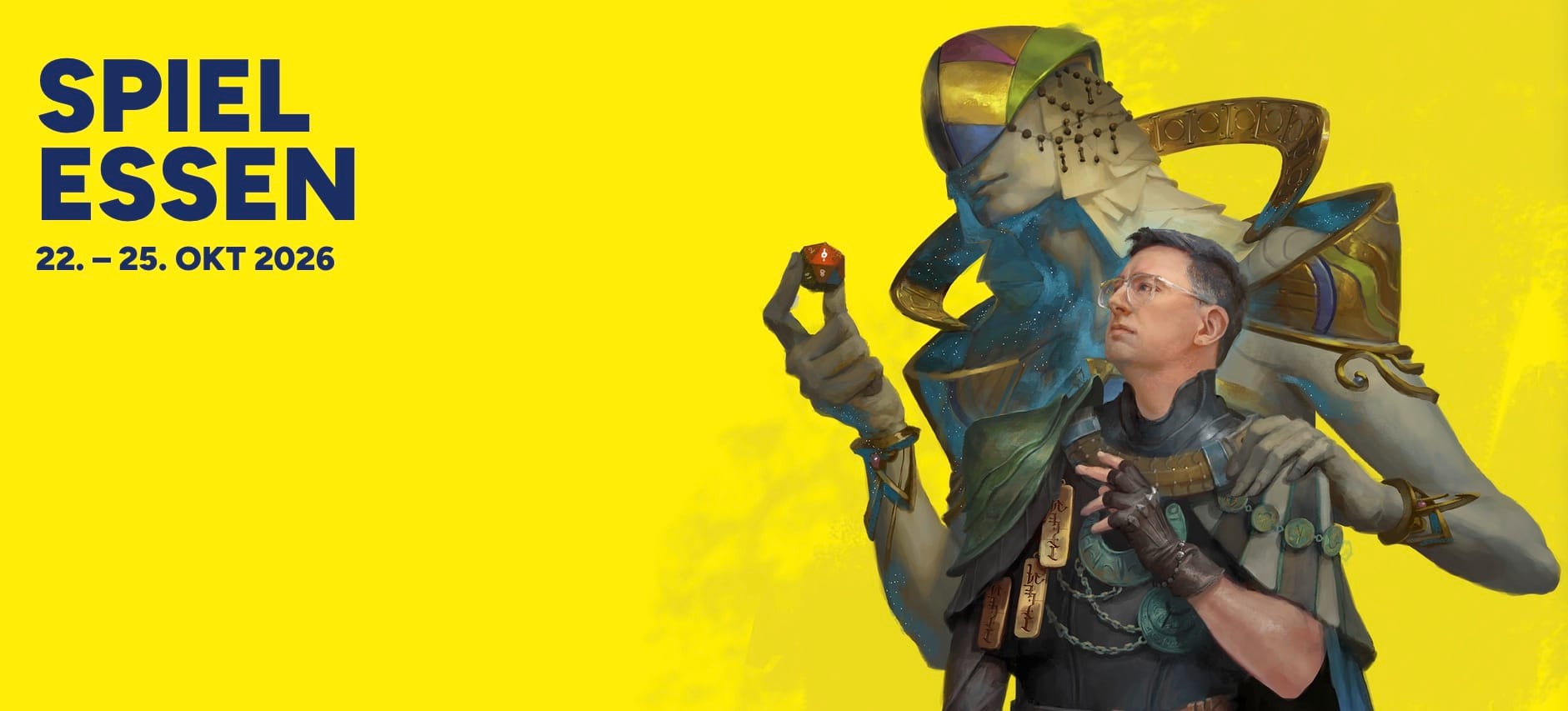
SPIEL Essen 2026 Tickets: Preise und Verkaufsstart

20. Juli 2026 um 16:30
SPIEL Essen 2026 Tickets: Preise und Verkaufsstart

Am 22. Juli 2026 beginnt gegen 10 Uhr der Ticketverkauf für die SPIEL Essen 2026. Wer die Brettspielmesse vom 22. bis 25. Oktober besuchen möchte, kann SPIEL Essen 2026 Tickets ausschließlich online kaufen und bis einschließlich 4. August einen Frühbucherpreis nutzen.

Ticketshop öffnet am 22. Juli

Die SPIEL Essen findet 2026 von Donnerstag, 22. Oktober, bis Sonntag, 25. Oktober, auf dem Gelände der Messe Essen statt. Der Veranstalter will den Ticketshop am Mittwoch, 22. Juli, gegen 10 Uhr freischalten. Eine Tageskasse vor Ort gibt es nicht. Auch Gutscheine lassen sich vor dem Start des Shops nicht kaufen.

Wer seinen Besuch fest plant, sollte deshalb direkt über die offizielle Seite für Tickets und Öffnungszeiten gehen. Die Frühbucherpreise gelten bis einschließlich 4. August. Ab dem 5. August steigen die meisten Tageskarten um einen oder zwei Euro. Für Fachbesucher bleibt der Preis unverändert.

SPIEL Essen 2026: Ticketpreise im Überblick

Die regulären Tageskarten und ihre Frühbucherpreise:

TicketBis 4. August 2026Ab 5. August 2026
Normalpreis24 Euro25 Euro
Kinder von 4 bis 12 Jahren15 Euro16 Euro
Ermäßigt, Nachweis erforderlich21 Euro22 Euro
Familie: 2 Erwachsene und bis zu 3 Kinder von 4 bis 12 Jahren65 Euro67 Euro
Fachbesucher, Nachweis erforderlich46 Euro46 Euro

Der ermäßigte Preis gilt laut Veranstalter für schwerbehinderte Menschen ab einem Grad der Behinderung von 50, Schülerinnen und Schüler, Studierende, Teilnehmende an einem sozialen Jahr sowie Personen im Cosplay. Fachbesucherkarten sind Menschen vorbehalten, die in der Brettspielbranche arbeiten.

Für Familien ist die Altersgrenze wichtig: Kinder unter vier Jahren benötigen keine kostenpflichtige Karte. Das Familienticket umfasst zwei Erwachsene und bis zu drei Kinder im Alter von vier bis zwölf Jahren. Kinder ab 13 Jahren sind im Familienticket nicht enthalten. Schülerinnen und Schüler können mit Nachweis eine ermäßigte Einzelkarte nutzen, für alle anderen älteren Kinder ist eine reguläre Einzelkarte nötig. Familien sollten beide Varianten vor dem Kauf vergleichen.

Die Tickets gelten jeweils für die gesamte Öffnungszeit des gewählten Tages. Von Donnerstag bis Samstag öffnet die Messe von 10 bis 19 Uhr, am Sonntag von 10 bis 18 Uhr. Mit Kindern sind ein ganzer Messetag, volle Hallen und lange Wege anspruchsvoll. Planen Sie Pausen ein und rechnen Sie damit, nur einen Teil der Messe zu schaffen. Wer das Gelände zwischendurch verlässt, muss sich am Ausgang ein Wiedereintrittsbändchen geben lassen.

Zusatzangebote kosten extra

Neben den Eintrittskarten verkauft die SPIEL mehrere einzeln buchbare Zusatzangebote:

ZusatzangebotPreis
Teilnahmebestätigung für den Educators Day5 Euro
Teilnahme am Golden Demon12 Euro
Warhammer 40.000: Kill Team LIVE!25 Euro
Fachbesucher-Parkplatz12 Euro

Beim Educators Day kostet nicht das Programm selbst extra. Vorträge und Gesprächsrunden auf der Bühne in Halle 4 sind im Messeeintritt enthalten. Die fünf Euro werden nur fällig, wenn Sie anschließend eine Teilnahmebestätigung benötigen.

Für den Miniaturen-Bemalwettbewerb Golden Demon brauchen Teilnehmende zusätzlich zum Messeticket das Zusatzangebot für zwölf Euro. Außerdem verlangt der Veranstalter eine Anmeldung zum Wettbewerb. Die Preisverleihung findet am Sonntag statt, persönliche Anwesenheit ist dabei erforderlich.

Kill Team LIVE! ist ein separates Lasertag-Angebot von Games Workshop und der SPIEL Essen. Es findet laut Veranstalter im Saal Europa des Congress Centers West statt. Für die Teilnahme reicht das normale Messeticket allein nicht aus.

Der Fachbesucher-Parkplatz lässt sich nur zusammen mit einem Fachbesucherticket buchen. Für reguläre Besucher ist dieses Zusatzangebot nicht vorgesehen.

Halle 8 erweitert die Messefläche

Die SPIEL nutzt 2026 erstmals alle acht Hallen des Essener Messegeländes. Halle 8 erweitert die Fläche nach Angaben des Veranstalters um rund 3.700 Quadratmeter. Insgesamt nennt die SPIEL Essen damit 81.200 Quadratmeter Ausstellungsfläche. Würfelreich hatte die Erweiterung auf alle acht Hallen bereits eingeordnet.

Diese Zahl beschreibt zunächst mehr Platz für Stände und Wege. Der Veranstalter teilte im April außerdem mit, dass sämtliche Standflächen vergeben seien und weitere Anmeldungen auf eine Warteliste kämen. Für Besucher bleibt trotzdem entscheidend, ob für den gewünschten Tag noch Tickets erhältlich sind. 2025 waren laut offizieller Rückschau am Ende alle vier Messetage ausverkauft. Unser Rückblick auf die vier ausverkauften Messetage liefert den Vorjahreskontext.

Was Besucher jetzt beachten sollten

Der wichtigste Termin ist der 22. Juli gegen 10 Uhr. Ab dann lohnt sich ein Blick in den offiziellen Ticketshop. Wer sicher fahren will, kann bis zum 4. August ein wenig sparen. Noch wichtiger ist der frühe Kauf für alle, die auf einen bestimmten Messetag festgelegt sind.

Das neue Partnerprogramm „Essen spielt!“ soll während der Messe Aktionen und Vorteile in der Stadt bündeln. Welche Angebote für Ticketinhaber konkret gelten, veröffentlicht der Veranstalter auf seiner offiziellen SPIEL-Essen-Seite. Prüfen Sie diese Angaben kurz vor der Reise noch einmal, da sich teilnehmende Orte und Aktionen ändern können.

Für Familien sind die Altersgrenzen, für Fachbesucher der erforderliche Nachweis und für Teilnehmende an Golden Demon oder Kill Team LIVE! die Zusatzkarten entscheidend. Wer nur Vorträge des Educators Day besuchen möchte, braucht dagegen keine kostenpflichtige Teilnahmebestätigung. So bleibt der Ticketkauf trotz der vielen Optionen überschaubar.

10 Product Design Mistakes That Cause the Most Replacement Parts Requests

01. Juni 2026 um 19:52

If you have a missing or damaged component inside your English-language Stonemaier Games product–no matter where or when you bought it or how long you’ve been playing it–you can fill out this form and we’ll send you what you need.* We use software called Jira to manage this process, as we have 7 replacement parts helpers in 5 different regions around the world.

Serving our customers this way is incredibly important to us, but we can serve them even better if replacement parts (and replacement parts requests) aren’t needed in the first place. Recently I talked to a few people connected to this process at Stonemaier Games, and we compiled a list of product design mistakes that resulted in quite a few replacement parts.

We learned these lessons the hard way, so I’m hoping this will help you avoid these mistakes from the start. Some of these are as simple as packing components in a way that makes them easy for the customer to identify.

  1. Meeples and Minis with Protrusions: Some of our most common requests are for broken meeples or mechs where we got a little too detailed, and those little details snapped off in transit or gameplay. Whenever I get sample meeples or mechs, I try to snap off any protrusion–if I can, I either remove it from the design or bulk up its connection point.
  2. Missing Tokens and Clasps: It is common when we’re including either a lot of the same type of token–50 glass beads or clasps for dials–that 1 is missing in production or 1 goes missing later. So we often include an extra token, but we list the lower quantity: We make 51 tokens but say that there are 50. So even if 1 is missing, you still have the “correct” amount (though, honestly, for these types of tokens, it’s incredibly rare in gameplay that the full quantity is needed).
  3. Matching the Insert: In Libertalia–a 6-player game where each player has their own deck of cards–the cards are packed in 5 card bricks. When opening a new game, you see 5 bricks of cards in 5 of 6 slots in the insert, and 5 of the 6 player colors happen to be visible in each brick. This leads to assumptions that the entire green deck is missing before opening the cards. Something similar happens in Scythe, a game that can only ever feature combat between 2 players, so we only included 2 combat dials–players assume the other 3 are missing (partially because the 2 included dials have specific faction colors).
  4. Matching the Trays: The first few printings of Wingspan included 4 clamshell trays (2 for an assortment of eggs and 2 for an assortment of food). There’s no need for each type of food token to be kept in a separate compartment, but we soon learned that many people assumed that the trays were only for food and that a tray was missing (there are 5 types of food in the core game and only 4 trays).
  5. Packing Choices: We hear from customers that they think they’re missing the action cubes in Wingspan Asia, as those cubes are packed in the same bags as larger tokens of the same color. Similarly, some customers struggle to find the gray temporary worker in Viticulture, as it’s packed in the same bag as some of the player tokens (it previously came in a separate bag with the first player token).
  6. “Missing” Cards: In the solo mode for Libertalia and Scythe: The Wind Gambit, there are “missing” cards that aren’t actually missing. For example, there is no Automa card 37 in Libertalia for design reasons. This is explained in the rules, but when looking through the cards, it’s a common mistake for people to see cards 36 and 38 and assume they’re missing card 37.
  7. “Missing” Components: In Scythe: The Rise of Fenris, there’s a big warning label when you open the box that tells people not to look inside the spoiler tuckboxes. However, it happens all the time! One of the tuckboxes has a “missing” component that’s actually in one of the other tuckboxes–oddly, people seem to open that tuckbox but not the others; if they did, they would find that “missing” component.
  8. Dents in Boards and Mats: I learned early on with Viticulture that if sharper components (like meeples) are packed next to a board or mat, they might press into the cardboard over time, leaving lots of little dings and dents. Instead, we now pack them elsewhere in the box or we fold the mats inward, with the gameplay elements on the inside. However, this also leads to the occasional confusion from customers who don’t know the mats are folded–they see the faux leather illustration on the outside of a Wingspan or Wyrmspan mat and think they received a misprint.
  9. Card Sorting: It’s inevitable that customers will lose or damage cards over time if they play a game frequently, and we’re here to help. With Wingspan, we originally didn’t have any type of card sorting system, so if a customer requested a Peregrine Falcon, our replacement parts helpers had to look through every card to find it. In reprints we alphabetized the cards, which significantly sped up this process. In games where cards don’t have a name, we number the cards and sort them as such.
  10. Publisher Assumption: When we were working on the Pie in the Sky expansion for My Little Scythe, I didn’t go through the component list with the right mindset, and it resulted in me never asking our manufacturer to include faction-specific tokens for the 2 new factions (everything else was there, including the minis). This was before we sent pre-production copies first to the designer and to my coworker, so no one caught the mistake until everything was printed and shipped. We tried to fix it after the fact by making a pack of the missing tokens for our webstore, retailers, and distributors, but we still hear from customers all the time who buy the expansion from a retailer and don’t get the tokens. It was an important wake-up call for me to never assume anything and to add as many checks-and-balances as possible during the pre-production process.

Hopefully this list will help you avoid the same mistakes; there are even some we still need to address better at Stonemaier Games. If you have any insights about replacement part requests, please let me know in the comments!

*Box Dings and Dents: If you ordered a game from Stonemaier Games and the box arrived with dings and dents, we’re truly sorry. You paid for a mint-condition product, and we didn’t deliver. That’s on us. For some people, a dented corner won’t impact the fun they have playing the game. For others, it will. A replacement box for a dented corner is actually a replacement for the entire game, a process that involves having you send your game to a reviewer of our choice–we provide the label–and we send you another copy of the game. If you would like to go through that process for a game ordered from our webstore, please email your order number to contact@stonemaier.com. Photos of the packaging and damage help us share feedback with our fulfillment centers.


Also read:

If you gain value from the 100 articles Jamey publishes on this blog each year, please consider championing this content! You can also listen to posts like this in the audio version of the blog.

Customer Service in Ireland

07. Mai 2026 um 19:02

I’m constantly trying to learn about customer service practices so I can better serve our customers at Stonemaier Games. I spent the last week traveling across Ireland with family, and I thought I’d share some quick notes about customer service (mostly very good).

  • Tullamore Distillery: We walked in here with only around 30 minutes to spare, which we mentioned to the person working the main desk. Within seconds, she offered us a 30-minute whiskey tasting, and we had a wonderful time learning about Tullamore from her.
  • Sean’s Bar: The proprietor sat down with us for 5 minutes to share the history of Ireland’s oldest bar and the story of Irish coffee. He later gave a similar speech to a bigger group in the same room, and I noticed he intentionally changed the wording since we were within earshot.
  • Linnane’s Lobster Bar (Newquay): We got a little messy eating crab, lobster, oysters, and mussels here, and an attentive server–not even our primary server–noticed and offered us a bowl of water with lemon to rinse our fingers.
  • Oscar’s (Galway): We had a late dinner, and the server was keen to alert us to the exact remaining quantity of a specific dish before it was gone.
  • Sheridan’s Cheesemongers (Galway): The person behind the counter was incredibly helpful in recommending three made-in-Ireland dishes that complemented each other (two cheeses, one cracker, and chutney).
  • Midleton Distillery (Midleton): The young tour guide frequently invited questions and called back to previous questions, yet he kept things moving along.
  • Manna Cafe (Killarney): Each of us ordered a different coffee drink at breakfast here (which was ample and delicious), and to help us tell the difference, each came in a different type of glass with a unique design on the foam.
  • Table 45 (Dublin): When we arrived fairly late in the evening, the manager warmly let us know that the kitchen was only open for 25 minutes but that we were welcome to sit down and order tapas (which we did).
  • Sweet Salt (Dublin): When we showed up at this highly rated cafe for 6 coffee orders, multiple members of the team swiftly shifted into barista mode.
  • Guinness Storehouse (Dublin): This is a superbly designed self-guided tour that consistently moves people from one area to the next (with the one exception at the end of the tour where the free pint of Guinness takes people so long to drink that the room is very, very crowded).
  • Fish Shop (Dublin): We ended up here after searching for the best fish and chips in Dublin, and despite initially being told that we needed a reservation, the owner invited us back inside after seeing scrambling on our phones to find an alternative.
  • Gamers World (Dublin): After hearing my American accent, the person working the register discounted the game I bought by 10% (not because I’m American; it’s something related to taxes and duties). Also, it was neat to see them carrying many Stonemaier games, for which I thanked them.
  • Cafe Nero (Dublin): I ordered a ristretto without knowing what it was, and after seeing us puzzled over meager contents of the cup, the manager offered to give us any other drink. We assured him it was fine–I wanted to try something new, and now I know! (It’s a very condensed shot of espresso.)

Many of these experiences are small, but they can have a big impact on the overall experience. What’s a minor-yet-impactful positive customer service experience you had recently?

***

If you gain value from the 100 articles Jamey publishes on this blog each year, please consider championing this content! You can also listen to posts like this in the audio version of the blog.

❌