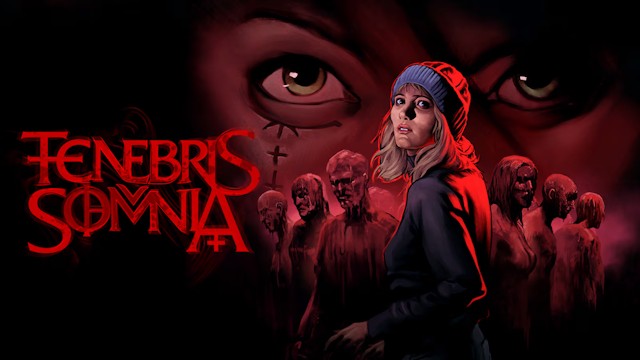
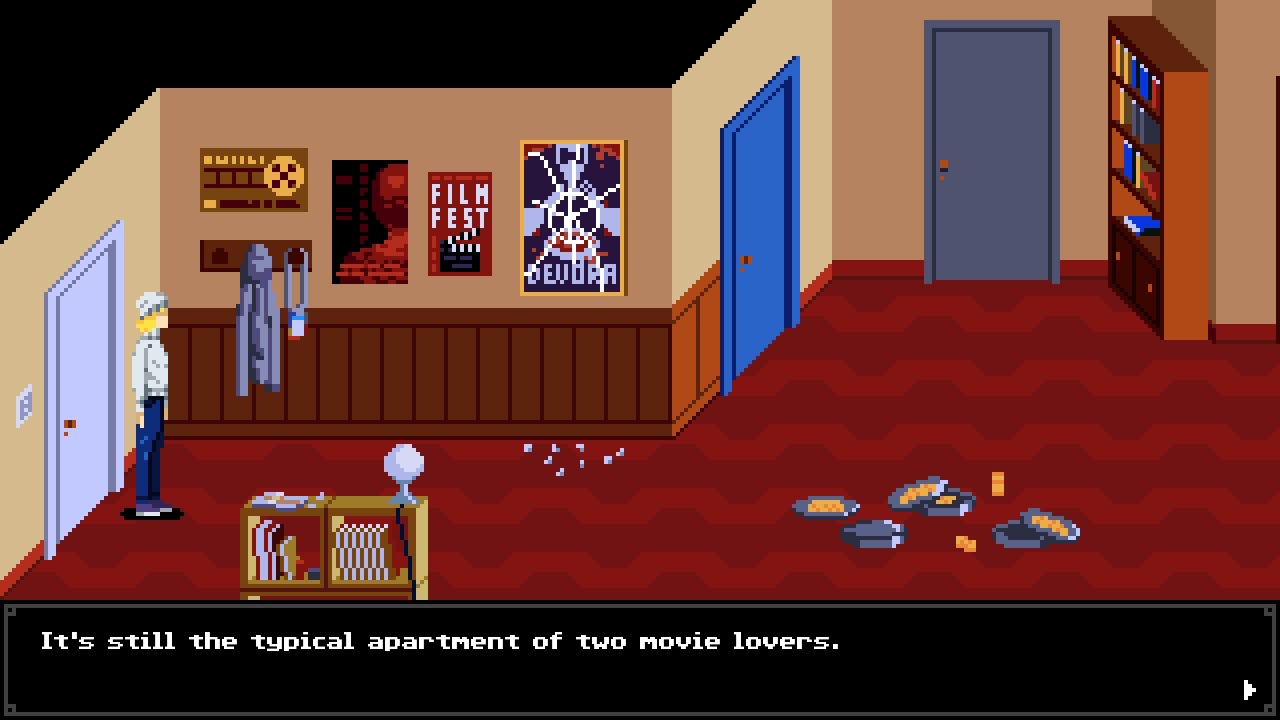
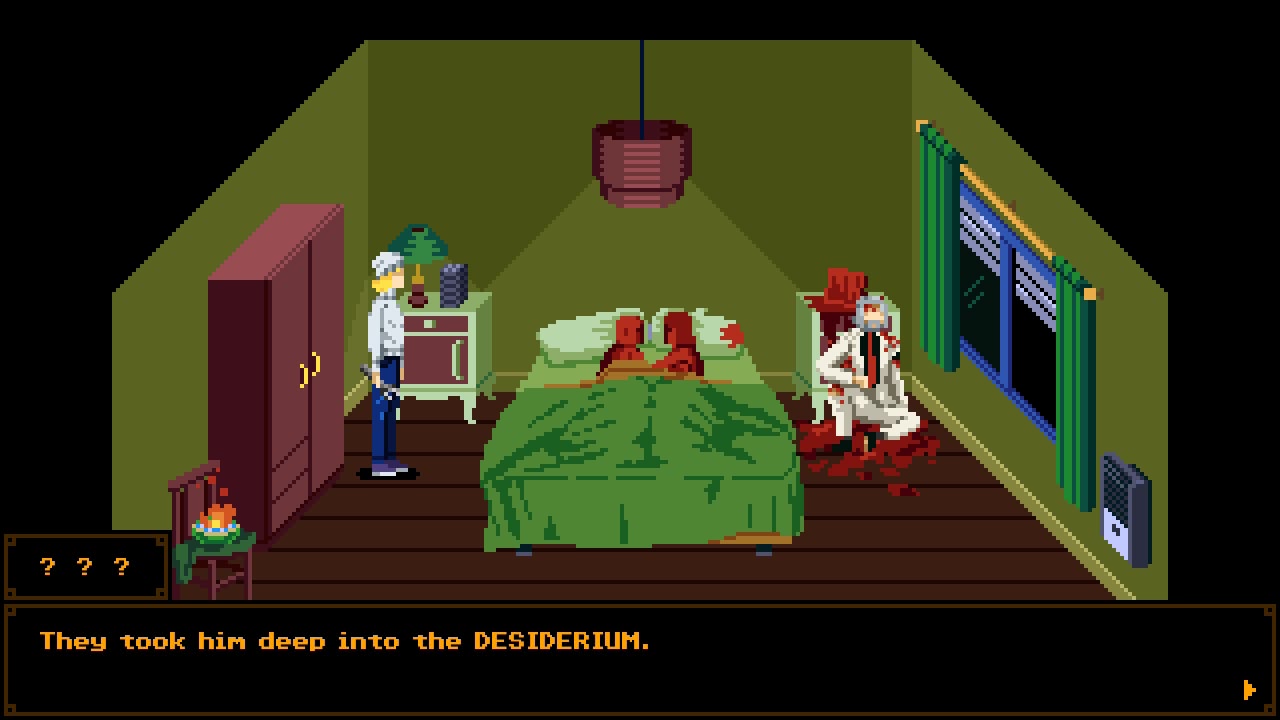
Das Indie-Spiel der Argentinier Andrés Borghi und Tobias Rusjan erzählt die Geschichte von Julia, die auf der Suche nach ihrem verschwundenen Ex-Freund Ivan ist. Angekommen in der ehemaligen Wohnung der beiden, lassen Blutflecken und okkulte Symbole nichts Gutes erahnen.
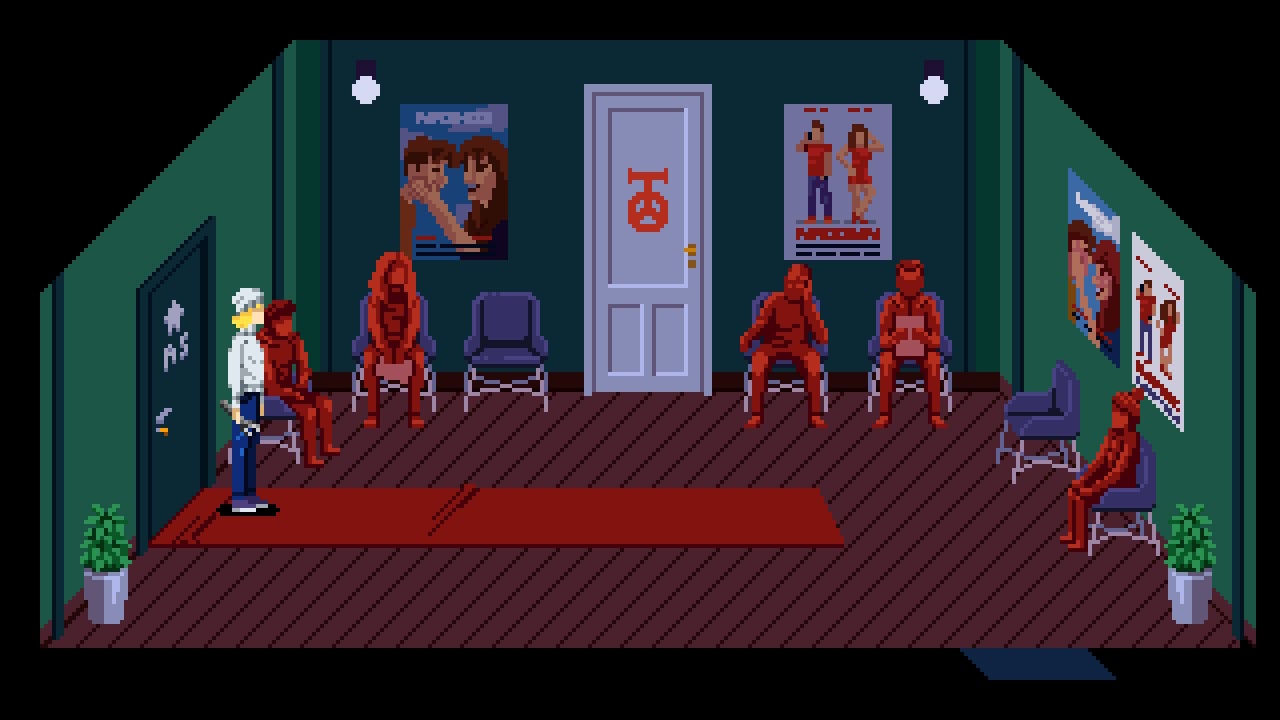
Tenebris Somnia mixt dabei 8-16Bit Pixelgrafik mit eingestreuten Filmszenen, die den Charakteren ein echtes Gesicht und durchaus die Atmosphäre geben.
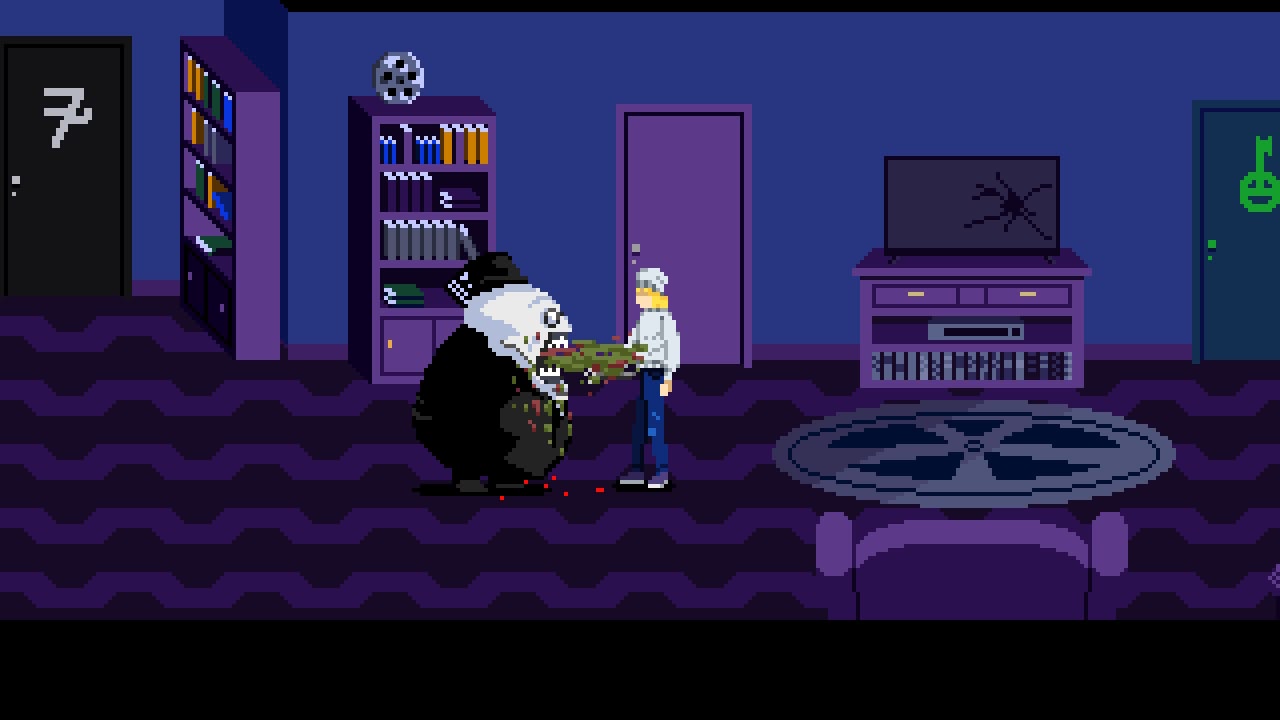
Mit dem Öffnen der Wohnungstür im dritten Stock arbeite ich mich gut gemachte Point&Click Rätsel, öffne Türen und schalte den Zugang zu weiteren Stockwerken frei. Neben den gern genommenen filmischen Unterbrechungen, tauchen Gegner auf, die ich anfangs mit dem Schraubenschlüssel und im Verlauf mit Kugeln bearbeite. Das erhöht durchaus die Spannung beim Durchlaufen der Räume, kann aber auch Dank der hakeligen Steuerung durchaus nerven. Gerade als sich der erste Bossgegner in einem schönen Zwischenfilm ankündigt, zweifle ich, ob mir dessen Zerlegen in Pixelbrei wirklich Laune macht. Ohne den einstellbaren Gottmodus, wird das Ganze zur Geduldsprobe, gerade weil die Steuerung doch hakelig ist.
Doch was muss ich nach einem ersten Patch feststellen? Eben dieser Modus wurde entfernt und macht es gerade weniger attraktiv für mich. Nach einem kurzen Mailwechsel mit einem Entwickler ist ein Easymode angekündigt – mit dem und gerade weil die Atmosphäre passt, die Schauspieler wirklich gut sind und die Rätsel durchaus kreativ, würde ich es dann auch zu Ende spielen.
Stubenscore: 7,8 (mit Gott- oder Easymode) / 10
Irgendwas scheint nicht in Ordnung zu sein.Was sind das für Puppen in unserem Bett? Ein Typ blutend in der Ecke, der kurz danach verschwindet.Und das Spiel switched immer wieder in reale Filmszenen, die durchaus gut gemacht sind.Nervig: zwischenzeitige Kämpfe mit Hakelsteuerung.Und schnell kündigen sich auch Bossgegner optisch schön an, doch will ich in einem Adventure kämpfen?Doch die Rätsel und Atmosphäre passen, so dass ich doch auf einen Easy-Modus warte.
Von Forstwartseite her habe ich gehört, dass die Szenerie auf der Spielschachtel von Forestry von Michal Peichl (Pegasus Spiele) nur unzureichend mit dem echten Geschehen unter Profis in einem Wald…
Liebhaberinnen und Liebhaber von Schnelldenker- und anderen Reaktionsspielen werden bei Hands off! von David Gréault (HUCH) wohl ihre Freude haben. Die schmucke kleine Quadratschachtel enthält 36 Gebäck-Karten mit Abbildungen von…
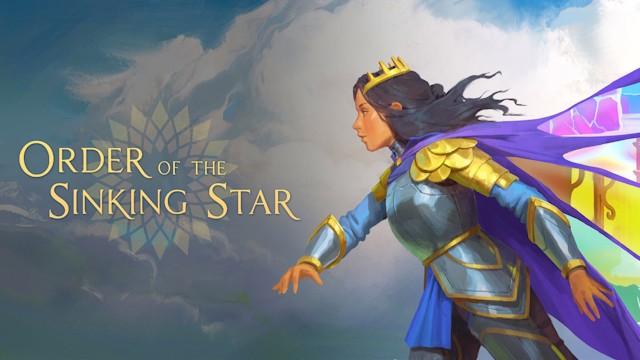
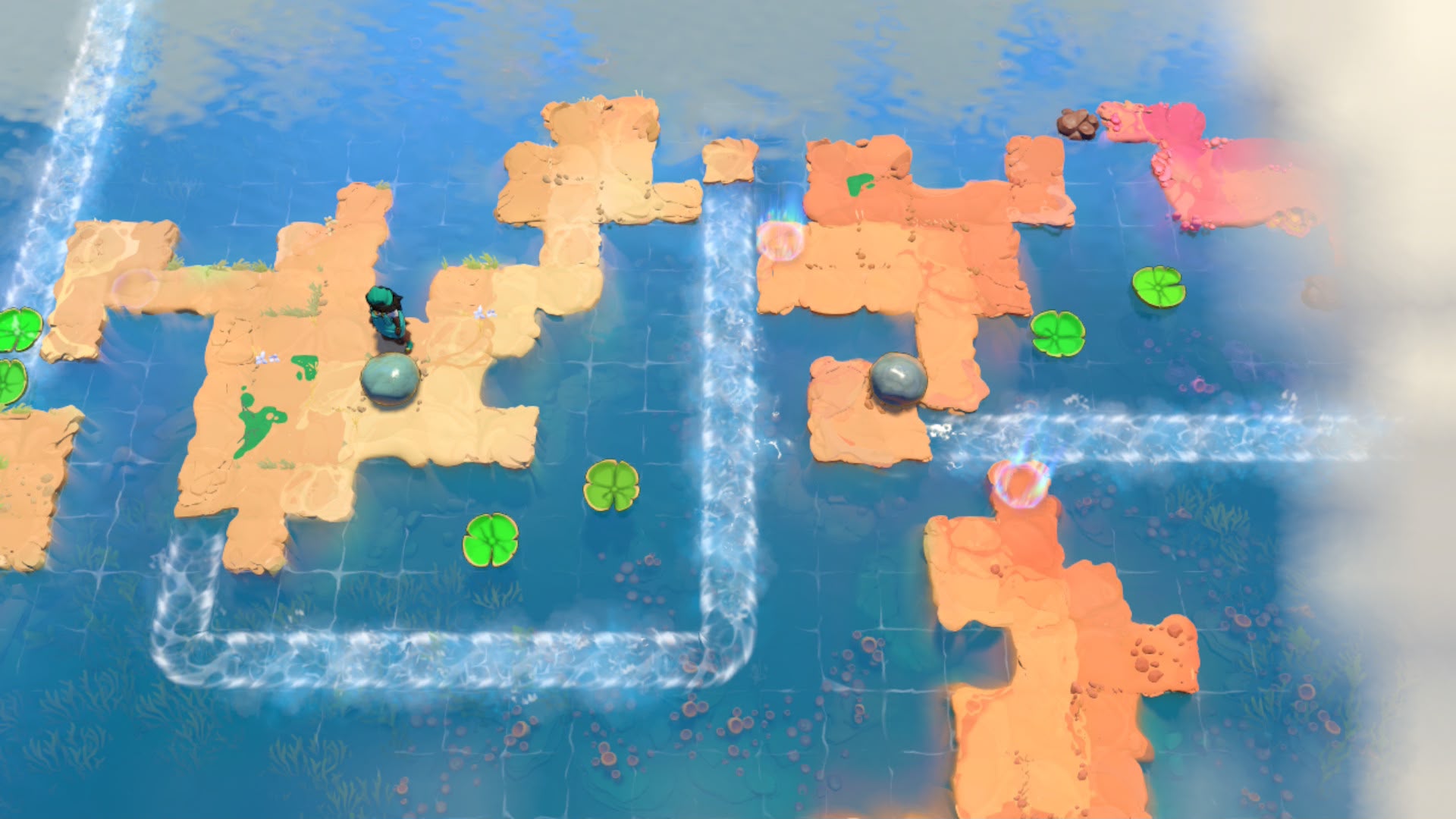
Das neue Spiel von Jonathan Blow, dem Macher von Braid und The Witness, bietet nicht die leichteste Kost. Wenn Bloodborne einem die Finger am Controller schmerzen lässt, bricht mir Order of the Sinking Star das Hirn.
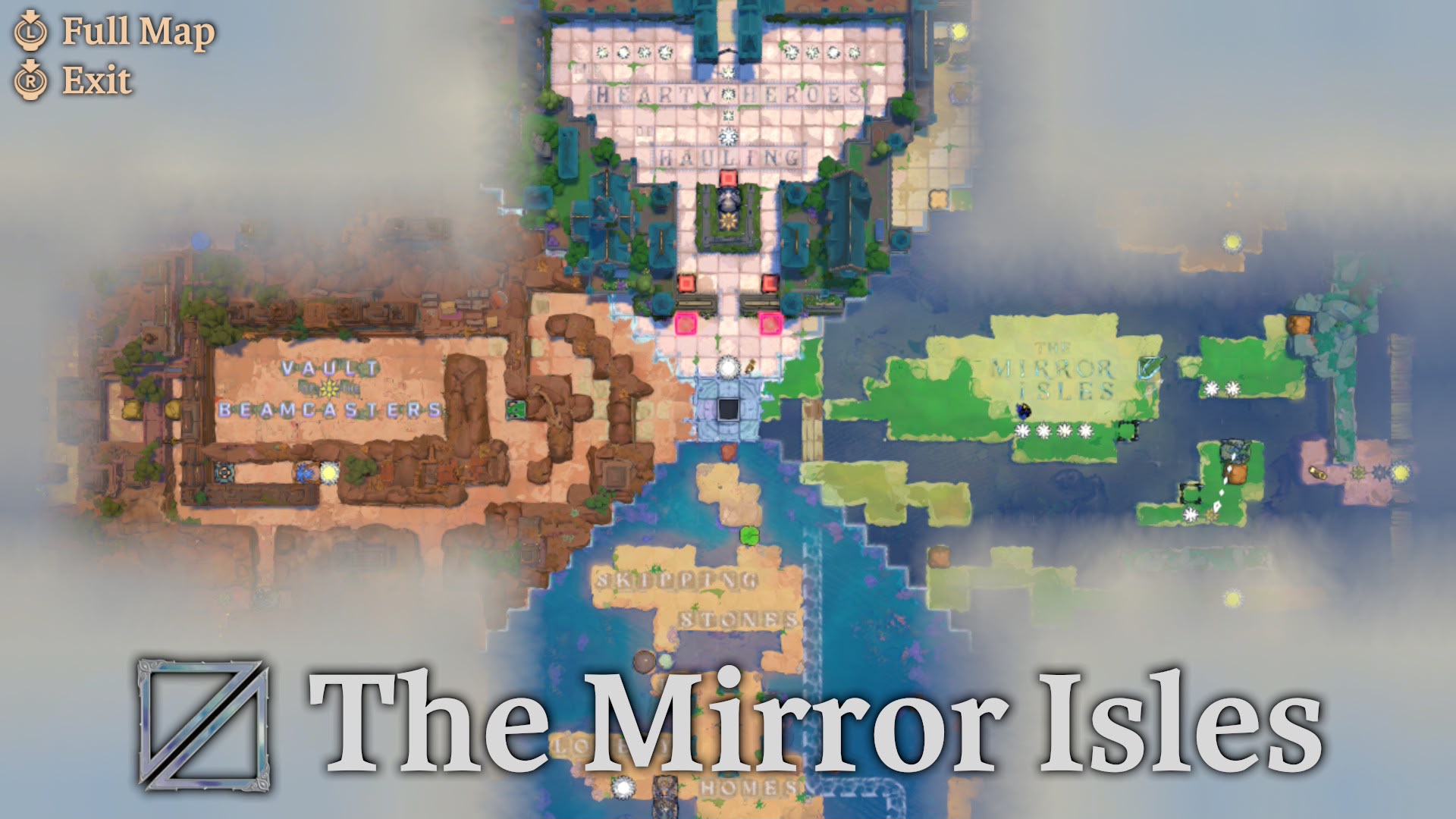
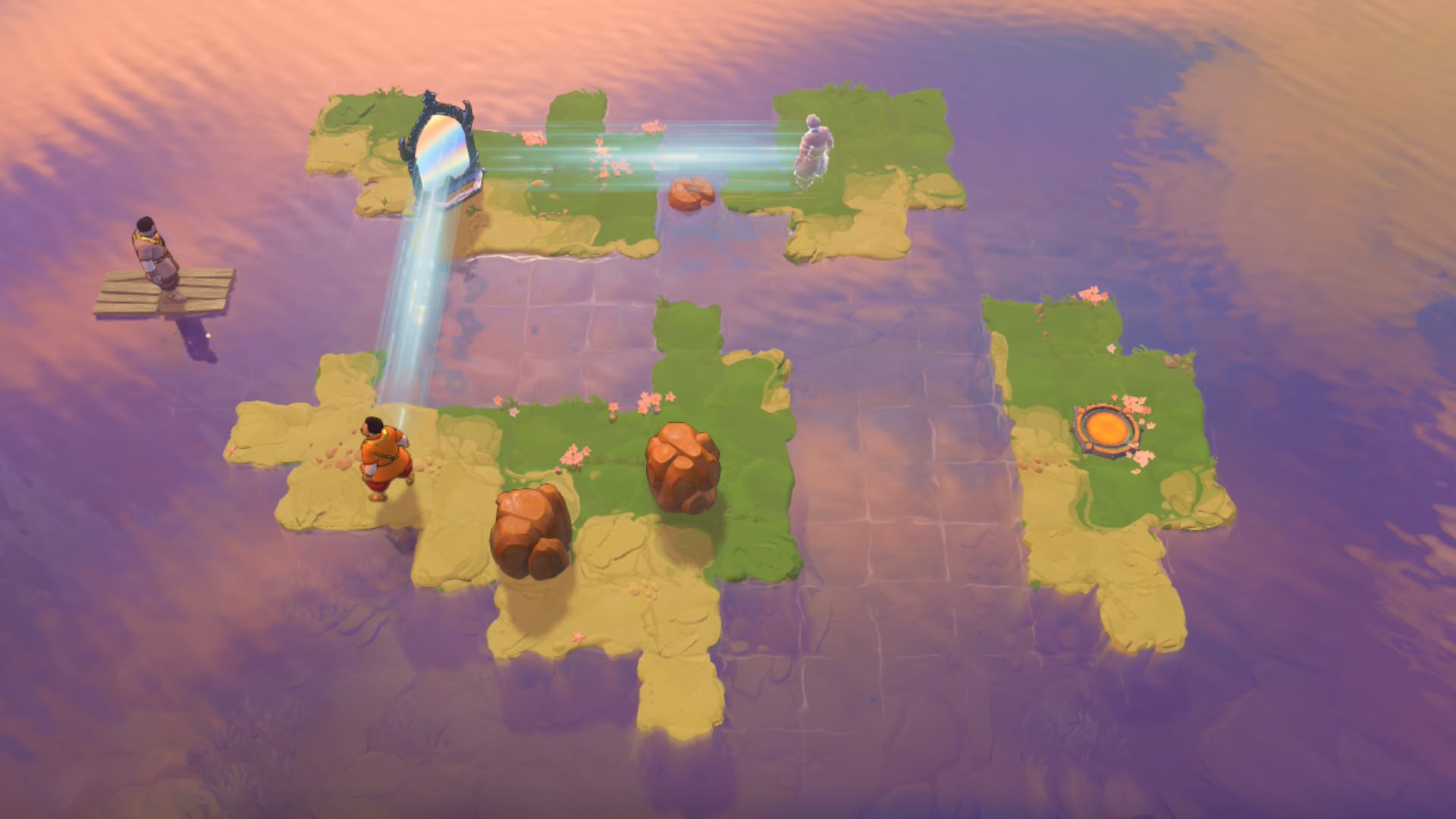
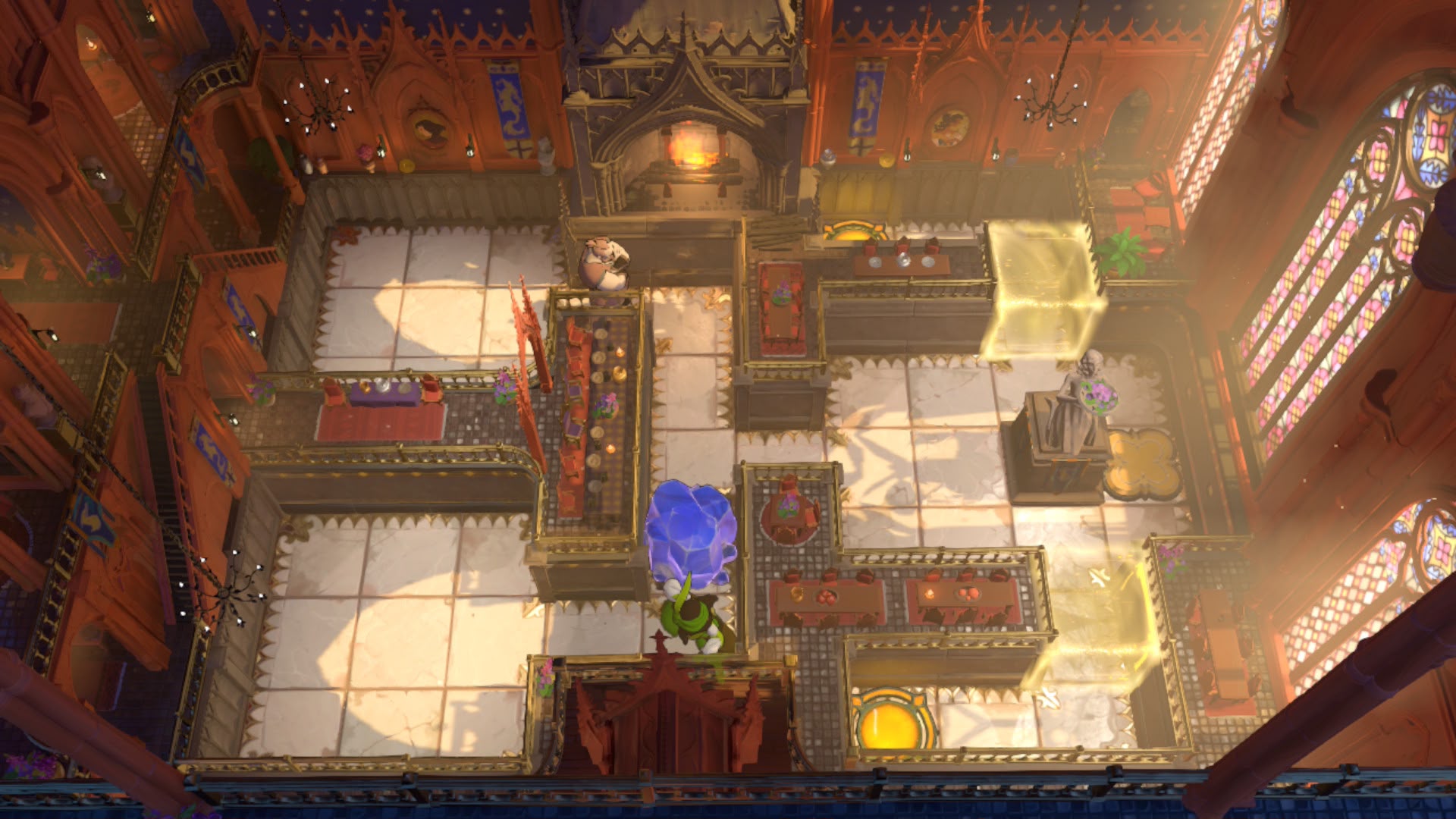
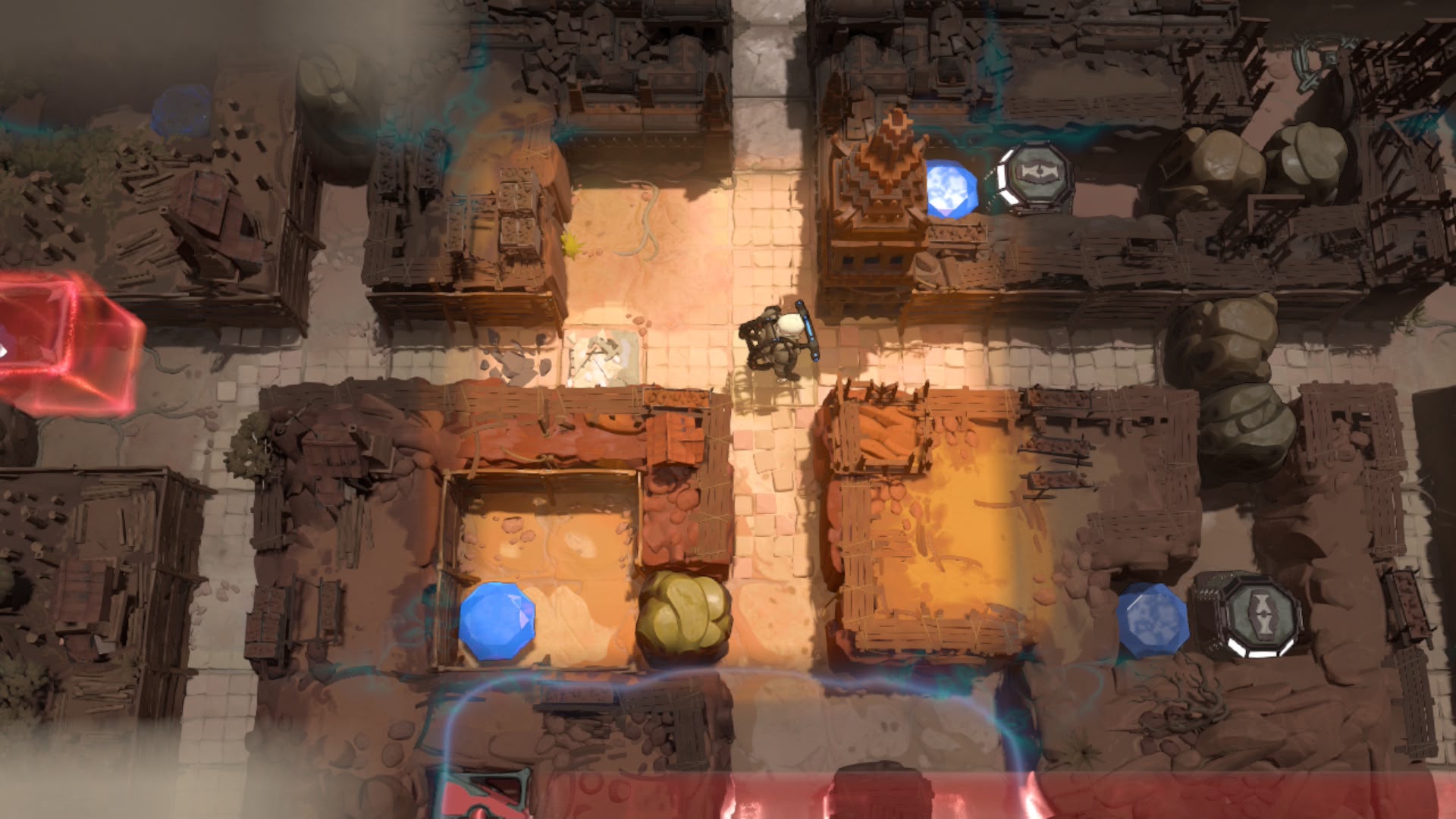
In einer weitläufigen Oberwelt erkunde ich unterschiedliche Areale mit verschiedenen Charakteren, (vernachlässigbaren) Geschichten und (das vor allem) unterschiedlichen Rätselmechaniken. Insgesamt gibt es mehr als 1000 Rätsel, die sich klar an anderen Spielen bedienen. Sei es Skipping Stones to Lonely Homes und Mirror Isles von Alan Hazelden, Promesst von Sean Barrett sowie dem Klassiker Sokoban von Hiroyuki Imabayashi.– auf dem ersten Blick könnte man das dem Spiel dieser Wiederverwertung vorwerfen.
Aber warum finden es dann doch viele so brillant? Jonathan Blow versteht es die Mechaniken großartig miteinander zu verbinden und die Konzepte zu perfektionieren. Ich habe mich selten in Momenten so dumm gefühlt, um dann nach dem Erkennen der Lösung meinen Können innerlich zu feiern, um dann doch wieder keine Ahnung zu haben, was das Spiel in der nächsten Szene von mir will. Ich rätsel minutenlang, denke verquer, um plötzlich den einfach Weg zu sehen. Das kann in Momenten frustrieren (Hilfe gibt es hier), aber lässt nie Routine aufkommen.
Die Optik und runde Steuerung tragen auch dazu bei, dass ich weiterspielen und immer wieder kreative Ideen entdecken möchte. Hier wurde wirklich jahrelang gepolished und sehr viel Liebe in ein Spiel reingesteckt.
Stubenscore: 8,3 / 10
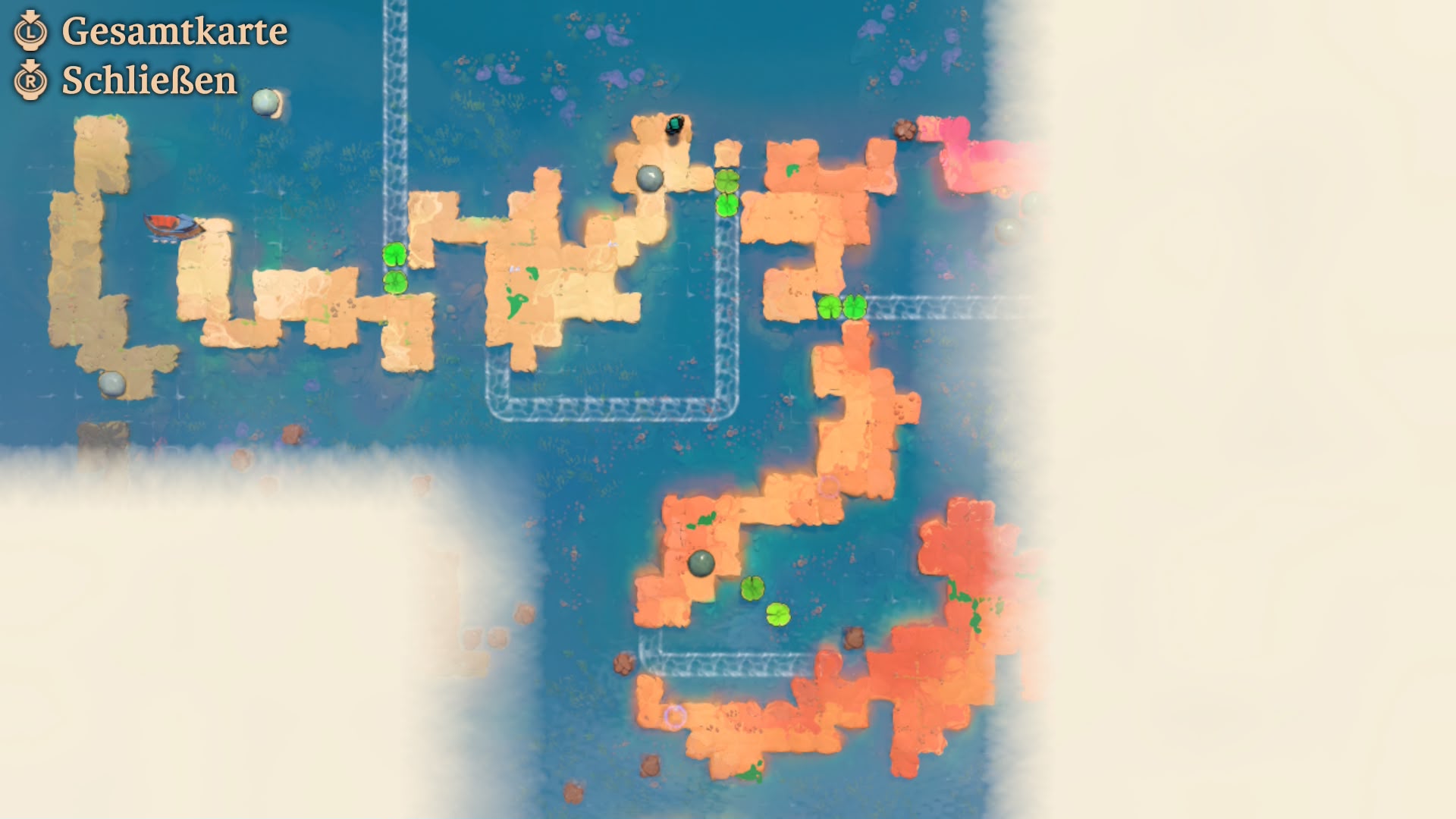
Anfangs ist die Oberwelt noch überschaubar. Ich gehe Richtung der Spiegelinseln.Und auch die ersten Rätsel sind entspannt.In der Sokoban-Variante steuere ich schon mal mehrere Charaktere und muss um die Ecke denken.Steine schubsen und Seerosen eine Richtung geben. Hier wird es direkt anfangs komplizierter.Und ich merke, dass ich sogar zwischen den Abschnitten Effekte auslösen kann.Im westlichen Abschnitt der Oberwelt geht es im Stile von Promesst in Richtung Dungeon-Puzzlespiel.
Einblicke in ein zersplittertes Reich voller Magie, die Welt der Sturmlicht-Chroniken oder über 40 Jahre an deutscher Rollenspiel-Geschichte: Auf der SPIEL Essen 2026 präsentiert Ulisses Spiele wieder einige neue Hintergrundbände und Szenarien von verschiedenen Systemen. Welche Bandbreite der Verlag wieder im Gepäck hat, erfahrt ihr hier.
Ein Spielekritiker und -tester ist meist mit einer ganzen Anzahl Spiele konfrontiert, die auszuprobieren sind. Manchmal ist die Auswahl vielfältig und breit. Manchmal aber auch etwas weniger. Und so hat…
Ein Spiel mit dem Titel Smart Ass (von Rob Elliot bei Piatnik) und dem Hinweis auf der Spielschachtel, dass schon drei Millionen verkauft worden seien, das verspricht ja schon mal…
Qwirkle, das Spiel des Jahres 2011, hat seinerzeit auch bei uns mächtig eingeschlagen und wurde zu Beginn oft gespielt. Es war rasch verstanden und trotzdem interessant genug, dass alle mitmachen…
Archäologie ist in so vielen Brettspielen als Thema verarbeitet worden, dass es mittlerweile nicht mehr das knackigste Thema darstellt. Viele Spiele haben durch den Archäologie-Bezug ein Indiana Jones-Flair, was immer noch zieht – auch bei mir. Begeben wir uns aber mit der Königlichen Gesellschaft auf Ausgrabungstour, ist die Stimmung ein wenig aristokratischer und snobistischer. So […]
Zappenduster wird es am Himmel, als sich eine riesige Armada feindseliger Raumschiffe in meinen Sektor bewegt. Die eigenen Schiffe im Orbit haben schon Schlagseite und der Raumhafen steht in Flammen.…
Über 1700 Neuheiten zählte die SPIEL in Essen 2025 laut Pressekonferenz vor Ort. Vieles davon, aber gewiss nicht alles, noch nicht mal annähernd, habe ich anspielen können. Direkt vor Ort ebenso wie auf diversen Spieletreffs in den Wochen und Monaten danach. Einiges habe ich mir dann auch selbst gekauft, auch wenn ich längst nicht jede Neuheit selbst besitzen muss. Übrig geblieben ist die finale Frage, welches Spiel seit der SPIEL 2025 mich am meisten begeistern konnte.
Die Suche nach meinem Lieblingsspiel seit der SPIEL 2025 geht in die zweite Runde und damit weiter. Soll hier aber zu einer Antwort führen. Allerdings eine Antwort, die mir für dieses Jahr noch nie so schwerfiel wie die Jahre davor, denn richtig herausragende Spiele gibt es immer weniger. Vieles ist grundsolide, aber nicht wirklich aufregend. Vieles ist gut, hat aber seine Macken und Schwächen im Detail oder nutzt sich in seiner ersten Faszination zu schnell ab. Damit genug der Vorrede und hinein zu einer Auswahl meiner Lieblinge und zur abschliessenden Krönung.
Magical Athlete: Eine Neuauflage eines Klassikers, der inzwischen schon 23 Jahre auf den Buckel hat. Kein geringerer Autor als Richard Garfield hat sich dem Laufspiel angenommen und es modernisiert. Die Athleten wurden auch damals schon ausgesucht, allerdings war das eine mehrrundige Versteigerung, bei der man mit seinem Kapital haushalten musste. Die Rennplatzierungen brachten dann Erfolgsprämien ein. Grafisch im japanischen Manga-Stil mit Pappaustellern umgesetzt, die über einen fotorealistischen Geröllweg dem Ziel entgegen liefen. Den einen beliegenden W6 musste man sich teilen. Im Jahr 2025 beim Verlag CMYK in erfolgreicher Partnerschaft mit Shut Up & Sit Down sah das alles schon ganz anders aus. Die Ausstattung wurde verbessert, auf eine bunte Comicgrafik aufgepeppt und die Versteigerung durch ein flotteres Drafting ersetzt.
In meinen Spielrunden kam Magical Athlete bestens an. Allerdings nur in größeren Runden, die es nicht zu verkopft sehen konnten. Athleten wählen, würfeln und sich vom Spielablauf in seinem sich ergebenden Chaos überraschen lassen. Umso besser, wenn die Mitspieler ihre Athleten anfeuern und besondere Situationen johlend begleitet werden. Magical Athlete will für eine halbe Stunde Spaß machen und wer sich diesem Spielspaß hingeben kann, der hat seine helle Freude daran. Spielt mit mindestens vier Spielern und achtet darauf, dass jeder seinen Athleten auch verstanden hat. Die deutschsprachige Lokalisation als Turbo-Flitzpiepen 2000 sorgt zudem für eine Partie ohne Sprachbarrieren. Gerne wieder, nur eher ein Happen für zwischendurch und keine sättigende Brettspiel-Hauptmahlzeit. Dafür ist es dann doch gewollt zu wenig Spiel.
Take Time: Es ist schon erstaunlich, wie unterschiedlich ein Brettspiel-Erstkontakt wirken kann. Nach meiner eher durchwachsenen Kennenlernpartie, bei der zu viel theoretisiert wurde, statt uns einfach die Chance zu geben, das Spiel selbst zu entdecken, wollte es keiner am Tisch nochmal spielen. Ein fast schon mutiger Trotzkauf einige Wochen später, weil ich nicht begreifen konnte, warum einer der hochgehandelten Anwärter auf das Spiel des Jahres kollektiv nicht zünden konnte, brachte denn des Rätsels Lösung. Take Time entfaltet seinen Zauber erst, wenn es gespielt statt zerredet wird. Einfach mal machen, höchstwahrscheinlich dabei kooperativ scheitern und damit den Ehrgeiz entwickeln, es nach ein wenig gemeinsamer Fachsimpelei nochmal zu probieren. Dann auf zur nächsten Aufgabe. In der richtigen Spielrunde entwickelt sich so ein Sog, der einen durchs Spiel zieht. Wir feiern überraschende Erfolge oder sehen die Chance, es beim nächsten Anlauf doch zu schaffen.
Es hat leider nur zur Empfehlungsliste zum Spiel des Jahres gereicht, die Nominierung oder gar Prämierung wurde Take Time verwehrt. Das hat Gründe und die habe ich in anderen Spielrunden ebenso kennengelernt. Es braucht halt eine halbwegs homogene Gruppe, die den gleichen Ehrgeiz aufbringt, mitdenken zu wollen. Nicht jeder mag das und wird so für die ganze Runde zum spielerischen Stolperstein. Schnell ist dann die Luft raus, wenn man miterlebt, dass man eigentlich in dieser Zusammensetzung nicht vorankommen kann. Bevor Take Time dann frustriert, lieber etwas anderes spielen. So sicher kein Spiel für jede Gelegenheit, eher was für Knobelfreunde. Mir gefällt es, aber nur in ausgesuchten Runden.
Mondbasis Shackleton: Ein schön indirekt interaktiver Spielablauf im Sandkasten der Eurogame-Möglichkeiten. Das ist die Sonnenseite. Die andere Seite unserer Mondkolonie begründet sich auf nur 18 Aktionen, die in Summe einen spürbaren Spielerfolg ergeben sollen. Das kann zu flott gespielten Partien um die zwei Stunden führen oder eben auch solchen, die in der vermeintlichen Bedeutungsschwere zerdacht werden und damit die doppelte Spielzeit verschlingen. Flotte Partien mag ich lieber, weil im spielerischen Kern hier gar nicht so viel passiert, es für mich damit angenehme Denktiefe hat und jede Partie anders ist. Schon alleine, weil von den sieben beiliegenden Gesellschaften nur drei mitspielen – zufällig gewählt oder gezielt für die Spielrunde ausgesucht.
Ob flott oder eher denklastig gespielt wird, ich mag den indirekt-interaktiven Spielablauf einfach. Auch weil sich eine Vierstundenpartie für mich nicht so anfühlt, weil ich stets auch bei den Mitspieleraktionen dabei bin, weil sich die Ausgangssituation dadurch immerzu verändert und ich darauf reagieren muss in meinem Zug. Mal sind Bauplätze belegt, mal werden Einsetzaktionen spürbar teurer oder die Kartenauslage bietet neue Möglichkeiten. Eigentlich immer toll, auch wenn es Gesellschaften gibt, die nicht recht zur Spielrunde passen wollen, ignoriert werden und dadurch das Spiel verflachen. Die richtige Wahl dabei zu finden, empfand ich als erste und durchaus schwierige Entscheidung. Deshalb ein Spiel mit nicht direkt sichtbaren Hürden.
Boss Fighter QR: Ein Ausnahmespiel, das so mutig ist, dass es meine Krönung zum Lieblingsspiel mehr als verdient. Dabei hätte die Kombination aus App und Kartenspiel auch mächtig schiefgehen können. Stattdessen ist es eine gelungene Fusion aus unauffälliger Technik, die uns Spieler vollkommen im Spielverlauf unterstützt, anstatt uns zu passiven Gadget-Bedienern zu degradieren. Das Smartphone oder wegen der besseren Übersicht dank des größeren Bildschirms idealerweise das Tablet liegt in der Tischmitte und bleibt während des ganzen Spiels dort liegen. Zeitgleich haben wir schön haptisch unsere Kartenhand zur eigenen Auswahl und Entscheidung. Der QR-Code auf der Rückseite der gespielten Karte erspart uns weitere Eingaben – einfach drüberhalten und schon wird die Karte erkannt und bekämpft das Monster in der virtuellen Welt, in die wir hineinblicken. Die Technik funktioniert einfach und bietet zudem ganz eigene Überraschungen im Spielablauf, denn das Monster wird komplett per App-Logik gesteuert und reagiert auf unsere Aktionen.
Die komplette, wie nervige, Buchhaltung der üblichen kooperativen Boss-Battler im Brettspielformat fällt dadurch weg. Regelfehler werden so ebenso abgefangen. Wir als Spieler können uns voll und ganz auf die gemeinsame Aufgabe fokussieren. Funktioniert auch bestens in wechselnden Runden, weil neue Spieler einfach während der Partie ins Spiel eingeführt werden können. Dabei sind die gestellten Aufgaben in Form von stärker und komplexer agierenden Monstern keineswegs trivial, sondern je nach frei wählbarem Schwierigkeitsgrad eine echte Herausforderung.
Ein letzter Wermutstropfen wurde zudem schon im März getilgt und bisher von mir übersehen: Der eigene Fortschritt einer Gruppe kann per QR-Code von einem Gerät auf ein anderes übertragen werden, sodass ihr an der Stelle weiterspielen könnt, wie weit ihr auf dem anderen Tablet oder Smartphone gespielt habt. Alternativ auch per Textcode über die Zwischenablage möglich, damit Ihr Euren Spielstand bequem mailen und somit teilen könnt. Damit hindert Euch nichts mehr daran, auch auf Fremdgeräten genau dort Eure Abenteuer fortzusetzen, die Ihr bisher gemeinsam geschafft habt. Denn immer wieder von vorne anzufangen, das war auf Dauer arg öde und ist damit längst Geschichte. Also alles gut und die Reise ist längst nicht zu Ende. Ich bin auf die angekündigte Erweiterung zur kommenden SPIEL 2026 gespannt, sobald ich das Grundspiel komplett durchgespielt habe. Boss Fighter QR hat sich die Krone mehr als verdient.
With this My Favorite Wargame Cards Series, I hope to take a look at a specific card from the various wargames that I have played and share how it is used in the game. I am not a strategist and frankly I am not that good at games but I do understand how things should work and be used in games. With that being said, here is the next entry in this series.
#96: Henry Knox Continental Artillery Commander from Washington’s War from GMT Games
Washington’s War is a war game, make no mistake about that. But, it is virtually impossible to win the game by focusing only on the field of battle. For that to happen, the Patriots need to completely drive the British forces out of the 13 colonies or the British need to wipe the American forces off the map. Both are extremely difficult and I would be surprised if any more than 1 out of 30 games ended in such a way. Rather, the ultimate goal of the game is to have political control of the colonies. If at the end of the game the Patriots control 7 colonies, while holding the British to control of less than 5, they win. If not, the British win. Simple as that. So, you can see that battle is not the main goal but control is. And more importantly political control.
I really like this about the design and feel that the real core of the American Revolution was the groundswell of patriotism and the desire to live free from the shackles of an overseas monarch who cared little for the American way of life. This desire led great men of the time to sacrifice themselves, their livelihood and their families to further the true cause of liberty and build a truly free and democratic nation where individual liberty and freedom was prioritized over anything else. And yes, I realize that this nation was not perfect, not without contradiction but the concept of liberty helped to form a country that would lead to the ultimate freedom of all people.
Washington’s War is a Card Driven Game, and as such, relies on cards to provide to players the actions needed to play the game. The cards contain OPS Points which can be used to drive various actions, including such things as activating leaders, who in turn will then move with forces to attack, and also contain written text in the form of events. These events can be played only by the side they are intended for and if drawn and played by the opposing side, they can only be thrown away while granting a few possible actions, such as placing or removing Political Control markers.
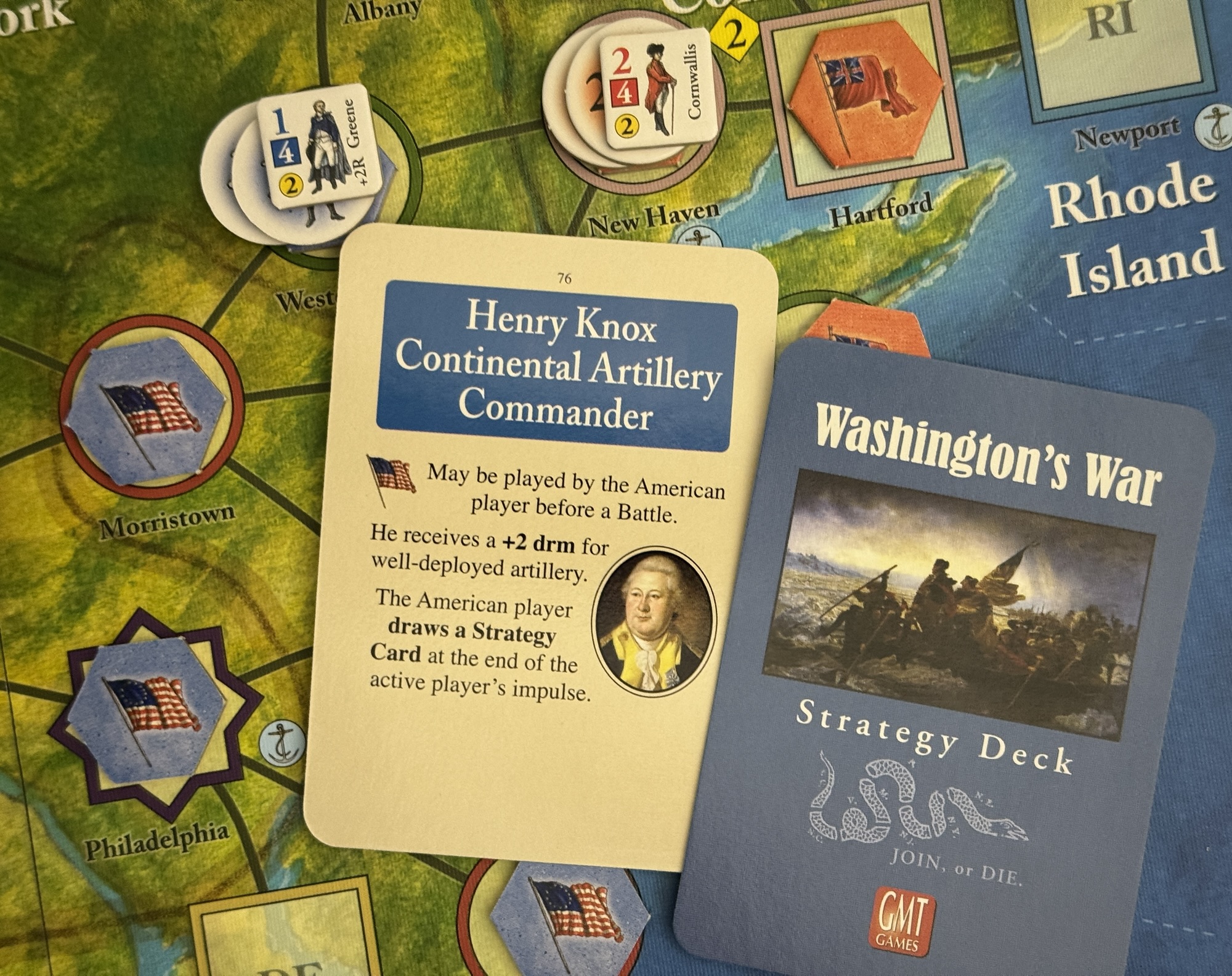
In Washington’s War, the Strategy Card Deck contains several different type of cards of which one is Battle Cards. Battle Cards are special event cards that provide a powerful +2 Die Roll Modifier (DRM) during combat and allow the user to draw a replacement card at the end of the turn. All of the Battle Cards offer a +2 DRM but each of them are tied to a different historical character or event. In this instance, the card’s effects reflect the work of Henry Knox who was a prominent Continental Artillery Commander during the Revolutionary War. There are only 9 total Battle Cards in the 110-card deck with the Patriot side having 5 cards, while the British side only has 4. I also want to point out that when these cards are used, they allow the using player to draw a replacement card at the end of the active player’s turn, keeping your hand size strong and not forcing you to sacrifice a card. And due to the fact that they swing combat odds significantly and also replace themselves with a draw, they are heavily prized and typically are saved in a player’s hand for those critical campaign-deciding clashes.
Henry Knox was an American military officer, politician, bookseller, and a Founding Father of the United States. Knox, born in Boston, became a senior general of the Continental Army during the Revolutionary War, serving as chief of artillery in all of George Washington’s campaigns. Following the war, he oversaw the War Department under the Articles of Confederation from 1785 to 1789. Washington appointed him the nation’s first Secretary of War, a position which he held from 1789 to 1794. He is well known today as the eponym of Fort Knox in Kentucky.
During the siege of Boston, the idea arose that cannon recently captured at the fall of forts Ticonderoga and Crown Point in upstate New York could have a decisive impact on its outcome. Knox is generally credited with suggesting the prospect to Washington, who placed him in charge of an expedition to retrieve them even though Knox’s commission as an officer had not yet arrived. Reaching Ticonderoga on December 5, 1775, Knox commenced what came to be known as the “noble train of artillery”, hauling 60 tons of cannon and other armaments by horse-drawn and ox-drawn sleds across some 300 miles of ice-covered rivers and snow-draped Berkshire Mountains to the Boston siege camps.
The region was lightly populated and Knox had to overcome difficulties hiring personnel and draft animals. On several occasions, cannon crashed through the ice on river crossings, but the detail’s men were always able to recover them. In the end, what Knox had expected to take just two weeks actually took more than six, and he was finally able to report the arrival of the weapons train to Washington on January 27, 1776. Historian Victor Brooks writes that this was “one of the most stupendous feats of logistics” of the entire war, and Knox’s effort is commemorated by a series of plaques marking the Henry Knox Trail in New York and Massachusetts.
The cannon were immediately deployed to fortify the Dorchester Heights recently taken by Washington. The battery’s position over Boston harbor led the British to evacuate Boston for Halifax, Nova Scotia. With the siege ended, Knox undertook the improvement of defenses in Connecticut, Rhode Island and New York in anticipation of a possible British assault. In New York he became friends with Alexander Hamilton, commander of the local artillery. He also established a close friendship with Massachusetts general Benjamin Lincoln.
A team of oxen hauls captured artillery toward Boston as part of the 1775-76 “Noble train of artillery”.
Here is a link to our full video review of the game:
Ein Retro-Shooter, der an nahezu jeder Stelle alles richtig macht? Der Action und Story nebenbei perfekt miteinander verwebt und obendrein eine Atmosphäre aufbaut, wie wir sie im Shooter-Genre selten erlebt haben? Genau das ist Cultic – und damit gesellt es sich neben Dusk an die Spitze der modernen Retro-Shooter. Besser geht's kaum.
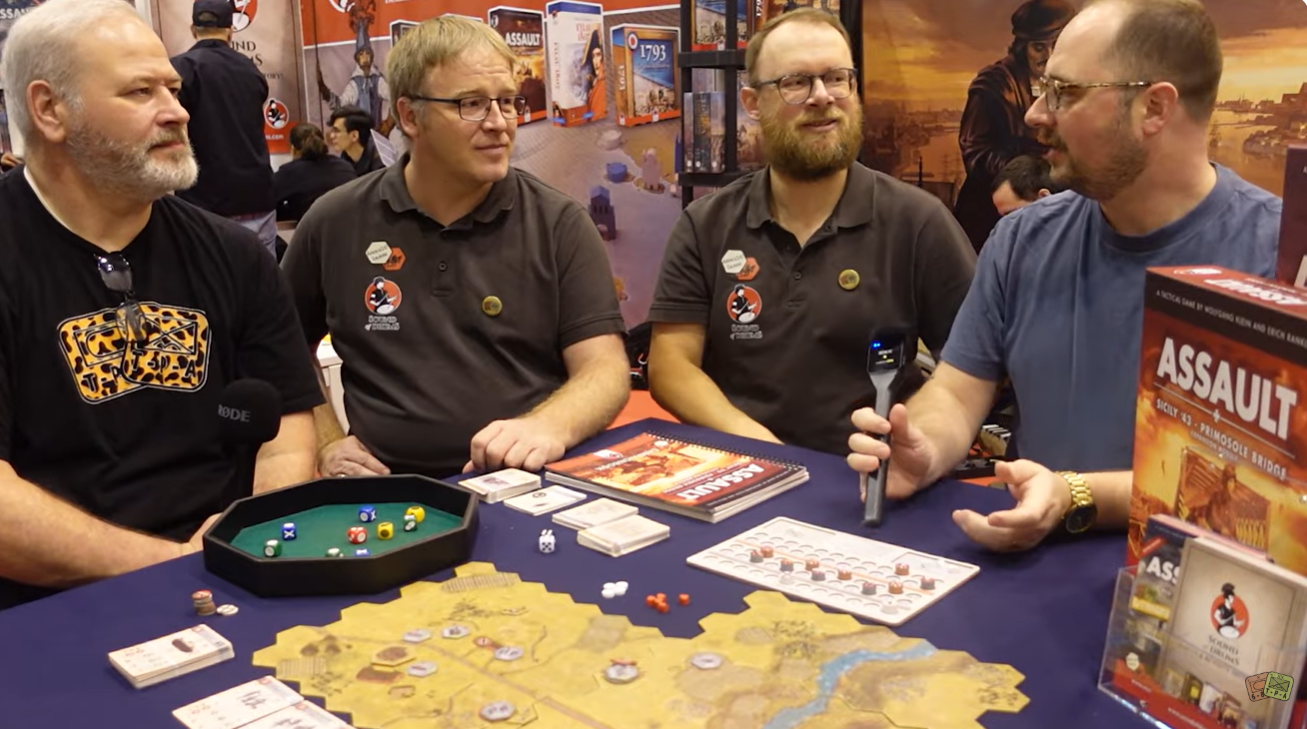
Last year, while attending SPIEL Essen in Germany, we had the chance to sit down separately with 3 wargaming designers in Wolfgang Klein/Erich Rankl with Assault! Games, Florent Coupeau with Nuts! Publishing and Uwe Walentin with Sound of Drums and shoot interview videos about their games and upcoming projects.
Fragt man mich nach meiner Lieblingsneuheit von der Spielemesse 2025 in Essen, so fällt mir die Antwort schwer. Gibt es überhaupt das eine Spiel, das für sich so herausragend war, es zum persönlichen Liebling zu küren? Hängt das besondere Spiel nicht vielmehr von der erlebten Spielpartie ab, die deshalb besonders war, weil schlicht alles gepasst hat – das Spiel, die Mitspieler, die Atmosphäre, das Ambiente und alles drumherum. Erst dann entstehen Lieblingsspiele und auch einige, die über Monate im Spielerherz verbleiben.
Alles auf Anfang und in den geistigen Rückwärtsgang geschaltet. Was habe ich seit der SPIEL 2025 überhaupt alles gespielt, was in die nähere Auswahl kommen könnte? Mal sehen …
Valheim Deluxe Edition: Im Vorfeld der SPIEL 2025 entdeckt, weil ich Valheim am PC nächtelang gespielt habe, bis ich merkte, wie übergroß die Welt ist und was ich noch alles erkunden würde müssen. Valheim als PC-Spiel war mir zu groß und damit zu zeitintensiv. Das Brettspiel sollte sich hingegen auf die Kernkompetenzen konzentrieren und einzelne Abenteuer-Sessions anbieten, die keine Kampagne bilden. Gut so. Auf der SPIEL gab es zwar die imposante Deluxe Edition, allerdings nur im Retail und abgespeckt gegenüber der exklusiven Kickstarter-Ausgabe. Dafür aber mit dem stolzen Preis, der nach wenigen Recherchen die Hälfte teurer war im Vergleich zu Online-Händlern. Also auf den Messedirektkauf verzichtet und auf ein paar Monate Wartezeit eingestellt.
Spielerisch waren die ersten Partien spannend, aber auch zufallsabhängig. Das hier ist ein zugängliches Beer & Bretzel Monstergemätzel auf bestem Amitrash-Niveau. Trotz aller Lockerheit muss man dennoch auf die Regeldetails achten, denn allzu schnell sind da wichtige Details im Eifer des Gefechtes übersehen. Ein Spiel, auf das man sich vom Aufwand her einlassen muss. Aber eines, was eine tolle Tischpräsenz hat.
1er Contacts: Mein Überraschungshit des letzen SPIEL. Zwischenzeitlich auf Platz 1 der Fairplay Scoutliste katapultiert. Spontan vor Ort angespielt und eine tolle Zeit erlebt. Deshalb ein wenig von der Messe-Euphorie getragen direkt gekauft. Natürlich mit Deluxe-Plexiglas-Komponenten, die spielerisch gar nicht notwendig waren für den Spielablauf. Das Standard-Pappmaterial hätte es genauso gut getan.
Die Ernüchterung kam dann beim Regelstudium zu Hause. Etliche Details blieben unklar und liessen sich für mich nur aus diversen Regeldetails im Zusammenhang erschliessen. Dann folgten ein paar Partien, die aufgrund der Genreklassifizierung Deduktion leider mehr zerdacht als gespielt worden sind. Eine dreifache Spielzeit trägt leider nicht für alle am Tisch, die einem Alphaspieler lauschen. Als lockeres wie auch leichtes Familienspiel verstanden, sehe ich weiterhin sein Potential. Aber nicht als Logikrätsel gesehen.
Tag Team: Ein Auto-Battler, der sich fast schon von alleine spielt. Allerdings braucht es dafür einen Mitspieler und in meinen ersten Spielrunden wurde der reduzierte Spielablauf leider nicht gut aufgenommen. Über die Einstiegscharaktere bin ich bisher nicht hinausgekommen. Da halfen auch die direkt auf der SPIEL gekauften Neoprenmatten nichts. So blieb Tag Team ein Spiel, das ich gerne besser finden möchte, als es sich dann am Spieltisch zeigte. Aber eigentlich kein schlechtes Spiel, nur ein sehr spezielles, auf das es zudem einen ebenso spielbereiten Mitspieler als direkten Konkurrenten braucht. Einer, der bereit ist, die bewusst begrenzte Kontrolle als Spielspass zu erleben.
SETI Raumfahrtorganisationen: Ein wirklich gutes Eurogame wurde durch die Erweiterungen noch besser. Geschickt hat es die in einigen Spielrunden aufkommende Problematik des Scannens gelöst, wenn niemand meint, Vorarbeit leisten zu wollen, weil dann die Mitspieler vor einem am nächsten Zug profitierend abstauben können. Nun hat man mit Signal-Plättchen die geballte Macht, selbst ausreichend innerhalb des eigenen Zuges scannen zu können. Auch sonst sorgen die Raumfahrtorganisationen für neue Spannungsmomente durch die neue Herausforderung, ihre Fähigkeiten auch spielerisch in Siegpunkte umzusetzen.
Die Komplexität des Grundspiels erhöht sich dadurch allerdings nochmal. Erstspieler können die gegebene Asymmetrie nicht wirklich zu schätzen wissen und es bleibt stattdessen nur eine Verengung der Möglichkeiten übrig, die zudem überfordern kann. Ganz klar ein Booster für Fans, um die Langzeitmotivation aufrechtzuerhalten. Es gibt noch so viel Potential zu entdecken, allerdings nur für erfahrene Spielrunden.
Was machen nordische Gottheiten, wenn die eigene Welt zu sterben droht? Natürlich, sie reißen sich einfach die griechische Welt unter den Nagel. Na gut, sie versuchen es jedenfalls. Aber die…
With this My Favorite Wargame Cards Series, I hope to take a look at a specific card from the various wargames that I have played and share how it is used in the game. I am not a strategist and frankly I am not that good at games but I do understand how things should work and be used in games. With that being said, here is the next entry in this series.
#95: Flying Ace from The Republic’s Struggle: Battle for the Republic, Spain 1931-1939 from NAC Wargames
The Republic’s Struggle is a thematic Card Driven Game that tells the story of the historical events that took place in Spain after the resignation to the throne of King Alfonso XIII, and the proclamation of the II Spanish Republic in 1931. With the creation of the new regime, the struggle for power between the different social, political and ideological sectors increased, which gave rise to continuous changes of political power, alterations of public order, armed uprisings and violent acts, carried out by the numerous ideological factions of the moment; which culminated in 1936, in a failed military uprising. The failure of this coup d’état was the origin for the Spanish Civil War.
The Republic’s Struggle is based on Twilight Struggle from GMT Games and uses the same concepts of area control while adding in some actual combat with units represented on the board. During the game, the Republican player and the National player, will be able to recreate events of the period to increase their popularity in the localities by carrying out political propaganda, recruiting troops or militias, generating revolts or assaults, establishing diplomatic relations or carrying out bombardments. All this will be done by playing their hand of cards in an alternative way, either by using the events or by playing the action points or icons to perform any of the other actions available to the players.
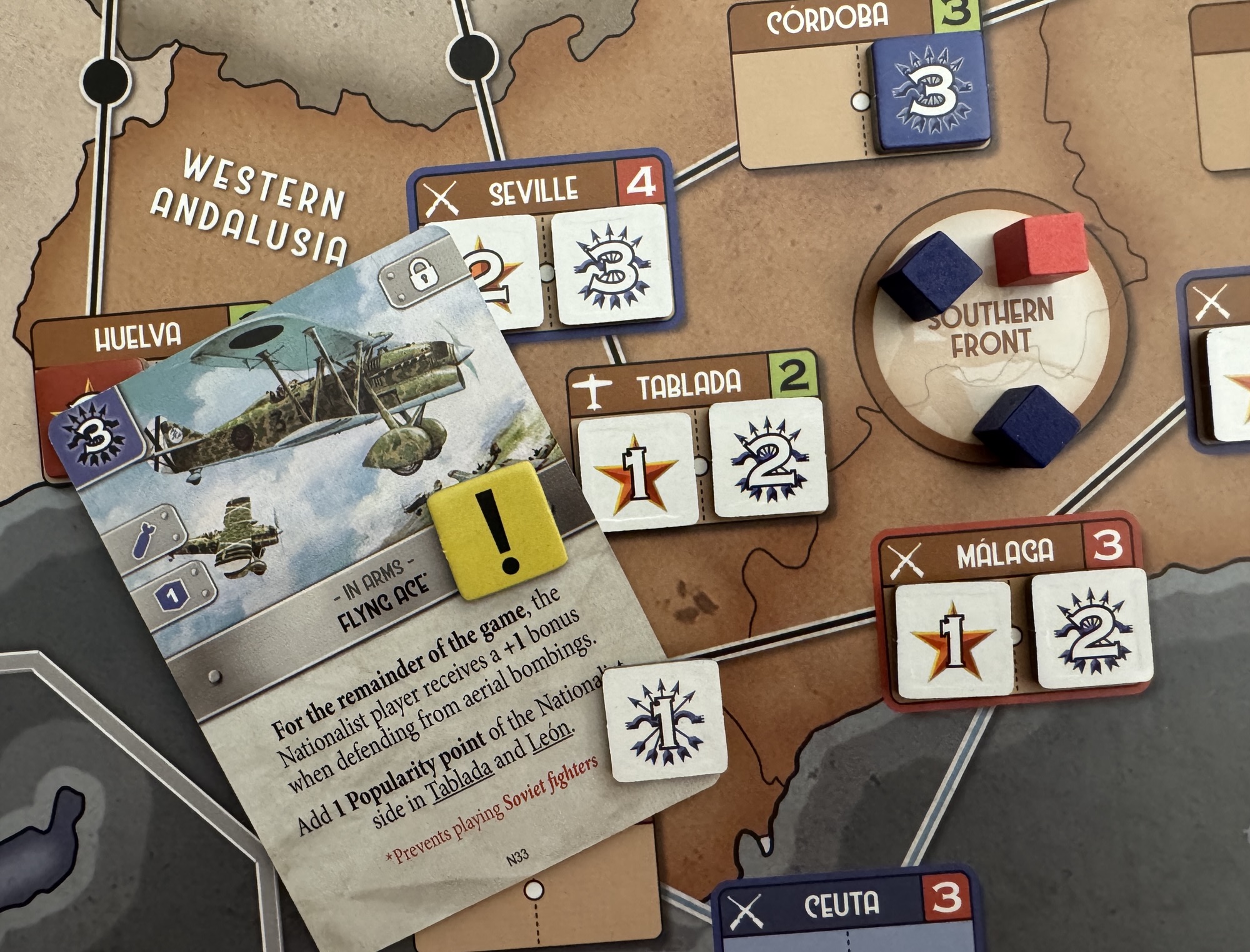
As you probably know, the Spanish Civil War was a bloody and vicious affair. With the advent of air planes and advancement of other weapons technology there was no army that couldn’t be touched. In The Republic’s Struggle players can use their cards and Operation Points to perform an aerial bombing on enemy units that are found on the various fronts. The Bombardment Process is executed by spending the Operation Points (OP’s) of a card, provided the card features a special bomb icon in the upper left hand corner near the Op Points. If a card displays both a bomb icon and a combatant cube icon, you may only choose to execute one of the options and not both. These Bombings target combatants located in specific Fronts, which are represented by circular spaces where army cubes may be placed through card play. In order to perform an aerial bombing, the player must have control of n Air Base Location on the Front that they wish to attack. The attacking player will add the Operation Points of the card played and adds a D6 while the defender will also roll a D6 but will add in the Defense Value that was determined at the outset of the turn by the play of a card and +1 for each of their cubes in the Front. If they have played a card such as Flying Ace, they will get to add a +1 to this total and then results are compared and a winner is determined and losses are the difference between the Attack and Defense Value.
That is the real power in the Flying Ace card as this +1 can be a huge boon in these aerial bombings and allow them to put up a stiffer defense and hold onto more of their units on these Fronts. The game instructs players to utilize the Exclamation Point markers to remind themselves of these type of benefits as the player should place the played card in front of them with the marker to be able to remember the benefit later in that turn.
But the Flying Ace Card provides another smaller but important benefit as it allows the Nationalist player to place 1 Popularity Point in Tablada and León to continue to build their influence and control of these key regions for scoring purposes. And finally, another benefit is that the play of the Flying Ace Card will prevent the Republican player from being able to play their Soviet Fighters Card which has a similar benefit. The thinking here is that the first player to get this card out controls the skies and has air superiority.
Aerial bombing during the Spanish Civil War marked a dark turning point in military history, serving as a lethal testing ground for the aerial terror tactics later unleashed in World War II. An estimated 15,000 people died from air raids during the conflict, with the vast majority of victims being civilians targeted by Nationalist forces backed by Nazi Germany and Fascist Italy. One of these horrific events was that of the Bombing of Guernica on April 26, 1937. Carried out by Nazi Germany’s Condor Legion and Fascist Italy’s Aviazione Legionaria, this raid destroyed a massive portion of the Basque town and killed hundreds of civilians. It became the ultimate global symbol of the brutality of war, immortalized by Pablo Picasso’s famous painting Guernica.
Mother Tell your children not to walk my way Tell your children not to hear my words What they mean, what they say, mother Was hat es bei den einleitenden…
Chip Theory Games has hired eight-year Keymaster Games veteran Jennifer Graham-Macht to lead its lighter-games imprint Neon Knight, after discovering that building the business means developing a new audience – as well as rethinking some of the approaches behind its prior success.
The Too Many Bones publisher told BoardGameWire it is very happy with Neon Knight’s progress since it began building the studio two years ago, but has acknowledged being “maybe naive” about how many of its existing fans would follow it into lighter games.
Chip Theory chief marketing officer Josh Wielgus said, “We had hoped there would be a very high percentage of ‘omni-gamers’ in the Chip Theory audience who would gladly come along for the Neon Knight ride. That hasn’t been as true as we had initially hoped for, and thus we’re learning that we really need to put the effort into building that audience and brand.
“That has meant on the Chip Theory side investing more resources into the building of Neon Knight than we first anticipated. Obviously the biggest move we’ve made to that end is bringing in an experienced pro’s pro like Jen.”
Chip Theory Games’ hugely successful title Too Many Bones, designed by company co-founders Josh and Adam Carlson
Chip Theory has spent more than a decade building a hugely successful business around expensive, lavishly produced games aimed at a devoted audience of heavier and solo-focused hobby gamers – with standout hits including Too Many Bones, Cloudspire and The Elder Scrolls: Betrayal of the Second Era.
But the publisher looked to expand the breadth of its offering in April 2024 by bringing in Dice Throne co-creator Manny Trembley’s recently-launched studio Good Knight Games, which it rebranded to Neon Knight.
That move was designed to give Chip Theory a dedicated route to more retail friendly and affordable lines of games, while drawing on its longstanding operations, customer support, fulfillment and marketing experience.
Wielgus told BoardGameWire, “We’re very happy with the direction things are going, even if thus far there hasn’t been a ‘megahit’ to speak of.
“We’re really proud of the titles that have been released thus far and are learning a ton about a market – the light/medium/mass market side of board games – that we have historically been absent from on the Chip Theory side.
“We fully understand that this basically needs to be treated as building a new business. Chip Theory proper didn’t really find its footing until after Too Many Bones released, which was almost five years into the company’s existence.”
But he said one assumption the company had got wrong with Neon Knight was expecting the tastes of Chip Theory’s staff – who enjoy games across a range of weights and genres – to be mirrored across its customer base.
“I think we were maybe naive about the number of traditional Chip Theory fans who would be excited about this direction,” he said.
“Chip Theory caters primarily to a heavy and solo-forward audience, but all of us here in the building love most types/genres/weights of games. We presumed that much of our audience was likely the same.
“That hasn’t turned out to be as true as we maybe hoped, and so it didn’t take long to realize we needed someone who didn’t have their mind in Chip Theory world at all to help us really reach what has turned out to be a very new audience.”
Theory Into Practice
New Neon Knight lead and managing director Jennifer Graham-Macht previously spent about eight years at Parks publisher Keymaster Games, initially as community manager before taking on roles in production, project management and ultimately being named Games Director.
She has also recently returned to board game retail as co-owner of New Jersey-based retailer The Player Agency, having previously run Satellite Comics and Games in the mid-2010s.
Graham-Macht told BoardGameWire that moving into full studio leadership felt like a natural next step after a long spell at Keymaster, and described Neon Knight as having “equal parts amazing pedigree and plenty of room to keep improving”.
Her new role sees her responsible for the “health and growth” of the studio as well as leading its operations, with Trembley remaining creative director with responsibility for game design and art direction.
She said, “I’ve spent the first couple of months getting clear with Manny what the vision is for the imprint. We first want to make that clear internally and then use it to start shaping how we grow our catalog and talk to our audience.
“In every aspect of studio work, I’m focused on making sure we are walking well before we run. That includes how we say yes to projects, how we work with external partners, developing a sustainable omni-channel strategy, and much more.”
Part of Graham-Macht’s role will be helping determine which lessons from Chip Theory’s existing business are useful for Neon Knight – and which do not fit a company targeting a different market.
Wielgus told BoardGameWire, “The lesson we’re learning is that not every lesson we’ve learned with Chip Theory is applicable on the Neon Knight side of the business.
“Jen’s here to really help us gauge what bits of our experience are helpful and what bits of our experience are perhaps holding us back from doing mass market well.
“Our penchant for ‘overproduction’, a laser focus on making games solo-friendly, and a crowdfunding-first mindset don’t necessarily benefit us here.
“Jen has been helping us shed those tendencies where we need to and really think about Neon Knight stuff as its own distinct creature with very distinctly different needs.”
He cited Fight 5, Neon Knight’s reimagining of classic card game War, as a prime example, saying, “We were very proud of our box for Fight 5. It’s sleek and sexy and we kind of modeled it after the Compile box (which is also sleek and sexy).
Fight 5, designed by Aaron Hein and Manny Trembley, published by Neon Knight
“Post-release, we learned that for the type of game Fight 5 is, we did a horrible job of making it a retail-friendly box. It doesn’t tell you what the game is at all and is far too abstract to sell itself.
“We’re also learning that the direct to consumer marketing we rely on so heavily for our big Chip Theory stuff isn’t a silver bullet for retail/distribution/mass market audience acquisition.
“While the games and the mechanics can be great (and we believe they are), you need to stop and consider a whole lot more things when you don’t have the luxury of literally speaking to your audience directly the way we can on our big Chip Theory crowdfunding campaigns.”
Future Plans
Graham-Macht said her experience at Keymaster had taught her about connecting with customers through different sales channels, adding that it was “exciting to apply that knowledge to a different vision”.
She added, “I think the biggest challenge for any new brand right now is discoverability. There is a lot of competition for how a person chooses to spend a weeknight hour with friends, family, a spouse.
“Most customers won’t know that Neon Knight is an imprint of another brand let alone what that brand stands for. The products themselves need to shine.
“And that being said, a premium experience can look and feel like a lot of things. More than component materials, I think thoughtful product design and attention in all the right places goes a long way to building customer trust and loyalty. That’s the mark we’re striving for.”
She added, “Any amount of that community engagement we can foster at Neon Knight will be a big win for the studio.”
Crowdfunding is another area where Chip Theory is reconsidering whether its established approach is the right one for Neon Knight.
Wielgus said its debut Neon Knight title, Neon Reign, had launched with almost no pre-marketing, as the agreement to bring the studio into Chip Theory was signed just two days before its campaign.
Neon Reign, designed by Aaron Hein and Manny Trembley, published by Neon Knight
He said, “That one I would chalk up as simply an experiment. Jump Masters I think we hoped would do a bit better than it did, but again so much of that I think is that we were relying on CTG’s existing Gamefound audience to show up for a lighter game that has no solo mode.
“As we look at the possibility of future campaigns, we’re having a lot of conversations about how to go about generating a unique audience and brand for Neon Knight, as well as things like moving Neon Knight campaigns back over to Kickstarter which seems to be a better fit for more accessible fare. “
Crowdfunding will not necessarily be the default route for future Neon Knight releases either, with Wielgus saying the company expects to use it occasionally, but will assess each game individually to decide whether a campaign is necessary or beneficial.
Graham-Macht added that while for now Neon Knight would rely on internally-developed designs, putting out games from other creators was “something we see in our future”.
“We’ve honed in that our games are inspired by/re-imagined modern classics, and that’s where we’re excited to explore”, she said. “Manny has a lot of ideas in this vein, but as we continue to grow and get our sea legs, there will be room for other designers’ work as well.”
Chip Theory is also hoping to staff up Neon Knight further following Graham-Macht’s hire, with the company gearing up to make two more hires that will split their time between the two arms of the business.
Wielgus told BoardGameWire he hopes the business will expand “in a huge way” across its release slate, staff numbers and amount of investment, but added that time – and sales – would tell if the business is able to achieve that.
He said, “I may be crazy, and I know a lot of folks consider Chip Theory one of the most successful board game companies of the last decade (I don’t have a way to measure that really, maybe they’re right. We certainly feel like we’ve been very successful!) – but I think Neon Knight can absolutely grow to match Chip Theory’s success.
“That can look a lot of different ways financially (sales quantity vs actual profits is always a bit of a moving target), but ultimately we’re excited enough about this brand that we really want to give it the full send.
“If Covid and tariffs have taught us anything, it’s that having a lot of irons in the fire and a strong diversification of our portfolio is the best way to shield ourselves from catastrophe.”
Ein Gran Fondo ist eine große Radveranstaltung über eine lange Strecke, an der Hobby- und Amateurfahrer teilnehmen und bedeutet so viel wie „große Fahrt“ oder „große Ausdauer“. Unzweifelhaft ein geeigneter…

 Anmelden





 Einblicke in ein zersplittertes Reich voller Magie, die Welt der Sturmlicht-Chroniken oder über 40 Jahre an deutscher Rollenspiel-Geschichte: Auf der SPIEL Essen 2026 präsentiert Ulisses Spiele wieder einige neue Hintergrundbände und Szenarien von verschiedenen Systemen. Welche Bandbreite der Verlag wieder im Gepäck hat, erfahrt ihr hier.