Anmelden
Was für ein Spiel ist Arctica?
06. Oktober 2026 um 11:45
Die Arktis ist einer der härtesten Lebensräume der Welt. Täglich kämpfen verschiedene Tiere ums Überleben und ihr könnt in Arctica dieses fragile Ökosystem ins Gleichgewicht bringen.

Was machen nordische Gottheiten, wenn die eigene Welt zu sterben droht? Natürlich, sie reißen sich einfach die griechische Welt unter den Nagel. Na gut, sie versuchen es jedenfalls. Aber die…
The post Divinus appeared first on Reich der Spiele.
Unexpected Games, Asmodee, 2026
Autor: Corey Konieczka
1–6 Spieler:innen, ab 8 Jahre, 30 Minuten
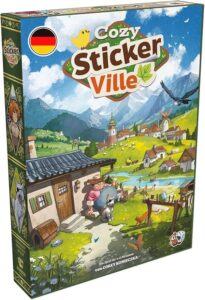
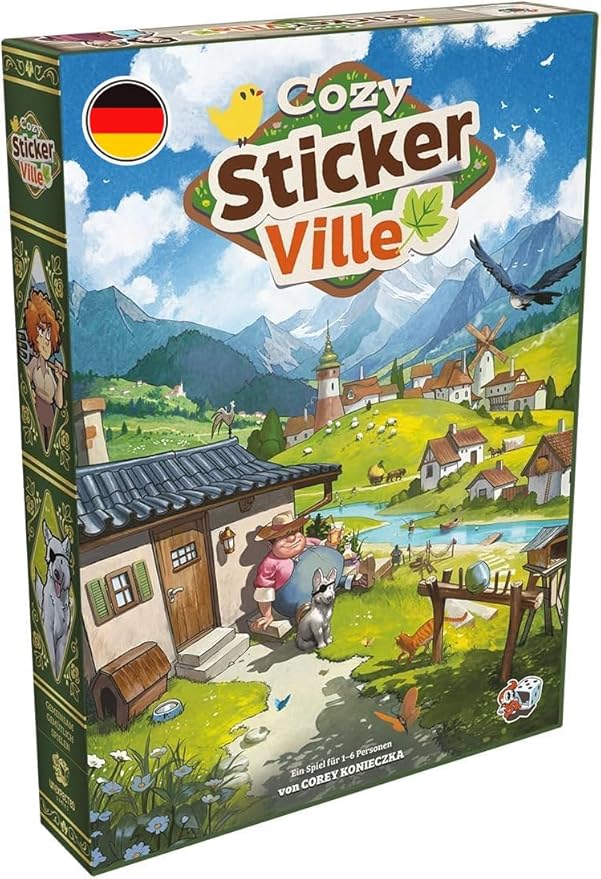 Wo soll das neue Gebäude hin? Eigentlich ist es spielerisch ziemlich egal. Trotzdem schiebt man den Sticker noch einmal ein Stück nach links, schaut auf das bereits entstandene Dorf und überlegt, ob das Haus dort wirklich gut aussieht. Schließlich soll hier ein Ort entstehen, den man am Ende auch gerne betrachtet. Gerade solche Kleinigkeiten machen den Reiz von „Cozy Stickerville“ aus. Gemeinsam baut ihr ein Dorf auf, lernt seine Bewohner:innen kennen und entscheidet immer wieder, wie sich dieser Ort entwickeln soll. Gebäude, Personen und andere Elemente werden dabei als Sticker dauerhaft auf den Spielplan geklebt. Das allein wäre ein netter Bastelkniff. Interessanter wird die Idee dadurch, dass auch die Geschichten des Dorfes auf eure Entscheidungen reagieren. Ihr wählt eine Richtung und lasst damit andere Möglichkeiten zunächst liegen. Schon im von uns gespielten Prolog-Demokit hat das gereicht, damit wir uns immer wieder gefragt haben, was wohl passiert wäre, wenn wir uns anders entschieden hätten. Dabei baut das Spiel keinen großen Druck auf. Es geht weniger darum, eine drohende Niederlage abzuwenden, als darum, das Dorf wachsen zu lassen und seine Geschichten zu entdecken. Das passt gut zum Stickerprinzip. Unser Eindruck bezieht sich allerdings auf das Prolog-Demokit, das uns vom Verlag zur Verfügung gestellt wurde. Die vollständige Kampagne konnten wir noch nicht spielen. Der Prolog vermittelt das Grundprinzip gut, bleibt bei Möglichkeiten und Entscheidungstiefe aber erwartungsgemäß überschaubar.
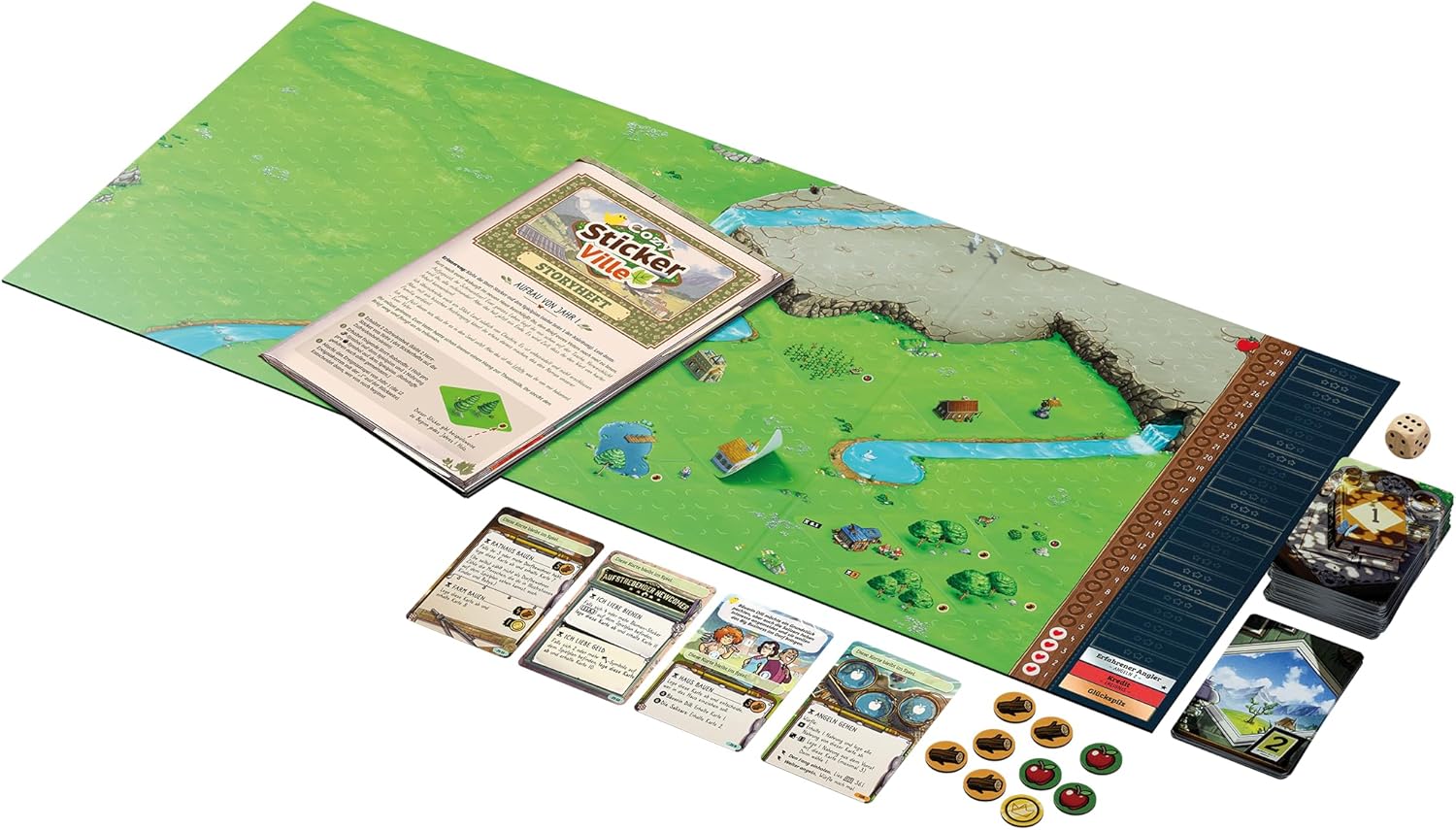 Ein Zug besteht im Kern aus zwei Teilen. Zunächst bringt ein Ereignis Bewegung ins Dorf. Es passiert etwas, eine Geschichte entwickelt sich weiter oder ihr müsst eine Entscheidung treffen. Danach dürft ihr selbst aktiv werden und beispielsweise Ressourcen beschaffen, ein Gebäude errichten oder eine Geschichte weiterverfolgen. Das klingt einfach. Ist es auch. Im Prolog waren die Entscheidungen selten so schwierig, dass wir lange vor dem Spielplan saßen. Trotzdem lief das gemeinsame Dorf nicht einfach nebenbei vor sich hin. Wir waren fast ständig im Gespräch: Was bauen wir zuerst? Welche Entwicklung interessiert uns mehr? Folgen wir jetzt dieser Geschichte oder kümmern wir uns lieber um etwas anderes? Vor allem das Errichten neuer Gebäude hat schnell seinen eigenen Reiz entwickelt. Für den Spielablauf zählt in erster Linie, dass das Gebäude errichtet wird. Wo der Sticker genau landet, scheint dagegen kaum eine Rolle zu spielen. Trotzdem möchte man ihn nicht einfach irgendwo hinkleben. Vielleicht passt das Gebäude besser an den Dorfrand. Vielleicht sollte an dieser Stelle noch etwas Platz bleiben. Plötzlich beschäftigt man sich mit einer Entscheidung, die spielmechanisch fast belanglos ist, für das eigene Dorf aber eben doch wichtig wird. Ähnlich funktioniert die Geschichte. Eine Entscheidung führt in eine bestimmte Richtung und weckt damit automatisch Neugier auf die andere. Was hätten wir dort entdeckt? Hätte sich etwas anders entwickelt? Wäre später eine andere Geschichte entstanden? Der Prolog beantwortet solche Fragen natürlich nur begrenzt. Er zeigt aber gut genug, worauf die vollständige Version hinauswill. Unsere Entscheidungen hatten erkennbare Auswirkungen auf die Entwicklung, und genau diese Folgen haben Lust darauf gemacht, andere Wege auszuprobieren. Dabei ist „Cozy Stickerville“ zumindest im Prolog kein Spiel für Menschen, die aus jedem Zug möglichst viel herausholen möchten. Die Entscheidungen verlangen keine ausgefeilten Kombinationen. Häufiger geht es darum, welche Entwicklung euch gerade mehr interessiert. Zu zweit hat das gut funktioniert. Weil wir gemeinsam über die nächsten Schritte gesprochen haben, fühlten sich die Entscheidungen tatsächlich gemeinsam an. Einer wollte vielleicht zuerst ein Gebäude errichten, während der andere lieber wissen wollte, wie eine angefangene Geschichte weitergeht. Man spricht darüber und legt sich auf eine Richtung fest. Das gemeinsame Abwägen war für uns ein wichtiger Teil des Spiels.
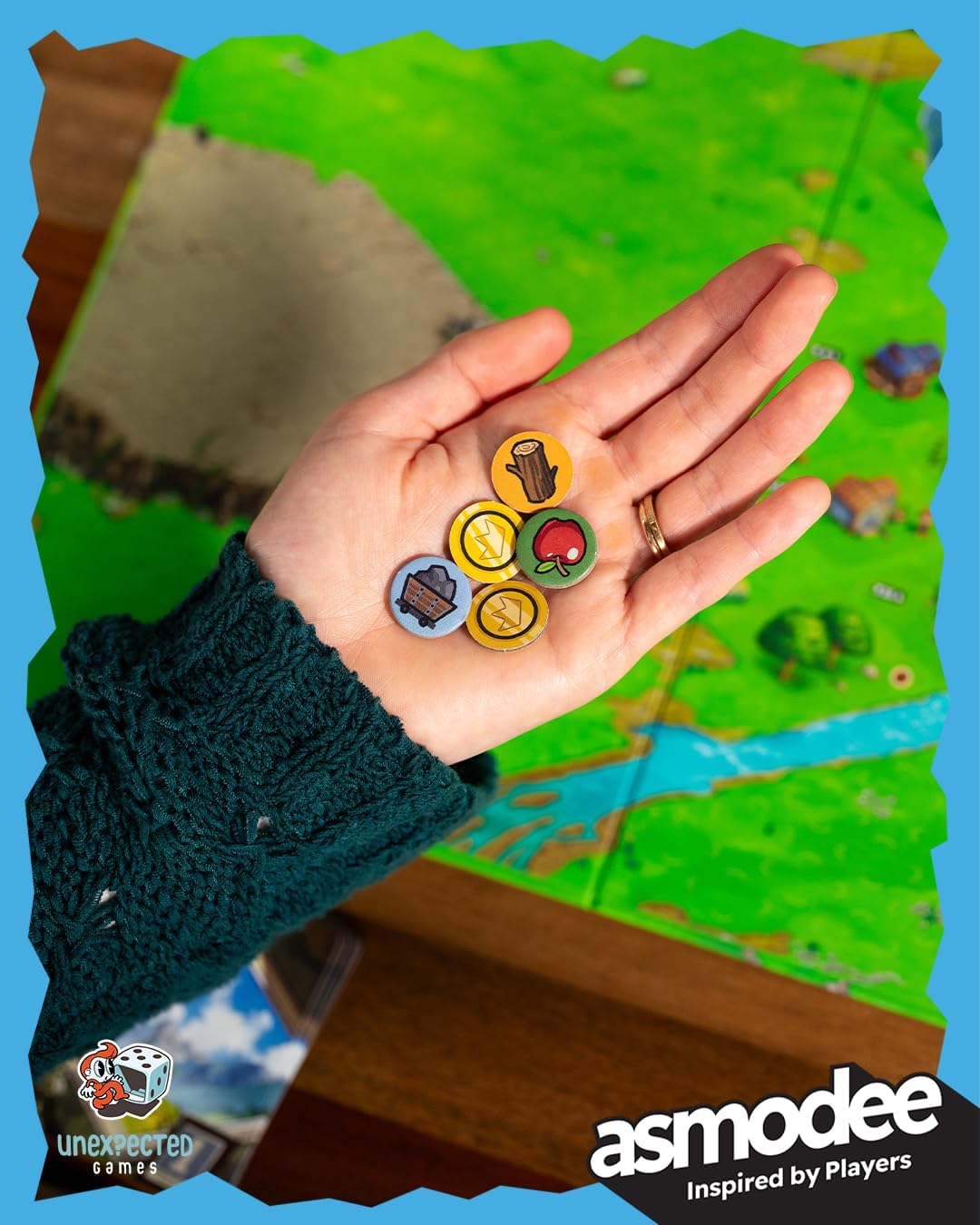 Der Prolog hat vor allem eines geschafft: Nach seinem Ende wollten wir weiterspielen. Das ist für eine Demo wahrscheinlich das wichtigste Ergebnis. Wir wollten wissen, wie das Dorf weiterwächst. Noch stärker war die Neugier darauf, welche Auswirkungen andere Entscheidungen gehabt hätten. Schon während des Spielens kam immer wieder die Frage auf: Was wäre eigentlich passiert, wenn wir uns dort anders entschieden hätten? Dieser Entdeckungsreiz trägt das Spiel für mich deutlich stärker als seine mechanische Tiefe. Die ist im Demokit noch überschaubar. Ressourcen sammeln, Gebäude errichten und Geschichten verfolgen liefern Entscheidungen, aber zumindest hier keine besonders große taktische Herausforderung. Wer bereits im Prolog ein verzahntes Aufbauspiel erwartet, dürfte deshalb zu viel erwarten. Das Spiel interessiert sich stärker dafür, wie ihr euer Dorf entwickeln möchtet, als dafür, ob ihr dabei besonders geschickt spielt. Für mich passt das zur Grundidee. Der Prolog zeigt sehr deutlich, welche Art von Spielerlebnis entstehen soll. Wir waren kaum mit Regeln beschäftigt, sondern konnten miteinander reden und uns auf unser Dorf konzentrieren. Die Sticker tragen dazu mehr bei, als ich zunächst erwartet hätte. Rein spielmechanisch müsste es uns ziemlich egal sein, ob ein Gebäude ein paar Zentimeter weiter links oder rechts steht. War es aber nicht. Wenn schon etwas dauerhaft auf dem Spielplan bleibt, soll es dort auch gut aussehen. Mit jedem Sticker verändert sich das Dorf sichtbar, und irgendwann betrachtet man nicht mehr bloß einen Spielplan mit aufgeklebten Elementen, sondern den Ort, den man gemeinsam aufgebaut hat. Das ist keine schwierige Entscheidung. Beschäftigt hat sie uns trotzdem. Gerade zu zweit mochte ich außerdem, wie selbstverständlich das Spiel Gespräche erzeugt. Wir haben nicht gemeinsam nach dem rechnerisch besten Zug gesucht. Wir haben darüber gesprochen, welche Richtung wir einschlagen möchten. Das fühlt sich deutlich entspannter an und passt gut zu dem, was das Spiel sein will. Darin liegt gleichzeitig eine Grenze. Wer Spannung vor allem daraus zieht, einen möglichen Verlust gerade noch abzuwenden oder über mehrere Züge einen besonders cleveren Plan aufzubauen, bekommt im Prolog davon wenig. Auch die Entscheidungstiefe blieb noch überschaubar. Diskussionen gab es immer wieder, wirklich schwierige Dilemmas dagegen kaum. Wie stark die vollständige Kampagne dieses Element ausbaut, können wir nach dem Demokit nicht beurteilen. Man erkennt aber, wo zusätzliche Geschichten, Gebäude und längerfristige Folgen ansetzen können. Der Prolog funktioniert deshalb vor allem als Vorgeschmack. Und als solcher hat er bei uns genau das erreicht, was er erreichen sollte. Für Familien und Gruppen, die gemeinsam etwas entdecken und gestalten möchten, wirkt das Konzept sehr passend. Auch Spieler:innen, die narrative Spiele interessant finden, aber keine komplizierten Kampagnensysteme möchten, dürften schnell Zugang finden. Wer dagegen vor allem spielerische Tiefe sucht, sollte genauer hinschauen. Die zentrale Frage lautet hier häufig nicht: „Wie spiele ich diesen Zug möglichst gut?“ Viel eher fragt man sich: „Welche Richtung möchten wir mit unserem Dorf einschlagen?“ Für uns hat das funktioniert. Vielleicht ist das stärkste Kompliment für den Prolog deshalb ganz einfach: Wir waren fertig, schauten auf unser kleines Dorf und hätten gerne weitergespielt. Wir wollten sehen, was aus diesem Ort noch werden kann. Und wir wollten wissen, wie er sich entwickelt hätte, wenn wir uns anders entschieden hätten.

We love a good old game – there are a lot that of games over a decade old that we’d happily sing the praises of, but if we were being brutally honest, how many of them do we think would make it in today’s markets? How much have tastes really moved on since these games were in their prime? Before we let nostalgia get the better of us, we talk about I’m Out, Evenglow, and Trials of Maya.
If you don’t want to miss an episode, please subscribe on Apple Podcasts/Google Podcasts/Stitcher/Spotify, or add our RSS feed to your favourite app. Reviews and subscriptions really help us and would be greatly appreciated! To download the episode directly, click here.
If you’d like to discuss anything in the episode, please do so in the comments below, visit our BoardGameGeek guild, join our Discord, or Facebook Group! Any feedback is also always helpful. If you’d like to show your support for the show, we also have a Patreon with some fun rewards, and a merch store!
Timecodes:
03:08 – I’m Out
09:28 – Evenglow
13:32 – Trials of Maya
29:40 – If old games were released today
31:29 – Pandemic Legacy: Season 1
39:14 – War of the Ring: Second Edition
42:22 – Terraforming Mars
44:30 – Star Wars: Rebellion
46:41 – Twilight Struggle
48:01 – The Castles of Burgundy
50:08 – Through the Ages: A New Story of Civilization
52:37 – Great Western Trail
54:02 – Brass: Lancashire
57:52 – 7 Wonders Duel
59:51 – Scythe
Thank you to Heart Society for generously letting us use What’s On Your Mind, Kid? from their album Wake the Queens.
The post BGB Podcast #368 – I Will Always Love You appeared first on Board Game Barrage.


Allplay is making its biggest strategic shift since its predecessor Boardgametables.com entered publishing in 2018 – launching a trio of new product lines aimed at markets well beyond the accessible, smaller-box strategy games that have defined it to date.
The publisher’s newly-announced Masterworks, Epics and Creations lines mark its expansion into heavyweight eurogames, large-scale adventure titles and licensed or fandom-driven games respectively – beginning with a remake of highly-regarded Chad Jensen design Dominant Species.
Allplay’s decision to broaden its portfolio into larger, more expensive productions stands out as one of the more ambitious publisher expansion plans announced this year – especially given many have been shifting towards smaller-box, lower risk releases amid ongoing cost pressures such as tariffs and rising manufacturing expenses.
The move represents a notable evolution for a company that has built its reputation around approachable strategy games with consistent box sizes and accessible price points, alongside carefully-produced new editions of established hobby titles such as Container. Notable titles from the publisher to date have included releases like River Valley Glassworks, Mountain Goats and Things in Rings.
“We’ve always made games with constraints – on principle”, Allplay COO Joe Wiggins said. “We’re proud of what we’ve been able to make with these constraints.
“The consistent box sizes, accessible price points, and simpler rulesets are great for families and gamers who want strategy without rules overhead.
“Those core products aren’t going away. But now that we’re eight years into publishing games, we’re ready to show what else we can do.”
Allplay began life as boardgametables.com in 2014, specialising in high-end, custom-built wooden gaming tables manufactured in the US, before dipping its toes into board game publishing four years later.
The business rebranded as Allplay at the beginning on 2023 to better reflect its expansion, having reached the point where it was also providing bags, playmats and shelves, in addition to having published 17 board games and eight expansions.
When asked what gave Allplay the confidence to expand its remit again given the current challenges in the hobby games environment, Wiggins told BoardGameWire, “In the last four years we have gone from eight titles to 75. We are not known for bad games or shoddy components, but rather timely deliveries and solid productions.
“We have a very strong team and system in place, and while this growth might mean bigger impacts we have been for three years producing over 20 games per year – and this will see us lowering to about 12 – 15. We’re opening bandwidth to allow for these projects.”
He added, “This wasn’t a decision we made lightly. It was very specific and thoughtful in how we wanted to grow”, and went on to point out: “In the last five years we’ve gone from four of us at Allplay to now hiring our 22nd full time person, with an army of freelancers helping as well. We’ve been ready for this step!”
The most eye-catching announcement was the launch of Masterworks, a heavyweight strategy line created in partnership with acclaimed graphic designer and artist Ian O’Toole, whose portfolio of work includes Voidfall, On Mars and Galactic Cruise.
Rather than simply commissioning artwork, Allplay said O’Toole will become a full partner in the Masterworks line, helping select projects as well as contributing to their development, graphic design and visual direction.
Wiggins told BoardGameWire, “We are seeking out the best heavy euros to bring to market and he is key in the selection, development, art, and graphic design. He isn’t a paid artist – he’s a full partner in the line. We fully believe each release will make a massive impact on the heavy euro scene.”
He added that despite kicking off with a high-profile established title in Dominant Species, almost all of the games in the three lines will be new designs.
Wiggins said, “We just had such an amazing opportunity to launch with Dominant Species, which is one of our favorite all time games and will make such an impact when this amazing game gets phenomenal art and graphics for a modern gaming audience. Don’t expect too many classics – though I do have my eye on one for later down the road in the Masterworks line.”
Alongside Masterworks, Allplay’s Epics line will be dedicated to larger-scale hobby games including Sail Legacy and new survival game Crash Landed, while Creations will focus on games built around recognisable fandoms and licensed intellectual property – beginning with John D Clair’s theme park-themed Have a Magical Day.
Allplay has been clear that its existing publishing strategy will continue alongside the new initiatives, including a Kickstarter campaign in October for Through The Mountains – a sequel to Reiner Knizia’s Through the Desert, for which it ran a crowdfund at the end of 2023.
Wiggins told BoardGameWire that the company had been working on some of its expansion ideas since 2024 – adding that the commercial success of its Allplay partner programme had been key in giving the company the resources to expand its operations.
That partner programme has seen Allplay team up with more than 40 other publishers such as Bitewing Games, Kinson Key Games and Cardboard Alchemy, giving them access to its own infrastructure and providing services such as fulfillment for crowdfunding projects.
Wiggins told BoardGameWire, “As a group we are all stronger and can rely on each others success. Our partnership allows them to focus more on making more and better games and that lets them grow which lets us grow. It’s very symbiotic.”
That network will also help shape the company’s crowdfunding strategy for its new publishing lines, Wiggins said, giving it crucial information on how to successfully market different weights and styles of games.
He said, “When we launch Dominant Species we are able to key into audiences that liked Container and Galactic Cruise. When we launch Crash Landed we have access to the audiences of Tidal Blades 2 and Arydia, [and] when we launch Have A Magical Day we can speak to people who have loved Flamecraft and River Valley Glassworks.
“And people that come to us for Dominant Species will find Galactic Cruise… etc. We’re all working as a team and this is a big difference maker. Lifting each other up.”
Dominant Species, Crash Landed and Have a Magical Day are all set to come to Kickstarter in 2027.
The post “We’ve been ready for this step!”: Allplay’s Joe Wiggins on its striking push into heavier games, bigger productions and new audiences first appeared on .
Not that long ago, my twelve-year-old daughter listed Tag Team as her favorite title of 2025. When I asked her whether that was still the case, she replied, “I like other games more, but I still like Tag Team.” There we have it, I guess.
Except now there’s a second set, Arthur’s Legacy, that can be played standalone with its own six fighters or merge with the original ten to create infinite possibilities. Or 120, which might as well be infinite. How does it stack up? Honestly, I think it might be the stronger of the pair.
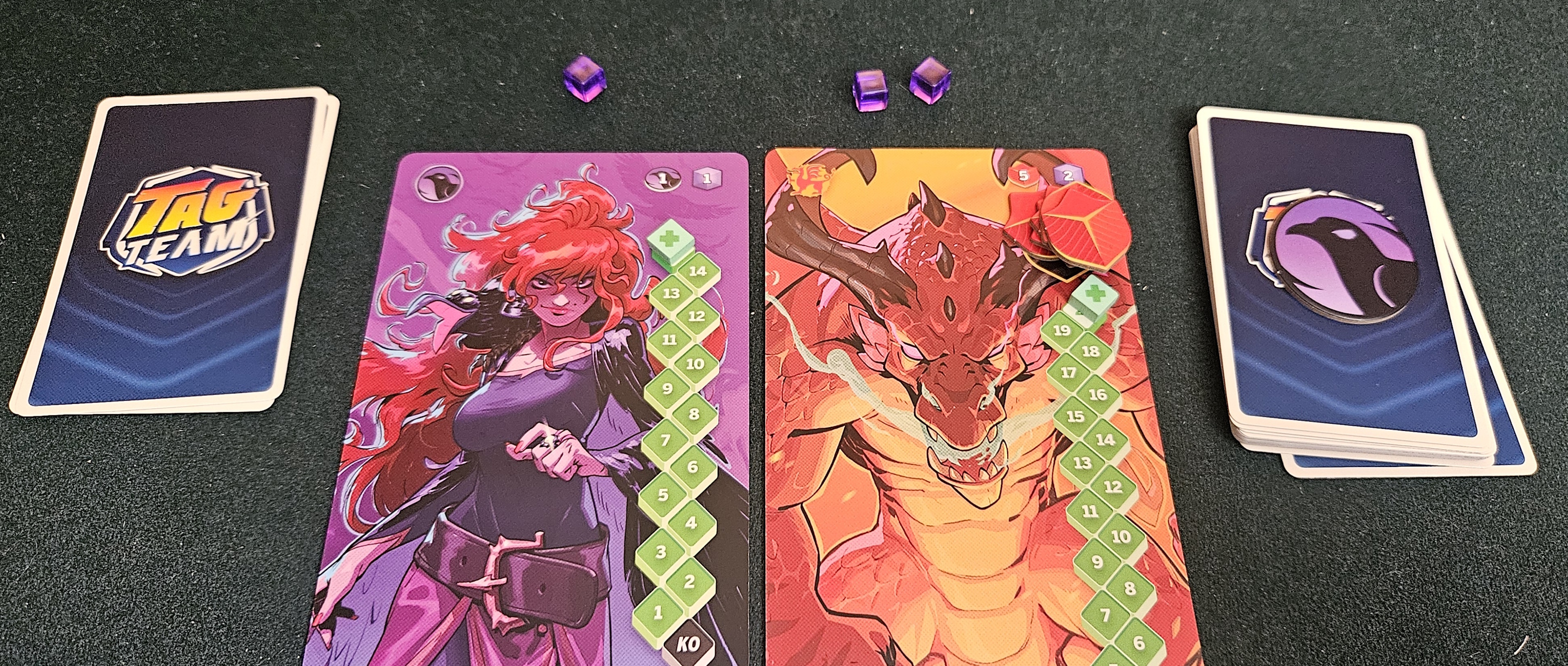
Two of the set’s six characters.
For those coming in late, Arthur’s Legacy keeps the Tag Team formula fully intact. Both players pick two fighters and shuffle their decks together. Then you take those fighters’ two starting cards, one apiece, and order them as you like. When battle kicks off, these cards resolve simultaneously: my first card and yours, then our second cards together.
What happens next is where the game shines. We both take a trio of cards from our larger decks, pick one, and slide it into our battle decks. The order of our previous cards must be preserved, but our new attack (or block or heal or defense or whatever else) can be added before, after, or in the middle of our previous cards. Now we have a battle deck that’s three cards deep. We resolve another clash. Then we add a fourth card. Another battle. Now a fifth card.
We continue adding cards to our battle deck and duking it out until a fighter is KO’d, at which point the game is over. Along the way, our decks grow outward, but only in manageable increments. It’s so simple that one designer friend, in the midst of theory-crafting his own auto-battler, was shocked at its lack of adornment. Which isn’t to say the game is shallow. It’s just that it’s subtle, capable of being played sloppily or carefully, and reliant more on memory and yomi than on flashy stratagems.
My worry, when it came to expansions, was that the design team would clutter what was otherwise such an elegant piece of work. Even in the original set, a few of the fighters were decidedly more complicated than the others. In some cases, this could distract from the actual battle, adding an unnecessary cognitive load over the top of the cards and their all-important ordering.
Here’s the good news: while Arthur’s Legacy is somewhat slimmer than the initial Tag Team, with only six fighters rather than the original ten, this is probably the stronger ingress for newcomers. Instead of bumping up the complexity, Corentin Lebrat, Gricha German, and their added co-designers have kept the powers meaningful and punchy. If anything, the new characters are easier to handle than many of the previous set’s fighters.
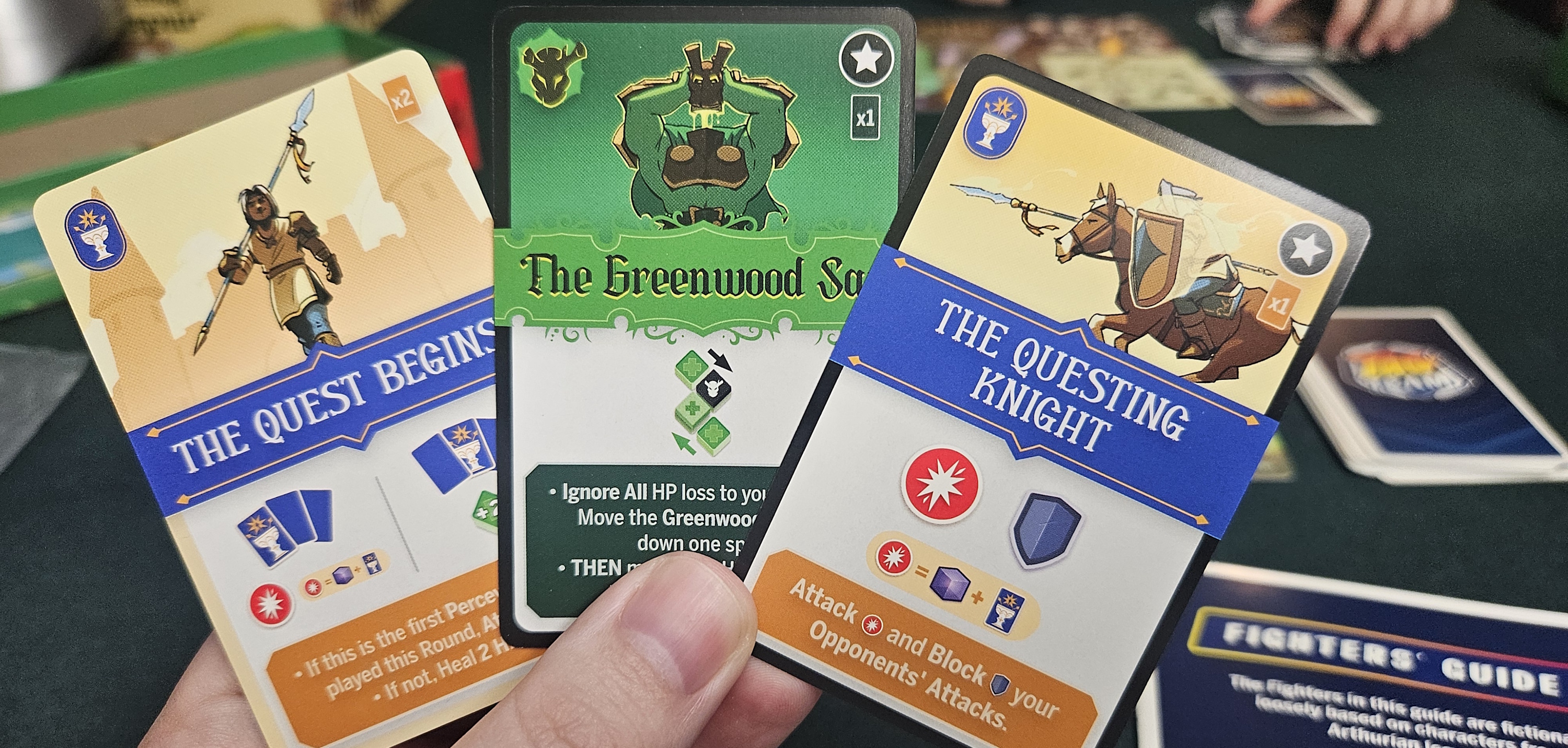
Drafting from a selection of three cards.
Naturally, each fighter has its own gimmick. The Dragon sprouts scales that act as makeshift armor, reducing opposing attacks but shedding them in the process. Percival grows more powerful with added cards, performing lots of little n-value attacks that encourage you to focus on his combos, but at the risk of neglecting his partner. Basically he’s self-obsessed, but for good reason. Morgan’s whole thing is dead simple: her gift of foresight lets her see which card her opponent is drafting before she makes her own selection. And the Green Knight offers a miniature game of press-your-luck. He heals fully every round, but many of his abilities lower the ceiling on his actual life pool. This makes him difficult to whittle down, but also prone to killing blows. Prolonged bouts are not his friend.
The last two fighters are a little more complicated, but, again, not by much. My personal favorite is Merlin. He comes with a little sideboard that’s kin to a skill tree. Certain cards let him upgrade his skills, gaining blocks or attacks or heals. These then trigger thanks to other cards, resulting in attack/heal/block combos that are incredibly powerful. Then again, because they only trigger on rare cards, they become fragile and easy to preempt. Arthur’s Legacy continues Tag Team’s tradition of including occasional cards that cancel their foe’s ability outright, meaning a well-timed counter can leave Merlin with his smock down. Or blown up. Whichever way an awkward smock goes.
Lastly, there’s Excalibur. This one is tricky. The gist is that it’s a low-health, high-finesse fighter, almost guaranteed to shatter midway into the match. But rather than ending with a KO, the duel continues with an invulnerable Excalibur. The downside is that Excalibur’s cards now add a “broken” trigger. In nearly every case, these injure Excalibur’s partner. But there are a couple that are even more potent when shattered, like one that damages everyone at the table, or another that lets Excalibur’s partner make an unblockable attack. Perhaps more importantly, this upsets the previous status quo. The order of cards is thrown into disarray, with attacks that previously targeted Excalibur suddenly rendered ineffective. It’s tough to play, but incredibly rewarding at the same time.
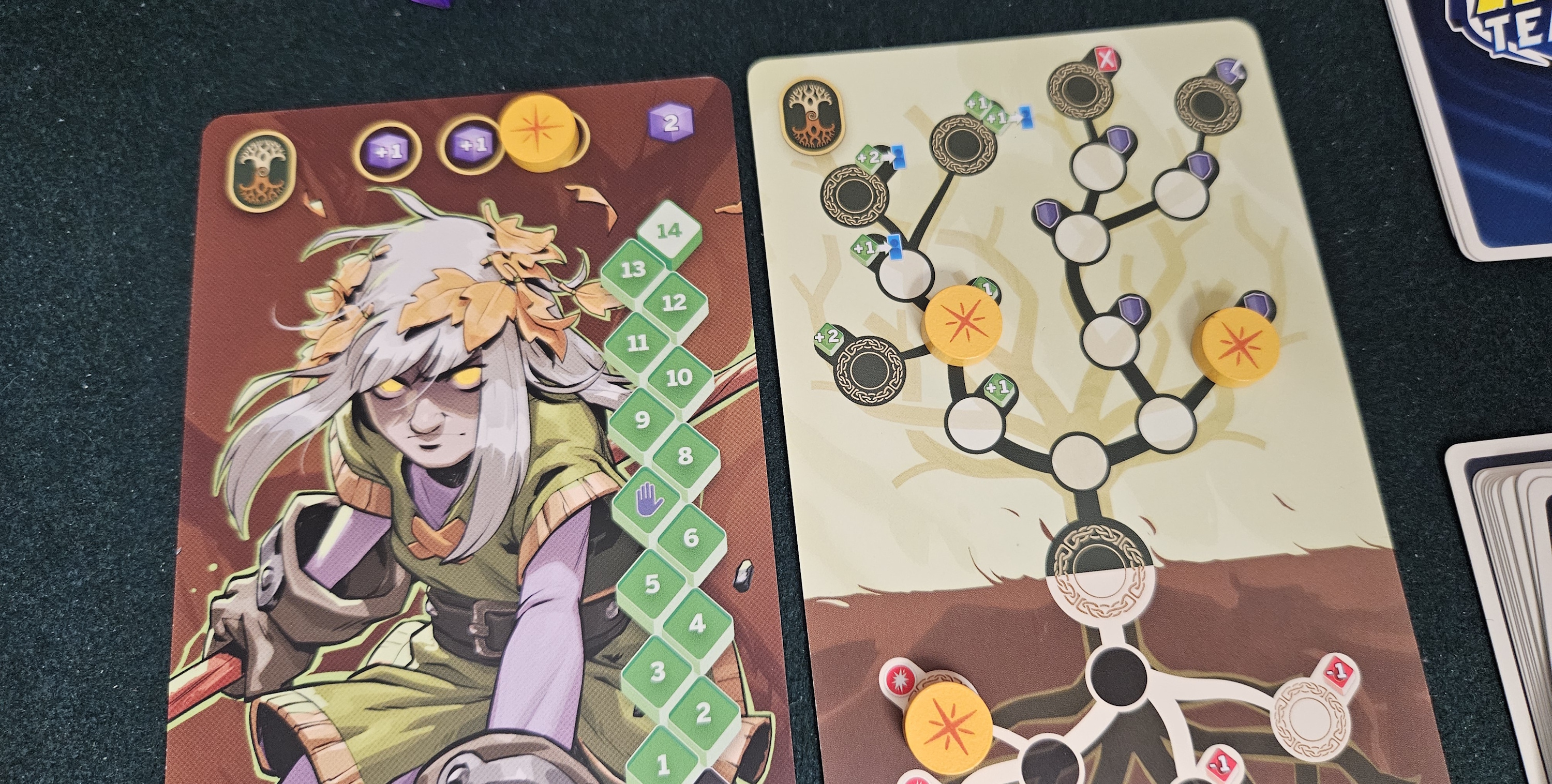
Where is Merlin, for I much desire to speak with him?
In nearly every regard, Arthur’s Legacy is an excellent follow-up to one of last year’s strongest two-player titles. It’s a little slimmer than I would have preferred, but it hits the right spot in terms of rules load and complexity. Most importantly, it preserves the system’s elegance. Indeed, it doubles down in that regard. These characters have a clear identity, feel distinct without risking obvious power gaps, and make strong additions to any duo, whether paired with the original or on their own.
A complimentary copy of Tag Team: Arthur’s Legacy was provided by the publisher.
(If what I’m doing at Space-Biff! is valuable to you in some way, please consider dropping by my Patreon campaign or Ko-fi. Right now, supporters can read the next installment in my series Talking About Games, this time tackling the topic of what makes a good list! Naturally, the piece includes a list.)
The people demand takes, so get ’em while they’re hot. We’re weighing in on some possibly bad, certainly edgy opinions, and deciding where we land (spoiler: we’re always right). Before we get heated, we talk about Diplomacy: The Golden Blade, and Cozy Stickerville.
If you don’t want to miss an episode, please subscribe on Apple Podcasts/Google Podcasts/Stitcher/Spotify, or add our RSS feed to your favourite app. Reviews and subscriptions really help us and would be greatly appreciated! To download the episode directly, click here.
If you’d like to discuss anything in the episode, please do so in the comments below, visit our BoardGameGeek guild, join our Discord, or Facebook Group! Any feedback is also always helpful. If you’d like to show your support for the show, we also have a Patreon with some fun rewards, and a merch store!
Timecodes:
01:46 – Diplomacy: The Golden Blade
12:33 – Cozy Stickerville
25:41 – Hot takes!
26:11 – Co-op games are just single player games with an audience
32:01 – Catch Up mechanics ruin competitive integrity
37:39 – Legacy games are a predatory waste of money
41:22 – If a game takes more than 30 minutes to teach, it’s a bad design
45:56 – Player elimination is actually a good mechanism
47:36 – Hidden victory points are a cowardly design choice
51:38 – Gateway games Like Catan or Monopoly should be actively avoided
52:44 – House ruling a game means you bought the wrong game
53:10 – Theme is a myth
54:13 – Kickstarter deluxe editions are actively ruining the hobby
Thank you to Heart Society for generously letting us use What’s On Your Mind, Kid? from their album Wake the Queens.
The post BGB Podcast #362 – Hot Takes About Board Games appeared first on Board Game Barrage.Viele Spiele haben Gemeinsamkeiten. So verbindet einzelne Spiele aus der Liste etwas, aber es gibt auch etwas, was genau diese 11 Spiele gemein haben. Bei diesem neu entwickelten Konzept verraten wir Euch nicht in den Kapitelmarken und im Folgenamen was es ist, denn bei diesem Konzept durch ihr mitraten! Viel Spaß!
The post SWAMS #84 – 11 Spiele – Was verbindet sie? first appeared on Blogspiele.
Happy new year, everybody! I hope it will bring you much joy. I also hope it will bring you board games (which is basically the same thing). The question is, however: Which games? – Here are a few 2026 releases which look most intriguing to me. Long-time readers of this blog will notice that this year’s list is a bit longer than usual – there are just so many fascinating games scheduled for release this year!
As always, don’t take this as a shopping list (neither for you nor for me). Your taste in games and your discretion how many new games you want to chase decide what will end up in your shelf (and, hopefully, on your table)!
After that reminder, on to the games. As all of them are set in human history, they are ordered from most ancient to most recent.

1-3 players, up to 90 minutes
Once the greatest Roman politician-generals outgrew to confines of the republican power-sharing agreement, the Republic was bound to fall. Yet it was not predestined that it would fall to Caesar. In fact, two of his associates/rivals, Pompey and Crassus, might as well have taken the diadem… if they had played their cards better.
Triumvir casts its players as the three mightiest power brokers of the last years of the Roman Republic. They will attempt to parlay their wealth, popularity, and military force into political success (in an adaptation of the negotiation mechanic from Engelstein’s and Herman’s previous cooperation Versailles 1919). Whoever settles the issues in the senate in their favor and deals best with the challenges in the rebellious provinces is poised to become the First Man in Rome…forever.
You can still pre-order Triumvir at the P500 price of $60.00 (regular price: $101.00). Release is expected for March.

4 players, 60-120 minutes
I have a fondness for the early modern period, this time when so many old certainties in Europe were shattered by revolutionary new developments – from the printing press over the discovery of America to the Reformation.
Neither King Nor God focuses on the struggle over military, religious, and commercial supremacy in Western Europe, with the Pope, the Holy Roman Emperor, and the Kings of England and France as the four protagonists. The players will send their courtiers to the big cities of Europe. These courtiers range from merchants over generals to assassins, each with their own action, forming a neat stack in each city. Once all courtiers are placed, each city’s courtier stack is resolved top to bottom – so, the last courtier placed is the first one to resolve! There are a lot of tactical considerations involved in which courtier you’d like to trigger early or late, and as they are placed face-down, also a good deal of bluffing.
I had the opportunity to play Neither King Nor God at last year’s SPIEL in Essen. Our Holy Roman Emperor attempted to spread Protestantism in Germany and waged war against the Pope for control of Venice, while France and England expanded their commercial networks on the continent and clashed over Normandy. Everyone had a great time!
The limited pilot edition of Neither King Nor God can be ordered for € 69.00 and will be shipping in mid- or late January. Sound of Drums aims to have the full epic edition ready for SPIEL in October 2026.

2 players, 150-180 minutes
The European revolutions of 1848/49 are generally considered failures. After all, the ancient régimes had returned to power everywhere but in France, and even there the Second Republic was soon overthrown by Louis-Napoleon Bonaparte. Yet for months it looked like all of Europe could shed the old order in favor of liberalism, nation-states, and maybe even – gasp! – democracy. And even when the revolutionaries were defeated, they had changed the way the game was played: From then on, politics was conducted in public, with parliaments, parties, and newspapers, and the forces of liberalism and nationalism had to be taken into consideration by even the most conservative of monarchical governments.
Despite the impact of the revolutions, barely any games have covered them. Jules Félisaz’s 1848 seeks to rectify that in an ambitious manner, covering the political, military, intellectual, and social dimensions of the revolutions in all of Europe. Félisaz relies on a mix of tried-and-true CDG mechanics – the “mandatory opponent events” from Twilight Struggle, the spatial layout of societal groups from 1989, and the escalation through decks from Paths of Glory, adding its own twists where appropriate (for example, overlapping scoring regions based on nationality (German, Polish, Italian…) and empire (Russian, Prussian, Austrian).
You can still pre-order 1848 at the P500 price of $46.00 (regular price: $72.00). Release is expected for March.

1-3 players, 30-45 minutes
Let us not say there are only wargames on this list. Look, here’s a peace game!
Making peace is generally a complex business, and so it was in the case of the Russo-Japanese War (1904/05): The Japanese, emboldened by their military success on land and sea, demanded a large financial indemnity as well as the cession of Sakhalin. The Russian tsar refused to consider either. Yet with revolution rampant in Russia and the Japanese government close to financial collapse, both sides needed to end the war. Their delegates at the US-mediated peace conference of Portsmouth had to figure out how to balance peace, national interest, and saving face.
In the classic two-player mode, the opponent players represent the delegates of Japan and Russia at Portsmouth who negotiate over Japan’s demands. Their hands of cards represent diplomatic approaches – listening or emphasizing, acquiescing or threatening. More aggressive stances are more likely to carry the day on any given issue, but the more lopsided a round of negotiations is, the more tensions will rise on the side of the loser. If they are pushed too hard, they will resort to war – and the other side will bear the blame for not being ready to compromise.
Other player counts see US president Theodore Roosevelt join as either as a third player or the solo role. In either case, Roosevelt is an “honest broker” whose goal it is to find an equitable resolution to the conflict.
Peace 1905 awaits its Kickstarter campaign in the second quarter of 2026. The game will be released in late 2026.

1-4 players, 120-180 minutes
Hammer and sickle are, of course, the symbols of communism. Yet ideology aside, they speak of the material basis of modern societies – the food that everyone needs to eat, and the industrial production that is required for everything from building houses to waging war.
This economy underlies Hammer and Sickle, a multiplayer treatment of the Russian Civil War after the October Revolution: The industrial cities (mostly in the north and west of the collapsing Russian empire), marked by hammers, produce Firepower – provided that their workers are fed with Food (from the sickle-marked rural provinces in the south). Otherwise, the workers start to rebel.
The result is a delicate balance between Food and Firepower, exacerbated by the factions’ asymmetries: The Bolsheviks, for example, have easy access to a lot of hammers, but might find themselves short of sickles; but the opposite might be true for the White Army operating from the south. In addition to the game’s (loose) two alliances of Revolutionaries (Bolsheviks and Anarchists) and Counter-Revolutionaries (White Army and New Nations), new alignments might develop…
Alex Knight has shown his ability to turn a complex political-military struggle into a compelling board game with the Spanish Civil War in the intriguing Land and Freedom. I’m sure he’ll do the same with Hammer and Sickle.
You can pre-order Hammer and Sickle at the P500 price of $62.00 (regular price: $97.00). Release is expected not before the third quarter of 2026… which might turn into 2027, but I wanted to include the game here anyway because it just seems so fascinating.

1-2 players, 20-40 minutes
Matthias Cramer has got the range. He has designed great epics like Weimar: The Fight for Democracy, but he is also a master of the short form. His Watergate is a knife fight in a phone booth… and Lenin’s Legacy promises to be cut from the same cloth.
Vladimir Ilyich Lenin was the dominant figure of the new Bolshevik government of Russia, but his health started to fail him soon after the October Revolution. Behind the scenes, his lieutenants jockeyed for position to succeed him – and the two likeliest candidates were Leon Trotsky and Joseph Stalin. While they differed in their politics – Trotsky wanted to advance the “world revolution”, Stalin advocated for “socialism in one country” – and their power bases – Trotsky was the creator of the Red Army, Stalin controlled the Communist Party – they had one thing in common: Their drive to take power.
Lenin’s Legacy lets its players fill their shoes and struggle over the army, the party, and the regions and politicians of the Soviet Union in a card-driven game with a twist: Almost all cards are selected from an open market. The players hold only one card each… but they can gamble on playing the opponent’s card (without knowing what it is)!
You can still pre-order Lenin’s Legacy at the P500 price of $37.00 (regular price: $59.00). Release is expected for March.

1-2 players, 30-45 minutes
Many of the games in this post are very zoomed-out, grand strategic affairs. The counters you push move armies, the cards you play shake nations. Yet there is also something very charming about games operating on the micro level, and you get exactly that with Night Witches.
You are on the Eastern Front of World War II, serving in the all-women 588th Night Bomber Regiment of the Soviet Air Forces. You have no more than two biplanes at your command in every mission… and they are old, slow, and vulnerable. Still, your goal is to harass the invading German forces with these low-flying, hard-to-detect, and hard-to-engage craft every night, do damage as much damage as you can (or, at least, wear the enemy out with constant nocturnal attacks), and make it back safe.
You can play each mission separately or in a ten-mission campaign which allows you to carry over upgrades, and either solo or as a two-player cooperative effort.
Night Witches awaits its Kickstarter campaign in the second quarter of 2026. The game will be released in late 2026.

1-4 players, 60-480 minutes
This game has been long in the making. I’ve referenced it as ready for pre-order eight years ago, and have been intrigued by its premise since then. The Berlin Airlift was the largest airborne logistics operation ever, and for it to render the Berlin Blockade (on the ground) void, hundreds of planes had to arrive every day in Berlin with fuel, food, spare parts, and medical supplies, notwithstanding the limited infrastructure, the often rough weather, and every so often, Soviet interference.
This immense logistical task fell to the US Air Force and the Royal Air Force, each of which is represented by two “squadrons” (players) in the game. The players strive to contribute the most to the effort with their squadron, but their internal competition sometimes has to take the backseat when a joint effort is required to confront Soviet interference or keep the morale of the Berlin population up.
John Poniske’s original design has been taken on by Terry Simo. The Berlin Airlift is now ready for production. It can still be pre-ordered here at the reduced price of $55.00 (later MSRP estimated $75.00). Publication is expected for the third quarter of 2026.
And which 2026 games look most exciting to you? Let me know in the comments!
Happy new year, everybody! I hope it will bring you much joy. I also hope it will bring you board games (which is basically the same thing). The question is, however: Which games? – Here are a few 2026 releases which look most intriguing to me. Long-time readers of this blog will notice that this year’s list is a bit longer than usual – there are just so many fascinating games scheduled for release this year!
As always, don’t take this as a shopping list (neither for you nor for me). Your taste in games and your discretion how many new games you want to chase decide what will end up in your shelf (and, hopefully, on your table)!
After that reminder, on to the games. As all of them are set in human history, they are ordered from most ancient to most recent.
1-3 players, up to 90 minutes
Once the greatest Roman politician-generals outgrew to confines of the republican power-sharing agreement, the Republic was bound to fall. Yet it was not predestined that it would fall to Caesar. In fact, two of his associates/rivals, Pompey and Crassus, might as well have taken the diadem… if they had played their cards better.
Triumvir casts its players as the three mightiest power brokers of the last years of the Roman Republic. They will attempt to parlay their wealth, popularity, and military force into political success (in an adaptation of the negotiation mechanic from Engelstein’s and Herman’s previous cooperation Versailles 1919). Whoever settles the issues in the senate in their favor and deals best with the challenges in the rebellious provinces is poised to become the First Man in Rome…forever.
You can still pre-order Triumvir at the P500 price of $60.00 (regular price: $101.00). Release is expected for March.
4 players, 60-120 minutes
I have a fondness for the early modern period, this time when so many old certainties in Europe were shattered by revolutionary new developments – from the printing press over the discovery of America to the Reformation.
Neither King Nor God focuses on the struggle over military, religious, and commercial supremacy in Western Europe, with the Pope, the Holy Roman Emperor, and the Kings of England and France as the four protagonists. The players will send their courtiers to the big cities of Europe. These courtiers range from merchants over generals to assassins, each with their own action, forming a neat stack in each city. Once all courtiers are placed, each city’s courtier stack is resolved top to bottom – so, the last courtier placed is the first one to resolve! There are a lot of tactical considerations involved in which courtier you’d like to trigger early or late, and as they are placed face-down, also a good deal of bluffing.
I had the opportunity to play Neither King Nor God at last year’s SPIEL in Essen. Our Holy Roman Emperor attempted to spread Protestantism in Germany and waged war against the Pope for control of Venice, while France and England expanded their commercial networks on the continent and clashed over Normandy. Everyone had a great time!
The limited pilot edition of Neither King Nor God can be ordered for € 69.00 and will be shipping in mid- or late January. Sound of Drums aims to have the full epic edition ready for SPIEL in October 2026.
2 players, 150-180 minutes
The European revolutions of 1848/49 are generally considered failures. After all, the ancient régimes had returned to power everywhere but in France, and even there the Second Republic was soon overthrown by Louis-Napoleon Bonaparte. Yet for months it looked like all of Europe could shed the old order in favor of liberalism, nation-states, and maybe even – gasp! – democracy. And even when the revolutionaries were defeated, they had changed the way the game was played: From then on, politics was conducted in public, with parliaments, parties, and newspapers, and the forces of liberalism and nationalism had to be taken into consideration by even the most conservative of monarchical governments.
Despite the impact of the revolutions, barely any games have covered them. Jules Félisaz’s 1848 seeks to rectify that in an ambitious manner, covering the political, military, intellectual, and social dimensions of the revolutions in all of Europe. Félisaz relies on a mix of tried-and-true CDG mechanics – the “mandatory opponent events” from Twilight Struggle, the spatial layout of societal groups from 1989, and the escalation through decks from Paths of Glory, adding its own twists where appropriate (for example, overlapping scoring regions based on nationality (German, Polish, Italian…) and empire (Russian, Prussian, Austrian).
You can still pre-order 1848 at the P500 price of $46.00 (regular price: $72.00). Release is expected for March.
1-3 players, 30-45 minutes
Let us not say there are only wargames on this list. Look, here’s a peace game!
Making peace is generally a complex business, and so it was in the case of the Russo-Japanese War (1904/05): The Japanese, emboldened by their military success on land and sea, demanded a large financial indemnity as well as the cession of Sakhalin. The Russian tsar refused to consider either. Yet with revolution rampant in Russia and the Japanese government close to financial collapse, both sides needed to end the war. Their delegates at the US-mediated peace conference of Portsmouth had to figure out how to balance peace, national interest, and saving face.
In the classic two-player mode, the opponent players represent the delegates of Japan and Russia at Portsmouth who negotiate over Japan’s demands. Their hands of cards represent diplomatic approaches – listening or emphasizing, acquiescing or threatening. More aggressive stances are more likely to carry the day on any given issue, but the more lopsided a round of negotiations is, the more tensions will rise on the side of the loser. If they are pushed too hard, they will resort to war – and the other side will bear the blame for not being ready to compromise.
Other player counts see US president Theodore Roosevelt join as either as a third player or the solo role. In either case, Roosevelt is an “honest broker” whose goal it is to find an equitable resolution to the conflict.
Peace 1905 awaits its Kickstarter campaign in the second quarter of 2026. The game will be released in late 2026.
1-4 players, 120-180 minutes
Hammer and sickle are, of course, the symbols of communism. Yet ideology aside, they speak of the material basis of modern societies – the food that everyone needs to eat, and the industrial production that is required for everything from building houses to waging war.
This economy underlies Hammer and Sickle, a multiplayer treatment of the Russian Civil War after the October Revolution: The industrial cities (mostly in the north and west of the collapsing Russian empire), marked by hammers, produce Firepower – provided that their workers are fed with Food (from the sickle-marked rural provinces in the south). Otherwise, the workers start to rebel.
The result is a delicate balance between Food and Firepower, exacerbated by the factions’ asymmetries: The Bolsheviks, for example, have easy access to a lot of hammers, but might find themselves short of sickles; but the opposite might be true for the White Army operating from the south. In addition to the game’s (loose) two alliances of Revolutionaries (Bolsheviks and Anarchists) and Counter-Revolutionaries (White Army and New Nations), new alignments might develop…
Alex Knight has shown his ability to turn a complex political-military struggle into a compelling board game with the Spanish Civil War in the intriguing Land and Freedom. I’m sure he’ll do the same with Hammer and Sickle.
You can pre-order Hammer and Sickle at the P500 price of $62.00 (regular price: $97.00). Release is expected not before the third quarter of 2026… which might turn into 2027, but I wanted to include the game here anyway because it just seems so fascinating.
1-2 players, 20-40 minutes
Matthias Cramer has got the range. He has designed great epics like Weimar: The Fight for Democracy, but he is also a master of the short form. His Watergate is a knife fight in a phone booth… and Lenin’s Legacy promises to be cut from the same cloth.
Vladimir Ilyich Lenin was the dominant figure of the new Bolshevik government of Russia, but his health started to fail him soon after the October Revolution. Behind the scenes, his lieutenants jockeyed for position to succeed him – and the two likeliest candidates were Leon Trotsky and Joseph Stalin. While they differed in their politics – Trotsky wanted to advance the “world revolution”, Stalin advocated for “socialism in one country” – and their power bases – Trotsky was the creator of the Red Army, Stalin controlled the Communist Party – they had one thing in common: Their drive to take power.
Lenin’s Legacy lets its players fill their shoes and struggle over the army, the party, and the regions and politicians of the Soviet Union in a card-driven game with a twist: Almost all cards are selected from an open market. The players hold only one card each… but they can gamble on playing the opponent’s card (without knowing what it is)!
You can still pre-order Lenin’s Legacy at the P500 price of $37.00 (regular price: $59.00). Release is expected for March.
1-2 players, 30-45 minutes
Many of the games in this post are very zoomed-out, grand strategic affairs. The counters you push move armies, the cards you play shake nations. Yet there is also something very charming about games operating on the micro level, and you get exactly that with Night Witches.
You are on the Eastern Front of World War II, serving in the all-women 588th Night Bomber Regiment of the Soviet Air Forces. You have no more than two biplanes at your command in every mission… and they are old, slow, and vulnerable. Still, your goal is to harass the invading German forces with these low-flying, hard-to-detect, and hard-to-engage craft every night, do damage as much damage as you can (or, at least, wear the enemy out with constant nocturnal attacks), and make it back safe.
You can play each mission separately or in a ten-mission campaign which allows you to carry over upgrades, and either solo or as a two-player cooperative effort.
Night Witches awaits its Kickstarter campaign in the second quarter of 2026. The game will be released in late 2026.
1-4 players, 60-480 minutes
This game has been long in the making. I’ve referenced it as ready for pre-order eight years ago, and have been intrigued by its premise since then. The Berlin Airlift was the largest airborne logistics operation ever, and for it to render the Berlin Blockade (on the ground) void, hundreds of planes had to arrive every day in Berlin with fuel, food, spare parts, and medical supplies, notwithstanding the limited infrastructure, the often rough weather, and every so often, Soviet interference.
This immense logistical task fell to the US Air Force and the Royal Air Force, each of which is represented by two “squadrons” (players) in the game. The players strive to contribute the most to the effort with their squadron, but their internal competition sometimes has to take the backseat when a joint effort is required to confront Soviet interference or keep the morale of the Berlin population up.
John Poniske’s original design has been taken on by Terry Simo. The Berlin Airlift is now ready for production. It can still be pre-ordered here at the reduced price of $55.00 (later MSRP estimated $75.00). Publication is expected for the third quarter of 2026.
And which 2026 games look most exciting to you? Let me know in the comments!
Shownotes
Redebedarf. Das Podcastformat ohne Format. Manchmal gibt es einfach Anlässe, Erfahrungen und Beobachtungen zur Spielszene die nur in einem kurzen Podcast untergebracht werden können. Das tun Georgios Panagiotidis und Peer Sylvester mit Redebedarf.Shownotes
In Vintage geht es um Liebhaberstücke und Kuriositäten aus längst vergangenen Zeiten. In unregelmäßigen Abständen stöbern Georgios Panagiotidis und Peer Sylvester in Spielesammlungen und bringen diese Vintage-Spiele noch mal auf den Tisch. Was hat daran begeistert? Wie schlagen sich die Spiele heute? Was können wir aus der Spielevergangenheit lernen?