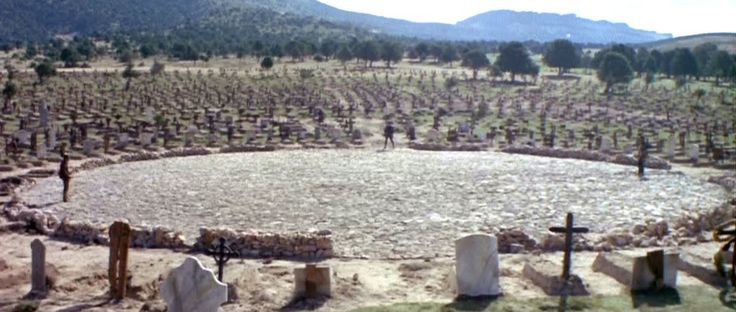
I remember the first time I saw The Good, the Bad, and the Ugly. I was a teen, sitting in front of a small CRT in a small living room. I was wholly unaware of what the next three hours of my life would entail. I hadn’t yet learned to trust my dad. And while…
The Soviet Union was one of the great dictatorships of the 20th century. It applied an immense amount of coercion on its own citizens as well as many of its neighboring countries. Yet the almost seventy years between the Soviet Union’s founding from the ashes of the Russian Civil War in 1922 and its fragmentation into 15 nation-states in 1991 are no monolith of unfreedom. There were two distinct periods of liberalization around a generation apart from each other – one that began under General Secretary Nikita Khrushchev in the 1950s, and one that began under General Secretary Mikhail Gorbachev in the 1980s. Let’s look at them, beginning with Khrushchev’s thaw, in terms of domestic, foreign, and economic policy. The post on Gorbachev’s reforms will follow in two weeks. As always, there will be board games along the way.
Freedom of Thought, Speech, and Political Expression
Joseph Stalin’s Soviet Union curtailed its citizens’ expression dramatically. Historiography has recounted Stalin’s reign of terror in detail, yet the best-known expression of the totalitarian control to which the Soviet Union aspired from the 1930s on is George Orwell’s dystopian novel 1984: Its one-party state does not only control citizens’ access to information (they are being exposed to constant propaganda and expected to keep up with its frequently changing, often contradictory contents), but demands active participation in the daily reconstruction of the system, ranging from institutionalized “two-minute hate” against political enemies to unlimited devotion to the “Big Brother” at the top of the pyramid.
The Soviet equivalent to the “Big Brother,” of course, was Stalin who was exalted in an official cult of personality as a wise and infallible leader, working tirelessly for the security and well-being of the Soviet Union. Whatever went wrong on the Soviet Union’s inexorable march of progress was the fault of an inept underling or a shadowy enemy.
When Stalin died, his lieutenants fought briefly, but viciously over his succession. Nikita Khrushchev emerged victorious. Khrushchev had been as loyal to Stalin as his chief rivals and immediatly used Stalinist methods to depose Lavrentiy Beria, the powerful Minister of Internal Affairs (and thus chief of the domestic security services). Beria was charged with treason, put through a mock trial, and executed.
Khrushchev’s skillful power politics could also swing the other way, though. He prepared a report on Stalin’s crimes which he delivered to a stunned audience at the 20th Congress of the Communist Party of the Soviet Union on February 25, 1956. For four hours, Khrushchev detailed Stalin’s party purges, his deportation of whole peoples deemed unloyal, and, most of all, how Stalin had established a cult of personality in which he was almost worshipped like a god.
Khrushchev’s de-Stalinization drive did not stop at mere proclamations. The late 1950s and early 1960s saw a lessening of censorship: Alexander Solzhenitsyn was allowed to publish his Gulag novel One Day in the Life of Ivan Denisovitch.
There were limits, however: Criticism of Stalin’s Gulags was one thing, criticism of the October Revolution another. Boris Pasternak’s Doctor Zhivago was not published in the USSR. When Pasternak won the Nobel Prize in literature for it, he and his family were threatened by agents of the state. Cowed, Pasternak did not travel to Stockholm to accept the prize.
Still, Khrushchev’s pivot represented an important turn in the state’s relationship with violence. While Soviet citizens were still routinely surveilled and subjected to coercion, it was neither with the overwhelming force of Stalinism nor with its unpredictability. The age of escalating purges, in which the accusers of today would be the accused of tomorrow was over.
Peaceful Coexistence and Khrushchev’s Many Other Schemes
Khrushchev’s 1956 speech was meant to remain secret, known only to its direct recipients and the allied Communist governments in Eastern Europe, but a member of the Polish Communist party smuggled a copy abroad via the Israeli embassy in Warsaw. From there, it soon gained wide circulation, and while Khrushchev had intended it to be a domestic power play only (it delegitimized his rivals Georgy Malenkov and Vyacheslav Molotov), he now also reaped benefits abroad: The post-Stalinist Soviet Union was naturally a more attractive ally and role model for both the socialist movements in Europe and the decolonizing and freshly independent nations in Africa and Asia.
This unintended benefit is the focus of the foreign-policy heavy Twilight Struggle‘s De-Stalinization card: The Soviet player may move up to four points of influence around on the globe. That may seem like a zero-sum game – after all, the influence is not added, but only moved. But the Soviet Union typically has a lot of spare influence in Eastern Europe after the first one or two turns, and De-Stalinization is the earliest and best way to gain access to faraway continents, chiefly South America (and, to a lesser degree, Africa).
Even before Khrushchev’s speech was leaked, his approach to foreign policy markedly differed from Stalin’s last years. When the relationship with the Soviet Union’s erstwhile allies had deteriorated after the end of World War II, Stalin had adopted a confrontational stance based on the assumption that the world was split in two hostile camps. Khrushchev, on the other hand, approached the western powers under the new motto of peaceful coexistence. Socialism and capitalism could both inhabit the same world. Of course, Khrushchev as a convinced Communist believed that his system would eventually triumph. Until then, peaceful coexistence would not only foster peace, but also make socialism more attractive, and free up resources for economic development and consumer goods (more on that below).
The economic (factory icon) and especially ideological (socialist – man with flat cap icon) bonuses are nice, but what sets the Peaceful Coexistence event in Wir sind das Volk! – 2+2 (Richard Sivél/Peer Sylvester, Histogame) apart is the ability to advance peace (dove icon) – indispensable when the world is sliding toward nuclear war!
Khrushchev was always better at initiating things than at seeing them through. Peaceful coexistence gave way to other projects – be that the support of nationalist movements in the global south or a re-newed competition with the West over Central Europe. And while Khrushchev thought that the Soviet Union and the western powers could live next to one another, that tolerance did not extend to heterodox socialist ideas within his own sphere of influence: When the Hungarian Socialist Workers’ Party announced to withdraw the country from the Warsaw Pact and hold free elections, Khrushchev had the reform movement quashed by Soviet tanks.
The Soviet economy under Stalin had been tuned to increase heavy industrial output to achieve a fast industrialization on the one hand and provide the basis for the country’s military security. This approach was validated by the country’s survival of the Nazi invasion and its eventual military victory in 1945. The proponents of this economic policy which usually went together with ideological mobilization and a confrontational foreign policy were called to adhere to politika. Yet after Stalin’s death, the rival faction of tekhnika gained ground: Its advocates favored a less aggressive foreign policy, less ideological mobilization, and, most of all, more market elements in the economy which would then produce more consumer goods.
Khrushchev positioned himself in the middle: Heavy industry would have priority (the Soviet Union was in a nuclear arms race with the United States whose economy was around three times as large as the Soviet, after all), but more attention would be given to consumer goods than before. Soviet citizens enjoyed a limited amount of prosperity with radios, washing machines, and sometimes even cars. Khrushchev saw this also as an instrument in the systemic competition of the Cold War: Material comfort and personal lifestyles would influence people’s allegiances as much as military strength or ideological treatises.
Khrushchev’s confidence in that regard led him to agree with the United States on mutual national exhibitions which would showcase their respective country to the citizens of the other. The confidence, however, was not quite justified: The Soviet exhibition in New York aroused curiosity, but the American one in Moscow was positively overrun. It also produced one of the iconic pictures of the Cold War with Nikita Khrushchev and US Vice President Richard Nixon debating the merits of their respective systems surrounded by American household appliances – the “Kitchen Debate.”
Some Soviet citizens might have dreamed of living in America, but their personal lifestyles already became more akin to those of Americans under Khrushchev. Even more important than the new consumer goods were their living conditions: Housing in big Soviet cities had been dominated by kommunalkas – large apartments from pre-revolutionary times which had been split to accommodate several families, each living in a single room and sharing the kitchen and bathroom with the others. These crammed living spaces afforded their inhabitants no privacy whatsoever. Only the elites of Stalin’s Soviet Union had apartments to themselves. Khrushchev started an ambitious housing program based on prefabricated, concrete-paneled apartment buildings which allowed millions of Soviet citizens to move into an apartment just for their own family for the first time.
As with foreign policy, Khrushchev started more economic reform projects than he saw through. The ambitious “Virgin Lands” campaign which aimed at alleviating Soviet food shortages by cultivating vast swathes of Siberia and northern Kazakhstan petered out after a few years. His scheme to introduce an Iowa-style corn belt fared even worse, discrediting both corn and Khrushchev in the Soviet Union.
Khrushchev’s Ouster
The economic starts and shifts of Khrushchev’s tenure undermined his position, as did his foreign policy unpredictability ranging from arms control to confronting the United States over Cuba. Most damaging to him, however, were his constant shuffles in the Communist Party. Disaffected cadres who feared they might lose their offices overthrew Khrushchev in October 1964. They installed the less fickle Leonid Brezhnev as new General Secretary of the Communist Party of the Soviet Union. The conservative Brezhnev would tone down some of Khrushchev’s domestic reforms, resulting in a more restricted cultural and literary climate, but stuck with Khrushchev’s economic reforms and conducted foreign policy along the lines of détente with the West.
Not everything about Khrushchev was as cuddly as this bear which he received when visiting an East German electronics factory, but his rule made the Soviet Union a better place to live and furthered its international power and prestige. Image from Wir sind das Volk! – 2+2.
In the end, Khrushchev himself was one of the beneficiaries of the liberalization he had pushed: Unlike the victims of the purges of the 1930s (or even Beria), he was not subjected to a mock trial and executed. Instead, he officially resigned for health reasons and was allowed to live out his days at a comfortable dacha in the countryside.
The authoritative biography remains Taubman, William: Khrushchev. The Man and His Era, Norton, New York City, NY 2004.
A magisterial mosaic of Soviet social, economic, and cultural life is Schlögel, Karl: The Soviet Century. Archaeology of a Lost World, Princeton University Press, Princeton, NJ 2023.
On the suppression of the Hungarian revolution and its impact on Soviet and western foreign policy, see Békés, Csaba: The 1956 Hungarian Revolution and World Politics, (Cold War International History Project Working Paper No. 16), Washington, D.C. 1996.
On the politika/tekhnika split, see Priestland, David: Cold War Mobilization and Domestic Politics: the Soviet Union, in: Leffler, Melvyn P./Westad, Odd Arne (eds.): The Cambridge History of the Cold War. Volume I. Origins, 5th edition, Cambridge University Press, Cambridge 2013, pp. 442-463.
The Soviet Union was one of the great dictatorships of the 20th century. It applied an immense amount of coercion on its own citizens as well as many of its neighboring countries. Yet the almost seventy years between the Soviet Union’s founding from the ashes of the Russian Civil War in 1922 and its fragmentation into 15 nation-states in 1991 are no monolith of unfreedom. There were two distinct periods of liberalization around a generation apart from each other – one that began under First Secretary Nikita Khrushchev in the 1950s, and one that began under General Secretary Mikhail Gorbachev in the 1980s. Let’s look at them, beginning with Khrushchev’s thaw, in terms of domestic, foreign, and economic policy. The post on Gorbachev’s reforms will follow in two weeks. As always, there will be board games along the way.
Freedom of Thought, Speech, and Political Expression
Joseph Stalin’s Soviet Union curtailed its citizens’ expression dramatically. Historiography has recounted Stalin’s reign of terror in detail, yet the best-known expression of the totalitarian control to which the Soviet Union aspired from the 1930s on is George Orwell’s dystopian novel 1984: Its one-party state does not only control citizens’ access to information (they are being exposed to constant propaganda and expected to keep up with its frequently changing, often contradictory contents), but demands active participation in the daily reconstruction of the system, ranging from institutionalized “two-minute hate” against political enemies to unlimited devotion to the “Big Brother” at the top of the pyramid.
The Soviet equivalent to the “Big Brother,” of course, was Stalin who was exalted in an official cult of personality as a wise and infallible leader, working tirelessly for the security and well-being of the Soviet Union. Whatever went wrong on the Soviet Union’s inexorable march of progress was the fault of an inept underling or a shadowy enemy.
When Stalin died, his lieutenants fought briefly, but viciously over his succession. Nikita Khrushchev emerged victorious. Khrushchev had been as loyal to Stalin as his chief rivals and immediatly used Stalinist methods to depose Lavrentiy Beria, the powerful Minister of Internal Affairs (and thus chief of the domestic security services). Beria was charged with treason, put through a mock trial, and executed.
Khrushchev’s skillful power politics could also swing the other way, though. He prepared a report on Stalin’s crimes which he delivered to a stunned audience at the 20th Congress of the Communist Party of the Soviet Union on February 25, 1956. For four hours, Khrushchev detailed Stalin’s party purges, his deportation of whole peoples deemed unloyal, and, most of all, how Stalin had established a cult of personality in which he was almost worshipped like a god.
Khrushchev’s de-Stalinization drive did not stop at mere proclamations. The late 1950s and early 1960s saw a lessening of censorship: Alexander Solzhenitsyn was allowed to publish his Gulag novel One Day in the Life of Ivan Denisovitch.
There were limits, however: Criticism of Stalin’s Gulags was one thing, criticism of the October Revolution another. Boris Pasternak’s Doctor Zhivago was not published in the USSR. When Pasternak won the Nobel Prize in literature for it, he and his family were threatened by agents of the state. Cowed, Pasternak did not travel to Stockholm to accept the prize.
Still, Khrushchev’s pivot represented an important turn in the state’s relationship with violence. While Soviet citizens were still routinely surveilled and subjected to coercion, it was neither with the overwhelming force of Stalinism nor with its unpredictability. The age of escalating purges, in which the accusers of today would be the accused of tomorrow was over.
Peaceful Coexistence and Khrushchev’s Many Other Schemes
Khrushchev’s 1956 speech was meant to remain secret, known only to its direct recipients and the allied Communist governments in Eastern Europe, but a member of the Polish Communist party smuggled a copy abroad via the Israeli embassy in Warsaw. From there, it soon gained wide circulation, and while Khrushchev had intended it to be a domestic power play only (it delegitimized his rivals Georgy Malenkov and Vyacheslav Molotov), he now also reaped benefits abroad: The post-Stalinist Soviet Union was naturally a more attractive ally and role model for both the socialist movements in Europe and the decolonizing and freshly independent nations in Africa and Asia.
This unintended benefit is the focus of the foreign-policy heavy Twilight Struggle‘s De-Stalinization card: The Soviet player may move up to four points of influence around on the globe. That may seem like a zero-sum game – after all, the influence is not added, but only moved. But the Soviet Union typically has a lot of spare influence in Eastern Europe after the first one or two turns, and De-Stalinization is the earliest and best way to gain access to faraway continents, chiefly South America (and, to a lesser degree, Africa).
Even before Khrushchev’s speech was leaked, his approach to foreign policy markedly differed from Stalin’s last years. When the relationship with the Soviet Union’s erstwhile allies had deteriorated after the end of World War II, Stalin had adopted a confrontational stance based on the assumption that the world was split in two hostile camps. Khrushchev, on the other hand, approached the western powers under the new motto of peaceful coexistence. Socialism and capitalism could both inhabit the same world. Of course, Khrushchev as a convinced Communist believed that his system would eventually triumph. Until then, peaceful coexistence would not only foster peace, but also make socialism more attractive, and free up resources for economic development and consumer goods (more on that below).
The economic (factory icon) and especially ideological (socialist – man with flat cap icon) bonuses are nice, but what sets the Peaceful Coexistence event in Wir sind das Volk! – 2+2 (Richard Sivél/Peer Sylvester, Histogame) apart is the ability to advance peace (dove icon) – indispensable when the world is sliding toward nuclear war!
Khrushchev was always better at initiating things than at seeing them through. Peaceful coexistence gave way to other projects – be that the support of nationalist movements in the global south or a re-newed competition with the West over Central Europe. And while Khrushchev thought that the Soviet Union and the western powers could live next to one another, that tolerance did not extend to heterodox socialist ideas within his own sphere of influence: When the Hungarian Socialist Workers’ Party announced to withdraw the country from the Warsaw Pact and hold free elections, Khrushchev had the reform movement quashed by Soviet tanks.
The Soviet economy under Stalin had been tuned to increase heavy industrial output to achieve a fast industrialization on the one hand and provide the basis for the country’s military security. This approach was validated by the country’s survival of the Nazi invasion and its eventual military victory in 1945. The proponents of this economic policy which usually went together with ideological mobilization and a confrontational foreign policy were called to adhere to politika. Yet after Stalin’s death, the rival faction of tekhnika gained ground: Its advocates favored a less aggressive foreign policy, less ideological mobilization, and, most of all, more market elements in the economy which would then produce more consumer goods.
Khrushchev positioned himself in the middle: Heavy industry would have priority (the Soviet Union was in a nuclear arms race with the United States whose economy was around three times as large as the Soviet, after all), but more attention would be given to consumer goods than before. Soviet citizens enjoyed a limited amount of prosperity with radios, washing machines, and sometimes even cars. Khrushchev saw this also as an instrument in the systemic competition of the Cold War: Material comfort and personal lifestyles would influence people’s allegiances as much as military strength or ideological treatises.
Khrushchev’s confidence in that regard led him to agree with the United States on mutual national exhibitions which would showcase their respective country to the citizens of the other. The confidence, however, was not quite justified: The Soviet exhibition in New York aroused curiosity, but the American one in Moscow was positively overrun. It also produced one of the iconic pictures of the Cold War with Nikita Khrushchev and US Vice President Richard Nixon debating the merits of their respective systems surrounded by American household appliances – the “Kitchen Debate.”
Some Soviet citizens might have dreamed of living in America, but their personal lifestyles already became more akin to those of Americans under Khrushchev. Even more important than the new consumer goods were their living conditions: Housing in big Soviet cities had been dominated by kommunalkas – large apartments from pre-revolutionary times which had been split to accommodate several families, each living in a single room and sharing the kitchen and bathroom with the others. These crammed living spaces afforded their inhabitants no privacy whatsoever. Only the elites of Stalin’s Soviet Union had apartments to themselves. Khrushchev started an ambitious housing program based on prefabricated, concrete-paneled apartment buildings which allowed millions of Soviet citizens to move into an apartment just for their own family for the first time.
As with foreign policy, Khrushchev started more economic reform projects than he saw through. The ambitious “Virgin Lands” campaign which aimed at alleviating Soviet food shortages by cultivating vast swathes of Siberia and northern Kazakhstan petered out after a few years. His scheme to introduce an Iowa-style corn belt fared even worse, discrediting both corn and Khrushchev in the Soviet Union.
Khrushchev’s Ouster
The economic starts and shifts of Khrushchev’s tenure undermined his position, as did his foreign policy unpredictability ranging from arms control to confronting the United States over Cuba. Most damaging to him, however, were his constant shuffles in the Communist Party. Disaffected cadres who feared they might lose their offices overthrew Khrushchev in October 1964. They installed the less fickle Leonid Brezhnev as new First Secretary of the Communist Party of the Soviet Union (an office soon to be re-named to General Secretary, like under Stalin). The conservative Brezhnev would tone down some of Khrushchev’s domestic reforms, resulting in a more restricted cultural and literary climate, but stuck with Khrushchev’s economic reforms and conducted foreign policy along the lines of détente with the West.
Not everything about Khrushchev was as cuddly as this bear which he received when visiting an East German electronics factory, but his rule made the Soviet Union a better place to live and furthered its international power and prestige. Image from Wir sind das Volk! – 2+2.
In the end, Khrushchev himself was one of the beneficiaries of the liberalization he had pushed: Unlike the victims of the purges of the 1930s (or even Beria), he was not subjected to a mock trial and executed. Instead, he officially resigned for health reasons and was allowed to live out his days at a comfortable dacha in the countryside.
The authoritative biography remains Taubman, William: Khrushchev. The Man and His Era, Norton, New York City, NY 2004.
A magisterial mosaic of Soviet social, economic, and cultural life is Schlögel, Karl: The Soviet Century. Archaeology of a Lost World, Princeton University Press, Princeton, NJ 2023.
On the suppression of the Hungarian revolution and its impact on Soviet and western foreign policy, see Békés, Csaba: The 1956 Hungarian Revolution and World Politics, (Cold War International History Project Working Paper No. 16), Washington, D.C. 1996.
On the politika/tekhnika split, see Priestland, David: Cold War Mobilization and Domestic Politics: the Soviet Union, in: Leffler, Melvyn P./Westad, Odd Arne (eds.): The Cambridge History of the Cold War. Volume I. Origins, 5th edition, Cambridge University Press, Cambridge 2013, pp. 442-463.
Staring at the art in front of them, next to a number of words, the group was trying to figure out which noun fit the paintings best. Someone read out a single word and explained their theory. Suddenly, everyone wanted to share their own opinion, some confident, some cautious. I listened to what everyone had to say. Only I knew which word was the right answer. After all, I had chosen it, based on The Vibe by Jacob Jaskov from Uloomi.
Welcome to the Dungeon — A cute little push-your-luck filler, kind of like “Name that tune.” “Well, I can beat that dungeon that has five monsters!” “Six monsters” “Six monsters but I’ll leave my vorpal sword behind!” etc. Does not overstay its welcome, at least with three players. Not earth shattering, but I got it for $5, so sure. Indifferent.
Magical Athlete — I was sure I had played this before when it was announced, but it turns out that I was thinking of Monster Derby. This one reminds me of Mrs. Tao’s name for Strat-o-matic Baseball: “Bunco for Boys.” It’s an amusing way to spend rolling dice for 30 minutes. This one comes closer to overstaying its welcome. (But we played with six players). Great production values with “Kids Educational Cartoon” style coloring, drawing and meeples. I’m sure if you brought this out with chits it would lose ~3 BGG rating points, deservedly so. Indifferent.
The Minerva Tabletop Games avatars are from their game Crumbs! The Sandwich Filler Game with art from BG Stats avatar veteran Rory Muldoon.
The Steinbock Brettspiele avatars are from their games Der König des Waldes and Bobbidi Boom with art from respectively Roland Deaconu and Lorenzo Fornaciari.
image by Roland Deaconu from Der König des Waldes
images by Rory Muldoon, from Crumbs! The Sandwich Filler Game
Please see our Score sheet page here: Requesting score sheets for an update on requesting score sheets.
I have long been fascinated by historical board games. I was never very good at history in school, but whenever I play a board game with a historical setting, I feel I learn something. Often, I feel compelled to find out more about the events that took place back then. No class in school ever evoked that curiosity in me. These days, I look at historical board games from an additional angle: the human element. While war games rarely identify individuals and often work on a larger scale, there is a new breed of historical games that bring players closer to the human experience. In this article, I want to explore these games further,
Conquer worlds with your Epic Warpath rules & reference!
It’s been a bumper time for fans of epic scale wargaming lately, and Mantic Games has got in on the act by Kickstarting an entire range – 8 factions – for their own epic system, Epic Warpath. I received the starter set, a couple of large resin models, and some epic scale building sets for review, and as I write the painting is finally done and I played my first game last week – and had a blast!
The rules are a nice mixture between old and new, using the command dice system from Deadzone and the order tokens pioneered in GW’s original Adeptus Titanicus and still used in their recent epic scale game Legions Imperialis. Order and combat tokens do a very nice job of tracking each unit’s current status during the game, so you can see what’s going on at a glance, and the combat system is straightforward and effective. It wasn’t long before the rules began to recede into the background during our first game and we could concentrate on what was happening on the table. The order of the rules in the book is a bit clunky however, and I’ve tried to improve comprehension with my rules & reference. Stayed tuned for a battle report video as soon as I get an opportunity!
The miniatures look great and there’s a minimum of fiddly construction, which is good to see. For me the big draw here over GW’s offering is the variety and distinctness of the available factions – and the fact they’re all available up front. While GW seems obsessed with their Horus Heresy, Mantic is having fun putting space rats, dwarves, zombies and weird aliens together on the tabletop, and to me that’s far more enjoyable than civil war amongst space marines.
To see what you get in the starter set, check out my unboxing. More to come!
We were looking for a very special gem, a gem that, according to rumours, promised eternity. Nobody knew exactly where it could be found - or rather, when, because this gem was lost in time. We opened portals like doors in a chronological corridor, using our technology to help us speed up our search, but to no avail - we are always a heartbeat too late. We were in a battle, chasing each other through ancient eras, sabotaging each other's signals, and stealing minutes. Yet, at last, I knew I had done it. The clock had finally aligned. I reached out, my hands shaking, and finally won the gem of Eternitium by Thomas Carlier from Haumea Games with art by Baptiste Perez.
Steam is having a sale on board games, and I’m debating whether to buy any. I’ve mainly not been too happy with board games on steam (see Mr. President and Space Corp), but for the price of a decent lunch having a game I might spend 20-100 hours on seems reasonable, so I’m considering getting one or two.
Also,GMT has announced a digital version of Space Empires 4x (dropping in June) That could be excellent as the real problems with the game were the accounting (and related errors) and digging up a bunch of counters without revealing what you were buying … both of which should be easily fixed by being on a computer.
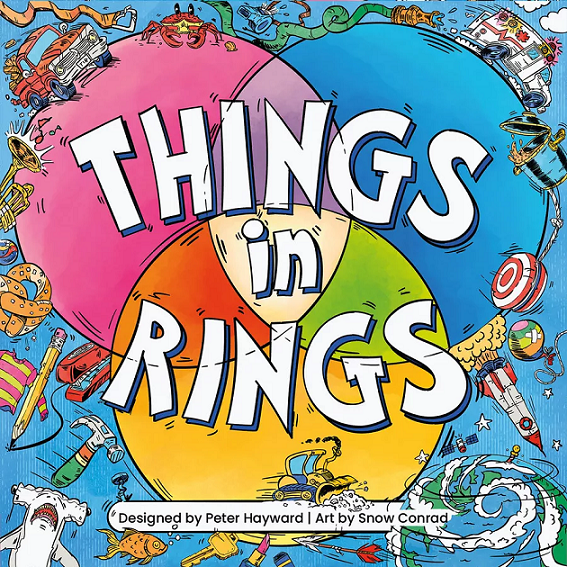
“Think left and think right and think low and think high. Oh, the things you can think up if you only try.” Party games often get short shrift. But it’s a difficult genre for innovative work. The majority of titles in this category are word games springing off the popularity of Codenames, or selection and…
You love board games. You probably also like music. Let’s combine the two into an immersive playlist for Imperial Struggle (Ananda Gupta/Jason Matthews, GMT Games). Have it gently play in the background during your next session of Imperial Struggle for the full period immersion!
First things first: Here’s the playlist!
Before we dive into the content of the playlist, some general observations:
Of course, there was no music recording in age of Imperial Struggle, so all the songs in the playlist have been recorded in the 20th or 21st century.
The playlist is only 1:45 hours long, so you might need to listen to it several times during your game… unless France stomps over Britain in the first turns.
The playlist is thematically sorted. That helps you find similar songs, but makes for somewhat monotonous listening (until you come to the next group of songs). I therefore recommend you turn shuffle on.
Now, what awaits you in the playlist?
#1-3: Religious (classical) music
Imperial Struggle begins after the age of the great confessional wars in Europe, but religion still played an important role in people’s lives, from the lowliest peasants all the way up to kings. Their week culminated in a Sunday service and their year was interspersed with religious events. Composers wrote pieces specifically for a religious holiday (like Bach’s “Christmas Oratorio” from which #2 is taken), or were dedicated to comprehensive religious teaching (like Händel’s “Messiah”, premiering on Easter 1742 in Dublin, from which #3 is taken).
#4-12: Secular (classical) music
The Baroque saw music as universal. Religious and secular followed the same conventions, and thus the same composers wrote pieces for the church and for worldly courts, like Baroque grandmaster Johann Sebastian Bach (Toccata and Fugue in D minor, #4 and Cello Suite No. 1 in G Major, #6) or Georg Friedrich Händel (Sarabande from Suite No. 11, #5). The classical (in the narrower sense) music from the mid-18th century on left this universal view behind. Composers now focused on either one or the other, with most of them following the more fashionable and more lucrative secular path.
Some composed for a court whose lavish entertainments always required music (like the 1773 wedding of the French prince Charles Philippe, the later king Charles X, for which François Francœur arranged the music from which #9 is taken – thus the title Symphonie du Festin Royal (Symphony of the Royal Feast)). Others became freelance musicians (like Mozart, who could (for some years) live of the proceeds of his concerts and operas, #10-12).
#13-16: Folk songs
Not everyone went to a church where the latest compositions were played on Sundays, and of course most people were far removed from attending any court festivities, let alone royal weddings. But people made and listened to music. The easiest, most affordable way to do so was to sing. The 18th century is rich with folk songs, some originally written at the time (like Frère Jacques (“Brother James”), #15 or “Ye Jacobites by Name”, #16), others older, but first put down to paper at the time (Au Claire De La Lune (“By the Light of the Moon”, #13, and Over the Hills, and Far Away (#14)).
#17-23: Patriotic songs
We’ve heard in #16 already how political events seeped into popular songs. Others were written specifically to rouse patriotic feeling, an emotion which came into its own in the 18th century: “Rule, Britannia” (#17) expressed confidence and pride in the Royal Navy to protect British freedoms, “The British Grenadiers” (#18) praised the courage of their counterpart by land.
That these songs could be re-interpreted and turned against their original intent shows “Free America” (#19), written in 1770, which uses the same tune as “The British Grenadiers”, but its lyrics extol America’s freedom (which turned out to be freedom from Britain).
Finally, national anthems also came first into existence in the 18th century: Brits sang “God Save the King/Queen” (#22 – I took the liberty of choosing a not-quite-traditional version). France only got its first anthem (La Marseillaise, #23) with the French Revolution which bookends Imperial Struggle… at least until Ananda Gupta and Jason Matthews get around to do a Revolutionary and Napoleonic Wars expansion!
You love board games. You probably also like music. Let’s combine the two into an immersive playlist for Imperial Struggle (Ananda Gupta/Jason Matthews, GMT Games). Have it gently play in the background during your next session of Imperial Struggle for the full period immersion!
First things first: Here’s the playlist!
Before we dive into the content of the playlist, some general observations:
Of course, there was no music recording in age of Imperial Struggle, so all the songs in the playlist have been recorded in the 20th or 21st century.
The playlist is only 1:45 hours long, so you might need to listen to it several times during your game… unless France stomps over Britain in the first turns.
The playlist is thematically sorted. That helps you find similar songs, but makes for somewhat monotonous listening (until you come to the next group of songs). I therefore recommend you turn shuffle on.
Now, what awaits you in the playlist?
#1-3: Religious (classical) music
Imperial Struggle begins after the age of the great confessional wars in Europe, but religion still played an important role in people’s lives, from the lowliest peasants all the way up to kings. Their week culminated in a Sunday service and their year was interspersed with religious events. Composers wrote pieces specifically for a religious holiday (like Bach’s “Christmas Oratorio” from which #2 is taken), or were dedicated to comprehensive religious teaching (like Händel’s “Messiah”, premiering on Easter 1742 in Dublin, from which #3 is taken).
#4-12: Secular (classical) music
The Baroque saw music as universal. Religious and secular followed the same conventions, and thus the same composers wrote pieces for the church and for worldly courts, like Baroque grandmaster Johann Sebastian Bach (Toccata and Fugue in D minor, #4 and Cello Suite No. 1 in G Major, #6) or Georg Friedrich Händel (Sarabande from Suite No. 11, #5). The classical (in the narrower sense) music from the mid-18th century on left this universal view behind. Composers now focused on either one or the other, with most of them following the more fashionable and more lucrative secular path.
Some composed for a court whose lavish entertainments always required music (like the 1773 wedding of the French prince Charles Philippe, the later king Charles X, for which François Francœur arranged the music from which #9 is taken – thus the title Symphonie du Festin Royal (Symphony of the Royal Feast)). Others became freelance musicians (like Mozart, who could (for some years) live of the proceeds of his concerts and operas, #10-12).
#13-16: Folk songs
Not everyone went to a church where the latest compositions were played on Sundays, and of course most people were far removed from attending any court festivities, let alone royal weddings. But people made and listened to music. The easiest, most affordable way to do so was to sing. The 18th century is rich with folk songs, some originally written at the time (like Frère Jacques (“Brother James”), #15 or “Ye Jacobites by Name”, #16), others older, but first put down to paper at the time (Au Claire De La Lune (“By the Light of the Moon”, #13, and Over the Hills, and Far Away (#14)).
#17-23: Patriotic songs
We’ve heard in #16 already how political events seeped into popular songs. Others were written specifically to rouse patriotic feeling, an emotion which came into its own in the 18th century: “Rule, Britannia” (#17) expressed confidence and pride in the Royal Navy to protect British freedoms, “The British Grenadiers” (#18) praised the courage of their counterpart by land.
That these songs could be re-interpreted and turned against their original intent shows “Free America” (#19), written in 1770, which uses the same tune as “The British Grenadiers”, but its lyrics extol America’s freedom (which turned out to be freedom from Britain).
Finally, national anthems also came first into existence in the 18th century: Brits sang “God Save the King/Queen” (#22 – I took the liberty of choosing a not-quite-traditional version). France only got its first anthem (La Marseillaise, #23) with the French Revolution which bookends Imperial Struggle… at least until Ananda Gupta and Jason Matthews get around to do a Revolutionary and Napoleonic Wars expansion!
On a lovely sunny summer's day, we decided to go out together as a family. We wanted to see mice, shrimp, hedgehogs, fish, foxes, seals, lions, polar bears, crocodiles, elephants and orcas, but we wanted to avoid mosquitoes. So we all went to Frank's Zoo by Frank Nestel from Heidelbär Games with art by Doris Matthäus.
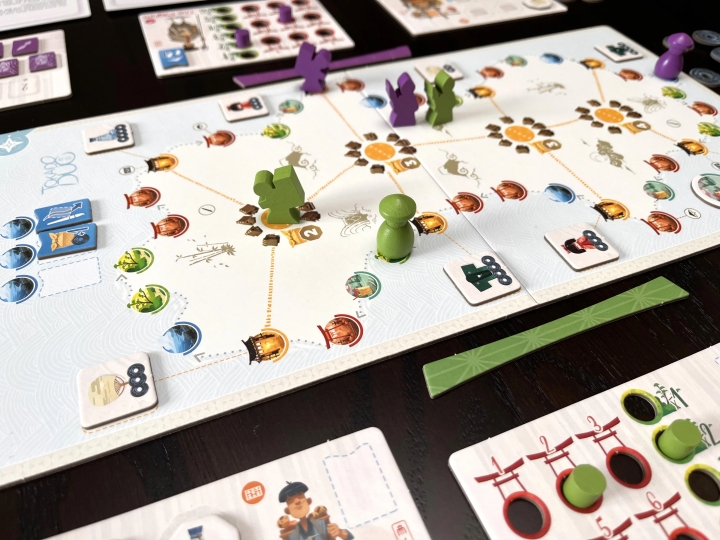
This is an interesting game set on the island of Shikoku, this is a more little bit more complex game than the original Tokaido but it is actually still a fun light game. This has a more in depth map than the original game has and the complexity is in how you use the extra two figures you each have to get the most out of your play. As I have stated unlike the original game each player has three tokens to move and play (a pilgrim an artist4 and a merchant) and a number of zones to do so, they include four mountain towns while the outer zones include temples, gardens, seashores, coastal towns and hot springs.
The aim of the game is points collecting. You collect points in a number of ways and work out at the games end who has won. As in the original you can’t land on an already occupied space so that can be annoying!

 Anmelden