This is stupid. We should be f***ing and drinking by now.
Peter and Will play the hilarious drunk-ass orcs game, Space Gits!
Mike Hutchinson is one of the great independent creators who is putting the fun back into tabletop miniatures games, and giving us all alternatives to staid, old, boring, clunky games like those released by certain huge corporate companies that will go unnamed. Cough. Space Gits is a fast (gasp!), fun, hilarious game about drunk-ass space orcs grabbing caps on a planet when all the competent orcs are away, and it brilliantly combines tabletop miniatures and dexterity game rules! I was lucky enough to be sent an example of the new scenarios Mike is concocting for his new Kickstarter campaign, which expands the base game (and allows you to grab a copy of the original game if you missed out the first time). But enough of my lacking, watch the video, then go back the Space Gits: here Come The Bastards Kickstarter. You won’t regret it!
Making high quality tabletop gaming content at the EOG takes time and money. Please consider becoming a Patreon supporter or making a donation so I can continue this work! Thankyou!
With college basketball’s March Madness tournament underway, I’d like to announce a new experiment: The Tabletop Power Rankings.
I’ve always enjoyed subjective and objective rankings in sports (e.g., the weekly BCS rankings for college football and the Premier League standings in English football). I like checking in to see how different teams are moving up or down the rankings and to see how they are perceived.
I’ve also recently renewed my fascination with anticipation following last year’s article about the most-viewed tabletop YouTube videos. Since then, I’ve posted a monthly video showcasing my most anticipated games to play again.
The confluence of these two interests have now formed the Tabletop Power Rankings. The concept is a monthly reveal of the top 10 games (plus the top 5 Stonemaier games) that people are the most excited to play again after playing them at least once.
That last phrase is particularly important, as it places the emphasis on what we already have (and have firsthand experience with) instead of what we don’t have (and haven’t even played). As much as I enjoy the BGG Hotness, it’s typically filled with future releases.
While the exact format might change, my plan is to post the overall top 10 each month along with a survey that replaces the 3 lowest voted games with the top 3 nominations from the previous month.
Overall Games (March 2026)
SETI
Galactic Cruise
Slay the Spire
Bomb Busters
Speakeasy
This will expand to a full top 10 starting in April. At that point I’ll add previous rankings and months on the rankings.
Stonemaier Games (March 2026)
Viticulture
Vantage
Wingspan
Scythe
Tapestry
Here’s what the initial ambassador survey looked like. I’ve since separated non-Stonemaier games from Stonemaier games and opened the survey to everyone.
I’ll reveal the new Tabletop Power Rankings the first Wednesday of each month on our website and on my anticipated games video.
I hope you choose to participate in this experiment (survey link)! If you have any ideas, suggestions, or questions, please let me know in the comments.
You can view just the box covers, or choose to show Game name, Play count, Sort or Filter data (for instance: when you sort on Year published, this will show the Year) and Collection status.
How to enable Grid view
Tap on the green gear icon on the top right of the Games list and select Grid view.
List View Settings
Tap on the green gear icon on the top right of the Games list and select List View Settings.
Here you can enable one or more of the following:
Game name
Play count
Sort or Filter data (for instance: when you sort on Year published, this will show the Year)
Expanding on the Spoiler Free thoughts I had a week ago. Putting the rest in an expandable block, (in case you want to not see).
(For reference, I have cleared Ascension 7 with all characters but the NecroMancer, and have now played a half dozen ish games of co-op, including a brutal floor six loss.
Expand to view StS II Thoughts
When I said “I liked what was missing” I was referring to:
A) Cards that double, like Catalyst or Limit Break. Because often those cards provide such massive scaling (being geometric) that they are often auto-selects in in archetype using it (and are sometimes worth taking “blind” in hopes of getting poison/strength). Sadly there is at least one new doubler (Voltaic) and it does indeed solve the endgame by itself (with one upgrade and any support).
B) Huge swing cards/artifacts (like Corruption or Biased Cognition) that have an outsized value. Those particular two are still there, but are no longer “mere” rare card rewards but boss relics, which seems reasonable. Both are also been reduced in value because some of their complements (Dead Branch and artifact charges, respectively) are missing.
It’s an early access game, so the card balance is off in a few points, but overall I still like it. In particular:
Focus being mostly until end of turn (Defragment is still in, but rare) means the defect’s most solid and boring build is gone. The temporary focus cards are interesting, and with more cards that load up orbs (or evoke) make a nice change.
I agree with the complaints that the elites do not feel notably distinct from the hallway fights. One of the the things that Slay the Spire 1 nailed was that different fights attacked different deck archetypes (mostly with Boss/Elite fights, but not always). For example “Time Eater” destroys card spam. “Reptomancer” requires a bunch of fast All out attack. Big Giant Head took out decks that dish out consistent damage but can’t scale, etc. The game lobbed Bombs in the Jonathon Degann game design sense.
You do see that, for example “Entomancer” punishes a bunch of small attacks. But the “Hunter Killer” hallway fight punishes card spam. Too many of the Act I elites are kind of “samey” … the game is missing (for example) having to deal with Gremlin Nob crushing skill decks and needing to hit it for ~80 before the end of T3. It’s just “bigger numbers.” The Bygone Effigy feels like the worst offender on that. You need to do the same by T3, but if you fail it’s just brutal death.
Part of the problem is that the relic pool is a bit “meh.” It’s good that the card pool is such that you can make a build to kill the Act III boss and then just grab a potion for a weakness, and that you then skip a few elites to lower variance. But that could get boring (and Asc 10 is double final boss, so that’s an issue).
But that’s a balance issue. Also, I do like the events that are “here are two choices that may both be bad, and no you can’t skip.”
Co-op: Have played (2p) and I stand by my earlier comment, its well done, considering. Some fights are much easier, some fights are much harder (the Phantasmal Gardners can absolutely tank a run early if you aren’t prepped for them), but I’ve mostly won (granted my co-op ascension is still quite low). The co-op only cards seem wildlly unbalanced, but that’s ok.
Unfortunately, no one can be told what the Matrix is. You have to see it for yourself.
My Tabletop Codex app gets its first functionality update!
If you haven’t tried out my fantastic rules app Tabletop Codex yet, what are you thinking? Go download it now! And now is the perfect time because I’ve just invested more in it by adding a great functionality update. Watch the video to find out more, and find the easy links to download it for Android or Apple phones and tablets at tabletopcodex.com.
Making high quality tabletop gaming content at the EOG takes time and money. Please consider becoming a Patreon supporter or making a donation so I can continue this work! Thankyou!
I spent the last weekend hosting friends at the Gamers Ranch, a gaming-focused vacation property in the middle of Missouri. I had an amazing time, and I loved seeing the power of the tabletop community in action, especially in seeing different gaming friends intermingle.
As I reflected on the weekend, I realized that among the dozens of games played, there were 5 games that hit the table more than any others. I thought I’d briefly look at each of those games to see what made them work particularly well for events and conventions, which can sometimes be the difference for a game to break out.
Moon Colony Bloodbath: I taught and played this 6 times over the weekend, and nearly everyone played again later. Even though it’s heavier than the other games on this list, the single deck of cards (flip a card and everyone does what it says) helps a teacher to guide everyone through the first few turns. It’s also entirely simultaneous, so there’s no downtime. There’s also the dark humor of the theme and the bold name, which seemed to attract curiosity from those who hadn’t played.
Lord of the Rings Trick-Taking: The cooperative nature of this game creates a sense of camaraderie; camaraderie is often a primary motivator for someone to attend a gaming event. Also, the short playing time and the variety of each chapter–all based on a simple core system–created a “just one more game” mentality.
Bomb Busters: I’ll continue what I said above about the Lord of the Rings trick-taking game, as this applies to both: I’ve noticed at gaming events that many people are hesitant to commit to a 3-hour game, yet they’ll end up playing short, escalating, cooperative games like Bomb Busters for hours. I love the idea of breaking a longer game into bite-size pieces.
Magical Athlete: Everything about the product design of this whimsical racing game lends itself to events. While it asks players to make a key decision before the game starts (which characters you select in the draft), the rules are so bare-bones that this isn’t a problem. I noticed that people seemed to gravitate towards this game after playing a heavier game, as it’s a great brain break.
Mindbug: This snappy two-player dueling game has a unique hook that seemed to intrigue people (twice per game when your opponent plays a card, you can claim it as your own instead). An accessible, quick 2-player game is really nice for an event when a few people are waiting for longer, larger-group games to finish.
Also note that all of these games are super fast to set up.
One other commonality between these games is that they all had someone championing them. This can make a huge difference at an event or convention: If there’s someone visibly excited to play a game they already know, people will gravitate towards that game.
Have you noticed a game spreading like wildfire at events or conventions? What is it about that game or the situation that resulted in the game returning to the table over and over?
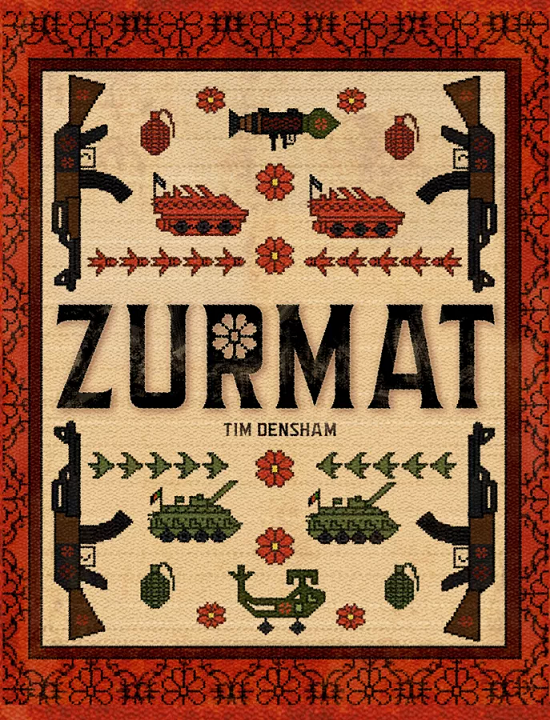
Zurmat is a small Pashtun district south of Kabul. In 2007, It was a tense region with a fragile sense of order. The Taliban moved throughout the villages and roads at night, issuing threats to dissuade cooperation with the Afghan government. Zurmat is also a wargame. Some soldiers write about their experience. Tim Densham designs.…
In the kingdom of Pilipalod, a wild, evil magic had erased the royal castle, leaving only the foundations visible. Queen Blodwen, King Llew, and Princess Dillie surveyed the empty hill where their home once was with some despair, but mostly patient resolve. Word of the disaster spread, and soon magical creatures gathered to offer their help, and the finest designers of the Magical Architect Alliance arrived, promising that a new home would rise again. Their first task was to rebuild the Flip Pick Towers by Rob Fisher and Adam Porter from Osprey Games with art by Beatrix Papp.
Almost exactly 1 year ago today, Mitchell and I recorded our first episode of the 30-minute Positively Board Gaming Podcast. Today we will record episode 52 for release next week (episode 51–focused on the mechanism of delayed gratification and custom dice–went live this morning).
As much as I enjoy chatting with Mitchell, I was nervous about adding yet another form of content to my current weekly schedule for Stonemaier Games: 2 articles, ~4 videos, 1 livecast, and 7 Instagram posts, plus monthly Rolling Realms liveplays and quarterly launch videos and design diary posts. Creating all that content takes time, as does participating in the ensuing conversations.
Also, I know from years of being a guest on podcasts that it’s really easy for a 30-minute conversation to end up more like 60+ minutes if you include the preparation, warm-up, the podcast itself, and the post-recording chat. I’ll say yes to pretty much any podcast or video chat, but after 30 minutes I start to check out as I think about all the other work I need to do (and want to do).
Despite these concerns, I’ve found myself looking forward to 30 minutes with Mitchell each week, and it seems that people have enjoyed our positivity as well. I don’t know the audio stats, but the videos average around 1,000 views with great discussions in the comments.
Here are a few key things I’ve learned and remained mindful of during the first year of Positively Board Gaming (and as an avid listener of many podcasts):
The delicate balance between familiarity and inclusivity. Any episode might be a listener’s 50th experience with our podcast or their 1st. I want repeat listeners to feel a sense of comfort from the podcast, like they’re just hanging out with friends. But I also want a new listener to feel welcome. We’re still navigating this balance: When do we overexplain the format (e.g., we don’t need to tell listeners that we’re going to discuss a treat of the day–they know what a treat is) and when do we underexplain it (e.g., is it relevant to tell people that neither of us knows the other person’s topic each week)?
The delicate balance between dialogue and monologue. Mitchell and I each bring a topic to the table each week, and we allot around 10 minutes each. 10 minutes can fly by when it’s a back-and-forth dialogue (which is my preference, as I talk to myself on camera all the time), so I try to ensure that the person who raised the topic has the time to share what they wanted to say about it.
The delicate balance between focus and variety. As a podcast listener, I find that I’m the most drawn to gaming episodes about 1 specific game, maybe 2 at most. Tabletop Takeaway, One-Stop Co-Op Shop, and Lens & Veil are a few that do this well, though there are others (like The Secret Cabal) that have a more varied chat before focusing on a specific game–I like that too. However, I find myself less inclined to only discuss 1 game on our podcast because there isn’t much Mitchell can say about it if he hasn’t played it too. Perhaps I’ll experiment with this in the future to see if can work.
I’m guessing that the balance I’m describing isn’t unique to us, hence why I’m sharing it here. Whether you’re a content creator or a listener/viewer, I’d love to hear your thoughts about how podcasts balance these elements and what makes keeps you coming back to the podcasts you love. Feel free to also share your favorite gaming and non-gaming podcasts!
New episodes of Positively Board Gaming are available every Thursday morning on YouTube and various podcast platforms. Also, I highly recommend the Overcast podcast app–it is heads and tails above any podcast app I’ve used in the past.
From v6.10 there is a QR scanner on the Overview screen, this can be used to scan shared Play QR-codes directly from the app!
Challenge option
For all relevant challenges an option was added that, if enabled, makes sure plays that are counted for a challenge actually appear in the challenge.
This situation could happen in Challenges where there is a filter on Play count: when you play a Game the Play count goes up and the game was no longer eligible in the Challenge.
The option will be enabled by default for new Challenges, and can be enabled in older challenges by editing the Challenge.
More
The following has also been added/improved:
Switching between score sheets (generic, round, game) transfers entered scores.
Changing location of a play no longer updates to default players once they have been edited in that play.
Grouped Plays list View options in a submenu.
Updated tab bar icons.
Improved display of board/variants and roles in several locations.
The last time I played 1860: Railways on the Isle of Wight, I found myself in the lead from fairly early on. As the game progressed, that lead only kept growing. Each round, the gap widened until it was clear that nobody had a realistic way to catch up with me. The game carried on, turns were taken, but the excitement and tension had gone. The game had become a fight for second place. I call this soft elimination, and it is especially common in longer games, when you are technically still playing, but no longer really competing. In this article, I want to talk about this a bit more.
(This is not intended to spoil things, but it will mention things that could be construed as such if you want to be totally surprised. You have been warned).
Slay the Spire is a “Roguelike1” you are trying to get through a procedurally generated dungeon and beat the boss. But combat and character progression was inspired by Dominion. You get better by adding cards to your deck (and removing bad cards from your deck). There are non-card based ways of getting stronger, like artifacts that grant you abilities (sometimes in combat, sometimes in the “master board” to borrow a phrase from Titan) or potions.
And Slay the Spire was massively influential. Right now I’m seeing ads on steam for Roguelike games but “using poker instead of dominion” (Balatro) or what not. Most are clear cash-in knock offs (though I’m told Balatro was good). So many (like me) were waiting anxiously to get their hands on the new version … Slay the Spire II has over 500,000 people playing concurrently.
But given that Mega Crit (the developers) were aware of Dominion and other popular games (and frequently drop in Easter eggs)2, I wondered what mechanisms would show up in Slay the Spire 2.
What I’ve noticed so far:
Card Forging
In the first Slay the Spire, cards could be upgraded (“Foo” could become “Foo+”), and any Strike that was upgraded was the same. Typically some numbers on the card got better (and each card could only be upgraded once, with one exception). But StS2 has Card Forging. Cards can still be upgrade, but each card now has a slot that can add an “enchantment” and these enchantments are not specific to the card, but uniform. So if you say there are ~300 cards, in STS v1 there were 600 cards (300 base cards, 300 upgraded). If you keep the exact same cards in STS v2, but now there are X enchantments3 which means there are up4 to 600 times X valid card combos. And now a Foo could be Foo(+) and Enchantment-A or -B, -C, -D, etc.
And (some) enemies put negative enchantments on cards.
As a fan of combinatorics, love it. I’m wondering if they were inspired by Mystic Vale or Dice Forge or Dice Realms (or just thought of it independently). They didn’t go “whole hog” on it (at least, not in this version) but for the amount of programming of a few artifacts they’ve greatly increased the decision space.
Card Evolution
Arguably just a riff on card forging, these are cards that go into your deck in one form but can be triggered into a different form (usually via the masterboard). I took one of these quests (picking up a useless card that would be removed with a big reward later) and then at the final fight realized I’d never actually went to a space to evolve the card, which actually took a bit of work on my part.
Cooperative Play
Still haven’t tried it, but no doubt they were thinking of this even before the Slay the Spire board game. This required a ton of programming5 (unlike the card forging). Not much to say.
Alternate Masterboard Paths
This is probably pretty common in games, but just as in the Lord of the Rings expansion you can sometimes skip some location boards for others, now in StS II there are alternate acts. (I am not sure if you can control them, though. It’s more of a variety). I didn’t actually register this the first few times it happened, only when I saw some new regular (non-elite) encounters and wondered about it did I realize that “Acts” were switching between games. This is pretty common in expansions, though.
I don’t know if I’ll notice (or think of) more, but we’ll see….
Also — on an admin note, I have created a category for “Slay the Spire” (as well as tagging articles), so you can now click on that for articles. Most of the obvious ones should be in that category by now, but a few stragglers may not be.
Where are you going, so full of hope? THERE IS NO HOPE!
In this fantastically cinematic tabletop battle report, Peter and Will play the Necromunda: Ash Wastes scenario Cargo Run!
Will is back! It’s been way too long since my old gaming buddy has visited me to play some games, but the day is finally here. Let’s kick off this mini-season of fun battle reports with a spectacular game of Necromunda: Ash Wastes.
Will and I have played quite a bit of Necromunda over the years, going way back to the time of the original edition. It’s a rules system that’s really showing its age, and if you ask me, Games Workshop is really missing a big opportunity to create a brand new edition that streamlines and speeds up the game, but it’s still possible to have a really fun game if you’re willing to play a bit fast and loose – as we do in this battle report!
I’ve been meaning to use my big Cargo-8 Ridgehauler model in a game for some time now, and this is the perfect opportunity. So start your engines, spray your face with silver paint, and let’s get rolling!
Making high quality tabletop gaming content at the EOG takes time and money. Please consider becoming a Patreon supporter or making a donation so I can continue this work! Thankyou!
In this standalone cooperative game based on the hit Netflix series, work together and race against the clock to complete adventures on the high seas—but watch out for unpredictable challenges.
Everyone knows Rock Paper Scissors. How many times have you played it in your life? But if the hand gestures start to shift, will you be able to keep up?

 Anmelden