Explore all the factions with your Dune v2 rules & reference!
I don’t usually draw attention to incremental updates once I’ve launched a rules & reference (though there’s a section down below on the home page that calls new ones out, if you’re interested), but this update to my sheets for the Gale Force Nine version of Dune is a biggy, adding all the variants and faction expansions to the core rules. Enjoy!
Review time! There’s been a lot of high praise for The Lord of the Rings: Fate of the Fellowship, the latest in Matt Leacock’s Pandemic spin-offs. And while I think it’s a clever game that lots of people will enjoy, it just wasn’t for me and I decided to sell it after just two plays. Watch the video to get a rules overview, and find out why!
Making high quality tabletop gaming content at the EOG takes time and money. Please consider becoming a Patreon supporter or making a donation so I can continue this work! Thankyou!
It’s the fiftieth post in this Off the Shelf series, where I look at games on my shelf. And today, it’s time for
image by BGG user Meander
Park and Shop is a game designed by Donald Miller and first published by Milton Bradley in 1952. You can play with 2-6 players, and the object of the game is that you have a shopping list that you need to complete before you head home. The first player that does wins.
This was my grandparents’ game. When I was a kid and would visit them, I would often pull this out, set it up, and play by myself. There aren’t solo rules and I wasn’t really playing to win, I just wanted to play. I enjoyed walking around the city, shopping, and seeing how fast I could go through every card in the game. I had fun. When they passed, the game was part of my inheritance. It’s still on my shelf. I hardly ever pull it out because, if I’m being honest, it’s not really a very good game. But it scores high on nostalgia.
The game is played on a big square board, but I’m happy to report that it’s NOT a simple Monopoly ripoff. There’s not one track to move around, but rather a bunch of rectangles representing the streets of this town. Each player starts the game with up to 7 yellow shopping list cards, but everytime we would play, we’d use the whole deck.
You start the game at your house, one of the spots around the edge of the map. You can pic your own spot, and usually you’ll be trying to pick on that’s relatively close to a parking lot. You’ll roll a die and move that many spaces until your car ends up in a lot. At this point, you switch to your pedestrian piece and start rolling two dice every time you want to move? Why? Well, it’s obvious – you roll one die in your car because it only has one engine, but you roll two while walking because you have two feet. I’m not even joking, that is the actual rule.
You’ll look at the top card of your shopping cards, then find it on the map. Sometimes, there are several locations scattered around, but other times, it’s just one. You’ll need to walk there. You don’t need to land on a shop by exact count, but landing there does end your turn. Other standard roll and move rules apply – no backtracking, roll doubles and get an extra turn, but roll three doubles and go to jail, that kind of thing.
There are a bunch of gray spots along your route, and if you land on one, you have to draw a pedestrian card. These can be good (take an extra turn, move directly to your next stop, etc.) or horribly bad (lose a turn, add extra stops to your list, etc). There is an extra turn space in the middle of the board, so you can aim for that if you’re in the vicinity.
Once you have completed all your shopping items, head back to your car. But oh no, even though you were parked in a clearly marked lot, you have received a parking ticket! The parking tickets aren’t really penalties, just an extra task you have to do before heading home. So you’ll drive to that stop (using only one die) and drawing motorist cards for landing on those gray spaces.
Once that’s complete, you can head home. But even though you don’t have to land on shops by exact count, you DO have to land on your home by exact count. That means you can be in the space right next to it, but if you can’t roll a one, you’ll just be sitting there suffering until you finally get lucky enough to park in your own garage. The first one to do so wins.
There is a variant of the game I never played with that uses money – you actually have to pay for stuff. You start the game with $150, and every time you buy something or go somewhere that you’d have to pay, you roll dice to see how much it cost you. With this variant, you can go broke before the game is over because there’s no way to make money.
This game has a lot of problems. First, it’s roll and move, which is definitely an out-of-style mechanism these days. One person is rolling 12s and 11s to get next door while another is rolling 3s and 4s to get all the way across the board. There’s no skill, it’s really all just about rolling better and drawing better. The money variant doesn’t add any choice, just adds the possibility of getting randomly eliminated.
Another big problem is that the game is VERY dated. There’s a cool retro look to it, but some of the cards…
But still, I love the IDEA of this game. It’s a big shopping map, and the idea of moving around from store to store to get what you need is fun. It’s a lot better than just endlessly moving around a track, and I think that with some tweaking, this idea has legs today. Maybe set it in a mall with different obstacles around (survey takers, disruptive youths, security, mall walkers, etc), and you have to visit different stores. I don’t know. But the game concept works for me, it just fails in execution.
My enthusiasm for the game has everything to do with nostalgia, I know. If I hadn’t grown up with it, I’d probably laugh it off and never think about it again. But, it is an extremely important game to me – I even listed it in my old list, The Eleven: Games That Turned Me Into A Gamer. Nevertheless, objectively, I have to put it at #49 on my Off the Shelf rankings. (You may notice that it’s still above Apples to Apples. )
Anyway, that does it for this edition of Off the Shelf. Thanks for reading!
It’s the fiftieth post in this Off the Shelf series, where I look at games on my shelf. And today, it’s time for
image by BGG user Meander
Park and Shop is a game designed by Donald Miller and first published by Milton Bradley in 1952. You can play with 2-6 players, and the object of the game is that you have a shopping list that you need to complete before you head home. The first player that does wins.
This was my grandparents’ game. When I was a kid and would visit them, I would often pull this out, set it up, and play by myself. There aren’t solo rules and I wasn’t really playing to win, I just wanted to play. I enjoyed walking around the city, shopping, and seeing how fast I could go through every card in the game. I had fun. When they passed, the game was part of my inheritance. It’s still on my shelf. I hardly ever pull it out because, if I’m being honest, it’s not really a very good game. But it scores high on nostalgia.
The game is played on a big square board, but I’m happy to report that it’s NOT a simple Monopoly ripoff. There’s not one track to move around, but rather a bunch of rectangles representing the streets of this town. Each player starts the game with up to 7 yellow shopping list cards, but everytime we would play, we’d use the whole deck.
You start the game at your house, one of the spots around the edge of the map. You can pic your own spot, and usually you’ll be trying to pick on that’s relatively close to a parking lot. You’ll roll a die and move that many spaces until your car ends up in a lot. At this point, you switch to your pedestrian piece and start rolling two dice every time you want to move? Why? Well, it’s obvious – you roll one die in your car because it only has one engine, but you roll two while walking because you have two feet. I’m not even joking, that is the actual rule.
You’ll look at the top card of your shopping cards, then find it on the map. Sometimes, there are several locations scattered around, but other times, it’s just one. You’ll need to walk there. You don’t need to land on a shop by exact count, but landing there does end your turn. Other standard roll and move rules apply – no backtracking, roll doubles and get an extra turn, but roll three doubles and go to jail, that kind of thing.
There are a bunch of gray spots along your route, and if you land on one, you have to draw a pedestrian card. These can be good (take an extra turn, move directly to your next stop, etc.) or horribly bad (lose a turn, add extra stops to your list, etc). There is an extra turn space in the middle of the board, so you can aim for that if you’re in the vicinity.
Once you have completed all your shopping items, head back to your car. But oh no, even though you were parked in a clearly marked lot, you have received a parking ticket! The parking tickets aren’t really penalties, just an extra task you have to do before heading home. So you’ll drive to that stop (using only one die) and drawing motorist cards for landing on those gray spaces.
Once that’s complete, you can head home. But even though you don’t have to land on shops by exact count, you DO have to land on your home by exact count. That means you can be in the space right next to it, but if you can’t roll a one, you’ll just be sitting there suffering until you finally get lucky enough to park in your own garage. The first one to do so wins.
There is a variant of the game I never played with that uses money – you actually have to pay for stuff. You start the game with $150, and every time you buy something or go somewhere that you’d have to pay, you roll dice to see how much it cost you. With this variant, you can go broke before the game is over because there’s no way to make money.
This game has a lot of problems. First, it’s roll and move, which is definitely an out-of-style mechanism these days. One person is rolling 12s and 11s to get next door while another is rolling 3s and 4s to get all the way across the board. There’s no skill, it’s really all just about rolling better and drawing better. The money variant doesn’t add any choice, just adds the possibility of getting randomly eliminated.
Another big problem is that the game is VERY dated. There’s a cool retro look to it, but some of the cards…
But still, I love the IDEA of this game. It’s a big shopping map, and the idea of moving around from store to store to get what you need is fun. It’s a lot better than just endlessly moving around a track, and I think that with some tweaking, this idea has legs today. Maybe set it in a mall with different obstacles around (survey takers, disruptive youths, security, mall walkers, etc), and you have to visit different stores. I don’t know. But the game concept works for me, it just fails in execution.
My enthusiasm for the game has everything to do with nostalgia, I know. If I hadn’t grown up with it, I’d probably laugh it off and never think about it again. But, it is an extremely important game to me – I even listed it in my old list, The Eleven: Games That Turned Me Into A Gamer. Nevertheless, objectively, I have to put it at #49 on my Off the Shelf rankings. (You may notice that it’s still above Apples to Apples. )
Anyway, that does it for this edition of Off the Shelf. Thanks for reading!
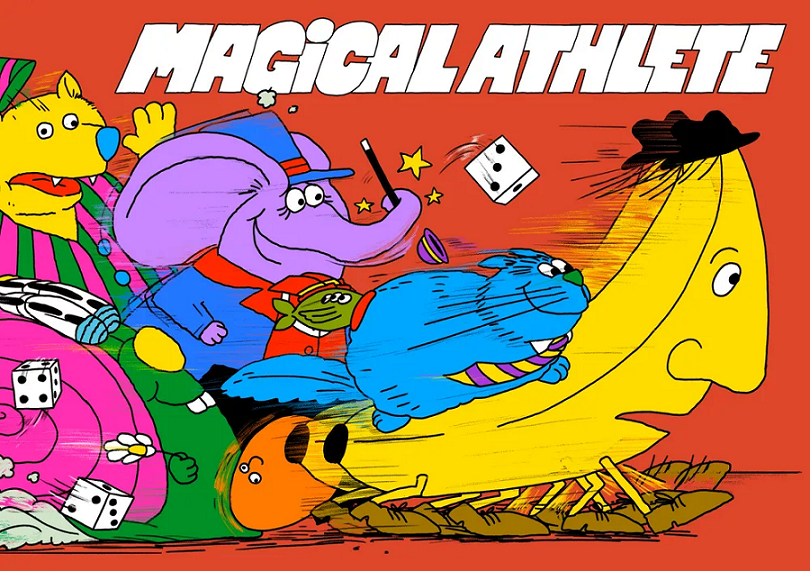
Takashi Ishida’s Magical Athlete is a quirky game about a cast of misfits in a foot race. First released in 2003 by Z-Man Games, its oddball nature and prototype-level production resulted in a large shrug from audiences. It was the typical Tanga title, dumped on a deep discount website and banished to the shelves of…
The Pandemic system has spawned quite a few games now, and while I’m not a big fan of co-operative games, I hoped that The Lord of the Rings: Fate of the Fellowship would be different enough to offer a new and, for me, better, experience. And all the elements are here to make a more compelling game – it just seems that co-ops still aren’t for me.
The Lord of the Rings: Fate of the Fellowship boils the books down to a series of objectives you must complete before the final push to drop the Ring into the Crack of Doom. These can be mixed and matched to create scenarios that concentrate on various parts of the tale – for example, the taking of Isengard and the battles in Rohan – or you can just choose a random set of them. Each player controls two characters and must complete 4 actions with one, and 1 action with the other, on each of their turns. Your hand of region cards has icons on them that allow you to pay for some of those actions or get dice re-rolls. At the end of each player’s turn, a number of shadow cards are drawn according to the threat level, and these cards dictate the movement of troops along battle lines on the board as they head inexorably towards the strongholds of the good guys, or move the Eye of Sauron and the Nazgûl around the map. Occasionally, Skies Darken cards will pop up that, among other things, instruct you to shuffle the shadow card discards and put them back on top of the deck, in true Pandemic fashion.
I appreciate that this game is an interesting and very thematic evolution of the Pandemic system, but unfortunately I find the constant maintenance required by that system – moving the troops around the map in little conga lines, shuffling the cards back on top of the deck – pulls me out of the game’s theme. I sometimes found myself in situations where I had nothing I could do with my characters (probably my poor playing, but still…) Crucially, I simply can’t seem to get excited about winning or losing against a game system rather than real-life opponents. And finally, while the included dice tower is a solid, attractive bit of gimmickry, I found the game’s graphic design lacking a unified direction and a little bit amateurish. So in the end, while I can definitely see why this game has been reviewed so well and why so many people will love it, after a couple of plays, I realised it just wasn’t for me and I decided to sell it on to someone who would enjoy it more.
For more detail, check out my video review! And of course, you can find this summary in my amazing rules app, Tabletop Codex.
Legends of the Arena is an intense brawling board game for 2-6 players inspired by Super Smash Bros. Knock your opponents out of the Arena and claim victory!
It’s been a long time since I did a Game Buzz post, but when your favorite board game designer is releasing his first original board game in eight years, you post about it. So, here’s my look at
image by BGG user Zhan_Shi
Severton is an upcoming board game to be published by Albi that was designed by none other than Vlaada Chvátil. It’s his first board game since 2017’s That’s a Question – everything since then has been expansions or reskins of existing titles. In fact, I think it’s hist first non-party game since 2013’s Tash-Kalar: Arena of Legends. The game is for 1-5 players, and is based in the world of Rychlé šípy, which is a Czech series I know nothing about. It apparently follows a group of young friends who have adventures together. Severton is a cooperative game, where players are taking on the roles of these youths to discover the secrets of Severton, a neighborhood in Prague that is ruled by Vonts.
The game comes with five scenarios, which progressively add new mechanisms. However, the rules do specify that you can replay them as much as you want because you’ll be making different choices each time to create a new experience. Additionally, there will always be five characters in the game, with some people controlling multiple characters in games with fewer players.
The game is played on a board, which the characters will move around. The five characters always start in a particular spot, but where they go from there will be up to the players. Additionally, there are ten progress boards in the game, two for each scenario. These are set up end to end, and you can change the difficulty of the game by flipping them to reveal more stars for a harder game. The left side of the board is reserved for the Vonts cards (group and movement). Some of these will be dealt out facedown, and Vont tokens will start in random spaces on the board. There is also an action deck from which each player will get four cards (some scenarios also give you other cards). The scenario will also direct you to set up a quest deck.
image by BGG user Zhan_Shi
In the upper left corner of the map, there is a dial. This is used to track the phases of play, with a token moving clockwise as each phase is completed. This will continue until you win (or lose). There are seven phases: Actions, Vonts, Quest, Unrest, Vonts Refresh, Players Refresh, and Quest Replenishment.
ACTION: During this phase, you’ll be playing action cards to move and explore. Players can take turns in any order throughout the phase, taking a turn whenever it makes sense. There are two types of actions:
Move: There are 22 marked spaces on the board, and paths of different colors connecting them. To move along a path, you simply play a card of the matching color. Other characters can move with you by playing any card (color doesn’t matter for this). A character can make a maximum of two moves per action phase.
Explore: If you play a card with the flashlight symbol (purple or wild cards), you take an Explore action. You can use this to discover a secret passage, or to investigate Vonts that are within two movements of you. This reveals their Group and Movement cards.
Additionally, each character has a special ability which can only be used during this phase.
VONTS: During the Vonts phase, you’ll activate each group by first revealing their movement card, move them, and discarding the card. They’ll follow paths just like the characters do. Vonts can’t end on a space with other Vonts (and will regroup if they need to), but they can land in spaces with characters. If this happens, a Vont encounter occurs – reveal their Group card and resolve the encounter by fighting, outwitting, or hiding. Or getting caught, but try not to do that.
QUEST: Here, you’ll be looking at any revealed Quests and following their instructions.
UNREST: During this phase, the Unrest token advances two spaces. If it reaches the end, the game is over. It may cross certain symbols that trigger different actions, like adding more Vonts or giving players an extra move the next round.
VONTS REFRESH: Draw new facedown movement cards for each Vont group and deploy any that have not been sent to the board.
PLAYERS REFRESH: Players who were caught come back to the board, and all players draw new action cards.
QUEST REPLENISHMENT: Draw new quests to replace any that were completed. This doesn’t happen in Scenarios 1 or 3.
If you complete your objectives, you win! If not, you lose. And that’s pretty much it.
image by BGG user Zhan_Shi
Not really knowing the source material for the game, I don’t think I can really comment too much on the theme. My interest in this game exists solely because of Vlaada Chvátil. And I do think it looks pretty interesting – it’s cooperative and scenario based, which he has done well at in the past. It seems like a game that would be pretty fun to explore, with all the different Vont groups and characters and scenarios. The rules seem fairly straightforward and basic, and with no knowledge of what the scenarios entail, I don’t think I can make a judgment call of how they play out. But, I am a Vlaada fanboy, so I feel like I can trust his designs, even if it has been a while.
I look forward to hearing people’s reactions when the game comes out, which should be at Spiel in October. But that’s it for me today, so thanks for reading!
It’s been a long time since I did a Game Buzz post, but when your favorite board game designer is releasing his first original board game in eight years, you post about it. So, here’s my look at
image by BGG user Zhan_Shi
Severton is an upcoming board game to be published by Albi that was designed by none other than Vlaada Chvátil. It’s his first board game since 2017’s That’s a Question – everything since then has been expansions or reskins of existing titles. In fact, I think it’s hist first non-party game since 2013’s Tash-Kalar: Arena of Legends. The game is for 1-5 players, and is based in the world of Rychlé šípy, which is a Czech series I know nothing about. It apparently follows a group of young friends who have adventures together. Severton is a cooperative game, where players are taking on the roles of these youths to discover the secrets of Severton, a neighborhood in Prague that is ruled by Vonts.
The game comes with five scenarios, which progressively add new mechanisms. However, the rules do specify that you can replay them as much as you want because you’ll be making different choices each time to create a new experience. Additionally, there will always be five characters in the game, with some people controlling multiple characters in games with fewer players.
The game is played on a board, which the characters will move around. The five characters always start in a particular spot, but where they go from there will be up to the players. Additionally, there are ten progress boards in the game, two for each scenario. These are set up end to end, and you can change the difficulty of the game by flipping them to reveal more stars for a harder game. The left side of the board is reserved for the Vonts cards (group and movement). Some of these will be dealt out facedown, and Vont tokens will start in random spaces on the board. There is also an action deck from which each player will get four cards (some scenarios also give you other cards). The scenario will also direct you to set up a quest deck.
image by BGG user Zhan_Shi
In the upper left corner of the map, there is a dial. This is used to track the phases of play, with a token moving clockwise as each phase is completed. This will continue until you win (or lose). There are seven phases: Actions, Vonts, Quest, Unrest, Vonts Refresh, Players Refresh, and Quest Replenishment.
ACTION: During this phase, you’ll be playing action cards to move and explore. Players can take turns in any order throughout the phase, taking a turn whenever it makes sense. There are two types of actions:
Move: There are 22 marked spaces on the board, and paths of different colors connecting them. To move along a path, you simply play a card of the matching color. Other characters can move with you by playing any card (color doesn’t matter for this). A character can make a maximum of two moves per action phase.
Explore: If you play a card with the flashlight symbol (purple or wild cards), you take an Explore action. You can use this to discover a secret passage, or to investigate Vonts that are within two movements of you. This reveals their Group and Movement cards.
Additionally, each character has a special ability which can only be used during this phase.
VONTS: During the Vonts phase, you’ll activate each group by first revealing their movement card, move them, and discarding the card. They’ll follow paths just like the characters do. Vonts can’t end on a space with other Vonts (and will regroup if they need to), but they can land in spaces with characters. If this happens, a Vont encounter occurs – reveal their Group card and resolve the encounter by fighting, outwitting, or hiding. Or getting caught, but try not to do that.
QUEST: Here, you’ll be looking at any revealed Quests and following their instructions.
UNREST: During this phase, the Unrest token advances two spaces. If it reaches the end, the game is over. It may cross certain symbols that trigger different actions, like adding more Vonts or giving players an extra move the next round.
VONTS REFRESH: Draw new facedown movement cards for each Vont group and deploy any that have not been sent to the board.
PLAYERS REFRESH: Players who were caught come back to the board, and all players draw new action cards.
QUEST REPLENISHMENT: Draw new quests to replace any that were completed. This doesn’t happen in Scenarios 1 or 3.
If you complete your objectives, you win! If not, you lose. And that’s pretty much it.
image by BGG user Zhan_Shi
Not really knowing the source material for the game, I don’t think I can really comment too much on the theme. My interest in this game exists solely because of Vlaada Chvátil. And I do think it looks pretty interesting – it’s cooperative and scenario based, which he has done well at in the past. It seems like a game that would be pretty fun to explore, with all the different Vont groups and characters and scenarios. The rules seem fairly straightforward and basic, and with no knowledge of what the scenarios entail, I don’t think I can make a judgment call of how they play out. But, I am a Vlaada fanboy, so I feel like I can trust his designs, even if it has been a while.
I look forward to hearing people’s reactions when the game comes out, which should be at Spiel in October. But that’s it for me today, so thanks for reading!
Discover Smallfolk, a cozy new Kickstarter game that blends world folklore, resource gathering, and storybook charm. Designers Gloria Lau and Alfie Wright share how they brought legends to life in a warm, tactical experience.
Peter shows you around the Esoteric Order of Gamers studio and game collection.
Spring has finally sprung down here in New Zealand, so what better time for a big Spring clean. And after that, what better time to show off the EOG games room and its huge collection of wonderful games, to you! It’s rarely this neat, so enjoy checking it all out while you can. There are lots of games, games, games, miniatures and of course – drums!
Making high quality tabletop gaming content at the EOG takes time and money. Please consider becoming a Patreon supporter or making a donation so I can continue this work! Thankyou!
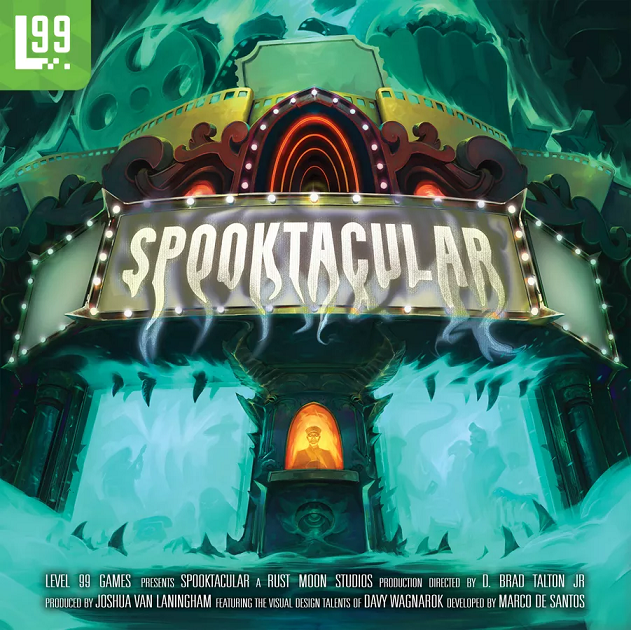
Spooooktacccular. An amusing name to wail? Right-o. Killer movie poster box cover? Absolutely. Asymmetric player powers that inevitably draw a negligent comparison to Root? Hell yeah. Level 99 Games is known for their eccentric lineup. Millennium Blades is totally mad. Argent: The Consortium is likewise ill. Bullet♥︎ and Empyreal and many others fit this unconventional…
To celebrate our Fall 2025 issue of Casual Game Insider, we're giving away amazing prizes worth over $1,000 to 41 lucky winners! Don’t miss your chance to win—enter today!
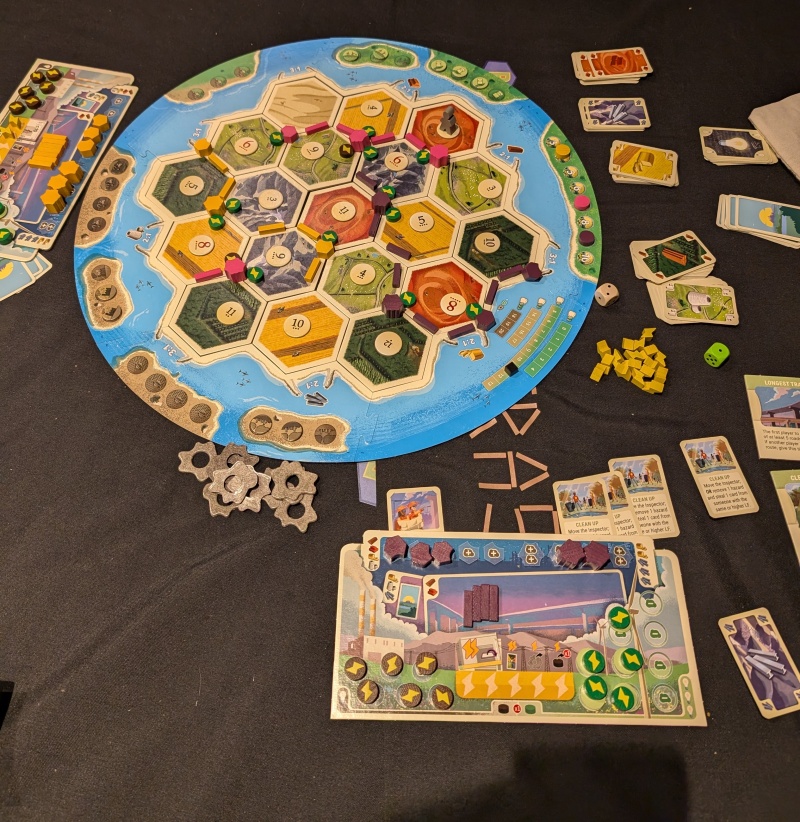
I am usually sceptical about new versions of classic board games – but I had to admit that Catan New Energies is a great version of the game. It has the basic game mechanics of gathering resources to build roads, cities and towns to get points to win the game. But there are enough added features to make it interesting and different.
Each player has their own box which contains their Towns (settlements), Cities and Roads, event discs, fossil power plants and renewable power plants. This does help speed up set up.
The game plays very much like the original with collecting resources to build more Towns & Cities. Even though some of the resources are called different things in this version – wood, brick, natural fibre (was sheep), food (was wheat) & steel (was ore), the colours and images are almost identical – so we just call them their old names. The extra resource of science does add a nice addition, and it allows you to buy the different power plants. (Science cards are collected when you collect resources from a city. So instead of getting 2 resources for the city, you get 1 and a science card.)
Unlike original Catan – you always start by pulling out a hazard token – once you have 3 of the same type you must instantly complete the consequence of that hazard. They are just a small hinderance or bonus (depending on your local footprint). The amount of hazard tokens pulled is determined by the global footprint: Every time you build a city or town or fossil plant – the global (and your local) footprint goes down. But each time you build a renewable plant – they both go up. The one thing we forgot on our first game was key – if there are no more tokens to pull from the bag – the game ends there and then. And points don’t matter – the winner is the person with the best local footprint. So, buying lots of fossil plants may be cheap – but they could cost you the game!
But – you do want to build plants though as they produce lighting/energy which do a few things. They are similar to the fishes in the Traders and Barbarians expansion – get enough and they are any resource you like or remove a hazard from one of your towns or cities. They can also increase the number of cards you can have in your hand before the robber takes them. This is a very handy bonus for when you just can’t get the cards you need.
All in all, I do think Catan New Energies is a good stand-alone version of Catan. It has all the basic elements to make it a Catan game, but enough added to make it while buying another version of the game. You can order this at: https://www.bgextras.co.uk/catan/other-catan-games/catan-new-energies

 Anmelden