Anmelden
What Do Stefan Feld, CATAN, and The Monolith Have in Common?
24. Mai 2026 um 17:00
Nothing other than teases about future game releases.

Nothing other than teases about future game releases.

Several years ago, my friend Nathan introduced our group to Tyrants of the Underdark, a deck-building game that used Dungeons & Dragons lore for its setting. My initial response was dubious, as often happens with licensed product. The art, which Nathan had warned us about in advance, didn’t help. Dozens of artists are credited on the game, and many of their illustrations are not…good. The hodgepodge of styles did not promise a robust play experience.
Fortunately, first impressions can be wrong. Tyrants of the Underdark is an excellent, taut marriage of deck-building and area-control. It is wonderfully interactive, encouraging players to step on one another’s toes at every turn. The modular deck system, which changes the cards in play from game to game, ensures a good amount of variety. The game is both immediate in its pleasures and rewards deeper exploration.
Tyrants of the Underdark is exactly the kind of game that I would expect to be a cornerstone of The Hobby™. And yet. Despite the quality of its reputation amongst those who’ve played, Tyrants remains somewhat obscure. I can’t even tell if it’s currently in print or not. It is often hard to find. It begs for expansions, but it only has one, which is both long out of print and heinously expensive. For a game that threatens…
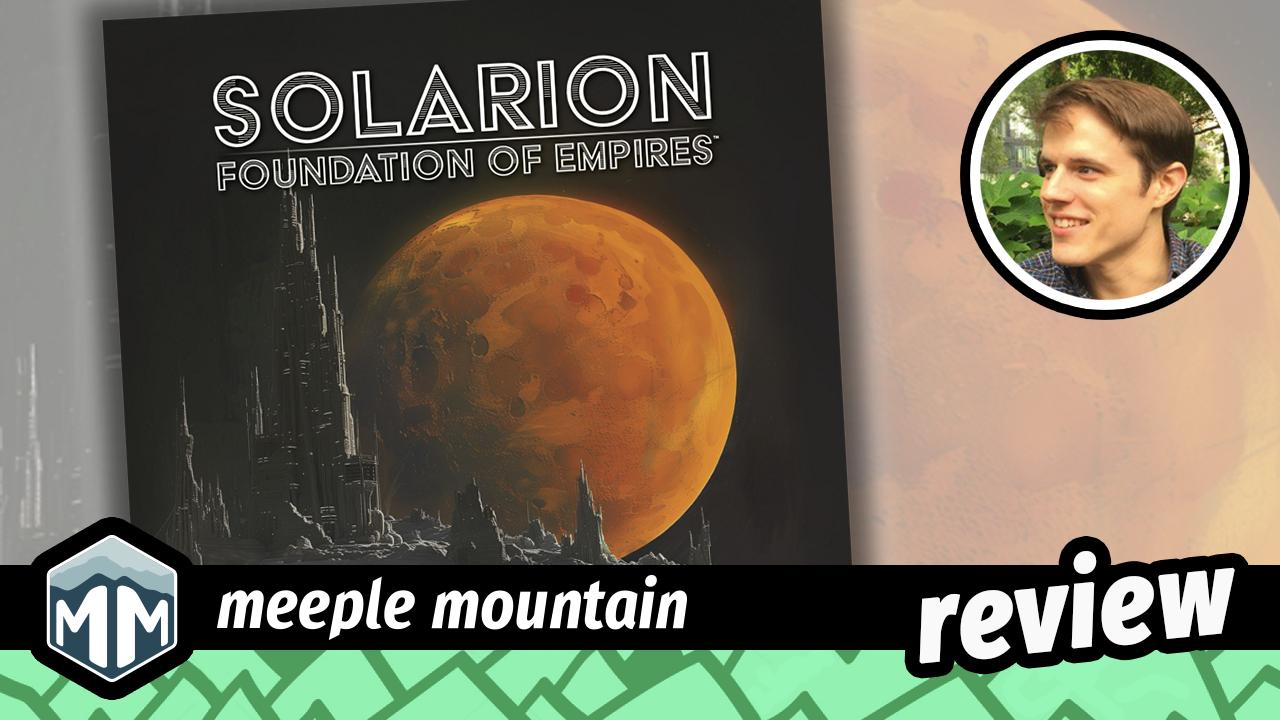
The post Solarion: Foundation of Empires Game Review appeared first on Meeple Mountain.
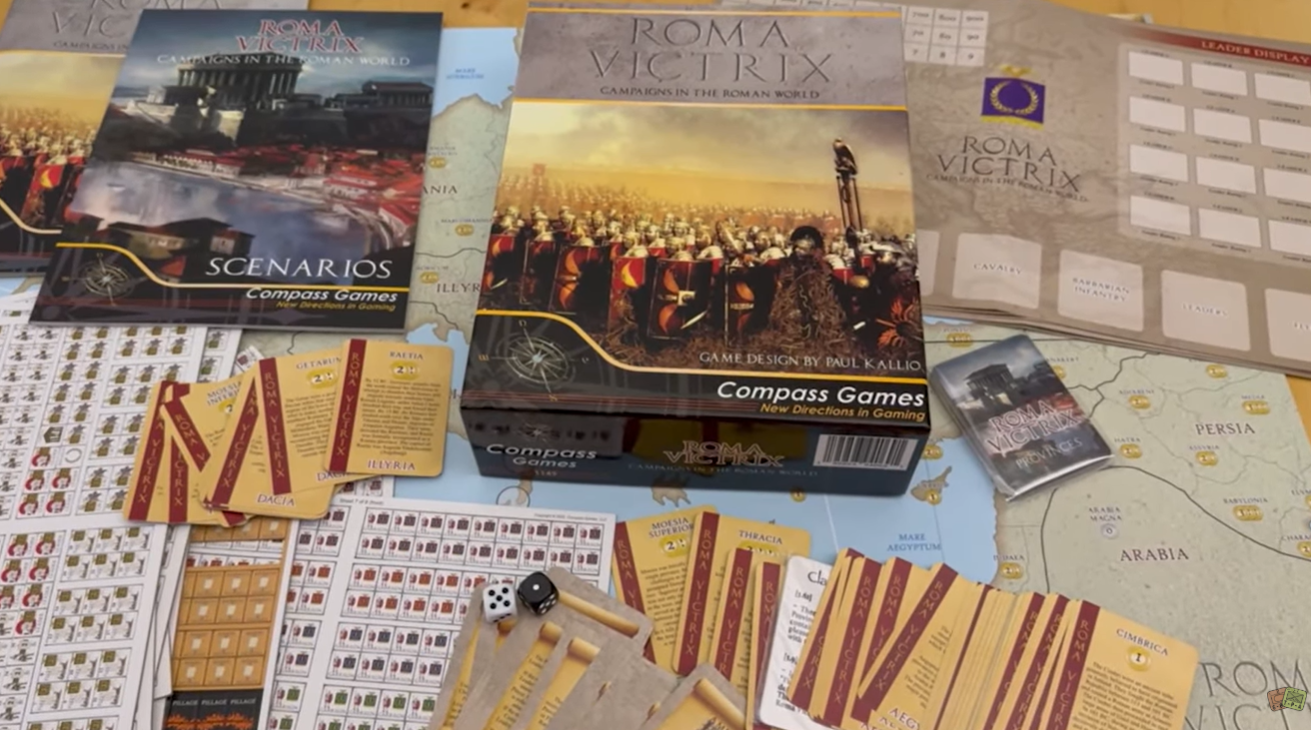
Roma Victrix is a grand strategic, moderate complexity wargame covering a time period ranging from 218 BC to 533 AD in twenty separate historical and hypothetical scenarios.
Roma Victrix is a game which endeavors to re-create the conflicts between Rome and her neighbors to achieve and maintain that dominance. A simple interactive sequence of play guides each player through the process of revenue collection, recruiting and maintaining military forces, conducting land and naval operations, diplomacy, field battles and sieges. Special rules are included to emphasize the importance and effects of leadership, cavalry superiority, mobility and attrition. Random events are also represented, adding an element of unpredictability to even the best laid plans and the likelihood that no scenario will ever play the same.
We posted an interview on the blog with the designer Paul Kallio and you can read that at the following link: https://theplayersaid.com/2022/05/23/interview-with-paul-kallio-designer-of-roma-victrix-campaigns-of-the-roman-world-from-compass-games/
-Grant
I have never before given much thought to the ways in which music composition and game design are similar. Like all creative arts, both share the goal of trying to communicate and share an experience with their audience. As disciplines, music has notes and rhythms while game design has rules and mechanisms, but both are about taking those disparate ingredients and making them cohere into something whole, something that vibrates with inevitability.
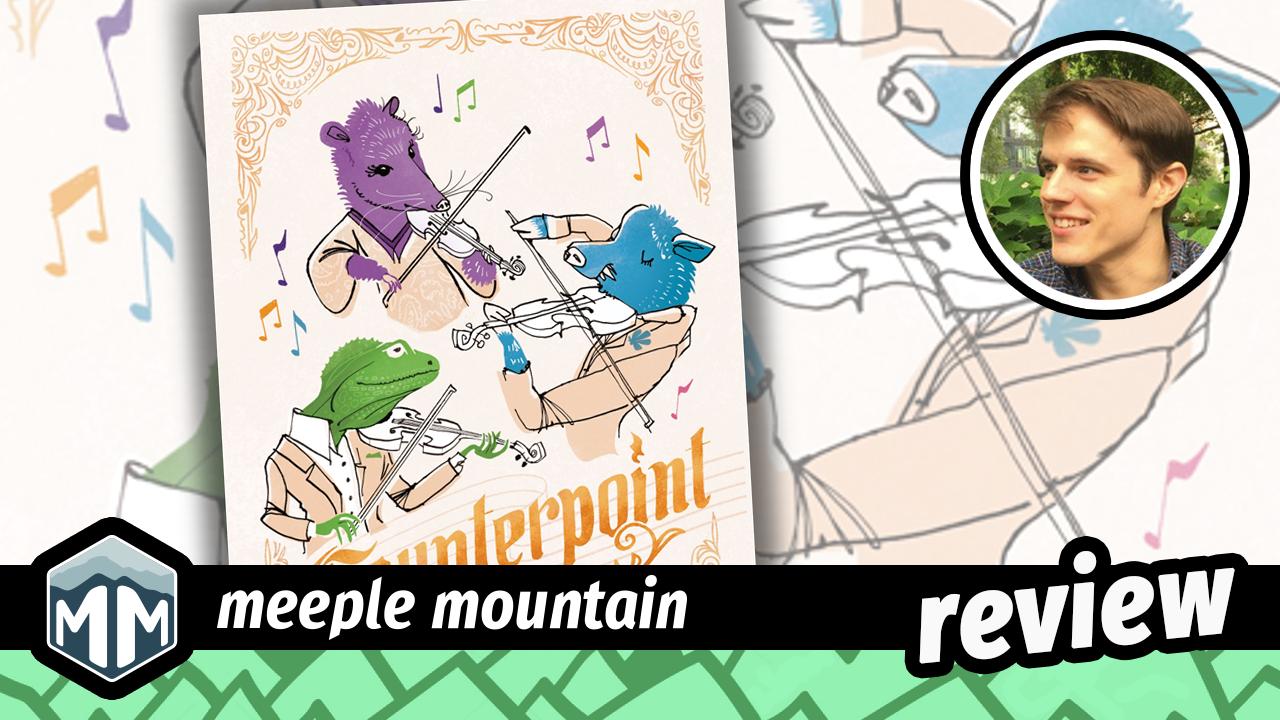
Ted Mann Schaller’s Counterpoint is a must-follow cooperative trick-taker with bidding and a trump-suit. A blessing, to live to see such times as those in which I can write that sentence and assume much of the audience will understand. Each player is a member of an animal chamber trio–to-quintet, be they an iguana violinist or an armadillo pianist. Such is the quality of Brandon Campbell's illustration work here that fights will break out over who gets to be what. The cooperative nature of the game follows the template laid out by blockbuster predecessors The Crew and The Lord of the Rings: The Fellowship of the Ring - Trick-Taking Game: over a series of performances, scenarios named after pieces in the chamber music canon, players attempt to complete certain challenges while also ensuring that everyone makes or exceeds their bid.
There are a few twists on the formula,…
The post Counterpoint Game Review appeared first on Meeple Mountain.
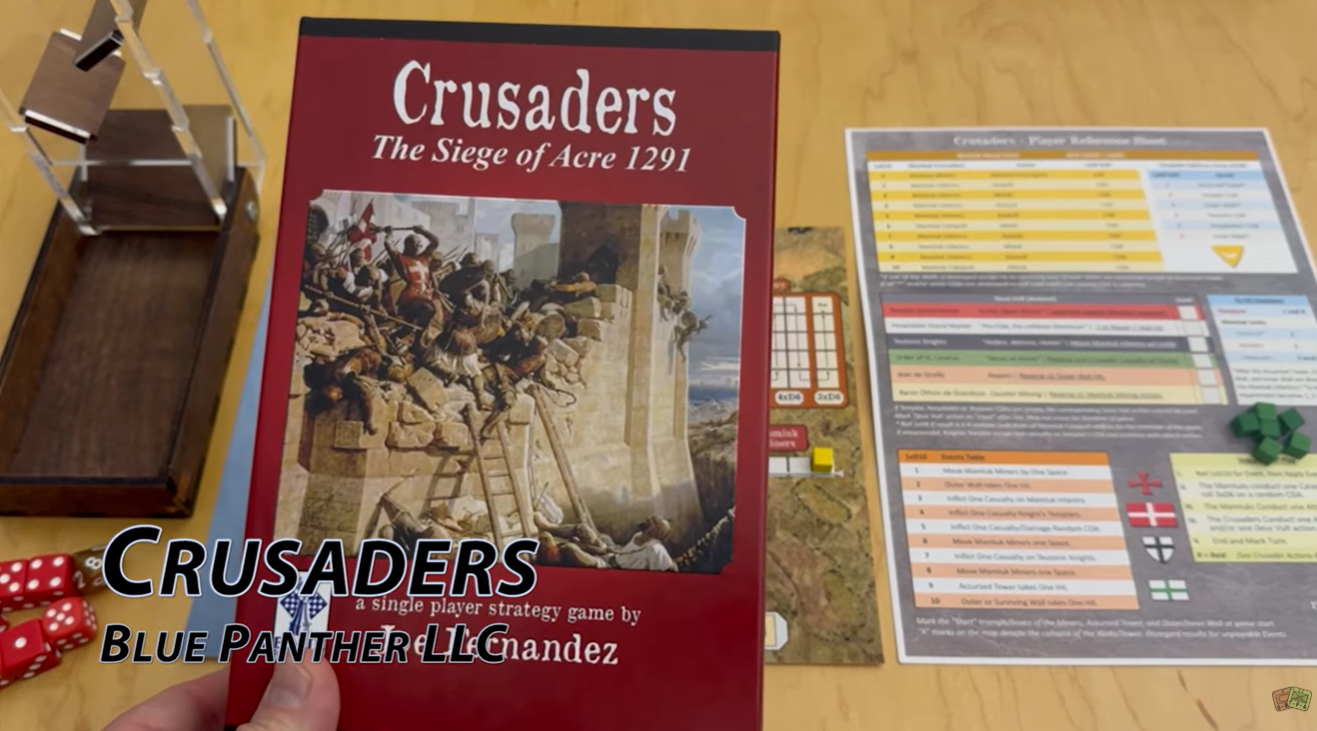
“In Signo Hoc Vinces”. Dive into history and heroism with Crusaders: The Siege of Acre 1291, a Tactical level Solitaire-Only board-wargame that immerses you and lets you experience the last stand of the Knights Templar and the Crusaders in the Holy Land. Relive the courageous stand of some 15,000 Crusader soldiers, Knights Templars, Teutonic Knights, and Hospitallers as they defend Acre, the critical port city in the Holy Land, against a massive Mamluk army of some 80,000 soldiers armed with siege engines and catapults during the Ninth Crusade.
Crusaders is a dice rolling, tower defense, solitaire game. Players take the role of Crusaders and try to defend Acre from the Mamluk attackers. Players win or lose depending on if the walls are breached and enough defenders survive.
-Grant
The pub was quiet after the lunchtime rush. It was a chilly autumn afternoon, so the hearty lunch just hit the spot. Now we were sitting there, playing a card game, with a pint each by our sides. While the meal had filled us up, we still fancied something savoury. We just needed a small snack that the two of us could share. Nothing fancy. Something simple would do. Of course, it had to be Crisps! by Shreesh Bhat from Little Dog Games with art by Sai Beppu.
The post Crisps! (Saturday Review) appeared first on Tabletop Games Blog.
By Kaysee and Max
For the German review please visit Der Herr der Ringe: Die zwei Türme – Das Stichspiel (2-Spieler-Rezension).
Disclosure: completed all the chapters
We had fun playing The Lord of the Rings: The Fellowship of the Ring Trick-Taking Game despite it not being optimized for two players, so we were excited to play The Lord of the Rings: The Two Towers Trick-Taking Game to see if there were any interesting mechanical changes (also we‘re LotR fans so there’s that).
The art style is very similar to the first one, but the cards are much more vivid. We also like that they used paper instead of plastic wrapper for the packaging of the tokens and the decks which makes it easier to open and better for the environment (we have a copy from the 1st printing).
The initial setup for two players is still very similar; each of us plays one character, but one of us should play an additional character whose cards are open but in a pyramid form where five of the cards are faceup and the rest are facedown. The One Ring token and the ring cards are not yet part of the setup. Instead, two new tokens and five cards are added: the titular Two Towers, as both tokens and cards and the three Orc cards. All of theses cards don’t belong to any particular suit. As such they can only be played if a player doesn’t have follow the leading suit. The towers are similar to the One Ring, they win any trick that they are played into. Unlike the One Ring the player cannot choose to lose the trick, instead if both towers are played into the same trick, they both lose. The Orc cards are the opposite of the towers and always lose. We like these new cards as they add challenge to the game since they cannot be used to lead a trick. If a player is forced to lead a trick with an Orc (e.g. because it’s their only card left), the group loses the whole chapter. If a trick contains both tower cards and an Orc card, no one wins the trick and it is set aside.
As with the first game, each chapter features a different set of characters with their own goals and rules. These tend to be slightly more complex and interesting this time around. Likewise, many chapters still feature event cards that further change the rules. Unlike the first game, there is a big change after the first ten chapters, which correspond to book three of LotR. Without spoiling too much, the deck changes to become more similar to the deck in the first game, with some significant changes. This of course makes perfect sense thematically, as the later chapters are the ones featuring Frodo, Sam and the One Ring.
We were hoping that Two Towers would be much better for two players. We found the first few chapters to be both fun and mechanically challenging even though the 2-player friendliness is just the same as the previous game, and we were ok with it (we got used to it and we accepted it) but as we stepped in to Chapter 25, that’s when we realized that the game just became worse for two players. We could imagine this chapter being a bit easier for three or four players, but with two, it wasn’t. How the pyramid works in that chapter made us feel very frustrated. We’re still trying to figure out why they made the decision for the set up of the pyramid for this chapter to be the way that it is. With many challenging games, we get that feeling of great satisfaction after beating them, but not with this one. Even though we were able to finish the chapter after a few tries, it didn’t feel satisfying or rewarding. The relief that we felt is more of us not having to be in a very frustrating situation anymore (we could’ve just stopped playing it, but it’s the completionist in us that deterred us from just moving on) than being able to succeed. While it is not as frustrating and has a regular pyramid setup, Chapter 30 also proved difficult for us, due to the specific combination of character goals and the limitations introduced by the event card for that chapter.
We still decided to finish all the chapters. Some of the mechanical changes in part 2 were a noticable improvement and made the game more fun. We also liked how the theme and the mechanisms in part 2 felt very familiar, but were still different and interesting. We also liked the last chapter a lot and how the mechanism matches the theme. It was a good ending.
Our Final Thoughts:
The Lord of the Rings: The Two Towers – Trick-Taking Game was still enjoyable for us in most parts, but there were times where we thought that we could’ve enjoyed it more if there were more of us playing it, something that also crossed our minds while playing FotR, but it did occur more frequently and strongly while playing this game. It’s unfortunate because the interactions between the mechanisms and the theme here are much more interesting than in FotR. We were hoping for it to be at least as good for two players as the previous one if not better, but it wasn’t. Still, we’re looking forward to playing The Return of the King if it comes out in the future and hoping that it will have better mechanics for two players.
What we like:
What we do not like:
Kaysee’s rating: 3.5/5
Max’s rating: 3.5/5
Combined rating: 3.5/5
Reference:
Tolkien, J. R. R.(1999). The Two Towers. HarperCollins.
Title: The Lord of the Rings: The Two Towers – Trick-Taking Game
Game Design: Bryan Bornmueller
Illustration: Elain Ryan, Samuel R. Shimota
Publisher: Office Dog
The post The Two Towers – Trick-Taking Game (2-player review) appeared first on Schmeeples.
This update contains lots of bigger and smaller improvements!
The most important of these are described below.
When you log a play in BG Stats you now can add names to one or more Anonymous Players. In a play, just tap the anonymous player to add a name.
A so-called Named Anonymous Player only appears in that Play, not in any other lists of players, and does not have player stats.
You can find all information about named Anonymous Players here: Naming an Anonymous Player, and about Anonymous Players in general here: Anonymous Players.

When searching for a game in the List of Games the following is now also possible:
As before, you can also find a game by its BGG ID.
When selecting players for a play, there are two extra options to sort the players available. Next to Alphabetical, Recent play and Most plays, you can now also sort players on Recent play of this game and Most plays of this game.
The extra sorting options are added to the list of sorting options.

Once you select Recent play or Most plays, an extra option will become available, “of this game“. Once enabled the Player List filters will only take into account the plays for the game that is being played.

You can now set a Default tag that will always be added to plays when they are logged on that location.
A default play tag can be added for every location:

When you search for a game and the game already exists in your app, with the extra option you can go to that Game entry directly.
When you tap on the + button on the list of Games, you can search for a game on BoardGameGeek. Type the name of the game (or BGG ID) and tap Search BGG.
If you tap on one of the search results, but that game is already in your app, you’ll now have three options:

You can now tap the Heat map legend to switch the heat map display from colors to grayscale. For each value, the number will be displayed as well.
The Heat map is available with the Power expansion. You can access it from the Insights screen, when you are viewing a Year or All time period.
BG Stats now adjusts its behavior based on the Accessibility Settings Reduced Motion and Differentiate without color. Larger Text, Dark Interface and Reduce Transparency were already supported.
BG Stats will soon list “Accessibility Nutrition Labels” in the App Store with all supported accessibility features.

Lots of other small bug fixes and improvements:



Asmodee’s escalating power as a global TCG distribution giant was evident again in its newly-released annual results, which showed the company’s net sales surging 23% year-on-year to more than €1.68bn.
That annual revenue has swelled around 50% in just three years on the back of huge recent growth in TCGs, including heavyweights Magic: The Gathering and Pokemon as well as a wave of strong performing newcomers such as Disney Lorcana, the One Piece Card Game and Asmodee’s own Star Wars: Unlimited.
Despite Asmodee’s long-time image as a board game publishing heavyweight, more than 72% of its revenue now comes via its distribution of other companies’ games – up from an already hefty 63% in the previous financial year to March 31, 2025.
TCGs now make up the lion’s share of Asmodee’s annual net sales – about 60% in the 2025/26 financial year, up from just over 50% across the preceding 12 month period.
The company’s own board game publishing operation, meanwhile, saw its net sales fall 5.8% in the last financial year – while net sales for the first quarter of this year were down 9.8% compared to the same period in 2025.
Asmodee CEO Thomas Koegler was asked directly during a Q&A session on Asmodee’s latest financial results if the company was still primarily a board game publisher, or whether it was “increasingly becoming an infrastructure company for TCGs”.
He said in response, “We have insisted a lot on the fact that one of the strengths of Asmodee is to be a publisher, but the first strength that we do have is our global reach across all categories, from TCGs and board games.
“That’s the superpower of Asmodee – and then being a very strong publisher is a way of accelerating performance.
“So I would say that there is no change, we continue to capture opportunities across the board wherever they come from… our aim is to be a dominant player, bringing all games to the market, anywhere they can.”
That assertion has been borne out by Asmodee’s recently reignited acquisitions drive, which has seen it pay a hefty €250m for French social and party game publisher ATM Gaming, as well as buying Japon Brand from CMON and individual IPs including Zombicide, Cthulhu: Death May Die and Sheriff of Nottingham.
The Japon Brand buyout was accompanied by Asmodee launching a new Japan-based design studio, Nekuma, anchoring its push into what it described as a “currently untapped market” for the company.
There were also hints in the Q&A session that Asmodee might be considering a move into Japanese distribution, adding to its existing operations in the region across China, Taiwan and Australia.
Koegler said of Japan, “The first move we have done with Japon Brand and setting up Nekuma is more of a sourcing move, right?
“The Japanese game designers and authors’ market is very dynamic. If you look for instance in recent very successful games – Bomb Busters, which is the Spiel des Jahres from 2025, was originated from Japan, a game like Dnup that we are releasing later in the year is coming from Japan.
“So they are very good also at small card games, and we really wanted to, I would say, bolster our publishing capabilities by creating those sourcing activities.
“Distribution wise, for now we are still working with local partners, we have not set direct foot yet.
He added, “It’s a fragmented market, its a very strong TCG market on the local market side, but yes… as I said, it’s a very vivid scene.”
Koegler also made clear that the company is still pursuing M&A opportunities on the publishing side “across all play types that we have, from social games to lifestyle games and tabletop games”.
He said, “I would say that the discussions we have are still as active as they were – we have demonstrated our ability to do various sizes of deals, which is also a very strong signal to potential people that would like to join the Asmodee adventure.”
Koegler said in his introduction to Asmodee’s 2025/26 report that the impact of geopolitical and economic events on the company’s business in the first few months of the year had been limited, but that the firm remained “mindful” of the potential pressures on transport and energy costs.
He said in the financial results Q&A session, “From a consumer standpoint, in moments of tensions when there are rising costs, because games are an affordable leisure we tend to suffer less, if not take some opportunities. That’s what we’ve seen in previous crises over the past 10 or 15 years.
“Consumer sentiment-wise, we will see. Although we are always cautious, there is also I think opportunities for us.
“Secondly, in terms of the cost impact. First of all our mix is currently very favourable because trading card games are manufactured very close to where they are sold, like in Europe for European countries mainly – some are manufactured in Asia but its a limited one – in the US for the US, etc.
“Plus they are cheap to transport, so the impact on those is relatively limited. And then we will see with our partners in terms of raw material increases, but again in the overall cost of goods they do not represent a very significant party.
“For board games we have started to see some increase in transportation costs. They did not impact Q4. If we take an example, road freight did represent roughly 20% of the cost base, and they have increased by 10%.
“But again, all of this is quite manageable for us. We expect to be able to mitigate the impact.”
Koegler added that although the process for receiving tariff refunds in the US had begun, after the Supreme Court struck Donald Trump’s swathe of import fees earlier this month, there was uncertainty about both the timing and final amount Asmodee was owed.
He said, “This is still a little bit foggy, blurred – for us, but [also] for many, many other companies out there. So let’s wait for what’s next on this topic.”
The post Asmodee’s annual revenue surges to €1.68bn on TCG distribution power, but sales of its own board games fall first appeared on .
Hoopla: Hoopla is an informal noun referring to excited, noisy commotion, bustling activity, or extravagant, sensational publicity (often referred to as hype or ballyhoo). It often implies unnecessary fuss or exaggerated attention surrounding a person, event, or product.
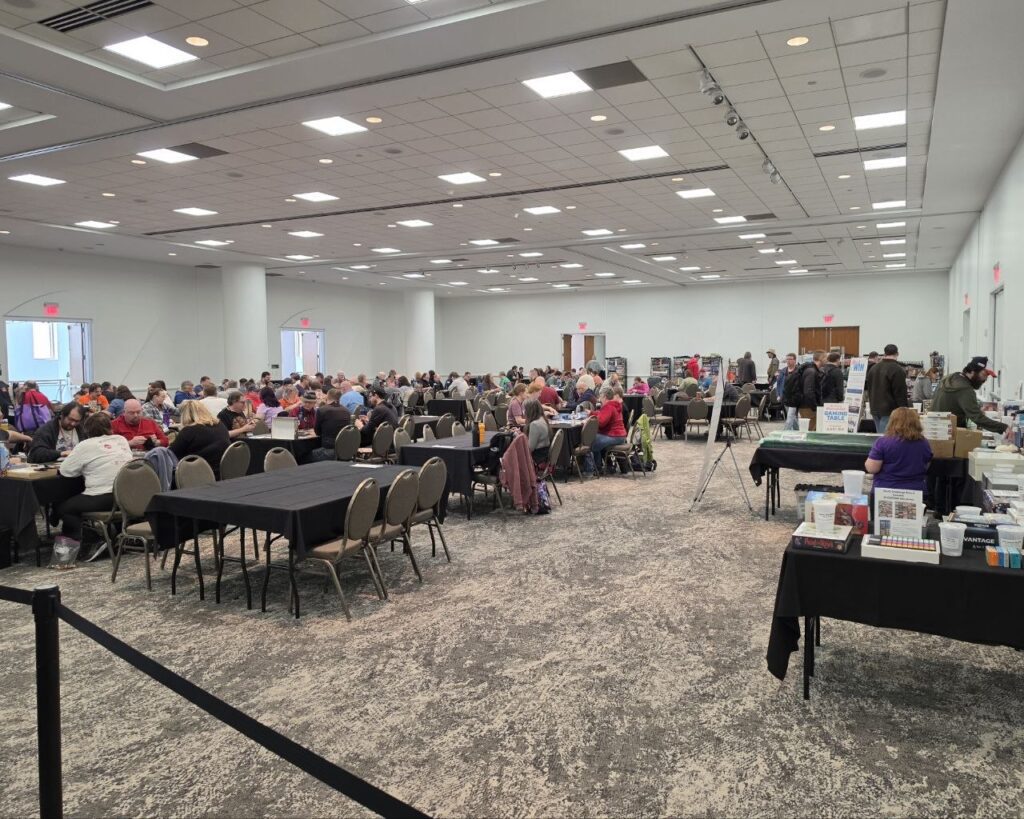
Last year, I attended about six gaming conventions, mostly on the larger side of the spectrum: Gen Con, PAX Unplugged, and the like. These conventions are huge, multi-day, overly stimulating showcases of everything the gaming world has to offer. If the massive vendor hall isn’t competing for your attention, then it’s the organized events, publisher presentations, or state-of-the-industry talks. It’s exhausting and invigorating all at the same time. I often come home from these large-scale carnivals with no voice and an empty wallet.
But what if I told you there’s a softer version of a gaming convention? One without long queues for the new hot game, a sugar-water refill, or even the restrooms? Now, what if I said the attached hotels were affordable, the schedule was packed, and you could still buy stuff?
Well, friends, I have an event you may want to pencil into your calendar for next year.
Nestled in the Baird Center in Milwaukee,…
The post Kevin and Joseph Go to Gaming Hoopla 2026 appeared first on Meeple Mountain.
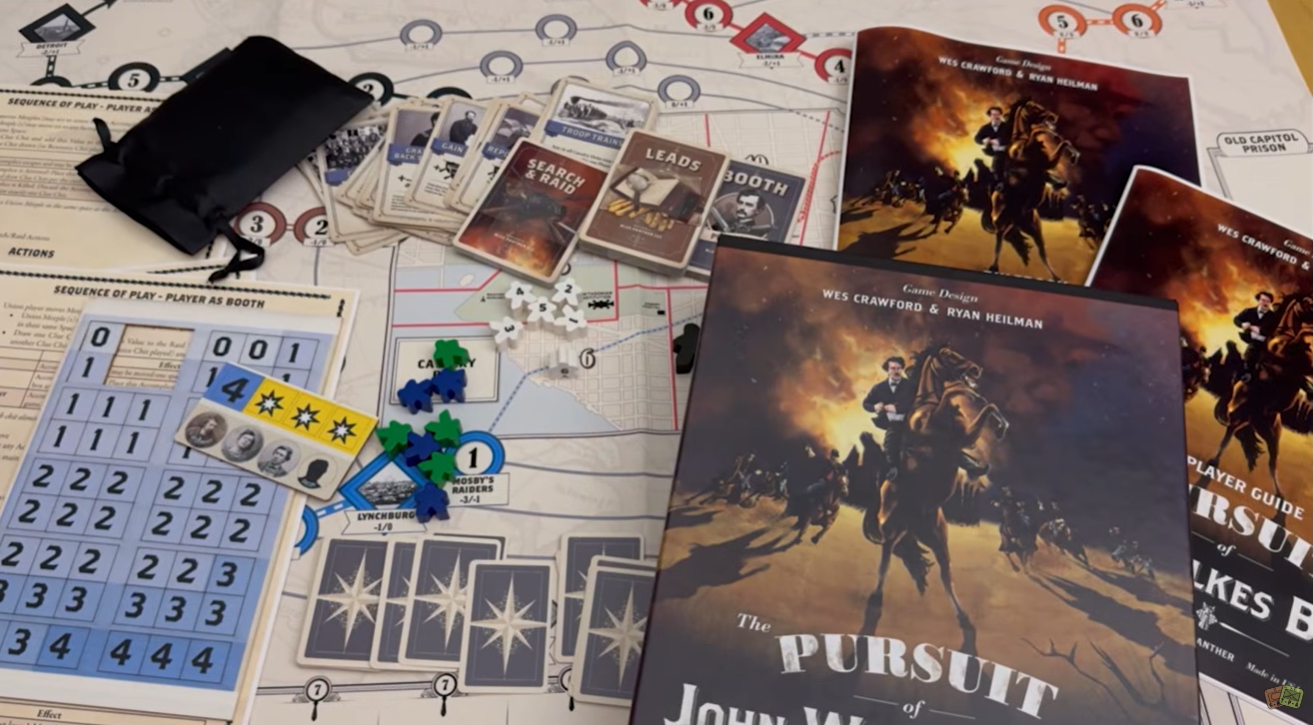
A few years ago, while attending the WBC, I had the chance to meet Wes Crawford who was demoing his upcoming game Engine Thieves. He was a very nice guy and his game was pretty interesting as well. Since that time, he has another game that has been released designed in partnership with Ryan Heilman in The Pursuit of John Wilkes Booth published by Blue Panther. I had a chance to play the game solitaire (with Wes overseeing the game and giving me guidance and pointers) at WBC in 2024 and have since played the game on my own several times and had a really great time with it. Great little solo game with several other modes where the player uses resources like police and detectives to search for clues in the hunt for Lincoln’s assassin after the events at Ford’s Theater on the evening of April 14, 1865. Definitely not a subject that has been gamed before and it is really refreshing to be able to experience this history in an interesting and engaging game. There really is a lot to like with the way that clues are found and chits are blindly drawn to verify clues from a bag. There is also a great little movement mechanic with police and detectives to try to acquire more clues.
We were able to post an interview with Wes Crawford on the blog and you can read that at the following link: https://theplayersaid.com/2024/12/03/interview-with-wes-crawford-designer-of-the-pursuit-of-john-wilkes-booth-from-blue-panther/
Here also is a link to our video interview after playing the game with Wes at WBC:
-Grant
When it comes to blinging out my games, I’m all in. While I usually wait until I’ve played a game a few times before deciding if I need to upgrade its bits or storage solution, once I decide a game is a keeper, my next thought is to see how I can give it an […]
I haven’t played too much Mage Knight recently. I played with the TaoLing1 a few times last summer. But at a recent convention one of the Wiz Kid reps asked me if I wanted to try Mage Knight Emergence: The Portal to Power,2 which is apparently a Res Arcana Duo like product. A game that can serve as a 2p introduction to the system, or an expansion you just shuffle in. I’m not a completist (I didn’t buy the ultimate edition, so my set is 4-5 cards short of complete), but I just shook me head “No thanks, I’ll just buy it when it comes out.”
So he gave me a few preview cards from the expansion. Thankfully I have a few extra sleeves of the various correct colors so I could just add them in. (I’m pushing 500 plays with my set3, wear is definitely noticeable on components. I sleeved my game after 100 ish plays4). I use dice to randomize tiles and chits, but the cards would be gone without sleeves.
And there is MK: The Apocalypse Dragon, coming out sometime this year, according to BGG.
All of which is to say, I don’t write about Mage Knight often, but after that convention I set up a solitaire game and played it, and I’m looking forward to more content for it.
︎︎︎︎
Yesterday I heard some huge news from Panda Game Manufacturing: For the next 12 months, they are accepting submissions for indie game designers to win between $2,000 and $20,000 in manufacturing credits.
I’ll break down this opportunity today, but first a disclaimer: I’ve worked with Panda, a Canadian company with their main facility in Shenzhen, as the sole manufacturer for Stonemaier Games over the last 14 years. I consider them a close partner. However, I have no connection at all to p20–I learned about it yesterday just like anyone else. That said, I probably wouldn’t write this if I couldn’t personally vouch for how great it is to work with Panda.
Here’s the deal: If you have two or fewer tabletop games published, you are eligible to enter exactly one game as your p20 submission. You own the game, not Panda. It’s free to enter, and it’s open to anyone worldwide.
Crucially, you have an entire year to make your submission. I think this is a really smart choice by Panda. Game design, playtesting, and development take time. This is a great chance to actually do something with that game idea you’ve thought about.
However, it’s also important to note that there is a critical gap between game design and manufacturing, and that gap is bridged by a publisher (whether it’s an existing game publisher or you as a self-publisher). The intent of p20 appears to be for the designer to self-publish the game (the submission form reads, “I am, or intend to be, the self-publisher of this game.”), which involves a lot of responsibility beyond design.
Panda confirmed with me that the manufacturing credit could potentially be passed on to a publisher, though the credit stays specifically with the designer and the game they submitted. The FAQ says this about signing with a publisher during the design process, “Tell us. We handle it case by case. We’re not in the business of penalizing good news.”
At the very least, p20 seems like a no-risk chance to hone your pitch. Panda asks for a sell sheet, a short video, and a blind playtested rulebook. These are all things you would need no matter how you seek to publish your game.
I’ve reached out to Panda to get clarity on my one other question: What if you also want to crowdfund your game? It seems reasonable that a new, indie designer looking to self-publish their game would use a crowdfunding platform to market the game, build community, improve the game, optimize freight shipping, and gauge demand. The game needs to be unpublished at the time of submission to qualify for the manufacturing sponsorship, so I’m guessing the crowdfunding campaign would need to happen after the final selections are made (Gen Con 2027).
UPDATE: Panda responded to say, “Yes, someone can submit for p20 and also run crowdfunding, as long as the crowdfunding happens after they apply for the program. As far as timing – it would be preferable if these campaigns ran later in the year/early next year/closer to the end date of the p20 program, but as long as they keep us informed of their plans, it is no problem to run a crowdfunding campaign especially if it is party of their larger marketing plans for their game/start up publishing company – we like to see what their vision is for the future.”
One other highlight of p20 is that there isn’t just one winner. Instead, twenty indie game designers will win! That’s huge. To put these credits in perspective, a typical minimum order quantity (MOQ) is 1,000 units, and a basic card game like Flip7 costs around $2 to manufacture (e.g., a total minimum cost of $2,000). If you’re looking to make a more complex game with custom meeples, trays, dice, etc, you’re probably looking at the $8-$12 range and a potential increase in MOQ to 1500 units (e.g., a total minimum cost of $15,000). This doesn’t account for all the other costs required to make a game (art, graphic design, freight shipping, etc).
Overall, if you’re interested in self-publishing a game you’re passionate about, I think p20 is an excellent opportunity. Even if you’re not one of the twenty winners in the end, it’s still a motivation to do the work and make your game idea a reality over the next year (and learn how to effectively pitch it in the process).
I’d love to hear what you think about Panda’s p20 sponsorship. Are you going to try it?
***
If you gain value from the 100 articles Jamey publishes on this blog each year, please consider championing this content! You can also listen to posts like this in the audio version of the blog.
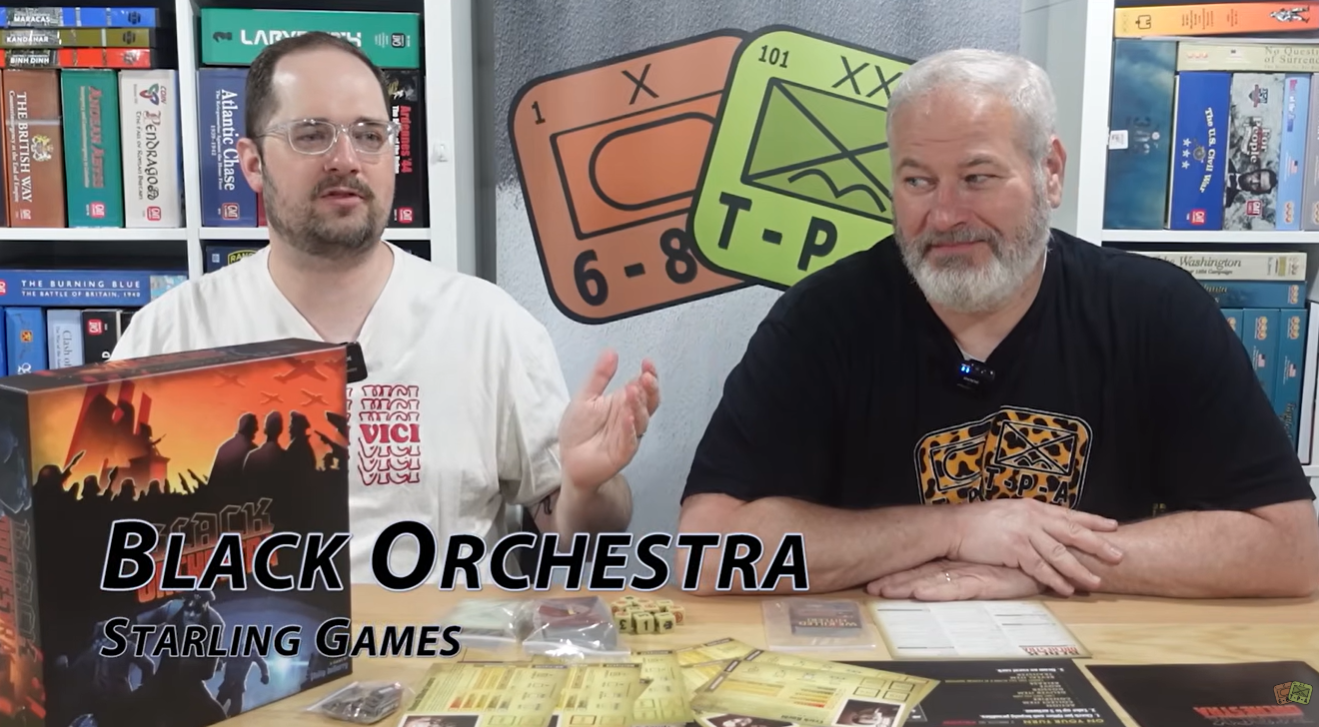
Black Orchestra begins with each player choosing a historic figure involved in the conspiracy against Hitler. In this dark and dangerous pursuit, motivation is perhaps your greatest weapon. If you can stay true to your convictions in the face of overwhelming threat and inspire your comrades, then you will be able to use your special ability, attempt plots, and even become zealous (necessary for some extremely daring plots).
But every move you make may also increase the suspicion of the authorities. The Gestapo will make routine sweeps, and any players with high suspicion will be arrested and interrogated (possibly resulting in other players being arrested). If you are all arrested or if the Gestapo finds your secret papers, you lose. And the suspicion placed on each conspirator will increase the chances their plots are detected.
On a turn, players may take three actions, such as moving, searching for an item, or drawing a card; or, at the cost of one action per die, roll the dice in an attempt to gain even more actions — at the risk of attracting the suspicion of the gestapo. This dice rolling “Conspire” action allows players to make bold moves when most needed.
-Grant
I am not a hardcore historical board gamer by any means, but when you offer me a way to casually dive into them in under two hours of gameplay, I’m more than happy to give it a whirl. What I’ve found with these types of board games is an emphasis on new mechanics that players […]
Astrolabe, a Persian folklore-inspired game which tasks players with hunting and binding demons using the titular instrument, has won this year’s Cardboard Edison Award celebrating unpublished board game designs.
The debut design from Iranian video game veteran Yasaman Farazan was praised by judges for its “genius” action selection system, which makes use of a physical ‘astrolabe’, calling it “thematic, toyetic, and an absolute joy to engage with”.
Farazan’s design took first place out of a record 396 entries this year – a total which has almost quadrupled since Cardboard Edison unveiled its debut award winners a decade ago.
Part of that growth has been down to the competition’s pedigree of winners that have gone on to be published by well-known studios.
They include Winter, published by Devir, Castell from Renegade Game Studios and Umbra Via from Pandasaurus Games, as well as 2023 champion Diatoms, which followed a successful Kickstarter campaign with retail publication by 25th Century Games in partnership with Ludoliminal.
Second place in this year’s competition was Limelight, a push-your-luck deckbuilder by Cameron Fleming about staging a Broadway show, while third place went to Luke Wolyncewicz’s Braggin’ Wranglers, which sees players attempting to catch wooden animal meeples using an adjustable lasso.
Hatchlings, a game by Alan Leduc in which players try to get baby sea turtles to the ocean using “unique and clever” movement queue mechanism, placed fourth.
This year’s 20 finalists also included a magnet-based vertical castle-building game and a medium-weight strategy title centred around wedding planning.
More than 80 judges took part in this year’s award process, including The Search for Planet X and Fromage designer Ben Rosset, Elysium and Next Station: London creator Matthew Dunstan and High Tide designer and Diana Jones Emerging Designer award winner Marceline Leiman.
Last year’s Cardboard Edison was won by Dot Com, an economic strategy game which uses an app to run players’ money supplies down in real time.
The game, designed by former Ravensburger game development intern Sammy Salkind, puts players in the shoes of startup founders battling to build their internet startups during the dot-com bubble of the late 1990s.
Cardboard Edison was launched in 2012 as a board game design studio and hub, which has since expanded from a well-read industry blog into a vast repository of information for board game designers.
Suzanne Zinsli created the Cardboard Edison Award a decade ago with the help of fellow Cardboard Edison founder Chris Zinsli.
All of the finalists from this year, and the pitch videos of their designs, can be viewed below this article.
Winner: Astrolabe by Yasaman Farazan
2-5 players
45-90 minutes
Players are exorcists in a Persian folklore world, using astrolabes to read the stars, hunt
demons, and bind them into artifacts. Each round, players secretly rotate their astrolabe to
choose an action, a number, and a time of day, then reveal and resolve actions in ascending
order.
Pitch video
2nd Place: Limelight by Cameron Fleming
3-6 players
45 minutes
Limelight is a push-your-luck deckbuilder about staging a Broadway show. Over three Acts,
you’ll audition talent, hire crew, and rehearse your show, trying to achieve the perfect mix of
cards on Opening Night.
Pitch video
3rd Place: Braggin’ Wranglers by Luke Wolyncewicz
2-8 players
15 minutes
Braggin’ Wranglers sees players catching animals to score points using a unique adjustable
lasso—but there’s a twist! Turn order is decided by your lasso size, which you secretly set at the
start of each round!
Pitch video
4th Place: Hatchlings by Alan Leduc
2-5 players
30 minutes
You’re a Nature Spirit with one job. Get your baby sea turtles out of their comfortable nest,
across the beach, and into the water where they belong, thus earning praise from Mother
Nature. It would be easy if it weren’t for the relentless bully Steven Seagull and the other Spirits
competing for glory.
Pitch video
Black Ruth of Dogtown by Keith DeViere Donaldson
1-4 players
30 minutes
Black Ruth of Dogtown is a procedural oracle system driven by a circular mancala drafting
mechanism, where players construct a three-by-three grid to optimize set collection and
speculative scoring in service of a final narrative divination resolution.
Pitch video
Catacombes de Paris by Nicholas Henning
2-5 players
70-110 minutes
In Catacombes de Paris, players take on the solemn duty of transporting the remains of millions
through the bustling streets of 18th-century Paris to build their personal ossuary in the famed
Catacombs. This highly thematic experience combines a strategic pick-up-and-deliver system
with an engaging polyomino mini-game for building out your ossuary board.
Pitch video
Deductive Seasoning by Eric Ledger
2-5 players
20-40 minutes
Deductive Seasoning is a family-friendly deduction card game where you are a food scientist
who has concocted a dish using a secret ingredient from the Periodic Table of Flavor. You must
figure out other players’ secret ingredient through careful play and observation.
Pitch video
Goa Kranti by Andy Desa
2-4 players
60-90 minutes
A cooperative game about an overlooked chapter in history: Goa’s struggle for independence
from Portugal (1932-1961). Players embody historical freedom fighters choosing between
violent resistance and peaceful satyagraha. Core mechanisms include push-your-luck resource
gathering, deck improvement, and bag-building for a pivotal mid-game check when India gains
independence.
Pitch video
Hybrid Hijinks by Jena Keesee
3-5 players
60 minutes
A competitive game, creating hybrid creatures and utilizing variable, configurable player powers
to impress visitors and earn the most approval for shifting prowess.
Pitch vide
Ladybugs by Michael Posada
1-4 players
30 minutes
Push your luck by rolling dice that represent a colony of ladybugs flying over a field of flowers.
Your rolls determine which flowers you add to your garden, which scoring conditions you unlock,
and how many points you earn.
Pitch video
Match Patch by Jack Rosen
3-5 players
20 minutes
Match Patch is a game about the benefits of farming using companion planting methods.
Mechanically, it is a card-matching race game where players try to diversify their harvested
crops.
Pitch video
Midnight Spawn by Jayson Farrell
1-4 players
60 minutes
Midnight Spawn is a game about the mysterious and incredible deep sea. In this game you’re a
researcher in your deep-submergence vehicle, or DSV. You’ll discover strange creatures and
observe them eat or move other creatures, manipulating the shared board. You can also
upgrade your DSV with tech cards or boost your score with research cards.
Pitch video
Moonforge by Pawel Owsianka
1-4 players
90 minutes
In Moonforge, players command large space facilities capable of capturing asteroids, extracting
valuable resources (energy, metal and minerals), and upgrading their operations with new
modules and functions. Resources can be sold for currency points, while depleted asteroids
contribute material toward the creation of a new moon.
Pitch video
PiramiDuel by Guillermo Viciano
2 players
20-30 minutes
A game for two players where you will explore Ancient Egypt, fighting to claim the most
influential pyramids.
Pitch video
Possessions by Dan Nichols
2-4 players
60-90 minutes
Possessions is a competitive strategy game where you play as ghosts with one hour to finish
your unfinished business and fulfill your final wishes. As the clock ticks down, strive to get the
most value from your secret ambitions by possessing your family’s last living heirs.
Pitch video
StrongHolds by Nelson de Castro
2 players
40-60 minutes
StrongHolds is a competitive castle-building game featuring magnetic tiles that allow players to
build vertically unlike any other game. Harness your creativity and vision as a Medieval
Architect, while sabotaging your opponent by tossing and sliding siege tiles to topple their
progress.
Pitch video
The Leftovers by Larry Ted McBride
2-4 players
25 minutes
The Leftovers is a cooperative trick-taking game of community deck-building, resource
management, strategy, and story. With your party of magical foodfolk, you will work together to
complete objectives and avoid vicious food fiends as you explore the abandoned halls of the
Enchanted Ladle.
Pitch video
The Roots of All Evil by Dean Burry
2-4 players
15-20 minutes
Be the first animal cultist to summon the tree demon Blackthorn by creating ever-expanding
rings of root cards in which to place your sacred offerings.
Pitch video
The Wedding Planner by Jose Lema
2-4 players
60-90 minutes
You just got engaged! Now you have 12 months to plan the wedding of your dreams. The
Wedding Planner is a medium-weight strategy game that captures the authentic pressure of the
process: an overwhelming workload, finite resources, and the constant tension between vision
and reality.
Pitch video
Wunderkammer by Rosco Schock
2-4 players
45 minutes
Wunderkammer is a set collection style game with a unique simultaneous silent auction
acquisition mechanism. Each curiosity that you collect also has two attributes so the scoring of
your collection is scored in each dimension.
Pitch video
The post Iranian designer’s Persian folklore game about exorcising demons wins 2026 Cardboard Edison Award, which celebrates the best in unpublished designs first appeared on .