Normale Ansicht

Under the Surface: The Design Journey of Drillers

Von: BoltKey
13. Juni 2026 um 16:00

by BoltKey


Part 1 – Finding the Right Pace & Depth
Those who follow CGE for a while know that a lot of design happens in close cooperation between the designer and CGE after the game is accepted by the company. I was in a bit of a special spot in this project: I have worked as a full-time employee at CGE, and I have worked on Drillers since late 2023.

The process of CGE deciding to publish the game was quite gradual. I was bringing various prototypes to CGE events, some people that liked the game pitched in with their skills to make the next prototype just a little bit better, and this eventually evolved into the crunch of a real project with real deadlines and stakes. Říman, a CGE in-house 3D artist, was a great partner in the initial phase and contributed many ideas that made it to the final game. We spent many evenings brainstorming and discussing the game, and that’s the reason he is titled co-designer on this project.

There was not a singular moment, contract, email or meeting where we decided “let’s do this”. It was almost like a natural progression.

Development and design of the game were a lot of fun and great adventure, as with any game design endeavor I get involved in. I am writing this diary from my perspective (Adam Španěl) as the lead designer and author of the initial concept, but I’ll occasionally use “we”. That means “the development team”, which mostly consists of me, Říman, Tomáš, Elwen and Mín.

The Story of Drillers
Back in 2005–2010, I spent a lot of time playing flash games. It was a golden era of browser gaming. That’s when I discovered Motherload, and I absolutely loved it. The sense of wonder every time you discover a new type of mineral. The satisfaction of selling your haul, finally refilling your fuel at the last second and upgrading your machine. The courage it took to just go deeper, and keep discovering more.

The series that culminated in Super Motherload in 2013 helped define a genre of "mining games" like Dome Keeper, SteamWorld Dig, and many others. They all share the core loop: dig, gather resources, sell, upgrade, repeat.

No board game I have played quite captured the feeling I got from the video games: you know you should probably head back up as your fuel is running low, but there is that really valuable gem just within reach that would be just enough to buy that upgrade you really need. And the next time you get there might be too late. On top of that, your curiosity of what is hiding in the depths is sometimes stronger than your rational decision to just play it safe and return to camp.

Designing for Myself
I know I should probably focus more on who the target audience is when designing a game. However, I am one of those designers who make games primarily for themselves. The games I want to play, and the games I feel are missing on the market. And if other people end up enjoying them too, that's a great bonus. I knew an exact feeling I wanted the game to create, and the only way to play it was to make it myself.

So, I got to work. The very first iteration contained just the core elements: cards that generated moves and drills for fuel, tiles that created cubes that you could collect in your cargo, and when you reached the surface again, you could buy better cards. I am really glad that these core mechanics "survived" in pretty much unchanged form from the first iteration to release.

Of course some of the mechanics evolved: how the shaft tiles worked exactly, and how the card offer worked, how the card management worked, and gradually mechanics like drones, repair, unique effects, floor cards or permanent cards grew around the game, but the core loop was tight and solid.

Abstracting the Mine
One core mechanic of the mining video games is that as you play you’re constantly reshaping the world as you play. You are creating a maze that you have to later navigate, so it has this kind of "build your own puzzle" element to it, and if you are not careful, you might get lost and perish.

At one point I considered playing around with this idea in Drillers. It turned out to be just too bloated in combination with other mechanics, and it added too much unnecessary complexity that was not so fun. So I decided not to explore this direction any further.


Drillers – Mainboard progress


Game Duration
Drillers is a game with variable and player-driven game length. This creates a sense of urgency and a bit of race. This however poses several design challenges.

Balancing the Game
Drillers is all about optimizing your turns and pushing every card to its limit. There is a big difference between what a beginner can do in a turn, and an advanced player. Since the game is timed by what players have accomplished in the game (how much they’ve mined), this creates huge discrepancy between length of different games. While advanced players usually hit the "sweet spot" of 10–12 turns, beginners' games often stretched to 17 or 18 turns. Combined with the natural learning curve of new players, this initially resulted in pacing friction that lacked momentum.

During development, we noticed that many players played it safe and stayed near the surface, working with the minerals that they could reach easily. While that approach worked, it often led to slower and less engaging moments.

We wanted to bring forward the feeling that we love about Drillers. The need to go a little bit deeper, take a risk and get something more valuable. So we started to shape the game to naturally encourage players to dive deeper:

The Market: Encouraging Diving Deeper
Initially, the prices for selling minerals were flat, but we decided we need to make them variable somehow, to make the new shiny minerals more attractive. We considered a shared market, but that was too complicated. Instead, we created the system where the more you sell of the same mineral, the less valuable it becomes. Eventually, we made the silver and gold prices drop to zero credits if they are oversold. It’s basically a way of pushing the players towards diving deeper for more profitable minerals.

The Floor Cards: What Lies Beneath
There was the idea of floor cards adding special rules floating around, but I was scared of it: I didn’t want to add too much rules overhead. But I think they turned out great. The main principle is that the floor cards only trigger when you actively interact with the floor, rather than just passing through. But the main reason was, again, to motivate new players to dig deeper. The curiosity of what is on the next floor really helped this.

It was a challenge to hit that sweet spot with the floor cards so they are significant enough so you want to care about them, but not game-changing in a way that gives unfair advantage to certain playstyles.

Let’s look at the Hot Tub. The first version gave a discount of 1 drill but also 1 damage. This was just bad most of the game, and usually you wanted to avoid it. The intention was to make that floor a bit more dynamic, with easier access to tiles, but the drawback was too much, so the opposite happened, with many players skipping that floor entirely.

In another version we added 1 extra fuel for each tile on top of the damage. This solved the initial problem of skipping the floor, but created a new one: players could suddenly make very unpredictable moves, grabbing 3 or 4 tiles at once and sometimes ending the game prematurely. To restrict it, we limited the effect to once per turn.. But this was still a bit too weak.

In the final version we gave it a major buff, where for the first tile, you get a discount along with the damage to your hand. Now that’s definitely beneficial, but still can bite you if you are not careful.

Another interesting example that highlights the back-and-forth with the illustrations is Lobby.

The original idea was simple: a safe space where you can prepare for your next big turn. At first, it only had the ability of keeping 3 cards for free. That worked quite well, but in practice, the timing often felt off. When the card was revealed, you usually didn’t get to take full advantage of it.

We brainstormed the theme a bit: first, it was just a “safe ledge”, which felt a bit bland. From there, the idea evolved into something more playful–a rest spot for a picnic table next to a vending machine.

When we were thinking about how the floor should work, we leaned into the theme of the vending machine, adding abilities involving money and getting snacks. Adding these effects ate up the space for illustration, so we dropped the picnic table, which evolved into the garden chair.

This quite wild iteration led to a really sweet floor card. It is a perfect example of the “game design informs art, art informs game design” principle that CGE prides itself in following.


Drillers – Lobby Event card progression


Game End Trigger: Making Progress Visible
Finding the right way to end the game took several iterations.

Initially, the end of the game was connected to the total number of minerals sold by all players. That worked reasonably well, but it was a real pain to track during play.

Then we moved on to a system where all the ground tiles had a number of dots, and if you collected 12 dots, you triggered the end of the game. The same issue, you had to keep recounting dots of other players to see if they were close to ending the game.

Then Říman had the great idea of connecting it to the physical size of the tile, making deeper tiles bigger, and slotting them above the player board. It was intuitive and satisfying, but this led to another problem: when players collected too many minerals and kept building their deck instead of getting the fat points on the lower floor tiles, it made the games exceedingly dragged out.

So finally we connected the dots, and made the end trigger by combination of tiles and minerals filling the track from each side. With that, we have a system that is quite intuitive, takes into account both minerals and ground tiles, but more importantly, you see at a glance how far along everybody is.

I am really glad how that one turned out.


Drillers – Progress of the player board


Ending Turns
Another mechanic we iterated quite a bit was the final turns after the game end trigger.

The first option, that is quite common, is giving every player the same number of turns. I usually don’t like use of this mechanic in games for two reasons. First, you must somehow mark or remember who was the starting player. And second, in my opinion, it adds more asymmetry to the player order than with variable number of turns: the last player approaches the end of the game differently than the first–they know exactly how many turns they have left, which can shape their entire strategy.

Instead I prefer giving players later in turn order extra resources to compensate for potentially less turns than others. Some players reported that having less turns than their opponents felt unfair. We tried quite a few solutions until we found something that felt right. First, we simply gave an extra turn to the player who triggered the game end. This, however, led to the extra turn feeling a bit useless and uneventful, and in some ways boring: the final turn should feel like an all-out finish, but the player triggering the end of the game expended most of their resources to trigger the game end, and didn’t have much of anything left for the extra turn. But we still wanted to give that all-out final turn to the opponents.

So, finally, we settled on the big 18-VP bonus for the closing player, that should compensate for the opponent’s extra turn (along with that extra card we gave just to make the final turn feel even bigger) The solution finally felt quite good for all parties involved.


Thank you for reading our Part 1 and coming under the surface with us.
Next time, we’ll dig into the core mechanics of Drillers–deck-building, decisions and how we shaped the way the game actually plays. If you want to get a head start, you can dive into how the game works by reading the rulebook: Drillers Rulebook.

If you want to be notified when the Part 2 drops next week, subscribe to Drillers here on BGG.
Looking forward to reading what you think so far.

La Habana Game Review

Vibrant, Historic, Rhythmic, Soulful, Crumbling.

With its colonial mansions and mid-century modern buildings suffering from decades of neglect, Havana needs someone with the skill and cunning to collect the right materials and rebuild the structures that make the town the cultural, vibrant city it once was.

To win, you’ll need to collect the right materials to claim building cards that add up to a sliding total based on player count. With limited access to your cards/actions, this is not going to be an easy job.

Let’s get La Habana to the table to see what I mean.

Getting Ready to Rebuild

Start by separating the three types of cards, placing each in its own pile. Put the bag of bricks within easy reach of all players.

Shuffle the Building cards and lay out, side-by-side, two rows of six cards.

Give each player 1 peso coin, 1 grey brick, and a deck of 13 cards with the color backing of their choice. Place the Central Display card on the table and seed it with 3 pesos and three random bricks drawn from the bag.

[caption id="attachment_331165" align="aligncenter" width="600"]The four different bricks and the dark gray rubble, Pesos, and yellow workers. The four different bricks and the dark gray rubble, Pesos, and yellow…

The post La Habana Game Review appeared first on Meeple Mountain.

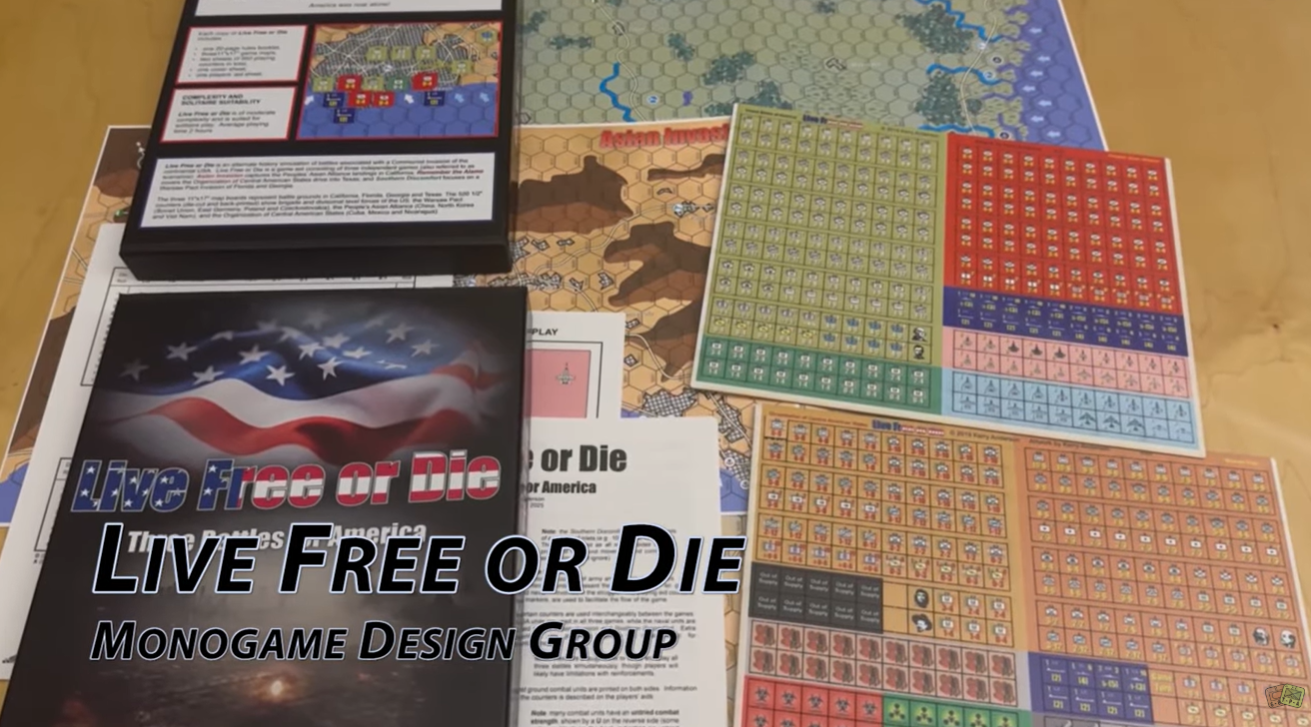
Unboxing Video: Live Free or Die from Microgame Design Group

Von: Grant
13. Juni 2026 um 14:00

Following the successful deployment of missiles on Cuba in 1962, the Communists gained much ground in Latin America. Western Europe became less convinced of American commitment to defend the continent. This led to the NATO alliance being dissolved and replaced by a neutral bloc.

America was now alone!

Live Free or Die is an alternate history simulation of battles associated with a Communist invasion of continental USA. Live Free or Die is a game set consisting of three independent games:

  • Asian Invasion captures the Peoples’ Asian Alliance landings in California;
  • Remember the Alamo covers the Organization of Central American States drive into Texas; and
  • Southern Discomfort focuses on a Warsaw Pact invasion of Florida, Georgia.

The Basic Game focuses on ground combat, providing a quick, entertaining game. The Advanced Game introduces air and naval units as well as additional specialized units like cruise missiles, laser defenses and political troops. And beware, there are rules for nuclear, biological and chemical warfare!

-Grant

Roller Disco (Saturday Review)

13. Juni 2026 um 12:43

Electric-blue leg warmers stretched over striped socks, sequins sparkling beneath a giant mirror ball, while clouds of hairspray drifted through the air. Synth-pop booms from oversized speakers as skaters practise one last spin, one last shuffle, one last gravity-defying move before the judges arrive. It's November 1983, and the biggest competition of the year is about to begin. Jam skaters from around the world have gathered beneath the glittering lights, hoping their best moves will earn them the championship crown. They want to become the next champion of the Roller Disco by Mike Petchey from Huff No More with art by Joss Petchey.

The post Roller Disco (Saturday Review) appeared first on Tabletop Games Blog.

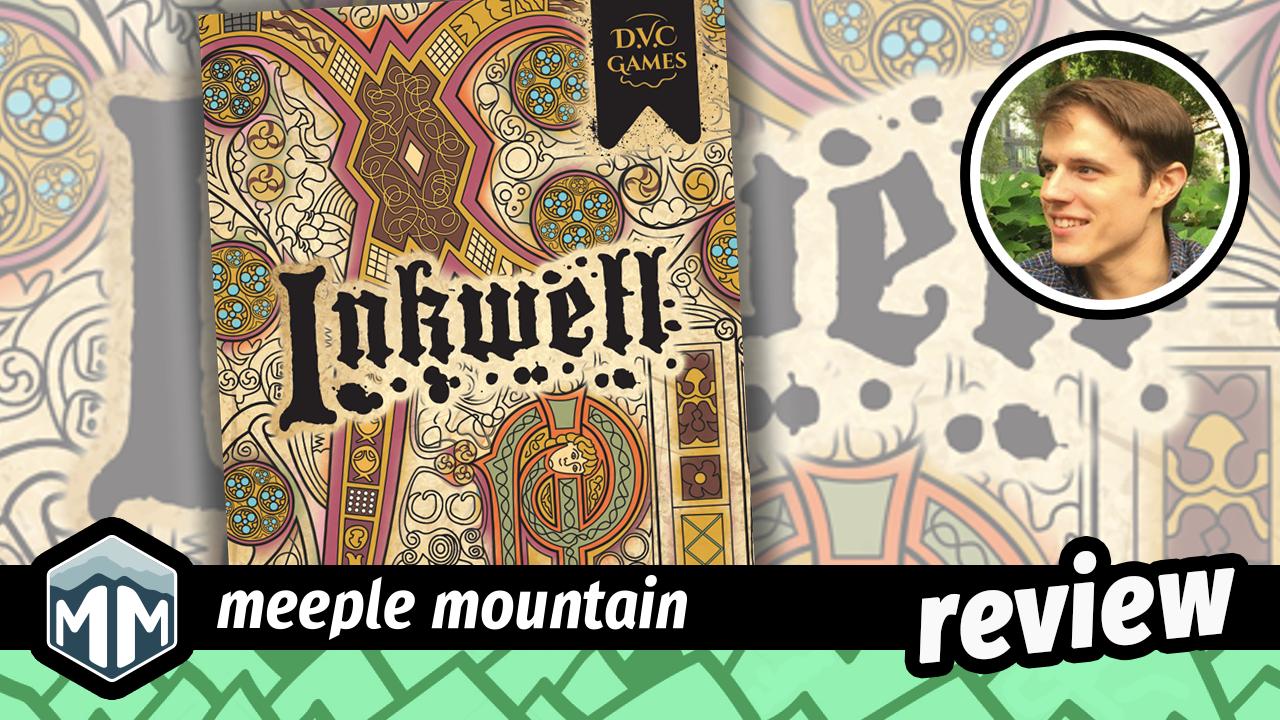
Inkwell Game Review

Inkwell, designed by Jasper Beatrix, Lewis Graye, and Joey Palluconi, and published by DVC Games, is a beautiful object. There are a handful of games centered around illuminated manuscripts, an aesthetic for which I will always be a sucker, and this is far and away the most pleasing. The title, in gold foil over a detailed illumination, is a feast for the eyes. The components in the box are no less filling, though I wish I could extend the compliment beyond the aesthetics. Inkwell is, I think, three games all at once, and it doesn’t quite succeed as any of them.

The most obvious reference point, the one I’ve seen repeated the most in BGG reviews and on social media, is Azul. While I understand the point of comparison, the games don’t really have much in common at all. You choose your bits from a public central board and put them in matching slots within your own private sphere, but that’s about it. The specifics are so different that they undermine any meaningful commonality. You could describe the games as similar, but you’d be doing both Inkwell and Azul a disservice.

When choosing ink from an inkwell, you take all the cubes, regardless of color, and add them to accommodating spots on your board. Your choices change what’s…

The post Inkwell Game Review appeared first on Meeple Mountain.

Misfit Heroes Review

12. Juni 2026 um 14:02
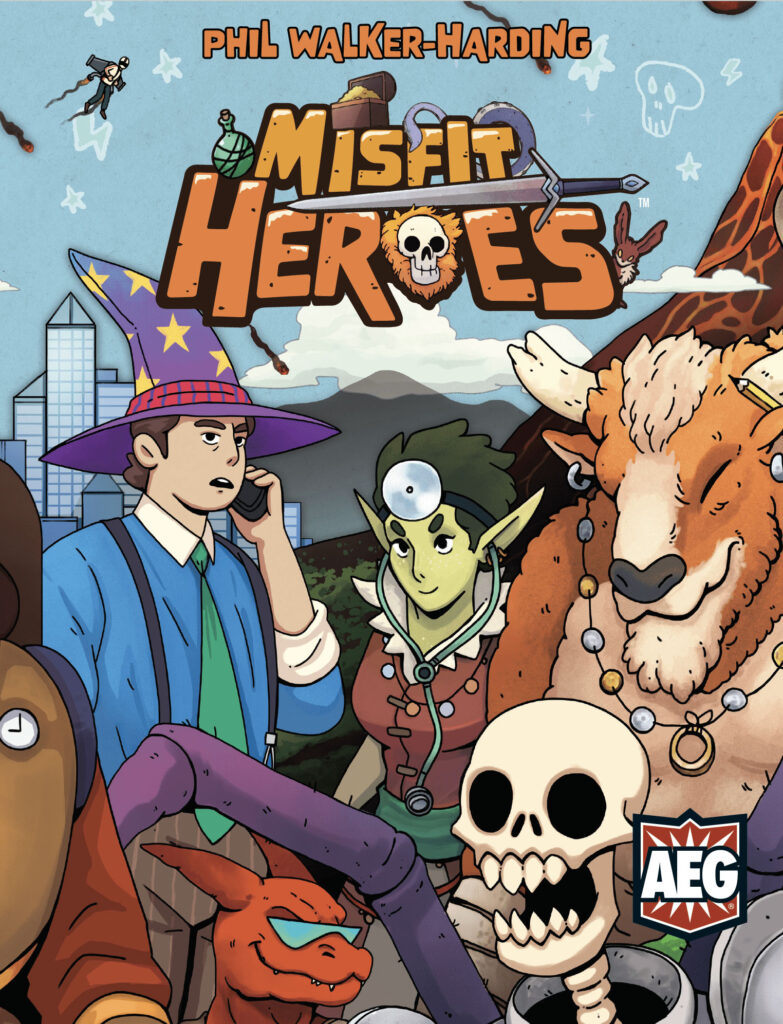
Misfit HeroesClever. Absurd. Fun. If you woke up this morning thinking, I wish I’d pursued that career as a Troll Recruiter, Overlord Wedding Planner, or Vampire Investment Banker, now is your chance. Recruit your team of colorful, quirky heroes, gather resources, and complete quests in this easy to learn tableau building, resource management game with a […]

Source

WBC 2025 Designer Interview Videos: Gregory M. Smith & Mark Herman

Von: Grant
12. Juni 2026 um 14:00

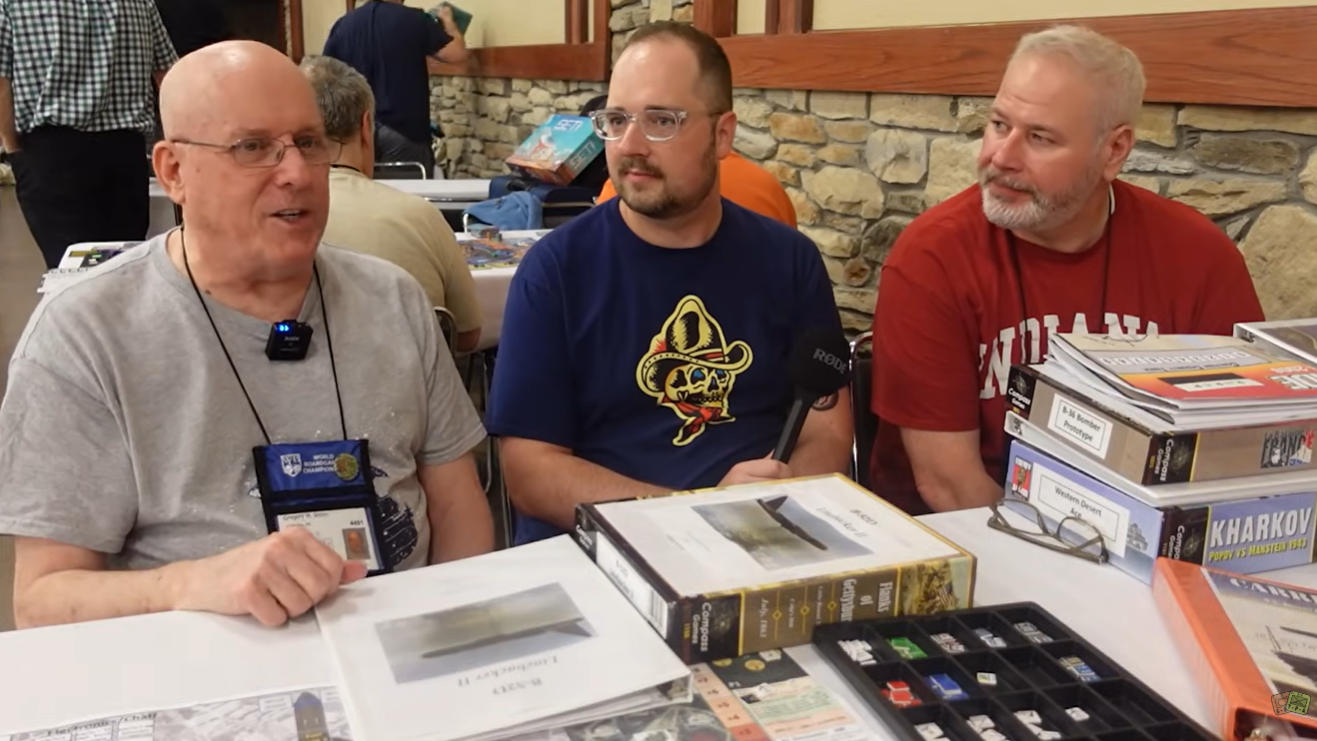
Last year, while attending the World Boardgaming Championships in Pennsylvania, we had the chance to sit down separately with 2 wargaming icons in Gregory M. Smith and Mark Herman and shoot interview videos.

The first is with Greg and covers his ongoing list of in-design games:

The second was with Mark and covered his now recently released Army of the Potomac from GMT Games:

-Grant

The Man Who Was Today

11. Juni 2026 um 21:28

I love everything about this game's aesthetic. Who needs generative slopshit when there are centuries of free art just sitting there?

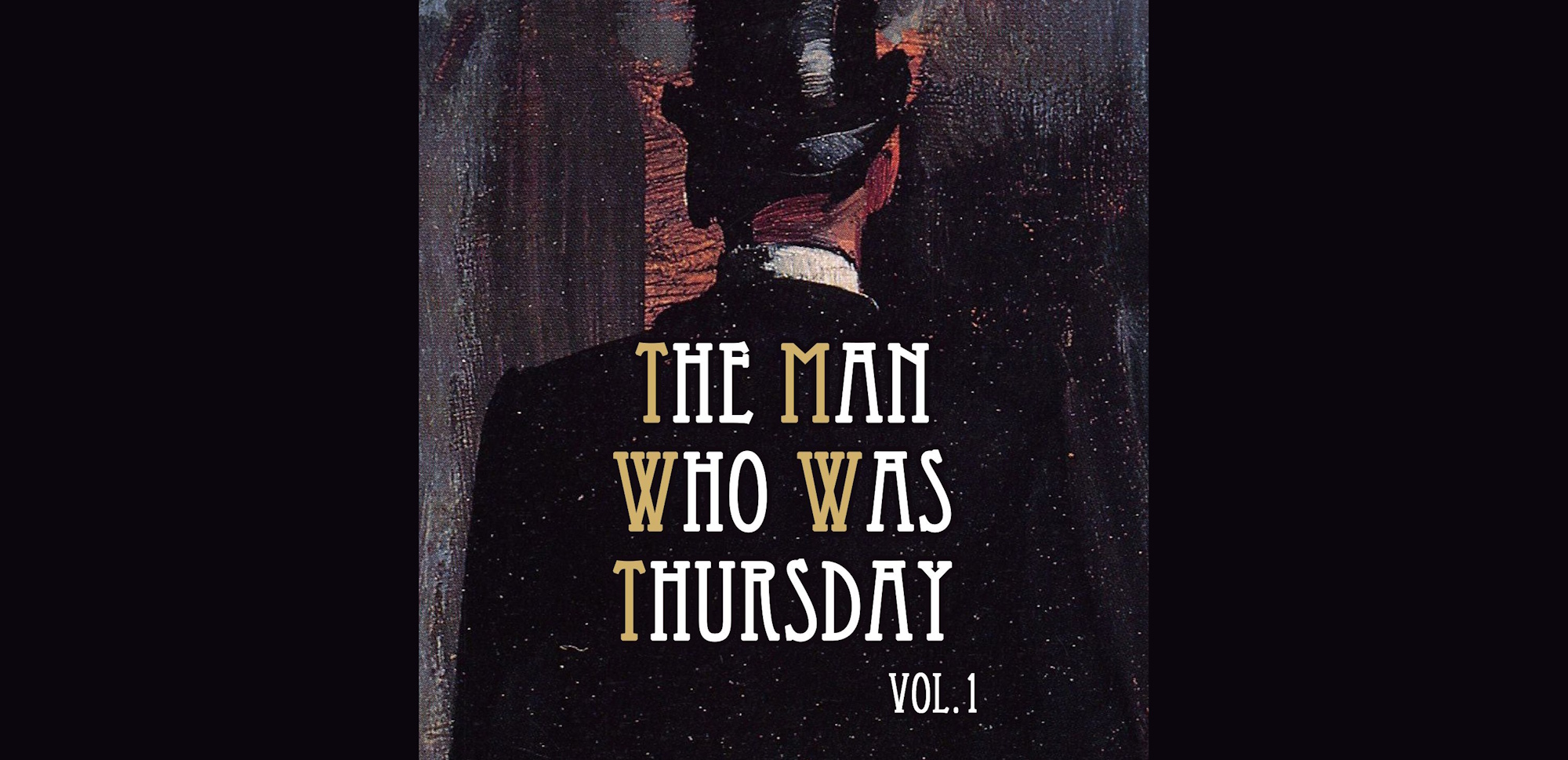
I wouldn’t go as far as to say that G.K. Chesterton’s The Man Who Was Thursday saved my life. Probably it would be more accurate to say it built my life. The novel arrived at a pivotal moment in my adolescence. I was seventeen. Dumb with hormones, dumb with culture, just plain dumb. Still deciding who I was. Who I was going to be. I found it through the unlikeliest of sources, snippets of text in the video game Deus Ex, and felt like an investigative researcher when I obtained a copy from the bookstore I haunted like a ghost that summer.

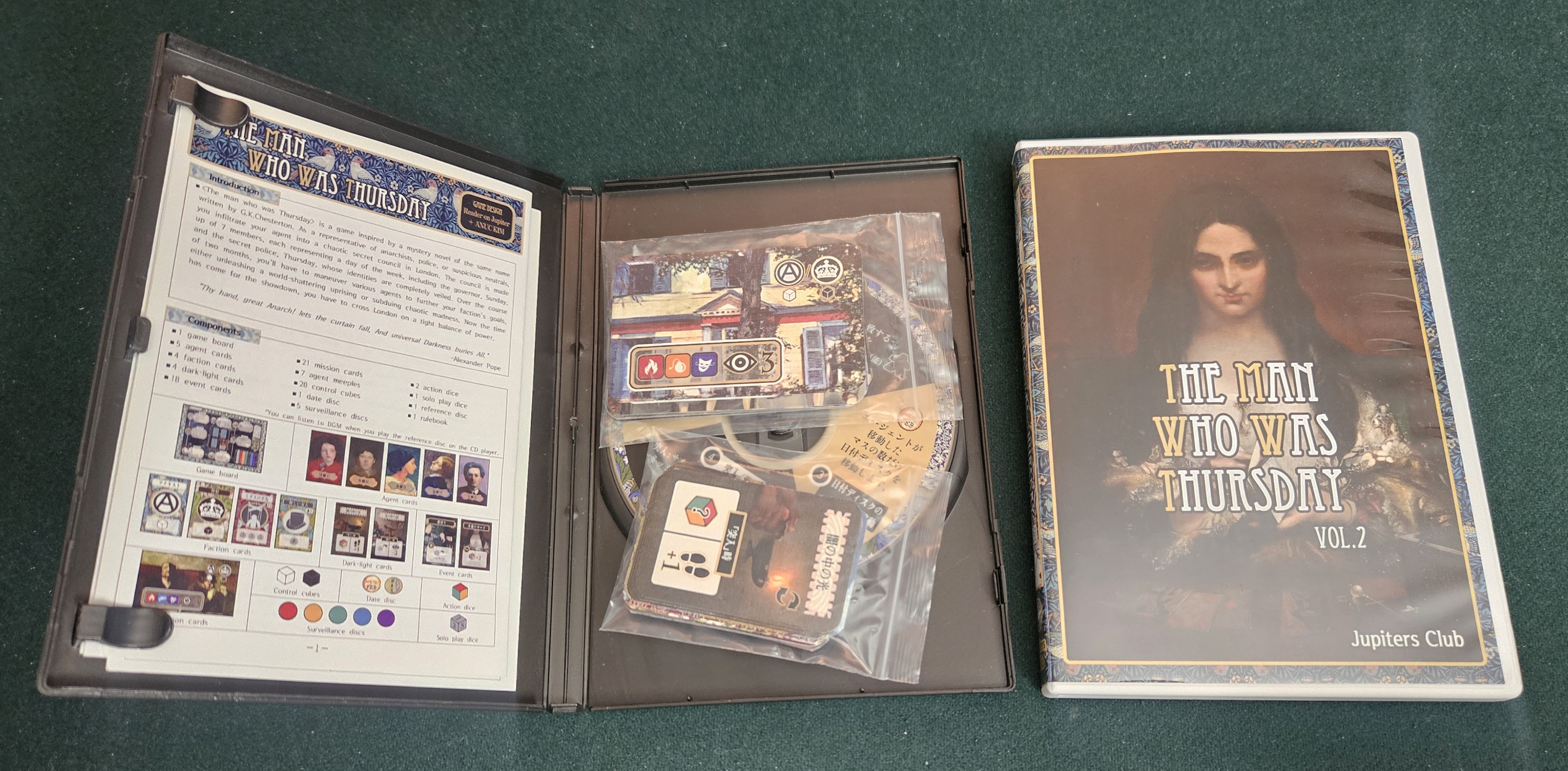
The Man Who Was Thursday is also a board game. A very unlikely board game. Created by a designer from South Korea who goes by the nom de ludens Reader on Jupiter, it arrives folded within twin DVD cases. Arrived. Past tense. It’s profoundly out of print, although its author claims there will be another use for the system sometime in the future.

Honestly, it isn’t the system I’m interested in. It’s the adaptation. This is the board game version of a book that was one of the cornerstones in building who I am today. I cannot see it impartially. Only intimately, like an old friend straining to express something important. Straining to express a revelation.

I've been informed by certain of my neighbors that in Europe it's a foregone conclusion that I will be murdered if I venture anywhere beyond my hotel room.

The perilous streets of Europe.

It begins with the conspiracy.

Written in 1908, when Chesterton was yet a Protestant, and in the period when anarchists and nationalists alike flung bombs at monarchs, a vocation that would soon spark the War to Begin All Wars, The Man Who Was Thursday opens with an undercover policeman, Gabriel Syme, on a quest to stop a council of bomb-throwers from completing their most daring, most damaging undertaking yet.

He is elected to the position of Thursday. That is, one of seven members of the anarchist committee. The committee is headed by Sunday, a monstrous, massive presence who seems unbeatable at every turn. Syme is initially shown as dashing and clever, worming his way into the anarchist committee through poetic debates, mistimed oaths of secrecy, and inflamed speeches. Seated before Sunday, he is transformed into a sweating plaything, certain that the anarchist of anarchists sees straight through him.

It’s a tale of isolation, at least in part. Thursday is one of those stories that reflects the eye of the reader. Some have argued that it’s the antecedent for the coming storm of espionage thrillers. The critic Adam Gopnik argued that it was the turning point between the earlier nonsense fantasies of Lewis Carroll and Edwin Lear and the latter horror fantasies of Franz Kafka and Jorge Luis Borges, the moment when the fever dream grew truly nightmarish. More than one theological treatise has argued that it’s a retelling of the Book of Job, with its senseless morality. It’s easy to see why. The world of Thursday is broken, pessimistic, heavy with suffering.

And at its heart is a man who doesn’t see a path through to the end. Or, in my case, its heart is a teenager on the verge of adulthood, flirtatious with fascism but honestly too sensitive for jackboots, with an ear for the numinous but too questing to be considered faithful, and only barely smart enough to know he doesn’t know a single damn thing worth knowing.

His beard has grown too powerful.

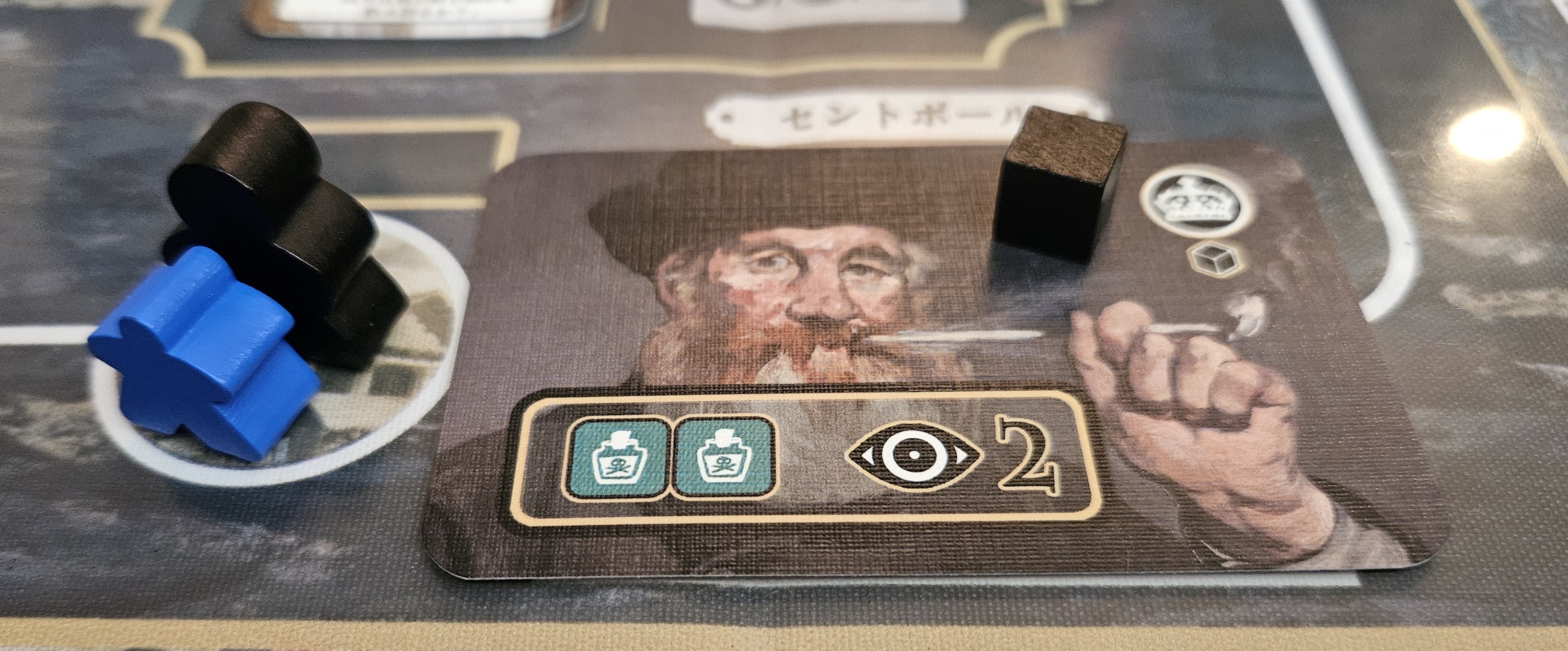
For the good of humankind, we’re gonna poison this guy.

Adaptation is one the most difficult arts of all. Partly because, when done well, it will be invisible.

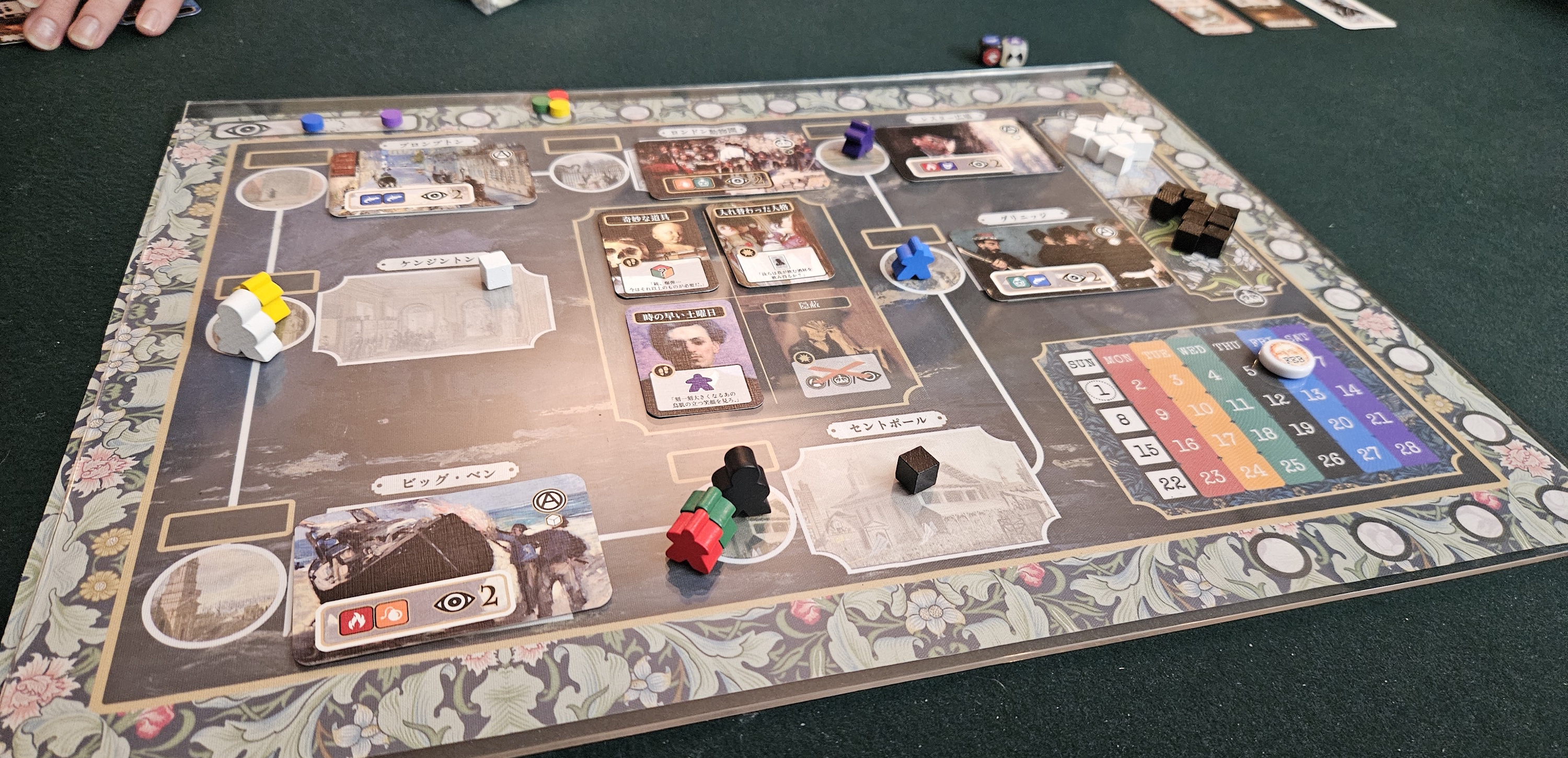
Thursday the board game adapts Thursday the novel by thrusting players into a tangle that they can only vaguely see the outlines of. Everyone is a member of the Council of Days with a double identity. The first of those identities is visible, an objective to fill the spaces of the board with some number or color of cubes. Perhaps you’ll be tasked with placing a bunch of anarchist cubes, or entrusted to make sure there are more police cubes than anarchists in as many spaces as possible, or even instructed to sow chaos by commingling white and black across the entire board.

Your second identity, however, is concealed. This is your position on the Council of Days. Perhaps you’ll be purple, Saturday, or red, Monday. The only options barred to you are Sunday, the avatar of anarchy, and Thursday, representing the police.

These dual identities are never far from mind, tied as they are to the game’s victory conditions. Your first goal is accomplished by undertaking missions that add cubes to the board. But your second, that of your hidden identity, requires you to steer clear of those same missions lest you fall under suspicion. This functions as a tiebreaker, but ties are common enough that your relative standing can never be neglected, causing players to go out of their way to keep their player token clear of any major plots.

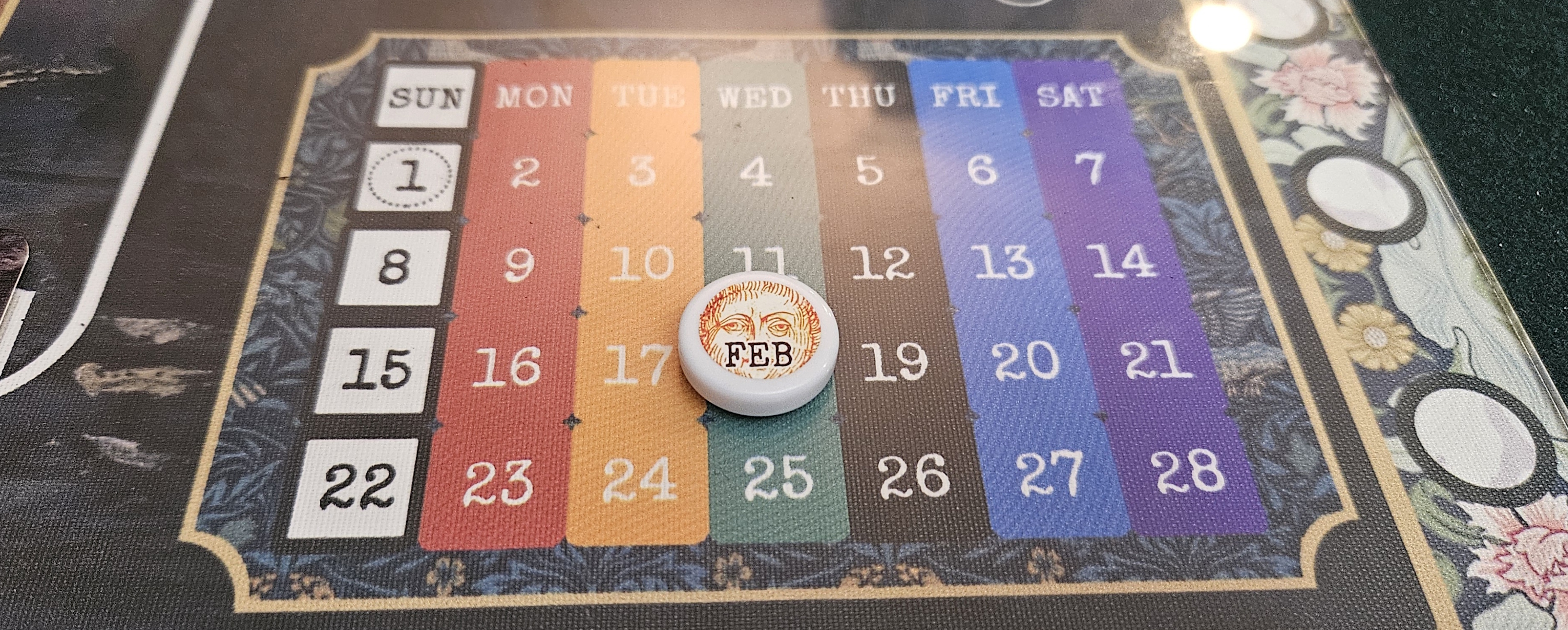
This is made doubly challenging by the fact that you never command your avatar directly. Instead, your current token is determined by a calendar that shifts forward in response to everybody’s moves. You’re Monday, but today is Wednesday, so rather than moving your red piece, you’re given control of green. Along the way, you pick up Friday (blue) to fling a bomb at some minister, causing green and blue to gain suspicion, but also leading everybody at the table to suspect that your real identity is tied to neither of those colors. The calendar ticks forward three days because you moved three spaces. The next player glares at you because it seems like they’re always moving Saturday.

I don't even use the calendar on my phone (too complicated), but now I want every game to have a lovely calendar.

The timekeeping calendar is lovely.

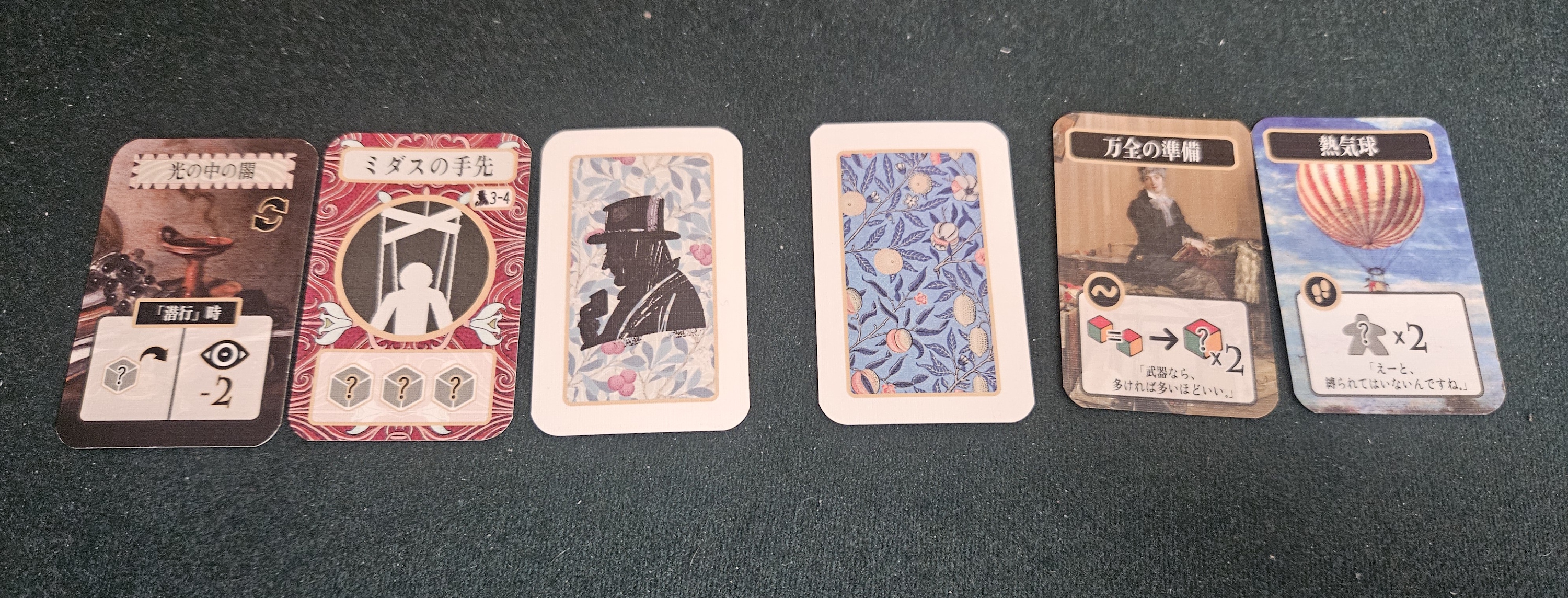
Out of the corner of my eye, I can regard the game with some sliver of critical impartiality. There are flaws here. Missions are accomplished through a combination of dice faces and token colors. Theoretically, this forces players to make do with what they’re given, some combination of whichever color the calendar has assigned them this turn, the colleague they pick up en route to their mission, and any dice results and/or bonuses they have handy. But missions are too easy to complete, rendering entire portions of the design vestigial. There’s an option, for instance, to lay low rather than to complete a mission, cooling off some suspicion or tweaking the position of previously placed cubes. But this is rare, an outside exception, especially the first few times the game hits the table.

Similarly, the objectives struggle to find their balance. Some, like the one that sees you filling spaces with the maximum three cubes, are far easier than those that pit anarchy and the police against one another. With some experience, the gameplay opens up. You learn how to speed up the calendar when you’re ahead, or use the bigger Sunday and Thursday tokens to alter the outcome of a mission, or take advantage of the game’s many special abilities to alter the game from its icon-matching core into more of an area control contest. The Man Who Was Thursday can be played well, can overcome certain of its limitations. But even at its best, it remains a flawed system.

As an adaptation, it fares better. There’s still an incompleteness to the presentation here, as one might expect of a board game, which by its nature presents a snapshot rather than a definite narrative arc. This is, in a sense, the middle act of Thursday, the conspiracy of isolated individuals, after Syme’s infiltration but before the absurdities begin to overwhelm the tale. I’m reluctant to spoil any details, itself something of an absurdity for a novel that’s nearly 120 years old, but… well, that’s on you. Sorry. You’ve had your entire life to read it.

The colors! The colors!

The question of your identity is always under investigation.

The novel gradually transforms, shedding its guise as a political spy thriller. For a time it becomes a meditation on isolation and the power of companionship, with Syme discovering that the various members of the Council of Days are all undercover policemen like himself who have been set against one another. In its final chapters, it shifts into the cosmic realm of Job’s behemoth and whirlwind, Sunday fleeing atop an elephant, then via hot air balloon. When the conspirators at last corner the anarchist of anarchists — a state of affairs that sees him at the height of his power, not laid low as one might presume — they grill him. Why have they suffered so much? Why must everything on earth contend against every other thing? Why does even God hide His face?

This is when Syme, at the moment of theophany, understands. The suffering is also the justification for its own existence. If only the wicked suffered, then their complaint against God would be correct in labeling Him a tyrant. It’s only in the wildness of suffering, in its untamed nature, in the way the lion might gaze lazily at you or consume you, in how every living thing is pressed into service as an anarchist, that true goodness becomes possible.

Do I buy it? Eh. About as much as I buy any explanation for why we suffer. Okay, that isn’t true. I buy it more than any prosperity gospel. But I bought it as a teenager. I bought it, and decided that we were indeed heroes disguised as anarchists, everyone alone, everybody hurting, and that, as Chesterton wrote, the best we could do was to try to find the people who were hidden like us and make allies of them. In his words, “There are no words to express the abyss between isolation and having one ally. It may be conceded to the mathematician that four is twice two. But two is not twice one; two is two thousand times one.”

Fun personal detail: One of the first pieces to textual criticism I ever wrote was submitted to a journal of religious studies. The editor declined on the basis that my argument "failed to persuade." The journal shuttered in less than a year because nobody ever met the guy's standards.

What a strange, wonderful artifact this is.

This version of Thursday doesn’t arrive at that final confrontation. It remains quagmired in the issue of concealed identity. It’s entirely possible, even likely, that players won’t know one another’s color until they arrive at the game’s conclusion.

But it succeeds in its own confrontation, that moment when everyone’s identity is revealed and any ties are broken. This parting of the curtain is a delight, all the preceding machinations suddenly laid bare. And, by extension, it succeeds in the small moments of relief it provides. When someone at the table eases the suspicion cast on your pawn. When a fellow trailing player collaborates to break someone’s winning state. When at last the game is tallied and packed away and we return again to the table, free of the magic circle, no longer strangers, once again friends.


A complimentary copy of The Man Who Was Thursday was provided by the designer/publisher.

(If what I’m doing at Space-Biff! is valuable to you in some way, please consider dropping by my Patreon campaign or Ko-fi. Right now, supporters can read the next installment in my series Talking About Games, this time tackling the topic of what makes a good list! Naturally, the piece includes a list.)

A “New” Twist on Showcasing Our Games on Facebook

11. Juni 2026 um 16:22

When I’m scrolling through Facebook, there’s a specific type of image that frequently catches my eye. It’s used the most by digital game news outlets: An evocative image plus a few descriptive lines of white and orange text on a black background.

I like this format so much that I recently decided to apply it to our games. In fact, I made two versions for each game: One using art and thematic vibes; the other using a photo of the game on the table and a few stats:

Despite having an active Facebook page for Stonemaier Games, I rarely use it to post about our games. So I’ve started posting one of these images once per week.

While I would prefer to equally showcase each of the two images per game, I think this type of image has the biggest impact when it’s alone. So for the first 25 posts I’ll use the thematic image and post the photo version in the comments with a link to the game’s page; after I get through every game, I’ll switch the two.

The most surprising result after doing this for Vantage and Apiary is the number of people who have commented on the posts (despite there not being a question or prompt). Some have shared their love of the game, others have asked questions. A rare few have even decided that this is the right place to share how they dislike the game.

But I love that a simple image has generated conversation and sense of community outside of our Facebook groups. Given that, I may also post these images on Instagram and Bluesky in the future.

What do you think about this approach? Are there other eye-catching image formats on social media that pique your interest (without being clickbait)?


If you gain value from the 100 articles Jamey publishes on this blog each year, please consider championing this content! You can also listen to posts like this in the audio version of the blog.

Whistle Mountain Game Review

Whistle Mountain (2020, Bezier Games) looks like it should be the direct sequel, or maybe the spiritual successor, to Whistle Stop, an earlier release that focused on a Euro-style train game complete with powers, shares, goods delivery, and a race to go west as quickly as possible.

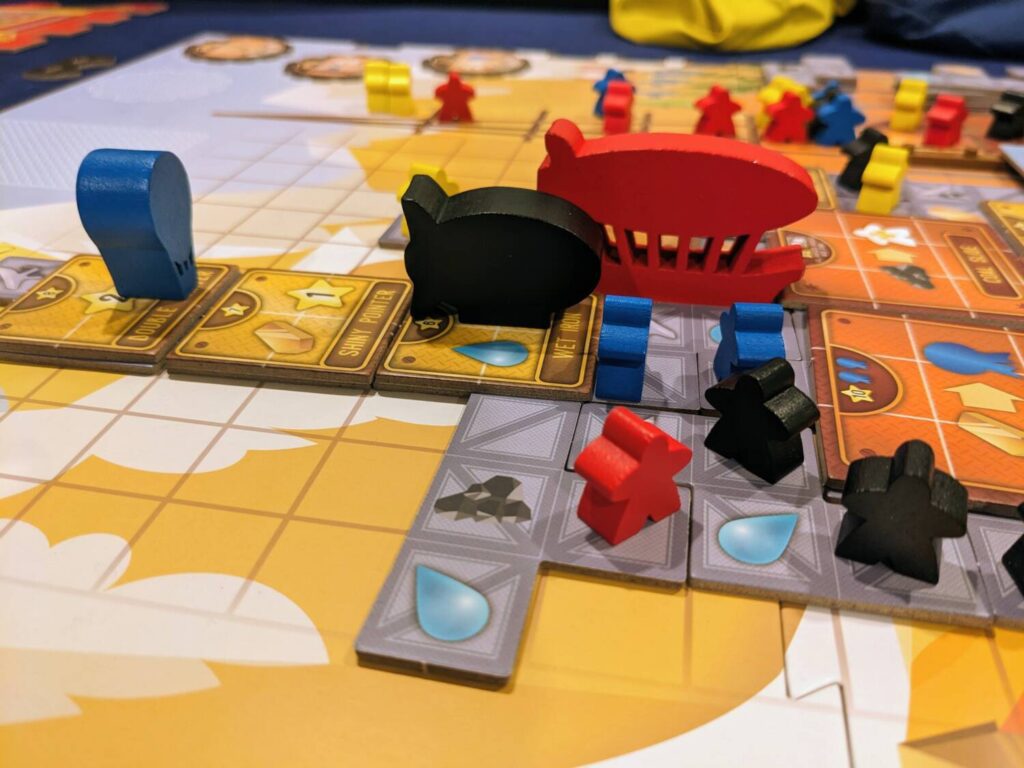
Whistle Mountain is not that, at all. Designed by the same person who designed Whistle Stop, Scott Caputo, as well as designer Luke Laurie (Andromeda’s Edge, Cryo), Whistle Mountain is a somewhat themeless tile placement game with triggering effects that align with a worker placement mechanic, as players compete for the most points by placing…wait for it…hot air balloons on a map full of scaffolding tiles while trying to evacuate construction workers from both a barracks location and a whirlpool.

Honestly, I don’t get the theme behind this one at all. Luckily, the gameplay is so good that you won’t bother to realize that saving the lives of your construction workers is the main trigger for the endgame!

Total Recall

Whistle Mountain is a tile-laying, worker placement, Euro-style adventure game for 2-4 players that runs about two hours at the highest player counts.

Whistle Mountain takes place in a future state “years…since your successful foray across the great America…

The post Whistle Mountain Game Review appeared first on Meeple Mountain.

Intent to Kill Review

11. Juni 2026 um 14:04
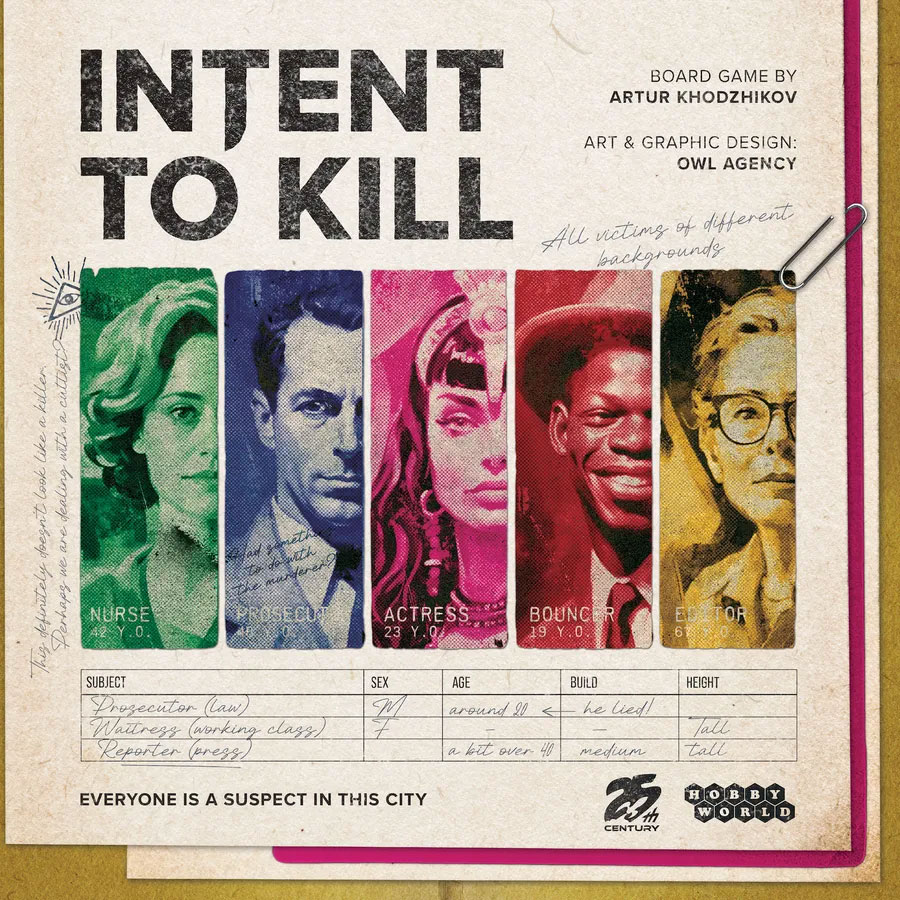
Intent to KillI love a good murder mystery. I’ve watched every episode of Midsummer Murders. My “Read” shelf is heavy with detective novels, especially Scandi noir. Intent to Kill should have been a shoo-in for me. But instead it left me feeling decidedly meh. Intent to Kill is a 2-player deduction game published by 25th Century Games. […]

Source

An Impossible War: The First Carlist War in the North, 1834-1838 from Bellica Third Generation – Action Point 4

Von: Grant
11. Juni 2026 um 14:00

An Impossible War: The First Carlist War in the North, 1834-1838 from Bellica Third Generation is a block wargame that recreates the First Carlist War in the North of Spain which was a civil war between the Carlists who supported the succession of the late king’s brother Carlos de Borbón and the progressive and centralist supporters of the regent Maria Christina acting for Isabella II of Spain who were referred to as the Liberals. The game uses blocks representing units but also includes counters and uses cards. I was able to play the game about a month or so ago with Francisco Ronco who owns the publishing company Bellica Third Generation and very much enjoyed the game and how it represented this interesting struggle.

In Action Point 1, we took a look at the Game Map, discussing the point-to-point movement configuration, the various spaces and the delineation of the Carlist versus the Liberal Zones, as well as explained the use of the Rest of Spain smaller map. In Action Point 2, we examined the units available to both sides and covered the importance of Supply. In Action Point 3, we took a closer look at the Carlist Uprising Phase and what it means for the game. In this Action Point, we will take a look at the activation system and the use of Action Point Markers.

Activation System

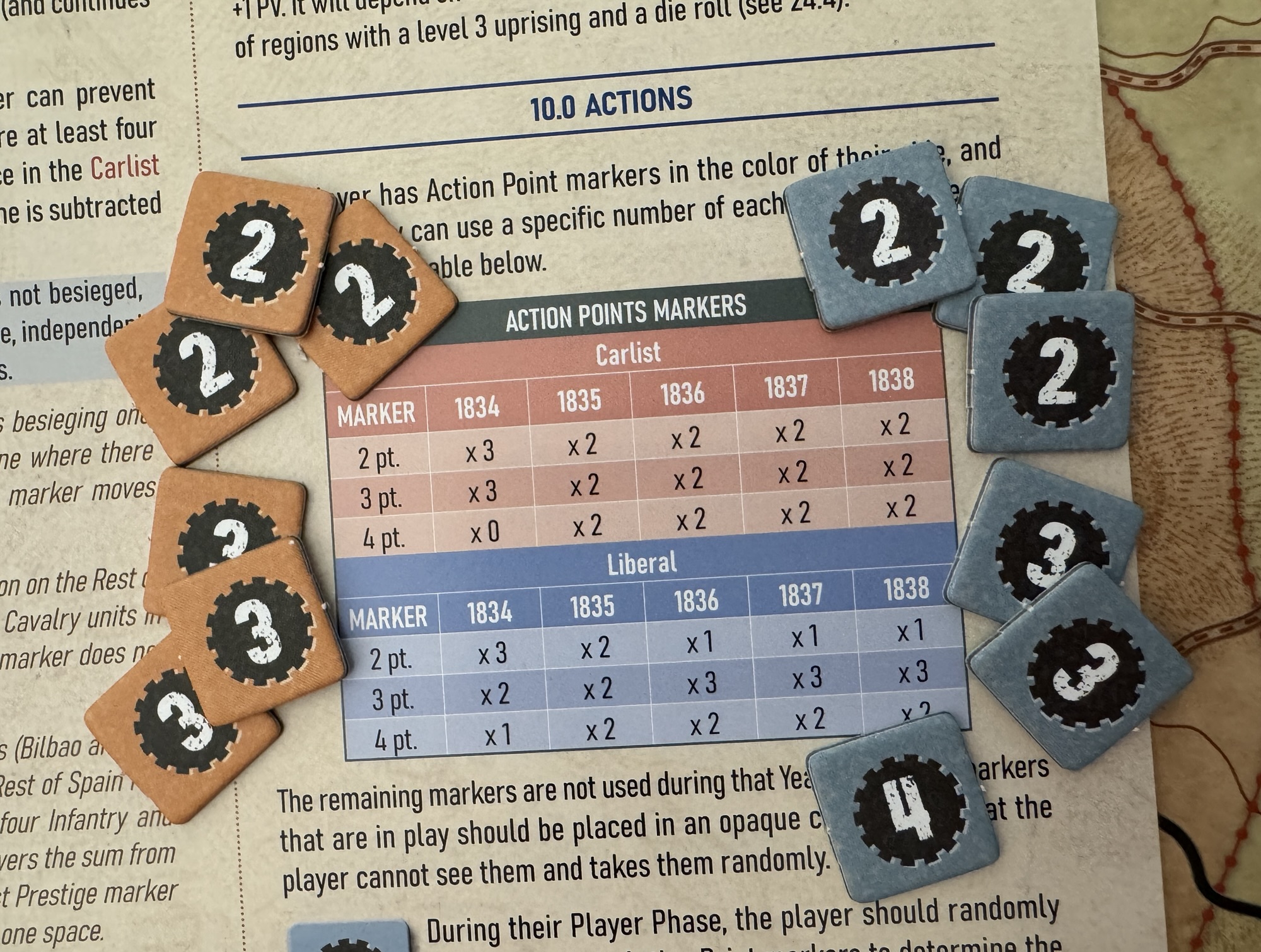
The main focus of the activation of units is the concept of Action Points. These Action Points are used to take various actions such as to activate units for movement, build fortresses, destroy enemy fortresses, obtain replacements, recruit units into Expeditions, suppress uprisings and enter into combat as a part of activation for movement. Both the Carlist and Liberal player has Action Point Markers in the color of their side and each year they can use a specific number of each value of marker. This is determined at the outset of each year according to the Action Point Marker Table.

After the number of Action Point Markers used is determined, the players will each build a chit draw cup for their own Action Point Markers. This should be an opaque container that obscures the identity of each marker as the draw is supposed to be random and is really part of the fun of the design. Then at the start of their Activation Phase, the player will randomly draw an Action Point Marker and then mark their Action Point Track accordingly. As already mentioned, these Action Points are the “fuel” spent to perform actions.

As you can see in the chart above, each year the players both have access to the same amount of overall Action Point Markers with 6 but the makeup of these markers will be different ranging from 2 points to a maximum of 4 points. For example, in 1834 the Carlist player will have three 2-point markers and three 3 point markers while the Liberal player will have access to three 2-point markers, two 3-point markers and one 4-point marker. This is an interesting point as the Liberal player has the potential to obtain more Action Points in 4 of the 5 years covered in the game. This is random of course and fate can decide that the Carlist player will get the most Action Points each year but the potential is there for the Liberal player to have the advantage.

As mentioned, these Action Points are the currency used to take various actions and in most instances they will be used to Activate units on the board. Activated units can then move and their movement allowance will depend on how many units move together and the roads used, either main or secondary.

But one of the more interesting ways that Action Points can be used is to convert them into Command Points. The player may choose to convert as many Action Points as desired each year into Command Points, noting them on the Command Points Track. A player may have no more than 5 Command Points. Command Points are flexible currency that will not be lost and can then be used to contest initiative, as Action Points or even to attempt an interception of enemy units. These Command Points are vital and should be something that players invest into as they are very flexible and also allow for the taking of actions during the other players activation. I like the way the game uses this random activation concept and currency for those actions. In reading the designer notes in the Playbook, the designer David Gómez Relloso emphasized the fact that the war was brutal, difficult and that communication and distribution of orders was very difficult, particularly for the Liberals as they were operating in hostile territory where the locals continually harassed and denied them of provender as they would flee taking their livestock with them to keep them out of enemy hands. This random number of Action Points, and thereby a varied number of points to do things with on the board, really is central to the design and can make for a very interesting challenge for those that are unlucky like me. While the differences in the values of the Action Points are not that far apart, a few extra or less than your opponent can cause great difficulty as you will simply not be able to perform what you need to each turn. This boils down to a prioritization of goals and will lead to some very tough decision having to be made about activating units versus recruitment of new units or focusing on the game board state versus the state of the Rest of Spain Map and the Carlist Uprisings and Expeditions.

If you are interested, we posted an interview on the blog with the designer and you can read that at the following link: https://theplayersaid.com/2025/07/14/interview-with-david-gomez-relloso-designer-of-an-impossible-war-the-first-carlist-war-in-the-north-1834-1838-from-bellica-3rd-generation/

I also was able to shoot a fairly short video summary of my game play with Francisco Ronco who is the owner of Bellica Third Generation and you can watch that at the following link:

In Action Point 5, which is the conclusion to the series, we will cover some examples of Battle, focusing on the tactical aspect of combat with the use of the Battlefield Board, as well as an example of a Siege.

-Grant

V6.14 Improved ‘New’ & ‘Edit Play’ screens

Von: Suzan
11. Juni 2026 um 11:37

In version 6.14 of the app the New Play and Edit Play screens are improved!

The screen is more compact and these options are now accessible directly from the New Play and Edit Play screens:

  • Played copy
  • Expansions
  • Boards/Variants
  • Tags

The remaining sub screens are also simplified and easier to use.

Old screen

New screen

  1. Played copy
  2. Date
  3. Expansions
  4. Comments/Images
  5. Location
  6. Boards/Variants
  7. Tags
❌