Normale Ansicht

Spiel doch! Friedrichshafen 2026

28. Juni 2026 um 17:57

I’ve said it before, I’ll say it again: Small local board game fairs and conventions are great. You get board gaming fun in a manageable dose of one day, without long trips and expensive accommodation. In many cases, they’re also not quite as full – which means no waiting times and instead just 100% of the good stuff. In that spirit, I attended Spiel doch! in Friedrichshafen (Germany). Here’s how it went.

If you want to read more convention reports like this, I strongly recommend you subscribe to the blog – all new posts in your inbox right when they go live!

Spiel doch! [Just play!/Why don’t you play?] is a new-ish affair: Its western German original was first held in 2015 in Duisburg (and has since moved to Dortmund). It has branched out to the south in 2023 (Friedrichshafen). The name of the fair also indicates who the target audience is – casual gamers who might not have sold their soul to board gaming entirely (yet). That means the focus is on playing – a good part of the fair grounds is dedicated to tables at which you can play ganes (either your purchases r copies from their ample library of games (which you get to check out for free).

Ever saw the Night Witches fight Louis XIV’s musketeers? – Now you can!

Of course, there are also opportunities for publishers and local board game stores to present their goods (and even some new designs). There’s a lot of variety between the sellers – some focus on the bestsellers, others have a more eclectic collection where you might find a rarer gem. For example, I got a copy of A Battle Through History (Erik Burigo/Pär Sundström/Marco Valtriani, Pegasus) as a gift for a friend who is a big Sabaton fan.

Dice, dice in all colors of the rainbow.

In addition to the games, you’ll also find a lot of board game accessories and other items of interest to the nerdy crowd drawn by a board game fair.

Some great pins to wear for game night!

As said, though, the heart of the fair is the big free play area. We had the chance to give Dungeon Legends (Przemek Wojtkowiak, Rebel Studio) a try: Our team of knight, scout, and smith cleared the underground of monsters, kept the castle safe, and eventually extinguished the fire which was the main challenge of our legend.

The bluish hue of the game mat makes the orange fires which we had to fight in our legend pop even more. Great visual design!

We enjoyed the straightforward deck building and the visual style of the game – but I must say that learning the rules was a bit of a challenge. Whose idea was it to list the actions you can take in the middle of the rule book and then describe how you perform them in an icon overview on the second-to-last-page of the scenario book?

The best thing about Spiel doch!, however, may be that it goes beyond buying and playing games, as two particular highlights for me attest: The booth of the European Society of Game Collectors presents rare games through the ages – this year, all of them aerospace-themed.

Some older aerospace-themed games. The one in the left foreground was co-funded by the German Research and Testing Agency for Flight and Space Flight.

And the Fondation Suisse de Déminage (Swiss Foundation for Demining) sells donated board games at reasonable prices with all proceeds going to demining efforts in Ukraine. I picked up a copy of Versailles 1919 (Geoff Engelstein/Mark Herman, GMT Games) – sunflower table mats not included in the game.

Have you been to any cool local fairs or conventions recently? – Let me know in the comments!

Catan: on the Road Game Review

When it comes to modern board gaming, there is no denying the impact that The Settlers of Catan (now just Catan)has had on the hobby, bringing the ideology of modern game design to players around the world in a format that’s approachable, digestible, and easy to learn. While not a perfect game by any means, it’s a game that’s launched an empire. And now, that empire is going portable.

Now, this isn’t Catan’s first foray into portability. 1996 saw the introduction of Catan: the Card Game, a small box, two-player version of the game. In 2002, the Catan: Portable Edition was released, a tiny plastic version of the base game. Then, in 2010, Rivals for Catan was released, another small box, two-player game based in the Catan universe. Each of these has its issues. Aside from the fact that the two-player games are only for two players, once the games are in progress, they turn into sprawling behemoths that take up almost as much (if not more) space than the board game they’re replacing. As for the Portable Edition, when I say it’s tiny, I’m not mincing words. The cards are miniature versions of the already small cards from the regular game. The plastic road pieces are about as long as the average thumbnail is wide.

When I…

The post Catan: on the Road Game Review appeared first on Meeple Mountain.

Pilgrim Poker - master and disciples

Here's another teaser for my upcoming game Pilgrim Poker. These are the four main characters in the story of Journey to the West. Modern day Master Tang Sanzang sits on a gaming chair and plays a handheld gaming device. I like his intensity. I find it funny. Modern day eldest disciple Sun Wukong is a delivery boy. His Somersault Cloud is transformed into a motorbike. I think it's an

Designer Diary: The Glorious Guilds of Buttonville

Von: pastej
27. Juni 2026 um 16:00

by Erik Anderson Sundén

This designer diary will tell the story on how The Glorious Guilds of Buttonville came to be.

We, Christian Kudahl and Erik Andersson Sundén, started to explore joint designs less than four years ago. Erik had played Mindbug and loved it. Christian had heard of Erik from his adventures at Fastaval and Whirling Witchcraft and was curious. So we started to talk. Relatively soon we both agreed to try to make a game together.

We seem to thrive when we work intensely! So we tried a few ideas and shot them down after a few iterations. Especially Christian pushed the idea of abandoning things quickly if they didn’t show great promise already in the first test (as he can really be quite lazy). This can feel quite tough as you still may think “but I can fix it”, but exploring new ideas is just a lot more fun. We wanted a game that was immediately really fun, so that our job polishing the last few edges would be super easy.

And so one day we stumbled over the concept of Buttonville. We agreed to create the simplest of systems so the game rules were something like this:
1. Draw cards.
2. Play as many cards as you want from a set and trigger the ability of that set.

Each set has a cool ability which sometimes even gets more powerful the more cards you play. This was the core of the game and already from the first test, we saw something showing a ton of promise. We knew we had to continue down this rabbit hole to see what the game had to offer. It’s fun when you make games, you can yourself be surprised at the experiences they throw back at you. It is a bit like having a kid.

We saw that the system was simple enough to not get in the way, so the heart of the game was really the cards. Depending on what you put on those, the game could be a breezy experience playable with families or a brainburning puzzly hellhole that would make even heavy eurogamers quit in frustration. We aimed for a happy medium.

We made the game modular, so each game you select some number of stacks that are used in that game. (A stack consists of multiple copies of the same card). This gives a lot of variety between games and leaves new combinations to be discovered each play. This idea is certainly not new, and Dominionprovided some inspiration here. Not for the gameplay, as Glorious Guilds of Buttonville is not a deck builder, but for having a big box with stacks of cards, only some of which are used in every game. Other inspirations include Guildhall and Ethnos having abilities increasing in power based on the number of cards played.

And all of a sudden things exploded. We went into hyperspeed mode and more than 50 cards were created in less than a day. Erik loves to brainstorm ideas and just throw them out there, no thoughts of consequences and no sorting of good or bad effects. Page up and page down. Christian is great at finding the gold nuggets among those ideas and polishing them to crispy unique (and well-worded) effects. Christian even suggested that our rapid work pace made him think of us as he listened to MacGyver by They Might Be Giants.


Playtest at the lunch break of the division of applied nuclear physics at Uppsala University

After working on the game for what feels like only about a month, Erik proposed sending it to Thorsten Gimmler at Ravensburger. Usually it is a good idea to make your idea really refined before showing it to a publisher - if they don’t like it, they might not want to see a more polished version again later. On the other hand, we are both quite impatient (especially Erik), so we decided to send it away. And then we waited. What did we learn from the waiting? Erik is WAY less relaxed in a waiting state. He probably checked his mail every 5th minute. Christian was much more Zen.

Thorsten: ”From the very first test game, I was captivated by the game. Many games have extensive rules that ensure complexity and replayability. Buttonville, however, has such simple and few rules, yet the combinations of cards ensure that the game remains exciting. Since the games don't take long, I played three games in a row during my first test. Further tests quickly followed, especially since it was easy to find test players for the game, as everyone wanted to test it again and again. So it quickly became clear to us that we definitely wanted to make the game.”


An early playtest of the prototype at Ravensburger in June 2024

Thorsten came back to us and started by saying. “This game sure has a LOT of cards in it! I can’t believe that I spent so much time crafting this first prototype, but I’m glad I did! Because I REALLY like the game!” and a few months later a contract was signed.

We had a great development process with Ravensburger. Thorsten proposed that instead of picking the card sets completely random, we could group them into sets of similar effects, for example drawing, getting currency, spending currency etc. This was a great call and allowed us some freedom in designing cards. If a card for example rewards you for spending coins, you really need there to be another card giving you coins or that first card will just be a dead draw.

Erik and Christian (especially Erik) created well over 100 more card stacks. Some were super simple and some more advanced (Christian even used the expression “crazy mess” now and then). We playtested the cards and sorted them back and forth in good and bad, simple and hard. Together with our editorial team at Ravensburger, we decided to mostly focus on the simple and easy to understand card effects, and only one or two of the crazy messes snuck their way into the final game (You know who you are, Slimebob!).


Photo Credit: [user=W Eric Martin][/user]

Thorsten: “Working with Christian and Erik was really great and a lot of fun. We coordinated with each other regularly and discussed our test results in video calls. It was great that we always had the same vision for the game. It just worked really well. We made small improvements again and again, replacing some cards with new ones or simply improving and adjusting others slightly. We also made a big leap forward by designing the entire system to be modular. This allows everyone to freely assemble their own set. Of course, this also had the practical benefit of not having to test each set multiple times. ;-) But this means you are not limited to previously tested sets. You can keep putting together new sets and be sure that they will work!


The signing event at SPIEL 2025.

The game premiered at SPIEL Essen 2025. We were happy to be assigned a signing slot at the booth of Ravensburger. We had a decent number of visitors who wanted a signed copy, a fair amount were happy designer friends who congratulated us. We had a great time! And then! As the time was getting close to the end, something started to happen. A huge queue started to build up and we started to get excited. Did the hype spread to the entire convention already? Christian, the more observant of the two of us, noticed that every single one in the queue was also carrying a green box… hmm.. As we turn around Stefan Feld is standing behind us: “I will take over from here.” (Just kidding, Stefan was super friendly and congratulated us on our game.)

Almost a year has passed, and now it is time for the game to be presented at Gen Con! We look forward to its American reception!


From the left: Erik Andersson Sundén, Thorsten Gimmler, and Christian Kudahl

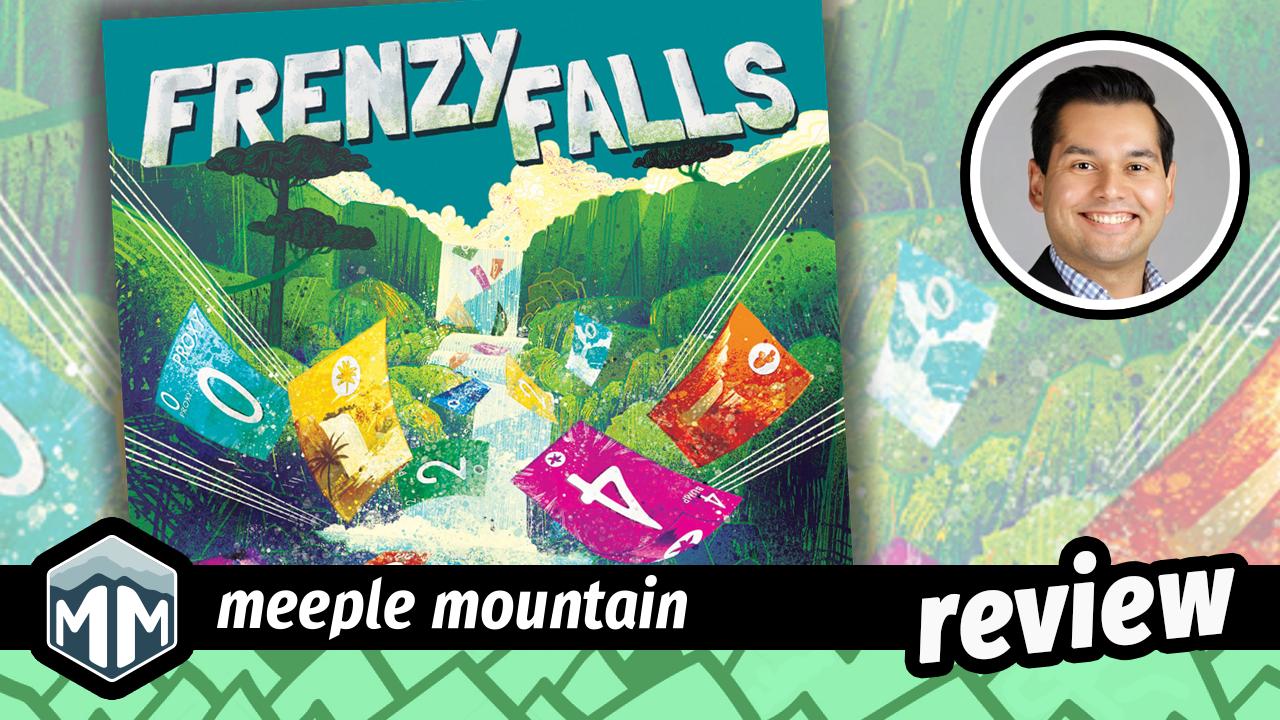
Frenzy Falls Game Review

Alliterations with F

There's a short list of board game designers whose names alone will make me flip over a box. Joseph Z. Chen and Randy Flynn are firmly on it, largely on the strength of Fantastic Factories. It's that rare engine-builder I can hand to absolute beginners and watch them fall in love with, striking a perfect balance between easy-to-learn rules and deep strategic crunch.

So when their names turned up on a game called Frenzy Falls, I was curious before I'd read a single rule. A card game about waterfalls, about pools filling up past where they're supposed to? Sure, why not. I've been talked into stranger premises than that.

[caption id="attachment_332196" align="aligncenter" width="1000"] Photo from USAopoly[/caption]

Slip-n-Slide

Published by The Op, Frenzy Falls seats two to six players around a row of Pools, each one anchored by a Score card showing a water value and a point value. On your turn, you slide a card face-down into whichever Pool you like, trying to control exactly when it tips over. Once a Pool's water total reaches ten, it spills. Whoever's stacked the most influence icons there takes the Score card, and whoever's holding the most points when the cards run out wins the game.

What you can't account…

The post Frenzy Falls Game Review appeared first on Meeple Mountain.

Rascally Rabbits (Saturday Review)

27. Juni 2026 um 12:43

A little rabbit peeked cautiously over the edge of a vegetable patch, before it hopped inside and helped itself to a crunchy carrot. Soon, another rabbit joined in, nibbling happily on a radish, while a third disappeared behind broad broccoli leaves, and a fourth emerged triumphantly with an aubergine. Soon enough, mushrooms vanished as well, leaving only tiny paw prints behind. In less than a minute, the whole patch was filled with Rascally Rabbits by Ta-Te Wu from Sunrise Tornado Game Studio with art by TuziNeko.

The post Rascally Rabbits (Saturday Review) appeared first on Tabletop Games Blog.

Sabah National Tabletop Con 2026 - my first time exhibiting at my hometown

I was back in my hometown of Kota Kinabalu (we call it KK) for the Sabah National Tabletop Con over the weekend of 20-21 Jun 2026. This was my first time exhibiting in my hometown, so it was a meaningful event. This same event was held last year, but unfortunately I couldn't attend. This year it was held at the Sabah Art Gallery. We had many exhibitors from Malaysia and Singapore,

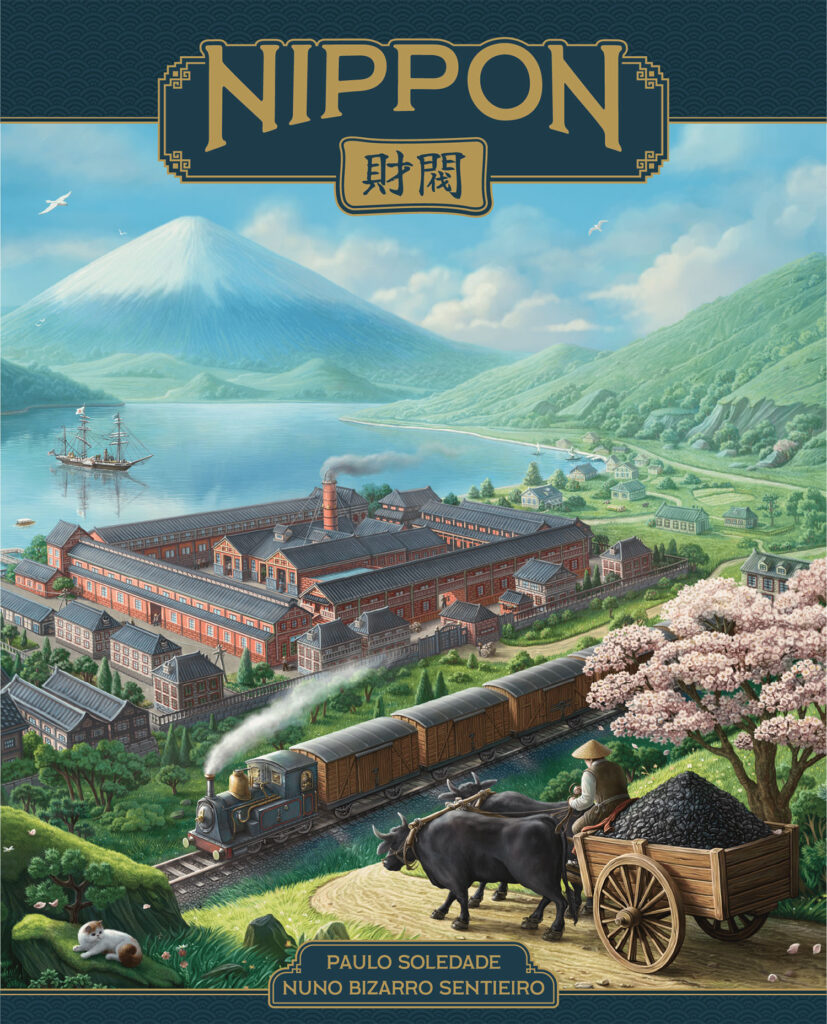
Nippon: Zaibatsu Review

26. Juni 2026 um 15:15
Nippon: ZaibatsuContrary to many in the boardgaming hobby, I do not bling out my games, in part because I am better able to rationalize my next, totally unnecessary, board game purchase if I know I passed on the metal coins for my last Gamefound pledge. Thus, I have monitored the recent trend of classic Eurogame deluxification—including […]

Source

Quick Peaks – Canvas, Pirate King!, dnup, Tea Witches, Flock!

Canvas - K. David Ladage

My colleague, Bob Pazehoski, wrote a review of Canvas back at the start of 2023. His assessment was that the game was midline: not bad, not great, just sort of there (3 stars). My friend Steve came up over a weekend and introduced it to my wife and I. We both thought it was gorgeous, fun, and engaging. If you want a good overview of the mechanics, please read Mr. Pazehoski’s review. But check it out for yourself! 

The table presence of the updated board from one of the expansions is amazing (sorry, this was Steve’s copy and I do not know which expansion did what to this game). The added depth of the Signature Style cards (also added in an expansion) is amazing, while not increasing the game’s difficulty. And the mechanics of creating the perfect painting are exquisite.

In the games we played, all of us would spend time reminding ourselves that the paint swatches at the bottom of each card were the game element, not the beautiful painting elements. I had to force myself to put in a piece of art which scored more points, but which did not meet my own aesthetics a couple of times. In the end, all of my paintings,…

The post Quick Peaks – Canvas, Pirate King!, dnup, Tea Witches, Flock! appeared first on Meeple Mountain.

Spirit Island set for new publisher as designer declines Flat River renewal, plans complete art overhaul

26. Juni 2026 um 12:05

Spirit Island designer R Eric Reuss says he is in talks with a new publisher for the hit cooperative game after opting not to renew its publishing deal with Flat River Group.

Reuss said he expects to be able to license Spirit Island to a new publisher “within the next year or so” according to an update posted to BoardGameGeek and Reddit, adding that dozens of publishers had reached out to express interest in the title and that negotiations with one unnamed company were “going well”.

The announcement provides some clarity over the future of one of modern board gaming’s most widely acclaimed cooperative titles, after more than a year of uncertainty following Flat River Group’s sweeping layoffs at its former publishing arm Greater than Games.

Flat River laid off almost all Greater than Games’ staff and suspended new projects in April 2025, blaming economic pressures stemming from the US tariff crisis.

The private equity-backed company subsequently sold off its subsidiary Synapses Games to ACD Distribution last summer, at the same time as industry veterans Jules Vautour, Colin Young and Danni Loe left Flat River to revive distributor Luma Imports as part of ACD.

That was followed two months ago by Flat River selling the brand name and the rights for the Sentinels of the Multiverse titles to Handelabra Games, a deal which also put the Greater than Games brand back in the hands of two of its founders, Paul Bender and Christopher Badell.

Spirit Island was not part of Handelabra’s deal, however, and was also not part of the revived Greater than Games line-up, company CEO Bender confirmed on a May 12 YouTube livestream celebrating the publisher’s return.

Reuss has now confirmed he decided not to renew Spirit Island’s publishing agreement with Flat River in the wake of its decision to lay off staff at Greater than Games.

He said, “I originally signed Spirit Island with Greater Than Games, which was acquired by Flat River Group around 2021-2022.

“In April 2025, FRG laid off nearly all Greater Than Games staff – the folks I’d been working with – and announced the suspension of all new projects. I submitted my non-renewal thereafter.”

Reuss said his agreement specifies that once Flat River’s licence expires, the company can no longer use the Spirit Island trademark or sell new copies beyond existing inventory.

But he added that ownership of the game’s artwork and graphical assets was “less crystal-clear”, and that negotiations with Flat River to reach a deal over the artwork rights had come to nothing.

He said in the update, “I’d be happy to pay Flat River Group to settle this matter and use the existing art, but what they’re asking for is so much higher than what I’m willing to pay that I have to assume a settlement won’t happen.

“To mitigate legal risk, I’m commissioning completely new non-derivative art, graphical assets, etc.”

He added that he would not consider running a crowdfund from fans to raise money for acquiring the art assets from Flat River, saying, “Given that I don’t feel OK paying that much money, I really don’t feel OK asking Spirit Island fans to pay that much money.”

Reuss said new non-Flat River Group versions of the game would retain the same gameplay, spirits, powers, adversaries and expansions, but with entirely new visual interpretations, promising “vibrant, colorful, representational art”.

Despite the extensive visual overhaul, Reuss stressed that no second edition was currently planned, with only minor rules clarifications and potential balance tweaks currently under consideration.

He said his design priority remains the long-awaited Dahan-focused expansion, although recommissioning Spirit Island’s artwork was likely to delay development of that project.

The designer also confirmed that he has no plans to use generative AI artwork in the project, primarily because he wanted to “collaborate with, support, and celebrate human artists”.

He added in the update, “Ssecondarily because (a) all image-creating GenAI I know of was trained unethically, and (b) while queries aren’t so environmentally terrible as is sometimes asserted, training new models is another story entirely (and using GenAI bolsters demand for training new models).”

He continued “I’m not dogmatically anti-GenAI – I’d love to see ethically trained, environmentally conscientious, explainable, non-toxic, reasonably-secure public-option GenAI. Though that doesn’t address the impact on illustrators and other jobs, so maybe also UBI or something? One can dream.”

Reuss said that although dozens of publishers had expressing interest in Spirit Island since April last year, he added that if negotiations ultimately failed he would self-publish the game himself.

He said, “Spirit Island will continue being published, and I’m going to keep working on making new stuff for it. It’s not going away.”

The post Spirit Island set for new publisher as designer declines Flat River renewal, plans complete art overhaul first appeared on .

dnup

The game name dnup needs to be written exactly this way, so that when you turn it upside down, it looks exactly the same. This is a game from Kei Kajino, designer of SCOUT (written in all caps). It also has the element of turning cards upside down to change their values. Every card has two different values at the two opposite ends. The end you are holding upwards is the current value of the card.

Duel of Meloch: The Most Cross-Compatible Product We’ve Ever Made

25. Juni 2026 um 16:33

In mid-2024, I had a hankering to design an asymmetric dueling game. However, I was daunted by the task of essentially designing two different games that existed in the same world and could have meaningful overlapping tensions. I quickly realized the obvious: Scythe and Expeditions are already different games that exist in the same alternate history and already have overlapping elements.

I then got really excited about the idea: The kid in me who debated which superheroes would win in a fight now wondered the same thing about Scythe’s engine building, hordes of units, and combat focus vs Expeditions’ hand management, 1 single giant mech, and abundance of actions. Who would win in a duel?

However, there was a branding problem: We make games that scale from at least 1-5 players at Stonemaier Games. We’re missing players 3, 4, and 5 in a 1-2 player dueling game.

Fortunately, we’ve had some experience in that realm thanks to Wingspan Asia, which is a 1-2 player standalone game that also expands Wingspan. Its position as an expansion solves the player count branding issue.

Duel of Meloch is a 1-2 player standalone game, and it expands both Scythe (including its new faction and player mat, completely new deck of 60 combat cards, 3 new Factory cards, and 6 new encounter cards) and Expeditions (including its new mech, character, companion, and 30 new discovery cards).

Wingspan Asia also accomplishes something more subtle: If you own other Wingspan stuff, you already own expansions to Wingspan Asia. We’re adding utility to products that customers already have.

Could we do the same thing with Duel of Meloch for two different games, both Scythe and Expeditions?

As it turns out, we can! All existing Scythe factions, player mats, encounter cards, and factory cards are compatible with Duel of Meloch, as are all existing Expeditions mechs, characters, companions, and discovery cards (items, meteorites, and half of the quests). There are only 10 locations in Duel of Meloch’s smaller map, so if you’ve shuffled in your Expeditions cards and draw a quest for locations 11-20, you just discard it and draw another.

In this way, if you already own Scythe and/or Expeditions, you already have a bunch of expansion content for Duel of Meloch. You don’t need any of that–everything you need to play the game is included in Duel of Meloch–but it adds more utility to stuff you may already have. Plus, if you have Scythe, you can even play Scythe vs Scythe duels (same with Expeditions vs Expeditions).

The only sacrifice is that I couldn’t add any Scythe components that specifically reference elements unique to Expeditions (like corruption), and vice versa (like objectives). Fortunately, there’s a lot of overlapping iconology between Scythe and Expeditions, so even with that design constraint there are many areas of tension in Duel of Meloch as you race to place 4 stars:

The Map: I wanted the map to be small enough that players would almost constantly play cat-and-mouse with each other (while still having a little space for engine building). So I designed two map layouts, each set in a new region–specific to the new characters–with 10 locations and 2 lakes. It’s a natural rubber playmat that fits perfectly in the game box.

Triumph Track: I love tug-of-war elements in dueling games, and my version of this is in the new double-sided Triumph Track. Each side has 8 categories like combat, coins, power, etc, along with some that are related but not exactly the same between Scythe and Expeditions (e.g., upgrades vs melded meteorites). So while the Scythe player is racing to, for example, reach 10 popularity, the Expeditions player is racing to solve 3 quests. If you see that I’m pulling ahead in a certain category, you may try to get in my way or bluff that it’s important to you, or you might just let me pursue that category while you focus on others.

Encounters: Scythe and Expeditions use encounters in different ways. There are 9 map tokens in Duel of Meloch, with 6 random tokens used each game. If Scythe gets to a token first, they use it to draw an encounter card; if the Expeditions mech gets there first, they flip it over and gain the benefit on the back.

Other Tracks: Both players might see a few cards (encounter or discovery) that force the opponent to decrease each token on tracks by 1. The Scythe player has a popularity and a power token on a track; the Expeditions player tracks power and guile on their mech mat.

Combat: This isn’t purely a combat game, but fights can break out! Scythe has the upper hand in that they can play 1 combat card per combat unit; however, the Expeditions mech (which can only play 1 combat card) has a movement range of 3 locations, so they can swing in for an unexpected combat. The combat cards are also much more versatile now, with combat abilities that create parity and non-combat discard benefits.

Meloch Cards: When one player places a star on the Triumph Track, the opponent gets to draw a Meloch card and gains a small bonus from it (a choice of two). They actually place the card on top of previously revealed Meloch cards to gain 1 or more small bonuses. In this way, if you’re somehow running away with the game, I get bigger and bigger boosts as I try to catch up.

I’m really excited about the versality and cross-compatibility of Duel of Meloch, and I’d love to hear your thoughts about the concept. It will be on our webstore on July 15 with shipping to follow later in July (along with copies at Gen Con and a retail release later in August).


If you gain value from the 100 articles Jamey publishes on this blog each year, please consider championing this content! You can also listen to posts like this in the audio version of the blog.

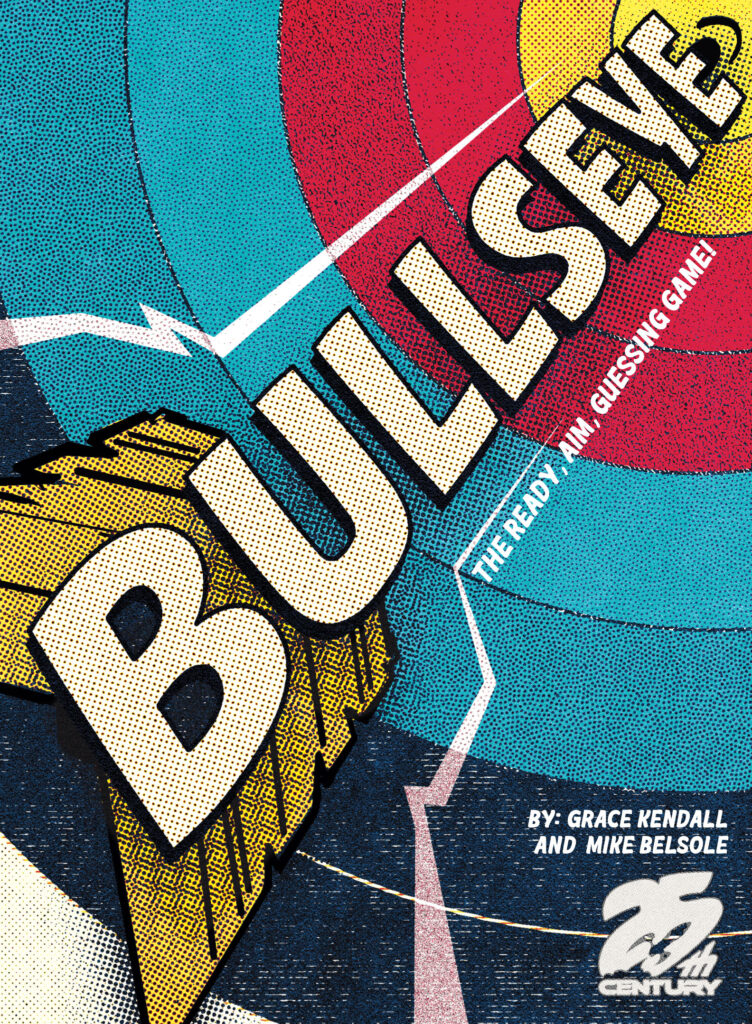
Bullseye Review

25. Juni 2026 um 15:06
BullseyeA couple of years ago, I reviewed a little party game called Smug Owls from Runaway Parade Games. It has remained in my collection, and several family members often request to play it. So when I saw Bullseye from the same design duo of Mike Belsole and Grace Kendall, my interest was immediately piqued! The […]

Source

Masters of Crime: Mosquito Game Review

Yeah…we’re back on track.

After a so-so run with Masters of Crime: Incognito—the fourth game in the KOSMOS one-shot mystery game series—I waited a few months before attacking the fifth game, Masters of Crime: Mosquito. My wife and I carved out a Friday night, grabbed a laptop, and sent the kids off to bed early. Would Masters of Crime continue a downward trend with Mosquito, or would the road to recovery be lined with gold?

I’m happy to report—so, so happy to report—that Masters of Crime: Mosquito sits comfortably alongside the other three exceptional MoC titles, Vendetta, Rapture, and Shadows. And, like Shadows, Mosquito has an ace up its sleeve, by serving as both a murder mystery AND an adventure game by extending into two solid halves that features plenty of puzzles in a wide range of difficulties alongside a story that riffs on many great films of the last 30-40 years.

KOSMOS now sells all five of these titles as a five-pack. While Incognito is a bump in the road, it’s still worth buying all five of these titles at once if you are new to the series. Masters of Crime is the best one-shot cooperative mystery series on the market.

I’ll share a few thoughts below in this spoiler-free review.

Masters of Crime: Mosquito Game Review appeared first on Meeple Mountain.

History Behind the Cards – A Look at Checkpoint Charlie from GMT Games – Card #1: Cousins Operation

Von: Grant
25. Juni 2026 um 14:00

I love a different style and focus of wargame. A game that takes a look at an important but somewhat obscure or rarely addressed historical topic, such as espionage or intelligence, and creates a gaming experience tailored around the events to highlight and evoke the difficulties and tension that would have been present. In January 2026, GMT Games announced such a game in Checkpoint Charlie, which is a solo or cooperative game focused on SIS espionage missions in Berlin in the 1960’s designed by Russell Brown. We have posted an interview with Russel and it was very well received and he has now agreed to create a series of History Behind the Cards to highlight the events of the 1960’s Cold War struggle in West Germany but also to share aspects about the game play and how it models the history.

*Note: The cards highlighted in this series and their event text, as well as any pictures used showing any of the various components, are still in the design and development process and as such event effects and text might still change prior to final development and publication. Also the art and layout of the cards are only for playtest purposes at this point and the game will enter the art department as it nears publication.

History Behind the Cards – Checkpoint Charlie from GMT Games – Card #1: Cousins Operation

The British SIS wasn’t the only intelligence agency operating in Berlin in the 1960’s, not by a longshot. The Potsdam Agreement of 1945 had divided Germany into allied occupation zones, with West Berlin itself divided into British, French and American sectors for administration and military presence, but those boundaries in no way restricted the activities of intelligence organizations in the city. The US Central Intelligence Agency had the largest presence.

The remarkably close relationship between US and British intelligence was formalized in 1946 under the British-US Communications Intelligence Agreement (BRUSA). It became the UKUSA agreement in 1955, including Canada, New Zealand and Australia (the “Five Eyes”), and still stands today. The term “cousins” was used within the British and American intelligence communities to refer to their counterparts from the other agencies, in reference to their longstanding Special Relationship. There were notable examples of not just coordination, but cooperation among the agencies, like Operation Gold – a joint operation in the 1950’s to tunnel beneath the city and tap into the landline communication of the Soviet Army headquarters in Berlin.

This relationship was formalized in the rules of a much earlier version of Checkpoint Charlie, with a specific step in the turn sequence when SIS assets could call upon the CIA for assistance, though with increased risk of detection. However, even with liaison officers and daily intelligence briefings between the two agencies, it was impossible to inform the other service of every aspect of day-to-day activities, let alone coordinate at a task level, so I removed that interaction.

This card represents a CIA operation in one of the locations in the city that has come to the attention of the KGB and was unknown to SIS case officers. This card places a marker that makes it more difficult for SIS assets to operate in the location, as indicated by the negative detection save modifier, and also draws a KGB Agent closer to that location.

In the next article in this series, we will take a look at the Cuban Missile Crisis and how the status of Berlin, even though it is located halfway around the world, effected things on the world stage.

In my opinion, this game looks extremely interesting and I am very much excited to learn more about it. I am appreciative to Russell and his efforts to bring us these cards and to write these entries to share with our readers. I am also very glad that this topic is being covered in a game and look forward to playing this one day soon.

We published an interview with the designer Russell Brown on the blog and you can read that at the following link: https://theplayersaid.com/2026/02/23/interview-with-russell-brown-designer-of-checkpoint-charlie-from-gmt-games/

If you are interested in Checkpoint Charlie, you can pre-order a copy for $48.00 from the GMT Games website at the following link: https://www.gmtgames.com/p-1211-checkpoint-charlie.aspx

-Grant

❌