Anmelden
Botswana: Lions and Hippos and Elephants, Oh My!
31. März 2026 um 20:49

You are a photographer in Africa! Can you snap pictures of the most photogenic animals? But watch out, as their value is constantly changing.

You are a photographer in Africa! Can you snap pictures of the most photogenic animals? But watch out, as their value is constantly changing.
Financially-troubled board game publisher CMON says it plans to relaunch its halted crowdfunding operations later this year, after seeing its annual losses soar to almost $20m in 2025.
CMON pulled the plug on crowdfunding launches and new game development 12 months ago, citing the economic uncertainty created by US tariff hikes – which at the time had reached 145% for China, where the vast majority of hobby board games are manufactured.
But a month later it emerged that CMON’s financial problems had been growing long before the tariffs, with the company announcing it had slumped to a loss of more than $3m in 2024 due to falling sales for its crowdfunding campaigns.
That loss was almost double CMON’s total profits from the prior three years – but the figure is dwarfed by the $19.9m annual loss the company just announced in its 2025 financial results.
CMON’s $23m losses across 2024 and 2025 are now almost 5.5-times larger than its profits from the preceding nine years combined – and have led an independent auditor hired by the company to question whether it has the resources to stay in business for the foreseeable future.
An extract of a report from auditor Zhonghui Anda shared by CMON, which is set to appear in the company’s 2025 annual report next month, considered the publisher’s $19.9m annual loss, its net liabilities of more than $3.5m and contract liabilities of over $7.5m, saying, “These conditions indicate a material uncertainty which may cast significant doubt about the Group’s ability to continue as a going concern.”
CMON’s directors have a different view, however, saying in the 2025 financial report that the company “should be able to continue as a going concern” thanks to a trio of factors.
They include financial support from some of the directors “sufficient to finance CMON’s working capital requirements”, the roughly $2.4m proceeds from selling its Singapore office that it received in January, and the roughly $1.25m gross proceeds from a successful share sale last month.
CMON’s hefty liabilities are largely due to its eight undelivered crowdfunding campaigns, which are not recognised as revenue on the company’s books until they are fulfilled to backers.
They include DC Super Heroes United, which raised more than $4.4m, and DCeased, which brought in over $2.5m. Both campaigns were initially due to be delivered last year, but are now expected to be delivered in Q4 of 2026, according to CMON’s latest estimates.
CMON also has five undelivered pre-order campaigns on its books, including Dune Desert War and the Assassin’s Creed Role Playing Game.
The company said that delivering crowdfunding projects in 2024 contributed about $20m in revenue – a figure which had sunk to just $200,000 last year according to its latest financial report.
CMON said the 2025 losses were driven by a “significant decline in revenue”, which fell more than 73% to $9.9m last year, compared to the $37.3m total from 2024.
It also cited impairment losses on property, plant and equipment, right of-use assets and intangible assets, and a loss it made disposing intellectual properties and related assets as part of its “strategic portfolio restructuring”.
Those IP sales included parting with its most famous and profitable title Zombicide – which has raised more than $40m on Kickstarter since its 2012 launch – to Asmodee, as well as Blood Rage, Rising Sun and Ankh to Tycoon Games.
It followed those by selling the IP for former Mythic Games titles Anastyr and Hel: The Last Saga to Don’t Panic Games in September, and parting with the lucrative Cthulhu: Death May Die IP to Asmodee a month later – the latter a series which has raised almost $10m from backers to date.
CMON said all those sales combined amounted to about $5.1m, but added that it actually made an overall $2.4m loss on disposal of intellectual properties and related assets across 2025.
It also made a $5.7m loss due to undertaking an impairment assessment on some of its property, plant and equipment, right-of-use assets and intangible assets “with finite useful lives”.
CMON said in the financial report, “These actions, while negatively impacting short-term results, were undertaken to strengthen the Group’s operational focus and reduce future cost burden.”
The company’s remaining significant IP includes the Massive Darkness series, with the most recent installment, Massive Darkness: Dungeons of Shadowreach, completing a $2.85m crowdfund on Gamefound early last year – a figure which rose to more than $3.7m including late pledges.
That campaign was CMON’s last before it scrapped its future crowdfunding plans two months later. The company has pivoted in the interim to releasing several small-box games direct to retail, including Collect!, Peanuts Talent Show, Fairy Perfume, Rocket Punch and Yokai Carnival.
Discussing its current strategy in the report, the company said, “In light of the continued uncertainty in the global market, particularly the instability arising from US import tariffs on certain products since the first half of 2025, the Group has taken decisive steps to restructure its operations and strengthen its financial position.
“Our current strategy is to:
“We remain committed to becoming a quality developer and publisher of tabletop games and believe the strategic refocus toward Asia and selective game development will position the Group more sustainably for the future.”
CMON said it had reduced its revenue exposure to the US to about 21.4% of its total across 2025, compared to around 42% for the previous year, through what it described as a “deliberate strategic pivot toward Asia”.
The report showed CMON’s combined North and South America revenue fell more than 86% last year to about $2.1m, from around $15.7m in 2024.
European revenue also fell more than 81% year-on-year, from about $12.7m to around $2.4m. Asia revenue fell too, but much less sharply, down about 33% in 2025 from $8m to around $5.3m.
CMON said in the report, “Notwithstanding this reduced exposure, tariff-related uncertainties may continue to affect future export sales, revenue and gross margin performance in the US market.
“The Group intends to maintain its current reduced focus on the US market until the trade environment stabilises and market conditions improve.”
CMON also revealed the scale of its staffing cuts in the latest report, with headcount falling from 81 at the start of 2025 to just 41 at the beginning of this year.
The report said total staff costs had fallen in that time from about $4m to around $2.8m, including pay for its directors and their pension fund contributions, but it did not provide a breakdown of those numbers.
The post CMON eyes crowdfunding return after annual losses spiral to almost $20m first appeared on .
by SumainGames
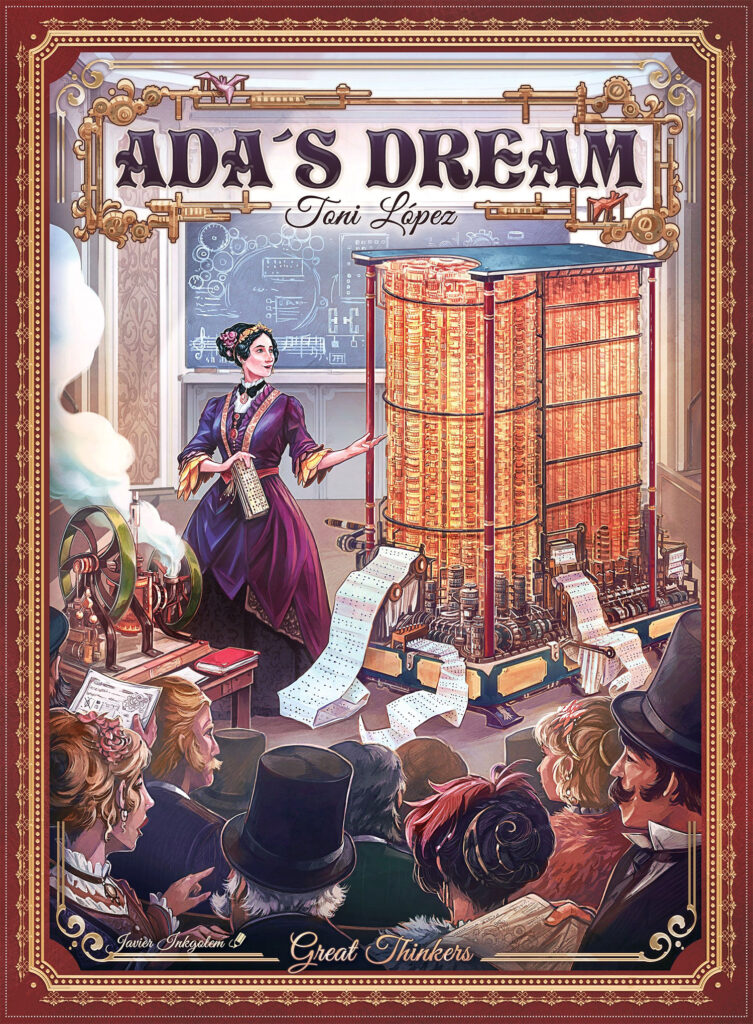
Ada Lovelace (1815-1852) was the author of the first published computer algorithm before computers existed; to put it succinctly, she was a computer science pioneer and visionary. Sadly, her ambitions were never fully realized during her own lifetime owing both to her gender and her untimely death. In the 200 or so intervening years, society […]
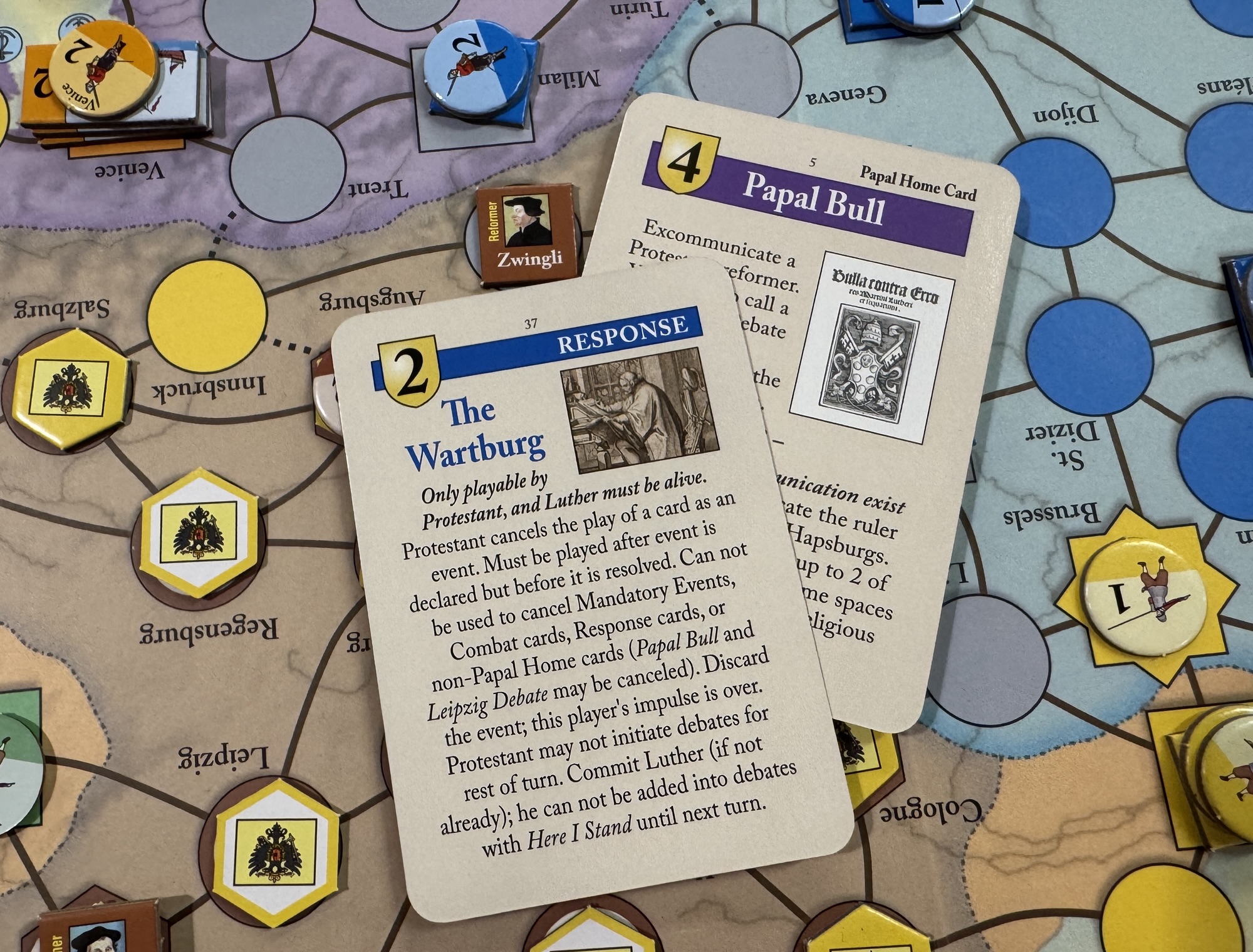


With this My Favorite Wargame Cards Series, I hope to take a look at a specific card from the various wargames that I have played and share how it is used in the game. I am not a strategist and frankly I am not that good at games but I do understand how things should work and be used in games. With that being said, here is the next entry in this series.
Here I Stand: Wars of the Reformation 1517-1555 is an experience packaged in a game that attempts to boldly cover the political and religious conflicts of early 16th Century Europe. The game focuses on the struggle of religious reformers such as Martin Luther, John Calvin and Ulrich Zwingli as they battle the Papacy for changes in their views of God and religion. But it is more than just the Holy War as it deals with the other European countries involved in the affairs of the time including France, England, the mighty Hapsburg Empire and the Ottoman Empire in the east. They all played a role in the process of the Reformation and the design brilliantly weaves this all together into an interesting and engaging experience. The game also covers other plot lines and events of the period, including wars, marriages and ascendancies to thrones, using a unique Card Driven Game (CDG) system that models both the political and religious conflicts of the period.
Today, I want to take a look at a very interesting Response card in The Wartburg. Response cards in Here I Stand are event cards that can be played out of turn to interrupt the actions of an opponent or provide immediate reactions to specific game events. Response cards are often used to negate, mitigate, or enhance events and combats, and they may be played during an opponent’s impulse, provided the text allows for this asynchronous timing. These cards also tend to have specific pre-requisites that must be met in order to play the card and The Wartburg states that the card is “only playable by Protestants, and Luther must be alive”. The card itself allows the Protestant player to cancel the play of a card as an event but cannot cancel a Mandatory Event. The card however can cancel the play of the Papal Bull or Leipzig Debate Papal Home Cards, which is probably the way that the card will mostly be used. The card will not only cancel the play of the event but will also end the impulse of the player playing the card. This can be very powerful and when played at the right time can be a game saver for the Protestant player.
For example, in our most recent play at Buckeye Game Fest, I was playing as the Protestants and Bill Simoni as the Papacy. After the forming of the Schmalkaldic League and the Protestants changing into a military power, the focus of the other players turned toward me as I was doing well and near victory. They all then decided to declare war on the Protestants and began to advance upon and attack my fortified Electorates to take away VP I had earned by having both religious and political control in 5 of the 6 as the League was formed. As we came into turn 5, I was at 24 VP and ultimately came up shy of a victory by 1 point at the time. I had been able to take over the entirety of England and change every space and also get about 5-6 spaces in France, but now the Papal Bull came to play and Bill fought me back and forth with him taking over 3-4 spaces followed by me reclaiming 3-4 spaces. It was a beautiful game of back and forth and I used every tool at my disposal to fight him including The Wartburg card to stop the untimely excommunication of Zwingli before he could attempt to embarrass him in a debate. That card play at that very time saved me or most likely he would have used Eck who is his best debater against Zwingli who is just average and I would have lost leading to him being burnt at the stake giving him VP or by allowing him to turn over a few of my hard fought converted spaces back to Catholicism.
The only problem with this card is that it commits Luther so he will be unavailable to be chosen directly to debate during the rest of the turn. But this was a small price to pay at that time and ultimately led to me being able to hold on through the end of Turn 6 where I won a Protestant victory on the tie breaker with England.
Martin Luther stayed at Wartburg Castle from May 1521 to March 1522 under the alias “Junker Jörg” (Knight George) to hide from papal and imperial authorities. During these 300 days of protective custody, he translated the New Testament into German in just 11 weeks, wrote numerous theological works, and grappled with spiritual turmoil. His greatest accomplishment at Wartburg Castle was his translating of the New Testament from Koine Greek into German, which laid the foundation for a unified German language and made the Bible accessible to ordinary people. He also wrote numerous works, including Against Latomus and several tracts. He began his attack on monastic vows during this time, arguing they were contrary to faith. Luther used his time in exile for intense study and writing, referring to his stay as his “Patmos”, referring to the Apostle John’s exile to the Island of Patmos in 95AD. While here though he also experienced significant psychological distress and temptation. According to legend, he threw his inkwell at the devil during a confrontation, leaving a stain on the wall. His exile was organized by Frederick the Wise after the Diet of Worms and the stay was designed to keep Luther safe from those looking for him, ensuring the survival of his reform movement.
In the next entry in this series, we will take a look at Commodus from The Wars of Marcus Aurelius: Rome 170-180CE from Hollandspiele.
-Grant
Feuerland Spiele prepares for SPIEL Essen 26, and Krakel Orakel expands


/pic9109073.jpg)