Normale Ansicht

Published — 27. März 2026 https://boardgamewire.com/

More than half of board game designers in TTGDA survey have used generative AI in their work

27. März 2026 um 16:29

More than half of board game designers responding to a Tabletop Game Designers Association member survey say they have used generative AI for some elements of their work.

About a quarter of the 171 designers who answered the TTGDA survey said they had used a genAI platform to come up with game ideas or mechanisms – while more than half indicated they were ‘strongly opposed’ to using AI in that way.

TTGDA – a professional organisation launched in 2024 to advocate for tabletop game creators in North America – asked designers about seven use cases, comprising:

● Coming up with ideas for games or mechanisms
● Writing placeholder text
● Writing text for the final version of a published game
● Editing or proofreading text
● Making placeholder art
● Making art for the final version of a published game
● Creating marketing materials for a game

The organisation said that while 28% of respondents were ‘strongly opposed’ to all seven use cases, almost a fifth were not strongly opposed to any of them, with the remaining respondents offering a mix of use cases they consider either acceptable or not.

Image credit: The Tabletop Game Designers Association

TTGDA’s report of its findings stated, “In the free-response section of the survey, multiple designers said that the process of chatting with the AI particularly helped them better articulate their own goals or ideas for a game.

“One said, ‘It’s like asking another human who may not know much about games. They know enough to at least bounce a couple ideas, which ends up with me getting to where I want to go’.

“Several designers who had tried asking generative AI platforms to come up with its own ideas described the material they got from the AI with terms such as ‘derivative’ or ‘slop’.

“One designer said that when they tried to prompt an AI for ideas, the AI recommended inappropriate mechanisms from mass market games, like ‘lose a turn’.

“Some said that a fraction of the output from their prompts would contain nuggets of useful ideas or angles that were worth considering.”

The results for use of AI art in final products were much more clear cut, with roughly four out of five respondents ‘strongly opposed’, and only two respondents out of the 171 saying they either regularly or occasionally generate art with AI that they plan to keep in a final game.

Many more designers (30%) were accepting of using AI to generate placeholder art for their designs – but 39% of respondents were ‘strongly opposed’ to that use.

TTGDA’s report cited one respondent as saying, “Publishers want pretty prototypes and the AI art makes me better able to illustrate the narrative direction and make play less boring than it would be with black and white words or “close enough” illustrations. Some of the games I am working on have no illustrations in the real world that anyone has done and if I wanted those I would have to pay artists which I cannot afford to do.”

Image credit: The Tabletop Game Designers Association

But it added that other designers said AI assistants had failed to create usable placeholder art in response to their prompts, with several saying that after trying AI-generated placeholder art they had returned to clipart and other online searches.

TTGDA said that when asked how they feel about publishers using AI for placeholder art, 40% of respondents said they would be ok with it, but 29% would like to contractually prohibit it and another 31% said they ‘don’t like it, but wouldn’t really fight it’.

The report added, “Of all the AI uses that the survey asked about, editing and proofreading had the lowest
number of ‘strongly opposed’ responses, at 35% for personal use and 30% for publisher use.

“About a quarter of designers (28%) are using AI to edit things they’ve written at least occasionally.

“Some designers gave examples of AI not working well as an editor for their games, saying it ‘made the rulebook worse’, or ‘creates more problems than it solves’.

“The problems they described included hallucinations and inappropriate tone. Designers also raised concerns that publishers might use AI for proofreading without a final human check, leaving the game vulnerable to errors.”

TTGDA also noted that more than 80% of respondents did not want publishers to use AI to generate marketing materials for their games, with multiple designers commenting that they were turned off by the use of AI in content creation around games, and will not work with influencers who use genAI in their workflow.

The report noted that of issues raised by designers when asked about their concerns around AI, “the most commonly voiced concern was that current generative AI tools are based on plagiarism, because they were trained on art and written materials without the creators’ consent.”

It noted, “Many said things like, ‘All uses of stolen material are problematic’. Multiple designers also mentioned that they want contract language that will prohibit a publisher from allowing AIs to be further trained on their game materials.

“The next most common concern was AI’s high environmental cost. A ChatGPT request uses ten times more electricity than a typical Google search (2.0Wh vs 0.3Wh). Other impacts include the use of rare earth elements, mercury, and lead in data center equipment; and the use of large amounts of water for cooling.

“Some designers worry that AI could flood the market with bad games. One designer thought it would be easy for unethical publishers to quickly create ‘clones that are slightly different’ and crowd the games they are copying out of the market.

“Another designer worried that ‘AI is great at making things that look like games for crowd funding campaigns, but without actual rules that make sense’.

“The general sentiment from these and other designers was the worry that in a market where it is already difficult for a game to stand out, these practices will only make it harder.”

Recent Repercussions

TTGDA’s report comes just over a month after Ryan Dancey, a more than 30-year veteran of the tabletop gaming industry, lost his COO job at publisher Alderac Entertainment Group after saying AI could generate game ideas as good as his company’s titles Tiny Towns and Cubitos.

Dancey said Alderac CEO John Zinser told him it was time to “move on to new adventures” in the “aftermath” of his LinkedIn post discussing the use of AI in board game design, which quickly attracted a flurry of negative comments from tabletop designersAEG’s business partners and bodies such as the Tabletop Game Designers Association, as well as board gamers across social media.

Wingspan designer Elizabeth Hargrave, the co-founder of TTGDA, dismissed Dancey’s suggestion when speaking to BoardGameWire the day after his departure from AEG.

She said at the time, “I absolutely do not think AI could be prompted to come up with even the basic idea for those games, let alone a fully fleshed out ruleset for them. For fun, I’ve prompted several different options for ideas for Wingspan cards and not one of them has given me an actionable idea.

“I had a friend who ran a rulebook through AI for proofreading and it hallucinated that people needed to shout ‘bingo’. Apparently that’s AI’s conception of board games right now.”

She told BoardGameWire at the time that the TTGDA board had been discussing the use of AI in board game design, adding that it was “a conversation we need to have with our membership”.

Wingspan designer and TTGDA co-founder Elizabeth Hargrave

She said, “We’re working on a model contract to offer to our members right now, and that will offer a clause that designers can request that will require publishers not to use AI in their final product. A lot of contracts ask us to certify that a board game design is our own, and not plagiarized.

“It’s my opinion that using AI in a final product goes against that, because it’s using a machine that’s built entirely on plagiarism.”

Hargrave added last month, “I do see people using AI for things like generating a bunch of placeholder names in a prototype. They’re often clunky options but they do the job when you know everything will change 50 times before you’re done anyway. I’m not aware of anyone who has successfully actually gotten good, original ideas for mechanisms from AI.

“What I wish we were talking about is how AI could be built to help designers run models of their games repeatedly to catch weird edge cases or broken strategies. I wish someone would build that tool instead of the language models that just focus on advanced auto-complete.

“This would never replace actual playtesting with humans for psychology and actual fun, but it might save me some repetitions.”

The TTGDA survey noted that one of the most common additional uses mentioned was as a source for help with probability, mathematics, and thinking about balance.

It said, “In some cases, designers are having the AI write spreadsheet formulas that they then use to do calculations in the spreadsheet. In others, they are simply asking the AI to do calculations.

“However, nearly as many designers said they had quite poor results with asking LLMs to do math, reporting errors and hallucinations. For example, one designer who used ChatGPT to calculate detailed probabilities (e.g. how often a certain set of cards might appear in a starting hand) said when they checked the results, they were wrong ‘roughly 1/4th of the time’. Another called ChatGPT ‘surprisingly bad at maths’.”

Last week board game publisher Awaken Realms responded to a wave of anti-AI art review bombing for its upcoming crowdfund, Concordia: Special Edition, by saying no AI-generated imagery will be used in the finished game.

Awaken Realms is one of highest-profile tabletop publishers to confirm it uses AI image generators, with other notable adopters of the technology including Stronghold Games – which attracted significant ire for its use of AI art in its $2.2m More Terraforming Mars! crowdfunding campaign.

The technology has been widely criticised by artists angry that the models are built upon their work without licensing or recompense, in addition to outcry over its environmental costs and threats to jobs in the creative and other industries.


The post More than half of board game designers in TTGDA survey have used generative AI in their work first appeared on .

GAMA unveils board of directors election winners, current president and secretary re-elected to board

27. März 2026 um 15:18

Editor’s note: GAMA is one of the sponsors of the BoardGameWire newsletter

Hobby games trade organisation GAMA has revealed the winning candidates in its latest board of directors election, with the organisation’s current president and secretary both retaining their board seats.

President Nicole Brady, who runs review site SAHM Reviews, was re-elected to the board by GAMA’s media and events member group, while treasurer Tiffany Reid from Southern Hobby Distribution won re-election from the wholesale group.

Current GAMA secretary Jamie Mathy – who runs game store Red Racoon Games – was re-elected by the organisation’s ‘Team Retail’ group alongside Red Claw Gaming’s Lea-Anne Welter, while David Wheeler from Dragon’s Lair and Boyd Stephenson from Game Kastle were also voted in as retailer representatives.

One of those four will be selected by Team Retail to fill a retailer seat on the GAMA board of directors, with all successful board candidates working for a two-year term.

The other newly elected members of the GAMA board are Michael Maggiotto Jr, who was selected by GAMA’s production members, Heather O’Neill from 9th Level Games representing publishers, and LegalWATCH’s Eartha Johnson from the creator membership group.

The GAMA Board of Directors is comprised of twelve individuals elected to represent the six voting membership groups, with half of the cohort up for election each year.

That board in turn elects GAMA’s four officers – president, vice-president, treasurer and secretary – each year.

Current GAMA president Brady has been in her current officer role since May 2024, having previously been treasurer of the organisation from the end of 2022.

GAMA President Nicole Brady

Brady has been a key driver of GAMA’s current plan to become the “epicentre” of global tabletop gaming, underpinned by the organisation unveiling its first-ever 10-year plan last October.

The array of plans spread across the next decade include boosting its membership within both hobby games and the mass market, expanding itself into a global organisation, shifting its finances away from the current heavy reliance on the annual GAMA Expo and Origins shows, and leading the conversation on sustainability within the industry.

Advocacy and brand protection is also one of its near-term priorities – underscored by the organisation’s recent intensive lobbying and awareness efforts around the impact on the industry of US tariffs.

Those efforts included multiple trips to Washington DC to lobby politicians, conducting dozens of media interviews to highlight the devastating impact of tariffs on the hobby, and supporting two lawsuits disputing Trump’s power to set the tariffs without agreement from the US Congress.

Brady told BoardGameWire earlier last year that the move was an attempt to get the organisation away from “playing whack-a-mole” on important issues rather than managing them in a long-term strategy.

GAMA is currently working to secure a permanent replacement for its previous executive director John Stacy, who left the association last October just after the 10-year plan had been revealed.

Leadership consultant Zaria Davis was named as interim executive director last November.

Earlier this month GAMA’s board of directors apologised for some of its elected leaders being “rude and disrespectful” during a “heated” annual general meeting at the recent GAMA Expo trade show.

This year’s GAMA Expo sealed another record attendance, ahead of its planned move to Baltimore in 2027 to contend with rapidly growing demand.

More than 3,820 attendees showed up to this year’s event in Louisville, Kentucky, up almost 12% on last year’s previous record of 3,425 – which had already left the show pressed for space across the exhibition hall and its extensive programme of seminars.

The post GAMA unveils board of directors election winners, current president and secretary re-elected to board first appeared on .

Published — 26. März 2026 https://boardgamewire.com/

Asmodee to pay up to €250m to buy French party, social game publisher ATM Gaming

26. März 2026 um 11:19

Asmodee has sealed its second major acquisition in a week by agreeing to pay up to €250m for French social and party game publisher ATM Gaming.

The board game giant said buying ATM, the publisher of titles including Speed Bac/Quickstop, Mouton Mouton and Pili Pili, was predicated on social games being “the fastest growing category of the board games market”.

Asmodee expects a compound annual growth rate (CAGR) for social games of between 4% and 8% between 2025 and 2030, compared to about 4% for the wider board games market, citing mass market sales research for the US and ‘main European countries’ conducted by Arthur D Little.

ATM has scored rapid success since it was launched in 2018, with Asmodee saying the company has shown particular strength in building an “e-retailer distribution engine”, using advertising, advanced SEO and real-time analytics to help its titles rank highly in online stores such as Amazon.

The company’s standout title, Speed Bac from designer Rémy Wannerbroucq, has sold more than 3 million copies since it was launched in 2024, with about 2 million of those sales coming in 2025 alone.

ATM Gaming’s standout release Speed Bac, which has sold about three million copies since its 2024 debut

Speaking in a press conference about the acquisition, Asmodee CEO Thomas Koegler said the fast-paced word game, which has also been published as Slingz, “shows clear potential to become an evergreen”.

Asmodee said the game managed to hold the number one spot in Amazon’s Toys & Games category across four different European countries during both Christmas 2024 and 2025, while other ATM games have also managed to seal high rankings.

Pili Pili, which has sold more than 300,000 copies since its July 2025 launch, was ranked second behind Speed Bac in Amazon’s Toys & Games category in France last Christmas, while Mouton Mouton, which has sold 200,000 copies since being launched last September, was ranked third.

That success has seen ATM grow from four co-founders with backgrounds across companies such as Meta, Deloitte and Johnson & Johnson to a team of more than 40 people, with its net sales CAGR more than doubling between 2023 and 2025 to reach about €34m last year.

Asmodee said it expects ATM to contribute at least €50m in net sales over the 2026/27 financial year, boosted by its new owner’s geographic reach and “know-how in operational efficiency”.

The company has agreed to pay €180m for ATM Gaming on a cash-free and debt-free basis, with another €70m paid in newly-issued Asmodee shares contingent on ATM’s future performance.

ATM is already established across France, Germany, Italy and Spain, Asmodee said, with “emerging” sales in countries including the US and UK, as well as in wider Europe and Latin America.

Koegler said a “key differentiator” for ATM was the company’s strength in e-retail, which has been their primary sales channel over the last three years. He added, “Their expertise in digital marketing and social media will also strengthen our go-to-market capabilities.”

Asmodee CEO Thomas Koegler

Asmodee has distributed ATM titles since 2019, with about 10% of the company’s current sales made through the Asmodee network – mainly in Italy and Spain.

Koegler said, “Over time we expect to further integrate distribution within Asmodee. Geographically the combination is highly complementary.

“ATM Gaming is strong in Europe, while Exploding Kittens provides a strong foothold in the US. Together this creates a balanced platform with significant expansion potential across both regions, but also beyond.”

Exploding Kittens is among Asmodee’s current heavyweight hits in its party and social games portfolio, alongside other high-selling titles such as Dobble.

Koegler said in the company’s Q2 report last November that Asmodee had seen “good momentum” in its lower price-point products in the US mass market, singling out Exploding Kittens as a particularly strong performer in what he called a “challenging market”.

Expanding Horizons

A month earlier Asmodee continued its reignited expansion strategy by launching a new party games studio, Moodbox Games, as part of a push into the US mass market.

That strategy has seen Asmodee make five acquisitions in the past 12 months – including last week’s buyout of Japon Brand from CMON, anchoring the board game giant’s push into a “currently untapped market” for the company.

Its other recent acquisitions include picking up ZombicideCthulhu: Death May Die and Sheriff of Nottingham from CMON, which is attempting to recover from heavy losses over the past couple of years.

Sheriff of Nottingham

Asmodee announced in November 2024 that it was preparing to “reignite” its strategy of buying up smaller board game publishers and distributors, saying at the time that it had a pipeline of more than 20 acquisition opportunities.

The revived M&A process is yet to fully mirror Asmodee’s private equity-fuelled buying spree from the latter half of the 2010s, however, during which it acquired more than 40 companies and IPs.

That heavy expansion included the company adding more than 20 game studios, including Days of Wonder, Fantasy Flight Games, Lookout Games, Catan Studio and Z-Man Games.

Koegler was asked during the company’s quarterly results presentation last month whether the company was ready to make “more meaningful” acquisitions rather than small bolt-on deals.

He said in response, “Without being specific, the activity in the pipeline is in accordance with our plan. The smaller acquisitions are faster. IP acquisitions and asset deals are faster to execute. I’m satisfied.”

Speaking during the ATM acquisition press conference, he said, “Our M&A pipeline remains quite active. We are well positioned to continue executing on our strategy.”

Asmodee posted record sales of €524m during the last quarter of 2025 despite a slump in its US performance, with trading card game earnings in Europe acting as a driving force for the business.

The board game giant’s overall net sales jumped 22.2% across October to December 2025 compared to the same period a year earlier, with the performance of products it distributes for other companies surging more than 50%.

Net sales for games published by Asmodee itself fell almost 13% year-on-year in the quarter, however, weighed down by US net sales slumping 23% to €70.4m.

That drop saw the US fall behind both France and the UK in Q3 in terms of the company’s highest-performing countries for net sales, with France surging 47% year-on-year to over €111m, and the UK growing 41% to €82.7m.

The post Asmodee to pay up to €250m to buy French party, social game publisher ATM Gaming first appeared on .

Published — 25. März 2026 https://boardgamewire.com/

Awaken Realms vows “no AI art” for Concordia: Special Edition after BGG review bombing

25. März 2026 um 16:10

Board game publisher Awaken Realms has responded to a wave of anti-AI art review bombing for its upcoming crowdfund, Concordia: Special Edition, by saying no AI-generated imagery will be used in the finished game.

The title is the latest seminal eurogame to be re-released in a spruced-up, premium edition by Awaken Realms – and also the latest to see the publisher come under fire for embracing generative AI software such as Midjourney in developing some of its games.

Awaken Realms is one of highest-profile tabletop publishers to confirm it uses AI image generators, with other notable adopters of the technology including Stronghold Games – which attracted significant ire for its use of AI art in its $2.2m More Terraforming Mars! crowdfunding campaign.

The technology has been widely criticised by artists angry that the models are built upon their work without licensing or recompense, in addition to outcry over its environmental costs and threats to jobs in the creative and other industries.

Almost all of the first few dozen ratings for Concordia: Special Edition posted by BoardGameGeek users gave the title ‘1’ – the lowest possible score – following its unveiling at the end of February, with the vast majority of those citing AI art as their rationale.

That was followed by a spate of users scoring the game the maximum ’10’ in an attempt to counteract the low scores – but the ongoing tussle has left it with an average of just 4.7, the lowest current rating of any Awaken Realms full game, and well below the 8-plus ratings enjoyed by many of the publisher’s prior releases.

BoardGameGeek’s suggested ratings guidelines say a ‘1’ review “Defies description of a game. You won’t catch me dead playing this. Clearly broken.”, while a ’10’ is suggested as “Outstanding. Always want to play and expect this will never change”.

BGG’s current policy is that “users are allowed to rate games however they wish, as long as each person only rates a given game once.”

The original edition of Concordia, released by German publisher PD-Verlag in 2013, has a BGG rating of 8.1 from more than 45,000 users, and is ranked 29th out of the tens of thousands of titles listed on the site’s database.

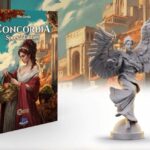
Awaken Realms is yet to unveil many details about the upcoming special edition, with the Gamefound preview page currently only showing a box cover – which it has since described as a work in progress – and examples of two plastic miniatures set to be included in the game.

The company dedicated most of its first update on the Gamefound page to discussing its use of AI generated imagery, saying that it did not address the situation sooner because “we find this whole conversation extremely draining”.

Box cover design for Concordia: Special Edition, which Awaken Realms says is a “work in progress”

It said, “We feel that the current situation is really not respectful toward our artists, who are really working hard on each project, and Concordia will be no different. They will be doing their best to pay tribute to this classic and elevate it to new heights.

“So, first things first – in this project, in the final game, there will be no AI art. Human artists will be involved in everything. This has also been clearly stated from the beginning in our contract with PD-Verlag.

“However, we do use some AI tools during prototyping, mock-ups, and various initial phases of concept work (and honestly, it is really hard not to, as eg, Photoshop alone, which is our artists’ main tool, has already tons of built-in AI features).

“This makes it easier to test the game visually, iterate, find the best solutions and compositions, and, from there, start working on the final assets.

“In different projects, we might have different rules and approaches. For example, you can see our other project – Grimcoven. There, we also had an update on the topic, as well as a chance to see the final result of how the game looks as it is produced and delivered to backers ;).”

Update March 27, 2026: Jan Philip Sommerlade, an editor at Concordia publisher and licensor PD-Verlag, wrote on BoardGameGeek: “In the games published by PD-Verlag, neither the graphics nor the text were created using artificial intelligence. We consider this to be problematic from a copyright perspective, at least when the AI models are based on artwork created by artists.

“It was therefore very important to us that artificial intelligence will not be used in the Concordia Special Edition either. In December, we paid Awaken Realms an extensive visit and discussed the details of the Special Edition at length. Awaken Realms has a large team dedicated to developing content, graphics, and illustrations, and we are confident that this collaboration will result in a very high-quality product. We have stipulated in our contract that the final product will not be created using artificial intelligence in any form.

“However, this does not apply to the use of AI for brainstorming and concept development, nor to the internal use of AI for creating prototypes. In the course of ongoing discussions, we have realized that this distinction may not be as clear-cut as we initially thought. Nevertheless, the fact remains: All graphics and text in the final product are created by real people.”

Other Campaigns

Grimcoven raised more than $5.1m across its 2024 Gamefound campaign and late pledges, and has so far avoided the heavy review bombing that has taken place for Concordia SE. Awaken Realms put out a similar pre-campaign update about its AI use for that title, calling it at the time “a ‘hot topic’ generating a lot of emotions”.

The publisher had come under fire online earlier that year for using AI in creating promotional images for its Puerto Rico 1897: Special Edition crowdfunding campaign – images it subsequently pulled from the crowdfunding page after being contacted by the game’s licensor, Ravensburger.

Despite online pushback against Awaken Realms for its decision to embrace AI generated imagery, its use of the technology has had little apparent negative impact on the success of its crowdfunding campaigns to date.

The publisher’s six most recent campaigns which it says made use of AI image making tools have raised almost €39m between them across their crowdfunds and late pledges, with Lands of Evershade the standout at more than $12.5m.

Awaken Realms Board GameTotal raised across crowdfunding, late pledges
Dragon Eclipse: The Grand Quest€3,321,287
BELOW: The Asylum€4,038,955
Agricola: Special Edition€7,326,500
This War of Mine Second Edition€3,730,079
Lands of Evershade$12,576,991
Grimcoven$5,136,331
Grand total~€38,900,000

But some of those have also begun to feel the impact of anti-AI sentiment on their BGG ratings. Agricola: Special Edition is currently rated at 6.2, with more than a third of its 309 ratings scored as ‘1’, while the yet-to-launch Agricola: Dead Harvest campaign is rated 5.9, with almost 90% of its 104 ratings so far either ‘1’s or ’10’s.

The six most recent campaigns using AI imagery – which also include BELOW: The Asylum, This War of Mine: Second Edition and Grimcoven – all included a statement acknowledging that usage in the FAQ section of their respective Gamefound campaigns.

The stipulation to transparently disclose the use of AI in Gamefound campaigns was implemented by the crowdfunding site in March last year, and codified in an update to its terms of service at the end of last month.

Awaken Realms’ AI art statement in its Agricola: Special Edition campaign FAQ states, “We are using different technologies, including AI tools, to various degrees – from built-in Photoshop capabilities (intelligent brushes, advanced texturing, and some AI tools), Internal Stable Diffusion models, MJ[Midjourney] models, pixel correction, scaling solutions and so on. Everything we use is screened and accepted by our legal team as fully legal to use.

“Those are different tools that we use NOT to decrease cost and DEFINITELY NOT to replace artists but to bring better quality to our customers and enhance creativity by allowing faster prototyping and iteration.

Pre-campaign card art for Agricola: Special Edition, which Awaken Realms described as “Work in Progress”

“We are constantly growing our art team (in the last 12 months, we have hired six new artists), as well as yearly increasing wages and sharing profits by yearly bonuses. We really care about our team and are extremely proud of their work.

“We deeply believe that in any creative endeavor, human involvement is absolutely essential, and instead of just ‘talking the talk’, we have actually walked the walk and increased our artist count and wages every year.

“This is our statement on the topic and we are fully dedicated to supporting and growing our art team, as well as bringing the best quality to our backers. We believe that this approach is better than making big PR statements and then firing people with a week’s notice, as, unfortunately, can be observed all around the industry.”

It is not immediately clear which board game publishers Awaken Realms is referring to with the final part of that statement.

The Agricola Special Edition statement is very different to the AI art section of the FAQ for Awaken Realms’ most recent crowdfund, Labyrinth Chronicles – which, like Puerto Rico Special Edition, is published by Gamefound investor Ravensburger.

That statement said, “We also noticed a few questions regarding the creative process behind Labyrinth Chronicles and whether any AI-generated artwork was used in the game.

“We would like to clearly state that no AI-generated art was used in the final product. Every illustration, graphic element, and 3D model was created by our talented team of artists who worked on this project.”

That statement then goes on to list 24 artists, graphic designers, illustrators and 3d modellers who it said worked on the title.

Awaken Realms has taken great pains recently to highlight the extent of its art and design team – which it said in the Concordia: Special Edition Gamefound update now comprises 32 people across art, 2D layout, 3D sculpture and desktop publishing, out of a board games division of more than 100 people.

Gamefound was launched in 2015 as a Kickstarter pledge manager by Awaken Realms co-founder Marcin Świerkot, who is CEO of both businesses. The company transitioned into a full crowdfunding site in 2022, with Świerkot setting his sights on beating Kickstarter at its own game in the tabletop sector.

Awaken Realms, meanwhile, began life as a miniature painting studio in 2014, before expanding into board game publishing a couple of years later.

The company garnered early success with a Kickstarter for This War of Mine: The Board Game in 2016, before the £3m Nemesis Kickstarter campaign in 2018 formed a springboard for the company to begin creating ever more intricate and expansive miniatures-focused tabletop projects.

Awaken Realms raised more than $12.1m for its Nemesis Retaliation Gamefound campaign at the end of 2024, making it one of the biggest board game crowdfunding campaign of all time alongside Frosthaven ($12.9m) and Kingdom Death Monster 1.5 ($12.39m).

The post Awaken Realms vows “no AI art” for Concordia: Special Edition after BGG review bombing first appeared on .

Published — 20. März 2026 https://boardgamewire.com/

Asmodee makes Asia expansion push by buying CMON’s Japon Brand, launching new studio Nekuma

20. März 2026 um 12:14

Asmodee has ramped up its reignited acquisition strategy by buying Japon Brand from CMON, anchoring the board game giant’s push into a “currently untapped market” for the company.

Japon Brand was instrumental in bringing Japanese designs such as Love Letter and Machi Koro to international markets, after being inspired by the surge in novel games from home-grown designers in the early 2000s.

The company will form the cornerstone of Asmodee’s new Japanese design studio, Nekuma, which will look to find games from local designers that it can release globally, as well as helping Asmodee bring its existing titles to Japanese players.

Asmodee CEO Thomas Koegler said, “Japan is one of the most creative and culturally influential markets in the world. With Nekuma and the integration of Japon Brand, we are building a long-term platform that connects Japanese creators with players globally.

Asmodee CEO Thomas Koegler

“True to Asmodee’s entrepreneurial and bold DNA, this capital-light and agile initiative allows us to invest where creativity is thriving while positioning Asmodee for sustainable growth in Asia.”

Asmodee has grown into a board game publishing and distribution giant thanks to the heavy expansion the business undertook after being bought by private equity firm Eurazeo in 2014.

But the vast bulk of the company’s revenue comes from its operations in Europe, which accounted for more than 76% of its €1.6bn net sales in 2025.

The United States contributed about 13.1% of 2025 net sales, while the company’s entire ‘rest of the world’ net sales – covering every country outside of Europe or the Americas – made up less than 5%.

Asmodee currently has offices in South Korea, China and Taiwan following an expansion to the continent in 2021, with those teams having developed and published localised titles including Splendor Pokémon, Love Letter Cookie Run, Pokémon Chips, and Love Letter Fox Spirit, as well as making use of crowdfunding platforms across the region.

The company said Nekuma would “integrate and expand” that activity under interim head of studio Frederic Nugeron, Asmodee’s current global senior vice president – route to market for the Asia Pacific region.

It said Nekuma would lead game sourcing “to identify and support the most promising Japanese and Asian tabletop game designers”, while Asia-focused publishing will be managed by the company’s existing Korea team.

Nugeron said, “Our ambition with Nekuma is very concrete: be present on the ground, listen to designers, understand cultural nuances, and build trusted relationships within the Japanese ecosystem.

“By combining local expertise with Asmodee’s global reach, we can support creators more closely and bring distinctive Asian games to a worldwide audience.”

Asmodee said Japon Brand would continue to operate with its existing expertise and relationships, with “no impact” on current partnerships or contracts.

CMON Divestments Continue

The buyout comes less than two years after board game crowdfunding major CMON acquired Japon Brand, with a plan to keep it as an independent division that would use CMON’s infrastructure and reach to help it introduce games to the global market.

That investment followed a strong 2023 for CMON, in which its net profit jumped more than 35% amid a hefty drop in its sales-associated costs.

But the company has faced a punishing financial situation since, posting losses of $3m across 2024 and nearly $7m for the first half of 2025 – figures which dwarf the overall $4.2m profit it had managed to make over the previous nine years combined.

As well as laying off staff and halting new game development and campaign launches, CMON has been attempting to recover by selling a string of its most lucrative IPs – including its most famous and profitable title, Zombicide, and Cthulhu: Death May Die, both of which were bought by Asmodee.

Asmodee continued its acquisitions of CMON games last month by picking up bluffing and set collection game Sheriff of Nottingham, which CMON had previously bought from Brazilian publisher Galapagos Jogos in 2016.

The 2nd edition of former CMON title Zombicide, which is now owned by Asmodee

The board game giant announced in November 2024 that it was preparing to “reignite” its strategy of buying up smaller board game publishers and distributors, saying at the time that it had a pipeline of more than 20 acquisition opportunities.

But the revived M&A process is yet to fully mirror Asmodee’s private equity-fuelled buying spree from the latter half of the 2010s, during which it acquired more than 40 companies and IPs.

That heavy expansion included the company adding more than 20 game studios, including Days of Wonder, Fantasy Flight Games, Lookout Games, Catan Studio and Z-Man Games.

Asmodee CEO Thomas Koegler was asked during the company’s quarterly results presentation last month whether the company was ready to make “more meaningful” acquisitions rather than small bolt-on deals.

He said in response, “Without being specific, the activity in the pipeline is in accordance with our plan. The smaller acquisitions are faster. IP acquisitions and asset deals are faster to execute. I’m satisfied.”

Other expansion activity since Asmodee announced its M&A plan has included the company launching a new party games studio, Moodbox Games, as part of a push into the US mass market.

It also recently launched a dedicated kids-focused brand, Asmodee Kids, in preparation for releasing a slate of re-worked, simpler and shorter versions of some of its most popular titles.

Asmodee posted record sales of €524m during the last quarter of 2025 despite a slump in its US performance, with trading card game earnings in Europe acting as a driving force for the business.

The board game giant’s overall net sales jumped 22.2% across October to December 2025 compared to the same period a year earlier, with the performance of products it distributes for other companies surging more than 50%.

Net sales for games published by Asmodee itself fell almost 13% year-on-year in the quarter, however, weighed down by US net sales slumping 23% to €70.4m.

That drop saw the US fall behind both France and the UK in Q3 in terms of the company’s highest-performing countries for net sales, with France surging 47% year-on-year to over €111m, and the UK growing 41% to €82.7m.

The post Asmodee makes Asia expansion push by buying CMON’s Japon Brand, launching new studio Nekuma first appeared on .

Published — 19. März 2026 https://boardgamewire.com/

“The numbers simply aren’t there”: Equinox to end record-breaking Altered TCG after new crowdfund falls well short of goals

19. März 2026 um 16:09

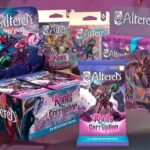
Altered, the trading card game which broke Kickstarter records with its €6.2m debut crowdfund three years ago, is ending after its latest crowdfunding campaign fell far short of its goals.

Publisher Equinox scrapped the crowdfund for Altered’s Roots of Corruption expansion yesterday after raising more than €420,000, having launched the campaign last week with a €50,000 target – a figure it described on the project page as a “technical necessity” in order to use Gamefound’s stretch goal system.

Equinox said in an update yesterday that it had also collected €680,000 through retailer pre-orders for the expansion – but added that the €1.1m total was “far too far” from the €2m the company required “to guarantee the future of the game”.

The statement said, “It would be dishonest to tell you that we can still turn the tide by Friday evening. We must face reality: the numbers simply aren’t there.

“It is with a heavy heart that we have decided to cancel the Roots of Corruption campaign. As we committed to doing, all backers – both players and retailers – will be reimbursed in full. This is the cornerstone of our responsibility toward you, and it is the most obvious decision to make.

“This campaign does not only mark the end of a crowdfunding project; unfortunately, it also marks the end of the Altered adventure.”

Altered shattered the crowdfunding record for a TCG on Kickstarter through its debut campaign in 2023, pulling in more than €6.2m (about $7.1m) from about 15,000 backers.

The announcement of the game’s demise coincides with that record being taken from it by the Cyberpunk TCG, which had already raised almost $10m from 12,000 backers just a couple of days after the campaign was launched.

Altered aimed to stand out from high-profile competitors such as Magic: The Gathering through its focus on exploration and bringing heroes together, rather than battles between characters and monsters, as well as innovations such as a print-on-demand and a digital marketplace for cards.

Those innovations were beset by heavy delays, however, and only went live in an open-beta form in April last year – putting the game at a disadvantage as it tried to compete in a crowded TCG space with alternatives such as Star Wars: Unlimited, Lorcana, One Piece and Flesh and Blood.

That digital marketplace also made it difficult for retailers to offer the TCG staple of being able to buy, sell and trade single cards, and the game’s powerful early momentum waned as the title struggled to go toe-to-toe with offerings based on hugely popular IPs.

Equinox returned to crowdfunding for Altered’s fifth expansion, Seeds of Unity, in October last year – but faced similar problems to the most recent crowdfund in reaching its necessary totals.

That campaign hit the €50,000 goal set by Equinox in less than nine minutes, but an update from the publisher two weeks later revealed that the actual amount needed to create the game was €2.5m – a figure which if it did not reach, “the adventure will come to an end, and both backers and retailers will of course be refunded”.

Noting the €50,000 crowdfunding goal for that project, and the message on the Gamefound page describing it as more than 1,000% funded, Equinox made no mention of it being a technical necessity for the stretch goal system.

It said at the time, “The funding goal displayed on Gamefound is symbolic, as it usually is in crowdfunding campaigns.

“It’s chosen to help build early momentum but doesn’t reflect our actual needs. Setting the bar too high sometimes makes a project feel out of reach, while a more accessible goal helps get the collective energy moving right from the start.”

That campaign ultimately collected almost €900,000 after being extended for several days, with another €1.4m coming through retailer pre-orders.

Equinox said at the conclusion of that campaign, “While we haven’t reached the objective of €2.5m mentioned initially, we’re not that far off our goal, and with some adjustments on our part (which includes reviewing some budgets and determining new production processes) we believe we can cover that difference.”

Equinox had come under fire from some Altered players for launching its Roots of Corruption campaign before Seeds of Unity had been fully delivered to backers.

The company said in an update to Seeds of Unity backers that while it aimed for a four-month cycle per set, production delays meant that it “no longer [had] the flexibility to push dates back”.

Uncertain Future

Equinox founder Régis Bonnessée acknowledged in the latest update announcing the end of Altered that players would inevitably have questions about the future of their digital collections, the game’s availability on Board Game Arena and “the legacy of this universe”.

He said, “We are not going to leave you in a vacuum. We simply need some time to digest this moment, to properly close this chapter, and to provide you with clear and respectful answers. Thank you for every card played, for every smile exchanged, and for everything you put of yourselves into this adventure. It was an honor to imagine it with you.”

Bonnessée added, “I have experienced the end of projects before – cycles that come to a close. But today feels different. Tonight, we feel a profound sadness as we reflect on what Altered has become for all of us.

“Tonight, we are thinking of you – our players, our community, our ambassadors. To everyone who accompanied us, supported us, and sometimes challenged us. Altered managed to create something rare: a sincere, kind, and committed community.

“We say this because we met you time and again. You often surprised us. We are sad tonight because we realize what this game represented for many of you. And because we also realize all that we failed to achieve.

“We are thinking of the game stores. To those who believed in the game before it was a certainty, who championed it to their customers, and who ordered stock on a gamble. Running a game store is an act of faith in itself; betting on an independent French TCG with an original universe and no established license to lean on… that deserves to be acknowledged. Thank you to them.

“We are thinking of our artists. Altered is a universe, a visual identity—something recognizable at a single glance. This world did not exist until they drew it. Thank you to them for giving substance to all of this.

“We are thinking of our partners—those we call such for lack of a better word, because “partner” describes a contract but not the relationship. For their advice, for what they taught us by their side, for the moments they believed in the project even more than we perhaps deserved. We grew together, and that cannot be erased.

“And of course, on a personal level, my thoughts are with the team. To the women and men who continued to believe, even when the headwind became exhausting. To their resilience in the face of invisible obstacles, to their total dedication. They have been extraordinary. I know that word can feel worn out, but here, it takes on its full meaning. Thank you to them for allowing this universe to exist, if only for a time.”

The post “The numbers simply aren’t there”: Equinox to end record-breaking Altered TCG after new crowdfund falls well short of goals first appeared on .

Published — 18. März 2026 https://boardgamewire.com/

AdMagic makes ‘difficult and sad’ decision to shut down Print and Play after financial strain from division became ‘overwhelming’

18. März 2026 um 16:07

US-based tabletop game and card manufacturer AdMagic is shuttering its popular Print and Play arm, with company founder and CEO Shari Spiro telling BoardGameWire the operation had been a “financial burden” to the rest of the business for several years.

Spiro told BoardGameWire it had been a “difficult and sad decision” to close the company, which had provided prototypes, promos and components for a string of big-selling titles, as well as fast turnaround print and play services for budding developers and designers.

Print and Play, which was bought by AdMagic in 2015, will close its doors on March 27, with any existing orders “received, printed and put into our standard turnaround production queue”, according to its website.

Spiro would not say whether any Print and Play employees would be kept on in other areas of the business after next week’s closure. The division had 12 employees on March 6, according to the team page on its website at the time.

Spiro told BoardGameWire, “My team invested a lot to keep Print and Play open as long as we could, but unfortunately, the amount of hand work and the time it takes to do the high quality of work done through a small company like Print and Play, costs more than we could actually sell the jobs for.

“In addition our endeavor to cover employees 100% with full health insurance, a 401(k), a robust paid personal time off program, a move to a state of the art brand new facility a few years ago to get the team out of an office building (which was inappropriate for that type of work), two new laser [printers] in the past two years and the associated lease payments for all of the above, in addition to the rising costs of materials all added up.

“Additionally we are not owned by private equity so we don’t have the kind of big money other companies have supporting us. Keeping Print and Play open was putting the rest of our team at risk.

“The financial strain to Ad Magic became overwhelming and so this is why we reached this difficult and sad decision. Moving forward this will help Ad Magic and Breaking Games as it will remove the financial burden which has been borne by the rest of the team for several years now.

“Although our model for prototype services will shift, we will still be able to accommodate our clients through our Ad Magic/Breaking Games divisions.”

Prototype designs worked on by Print and Play over the years include Thunder Road: Vendetta, Andromeda’s Edge, Galactic Cruise, DC Super Heroes United and DCeased, Super Boss Monster and Tiny Epic Game of Thrones.

Games in which Print and Play has had a hand in producing prototype materials for over the years || Photo Credit: Print & Play

The company’s services were also well used by designers looking to put together early versions of games to pitch to publishers, as well as for creating review and demo copies for companies to send out to content creators and other partners.

Gil Hova, the designer of games including Wordsy and The Networks: PrimeTime, posted to BlueSky yesterday, “Found out during Unpub that Print & Play, one of the best board game POD companies out there, is closing their doors in a couple of weeks.

“I used them extensively in my Formal Ferret days to make prototypes. Their turnaround time was unrivaled. Sad to see them go.”

AdMagic, which Spiro founded in 1998, has grown to become one of the largest independent tabletop printing companies in the US.

The company scored big successes in the early 2010s thanks to the rising wave of Kickstarter projects, working on huge-selling titles such as Cards Against Humanity and Exploding Kittens.

AdMagic launched its own board game publishing arm, Breaking Games, in 2015 on the back of that success, and has gone on to publish titles including Dwellings of Eldervale, Rise of Tribes and Letter Tycoon.

AdMagic also operates supply chain business Oomph, logistics company Blackbox and custom playing cards maker YourPlayingCards.com.

The post AdMagic makes ‘difficult and sad’ decision to shut down Print and Play after financial strain from division became ‘overwhelming’ first appeared on .

❌