The June 2026 Monthly Debrief Video, which is the 6th episode in Season 6 of this series, saw us discussing Nostalgia and its effects on the wargaming hobby. I think that nostalgia is generally a good thing but it definitely can be something that holds the hobby back. Too much nostalgia tends to keep us away from new and emerging games and systems and in general can be a suppressor of innovation and progression.
Also, as usual, we covered the games we played in June as well as the games we plan to play in July.
We will remind you here that we are fortunate to be continuing our relationship with Noble Knight Games as the sponsor for our Monthly Debrief Video series. In case you don’t know, Noble Knight Games specializes in hard to find games but also carry all the new releases. But what makes them truly unique is that you can find some of the rarest games, long out of print games, hand made games, imported games from overseas, etc. Thanks to them for their sponsorship and we hope that you will consider them first when looking for the games we cover.
At the beginning of 1793, after the execution of King Louis XVI, France was drawn into a war against a coalition of most European monarchies. On 24 February, the National Convention decreed the mass draft of 300,000 men to defend the eastern borders. Throughout the country, revolts broke out against this conscription, everywhere they were brutally repressed with success. However, an insurgent territory, called the “Vendée Militaire” resisted. Determined to engage in a trial of strength with the new revolutionary regime, the Vendéens gradually organized themselves until they formed a “Catholic and Royal Army”.
Vendée 93, a card driven two player wargame, takes you back to this particularly epic period in the French history, which pitted the young French Republic against the Royalist insurgents from March to October 1793.
“White” or “Blue”, choose your cause and take command of your troops! “White”: you will have to take the advantage quickly at the risk of seeing the Republican forces inexorably strengthen, forcing you into a sinister “Virée de Galerne”. “Blues”: time is on your side, resist the first assaults of the “brigands” to then be able to face the hell of the bocage in order to definitively extinguish the insurrection.
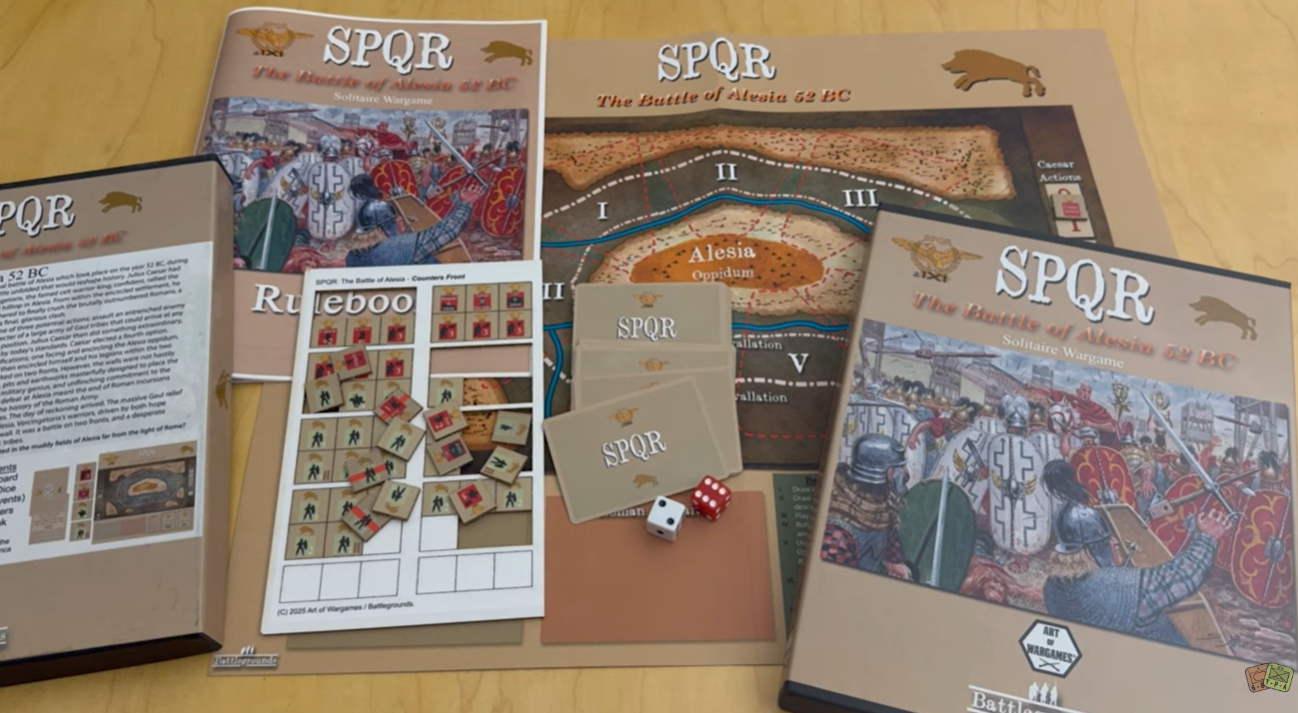
In SPQR: The Battle of Alesia 52 BC, you recreate the historical final battle of Alesia which took place in the year 52 B.C., during Caesar’s Conquest of Gaul. In the heart of the Gaul region, a battle unfolded that would reshape history. Julius Caesar had been carving a bloody path through the Gaul lands.
Vercingetorix, the famed and confident Celtic warrior-king, rallied the scattered tribes of Gaul into a desperate stand on a fortified hilltop in Alesia. From within the encircled settlement, he watched as a vast Gaul relief army of some 250,000 men gathered to finally crush the brutally outnumbered Romans, a storm cloud promising a final, glorious clash.
Will you lead the Roman Legions to glorious victory? Or will you face annihilation in the muddy fields of Alesia? The choice is yours…
A few years ago, after playing all of the games in the Great Statesmen Series, we heard of a new game in the series from a designer not named Mark Herman and I was immediately interested and intrigued as we have had so much fun with Churchill, Pericles and Versailles 1919. Congress of Vienna from GMT Games is a diplomatic card driven wargame based on Churchill and is the 4th game in the Great Statesmen Series. The game is set during the years of 1813-1814 and sees players take on the role of the main characters of the struggle between the Napoleonic Empire and the coalition of Russia, Austria, and Great Britain with their Prussian, Spanish, Portuguese, and Swedish allies. We played the game twice last year at Buckeye Game Fest and at the World Boardgaming Championships and absolutely were amazed at the changes and innovations to the system introduced by the designer Frank Esparrago.
With the Hammer is an asymmetric wargame covering the German Peasants War in Thuringia in 1525 along with the exploits of one of its most famous protagonists – Thomas Müntzer. With the Hammer comes with wooden pieces, counters, 2 rulebooks, and historical commentary by Professor Andrew Drummond, and a 22×17 inch map.
Each player is a peasant or a noble; the peasants win as a team, or the nobles win as a team. There is no true solitaire system, but like most wargames, it can be soloed two-handed.
Unsere letzten Tipps schon durch? Dann wird es Zeit für neues Streaming-Futter. Zwar hat der Sommer uns alle fest im Griff, aber manchmal verleiten die Temperaturen dann doch zum Verweilen auf der Couch. Hierfür haben wir wieder Tipps und schauen, was Prime Video jenseits der großen Produktionen zu bieten hat.
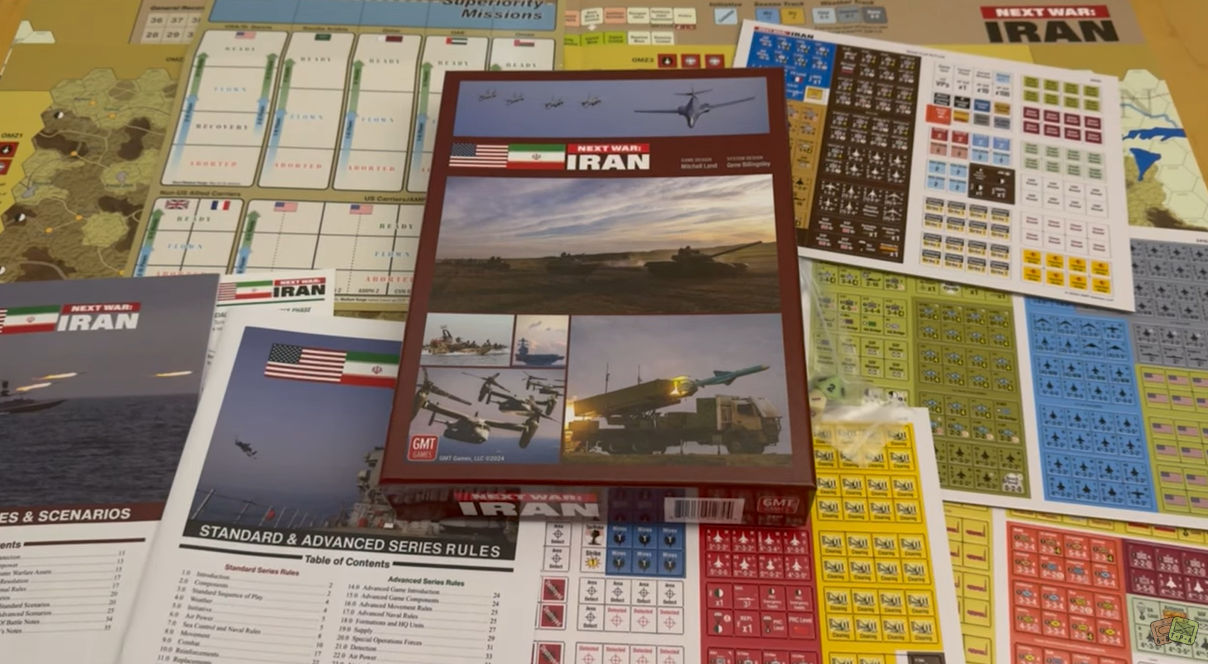
Next War: Iran is the sixth game in the Next War Series from GMT Games. It is unique in the series in that the Allied player has to do the attacking while the non-Allied player attempts to defend its territory against neo-imperial oppression. With a long logistical tail, few true allies in the region, and the menace of Iran’s A2AD capabilities, re-opening the Straits is a tall order.
A few years ago, while attending WBC, I had the chance to meet Wes Crawford who was demoing one of his new games called Engine Thieves: The Andrews Railroad Raid of 1862 from Compass Games. Wes is a great guy and this game is focused on a rarely, if ever, gamed historical subject in the 1862 Andrews Railroad Raid during the American Civil War. On April 12, 1862, the charismatic Union agent James Andrews and his band of raiders stole the train powered by the locomotive, “The General,” from under the noses of about 3,000 Confederate troops training at Big Shanty (Kennesaw), Georgia. Their risky mission was to cut telegraph wires, burn railroad bridges, and damage track between Atlanta and Chattanooga, thus severing communications, reinforcements, and supplies between the two cities. This was as Union General Mitchel advanced his forces upon Chattanooga with the aim of capturing it and splitting the Confederacy in two. The raiders needed to bluff their way through the Confederate railroad stations and even pass through Chattanooga to meet the advancing Union force in Bridgeport!
Engine Thieves covers this courageous Civil War raid. Play as the Union raiders in a solo game as you race against time, and the Confederate soldiers on your tail, to get to Bridgeport. With 2 players, one of you will play as the Confederates and try to stop your opponent from reaching Bridgeport or at least minimize their destructive sabotage. Follow the adventure and real path these raiders took on their daring ride north!
As the solo player in charge of Andrews and the Union raiders, you must accumulate at least 25 Victory Points by some combination of burning bridges, cutting telegraph wires, damaging track, bringing the stolen train to Bridgeport, and defeating Confederate units that get in your way, all while minimizing raider casualties. Reaching Bridgeport is a high priority since without that accomplishment, General Mitchel would likely call off his attack on Chattanooga. Mitchel might be otherwise unaware of the Raiders’ successes!
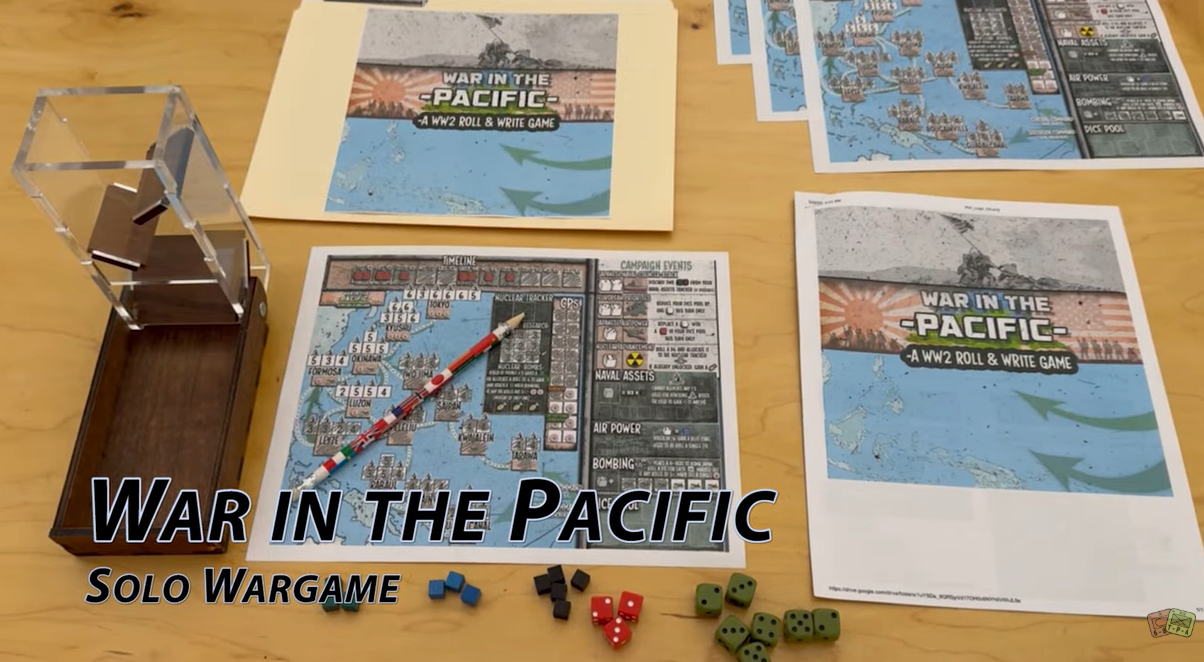
In War in the Pacific– A WW2 Roll & Write Game from Solo Wargame, players will allocate limited resources to launch attacks, conduct strategic bombing, maintain supply lines and seize key islands. Your strategy must be swift and decisive, targeting objectives like Guadalcanal, Iwo Jima, and Okinawa. As the war intensifies, you can divert critical resources to the Manhattan Project, researching and developing nuclear weapons. The race to build atomic bombs could be the key to ending the war. Can you balance the demands of the Manhattan Project with the immediate needs of your campaign?
Once you’ve gained a foothold, you’ll face a crucial choice: invade mainland Japan in a costly land assault, or use strategic bombing and nuclear weapons to force Japan’s surrender. Each option is risky as an invasion could end the war quickly, but at great cost, while bombing and nukes may hasten Japan’s surrender, but could come too late.
With fast-paced dice allocation, resource management, and mounting pressure, every decision could mean the difference between victory or failure in your quest to force Japan’s capitulation.
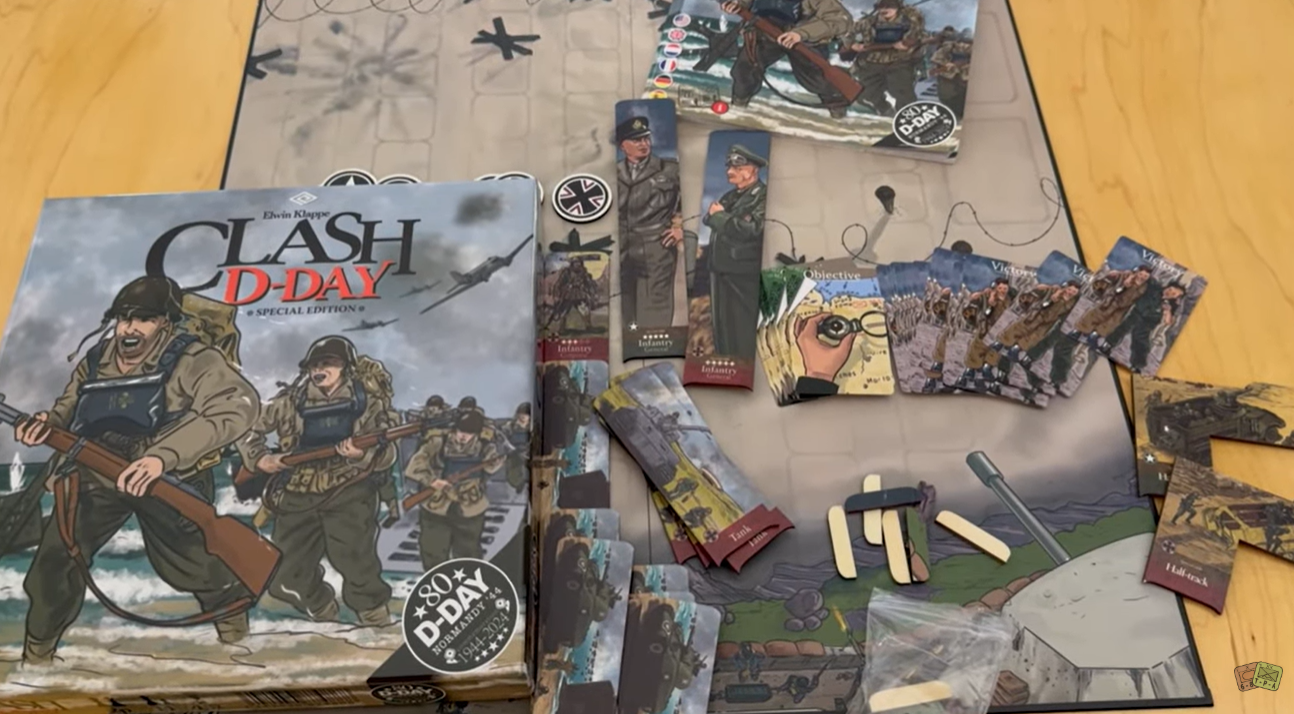
Clash D-Day Special edition is a turn-based board game that is set during the longest day in history: D-Day. Take control over the Allies and Axis forces and get ready to conquer the necessary beaches and areas. Outwit your enemy, make tactical decisions and think ahead. Prepare and take action in the greatest seaborne invasion that changed history on June the 6th, 1944! Clash D-Day is very easy to learn and there is no need for historical knowledge. Clash D-Day is based on the popular board game Clash of the Ardennes and is a stand alone version of the game. Use all of your (special) units wisely, because you will run out of units very quickly. Place them strategically and tactically on 1 of the 7 streets, always think ahead and try to reach your objective a little bit sooner than your opponent.
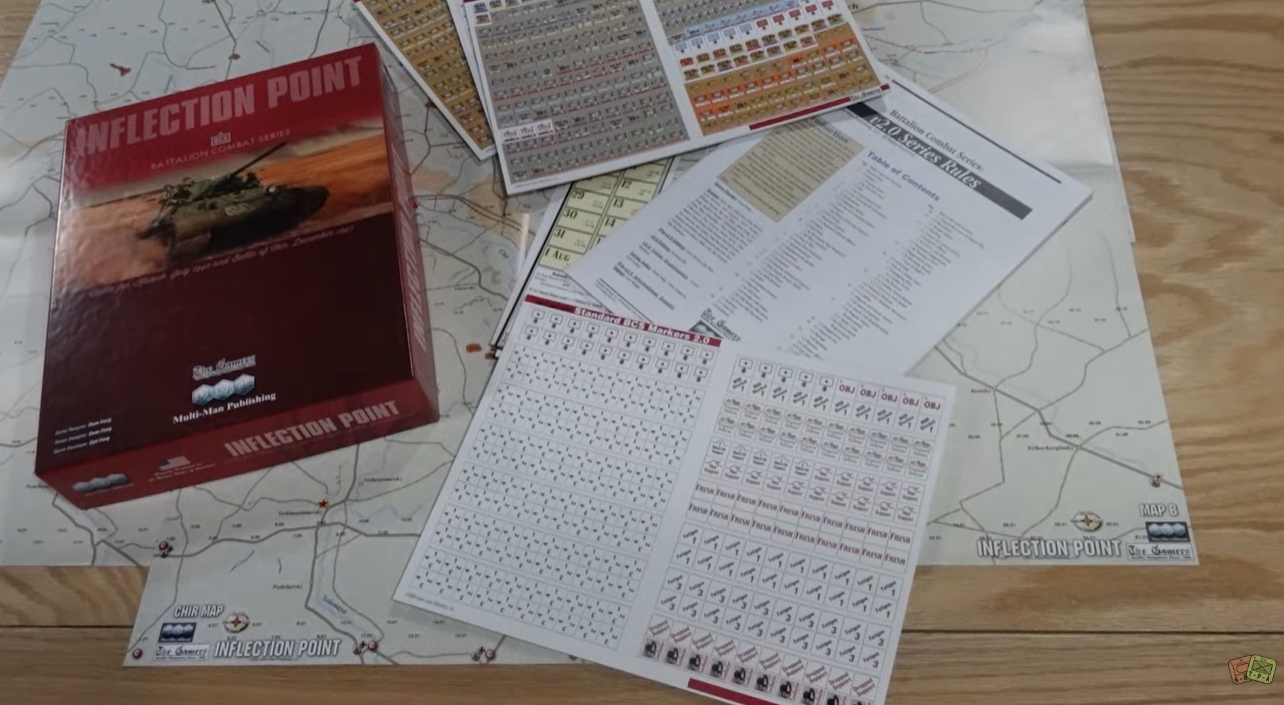
Inflection Point is a Battalion Combat Series (BCS) game depicting two important but relatively unknown battles before and after Stalingrad. The Battle for Kalach was fought in July 1942 following Case Blue, the successful drive into southern Russia. Paulus’ Sixth Army intended to encircle and destroy the Soviet Armies and walk into Stalingrad. The Soviets were still recovering from Operation Barbarossa the year before. The result of the battle set up the epic urban fight that was the turning point of the Eastern Front. By December 1942, the Sixth Army was trapped at Stalingrad by a more capable Red Army. In the Battle of Chir River, the Soviets looked to exploit their gains and prevent German relief operations over a portion of the Kalach battlefield. Initial success along the Chir River changed when the energetic 11th Panzer Division was thrust onto the scene. These two battles show the progression of the Red Army into an offensive army that could start fighting toe-to-toe against the invaders. For the Germans, the days of blitzkrieg successes were waning and were being put on the defensive. There was a marked inflection point around Stalingrad.
The game showcases this change in quality and capability between the armies. Units famed for fighting at Stalingrad are here – 24th Panzer and 100th Jäger Divisions as well as the 62nd Army. With rules on crucial air supply that was needed to sustain the German offensive, to stubborn Soviet command in the form of Colonel Konstantin Zhuravlev, players will be able to recreate these pivotal battles. The steppes of Southern Russia are accurately depicted, with rivers, balkas, and small hills being crucial in the otherwise flat terrain. With offensive and defensive possibilities for both sides in both battles, there’s tense decision making in order to win and change the fate on the Eastern Front.
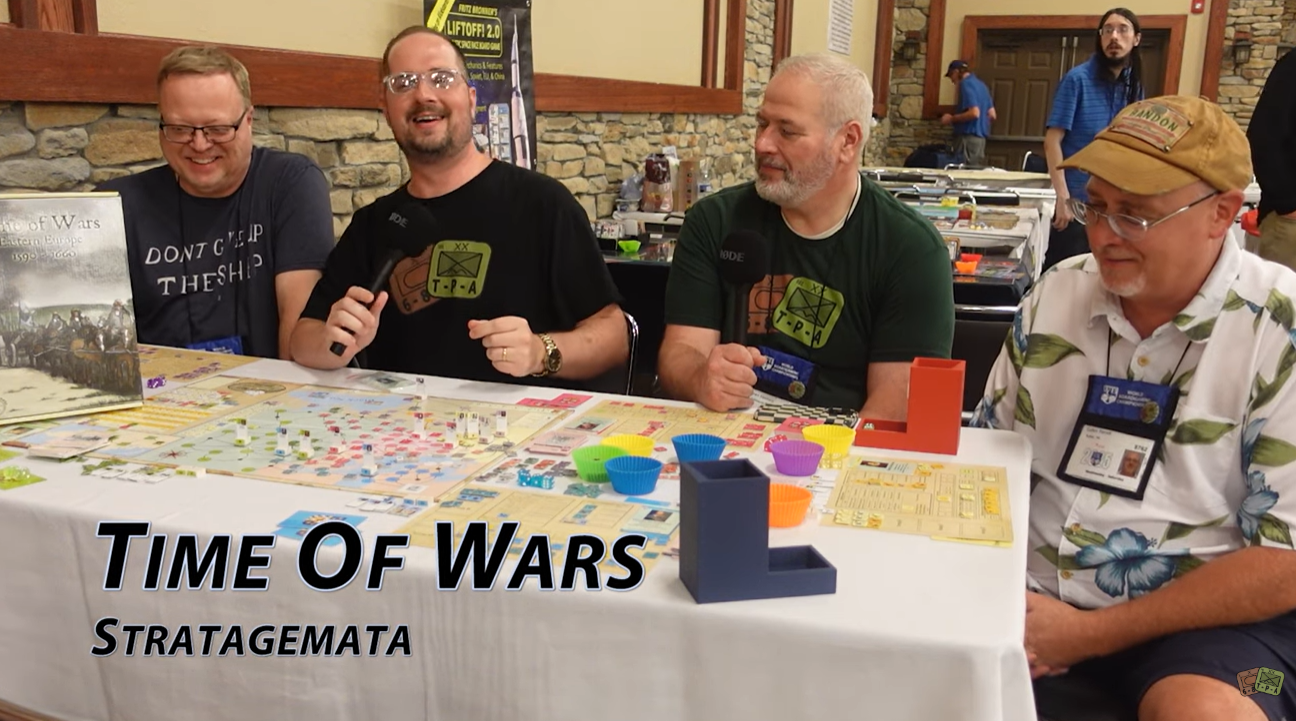
Time of Wars: Eastern Europe 1590-1660 from Stratagemata is a multiplayer card driven game that is modeled after games like Here I Stand and Virgin Queen. Players take on the role of the head of superpowers in Eastern Europe including the Polish, the Lithuanian Commonwealth, the Tsardom of Russia, the Ottoman Empire, the Kingdom of Sweden and the Holy Roman Empire. Minor states are also present such as Denmark, Brandenburg, Moldova, Wallachia, Transylvania and Crimean Khanate.
The game covers the turn of the 16th and 17th centuries. The period was rich in famous characters (rulers and commanders) and critical events – for example the Time of Troubles in the Tsardom, the Thirty Years War in the Reich, Swedish “Deluge” in the Commonwealth. All these and much more are smoothly incorporated into gameplay.
The May 2026 Monthly Debrief Video, which is the 5th episode in Season 6 of this series, saw us discussing Games We Disagree On. Now this list is not overly long and includes only 6 games but the discussion was good and it was nice to have to think back over the years to the games we did feel differently about.
Also, as usual, we covered the games we played in May as well as the games we plan to play in June.
We will remind you here that we are fortunate to be continuing our relationship with Noble Knight Games as the sponsor for our Monthly Debrief Video series. In case you don’t know, Noble Knight Games specializes in hard to find games but also carry all the new releases. But what makes them truly unique is that you can find some of the rarest games, long out of print games, hand made games, imported games from overseas, etc. Thanks to them for their sponsorship and we hope that you will consider them first when looking for the games we cover.
With this My Favorite Wargame Cards Series, I hope to take a look at a specific card from the various wargames that I have played and share how it is used in the game. I am not a strategist and frankly I am not that good at games but I do understand how things should work and be used in games. With that being said, here is the next entry in this series.
#82: Good Omens from The Wars of Marcus Aurelius: Rome 170-180CE from Hollandspiele
TheWars of Marcus Aurelius: Rome 170-180CE is a solitaire only game that uses cards similarly to a CDG to simulate the strategic level struggle of the Romans led by Marcus Aurelius to stave off the invasions of Germanic tribes and Sarmatian raiders as they encroach on Roman territory across the Danube River. That’s the history. And it is really well integrated. The game play is very fun, strategic, with lots of decision points about what to do and what cards to use, and it is really challenging.
In the game, the Roman player has a deck of Roman Cards that can be used for the printed events for various effects or that can be discarded to take any number of actions such as attack a Barbarian army or Off-Map Conflict enemy, advance the marker on the Imperium Track, add two Level 1 Forts to any eligible map spaces, flip one Level 1 Fort to a Level 2 Fort among several other actions. Sometimes the printed events in the game are just more powerful than discarding a card for just 1 action so you have to pay attention to this economy and make sure you get the most out of your cards. Now, keep in mind, sometimes discarding a good card whose ability is not right for the current situation you find yourself in is part of the game but you have to use these cards wisely to do well in the game.
The game uses two separate decks of cards including the Barbarian Deck (Green) and The Roman Deck (Red). Both of the decks are made up of 50 cards each but each have very different purposes. The Barbarian Deck is used to determine the actions of the invading Germanic tribes as well as events that effect the war effort including mutinies, plague and the will of the people. While the Roman Deck provides the resources and events that are used by the Roman player to mount a defense against the invasions and to fight back each of the different barbarian tribes. There are unique cards called Late War Cards in the deck that will be held out until the start of the 175CE turn at which time they will be mixed in with the cards to form a new Late War Deck. There are also special cards that are marked with an asterisk that if played for the event will be discarded from the game to form what is called a History Pile.
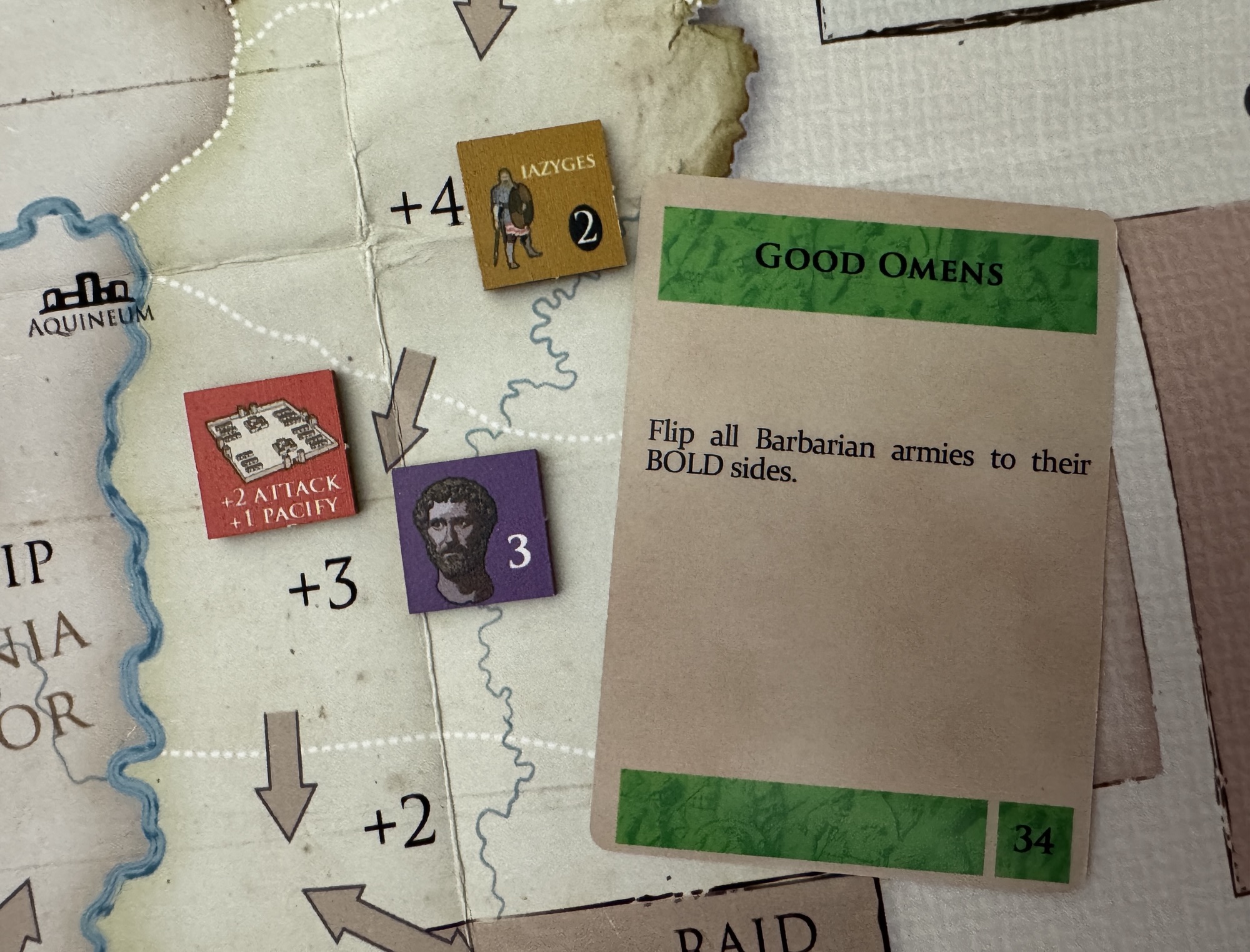
In this entry, we will focus on our first Barbarian Card from the game, as almost all of these cards are really bad for the player, called Good Omens. The “Good” portion of the card’s name doesn’t refer to the Romans but is a benefit for the Barbarians. This card can undo the hard fought victories of Marcus Aurelius and his commanders as its effect is immediate and cannot be cancelled like a Barbarian Surge effect can be by discarding a card. The Good Omens Barbarian Card will immediately cause the player to flip all of the Barbarian armies to their Bold side. Well that doesn’t sound so bad you say? Well, remember that each of the Barbarian army counters is double sided with one side being their Bold side and the other their Demoralized side. On their Bold side, the army is at its strongest with its Combat Value being higher than on the Demoralized side. In our pictures, you can see that the Iazyges army counter has a 4 Combat Value on its Bold side while the Combat Value on the Demoralized side is 2 less at just 2 Combat Value. During combat, or even due to some of the events on the Roman Cards, if a Roman army defeats a Barbarian army, their counter will be flipped from their Bold side to their Demoralized side and they will also have to retreat backward 1 space. I know that the difference here is only 2 but that is in essence gaining a +2 to the Barbarians Combat Value and in a game where the differences between the 2 armies can be just 1 or 2 or even no difference at all, this makes a huge difference and can sometimes feel like you are having to climb a mountain to overcome these Barbarian foes.
Ancient peoples believed deeply in their gods and traditions and would watch for signs in the heavens or from other sources when making key decisions about many things including military campaigns. Good omens would be seen positively as they believed that their decision was favored by the gods and that they would have a good outcome. The Romans believed these things as well but unlike the highly structured Romans, who read omens by sacrificing animals or watching birds fly, barbarian armies like the Germans and Celts relied on signs from nature or even from dreams. These signs when seen would boost morale and gave tribes the psychological edge they needed to fight the powerful armies of the Romans. Germanic tribes believed sacred groves and rivers were portals to their gods and if they were fighting near these places they would take greater strength. Weather was also seen as a major sign and roaring winds, dark storms or rivers that suddenly flooded were viewed as the gods fighting on their side.
The most famous “omen” came from the Battle of the Teutoburg Forest in 9 AD, which occurred over 100 years before the events of the game. A fierce storm, combined with the clever planning of the Germanic leader Arminius, allowed Germanic tribes to completely trap and wipe out 3 Roman legions. The Romans viewed the loss of their legionary eagles and this devastating defeat as a terrible omen for their empire’s future.
Hermann (Arminius) at the Battle of the Teutoburg Forest in 9 AD by Peter Janssen.
I shot a playthrough video for the game and you can watch that at the following link:
I also followed that up with a full video review sharing my thoughts:

 Anmelden