Normale Ansicht

Published — 24. Juli 2026 https://boardgamewire.com/

CMON scraps $2.1m NFT game maker investment, three months after betting on deal to expand revenue, remain ‘relevant’

24. Juli 2026 um 00:35

Financially-troubled board game publisher CMON has terminated its planned $2.1m investment in NFT video game maker Blissful Link, three months after pinning its future on a push into digital game development and blockchain-based projects.

CMON’s board had planned to transition the company’s titles such as Massive Darkness and Super Fantasy Brawl Reborn into “high-quality digital assets” through the investment, saying the move was necessary for it to “continue to be relevant in the games industry and to expand the group’s revenue stream”.

But the board game publisher has now terminated the deal according to a new filing it submitted to the Hong Kong stock exchange, saying the conditions necessary to complete the investment had not been fulfilled.

CMON did not disclose which conditions had not been satisfied, nor whether it intends to pursue alternative investments as part of the announced digital strategy.

Super Fantasy Brawl Reborn || CMON crowdfunding image

The conditions of the deal included CMON being satisfied with the results of due diligence of Blissful Link’s finances, assets and legal structure – particularly around its Capverse game – approval of both parties, and warranties related to the agreement “remaining true and accurate and not misleading at completion”.

Capverse is a play-to-earn video game built on blockchain technology, in which players buy NFT ‘Sumer’ characters to battle with online.

The proposed investment would have valued Blissful Link at more than $95m. Blissful Link made a loss of about $197,000 in 2024, on revenues of just over $408,000, and had net liabilities of about $889,000, according to unaudited figures provided by CMON in April. It did not include finances for 2025.

CMON was mocked in multiple places online after it announced the NFT deal in April, with commentors largely expressing that they believed the deal was not financially sound, and questioning CMON’s decision to bank on NFT and web3 technology to fix its financial problems.

The veteran crowdfunding giant’s $23m losses across 2024 and 2025 were almost 5.5-times larger than its profits from the preceding nine years combined, and have pressed the company into a string of asset sales as it attempts to fulfill more than $14.3m of as-yet-undelivered crowdfunding campaigns.

Those IP sales included parting with its most famous and profitable title Zombicide – which has raised more than $40m on Kickstarter since its 2012 launch – to Asmodee, as well as Blood Rage, Rising Sun and Ankh to Tycoon Games.

It followed those by selling the IP for former Mythic Games titles Anastyr and Hel: The Last Saga to Don’t Panic Games in September, and parting with the lucrative Cthulhu: Death May Die IP to Asmodee a month later – the latter a series which has raised almost $10m from backers to date.

Earlier this year an independent auditor hired by the company questioned whether it CMON had the resources to stay in business for the foreseeable future, saying the publisher’s $19.9m annual loss, its net liabilities of more than $3.5m and contract liabilities of over $7.5m “indicate a material uncertainty which may cast significant doubt about the group’s ability to continue as a going concern.”

CMON’s directors had a different view, however, saying in the company’s 2025 financial report that it “should be able to continue as a going concern” thanks to a trio of factors.

They include financial support from some of the directors “sufficient to finance CMON’s working capital requirements”, the roughly $2.4m proceeds from selling its Singapore office that it received in January, and about $1.25m of gross proceeds from a successful share sale in February.

CMON’s hefty liabilities are largely due to its eight undelivered crowdfunding campaigns, which are not recognised as revenue on the company’s books until they are fulfilled to backers.

They include DC Super Heroes United, which raised more than $4.4m, and DCeased, which brought in over $2.5m. Both campaigns were initially due to be delivered last year, but are now expected to be delivered in Q4 of 2026, according to CMON’s latest estimates.

DCeased || CMON crowdfunding image

CMON also has several undelivered pre-order campaigns on its books, including Super Fantasy Brawl Reborn and the Assassin’s Creed Role Playing Game. The company is currently in the process of fulfilling a trio of other pre-orders including Dune Desert War, Cthulhu: Dark Providence and Marvel United: Witching Hour.

The company pulled the plug on crowdfunding launches and new game development in April 2025, citing the economic uncertainty created by US tariff hikes – which at the time had reached 145% for China, where the vast majority of hobby board games are manufactured.

But CMON announced in March this year that it plans to relaunch its halted crowdfunding operations later in 2026.

NFTs, which emerged out of cryptocurrency technology such as Bitcoin, exploded into the public eye in 2021 thanks to big-money speculative purchases – such as an NFT of Twitter founder Jack Dorsey’s first tweet selling for $2.9m.

That speculative bubble had already burst a year later, however with many of the digital assets involved losing more than 90% of their peak value. The Dorsey tweet NFT, for example, received a high bid of $6,800 when it was put back on the market in April 2022.

Other board games that have pushed into NFTs are few and far between, with one of the highest profile examples being SolForge Fusion, which allows players to mint decks as digital assets in addition to playing the game in physical form.

Two years ago CCG project Wonders of the First had to pull a $1.4m campaign from Kickstarter after falling foul of the crowdfunding platform’s ban on NFTs. The game went on to raise about $1.2m after relaunching without NFT content.

The post CMON scraps $2.1m NFT game maker investment, three months after betting on deal to expand revenue, remain ‘relevant’ first appeared on .


Published — 16. Juli 2026 https://boardgamewire.com/

Valor Mountain challenges hobby game publishing’s “safe bet” mentality as it ramps up ambitions

16. Juli 2026 um 18:36

After years spent engaging with publishers and designers – both at Capstone Games and through his Board Again Gaming podcast – Christopher High believes the several thousand new board games and expansions released each year are pushing publishers towards commercially safer bets. Now he’s wagering his company Valor Mountain Games can succeed by taking chances on the kinds of titles other publishers are passing over.

High, who spent the past two years as a product manager at Ark Nova and Gaia Project publisher Capstone, co-created Valor Mountain in 2023 alongside Tim Densham as an offshoot of the latter’s historical games-focused publisher Catastrophe Games.

He became sole owner of Valor Mountain in May after buying out Densham’s share of the business – and now plans to expand the company from creating small side projects into a business targeting five or six traditional print-run releases a year.

High told BoardGameWire he is “putting his own money on the line” betting on a strategy built around taking chances on games other companies might reject – saying he believes the hobby industry has become increasingly focused on commercially safe decisions, leaving opportunities to back more unusual designs and under-represented creators.

Christopher High and Tim Densham from Catastrophe Games

He said, “Generally publishers make safe decisions. And that’s their job. As far as breaking the mold, I rarely see a game anymore that truly ‘wows’ me in this sense.

“It happens, it just seems like our industry defaults a lot to what they think will sell a game rather than being willing to take a risk”, adding that he highly rates the kinds of designs currently being put out by publishers such as DVC, Hollandspiele and CMYK.

He added, “There are tons of games that get passed over in traditional publishing because they aren’t safe bets. I want to be a smart business person, but I also want to take some risks on designs and designers that are doing interesting things.

“There are literally thousands of products that come out each year which are just iterations of previous designers, maybe smashed together in a new way. It would be fantastic to give some games a chance at a larger audience which would be too risky for other publishers.

“I also want to give voice to more artists and designers who may be from overlooked or under-represented communities. As to genres, I would love to see a truly branching narrative euro game that isn’t afraid to let you push the limits of what’s acceptable in that genre.”

Asked whether his comments about ignoring what other publishers are doing reflected increasing “trend chasing” within hobby games, he replied “Yes”, adding “I have to do my own [thing].

“….What I do need is community and art. I want these things and my values to drive what we do as a company, not the market. The market is and will always be fickle.”

High’s new strategy has seen Valor Mountain seal a partnership with Pink Troubadour Games, which will see it bring several of the European publisher’s titles to the North American market – including Pilgrims: Curious Adventures, Movie Fight, Loony Clues and Dirt & Glory.

High’s previous employer Capstone partnered with Pink Troubadour while he was with the US company, to bring SETI creator Tomáš Holek’s design Galileo Galilei to North America.

High told BoardGameWire, “I had a good working relationship with the Pink Troubadour team when I worked for Capstone. However, I reached out after I was done working at Capstone to see if there were new ways I could work with them. 

“I am planning on taking steps to foster our relationship as I see their trust as essential, since in some ways we are a new company to the market.”

High added, “It’s exciting, and it came about because I reached out to them since I saw that these games were not available in the North American English market.  They are a wonderful team to work with, and it is my hope to do more games in the future with them as our capacity increases.”

High seems especially enthusiastic about bringing family-weight competitive movement puzzle game Pilgrims: Curious Adventures to North America, saying, “I played the video game it is based on and it is super quirky. The board game, like the video game, is very straightforward.

“If I had to describe it in one word: chill. I think it is that perfect type of game for those who want to explore board games without diving in too deep, it feels like you are doing something without being overwhelmed.

“It’s one of those bridge games between gamers and non-gamers and has delightful artwork from Amanita Design.”

Valor Mountain has also dipped its toes into crowdfunding again, following campaigns for a trio of small-box titles in 2023 and roll and write game Birdsong in August last year – all of which raised between about $1,300 and $3,000.

The new campaign features a trio of trick-taking titlesSupercollider, Growing Groves and The Franciscan Diamond, the latter of which High said was a great example of the kind of Valor Mountain release other publishers might not take a chance on.

He said, “Trick-taking games are probably past the zenith of recent popularity, plus this game has a super obscure scoring system. It’s by an unknown designer, but it is really clever.

“I love it. Will anyone else? Maybe? I think it’s going to be a divisive game though.”

He added, “I hope to eventually move away from crowdfunding. There are lots of reasons I don’t like it. However, with all of the capital outlay I have right now, I need just a little more to ensure I can do everything I want to do this fall.

“My project goal on there is a true goal, it helps ensure the proper operational flow of putting these games out.”

High also credited years of conversations with designers and publishers through the Board Again Gaming podcast with shaping his approach to publishing, and helping “keep my curiosity alive”. 

He said, “I love talking to and hearing from designers. It reminds me how little I know and how much there is to learn.

“The world is a big place and people have so much creativity. I want to help bring more of that to a wider audience.”

For High, that curiosity may ultimately be Valor Mountain’s defining characteristic. Whether betting on unusual designs proves commercially successful remains, by his own admission, an open question.

Asked whether a publisher can succeed by deliberately pursuing games larger companies pass over, High said: “I don’t know. I guess I will find out as I put my own money on the line.”

Valor Mountain’s latest Kickstarter campaign runs until August 10.

The post Valor Mountain challenges hobby game publishing’s “safe bet” mentality as it ramps up ambitions first appeared on .

Published — 07. Juli 2026 https://boardgamewire.com/

Indie publisher Eurydice Games hits almost £400,000 in revenue while hand-making every copy of its game in a garage

07. Juli 2026 um 13:16

As board game publishers continue to grapple with volatile manufacturing costs, tariffs and freight disruption, UK-based Eurydice Games is celebrating reaching almost £400,000 in lifetime revenue without ever outsourcing production.

The Newcastle upon Tyne-based company has just completed its 7,000th box of FlickFleet, the dexterity-based tabletop space skirmish game it has manufactured entirely in-house since launching in 2018.

Every copy of the base game and its six expansions has been laser cut and assembled by Eurydice co-founder Paul Willcox in his garage in York, with the company estimating it has now produced well over 400,000 individual laser-cut components.

The unusual approach has allowed Eurydice to build a business that has generated almost £400,000 over eight years. Just under £250,000 has come through crowdfunding, with the remainder generated through direct website and convention sales.

While many indie game designers and small publishers view overseas manufacturing as an inevitable step in the process, Eurydice believes its experience demonstrates that remaining in-house can make commercial sense for certain types of games.

“When we ran our first campaign we had no idea how much money we’d raise, so we investigated doing a manufacturing run so we weren’t going to be caught out if it went wild,” Eurydice director Jackson Pope told BoardGameWire.

“As it was we 101% funded with four hours to spare at the end of the campaign, so stuck to laser-cutting as planned.

“…we would have needed well over £25k [to outsource manufacturing] in that first campaign, and obviously inflation means that number is much higher now.

Eurydice director Jackson Pope with FlickFleet’s latest expansion, Box of Xeno Flicks 2

Instead, narrowly crossing its target saw the team stick with its original plan of producing the game themselves – and that decision has shaped the business ever since.

Rather than treating each expansion as a standalone production run, Eurydice launches a new crowdfunding campaign each year, combining demand for the latest release with reprints of older products into a single manufacturing cycle.

Because production takes place in-house, the publisher says it can economically manufacture extremely small quantities of older products, with some reprints numbering as few as 100 copies.

The company believes that flexibility has enabled it to support a product line that would have been difficult to finance using conventional manufacturing methods.

“In an industry with a lot of indie companies, we are unusual in that we make the game ourselves, on a laser-cutter in Paul’s garage,” Pope said.

“… [rolling] up reprints of everything into a single large print run… has allowed us to reduce costs by placing one large order with each of our suppliers.

“As a result, we’ve been able to release a vast range of ship models, which would have required huge print runs and capital to fund through traditional injection moulding manufacturing.”

That manufacturing model has also had knock-on advantages for the company in fulfilling its games.

Components from FlickFleet

Instead of waiting for overseas production and freight, Eurydice says it often begins shipping rewards within months of a crowdfunding campaign ending, with complete fulfilment typically finished within a year.

But there are inevitable trade-offs, Pope added, with each copy of FlickFleet or one of its expansions taking Willcox hours to make – as well as having to be piled up in his home ahead of fulfillment.

The operation has also proven vulnerable to disruption, too, with the laser cutter purchased after the company’s first successful crowdfunding campaign catching fire in 2022 while Eurydice was fulfilling another project, forcing an emergency replacement before production could continue.

Even so, Pope believes recent geopolitical disruption has reinforced some of the advantages of keeping manufacturing close to home. But the model is not without commercial limitations, of course.

Despite considering a larger retail print run, Pope says the amount of labour required to manufacture each copy, coupled with international shipping costs from the UK, has made broad retail distribution difficult. Eurydice currently sells through crowdfunding, direct sales, conventions and just under a dozen UK retailers.

He also stressed that garage manufacturing is not a universal solution.

“It’s definitely an option, if you’re prepared to put in the work. And it is a lot of work,” he said.

“But it lets you do things that would be prohibitively expensive through traditional manufacturing and smaller runs of interesting ideas that would never sell tens of thousands of copies but should still see the light of day.

“If you’re confident you can sell thousands of copies, you’re definitely better using traditional manufacturing.”

Eurydice is planning to launch its seventh FlickFleet expansion, Box of Xeno Flicks 2, on Gamefound in October.

The post Indie publisher Eurydice Games hits almost £400,000 in revenue while hand-making every copy of its game in a garage first appeared on .

Published — 30. Juni 2026 https://boardgamewire.com/

Plaid Hat pulls funded The Monolith Kickstarter after pledges ‘stagnated’ on day two, plans post-Gen Con relaunch

30. Juni 2026 um 17:43

Plaid Hat Games has cancelled its successfully-funded Kickstarter for upcoming title The Monolith three days after launch, saying it failed to give prospective backers enough reasons to pledge rather than wait for retail.

The Monolith quickly beat its $20,000 funding goal after launching on June 25, but Plaid Hat CEO Colby Dauch told BoardGameWire pledges had “completely stagnated” by the second day of the campaign.

That led the publisher to scrap the crowdfund for the Phil Gross-designed game on day three, having collected $27,400 from 290 backers.

Dauch said Plaid Hat plans to relaunch the crowdfund shortly after Gen Con with additional content and more pledge tiers, while keeping the game’s existing delivery timeline intact – with manufacturing having already begun on the title.

That manufacturing process has included Plaid Hat spending $35,000 on plastic moulds alone, given the large amount of plastic components in the game – including the namesake monolith, a large plastic tower which sits at the centre of the board.

Dauch told BoardGameWire the company estimates it would have to sell 10,000 copies of the game in order to spread the mould cost widely enough that the retail price could be kept down, adding that the long lead times on making plastic moulds was a big motivator in starting manufacturing prior to the campaign – as well as a desire to launch the game at a convention this year.

Plaid Hat CEO Colby Dauch

Plaid Hat said in an update to Kickstarter backers, “While we hit our funding goal at a decent rate, almost as soon as we did, the pledges stopped. Another 24 hours passed, and the needle didn’t move.

“Of course, we had questions since we’ve run several campaigns now and this experience is completely new to us.

“What we found was that our visually striking campaign was drawing in lots of people, but they weren’t pledging.

“While there wasn’t a ton of feedback, one thing we heard on several occasions was, ‘Why pledge now? Why not just wait for retail?'”

“For everyone here who’s backed, you already know the answer to that question, but we must acknowledge the simple truth that along the way, we could have done better.”

The company added in a follow-up post on BlueSky, “We could have limped over the finish line, but it would have been such a disservice to a game worthy of so much more.”

Dauch told BoardGameWire that all of Plaid Hat’s prior Kickstarters had followed the common practice of setting a low goal amount which can be quickly celebrated as having been beaten, providing momentum for the campaign.

But after seeing The Monolith quickly fund before effectively flatlining, Dauch said reaching a funding target was no longer enough to demonstrate sufficient market demand.

The company has said it will revisit that practice in the wake of cancelling The Monolith, instead likely setting the target as costs plus a certain margin that would need to be crossed to indicate there is enough overall enthusiasm from backers.

Dauch told BoardGameWire, “I think it is just public knowledge that there are certain rules you have to follow to make a Kickstarter work.

“We’ve tried to challenge some of the rules – for example, as a company we try not to lean too hard on FOMO to get people to pledge.

“But we’ve accepted other rules for success as standard practice in a crowdfunding campaign. One of those rules is that you really want to set a low goal that you can blow past early.”

The Monolith || Kickstarter Image

Asked whether the game potentially suffered due to its $90 price point – not necessarily that it was too high, but that it fell between the extremes of ‘very affordable’ and ‘massive, multi-hundred dollar multibox crowdfund’ – Dauch told BoardGameWire:

“I think there is evidence that people want a variety of price points they can buy into, and we are exploring options to make that happen. I think that is more to blame than being in some middle ground.”

Plaid Hat has been making successful board games since 2009, when Dauch created the company to sell his highly-regarded card-based fantasy battler Summoner Wars.

The publisher scored another hit with animal-themed co-op adventure game Mice and Mystics in 2012, and followed that two years later with the hugely successful Dead of Winter, which scooped a string of awards – and big sales numbers – for its thematic mix of zombie survival, traitor mechanics and story-driven gameplay.

Plaid Hat was bought by Asmodee in 2015, but became a rarity five years later as one of just two studios which have gone on to become independent from the publishing and distribution giant.

The publisher only began running crowdfunding campaigns two years ago, having become free of a “first refusal” distribution deal with its former owner that had made experimenting with something like a Kickstarter campaign functionally impossible.

Dauch told BoardGameWire Plaid Hat had long delayed embracing Kickstarter because it was uncomfortable with some of the accepted conventions of crowdfunding, including the pressure to create artificial urgency.

He said, “The reality is that we held off on doing crowdfunding campaigns for a long time as a company because parts of them do feel artificial and we weren’t looking to deceive anyone.

“These large companies on Kickstarter don’t NEED the campaign funds in order to fund a project. It’s self-evident from the fact that a campaign must have a certain amount of polish and progress to even be taken seriously, which already represents a sizeable investment made to get a game to that state.

“Our decision to enter the crowdfunding arena was based on the belief that we were missing out on a portion of the market that enjoys getting their games through crowdfunding campaigns, not because we could no longer fun projects on our own.

“We felt that crowdfunding has been such a mainstay for so long, that most people who participate in them are aware that this is how many established companies use Kickstarter – as a sort of pre-order campaign.”

The post Plaid Hat pulls funded The Monolith Kickstarter after pledges ‘stagnated’ on day two, plans post-Gen Con relaunch first appeared on .

Published — 24. Juni 2026 https://boardgamewire.com/

Exclusive: Awaken Realms buys Darwin’s Journey publisher Thundergryph Games as first M&A expansion

24. Juni 2026 um 17:00

Board game crowdfunding major Awaken Realms has made its first acquisition of another publisher by acquiring Darwin’s Journey maker Thundergryph Games.

Thundergryph will operate under its own brand following the deal, with company founder Gonzalo Aguirre Bisi continuing to lead its creative direction in his new role of game director at Awaken Realms.

The publishers said the tie-up will allow Thundergryph to focus exclusively on game design and development, with Awaken Realms taking on responsibility for operational necessities such as logistics, manufacturing, fulfillment and worldwide distribution.

The move broadens Awaken Realms’ publishing portfolio beyond the large-scale, narrative-driven and miniature-heavy titles for which it is best known, such as the hugely lucrative Nemesis series, Tainted Grail and ISS Vanguard.

Acquiring Thundergryph adds a catalogue which includes eurogames such as the highly regarded Darwin’s Journey, Tang Garden and Etherstone – and indicates an appetite from Awaken Realms to expand out into different styles of game.

Awaken Realms founder and CEO Marcin Świerkot said, “We were really impressed by the Thundergryph portfolio and how they managed to create very interesting and beautiful games over and over again.

Awaken Realms CEO Marcin Świerkot

“Because they are so different from what we usually do at AR (with all our dark and gritty taste), we believe it is a perfect fit to make our portfolio broader.”

Awaken Realms would not confirm to BoardGameWire if the acquisition represented the first of multiple M&A deals in the pipeline, but did say it sees value in “building a broader publishing ecosystem, but only if it respects each brand’s identity”.

A spokesperson for Awaken Realms told BoardGameWire, “Right now, our focus is fully on making this partnership successful and supporting the Thundergryph Team in the best possible way.

“More broadly, we are always open to opportunities that make strategic and creative sense, especially where we can help talented teams focus more on making great games while Awaken Realms supports them with production, logistics, fulfillment, and global infrastructure.

“Thundergryph is a particularly strong fit because its portfolio is different from what Awaken Realms is best known for. Their light and medium-weight games, strong visual identity, and elegant production values complement our existing line-up very well.”

He added, “In general, Awaken Realms is interested in areas that can strengthen our ability to create, produce, and deliver great games to players around the world. That can include publishing, operational infrastructure or other strategic areas.”

Discussions for the Thundergryph acquisition began more than a year ago, company founder Bisi told BoardGameWire, adding that such an arrangement was something he had been thinking about for some time.

Thundergryph founder Gonzalo Aguirre Bisi

He said, “Years ago, I had much more time to focus on game development, art direction, and product creation. As Thundergryph grew from a small publisher into a medium-sized company, the amount of organization and administration required increased significantly.

“I realized that I wanted to return to the aspects of the job I enjoy most: creating games and helping bring them to life.”

Awaken Realms says its infrastructure has delivered more than 700,000 games worldwide to date, and believes that support will allow Thundergryph to scale without adding further management burden to its creative team.

The company also retains close ties with crowdfunding platform Gamefound, which began life as part of Awaken Realms before becoming a separate entity with Ravensburger as its majority shareholder. Marcin Świerkot, the co-founder of both Awaken Realms and Gamefound, remains CEO of both businesses.

Bisi added that Thundergryph’s future if it hadn’t agreed the takeover deal would have been one “with fewer games and less time dedicated to nurturing and developing them to the standard we aspire to achieve”.

He said, “The people designing the games, developing the gameplay, creating the visual identity, and interacting with the community are still here. Our creative vision, our passion, and our commitment to making unique games remain unchanged.

“This agreement gives us the opportunity to dream bigger while staying true to what made Thundergryph special in the first place.

“It allows us to combine Thundergryph’s creative strengths with the resources and infrastructure needed to bring even more ambitious projects to life.”

Those projects will begin with Galileo’s Truth, a game by designers Virginio Gigli and Flaminia Brasini, which is set to launch on Gamefound on July 7.

Bisi spoke to BoardGameWire three years ago about the drastic decisions the company implemented during the Covid-19 pandemic in order to deliver the Darwin’s Journey crowdfunding campaign, saying that delaying the game and quickly cutting back on reprints and new production had saved the company.

The post Exclusive: Awaken Realms buys Darwin’s Journey publisher Thundergryph Games as first M&A expansion first appeared on .

Published — 04. Juni 2026 https://boardgamewire.com/

Steamforged confirms redundancies, crowdfunding cutback amid refocus on booming Warmachine

04. Juni 2026 um 14:42

Steamforged Games, which made its name adapting video games such as Dark Souls into multi-million-dollar board game Kickstarters, has confirmed its second set of redundancies in three years as it refocuses away from crowdfunding and towards its booming Warmachine miniatures line.

The company has been one of tabletop crowdfunding’s biggest success stories over the past decade, raising tens of millions of pounds across campaigns based on major video game licences such as Resident Evil, Monster Hunter, Horizon Zero Dawn and Elden Ring.

About a third of the company’s employees are estimated to have been affected by this year’s restructure according to multiple sources who spoke to BoardGameWire on condition of anonymity – mirroring the scale of a previous round of redundancies Steamforged embarked on in 2023.

They said the staff cuts affected a range of departments across the business, including the creative, game design, production, project management, QA, marketing and commercial teams – adding that they feared the cutbacks would lead to problems delivering long-term projects.

Steamforged would not confirm the scale of the latest redundancies to BoardGameWire, but a spokesperson described the staff reduction as “carefully considered”, adding that the company “retain[s] both the internal resource and the external capabilities needed to deliver on our commitments”.

Elden Ring: Rot & Sorcery || Gamefound image

Those commitments include seven currently unfulfilled crowdfunding campaigns which raised more than £15m including late pledges, for titles such as Monster Hunter World Iceborne, Elden Ring: Rot & Sorcery, Helldivers 2: The Board Game and the special edition of classic eurogame Terra Mystica.

Steamforged is also currently attempting to fulfil a pre-order campaign for 6: Siege – The Board Game after buying the title from bankrupt board game crowdfunding specialist Mythic Games – and came under fire from backers last week for posting AI-generated images in a production update it says were sent to it by the manufacturer.

The Steamforged spokesperson told BoardGameWire the AI images were not caught by its team before posting due to “simple human error”, adding “We took this extremely seriously, investigated, and swiftly provided authentic images.

Other currently unfulfilled projects from the publisher include the US production and shipping of Horizon Forbidden West: Seeds of Rebellion and Euthia: Cruel Frost, both of which were postponed due to tariffs uncertainty last year, and the second wave of its P3 Paints crowdfund, which has been delayed by up to a year due to a production issue with the metallic colours.

When asked for reassurance that those campaigns would be fulfilled despite the redundancies and strategic shift, a spokesperson for Steamforged told BoardGameWire, “Steamforged has never failed to fulfil a crowdfunding campaign, even during difficult times, or to make tough choices to deliver on commitments.

“Right now, 6: Siege – The Board Game is entering the final stages of production and will start shipping to supporters in July.”

Steamforged confirmed to BoardGameWire that the redundancies were part of a decision to “reduce new board game crowdfunding activity for the moment” amid the surging growth of Warmachine, the miniatures wargame line it bought from Privateer Press two years ago alongside P3 Paints and the Iron Kingdoms roleplaying series.

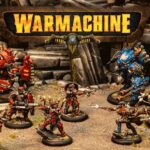
Warmachine miniatures || Photo credit: Steamforged Games

The spokesperson said Steamforged had tripled Warmachine and P3 Paints revenue in the last 21 months, despite facing significant stock constraints in the first year due to heavy demand.

They told BoardGameWire, “Demand has been high and we’ve scaled production to meet it. Our US production capacity for Warmachine has increased by 70% since last March, with a 25% increase in Europe
since August and new production facilities introduced in the UK in February 2026.”

The spokesperson added, “Steamforged has always had two strong sides, both retail and crowdfunding, and was originally founded as a miniatures game company. Warmachine’s growth has shown clear demand over and above expectations and has become a core focus to support that growth.

“Our board game crowdfunding projects are currently in various stages of production with the vast majority of creative work complete.

“Our intention to reduce new board game crowdfunding activity for the moment while we focus on supporting Warmachine’s growth meant we needed to restructure accordingly, which included a confidential redundancy process in Q1 of 2026 that’s now complete.”

When asked how the strategic shift towards Warmachine would affect previously announced future crowdfunds such as Tyrant, the spokesperson said, “Steamforged has always looked several years into the future and our internal roadmaps reflect that.

“As with any company, particularly one that works with other studios the way we have, that means many potential projects have been put on ice over the years as opportunities change and emerge. Some of those came to fruition later, and others didn’t.

“Tyrant was an early announcement and was always intended to be a slow build. Given our strategic focus, it’s not something we intend to move forward with in the foreseeable future.”

Asked what they expected Steamforged Games to look like as a business over the next couple of years, the spokesperson concluded, “Over the next two years, we expect Warmachine will continue its strong growth supported by our dedicated team and launch plans in the miniatures and hobby categories.”

The post Steamforged confirms redundancies, crowdfunding cutback amid refocus on booming Warmachine first appeared on .

Published — 03. Juni 2026 https://boardgamewire.com/

Million-play analysis inspires streamlined Isle of Cats successor, as game’s sales pass 250,000

03. Juni 2026 um 18:00

The Isle of Cats designer Frank West has unveiled a new game set in the same universe as his bestselling polyomino-puzzle title, saying the project was shaped by lessons learned from more than a million recorded plays of the original.

Isle of Cats creator Frank West

The Isle of Penguins, which launches on Kickstarter on July 7, sees players rescuing the sea birds from melting ice floes and fitting them onto uniquely shaped rafts, in an experience West says is faster and more accessible than The Isle of Cats while retaining its strategic depth.

West, who runs publisher The City of Games, told BoardGameWire The Isle of Cats had now surpassed 250,000 physical sales since it was released in 2019 – a figure that rises to almost half a million when including spin-offs The Isle of Cats: Explore & Draw, The Isle of Cats Duel and digital versions of the game.

He said the design for The Isle of Penguins emerged after six years of analysing data from digital versions of The Isle of Cats, as well as player feedback from across Kickstarter and YouTube video comments, social media discussions and BoardGameGeek reviews.

That data amounts to more than one million plays across the digital versions the game – information West says he has used to create a game that plays 20% to 30% faster than The Isle of Cats standard mode, while also giving players more to do.

He told BoardGameWire, “I think my main takeaway was that The Isle of Cats is a great game that is loved by a lot of people – It didn’t need fixing. But, there are things that could make the game more accessible to some people. I wanted to design a game to sit alongside The Isle of Cats, rather than replace it.”

The Isle of Cats || Photo Credit: The City of Games

West said major changes include a new selection system which allows for simultaneous play, most scoring happening during the game rather than at the end, and a drastic shift to the complexity of the polyominoes themselves.

He said, “One of the unique parts of The Isle of Cats when it was released was the complexity of the cat tiles themselves. They use less common shapes and can be very tricky to place, which is great.

“However, some players struggle to flip tiles in their head or visualise how something might fit, and the complex shapes in The Isle of Cats made this challenging for them. This was a key part of the game, and I spent many years working out how to flip the experience.

“In The Isle of Penguins, every penguin tile is a square or a rectangle. These are the simplest shapes, and much easier for people to visualise and rotate in their heads.

“But the raft board you are placing them on is far more chaotic, with many restrictive areas, which makes finding the right place to put a tile just as hard.

“Effectively, this flips ‘hard shapes and a simple board’ into ‘easy shapes and a complex board’.”

He added, “I have been thinking about a lot of these things for a long time, but when I managed to flip the polyomino experience with the raft board, and found a way to make simultaneous play work, I realised I had something exciting.”

The Isle of Cats || Photo Credit: The City of Games

West said that streamlining of the game allows players to do more in less time, without reducing decision making – and added that the title would retain Isle of Cats’ inclusion of both a family mode and standard mode, in addition to a new expert mode for the new game.

He said, “This keeps the entry point of the game as friendly as possible, while offering something more to veterans of The Isle of Cats looking for a step up.

“It was important not to assume that just because someone has been playing games for years, they would now want something more complicated. But I also wanted to make sure there was something there for those who did want it.”

West confirmed to BoardGameWire that the new game would be illustrated by The Isle of Cats artist Dragolisco, saying, “I wanted to ensure The Isle of Penguins looked familiar to those who loved The Isle of Cats, and I think he is a great artist. He did a fantastic job!”

The original Isle of Cats Kickstarter campaign raised more than £460,000 from over 8,100 backers in 2019, and was followed by a £1m-plus campaign for the base game and several expansions in 2021, which was backed by over 12,000 people.

A co-op spin-off title, Race to the Raft, picked up almost £350,000 a year later.

The Isle of Penguins is set to launch on Kickstarter on July 7.

The post Million-play analysis inspires streamlined Isle of Cats successor, as game’s sales pass 250,000 first appeared on .

Published — 02. Juni 2026 https://boardgamewire.com/

Asmodee’s push into crowdfunding scores first success with $4.1m for Zombicide: Dead Men Tales

02. Juni 2026 um 15:34

Board game giant Asmodee’s strategic push into crowdfunding has passed its first major test, with its debut campaign in the Zombicide universe raising more than $4.1m on Gamefound.

The total for pirate-themed Dead Men Tales cements the campaign as the biggest main line Zombicide crowdfund in almost a decade, with Zombicide: Green Horde having picked up just over $5m in 2017 – although the biggest crowdfunding success in the range remains licensed spin-off Marvel Zombies at just over $9m.

Asmodee’s acquisition of Zombicide from financially troubled CMON last June set the stage for the company’s drive into crowdfunding – an area it had previously barely touched through any of its myriad studios.

David Preti || Photo Credit: CMON

The buyout came a month after Asmodee had hired ex-CMON COO David Preti – the architect of the latter company’s growth into one of board gaming’s biggest crowdfunding-focused publishers – to head up its own newly-launched crowdfunding and miniatures strategy.

Asmodee doubled down on its crowdfunding-focused acquisitions in October last year by picking up the Cthulhu: Death May Die IP and games from CMON – a series which has raised almost $10m from backers to date.

Asmodee had not publicly discussed details of its crowdfunding strategy ahead of completing the Dead Men Tales campaign, but said in a press release celebrating that success that crowdfunding “gives publishers clearer demand visibility, a direct line to engaged communities, and a healthier financial setup – with production sized to actual demand rather than to forecasts”.

That statement is notable given Asmodee studio Fantasy Flight Games’ decision last month to discontinue the latest iteration of veteran dungeon crawler Descent, citing rising manufacturing costs, “global economic shifts” and the expense of developing the game’s companion app.

It is thought FFG may resurrect Descent through a crowdfunding strategy in the future, although it is yet to confirm or deny this, saying in April, “While we don’t have anything to share at this time, there is always a possibility that we will revisit Descent in the future. It would take a different form and would not be Legends of the Dark, but this game universe is near and dear to FFG’s heart.”

Asmodee CEO Thomas Koegler said of the Dead Men Tales crowdfund, “This first campaign means a lot to me, and I think it sends a clear signal.

“Zombicide is a beloved franchise that joined the group less than a year ago, and Dead Men Tales is already proving the model works: the original Guillotine Games team back at the helm, Fantasy Flight Games executing the campaign with remarkable skill, and a community of more than 11,000 backers who chose to trust us early.

“That trust is something we take seriously. There’s still careful work ahead on delivery, a crowdfunding campaign is only as good as what arrives at your door, but I have full confidence in our teams to see it through.”

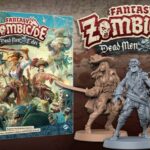
Zombicide: Dead Men Tales || Gamefound Image

The campaign also helped underscore Gamefound’s rise as a crowdfunding peer to Kickstarter – and reinforced the trend for large, miniatures-heavy releases choosing the platform for their projects.

Dead Men Tales was the latest Gamefound campaign to make use of the platform’s Endgame feature, which is designed to extend the final moments of campaigns that are still actively receiving pledges even as the original countdown ends.

The Dead Men Tales campaign had collected more than $3m by the end of the official crowdfunding period, but Endgame extended the raise by more than five extra days and about $1m due to new pledges consistently being made.

Prior to Dead Men Tales, the only previous crowdfunding campaign from an Asmodee-owned company was Lookout Games’ Kickstarter for the Grand Austria Hotel: Let’s Waltz! Expansion & Deluxe Upgrade, which raised about €383,000 during the coronavirus pandemic in 2020.

Asmodee’s only other direct exposure to crowdfunding is thought to be via the company Exploding Kittens, in which it made a strategic investment short of a buyout in 2021. That business has since raised more than $977,000 in a Kickstarter campaign for Hand to Hand Wombat.

More tenuously, YouTube reviewer The Professor raised about $4m for his Academic 133+ XL deckbox in 2022, which was designed ‘in collaboration’ with Asmodee’s game supplies and accessories unit Gamegenic.

Gamegenic also previously provided accessories in partnership with the Altered TCG during its record-breaking crowdfund three years ago.

Last month BoardGameWire reported that Asmodee’s net sales had surged 23% year-on-year to more than €1.68bn, driven by the company’s escalating power as a global TCG distribution giant.

Asmodee’s own board game publishing operation, meanwhile, saw its net sales fall 5.8% in the last financial year – while net sales for the first quarter of this year were down 9.8% compared to the same period in 2025.

The post Asmodee’s push into crowdfunding scores first success with $4.1m for Zombicide: Dead Men Tales first appeared on .

Published — 20. Mai 2026 https://boardgamewire.com/

BoardGameGeek fires veteran advertising manager for rejecting campaign due to firsthand experiences of demonic possession

BoardGameGeek has fired advertising manager Chad Krizan after almost 20 years with the company, after he cited his personal experiences of demonic possession as grounds for rejecting an ad campaign.

Krizan told Possess Me, Satan publisher Falling Whale Games that he couldn’t “in good conscience” approve ads for its Gamefound campaign as “the thought of displaying this subject matter makes me sick to my stomach”, according to an email exchange shared online by the publisher.

In the emails, Krizan says he has been “sitting on this one and praying about what to do in this instance”, adding that “as a follower of Jesus, I routinely help people suffering from demonic oppression, and more occasionally, possession, and it’s absolutely devastating the damage he does to peoples’ lives”.

Krizan wrote, “IMO, the responsible thing to do would be to pull the entire project, as there are *way* more people that suffer this than you could possibly imagine, putting on a good face (usually enabled by dissociation), but suffering terribly behind the scenes.”

When Falling Whale replied to question the decision to ban the game on religious grounds, and asking for confirmation of which BGG advertising policy they were breaking, Krizan responded:

“Keep in mind it’s not over religion, but reality. It’s the same reason I would say a game would be in very poor taste if it featured being a sexual predator, or something that would directly trigger someone that’s been harmed by the subject matter.

“It’s about keeping BGG welcoming to everyone, and since I’m privy to this subject matter, I know firsthand that this is not friendly content, and incredibly triggering, put in front of some of the population that visits BGG.”

Board game and video game news and reviews website Gametrodon reached out to Falling Whale for examples of the ads it was hoping to run, and has compiled the images it was sent here.

Falling Whale’s shared email blew up on Reddit, the BoardGameGeek forums and other social media yesterday, and within six hours BGG had fired Krizan.

A statement from BGG founder Scott Alden posted on the site’s forums said, “Due to a situation in which BGG’s Advertising Manager responded inappropriately in a business email to a designer, I have decided to let him go. His response does not reflect or represent our company or the way we conduct business.”

Falling Whale’s campaign for social deduction game Possess Me, Satan runs for another 30 days, and has currently raised just over $14,000 from about 250 backers.


The post BoardGameGeek fires veteran advertising manager for rejecting campaign due to firsthand experiences of demonic possession first appeared on .

❌