Lese-Ansicht

Designer Diary: High Moon

by Antonio Guillamó

INITIAL IDEA: SALT&PEPPER CONTEST (2024)

High Moon first came to life in a contest that consisted in creating a game with 20 cards or less. I’m not sure why, but I ended up using the Legend of Zelda: Ocarina of Time medallions as a four coloured element for the game. This game was called “Medallones” (very original, I know).

Steal a card from the pile, place it on top of a card already on the table and create the biggest group of medallions of your colour of choice. The game was submitted, even knowing that the premise was way too simple. It didn’t make it past the first round. After this, “Medallones” was abandoned for almost an entire year.

TIME TO RESCUE “MEDALLONES”
August 2024, the date for the “Protos y Miguelitos” event, was drawing near and I wanted to at least bring there 3 or 4 prototypes so I could test them and keep working on them.
“Medallones” was one of the many other protos I had in store (and not in stores) and I decided on picking it back up since it needed little to no time and work to be able to be tested. I tried not to keep my hopes up, but you never know.


“Medallones” Prototype

“MEDALLONES” IN “PROTOS Y MIGUELITOS” (Summer of 2024)
Friday. 10 a.m. Albacete. “Protos y Miguelitos” event. Kortes (from Combo Games) and Toni López sat down to give “Medallones” a try and we proposed ideas such as creating a card market; an incremental cost for placing your tokens; covering other players’ medallions and receiving tokens back and Toni’s key idea: creating power plants of some sort that feed electricity to the roads you’re building and having to connect your medallions to those power plants in order for them to count for points. EUREKA!

Next morning, I grabbed a tip-ex and a pen and started changing the cards so I could turn them into power plant cards. I came up with a market from which you had to pick a card during your turn; the activation of squares with action icons by covering them, and a couple more things. All of this allowed “Medallones” to become something more.


“Medallones” with power plants

Flipper, Héctor Carrión and David Heras played a second game of “Medallones” and agreed on the prototype’s potential, suggested many interesting ideas that I ended up implementing. At that point, it was clear that the game needed a new name and a new look. Animals and burrows? Trains and stations? Caves and dwarves? NOPE. I decided on cities being fed by power plants. The name? Watts Up.

CÓRDOBA FESTIVAL (October 2024)
“Watts Up” was in an advanced state of development after the Córdoba festival, in which I was able to test it 10 more times. It was polished, simple and to the point, and that’s what caught Combo Games’s attention.

The main change introduced was the elimination of the card market and, in its place, a player card deck. This would demarcate the number of rounds per game, making it more tactical and less haphazard. Every player would have the same type of cards on their hands, only changing the order in which they appear.


Card market with costs

Furthermore, a scoring system was introduced, allowing the players for different play styles.


Watts Up in Córdoba (2024)

COMBO GAMES DEVELOPEMENT ERA
A few weeks after signing with Combo Games, the first big debate arose: a change in the theme of the game. Their proposition was to create a game inspired by the Far West in the USA. This way, instead of connecting cities and power plants, you would connect ranches to towns with cow caravans.

The game was renamed as “Deadstock”. Teepee tents, peace pipes, and totems would be some of the key elements of the interactions between cowboys and natives, who would help us prosper through our stock routes.


Prototype for “Deadstock” in “Las Levantadas” (May 2025)

After 7 months, the most meaningful changes at a mechanical level was the creation of a track were you progress as you cover native related icons from the cards and obtaining victory points and powerful actions in exchange, and the adjustment of different existing scoring criteria from when the game was still Watts Up.

Besides, a “token economy” was created consisting on covering the ranch cards of the other players. Now, the decision was even tougher. Should I cover their ranches to obtain many tokens, also giving THEM tokens in the process? Or should I play a more modest turn, but not benefiting them?
Undoubtedly, the game had increased in complexity and difficulty, but without losing its essence: placing cards and placing tokens. At this point, the type of game Combo was aiming for was beginning to take shape, almost reaching what it is today: a "Small Thinky Eurogame." A small-box game that really makes you think, searching for the best option in each of its 6-7-8 turns.

If I’m being honest, it was my initial idea to have a simpler game, but the end result is simply outstanding and I love it.

THE FINAL COSMETIC CHANGE: FROM “DEADSTOCK” TO “HIGH MOON”
The feedback from people trying out “Deadstock” was very positive, but we all agreed on one thing: the theme wasn't original. In this regard, Pablo Sanz, drawing inspiration from the cartoon aesthetic of the video game Grim Fandango, or from details in Tim Burton's artistic creations, proposed a "Weird West" setting, in which skeletal cows were herded to distilleries to extract their marrow and create spectral liquors. This twist gave the game the final, original, and distinctive look we were aiming for.


High Moon on TableTop Simulator


High Moon in physical format (prototype Córdoba 2025)

FINAL TESTING
From August to December 2025, extensive testing was conducted in both physical and digital formats to refine aspects related to the track scoring system, the balance of the scoring criteria cards, and other elements. This process transformed a prototype using colored medallions into what we now know as High Moon. It's a game that can be explained in 5 minutes, plays in 30-60 minutes, and, with just a few components, presents numerous decisions and alternatives in each game.


High Moon Render

AUTHOR’S THOUGHTS
As you will see when you play High Moon, the decision of where to place the card, to obtain tokens by covering the ranches of other players, or your own, is the main driving force for the second phase of your turn: the "token placement" phase. You'll see that the phases of placing more powerful tiles will require you to cover rival ranches with the card, giving them tiles that will boost their next turn. It's the price to pay.

Furthermore, being able to acquire bottles of liquor by connecting your ranches to different cities is very stimulating. And by doing that you get a boost that will allow you to have some truly satisfying turns. Use them at the right moment!

We've managed to achieve a high level of interaction, but not one that's too harmful. Whenever you do something wrong for your own benefit, others will somehow be rewarded and will have alternatives to continue prospering in their respective turns. This balance is key in High Moon.
I sincerely hope you enjoy your time in the Death Valley,

Antonio “Guilla”.
  •  

The Last Spell: The Board Game Review

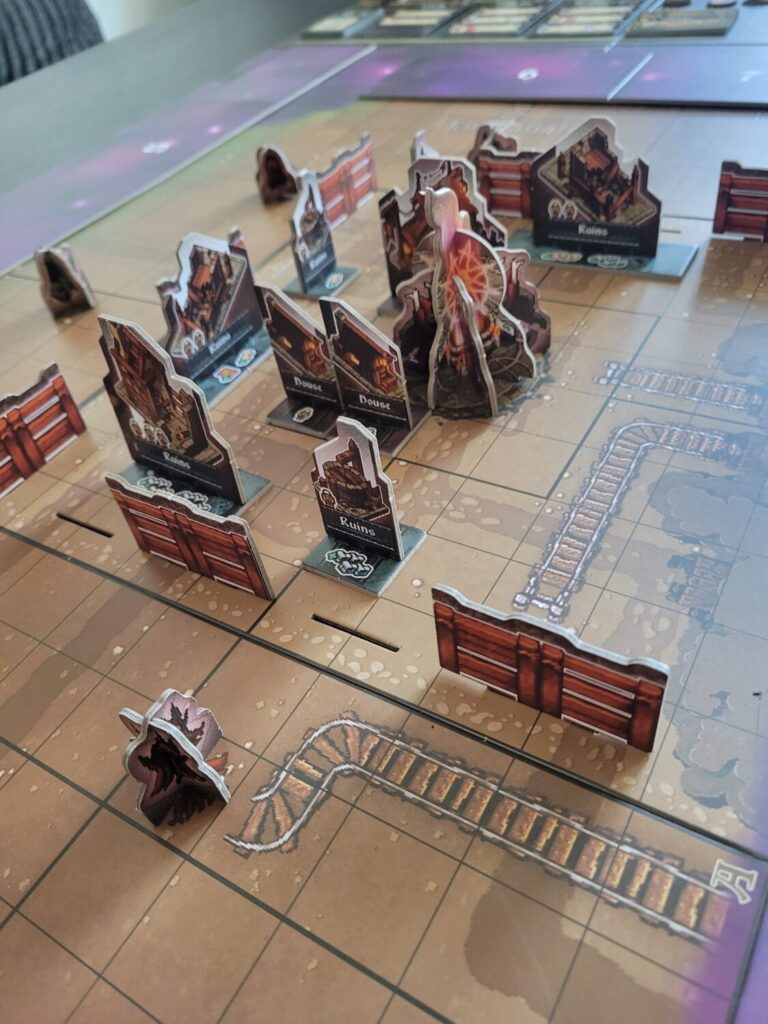
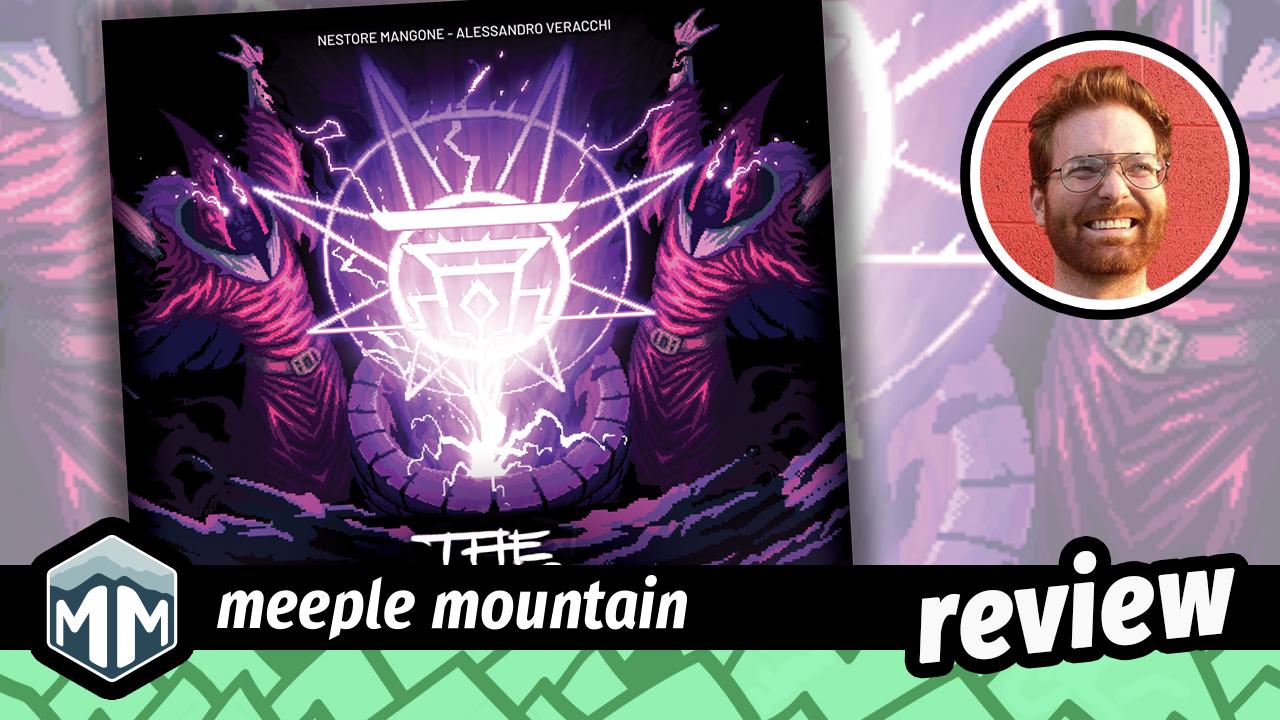
The Last Spell: The Board Game is one of those rare games that I can be unapologetically negative about. Contrary to what you might think reading some of my reviews, while I can be critical, I generally try to understand what the design was attempting to accomplish and if it accomplished that goal.

The Last Spell: The Board Game successfully accomplishes the aim of adapting a video game into a board game at what appears to be a 1:1 level of fidelity. Unfortunately, because of this, there is almost zero reason to play the board game adaptation.

This game is a waste of time.

Is there a good thing, Thomas?

Well, the aesthetics are kinda cool. I guess?

The premise of the game is that some wizards cast a big spell that killed nearly everything in the world, and the remnants group together in small towns bravely defending themselves against the dying of the light or some such thing. There’s purple mist. There’s a pixel art style that is very Dark Super Nintendo. Reminds me a bit of Super Boss Monster, and the text is reasonably easy to read. The miniatures for the player heroes are cool.

Unfortunately, beyond that, everything else is a travesty.

The game is a…

The post The Last Spell: The Board Game Review appeared first on Meeple Mountain.

  •  

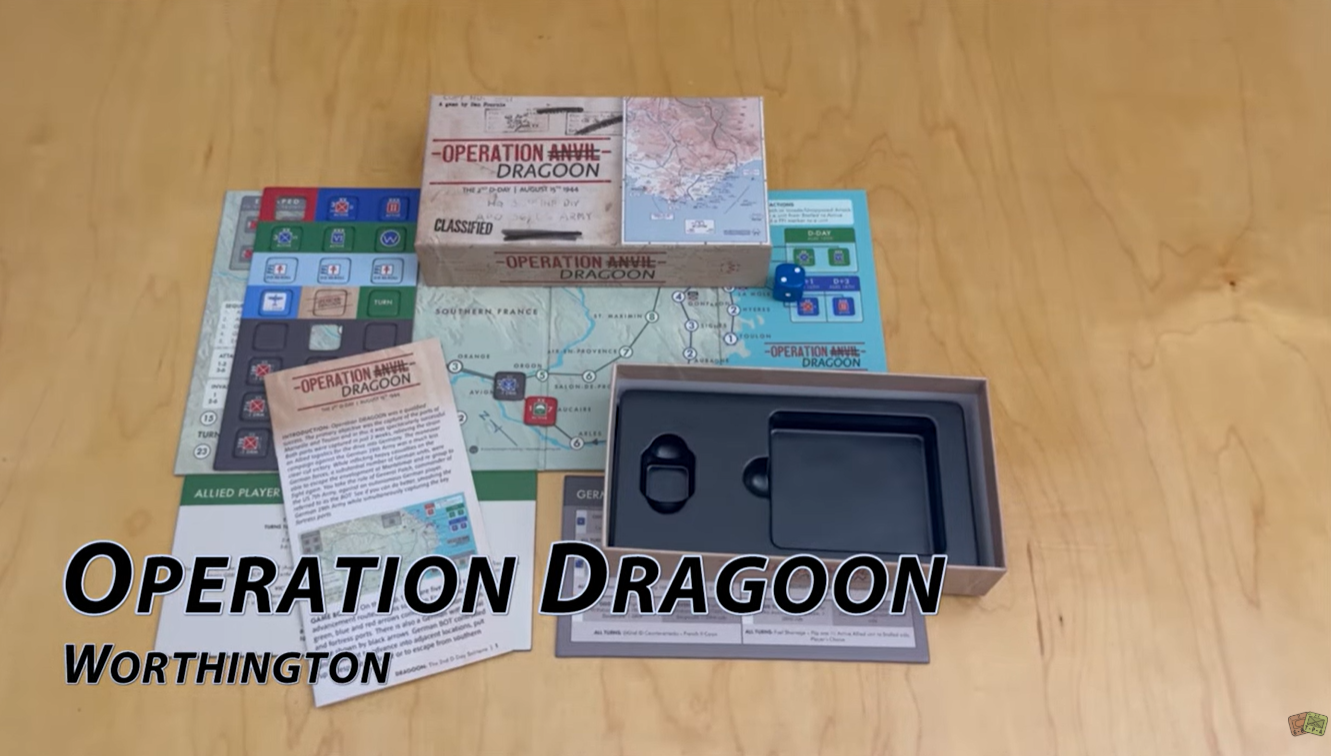
Unboxing Video: Operation Dragoon: The 2nd D-Day Solitaire Travel Game from Worthington Publishing

Operation Dragoon: The 2nd D-Day Solitaire Travel Game is a fast-playing corps and division-level operational solitaire game of the Operation Dragoon campaign from the initial invasion that hit the beaches on August 15th to the conclusion of the decisive Battle of Montelimar on August 29th.

As the Allies of the US VI Corps, French II Corps, and US/British/Canadian 1st Airborne Task Force advance, a column of German units of the Nineteenth Army, led by the powerful 11th Panzer Division, is marching up the Rhone River valley to escape envelopment and destruction at Montelimar.

The Allied player, aided by air support and bands of French Forces of the Interior (FFI), must eliminate as many German divisions as possible while ensuring the critical ports of Marseilles and Toulon are quickly seized.

We published an interview on the blog with the designer Dan Fournie and you can read that at the following link: https://theplayersaid.com/2024/08/21/interview-with-dan-fournie-designer-of-operation-dragoon-1944-from-worthington-publishing-currently-on-kickstarter/

-Grant

  •  

Threaded: A Game of Needles and Points (Saturday Review)

Bargello designs are built from vertical stitches, laid in sequence so that colours rise and fall, creating flowing waves, shifting flames, or soft gradients that almost seem to move across the fabric. Used in ornate upholstery in 17th-century Italy and applied to chairs and other furniture, these patterns require precision and concentration. Even a single misplaced stitch will completely break the rhythm. As a highly-skilled embroiderer, it is up to you to make sure your needle is correctly Threaded: A Game of Needles and Points by Ellie Dix from Osprey Games with art by Maria Surducan.

The post Threaded: A Game of Needles and Points (Saturday Review) appeared first on Tabletop Games Blog.

  •  

Regicide Legacy: spoiler-free first glance

When I say spoiler-free, I mean up to the point when you start your first game. That means by then you will have opened the first mission box and you will see what's inside. If that's fine by you, come join me to take a look at what's in Regicide Legacy, the legacy game version of the amazing cooperative card game Regicide from Badgers from Mars, New Zealand. I'm a big fan of Regicide 

  •  

Fortunes of Scoundrel Bay Game Review

Fortunes of Scoundrel Bay has, on the surface, everything that makes me typically dismiss the latest eurogame from the assembly line: It’s clearly inspired by Alexander Pfister’s Maracaibo and Boonlake, it has questionably silly cover art, and maybe one of the most generic and forgettable “this is a pirate game” names of all time (honestly, we accidentally called it “Scoundrels of Fortune Bay, Bay of Scoundrels, Founders of Fortune Bay, etc.)

I was surprised to just have a great time with Fortunes of Scoundrel Bay (FoSB). It’s always a treat to be delighted by the mechanical flourishes in a design, and this one has plenty of thoughtful choices that come together in a surprisingly mid-weight package.

We’re pirates, yar, but we’re also homebodies

Fortunes of Scoundrel Bay has an interesting rhythm compared to many games that feature seafaring as a central theme. Instead of sail, sail, sail, you are often sailing 1 or 2 spaces, then you’re doing a bunch of different activities for several rounds, then you might sail another space. The arrangement of the board is the shape of a bay, rather than a large expanse of ocean, and this is reflected in how the game plays. You’re more of a pirate party barge than a terrifying group of cutthroats. These pirates love to hang.

The post Fortunes of Scoundrel Bay Game Review appeared first on Meeple Mountain.

  •  

Quick Peaks – Panda Spin, Disney Villainous: Treacherous Tides, The Color Monster, Crokinole, S-Evolution

Panda Spin - Andrew Lynch

There is a lot of promise in the core idea of Panda Spin, a shedding game with upgradeable cards. When/if you pass during a trick, you reclaim all of your played cards and turn them from their weaker side to their stronger side. Theoretically, this should cause hands to ramp ever-upwards as the game progresses and players start playing out massive set after massive set. It should also make the decision of whether or not to play something interesting, a game of chicken in which your desire to empty your hand of cards clashes with your desire for the stronger versions of things.

The reality falls short. Hands last too long. The rules are too clunky to explain to new players, with the juice rather immediately not worth the squeeze. The decisions aren’t particularly interesting. Many of the extra bits and bobs don’t feel like they enrich the game half so much as they complicate it, and therein lies the real rub: why play a somewhat inconveniently complex shedding game when I could either play a divine complex shedding game (like Tichu) or a terrific straightforward shedding game like Jungo or Scout?

Ease of entry?
★★★★☆ - The odd bump or two
Would I play…

The post Quick Peaks – Panda Spin, Disney Villainous: Treacherous Tides, The Color Monster, Crokinole, S-Evolution appeared first on Meeple Mountain.

  •  

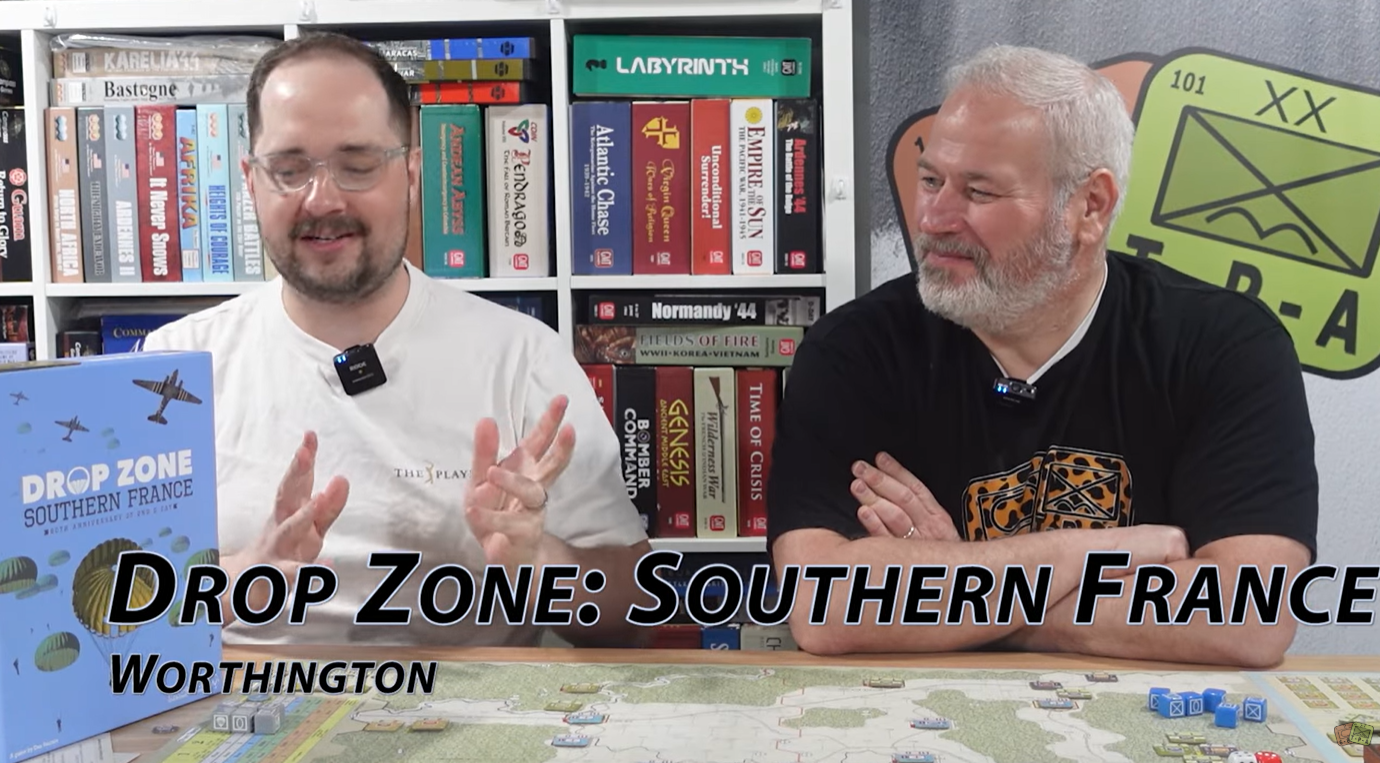
Video Review: Drop Zone: Southern France from Worthington Publishing

Drop Zone: Southern France is a company-level wargame covering the Allied airborne assault that spearheaded Operation Dragoon, which was the invasion of Southern France or the Second D-Day on August 15, 1944. The history behind this operation is really very interesting as early on the morning of D-Day, the allied First Airborne Task Force (1st ABTF) parachuted a dozen miles behind the Riviera landing beaches to seize key towns and road junctions, to prevent the German occupation forces from counter-attacking the amphibious landing, and to facilitate the advance of Allied forces. The 4:00 AM parachute drop was badly scattered due to an unexpected dense fog bank that blanketed the battlefield. Drop Zone: Southern France covers the first two days of this airborne operation in six game turns, when the American and British paratroopers and glider-men fought surrounded and alone, supported only by French resistance bands. This game is very good and is just a solid wargame.

We published an interview on the blog with the designer Dan Fournie and you can read that at the following link:https://theplayersaid.com/2024/08/19/interview-with-dan-fournie-designer-of-drop-zone-southern-france-from-worthington-publishing-currently-on-kickstarter/

I also posted several Action Point posts on the different aspects of the game and you can read those at the following links:

Action Point 1 – Overview of Game Board

Action Point 2 – Overview of the Airdrop Procedure

Action Point 3 – Look at Hidden Units for the Allies

Action Point 4 – Review of Chit-Pull Activation Process and Overview of Assets

-Grant

  •  

Fantasy Flight calls time on Descent: Legends of the Dark, saying rising costs mean it was selling at a loss

Asmodee arm Fantasy Flight Games is discontinuing the latest iteration of its veteran dungeon crawler Descent, citing rising manufacturing costs, “global economic shifts” and the expense of developing the game’s companion app.

FFG launched Descent: Legends of the Dark five years ago as the successor to its popular 2005 release, Descent: Journeys in the Dark, and a more streamlined second edition from 2012.

All three games featured large amounts of plastic miniatures, cardboard terrain pieces and map tiles, while Legends of the Dark also leaned into an integrated companion app to help manage campaigns and individual scenarios.

A statement from FFG announcing the end of the game said, “Simply put, the game is too expensive to make. Between ever-increasing manufacturing costs, lengthy and pricey app development timelines, and global economic shifts making everything more expensive to produce, it became abundantly clear that continuing to make this game is just not feasible.

“This is far from the outcome we wanted – again, we all love this game and hoped to see it grow for years to come – but even if we were to sell every last copy, we would still ultimately be doing so at a loss.

“In a fiercely-competitive board game industry, that simply isn’t sustainable, and because of circumstances outside of FFG’s control, there are no adjustments we could make that could lower costs enough to continue printing the game.”

That competition for Descent has come in the form of huge crowdfunding successes for titles such as Gloomhaven and Frosthaven – the latter of which sealed one of the biggest Kickstarter campaigns of all time by raising almost $13m in 2020.

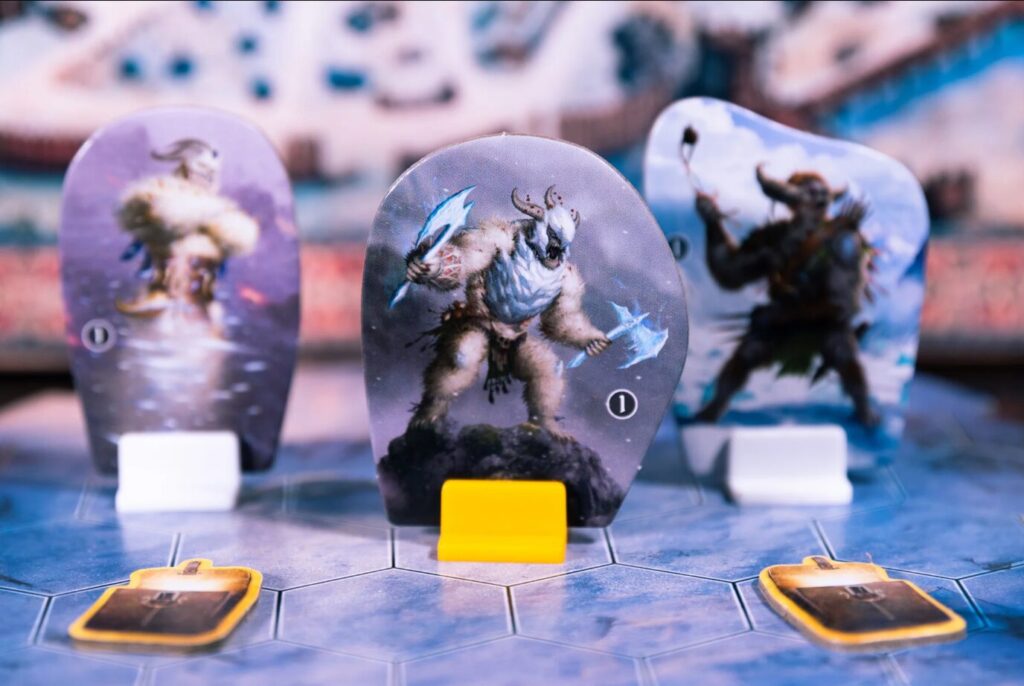
Standees from Frosthaven || Photo credit: Cephalofair Games

Other competitors in the space have included CMON’s Massive Darkness series – based on its huge-selling Zombicide system – which has raised more than $10m across a trio of crowdfunds since 2017.

Using crowdfunding for those large-scale, component-heavy games has helped publishers Cephalofair and CMON reduce the risk of developing expensive titles by being able to accurately gauge demand, as well as receiving financial backing for the projects up front.

Even with that data, however, both publishers have run into problems amid the heavy global economic uncertainty over the last couple of years – especially around volatile US tariff policy aimed at countries such as China, where the vast majority of board games are manufactured.

CMON is currently battling enormous losses from the past two years, while Cephalofair has had to navigate significant delivery delays alongside the frequently shifting import taxes situation, which last year saw US tariffs on China whipsaw as high as 145% before being reduced to a still significant 30%.

Asmodee has almost entirely avoided crowdfunding for its own games to date, with its only launched campaign believed to be Lookout Games’ Kickstarter for the Grand Austria Hotel: Let’s Waltz! Expansion & Deluxe Upgrade, which raised about €383,000 during the coronavirus pandemic in 2020.

Its only other prior exposure to crowdfunding is thought to be via the company Exploding Kittens, in which it made a strategic investment short of a buyout in 2021. That business has since raised more than $977,000 in a Kickstarter campaign for Hand to Hand Wombat the following year.

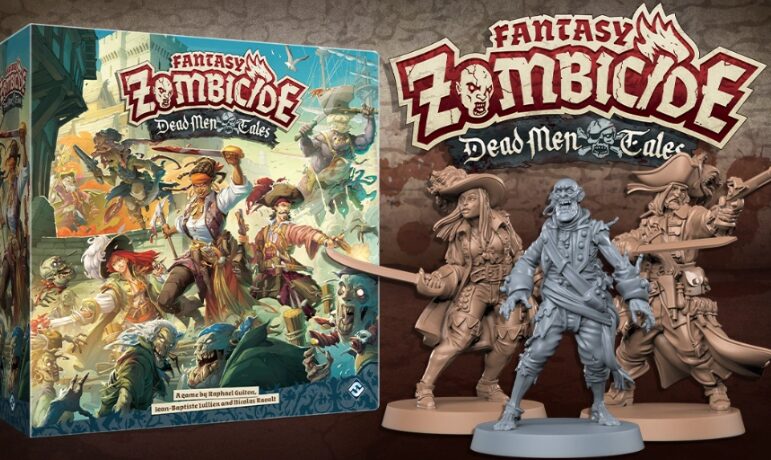
But the board game giant is currently preparing to dip its toes into crowdfunding proper through a Gamefound campaign for Zombicide: Dead Men Tales, having picked up the IP from financially-troubled CMON last summer.

Zombicide: Dead Men Tails by Asmodee || Gamefound image

The campaign follows Asmodee bringing in David Preti, the former COO of CMON, in May last year to head up a newly-launched crowdfunding and miniatures operation.

Both Zombicide and fellow CMON acquisition Cthulhu: Death May Die – a series which has raised almost $10m via crowdfunding – are now part of Fantasy Flight alongside Descent, although Asmodee is yet to reveal if the future of the latter title revolves around crowdfunding campaigns.

Its statement about the end of Descent: Legends of the Dark said, “While we don’t have anything to share at this time, there is always a possibility that we will revisit Descent in the future.

“It would take a different form and would not be Legends of the Dark, but this game universe is near and dear to FFG’s heart.

“The future is always uncertain, and even though we have to close the book on Descent today, we hope that, someday, we’ll be able to dream big with it again.”

FFG’s other major titles currently include collectible card game Star Wars Unlimited, ‘living card games’ Marvel Champions and Arkham Horror: The Card Game, heavyweight space opera board game Twilight Imperium and veteran bluffing and negotiation game Cosmic Encounter.

The company said that although Act III of Descent: Legends of the Dark is no longer in development, the company would continue to support the game’s companion app for the first two acts of the game, albeit without any new content being added.

In February Artefacts Studio unveiled Terrinoth: Heroes of Descent, a video game set in the Descent universe which FFG said “captures the classic dungeon-crawl feeling of the Descent board games in a whole new medium”.

The post Fantasy Flight calls time on Descent: Legends of the Dark, saying rising costs mean it was selling at a loss first appeared on .

  •  

Asmodee co-founder Philippe Mouret, veteran Catan Studio head Pete Fenlon step back; Julia Marcelin to head up five studios

Asmodee co-founder Philippe Mouret and Catan Studio head Pete Fenlon have both stepped back from their high-level roles at the board game giant, with Julia Marcelin and Mike Bisogno stepping up to oversee some of its biggest-selling titles as part of the leadership transition.

Mouret, who co-founded Asmodee more than 30 years ago, was also behind the creation of Splendor publisher Space Cowboys in 2014, and has overseen multiple publishing studios at the business over the years.

Julia Marcelin, who has been with Asmodee for almost seven years, becomes head of five studios as part of the shake-up, taking on responsibility for Days of Wonder, Space Cowboys, Repos Production, Libellud and Next Move.

Those studios are the home of some of Asmodee’s best-selling titles, including Ticket to Ride, Memoir 44, Splendor, 7 Wonders and Dixit.

Marcelin has spent the last year working with Mouret as deputy head of studio in preparation for the transition, Asmodee said, following previous responsibilities in operational strategy and international transformation at the business.

A statement from Asmodee said Mouret had “played a defining role in shaping the company’s creative direction”, as well as “contributed to the development and creation of some of the industry’s most celebrated titles”.

The company said Mouret would “remain closely involved” with its publishing team, working alongside chief product officer Jean-Sébastien De Barros and senior vice president for tabletop Benoit Clerc.

Asmodee also revealed that Pete Fenlon has stepped down as head of Catan Studio after ten years, with his LinkedIn page now updated to place him as “storyteller” and “mentor at large” at the company.

Former Catan Studio head Pete Fenlon

Mike Bisogno, who joined Asmodee three months ago after more than 17 years at Spin Master, takes on the role. He was most recently senior director of design and inventor relations at Spin Master, and also previously worked as a licensing lead at the company.

Catan is one of Asmodee’s most powerful titles, having successfully broken out from the hobby board gaming space and into wider pop culture since its 1995 release.

The game has sold more than 45 million copies and been translated into over 40 languages to date. Asmodee announced a 6th edition of the game last year to coincide with the title’s 30th anniversary.

A statement from Asmodee said, “Mike combines creative leadership with a strong track record of building successful partnerships. His arrival reflects Asmodee’s commitment to sustaining Catan’s legacy while exploring new opportunities for growth.”

It added, “Pete has left an enduring mark on the industry, with a career spanning several decades, including 20 years as CEO and chairman of Mayfair Games, and being a force behind the growth and global success of Catan.

New Catan Studio head Mike Bisognio

“Since joining Asmodee in 2016 to lead Catan Studio, he led the brand through significant expansion and innovation.”

Jean-Sébastien De Barros, chief product officer and executive vice president for publishing at Asmodee, said, “Asmodee has always been built on the strength of its people. I see both Philippe and Pete as mentors for our new generation of Asmodee publishing team members.

“They have each played a pivotal role in shaping not only our portfolio but also the culture of Asmodee, one which resonates with so many players today.

“I’m glad to have shared part of my journey with them and we are confident in the next generation of leaders we’re bringing to these positions as they bring the right energy to continue building on this legacy.”

Asmodee has recently accelerated the reignited acquisitions strategy it announced at the end of 2024, with last month’s agreement to pay up to €250m for French social and party game publisher ATM Gaming its most striking deal to date.

The board game giant said buying ATM, the publisher of titles including Speed Bac/QuickstopMouton Mouton and Pili Pili, was predicated on social games being “the fastest growing category of the board games market”.

The ATM deal followed five other acquisitions from the past 12 months – including the buyout of Japon Brand from CMON, anchoring the board game giant’s push into a “currently untapped market” for the company.

Its other recent deals include picking up ZombicideCthulhu: Death May Die and Sheriff of Nottingham from CMON, which is attempting to recover from heavy losses over the past couple of years.

Asmodee posted record sales of €524m during the last quarter of 2025 despite a slump in its US performance, with trading card game earnings in Europe acting as a driving force for the business.

The post Asmodee co-founder Philippe Mouret, veteran Catan Studio head Pete Fenlon step back; Julia Marcelin to head up five studios first appeared on .

  •  

Sejm As It Ever Was

How I feel when I turn in an article draft to my wife.

Here’s a situation for you. It’s the last decade of the 1700s. Far across the sea, a rebellion has ousted the British from thirteen of their prize colonies, leading to the adoption of a new constitution. Revolutionary fervor is sweeping the continent, throwing France into turmoil and the old regimes into paranoia. Your union, the Polish–Lithuanian Commonwealth, has seen its star faded by entrenched nobility and foreign partition.

And now there’s an opportunity to draft a constitution of your own.

That document — historically the Constitution of 3 May 1791, although you might instead draft any number of parallel constitutions in its place — is the topic of Rex Regnat, Edward Damon’s sharp-as-a-tack title about uncomfortable politics and doomed alliances. Part trick-taker, part parliamentary simulation, and part rumination on a union whose constitution would only last 19 months before it was divided out of existence until the First World War, Rex Regnat is one of the finest political games I’ve played all year.

Hm, where is the WHINING ON 'APOLITICAL' COMEDYBRO PODCASTS issue?

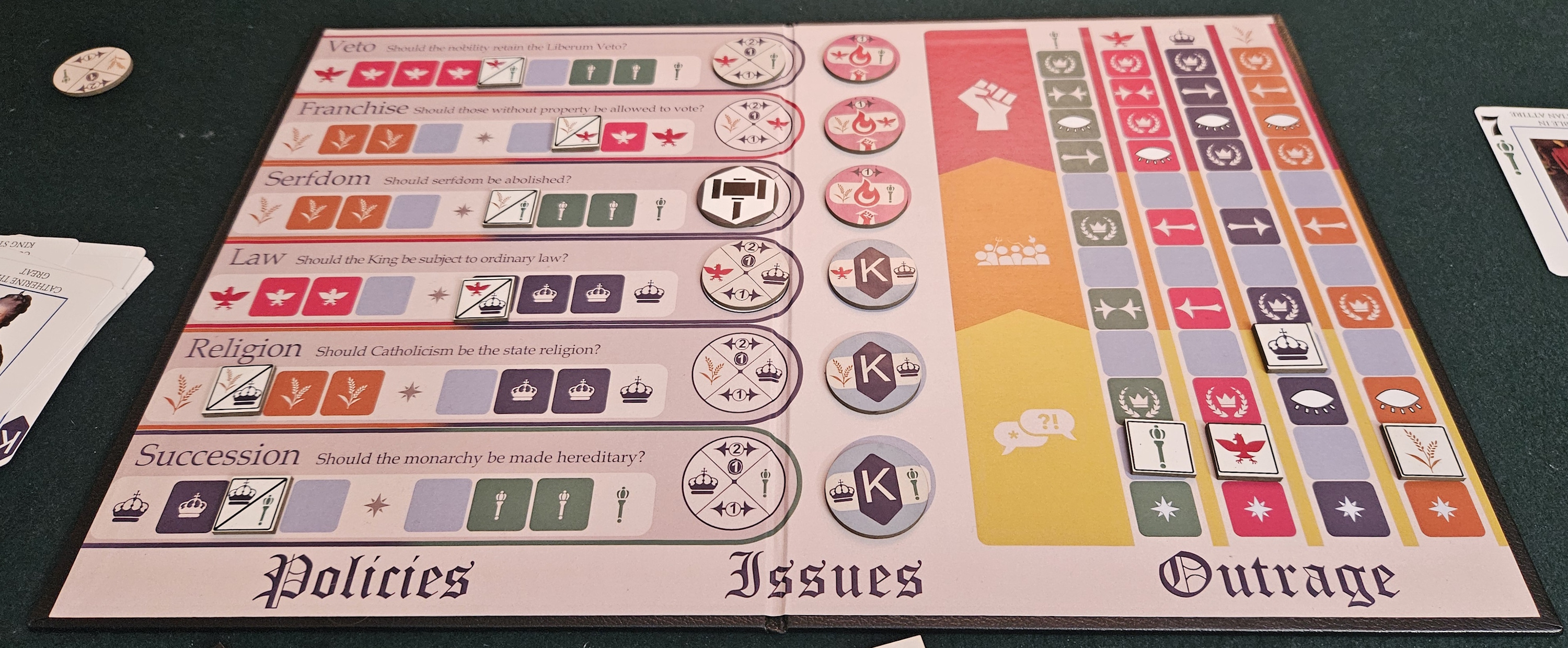
Some of the issues facing the Polish–Lithuanian Commonwealth in the late 1700s.

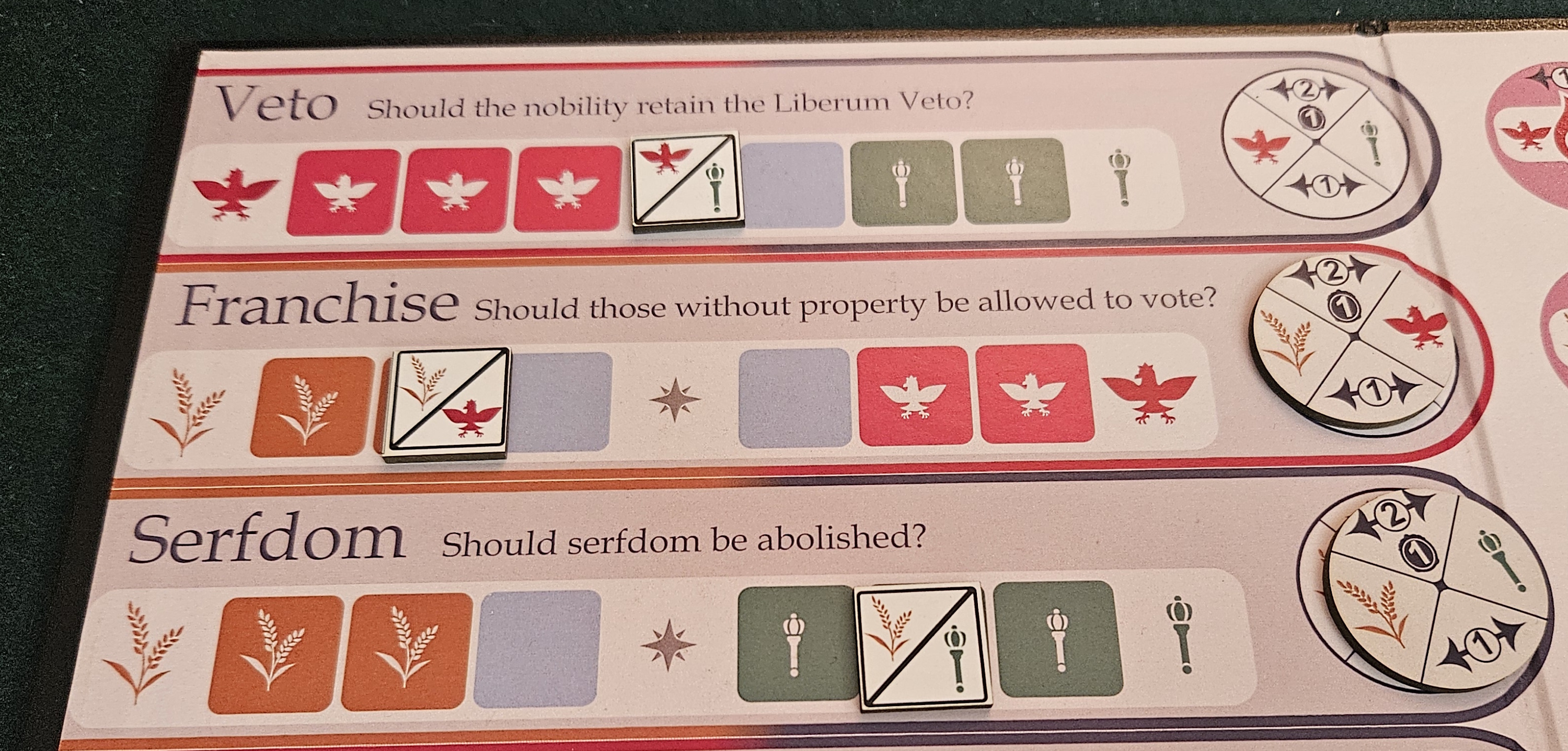
At first glance, Rex Regnat is a game about tracks. The board consists of ten of the things, six for various issues facing the assembled sejm — think “parliament” and you’ll be close enough — and another four for the agitation taking place across Polish–Lithuanian society during the drafting of its constitution.

For the most part, those issues should be familiar to passing students of history. They raise questions about who should be allowed to vote, the status of serfdom, Catholicism as a state religion, and whether the king should be subject to common law. Boilerplate stuff for the Age of Revolution. The two remaining issues are harder to peg without some understanding of this peculiar union’s context. First is the Liberum Veto. This bad boy allowed any deputy of the sejm to nullify the entire legislative proceedings, a terrible idea even in peacetime, but a downright suicidal one when neighboring titans like Russia and Brandenburg could bribe any old noble to veto any reform that might impede their foreign agenda. Next is the hereditary nature of the monarchy. That only makes sense when you realize that kings were elected — and, as a result, tended to function as a stump for their noble electors.

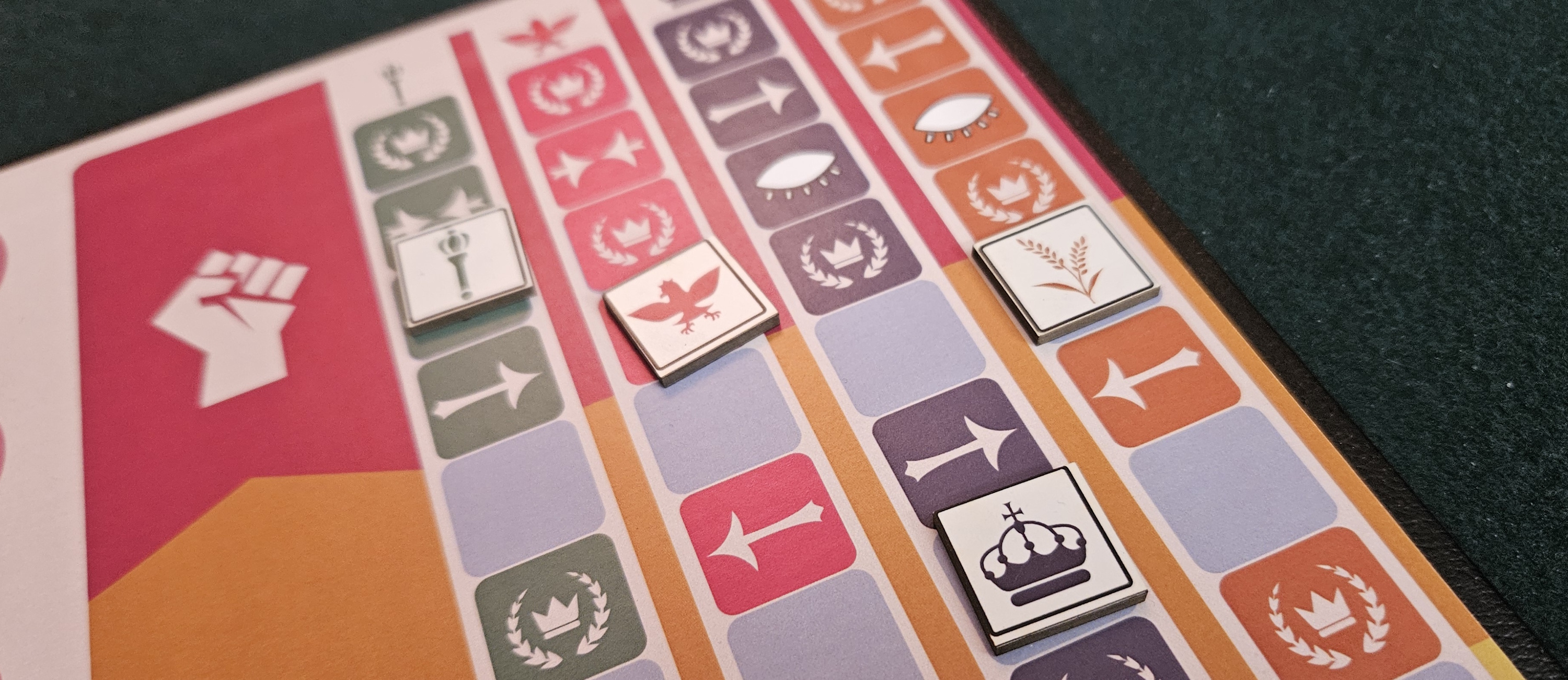
Okay, so the basics are easy enough to understand. You’re one of the factions hoping to mold the constitution to your liking. Handily, the tracks label your intentions. The Regime — which means the nobility and its sway over the monarchy more than the king himself — wants to further entrench their privileges, placing their icons on the right side of the three tracks they care most about. But this can prove slightly deceiving. As those currently hoarding the lion’s share of their country’s power, the Regime would also be content to allow affairs to remain as they already are. Thus they score points for securing their privileges, but also for keeping those tracks — all six of them this time — firmly seated in the middle. This marks them as right-wingers and centrists at the same time. Which is always the case, deep down, but the phenomenon is especially pronounced here.

Opposite the Regime is Reform. This faction wants a constitution that will bring the Commonwealth into the modern world. The Liberum Veto? Out. Serfdom? Out. Total enfranchisement? Hold on a minute. The Reformers aren’t insane. Incremental change, that’s the path forward. Maybe, and this is a maybe here, Reform could grant a few cities free status. Just to prevent the troubles in France from happening here, you understand. But beyond that? Let’s not lose our shirts.

If you’ve ever studied a revolution, you can probably already see the hairline fractures forming at the foundation. Rex Regnat can be played with two players. In such an event, Regime and Reform are the principal actors. But as an experience, Rex Regnat shines with four. That’s because there are two more factions to consider. As ideologies, their role was limited in the historical sejm that oversaw the declining years of the Commonwealth. But they existed, they agitated for their own alterations to Polish–Lithuanian governance, and they played a crucial role, as radicals always do, in popularizing which issues can be discussed in the first place.

I'm outraged that the chits are off-center. But that's my outrage for every game with chits.

Society’s many outraged sectors.

These factions, then, are even further to the right and left than the mainstays. First we have the Radicals, also known as Reform on steroids. Whatever Reform wants, the Radicals want double. Whatever Reform is hesitant to grant, the Radicals are ready to throw a Parisian Moveable Feast to take for themselves. But then there’s their opposite number, Reaction. Think of them as the incel podcasters of the 18th century. They want a stronger monarchy, an empowered military, maybe an alliance with those treaty-breaking Prussians next door. If this should spell annexation… well, reactionary movements have never been especially good at thinking long-term.

Now, you might be thinking that I’m spending a lot of time discussing tracks and factions. True enough. But these dynamics are at the heart of Rex Regnat. Reform and the Radicals, Regime and Reaction; these are the natural alliances, albeit uncomfortable and shoehorned alliances, that dominate the table. They’re Rex Regnat’s version of the Communists, Socialists, and Anarchists from Alex Knight’s Land and Freedom, or the awkward three-way race that defines Mark Herman’s Churchill, or the squabbling powers of Herman and Geoff Engelstein’s Versailles 1919. These comparisons are not ones I invoke lightly. Rex Regnat resembles those games not only because they’re all games with tracks, but also because it intends to put players in the same diplomatic headspace. It’s about trading favors, talking your friends into doing things that benefit you just a little bit more than they benefit them, and maybe, in the end, risking everything on a coup de grace that’s really just a literal coup.

Which is why the tracks are important, but not all-important. Each faction has other aims to consider. The Regime derives most of their points from the tracks, which makes sense, given how badly they want things to remain the same. But they also care about tamping down societal agitation and keeping control of the gavel, the marker that dictates who picks the issue up for debate. Reform, meanwhile, is happy to be included at all, so any issue they win becomes political currency, even those that have nothing to do with them.

The Radicals and Reaction go further, as befits their status as outsiders determined to get a foot in the door. If the Radicals don’t get their way, they can instead foment outrage, possibly leveraging the upset of the people to seize control outright. Reaction, meanwhile, alters its objectives ever so slightly between rounds. In the first half, Reaction wants as many cabinet positions as possible. They’re infiltrating offices. Securing funding. Finding their audience. In the second half, they want to push those outrage tracks up as far as possible. Suddenly, their interests are aligned with the Radicals, but only in the sense that they want a riled-up population. They’re here to co-opt everybody’s justified anger for their own purposes.

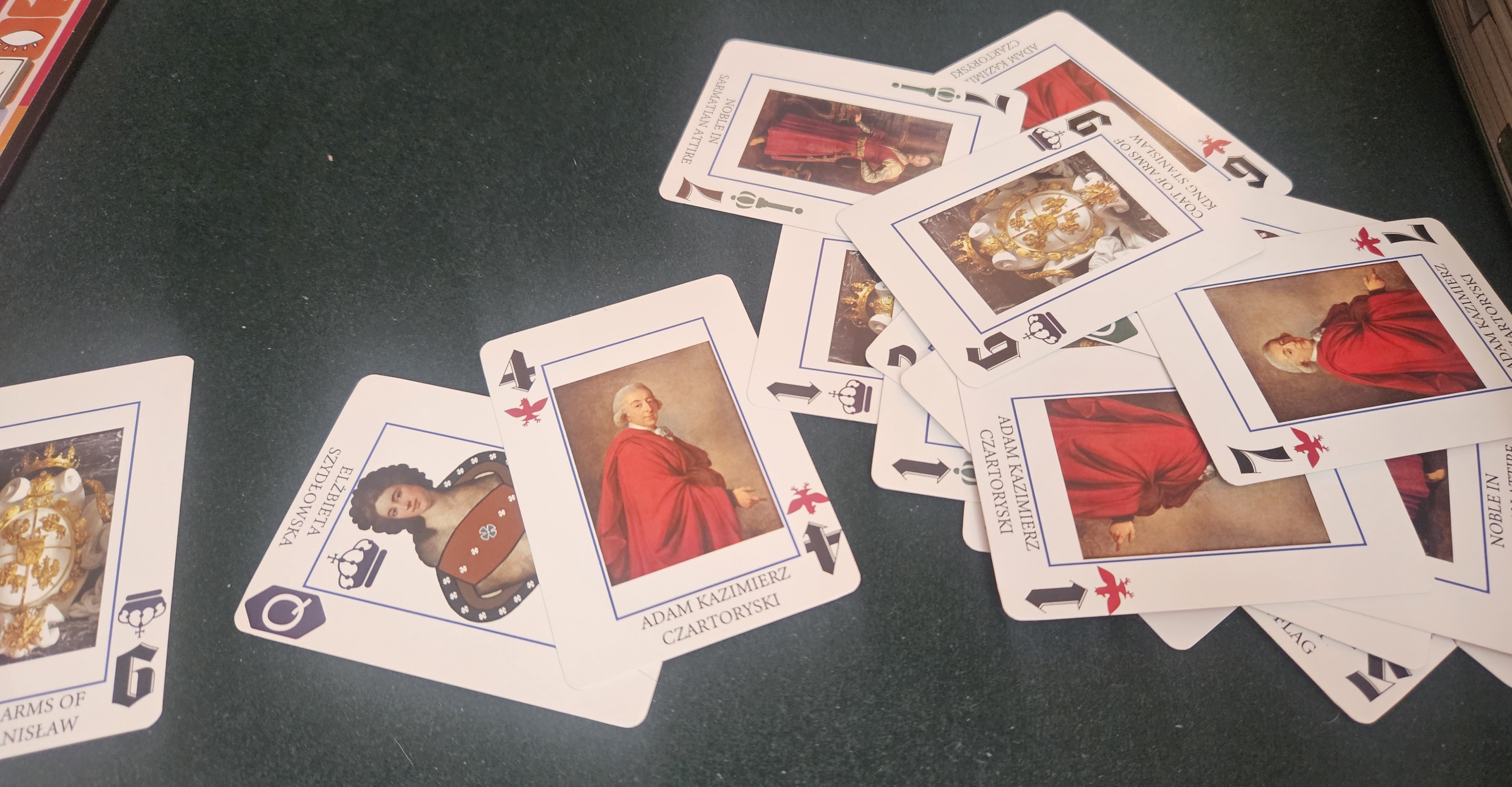
ah yeah, it's red robe guy

Only the cards on your bench can be played into a trick.

Just as those other political titles I mentioned had their own methods for resolving the debates and issues of the day, Rex Regnat finds its footing in the most expected of places… because, yes, this is a trick-taking game. Another trick-taking game. All I play anymore is trick-taking games.

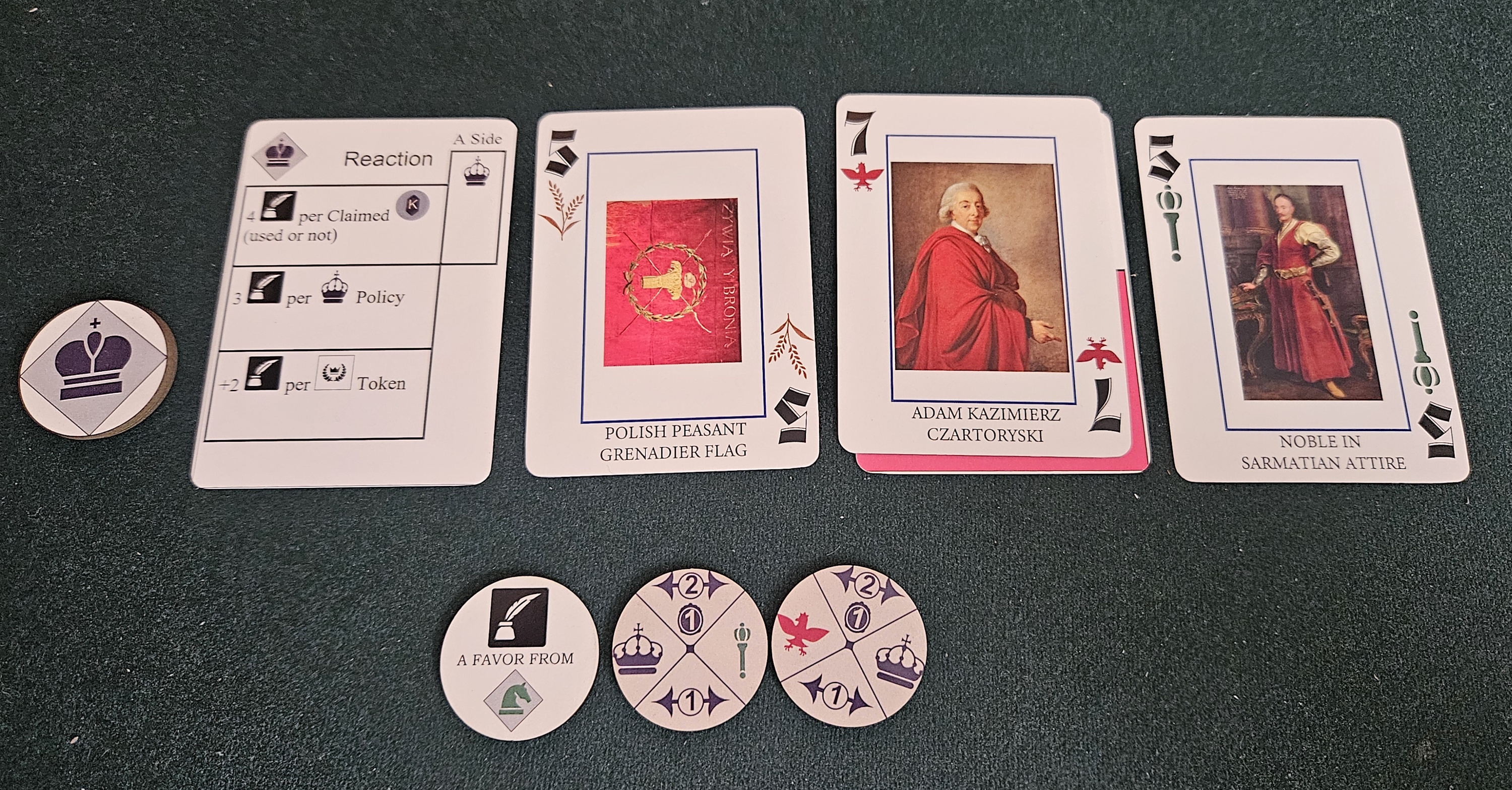
But while Rex Regnat is a trick-taker, it’s quite unlike its peers. The first and most visible difference is that each player always has three face-up cards. This is their “bench,” and these are the only cards they can play into any given trick. Right away, this has a few consequences. The first is that there’s a great deal of manipulation to the proceedings. If I see that you have the highest-ranked card in a particular suit, I’m not likely to initiate a debate over an issue in that suit. Unless, that is, we can come to an agreement.

Or unless I want you to win that issue. First of all, it’s entirely possible to force an opponent to shed a powerful card on an issue that doesn’t really benefit them right now. If you’ve already secured Catholicism as our state religion, letting you expend your strongest card to thump the table about God and Country is a boon that keeps on giving. Go ahead. I don’t mind. Shout about our duty to Christendom. Tell it to the rafters.

But more than that, there are plenty of little overlaps in the scoring conditions, and not only between natural allies. Needling the Regime into stripping the Radicals of an outrage issue is valuable even if it doesn’t benefit me directly. All the better if I can force you to burn a potent card and deprive a leading opponent of their strongest source of points.

But even more than that, precise rankings matter in Rex Regnat. The winner takes and resolves the issue, the natural outcome of any debate. Last place earns the gavel, their backroom politicking letting them dictate the future issue under discussion. But second and third place also get their say, shifting the suit of their played card up on the outrage track. Depending on the sequence — which, again, is often manipulable thanks to the face-up cards on everyone’s bench — it’s possible to ensure that you shift such a track at the precise moment it will confer some advantage. Such as, say, an influence token, worth points to all factions. Or a token that will conceal one of my bench cards, making it all the harder to guess at my next move. Or a shift on an issue track that isn’t directly tied to a debate. No matter the precise debate being undertaken right now, there’s always some way to get ahead.

The result is a form of trick-taking that’s played openly (most of the time) and allows for an unusual degree of control (again, most of the time) and encourages the aforementioned horse-trading and wheedling. While many of the genre’s touchstones are present and accounted for, trump suits and sloughing and tactical tiebreakers, they tend to fade into the backdrop of the game’s politics. Your bench is a set of cards, but it’s also the dignitaries and arguments your faction has ready right now. Your hand becomes blackmail and backrooms deals and side hustles, almost ready for the oven but in need of a bit more leavening. Even smaller incentives, like the royal offices that transform ordinary cards into kings, become opportunities to flex your political clout.

as you can see, red robe guy is a favorite around here

When discards go bad.

I have a great deal of affection for games that use abstraction to speak a deeper truth about the topic they present. I’ve already mentioned a few of them. In Land and Freedom, Alex Knight compressed a complex and drawn-out civil war to a few fronts, some negotiable values, and the squabbles and purges between three factions that couldn’t set aside their differences to save their lives. The result was a game about the shortcomings of revolution and democracy. Churchill’s military fronts were also tracks, linear near-inevitabilities that assume the Axis will collapse, but it’s anybody’s guess who will inherit the world; the outcome was an examination of the war-behind-the-war that produced the remainder of the 20th century. High Treason established its courtroom drama as a series of icons that might or might not be worthwhile, their relative value always slightly out of reach. Justice, Alex Berry argued, was a matter of guesswork and who was seated in the jury box.

With Rex Regnat, Damon pulls a similar trick. Rex Regnat reveals a political system in the throes of reform, but one that might have shambled along for too many decades to carve out a future for itself. Is it possible to pull back from the brink of a monied class that believes its only hope of holding onto its privileges is denying them to anyone else, from electoral power that excludes those it deems too ill-mannered, from foreign interests that incite violence rather than stability? God, I hope so.

That Damon does this without presenting a single map is nothing to sneeze at. Rex Regnat includes design notes, but fewer players will read them than the rules. In place of textual rhetoric, Damon instead has to leverage smaller touches: considered victory conditions, the placement of icons on tracks, an ideological impression rather than a dramatis personae or timeline of events.

I daresay it works, at least in the broad strokes. As a springboard to learning about the Polish–Lithuanian Commonwealth’s final decade, there are none better. Crud, half the people I’ve introduced the game to weren’t even aware that the Polish–Lithuanian Commonwealth existed, let alone that it attempted a series of radical reforms in its final months.

Outrageous! Ahem. Sorry, but I've just written 2000+ words about this game. You'll excuse me for not having another good alt-text.

Taking in the big picture.

But attempt it did, and succeed it did, at least for a time. The 1791 Constitution didn’t last, but it became a model. For the Poland that would recover its independence 123 years later, it became a model of their enduring identity; for the coming constitutions that weren’t throttled in their cradles, it became a model of possibility. In capturing the dynamics of its fraught composition, Rex Regnat offers one of the finest works of abstract ludic history I’ve played in a long while.


I’m adding a note here just in case somebody actually wants to buy this thing, because it’s hard to acquire: you need to go to the Damonic Designs website and email him, at which point he will offer to sell and ship you the game. Yes, this is convoluted.

A complimentary copy of Rex Regnat was provided by the designer.

(If what I’m doing at Space-Biff! is valuable to you in some way, please consider dropping by my Patreon campaign or Ko-fi. Right now, supporters can read my first-quarter update of 2026: the best board games, movies, books, and more!)

  •  

Mystery Boxes, Blind Booster Packs, and Surprise Subscriptions

Have you ever bought a mystery box, a blind booster pack, or a subscription with an unknown assortment inside?
In the early days of COVID, Megan and I signed up for Universal Yums, a treat box subscription service. Every month we would open a new box together and do a taste test of the various sweet and salty treats, and we’d often pair it with a thematically related movie. It was a delight.

I’ve also purchased my fair share of Magic booster packs over the years, most often to draft with friends, not to collect, sell, or compete in tournaments. I can’t deny the thrill of opening a booster and looking through the contents for the first time.

Yet that’s probably the extent to which I’ve engaged with mystery boxes. I don’t like most surprises, and I’m selective about the things I buy–quality and specificity over quantity.

Recently I asked livecast viewers what they thought about mystery boxes. Reactions were mostly mixed at best, and many were fairly negative, with people talking about how blind buys play into gambling compulsions and how they can cheapen a brand.

However, many people also acknowledged that they have enjoyed at least one mystery box (across a wide range of categories): Specific IPs they enjoy, category-specific subscription boxes (tea, chocolate, etc), and when they were just starting a new hobby.

So I’m curious what you think: Have you ever had a good experience with a mystery box, blind booster pack, or surprise subscription?

***

Also read:

If you gain value from the 100 articles Jamey publishes on this blog each year, please consider championing this content! You can also listen to posts like this in the audio version of the blog.

  •  

18CZ

Played 18CZ yesterday … apparently it was my second time, but the first was pushing a decade ago. (I do vaguely remember playing it, in that I can tell you where I was when I played it, but no details of the game). The “hook” of CZ is that there are small, medium and large companies, and larger companies can buy out smaller companies and get their trains, cash, tokens, etc. They don’t even have to be connected.

Like many of “Lonny’s” games, there are novel mechanisms. There’s also a fixed time scale (as compared to a fixed bank). Apart from the S/M/L companies, there are also privates that are auctioned off and provide cash flow and can be sold to companies for a slowly increasing value (based on turn), which is quite interesting in terms of capitalization. They also have some special powers, but all privates with the same income stream have the same powers.

Having played this and now a growing number of Lonny’s games (1848, 1880: China, 1840, 18 Lilliput, 18 Mag, and Russian Railways) …. I’ve never loved any of them, although I would play them all again. (China especially deserves a second try, I think). He’s got interesting ideas, but he’s thrown them at the wall and — at least for me — they haven’t stuck.

Rating — Indifferent (but would play again).

  •  

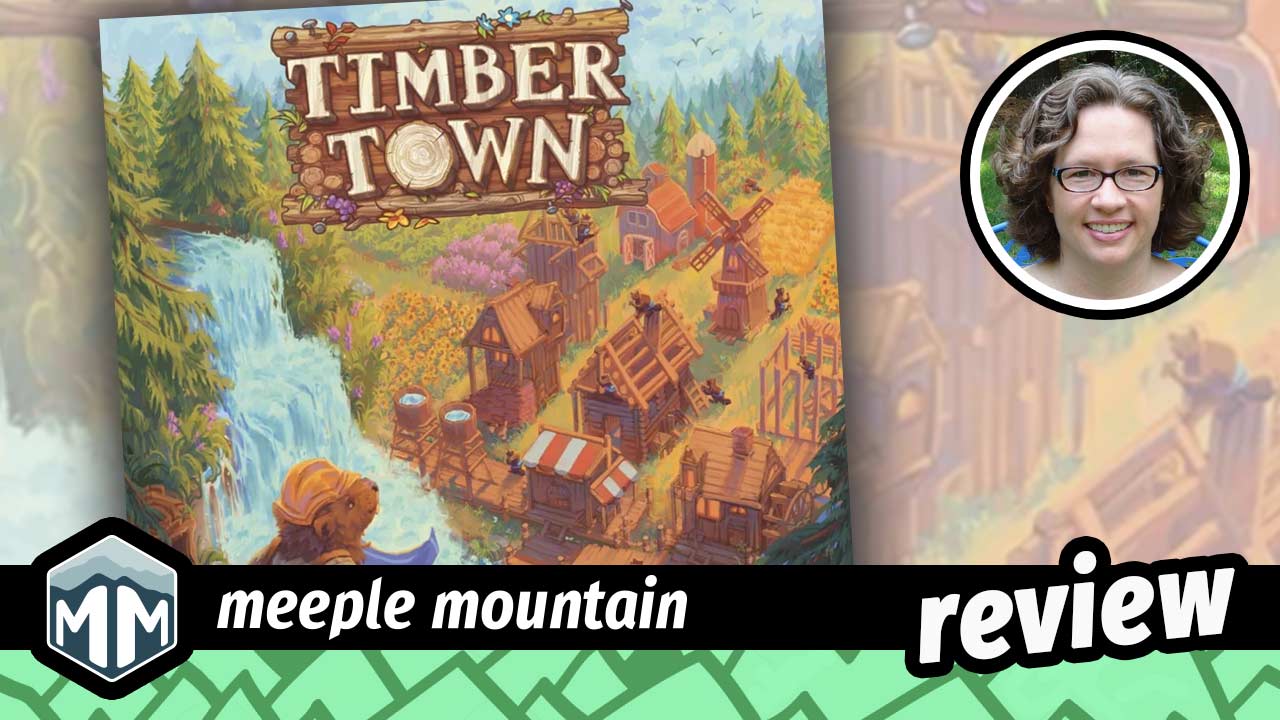
Timber Town Game Review

This is my first review for Meeple Mountain, so by way of introduction let me tell you that tile-placement games are my favorite. Carcassonne was my introduction to modern hobby games, and it's possible this created a soft spot in my heart for the genre. And if a tile-placement game also has a city-building aspect, as in Warsaw: City of Ruins, Neom, or Suburbia? That's a double win. Throw in a puzzle to be solved and wrap it all in a light- to medium-weight game, and you'll almost always have a hit with me, unless the game is mechanically flawed, bug-ugly, or offensive in some manner.

Enter Timber Town from Alley Cat Games. Timber Town is a two-player game where players are beaver architects competing to construct the best (i.e., highest scoring) town on opposite sides of the riverbank. Your eager beaver builders construct town components (in the form of tiles) upstream and then float them down the river for you to collect and place in your town. As the architect, it’s your job to place the tiles in legal and optimal scoring positions.

The trick is, the river is fast moving and components you (or your opponent) don't choose in a timely manner will fall over the waterfall, lost to you forever. This simulation is…

The post Timber Town Game Review appeared first on Meeple Mountain.

  •  
❌