Exploding Kittens has named chief commercial officer Joeri Hoste as its new head of studio, with the long-time game industry exec eyeing further expansion of the company’s namesake hit into a “long-lasting evergreen brand” beyond its big-selling card game.
Hoste joined Exploding Kittens to lead its international business in 2020, following multi-year stints at companies including Hong Kong based board game publisher and manufacturer Ooba Games, toy company BOTI and trading card and collectibles specialist Upper Deck.
Hoste said in a LinkedIn post that the past six years at Exploding Kittens had been the most rewarding of his career, adding that he was “ecstatic and humbled” to take responsibility for leading the company into the next stage of its development.
He said, “We’ll continue our mission of making great games and creating experiences that bring people together. Exploding Kittens is the game that built its namesake company, and our next challenge will be to develop the IP into a long-lasting evergreen brand that outgrows its original format.
“Exploding Kittens is unique within Asmodee as we combine deep commercial mass market expertise with publishing quirky and irreverent games that disrupt the games category.
“We did not get here by blending in. We succeed because of the talented team that’s willing to be different.”
Last year Exploding Kittens revealed it had sold more than 60 million games as it marked a decade in business – with the company’s growth having already extended well beyond the tabletop.
That has included a partnership with Netflix which expanded the property into mobile gaming and an animated series.
Asmodee bought a 55% majority stake in Exploding Kittens at the end of 2021, and exercised its option to purchase the remaining 45% minority stake last year.
Exploding Kittens has continued to stand out within Asmodee’s portfolio during a difficult period for parts of the US board game market.
The promotion comes as Asmodee is making a wider push into social and party games – a category where Exploding Kittens has been one of its strongest brands.
In March the company agreed to pay up to €250m for French social and party game publisher ATM Gaming, with Koegler saying the acquisition would combine ATM’s strength in Europe with Exploding Kittens’ strong position in the US. Asmodee has said it expects the social games category to grow at between 4% and 8% annually between 2025 and 2030, compared with about 4% for the broader board games market.
It also launched US party game studio Moodbox Games last year, a move de Barros described at the time as strengthening Asmodee’s presence in a category where Exploding Kittens and Zygomatic were already seeing strong success.
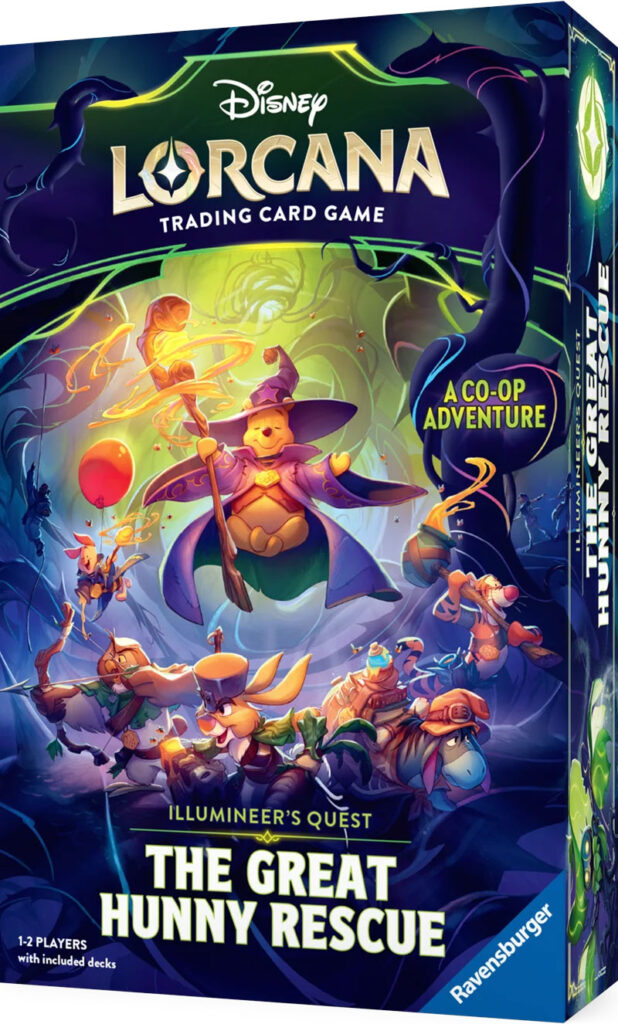
It’s hard to believe that it’s only been 3 years since Disney Lorcana was released. I still remember the chaos this new TCG caused at Gen Con 2023. Lines were massive, people lined up for hours ahead of time, and some people were even trampled. Needless to say, it was a hugely anticipated release. Since […]
Heute zeigen wir euch das exklusive Preview des Fatehold Chronologist aus Reality Fracture, der kommenden Erweiterung für Magic: The Gathering. Der Bird Wizard gehört zur Fatehold-Schule und nutzt die zurückkehrende Prepare-Mechanik. Sein zusätzlicher Zauber „Peer Review“ erzeugt einen Kreaturenspielstein und lässt euch Überwachen 1 anwenden.
California tabletop publisher and game development studio Solis Game Studio is expanding its reach into US hobby retail through a new distribution deal with Southern Hobby, following several years of building its own catalogue through crowdfunding and direct sales.
The Massive-Verse Fighting Card Game, designed by Brian McKay, from Solis Game Studio
Its contracting work has included projects such as the Cyberpunk TCG, with Solis having led game design and development of a prototype that secured licensing for a new game.
Solis also did development work on Emerson Matsuuchi-designed Metal Gear Solid: The Board Game, and last month announced it would be the developer for the official card game of battle royale video game PUBG.
The company said Southern Hobby will distribute new Solis release Six-Sided Seas, as well as Treat, Please! and The Massive-Verse Fighting Card Game, describing the deal as a “major step forward” for the business.
The publisher has previously used crowdfunding to bring several of its games to market, with its biggest success to date 2024’s licensed Massive-Verse Fighting Card Game, designed by Brian McKay, which raised just over $50,000 from about 800 backers.
Solis has also already been selling directly to retailers through its own wholesale programme.
The publisher’s newest release, push-your-luck worker placement game Six-Sided Seas, will enter US distribution on October 2 with a $24.95 MSRP.
The two-player pirate game, designed by Kroze Kresky, is built around an unusual component format, consisting of 32 dice and a 14in by 24in edge-stitched playmat which is rolled inside the game’s box – allowing the title to be presented vertically, horizontally, or with a collapsible hangtab in retail.
Solis has previously said the idea grew from a visit to game stores in Thailand, where Chris Solis saw a store employee laminating a game board to protect it and began considering whether the board itself could instead be made from playmat material.
He said in the blog post, “When I returned home I issued an internal design challenge to my community. What does a game that is a playmat and single component look like?
“We explored a ton of really interesting designs and even did a limited release for one of them but none captured me like Six-Sided Seas by Kroze.”
Solis launched the game at Gen Con earlier this month, and said it sold all the copies it brought to the convention. Several of its scheduled learn-to-play sessions at Gen Con also sold out, according to the convention’s event listings.
In addition to founder and owner Chris Solis, the studio’s team includes developer Bryan McKay, business operations specialist John Brieger, graphic designer Katherine Boils, marketing manager Courtney Shernan, convention manager Sara Jordan and community manager Antonio Gil.
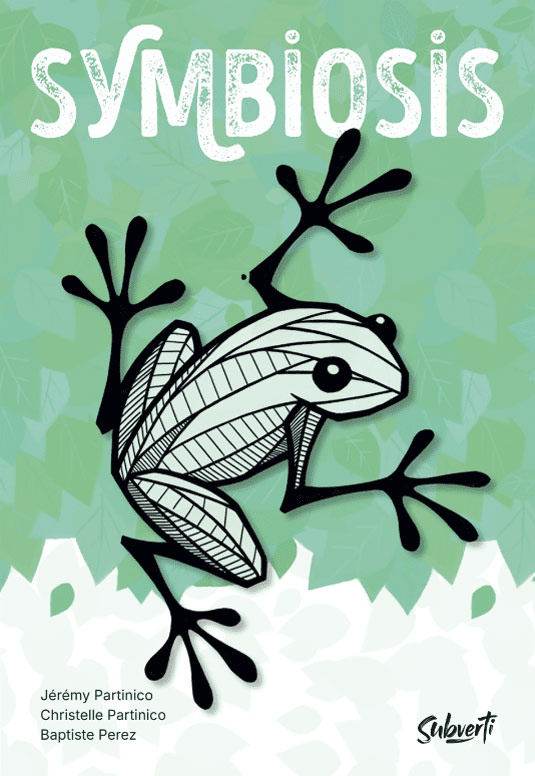
Symbiosis is a well-known concept. Defined as the mutually beneficial relationship between two different organisms or groups. We see plenty of examples in nature, such as those fish that eat scraps from large predators’ mouths; the fish eat, and the predator gets dental care. Or the plant pheromone that attracts butterflies but repels birds; the […]
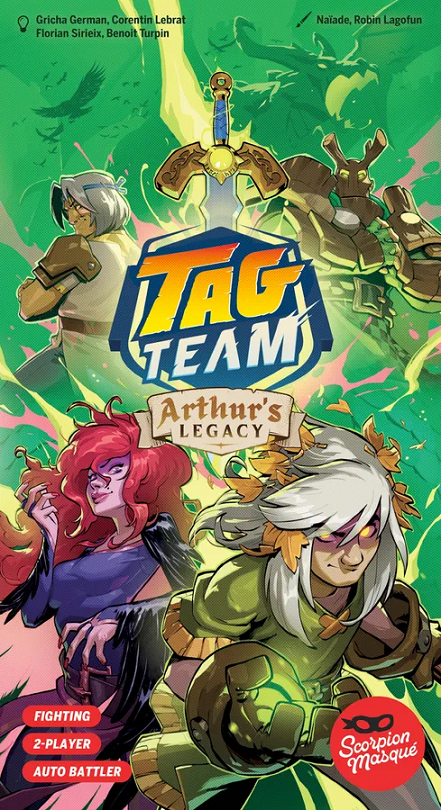
Tag Team was a noteworthy competitor in 2025. Its combination of smooth card play with the unpredictable drama of auto-battling forms a compelling build. So compelling in fact, that it seized my affection previously allocated to games like Unmatched and Dice Throne. Anyone with eyes could see this new Scorpion Masqué title was not a one-off.…
About 18 months ago, while attending Buckeye Game Fest in Columbus, Ohio, we met up with David Thompson to get a quick look at a few of his newest upcoming games at the time including Line of Fire: Burnt Moon from Osprey Games and the very interesting American Civil War game with a twist called Rebels Against Rebellion from Flying Pig Games. I got to play Rebels Against Rebellion and very much enjoyed the game and what it was trying to convey about the lack of support for the secession of Tennessee from the Union as most of the residents of Scott County voted against breaking away during the American Civil War. The game pits the local groups against each other as the Free and Independent State of Scott fights against the local secessionist residents as violent confrontations between Loyalist and secessionist-aligned partisans and outlaws engaged in raids on farms, stealing livestock, and destroying property. Since that time, the game has progressed and has launched on Kickstarter. I reached out to one of the game’s designer David Thompson to see if he would be willing to share about the design and as always he was more than happy to oblige us.
Grant: David, welcome back to our blog. What is your new upcoming game Rebels Against Rebellion about?
Davind: Thanks for having me back! Rebels Against Rebellion is a card-driven war game for one or two players, set in Scott County, Tennessee, during the American Civil War. Tennessee’s own path to secession was messy. The state voted against a secession convention in February 1861, then reversed course and voted to join the Confederacy in June, following Fort Sumter. But East Tennessee never went along with it. And of all the counties in East Tennessee, none rejected secession more decisively than Scott County: 521 to 19. Later that year, the county court went so far as to pass a resolution declaring Scott County’s own independence from the state of Tennessee, calling itself the “Free and Independent State of Scott.” That’s the story we’re telling: Southern Loyalists trying to hold their ground against the Confederate army and their allied secessionist guerrillas, for the whole length of the war.
Grant: What should the title convey to the players?
David: I wanted the title to carry that irony right up front. Rebels Against Rebellion. The people of Scott County were, technically, rebelling against a rebellion by resisting the Confederacy in order to maintain their ties with the Union. History likes to flatten “Rebel” down to one side of the Civil War, but in Scott County that word cuts the other way too. I liked that the title does some of the historical educating on its own, before a player has even opened the box.
Grant: Why was this a subject you wanted to focus on?
David: It’s a story that doesn’t get told nearly enough. We hear a lot about the big battles and the big generals, but the internal fractures within the South (communities that stayed loyal to the Union under occupation, that organized home guards, that got raided by their own state’s army) that’s a different and much more personal kind of Civil War story. I’ve made a habit of chasing these under-told corners of history rather than the well-trodden ones, and Scott County is about as under-told as it gets. Once you learn about Julia Marcum defending her father’s house with an axe, or the Home Guard’s oath at the Huntsville courthouse, it’s hard not to want to build a game around it.
Grant: What are the unique features with the system used for the game?
David: The core of it is a deck that represents both your units and your locations. Playing a card from your hand isn’t just “move a piece,” it’s your people and your settlements acting together. Every location you control is physically a card sitting in your deck, hand, or discard pile, so controlling territory and building your deck are the same action. You don’t have a separate “buy phase” and “map phase.” When you improve control of a location or bolster in a new unit, you’re deck-building in exactly the same motion as you’re expanding on the board. I think that tight coupling between deckbuilding and area control is the thing that sets Rebels Against Rebellion apart.
Grant: What did you need to model regarding the American Civil War and the situation in Scott County, Tennessee?
David: Quite a lot, honestly. We needed the asymmetry between the two sides to feel true to what actually happened. The Loyalists start the game already holding six locations and 11 points, reflecting how entrenched they already were in the county by the time real fighting started, while the Confederates start with nothing on the board and have to earn their presence. We needed the food economy to reflect how much this was a war of resources and raiding: burned farms, stolen livestock, the constant question of how you feed yourself when supply lines are contested. We needed supply lines themselves to matter for Confederate regulars in a way they didn’t for local guerrillas, since regular units like the 43rd Alabama or Morgan’s Raiders came in from outside the county and depended on a route back to it, while home-grown units like the Home Guard didn’t need that at all. And we needed the map’s road, water, and path connections to reflect the real terrain. Scott County’s isolation and rugged geography is a huge part of why guerrilla warfare took hold there in the first place.
Grant: What is your design goal with the game?
David: We wanted a game that plays cleanly as a tight, two-player card-driven war game, and we wanted a player who knows absolutely nothing about Scott County going in to come away from a session with real curiosity about what actually happened there. Every named card, every location, every unit in the game is drawn from the historical record. If the mechanics are doing their job, “Capt. William Robbins” isn’t just a card with shield and gun icons on it. It’s a doorway into a real person’s story.
Grant: What other games did you use as inspiration?
David: The DNA is definitely there from our work on Undaunted, that idea of your deck representing your force on the board rather than being an abstract resource. But Rebels Against Rebellion pushes further into area control than Undaunted ever did, so we were also looking hard at how area-control and card-driven wargames handle territory scarcity and endgame tension. The most obvious influence comes from Martin Wallace’s A Few Acres of Snow, which serves as a the origin for the core concept of playing a location card as the source of movement. A lot of our actual influences, though, came out of the playtesting process itself.
Grant: What sources did you consult about the history?
David: We leaned heavily on the Scott County Historical Society throughout, especially David Jeffers, Alan Keeton, and James Cecil, who were enormously generous with their research and their archives. On the written side, Paul Roy’s Scott County in the Civil War was probably our single most important source. His overview chapter and his 148-page account of individual Scott County soldiers did a lot of heavy lifting for us. We also relied on Esther Sharp Sanderson’s County Scott and Its Mountain Folk and Scott County Gem of the Cumberlands, H. Clay Smith’s Dusty Bits of the Forgotten Past, Noel C. Fisher’s War at Every Door for the statistical picture of East Tennessee loyalism, Ben Garrett’s Enclave, decades of back issues of the Scott County Chronicle and the First National Bank Chronicle, and the Official Records of the Union and Confederate Armies for the military correspondence. Dr. Stuart Ellis-Gorman did our proofing and copyediting to help make sure we got the details right.
Grant: What did you learn from your trip to this area as part of your research?
David: Back in the fall of 2025 I went to Scott County to meet with folks from the Historical Society and access primary sources that were otherwise unavailable. This trip was absolutely critical to the design process. The men I met at the Historical Society had deep knowledge on the subject, so I conducted interviews with them. They also provided me some of the primary sources I had read about, but could not access without their help (mostly in the form of photocopied versions of printed documents from local authors). My trip to Scott County also gave me the opportunity to visit the area and experience the topography for myself.
Grant: What are the differences between the playable factions of the Confederates and the rebels?
David: Thematically, the Loyalists are defenders who start the game already dug in. They begin with six locations and a head start on the scoreboard, and their whole arc is about holding what’s theirs and expanding cautiously outward. The Confederates start with nothing on the board and have to fight for every location, but they’ve got the raw power to do it: bigger regular units, the ability to bring in outside firepower, provided they can maintain a supply line back to where those units are actually based.
Grant: How did you differentiate them in their mechanics?
David: A few ways. The Loyalists have much more extensive access to the Improve Control action, which allows them to place a second control marker into a location for an additional victory point and card benefit, while a couple of key Loyalist locations, Brimstone and Trammell’s, double as both a location and a unit card depending how you want to play them that turn. The Confederates, on the other hand, get access to harder-hitting regular army units, but those units can carry a supply line requirement, so playing them isn’t as simple as just having them in hand. You need an unbroken road connection back to their origin. It creates a real asymmetry: the Loyalists play a tighter, more efficient game, while the Confederates have more raw strength but have to work to unlock it.
Grant: How does the game use cards?
David: Cards do double duty as your units and your locations, and every card you play resolves a specific action before it goes to your discard pile. Food is the one shared resource, but everything else, from combat strength to your area-control footprint, lives directly on the cards moving through your deck.
Grant: Can you show us a few examples and explain their use?
David: Sure, take the Home Guard. It’s a Loyalist unit card linked to Huntsville, and if you upgrade it, you get an improved version with better combat value. Or take Chitwood’s, a basic location card: play it for its Take Food action to add to your supply, or play it to Move into an adjacent location, which is how you expand your territory or launch an attack. And then there’s Brimstone, which starts as a plain location card but can be improved into Capt. William Robbins. At that point it’s simultaneously the location and a combat unit, with its own attack value and shield icons, giving you flexibility about how you use it depending on what your turn needs.
Grant: How do the cards upgrade or power up?
David: There are two upgrade paths. Improve Control takes a basic location card, has you pay food, and swaps it for its improved version, which usually comes with better attributes and, for a couple of key locations, unlocks a linked unit. Improve Unit works the same way for unit cards directly. You pay the listed food cost, and the improved version replaces the original in your discard pile while the old card goes out of the game for good. Either way, you’re not adding new cards on top of old ones. You’re replacing weaker cards with stronger ones, so your deck gets more powerful without getting bigger and bloated.
Grant: How important is this to the design?
David: It’s central. Deck quality, not just deck size, is what wins you the game, and the choice of when to spend food on upgrading versus expanding onto the board versus bolstering in new units is the core tension every turn.
Grant: What is the layout of the board?
David: The board depicts Scott County and its surrounding area, with locations connected by roads, water, and paths. Each connection type governs how many cards you can commit to an attack moving along it, from one card on a path up to three on a road. Locations within Scott County proper are marked in brown; locations outside the county, like Somerset, Jacksborough or Jamestown, are marked in grey and generally serve as Confederate staging points and supply origins. Each location shows its star value, which doubles as its point value and its food cost to take control, along with any food production and, for locations that can be improved, their upgraded attributes.
Grant: What is the anatomy of the counters?
David: We use control markers rather than traditional counters. One per location per player, showing who currently holds it, with some locations (mostly limited to the Loyalists) able to carry a second marker once improved. The real “unit anatomy” lives on the cards themselves: name, faction affiliation, attack and defense attributes, a linked location, an improvement cost, and icons indicating whether the unit returns to its supply or is removed from the game entirely after a successful attack.
Grant: How are units activated?
David: You activate units by playing their card from your hand as part of a Move action or in response to an attack. There’s no separate “activation phase.” A unit card played in combat commits its attack or defense value to that fight; the same card, played on its own, might instead trigger a Bolster or Improve Unit action. Context and the icon panel on the card tell you what’s legal in the moment.
Grant: What is the general Sequence of Play?
David: Turns alternate, Confederates first. On your turn you play cards from your hand one at a time to take actions, resolving each fully, including paying food and playing any additional required cards, before moving to the next, and you can stop whenever you like. Once you’re done taking actions, you discard down as much as you want from what’s left in hand, then draw back up to a five-card hand, reshuffling your discard pile into a new deck if you run out.
Grant: What actions are available to players?
David: Take Food, Improve Control, Bolster, Improve Unit, and Move, which is also the action that triggers combat if you’re moving into a location your opponent controls.
Grant: How does combat work?
David: Once you move into a contested location, the attacker plays one required combat-eligible card face down, and the defender either matches with a card of their own (up to a maximum of two, since they can also commit the target location’s own card) or passes. This goes back and forth, both sides adding cards until they hit their limits or choose to stop, with the attacker’s ceiling set by the connection type they’re attacking along. Everyone reveals at once: the attacker totals their attack icons, the defender totals their defense (and any dual-purpose attack icons used defensively), and the defender wins all ties. Win as the attacker, and you strip your opponent’s control marker, shift points in your favor, and get the option to immediately take control as a follow-up action.
Grant: How is victory achieved?
David: You’re racing toward one of a few thresholds: reach 20 points while your opponent sits at 10 or fewer, or simply hold more points than your opponent once the game’s light-colored food tokens run dry and it tips into sudden death. The Confederates have a separate, blunter win condition too: if the Loyalists ever lose every control marker on the board, the Confederates win outright. And if the very last food token, one of the ten darker ones, gets taken, the game ends in a draw, so there’s a real, ticking clock underneath everything you do.
Grant: Who is the artist and how does their style assists in thematic immersion?
David: Kwanchai Moriya handled illustration and Jina Rueter handled graphic design, and I couldn’t be happier with how it came together. Kwanchai has this warm, painterly quality that makes Scott County’s mountains and creeks feel lived-in rather than just decorative. It goes a long way toward making cards like Capt. William Robbins or Julia Marcum feel like real people from a real place rather than generic Civil War stand-ins. Jina’s layout work keeps the cards (action icons, attributes, linked locations, improvement costs) legible at a glance, which matters enormously in a system where you’re constantly reading your hand.
Grant: What type of experience does the game create?
David: Tense and personal. Because the map is so tightly connected, and because food is always ticking down toward sudden death, every attack matters and every food token spent is a decision you feel. It plays fast for a war game, but it doesn’t feel light. The historical grounding and the asymmetry between a scrappy, entrenched Loyalist defense and a Confederate side that has to earn its foothold give it real dramatic shape.
Grant; What are you most pleased about with the design?
David: I’m just happy that we had such an amazing team come together to work on this game. Trevor and me from a design perspective, Kwanchai and Jina bringing the game together through their illustration and graphic design, with Denver at Flying Pig Games leading the way. It was a dream team for this project that I am so passionate about. Of all the games I’ve worked on recently, this is the game closest to my heart. I just want to spread the word about these amazing people who fought for what they believed in.
Grant: What other games are you currently working on?
David: It’s a busy stretch. Alongside Rebels Against Rebellion, I’ve got Night Witches coming, co-designed with Liz Davidson (Fort Circle Games); two expansions for Sniper Elite with Roger Tankersley (Rebellion Unplugged); Flintlock!, a Seven Years’ War and French & Indian War game built on Paolo Mori’s Blitzkrieg! System, also with Roger (Floodgate Games); For the Gods!, co-designed with Trevor and Brett J. Gilbert (Mighty Boards); Zheng He, co-designed with Geoff Engelstein (GMT); and Undaunted 2200: Revolution, co-designed with Trevor (Osprey Games). There are some others on the way, but those are further off…
Thanks as always for having me!
As always, thank you so much David for your time in answering our questions and for showing me the game about a year and a half ago. I very much look forward to playing the final product and wish you well with the Kickstarter campaign.
If you are interested, we did an interview video with David while attending Buckeye Game Fest in the spring of 2025 and you can watch that at the following link for more information on the game:
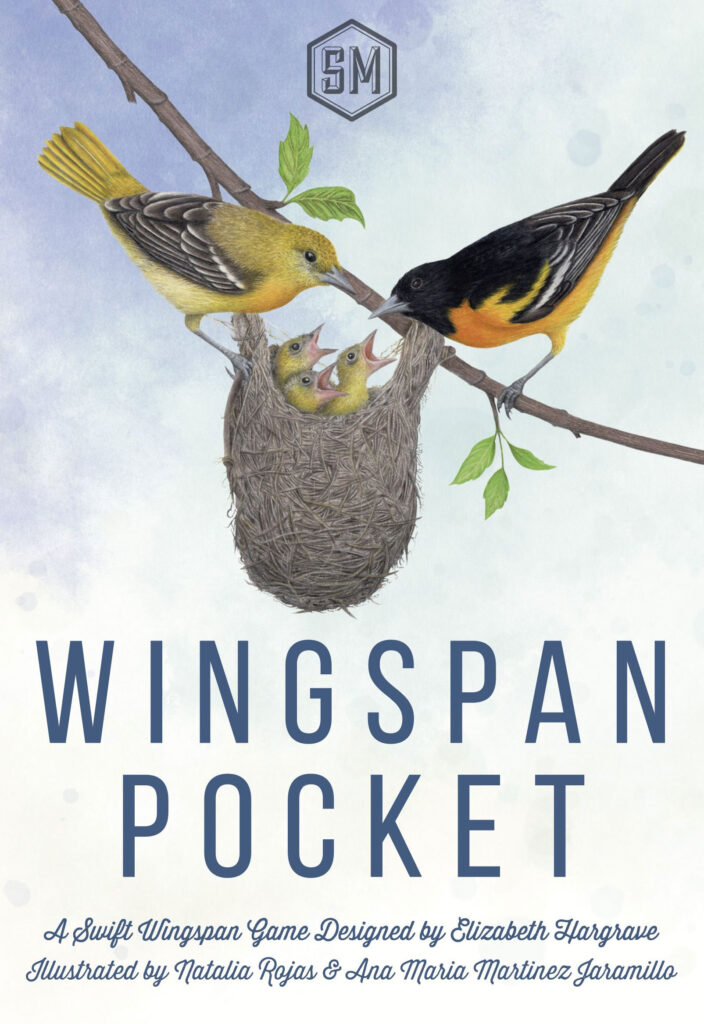
Over the last few years, there’s been a clear trend of creating “distilled” or more “accessible” versions of larger games. Terraforming Mars has Ares Expedition, 7 Wonders has 7 Wonders Architects, Pandemic has Pandemic: Hot Zone, and Ticket to Ride has its Express line, to name a few. When Wingspan first came out in 2019, […]
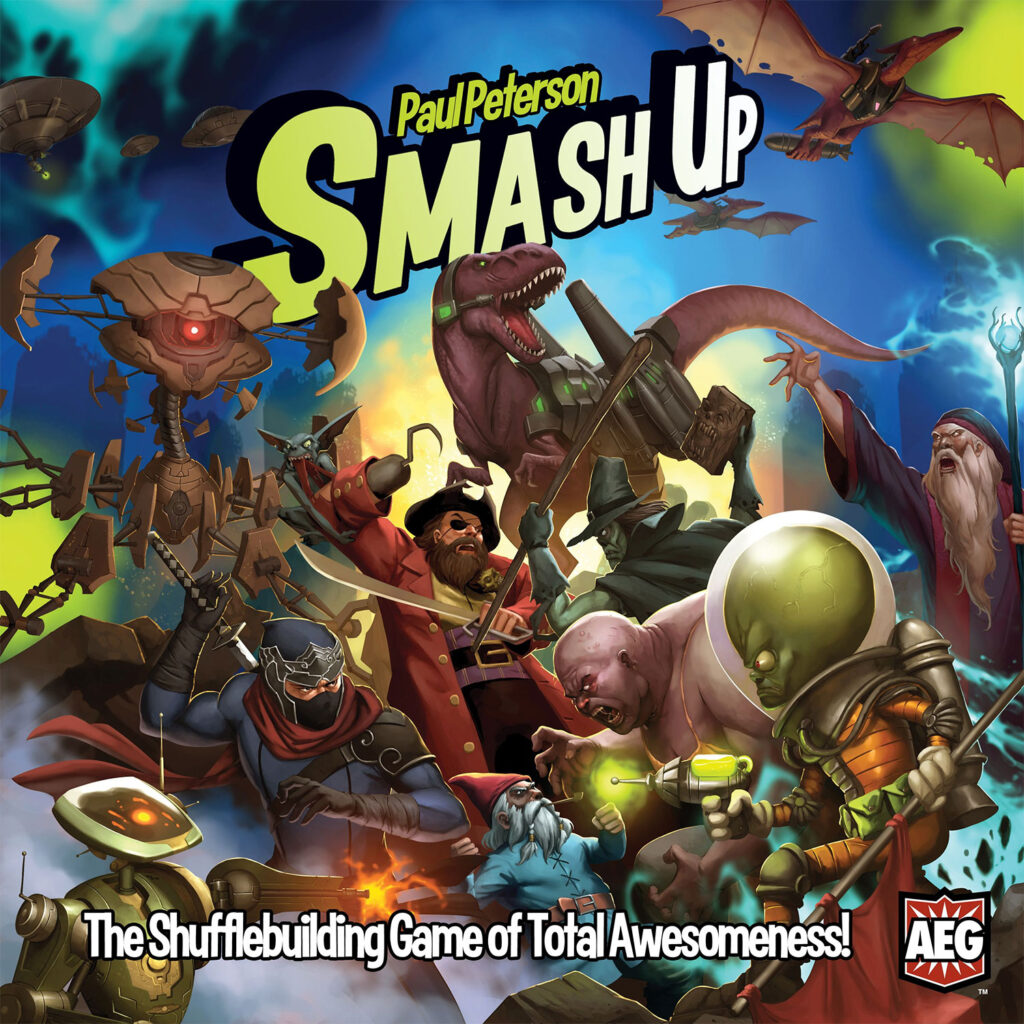
Ever play a game that you want to love, that you think you should love, but when you play it, you don’t, and you keep playing anyway, hoping you’ll fall in love with it? For me, that game is Smash Up by Alderac Entertainment Group (AEG). On paper, the concept is fantastic. The “shufflebuilding” premise […]
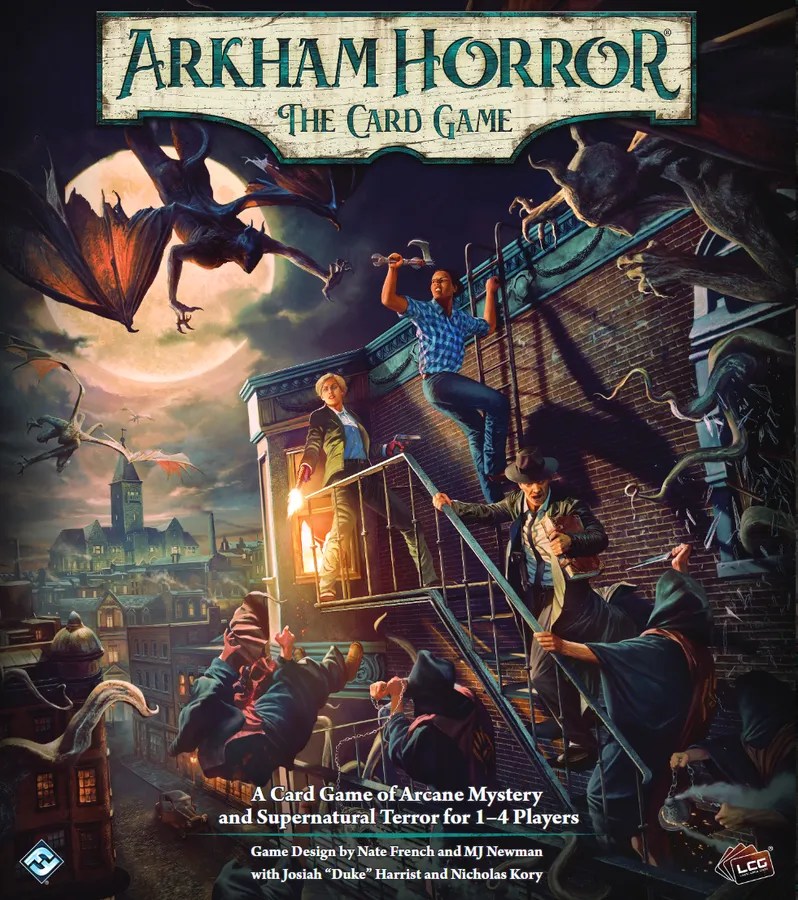
Fantasy Flight Games launched the Living Card Game (LCG) format in 2008 with A Game of Thrones: The Card Game. It soon extended to a variety of lines, including Call of Cthulhu, Android: Netrunner, and Lord of the Rings: The Card Game. The promise of this exciting new format was an end to chasing rares,…
One of my more recent discoveries… and it is all about discovery itself: You want to discover the other player’s secret identity, which you do by catching up to them on the circular track. Of course, your opponent wants the same, and so both of you try to go as fast as they can by enlisting the most helpful of your suburban neighbors (all of which are anthropomorphic animals) to your cause. Yet you must always select two cards from your hand for recruiting, place one of them face-up and the other face-down – and then your opponent gets to select one of them (and discover if they made the right choice).
The numbers on the cards signify how many steps you take according to how many copies of the card you have – the Sentinel (Aufpasser) starts slow, but is great with 3+ copies, for the Double Agent (Doppelagentin), 2 copies is the sweet spot, and while the Daredevil (Draufgänger) might be helpful initially, enlisting the third of them will lose you the game.
Can you bait them with the great face-up card and take the even better face-down card for yourself? Or can you trick them into thinking that this is just what you want them to do, so they select the face-down card which turns out to be utter trash? Such are the thoughts of retired agents.
Let’s not even get into the intricacies of the instant victory (by enlisting enough codebreakers) or instant defeat (by enlisting too many daredevils), or the special equipment you can buy from the black market in the advanced version. Agent Avenue has you outwit, outbluff, and sometimes outluck your opponent in 10 to 20 breezy minutes.
I have sung Heat’s praises in general in the farewell post on new-to-me games. Here, let me expand on the Schwerpunkt of its mechanics – heat management. Heat represents the strain on your car. In game terms, that’s heat cards clogging up your hand. They cannot be played (ugh) and not even discarded (double ugh), thus costing you both raw power and flexibility. The only way to get rid of them is to shift down and let your machine recover in low speeds… while watching everybody else get ahead of you.
While you can crash your car (from stress rather than heat), the upturned yellow car was the doing of a player with the flair for the dramatic.
So, should you avoid heat at any cost? – No! You will to take a certain amount of it to win. Sometimes you need to crank up your speed quickly, sometimes you want to boost a movement to put yourself in a position where you can slipstream past opponents. If you have a low-gear stretch soon after taking on the heat, you might be able to shed the heat before it did any damage. The intriguing gamble of how much heat you can incur and how to get rid of it without sacrificing speed is the heart of Heat.
And my favorite non-historical game of the year was…
The Catan Card Game has a special place in my heart. It was the first board game I ever played with my friend F., and after F.s death left only M. and me as two sides of our original Magical Triangle, the Catan Card Game turned into a mainstay of our meetings. We used to play the Expanded Basic Game but tried the Tournament Game this year – which means instead of having all the cards from the base game and potential expansions at your (aleatory) disposal, players use a pre-constructed deck of 33 cards.
My university deck could not pick up steam quickly enough against the raw productive and commercial power of my opponent’s deck.
That provides plenty of personalization. We used a university-based deck and one which aims for fast city construction and trade dominance – two very different approaches which both worked well (one victory per deck). And the joy of playing is complemented with the joy of deck construction. I already have some ideas on my mind for a future deck.
And what were your favorite non-historical games this year? Let me know in the comments!
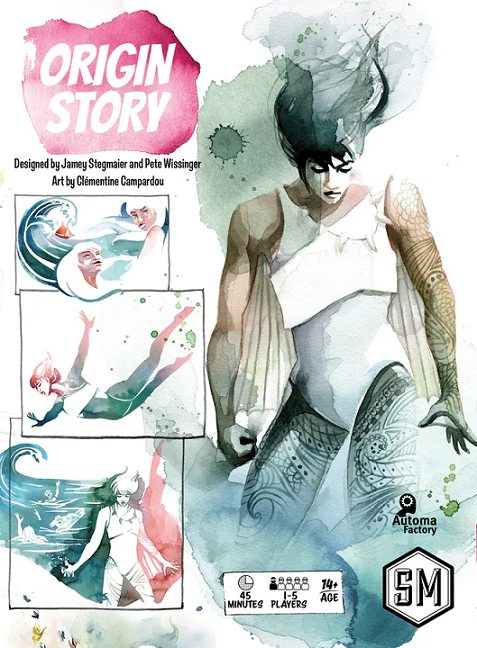
Origin stories are the worst. This is coming from a cretin who ingests superhero content via cinema as opposed to paper. I don’t want to see Thomas and Martha Wayne murdered by a low life, again. We’ve had 10 Spider-Mans in the past couple decades; I’ve already rode that ride. I would much rather watch…
The definitive 2021 ranked list of the best Harry Potter board games. Harry Potter was a series of books that became one of the biggest film franchises in history. No film series better represents witches, magic and wonderment like this series that follows groups of kids and their work their way through a wizarding magic school and make it into the real world, where all of this exists. There were 8 original Harry Potter movies and so far 3 subsequent Fantastic Beast movies. These are the top 20 best Harry Potter board games.
Clue: Harry Potter Edition makes the list of the best Harry Potter board games because it a solid use of the IP in a gaming franchise. There is nothing special here, really just the characters and worlds from Harry Potter inserted into a game of Clue, but if you are going to play this classic, this is certainly an exciting theme to do it through.
The mystery you love to solve again and again is even more intense! Clue is back with a modern twist, and you have to find out who is responsible for murdering the host at a millionaire’s mansion or a boardwalk. Get the scoop on the updated rooms, weapons and guests, and start detecting! Was it Plum with the wrench in the bedroom? Or Green with the pistol in the kitchen? Narrow down what you know and make your accusation! If you’re right about the location, weapon and suspect, you’re the mystery winner! For 2 – 6 players, games last about 45 minutes.
Trivial Pursuit Harry Potter makes the list of the best Harry Potter board games because if you want to have a Harry Potter trivia game, why not do it with the most iconic name in the business. If you are looking to play something that really gets at actual knowledge of the franchise, this option is going to be for you.
Test your ultimate trivia knowledge of Harry Potter! Harry Potter fans can test their knowledge of all 8 Harry Potter movies with Trivial Pursuit: World of Harry Potter Ultimate Edition. Move around the board with House Mascot movers as you answer questions and collect ‘wedges’ in this full sized collectible edition. Includes 1800 questions to challenge the ultimate Harry Potter fan. For 2 – 8 players, games run around 60 minutes each.
Time’s Up!: Harry Potter makes the list of the best Harry Potter board games because bringing together The magical universe of Harry Potter meets the frantic and hilarious guessing of Time’s up! This title lets you think about the characters you love in a way you would have never imagined.
Time’s Up! is a charades-based party game. Before the game begins, each player looks at several cards featuring famous fictional characters and chooses some of them. Each player’s cards are shuffled to form a deck, and this deck of famous names is used for each of the game’s three rounds. n each round, team members take turns trying to get their teammates to guess as many names as possible in 30 seconds. For 4 – 18 players, games run about 90 minutes each.
#17 | Harry Potter Tri-Wizard Tournament – Capture The Cup Game
Harry Potter Tri-Wizard Tournament – Capture The Cup Game makes the list of the best Harry Potter board games at a higher spot because while it does get at some full elements from the franchise, at the end of the day, it is just a rethemed version of the children’s game Trouble. It does it well but there is nothing new here.
Muggles and wizards alike will be enchanted by this magical game! It features fast-action Pop ‘N’ Race play as you race around the Triwizard hedge maze to capture the Triwizard Cup! Be careful – action spaces cause you to draw a card that can help or hurt your chances. The first player to get all of his/her movers home is the winner and Triwizard Maze champion. For 2 – 4 players, games last approximately 30 minutes.
Harry Potter Trading Card Game makes the list of the best Harry Potter board games because of the depth of content. While it has been discontinued it deserves points for its use of the franchise. Trading card games are very deep and require lots of tact and ambition. This one from the creators of Magic the Gathering delivered, but they couldn’t quite get the momentum they needed.
Each player’s 60-card deck is fronted with a wizard or witch “character” card, and contains spells, creatures, items, and the “lesson” cards needed to put them into play. Damage to the character is tracked by simply discarding off the draw deck, and first person to run out of cards loses. Damage is dealt with spells or creatures, and can be targeted to other creatures, or directly to the opposing character. Sets include Quidditch Cup, Diagon Alley, Adventures at Hogwarts and Chamber of Secrets. For 2 players, games typically run around 20 minutes each.
Harry Potter: Magical Beasts Board Game makes the list of the best Harry Potter board games at this higher-up spot because it is a good in to the universe but there are better games out there. With this one you will collect clues to track down creatures inside and outside Hogwarts.
The objective is to obtain four cards that correspond to one beast. Each turn, a player will roll the dice which will correspond to the number of spaces a player moves. When a player lands on a tile that indicates a type of a card (Color, Size, Location or M.O.M Classification), they get to take one card from that pile. The card is then placed facedown. Should you obtain another card of that type, you place the new card on top of the other card. For 2 – 4 players, games run about 40 minutes.
Harry Potter Whomping Willow Game makes the list of the best Harry Potter board games because this title is an interesting take on interacting with one of the key aspects from the franchise. This is a children’s dexterity game but it has enough bite that players of all ages, especially Harry Potter fans, should enjoy.
Recuse Harry Potter’s and Ron Weasley’s luggage from the Whomping Willow’s branches using nothing but your flying car. In the Time Trial, each player competes individually to use their flying cars to remove luggage from the tree, racing against the game’s internal clock. Any number of players can take part in the Time Trial. In Collection mode players play simultaneously and in Free-For-All Mode players challenge competitors to collect the most pieces of luggage from the tree.
Talisman: Harry Potter makes the list of the best Harry Potter board games because it combines the familiar gameplay of the fantasy adventure game Talisman with the familiar characters from the Harry Potter book series. This is another licensed product but it is not just a reskin, mechanics from the property make it into the game in a very satisfying way.
Lord Voldemort awaits the most competent of witches and wizards for a fateful demonstration of bravery or obedience in Talisman Harry Potter. Take on the daring roles of members of the Order of the Phoenix or Death Eaters in a fleeting race to gain access to the Dark Lord himself. Meet and present him with one of the Deathly Hallows as a dutiful Death Eater… or use it to defeat the leader once and for all. For 2 – 6 players, games run approximately 90 – 120 minutes.
#12 | Golden Snitch: Snitch Snatcher – The Quidditch Game
Golden Snitch: Snitch Snatcher – The Quidditch Game makes the list of the best Harry Potter board games because it is a title that brings you into the world of Quidditch. Using dice rolling, grid movement and take that, this game does a good job of representing the physical game.
Will you be the first to catch the Golden Snitch? It’s Gryffindor vs. Slytherin in this fast-paced wizarding game of Quidditch. Outmaneuver the opposing team with authentic Quidditch tactics. Use spells and potions to confound and outwit your opponent. Each high-flying game is a battle of strategy and magic. The goal is simple, be the first to catch the Golden Snitch. For 2 players, games take about 20 – 40 minutes each.
Harry Potter: A Year at Hogwarts makes the list of the best Harry Potter board games because it lets you become the student. You just received your letter to enter the most famous School of Witchcraft and Wizardry “Hogwarts” directed by the greatest wizard of all time Albus Dumbledore. This is a wonderful journey into that world.
Play along as your favorite character and relive the whole saga in Harry Potter: A Year at Hogwarts. The three game modes allow you to choose the best possible gameplay experience according to the age of the players, desired length of play, and your favorite passages from the saga. Compete with students from Gryffindor, Ravenclaw, Hufflepuff, and Slytherin, and earn the most points towards the House Cup, carrying out missions in and around Hogwarts. You can play alone, in a team, or with every wizard for themselves. For 1 – 8 players, games run 20 – 45 minutes.
Harry Potter: Spellcasters makes the list of the best Harry Potter board games because it is as close as you are going to get to getting into the physical and dexterity world of trying to cast spells. Out of all the Harry Potter board games out there, this is the one that will actually have you waving the wand around trying to get it done.
Spellcasters is a charade game with a magical spin. There are Spell cards and Guessing cards that mirror each other. The Spellcaster draws a card, keeping it hidden from view. Using the wand, they follow the spell drawn out on the card. When a player guesses right, the Spellcaster keeps their Spell card. The first person who points at the correct Guessing card wins the card and becomes the next Spellcaster. Each spell has a special challenge on the back that the new Spellcaster will have to endure while they’re practicing their magic. Whoever collects the most total cards (Spell and Guess cards combined) is the winner. For 3 – 8 players, games run 10 – 30 minutes each.
Fantastic Beasts: Perilous Pursuit makes the list of the best Harry Potter board games because It takes a unique part of the series and puts it into an interesting press-your-luck dice game. Based on the original game Rollers, the package is taken to new heights with all the interesting stories inserted.
In Fantastic Beasts: Perilous Pursuit, players take on the role of Newt, Tina, Jacob and Queenie on an exciting adventure as they try to return all the beasts to Newt’s suitcase before they draw the attention of the non-magical community. To do this, they need to collect sets of dice to take actions that allow them to shield each other, draw cards, and most importantly, get the beasts back into his suitcase before havoc ensues. For 2 – 4 players, games last 45 – 60 minutes.
Munchkin Harry Potter Deluxe makes the list of the best Harry Potter board games because who wouldn’t want to take the great story and characters into an iconic dungeon crawler. Munchkin: Harry Potter lands the witches and wizards of Hogwarts in the world of Munchkin, with players needing to kick down doors, grab treasure, and level up as usual.
Munchkin is the mega-hit card game about dungeon adventure . . . with none of that stupid roleplaying stuff. You and your friends compete to kill monsters and grab magic items. And what magic items! Don the Horny Helmet and the Boots of Butt-Kicking. Wield the Staff of Napalm . . . or maybe the Chainsaw of Bloody Dismemberment. Start by slaughtering the Potted Plant and the Drooling Slime, and work your way up to the Plutonium Dragon . . . For 3 – 6 players, games run 60 – 120 minutes.
Codenames: Harry Potter makes the list of the best Harry Potter board games because the game does a great job of bringing all the story and characters into the Codenames duet party game atmosphere. As far as licensed products being plopped into another existing product, this is a great match.
The game is a fun, easy-to-learn cooperative word and picture deduction game for Harry Potter fans of all game levels. Players help their teammates locate secret Agents who are concealed among a grid of Harry Potter references. Use only one-word clues to guide guessers to the right spots, or hidden Death Eaters will cost them the win. This co-op game is a great challenge for Harry Potter fans of all levels. Work together with multiple players on each team to increase your chances of locating all of the secret Agents. For 2 players, games last about 15 minutes.
Harry Potter: House Cup Competition makes the list of the best Harry Potter board games because it smartly ports the theme into a worker placement game. Here you will have to send students to complete challenges and use knowledge to win the Hogwarts house cup all through the premise of this nifty strategy game.
Welcome to another year at Hogwarts School of Witchcraft and Wizardry. The House Cup calls for the brightest students to compete. In Harry Potter: House Cup Competition, use gained knowledge and magic to learn lessons and complete challenges. Players send iconic characters like Harry Potter, Cedric Diggory, Cho Chang, and Draco Malfoy out on the game board to enhance their skills. The player who earns the most points for their House will be named the House Cup Champion!
Funkoverse Strategy Game Harry Potter makes the list of the best Harry Potter board games because out of all the character modules available, this one brings great “magic” to the game and great characters to utilize the Funkoverse system. This lets you take your favorite characters and go head-to-head in four exciting game scenarios.
Use your characters’ unique abilities to gain points and achieve victory! Each turn, you select one of your characters and perform two actions. Each character has access to basic actions like moving and challenges as well as several unique abilities that may be performed only by spending ability tokens. Each character in Funkoverse is unique, so players are encouraged to try out different combinations of characters and items in order to discover their favorite synergies and powerful strategies for all four game scenarios. For 2 – 4 players, games run 20 – 60 minutes each.
Harry Potter Miniatures Adventure Game makes the list of the best Harry Potter board games because it is the best option to allow players to immerse themselves in J.K. Rowling’s Wizarding World like never before via a miniatures/skirmish setting. All your favorite characters and settings are available to you.
During the game, players must outmaneuver their opponents across beautifully illustrated game boards representing many of the iconic locations from the Wizarding World, such as Hogwarts, the Chamber of Secrets, and the Forbidden Forest. Players must explore these environments, resolving Challenges and Quests in order to secure victory. For 2 – 6 players, games last 30 – 90 minutes.
Harry Potter: Death Eaters Rising makes the list of the best Harry Potter board games because it captures the difficulties and terrors Harry Potter, Ron Weasley and Hermione Granger face during their fifth year at Hogwarts as they scramble to persuade the wizarding world of Voldemort’s return. If you were looking for the title that will let you battle the evils of Harry Potter, this is a great option.
He-Who-Must-Not-Be-Named has returned! Lord Voldemort and his Death Eaters are a mounting threat to Hogwarts and the wizarding community, compelling everyone to combine their strengths against the dark villains. In this cooperative game, players must summon witches and wizards from Dumbledore’s Army, the Order of the Phoenix, and Hogwarts to retaliate against evil Death Eaters and protect the Wizarding World from the Dark Lord’s corruption for good. For 2 – 4 players, games run 60 or so minutes each.
Harry Potter: Hogwarts Battle makes the list of the best Harry Potter board games because this is a great cooperative deck-building game that leaves it up to four students to ensure the safety of the school by defeating villains and consolidating their defenses. This really brings the magic of the film home in a great board game package.
In the game, players take on the role of a Hogwarts student: Harry, Ron, Hermione or Neville, each with their own personal deck of cards that’s used to acquire resources. By gaining influence, players add more cards to their deck in the form of iconic characters, spells, and magical items. Other cards allow them to regain health or fight against villains, keeping them from gaining power. The villains set back players with their attacks and Dark Arts. Only by working together will players be able to defeat all of the villains, securing the castle from the forces of evil. For 2 – 4 players, games run 30 – 60 minutes.
#01 | Harry Potter: Hogwarts Battle – Defence Against the Dark Arts
Harry Potter: Hogwarts Battle – Defence Against the Dark Arts takes the top spot on the list of the best Harry Potter board games because it has mastered the magic battle style that helps make the franchise so special. This comes 3 years after the original Harry Potter Hogwarts Battle. That is also a great games, as you will see on this list, but this new stand-alone version does a great job of building off of that. They are different, with this one being a competitive deck-building game versus a cooperative one, and though it is tough choice, this version edges the original out.
In this fast-paced game, players take turns playing cards, taking actions and acquiring new cards to build a more powerful deck as their defensive skills improve. With the noticeable rise in Dark Arts activity, Headmaster Albus Dumbledore has authorized practical Defence Against the Dark Arts lessons to ensure that students are prepared to defend themselves. Under the supervision of Hogwart’s teachers, students will cast Spells and Hexes, use Items, and gain Allies to stun their opponents and protect themselves from evil forces. Stun your opponent three times to win. For 2 players, games run 30 – 60 minutes each.

 Anmelden