A review copy of Tally Up was kindly provided by Zatu Trade. Thoughts & opinions are my own. Tally Up may only be a few dice in a small tin with a simple set of rules, yet it delivers hilarity, shouting and a great time for everyone involved. VERDICT players 2-10 | playing time 10-430 mins Tally Up is everything a good party game should be. Loud, fast, cheap, and small.
Tokyo Poo Divers aus dem Verlag Heldbergs Games dreht sich laut Anleitung um das Leben der anrüchigen Kacketaucher von Tokyo. Wie alle Spiele aus dem Verlag kombiniert auch dieses Spiel…
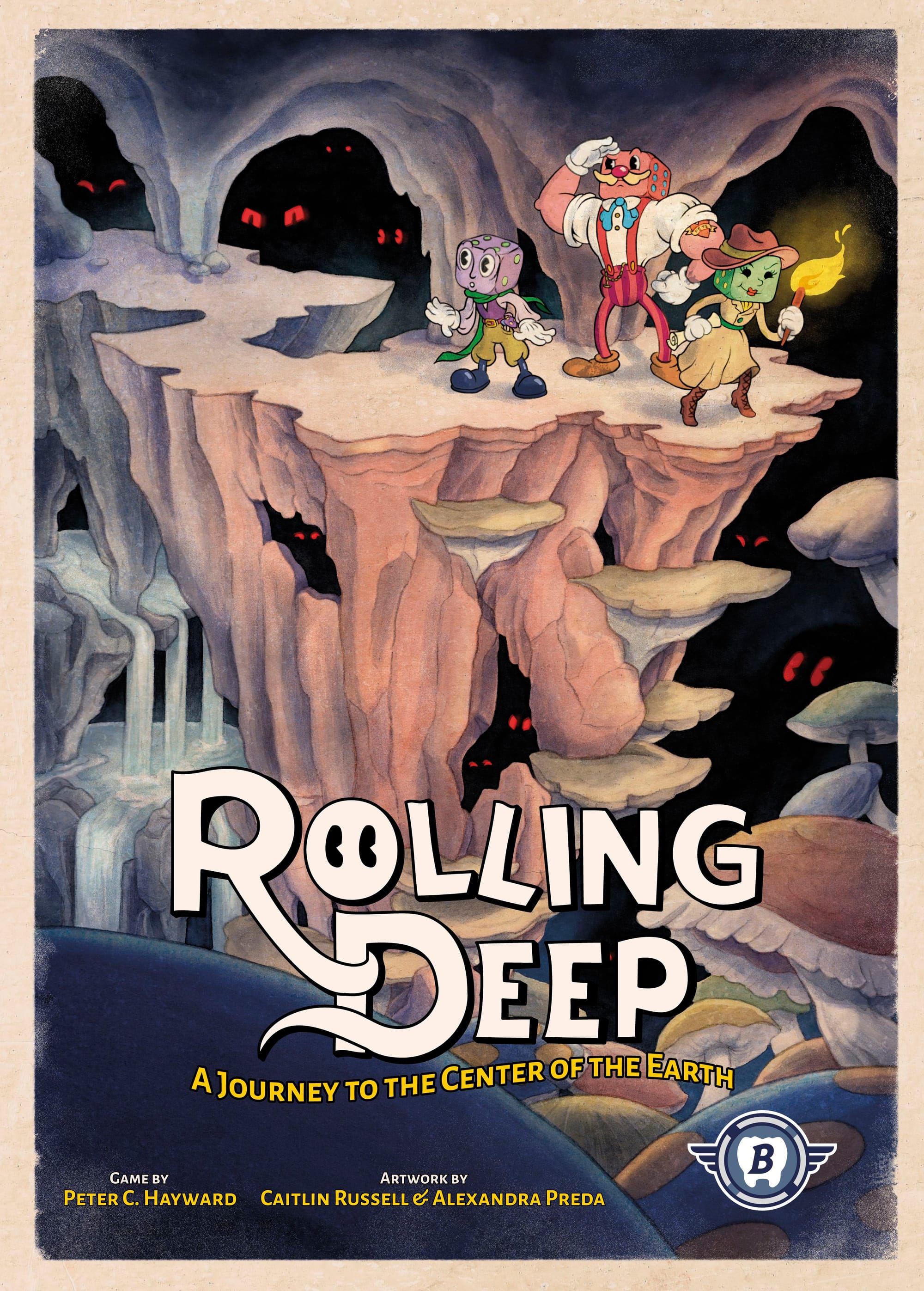
Rolling Deep ist ein reines Solospiel und ein Balatro-inspiriertes Würfel-Roguelike: Sie führen ein Trio von Würfelkopf-Abenteurern durch einen unruhigen Vulkan hinab zum Erdmittelpunkt. Auf Kickstarter hat der US-Verlag Bitewing Games sein Finanzierungsziel schon um rund das 25-Fache übertroffen. Hinter der Hype-Zahl steckt allerdings vor allem ein Dice-Building, bei dem Sie Ihre Würfel über viele Läufe Stück für Stück umbauen.
Eckdaten
Spielerzahl: 1 (reines Solospiel)
Spielzeit: 45 Minuten (Verlagsangabe)
Alter: ab 10 Jahren
Komplexität (BGG-Gewicht): 2,5 von 5
Designer: Peter C. Hayward
Illustration: Alexandra Preda, Caitlin Russell
Verlag: Bitewing Games
Erscheinung: 2027
Was Sie im Spiel tun
Jede Runde würfeln Sie mit den Würfeln Ihres Teams, die für dessen Aktionen beim Abstieg stehen. Sie entscheiden, wann Sie handeln, also einen Wurf werten, und wann Sie es auf einen neuen Versuch ankommen lassen. Mit Reroll Potions werfen Sie einzelne Würfel neu, bevor Sie sich festlegen. Werten Sie einen Wurf, bringt sein Wert Sie näher an die Zielpunktzahl der aktuellen Etappe. Zwei Ressourcen steuern Ihr Vorgehen: Zeit legt fest, wie viele Wertungen Ihnen pro Runde bleiben, Reroll Potions bestimmen, wie oft Sie Ihr Glück herausfordern dürfen. Das ist klassisches Push Your Luck, denn das Scheitern kennt nur eine Richtung: Verfehlen Sie in einer Runde die Zielpunktzahl, verlieren Sie sofort (Sudden Death). Dieses ständige Abwägen kennen Solo-Fans etwa aus Mini Rogue: The Council, einem weiteren Solo-Roguelike mit Push Your Luck.
Kapitel, Bosse, Shop
Der Abstieg gliedert sich in fünf Kapitel mit je drei Runden. Mit jedem Kapitel steigt die Schwierigkeit, und die letzte Runde eines Kapitels ist ein Boss, der die Regeln genau dieser Runde verändert. Solche Bossbegegnungen, die mitten im Lauf die Regeln umschreiben, kennt man auch von Solo-Titeln wie Jason and the Argonauts. Zwischen den Runden besuchen Sie den Shop. Dort geben Sie Münzen für zweierlei aus: für permanente Würfel-Upgrades, die einzelne Würfelseiten verändern, etwa indem sie neue Werte zeigen oder beim Werten Münzen und Reroll Potions erzeugen, sowie für Verbrauchs-Ausrüstung. Wer alle fünf Kapitel übersteht und den finalen Boss bezwingt, erreicht den Kern des Vulkans und gewinnt.
Dice-Building als Herzstück
Strategisch lebt Rolling Deep von eben diesem Umbau der eigenen Würfel. Über viele Läufe hinweg formen Sie aus Standardwürfeln eine Maschine, die Münzen, Neuwürfe und Punkte aufeinander abstimmt. Konkret tauschen Sie etwa eine schwache Würfelseite gegen eine, die beim Werten Münzen abwirft, und finanzieren damit im nächsten Shop das nächste Upgrade; oder Sie setzen auf Seiten, die Reroll Potions erzeugen, und spielen dadurch aggressiver auf hohe Würfe. Über Achievements schalten Sie nach Verlagsangabe Hunderte weiterer Karten frei. Die Tiefe eines einzelnen Laufs bleibt dabei überschaubar; der Wiederspielreiz entsteht laut Verlag vor allem aus diesem wachsenden Fundus an Karten und Herausforderungen. Genau diese Verzahnung aus Würfelwürfen, Risikoabwägung und langfristigem Aufbau ist die Anleihe bei der Videospiel-Vorlage Balatro.
Der Verlag
Bitewing Games wurde von den beiden Zahnärzten Nick Murray und Kyle Spackman gegründet; der Name spielt auf eine zahnmedizinische Röntgenaufnahme an. Der Verlag fiel zuvor mit Titeln wie Trailblazers und dem von Reiner Knizia gestalteten Zoo Vadis auf. Designer Peter C. Hayward hat sich zuvor vor allem mit kompakten, ideenreichen Spielen einen Namen gemacht. Rolling Deep ist der erste Titel der neuen Solo-Reihe Table for One.
Zwei Spiele in einer Kampagne
Die Kampagne bündelt zwei eigenständige Solospiele. Neben Rolling Deep steckt mit Eureka! ein zweites, laut Verlag Yahtzee-inspiriertes Würfelspiel in den Pledges, in dem Sie Edelsteine schürfen und Ihren Würfelvorrat verwalten. Für Rolling Deep selbst gibt es zudem die Erweiterung Rolling Deeper, die in den Premium-Pledges enthalten ist und laut Verlag vor allem zusätzliche Karten und Achievements ergänzt.
Pledges: Was bringt welche Stufe?
Wichtig vorab: Der mit 15 US-Dollar günstigste Eintrag ist ein reiner Händler-Pledge (Retailer) und kein Einstieg für normale Unterstützer. Für Backer beginnt es so:
Eureka! allein: ab 25 US-Dollar.
Rolling Deep als Basisspiel: ab 59 US-Dollar, inklusive des gratis Swip Swap Promo Packs und der Kickstarter-exklusiven Ultimate Achievement Box.
Standard-Bundle beider Spiele: 84 US-Dollar, also vor allem der Zugewinn eines kompletten zweiten Spiels.
Red Hot Edition: 129 US-Dollar. Spielerisch zählt hier die enthaltene Erweiterung Rolling Deeper; der Rest (Deluxe-Upgrade-Pack, Deluxe-Würfelturm, Metallfolien-Box) ist Komponenten-Aufwertung.
All-In 2-Game Deluxe Bundle: 149 US-Dollar, die Red Hot Edition plus Eureka! Diese Stufe wählten mit Abstand die meisten Unterstützer.
Die Zusatzinhalte trennen sich damit sauber: spielverändernd sind die Erweiterung Rolling Deeper, das Swip Swap Promo Pack und die über Achievements freigeschalteten Karten; rein kosmetisch sind die Deluxe-Komponenten und die Metallfolien-Box.
Finanzierung mit Augenmaß
Seit dem 23. Juni 2026 ist die Kampagne live. Stand 28. Juni 2026 stehen 375.586 US-Dollar von 3.104 Unterstützern zu Buche, rund 2.500 Prozent des mit 15.000 US-Dollar bewusst niedrig angesetzten Ziels. Mitgründer Nick Murray feierte den Auftakt als den nach eigener Aussage größten Launch-Tag in der Geschichte des Verlags. Laut Kampagne schaltete eine Vormerk-Marke von 8.000 Followern die Ultimate Achievement Box frei, die nun gratis und Kickstarter-exklusiv in allen Rolling-Deep-Pledges liegt. Die Kampagne läuft noch bis Mitte Juli 2026. Weitere laufende Kampagnen sammeln wir in unserer Crowdfunding-Wochenschau.
So beeindruckend die Zahlen sind: Eine hohe Finanzierungsquote belegt Nachfrage, nicht Qualität. Rolling Deep ist noch nicht erschienen, eine unabhängige Wertung steht aus.
Für Solo-Fans im DACH-Raum
Eine deutsche Ausgabe ist bislang nicht angekündigt; BGG führt allein eine englische Edition. Die Kampagne läuft auf Englisch, Bitewing versendet weltweit. Für Solo-Fans aus Deutschland, Österreich und der Schweiz heißt das: ausreichende Englischkenntnisse und internationalen Versand einplanen.
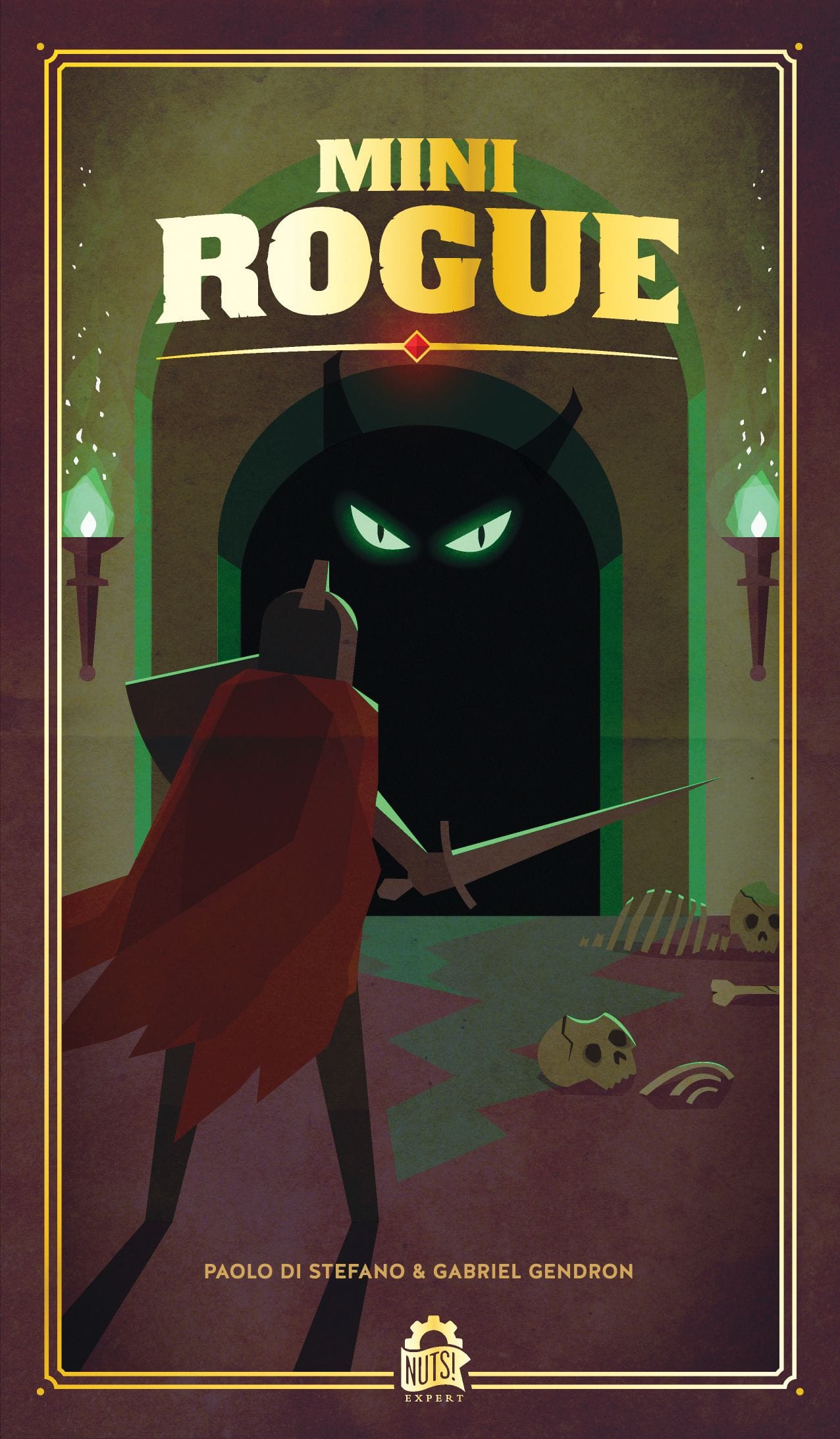
Der minimalistische Verlies-Crawler Mini Rogue geht in die zweite Runde: Auf der Spieleschmiede sammelt Corax Games unter dem Titel Mini Rogue: The Council Geld für die große Erweiterung The Council und bündelt die deutsche Ausgabe der Reihe. Im Mittelpunkt stehen eine neue Overlord-Variante mit Verstärkungskarten, frische Symbole und Monster sowie ein gestaffeltes Pledge-System, das vom 20-Euro-Einstieg bis zum Komplettpaket für 120 Euro reicht.
Eckdaten
Die folgenden Werte beziehen sich auf das Grundspiel und die Reihe (Quelle: BoardGameGeek). The Council baut darauf auf.
Spielende
1 bis 2 (eigenständig), mit Grundspiel und Zusatzmaterial bis 4
Spieldauer
30 bis 45 Minuten
Alter
ab 12 Jahren
Komplexität
2,0 von 5 (BGG-Gewicht)
Mechaniken
Push-your-luck, Würfeln, Solo, Kooperativ
Designer
Paolo Di Stefano, Gabriel Gendron
Illustration
Gabriel Gendron, Prashanka Mawalagedara
Deutsche Ausgabe
Corax Games
Worum es bei Mini Rogue geht
Mini Rogue übersetzt das Roguelike-Genre der Computerspiele auf den Tisch: Eine kleine Heldengruppe steigt in ein tiefes Verlies hinab, um den sagenumwobenen Rubin Og’s Blood zu bergen. Das Spiel arbeitet mit Würfeln und Karten, die Ebenen und Begegnungen werden laut Verlag zufällig erzeugt, sodass jede Partie anders verläuft. Eine Partie dauert rund 30 bis 45 Minuten, wobei dieser Wert für eingespielte Runden gilt; die erste Partie mit Regelerklärung dauert länger.
Mechanisch ist Mini Rogue im Kern ein Push-your-luck-Spiel. Raum für Raum steigen Sie tiefer, würfeln Kämpfe gegen immer härtere Monster aus und entscheiden bei jedem Wurf neu, ob Sie weitermachen oder das Risiko zu groß wird. Misslingt eine Serie von Würfen, kann ein Abstieg auch abrupt scheitern; dieses kalkulierte Risiko ist Teil des Roguelike-Reizes. Dazwischen verwalten Sie knappe Ressourcen: Lebenspunkte, Erfahrung zum Aufstieg Ihrer Figur, Gold, Nahrung sowie Tränke und Schriftrollen. Die Komplexität liegt auf BoardGameGeek bei moderaten 2,0 von 5 Punkten, die Reihe ist also eher Einstiegs- als Expertenkost. Gespielt wird allerdings allein oder zu zweit ab 12 Jahren, also kein Titel für die große Familienrunde, sondern für den Solo- oder Zweiertisch.
Grafik: Corax Games (Spieleschmiede-Kampagne)
Mini Rogue solo und kooperativ spielen
Das Grundspiel ist auf 1 bis 2 Spielende ausgelegt und glänzt vor allem solo: Auf BoardGameGeek wird die Ein-Personen-Variante klar am häufigsten als beste Besetzung genannt. Zu zweit wird kooperativ gespielt, eine echte Mehrspielerschlacht ist Mini Rogue traditionell nicht. Wer größere kooperative Erlebnisse sucht, wird bei einem kooperativen Solo-Highlight wie Spirit Island fündig; Mini Rogue bleibt bewusst kompakt und trägt auf BoardGameGeek ausdrücklich die Mechanik-Schlagworte Solo / Solitaire und Cooperative Game.
Für Solo-Spielende liegt der eigentliche Zugewinn von The Council daher weniger in der Overlord-Variante, die eine zweite Person am Tisch voraussetzt, als im zusätzlichen Spielinhalt: mehr Monster, Symbole und Karten erhöhen die Varianz jedes Abstiegs.
Was The Council bringt
The Council ist die große neue Erweiterung der zweiten Staffel und ist eigenständig spielbar, das Grundspiel ist also keine Voraussetzung: Allein oder zu zweit steigen Sie direkt ins Verlies. Größere Runden, kooperativ zu dritt oder kompetitiv zu viert, öffnen sich erst in Kombination mit dem Grundspiel und dem passenden Zusatzmaterial. Der auffälligste Neuzugang ist eine Overlord-Variante, die das sonst kooperative oder solitäre Spiel in ein asymmetrisches Duell verwandelt: Eine Person übernimmt die Rolle des Overlords und steuert die Gegner aktiv gegen die Heldengruppe, statt dass diese wie sonst aus dem Stapel gezogen werden. Über eigene Verstärkungskarten kann der Overlord einzelne Kämpfe gezielt verschärfen und so Druck aufbauen. Dazu kommen laut Kampagne neue Symbole und Monster sowie eine erzählerische Klammer rund um den Rat der Hohepriesterin, vor den die Helden treten. Die Reihe bekommt außerdem Überlieferungskarten in zwei Geschmacksrichtungen: literarische Überlieferungskarten und Volksüberlieferungskarten erweitern den narrativen Rahmen.
Artwork: Corax Games (Spieleschmiede-Kampagne)Artwork: Corax Games (Spieleschmiede-Kampagne)
Material und Komponenten-Upgrades
Neben dem Spielinhalt setzt die Kampagne stark auf hochwertige Ausstattung. The Council kommt wahlweise mit mehrlagigen Charakter- und Overlord-Tableaus, die Würfel und Marker an ihrem Platz halten. Als Add-on gibt es ein dreilagiges Dungeon-Tableau und ein zusätzliches Verlies-Tableau, dazu ein doppelseitiges Neopren-Playmat für 28 Euro. Die Erweiterung Glittering Throne wird mit einem Hologramm-Effekt beworben. Diese Aufwertungen sind reine Komponenten-Boni und verändern das Spielgefühl nicht, sondern den Auftritt auf dem Tisch.
Die Pledge-Stufen im Überblick
Corax Games staffelt die Unterstützung in fünf Stufen. Wichtig vorab: Die unterste Stufe enthält kein physisches Spiel.
Geißler (5 Euro): rein digitale Errungenschaft im Spielernetzwerk, kein Spielmaterial. Eher ein symbolischer Unterstützer-Beitrag als ein Spielkauf.
Rattenfänger (20 Euro): die Erweiterung Mini Rogue: The Council in der deutschen Version. Da The Council eigenständig spielbar ist, taugt die Stufe nicht nur als Nachschub für Besitzende des Grundspiels, sondern auch als vollwertiger Solo- oder Eins-gegen-eins-Einstieg.
Okkultistin (55 Euro): The Council plus vier weitere Erweiterungen (Mountain of Torments, Forgotten Guardians, Glittering Throne und Beyond the Portal), alle auf Deutsch. Hier liegt der Zuwachs klar im zusätzlichen Spielinhalt.
Seuchendoktor (90 Euro): das Okkultistin-Paket plus die Mini-Erweiterungen (Schatzkarte, literarische und Volksüberlieferungskarten, Huntress and Ferret) sowie die mehrlagigen Tableaus von The Council. Hier mischt sich zusätzlicher Inhalt mit dem ersten reinen Komponenten-Upgrade.
Overlord (120 Euro): das Komplettpaket. Es enthält zusätzlich das Grundspiel Mini Rogue auf Deutsch sowie die älteren Titel Glänzende Schätze, Tiefen der Verdammnis und Alte Götter aus der ersten Staffel. Die richtige Wahl für Neueinsteiger und Komplettierer in einem Aufwasch.
Kurz gesagt: Wer die Reihe schon kennt, steigt bei Rattenfänger oder Okkultistin ein; wer bei null anfängt, fährt mit Overlord am rundesten.
Add-ons
Wer einzeln zusammenstellen will, findet eine breite Add-on-Liste. Das Grundspiel Mini Rogue gibt es als deutsche Version für 17 Euro, die Haupterweiterung The Council einzeln für 20 Euro. Dazu kommen Einzel-Erweiterungen wie Mountain of Torments (12 Euro), Beyond the Portal und Glittering Throne (je 10 Euro), Forgotten Guardians (6 Euro) sowie das Staffel-1-Erweiterungspack mit drei Mini-Erweiterungen für 12 Euro. Auf der Komponentenseite stehen das Neopren-Playmat (28 Euro), die mehrlagigen Boards, Kartenhüllen (4 Euro) und ein Sticker-Set für die Spielfiguren (2 Euro).
Finanzierung und Laufzeit
Den aktuellen Finanzierungsstand entnehmen Sie bitte direkt der Kampagnenseite: Das Funding-Widget der Spieleschmiede wird in einem eingebetteten Frame ausgespielt und ist über die Projekt-Schnittstelle nicht zuverlässig auslesbar. Laut Kampagnen-Snapshot vom 16. Juni 2026 lief die Kampagne zu diesem Zeitpunkt noch rund 28 Tage. Die konkreten Verbesserungsziele der zweiten Staffel kommuniziert Corax Games auf der Kampagnenseite als Grafik; welche davon das Spiel mechanisch erweitern und welche reine Ausstattung aufwerten, lesen Sie am besten dort im Original nach.
Einordnung
Mini Rogue hat sich als kompaktes Solo- und Koop-Roguelike einen festen Platz erspielt (BoardGameGeek-Schnitt 7,3 bei über 3.500 Bewertungen). Die zweite Staffel ist weniger ein Neustart als ein Sammelpunkt: The Council bringt mit der Overlord-Variante und neuen Monstern frischen Inhalt, der größere Teil der Kampagne dreht sich aber um die gebündelte deutsche Veröffentlichung der ganzen Reihe samt hochwertiger Materialaufwertungen. Für DACH-Backer, die bislang auf eine deutsche Komplettausgabe gewartet haben, ist genau das der eigentliche Reiz.
Designt wurde Mini Rogue von Paolo Di Stefano und Gabriel Gendron, die Illustrationen stammen von Gabriel Gendron und Prashanka Mawalagedara. Die deutsche Ausgabe verantwortet Corax Games.
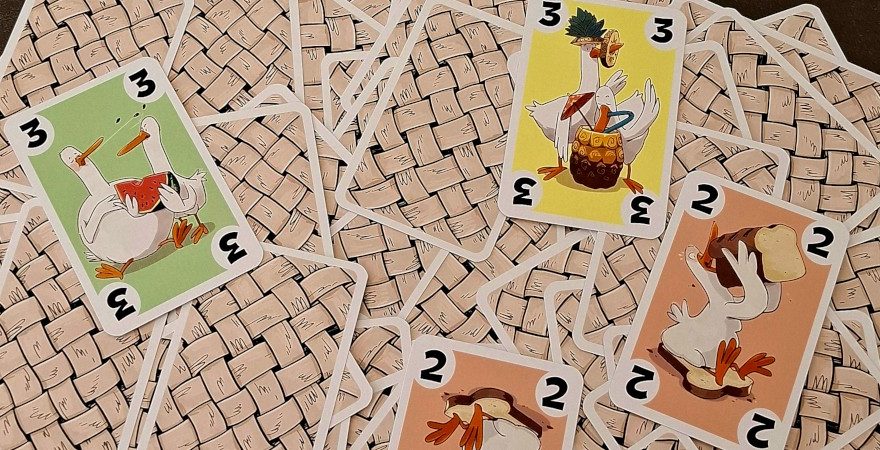
Vorbereitungen braucht es kaum bei Greedy Goose. Schmeisst die Karten auf den Tisch und los geht’s! Ein schnelles Push your luck-Spiel mit eingängigem Mechanismus. Nur zu gierig sollte man bei diesem Kartensammelspiel einfach nicht sein. Die Karten verdeckt auf dem
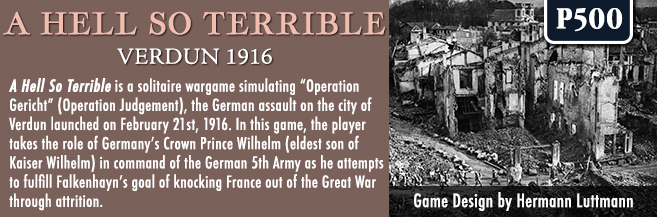
Hermann Luttmann is a great designer and I just love his solitaire takes on historical battles. His newest design is a solitaire game called A Hell So Terrible: Verdun 1916 from GMT Games that focuses on the German assault on the city of Verdun in 1916 during World War I. Keep in mind that Hermann is a very creative designer and uses lots of very interesting and chaotic design elements to create a very interesting and satisfying gaming experience. Also, most of his games are just that, with very engaging gameplay and a lot of the unknown that will hit you in the face from time to time! I just love his games. We reached out to Hermann and as always he was more than willing to share more about the design.
*Keep in mind that the design is still undergoing playtesting and development and that any details or component pictures shared in this interview are for prototype purposes and will definitely change prior to final publication as they enter the art department.
Grant: Hermann welcome back to the blog. What is your upcoming game A Hell So Terrible about?
Hermann: Thanks so much for having me back again! This is getting to be a bad habit. A Hell So Terrible is currently on the GMT P500 list and covers the German assault on Verdun during World War I. The offensive was launched on Feb. 21, 1916, and its ultimate goal was, as Chief of Staff Erich von Falkenhayn infamously stated, to “bleed France white”. This design sets up the solitaire player commanding the German army at Verdun. The player must push the various German Corps forward along nine different tracks across three main sectors, all of which converge on the city of Verdun and its last ring of fortresses. But the player only has a limited amount of time to close the noose around Verdun, as at the start of July, the Allies will be launching their huge offensive along the Somme River and vital German resources will need to be diverted to defend that front. So, this game design combines a little bit of push-your-luck with a little bit of tower-offense (reverse States of Siege, if you will), and a dab of historically-weighted chaos, to give you a nice flavorful stew of military simulation and game play fun.
Grant: What is the meaning of the title? What did you hope to convey about the game to the players?
Hermann: We actually went through a number of different titles, and I had this one neat quote I found:
“Humanity is mad! It must be mad to do what it is doing. What a massacre! What scenes of horror and carnage! I cannot find words to translate my impressions. Hell cannot be so terrible. Men are mad!”— Second Lieutenant Alfred Joubaire in his diary during the Battle of Verdun (May 23, 1916).
The BBC also used a version of this quote for the Verdun chapter of their special Great War TV series – “Hell Cannot Be So Terrible”. Gene Billingsley came up with the final, truncated version for the game’s title. I take great pride in my game’s titles, and this is no exception. I want the titles to be poetic, artistic, and memorable and thus are usually portions of famous quotes, book chapter titles, etc. By doing so, the title has a meaning and conveys to the player a hint of what the game is about. In this case, as you may surmise, it is supposed to be a bit depressing and gloomy, preparing the player for a difficult Great War grind. The player will experience, in abstract and harmless form of course, the tough slog and frustrating pace of a WWI offensive against an entrenched enemy.
Grant: I see that you described it as a “tower offense” game. What does this mean?
Hermann: This clever twist on the “tower defense” label was created by the game’s developer, Marco Poutre, and I just love it. A tower defense game traditionally means that a player is located in the relative center of the game board, and they are required to defend that center from a foe advancing from multiple directions. Lose the center and lose the game. A Hell So Terrible flips that dynamic around 180 degrees. You are the approaching German attacker moving along multiple axes of advance and the French enemy “bot” is the central defender, trying desperately to keep you away from Verdun.
A prototype copy of the board with counters. Not final art.
Grant: Furthermore, the player takes on the role of the attacker. How did this change your design focus?
Hermann: Primarily, the game design must provide the player with strategies of offense and exploitation, rather than that of defense and blocking. The game’s mechanics are structured to offer ways and means for the Germans to conduct actions against the enemy, rather than offer just reactions to enemy moves. You are the instigator and thus drive the action with your play. But that’s not to say that the French “bot” sits idly by…it will counterattack and it will generally do that in the spot which least suits you and your plans.
Grant: Why was this a subject that drew your interest?
Hermann: Well, as you may or may not know, World War I has always been a primary interest of mine. It is just so rich with gaming opportunities because there are so many interesting fighting fronts featuring many different armies. The war is loaded with fairly obscure yet fascinating battles and campaigns and making them each “gameable” is a real challenge. Designing a playable game out of trench warfare was one of my earliest self-inflicted gaming challenges and that all lead directly to the In Magnificent Style push-your-luck style system, which has now come full circle to A Forlorn Hope from Wharf Rat Games (which actually does cover trench warfare). In the A Hell So Terrible game design, that aspect of pushing your troops ”against the wind” of enemy fire (but at an operational scale now) seemed to fit really well with what a game about Verdun should simulate.
Grant: What is your ultimate design goal with the game?
Hermann: Simply, to provide the player with as much angst and anxiety as possible! This operation is perfect for the push-your-luck and tower offense approach. The player is placed under a severe time constraint, so the requirement to not only keep moving forward (even when it seems unwise to do so) but also the need to harbor the few resources you have available in the game (more on that later) is a perfect combination of game play juggling. The player must pick the best spots to attack, when to attack, and with what expenditure of assets. And to keep all these moving parts in a playable, accessible format that doesn’t overstay its welcome is the design goal.
Grant: What from trench warfare during WWI and the numerous attacks on Verdun was most important to model?
Hermann: Well, there are quite a few factors that I really wanted to get into the design to make it feel right. Obviously, the French defensive positions are deep, layered, and unpredictable. There are multiple chains of trenches, forts, and terrain features that must be overcome. How do you, as the attacking Germans, go about penetrating these defenses and inflicting as many casualties as you can on the defending French? Well….planning, logistics, bombardment, flanking, reconnaissance, and determination are the tools to overcome those traditional WWI obstacles. Using a design-for-effect principle, there are simple mechanics built into the game that allow the player access to each of those tools, but at the same time, they are not always available and certainly aren’t limitless.
The player must assess each phase of the game and play it to their best ability, utilizing these historic tools to pry loose the French defenses. So, all these factors are important to model to get the best full experience of attacking in WWI.
One other critical thing I wanted to model is the unknown. What I mean is, the French defenses were mostly hidden and they were deep. Though the player can see the French units on the game board, their strengths are unknown until engaged and even the effect of your artillery bombardments is unknown until you actually have units enter those spaces. This is a huge aspect to WWI trench warfare – you are just never sure what the enemy is doing nor what kind of shape they are in. This fog of war really creates a high level of tension and requires the player to try their luck sometimes, even when it might not seem advisable. And the game will constantly be changing the state and makeup of the French defenses, including allowing them to hit back at unexpected times with counterattacks. All these aspects of WWI warfare are critical to include to give the proper experience, and they are all found in this game.
Grant: What sources did you consult about the details of the history? What one must read source would you recommend?
Hermann: The Price of Glory by Alistair Horne is my “must read” source.
Verdun 1916: They Shall Not Pass from Osprey Publishing.
Verdun: The Longest Battle of the Great War from Oxford University Press by Paul Jankowski.
And in addition to published books, I reviewed various online articles and video documentaries.
Grant: What other games did you draw inspiration from?
Hermann: Honestly, none. I know you guys have covered a number of the other Verdun games and I know that there are some really good ones. But A Hell So Terrible is, I feel, a unique wargame approach to this campaign and as such, I don’t like to be influenced by other games when I begin a design. That goes for most of my other designs as well, by the way. Again, that’s not to say that other game designs aren’t great games – most are. But I don’t want to allow myself to be subconsciously swayed one way or the other by another designer’s approach, unless I’m actually using an operating system as my core engine (like States of Siege, for example). That’s not to say that I won’t read the background and historical information that is contained in other games or read the associated historical articles in a game magazine. But for the most part, I do not consult other games to get design ideas.
Grant: What are the Activation dice and how do they work?
Hermann: One of the driving inspirations for this game’s design approach was the idea of using an activation dice mechanic in a wargame. This is a relatively new game mechanic, at least in my experience, and I first encountered it in the Claustrophobia game series. I’ve come to appreciate the fact that it is an almost perfect blend of randomization and player decision making, all in one simple mechanic. You roll a bunch of dice – the random part – and you must then assign those dice to particular tasks – the decision part. My twist on that concept is that I marry that idea with the ability to change the kind of dice you roll and then apply the entire push-your-luck concept on top of that. There are two types of dice – Movement and Casualty – and after all dice are rolled, one of each is assigned to an activated unit. This will tell you how far a unit can move and how many casualties it will suffer just from moving (i.e., representing the constant enemy “wall of fire”).
Grant: How has the dice activation streamlined the game? Why does this work so well?
Hermann: The dice activation system not only tells you how you can move your units but also resolves the persistent enemy fire without needing the player to resolve a dozen separate combats. There are two categories of activation dice – Movement and Casualty. The Movement dice come in two types – Advance (green dice) and Infiltration (black dice) while the Casualty dice also come in two types – Friction (orange dice) and Suppression (red dice).
The Advance die allows normal movement results and is the default movement die unless the player opts to spend Command Points to upgrade one or more of these dice to Infiltration dice. The Infiltration dice represent the deployment of Stosstruppen, highly skilled and specially equipped assault troops, and as such these dice allow more movement. Because Command Points are a limited resource, the player must make that critical decision whether to spend those points to get the more efficient Infiltration dice.
The Friction die is assigned to a unit to represent the amount of enemy fire it is receiving and it is the default die unless the assigned unit has its Support marker (representing the supply trains and supporting local artillery) nearby. If the marker is with or adjacent to the activated unit, the player may automatically substitute the Suppression die for the Friction die. The Suppression die represents the tactical artillery (present with the Support marker) bombarding the enemy and thus suppressing the enemy troops and their defensive fire. The problem is that Support markers are hard to move and rarely are able to keep pace with their associated German unit.
Thus, the player is left with some interesting command decisions, even though a unit’s movement and vulnerability is randomly determined by a simple die roll.
Grant: What time pressure is felt by the player?
Hermann: Like all game designs that have any kind of push-your-luck aspect to them, time has to be of the essence. If there is no time pressure, there is no reason to push and take chances. In this game, each turn is half-a-month and the player must accomplish the German goals by the end of the 10th Game Turn, which is the end of June, 1916. The Somme offensive starts at the beginning of July and this marks the point where the Germans must have achieved a victory at Verdun in order to compromise that offensive. The player will find that it is a long slog to capture the ring of French fortresses and get to the outskirts of Verdun in time. So, they will be compelled to push hard and take risks to get to the inner sanctum before the end of the game.
Grant: What type of experience does this create? What are the toughest decisions forced on the players?
Hermann: The experience will hopefully be, as I said before, one of anxiety and fun all mixed into one package! And despite the random events and numerous dice rolls, there is a parade of tactical and strategic decision-making the player must navigate each and every turn. Just to list the toughest and most critical…
Which Activation dice do you assign to which unit?
In what order do you activate the units? This matters because you can maneuver your units to create flank attack benefits.
How do you spend your limited Command Points?
Where do you place your Bombardment and Big Bertha markers?
How far do you push your combat units forward before you have to slow them down to allow the Support markers to catch up?
Do I spend precious time to do a Reconnaissance before attacking?
Grant: How does the solitaire bot for the French function? How does the AI prioritize its decisions?
Hermann: The French bot works mostly through the Event Cards, though as stated before the French firepower is also inherent in the Casualty dice effect. The events are almost all based on things that actually happened or could have happened during the Battle of Verdun and though they won’t occur in exactly the same order chronologically, many are weighted to have different effects depending on the month in which the card is drawn. The French are always tenaciously defending, but the cards dictate when reinforcements arrive, the deployment of fighter aces, the bombarding of German units, the appearance of random patrols, and the launching of counterattacks. And the location of many of those counterattacks is often influenced by how much progress German units are making on their tracks… r in other words, how close they are to Verdun itself.
Grant: What is the flow of the game?
Hermann: Each Game Turn begins with the draw of an Event Card and this card can affect any position or area across the game board. The player determines if they receive any additional Command Points and then resolve a dogfight procedure to determine which side has Air Superiority this turn. Then the player conducts any desired Artillery Bombardment, placing such markers face down on French units. The player selects which of three sectors to activate – left, center, or right. Before activating units in each sector, another Event Card is drawn and often, its effects apply just to the chosen sector (but not always). Units of the chosen sector move and fight until all are Spent for the turn. Then another eligible sector is chosen, another Event Card is drawn, and its units move and fight until Spent. Once all units on the map are Spent, the player calculates any Victory Points earned, and resets for the next turn.
Grant: What are the Events that start a turn? What are some examples of these events?
Hermann: The Event Card that is drawn to start the turn (during the Initial Event Phase) is the same as the others – they all come from the same deck. But this first card may affect the game differently. If it does, it will say so right at the top of the card. So, for example, the “Shell Shock & Attrition” card is especially devastating if drawn as the Initial Event. If drawn at the start of a Sector activation, it requires the German units of that Sector (only) to each take an immediate Morale Test (which could result in their becoming Spent before they even get to activate). If this card is drawn during the Initial Event Phase, it affects all the German units on the game map and every unit must take an immediate Morale Test!
Grant: How are Command Points used? How are they earned?
Hermann: Command Points (CP) are the currency with which the player can do some really cool bonus actions or get gameplay benefits. Using CP to the best of your ability is a key to winning the game. The player gets 15 CP to start the game and then earns some more each turn, but fewer and fewer as the game progresses. This is an abstract way to simulate the breakdown of communications between German headquarters and the troops, as well as reflecting the degrading of confidence in the operation, especially by Crown Prince Wilhelm himself. Certain Event Cards also grant additional CP. Command Points are used throughout the game to do a number of special actions, including purchasing Infiltration dice, re-rolling combat dice, replacing losses, using Attack Momentum (see below), redeploying units, etc. All powerful tools when used at the right moment in the game.
Grant: What is the need for the dogfighting step? How does this play out?
Hermann: The Dogfight Step is a part of the Air Campaign Phase, which just generally reflects what is happening in the skies above the Verdun battlefield.
The Dogfight is a simple competitive dice roll, with the side who has Dogfight Advantage at the time (as listed on the Turn Record Track) getting to roll two dice and use the higher roll. The winner gets to bump the Air Superiority marker one box in their direction. Who has Air Superiority at any point in the game can affect some events, but most importantly for the player, if the Germans have Air Superiority, they have more Bombardment and Big Bertha markers available to use in the turn (simulating that the German Drachen – balloons – are free to fly to observe and guide artillery fire). Again, a simple thematic mechanic that reflects a complex issue.
Grant: How does heavy bombardment work?
Hermann: During the Heavy Artillery Bombardment Phase, the player deploys a certain number of Bombardment and/or Big Bertha markers onto the game map. At the very start of the game, there is a special step called the Trommelfeuer Step which allows the player to place 20 Bombardment and 5 Big Bertha markers around the map. This is to simulate the massive preliminary barrage the Germans conducted before the assault. During all the other game turns, the player gains a certain number of Bombardment Points, based on where the Air Superiority marker is located. Bombardment Points are spent to purchase Bombardment and Big Bertha markers to place face down on French units or into the special Voie Sacree (Sacred Way) area, which was the logistical lifeline for the French forces. The markers each have variable effects on their back sides, ranging from no effect to utter destruction. But these markers are randomized and the player does not know what effect applies to the targeted French units until a German unit enters their space for combat or the player takes the time to conduct a Reconnaissance action to reveal and apply the marker immediately. A Big Bertha marker placed in the Voie Sacree area can interdict that area and delay French supplies and reinforcements, which is enacted by nerfing certain Event Cards.
Grant: What is the layout of the board?
Hermann: The boards shows the entire area around the Verdun fortress complex. There are nine movement tracks and each track has a dedicated German unit and Support marker. Each of these tracks are made up of a series of eight spaces. Most spaces have a terrain feature associated with them – clear, forest, hills, fortress, or trench. There are also a number of landmark spaces that have special game effects (ex: Fort Douaumont). The tracks are also divided into three Sectors, each representing a major segment of the German army attack zone. The left Sector has only two tracks, the center Sector is the main attack zone with four tracks, and the right Sector has three tracks and is the left bank of the Meuse River, which was manned by the Bavarian Corps. Every German unit starts in its own trench area and must move up the track toward Verdun, encountering and hoping to defeat French units along the way.
A prototype copy of the board. Not final art.
Grant: What dangers are present for the advancing Germans?
Hermann: My goodness…there’s a myriad of dangers for the German player. The French can not only offer a stubborn defense of their trenches and forts, causing you casualties and loss of time, but they can also bombard your units and whittle them down from afar. Logistical considerations are numerous, as the player needs to carefully use the Command Points in the right spots and must have the Support markers keep a steady pace to support their associated German fighting units. The air war has to be won consistently to maximize artillery bombardment. The player is going to be severely curtailed by Event Cards and coping with those while also taking advantage of the few good Event Cards is essential. Finally, the most dangerous factor of all is the passing of time. The player only has ten turns to accomplish a lot and every minute lost during those ten turns can make all the difference between victory and defeat.
Grant: How does Fog of War work? Why was this important to include?
Hermann: Well, as with most of my games, I love dabbling with the three F’s of War…the Fog of War, the Friction of War, and the Fortunes of War. And this design has all those elements in it. The player of course has to deal with the uncertainty of the Activation dice rolls and the unknown of the combat dice rolls (see below). Along with that, the Event Cards are always throwing a new, unexpected wrench into the works. In fact, the player does not even know definitively how effective their artillery bombardment has been! On top of all that, French units are deployed face down and their exact strengths are not revealed until contact is made or until the player spends time to scout out the units with the Reconnaissance action. These are all important elements to include in the game because these are exactly the same challenges the German army and its commanders had to face at Verdun. And as with all games that lean on the historically-weighted chaos theory of design, having this level of Fog of War in a game design not only makes it more realistic, but it makes it a more fun game as well.
Grant: How does combat and losses work?
Hermann: Combat in this game is pretty straightforward. Each side in a combat totals up their SP and rolls a D10 which is added to their SP to get a Combat Score. The French get an extra die to roll (using the higher result) and/or additions to their Combat Score if located in certain terrain. The German units can get re-rolls and/or an extra die if they are using an Infiltration die for their activation, or spend a Command Point, or have a flanking unit. Some Event Cards can affect combat as well. Each side gets a total Combat Score and inflicts Hits on the opponent based on that score…the higher the score, the more casualties are inflicted. This yields interesting combat results as both units scoring high means huge casualties for both sides, regardless of who wins. Then the side with the higher score wins the combat, and the opponent must retreat. The actual difference in scores can affect units differently. For example, if a German unit wins a combat by only one point, it will hold the position as the winner but it will become Spent, meaning it is done for the turn! Too many of these kinds of wins can spell doom for the German player. A large margin win will allow the German unit to choose pursuing the enemy and continuing forward or consolidating and bringing its Support marker up one space. Tough choices!
Grant: What is the concept of Attack Momentum?
Hermann: Ah, that’s my sly little “gamey” mechanic for this design. I wanted to add another twist to the Activation dice assignment mechanic that also acts as a mitigation against bad luck – or in this case, technically a mitigation for good luck. So, the idea is that if the player assigns two good Activation dice to a unit, instead of having to re-roll those dice the next Game Turn, the player can instead spend a Command Point and keep those dice with that unit but must count down each die by one number. So, for example, if you assign a “6” Movement die and a “5” Casualty die for a unit, you could spend a CP and activate that unit again with a “5” Movement die and a “4” Casualty die (assuming the unit was not Spent during its first activation). So, good dice stay with the unit, but lose their potency over time. Historically, this simulates a commander seeing a unit performing well and then directing assets and leadership to that unit to exploit their superior performance.
Grant: How do you model German Command Efficiency?
Hermann: Well, in games where there is significant dice rolling, I do like to use the “doubles = something special” mechanic, because you know that the odds will produce a certain number of doubles rolls during the course of the game. As such, I like to make something special happen when they are rolled that the player can exploit, and in this game the use of a doubles Activation dice roll is actually more in the control of the player because the doubles can be “created”. What do I mean? For example, if you are rolling Activation dice for the right Sector (three tracks, so three German units), you’ll roll a total of six dice – three Movement dice (Advance and/or Infiltration) and three Casualty dice (Friction and/or Suppression). This creates a pool of dice results from which you will assign two dice per German unit – one Movement and one Casualty die for each. Thus, if you have two matching dice, you can grab those two and create a doubles result for that unit. An assigned doubles result triggers German Command Efficiency and it allows you some options for activating that unit. You have one of three options you can apply – increase the Movement result by one type (ex: change the result from Move 1 to Move 2); reduce the strength point loss from the Casualty die by one; or move the unit’s Support marker up one space. The chosen benefit is applied, along with the normal dice roll results, when the unit is activated. Again, a simple bonus to reflect the superior abilities of the German officer corps.
Grant: What type of an experience does the game create?
Hermann: I’m hoping that the game creates an intense gaming experience. One in which the player can exercise tactical and strategic options in an effort to carry out a particular plan, but coupled with the excitement of the unexpected challenges by – and sometimes, assistance from – the Gods of War. This should be a gaming experience of tough decisions and of taking calculated risks. And ultimately, I think this will inevitably come down to a nail biting ending.
Grant: What are you most pleased about with the design?
Hermann: I’m really proud of the fact that I think I got almost every crucial element of simulating the early stages of the Battle of Verdun down to workable and accessible mechanics. The game’s core mechanics and use of historically-based Event Cards drives a narrative that draws the player directly into this era and into the drama of this particular battle. To be able to do that and still keep the game accessible and easily playable is, for me, the ultimate goal and I think A Hell So Terrible achieves that goal.
Grant: What other designs are you working on?
Hermann: My, my… t’s a busy year for sure! Here we go:
They March Against Us: Leipzig 1813: This is the first game in the Bonaparte’s Sword Series, which will essentially be Napoleonic Blind Swords. Roger and Richard at Revolution Games are playtesting it right now and so far, so good. It should be available this year.
A Forlorn Hope: This game is Wharf Rat Games’ first published design and just finished a very successful crowdfunding campaign. We’re now working on getting it all finished up and designing the stretch goals that were achieved. This one is going to be a real beauty and I can’t wait until people actually get to play it.
Dawn of the Zeds: Designer Edition: Yes, Dawn of the Zeds is back and this is the newly redesigned version of the classic. I’ve updated the mechanics, especially the combat system. It will have the traditional map layout and characters of the previous three editions, but I’ve also added a ton of new stuff as well. This is published by Blue Panther and I think (hope) will be a huge hit.
A Primitive Madness: Antietam 1862: The third Black Swan Series game by Flying Pig Games will indeed cover the Battle of Antietam. This one will be a bit different, as the scale has changed to accommodate the smaller battlefield. This will have the same huge maps and elite production of the other games.
At Any Cost: Metz 1870: This game will be republished by Hexasim sometime this year. I am reviewing the original game and probably updating a chunk of mechanics to allow the game to play more smoothly and quickly. And it will have all new artwork.
Kill All Fermitians!: A republication of an older game (Volters Lead the Way!), this is going to be published by Flying Pig Games as a deluxe push-your-luck science fiction game. The new artwork with this one is amazing!
Nemto: A big, multiplayer, cooperative science fiction wargame that will be published by Nuts Publishing. This is going through all original artwork right now and even some professional background story telling to add to the game. It tells the story of human mercenary companies sent to an alien planet to lay claim to its powerful natural element – pinnaclium.
More Brains!: Have you ever wanted to play as a zombie? Of course you have! Well, here’s your chance. Another new company, Jackl Games (run by Randy Lein from Legion Wargames) is going to publish this multiplayer game that I co-designed with Ryan Heilman. Each player controls a team of Alpha Zeds, zombies who are accumulating brain power and with each new brain, a new skill. Very different and very fun.
Thanks so much to Grant and Alex for allowing me to write about A Hell So Terrible! I hope gamers enjoy it. All the best! Hermann
As always it was a pleasure speaking with you Hermann. I am very excited about this one as it sounds very interesting and is a gaming subject that I have a great interest in as you mentioned. I am looking forward to our next opportunity to meet up and play some games!
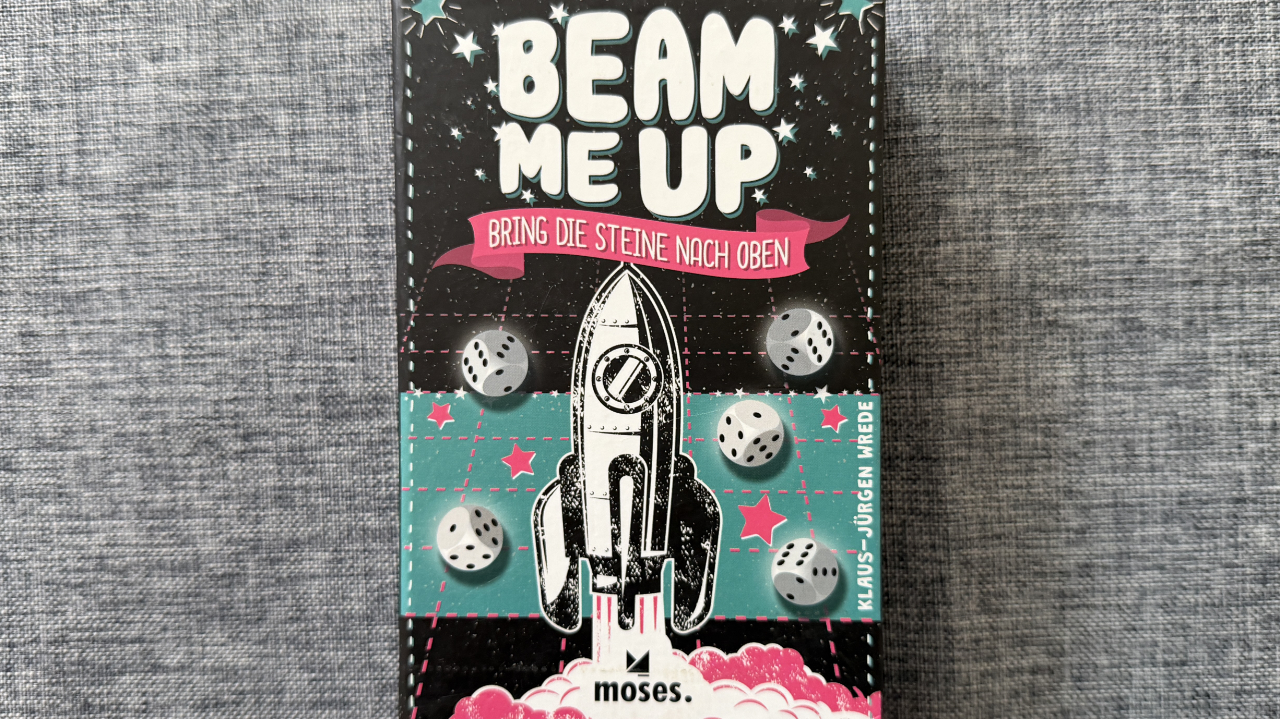
Mit der Entwicklung von Carcassonne vor 26 Jahren und den weiterhin regelmäßig erscheinenden Erweiterungen und Varianten müsste Klaus-Jürgen Wrede ausgesorgt haben. Oder zumindest nur noch Spiele entwickeln, die er auch wirklich selber spielen will.
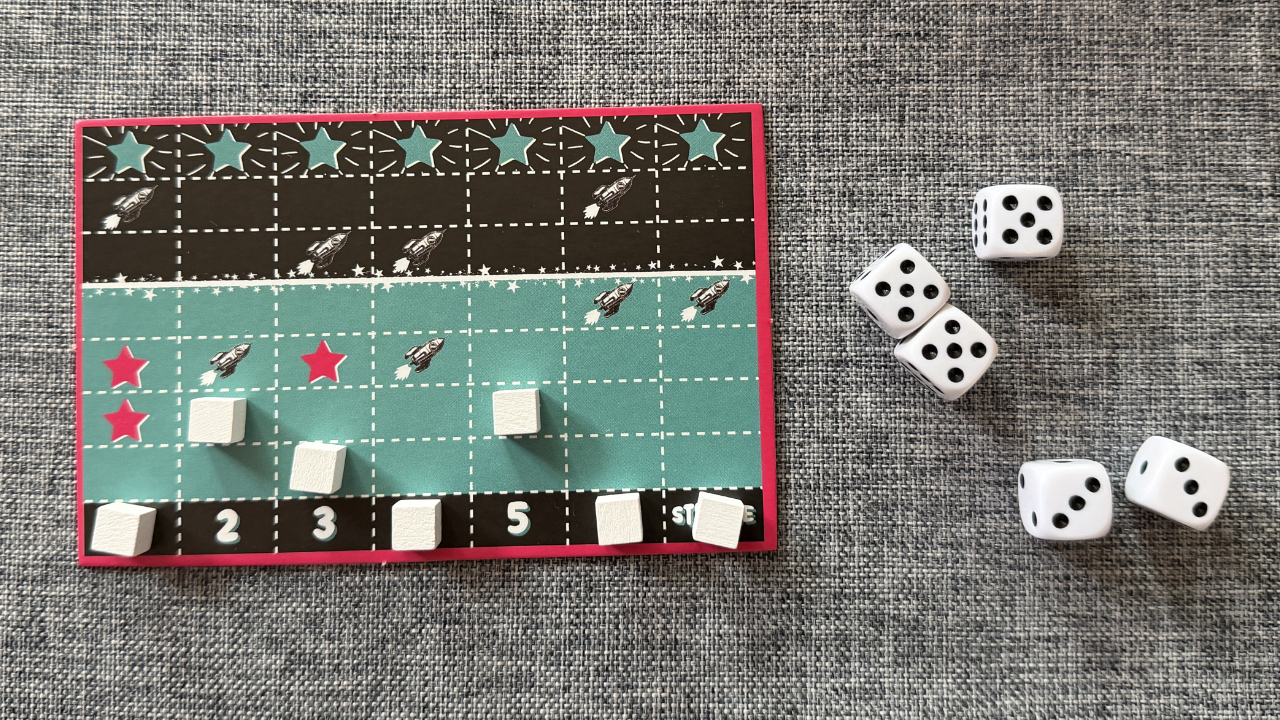
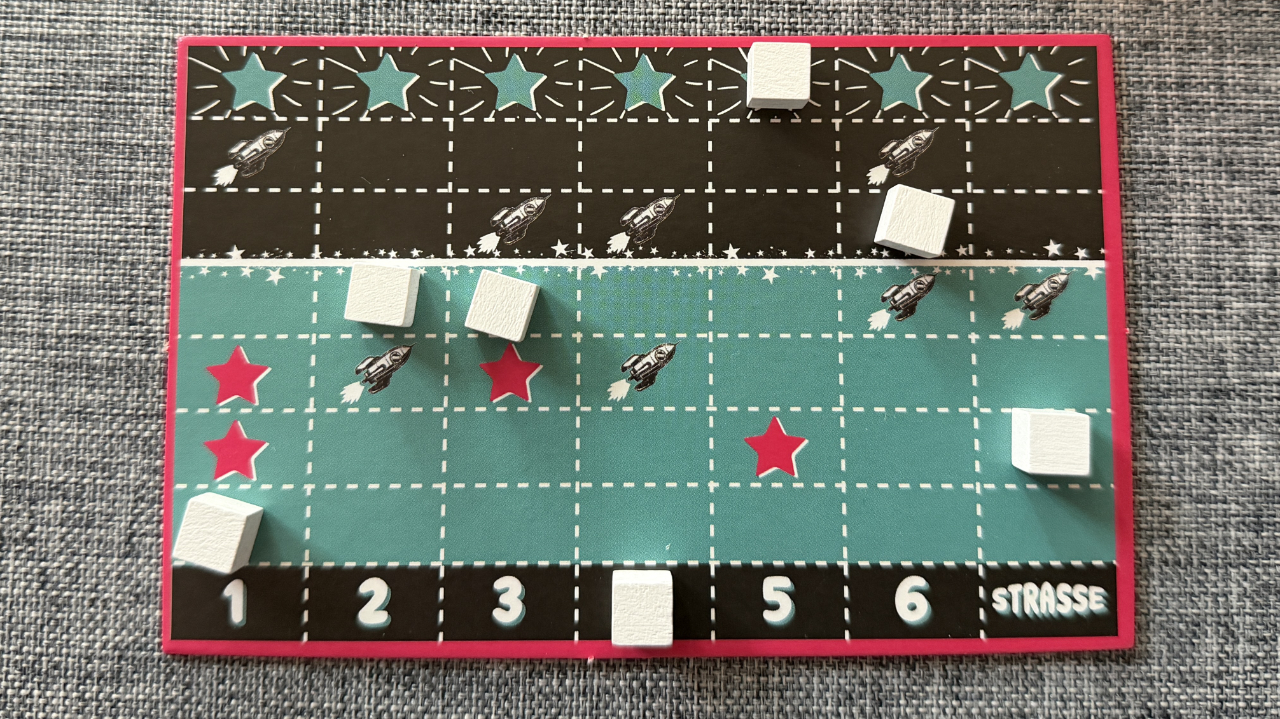
Sobald man die weißen Würfel auf die Startfelder legt kann man die Zahl nicht mehr sehen. Zum Glück sind sie aufsteigend angeordnet. Aber auch wo die Sterne sind, die einen später unsichtbar machen, muss man sich merken oder immer nachgucken.
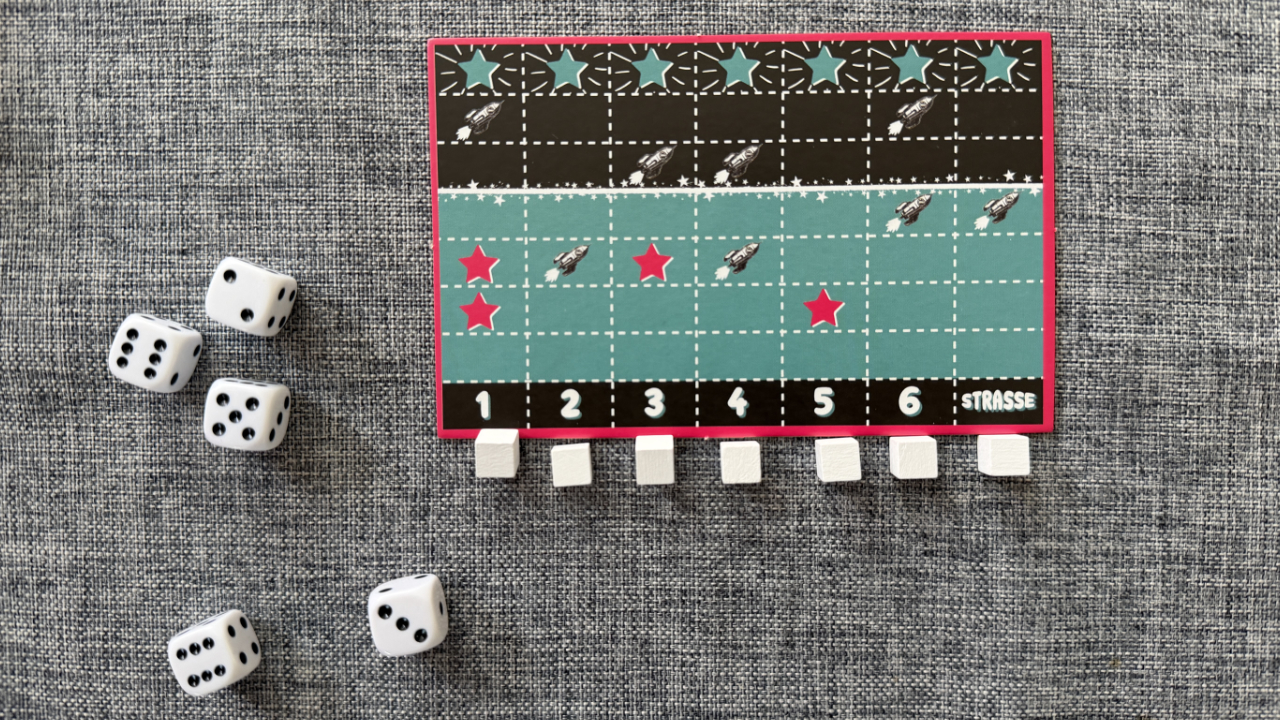
Dazu gehört Beam me up sicher nicht. Wie auch in Uwe Rosenbergs Armonia würfeln wir bis zu dreimal und nutzen dann das Würfelergebnis, um mit unseren 7 Raketen (Werte 1 bis 6 + Straße) auf den Leisten voranzuschreiten. Bei einem Pasch 1 Feld, beim Kniffel dann sogar 4. Aber während Armonia mit den Tetris-Formen eine Idee ins Spiel bringt, können wir in Wredes Variante nur bei einer Rakete auf dem Zielfeld ein weiteres Feld vorrücken. Noch mehr ärgert einen die Glückskomponente, denn wenn ich vorangeschritten bin und ein Gegner auf der gleichen Leiste mindestens zwei Felder voranschreitet, falle ich um ein Feld zurück. Zumindest wenn ich nicht auf einem Feld mit einem Stern bin, der mich „unsichtbar macht“.
Ein Pasch. Ich kann ein Feld bei 3 und zwei bei 5 hochgehen. Mein Gegner muss bei 5 ein Feld runter.Hoffentlich ist es bald vorbei
Fazit:
Selbst der Name des Spiels ist irreführend und soll Trekkies zum Kauf motivieren. Zumindest das hat geklappt. Wir Beamen hier gar nicht. Zum Glück ist das Spiel relativ schnell vorbei, denn wenn man 4 weiße Klötze (5 im Zweispielermodus) im Zielbereich hat und kein Schiff noch auf der Erde steht, können wir alles wieder in die Schachtel packen. Und die ist in der Moses-Edition mit Schuber schön. Aber schon merkwürdig, wenn die Verpackung des Spiels mehr begeistert als die Mechanik.
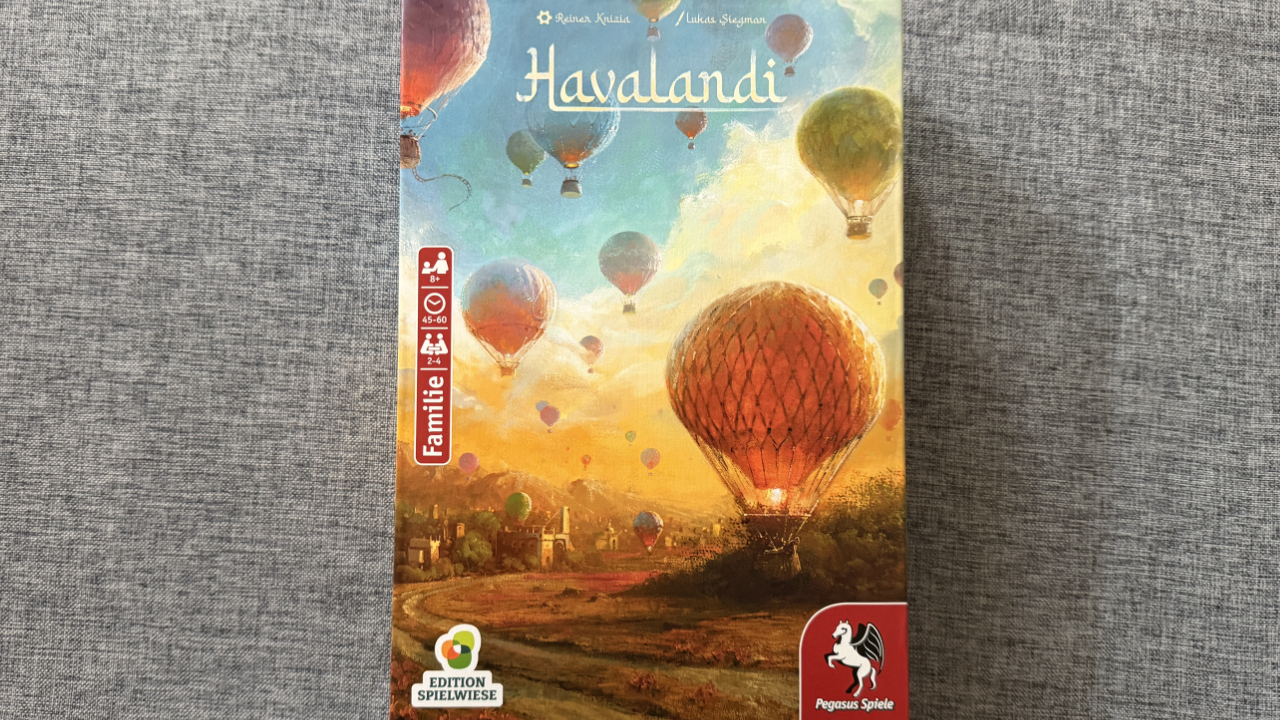
Die Spielefabrik Reiner Knizia hat schon einen großen Output, doch immer wieder sind familientaugliche schöne Spiele dabei. So wie ein Rebirth oder Mlem ist auch Havalandi ein Einsteiger-Strategiespiel, in das man aber als Grübler mit Statistikhintergrund (es gibt einen Würfel) sich vertiefen kann.
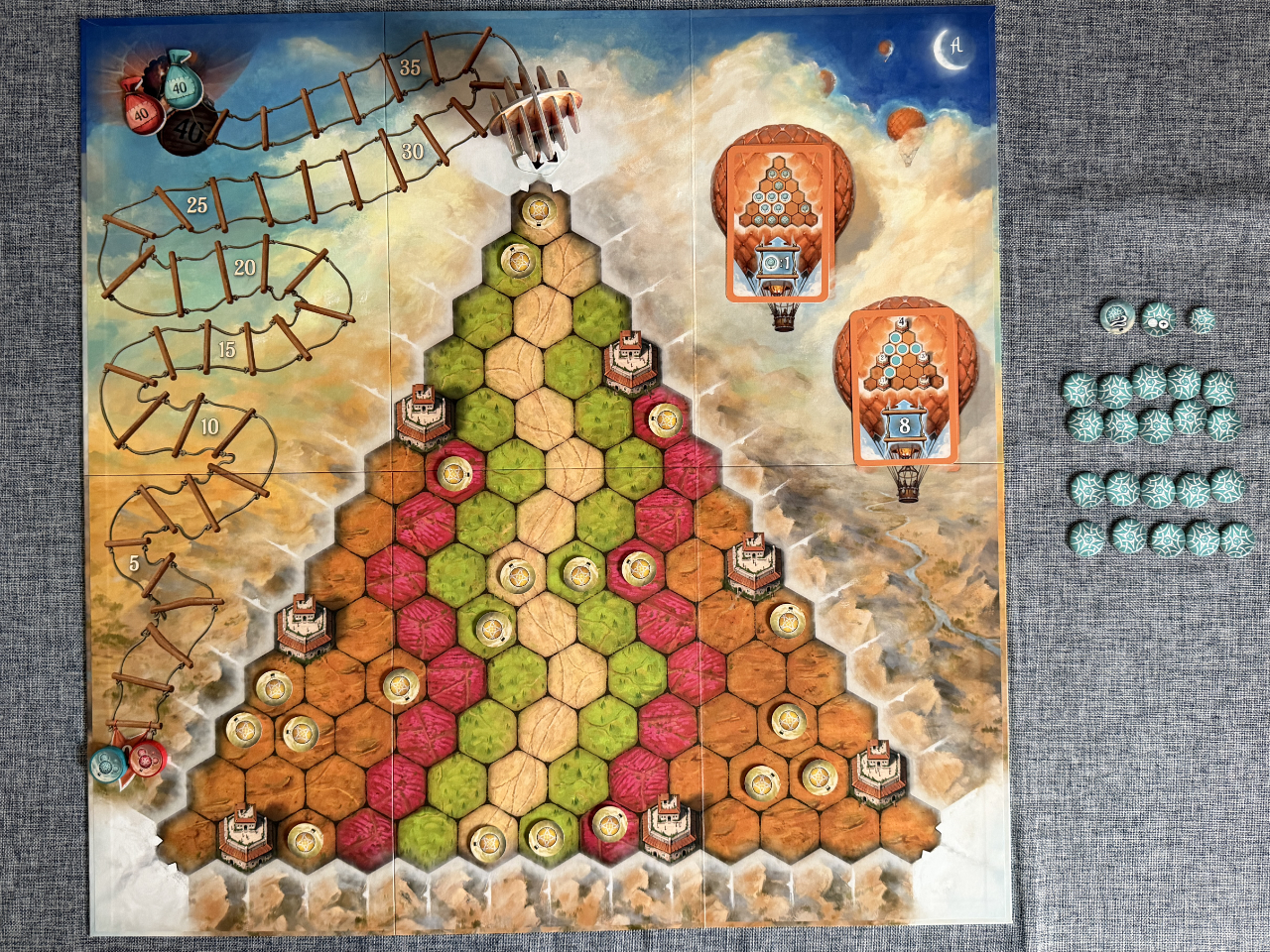
Der Aufbau für 2 Spieler
Ist man an der Reihe würfelt man, um den Heißluftballon weiterzuziehen und somit die beiden Geraden zu ermitteln, in denen man einen seiner eigenen Ballons platzieren kann. Habe ich eine ausreichende Anzahl benachbarter eigenen Ballons, kann ich
wenn sie in verschiedenen Gebieten sind: Die Ballons aufsteigen lassen und werten (4-12 Punkte)
wenn sie im gleichen Gebiet sind: je Ballon einen Punkt bekommen
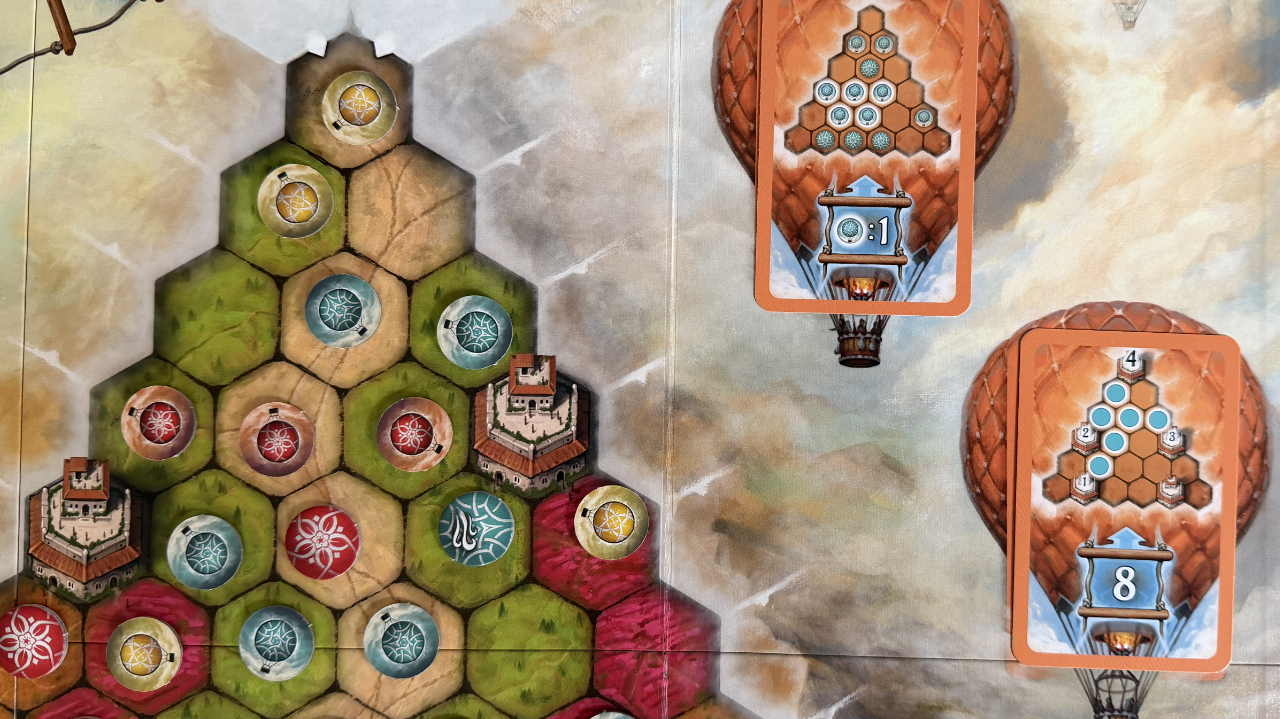
Varianz bringen drei Sonderballons, womit man z.B. als Joker irgendwo außerhalb der beiden Geraden einen Ballon platzieren kann. Außerdem kann man für mehr Siegpunkte neben Pavillons bauen oder mal einen Blick auf die Endwertungskarten werfen.
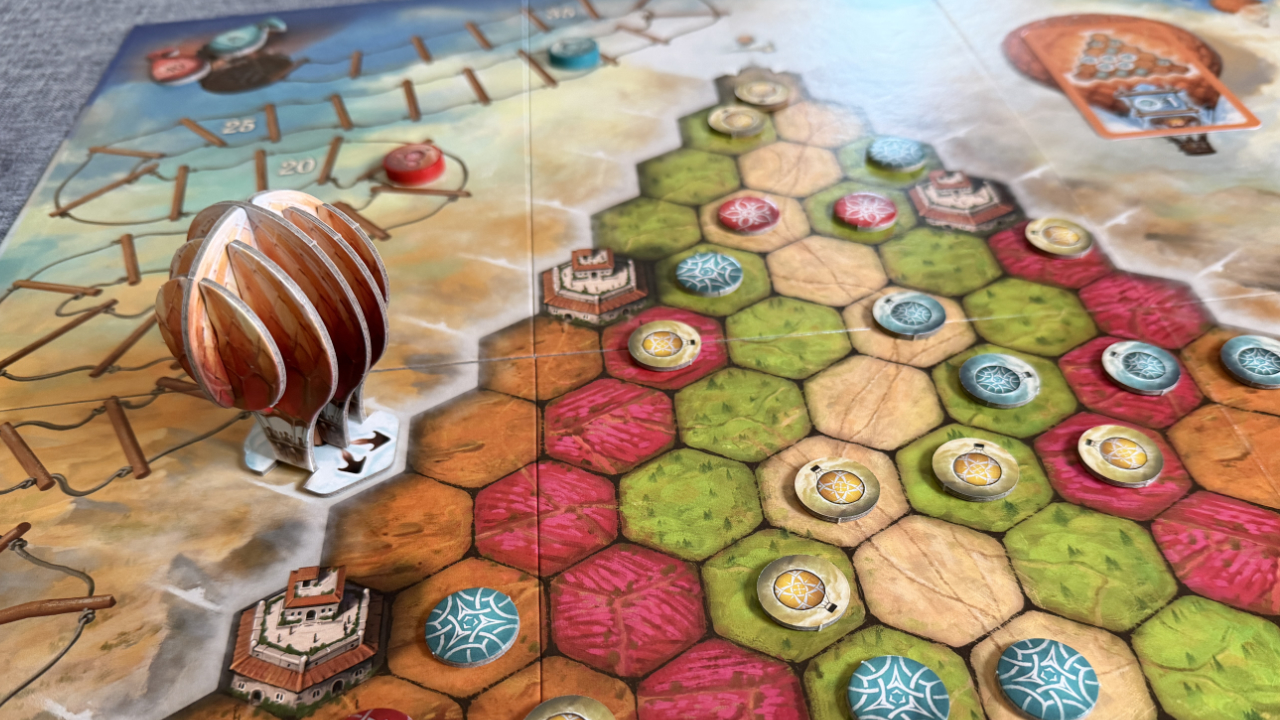
Die beiden Pfeile des Ballons zeigen die Geraden, in die man setzen kann. Nett sind auch die Bienen auf der Wiese.Es gibt eine Reihe Karten mit Endwertungskarten für Siegpunkte am SpielendeDie Rückseite bietet ein komplexeres Spielfeld
Fazit:
Für eine Mechanik ein Thema zu suchen ist nicht immer leicht und oft willkürlich. Hier passt das Szenario gut und man merkt, dass die Mechanik dem Thema angepasst wurde. Auch ist die Illustration schön und der Ballon zum Zusammenbauen ein Hingucker. Die Regeln sind schnell erklärt und das Spiel bietet genügend Tiefgang für Freakgamer. Auch wenn die lieber Drachen oder fliegende Aliens gruppieren würden und die sich dann noch angreifen sollten.
Aufgrund der Spieleflut wird Havalandi sicher kein großer Erfolg mehr werden und geht als „noch ein Knizia“ in die Statistik ein. Dabei kann das Spiel auch gerade mit der B-Seite des Spielplans und bei vier Spielern konfrontativ sein. Und man muss immer planen, ob man jetzt eine geringere Wertung durchführt oder seinem Glück in der nächsten Runde vertraut. Bleibt in der Sammlung, kommt wieder auf den Tisch.
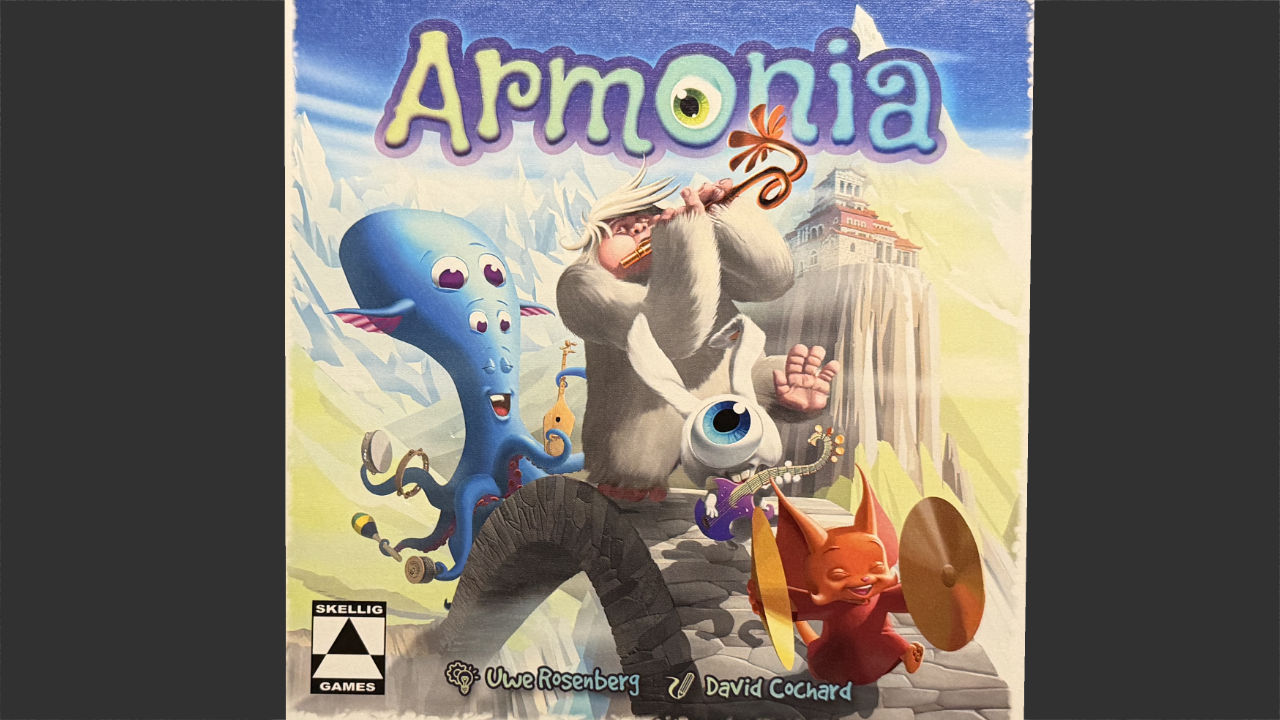
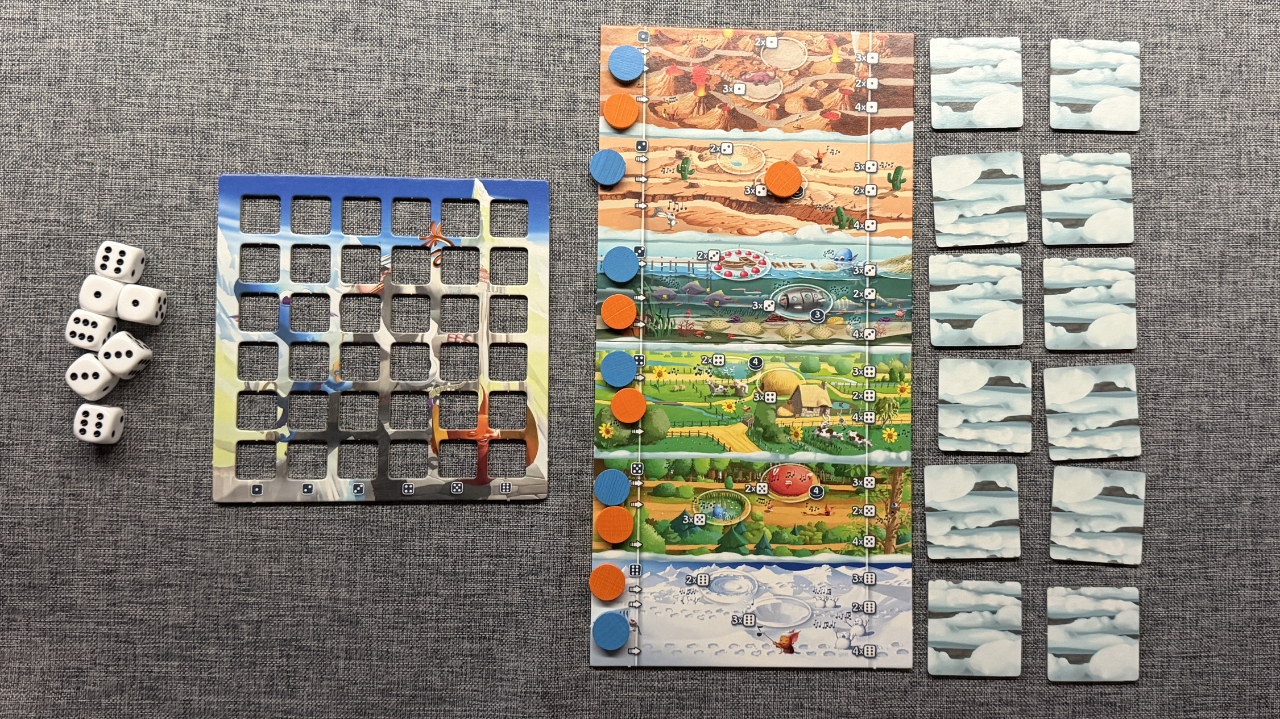
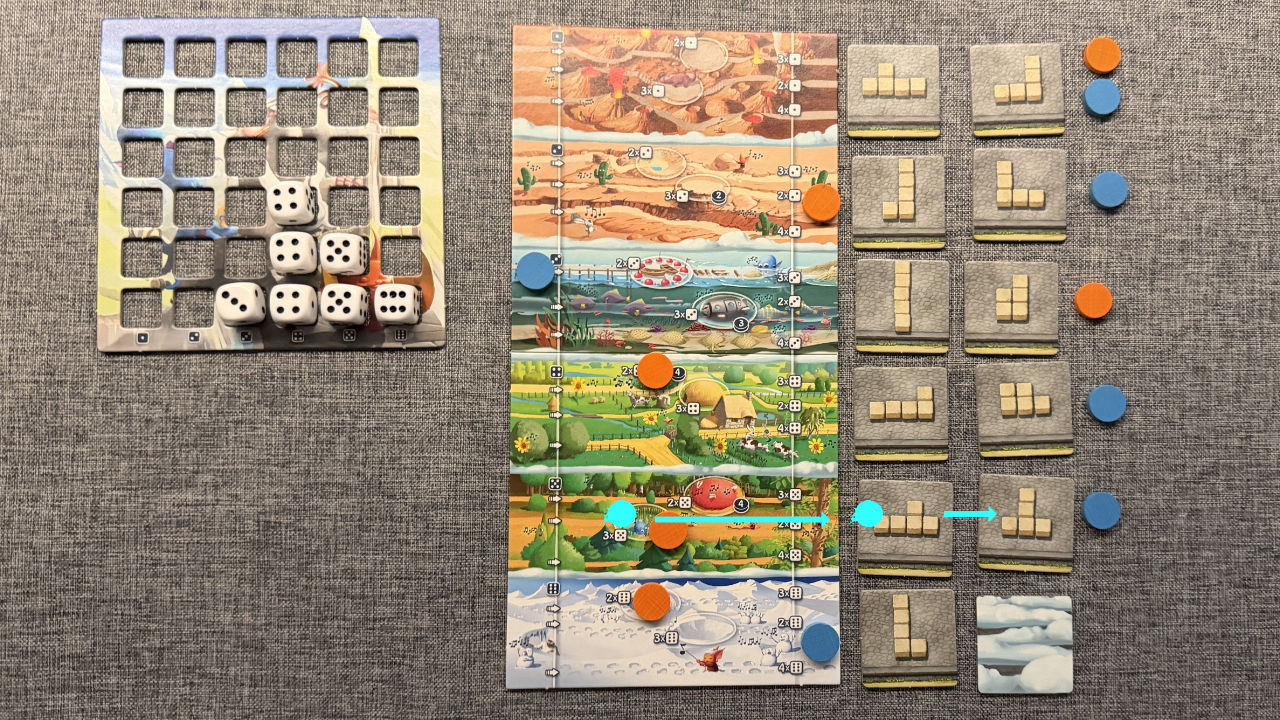
In diesem Uwe Rosenberg greifen zwei Würfelmechanismen ineinander. Wir würfen bis zu dreimal insgesamt sieben D6-Würfel, legen sie dann nach Wertigkeit sortiert zur Übersicht in eine Würfelablage und können nun mit dem Würfelergebnis
auf dem Spielplan voranschreiten, indem wir einen Viererpasch oder einen Zweier- und Dreipasch (in unterschiedlichen Würfen) gewürfelt haben und landen dann im Zielbereich der 1er bis 6er-Reihen.
sofern ein Spieler im Zielbereich ist wird Plättchen 1 (und wenn dieses gelöst wurde Plättchen 2) aufgedeckt und geprüft, ob die Würfelauslage die Tetrisform hat.
Spielaufbau. Die Würfelablage hätte ich fast entsorgt, nachdem ich die Inhaltsquadrate ausgepöppelt hatte.Mit dem Wurf kann der blaue Spieler den 5er-Pasch für den Sprung in den Zielbereich nutzen und hat dann glücklicherweise die beiden Terisformen auch noch. Und mit vier blauen Steinen im Zielbereich hat er gewonnen.
Fazit:
Auch wenn ich Sagani schon gespielt habe leuchtet mir nicht unbedingt ein, warum die Spieler in Armonia im Sagani-Universum Klangschalen schmieden. OK, die Spielsteine sind rund. Aber den Weg der Gnome durch die Wildnis (wo man einen Pasch zwischenspeichert) zur Tempelanlage (Zielbereich) und der Entfaltung der Zauber (Tetrisform vergleichen) ist schon etwas sehr willkürliches Klangschalenschmieden. Das tut dem Spiel aber keinen Abbruch. Es gab schon diverse Revanchen und es macht weiterhin Spaß. Mit leichten Regeln, push-your-luck und 15 Minuten Spieldauer etwas für zwischendurch.
Mit „Du kommst nicht vorbei!“ (oder im Englischen „Freeze“) bannt Gandalf den Balrog auf der Brücke tief in den Mienen von Moria. Bei dem Spiel My Gold Mine aus dem Hause Kosmos wünscht man sich auch so manchmal einen mächtigen Zauber herbei, der das Ungeheuer zurückschiebt. In diesem Kontext ist es der Drache, der sie plündernden Zwerge (aka Spielende) daran hindern möchte, das schöne Gold aus der Mine zu entführen. Wer hier an Klong! Und/oder später an Tiefseeabenteuer erinnert wird, liegt nicht ganz falsch. Die Goldmine ist allerdings eher ein einfach zugängliches und witziges Kinder- und Familienspiel, das auch noch Erwachsenen Spaß macht. Aber begeben wir uns nun in die Mine und schauen, was die Zwerge dort so treiben.
Spielprinzip
Bis zu sechs Personen können in die Rolle eines Zwergs schlüpfen. Es wird über drei Durchläufe gespielt und am Ende gewinnt die kleine Person mit den meisten Sieg-Punkten. Der Spielaufbau stellt eine (Gold-)Mine dar, die aus sieben Feldern besteht plus einem Feld für den Drachen (ganz außen/unten). Die Figuren der Spielenden befinden sich auf dem mittleren Plättchen und haben somit drei Züge bis zum Drachen (rechts) und zum rettenden Ausgang (links).
Es wird im Uhrzeigersinn gespielt. Die Person am Zug darf sich entscheiden, entweder in der Mine zu graben oder in Richtung Ausgang zu fliehen. Dargestellt wird diese Entscheidung über zwei verschiedene Kartenstapel. Der Grabungsstapel kann vier verschiedene Arten von Karten beinhalten. Im besten Fall sind einfach nur Goldklumpen (ein oder zwei) abgebildet. Dann gibt es noch eine Karte mit Gold und Laterne. Damit muss man die eigene Figur einen Schritt in Richtung Ausgang ziehen. Konträr dazu gibt es eine Karte mit rotem Feuer. Dazu muss man die Figur in Richtung Drachen ziehen. Es gibt aber auch noch eine Drachenkarte. Damit bewegt sich der Drache in Richtung Ausgang. Kommt er dabei auf ein Feld mit einer Zwergenfigur, verliert der Spielende alle in dieser Runde gesammelten Goldkarten und scheidet aus der laufenden Runde aus. Aber keine Angst, die Runde ist gleich vorbei, sodass die Eliminierung nicht lange ins Gewicht fällt.
Der Exit-Stapel besteht aus ganz unterschiedlichen Karten, die grundsätzlich den Spielenden in Richtung Ausgang bewegen. Allerdings sind oft mehrere Optionen möglich. So auch, dass alle Figuren einen Schritt in Richtung Ausgang gezogen werden können. Das klingt so trivial, ist aber ein interessanter Kniff in dem Spiel. Damit lässt sich die Konkurrenz schon vorzeitig durch den Ausgang und damit aus dem Spiel schieben. Diese behalten zwar ihre gesammelten Gold(karten)schätze, können aber keine neuen mehr erhalten.
Was bei Tiefseeabenteuer die knapp werdende Luft für alle ist, ist hier der Drache, der sich immer weiter auf einen zubewegt. Auch dies lässt sich aus sicherer Position dazu nutzen, sich die Mitschürfenden statt in den Ausgang in den Hals des Drachen zu katapultieren. Meinem Sechsjährigen sind diese Taktiken schnell bewusst geworden (gerade, wenn man sie hautnah erleben darf) und konnte sie bereits im zweiten Spiel gegen uns einsetzen.
Sobald alle im Ausgang sind, werden die gesammelten Goldnuggets auf den Karten gezählt. Die ersten drei Plätze bekommen dann physikalisch drei, zwei respektive einen Goldklumpen ausgehändigt. In den folgenden zwei Runden können diese Klumpen entweder für die Endabrechnung angespart oder auch für einen rettenden Schritt in Richtung Ausgang verwendet werden.
Mit sechs Spielenden oder mit noch sechs Figuren im Spiel ist es noch leichtes Chaos, da man mit viel Pech theoretisch in der ersten Runde in den Schlund des Drachen gezogen werden kann. Mit drei bis vier Spielenden oder auch übrigen Figuren können die oben genannten Taktiken aber zielgerichtet angewendet werden.
Unboxing
Die praktische, Handtaschen-große Box ist mit einem wertigen Magnetverschluss abgesichert. Auf den Minenkarten sind viele süße Details wie lustige Schnecken oder Ähnliches abgebildet. Die Figuren sind als farbige Holzscheiben dabei, die mit Aufklebern noch ein zwergisches Konterfei erhalten können. In der Box ist alles platzsparend aufbewahrt, und im aufklappbaren Deckel sind Aussparungen für die beiden Kartenarten vorgesehen.
Aufkleber hielten bei mir nur bedingt, und die Verpackung nutzen wir nicht als Spielablage für die Nachziehstapel. Allein schon, weil sie keine Ablage bieten. Daher ist der Mehrwert, den die Packung verspricht, eher nicht gegeben. Auch die Gold-Steine weisen insbesondere an den Ecken und Kanten schnell Abnutzungserscheinungen auf. Das sind allesamt allerdings keine wirklich schlimmen Kritikpunkte.
Die Regeln sind schnell erfasst und genauso einfach zu erklären. Es gibt sogar einen Link für ein Erklärungsvideo.
Bewertung
Gold schürfen, vor einem Drachen fliehen und am meisten Gold gegenüber den Mitspielenden einsammeln. Das klingt simpel und gerade, wenn man dann auch noch das persönliche Glück (push-your-luck) ausreizt, lässt sich das Spiel schnell in die langweilige Tempo kleine Schnecke!-Ecke schieben. Aber da steckt so viel mehr drin. Während bei Tiefseeabenteuer primär die richtige Nervenstärke zählt, wer als Erstes umdreht und damit einen Run auf die knapp werdende Luft auslöst, sind bei My Gold Mine noch taktische Züge möglich. Mit diesen lassen sich Mitspielende ärgern oder die eigene Position sichern.
Aktuell kommt es in jeden Urlaub mit. Einzig die großen Minenkarten verderben auf engen Spielflächen (Klapptischen im Zug, kurzen Couchtischen oder vollen Restauranttischen) den Aufbauspaß. Ansonsten ist es ein tolles Spiel, das auch noch den Erwachsenen Spaß macht.
Passend zu dem Spieltitel kann ich einfach nur einen rockenden Gold-Meeple vergeben. Zum Prädikat ist es mir zu leichtgewichtig und ein Karak würde ich in der Kinderrunde immer noch den Vorzug geben (allerdings reden wir hier auch von einem anderen Preis und Mitnahme-Größe).

 Anmelden