Das Rennen ist eröffnet in der comicartig abstrahierten Küche und das zeitgleich mit bis zu sechs Spielern. Unsere Rennstrecke suchen wir spontan selbst von Checkpoint zu Checkpoint und über die Ziellinie. Ein Folienstift markiert unseren Weg auf einem der sechs auch thematisch verschiedenen Küchenpläne. Nach 30 Minuten feiern wir schliesslich den schnellsten Rennfahrer als Champion. Auf der Neuheitenschau der SPIEL 2026 in Essen konnte ich ein ebenso spontanes Audio-Interview dazu führen.
Der Co-Autor Simone Luciani hat mich aufhorchen lassen, ist er doch eher in komplexeren Euroganes unterwegs. Hier haben wir es hingegen mit einem Echtzeit-Partyspiel zu tun, bei dem sich das flotte Folienstift-Rennen mit einer anschliessenden Auswertungsphase abwechselt. Mich hat das zu meiner einzigen Vorbestellung der Messe motiviert, wobei ich im Nachhinein nicht so recht sagen kann, warum eigentlich? Weil zu dem Zeitpunkt war so gut wie gar nichts über das Spiel bekannt. Ob es für mich was taugt, werdet Ihr also in naher Zukunft erfahren. Drückt mir die Daumen, dass es kein übereilter Blindkauf war. Inzwischen ist die kleine Erstauflage ausverkauft. Ein gutes Zeichen?
Zum Kennerspiel des Jahres 2025 gibt es brandneu eine Erweiterung mit mehr Missionen und für mehr Abwechslung im Grundspiel. Also für alle, die nicht genug von den taktischen Tiefsee-Tauchgängen bekommen können. Auch wenn die exklusive Vorbestellung der lokalisierten Deluxe-Version längst vorbei ist, könnt Ihr die Retail-Version ab November auch im Fachhandel erhalten. Auf der Neuheitenschau hat mir Robin alles im Audio-Interview erzählt, worauf Ihr Euch bis dahin freuen könnt.
Die Erweiterung richtet sich klar an Fans des Grundspiels und vor allem an Solo-Spieler. Mir persönlich reicht noch das Grundspiel völlig aus und solo sowie auch kooperativ habe ich die Tiefsee noch nie erkundet. Die Zielgruppe ist somit eng umgrenzt, allerdings ist auch völlig klar, was Ihr in und mit der Erweiterung bekommt. Wer neue Herausforderungen sucht, für den genau das Richtige. Auf die Mini-Erweiterung „Pinguinwanderung“, die zwei Ozeankacheln und fünf Pinguinfiguren mitbringt, sowie ein GAMETRAYZ-Insert vergleichbar mit dem Deluxe-Grundspiel müsst Ihr leider verzichten. Diese Art der künstlichen Verknappung mag ich nicht, weil damit die Zweitmarktpreise nur nach oben getrieben werden.
Mächtige Monumente ragen zum Ruhm der griechischen Götter in den strahlenden Himmel. Wir befahren die Seewege dazwischen und treten im Wettstreit mit unseren Mitspielern um die höchsten Bauwerke an. Dabei ist an der Höhe direkt abzulesen, wer wo die Nase vorn und die Siegpunkte sicher haben wird. Für Abwechslung und Chaos sorgen zudem die göttlichen Fähigkeiten, die wir im rechten Moment beschwören können. Die sind von Partie zu Partie verschieden. Ein echter Hingucker und wie sich das alles so spielt, wurde mir im Audio-Interview direkt auf der Neuheitenschau der SPIEL 2026 in Essen verraten.
Übersichtlich und zeitgleich gut aussehend, das ist hier kein Widerspruch. Die Spielabläufe schienen ebenso geradlinig und deshalb klingt das alles für mich nach einem fokussierten Spiel für Freunde des konfrontativen Schlagabtauschs im Mehrheiten, die hier in die Höhe wachsen und so greifbar werden. Wer beim Kickstarter mitgemacht hat, kann sich auf eine Version mit aufgewerteten Premium-Komponenten freuen. Im November ist dann auch die deutschsprachige Normalversion im Fachhandel angekommen. Sicher mehr als nur einen Blick wert, ob lokalisiert oder als Restposten der Limited Edition ab Dezember direkt im Mighty Boards Webshop.
Der japanische Brettspielverlag itten ist für seine ungewöhnlichen bis skurrilen Spiele in kleinen Schachteln bekannt. Bei Music Nonsense aus der Funbrick-Serie werden wir zum Xylophone-Spieler, indem wir unterschiedlich lange Holzplanken auf die Spieleschachtel als Resonanzkörper legen und mit zwei Holzschlägern virtuos bespielen. Hoffentlich so, dass unser Publikum aus bis zu vier weiteren Mitspielern den Song aus einer ausliegenden kombinierten Auswahl von Setlisten erkennt. Eine Art musikalisches Dixit. Auf der Neuheitenschau der SPIEL 2026 in Essen wurde mir das leider viel zu schnell ausverkaufte Spiel im Audio-Interview erklärt.
Die Sprachhürde ist bei Music Nonsense klar vorhanden und hielt mich vom Spontankauf ab. So liegen immer drei (oder gar fünf im Hardcore-Modus) Songs aus, die sich aus zwei Wörtern kombinieren – auf Japanisch oder Englisch. Originaltitel sucht Ihr in diesem Partyspiel allerdings vergebens, eher ergeben sich zufällige Kombinationen wie „Straying Angel“, das man bei seiner improvisierten Darbietung von „Straying Monster“ und „Hardcore Ghost“ oder auch „Crazy Surprise“ klar erkennbar abgrenzen sollte. Dafür reichte mein musikalisches Verständnis dann doch nicht aus. So blieb Music Nonsense für mich bei einer netten Idee, für die ich allerdings kaum bis keine Mitspieler hätte. Schade eigentlich!
Lasst uns die Weltgeschichte neu schreiben und das im spielerischen Kern mit Handkarten. Die ermöglichen uns zu entwickeln, den Karteneffekt für Ereignisse oder Erfindungen auszuspielen oder direkt unseren Einflussbereich auf der gemeinsamen Karte mit Bauvorhaben zu festigen. Wie das alles zusammenpasst und zu einem Zivilisationsspiel wird, das den Namen auch verdient, das könnt Ihr in meinem Audio-Interview direkt von der SPIEL 2026 Neuheitenschau erfahren.
Während das Spielecover schön thematisch gestaltet ist und deshalb auch meine erste Aufmerksamkeit geweckt hat, präsentierte sich das Spielmaterial weitaus nüchterner bis fast schon abstrakt. Wer die Weltgeschichte über drei Zeitalter in nur jeweils vier Runden presst, muss wohl Abstriche machen. Wenn Ihr Euch von der Optik nicht abschrecken lasst, kann ich Euch nur eine Anspielpartie empfehlen. Auf der SPIEL in Essen bin ich selbst nicht dazu gekommen, weshalb ich hier auch keinen Blindkauf oder Empfehlung wage. Ich war von dem Kurzüberblick unterwältigt und habe das Epische in einem Zivilisationsspiel vermisst. Deshalb bildet Euch Eure eigene Meinung und nehmt das hier nur als einen Impuls – in die eine oder andere Richtung.
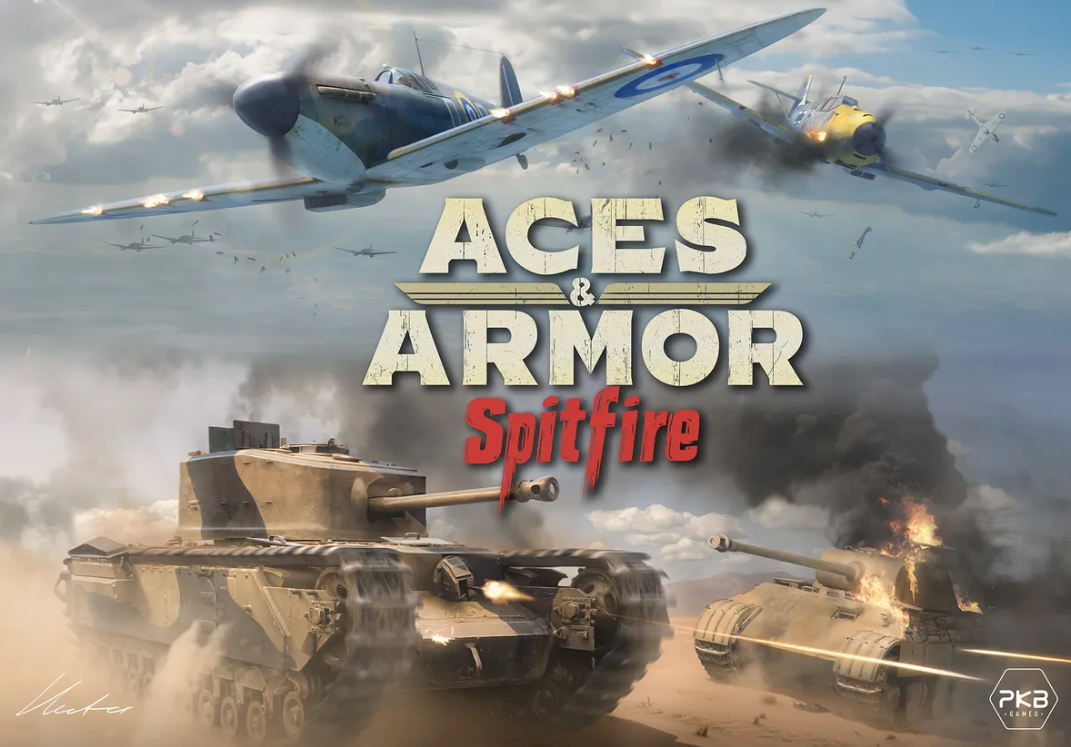
A few years back, we backed a very interesting looking miniatures based board game set in World War II called Aces & Armor from PKB Games. We played it last year and very much enjoyed the combat system as well as the way units gain experience and become more effective. That game did very well on Kickstarter and PKB Games is back with a new addition to the series called Aces & Armor – Spitfire: Battle of Britain & North Africa We reached out to the designer Philipp K. Berger to see if he could give us a look at the game and answer our questions and he was more than willing to accommodate our request.
Grant: Philipp, welcome back to our blog. What is your upcoming game Aces & Armor – Spitfire: Battle of Britain & North Africa about?
Philipp: Thanks for having me back!
Aces & Armor: Spitfire is a tactical World War II strategy game where players command infantry, tanks, artillery, and aircraft in exciting battles.
This time we’re taking the action to two very different theaters: the Battle of Britain, including the evacuation of Dunkirk, and the North African campaign.
The game combines accessible rules with quite a bit of strategic depth. You need to maneuver your troops, coordinate different unit types, capture strategic positions, and make the most of your resources. Your individual units also gain experience throughout the battle, so a rookie Spitfire pilot might eventually become a highly effective war hero!
Spitfire works as a standalone game for 1–2 players, but you can also combine it with the original Aces & Armor for battles with up to five players.
Grant: Why did you want to take your Aces & Armor System to the skies of Britain and the deserts of North Africa?
Philipp: One of the things I love about the history of World War II is how different the various theaters of war were. The original Aces & Armor focuses on land warfare in continental Europe, while the Battle of Britain and North Africa presented completely different strategic challenges.
The Battle of Britain is particularly fascinating because air superiority was absolutely crucial. Suddenly, protecting airfields, intercepting bombers, and coordinating your fighters become central elements of the game.
North Africa, on the other hand, is all about mobility and logistics. You might have the strongest tanks on the battlefield, but they’re not much use if you’ve run out of fuel and ammunition!
I also wanted to introduce the British as a playable faction. Their iconic units, especially the Spitfire, were simply too good to leave out of the series.
Grant: What is your design goal with the game?
Philipp: My main goal has always been to create games that offer meaningful strategic decisions without requiring players to spend hours studying the rules.
I love complex strategy games, but I don’t particularly enjoy unnecessary complexity. Ideally, players should understand the basic rules within 10–15 minutes while still discovering new strategies after many games.
Another important goal is making every unit feel valuable. I don’t want players to simply throw endless disposable troops at each other. Individual units can gain experience, become more effective, and develop into veterans you really want to protect.
And, of course, the game needs to be fun! Historical accuracy is important to me, but whenever historical detail and enjoyable gameplay conflict, I try to find a sensible compromise.
Grant: How have you modified the Aces & Armor System to tell the story of WWII in the Battle of Britain and North Africa?
Philipp: We kept the core mechanics that players already know from Aces & Armor, particularly the combat system, combined-arms tactics, and individual unit experience.
However, we introduced new gameplay elements to capture the distinctive challenges of each theater.
On the Battle of Britain map, aircraft play a much more prominent role. Players fight for control of the skies, defend airfields against bombing raids, and can play scenarios inspired by the evacuation of Dunkirk.
North Africa introduces an entirely new supply mechanic. Your units need access to supplies to operate effectively. This makes supply depots and supply lines strategically important, opening up possibilities such as cutting off enemy forces instead of attacking them head-on.
The result is that the two maps feel quite different, despite using the same underlying game system.
Grant: What elements do you feel are most important to model from the period?
Philipp: I believe it’s more important to capture the strategic realities of a historical conflict than to simulate every technical detail.
For the Battle of Britain, that means air superiority, fighter interception, and the importance of protecting infrastructure such as airfields.
For North Africa, it’s the enormous importance of logistics, mobility, and controlling vital supply routes across a vast desert.
Another major element is combined-arms warfare. Tanks, infantry, artillery, and aircraft become significantly more effective when working together.
I also wanted the different types of equipment to feel distinct. A heavily armored Churchill tank should play differently from a fast Daimler armored car, just as a Spitfire should serve a different purpose from a Junkers Ju 88 bomber.
Grant: What major design challenges did you encounter and how did you overcome them?
Philipp: One of the biggest challenges was introducing two very different theaters without making the rules significantly more complicated.
For example, supply logistics are fascinating from a strategic perspective, but I certainly didn’t want players to spend half their turns calculating fuel consumption and managing spreadsheets!
The challenge was to reduce these historical realities to mechanics that create interesting decisions while remaining easy to understand and manage.
Another challenge was balancing air and ground combat. Aircraft need to be powerful enough to reflect their historical importance, but not so powerful that ground forces become irrelevant.
I approached both challenges by keeping the successful core mechanics intact and adding specific rules only where they meaningfully change the gameplay. And of course gameplay testing and testing and testing!
Grant: What new units are included in this version of the game?
Philipp: Spitfire includes two factions with six different unit types each, represented by 24 detailed miniatures.
The new British faction includes infantry, the Daimler Armoured Car, the Churchill tank, the Bofors 40 mm anti-aircraft gun, the Hawker Hurricane, and, of course, the legendary Supermarine Spitfire.
The German faction features infantry, the Sd.Kfz. 251 half-track, the Panther tank, the famous 8.8 cm Flak, the Messerschmitt Bf 109, and the Junkers Ju 88 bomber.
I particularly like the selection of aircraft because it creates some interesting asymmetry between the factions. The British have two different fighter aircraft, while the Germans combine a fighter with a dedicated bomber.
Grant: How have you differentiated the capabilities of the units from those in your great game set in Europe?
Philipp: Every unit has its own characteristics, including movement speed, combat effectiveness, armor, and cost.
The original Aces & Armor includes some powerful late-war equipment, such as the German Tiger tank and Me 262 jet fighter, the American B-17 Flying Fortress, and the Soviet Katyusha rocket artillery.
Spitfire introduces a different selection of units and therefore different tactical possibilities.
The British Churchill, for example, emphasizes protection, while the Daimler Armoured Car provides mobility. The Spitfire is an excellent air-superiority fighter, whereas the German Ju 88 is particularly useful for attacking ground targets.
The German 8.8 cm Flak is another very interesting unit because it can threaten both aircraft and armored vehicles.
I wanted each faction to have its own strengths, rather than simply giving every nation the same units with different miniatures.
Grant: How can this game be incorporated into the original Aces & Armor?
Philipp: The two games are fully compatible!
You can play Spitfire completely independently, but you can also combine its factions, miniatures, and gameplay content with the original Aces & Armor.
The original game includes American, Soviet, and two German factions. Spitfire adds the British, bringing the total to five playable factions.
This creates opportunities for much larger battles, additional combinations of units, and entirely new scenarios.
I particularly enjoy the flexibility of the system. Players can recreate historically inspired confrontations or experiment with their own hypothetical battles.
Grant: How does the combat system work?
Phlipp: The combat system is probably my favorite mechanic in the game.
Each unit has an individual combat profile that determines how many dice it rolls, its chances of hitting, and how well it withstands incoming fire.
When two units fight, both players can roll their dice simultaneously, provided the defender is able to return fire.
The number of dice depends on how much damage a unit has already suffered. As units take damage, their combat effectiveness decreases. However, as they gain experience, their probability of hitting improves.
Another important element is combined-arms warfare. If your tanks attack an enemy position while supported by infantry, artillery, or aircraft, they can receive additional combat dice.
Finally, terrain and armor determine how much actual damage the hits cause.
So combat involves much more than simply comparing attack and defense values. Positioning, experience, damage, terrain, and supporting units can all significantly influence the outcome.
Grant: What drove your decision to use 12-sided dice for combat? What advantages does this give your system?
Philipp: I wanted a combat system that offers a lot of differentiation between units without requiring complicated calculations.
Using 12-sided dice gives us twelve possible outcomes, allowing much finer distinctions in hit probabilities than conventional six-sided dice. This is particularly useful because combat effectiveness changes as units gain experience. Different units can have different hit probabilities, and improving from rookie to veteran or war hero can make a noticeable difference.
Also, a higher number of dice (you roll up to 15 in one attack) and a higher number of sides per die (12) creates roll results closer to the statistical expected value which rewards players estimating the odds well and limits pure dice luck.
At the same time, resolving combat remains straightforward: roll your dice, check which results count as hits, and determine the damage.
I also think rolling a handful of D12’s simply feels great!
Grant: How is experience gained and tracked for individual units?
Philipp: Every unit begins the game as a rookie and gains combat experience by fighting.
When a unit damages an enemy, it gains one experience point. If it destroys an enemy unit, it receives two experience points instead.
After gaining enough experience, a unit advances from rookie to veteran and eventually to war hero, improving its combat effectiveness.
What makes this system special is how we track the experience. Each miniature has a small transparent holder attached to its base, where players insert colored markers for experience and damage.
This means you can immediately see the condition and experience level of every unit directly on the battlefield, without having to consult separate unit sheets.
It also creates some wonderfully memorable moments when an experienced unit survives against overwhelming odds!
Grant: What type of economy does the game use? How is money produced? What can players spend their money on?
Philipp: The game uses a relatively straightforward economy built around controlling strategic production facilities.
Players earn money from factories they have captured. These resources can then be used to recruit new units or repair damaged ones.
This creates an interesting strategic dilemma. Do you spend your resources replacing casualties, invest in additional troops, or repair your experienced veteran units?
Capturing factories is therefore important not just for victory, but also for strengthening your economy and maintaining your army.
I particularly like how the economic and military aspects interact. Sometimes capturing a strategically important factory can achieve more than destroying several enemy units.
Grant: What is the layout of the maps? How does terrain affect the game?
Philipp: Spitfire includes a large double-sided, hex-based game board featuring two very different environments.
One side depicts southern Britain, northern France, and the English Channel. This allows for combined land and air battles, including the Battle of Britain and Dunkirk scenarios.
The other side represents North Africa, with its expansive deserts, roads, mountains, and strategically important supply positions.
Terrain influences movement and combat. Roads allow ground units to move faster, forests provide defensive advantages, and natural obstacles can restrict movement.
Aircraft, of course, aren’t slowed down by ground terrain.
The North African map adds another strategic consideration: supply. With fewer natural obstacles and long distances between important positions, maintaining your logistics becomes crucial.
Grant: What do you feel the design models well from history?
Philipp: I think the game does a particularly good job of modeling the importance of combined-arms tactics.
Historically, even the strongest tanks were vulnerable when operating without adequate infantry, artillery, and air support. The game encourages players to coordinate different unit types rather than relying on one particularly powerful unit.
I also like how the North African scenario illustrates the importance of supply lines. An army can have superior equipment and still lose because it cannot maintain its operations.
And finally, I think the experience system captures something that’s often missing from tactical board games: troops aren’t interchangeable. A battle-hardened veteran unit can be much more valuable than a newly recruited replacement.
Of course, Aces & Armor is a strategy board game rather than a detailed historical simulation, but I hope it captures the important tactical and strategic decisions commanders faced.
Grant: What type of experience does the game create for players?
Philipp: I’d describe it as an accessible strategy game with a surprising amount of tactical depth.
There are plenty of exciting combat moments, but the game isn’t just about rolling dice. You need to plan your movements, coordinate your troops, control strategic locations, and decide when to attack or retreat.
The experience system also creates an emotional connection to your units. Losing a rookie infantry unit is unfortunate, but losing your heavily experienced Spitfire that has survived several battles really hurts!
I also love the way the battlefield evolves. Units move, take damage, gain experience, and new reinforcements enter the fight. The situation can change dramatically within just a few turns.
A typical game takes around 60–90 minutes, so it offers a fairly substantial strategic experience without requiring an entire afternoon.
Grant: What are some general strategies for each of the sides?
Philipp: That depends somewhat on the scenario.
In the Battle of Britain, the British player should pay particular attention to controlling the skies and protecting important airfields. Their Spitfires and Hurricanes provide considerable flexibility, but they need to be positioned carefully to respond to German threats.
The German player can take advantage of the Ju 88’s bombing capabilities while using the Bf 109 to contest British air superiority. Coordinating air attacks with ground operations can be very effective.
In North Africa, both sides need to think carefully about supply. A powerful offensive can quickly become vulnerable if the enemy manages to interrupt your supply lines.
In general, my most important advice is to use combined-arms tactics and not spread your forces too thinly. A well-coordinated group of different unit types is often much more effective than several isolated powerful units.
Grant: What has been the feedback of your playtesters?
Philipp: Playtesting has been particularly important for getting the balance between historical flavor, strategic depth, and accessible gameplay right.
One of the main things I’ve focused on is making sure the two theaters offer genuinely different experiences without forcing players to learn an entirely new game.
The air battles need to feel exciting, and the supply mechanics in North Africa need to create meaningful tactical decisions rather than unnecessary bookkeeping.
We’ve also been refining the balance between individual units and factions.
What I always look for during playtesting is whether players are making interesting decisions, developing strategies, and enjoying the tension of the battle. That’s ultimately much more important to me than adding another layer of rules.
Grant: What other designs are you currently working on?
Philipp: There are always several ideas floating around in my head!
One project I’m currently exploring is bringing the Aces & Armor game mechanics to a SciFi scenario.
I’m also thinking about where to take Aces & Armor next. World War II offers so many interesting factions, units, and theaters that there’s certainly plenty of room for future additions. And I am getting a lot of great ideas from backers of the current Kickstarter campaign. I just love this creative community and couldn’t be more grateful!
For now, though, most of my attention is on making Aces & Armor – Spitfire as good as possible and delivering another successful Kickstarter campaign.
Thank you for your time in answering our questions Phillip and also congratulations with the game funding already. I really like the look of this one and I am sure that it will be a fun gaming experience.
Ist das Refugium der Druiden in Wahrheit eine Lüge? Auf der Neuheitenschau der SPIEL 2026 in Essen stand mir Bastian von Feuerland Spiele Rede und Antwort per spontanem Audio-Interview. Dabei haben wir ein Expertenspiel für 1 bis 4 Spieler vorliegen, das fernab seines rebellischen Themas Eure spielerische Neugier wecken soll. Als Urgeister mit optionalen clanspezifischen Eigenschaften, die man für die Einführungspartie auch weglassen kann, führen wir unsere Gefährten an, um die Tiere von Greenwood zu retten. Wir können die Fähigkeiten der Mitspieler nutzen, um unseren eigenen Vorteil zu optimieren. Auf der Messe ausverkauft, aber ab November im Fachhandel wieder lieferbar.
Durch das freispielbare eigene Tableau mit speziellen Eigenschaften seines Clans fühlte ich mich an Terra Mystica & Co erinnert. Danach hören die Gemeinsamkeiten allerdings auf und ich bin gespannt auf das Erlebnis hinter dem Thema, wenn ich das Eurogame in meinen Spielrunden mitspielen kann. Ob die Rebellen-Thematik mit dem provokanten „Greenwood is a lie“ Aufschrei auf dem Schachtelcover wirklich halten kann, was ich mir an Besonderheiten davon verspreche, wird sich spätestens dann zeigen. Einer der vielen für mich kaum einschätzbaren Eurogames-Neuheiten, die im Vorfeld gefeiert wurden.
Es muss nicht immer die übergroße und ebenso teure Neuheit sein, die begeistern kann. Zoch verkauft sein taktisches Geschicklichkeitsspiel aus Holz für den Messepreis von 14 Euro. Dabei braucht es sich nicht hinter Backsack & Co verstecken. Hier bekommt Ihr für kleines Geld eine flott gespielte Herausforderung, die auf jeden Tisch und in jede Spieletasche passt. Auf der Neuheitenschau der SPIEL 2026 Essen wurde mir das Spiel, übrigens „Made in Germany“, kompetent erklärt und die Besonderheiten vom Autor ergänzt. Hört in das zweigeteilte Audio-Interview rein.
Holzspiele müssen teuer sein und meist unhandlich groß und schwer. Pocket Pisa ist anders, kann zudem mit einigen spielerischen Kniffen aufwarten und so ein interaktives Push-your-Luck Bauspiel im Kompaktformat bieten. Für den vergünstigten Messepreis im Zoch-Shop konnte ich nicht vorbeigehen und ist deshalb auch meine Messe-Mitbringempfehlung in bewährter Zoch-Qualität, bei der Ihr keine Abstriche machen braucht.
Michael Menzel ist Autor und Grafiker der großen Kosmos-Neuheit auf der SPIEL 2026 in Essen. Wir schlüpfen in seinem storygetriebenen Abenteuerspiel in die Rollen von Batman & Co und lösen kooperativ die Verbrechen in Gotham City. Mit der offiziellen Lizenz von DC ausgestattet und aus der Feder eines der renommiertesten Kreativen der Brettspielbranche haben wir hier eine fesselnde Erzählung mit packendem Spielgefühl kombiniert. Auf der Neuheitenschau konnte ich dazu bei ihm nachfragen – per Audio-Interview für Euch festgehalten.
Bei Lizenzprodukten im Brettspielbereich bin ich ansonsten eher skeptisch. Oft nur Optik und kein Herzblut oder schnelle Geldmacherei für durchwachsene Spiele. Das scheint hier komplett anders, denn Michael Menzel hat mit Die Legenden von Andor und Die Abenteuer des Robin Hood bewiesen, dass er Entdeckungsspiele mit viel spielerischer Freiheit und toller Story beherrscht. Deshalb erwarte ich auch hier die volle Packung Batman, da wo Batman draufsteht. Lasst Euch selbst per Einführungsabenteuer auf der SPIEL begeistern.
Eines meiner Lieblingsspiele hat zur SPIEL 2026 in Essen eine Erweiterung bekommen. Wir ziehen mit zwei neuen Helden und zwei neuen Klassen in den Dschungel, um dort fünf neue und herausfordernde Bosse gemeinsam zu bezwingen. Allerdings erwartet Euch noch mehr und das hat mir im Audio-Interview der leitende Redakteur des Projektes auf der Neuheitenschau erzählt. Darüber hinaus fragt das offizielle Gesicht der SPIEL, Illustrator Peter Mohrbacher im Rahmen der DSP-Preisverleihung aus seiner Perspektive nach und stellt klar, warum KI in der Künstlerszene abgelehnt wird.
Für mich ein Pflichtkauf und neues Spielefutter, wenn ich denn mal mit dem Grundspiel durch bin. Da wir unregelmässig nach Laune weiterspielen und dabei den zweithöchsten Schwierigkeitsgrad gewählt haben, haben wir erst die Hälfte der Bosse erledigt. Aber gut zu wissen, dass die Boss Fighter QR App weiterhin weiterentwickelt wird und neue Herausforderungen schon als Erweiterung auf uns warten. Endlich ein Brettspiel mit App, die einfach und perfekt funktioniert und dabei hilft statt stört, weil wir Spieler weiterhin das Geschehen kontrollieren und niemand das Smartphone in der Hand halten muss.
Imagine a world inhabited by Cthululian Horrors, Arthurian Knights, Icelandic Vikings, and the odd Gloranthan adventurer, all coming together for a weekend of libations, laughter, and (tabletop) adventures. Now, add in jolly hobbits, a few flightless kiwis, and about 23 million sheep for good measure. Welcome to Chaosium Con NZ, and its sister event, Gaming […]
Würfelglück trifft auf Drafting-Taktik und vereint sich bei Nerdlab Games zu einem einzigartigen Spielerlebnis von konfrontativ über kooperativ bis solo. Schlicht weil jeder der zu rekrutierenden Champions sich in Fähigkeiten, Werten und Kräften sowie der Illustration unterscheidet und kein Geringer als der Erfinder von Magic The Gathering an der Entwicklung beteiligt war. Das weckt Erwartungen. Alle weiteren Details erfahrt Ihr im Audio-Interview von der Neuheitenschau der SPIEL 2026 in Essen.
Verlag: Nerdlab Games Titel: Final Titan Autor: Christian Kudahl und Richard Garfield Messestand: Halle 5B700
Große Namen verpflichten und wecken Erwartungen, die erstmal auch erfüllt werden wollen. Während Ihr im Champion-Drafting noch die Kontrolle habt, werden die Kämpfe per Würfel entschieden und das im Autobattle-Modus. Kann die Vielfalt an Charakteren trotz oder gerade eben aufgrund des bewusst seichten Spielablaufs überzeugen? Ich bin auf meine Erstpartie vor Ort in Essen gespannt, bevor ich mich in einen voreiligen Blindkauf stürze. Angeblich soll das Spielgefühl mit jeder Partie wachsen und zum regelrechten Sog werden. Ich lasse mich da gerne mitreißen, obwohl ich kritisch bin, ob das Spielkonzept für mich aufgeht.
Der Mann mit den grünen Haaren hat drei Neuheiten aus seinem Eigenverlag 2F-Spiele mitgebracht und erzählt ein wenig von Fischen 2, Flixo und der Reanimated Version von Finstere Flure. Lauscht rein in das von Umgebungsrauschen bereinigte Audio-Interview von der Neuheitenschau der SPIEL 2026 in Essen.
Wer Finstere Flure noch nicht kennt, für den bietet sich die ideale Gelegenheit, das taktisch-chaotische Spiel mit dem Kartendeck gesteuerten Monster kennenzulernen. Lohnt sich trotz seines Klassiker-Status, weil wirkt mal so gar nicht verstaubt bei aller zu erlebenden Schadenfreude. Bei Fischen 2 empfehle ich die Anspielpartie, ob das eigenständige Spiel ausreichend anders und damit neu wirkt im Vergleich zum Vorgänger. Reichen dazu ein paar neue Karten aus? Die Eigenwerbung greift genau diese Frage auf „Das ist ja wie Fischen, aber ganz anders“. Ich bin gespannt wie unentschlossen. Wobei Flixo typisch nach einem 2F-Spiel mit seinem kooperativen Team vs. Spiel Kniff wirkt, das ebenso ausprobiert werden will. Im Genre von Skyjo & Co ist die Konkurrenz allerdings groß und die Zielgruppe zudem recht eigen.
Meine noch ein wenig von Krankheit beeinträchtigte Stimme bitte ich derweil zu entschuldigen. Genau deshalb fasse ich mich eher kurz, weil im Mittelpunkt soll stets der Interviewte stehen. Zudem habe ich wie immer kein Konzept vor Ort und frage spontan nach dem, was mich als Spieler ebenso interessiert.
Foto: SPIEL EssenRobin de Cleur ist Director Communications beim Merz Verlag und damit für die Außenkommunikation der Spiel verantwortlich. Für unseren YouTube-Kanal Brettspiel-Kollektiv haben meine Kolleg*innen Alexandra Kemmerer, Stephan Zerlik und ich ihn zwei Tage vor der Eröffnung der heiligen Hallen getroffen. Hier findet ihr einen Ausschnitt aus dem Interview. Das Interview in voller Länge…
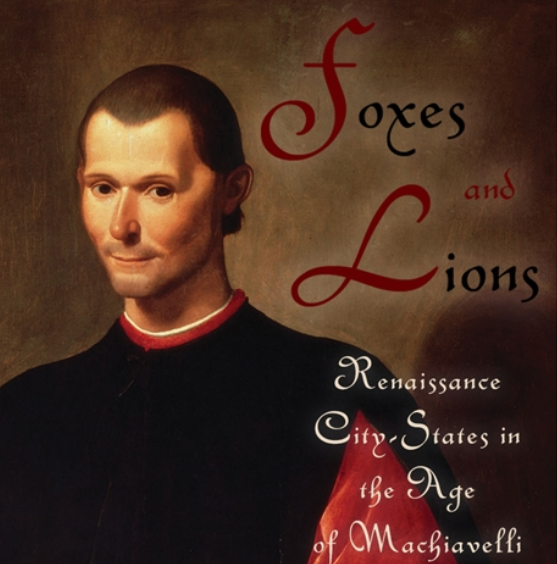
We have played all of the games in the Reivers and Reformers Series designed by Ed Beach, including Here I Stand (multiple times), Virgin Queen (multiple times but not as many as HIS), Tanto Monta (once) and Border Reivers (twice) with our most recent play being a full 5-player game in March while attending Buckeye Game Fest. This series is just special and I very much enjoy our experience with these games each time we play them. The card driven mechanic simply makes the series and it really is a bit of a sandbox as you can win in various and sundry ways. Several months ago, GMT announced the fifth entry in the series called Foxes and Lions:Renaissance City-States in the Age of Machiavelli designed by the duo of Paul Wright and Liz Davidson. This one looks to be epic and is set during warring city-states and dominions of Renaissance Italy during the era known as the Italian Wars (specifically, the period from 1494 to 1527). I am very keen on a new addition to the series and look forward to diving in and learning more about the game over the next year or so. My first step was to reach out to the design team to do a designer interview and Paul Wright was more than willing to answer our questions.
*Note: The pictures used in this interview showing the various components and cards, are still in the design and development process and as such rules,event effects and text might still change prior to final development and publication.Also the art and layout of the components are only for playtest purposes at this point and the game will enter the art department as it nears publication.
Grant: Paul welcome to our blog. First off, please tell us a little about yourself. What are your hobbies? What’s your day job?
Paul: From Chicago originally, I’m a cultural historian by training, having taken my doctorate in Comparative Literature at Princeton and worked with the masterful historian Anthony Grafton. I’m happy if even a tiny percentage of his vast knowledge has lodged itself in me. My focus in my doctoral research was Renaissance humanism in Italy and England, including work on Leonardo Bruni, Pico della Mirandola, Machiavelli, Gabriel Harvey, and John Milton. I have been dialoguing with Machiavelli ever since my undergraduate days at Northwestern, when one of my mentors (the wonderful Albert Ascoli) tasked me with translating long sections of The Prince into English. I’m certain those early efforts were awful and too literal-minded, but what an instructive exercise that has only made me more admiring of great translators. Alongside Machiavelli remaining a key part of my research, I have also been working on the political and social impact of Savonarola.
I taught for three decades in higher education, including my graduate T.A. days at Princeton, as well as teaching posts at Osaka University, Villanova University, and Cabrini University. That last school, sadly, closed in the wake of all the pressures on higher ed in the last fifteen years or so. I then turned to teaching in the independent school world, which brought me to Main Line Classical Academy in Bryn Mawr, PA, where I teach English and History, as well as a games-based learning history elective funded by a grant I recently received from the Renaissance Society of America.
In my games-based learning exercises in my classrooms over the years, I have used analog board games as well as the occasional computer game (Europa Universalis in particular), but I also use role-immersion pedagogies like Reacting to the Past; I serve on the national consortium board for RTTP (for more info, see https://reactingconsortium.org/). I’m currently developing a RTTP game on Florence in the period 1494-1512, the era of the republic with the Medici in exile. In that game students may take on one of over thirty historical roles, including Piero Soderini, Da Vinci, Da Vinci’s portrait subject Ginevra de Benci, followers of Savonarola, condottiere Fabrizio Colonna, or even Machiavelli himself. Think of this as a role-playing game that zooms in even further than does Foxes and Lions. The game has been tested by professors at over a dozen institutions so far; it will be used in a high school setting for the first time this year.
My hobbies include film and media studies. I have taught film and media courses (on everything from the Coen Brothers to Kurosawa to The Sopranos) at the Bryn Mawr Film Institute for some twenty years now. I also have a screenplay (in painfully drafted form) on Machiavelli’s time spent with Cesare Borgia, which certainly informed Machiaveli’s thinking and later writing.
I also treasure any chance to travel abroad, and it was a big part of my higher ed career in international affairs. I hate how expenses have curtailed that experience for so many of us, as well as how the U.S. has become less welcoming to international students. Not surprisingly perhaps, Italy is my favorite destination, with Albania (home country of my wife) and China (home country of my daughter) tied for a close second. I also lived and taught in Japan for four years from 1996-2000, and it was one of the most formative times of my life; I treat any chance to return as a treat.
Grant: What motivated you to break into game design? What have you enjoyed most about the experience thus far?
Paul: I waded into game design after decades of intensive play of wargames, euros, RPGs, and so many other types of games that I’m clearly an omni-gamer—certainly on the heavier side of the complexity scale with a focus on historical games. I’ve always been happy to solo (even multi-handed) because playing more games teaches you so much about how games are put together and how they try to model complex realities, including the past. I’m an admirer of David Lowenthal’s classic book, The Past Is a Foreign Country, which certainly evokes how games draw me into historical eras and crises.
I’ve also been blessed in Philadelphia, my home of 26 years now, with the best gaming group anyone could ask for—a group of people who are kind, seriously competitive yet never obnoxious, while also being sharp and funny as hell. Between my own solo forays and playing with them, it has been an education that led to this first ever design for me. My Philadelphia group are truly shadow co-designers in their way.
What I’ve most enjoyed about design is the sense of something evolving before your eyes that captures the history as I understand it, but I also love designs that challenge or revise my understanding. Collaborating with an amazing co-designer in Liz Davidson and developer extraordinaire Joe Dewhurst has been an absolute treat. I’m spoiled by having these two on my team.
Grant: What have you learned about design over the years?
Paul: Like many designers, I have many designs that never saw the light of day; some of these will come to fruition, I think, once Foxes and Lions is released. What I do know is that I’m a designer by theme and subject who looks far and wide for mechanics that will capture the historical complexities that fascinate me. I know many work in the opposite direction starting with mechanics, but that’s not how I’m wired. I start with a theme or problem that haunts me, then see if a game (mine or someone else’s) can help to illuminate it—or at minimum, reframe my questions more powerfully.
I also see historical game design as a way of testing and modifying (not merely reinforcing) my own interpretive and historiographical assumptions. One of the reasons I began the journey with Foxes and Lions over a decade ago now is that I had deep questions about Machiavelli, his theories, his playful will to narrative, and the era through which he lived, an era that we all too facilely collapse under the rubric of the “Italian Wars” or “The Renaissance.” Game design can be a heuristic tool that can bear fruit eventually in a new interpretation or synthesis that we hadn’t anticipated. At minimum, it clarifies my own tortured thinking and reading of the sources.
Grant: What is your upcoming game Foxes and Lions: Renaissance City-States in the Age of Machiavelli about?
Paul: Foxes and Lions: Renaissance City-States in the Age of Machiavelli is the next game in the GMT series that includes Here I Stand, Virgin Queen, and Tanto Monta. Focused on the warring city-states and dominions of Renaissance Italy during the era known as the “Italian Wars” (specifically, the period from 1494 to 1527), this game zooms in on the Italian peninsula. Unlike many other games on the Italian Wars, Foxes and Lions puts the focus on Italian experiences of this era of enormous upheaval, which also saw some of the greatest cultural splendors that we now associate with the period known, not without controversy, as the Renaissance. The game depicts the political, military, economic, religious, and cultural affairs of five key Italian powers brought to life by players (Florence, Milan, Naples, Venice, and the Papacy).
Players struggle to create political legitimacy for themselves while contending with both Italian rivals and non-player great powers intent on conquest of their own objectives in Italy; namely, France, Spain, the Holy Roman Empire, and the Ottoman Empire. For those who have played other series games, much will be familiar mechanically, but there are many new concepts and mechanics to enjoy, including experimenting with different government types, managing local sentiment, and gathering precious florins to pay for mercenaries and their fickle condottieri captains.
Furthermore, players will be faced with the possibility of collective defeat to the non-player great powers. Players will individually pursue Virtù Points, drawing on Machiavelli’s famously pliable conception of political ability and military strength, while at the same time striving to avoid collective defeat by loss of Italian Virtù Points. Dwindling Italian Virtù embodies Machiavelli’s abiding fear of great power domination of Italy. Players will each attempt to win without Italy falling into the subjection that was historically its fate, and should they fail to prevent that, the game ascribes blame to the specific players viewed as the scourge of Italy and the new lapdog of the great powers. Can you thread the needle between your Italian rivals’ ambitions and the threat posed by the great powers of Europe?
Grant: Why was this a subject that drew your interest in making a game?
Paul: This subject got under my skin as an undergrad as I mentioned above. I first fell in love with Dante in multiple courses with terrific and yet very different teachers. They graciously invited me to join their graduate courses as an undergrad. Milton, Spenser, and a host of political poets in the epic tradition caught my eye there too, but I fell hardest for Dante and his era. As I went on to graduate school, that love of Dante abided, but Machiavelli re-entered the chat, as it were.
After my graduate experience with Machiavelli (thanks especially to one of my teachers, Victoria Kahn), I was never quite the same. Machiavelli embodied someone both deeply troubled and somehow deeply amused by a world that was falling down around him. His political career began in the wake of the 1494 Medici exile, the rise of Savonarola, and the restoration of a republic that had long been under the Medici yoke. His career ended the first time in 1512 with the Medici restoration. It ended again with another Medici exile in 1527, with yet another republic that didn’t really trust Machiavelli anymore given his courting of Medici patronage in the intervening years. Above all, the traumatic Sack of Rome in 1527 really shook Machiavelli. He died just over a month after the Sack, witnessing exactly the kind of Italian nightmare that he had warned about for years. Someone who had lived that much life and turmoil became endlessly fascinating to me. I know Machiavelli will be a part of my scholarship and design life for the duration.
Grant: How did you come to team up with Liz Davidson on this project?
Paul: Liz has become a dear friend as well as collaborator and sounding board on everything from our shared gaming interests to our broader professional and personal lives. We met because I invited her to be a keynote speaker at a Reacting to the Past game design conference at my former institution. She was not only awesome in that role, but we immediately hit it off as people. It wasn’t long till we were talking regularly cross-country and at conventions, then talking about collaborations.
Grant: What strengths did each of you bring to the design process?
Paul: In the case of Foxes and Lions, I obviously brought the historical background and scholarly passion to the project, which I had first formulated about six or seven years before Liz and I met. But in all candor, I was spinning my wheels. I was swamped with the faculty and administration politics of a dying institution, and I was smack dab in the middle of all that drama in a leadership role for our faculty. It took Liz to help me see the real comfort of game design and of throwing myself back into my true passions, especially for Foxes and Lions.
It also helps enormously that Liz is a doctorate-holding historian of religion herself with a focus on the ancient world. And as anyone passionate about the period knows, the Renaissance was defined in many ways by its relationship to the classical world, so while Liz wasn’t an early modernist or medievalist, she understood intuitively and on a deep level why a classicist would enjoy and contribute to a game about the Renaissance. Simply put, without Liz, there is no Foxes and Lions for the world, just the game in my head. Liz also has a sharp sense of end-user needs in game design. How something will play to a more general audience and not just specialists or heavy gamers. To be clear, our game is a heavy game situated within a heavy (yet beloved) series, but Liz is working hard on materials to onboard people as only she can, including training guides, videos, and more. She is doing an amazing service with this in relation not only to our game, but also the series at large. Stay tuned for more of these things in the months to come.
I’d also be remiss not to mention the support and encouragement of Volko Ruhnke. After he visited my former university as keynote panelist for a games-as-scholarship workshop, we talked about Foxes and Lions possibly joining the COIN series in the vein of other pre-modern titles like Falling Sky and Pendragon. Liz and I even prototyped a first COIN version of our game. It was fun and quirky; it could have possibly thrived in COIN world, but at the end of the day GMT’s Jason Carr wisely suggested a retooling to the Here I Stand line. That was preaching to the choir for me given my admiration for Ed Beach and for the series. Ed became yet another guiding light as we got to know him. One of my proudest moments was having Ed participate in a play of the game at WBC this past summer. They say don’t meet your heroes; both Volko and Ed prove that dictum wrong.
Grant: What has been the division of labor between you?
Paul: Liz and I both have day jobs that are very consuming. She as creative director at Leder Games, myself as an educator (a role Liz had also previously played in independent schools). Yet we both get up incredibly early, whether we are meeting or not. We are always busy with our games at every spare moment. Liz has so many games on her plate, including with other collaborators like David Thompson, another designer for whom I’m an unabashed fanboy. I’ve got Foxes and Lions of course as my primary focus, but also a book project on Machiavelli and the Reacting to the Past role-immersion game on Machiavelli’s Florence that I mentioned earlier.
I would call our division of labor something like triage; think ER or The Pitt. We are each picking up the slack when needed, prioritizing one thing or another. If there is a functional division right now, I’m heavy into the rules and component revisions, as well as early TTS testing, about to go wider as of November 2026. Liz is contributing to the InsideGMT articles we are posting on the game; her favorite subject, not surprisingly if you know her, being espionage for an upcoming piece. Liz is also there anytime we need to vet some unusual change or some stubborn holdover of mine from earlier iterations of the game. Liz will give you her most honest take on how something plays and how it will feel in the game experience. Liz has an reliable, sure sense of that. As I mentioned, she is also developing onboarding materials for newbies that I think will be awesome.
The few times we have not seen eye to eye (and I can count them on one hand), we have always had principled discussions of where each of us is coming from, and that has always lit the way to a solution. Like myself, Liz is an omni-gamer with an historian and educator’s perspective on things. That fundamental commonality has always carried us through. Having Joe Dewhurst as our developer has been equally essential as he too is an educator and scholar, and his sharp eye for what will make a game its best is invaluable. As with Liz, no Foxes and Lions in its current exciting form without Joe.
Grant: What is your design goal with the game?
Paul: If I have an historian’s axe to grind with many games on the Italian Wars and Renaissance, they have never quite to my satisfaction captured the cultural dynamism, complexity, and sheer messiness of the period. There are success stories among Renaissance games to be sure. Many games attempt to capture the military picture and do so well; on the tactical front, Rich Berg’s Arquebus comes to mind here as well as the lesser known and under-appreciated Brien Miller game, Fornovo 1495.
Other games attempt to integrate military concerns with politics and economics on a grand scale, and of course Eivind Vetlesen’s Europa Universalis: The Price of Power comes to mind here as a masterful and inspiring example, although the cultural and political front in that game is more driven by events than player agency compared to Foxes and Lions. Pascal Ribrault’s Virtù is also an interesting euro that tackles some of these concerns in an accessible way.
And of course, we have the crowded field of games tapping into Renaissance commercialism. Brasini, Gigli, and Luciani’s Lorenzo il Magnifco and Fabiano Lopiano’s Calimala come to mind here. An underappreciated and roughhewn gem is Mario Papini’s Siena; his better-known De Vulgari Eloquentia is terrific. On the art front, Stefano Groppi’s Florenza looms large in my mind for its attention to both Florentine art and the material and political considerations behind that art; it’s also just a beautiful game to look at.
Yet for all those examples above, Ed Beach’s Here I Stand and Virgin Queen were the guiding lights to Foxes and Lions—alongside the interest in political asymmetry that transcends the traditional wargame fixation on “control,” a paradigm shift displayed so beautifully in Volko’s COIN series. What Morgane Gouyon-Rety attempted so ambitiously in Pendragon also figures in my original thinking about the game. Morgane and I have chatted of late about how the character-driven conceptualization of ever-shifting rulers has serendipitously shaped both her Hubris game and Foxes and Lions.
Yet for my design purposes, what Ed’s work on Here I Stand proved was that a wargame could tackle vitally important and culturally adjacent aspects of the period that impact things happening on the strategic battlefield—in Ed’s case the religious strife of the Reformation and Counter-Reformation. COIN demonstrates to us that the sentiment and shifting support of an administered population is just as important as the intentions of those controlling a space—or trying to convince themselves that they do. This was very much on Machiavelli’s mind too.
In addition to wanting to make a game that captures the overdetermined messiness and intricacy of the Italian Renaissance, especially during the Italian Wars per se, we also wanted a game that “consciously uncoupled” (to riff on Gwyneth Paltrow’s marital breakup language) from reliance on “great power” narratives. Those narratives and the assumptions implicit in them are a recurring feature of most games on the Italian Wars and even of the Here I Stand series to date. We wanted ultimately to put the focus on Italian experiences of those conflicts—in the process creating a HIS series game about underdogs.
This was more than about zooming in on the map of Italy as depicted in earlier series games, something Carlos’s Tanto Monta did to a degree that left me hungry to do far more given my own scholarly interests in Italy. Yet it was above all about letting players personify powers that were otherwise total underdogs (or minor powers at best) in the context of the rest of the series and most other games on the period.
In this way, Avalon Hill’s out-of-print classic Machiavelli comes to mind for its attention to Italian powers alongside the greater powers of Europe and the Ottoman world. Our elevator pitch for Foxes and Lions remains a good formula—the old Machiavelli game brought to life in the mechanical exoskeleton of the Here I Stand system. Finally, as I get into in more detail below, we wanted a game that honored the messy contradictions and true interests of Machiavelli and didn’t simply replicate the many misleading stereotypes about him.
Grant: How have you modified the Here I Stand System to recount the story of the rise and fall of Renaissance City-States in the Age of Machiavelli between 1494-1527?
Paul: In addition to the non-player great powers mentioned earlier, the game features other significant additions or changes to series conventions.
Political traditions—These are the governments (current and past) that define the political character of any given space in the game (featuring merchant republics, feudal aristocracies, princedoms, theocracies, tribute states, and vassals). In keeping with Machiavelli’s respect for founders of institutions, lawgiving will be an available action that permits you to attempt to alter governments in your dominion. Each space under your control may have a very different political arrangement, which affects its prosperity, unit construction capability, and many other things. Your central government (that of your capital) may also change over time.
Sentiment—This captures the current attitude of the local population to the government overseeing it. The scale of sentiment reflects Machiavelli’s own terminology, ranging from “Hated” to “Feared,” to “Feared and Loved” (the latter an ideal Machiavelli thought hard to achieve, opting instead for being “Feared” whenever a choice between fear and love was unavoidable).
New unit types—Regulars are split into citizen militia and feudal levies, alongside a more detailed look at mercenaries (with elite variants including the Swiss reisläufer and the Imperial landsknechte).
Condottieri captains—Twenty of the colorful, talented, and sometimes treacherous mercenary captains of the era will be available to players in competitive blind bidding for their services, with each captain reflecting unique battlefield abilities, vulnerabilities, and other surprising game impacts. Captains are essential to success in the game, and if not properly paid and retained, will go up for auction again; they may even be suborned and taken from you by nefarious rival actions. Among the captains are the infamous Cesare Borgia, Fabrizio Colonna, Giovanni delle Bande Nere, and “El Gran Capitán” himself, Gonzalo Fernández de Córdoba. Yet the captains also include those who are captains for our game, but not condottieri narrowly defined; these include militaristic cardinals like Francesco Alidosi as well as the famously defiant Caterina Sforza.
Money economy—Alongside the high-level political capital of command points (CP) already familiar to CDG players, Foxes and Lions features the cold, hard cash that mercenaries and dominions crave. Florins are collected by a trade action connected to the prosperity of the various governments in one’s dominion. The florin economy will be necessary not only to pay or bribe mercenaries and captains, but also for espionage, government maintenance, and more. Player treasuries are hidden behind a screen, so no one is ever quite sure of a rival’s wealth. Should you run out of florins for a required or desired expenditure, the banks will be available to lend to you at exorbitant interest rates, and failure to repay may cost you dearly.
Espionage available from turn one—Nefarious measures are available to players from the outset of the game, including familiar operations from Virgin Queen like Gain Intel and Assassination, now supplemented with Appeasement, Foment Rebellion, Sabotage Fortifications, and Suborning others’ employed condottieri to your cause.
New patronage systems and figures—For those familiar with Virgin Queen, patronage now features three tracks (artists, scientists, and humanists) with 10 figures of each type. Each patronage target affords unique game effects. Among the 30 patronage subjects are figures such as Michelangelo, Da Vinci, Botticelli, Copernicus, Pacioli, Paracelsus, Machiavelli, Manutius, and even a prying poet-courtesan, Tullia d’Aragona.
New ruler dynamics—Each player will have an often-volatile lineup of rulers who will transition based on circumstances in the game (26 rulers in total across five player powers). In the case of the Papal States, a conclave procedure involving all five players will determine the next pope whenever the current pope dies, however mysteriously.
Variable impulse order—Players may bid their florins to change the impulse order for a given turn, creating dynamic opportunities for surprising your enemies—or lying in deadly wait for them.
More opportunities to declare war mid-action phase—No game about Machiavelli’s era would be complete without the temptations and risks of back-stabbing rivals, even erstwhile allies, including in the middle of a turn. Great coalitions (like the historical “Holy League”) may form, but no alliance is ever truly safe.
Grant: What elements do you feel are most important to model from the period?
Paul: If there was one thing that consumed me more than anything else in formulating this game years ago, it was the desire to make the best possible game on the richness, diversity, and contradictions in Machiavelli’s whole body of work—a game that would capture Machiavelli the writer and, above all, the human being as I’ve come to know him.
I didn’t want a game that just brought The Prince to life, or that just reveled in the skullduggery so often associated with Machiavelli, even in games that somehow invoke him. I wanted a game that also featured the other Machiavelli(s). The celebrator of republics in the Discourses on Livy who also knew just how fragile republics really are, a lesson for today if ever there was one. Machiavelli the historian in his state-sponsored Florentine Histories, an example of urban history compromised by political pressures to dance around certain uncomfortable truths. Machiavelli the military theorist of The Art of War, who appreciated the potentially dangerous impact of militarism on civic life in addition to the positive virtues of citizen soldiers (there is something of both James Madison and Stephen Ambrose in Machiavelli here). And finally, even the Machiavelli of La Mandragola (“The Mandrake Root”), a viciously funny sex comedy about cuckolding with a sly political subtext commenting on the differences between classical virtues and Renaissance realities. Further down in this interview, you can see three event cards that were inspired by Machiavelli’s diverse array of writings.
In all that effort, we also want to be sure that Foxes and Lions never simply takes Machiavelli at his word or at face value. Given his own internal contradictions, that would be unwise. We instead see the game as interrogating Machiavelli’s assumptions and claims. His critique of mercenaries versus citizen militia is explored both in design and in actual play, never simply rehearsed uncritically. His appreciation for the libertà of republics is tempered by his continued recognition of their fragility and their vulnerability to other powers with more direct mechanisms of control and decision-making; think here of today’s debates about democracy and autocracy.
Machiavelli’s sense was that Italy might be doomed by great power intrigue—exacerbated by Italian powers courting the greats to their own ends rather than looking to Italy’s good. This was always balanced with a deep yet tortured belief in the possibility of resuscitating Italian virtù. In addition, we wade in this game into Machiavelli’s discussion of virtù itself, a term almost untranslatable given its variety of uses in his works. The tension between individual and communal greatness was always on Machiavelli’s mind in using that term—with a preference at last for the latter as it was most pursuant to true glory and historical legacy, as well as most compatible with republics. Lawgivers (as opposed to generals and strongmen) were always most admired by Machiavelli, I would say. The serendipity of our victory points in the game easily transmuting into “Virtù Points” was an early discovery, as was realizing that we should also track Italian Virtù Points to gauge the threat of collective defeat.
To say that this is a game of ideas in the crucible of conflict is an understatement, but even more vital to us is that the game’s ideas should be tested in a sandbox of historical conditions that confronted the historical actors, both individual and collective. We want a game that is not on historical rails, but that instead allows for historically plausible surprises and strange developments. So far testing has provided just that. Thankfully, the game allows shockers—the imperial troops of Charles V against Cesare Borgia; Savonarola arranging a cuckolding of the “Warrior Pope” Julius II; Piero de’ Medici lingering on for multiple turns as the hapless ruler of Florence. Testing has seen a lot of these unanticipated “what ifs,” and we imagine even more strange developments over the life of the game. Above all, testers have stressed just how fun and crazy the game can be. Mission accomplished, to my mind.
Grant: What major design challenges did you encounter and how did you overcome them?
Paul: I go into more detail on this below, but one of the challenges I personally faced is the same that confronts any designer—the old “kill your darlings” mantra. This is why I’m especially grateful to Liz and to our amazing Joe Dewhurst on the development end. While there are many things in Foxes and Lions that I deem “thesis-level” in importance and non-negotiable, there are plenty of things I fell in love with early on that it took me time to see were hampering the design and gameplay.
Sometimes you don’t have to kill the “darling” as much as reshape it. One example is sentiment, discussed above. At one point, we really needed to find a way to make sentiment matter more to the game mechanically. We had it as conceptually important, and it truly is, but it wasn’t doing what we needed to make players care about it. Once Liz and Joe encouraged connecting sentiment to espionage, battlefield impacts, and other power-specific concerns, I saw the light. We didn’t jettison sentiment, but we made it matter to players and to the thesis of the game. A similar thing happened with political traditions. Originally, we were tracking up to four governments (current and previous) in each space’s political traditions box. We wisely revised so that now you only trace the current government and any previous dominant political tradition in that space; that simplification kept the interest in government forms without creating a truly unwieldy board state.
In other cases, you do just need to kill the “darling” altogether, as we did with dynamic prosperity management for each space. While each space still has a political traditions box and its current government affords a trade value to that space impacting your power’s florin economy, originally I was foolishly insistent that each space have dynamic prosperity that you could spend CP to raise or lower (subject to caps by government type). That might have worked for a computer version of the game, but it was decidedly awful for a game that already has lots of moving parts and elements new to the series. Dynamic prosperity was not only killing the delicate Command Point economy of the game, but it was also just boring to players. They definitely wanted florins and economics, but they didn’t need that much granularity. Again, so grateful I had Liz and Joe to help me see the light. The game is way better for all these refinements.
Grant: How does designing a game in an established system work? Any constraints on your thoughts for the period?
Paul: One might think designing within an existing series framework is an easier task. There is a template, a style, and a set of mechanics and design assumptions. And to an extent, this is true. It’s nice to “stand on the shoulders of giants” like our predecessors in the series, Ed Beach and Carlos Diaz Narvaez.
The difficulties I encountered, however, were met and overcome thanks to a 2025 game designer retreat hosted on Beaver Island, Michigan by Central Michigan University’s Center for Learning through Games and Simulations, run by my friend and an intrepid scholar of colonial Mexico, Jon Truitt. In that weeklong retreat in a remote, beautiful setting, I spent uninterrupted days studying the entire Here I Stand series and its rulebooks. I wrote the new rules for Foxes and Lions from the ground up there, with an eye toward retaining what was essential to the series while weaving in what was of thesis-level importance to our game and its historical setting.
The real challenge of adapting to an existing series framework is not so much what you will keep, but what you will add or change altogether. If you are standing on that giant’s shoulders, you never want to annoy (let alone topple) the giant carrying you by flailing around thoughtlessly in a shared design space. In this case, the giant isn’t just someone like Ed; it’s a community of dedicated series players who have made HIS games a lifestyle choice. Many of them are making series games of their own, such as the gracious and supportive Luis Rubio, whose game Primus Inter Pares is of great interest to me.
We know this community will put Foxes and Lions through its paces. We know too that GMT is seeking a game about the complexity of Virgin Queen, a design goal we share and think we have met. Things that we don’t fret over in our game (e.g., the religious mechanics of Here I Stand) are replaced by things that we feel we must have (e.g., political traditions).
The way Liz and I have tackled any additions or changes to the sturdy, muscular frame that is this series is always to ask a fundamental question of anything new. Does it support a “thesis-level” contention or historical organizing principle of the game? Does it add something to the series that offers a new, welcome dimension to gameplay that shakes things up for the better? If something didn’t speak to one of those needs, we generally ended up revising it until it did or dumping it.
Ultimately, we never felt the series hamstrung our vision of the period, but it enriched it. What we kept our attention on was how you can redeploy series conventions to treat a more focused region that would be a mere few spaces in the larger scale games like Virgin Queen. This change of scale and perspective was a challenge, but the system opened itself to that. To borrow from my side work as a teacher of film, we think of Foxes and Lions as zooming the camera in from the eagle-eye view of the great powers in the other series games. Like Norma Desmond in Sunset Boulevard, the Italian Wars (and as I keep stressing, the Italian experience of those conflicts) were ready for their closeup.
Grant: What sources did you consult for the historical details? What one must-read source would you recommend?
Paul: I could be here all day talking about the game’s primary and secondary sources, but I’ll keep it brief. Liz and I recently did a video about precisely this topic of sources or ancillary readings for the game and you can watch that at the following link:
The books we mentioned there are terrific places to begin. Some commentary follows the list here.
The Essential Writings of Machiavelli (translated by Peter Constantine)
Foxes and Lions: Machiavelli’s Confidence Men by Wayne A. Rebhorn
The Civilization of the Renaissance in Italy by Jacob Burckhardt
The Beauty and the Terror by Catherine Fletcher
The Machiavellian Moment by J. G. A. Pocock
Niccolo’s Smile by Maurizio Viroli
Inventing the Renaissance by Ada Palmer
Florentine Histories by Machiavelli (translated by Laura Banfield and Harvey Mansfield)
A History of Florence 1200-1575 by John Najemy
Fortune is a Woman by Hanna Pitkin
The Tigress of Forlì by Elizabeth Lev
Fortune is a River by Roger Masters
Mercenaries and their Masters by Michael Mallett
The Italian Wars 1494-1559: War, State and Society in Early Modern Europe by Christine Shaw and Michael Mallett
This is very much a partial list. Of these, the most welcomely irreverent in terms of pieties about the Renaissance is Palmer’s Inventing the Renaissance. Great stuff that explodes many preconceptions and has some great sections on Machiavelli. That side, the pieties deserve their day in court too though, and no one was more influential there than Burckhardt. It has become fashionable to pile on Burckhardt for his missteps, which is a shame because there is much he got right to which it is worth returning.
Mallet and Shaw are terrific on the Italian Wars proper, as well as the role of condottieri, whom they treat evenhandedly and with nuance missing elsewhere. Roger Masters in Fortune Is a River illuminates a lesser-known military plan to deploy terraforming of all things; the book explores a collaboration between Da Vinci and Machiavelli to divert the Arno River to strike at Florence’s favorite obsession, Pisa. The book puts into dialogue two of the most unique figures in the Renaissance; it remains a proud moment for me that I introduced my dissertation Tony Grafton to this book, as it is quite rare to find anything on this period that Tony hasn’t already read.
I’d of course recommend reading Machiavelli himself, but please, read widely, not just The Prince. There is as much to learn in his Discourses on Livy, Florentine Histories, Art of War, and his sex comedy Mandragola as there is anywhere else. Machiavelli even wrote some historical and political poetry (Decennali) on the dramas of his day.
John Najemy offers what I view as the single best modern history of Florence in English. Pocock’s classic, The Machiavellian Moment, is a most ambitious attempt to trace Machiavelli’s ideas about republics backwards to the ancient writer Polybius, but most compellingly forward to the English Civil War and the American Founding. A truly monumental book that loomed large in the conceptualization of the game.
Grant: What are the playable factions?
Paul: The player factions are the Republic of Venice, the Duchy of Milan, the Republic of Florence, the Kingdom of Naples, and the Papacy. These are the “big five” mentioned by Machiavelli in The Prince. They are confronted not only by each other, but also by four non-player “great powers”—France, Spain, the Holy Roman Empire, and the Ottoman Empire. Some have asked why Genoa is not among the playable powers; Machiavelli’s “big five” aside, this is because Genoa finds itself under the thumb of Milan at game start. It is a minor power held hostage by a player power, but it may break free and find new allies. I do have in mind a prequel expansion in which Genoa is playable though (see below for more on that).
Grant: How did you try to differentiate them in their style of gameplay?
Paul: The asymmetry of the playable powers is deeply baked into the game, both in the event deck featuring events drawing on their histories, but also in the mechanics, victory conditions, and play styles.
Venice begins the game leading the pack by a good margin. An economic powerhouse of merchant republican bent, Venice has wealth coming from its colonies abroad, especially the Balkans in our game. Yet, what was often called Venice’s “Long Decline,” which would not be completed until Napoleon’s era, was already in motion at the start of our game. The Ottomans threatening the colonies, combined with Venice’s own dangerous ambitions on the Italian mainland, would lead to disaster at Agnadello in 1509, with what must have felt like the world arrayed against Venice.
Milan begins as a powerful duchy, wherein the Visconti had been replaced by the condottieri family of the Sforzas long before game start. Milan has its thumb on Lombardy, but also Genoa. Genoa is a source of wealth and prestige, but also a constant headache and a state that might break loose. Milan is a viable threat for autowin and may expand south (as they did in the early 15th century), but it is also surrounded by great powers (notably, France and HRE), as well as neighboring Venice, their closest rival at game start.
Naples has the stability of a feudal kingdom to support its military and political cause, but it is also torn between the dynastic claims of the French and Spanish, which go back centuries. Naples is in a great position to keep what it has, but expanding toward victory is a major challenge unless it chooses to cross swords with the Papacy and others. Naples cannot rely on the status quo, even though the French armies of the time were already threatening that.
The Papacy is vexed by a roster of alternately skilled and disappointing rulers, as well as internal divisions in Roma between the Orsini and Colonna families, whose vendetta threatens both the city and papal stability. The Papacy has considerable spiritual powers with material benefits for its allies and punishments for its enemies. Occasionally it boasts military leadership to boot; think Cesare Borgia and Pope Julius II, the “Warrior Pope.” The Papacy’s advantages are often situational and fleeting though, and it is surrounded by rivals, not to mention great power intrigue (above all, from the Holy Roman Emperors, such as Charles V).
Finally, my beloved Florence. It begins with the single greatest mess of any of the powers. Piero de’ Medici, hapless and unprepared son of the late Lorenzo il Magnifico, is alienating citizens left and right. He is in the pocket of French interests and will controversially cede Pisa to King Charles VIII. In his wake comes someone no less controversial, Friar Savonarola, whose apocalyptic vision of Firenze as the “New Jerusalem” will bring it into direct conflict with the Papacy of the Borgia Pope Alexander VI. Their confrontation is an early set-piece in most games. The other rulers who follow the Friar (Piero Soderini and two Medici) offer radically different political visions for Florence. Of all five player powers, Florence must wrestle with the most political instability, particularly in a difficult starting position.
With Venice, Milan, and Naples functioning as the “big dogs” (at least among Italian player powers), both Florence and the Papacy have their work cut out for them, but many avenues to victory. Florence can play the patronage game like few others, and the Papacy will have opportunities for expansion as long as they also maintain their influence over the Christian great powers and keep the Orsini and Colonna in stalemate. Florence and the Papacy also have the game’s only option for a joint victory. Provided a Medici rules both powers (a thing not always easy to coordinate), they can win the game together by one of them achieving an autowin (i.e., military victory) on the map. This assumes of course both players are interested in and capable of this coordination.
Grant: As a CDG, how does the game utilize cards?
Paul: Our game uses the classic CDG framework of multi-use cards pioneered by Mark Herman and used to such great effect in the Here I Stand series. We have added some wrinkles, however. First, there are 26 rulers in the game (4 for Venice, 5 for Florence, 5 for Milan, 6 for Naples, and 6 for the Papacy). There are two home cards for each power, available from game start. Each home card can be used for varying purposes unique to that power, but one of the two home cards benefits more from that player having allies, who will also appreciate that card’s advantages to them. The other home card tends to be best when going it alone with few or no allies, but players are free to use either home card each turn. There are some events that impact this; one (“Well Governed Dominion”) allows a player to use both home cards that turn, while another (“Confused Administration”) allows a rival to force you to pick a home card of the rival’s choosing, while also saddling you with -1 card next turn.
Finally, we introduce an important new type of mandatory event card: Captain auction cards. These 20 figures represent the condottieri and other influential figures (even ostensibly non-military figures who nonetheless have a powerful effect on the battlefield and other arenas). Captains are the subject of aggressive florin bidding wars in secret auctions (or sometimes, assigned to a player with highest influence on a specific great power). As these captains are the most decisive on-map leaders in the game, accumulating them is vitally important, especially given the vagaries of a captain’s fate on the battlefield (a captain is a potential casualty in any battle, even a victory) and off (being subject to assassination attempts or certain events). Being a power without any captain at all is the surest way to be easy prey in a land of many predators.
Grant: Can you share a few examples of individual cards with us and explain how they work?
Paul: Here are some examples of the types of cards in Foxes and Lions, especially those that break with series conventions in one or more ways. Please note that all card images here are prototypes and will undergo further graphics work, refinement, etc. Some commentary follows the images.
First, let’s consider one of our rulers: Venice’s Andrea Gritti, not to be confused with the mind-warping mascot of the Philadelphia Flyers. In addition to typical Admin and Card Bonus ratings familiar to series veterans, each ruler card also includes important additional information. Every ruler in the game has conditions for accession and removal (if a game start ruler, removal only). These conditions are almost always situational in nature, and in Gritti’s case, depends on his predecessor Doge Grimani having been removed. Doges and Popes are most typically removed by failing a survival roll at end of each turn; some, but not all rulers have these rolls. Elderly doges and popes always do. We also see here Gritti’s effects on the game—a helpful boost when paying CP for diplomatic influence. Other leaders may have disadvantages and outright weaknesses (e.g., Piero de’ Medici’s awful Admin rating of 0).
In a sense, you must endure and exploit the ruler you have rather than necessarily embodying that ruler, as is more the role-playing conceit in other HIS series games. For example, in HIS, you feel you are Suleiman the Magnificent, and that’s great for that game with all its high-level great power shenanigans. But in Foxes and Lions, it might be most helpful to think of yourself as a Machiavelli-type advisor behind the scenes, and you certainly won’t relish embodying the weaker and more problematic rulers when navigating their serious tradeoffs. I sometimes think of the role-playing conceit of this game as you portraying no mere ruler or advisor, but perhaps an entire polity, a people weathering the rulers they’ve been dealt. The conceit at last is up to you and your play group.
Alfonso II of Naples is a different ruler example. He is the starting ruler for Naples. Alfonso is awful at Appeasement (formerly “Pacify” as seen here), which is the effort to improve sentiment in your dominion; he is so poor at this that no dominion space may even reach the coveted Feared and Loved status. Note too that while he does have a survival roll, he may also be removed if Napoli (the capital space proper) is enemy-controlled. This is a situational timer on this ruler, and other situational timers apply to many rulers (in Milan, Florence, and Naples especially).
The captain examples here include one conventional condottiere, Paolo Vitelli. You bid on captains when they are played as mandatory events. Some turns there will be few or no captains on which to bid; on other turns, they will appear in great waves. Each game play is very different on this front. Our Paolo, adept at siege assaults, nonetheless has an Achilles’ Heel—if he doesn’t assault at least once a turn, he is executed by his employer! This reflects the curious history of the real Paolo, whom the Florentines accused of treacherously soft-pedaling the siege of Pisa on their behalf. His execution enraged his brother Vitellozzo (another captain in the game), who will become an inveterate enemy of Paolo’s former employer if this happens (and it might be another power that employs Paolo, not necessarily Florence).
Then we have the illustrious Caterina Sforza, scion of a family of condottieri, but not herself one as classically defined. We felt it important that our game have a preponderance of captains who do fit that classic description, but we also wanted a few, unusual “captains” who don’t, but nonetheless had battlefield and even other impacts. Caterina is celebrated in Machiavelli’s Prince as a commanding leader defending the siege of Forlì, with Machiavelli (perhaps apocryphally) crediting her with this infamously defiant statement to her besieging enemies, who had kidnapped her sons and threatened their lives: “To show them that she did not care about her sons, she revealed her genitals, saying that she still had the means to produce more” (trans. Peter Constantine). Accordingly, in the true Man Who Shot Liberty Valance spirit of “printing the legend,” our Caterina excels in siege defense alongside other advantages upon “hiring.” If she has a vulnerability, it is that she will stand down and not fight against her beloved Milan. Every captain has a downside of sorts to go with the silver lining.
Finally, we have two card types familiar to series players, but with wrinkles. “Diplomatic Maneuvers in the Dark” is in one way your typical mandatory event; the event player gets 2 CP to spend after the mandatory event fires. What is important here is the event itself reminds us that a good number of event cards will drive the activities of the non-player great powers. Some of those events are optional, but many are mandatory to ensure regular activity on the part of the greats threatening Italy. This card also nicely pairs activation of one great power with evaluation of one minor power, the latter something quite familiar to series veterans.
The Home card example pairing here is also instructive. Both are from Florence. The first, “Civic Humanism,” exploits Florence’s advantages in patronage, lawgiving, and maintenance of dominion sentiment. The second, “Lucrative Textile Trade,” focuses on Florence’s distinctive economy in wool and cloth, but it also rewards Florence and its allies with additional florin generation beyond what is typical in the trade action. As remarkably different as the home cards of the others player powers are, this template of one ally-focused and one other home card is consistent throughout. Either card can be used with or without allies, but the ally-focused cards are especially attractive to courting, rewarding, and retaining allies. Until of course, they see you as being in the way of their own ambitions.
Grant: What role does Patronage play in the design? How have you modified the system used in Virgin Queen to fit this era and your focus?
Paul: The biggest change to patronage compared to Virgin Queen is the addition of humanists (broadly defined to include literary creators of all kinds) to the original categories of artists and scientists (also more broadly defined for our game’s purposes). We now have thirty patronage subjects (ten in each category), with two figures having different potential contributions in different categories (Michelangelo in both the arts and humanism for his poetry, and Da Vinci in both the arts and sciences for his engineering gifts).
Speaking to the broad definitions by category, a few examples suffice. Among the more predictable artists of the era, off the beaten path we have Jan Cornelisz Vermeyen, a chronicler commissioned by Emperor Charles V. Vermeyen eventually designed the “Conquest of Tunis” tapestry series, and in some ways can be viewed as a proto-journalist. Among scientists in our game, we have Luca Pacioli, often credited as the “father of accounting.” And among our humanists (extended to include classicizing poets), we have Tullia D’Aragona, a brilliant courtesan-poet who can function as an espionage informant inflicted upon a rival; the rival must both pay Tullia and can never shake her off.
Another significant change from VQ is that for the most part, patronage figures are available for any power to patronize. A few have some restrictions; for example, Machiavelli is for Florence only, while Pico della Mirandola is available to any power except the Papacy given his storied troubles with the Church’s reaction to his more provocative ideas about syncretism. These less common examples aside, most patronage subjects are open to all comers.
We also modify the rollout of our many patronage subjects with only three in each category randomly selected from the available pool on turn 1, then three more added each turn thereafter (with all having appeared by turn 4, albeit in a different order each game). This creates a bit of uncertainty about when your preferred patronage target will become available; it also afford players less cognitive overload than were all ten figures of each type available from game start. Each patronage figure has unique game effects, some immediate and some long-term, and the effects run the gamut of applications to war, politics, economics, other patronage endeavors, or entirely different effects.
Unlike VQ where artists offered VP and scientists VP and/or abilities, every subject of each type in Foxes and Lions has a completely unique patronage ability and the capacity to reward VP. No two figures are the same, and each effect is tailored to the historical achievements or longer term influence of that person.
Grant: How important is Espionage? Why is it available early from Turn 1?
Paul: We wanted the cutthroat environment and skullduggery of Renaissance Italy to be captured from game start. We understand why Virgin Queen delays those things, but we felt Foxes and Lions needed it right off to be a believable recreation of that brutal environment in Italy. No one held back historically, so why should our players?
Espionage is one of the most effective tools at any power’s disposal in the game, but only if you really commit to it. We have seen some players go hard on it, while others stay focused on patronage, conquest, their own victory conditions, etc. If you are to make espionage work for you, having informants and (when possible by event) the cypher key (another holdover from VQ) goes a long way toward exploitation of these tools.
In addition to classic VQ-style espionage actions such as Plant Informant, Gain Intelligence, and Assassination, we also have Foment Rebellion to cause sentiment problems and unrest in enemy territory, as well as Appeasement to address or put down such problems.
We also offer a Sabotage Fortifications action that can remove fortified status from a target space—a nice complement we think to the ability in other series games to build fortifications. Successful sabotage doesn’t change a space’s key status (if any), and it can thematically be understood as anything appropriate to the space; in other words, it could be a literal sabotaging of town walls, but it could easily represent traitors in the leadership ranks of that town, undermining of garrison readiness, or anything else imaginatively appropriate. Fortifications themselves should also be understood in our game to be thematically diverse. In Forlì, there may be literal walls at Ravaldino, but in Volterra, this may additionally represent the natural defenses of high ground. In Venice, imagine the natural defensibility of Venice’s storied lagoon.
Lastly, the espionage action Suborn Captain allows a power to attempt corruption of a rival’s captain (i.e., a battlefield leader), causing that captain to join your cause and possibly causing defection of some of his mercenaries too. Our research has shown that, Machiavelli’s opinion notwithstanding, captains did not defect quite as often as is held by some, but we certainly allow for it to happen in the game as it did occasionally take place. It just won’t be a slam dunk without significant effort and investment (including florins).
In sum, we think espionage is especially robust in our game. Many creative uses are already being discovered in testing.
Grant: How is the next Pope decided when a change is called for? What dynamic does this create between players?
Paul: Pope Leo above is a good example of how the Papacy’s rollout of rulers is different from any other player power. You will note Leo becomes Pope by accession in Papal Conclave.
The Papal Conclave process is used anytime a pope has “shuffled off this mortal coil,” for whatever natural or nefarious reason you imagine. Other player powers have a fairly linear progression of rulers, who change based on shifting game conditions and/or survival rolls as specified on each ruler and discussed above. Yet early on, Liz and I decided it would be delicious fun to allow the popes of this era to roll out in a potentially different order based on conclave intrigue.
The short version is that a conclave does favor the Papacy player with some extra voting power, and any ties will be decided by that player. Ties are rare though as each player power in the game will have some voting power, which can be modified by territories lost to or taken from the Papacy. Having high influence on the Christian great powers (France, Spain and the HRE) can help one’s voting power, but having too much Ottoman influence will hurt it since you are viewed as consorting with an enemy of Christendom.
Finally, we allow players to spend their precious florins to bribe their way to an outcome in secret bidding, wherein even the preferred candidate of a player is not known till everyone reveals their pick and any florins spent.
So while the game begins with the Borgia Pope Alexander VI, it may wind its way to out-of-order candidates of the era succeeding him. Sticking the Papacy with a weaker pope (hello, scrupulous Adrian VI, who foregoes espionage altogether) may hinder the Papacy’s efforts, while the Papacy’s desire for the “Warrior Pope” Julius II will often be transparent. That said, sometimes a wise Papacy player will support a weaker candidate in hopes of drawing out financial support for that weaker candidate, with the knowledge that a better pope will come down the road at perhaps a more opportune time. The Conclave, like bidding on Captain auctions, is one of the major “head games” of Foxes and Lions.
You will also note in the Leo example above a great example of a ruler with downsides. Limitations on dominion sentiment are paired with higher costs to trade. The latter reflects Leo’s tendency to spend papal resources on his own extravagances; the saying ascribed to him comes to mind, “Since God has been pleased to give us the Papacy, let us enjoy it.” It doesn’t help either that Leo causes sentiment problems in Roma, in part due to his refusal to take seriously emerging threats to church authority, including Luther as the game reaches its end stage. At least Leo opens the possibility of a joint Florence / Papacy victory as described earlier. As with so many rulers in our game, there are always tradeoffs and always ways to exploit even a troubling ruler.
Grant: How do players bid for Impulse Order? Why was this important to include?
Paul: Impulse order might be the most debated subject among designers, developer, and testers so far. We decided to include secret florin bidding for variable turn order to create yet another arena in which to angle toward your goals and thwart those of others. We also see it as appropriately reflecting the chaos of Italy compared to the great power canvas of other series games.
Variable impulse order also allows us to use the current order (established after bidding each spring) as a tiebreaker for just about any situation in the game. We have found our current group of ten veteran testers to be unanimously in favor of the variable order bidding. Winning a bid only allows you to move one power’s marker (it need not be your own), thereby altering the impulse order in the Action Phase and impacting the tiebreaker mechanic I mentioned above.
That said, some players will surely not like it, and we had some recently who were new to the game at conventions argue that having a set table order is just easier to keep track of with seating, and we acknowledge this is valid concern for some groups. Online it might not matter, but in person with limited table space, it really might. My group of ten is vocal about keeping variable order bidding as a unique feature of the game, but who knows what wider testing will show.
The upshot is that we are most likely to have a set impulse order as the default rule, but with two variants. In one variant, you can embrace the full “wild west” of variable order bidding described above. For groups that like such volatility, they’ll still have the option. Another variant we have in mind is that you can bid, but all you are changing is which player goes first, while the order proper doesn’t change. We are happy for play groups to use whatever approach they prefer. If fully variable order bidding is not used, the tiebreaker that mechanic affords disappears and is replaced by a dice off. The argument for fully variable order could be that its tiebreaker usage will entail less dice rolling in a game series that is already chock full of that.
Grant: I see there are more ways to declare war during mid-turn. How does this work?
Paul: We knew early on that we needed shifting alliances, betrayals, and overall volatile situations of war and peace in the game. While we love the other series games, we tend to find them a bit too stately for Italy in this period. Yes, some of the other games have a card that lets you start a war mid-Action Phase (famously, Machiavelli’s Prince card in HIS), but we wanted more of this to be possible and more of it to happen!
Originally, we had a mechanism that allowed mid-turn betrayal of allies and declarations of war on the fly at any time provided a cost in CP and florins was paid. This still proved to be too easy and common. It was more in keeping with the wildness of the original Machiavelli game from Avalon Hill, itself a nasty and rich Diplomacy variant.
When we discovered that process was making mid-turn betrayal and declaration of war too common and easy for the good of the game, we compromised. Most declarations of war and making of alliances will happen as normal in the Diplomacy Phase in Foxes and Lions. We still want uncertainty about the reliability of an ally (or the intentions of a possible attacker), so we created four event cards that involve the option of a) attempting to suborn a rival captain on the eve of a battle or b) declaring war mid-Action Phase, even against a current ally. The latter is relevant to this discussion.
There are a few other cards that might situationally create such an opportunity, but these are the big four that clearly do. And so long as you haven’t accounted for those four cards in the discard pile (or preferably, your own hand), you just don’t know who might be able to stab you in the back at any moment. This approach has preserved the paranoia that is necessary for the game, while at the same time preventing a betrayal from happening just anytime on a pure whim. Marshaling your hand effectively is always important in any CDG, but arguably even more so in Foxes and Lions. “Suborn” cards (that include the betrayal and DoW option) are worth their weight in gold, and smart players try to hold onto them for future use.
Grant: How is ultimate victory obtained?
Paul: We have a few types of victory, most recognizable to players of other series games. We have the classic, end-of-last turn race to highest VP (Virtù Point) total; our game is 7 turns long maximum. We have the possibility of the series-typical domination victory from turn 4 on, whereby if you are leading all other players by 5 or more VP at turn end, you can claim victory that way. Finally, we have the traditional autowin condition (getting all your key markers out on map), in essence a military victory, although diplomacy and the minor power influence game may play a large role in that outcome too. What we tinkered with was adding to autowin another requirement for each power. For example, for Florence to autowin, it must retain control of Pisa-Livorno, an historical objective that obsessed many a Florentine government. For Venice to autowin, it must have a certain number of Balkans colonies still in it is possession. And so forth with other playable powers. Autowin isn’t automatic unless you meet that power’s sine qua non condition too.
Frankly, the biggest change in our game is not to victory conditions so much as the introduction of collective defeat. Having all players lose to the “great powers” (France, Spain, HRE, and Ottomans) because Italian Virtù has tanked is our favorite innovation and very appropriate to the situation historically. The game also specifies in the rules which one or two players at your table the others get to blame (perhaps unfairly, but who said life or games are always fair). The lapdog in a collective defeat will be the player with the most VP at the time of that outcome. Many in Italy see the lapdog’s ambitious rush to personal glory as the cause of the great power triumph. The scourge in a collective defeat will be the player with the most influence on all four great powers at the time of that outcome. That influence will not reflect all the influence invested over the course of the game, but those looking for an easy scapegoat will find one in the player currently dallying most with the great powers at that moment. It is even possible for one player to be both the scourge and lapdog; no greater infamy in our game is possible.
One inspiration here is another Avalon Hill classic, Republic of Rome (soon to be back in print, it seems). In that game, players are Roman patricians battling each other, but they are also battling the game, which throws challenges at them like the Carthaginians, Gauls, manpower shortages, etc. We felt Foxes and Lions absolutely needed that possible outcome of collective loss. We are also working on variants to calibrate how likely that is to happen in any given play. The default will be collective defeat as a serious threat, but we will have variant options to make that outcome more or less likely depending on a group’s wishes. If a group wants the focus to be on a likely player triumph, they can reduce the impact of the greats; if a group wants players constantly on their heels, they can increase it.
One can reliably argue that the Italian Wars ended in great power triumph by 1559. As our current game ends with the year of the Sack of Rome in 1527, we allow the game to put that writing on the wall sometimes, but it doesn’t have to be that way if players stand tall against the great powers as Machiavelli wished—often far easier said than done. We are estimating collective defeat to be less common an outcome in the game, but a constant worry. Testing will tell on that front, but we will certainly allow play groups to calibrate this possibility to their tastes as mentioned above.
Grant: What are some general strategies for each of the sides?
Paul: We will have eventually have detailed strategy guides for each power in upcoming InsideGMT pieces and of course, in the eventual Playbook. For now, referring to my answer above about player power asymmetry, the short version for strategies would look like this.
Florence
Put your messy house in order early. Try to move past Piero de’ Medici, even if you must play cards and create conditions for that yourself (Piero’s awful 0 Admin rating is a killer). We did once in testing see Piero persist three turns and threaten a joint victory with a Clement-led Papacy, but Piero is overall a drain on your prospects. You will also have to adapt to each of your next rulers in turn; Florence has perhaps the most dizzying political dance to do in the game. They also begin with serious sentiment problems in their dominion (Pisa, for example, is not particularly thrilled about losing its republican liberties to Florence).
Milan
Keep Genoa under thumb at all costs and find ways to expand into the Romagna, Tuscany, or the Veneto Region at the expense of the Venetians. Alternatively, play nice or even ally with Venice until it’s just the two of you with a viable shot at victory, bearing in mind other players will have a lot to say about such an alliance.
Naples
Continue your investment in Feudal Aristocracy in your capital and beyond. While your kingdom is safe on most sides, you need to expand to win. Papal territories seem the best and nearest opportunities for that, but you can get creative. Even Roma itself is calling you, but you must remove some pesky exclaves of Milan and the Papacy from your dominion before you truly commit to broader expansion. You will also need to play the patronage game like anyone else.
Papacy
Manage the flow of your popes through the conclave process to your advantage whenever possible. Don’t rush to get Julius II till you feel you are ready militarily. It would be premature to install him as pope, then have him die due to a survival roll before you can fully exploit him. Learn to manage the weaker popes (Adrian VI and Pius III), sometimes opting for them when your enemies least expect it and may have spent precious resources trying to inflict them on you. And above, make hay while the sun shines with Cesare Borgia. He is called “Darth Vader” by our testers for a reason. He will burn out at some point once Daddy (Alexander VI) dies, but like Roy Batty in Blade Runner, he should burn “so very, very brightly.”
Venice Maintain your top dog status as the game begins. Your bigger problem is growing into actual victory, which will take playing every aspect of the game wisely lest you be overtaken by lesser lights. You must preserve your colonies in the Balkans against often constant Ottoman threats. You need to expand on the mainland where you can without courting the wrath of all others upon you; historically, this was the disaster of Agnadello, which Machiavelli said cost Venice the efforts of eight centuries. You should patronize strategically to boost your VP total and ability profile. And you should always ensure lots of florins in your treasury; each turn end that you have 20+ florins brings VP to you. Weather your weaker doges and exploit your best; above all, the incomparable Leonardo Loredan
Grant: What has been the feedback of your playtesters?
Paul: One recent tester, Stephen Franco, made a comment that was truly gratifying: “Similar to what actually happened historically, the game is a free for all in a confined space, making for entertaining and unexpected outcomes. Great game.” That “knife fight in a phone booth” vibe, which I’ve always loved in games like Cuba Libre, has been shining forth in Foxes and Lions.
There has been a similar reaction from testers both internal and external at select conventions. That said, we are about to extend TTS testing more widely, followed by Vassal testing down the road. There may be very different reactions, concerns, and suggestions there. We look forward to all of it. Like myself, my core testing group of ten people has been very appreciative of the “thesis-level” interests of the game, and they have been amazing with suggesting how to capture the game’s theses in a way that is compelling for players while faithful to the history, as much as any game can be.
The area in which testers have been the most helpful is with implementation of the non-player great powers. That took a lot of play and effort on their part, and their ideas got us to a place where we are now very happy. Joe Dewhurst has also been terrific in helping us calibrate the greats too.
Grant: What do you feel the design excels at?
Paul: Recreating the feeling of the political and cultural climate in which Machiavelli labored, and in which he continually agonized over his beloved Florence’s fate, not to mention Italy’s. The game also has plenty of the paranoia, second-guessing, and treachery that characterized the era, but as I mentioned earlier, above all it’s a game about Machiavelli’s ideas and ideals, however pragmatically or provocatively he expressed them.
That testers have talked mid-game and afterward about Machiavelli’s deepest political concerns—that they have gotten beyond the image of the treacherous Machiavel of the Shakespearean stage in Richard III or the like—is what most gratifies me. Foxes and Lions is meant to stimulate conversation, including about our own political moment when democratic republics are in grave danger indeed. The “Machiavellian moment” is that invoked by John Pocock’s great book—the moment when any state, especially a republic, realizes its utter, temporal fragility in the wake of Fortuna. And when such a state realizes its own contradictions and failings are as dangerous to its survival as any external threat.
An example of how Machiavelli remains front and center in our game is found in three event cards dedicated to his incredible body of work, not just The Prince. Here are these cards, with a brief comment following.
We wanted our game to have some events that reflect the diversity of Machiavelli’s thought and literary output. We also wanted the event effects to tie into those key works and to be usable by any player. With the first card above, the focus is squarely on The Prince and the Discourses on Livy as political explorations of de facto princedoms and republics respectively (bearing in mind that each text explores the ostensible subject of the other too). The second card puts us in the realm of military theory and historiography; the Florentine Histories are in fact the subject of a scholarly book on which I have been working for years now, so I really wanted it to appear. Lastly, the third card always generates the most belly laughs at the table, focused as it is on Machiavelli’s scandalous sex comedy, a tale of cuckoldry and trickery worthy of the ancient comedian, Plautus. The card effect puts quite a hit on a rival, but the mockery the player endures is perhaps even more stinging. This card has had some wonderfully odd uses (e.g., as mentioned above, Savonarola instigating a cuckolding of Julius II has gone down in my tester group as legendary).
Grant: What other designs are you currently working on?
Paul: My next game, a design on my own and not in any existing series framework, is called Catasto. I have a prototype now that I plan to share at Circle DC next spring. This is another Renaissance game, but about something that hasn’t been treated before in games to my knowledge—Renaissance tax evasion. The Florentine catasto of 1427 is an extraordinarily important document in late medieval and Renaissance social history. In essence a combination of census and property assessment, the catasto permitted political appointees the right to dig into their fellow citizens’ wealth and other holdings to be sure everyone was paying their fair share. This was especially important in the context of ongoing military conflicts between Tuscany and the ambitious Visconti of Milan, all of which had to be funded.
The game explores how far Florentine families would go to hide their assets, and how far their enemies would go to expose those assets while protecting their own from scrutiny. An especially influential (yet very different) design is Tyler Brown’s 23 Knives on the conspiracy to eliminate Julius Caesar. That game uses some very clever mechanics to show how Romans hid, revealed, or unwillingly had exposed their positions on Caesar. The game also allows that the assassination may or may not ultimately succeed. This has been helpful in thinking through how my Florentine players in Catasto might go about concealing their wealth (or excusing it somehow once uncovered). There will also be a tension between seeking to be the catasto investigator and effectively hiding your family’s gains, however ill-gotten.
I’m also working on outlines for a prequel and sequel expansion to Foxes and Lions—no promises and don’t take this as anything from GMT! Just exploring so far, but very much on my mind. The prequel would be set in the 1464-1493 timeframe and feature the Italy of Lorenzo il Magnifico. While military matters remain important there (and Genoa would be a playable power too), there is overall less chance of collective defeat to the great powers. There is much more focus on behind the scenes skullduggery and espionage in that one, including conspiracies like the infamous Pazzi Conspiracy to eliminate the Medici hatched by factions across Italy, including Pope Sixtus IV.
As the main Foxes and Lions game covers the 1494-1527 period, any sequel would cover 1528-1559 (the year of the Treaty of Cateau-Cambrésis that in essence ended the Italian Wars). That era would see a very high chance of collective defeat throughout and great transformations in the situation (e.g., Florence and Tuscany morphing into an eventual Grand Duchy, Venice’s overseas position worsening, Naples finally accepting its dependent status, etc.). If this envisioned triptych for Foxes and Lions comes to pass, I imagine it along the lines of the amazing Fire In the Lake with its prequel and sequel, and the last bit of Foxes and Lions would definitely have a “Fall of Saigon” feel of desperation. Again, no promises, but lots of passion and research on my part in these early days. We have to finish the main stage drama of Foxes and Lions first!
And after (or perhaps a bit alongside) all that, I am working on a CDG game on Skanderbeg, hero of my wife’s home country of Albania, as well as a game on Savonarola and the power of Renaissance rhetoric. I have no lack of projects, but of course the contingencies of time and space remain challenges. Still, good challenges to have!
Seit über zehn Jahren entwickeln Autor Stefan Feld, Illustrator Dennis Lohausen und Redakteur und Inhaber unseres Partnerverlags Hall Games, Ralph Bruhn, gemeinsam Spiele. Ihr erstes Projekt war 2014 AquaSphere. Es folgten 2016 Das Orakel von Delphi, 2020 Bonfire und 2026 Medico.
In Medico bewegen wir uns als fahrende Bader über einen modularen, achtteiligen Spielplan. Unser Ziel ist es, auf unseren Reisen Wissen zu sammeln, um irgendwann zum Medicus aufzusteigen. Und um das zu tun, haben wir zahlreiche Optionen:
Als Bader im Mittelalter geht natürlich nichts ohne Heilmittel, zumal die auch Prestige oder Münzen bringen können, je nachdem, ob wir sie für ein Rezept nutzen oder verkaufen. Bezahlt werden wir außerdem dafür, die Bevölkerung zu behandeln. Die eingenommenen Münzen benötigen wir, um unser Instrumentarium zu erweitern, uns beim Medicus weiterzubilden oder selbst Lehrlinge auszubilden. Prestige, das wir unter anderem auch durch Überbringung von Briefen erhalten, brauchen wir, um in Prestigeduellen am Rundenende die Nase vorn zu haben. Immer dann, wenn nämlich zwei Bader und/oder der Medicus auf demselben Feld landen, erhält der Bader mit dem höheren Prestige eine weitere Aktion als Belohnung. Was sich immer lohnt, ist den neutralen Medicus aufzusuchen, denn der bringt Wissen und Wissen ist bekanntlich Macht. So auch bei Medico, denn Wissen schaltet wertvolle Fähigkeiten frei, die entweder sofort, am Spielende oder dauerhaft Vorteile bringen. Besonders lohnenswert ist auch die Behandlung von Adeligen. Von denen erhalten wir zur Belohnung zwar kein Geld, dafür erhalten wir aber ihre Gunst, die sich in Form einer von etwa 20 unterschiedlichen Gunstkarten zeigt.
So ziehen wir also in acht Runden über den Spielplan im mittelalterlichen Setting und versuchen, uns selbst, die Bevölkerung, die Adeligen und den Medicus davon zu überzeugen, dass wir das Zeug zum nächsten Medicus haben. Dabei können wir selbst jede Runde neu entscheiden, welchen der sieben Orte wir besuchen. Allerdings erfolgt die Auswahl geheim und wo es die anderen hin verschlägt, hat Auswirkungen auf unseren eigenen Zug. Um zum gewählten Ort zu kommen, müssen wir zwar den kürzesten Weg nehmen, dafür können wir aber – zusätzlich zur Hauptaktion am Zielort – auf jedem Wegpunkt, den wir passieren, eine Nebenaktion ausführen. Der Weg ist hier also das Ziel oder zumindest ein wesentlicher Teil davon.
Apropos Weg. Der Weg zum fertig entwickelten Spiel war im Falle von Medico etwas länger, denn die Entwicklungszeit von mehreren Jahren war für ein so erfahrenes Trio ungewöhnlich lange. Woran das lag, was das Spiel so besonders macht und wie die Zusammenarbeit zwischen den Dreien aussieht, das erfahrt ihr im Interview mit Ralph (Bruhn), Dennis (Lohausen) und Stefan (Feld). Viel Spaß!
Wie kommt es, dass ihr immer wieder zusammenarbeitet?
Ralph: „Das ist für mich einfach zu beantworten: Ich mag die beiden so gerne, dass ich auch über die Spieleentwicklung hinaus Kontakt zu ihnen habe. Da ich Stefan bei dem einen oder anderen Spieleevent treffe und so Gelegenheit habe, seine Prototypen zu testen, bin ich über seine neuesten Entwürfe immer auf dem Laufenden. Und wenn es dann irgendwann viel später darum geht, einen Illustrator für das Spiel zu finden, ist Dennis mein erster Ansprechpartner. Und wenn er dann Zeit und Lust auf das Thema hat, ist er dabei!
Was mir besonders wichtig ist: Wir haben eine sehr ähnliche Auffassung davon, was einem Spiel guttut, sodass die Ideen des einen gerne durch den anderen aufgenommen und weiterentwickelt werden können. Das läuft immer sehr harmonisch ab.“
Stefan: „Hier kann ich mich nur anschließen. Für mich ist die Beziehungsebene beim Spieleentwickeln total wichtig. Und über die Jahre hat sich eine Freundschaft zu Ralph gebildet, die dazu führt, dass wir immer wieder zusammenarbeiten. Tatsächlich geht es immer konstruktiv zu und wir schaffen es, ein für uns beide schönes Spiel zu entwerfen. Und Dennis als Grafiker und Illustrator ist dann immer das Sahnehäubchen bei der Entwicklungsarbeit. Er bringt dann noch weitere Ideen ein, wie man in einem mechanisch sehr gut funktionierenden Spiel auch noch die Ästhetik und thematische Finessen einbaut.“
Dennis: „Ich freue mich immer, wenn eine neue Projektanfrage von Ralph kommt, da ich sehr gerne mit ihm zusammenarbeite. Wenn das Spiel dann auch noch eine neuer ‚Stefan Feld‘ ist, ist die Sache perfekt! “
V.l.n.r.: Autor Stefan Feld, Illustrator Dennis Lohausen und Redakteur Ralph Bruhn
Ihr habt schon an sehr vielen Projekten zusammengearbeitet. Habt ihr in den vielen Jahren der Zusammenarbeit schon so etwas wie Routine entwickelt oder ist da jedes Projekt anders?
Ralph: „In der Regel läuft das so ab, dass Stefan und ich die Spielmechaniken seiner Prototypen weiterentwickeln und das Spiel weitgehend fertigstellen, bevor ich dann mit Dennis an die grafische Umsetzung gehe. Dass wir ein Spiel zu dritt gespielt haben, ist bisher leider nur einmal vorgekommen, nämlich bei Bonfire.“
Stefan: „Wie Ralph schon gesagt hat, treffen wir uns bei Spieletreffen ca. 4-mal im Jahr. Diese gehen immer mehrere Tage, die wir auch nutzen, um direkt an den Spielen zu arbeiten. Ansonsten testen wir sehr viel in unseren jeweiligen Runden und besprechen uns dann regelmäßig über Telefon und Mail. Dennis sehe ich leider meistens nur in Essen bei der Messe. Und da wir ja auch bei anderen Verlagen zusammenarbeiten, nicht nur wegen Hall Games. Civolution lässt grüßen … .“
Dennis: „Wenn eine neue Projektanfrage von Ralph kommt, spielen wir den Prototyp mindestens einmal, damit ich ein Gefühl für die Spielmechanik und die Stimmung während des Spiels bekomme. Bei diesem Treffen tauschen wir uns auch intensiv über die thematische Umsetzung und die Materialanforderungen aus. Es ist dann sehr hilfreich, alles auf dem Tisch liegen zu haben und gemeinsam das Für und Wider zu besprechen.
Im weiteren Verlauf besprechen wir uns regelmäßig per Mail und Telefon. Da wir uns auch privat einiges zu erzählen haben, mischt sich dann das konkrete Arbeiten am Spiel mit diversen Off-Topic Themen, was grundsätzlich eine schöne Arbeitsatmosphäre schafft. Im Idealfall bringt der Smalltalk dann auch noch neue Inputs für die Spielgestaltung. Mit Stefan direkt habe ich im Prozess leider weniger Kontakt, da ist Ralph dann der Mittelsmann.“
Was ist das Besondere an Medico?
Ralph: „Ich finde es ungewöhnlich, dass alle nur sehr wenige Spielzüge haben, aber trotzdem kein Downtime-Gefühl aufkommt. Das führt dazu, dass es sehr belohnende Spielzüge gibt, in denen man das Gefühl hat, richtig etwas bewegt zu haben.
Zudem ist es eine schöne Mischung von eigenständigem Planen auf der einen und Interaktion mit den Mitspielenden auf der anderen Seite: Ich kann versuchen, 1-2 Züge vorauszuplanen, um mein Spiel zu optimieren. Dabei sollte ich aber die Pläne der anderen im Auge behalten, nur für sich selbst zu denken reicht hier oft nicht aus.“
Stefan: „Für mich sind es zwei ganz ähnliche Dinge: Zum einen die Struktur des Planes mit den 7 Bereichen und die daraus erwachsenden Zwänge, den kürzesten Weg zu nehmen. Zum anderen das Einschätzen der Mitspielenden. Es ist nämlich durchaus wichtig zu antizipieren, was die anderen machen, um dann mit einer geschickten Ortswahl Vorteile zu generieren.“
Worauf seid ihr – aus eurer jeweiligen Perspektive – bei diesem Projekt besonders stolz?
Ralph: „Ich bin ein bisschen stolz darauf, dass wir es nach einer sehr langen Entwicklungszeit und einigen fehlgeschlagenen Versionen doch noch geschafft haben, nun ein Spiel zu veröffentlichen, mit dem ich sehr zufrieden bin.“
Stefan: „Da gehe ich mit. Und es zeigt sich, dass man ein Spiel auch mal etwas liegen lassen muss, um dann anschließend mit neuen Ideen weitere Impulse zu geben. Ich glaube, was das Spiel dann wirklich für alle zugänglich gemacht hat, ist die Anordnung der Aktionen entlang des Weges. Das erhöht die Usability enorm. Davor war es überfordernd, alle mögliche Aktionen und Nebenaktionen im Blick zu behalten.“
Und gab es auch besondere Schwierigkeiten bei der Entwicklung?
Dennis: „Ich hatte zu Anfang eine Idee davon, wie die 7 Landschaften dargestellt werden könnten, nämlich einmal nicht aus der Vogelperspektive, sondern als frontale Ansicht mit jeweils unterschiedlichen Architekturen und Landschaftstypen, wobei die spielentscheidenden Elemente dennoch immer gleich platziert und ähnlich umgesetzt werden mussten. Das war gar nicht so einfach und ich bin froh, dass es funktioniert hat.“
Drei Landschaften aus dem Spiel Medico
Ralph: „Das Spielsystem mit den 7 Orten, das Einsammeln und Verkaufen von Dingen fand ich von Anfang an sehr interessant. Aber es hakte lange Zeit daran, dass die Spiele zu selten bis zum Schluss spannend blieben. Das Austarieren war schwieriger als üblich, es hat sehr lange gedauert, bis wir das in den Griff bekommen haben.“
Stefan: „Das größte Problem aus meiner Sicht war, dass das Spiel in der Anfangsphase durchaus konfrontativ war und einige Frustelemente drin hatte. Aber das haben mir Ralph und unsere ‚Haupt-Testerinnen‘ ausgetrieben …“
Auf dem Cover und in den Illustrationen des Spiels sind die Charaktere – anders als der Titel vermuten ließe – nicht immer eindeutig männlich. War dir diese Differenzierung besonders wichtig, Dennis?
Dennis: „Ja, auf jeden Fall. Das Setting von Medico ist offen genug dafür, und sowohl Ralph als auch mir war es wichtig, dass nicht nur männlich gelesene Personen auf dem Cover zu sehen sind. Tatsächlich habe ich mir viele Gedanken darüber gemacht, welche Person welches (vermutete) Geschlecht haben kann, und hoffe, dass ich ein einigermaßen ausgeglichenes Ergebnis abliefern konnte.“
Zwei Coverentwürfe für Medico
Stefan, du bist ja fast schon dafür bekannt, Prototypen erstmal weitgehend ohne Thema zu entwickeln. Wann kam denn bei Medico das Thema ins Spiel?
Stefan: „Ja, das ist richtig. Für meine Protos nehme ich eigentlich nie ausgefallene Themen, sondern welche, die die Mechanik unterstützen. Deshalb ist es für Ralph jedes Mal eine Herausforderung aus meinen 0-8-15-Themen etwas Ansprechendes zu machen. “
Ralph: „Das Thema hat sich im Sommer 2024 entwickelt. Bis dahin hieß der Prototyp ‚Händlermanager‘ und wir haben Händler durch die Orte gezogen, die die Waren eingesammelt (früher auch noch eingekauft) haben, um sie in den Städten zu verkaufen. Aus einer Spielrunde im Freundeskreis entstand dann die Idee, dass Druiden im Wald diverse Zutaten für ihre Tränke sammeln. Aber ein Spiel mit Druiden gibt es von Stefan schon … . Ich wollte jedoch bei dem medizinischen Thema bleiben und irgendwann kam mir die Geschichte um Bader und Medicus in den Sinn.“
Nachdem das Thema schließlich feststand: Wie wichtig war euch eine Anlehnung an historische Fakten?
Ralph: „Für meine Spiele gilt eigentlich immer: Das Thema dient primär dazu, die Mechaniken möglichst intuitiv spielbar zu machen. Die Geschichte, die wir erzählen, soll natürlich möglichst schlüssig sein, hat aber nicht den Anspruch, historische Realitäten korrekt darzustellen. Aber Dennis hat mich da wieder wunderbar bei der Detailausarbeitung des Themas unterstützt.“
Dennis: „Das Spiel erzählt grundsätzlich eine fiktive Geschichte, die in einem nicht näher definierten historischen Rahmen spielt. Da gibt es dann keinen Anspruch, ganz bestimmte Fakten ganz korrekt darzustellen. Das ist ähnlich wie bei einem Spielfilm oder Roman, der eine eigene Geschichte vor einen historischen Hintergrund erzählt: Vom Bauchgefühl her sollte das stimmig sein.“
Euer letztes gemeinsames Projekt, Bonfire, hatte dagegen ein rein fantastisches Thema. Macht dir eines davon mehr Spaß zu illustrieren, „Realität“ oder Fiktion, Dennis?
Dennis: „Es ist schon so, dass ich bei Spielen wie Bonfire meiner Phantasie mehr freien Lauf lassen kann, als bei Themen, die in der realen Welt zumindest verankert sind. Bei historischen Themen muss ich immer mal wieder Details recherchieren und darauf achten, dass mir keine groben Fehler unterlaufen. Der schöne Nebeneffekt davon ist, dass ich so auch Dinge lerne, dich ich vorher nicht wusste oder auf Themen aufmerksam werde, die mich dann über das jeweilige Projekt hinaus interessieren. Bei Medico fand ich es besonders reizvoll, einen Aspekt des mittelalterlichen Lebens zu beleuchten, der noch nicht so häufig in Spielen verwendet wurde.
Bei der reinen Illustrationsarbeit ist es dann kein großer Unterschied mehr, oder das Thema fantastisch oder historisch ist. Ich habe diesen Beruf gewählt, weil ich das Handwerk an sich liebe, also einfach am liebsten dasitze, einen Podcast, Musik oder ein Hörbuch höre und zeichne bzw. male, unabhängig vom jeweiligen Thema. Wenn das nicht so wäre, könnte ich Illustration als Beruf gar nicht dauerhaft ausführen.“
Um beim Vergleich zwischen eurem letzten Spiel und Medico zu bleiben: Bonfire war ein Expertenspiel, Medico ist dagegen als Kennerspiel kategorisiert. War das eine bewusste Entscheidung?
Ralph: „Nein. Das Spiel ist schon seit vielen Jahren in der Entwicklung, das war keine bewusste Entscheidung. Ich würde auch sagen, dass Stefan und ich uns gar nicht vornehmen, wie komplex ein Spiel werden soll. Wir machen das Spiel so, dass es uns beiden gefällt – und wenn es komplexer wird wie bei Bonfire oder AquaSphere, ist das ok. Wenn es aber etwas zugänglicher bleibt wie bei Medico oder auch dem Orakel von Delphi, gefällt uns das auch.“
Stefan: „That’s it! Und Medico ist in der Grundstruktur super einfach. Die Spieltiefe entsteht durch variantenreiche Karten, viele Möglichkeiten und durch die Interaktion mit den Mitspielenden, also das gemeinsame Wählen der Aktion, was eine Einschätzung meiner Mitspielenden verlangt. Deswegen für mich Kennerbereich.“
Macht es dir eigentlich mehr Spaß, die Ikonographie, also die Symbolik im Spiel, zu entwerfen oder die Illustrationen z.B. für das Cover, Dennis?
Dennis: „Das macht schon alles Spaß und es gibt ja noch viel mehr Aspekte in der Gestaltung: Die Formen und Größen der Stanzteile in Abhängigkeit zu der bestmöglichen Nutzbarkeit und der idealen Anzahl von Stanzbögen, die Formen und Farben der Holzteile, die Verhältnismäßigkeit der Symbolik zur Illustration und schließlich das Verhältnis zwischen Coverartwork und Optik des Spielmaterials.
Das alles zusammen ist bei keinem Spiel gleich und das macht immer wieder den Spaß an der Arbeit aus. Das alles hat aber auch im Verlauf seine ganz eigenen Tücken, und dann wird aus Spaß auch immer wieder harte Arbeit.“
Und wie lange brauchst du für die komplette Illustration solch eines Spiels inklusive der Entwicklung der Ikonographie?
Dennis: „Es ist so, dass ich immer mehrere Projekte gleichzeitig bearbeite und dabei keine Stoppuhr laufen lasse. Die genaue Zeit, die ich für Medico investiert habe, kann ich also nicht nennen. Aber als Richtschnur plane ich für ein Projekt dieser Dimension 5 bis 6 Monate vom ersten Entwurf bis zur Abgabe der Druckdaten ein.“
Drei Entwürfe der Spielenden-Tableaus für Medico
7 verschiedene Orte, 6 Neben- und 4 Hauptaktionen sowie verschiedene Wissensmarker und Gunstkarten. Habt ihr eine Gewinnstrategie für Neulinge parat?
Ralph: „Da wiederhole ich nur den Tipp, den ich für jedes etwas komplexere Spiel empfehle: Versucht nicht, im ersten Spiel alles perfekt zu machen! Probiert etwas aus, selbst wenn es schief gehen sollte – dann lernt ihr etwas, was ihr im nächsten Spiel anders machen könnt. Es gibt mehrere Strategien in dem Spiel – aber diese zu entdecken sollte Teil des Spielerlebnisses sein .“
Stefan: „Da bin ich der falsche Ansprechpartner. Ich verliere meine Spiele nämlich überwiegend .“
Und last but not least: In Civolution hat es Stefan als Direktor-Gott ins Spiel geschafft. Gibt es hier auch solche Easter Eggs?
Dennis: „Es gibt in diesem Spiel einige Verweise auf andere Titel von Hall Games und Stefan ist auch gewürdigt worden. “
Ralph: „Dennis und ich lieben Easter Eggs, und auch in diesem Spiel sind ein paar versteckt. Aber es wäre ja langweilig, sie hier zu verraten…“
Vielen herzlichen Dank! Wenn ihr noch mehr über Medico und die Entwicklungsarbeit erfahren wollt, schaut auch in Ausgabe 3/2026 unseres Pegasus Spiele Magazins Ringbote. Dort findet ihr nicht nur eine ausführliche Spielvorstellung, sondern auch ein Interview mit Ralph Bruhn.
I do love a good Napoleonics wargame and The Conquerors Series from Shakos is really very good as we have played a few games over the years. They have a new volume in that series on Kickstarter that is designed by a tandem of great designers in Brian Asklev (Baltic Empires from GMT Games and 1812: Napoleon’s Fateful March from VUCA Simulations) and Fred Serval (A Gest of Robin Hood and Red Flag Over Paris from GMT Games as well as A Very Civil Whist from PHALANX) called Napoléon 1870: The Collapse of the Second French Empire from Shakos. This game is set in a different period but uses the same system to tell the story of the collapse of the Second French Empire during the Franco-Prussian War of the 1870’s. We reached out to Brian to get some answers to our questions and he was more than interested in working with us.
Grant: Brian welcome back to the blog. What is your new upcoming game Napoléon 1870 about?
Brian: Thanks – Its nice to be back As the title hints at its about the Franco-Prussian War of 1870-71, and covers the opening weeks of that war.
Grant: Why was this a game that you wanted to design?
Brian: As a Frenchman and a Dane, Fred Serval (my co-designer) and I talked about how the wars of German unification (vs. Denmark in 1864, Austria in 1866 and France in 1870) are massively overlooked in our hobby, and we decided to go about to fix this.
I am a sucker for conflicts which had a decisive impact on history as well as wars where the belligerents have very asymmetric strengths and weaknesses at both the tactical and operational levels so 1870 fits this bill perfectly. The 2nd Schleswig War in 1864 would also fit this bill but is a far less interesting topic for a game due to its static nature. This leaves out 1866 and I might just return and do that campaign in this series
Grant: What does the subtitle “The Collapse of the Second French Empire” mean?
Brian: The opening battles in August 1870, which led to most of the French army being trapped and besieged at Metz, was a crippling blow to the French Second Empire under Napoleon III (nephew to the way more famous Emperor of the First Empire, Napoléon Bonaparte). His attempts to salvage the situation led to the remaining part of the army and the emperor himself being trapped at Sedan and France becoming a republic again on September 4th.
Grant:Why does TheConquerors Series work for this battle in the Franco-Prussian War of the 1870’s?
Brian: It’s a very flexible system so it can easily be adapted to different periods. Its fatigue system and uncertain movement system is perfectly suited to show some of the difference between the French and Prussian armies in this campaign
Grant:What unique challenges to this well-tried and highly acclaimed campaign system are explored here?
Brian: We have added Objective Cards which allow each player to secretly draw one of their sides 5 Objective Cards before play begins. This card then lists some additional ways of earning VP’s for your side and thus you will play differently in each game depending on what you are trying to achieve besides the usual VP’s for losses and controlling specific locations.
In addition, Event Cards allowed us to add some aspects, such as logistics, which we felt was underrepresented in previous games in the series. As the Event Card use in the system is so flexible we could add this without any additional rules to the series as such.
Grant:Who is your co-designer on this effort? What has their experience brought to the table?
Brian: Fred Serval of Red Flag over Paris and A Gest of Robin Hood fame. We work very well together and find it easy to build upon the ideas of the other as well as stop those ideas that only worked well in our heads In addition, he has a lot of knowledge about the period as well as being able to read and understand French sources.
Grant: What was the division of labor between the 2 of you?
Brian: The design started when we lived in the same town and saw each other regularly, so it was easy for us to have brainstorming sessions and test ideas so we only divided the labor between us for the design of the various scenarios once we were sure the main scenario and the decks worked as we wanted them to. Besides this we decided it would be best if Fred did the translation into French
Grant:How does designing a game in an established system work? Any constraints on your thoughts for the battle?
Brian: I love designing in established series as I have a solid framework from the start and can do all my reading and thinking from the perspective of the series ruleset. This was also how I started as a designer (with GMT´s Musket & Pike Series). In many ways I am probably more of a tinkerer than a designer as I always start with one or more established systems as my basic framework and then expand, merge and tweak those gradually until I end up with something that is very different from my starting point.
If a suitable system is chosen for the conflict the designer seeks to model there should be few constraints apart from the basic parameters of the series in terms of what it does, and what it does not, focus on. One of my only critiques of The Conquerors Series is the lack of logistics and supply rules as I really like such rules both as a player and as a designer (as anyone who has played 1812: Napoleon´s Fateful March will know). Luckily, The Conquerors Series is very flexible and as noted above, we could easily represent the logistic challenges of the war by the inclusion of Event Cards.
Grant:What did you need to make sure to model from the Franco-Prussian War?
Brian: We needed to include and highlight the asymmetry of both of the armies involved: The French had a massively superior rifle called the Chassepot that in and of itself could have won them the war, while the Prussians had far superior artillery. In addition, the French command was very chaotic and disorganized while the Prussians were remarkably well organized and planned considering they were technically the defending side in the war.
Grant: What sources did you consult to get the historical details correct? What one must-read source would you recommend?
Brian: Fred and I consulted several sources, with Fred having the major advantage here of being French speaking. We actually made our own draft versions of the decks and then compared to see where we agreed and where we differed in our choice of focus. To me this was my favorite part of the design process as its very enlightening to see how another person interprets the same source info into card effects and special rules. I would recommend Geoffrey Wawro´s The Franco-Prussian War as a good one-volume book on the conflict.
Grant: What is your overall design goal and thesis with the game?
Brian: My main design goal is always to produce a game that is a solid model of the historical conflict, show players their historical counterpart´s objectives as well as the restrictions they operated under, while being capable of producing plausible alternative outcomes.
When designing in an existing series I naturally adopt that series’ focus and design philosophy, so here we have a system that excels at showing a lot of the friction of war that commanders have little control over and must continually adapt their plans to. Movement rates and combat performance are never certain and both sides have plenty of events that interfere in the operations and capabilities of the other side as well as Must-Play events that can upset the plans of both sides. Historically everything went badly for the French as they were horribly unprepared for the war they started. Within a few days it was obvious that they had to change their overall plan from one of advancing into Germany to one of saving their army from destruction.
I wanted the game to represent this and give the French a chance of winning a sudden death victory by advancing into Germany and repelling their advance forces (and thus shaking up the internal cohesion of the Prussian alliance with the other German states), so the Prussian player is forced to act with some caution in the early phase.
Poor French planning & coordination (represented by initial fatigue levels, pesky Prussian Event Cards and low movement values on their cards) will then often create a situation where the French are in danger of being outmaneuvered and encircled and this next phase in the game will often see the French army trying to fall back in good order and utilize its defensive advantages.
Grant: How does combat work in the design?
Brian: Combat in this series is simple, smooth and elegant. Each side draws a number of cards from their deck and checks the symbols in the bottom corner to see how many losses and fatigue points they cause to the opponent. The number of cards you draw depend on the number of units you have present, their strength and their Fatigue levels. Good defensive terrain as well as unit specific bonuses (clearly shown with icons on the units) may increase the number of cards you draw as well. The two decks are intentionally different. The French deck causes more losses to represent the effect of their Chassepot rifle while the Prussian deck causes more fatigue to represent their superior breechloading artillery.
Grant: What is the area covered by the board? What strategic challenges does it present?
Brian: The game covers only the first phase of the war and thus covers the area of France from (and a bit beyond) the border to Prussia in the east to the area just west of Metz. The fortress of Metz is a key terrain feature on the map and a lot of the late game revolves around it. In game terms it is impassable for the Prussians who have to go around it and control the areas behind it to besiege it. But Metz is not the only VP area on the map and the Prussians have to advance along several axis as well as prevent the French from advancing into their rear and capturing the VP areas inside Prussia. Depending on the Objective Cards drawn for each side some areas may have their VP value further increased, which will make them more important.
Grant:What role does Fatigue play in the design? How do you track this aspect?
Brian: Fatigue is a critical aspect of the system and each unit´s Fatigue Level is tracked on an off-map display which also serves to track its current strength. The Fatigue Track goes from 1 to 8. If a unit´s Fatigue Level goes beyond 4 you draw one less card for the unit in battle, and at the end of the turn if will lose a strength point. If Fatigue reaches 8, the Cohesion of the unit collapses completely and it is eliminated. Players can discard cards at the end of the turn to recover 1 or 2 Fatigue Levels on a unit and units that do nothing for a full turn get to remove all their Fatigue at the end of the turn.
Grant: How does the game use cards? Can you share a few examples with us and explain how they work?
Brian: The series uses cards for movement, combat, Fatigue recovery and for events during your own and the opponents turn, so it is very much a card driven system
Whenever you wish to move a stack you declare who is moving and then draw a card – the number in the upper-right corner is the stacks movement points (with some modifiers from leader presence and the size of the stack)
The icon in the upper left corner show when a card´s event (the text in the middle) is playable:
Cards with a sabre icon are battle events that are (as the name implies) playable during battles.
Cards with your side´s flag are playable when its your turn to move units while cards with the opposing side´s flag are playable in their turn.
Cards with their title in a blue box are played at the start of the turn and generally add reinforcements or effects that last throughout the turn.
Cards with their title in a red box are played immediately and usually represent bad stuff, outside the control of the historical commanders, happening. This could be bad weather but also logistical problems.
The icons in the lower right section show how many fatigue points you get to remove from a unit if you discard this card at the end of the turn while the icons in the lower left section shows how many losses and fatigue points you cause if this card is drawn to resolving a battle.
Disclaimer: The cards below are low-resolution images from the pre-proofreading so they contain small errors that have already been corrected. Blue background cards are from the French Deck while grey background cards are from the Prussian Deck.
Grant: How is victory obtained?
Brian: Victory is obtained by capturing VP cities and causing losses as in the other games in the series. In addition to that we, as mentioned above, added Objective Cards that give players options for scoring additional VP’s by fulfilling the conditions on them.
Grant: What are some general strategies for each of the sides?
Brian: The French are definitely the weaker side in this campaign and will be fighting to prevent their army from being destroyed and the Prussians from placing Metz under siege. But on a unit-on-unit basis the French are usually superior, especially when defending, and in the early game have a chance to inflict enough losses on the Prussians to win a sudden death victory. So the Prussians are on a tight schedule and have a lot to do – but also have to be careful in how they to it.
Grant:What different scenarios are included?
Brian: The main scenario covers the period from the start of the war up to encirclement of Metz and then we have a short scenario covering the battles on the border in the opening days of the war and a short scenario covering the battle of Mars-la-Tour and Gravelotte.
Assuming we reach all the stretchgoals, there will also be a hypothetical scenario covering the same period as the main scenario but assuming the French command and logistics were better planned and organized. All the scenarios come in a fixed setup version and a free setup version.
Grant: What do you feel the design excels at?
Brian: I think we achieved our goal of showing the different strengths and weaknesses of the two armies. The French, with their accurate and long-ranged Chassepot rifles, will usually cause more losses than they suffer but be forced to fall back to prevent their units’ cohesion from collapsing under the weight of the effective artillery and superior numbers of the Prussians.
Grant:What other designs are you currently working on?
Brian: WAY too many!
I am working on a new Operational level game series with Fred Serval which will include little gamed topics on a vide variety of conflicts in the 1900-1990 time frame. Once we launch this series, we will likely be able to put out titles quickly as we already have several games that are ready to go now.
I am both designer and developer on 3 new games in VUCA Simulation’s Marshals & Quartermasters Series, which currently only consists of 1812: Napoleon´s Fateful March but will soon include games on the 1813 German campaign (by me), 1814 invasion of France (by Pete Manning), 1796 in Italy (by Antonello Salvatucci) and 1812 in Iberia (by me).
For Academy Games I am (hopefully) finalizing games in the Birth of Series on the Vietnam War and the 2nd Punic Wars. The latter is a co-design with Jose Rivero.
I am also working on new games in VUCA Simulation’s War Chronicles Series I started with Thirty Years of Misery that is just coming out now. One of these will also be a co-design with Jose Rivero on Al-Andalus (medieval Spain).
Lastly, I am also doing final testing on The 38th Parallel in Bellica 3rd Generation’s criminally overlooked Campaign Commander Series
If you want to learn more about the game, you can watch this preview video put together by co-designer Fred Serval for the Kickstarter page:
Schandmaul ist eine deutschsprachige Mittelalter-Folk-Rock-Band aus Gröbenzell bei München.
Hier findest du alle unsere Inhalte zu Schandmaul: Interviews, Konzertberichte, Fotos, Videos und weitere Beiträge von DieHausis, die Seite wird regelmäßig überarbeitet & erweitert.
Interviews & Berichte
26.08.2026 – DieHausis unterwegs: Eisheilige Nacht 2025, Konzertbericht mit Musik-Impressionen, Video auf NRWision TV
22.12.2025 – SCHANDMAUL Interview mit Thomas & Till, Eisheilige Nacht 2025 & Pläne 2026, Video auf Youtube
Konzertfotos
Unsere Bildergalerie mit Impressionen vom Auftritt bei der Eisheiligen Nacht 2025 und beim Folkfield Festival 2026 kommt in Kürze!
A new series, and we have seen how well series have done at GMT Games, a new designer and a new concept to wargaming (lane battler), I think that this game has great potential and it happens to be focused on one of my most favorite wars to game – the Vietnam War. Iron Triangle: Search and Destroy Operations in the Vietnam War is designed by Darren McGuire and takes a look at the struggle between the United States military and the Viet Cong insurgents as they fight over control of three key “lanes” or regions. I am very much excited about this one and reached out to designer Darren McGuire for some additional information.
*Note: The pictures used in this interview showing the various components and cards, are still in the design and development process and as such rules,event effects and text might still change prior to final development and publication.Also the art and layout of the cards are only for playtest purposes at this point and the game will enter the art department as it nears publication.
Grant: Darren welcome to our blog. First off please tell us a little about yourself. What are your hobbies? What’s your day job?
Darren: Hi Grant, I live not too far from Glasgow in Scotland, which is a board gamer’s delight, by which I mean, plenty of rainy days and dark evenings. By day, I work as a Quantity Surveyor (Cost Engineer) on major water infrastructure projects, dealing with cost control, commercial management and contractual disputes, so it’s excitement all round! Away from work, my wife and four children keep me more than busy.
As you may have guessed, my main hobby is board gaming, which has now expanded into board game design. Unfortunately, my best ideas seem to arrive in the middle of the night rather than at my desk. When I’m not thinking about games, you’ll usually find me following Glasgow Celtic, the best football (soccer) team in the world…well, Scotland at least. Other interests include noodling away on my guitar and getting out for the occasional hike.
Grant: What motivated you to break into game design? What have you enjoyed the most about the experience thus far?
Darren: I am relatively new to board gaming, having played regularly for only four or five years. My growing interest in historical games was sparked by Rodney Smith’s discussion of Cuba Libre in the Discovering the COIN series. After learning and playing the game, and later watching a documentary on the Cuban Revolution, I became fascinated by how game mechanics can represent the political, military and social dimensions of historical events.
This experience led me to appreciate game design not just as entertainment but as a way of communicating history. My interest in creating games developed further through roleplaying games, particularly the Basic Roleplaying system, which inspired me to write and run a Second World War-themed scenario. Seeing others enjoy something I had created was highly rewarding and encouraged me to pursue game design more seriously.
What I enjoy most about design is the iterative process, watching an idea evolve through testing, refining it based on feedback, and carrying lessons learned from one project into the next.
Grant: What is your upcoming Game Iron Triangle about?
Darren: Iron Triangle is a 2-player card battler game about the struggle between US and Viet Cong forces in the III Corps region of South Vietnam during the Vietnam War. Players compete across a series of Operations while also managing the wider military, political and social factors that shaped the conflict.
The US player must balance military success with the need to maintain stability and support for the South Vietnamese government. The VC player, meanwhile, seeks to undermine government authority through guerrilla warfare, hidden infrastructure, and the careful preparation of the Tet Offensive. While battles are fought over individual Operations, success ultimately depends on how effectively players manage resources, control territory, influence Public Opinion and pursue their broader strategic objectives.
Rather than focusing solely on military confrontation, Iron Triangle aims to capture the asymmetrical nature of the war, where political legitimacy could be just as important as success on the battlefield. The result is a fast-paced experience in which decisions can have consequences beyond the immediate fight.
Grant: Why was this a subject that drew your interest?
Darren: I have always been fascinated by David versus Goliath conflicts, where a seemingly weaker side challenges a much stronger opponent. The Vietnam War particularly captured my interest because it was a conflict I initially knew very little about. Like many people, my early perceptions were shaped largely by Hollywood films, but after becoming interested in historical conflict through board gaming, I began to realize there was far more nuance and complexity to the war than popular culture suggests. The more I explored the subject, the more intrigued I became by the political, military and human factors that shaped the conflict.
Grant: What is your design goal of the game?
Darren: My goal is to create a fun and engaging game that feels thematic within what is traditionally quite an abstract genre. I want the mechanics and player decisions to reflect the realities of the conflict, so that the theme is expressed through gameplay rather than simply through artwork or historical flavor text.
Beyond providing an enjoyable experience, I hope players come away with a greater appreciation of the unique challenges faced by both sides in this part of the Vietnam War. The conflict was not decided solely by battlefield success. Political support, public opinion, hidden infrastructure and competing strategic priorities all played important roles. Capturing these tensions within an accessible and entertaining game has been one of the central objectives of the design.
Grant: What from Search and destroy missions in Vietnam was most important to model?
Darren: Two aspects were at the forefront of my mind. The first was capturing the cat-and-mouse nature of search and destroy operations through the card play. These missions were rarely straightforward engagements; instead, they involved a constant struggle to locate, pursue and evade the enemy.
Equally important was ensuring that the tactical outcomes of these operations were connected to their wider political and societal consequences. In Vietnam, success on the battlefield did not always translate into strategic success. Capturing that tension between military achievement and its broader impact on public opinion, political will, and the course of the war was therefore a key design objective.
Grant: What sources did you consult about the details of the history? What one must read source would you recommend?
Darren: The principal sources I consulted were:
The Vietnam War: An Intimate History by Geoffrey C. Ward and Ken Burns
Vietnam: An Epic Tragedy, 1945-1975 by Max Hastings
The Tunnels of Cu Chi by Tom Mangold and John Penycate
Of these, I would recommend The Tunnels of Cu Chi as essential reading. The book argues that the Cu Chi tunnel network became one of the most powerful symbols of Viet Cong resilience and ingenuity, demonstrating why overwhelming American military superiority alone could not guarantee victory. That theme had a significant influence on the design of the game. Mechanics such as tunneled cards, Tunnel Bases, and the creation and use of caches are intended to reflect the hidden infrastructure that enabled the Viet Cong to survive, recover and at times overwhelm a conventionally stronger opponent. Capturing this asymmetry between military power and insurgent resilience was one of the central goals of the design.
Grant: What is the goal of the game?
Darren: The VC player seeks to undermine the local population’s trust in the South Vietnamese government. To achieve this, they must win Operations, carefully manage their resources, and, most importantly, plan and execute a successful Tet Offensive.
The US player, meanwhile, has two paths to victory. The first is through attrition, exposing and neutralizing enemy forces. The second is through pacification, placing pacification chits on regional tracks to strengthen government influence. Whichever strategy they pursue, they must contend with the fallout of scorched-earth tactics, maintain control of pacified areas and disrupt the enemy’s Tet Offensive preparations whenever possible.
Grant: What is the layout of the board?
Darren: The operations are divided across three regions, with players contesting one operation in each region during every round. Running alongside these battles is a strategic layer represented on the board, which tracks the overall situation across the theatre. This includes the level of control within each region, regional stability, public opinion, and refugee generation. As a result, success in individual operations can have far-reaching consequences, forcing players to balance short-term military objectives against their broader strategic and political impact.
Grant: What are the “lanes” and how do they work?
Darren: The three lanes represent the key operational regions north of Saigon: War Zone C, War Zone D and the Iron Triangle. Each lane contains a dedicated deck of Operation Cards representing historical Search and Destroy missions conducted in that region during the period.
During each round, players will contest one Operation from each region, fighting simultaneous battles across all three lanes. The outcome of these Operations will influence the wider conflict, affecting the various tracks and areas of the main board. Success on the battlefield can shift regional control, impact public support, alter available resources and shape each side’s broader strategic objectives.
Grant: How does the game use cards? How are the player decks asymmetrical?
Darren: Each player commands a unique deck of cards representing the units, tactics and capabilities available to their side. These cards are committed to Operations, where players compete for control and the rewards those Operations provide. Every card has a strength value and a special action that can be utilized when played.
The game’s real asymmetry lies in how the VC player can deploy their cards. VC cards may be played in one of three states: Exposed (face-up), Concealed (face-down) or Tunnelled (face-down and rotated). This system forces the VC player to balance protection against flexibility. A Tunnelled card, for example, is much harder for the US player to expose and inflict attrition upon, but it requires additional effort from the VC player to reveal and activate its ability.
These mechanics give the VC player multiple strategic options. They can bluff with hidden forces, launch surprise attacks, prepare units for future engagements or hide powerful cards for the decisive end-of-round reveal. The US player, meanwhile, is rarely certain of the strength or composition of the forces they are facing, creating a constant risk that an attack may not go as planned.
To counter this uncertainty, the US player can resort to scorched-earth tactics, exposing and neutralising enemy forces through attrition. However, this approach has consequences. Such actions generate refugees, a resource that can ultimately be exploited by the VC player to advance their own objectives.
The card system is therefore central to how the game’s theme is reflected in its mechanics. Through hidden information, bluffing and the constant tension between searching for the enemy and avoiding detection, it captures the cat-and-mouse nature of the conflict and the uncertainty faced by US forces throughout the war.
Grant: What different type of cards are included?
Darren: There are several types of cards in the game. The Operation Decks form the core of the conflict, with each card detailing the rewards available for successfully completing that mission. These rewards can include gaining regional control, destroying enemy caches or bases, reducing public opinion or generating refugees, all of which contribute to the wider strategic situation on the main board.
Each faction also has its own unique deck containing units and tactics, with cards featuring different strength values and special abilities. These decks reflect the contrasting approaches employed by the US and VC forces and provide players with meaningful tactical decisions throughout the game.
Currently in development are Commander Cards, which can be employed throughout the course of the game. Each commander provides powerful advantages but also introduces specific drawbacks, requiring players to carefully consider who is best suited to lead their forces at any given stage of the conflict.
Also in development is a dedicated solo mode, being designed by Joe Dewhurst. This system includes a bespoke bot deck for each faction, aiming to deliver a challenging and thematic opponent that captures the strategic priorities and character of both sides.
Grant: Can you show us a few examples of cards and describe how they work?
Darren: Here are a few examples that highlight the key decisions and interactions players will encounter during a round.
Operation Cards
Players battle over three Operation cards during each round. The rewards gained depend on the final Strength differential between the opposing sides.
For example, on the Operation shown above, if the VC player ends the round with a Strength differential of 3 or more, they move the control marker on the Warzone C Region Track one space toward Saigon and remove one US Firebase.
Action Cards
Infrastructure symbols indicate that the Operation takes place in a populated area. When the US player uses Scorched Earth actions, such as Zippo Raids, Refugees are generated as a result of the destruction.
In this example, the Zippo Raids Card generates two Refugees for each Infrastructure symbol shown on the Operation Card and allows the US player to destroy two Caches from the VC supply.
The card also gives the US player the option of playing it rotated to its lower-strength Pacification side. When played this way, the US player may place one Pacification chit on a Region Track if the Tet Offensive has not yet occurred, or two Pacification chits if it has.
This creates an important strategic decision for the US player. They can use the card’s high Strength value to help win the Operation, potentially generating Refugees that the VC can later exploit, or they can focus on Pacification to reduce the effectiveness of VC Tax actions and move closer to their alternative victory condition.
The Ambush Card from the VC Deck illustrates the different states in which a card can be played. It may be played face-down (Concealed or Tunnelled) or face-up (Exposed).
The Attrition symbol represents a key objective for the US player, who seeks to expose and exploit these cards as part of their Attrition victory condition. The US Activation symbol indicates that the card’s action may also be triggered when it is exposed by a US card effect.
This gives the VC player meaningful agency. They can play the card face-up to gain the action immediately, play it face-down and activate it later in the round, or use it as a bluff to lure the US player into exposing it.
These are just a few examples of how the decks interact. The game includes numerous ways for players to influence and counter each other’s cards. K9 Units can negate the US Activation effect, Hueys can move cards and place Firebases, Tunnel Rats can flush out Tunnelled cards and locate Caches, Booby Traps can eliminate Tunnel Rats and Supply cards can place Caches on Operations to increase Strength.
Together, these layered interactions ensure that every card choice can have lasting consequences, creating a tense and highly interactive contest between the US and VC players.
Grant: How are the cards concealed by the VC player? What does this represent?
Darren: VC cards feature symbols indicating whether they can be played face up, face down, or either. Face-down cards represent concealed forces, while rotated cards represent units operating through tunnel networks.
The VC player must use Action Cards, such as Manoeuvre, to flip or rotate cards already committed to a lane. This creates a constant balancing act between revealing powerful effects, such as Ambushes and Night Raids, and protecting the valuable Attrition symbols contained on those cards.
These mechanics also enable bluffing. For example, a low-value Booby Trap Card can be tunnelled, encouraging the US player to believe it is a high-strength Support Card with significant Attrition potential. The uncertainty forces the US player to carefully consider where to commit resources and when to challenge concealed threats.
The VC player must also decide whether to play a card face up and immediately benefit from its effect but exposing it to US attack, or instead commit it face down from the outset and save its reveal for a decisive moment later in the round. This flexibility reflects the hidden nature of VC operations and rewards careful planning and deception.
Grant: What challenges for the US are created by this concealment?
Darren: Attrition is a key US victory path, but many VC Attrition symbols remain hidden on concealed or tunnelled cards. To succeed, the US player must reveal and engage these forces while making difficult decisions with incomplete information, risking costly overcommitment if hidden threats prove stronger than expected.
Military operations can expose VC units, destroy bases and uncover caches, but they often generate Refugees, which the VC can exploit to gain cards, add Tet tokens or reduce Regional Stability. As a result, the US player must constantly balance immediate military success against longer-term political consequences. These mechanics create a tense contest of information and deception, with the VC concealing their strength while the US works to uncover and eliminate hidden assets before they can affect the wider war.
Grant: What is the Tet Offensive draw bag? How is it built?
Darren: The Tet Offensive was the watershed moment of the Vietnam War. Although it did not bring the conflict to an immediate end, it fundamentally altered US strategy and set the conditions for the gradual withdrawal of American forces. Capturing the importance of this moment was a key design goal.
The Tet Bag is one of the most important systems in the game. Following recent design changes, it no longer acts as a simple end-game decider but instead serves as a mechanism that can greatly influence the course of the war. At the start of each round, the VC player secretly decides whether to launch the Tet Offensive by selecting one of two cards: one commits to the Offensive and the other acts as a bluff. This creates uncertainty from the outset of the round, as the US player must react without knowing whether a major offensive is truly imminent. The VC player may retract their decision during the round, but doing so becomes increasingly expensive as the cost in Caches rises with each turn that passes.
The bag begins with three US tokens and two VC tokens, but its contents constantly evolve throughout the game. The VC can add tokens through Infiltrate actions and by exploiting Refugees created by US operations. The US player, meanwhile, can remove tokens through Round-Up actions and through Attrition in an attempt to limit the impact of any future Offensive.
The primary way for the VC to influence the draw is through the accumulation of Caches. These can be generated through Tax Actions or received as end-of-round supply from the North. When the offensive is launched, the number of available Caches determines how many Tet tokens can be added to the bag, while Tunnel Bases deployed to region tracks act as multipliers, increasing the number of tokens generated from those Caches. Control of key regional spaces provides additional opportunities, with certain track positions allowing a player to add Tet tokens at the end of a round if the Offensive is launched.
If the VC player commits to the Tet Offensive, the appropriate tokens are added to the bag at the end of the round and five tokens are drawn at random. Each VC token drawn reduces Public Opinion by one step, while each US token drawn increases Attrition by one step. This can create a dramatic swing in the strategic situation. Even if neither victory condition is immediately met, the outcome of the draw can significantly alter the state of the war and shape the decisions available to both players in subsequent rounds.
The timing of the Offensive is therefore a critical consideration. The VC player must decide whether to launch early with limited preparation or delay in order to strengthen the bag’s odds while risking discovery or disruption. The US player, meanwhile, must balance efforts to contain the insurgency on the ground against the need to manage the growing threat represented by the Tet Bag. This creates a constant strategic tension that mirrors the historical conflict.
Grant: What is Public Opinion? How is it changed?
Darren: Public Opinion represents the local population’s perception of the South Vietnamese Government and, by extension, the effectiveness of the US-backed war effort. Managing Public Opinion is crucial, as it forms one of the key strategic battlegrounds in the game.
The primary driver of Public Opinion is Regional Stability, which is determined by the position of Control markers on the regional tracks. As the VC expands its influence and gains control across a region, Stability declines, reflecting a population that increasingly doubts the government’s ability to maintain order and security. Conversely, government control and stability reinforce confidence in the existing regime.
Beyond regional control, both players have additional means of influencing Public Opinion. The VC can erode support for the government by achieving decisive victories in key Operations, demonstrating its strength and undermining confidence in official authority. A successful Tet Offensive can also significantly damage Public Opinion, representing the political shock caused by the scale and visibility of the attacks.
The US player is not without tools of their own. Through Pacification actions, they can improve conditions within contested areas, securing spaces on the regional tracks and creating opportunities to increase Public Opinion. By achieving key objectives and restoring Stability, the US player can demonstrate progress and strengthen support for the South Vietnamese Government.
Grant: What is urban infiltration?
During the build-up to the Tet Offensive, the Viet Cong infiltrated towns and cities across South Vietnam, embedding cadres among the local population. These operatives remained hidden until called upon to conduct terror attacks, sabotage missions, or support the wider offensive once it began. Their ability to operate covertly within urban areas was a key factor in the scale and surprise of the 1968 Tet Offensive.
This aspect of the conflict is represented in the game through a dedicated VC Action card. When played, the card allows the VC player to add a Tet token to the Tet Bag, reflecting the gradual preparation and expansion of the underground network in advance of the Offensive. While the immediate effect may seem modest, repeated use of these actions can significantly alter the balance of the eventual draw.
Grant: How are bases used and what benefits do they bring?
Darren: Bases are another important asymmetrical element of the game. While both factions use bases to influence control of the battlefield, there are significant differences between VC Tunnel Bases and US Fire Bases that reflect their distinct approaches to the war.
In general, bases are deployed to a Regional Track adjacent to a Control marker through the use of Action Cards. Once in play, they allow a player to either reinforce their position or exploit success in an Operation.
A base can be placed defensively on a Region Track between the player and the Control marker. In this position, it acts as a buffer against enemy advances. If the opposing player wins an Operation and would move the Control marker towards their side of the track, the base absorbs one of those control shifts before being removed and returned to its home space. This allows players to protect hard-won gains and makes regional control more difficult to reverse.
Alternatively, a base can be deployed aggressively between the Control marker and an opponent’s side of the track. This represents a player anticipating success and positioning assets to exploit a breakthrough. If the Operation is won, the Control marker effectively leapfrogs the base, allowing it to advance further than it otherwise would. In this role, the base accelerates territorial gains, helping a player press their advantage.
When a VC Tunnel Base is used offensively, it is flipped to its exposed side, representing increased activity and a greater risk of detection. Exposed bases are significantly easier for the US player to locate and destroy.
This creates an important strategic dilemma for the VC player. Tunnel Bases are not only valuable for influencing regional control but also contribute to the Tet Offensive system by acting as multipliers for Tet tokens generated through Caches. Committing them aggressively can produce short-term gains on the board, but doing so risks losing assets that could have a major impact on a future Tet Offensive. The VC player must therefore balance the need to consolidate territorial gains against the benefits of preserving their network for a decisive political strike later in the war.
Grant: What role do refugees play in the game?
Darren: Refugees represent one of the key consequences of the counterinsurgency strategies employed during the war. Population displacement was frequently used to separate the VC from the rural population and disrupt their support networks, creating both military opportunities and political challenges.
The US player has access to powerful Scorched Earth Action Cards. These are high-strength cards that can be used to destroy VC Caches and generate Attrition, helping the US pursue one of its victory conditions. However, such operations can also displace civilians, creating Refugees as local communities are caught up in the fighting.
When a Scorched Earth Card is played, Refugees are generated based on the concentration of the local population in the targeted area, represented by infrastructure symbols on the Operation cards. For each Refugee generated, a Refugee token is placed in Saigon.
While these operations can successfully disrupt VC activity, the resulting Refugees create opportunities for the VC player. On their turn, Refugee tokens can be spent in several ways:
Recruit – Draw additional cards,
Infiltrate – Add a Tet token to the Tet Bag, helping prepare future offensives.
Destabilise – Reduce Regional Stability, further undermining confidence in the South Vietnamese Government.
This creates a difficult strategic dilemma for the US player. Aggressive operations may achieve important military objectives by destroying enemy resources and inflicting Attrition, but they can also generate conditions that the VC can exploit for political and organisational gain.
To counter this, the US player has access to Resettlement Action Cards, which reduces the number of Refugees in Saigon. These actions represent efforts to restore stability, provide support for displaced civilians, and mitigate the wider consequences of military operations.
The Refugee mechanic reinforces one of the game’s central themes: success on the battlefield does not always translate into strategic success. Players must consider not only the immediate impact of their actions, but also the longer-term political and social consequences that can shape the course of the war.
Grant: How is victory achieved?
Darren: For the VC, victory is achieved by reducing Public Opinion to the bottom space of its track. This is accomplished through the rewards gained from winning Operations and by successfully planning and executing the Tet Offensive.
The US player has two possible routes to victory. The first is Attrition, achieved by exposing VC forces, revealing Attrition symbols on their cards, and capitalising on those symbols. Successfully pacifying individual regions and repelling the Tet Offensive also support this strategy.
The second route is Pacification. If the US player can fill all the spaces on the lower half of each regional track with Pacification chits, they have successfully stabilised the countryside and strengthened support for the South Vietnamese government. Achieving this level of security and political control results in a US victory.
Grant: What type of experience does the game create?
Darren: The aim is to create a fast-paced and tense experience in which both players must balance the military, political and social aspects of the conflict. While Operations provide the focus for direct confrontation, victory depends on managing a range of competing priorities rather than simply overpowering an opponent.
The game is not intended to be a straightforward tug-of-war over territory. Players must constantly weigh short-term gains against long-term objectives, deciding when to commit resources, when to accept setbacks, and when to focus on the wider strategic situation. Success comes from understanding how the different systems interact and adapting to an ever-changing battlefield, creating a game that rewards careful planning while still maintaining a constant sense of pressure and uncertainty.
Grant: What are you most pleased with about the design?
Darren: I am most pleased with how I have taken a relatively abstract style of game and made it as thematic as possible, capturing not only the military aspects of the conflict but also the political and social factors that shaped it. I am also very happy with the recent design changes, which have expanded the game’s scope and increased the decision space for both players. In particular, turning the Tet Offensive into a flexible strategic option rather than a fixed endgame event has created more meaningful choices for the VC player, while adding greater uncertainty and tension throughout the game. Overall, these changes have made for a richer and more engaging experience without losing sight of the historical themes I wanted to explore.
Grant: What other designs are you working on?
Darren: I have several other card battler designs at various stages of development, covering topics such as the Eastern Front, the Arctic Convoys of the Second World War, the Napoleonic Wars, and the Russo-Chechen War, the latter of which served as a precursor to Iron Triangle. Each design approaches its subject in a very different way, and I am hopeful that the lessons I have learned during the development of Iron Triangle will help me refine and strengthen these projects.
I’d just like to finish by saying thanks for taking the time to reach out and for the opportunity to talk about Iron Triangle.
Rauhbein: Deutschrock mit irischen Folk-Einflüssen, aus Hessen.
Hier findest du alle unsere Inhalte zu Rauhbein: Interviews, Konzertberichte, Fotos, Videos und weitere Beiträge von DieHausis, die Seite wird regelmäßig überarbeitet & erweitert.

 Anmelden