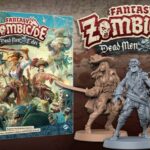
Board game giant Asmodee’s strategic push into crowdfunding has passed its first major test, with its debut campaign in the Zombicide universe raising more than $4.1m on Gamefound.
The buyout came a month after Asmodee had hired ex-CMON COO David Preti – the architect of the latter company’s growth into one of board gaming’s biggest crowdfunding-focused publishers – to head up its own newly-launched crowdfunding and miniatures strategy.
Asmodee had not publicly discussed details of its crowdfunding strategy ahead of completing the Dead Men Tales campaign, but said in a press release celebrating that success that crowdfunding “gives publishers clearer demand visibility, a direct line to engaged communities, and a healthier financial setup – with production sized to actual demand rather than to forecasts”.
It is thought FFG may resurrect Descent through a crowdfunding strategy in the future, although it is yet to confirm or deny this, saying in April, “While we don’t have anything to share at this time, there is always a possibility that we will revisit Descent in the future. It would take a different form and would not be Legends of the Dark, but this game universe is near and dear to FFG’s heart.”
Asmodee CEO Thomas Koegler said of the Dead Men Tales crowdfund, “This first campaign means a lot to me, and I think it sends a clear signal.
“Zombicide is a beloved franchise that joined the group less than a year ago, and Dead Men Tales is already proving the model works: the original Guillotine Games team back at the helm, Fantasy Flight Games executing the campaign with remarkable skill, and a community of more than 11,000 backers who chose to trust us early.
“That trust is something we take seriously. There’s still careful work ahead on delivery, a crowdfunding campaign is only as good as what arrives at your door, but I have full confidence in our teams to see it through.”
Dead Men Tales was the latest Gamefound campaign to make use of the platform’s Endgame feature, which is designed to extend the final moments of campaigns that are still actively receiving pledges even as the original countdown ends.
The Dead Men Tales campaign had collected more than $3m by the end of the official crowdfunding period, but Endgame extended the raise by more than five extra days and about $1m due to new pledges consistently being made.
Prior to Dead Men Tales, the only previous crowdfunding campaign from an Asmodee-owned company was Lookout Games’ Kickstarter for the Grand Austria Hotel: Let’s Waltz! Expansion & Deluxe Upgrade, which raised about €383,000 during the coronavirus pandemic in 2020.
Asmodee’s only other direct exposure to crowdfunding is thought to be via the company Exploding Kittens, in which it made a strategic investment short of a buyout in 2021. That business has since raised more than $977,000 in a Kickstarter campaign for Hand to Hand Wombat.
Asmodee’s own board game publishing operation, meanwhile, saw its net sales fall 5.8% in the last financial year – while net sales for the first quarter of this year were down 9.8% compared to the same period in 2025.
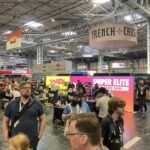
The UK Games Expo has continued its meteoric growth into one of the world’s largest tabletop gaming conventions, after more than 51,000 people descended on Birmingham’s NEC for the show’s 20th anniversary.
That turnout is more than double UKGE‘s pre-pandemic record for unique visitors, and saw overall footfall reach almost 88,000 across the three-day show, which ended yesterday.
The surging visitor numbers – up 64% in just three years – mean UKGE is now pushing steadily towards the 70,000-plus visitors recorded by giant US tabletop convention Gen Con each year since 2023, and is more than two and a half times larger than last year’s Origins Game Fair.
Almost every exhibitor BoardGameWire spoke with at this year’s event reported sales activity ranging from “very good” to “record-breaking”, while one mid-size publisher added that they were delighted at how smooth the organisation was, compared to logistical and set-up issues they had previously experienced at shows including Origins and Spiel Essen.
Tycoon Games CEO Dan Yarrington
Dan Yarrington, the CEO of Everdell publisher Tycoon Games, had a small presence at the show for the first time this year as part of a shared booth, following a fact-finding trip to the event in 2025 – and told BoardGameWire his company would probably return with its own stand in 2027.
He said, “At this level, at 40,000 plus people, and with the buying that we see… my impressions of the show were that, ‘Hey, this is actually a good show’. People are buying stuff, and it’s a different market. This is especially important in the global climate that we’re in, where people are less likely to travel to various other places.”
Yarrington added that in addition to selling its existing titles, UKGE would likely act as a preview show for the publisher, with new releases more likely to appear at Gen Con and Spiel Essen to feed into the company’s fourth quarter.
He said, “At this [UKGE] we had the Everdell Journeys preview copy – it’s not even on Kickstarter yet, so we can be like, ‘hey, come play it, and then tell us what you think’, we can adjust things, and then ‘hey, sign up for the Kickstarter’ – but Journeys won’t release till Gen Con [in 2027], so I think that’s what it’d be, a good process for us.”
Other exhibitors planning to expand their UKGE presence next year after a successful show included small-scale UK publisher Minerva Tabletop Games, which teamed up with three other members of the Playtest UK design group this year to run a combined booth.
Minerva founder Scott Lowe-James told BoardGameWire, “I don’t want to say this is definitely happening, but this was a test, and I think we could easily do like four or five times bigger than this”, citing Allplay‘s large demo area and single shop front as a potential model to replicate.
He added, “We’re all here already, and we’ve all got our own stands, but with that comes volunteers, accommodation costs, logistics. Whereas [by collaborating] we’re able to keep costs down, which is really important for one person, two person teams in being able to support each other where we need. And also we get greater exposure, so the rising tide lifts all boats.”
Scott Lowe-James, centre, with other members of Playtest UK at their UK Games Expo booth
In terms of advising other smaller publishers thinking of attending future UKGEs, Lowe-James said, “I think if you can work with someone, then then do it.
“[UKGE] has the great incentive of the starter stand, so you get a discounted rate, and that is good. But the leap up [from there] is quite a big one, especially if you are a first-time publisher, because not only does the rate increase, but the minimum size increases – and with that comes you need to find people to volunteer, and so other costs increase as well.
“So if you’re able to, find people either with similar games or people that you know. The fact that we’ve been able to support each other, cover each other’s games, I think you also get that tighter bond.”
He added, “Next year we could have, like, 15 different games across different themes and different ways to appeal to people. And I think it’s definitely the way forward.”
James Naylor, the CEO of UK publisher Naylor Games [a BoardGameWire sponsor], said that in addition to a good year for sales, it was notable that more families and attendees relatively new to the board games hobby were filling out the show floor each year.
He told BoardGameWire, “I’m really glad to see that, actually, because there was a little bit of time a couple of years ago where it felt like – maybe it’s just my perception – that perhaps the whole show was becoming more of a kind of ‘turbo nerd’ RPG show.
“…maybe that’s just because that was a peak of RPG popularity or something, and I’m glad to see instead it’s reaching out to a wider audience.
“I want to see board games become more universal as a thing that people use to play face to face, away from screens. So, the more I see that wider audience, rather than just a very narrow hardcore, that’s better from my perspective.”
That rise in awareness of UK Games Expo, and board games in general, has been noticeable too in the run-up to the event, with coverage by national broadcaster the BBC both prior to and during the show this year.
The open gaming and tournaments hall at the 2026 UK Games Expo
Rob Trounce, trade marketing manager at UK board game retailer and distributor Zatu, said a highlight of the show had been BBC Radio showcasing co-op dexterity game Yubibo during its coverage.
He said, “It was kind of a shock to us, and I think it shows UK Games Expo going more mainstream as well.
“If it’s got the BBC and its radio channels talking about it, it shows that this isn’t just a space which is for us dyed-in-the-wool gamers anymore. It is for everyone, it is a mainstream thing.”
UKGE director Richard Denning, who co-founded the show in 2007, joked on social media ahead of this year’s show that the event had grown into something that had “frankly got a bit out of hand”.
UK Games Expo co-founder Richard Denning
The event has ballooned in size since the event first opening its doors in a Birmingham conference centre in 2007, attracting 900 excited gamers – a far cry from the 27,000 who attended Gen Con’s 40th anniversary show later that year.
Denning previously told BoardGameWire that even at that embryonic stage, he hoped the show could go some way to recreating the atmosphere of big name events such as Gen Con and Essen Spiel, albeit in a much-reduced form.
Speaking of plans for future shows, Denning told BoardGameWire there was still room for expansion in its current footprint, but added that the show may change things around next year in order to provide more space for events.
He said, “It is expanding, and we are tight on event space – hence the possible need for more. We have about 500 events. I am amazed how many events US cons get. I think we still want to see that grow.”
Addressing the show’s rapid growth, despite economic turbulence such as Covid-19, the impact of global conflicts and US tariff policy, Denning added, “It’s certainly been a roller-coaster. Even earlier there was the credit crunch of 2008, of course.
“I think whilst visitors may have smaller wallets at present they still want to attend events like UKGE. Folk will save for the weekend and set that a side as a treat to look forward to, I think.”
Asmodee’s escalating power as a global TCG distribution giant was evident again in its newly-released annual results, which showed the company’s net sales surging 23% year-on-year to more than €1.68bn.
That annual revenue has swelled around 50% in just three years on the back of huge recent growth in TCGs, including heavyweights Magic: The Gathering and Pokemon as well as a wave of strong performing newcomers such as Disney Lorcana, the One Piece Card Game and Asmodee’s own Star Wars: Unlimited.
Despite Asmodee’s long-time image as a board game publishing heavyweight, more than 72% of its revenue now comes via its distribution of other companies’ games – up from an already hefty 63% in the previous financial year to March 31, 2025.
TCGs now make up the lion’s share of Asmodee’s annual net sales – about 60% in the 2025/26 financial year, up from just over 50% across the preceding 12 month period.
The company’s own board game publishing operation, meanwhile, saw its net sales fall 5.8% in the last financial year – while net sales for the first quarter of this year were down 9.8% compared to the same period in 2025.
Asmodee’s Jan-Mar 2026 and last financial year revenue figures, showing a hefty jump in the portion of its net sales coming from distributing other companies’ games
Asmodee CEO Thomas Koegler was asked directly during a Q&A session on Asmodee’s latest financial results if the company was still primarily a board game publisher, or whether it was “increasingly becoming an infrastructure company for TCGs”.
He said in response, “We have insisted a lot on the fact that one of the strengths of Asmodee is to be a publisher, but the first strength that we do have is our global reach across all categories, from TCGs and board games.
“That’s the superpower of Asmodee – and then being a very strong publisher is a way of accelerating performance.
“So I would say that there is no change, we continue to capture opportunities across the board wherever they come from… our aim is to be a dominant player, bringing all games to the market, anywhere they can.”
The Japon Brand buyout was accompanied by Asmodee launching a new Japan-based design studio, Nekuma, anchoring its push into what it described as a “currently untapped market” for the company.
There were also hints in the Q&A session that Asmodee might be considering a move into Japanese distribution, adding to its existing operations in the region across China, Taiwan and Australia.
Koegler said of Japan, “The first move we have done with Japon Brand and setting up Nekuma is more of a sourcing move, right?
“The Japanese game designers and authors’ market is very dynamic. If you look for instance in recent very successful games – Bomb Busters, which is the Spiel des Jahres from 2025, was originated from Japan, a game like Dnup that we are releasing later in the year is coming from Japan.
Asmodee CEO Thomas Koegler
“So they are very good also at small card games, and we really wanted to, I would say, bolster our publishing capabilities by creating those sourcing activities.
“Distribution wise, for now we are still working with local partners, we have not set direct foot yet.
He added, “It’s a fragmented market, its a very strong TCG market on the local market side, but yes… as I said, it’s a very vivid scene.”
Koegler also made clear that the company is still pursuing M&A opportunities on the publishing side “across all play types that we have, from social games to lifestyle games and tabletop games”.
He said, “I would say that the discussions we have are still as active as they were – we have demonstrated our ability to do various sizes of deals, which is also a very strong signal to potential people that would like to join the Asmodee adventure.”
Koegler said in his introduction to Asmodee’s 2025/26 report that the impact of geopolitical and economic events on the company’s business in the first few months of the year had been limited, but that the firm remained “mindful” of the potential pressures on transport and energy costs.
Asmodee said the impact on the business of transport and energy cost changes due to global political and economic issues had so far been limited
He said in the financial results Q&A session, “From a consumer standpoint, in moments of tensions when there are rising costs, because games are an affordable leisure we tend to suffer less, if not take some opportunities. That’s what we’ve seen in previous crises over the past 10 or 15 years.
“Consumer sentiment-wise, we will see. Although we are always cautious, there is also I think opportunities for us.
“Secondly, in terms of the cost impact. First of all our mix is currently very favourable because trading card games are manufactured very close to where they are sold, like in Europe for European countries mainly – some are manufactured in Asia but its a limited one – in the US for the US, etc.
“Plus they are cheap to transport, so the impact on those is relatively limited. And then we will see with our partners in terms of raw material increases, but again in the overall cost of goods they do not represent a very significant party.
“For board games we have started to see some increase in transportation costs. They did not impact Q4. If we take an example, road freight did represent roughly 20% of the cost base, and they have increased by 10%.
“But again, all of this is quite manageable for us. We expect to be able to mitigate the impact.”
Koegler added that although the process for receiving tariff refunds in the US had begun, after the Supreme Court struck Donald Trump’s swathe of import fees earlier this month, there was uncertainty about both the timing and final amount Asmodee was owed.
He said, “This is still a little bit foggy, blurred – for us, but [also] for many, many other companies out there. So let’s wait for what’s next on this topic.”
Astrolabe, a Persian folklore-inspired game which tasks players with hunting and binding demons using the titular instrument, has won this year’s Cardboard Edison Award celebrating unpublished board game designs.
The debut design from Iranian video game veteran Yasaman Farazan was praised by judges for its “genius” action selection system, which makes use of a physical ‘astrolabe’, calling it “thematic, toyetic, and an absolute joy to engage with”.
2026 Cardboard Edison Award winner Yasaman Farazan
Farazan’s design took first place out of a record 396 entries this year – a total which has almost quadrupled since Cardboard Edison unveiled its debut award winners a decade ago.
Part of that growth has been down to the competition’s pedigree of winners that have gone on to be published by well-known studios.
They include Winter, published by Devir, Castell from Renegade Game Studios and Umbra Via from Pandasaurus Games, as well as 2023 champion Diatoms, which followed a successful Kickstarter campaign with retail publication by 25th Century Games in partnership with Ludoliminal.
Second place in this year’s competition was Limelight, a push-your-luck deckbuilder by Cameron Fleming about staging a Broadway show, while third place went to Luke Wolyncewicz’s Braggin’ Wranglers, which sees players attempting to catch wooden animal meeples using an adjustable lasso.
Hatchlings, a game by Alan Leduc in which players try to get baby sea turtles to the ocean using “unique and clever” movement queue mechanism, placed fourth.
Braggin’ Wranglers, designed by Luke Wolyncewicz
This year’s 20 finalists also included a magnet-based vertical castle-building game and a medium-weight strategy title centred around wedding planning.
The game, designed by former Ravensburger game development intern Sammy Salkind, puts players in the shoes of startup founders battling to build their internet startups during the dot-com bubble of the late 1990s.
Cardboard Edison was launched in 2012 as a board game design studio and hub, which has since expanded from a well-read industry blog into a vast repository of information for board game designers.
Suzanne Zinsli created the Cardboard Edison Award a decade ago with the help of fellow Cardboard Edison founder Chris Zinsli.
All of the finalists from this year, and the pitch videos of their designs, can be viewed below this article.
Winner: Astrolabe by Yasaman Farazan 2-5 players 45-90 minutes Players are exorcists in a Persian folklore world, using astrolabes to read the stars, hunt demons, and bind them into artifacts. Each round, players secretly rotate their astrolabe to choose an action, a number, and a time of day, then reveal and resolve actions in ascending order. Pitch video
2nd Place:Limelight by Cameron Fleming 3-6 players 45 minutes Limelight is a push-your-luck deckbuilder about staging a Broadway show. Over three Acts, you’ll audition talent, hire crew, and rehearse your show, trying to achieve the perfect mix of cards on Opening Night. Pitch video
3rd Place: Braggin’ Wranglers by Luke Wolyncewicz 2-8 players 15 minutes Braggin’ Wranglers sees players catching animals to score points using a unique adjustable lasso—but there’s a twist! Turn order is decided by your lasso size, which you secretly set at the start of each round! Pitch video
4th Place:Hatchlings by Alan Leduc 2-5 players 30 minutes You’re a Nature Spirit with one job. Get your baby sea turtles out of their comfortable nest, across the beach, and into the water where they belong, thus earning praise from Mother Nature. It would be easy if it weren’t for the relentless bully Steven Seagull and the other Spirits competing for glory. Pitch video
Other finalists:
Black Ruth of Dogtown by Keith DeViere Donaldson 1-4 players 30 minutes Black Ruth of Dogtown is a procedural oracle system driven by a circular mancala drafting mechanism, where players construct a three-by-three grid to optimize set collection and speculative scoring in service of a final narrative divination resolution. Pitch video
Catacombes de Paris by Nicholas Henning 2-5 players 70-110 minutes In Catacombes de Paris, players take on the solemn duty of transporting the remains of millions through the bustling streets of 18th-century Paris to build their personal ossuary in the famed Catacombs. This highly thematic experience combines a strategic pick-up-and-deliver system with an engaging polyomino mini-game for building out your ossuary board. Pitch video
Deductive Seasoning by Eric Ledger 2-5 players 20-40 minutes Deductive Seasoning is a family-friendly deduction card game where you are a food scientist who has concocted a dish using a secret ingredient from the Periodic Table of Flavor. You must figure out other players’ secret ingredient through careful play and observation. Pitch video
Goa Kranti by Andy Desa 2-4 players 60-90 minutes A cooperative game about an overlooked chapter in history: Goa’s struggle for independence from Portugal (1932-1961). Players embody historical freedom fighters choosing between violent resistance and peaceful satyagraha. Core mechanisms include push-your-luck resource gathering, deck improvement, and bag-building for a pivotal mid-game check when India gains independence. Pitch video
Hybrid Hijinks by Jena Keesee 3-5 players 60 minutes A competitive game, creating hybrid creatures and utilizing variable, configurable player powers to impress visitors and earn the most approval for shifting prowess. Pitch vide
Ladybugs by Michael Posada 1-4 players 30 minutes Push your luck by rolling dice that represent a colony of ladybugs flying over a field of flowers. Your rolls determine which flowers you add to your garden, which scoring conditions you unlock, and how many points you earn. Pitch video
Match Patch by Jack Rosen 3-5 players 20 minutes Match Patch is a game about the benefits of farming using companion planting methods. Mechanically, it is a card-matching race game where players try to diversify their harvested crops. Pitch video
Midnight Spawn by Jayson Farrell 1-4 players 60 minutes Midnight Spawn is a game about the mysterious and incredible deep sea. In this game you’re a researcher in your deep-submergence vehicle, or DSV. You’ll discover strange creatures and observe them eat or move other creatures, manipulating the shared board. You can also upgrade your DSV with tech cards or boost your score with research cards. Pitch video
Moonforge by Pawel Owsianka 1-4 players 90 minutes In Moonforge, players command large space facilities capable of capturing asteroids, extracting valuable resources (energy, metal and minerals), and upgrading their operations with new modules and functions. Resources can be sold for currency points, while depleted asteroids contribute material toward the creation of a new moon. Pitch video
PiramiDuel by Guillermo Viciano 2 players 20-30 minutes A game for two players where you will explore Ancient Egypt, fighting to claim the most influential pyramids. Pitch video
Possessions by Dan Nichols 2-4 players 60-90 minutes Possessions is a competitive strategy game where you play as ghosts with one hour to finish your unfinished business and fulfill your final wishes. As the clock ticks down, strive to get the most value from your secret ambitions by possessing your family’s last living heirs. Pitch video
StrongHolds by Nelson de Castro 2 players 40-60 minutes StrongHolds is a competitive castle-building game featuring magnetic tiles that allow players to build vertically unlike any other game. Harness your creativity and vision as a Medieval Architect, while sabotaging your opponent by tossing and sliding siege tiles to topple their progress. Pitch video
The Leftovers by Larry Ted McBride 2-4 players 25 minutes The Leftovers is a cooperative trick-taking game of community deck-building, resource management, strategy, and story. With your party of magical foodfolk, you will work together to complete objectives and avoid vicious food fiends as you explore the abandoned halls of the Enchanted Ladle. Pitch video
The Roots of All Evil by Dean Burry 2-4 players 15-20 minutes Be the first animal cultist to summon the tree demon Blackthorn by creating ever-expanding rings of root cards in which to place your sacred offerings. Pitch video
The Wedding Planner by Jose Lema 2-4 players 60-90 minutes You just got engaged! Now you have 12 months to plan the wedding of your dreams. The Wedding Planner is a medium-weight strategy game that captures the authentic pressure of the process: an overwhelming workload, finite resources, and the constant tension between vision and reality. Pitch video
Wunderkammer by Rosco Schock 2-4 players 45 minutes Wunderkammer is a set collection style game with a unique simultaneous silent auction acquisition mechanism. Each curiosity that you collect also has two attributes so the scoring of your collection is scored in each dimension. Pitch video
Editor’s note: GAMA is one of the sponsors of the BoardGameWire newsletter
Newly-elected GAMA president Meredith Placko says the tabletop trade organisation must stop being reactionary, improve how it communicates with members, and focus on collecting meaningful industry data as it continues to navigate a turbulent couple of years.
GAMA has experienced explosive growth since the pandemic, with surging attendances at its annual GAMA Expo trade show and a broadening of its membership to include designers, manufacturers, media and events organisers, in addition to its long-time core of publishers, retailers and wholesalers.
GAMA has also recently faced budgetary issues, had to contend with the fallout from Donald Trump’s volatile tariff policy, and has fallen foul of a series of gaffes and other incidents which have caused dents to its reputation.
Speaking to BoardGameWire in her first long-form interview since being elected last month, Placko said putting proactive structures in place to keep GAMA from “stepping in the mud all the time” was one of her priorities.
She said, “We need to stop being reactionary. We need to start looking ahead, we need to think before we speak.
“…it’s easy, avoidable issues that if we just put a bit more forethought into it, we can overcome them and they won’t even become an issue. And I think a lot of that has to do with making sure you have the right people in the right places to communicate better.
“I will say this: GAMA’s not done a great job of communicating to its membership. And I really want to appreciate the work that has been done in the last year on the GAMA staff side, where they’ve retooled the newsletter, and they’re trying to get ahead of everything.
“I think that’s great, And I think the conversations that we’re having behind the scenes between board members and with our acting executive director is being on top of that communication.
“And that’s going to be really key because it’ll kind of keep us from stepping in the mud all the time or being late to the game, like with the tariff news last year.”
Part of that looking ahead involves GAMA’s first-ever ten-year plan, which was unveiled to much fanfare last October by former executive director John Stacy and Placko’s predecessor as president, Nicole Brady.
Former GAMA executive director John Stacy
That array of plans included boosting GAMA’s membership within both hobby games and the mass market, expanding itself from being US-centric into a true global organisation, shifting its finances away from the current heavy reliance on the annual GAMA Expo and Origins shows, and leading the conversation on sustainability within the industry.
Advocacy and brand protection were also one of its near-term priorities – underscored by the organisation’s recent intensive lobbying and awareness efforts around the impact on the industry of US tariffs.
But with the figureheads of that plan both gone from their positions, where does the future lie for GAMA’s Vision 2035?
Placko told BoardGameWire, “I think most of it is there, it’s going to stay – I think it’s just going to be the order of which we tackle things.
“…we need to not be reactionary as an organization. We need to stop waiting for something to happen to then react to it. So we need to kind of maybe do a little bit more forward thinking about what are going to be the pressing matters.
“So advocacy, which was on the later half of that ten-year plan, that’s actually should be something that we start building into the core of our organization sooner.”
She added, “I’m going to be starting an advocacy committee for us to start looking at how to educate our members on being advocates for themselves and looking at opportunities that we can maybe work alongside other trade organizations or industry and other impact groups to do more lobbying efforts and have a say.
“Because really, as we saw this last year, tariffs decimated so many of our members. And that is something that we need to be on the forefront of… I know some people are like, ‘Oh, what can GAMA do? You guys are small potatoes’, but it’s having that voice, it’s having the impact.
“It’s at least having the information ready for people, so they know what’s going on and can make informed decisions.”
US tariff policy has had a hefty impact on both GAMA and its membership
Tariffs have impacted GAMA as an institution beyond just the need to lobby on behalf of its membership. Placko told BoardGameWire that the organisation had seen an uptick in turnover of members over the last year, and said she believed tariffs and wider economic instability were to blame.
But she added, “One of the things that I want to see is more hard data on member retention, like: who is staying, who is going, why are they leaving? Unfortunately in the last year, due to tariffs levied in America, companies are having to close down.
“People are going to have to make these harder decisions. You know, can they afford to be part of a trade organization? Are they even around to still be part of that trade organization?
“I will say: membership numbers are up, which is great all around. All membership groups saw a nice bump this year for membership, but we did lose people. And actually one of the big things I want to work with the whole board, the membership, the GAMA staff is: why are those people leaving? Where are they going? What’s happening to them?
“Because one of my core beliefs of a trade organization is that we need to be more involved in sort of this data gathering and sharing.
“I’ve been involved in [other] trade organizations and it’s very key to me that the trade organization is able to provide me with actionable accurate data that can help make informed decisions as businesses move forward.
“And I think a key part of that is just knowing: what is the state of our industry? What is going on with people? What is going on with companies? Where can we as a trade organization also step up and help them, like with advocacy?”
Despite membership numbers continuing to grow, GAMA has also faced headwinds for its finances over the last couple of years – a situation that has delayed its hiring of a new permanent executive director to replace John Stacy.
Tax data provided to BoardGameWire by the organisation showed net revenues of just $17,500 on a total revenue of about $1.4m in 2024 – well down on the almost $409,000 net revenue recorded the prior year, on overall revenues of almost $1.5m.
The documents show salaries rose about $782,000 in 2023 to almost $960,000 the following year, while ‘other expenses’ was up from $302,000 to about $426,000 in the same period.
Placko said, “Our finances have been… not in the best place. And back in the fall, John Stacy hired this amazing operations officer, Melinda Prickett, and she has been taking a look at our finances and how GAMA runs everything, and just laying out a plan, working on stabilizing us and getting us to a point that when we bring in an executive director, they won’t be walking into a messy situation.”
She added, “Some of the things were just, like, tracking spending and where that money was going. And I’ll say this: as an organization, we haven’t raised fees, we haven’t raised booth costs in a while.
“And while everything else is getting more expensive, what we were taking in was not covering everything that we were doing. So there were a lot of hard conversations about where cuts needed to be made.
“We’re currently spinning up conversations. We have a membership dues committee that started, that’s going to be looking at if we need to raise dues and how much.”
She continued, It’s great that we’re able to offer what we can for the limited amount of buy-in from memberships. But, you know, if that money is not covering everything, we have to make hard decisions.
“But it’s improved. I’ll say that… there are just changes we’ve made, and things aren’t bad or scary.”
Speaking of her decision to run for GAMA president, Placko said, “I’ve been vice president. I’ve been on the board for only a year. It was interesting for someone new to the governance side of the organization to even make a play for an officer role like I did when I started.
“But it’s not like I’m lacking experience on non-profits and for-profit boards, and the reason I ran for [the GAMA board] to begin with is that there were just some core governance changes that I wanted to see.
“I quickly learned – and I think a lot of people don’t realize – that our board is governance and not operational. And what I saw was, from the outside, it looked like the board was maybe very involved in the day-to-day operations of GAMA, where it shouldn’t be.”
She added, “Nicole Brady did a fantastic job the last two years, bringing GAMA out of a really messy place and into a more stable place.
“But what I wanted to see, and what I kind of pitched to my fellow board members, was that I really believe that we need to be more of a working board where we’re all working together, that not one single person or a handful of individuals are leading things.
“And sometimes maybe the perception was that way. I want to be very clear: I’m not saying it was that way, just the perception. And communication is key.”
“…I think that the board deserves to know a lot more of what’s going on, and have more of a say in what is being said to the executive director. And I don’t want to be like, ‘oh, I ran on transparency’ – but I really did. I ran on that. I felt that us as a board needed to have more open communication with the executive director… and be able to have a more open working relationship.”
Placko continued, “I think there’s been a misconception that the president of the board leads the vision of GAMA and the board, and that shouldn’t be the case.
“As a board, we are 12 individuals who need to come together and have a shared vision. I kind of see my role as president as maybe the person who helps conduct those conversations, keep them on track, and help silo them to where we’re all on the same page by making compromises and such.
“But that doesn’t mean that I myself don’t have personal things that I think we need to update and change.”
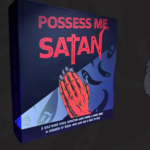
BoardGameGeek has fired advertising manager Chad Krizan after almost 20 years with the company, after he cited his personal experiences of demonic possession as grounds for rejecting an ad campaign.
In the emails, Krizan says he has been “sitting on this one and praying about what to do in this instance”, adding that “as a follower of Jesus, I routinely help people suffering from demonic oppression, and more occasionally, possession, and it’s absolutely devastating the damage he does to peoples’ lives”.
Krizan wrote, “IMO, the responsible thing to do would be to pull the entire project, as there are *way* more people that suffer this than you could possibly imagine, putting on a good face (usually enabled by dissociation), but suffering terribly behind the scenes.”
When Falling Whale replied to question the decision to ban the game on religious grounds, and asking for confirmation of which BGG advertising policy they were breaking, Krizan responded:
“Keep in mind it’s not over religion, but reality. It’s the same reason I would say a game would be in very poor taste if it featured being a sexual predator, or something that would directly trigger someone that’s been harmed by the subject matter.
“It’s about keeping BGG welcoming to everyone, and since I’m privy to this subject matter, I know firsthand that this is not friendly content, and incredibly triggering, put in front of some of the population that visits BGG.”
A statement from BGG founder Scott Alden posted on the site’s forums said, “Due to a situation in which BGG’s Advertising Manager responded inappropriately in a business email to a designer, I have decided to let him go. His response does not reflect or represent our company or the way we conduct business.”
Falling Whale’s campaign for social deduction game Possess Me, Satan runs for another 30 days, and has currently raised just over $14,000 from about 250 backers.
Board game designers Reiner Knizia and Markus Slawitscheck both have a shot of completing an unprecedented series of wins at this year’s Spiel des Jahres – widely considered the highest profile awards in board gaming – after the 2026 nominations were unveiled earlier today.
The pair have already won two of the awards’ three categories in prior years – and the nominations of Slawitscheck’s Morty Sorty Magic Shop for the main prize, and Knizia’s Rebirth for the higher complexity Kennerspiel, could see either or both become the first designers in the awards’ 47-year history to complete the set.
Morty Sorty Magic Shop is up against Corey Konieczka’s Cozy Stickerville and Martin Ang’s Dito! – the German version of Jinxo – for this year’s Spiel des Jahres, while Rebirth is contending with Michael Palm and Lukas Zach design Boss Fighters QR and Donald X Vaccarino’s Moon Colony Bloodbath for the Kennerspiel.
Spiel des Jahres Association chairman Harald Schrapers said in a nominations livestream today that the jury looked at a record 571 games for this year’s awards, underscoring the sheer mass of games being released through retail.
The 440 titles reviewed across the Spiel and Kennerspiel categories was up 14% on last year, while the 92 games considered for the Kinderspiel marked a roughly 50% rise compared to the 61 from 2025. Another 39 titles were considered by judges across both the Spiel and Kinderspiel awards.
Number of games reviewed in recent Spiel des Jahres years – red is Spiel and Kennerspiel, blue is Kinderspiel, and purple is games which span both segments
Despite those record numbers, Schrapers pointed out that just 2.3% of the games were from women designers, with male creators making up 94% of the cohort, and the rest being designed by mixed teams.
That figure has barely moved in recent years, having stood at 2% in 2025 and 2.6% in 2024 – an ongoing lack of diversity highlighted in great detail in this excellent feature by Wargamer’s Mollie Russell earlier this week.
Schrapers also emphasised that this year’s judging process had been a particularly frustrating one, with glaring flaws being present in even the standout designs.
He said, “It was a lot of fun, but there were also real shortcoming in many games.
“There are deficiencies in some games every year, of course – there are so many, not all of them are really good. Many are good, but as I said, not all of them.
But this time we noticed, especially with the outstanding games, i.e. the 10% best – I would say there were various games where there were various quite serious flaws. There were so many that I even wrote them down.”
He presented a list which included incomplete, ambiguous, and contradictory rules of the game, a lack of summaries, blatantly incorrect age information on boxes, and components which fail to function well in poor light or after a handful of games.
Schrapers said in a separate blog post about the process, “Despite these shortcomings, some titles made it onto the jury’s shortlist because the flaws were not so significant in relation to the outstanding gameplay.
“However, there were probably more than one work that failed to secure a majority in the jury vote due to such a deficiency.”
Spiel des Jahres deputy chairman Christoph Schlewinski, left, and chairman Harald Schrapers, right, with this year’s Spiel des Jahres nominees
The livestream also drew attention to the nomination of Boss Fighters QR, and the long-listed design Toriki: The Castaway Island, as notable for requiring an app in order to play.
When asked by Spiel des Jahres deputy chairman Christoph Schlewinski whether that signified a growing trend within the hobby, Schrapers said, “No, I don’t think that’s a trend.
“They are two games that work very well with an app… the thing is that the app supports the analogue feeling in such a game. That’s why it’s an addition.”
He added, “I’m really sure that even in ten years, 90% or even more of all board games will work without a digital integration, because that’s exactly what people like.
“But an app also draws new people into this game. We notice it especially with young people that they often find this very , very good, it creates additional tension – and you can see that such a board game can also open up new audience groups.”
Hisashi Hayashi’s co-operative bomb disposal game Bomb Busters won last year’s Spiel des Jahres, beating the much-fancied push-your-luck card game Flip 7 to the high-profile award.
That victory meant the Spiel des Jahres has now been won by a co-operative game design in five out of the past seven years, following successes for Just One in 2019, MicroMacro: Crime City in 2021, Dorfromantik: The Board Game in 2023 and Sky Team last year.
Cozy Stickerville is the only nominee for the main prize this year which is a cooperative title.
Last year’s Kennerspiel des Jahres was won by Endeavor: Deep Sea – which also features a prominent co-op mode as a way to play the game – while the winner of the 2025 Kinderspiel was Wolfgang Warsch’s Topp die Torte.
Winning the Spiel des Jahres can explode sales by hundreds of thousands of copies for the winner – and by thousands of copies for the nominees.
While publishers tend to keep tight-lipped about actual sales figures, Pegasus Spiel co-founder Karsten Esser told BoardGameWire in a 2023 interview that winning the main prize can boost a game’s sales by 10x to 20x in the months following, due to a slew of exposure across mainstream German shopping outlets in the run-up to Christmas.
That kind of boost can be hugely impactful for publishers and designers alike – and is particularly important to smaller publishers in the fight to stand out amid an increasingly competitive industry which sees thousands of releases each year.
The winners of this year’s Spiel des Jahres awards are set to be announced on July 12.
Asmodee has revealed the first slate of partner companies it has picked to make Lord of the Rings-themed board games and accessories, six months after becoming the steward of the hugely lucrative Middle-earth licence for the tabletop.
They are joined by dice and tabletop accessories maker Sirius Dice, and Game Toppers, which announced separately that it will be creating Lord of the Rings-themed gaming tables, mats and other accessories.
Individual projects from most of those publishers are still under wraps, although last month Stone Blade announced it would be bringing a Lord of the Rings-themed version of its Ascension deckbuilding game to Gamefound.
When Asmodee was given power over the tabletop licence by Middle-earth Enterprises last October, the initial reaction from some publishers was that they would struggle to get a look in, with Asmodee likely to reserve the best opportunities for Lord of the Rings releases for itself.
Luke Peterschmidt, head of active category management at Asmodee
He said at the time, “Our job is to make the right number of Middle-earth games at the right pace, so that every game has space to breathe, and there is a Middle-earth game or gaming accessory for every type of game.
“That’s the mission, and no part of that mission says, ‘and Asmodee makes all the games’.”
He added, “It is absolutely fair to have that thought in your head, and it’s our job to prove that thought wrong. And, I mean, literally nothing I say, I think, could convince anybody other than action. So yeah, it’s got to be the action, we’ve got to follow it up.”
In a statement announcing the first slate of partner companies, Peterschmidt said, “There may be The One Ring to rule them all, but it takes many publishers to satisfy the gaming needs of The Lord of the Rings fans and I’m sure each of our partners are going to do their part in that quest.”
Asmodee’s own Lord of the Rings-themed releases this year are currently set to include The Lord of the Rings: The King’s Gambit, which its studio Space Cowboys is developing in partnership with Restoration Games.
That title is a reimagining of turn-of-the-millennium Avalon Hill release Star Wars: The Queen’s Gambit, which is based around four battles that take place during the events of Star Wars film The Phantom Menace.
Publishers interested in pitching a Middle-earth game to Asmodee can do so by emailing METTGlicensing@asmodee.com.
Osprey Games, the UK publisher of tabletop titles including the critically acclaimed Undaunted series, is shutting down its board and card games operation to refocus on wargames and RPGs.
A statement from the company said Osprey’s owner, the multinational book giant Bloomsbury Publishing, had made the “difficult decision” to sell the board and card game line as part of a “strategic refocusing” on book publishing, adding that the move was “not a decision taken lightly”.
The company said it would not commission any new board or card games, but would continue to release, sell and license upcoming games according to its existing schedules while Bloomsbury hunts for a new owner for its board games.
BoardGameWire understands from two sources that Bloomsbury hopes to find a buyer willing take on the existing board and card game team in addition to its catalogue of titles, but the firm is yet to publicly comment on the sale process.
Osprey Games was launched in 2015 as part of Bloomsbury arm Osprey Publishing, which had a decades-long history of creating military and historical information and reference books before beginning to publish wargaming rulebooks in 2008.
The gaming arm’s early successes included Peer Sylvester’s The King is Dead and The Lost Expedition, as well as popular titles such as Hal Duncan and Ruth Veevers’ design Cryptid and the second edition of Martin Wallace’s London.
Those releases were followed by the high-profile success of the Undaunted series of deckbuilding wargames from David Thompson and Trevor Benjamin and the Imperiumgames from Nigel Buckle and Dávid Turczi.
Osprey also gained a reputation for taking chances on a range of titles with intriguing mechanisms and designs, such as Sylvester’s area control and trick-taking hybrid Brian Boru, highly asymmetric area control title Crescent Moon, card-based strategic wargame Battalion: War of the Ancients and small-box, quick-playing conflict title General Orders: World War II.
Undaunted: Normandy, designed by David Thompson and Trevor Benjamin
Speaking to BoardGameWire, Sylvester said the sale news had come as “a bit of a bombshell”, adding that he wasn’t aware of any problems at Osprey which pointed to a possible sale.
He said, “I dont think the decision has anything to do with how the games have sold. From what I see, there are some strong titles, like The King is Dead (which is still selling well), Undaunted, and apparently also Lost Expedition. So it’s a decision made from the parent-parent-company at Bloomsbury.
“Working with Osprey was perhaps the defining moment of my ‘career’ as a game designer. First: they always had great developers there, which was fun to work with. Brian Boru wouldn’t be as good as it (hopefully) is without the team at Osprey.
“Also, Lost Expedition was turned into a hit partly because of the great idea to hire [comics creator and illustrator] Garen Ewing. So they elevated my games, but they also published them in the first place, which helped me getting a name and contact in the industry.
“I really don’t know if I would continue working on games as much as I did, if I wouldn’t have worked with them. So I owe them a lot.
“The news of the potential sale therefore makes me quite sad. I just hope the team keeps being around in some form, so I can keep working with them.”
David Thompson, the co-designer of the Undaunted series and fellow Osprey titles War Story: Occupied France, Line of Fire: Burnt Moon and the General Orders games, told BoardGameWire, “I’ve worked with Osprey for the last 14 years. Over that time, they’ve grown to be like a family to me.
“It was over a decade ago that Duncan Molloy, then the lead of the Osprey Games board game division, took a chance on a fledgling designer and signed what would eventually go on to be Undaunted: Normandy. Over the next decade I had the opportunity to collaborate with Duncan, Filip Hartelius, Anthony Howgego, Jordan Wheeler, Rhys Ap Gwyn, and Luke Evison on the editorial staff.
“Each and every one of them are incredibly talented people, and it was through their shepherding that games like the Undaunted series, General Orders, and War Stories: Occupied France came to be. And I would be remiss if I did not mention Emily Neat, Pete Ward, Benji Corless, Benjamin Thorne, and George Barker from the marketing staff and Gareth Clarke for his graphic design.
“Amazing people, each and every one. Over the years I’ve partnered with about 15 board game publishers, but the folks at Osprey will always hold a special, unique place in my heart.”
Fellow board game designer Ellie Dix, whose tapestry-themed worker placement design Threaded could prove one of the last published by Osprey Games, said she also did not know what had provoked the decision.
Ellie Dix design Threaded, published by Osprey Games
Dix told BoardGameWire, “I’ve loved working with Osprey. They’ve been absolutely brilliant. Honestly a dream to work with. They’ve taken so much care with Threaded and done such a great job to bring it to life. I’m very sad about the decision to sell.”
The news comes a month after Bloomsbury, which has a stock market valuation of almost £500m, announced it was “streamlining its structure for further growth”, which included a reorganisation of the company’s editorial divisions and the loss of about 55 jobs.
That restructuring follows Bloomsbury’s sales doubling from £185m to £361m over the last five financial years, with profits more than doubling to £48.8m in the same time.
No mention of Osprey was made in the restructuring announcement, or in Bloomsbury’s interim results announced in October last year, which revealed revenues of £160m and profits of £24m in the six months to August 2025.
Root publisher Leder Games has unveiled four new hires as it continues to rebuild from a staff exodus earlier this year that included star designer Cole Wehrle and style-defining artist Kyle Ferrin.
The Minnesota-based publisher has brought in experienced operations director Johnny Dale as executive director, who will take on responsibility for day-to-day operations, and former Trick or Treat Studios graphic and production designer Jody Henning as senior graphic designer.
Jesse Wertz, who previously worked in operations and finance in the software and banking sectors, has been brought in as director of operations, while Adam Jury has been hired as a graphic designer.
Leder agreed to sell Arcs and Oath to Buried Giant as part of the shake-up, while keeping hold of its huge-selling star title Root – a game which despite its complexity has broken out of the hobby game bubble and onto the shelves of major retailers such as Walmart and Target.
Kyle Ferrin artwork for Root
Other Leder staff who moved across to Buried Giant included Josh Yearsley, who designed the most recent Root expansion Homeland, senior graphic designer Pati Hyun, event coordinator and community manager Matt Martens and graphic designer Megan Ganey.
That left Leder with a design and development team comprising company founder Patrick Leder – the co-creator of its debut release Vast: The Crystal Caverns and co-designer of multiple Root expansions – Nick Brachmann, who has worked on expansions for Root, Ahoy and Fort, and solo game design specialist Liz Davidson.
Leder named Davidson as the company’s new creative director in February, while former customer support coordinator Andrea Francisco has become a junior game developer at the studio, and Alita Robertson has been promoted from production assistant to producer. The company also brought in Tyler Exsted as a game developer two months ago.
New Leder executive director Dale has had a long career in director roles across advertising, media and pharmaceutical companies – and has also spent many years running the popular Eize Basa social media account, in which he jokes about board gaming and other subjects.
Dale initially announced he had been hired by Leder on his Eize Basa BlueSky account on April 1, which given the nature of the account was widely laughed off as an April Fool’s Day prank.
Speaking of Dale’s hire, Patrick Leder told BoardGameWire, “Bringing Johnny on as executive director is a perfect fit. He’s spent his career building and leading teams like ours, he’s passionate about board games, and anyone who knows him knows how creative he is.
Leder Games founder Patrick Leder
“Johnny has been a friend of Leder Games for almost ten years now, so having him join the team feels completely natural for me, Liz, and the rest of the team.
“For me personally, having Johnny take over day-to-day operations will be a huge benefit: it means I get to spend more of my time doing what I love most, which is designing games.”
Dale added, “I’ve been a fan of Leder Games for a long time, so stepping into this role is a huge honor. I bring nearly 20 years of experience leading creative teams, and I look forward to putting that to work alongside Patrick and this group.
“We have a great pipeline of games in development, and I think players are going to be very excited about what’s coming.”
Some of those in-development games were recently showcased by Leder on its YouTube channel, with Alita Robertson showing off backyard soapbox racing game Kart, and Nick Brachmann demonstrating a prototype of a Taylor Shuss dexterity-based mech and monster battle design with the working title Creature Control.
In the same video Patrick Leder revealed he had been working on a lightly-asymmetric economic euro game called Fish based around catching, canning and delivering fish, which he said might be renamed to Trawl – something which would break a long tradition of Leder games all having four-letter titles.
Paul Bender and Christopher Badell, who launched the business in 2011 alongside Adam Rebottaro, said they have reacquired the brand and the rights for the Sentinels of the Multiverse titles alongside their other original IP such as the Sentinel Comics RPG.
The deal comes just under a month after Flat River Group sold the Greater than Games brand name and the Sentinels range to digital developer Handelabra Games, which had spent more than a decade creating digital versions of the Sentinels of the Multiverse and its expansions – as well as for Greater than Games’ best known release, Spirit Island.
Two new titles have been announced by the company slated for a summer release, in the form of Badell-designed party game Digital Detox and social deduction title Crime Scene Tamperer, from Homestar Runner creators Mike and Matt Chapman.
Greater than Games co-founder Christopher Badell || Photo credit: Greater than Games
Badell, GtG’s chief creative officer, added on the livestream that the publisher is “in the development process on a high-single-digit number of games right now”, while creative director Matthew Kroll added that the company has two “heavy hobby games in the pipeline” – one co-operative, one competitive.
Bender added on the livestream that Bottom of the Ninth designer Darrell Louder had recovered the rights to the game, which had previously been published by Dice Hate Me and GtG, “and would like us to publish it again, so we’re excited to do that”.
The relaunched company’s five-strong team comprises Greater than Games veterans SaRae Henderson as art director and chief operating officer Katie Nale, in addition to Badell, Bender and Kroll.
GtG’s third co-founder Adam Rebottaro, the original artist and co-creator of Sentinel Comics, has also rejoined as a “creative collaborator”, the publisher added, “helping to shape the next generation of Sentinel Comics releases alongside Badell”.
That will see the pair working together on new content in the Sentinels range, beginning with reprints of all existing definitive edition products for Sentinels of the Multiverse and then moving on to a new expansion, which is expected to come to crowdfunding in 2027.
Badell said in a press release announcing the GtG revival, “A year ago, I wasn’t sure I’d ever get to come back to this. Sentinel Comics has been the defining creative work of my life – fifteen years of stories, characters, and worlds I love – and watching it become uncertain was genuinely painful.
“So when I say this feels like coming home, I mean it. I’m back in the Multiverse. We all are. And we’re just getting started.”
Greater than Games co-founder Paul Bender || Photo credit: Greater than Games
Bender added, “Greater Than Games has always been about more than just publishing games — it’s about building experiences and communities.
“Over the years, the brand has grown and evolved, but its heart has always been with the people who create and play these games. Being able to steward that again is both a responsibility and a privilege.
“We’re excited to reconnect with our community and continue building something special.”
Greater than Games is also set to return to Gen Con this year, the publisher added, underscoring its rejuvenation as a business with a booth in the Entrepreneurs Avenue segment of Hall G – an area dedicated to companies making their debut at the event.
Flat River Group, a distribution and e-commerce specialist, had bought Greater than Games in 2021 after picking up private equity investment from Guardian Capital Partners a year earlier.
It followed that expansion into board game publishing with further deals for Canadian publisher Synapses Games and hobby game distributor Luma Imports in 2022.
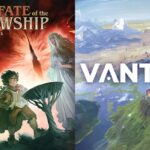
Co-op designs The Lord of the Rings: Fate of the Fellowship and Vantage put in a powerful showing in this year’s Golden Geek Awards, winning five categories between them and scoring another five runner-up successes.
Pandemic creator Matt Leacock’s spin-off creation The Lord of the Rings: Fate of the Fellowship took home the awards for medium game of the year, best thematic game and best co-op at the 20th annual Golden Geeks, which are selected and voted on by BoardGameGeek users from games released in the prior year.
Co-op open-world exploration game Vantage, designed by Scythe and Viticulture creator Jamey Stegmaier, won the innovative game prize and best solo game awards, while Jon Perry’s chaotic mascot racer Hot Streak triumphed in the best party game and light game of the year categories.
Jamey Stegmaier’s design Vantage, from Stonemaier Games
The much sought after heavy game of the year title went to Galactic Cruise, while The Old King’s Crown secured the artwork and presentation award, Toy Battle took best 2-player game and Star Wars: Battle of Hoth best wargame.
All of those Lord of the Rings titles were published by studios at board game giant Asmodee – which last October announced it had been named manager of the hugely lucrative Middle-earth licence for tabletop games and accessories.
Fate of the Fellowship winning the co-op award marked the second year running that a Lord of the Rings game has triumphed in the category, after Bryan Bornmueller’s The Fellowship of the Ring – Trick-Taking Game took home the prize in 2025.
Despite the high-profile successes of two co-operative titles in this year’s Golden Geeks, the results were less positive for co-op fantasy adventuring game Arydia: The Paths We Dare Tread – which failed to convert any of its six nominations into wins or runner-up placings.
Sci-fi and space-themed games were notably everywhere again across this year’s awards, continuing a trend from 2025 which ended in multiple wins for Arcs and SETI.
Speaking about Vantage’s multiple wins and nominations, designer Jamey Stegmaier – who spent about eight years designing and playtesting the title – told BoardGameWire, “I’m just happy for the opportunity to bring a little joy to people through our games, and I’m honored that my labor of love, Vantage, was able to do that for the people who selected it for the Golden Geek Awards.”
Fate of the Fellowship creator Matt Leacock said, “Designing The Lord of the Rings: Fate of the Fellowship was such a rewarding experience for me. I’m so pleased that players are continuing to enjoy it and using it to write their own stories with each other.
“So many things came together with this product: the creative direction, development, illustration, paper engineering, graphic design, sculpting, and marketing. I want to extend my congratulations to the entire team that brought it to life.”
The 20th Annual Golden Geek Awards results in full:
Entertainment website The AV Club has shuttered its board game and video games segment, bringing to an end almost 13 years of tabletop coverage for veteran writer Keith Law across the site and its predecessors, Paste Games and Endless Mode.
Law wrote more than 300 pieces across those sites following his debut article in 2013, helping bring modern board gaming to a wider audience through his reviews, opinion pieces and highly regarded ‘games of the year’ lists.
Speaking to BoardGameWire, Law said the shuttering had come as a shock, adding that he would continue to write about board games on his personal blog.
He said, “It’s been an honor and a privilege to write about board games and the tabletop space for the last 12 years for Paste, Endless Mode, and AV Club.
“I worked with some great people, notably my longtime editor Garrett Martin, and feel incredibly lucky to have had the opportunity to write so much about one of my passions.”
The loss of Law’s writing from such a well-read entertainment site was bemoaned by Votes for Women designer Tory Brown, who cited his rave review of that title as “a high water mark in the effort to bring my game to the masses.”
She told BoardGameWire, “Keith Law is a treasure, the kind of smart and thoughtful writer whose approach to criticism makes us all smarter and more thoughtful.
“That a media outlet failed to recognize the value of his contribution says more about the lack of vision in American journalism than the board game audience or industry.”
Keith Law’s glowing review of Tory Brown’s design Votes for Women
The shuttering of the AV Club tabletop section marks the latest in a string of high-profile gaming and entertainment sites closing or shrinking their tabletop coverage in recent years.
They include major video games site Kotaku, which has not published an article to its tabletop section since veteran writer and editor Luke Plunkett left in 2023, and Polygon, which lost renowned, long-serving tabletop editor Charlie Hall as part of a downsizing 12 months ago.
While Polygon’s tabletop section still exists, the segment’s focus has shifted heavily towards coverage of trading card games such as Magic: The Gathering and Pokemon.
Of the 61 articles in tabletop section last month, just three were about board games – one a story highlighting that Star Wars: Outer Rim was being discounted at Amazon, and two about the Game Changer Kickstarter from comedy team Dropout.
Kevin Bertram, the founder of Votes for Women publisher Fort Circle Games, told BoardGameWire, “While I appreciate the contributions of many YouTube reviewers, video cannot fully replace the depth and clarity of written criticism.
“The loss of voices like Charlie Hall (of Polygon) and now Keith Law marks a deeply troubling turn for our industry.
“Board game journalism faces a structural challenge: establishing a sustainable business model that supports rigorous, long-form analysis. Perhaps that future lies with independent critics like Dan Thurot or collaborative models such as Rascal.
“Whatever forms emerge, their success will depend on active support from a community that values thoughtful, written criticism.”
AV Club editor-in-chief Danette Chavez provided a statement to BoardGameWire which said, “The AV Club made the difficult decision to eliminate three roles, which included two full-time staff who ran our video games coverage after joining us from Endless Mode in November 2025.
“This also includes changing the direction of our television coverage. Our hope is this will allow The AV Club to focus on our core strengths: incisive coverage of film and TV through reviews, features, and news.
“We will continue to have some games coverage, but we cannot sustain a full-time staff covering it with our smaller team. All previously published games stories will remain available to read.”
Tomáš Holek’s space exploration eurogame SETI has surged past 100,000 copies sold, following a triumphant 2025 in which it cleaned up across a string of major board game awards.
SETI publisher Czech Games Edition told BoardGameWire it had ordered bigger than usual, more frequent print runs than it initially planned for the Spiel 2024 release, after the title picked up early widespread praise from reviewers and impressed visitors at gaming conventions across last year.
That swell of interest translated to a rash of awards, including heavy game of the year and best thematic game in the Golden Geeks – voted on by BoardGameGeek users – and a trio of wins at last year’s Dice Tower Awards, where it was named game of the year and best strategy game, while designer Tomáš Holek was named best new designer.
SETI designer Tomáš Holek
CGE said, “We knew the game was good. But the reality has definitely exceeded our expectations.”
It added that the speed at which SETI became popular was comparable to its 2020 release and fellow multi-award winner Lost Ruins of Arnak, with SETI’s sales numbers “much higher than for our other recent heavy game releases” such as the well-received Kutná Hora and Deal With the Devil.
Asked whether the high-profile awards success across 2025 was a big contributor to SETI’s sales performance, a CGE spokesperson said, “This is very hard to evaluate, especially with the number of awards SETI has won.
“There probably wasn’t a noticeable bump thanks to a particular award, but they definitely help bring more eyes to the game. Awards like Golden Geek or The Dice Tower Awards help guide the community to what games are worth checking out, and that leads to increased sales.
SETI’s rapid success is striking following a year which has seen many publishers pivoting to smaller box titles over more heavyweight designs, as a response to economic factors such as US tariff volatility, as well as gamers having less money to spend due to inflation and general cost of living struggles.
CGE told BoardGameWire the colossal success of its 2015 release Codenames had been critical in putting the Prague-headquartered publisher in a financial position where it can take a chance on heavy titles like SETI from previously unpublished designers.
Titles from the relaunched version of Codenames, which was unveiled in 2025
Codenames had sold more than 16 million copies as of May last year, has been translated into more than 45 languages, and has just undergone a relaunch with new art, packaging, a re-tuned word selection and simplified rulebook, with CGE looking to keep the evergreen title flying off shop shelves.
The CGE spokesperson said, “We can now experiment more than in the past. However, we’ve also made quite smart decisions overall and chose really strong titles recently (Arnak, SETI) – and we’ve built a really strong position on the market throughout the years.”
They continued, “SETI’s success is a combination of theme, art, and game design. When we showed the game at UK Games Expo, people geeked out seeing various projects.
“That’s where a good part of SETI’s success lies – the inspiration in real science and space exploration. It’s hard to find a chunky space-themed game that would be more grounded in reality, while also being visually stunning.
“The beautiful art is not only on the box, but also on the board, cards, and other components. On top of that, the innovative spinning board always manages to draw attention.”
They added that they believed the game “scratched an itch” for fans of successful games like Terraforming Mars, providing a heavy strategy title with gameplay that “can be explained in a digestible manner, making the game quite accessible”.
They added, “Players also often think about how they’ll approach it differently when they play again. Because of this, SETI gets to the table more often than some heavier titles. Players feel like there are truly more ways to explore the galaxy.
“When the game is played more often, it reaches more people, and it gets organic lift through discussions on forums, groups, etc. This also leads to more favorable reviews and posts on BGG, where SETI has quickly climbed the charts over the last year.”
CGE’s 2026 release slate revealed to date includes Drillers, from first-time designer Roman Bednář and Project L co-creator Adam Španěl, as well as a Critical Role-themed co-op reworking of Codenames and several Codenames expansion packs, focused on themes such as sci-fi, fairy tales and ‘cute critters’.
Asmodee has agreed to buy the rights to party game Time’s Up! from R&R Games, continuing an expansion push predicated on social games being the fastest growing category of the board games market.
Time’s Up!, first published by R&R in 1999, is based on classic party game Celebrities, in which players write down names on pieces of paper, which teams then take turns guessing based on a single player’s descriptions.
The game increases in difficulty over two subsequent rounds, with players having to describe the same names using just a single word alongside actions and gestures, while in round three the describer cannot speak at all.
Time’s Up! Family, published by Asmodee studio Repos Production
Celebrities has been reworked into multiple different boxed releases from various companies over the years, with Peter Sarrett’s design Time’s Up! and Monikers from CMYK among the best known versions.
Asmodee has been a publisher of Time’s Up! since its 2020 acquisition of Repos Production, which had been putting out various versions of the game in Europe since 2004 through a licensing agreement with R&R.
Last year the board game giant shifted Time’s Up! to its Zygomatic studio alongside fellow small-box social games such as its bestselling Dobble range, Werewolves of Miller’s Hollow, the Timeline series and Jungle Speed.
Asmodee said the rights purchase cemented Time’s Up!’s presence as once of Zygomatic’s flagship titles, adding that the Zygomatic team would focus on focus on “expanding the IP and further strengthening its global reach particularly in English-speaking territories, where there is a significant growth potential for the brand”.
It added that it would undertake a “rationalisation and modernisation” of the Time’s Up! range in 2027, which will see it “streamline the product line, refresh the brand positioning, and ensure stronger competitiveness and accessibility across markets”.
Asmodee said Time’s Up! Express, which was launched in January, marked the first step in its refreshed strategy for the game – with its faster gameplay and broader accessibility reaching new audiences “while remaining faithful to the core experience that made the game successful”.
Asmodee said at the time that it expects a compound annual growth rate (CAGR) for social games of between 4% and 8% between 2025 and 2030, compared to about 4% for the wider board games market, citing mass market sales research for the US and ‘main European countries’ conducted by Arthur D Little.
Company CEO Thomas Koegler said in the company’s Q2 report last November that Asmodee had seen “good momentum” in its lower price-point products in the US mass market, singling out Exploding Kittens as a particularly strong performer in what he called a “challenging market”.
The ATM deal followed five other acquisitions from the past 12 months – including the buyout of Japon Brand from CMON, anchoring the board game giant’s push into a “currently untapped market” for the company.
Speaking about the Time’s Up! deal to Board Game Beat, R&R Games president Frank DiLorenzo reportedly said multiple companies had reached out over the years to inquire about buying the title or the entire business, but added that “most offers either didn’t align with our valuation or came from partners we felt would not fully honor and support what we’ve built”.
He said of the Asmodee buyout, “We’ve had a longstanding relationship with Asmodee, particularly following their acquisition of our European partner, Repos.
“They have a deep understanding of the game and a clear vision for maintaining its longevity and appeal. Their offer was both attractive and well balanced. We believe this agreement creates meaningful benefits for both companies and for the players who love the game.”
He added that R&R would transition out of publishing the game over the next few months, winding down its remaining stock through direct sales on its website.
Alliance Open House, the tabletop publisher and retailer networking event launched more than 25 years ago by Alliance Game Distributors, has rebranded to Universal Summit US in the wake of Alliance’s takeover by Canada’s Universal Distribution.
Universal said it is waiving all registration fees to celebrate the inaugural US Universal Summit, which will continue its predecessor’s slate of game demos, panels and workshops, vendor exhibit hall and networking opportunities.
This year’s event will be held at the Grand Wayne Convention Center in Fort Wayne, Indiana between August 27 and 29, with registration required by May 15.
Universal Distribution CEO Angelo Exarhakos told ICv2 last July that the company intended to invest “a fair bit” in expanding the event and “making it more welcoming to both retailers, and especially the vendors”.
He added, “We generally, at the Universal level, don’t charge vendors to attend these shows. We think this is a very good marketing expense for us and a good investment, to be able to bring our vendors close to our retail partners, so you’re going to see us invest and expand that show.”
Alliance Game Distributors was a perennial heavyweight of US board game distribution since it was created through the merger of Chessex and The Armory in 1998, with both companies already major players in the sector before the deal was signed.
The company had maintained its strong position since being bought by Diamond in 2000, despite the woes of its parent business in recent years.
Universal will also be holding its regular Canadian summit on September 13 and 14 this year, at the Sheraton Laval in Montreal, Quebec. Registration for that event is also due by May 15.
UK-based Gutter Games, which was launced in 2017, is best known for dexterity challenge party game Beat That!, and has also published adult-themed party titles including Gutterhead and Trunk of Drunk.
Beat That! by Gutter Games
Gutter was bought by US Amazon aggregator Perch in 2021, which was itself acquired by private equity-backed Amazon FBA businesses operator Razor Group three years later.
Savana founder and president Romain Chemière de Carné told Mojo Nation, “Gutter Games built something genuinely special – irreverent, high-energy games that travel across cultures and languages.
“Our intention is clear: restore the brand to the prominence it deserves, develop extensions and new entries in the Gutter Games universe, and further strengthen a portfolio that is already one of the most dynamic in the global board game industry.
“This is our first M&A operation, and our first acquisition overseas – it demonstrates SAVANA’s capability to execute complex international transactions, and it opens a new chapter in how we grow the business.”
Savana also sells markers and crayons, nail stickers and temporary tattoos in addition to its line of board games.
The company’s game releases this year are set to include a One Piece version of its pirates-themed social deduction game Traitors Aboard, according to a listing on BoardGameGeek.
Arcs, the hybrid trick-taking wargame from Root and Oath designer Cole Wehrle, has won game of the year in the ioGioco Awards, which were created in 2021 to celebrate Italian-language board games and their designers.
This year’s award for best aesthetic and production quality went to Michele Morosini’s The Breach, published by Ludus Magnus Studio, while best two-player game went to Paolo Mori and Alessandro Zucchini’s design Toy Battle.
Nominees are picked by the editorial staff at Italian tabletop gaming magazine ioGioco from all of the titles published in Italy in the previous year, with the winners decided by public vote via the magazine’s website.
The Breach, from designer Michele Morosini and Ludus Magnus Studios
ioGioco said the tabletop gaming sector continues to prove “particularly vibrant”, with the market in Italy seeing a 27% rise in value last year compared to 2024 according to data from research company Circana.
Trading card games were a huge driver of that figure, the research shows, with sales of tabletop games outside of that category growing 3% year-on-year. More than new 800 titles were released in the country last year, ioGioco added.
Last year’s ioGioco game of the year award was won by fantasy deckbuilding and strategy game Black Rose Wars: Rebirth, which was designed by Andrea Colletti, Diego Fonseca and Marco Montanaro.
ioGioco Awards 2025 – full results
BOARD GAME
Winner: Arcs, designed by Cole Wehrle – published in Italy by MS Edizioni Ants, Renato Ciervo, Andrea Robbiani Bomb Busters, Hisashi Hayashi The Lord of the Rings: Fate of the Fellowship, Matt Leacock Star Wars – Battle of Hoth, Richard Borg, Adrien Martinot
GAME DESIGNER
Winner: Paolo Mori Gregory Grard Hisashi Hayashi Reiner Knizia Matt Leacock
LIGHT & FAMILY GAME
Winner: The Lord of the Rings: The Fellowship of the Ring – Trick-Taking Game, Bryan Bornmueller – Asmodee Italia Bomb Busters, Hisashi Hayashi Castle Combo, Grégory Grard, Mathieu Roussel Cities, Steve Finn, Phil Walker-Harding Flip 7, Eric Olsen
WARGAME
Winner: Memoir’ 44 (New Edition), Richard Borg – Asmodee Italia Battlefields of the Napoleonic Wars, Paolo Mori, Alessandro Zucchini Pocket Air War: Definitive Edition, Carlo Amaddeo An Impossible War: The First Carlist War in the North, 1834-1838, David Gómez Relloso Wunderwaffen, Walter Obert)
CHILDREN’S GAME
Winner: Splendor Kids, Marc André, Catherine André – Asmodee Italia Jurassic Valley, Davide Panizza My Puzzle Adventure: Ochre Land, Antonin Boccara, Romaric Galonnier, Fabrice Lamouille, Mathilde Malburet Redwoods, Gary Kim, Yohan Goh, Hope S Hwang Opération Noisettes, Emilie Soleil, Jérôme Soleil
AESTHETIC AND PRODUCTION QUALITY
Winner: The Breach, Michele Morosini – Ludus Magnus Studio Cyclades: Legendary Edition, Bruno Cathala, Ludovic Maublanc Galactic Cruise, TK King, Dennis Northcott, Koltin Thompson Koi, Rosaria Battiato, Massimo Borzì, Martino Chiacchiera Runar, Diego Fonseca)
AESTHETIC AND PRODUCTION QUALITY – ROLE-PLAYING GAME
Winner: Mörk Borg, Pelle Nilsson, J Yamil – Need Games Daggerheart Elder Mythos, Laura Fontanella, Marta Palvarini Magus et Oraculum – New Edition, Momatoes, Oscar Biffi Pilgrims of the Murk Dome, Pelle Nilsson, J Yamil
SOLITAIRE GAME
Winner: Gloomhaven: Buttons & Bugs, Joe Klipfel, Nikki Valens – Asmodee Italia Final Girl Season 2, Evan Derrick, AJ Porfirio Hispania, Miguel Marqués Too Many Bones, Josh J Carlson, Adam Carlson Voidfall, Nigel Buckle, Dávid Turczi
TWO-PLAYER GAME
Winner: Toy Battle, Paolo Mori, Alessandro Zucchini – Asmodee Italia Duel for Cardia, Faouzi Boughida, Mathieu Rivero Agent Avenue, Christian Kudahl, Laura Kudahl Memoir’ 44 – New Edition, Richard Borg Zenith, Grégory Grard, Mathieu Roussel
BOARD GAME EXPANSION
Winner: The White Castle – Matcha, Sheila Santos, Israel Cendrero – Devir Dune: Imperium – Bloodlines, Phil Amylon, Andy Clautice, Paul Dennen, Caleb Vance Food Chain Magnate: The Ketchup Mechanism & Other Ideas, Jeroen Doumen, Joris Wiersinga Talisman: Nemesis – Call of the Hunt, Craig Van Ness Twilight Imperium: Fourth Edition – Thunder’s Edge, Dane Beltrami, James Kniffen
ROLE-PLAYING GAME
Winner: Daggerheart – Acheron Games DIE: The Roleplaying Game, Kieron Gillen Marvel Multiverse Roleplaying Game, Matt Forbeck, Marty Forbeck Triangle Agency, Caleb Zane Huett, Sean Ireland Wilderfeast, Federico Corbetta Caci, KC Shi
ROLE-PLAYING GAME SUPPLEMENT
Winner: The One Ring: Realms of the Three Rings, Michele Garbuggio, Marco Maggi, Francesco Nepitello, Gabriele Quaglia – Need Games Dolmenwood Campaign Book Dungeons & Dragons 5.5e: Dungeon Master’s Guide Outgunned Adventure, Simone Formicola, Riccardo Sirignano Tal’Dorei Reborn, James JHaeck, Matthew Mercer, Hannah Rose
GAMEBOOK
Winner: Un altro passo nella neve, Manuele Giuliano – Ingenioso Hidalgo 15 Mondi da Cana, Stefano Tartarotti Chi è stato? 1 – La Casa degli Automi, Michele Buonanno Fiabe Oscure 2 – Aurora, Valentina Ceciliato The Freedom Finders – Beak Your Chains, Emily Conolan
The follow-up to the top ranked game on BoardGameGeek, Brass: Birmingham, was always like to attract significant attention for its crowdfunding campaign. For Roxley Games’ Brass: Pittsburgh, that interest converted into more than $9.1m, securing the biggest board game crowdfund of 2026 so far and one of the top ten tabletop gaming raises of all time. Roxley CEO Gavan Brown, who co-designed Pittsburgh alongside original Brass creator Martin Wallace, spoke to BoardGameWire about soaring past his expectations for the crowdfund, avoiding the ‘arms race’ of deluxe editions, the advantages of Gamefound over Kickstarter and overcoming the campaign’s biggest mis-step.
BoardGameWire:Congratulations on the crowdfund! It’s obviously been a massive success, in terms of raw numbers – are these the kind of levels you were anticipating prior to launch, for backer numbers and total funding, or were they above or below where you’ve ended up?
Roxley Games CEO Gavan Brown: I thought $4m was most likely. If the community and fans felt like we nailed the game, it was POSSIBLE (but highly unlikely) to hit as high as $8m. On the low end, if it funded below $2m I would have felt that we must have dropped the ball in some way, only because of how respected Birmingham is.
Roxley Games CEO and Brass: Pittsburgh co-designer Gavan Brown
I think there are plenty of people out there who would look at this campaign and say ‘well of course it performed well, it’s the sequel to the number one game on BGG’. Can you speak to the advantages you might have had going into making this game, in terms of it being a success – and also the ways in which you had to make sure you didn’t take crowdfunding success for granted?
I’ve said before that starting this project, it felt like we were making The Matrix 4. It’s going to be nearly 10 years between the two titles, so we can’t wait this long and just throw something together. Obviously, there is a cohort of fans who are going to back it regardless, because it’s Brass. On the other hand, Brass players enjoy playing a 3-4 hour economic simulation game about the industrial revolution, so needless to say, they are also some of the most savvy gamers in the hobby who would be absolutely uninterested in a cash grab. So I realized before we started that we would need to create a sequel that fires on all cylinders. Which luckily, that’s the always the objective of myself and Roxley.
How long has the development process been for this one, and what would you say were the major changes that you made as playtesting and development went on?
The research went on for years prior to me even beginning. I also kept a document where I would jot down ideas of new mechanisms and dynamics that I wanted the game to feature when they popped into my head. Heavy development for Pittsburgh started in November of 2024. I began working on it every single day of the week.
I am the type of designer who will gut an entire system if it’s not working how I want to. There is basically no level of redesign that I will refuse to undertake if I believe that the change will make the game better. There were many massive, large-scale redesigns of the system in Pittsburgh, but the largest one was fundamentally redesigning how oil was consumed.
Initially, oil was only consumed by the kerosene industry. But as time went by, we realized that this resource not being consumed by manufactured goods reduced the competition and interdependence between players, which I feel is a core defining principle of Brass. As I researched oil and its relationship with manufactured goods, I discovered that a massive amount of crude oil was also processed into lubricants used in the making of manufactured goods.
What was your professional take on the board game crowdfunding environment prior to launching – both for crowdfunding in general, and for higher-priced, deluxe games. Did you make any specific changes / have any particular strategies for the crowdfund based on your knowledge of the current environment?
The strategy of many publishers is to create deluxe editions of their games to increase average order value. They need to increase average order value because they need the product to cost enough to fuel the advertising needed to fuel the campaign. Roxley was one of the first companies to start leaning into deluxe editions of board games, simply because I (and our team) love the experience of playing games made from high-quality materials.
So to us, the Collector’s Edition represents the most pure vision of the game. While we do put immense care into the retail ‘Essentials’ version of our products, this is always done after we realize the pure vision of our Collectors Editions. To us, the Collectors Edition is the painting, and the retail is a print. Both can be beautiful, but the painting is made from different stuff.
So we win because we get to make our ideal version of the game, and it’s a win for the consumer because if we sold the Collectors Edition through retail distribution, it would need to cost over $200. Deluxe Editions across the hobby have become sort of an arms race, with endlessly scaling scope, physical size, number of boxes, vac trays, and plastic in the boxes.
Our strategy: we do not pay attention to any of this. In fact, we often do the opposite. We focus on making our games as physically small as possible to respect your shelf space. We also choose materials that feel innovative and fit the aesthetics of the game, rather than just adding more plastic miniatures (unless the creative direction or game design calls for them).
My motto regarding innovation in product and game design is: we aren’t trying to make the ‘next thing’, because someone is making that as we speak. Instead we are trying to make the ‘next next thing’. We spend a great deal of time studying manufacturing methods used outside of boardgaming. For example, yesterday I recorded a video of a nice velvet texture on the inside of a friend’s new Volvo, wondering how we could apply same texture on a vac tray.
This was your first campaign on Gamefound, after ten on Kickstarter across more than a decade. Why did you decide to switch for this campaign, and has it persuaded you to stick with Gamefound for your next one?
We do not have any allegiance to any crowdfunding platform. We see them a tool used to realize creative expression, and Roxley will always use the best tool for the job. But in recent years, Kickstarter has mostly remained the same while Gamefound has been silently innovating and refining its service.
So our decision to use Gamefound was based on them currently being the best tool for the job.
What did you find where the biggest advantages to using Gamefound as the campaign went on – and were there any aspects which you’d expected to be more beneficial than they were?
Here’s a few ways we Gamefound is currently leading over Kickstarter:
They have a built in pledgemanager
They invented pre-campaign updates, which was pivotal in precampaign hype
They allow a youtube link for the campaign video
Greater level of comment moderation
They allow mp4 videos embedded in the campaign page, which also support transparency (making them work better for dark mode), which are vastly more function
Responsive design is vastly superior to Kickstarter. When you have a Kickstarter page open on a full screen browser window, the imagery is a little 580px strip in the middle of the page. 2015 called and wants their boilerplate back.
Tools to help charge and remit sales taxes on behalf of the creators. Kickstarter simply washes their hands of this and says “It’s the creator’s problem”
Greater localization support: we can display every part of the campaign in multiple languages
They are highly responsive to the needs of their clients
What do you think was the most important thing you learned from running this campaign generally, in terms of preparing for future crowdfunds – and maybe for providing others with advice on running theirs?
Our biggest misstep was not communicating the total value of the Collector’s Edition on day one of the campaign. Every single component of the Collector’s Edition was intended to be upgraded by the end of the campaign. We wanted to ‘surprise’ everyone with these upgrades as the campaign progressed. But Brass already had a deluxe edition released previously, so while the final form of the Collectors Edition does represent immense value, the way it was initially presented did not adequately communicate this.
We corrected this by discarding the concept of stretch goals (Funding Quests), for this campaign, unveiling all of them in text form on day four, and then doing a spotlight on each one of these upgrades for each day of the campaign. This change immediately got us back on track.
My advice to other creators:
Do not be afraid of changing or redesigning your campaign.
Consider not using stretchgoals on a crowdfunding campaign for a sequel to a previous title, which likely carries preconceived consumer expectations with it.
I think one of the notable aspects of this campaign was the weekly drip-feeding of content updates and reveals from August through December last year, prior to the campaign launch. Is that a strategy you’ve employed before, what was the impact of doing things that way (in terms of e.g. backer numbers, online conversation etc), and would you make any changes to the way you approached it, in hindsight?
This is probably the best thing we did for the campaign. I don’t think any campaign had utilized prelaunch updates to the level that we had during this campaign. Usually, creators do updates talking about all the new cool components, materials, mechanics, and effort put into the game during and after the campaign. But during the campaign, you need to focus on very short concise messaging to try to get a conversion. After the campaign the customer is already getting the game, and it doesn’t help you sell more.
But talking about this before the campaign launches allows the players to form a bond with your game and your team before the campaign even launches. If they like what they hear and what they see, they will follow your campaign, which greatly increases hype, followers, and if your updates are interesting and from the heart, it will also increase sales.
There’s been discussion online from people upset at what they see as a high price level for this campaign – but then more than 37,000 people have backed it to the tune of over $9.1m. Can you speak a little to why you went the direction you did with this campaign – deluxe components, for example, rather than a more basic, more affordable production?
The Essentials Edition is priced at the exact same MSRP as we sell Brass Birmingham for in Target. It was also pointed out on BGG that after adjusting for inflation, Brass Pittsburgh: Essentials Edition is cheaper than the 2007 Treefrog Games Edition.
The Collectors Edition provides immense value, and as discussed would need to be priced at upwards of $200 if sold through retail distribution.
I hear retailers talk about margins all the time, and their need for reaching levels of about 50% for individual titles. Is the pricing of Pittsburgh going to provide any challenges on the retail side, do you think, or are you confident the numbers will work out for both Roxley and retailers of the game?
Target is regarded as having the most price-conscious demographic in the market. Brass Birmingham currently sells well in Target at $80. We don’t forsee this being any different for Pittsburgh.
How concerned are you about the impact of further US tariffs changes on producing and delivering Pittsburgh – and what kind of tariff hike could Roxley reasonably absorb before additional fees would have to be charged to backers?
The tariff situation has been evolving rapidly, and we’re keeping a close eye on it. For US backers, applicable tariffs are effectively a VAT. This is something international customers have always navigated, and now the US is in the same boat.
What were your expectations around endgame, and what impact has it ultimately had on the game and on the crowdfund for Roxley overall?
We have never done end game before, and I had never even heard of it until [Roxley director of operations Kira Peavley] said it was running for our campaign. The Gamefound folks reached out to us a few days prior to the campaign ending and suggested we create a little trinket that backers could add to their pledge in order to keep the timer going.
Because the campaign had done so well, we also decided to come up with an exclusive gift for everyone who backs copy Brass: Pittsburgh collectors edition on Gamefound. Because this gift was to be exclusive to Gamefound, it could not be gameplay related, as Roxley does not offer gameplay-related crowdfunding exclusives (we want people to be able to buy all game content after the campaign). So, we came up with the idea of doing an artfolio that would feature Brass’ artwork from Mr. Cuddington that they’ve created over the years. It will even feature a fabric cover, as you would see in a high-quality hardcover book.
When the campaign shifted to Endgame, the funding amount was $7,869,841, so it has generated over $1m in extra funding. As for how much impact it has had, that is up for debate: Some of our previous campaigns that have generated an additional 75% of additional funding while the pledge manager was open. But honestly, that doesn’t matter to us… we are very happy with the funding level we have reached, and it makes us happy to reward each of our backers with this extra item as a thank you to them.
Isaac Childres, the founder of Cephalofair Games and designer of its runaway successes Gloomhaven and Frosthaven, is stepping down from his role as CEO to focus exclusively on game design at the company.
Cephalofair’s long-time chief operating officer Price Johnson has been promoted to CEO at the publisher, while industry veteran Julie Ahern has been hired from Van Ryder Games as its new COO.
Childres founded Cephalofair in 2014 to self-publish his first game, Forge War, and struck huge success with his follow-up design, fantasy co-op campaign design Gloomhaven, which raised about $4m for its second printing on Kickstarter in 2017.
Three years later the company broke the Kickstarter funding record for a tabletop game with Childres’ successor design Frosthaven, which pulled in almost $13m from more than 83,000 backers.
Standees from Frosthaven
Childres has led the company since inception, seeing it growing from a one-person operation to overseeing a team handling design, development, writing, art direction, promotion, publishing and fulfillment.
New CEO Johnson, who joined Cephalofair in a business development role in 2017, oversaw strategic initiatives such as mass market placement of Jaws of the Lion, as well as managing marketing and production of Frosthaven as the heavily-delayed project navigated the huge disruption caused by the Covid-19 pandemic.
He has also been a high-profile voice in campaigning against US tariffs imposed by President Donald Trump over the last year, and aiming to highlight the heavy financial burden it has placed on tabletop game publishers – many of which rely on Chinese manufacturing for their titles.
Johnson will continuing to oversee strategic initiatives, business development, sales and marketing, and catalogue growth at the company following his promotion to CEO.
He said, “Working with Isaac since the early release days of Gloomhaven to grow both Cephalofair and our community has been an absolute privilege and highlight of my career.
“We have come a long way since the early days of indie game design and crowdfunding, while learning a lot about ourselves and this industry in the process.
“I can’t wait to share the exciting plans we have creatively and organizationally in this next chapter with our fans, but that starts by putting in the hard work alongside our amazing team, whom I thank for their trust and support.
“With confidence, there is no place I’d rather be… epic strategy awaits!”
A statement from Cephalofair said Childres would now focus solely on his role as lead game designer at the publisher, overseeing design and development on its entire line of games.
Julie Ahern, who replaces Johnson as COO, most recently spent almost four years as senior director of operations at Van Ryder Games, which is best known for solo horror game series Final Girl and murder mystery title Detective: City of Angels.
Titles from the Final Girl range, from Van Ryder Games
She previously spent almost 12 years at Greenbriar Games as COO and vice president, overseeing day-to-day of business operations and game development while contributing to the Folklore: The Afflication and Zpocalypse product lines.
Childres said, “Julie is my absolute favorite person in the board game industry (sorry Price!), and I could not be happier to welcome her to the team.
“I think she is the perfect fit for a needed role in this transition that allows me to focus on my core passion: designing epic, strategic games. Thanks Julie!”
Johnson added, “Growing as an organization means surrounding ourselves with professionals who not only compliment our core strengths, but exceed many of our own.
“Julie Ahern is one of those professionals I’ve long admired as a leader, innovator, and tabletop enthusiast. From coffees at conventions to shared manufacturing trips in China, I’m thrilled to finally have the opportunity to work directly alongside her as Cephalofair enters its next chapter.”
Ahern said, ““I have known and respected Isaac and Price for many years. While I loved my time at Van Ryder Games, it is a genuine pleasure to start this new adventure.
“I am thrilled to delve into the Gloomhaven universe with all its deep lore and challenging campaigns.”
Cephalofair’s most recent crowdfund saw it raise more than $5m on BackerKit for Gloomhaven Grand Festival – one of the highest-profile campaigns on the crowdfunding site to date – which included a second printing of Frosthaven, second edition of Gloomhaven and several other designs such as small-box release Gloomhaven: Buttons and Bugs.
That campaign has suffered heavy delays compared to its original timeline, however, due to both production delays and the volatility caused by US tariff policy.
The new edition of Gloomhaven, for example, only began fulfilling in May last year, despite initial estimates that it would begin fulfillment in March of 2024.
Cephalofair is currently on Wave 4 of production for the project, working on the Gloomhaven RPG, which it originally estimated would be fulfilled in July 2024.

 Anmelden