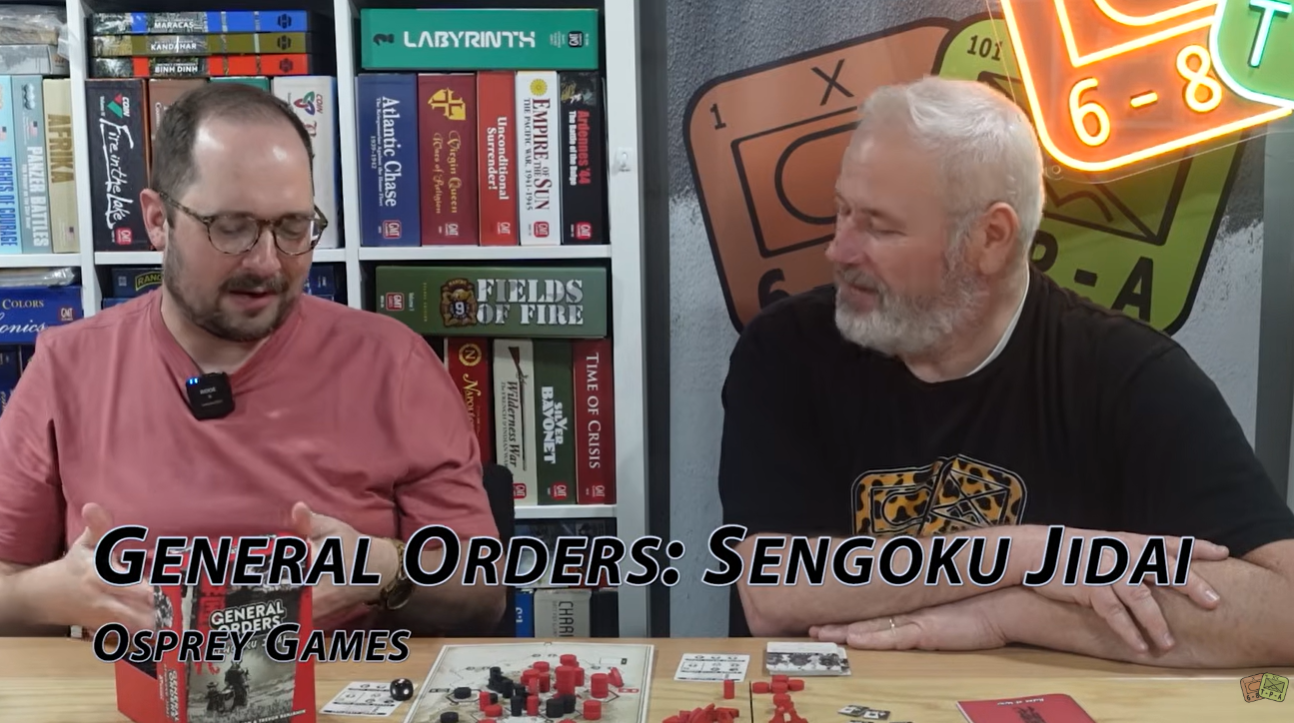
General Orders: Sengoku Jidai pits two competing daimyo against one another in a fight for control over crucial battlefields in 16th-century Japan. Deploy your commanders to seize powerful advantages, secure valuable supply lines, and capture well-defended forts — all while protecting your vulnerable HQ. This standalone game introduces new strategic waterways, ships, and devastating siege weaponry across two battle maps.
From award-winning design duo David Thompson and Trevor Benjamin, this compact two-player game combines the dynamism of a wargame with the cut-throat decision-making of worker-placement games.
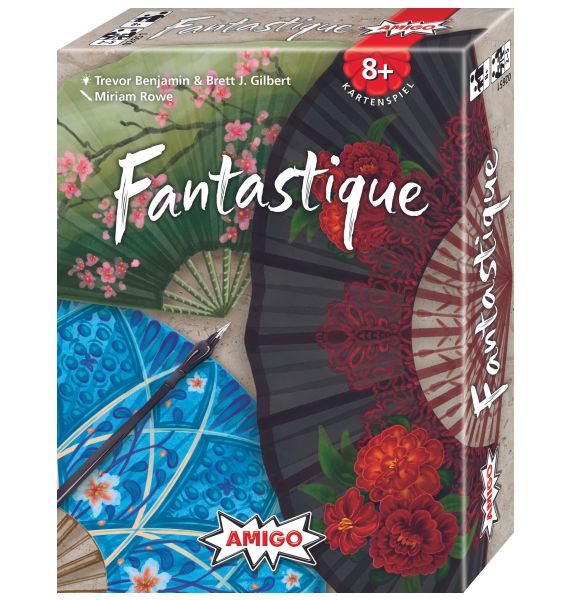
„Fantastique“, möchte man ausrufen, wenn man das gleichnamige Kartenspiel der britischen Autoren Trevor Benjamin und Brett J. Gilbert (AMIGO) in Händen hält (und frankophon ist). Fantastisch, in der Fülle der…
Fantastique von Trevor Benjamin und Brett J. Gilbert – erschienen bei AMIGO Spiele Aufgrund meiner lediglich rudimentären Englischkenntnisse hätte ich ohne externen Hinweis das Wortspiel des Titels nicht erkannt. Woher soll ich denn wissen, dass "fan" im Englischen nicht nur der treue Anhänger einer Sache ist, sondern eben auch ein Fächer? Bisher habe ich aber […]
Die Sommer-Neuheit von Amigo Spiele passt in die Zeit – leider. Die Erwärmung des Klimas hat im Juli und August 2026 für Rekordtemperaturen in Europa und insbesondere in Deutschland gesorgt. Allerorten ist das Verlangen nach Abkühlung gewachsen. Diesbezüglich kann das Kartenspiel Fantastique weiterhelfen. Denn schließlich wird es zu unserer Aufgabe, Fächer zusammenzustellen. Neben einem frischen Lüftchen schenkt es uns aber vor allem eine gute Zeit am Spieltisch.
Der Reiz von Fantastique manifestiert sich darin, dass ich beim Ausspielen von trapezförmigen Karten zwei Ansprüchen genügen möchte. Erstens: Wer den größten Fächer präsentiert, also die größte Anzahl von Karten derselben Zahl auslegt, erhält die meisten Punkte in dieser Runde. Und zweitens: Wer die Karte(n) mit der größten Zahl gewählt hat, darf als Erster neue Karten aus der Auslage nehmen – und hat folglich die besten Optionen, seine Kartenhand zu stärken. Daraus entwickelt sich über sieben Runden lang ein taktisches Abwägen darum, wann es die beste Zeit ist, große Sammlungen oder hohe Zahlen auszuspielen.
Was bei Fantastique verboten ist
Generell gilt: Ich darf nur Karten mit derselben Zahl ausspielen, davon aber beliebig viele. Es ist lediglich verboten, eine bereits ausliegende Kombination zu kopieren. Es muss also stets sichergestellt sein, wer einen Gleichstand bei Kartenanzahl oder Zahlenwert gewinnt. Nämlich die Person, deren Kombination den höheren Wert hat beziehungsweise aus mehr Karten besteht.
Insbesondere in den ersten Runden erscheint es mir bei Fantastique weniger wichtig zu sein, die Medaillenkarten einzusacken; es gibt sie in Gold, Silber und Bronze für die jeweils drei Besten. Denn der Wert der Belohnungen ist anfangs noch recht gering, steigt aber mit jedem Durchgang an. In Runde sieben kann ich beispielsweise mehr Punkte erzielen als in den ersten beiden Durchgängen zusammen. Um aber genau dann, wenn es um die hochwertigen Medaillen geht, breit auffächern zu können, braucht es die ersten Runden zur Vorbereitung.
Was mich bei Fantastique zum Umdenken zwingt
Ich mag die Aufgabe, meine Kartenhand kontinuierlich für die Vergleiche in der heißen Phase der Partie vorzubereiten. Und ich mag die zwei Umstände, die mich immer wieder zum situativen Umdenken zwingen. Erstens: Das Angebot zur Ergänzung der Kartenhand variiert, denn beim zufälligen Bestücken der offenen Auslage werden Karten mit derselben Zahl gruppiert. Mitunter liegen da nur fünf einzelne Karten mit unterschiedlichen Werten. Was nicht so attraktiv ist. Manchmal locken aber auch drei Sechsen oder drei Achten. Wenn ich eine Chance sehe, diese zu ergattern, sollte ich entsprechend ausspielen. Sehe ich die Chance nicht, könnte es zumindest mit einem großen Fächer aus kleinen Werten auf Gold gehen.
Zweitens: Eine Partie gipfelt in einer finalen Medaillenvergabe, in der die verbliebenen Handkarten alle Mitspieler verglichen werden. Wer in Bezug auf die zu Beginn festgelegten Fächerwertung nun am besten abschneidet, kann 20 zusätzliche Punkte gewinnen. Mal geht es darum, die meisten Karten mit einer Eins, Zwei oder Drei auf der Hand zu haben. Oder aber wir vergleichen die Anzahl der Handkarten, reduziert um die Anzahl der eigenen Karten mit dem am häufigsten vorkommenden Wert. Wie auch immer: Diese Grande-Finale-Wertung beeinflusst das taktische Verhalten in den Runden zuvor und sorgt dafür, dass sich Partien unterschiedlich anfühlen.
Weniger gelungen ist die Verlagsempfehlung, Fantastique zu zweit zu spielen. Ein Duell empfinde ich als langweilig. Denn dieses Spiel hat durchaus Stichspielcharakter – und das bedeutet, dass für die hinten sitzende Person alle wichtigen Informationen offenliegen; sie kann entsprechend so reagieren, wie es für sie am besten ist, ohne unnötig hoch ins Risiko gehen zu müssen. Und im Spiel zu zweit gilt das eben für jeden zweiten Zug. Je mehr Leute am Tisch sitzen, desto spannender erlebe ich die Partien. Deshalb ziehe ich es nur dann aus dem Regal, wenn wir zu viert oder zu fünft sind – und das durchaus auch jetzt im Herbst oder im kommenden Winter, wenn die Temperaturen gar keine Fächer erfordern.
Fantastique | Amigo Spiele | Trevor Benjamin, Brett J. Gilbert | 2 bis 5 Personen | ab 8 Jahren | 25 Minuten | Spielanleitung | Meine Einschätzung: ★★★ (gut)
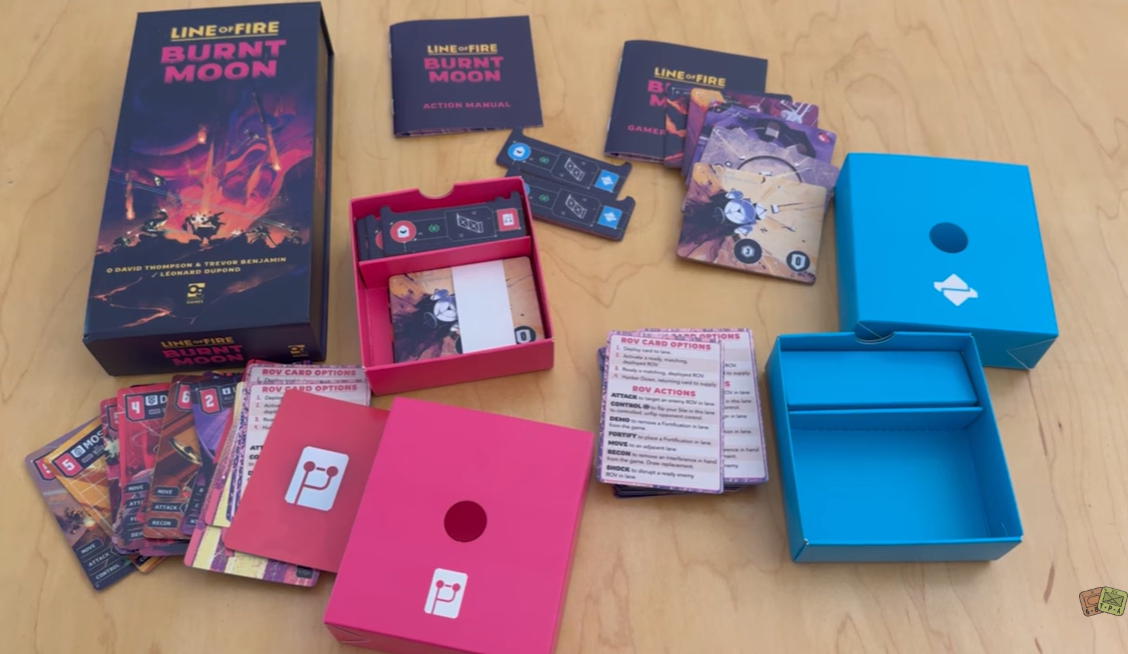
A group of black-hat hackers known as POSIWID plots to hijack the moon Io and hold the entire Jovian power grid to ransom. Standing in their way are the ultra-corporate LFA, the constructors of the lunar energy facilities. Both sides have engaged a fleet of ROV – advanced remotely-operated robots — to battle across the treacherous landscape. The machines are activated. Initiate combat sequence. The battle for Io has begun.
Line of Fire: Burnt Moon is a standalone 2-player card game that fuses the lean deck-building of the award-winning UndauntedSeries with fast-paced lane battling. Sharp decision-making and clever positioning combine in a nail-bitingly tense, endlessly replayable, and lightning-fast experience.
In Folge 44 verirren wir uns mit ARIDNYK in die Karparten und mit DIE SÜMPFE VON FEYA in selbige. Zusätzlich tauschen wir uns über die Sinnhaftigkeit eines Brettspielkanons aus.
Schon beim ersten Anblick wirkt es, als ob beim Plättchenlegespiel Wuselige Wiesen alles auf Erfolg getrimmt sei: hohe Zugänglichkeit – Check, niedliche Alien-Wesen – Check, Belohnungen bei jedem Zug – Check, Wiederspielreiz – Check.
In den vergangenen sieben Tagen sind auf Board Game Arena drei neue Titel erschienen. Sie reichen vom ruhigen Riffbau über einen kompakten Gartenausflug bis zum Zweipersonen-Duell auf hoher See. Zwei davon benötigen ein Premium-Abo, eines lässt sich kostenlos spielen.
Reef Gardens
Reef Gardens ist seit dem 7. August auf der Plattform verfügbar. Für diesen Titel wird ein Premium-Abo benötigt. In dem Legespiel von Jeffrey D. Allers (dlp games, 2025) baust du als Meeresschützer Korallenriffe wieder auf, bevor Zeit und Budget ausgehen. Manchmal musst du bestehende Riffe abbauen, um mit dem gewonnenen Forschungsgeld neue Flächen zu bepflanzen.
Mechanisch verbindet das Spiel Gebietsmehrheiten, offenes Drafting und das Umschließen von Flächen mit klassischem Plättchenlegen. Es ist für 2 bis 4 Personen ausgelegt und dauert laut Verlag rund 50 Minuten. Auf BoardGameGeek liegt der Titel bei 6,8 von 10 Punkten aus 122 Bewertungen, bei einem Gewicht von 2,3 von 5. Der Verlag empfiehlt es ab 10 Jahren.
Under the Leaves
Under the Leaves ist seit dem 5. August spielbar. Das Spiel lässt sich ohne Abo spielen. In dem Legespiel von Trevor Benjamin und Brett J. Gilbert (2025) legst du Gartenplättchen aus, lockst Bienen und Kolibris an und entdeckst kleine Lebewesen unter Blättern, Pilzen und Pfützen. Wer am Ende die meisten Teile im eigenen Garten sammelt, gewinnt.
Das Spiel setzt auf Plättchenlegen, das Verketten von Feldern und Verbindungen zwischen den Gartenteilen. Es ist für 2 bis 4 Personen ausgelegt und dauert etwa 25 bis 40 Minuten. Auf BoardGameGeek steht der Titel bei 7,4 von 10 Punkten aus 417 Bewertungen, bei einem Gewicht von 2,0 von 5. Eine deutsche Ausgabe erscheint bei Frosted Games unter dem Titel „Wuselige Wiesen".
The Isle of Cats Duel
The Isle of Cats Duel ist seit dem 3. August auf der Plattform. Für diesen Titel wird ein Premium-Abo benötigt. Das eigenständige Zweipersonenspiel von Frank West (The City of Games, 2024) überträgt das Katzenrettungs-Thema von „The Isle of Cats" auf ein reines Duell. Statt Karten zu draften, bewegst du dich mit einer Oshax-Katze über die Insel und bestimmst so, welche Katzen, Schätze und Lektionen dir und deinem Gegenüber offenstehen.
Im Kern geht es um Plättchenlegen und Mustergestaltung: Du passt die einzigartigen Katzenplättchen auf dein Boot und hältst dabei die Familien zusammen. Das Spiel ist ausschließlich für 2 Personen und dauert rund 30 Minuten. Auf BoardGameGeek erreicht der Titel 7,5 von 10 Punkten aus 597 Bewertungen, bei einem Gewicht von 2,3 von 5. In der Ankündigung auf der Plattform wird zusätzlich die Erweiterung „Puss in Boats" genannt.
About 18 months ago, while attending Buckeye Game Fest in Columbus, Ohio, we met up with David Thompson to get a quick look at a few of his newest upcoming games at the time including Line of Fire: Burnt Moon from Osprey Games and the very interesting American Civil War game with a twist called Rebels Against Rebellion from Flying Pig Games. I got to play Rebels Against Rebellion and very much enjoyed the game and what it was trying to convey about the lack of support for the secession of Tennessee from the Union as most of the residents of Scott County voted against breaking away during the American Civil War. The game pits the local groups against each other as the Free and Independent State of Scott fights against the local secessionist residents as violent confrontations between Loyalist and secessionist-aligned partisans and outlaws engaged in raids on farms, stealing livestock, and destroying property. Since that time, the game has progressed and has launched on Kickstarter. I reached out to one of the game’s designer David Thompson to see if he would be willing to share about the design and as always he was more than happy to oblige us.
Grant: David, welcome back to our blog. What is your new upcoming game Rebels Against Rebellion about?
Davind: Thanks for having me back! Rebels Against Rebellion is a card-driven war game for one or two players, set in Scott County, Tennessee, during the American Civil War. Tennessee’s own path to secession was messy. The state voted against a secession convention in February 1861, then reversed course and voted to join the Confederacy in June, following Fort Sumter. But East Tennessee never went along with it. And of all the counties in East Tennessee, none rejected secession more decisively than Scott County: 521 to 19. Later that year, the county court went so far as to pass a resolution declaring Scott County’s own independence from the state of Tennessee, calling itself the “Free and Independent State of Scott.” That’s the story we’re telling: Southern Loyalists trying to hold their ground against the Confederate army and their allied secessionist guerrillas, for the whole length of the war.
Grant: What should the title convey to the players?
David: I wanted the title to carry that irony right up front. Rebels Against Rebellion. The people of Scott County were, technically, rebelling against a rebellion by resisting the Confederacy in order to maintain their ties with the Union. History likes to flatten “Rebel” down to one side of the Civil War, but in Scott County that word cuts the other way too. I liked that the title does some of the historical educating on its own, before a player has even opened the box.
Grant: Why was this a subject you wanted to focus on?
David: It’s a story that doesn’t get told nearly enough. We hear a lot about the big battles and the big generals, but the internal fractures within the South (communities that stayed loyal to the Union under occupation, that organized home guards, that got raided by their own state’s army) that’s a different and much more personal kind of Civil War story. I’ve made a habit of chasing these under-told corners of history rather than the well-trodden ones, and Scott County is about as under-told as it gets. Once you learn about Julia Marcum defending her father’s house with an axe, or the Home Guard’s oath at the Huntsville courthouse, it’s hard not to want to build a game around it.
Grant: What are the unique features with the system used for the game?
David: The core of it is a deck that represents both your units and your locations. Playing a card from your hand isn’t just “move a piece,” it’s your people and your settlements acting together. Every location you control is physically a card sitting in your deck, hand, or discard pile, so controlling territory and building your deck are the same action. You don’t have a separate “buy phase” and “map phase.” When you improve control of a location or bolster in a new unit, you’re deck-building in exactly the same motion as you’re expanding on the board. I think that tight coupling between deckbuilding and area control is the thing that sets Rebels Against Rebellion apart.
Grant: What did you need to model regarding the American Civil War and the situation in Scott County, Tennessee?
David: Quite a lot, honestly. We needed the asymmetry between the two sides to feel true to what actually happened. The Loyalists start the game already holding six locations and 11 points, reflecting how entrenched they already were in the county by the time real fighting started, while the Confederates start with nothing on the board and have to earn their presence. We needed the food economy to reflect how much this was a war of resources and raiding: burned farms, stolen livestock, the constant question of how you feed yourself when supply lines are contested. We needed supply lines themselves to matter for Confederate regulars in a way they didn’t for local guerrillas, since regular units like the 43rd Alabama or Morgan’s Raiders came in from outside the county and depended on a route back to it, while home-grown units like the Home Guard didn’t need that at all. And we needed the map’s road, water, and path connections to reflect the real terrain. Scott County’s isolation and rugged geography is a huge part of why guerrilla warfare took hold there in the first place.
Grant: What is your design goal with the game?
David: We wanted a game that plays cleanly as a tight, two-player card-driven war game, and we wanted a player who knows absolutely nothing about Scott County going in to come away from a session with real curiosity about what actually happened there. Every named card, every location, every unit in the game is drawn from the historical record. If the mechanics are doing their job, “Capt. William Robbins” isn’t just a card with shield and gun icons on it. It’s a doorway into a real person’s story.
Grant: What other games did you use as inspiration?
David: The DNA is definitely there from our work on Undaunted, that idea of your deck representing your force on the board rather than being an abstract resource. But Rebels Against Rebellion pushes further into area control than Undaunted ever did, so we were also looking hard at how area-control and card-driven wargames handle territory scarcity and endgame tension. The most obvious influence comes from Martin Wallace’s A Few Acres of Snow, which serves as a the origin for the core concept of playing a location card as the source of movement. A lot of our actual influences, though, came out of the playtesting process itself.
Grant: What sources did you consult about the history?
David: We leaned heavily on the Scott County Historical Society throughout, especially David Jeffers, Alan Keeton, and James Cecil, who were enormously generous with their research and their archives. On the written side, Paul Roy’s Scott County in the Civil War was probably our single most important source. His overview chapter and his 148-page account of individual Scott County soldiers did a lot of heavy lifting for us. We also relied on Esther Sharp Sanderson’s County Scott and Its Mountain Folk and Scott County Gem of the Cumberlands, H. Clay Smith’s Dusty Bits of the Forgotten Past, Noel C. Fisher’s War at Every Door for the statistical picture of East Tennessee loyalism, Ben Garrett’s Enclave, decades of back issues of the Scott County Chronicle and the First National Bank Chronicle, and the Official Records of the Union and Confederate Armies for the military correspondence. Dr. Stuart Ellis-Gorman did our proofing and copyediting to help make sure we got the details right.
Grant: What did you learn from your trip to this area as part of your research?
David: Back in the fall of 2025 I went to Scott County to meet with folks from the Historical Society and access primary sources that were otherwise unavailable. This trip was absolutely critical to the design process. The men I met at the Historical Society had deep knowledge on the subject, so I conducted interviews with them. They also provided me some of the primary sources I had read about, but could not access without their help (mostly in the form of photocopied versions of printed documents from local authors). My trip to Scott County also gave me the opportunity to visit the area and experience the topography for myself.
Grant: What are the differences between the playable factions of the Confederates and the rebels?
David: Thematically, the Loyalists are defenders who start the game already dug in. They begin with six locations and a head start on the scoreboard, and their whole arc is about holding what’s theirs and expanding cautiously outward. The Confederates start with nothing on the board and have to fight for every location, but they’ve got the raw power to do it: bigger regular units, the ability to bring in outside firepower, provided they can maintain a supply line back to where those units are actually based.
Grant: How did you differentiate them in their mechanics?
David: A few ways. The Loyalists have much more extensive access to the Improve Control action, which allows them to place a second control marker into a location for an additional victory point and card benefit, while a couple of key Loyalist locations, Brimstone and Trammell’s, double as both a location and a unit card depending how you want to play them that turn. The Confederates, on the other hand, get access to harder-hitting regular army units, but those units can carry a supply line requirement, so playing them isn’t as simple as just having them in hand. You need an unbroken road connection back to their origin. It creates a real asymmetry: the Loyalists play a tighter, more efficient game, while the Confederates have more raw strength but have to work to unlock it.
Grant: How does the game use cards?
David: Cards do double duty as your units and your locations, and every card you play resolves a specific action before it goes to your discard pile. Food is the one shared resource, but everything else, from combat strength to your area-control footprint, lives directly on the cards moving through your deck.
Grant: Can you show us a few examples and explain their use?
David: Sure, take the Home Guard. It’s a Loyalist unit card linked to Huntsville, and if you upgrade it, you get an improved version with better combat value. Or take Chitwood’s, a basic location card: play it for its Take Food action to add to your supply, or play it to Move into an adjacent location, which is how you expand your territory or launch an attack. And then there’s Brimstone, which starts as a plain location card but can be improved into Capt. William Robbins. At that point it’s simultaneously the location and a combat unit, with its own attack value and shield icons, giving you flexibility about how you use it depending on what your turn needs.
Grant: How do the cards upgrade or power up?
David: There are two upgrade paths. Improve Control takes a basic location card, has you pay food, and swaps it for its improved version, which usually comes with better attributes and, for a couple of key locations, unlocks a linked unit. Improve Unit works the same way for unit cards directly. You pay the listed food cost, and the improved version replaces the original in your discard pile while the old card goes out of the game for good. Either way, you’re not adding new cards on top of old ones. You’re replacing weaker cards with stronger ones, so your deck gets more powerful without getting bigger and bloated.
Grant: How important is this to the design?
David: It’s central. Deck quality, not just deck size, is what wins you the game, and the choice of when to spend food on upgrading versus expanding onto the board versus bolstering in new units is the core tension every turn.
Grant: What is the layout of the board?
David: The board depicts Scott County and its surrounding area, with locations connected by roads, water, and paths. Each connection type governs how many cards you can commit to an attack moving along it, from one card on a path up to three on a road. Locations within Scott County proper are marked in brown; locations outside the county, like Somerset, Jacksborough or Jamestown, are marked in grey and generally serve as Confederate staging points and supply origins. Each location shows its star value, which doubles as its point value and its food cost to take control, along with any food production and, for locations that can be improved, their upgraded attributes.
Grant: What is the anatomy of the counters?
David: We use control markers rather than traditional counters. One per location per player, showing who currently holds it, with some locations (mostly limited to the Loyalists) able to carry a second marker once improved. The real “unit anatomy” lives on the cards themselves: name, faction affiliation, attack and defense attributes, a linked location, an improvement cost, and icons indicating whether the unit returns to its supply or is removed from the game entirely after a successful attack.
Grant: How are units activated?
David: You activate units by playing their card from your hand as part of a Move action or in response to an attack. There’s no separate “activation phase.” A unit card played in combat commits its attack or defense value to that fight; the same card, played on its own, might instead trigger a Bolster or Improve Unit action. Context and the icon panel on the card tell you what’s legal in the moment.
Grant: What is the general Sequence of Play?
David: Turns alternate, Confederates first. On your turn you play cards from your hand one at a time to take actions, resolving each fully, including paying food and playing any additional required cards, before moving to the next, and you can stop whenever you like. Once you’re done taking actions, you discard down as much as you want from what’s left in hand, then draw back up to a five-card hand, reshuffling your discard pile into a new deck if you run out.
Grant: What actions are available to players?
David: Take Food, Improve Control, Bolster, Improve Unit, and Move, which is also the action that triggers combat if you’re moving into a location your opponent controls.
Grant: How does combat work?
David: Once you move into a contested location, the attacker plays one required combat-eligible card face down, and the defender either matches with a card of their own (up to a maximum of two, since they can also commit the target location’s own card) or passes. This goes back and forth, both sides adding cards until they hit their limits or choose to stop, with the attacker’s ceiling set by the connection type they’re attacking along. Everyone reveals at once: the attacker totals their attack icons, the defender totals their defense (and any dual-purpose attack icons used defensively), and the defender wins all ties. Win as the attacker, and you strip your opponent’s control marker, shift points in your favor, and get the option to immediately take control as a follow-up action.
Grant: How is victory achieved?
David: You’re racing toward one of a few thresholds: reach 20 points while your opponent sits at 10 or fewer, or simply hold more points than your opponent once the game’s light-colored food tokens run dry and it tips into sudden death. The Confederates have a separate, blunter win condition too: if the Loyalists ever lose every control marker on the board, the Confederates win outright. And if the very last food token, one of the ten darker ones, gets taken, the game ends in a draw, so there’s a real, ticking clock underneath everything you do.
Grant: Who is the artist and how does their style assists in thematic immersion?
David: Kwanchai Moriya handled illustration and Jina Rueter handled graphic design, and I couldn’t be happier with how it came together. Kwanchai has this warm, painterly quality that makes Scott County’s mountains and creeks feel lived-in rather than just decorative. It goes a long way toward making cards like Capt. William Robbins or Julia Marcum feel like real people from a real place rather than generic Civil War stand-ins. Jina’s layout work keeps the cards (action icons, attributes, linked locations, improvement costs) legible at a glance, which matters enormously in a system where you’re constantly reading your hand.
Grant: What type of experience does the game create?
David: Tense and personal. Because the map is so tightly connected, and because food is always ticking down toward sudden death, every attack matters and every food token spent is a decision you feel. It plays fast for a war game, but it doesn’t feel light. The historical grounding and the asymmetry between a scrappy, entrenched Loyalist defense and a Confederate side that has to earn its foothold give it real dramatic shape.
Grant; What are you most pleased about with the design?
David: I’m just happy that we had such an amazing team come together to work on this game. Trevor and me from a design perspective, Kwanchai and Jina bringing the game together through their illustration and graphic design, with Denver at Flying Pig Games leading the way. It was a dream team for this project that I am so passionate about. Of all the games I’ve worked on recently, this is the game closest to my heart. I just want to spread the word about these amazing people who fought for what they believed in.
Grant: What other games are you currently working on?
David: It’s a busy stretch. Alongside Rebels Against Rebellion, I’ve got Night Witches coming, co-designed with Liz Davidson (Fort Circle Games); two expansions for Sniper Elite with Roger Tankersley (Rebellion Unplugged); Flintlock!, a Seven Years’ War and French & Indian War game built on Paolo Mori’s Blitzkrieg! System, also with Roger (Floodgate Games); For the Gods!, co-designed with Trevor and Brett J. Gilbert (Mighty Boards); Zheng He, co-designed with Geoff Engelstein (GMT); and Undaunted 2200: Revolution, co-designed with Trevor (Osprey Games). There are some others on the way, but those are further off…
Thanks as always for having me!
As always, thank you so much David for your time in answering our questions and for showing me the game about a year and a half ago. I very much look forward to playing the final product and wish you well with the Kickstarter campaign.
If you are interested, we did an interview video with David while attending Buckeye Game Fest in the spring of 2025 and you can watch that at the following link for more information on the game:

 Anmelden