Ringyo (Ringyō / 林業) is a game about forestry in Edo-period Japan. Well, kinda. It’s more accurate to say that it’s a game where you’re a Daimyo in Japan overseeing a province covered in trees and floodwaters. I can honestly say that I can’t point at another game and say “Ah, that’s just like Ringyo”, because there are a lot of things Ringyo does that feel fresh and different. It’s a heavier game…
“Wingspan but smaller, simpler, and shorter” isn’t half-bad as pitches go. That’s precisely the niche Wingspan Pocket carves out for itself. In every way that matters, this is Wingspan, Elizabeth Hargrave’s 2.6 million bestseller, all birds and combos and speckled eggs, but slimmed down to a blue-footed booby’s webbed footprint.
I’m convinced that it might even be better than the original. For the doubters, it’s certainly shorter.
A compact, single-tiered tableau of birds.
Like the best exercises in compressing a game to a more portable version, Wingspan Pocket captures the appeal of the original while also nipping and tucking the experience down to its most essential components. Gone, for example, are the player boards. Gone is the dice tower; it would look silly without any dice. Gone are the resource tokens, traded for the reverse side of each card, adding decisions to the market by way of shuffled grains, worms, fish, and berries.
The remainder represents Wingspan at its most essential. The cards, of course, as those are the main feature. You can’t have Wingspan without the wingspans. The speckled eggs have also returned, occupying as much box space as the cards themselves. Where would Wingspan be without the eggs? According to Wingspan Pocket, nowhere anybody wants to be.
Between the cards and eggs, Hargrave recreates the magic of the original game at a fraction of the size. It’s an impressive exercise in minimalism. Where the original game could occupy upward of an hour to play — maybe longer with the wrong player count and indecisive players — this one hovers closer to thirty or forty minutes. The slimmer card pool doesn’t even feel like a limitation thanks to how the cards regularly randomize between their resource and bird sides.
That same trimness goes for the rules as well. Wingspan could occupy quite a bit of tabletop real estate. The biggest difference with the pocket version is that the original game’s three tiers have been reduced to a single row. Thanks to the market, it isn’t quite small enough to squeeze onto your average in-flight tray table, at least not without some overlap, but it could fit comfortably atop a hotel desk or picnic table.
The market offers cards as both birds and food sources.
One’s collection of birds, meanwhile, is handled with tremendous ease. If anything, it now feels closer to the exploration from Connie Vogelmann’s spinoff title, Wyrmspan. Using a wooden feather to mark your place, you walk from left to right, triggering each bird in turn. The first card is always your nest. This allows you to either play a new bird, lay a few eggs, or draw a pair of cards from the market.
From there, each bird gets its moment with the feather, and this is where the game shines brightest. The cards have been streamlined from Wingspan’s previous incarnations, pruned of end-game scoring abilities and rulebook-flipping outliers. Instead, there are two mainstays: activation abilities, which trigger when you land on them with your feather, and ongoing abilities, usually in the form of discounts.
In both cases, their effects are crisp and legible. Of course, this forthrightness serves a greater purpose, encouraging everyone to build a strong tableau. While Wingspan Pocket is more easygoing than its parent, it’s no slouch as a race to wring as many points as possible from a maximum of six birds. There are micro-economies to manage, usually revolving around eggs, a healthy hand, and maybe some tucked cards. Certain actions, like laying eggs or picking up some meager offerings from the market, feel like miniature defeats when the right birds might allow you to get them for free. I was also pleased to see that predators had returned, letting players hunt cards from the market based on their relative wingspans. It’s notably simpler, but there’s still room to tinker. Or to glare jealously at what your rivals have built to work with.
Optional objectives further shake up the formula.
For some, this streamlining may prove overly enthusiastic, and I doubt it will do anything to persuade the doubters. The closest analogue is a single round of Wingspan. There are optional goals, but these are triggered once rather than swapped out across the game. That single tableau of six birds is slender, theoretically capable of bringing the game to an end within a half-dozen rounds. At times, I was surprised at how quickly a session concluded.
But I take this as a good sign. At no point did Wingspan Pocket overstay its welcome. It was akin to a friend dropping by to return a tupperware from the other night, chatting for a few minutes on the doorstep, and then leaving before the conversation had a chance to grow stale.
To be clear, I’m not trying to damn Wingspan Pocket with faint praise. It isn’t good only because it only inflicts itself for a few minutes. It would be good at twice the duration. It would be good if it were three times this size. It would be good if it were Wingspan.
Far more than that, however, it’s good for the way it preserves its core experience for a new audience. My seven-year-old is smitten with Wyrmspan for its dragons, but our draconic sessions require me to two-hand the whole thing while she breaks ties between the decisions I’ve presented to her. Wingspan Pocket, by contrast, is fully within her control. There are elements she’s grappling to fully understand; for all their simplicity, these birds still require some degree of skill to combine. But she can trace her row from side to side. She can translate the icons into a functional language. She can identify which birds are affordable or beyond her immediate reach. She’s playing the game on her own, rather than half-spectating.
My seven-year-old loves it.
That’s no small thing. As someone who has loved Wingspan and its offshoots since its release seven years ago, that’s the kernel of this game’s appeal. It cuts across boundaries. It’s slight enough that it doesn’t take major headspace to play, but offers just enough density that someone can dig in and build something truly monstrous. It’s gentle and affirming, yet carries sharp enough talons to let a raptor rip into a sparrow.
Wingspan Pocket preserves that. In many ways, it does something better. Where the original game required upkeeps and phases and a rulebook that traumatized a famous actor, this is Wingspan as a bird gliding motionless in the sky, elegant and at ease. We don’t see the work that went into its effortless glide. We don’t see the long evolution of pneumatized bones. We don’t see the rapid flapping that lets it take flight. Nor do we see the hardscrabble hunt for calories.
That, to me, is what Wingspan Pocket represents. This is a mercilessly developed and hawkishly fine-tuned experience. It works as a race between falcons or as a lazy Sunday activity with downy fledglings. I think I prefer it to the original. Now do the dragons, please.
A complimentary copy of Wingspan Pocket was provided by the publisher.
(If what I’m doing at Space-Biff! is valuable to you in some way, please consider dropping by my Patreon campaign or Ko-fi. Right now, supporters can read the next installment in my series Talking About Games, this time tackling the topic of what makes a good list! Naturally, the piece includes a list.)
Malaysia is a country which has many public holidays. We have three major ethnicities and many minor ones. We have different religions and traditions. We have national holidays as well as many state specific holidays. Every year towards the end of the year, I see infographics on social media helping people strategise when to apply for annual leave in the following year. For example if a public holiday falls on a Thursday, your strategy will be to take the Friday off, so that you have a stretch of four days to rest or go holidaying. If a public holiday falls on a Monday or a Friday, you can plan for a short getaway since you will have a long weekend. It was this kind of strategy guide that inspired me to make Malaysian Holidays. I wanted to design a game which the common Malaysian (i.e. non-gamers) can play. I wanted to look for a theme which most people can relate to and like. Public holidays and going on trips are something that unites everyone.
Malaysian Holidays is a simple set collection game. Most of the cards in the game are public holidays. Each card is set to be a specific day of the week, and you need to collect consecutive days in order to go on holidays. That means you want to go on holidays without even needing to apply for annual leave. For example you try to collect cards Monday to Friday, or cards Wednesday to Friday. Once you have a set, you get to go on a trip! In game terms this means discarding your set to score points. The first version of the rules featured a card drafting mechanism which is pretty straightforward.
If you are a boardgamer, you would have seen something similar elsewhere. However upon playtesting it I quickly discovered that this was a little overwhelming for non-gamers. They felt a little lost when I explained the game, and they got confused during play too. In the original rules, everyone draws two cards at the start of a round. You give one to the HR Manager and then the other will become available for drafting. Everyone reveals their card at the same time. The start player of the round gets first pick, and he must pick someone else's card. Whoever's card gets picked will go next. Eventually everyone will claim one card. The last player to claim a card has no choice. They will be start player next round. If you are a gamer, you probably have seen this somewhere else. The idea is I want people to offer good cards, because the more attractive your card is, the higher the likelihood that you'll get to choose a card early. The intention was good, but many non-gamers found this confusing. I needed to simplify the mechanism. Eventually I just let players take turns being start player. Also, all cards being offered are just placed at the centre of the table. Beginning with the start player and going clockwise, everyone picks a card. This is much easier to learn, and it still works well.
My prototype of Malaysian Holidays (photo courtesy of Choon Ean)
In Malaysia, if a public holiday falls on a Sunday, the subsequent Monday will be declared a replacement holiday. To represent this in the game, I have Sunday cards, and you get to use them like Monday cards. From the perspective of clean game design, I am adding rules overhead for the sake of the theme, which is a bad thing. However I feel this is worth the additional effort to create a fun experience for players. It is something they can relate to, so it is not a difficult rule to remember. There are no Saturday cards in the game. This is deliberate. If a public holiday falls on a Saturday, there is no replacement holiday on Monday or Friday. Saturdays are the worst day for public holidays. So no Saturdays!
Malaysia has both national and state holidays. Some state holidays are observed only in one or two states, some in several more. Some national holidays apply to every state except a few. All of these are represented in the game. If you want to win, state holidays are generally inferior to national holidays. Let's say I have collected Monday to Friday, but my Monday is a Penang state holiday, and my Friday is a Johor state holiday. I can't trade this set in to go on holidays. I either work in Penang, or I work in Johor. It is not possible that I make use of both the state holidays when they are for different states.
There is a total of 28 national and state holidays in Malaysia. Well, I count all the Sultan / governor birthdays as one. Every state has one. When working on Malaysian Holidays, I learned about several state holidays I had not known about before. I have never lived in those states. 28 cards is not enough for this game to work. In the first prototype, I had 36 holiday cards. Some major holidays like Hari Raya Puasa and Chinese New Year appeared twice. I found that the draw deck ran out too frequently, which was annoying. Eventually I modified the game to have 64 holiday cards. All holidays appear more than once, but they would be on different days. For example one Wesak Day card is a Sunday, and the other a Wednesday. The only exception is Good Friday. Both copies are on Friday, of course.
Do you know that under Malaysian law only five public holidays are mandated off days? And these don't include the big ones like Hari Raya Puasa and Chinese New Year? The real big five are: New Year's Day, Malaysia Day, Merdeka Day, Labour Day and Sultan or Governor's Birthday. In Malaysian Holidays, these five occur three times, while the others only twice.
I want to convey the Malaysian work culture through this game. The original inspiration is a very salaryman thing - a strategy guide for applying for annual leave. The festivals and holidays themselves already convey the multicultural society of Malaysia. What I also want to inject is some humour related to the typical salaryman mentality. There are two special holiday cards which are called MC. In Malaysia, MC means medical certificate, and it refers to sick leave. These MC cards are jokers, and you can treat them as any day of the week. That means they are the most powerful holidays in the game. In Malaysia there are employees with this mindset: sick leave is annual leave, and you want to fully utilise it and not waste it. There is one type of card in the game called memos. These are attack cards which add some player interaction. Memos are issued by the HR Manager, and they are used for discarding someone else's holiday card. That means cancelling someone's rest day. For example you still have to go to work on Christmas Day because of a system go-live.
When I playtested with Benz, Ruby and Edwin, they all wanted to go to Japan for holidays
Half the holiday destinations in the game are local, and the other half are overseas. During game development, Specky Studio and I discussed whether to change this. My originally intended target audience is Malaysians, so the holiday destinations are places which we Malaysians frequently visit. There are local attractions like Mount Kinabalu, Genting Highlands, Melaka and Pulau Redang, and also countries like Thailand, Indonesia, Japan and China. The reason we considered adjusting this was if we wanted to use the game to specifically promote Malaysian tourism and culture, then it might be more appropriate for all the holiday destinations to be local. This can help encourage local tourism, and if a foreign traveller buys a copy of the game, it would be a more meaningful souvenir, highlighting all Malaysian tourist attractions. Eventually we decided to stick to the original concept, so you will see other countries in Malaysian Holidays.
One very encouraging sign during the development of the game was how well received the theme was. My target audience for the game is non-gamers and casual gamers. Often when I managed to find such players to playtest the game, they instantly liked the game. One particularly memorable incident was when I met a local book publisher to pitch another game. I brought my repertoire of both published games and works-in-progress, to show them that I was a serious designer. Malaysian Holidays was just one of many games to be mentioned in passing. I did not plan to show it to them. At the time my prototype copy was packed in a recycled box originally for meal supplements. I only had a piece of paper glued to the box, and on it I had hand-written "Malaysian Holidays". It was just this "Malaysian Holidays" that caught the attention of the folks I met that day. They asked me what that was. I ended up playing the game with them. Malaysians really like public holidays.
And now I am holding this game in my hand. It is an amazing feeling physically holding the final product.
Game in play
Holiday cards
Local destination cards (1 point)
Overseas destination cards (2 points)
This is my favourite memo card. I read it, and I giggle to myself. Yeah, I laugh at my own jokes.
The art of Malaysian Holidays is done by Lim Chi Qing of Sunny Day. I love her style and she has presented Malaysian culture beautifully. Most of my games are published under my own indie publishing house Cili Padi Games. This is my second game published through someone else. My first such game was Dancing Queen with Matagot. I first released Dancing Queen myself under Cili Padi Games, and only after publication I managed to connect with Matagot to have an international edition published by them. The Malaysian Holidays publishing project was under Specky Studio right from the start. They specialise in using games in education, and they make games that can be used for educational purposes. They are connected to many schools and teachers. Malaysian Holidays contains many cultural and historical elements. There are many aspects that can be used in education. One important reason that Specky Studio wants to release the game in 2026 is this is Visit Malaysia Year! This is a great way to share Malaysian festivities and culture with the world. 28 illustrations of holidays celebrated in Malaysia, and 14 illustrations of travel destinations. I hope you will enjoy Malaysian Holidays too!
Now I imagine East Malaysians when you start reading this blog post you are already grumbling about the box cover of the game. Why is it only showing Peninsular Malaysia? Well the reason is that cover you see at the top is just half the cover. The box design for Malaysian Holidays has two covers, on opposite sides of the box. So East Malaysia is on the other side. Hey, I'm an East Malaysian, I certainly wouldn't allow East Malaysia to be short changed.
Unmatched is a modern classic. Unmatched, you might say, in the genre of miniature combat games. Accessible rules, punchy fights, card art that turns heads. It’s fun, especially for those of us who don’t generally enjoy player-versus-player miniature fighting games.
And then there’s Unmatched Adventures, a cooperative take on the system. The best of both worlds: all the fun of combat but working together to defeat a common enemy.
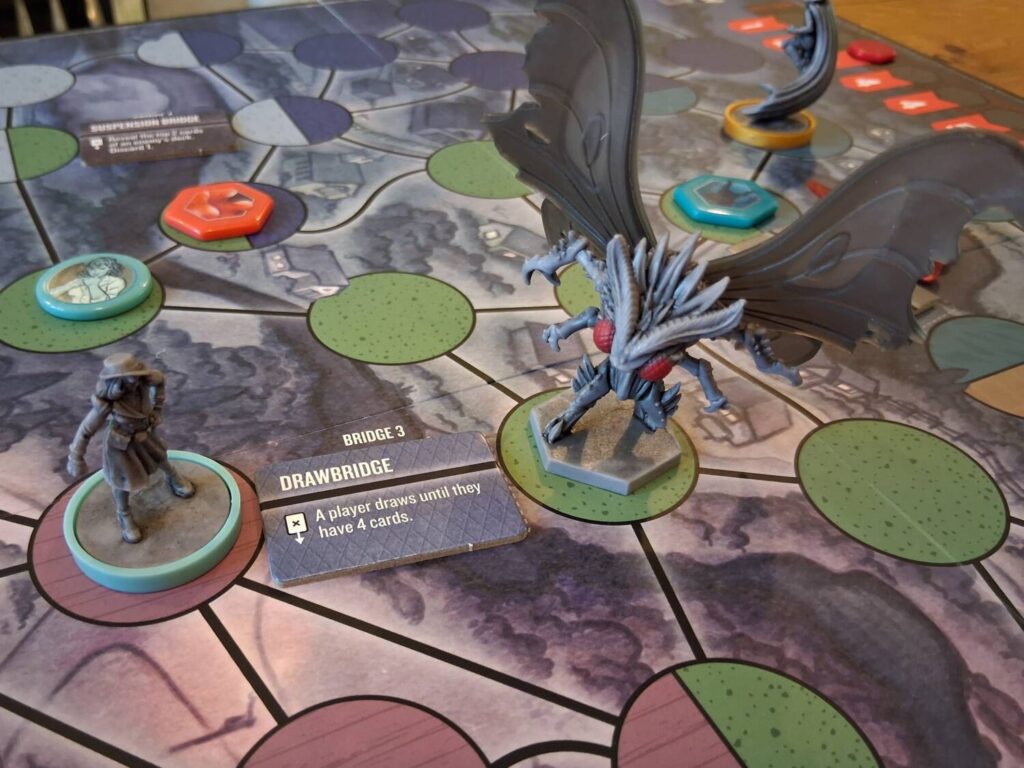
A lazy design studio might simply have created automated opponents and left it at that. Restoration Games is not a lazy design studio. Yes, the bulk of the game is indeed an automated boss and its minions fighting the players until one side is defeated. But the team pushed beyond that basic experience, adding little pressure points that influence how you approach defeating the big baddie.
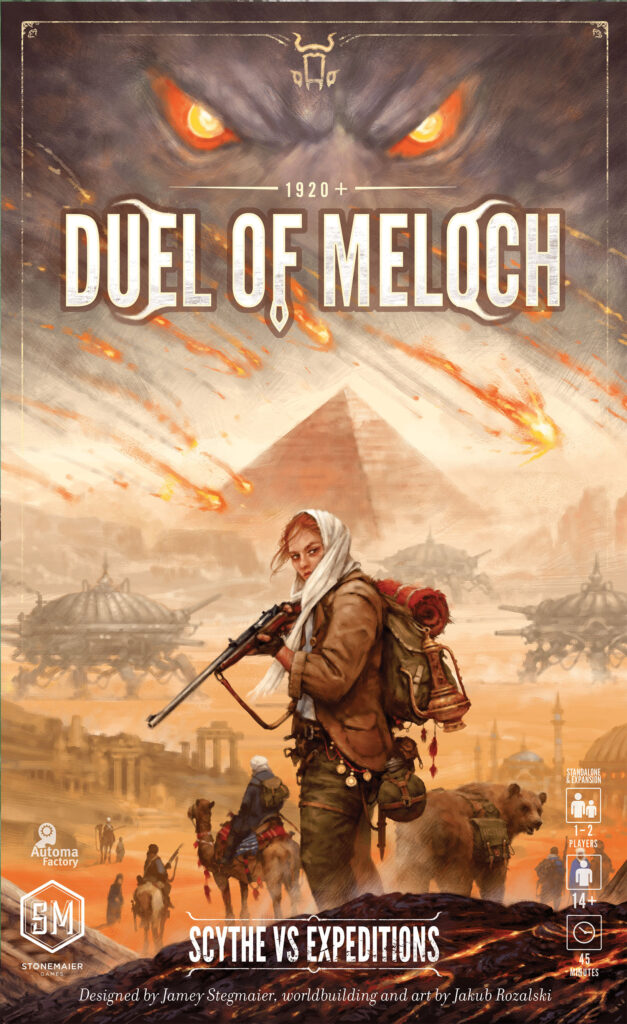
A downside is that each villain is restricted to its own scenario, tied to a specific board and rules additions. You can’t mix-and-match villains in the same way as you can with the heroes. Mothman always tries to destroy the bridges of Point Pleasant, presumably to cause transportation chaos and highlight America’s overreliance on the automobile. Meanwhile, the Martian Invader is exclusively focussed on dropping aliens into the cornfields of McMinnville…
With this My Favorite Wargame Cards Series, I hope to take a look at a specific card from the various wargames that I have played and share how it is used in the game. I am not a strategist and frankly I am not that good at games but I do understand how things should work and be used in games. With that being said, here is the next entry in this series.
#85: Hydraulic Recoil from Imperial Elegy: The Road to the Great War 1850-1920 from VUCA Simulations
Imperial Elegy: The Road to the Great War 1850-1920 is a massive card driven game that blends diplomacy, warfare, and statecraft and feels a bit akin to games like Here I Stand and Virgin Queen from GMT Games, which are both grand scale sweeping epics that play multiplayers and take a day to play. Players play as 1 of 6 major powers in the game including Germany/Prussia, the United Kingdom, France, Austria-Hungary, Russia and the Ottoman Empire. The game is quite grand and ambitious as it covers 70 years near the end of the Victorian Era and the Progressive Ear and sees quite a lot of global change and competition between the great powers of the time. The game is a Card Driven Game and uses Action Cards as a type of currency to spend for their Command Points or the printed event to take actions such as recruiting armies and navies, industrialize, moving fleets and armies around the globe, influencing minor powers and establish colonies in Africa, India and the Pacific Ocean. The cards are all tied to the history of the period but the game can be played very much as a sandbox allowing players to explore strategies by trailblazing new horizons or following history.
As you might imagine, the game contains combat and wars of both unification and conquest as each of these empires attempt to grow and expand their borders and the game can end with the outbreak of the Great War. These combats are referred to as Land Battles or Sea Battles. Combat is a very well designed part of the game and involves lots of maneuvering of troops on the board to get into position to have a powerful 2 unit stack be the lead attack but also to be supported by adjacent armies providing strength in the land battle. Each nation has a limited number of armies and also has access to what are referred to as Elite Corps and Expeditionary Forces that can be used to supplement goals of conquest. These Elite Corps units are represented by circular counters and are placed atop an army counter they are attached to and provide a +1 Dice Roll Modifier in combat.
When the game hits the 1880’s, which is turn 4, the Hydraulic Recoil Mandatory Event Card will be added to the deck. When this card is drawn and played, the Mandatory Event will go off and become a permanent change to how combat works. First off, the asterisk and double asterisk printed on the Combat Results Table will now be in effect. The asterisks referenced are summarized as follows from the rules:
Only apply the * and ** portions of the combat results if the Hydraulic Recoil Mandatory Event has been played. *The victor may opt to inflict +1 loss to both sides. ** Both sides take +1 loss.
But other than just the additional losses and choices about how best to use them, there are other big changes that come as a result of the Hydraulic Recoil Mandatory Event. After its play, machine guns give non-rebel units a minimum die roll of a 3 in Land Battles (in other words, rolls of 1 or 2 are now 3’s). But also anytime an Elite Corps and its +1 DRM is used in a land battle, that unit will be eliminated. This automatic elimination cannot be taken as a loss inflicted by the CRT but is in addition to those losses. Big guns equipped with new hydraulic recoil mechanisms were, by far, the number one killer during the Great War, and machine guns made most pre-war tactics obsolete. Coupled together these two technologies made combat much more deadly and far less “swingy”. These mechanics are meant to model these technological shifts on a strategic level.
The hydraulic recoil mechanism in machine guns was pioneered by inventor Sir Hiram Stevens Maxim in the 1880’s. He developed it as part of his 1883 and 1884 patents for the world’s first fully automatic, recoil-operated machine gun called the Maxim gun. The Maxim gun has been called “the weapon most associated with imperial conquest” by historian Martin Gilbert and was heavily used by colonial powers during the “Scramble for Africa”. Afterwards, Maxim guns also saw extensive usage by different armies during the Russo-Japanese War, the First and Second World Wars, as well as in contemporary conflicts.
The Maxim gun featured one of the earliest recoil-operated firing systems in history. Energy from recoil acting on the breech block is used to eject each spent cartridge and insert the next one. Maxim’s earliest designs used a 360-degree rotating cam to reverse the movement of the block, but this was later simplified to a toggle lock. This made it vastly more efficient and less labor-intensive than previous manually operated rapid-firing guns, such as the manually cranked Mitrailleuse of 1851, the Gatling gun of 1861, the Gardner gun of 1874, or the Nordenfelt gun of 1873. The Maxim gun is water cooled, allowing it to sustain its rate of fire far longer than air-cooled guns. The extra weight and complexity this added, however, made it heavier and less flexible in use.
Trials demonstrated that the Maxim can fire 600 rounds per minute (equal to 60 riflemen at the time). Compared to modern machine guns, the Maxim is heavy, bulky, and awkward. A lone soldier can fire the weapon, but it was usually operated by a team of men, usually 4 to 6 in number. Apart from the gunner, other crew are needed to speed reload, spot targets, and carry and ready ammunition and water. Several men are needed to move or mount the heavy weapon.
The Maxim gun was greatly influential in the development of other machine guns, and it has multiple variants and derivatives, such as the Vickers, PM M1910 and MG 08. Some are still in service to the present-day, such as in the Russo-Ukrainian War.
Stonemaier Games stands out among board game publishers for prioritizing both deluxe component quality and extensive playtesting, the combo of which produces consistently excellent games beloved by many. Their latest release is a mash-up of two of their popular titles: Wingspan and Viticulture—players will race to get birds drunk on fermented grapes. I kid. The […]
As board game publishers continue to grapple with volatile manufacturing costs, tariffs and freight disruption, UK-based Eurydice Games is celebrating reaching almost £400,000 in lifetime revenue without ever outsourcing production.
The Newcastle upon Tyne-based company has just completed its 7,000th box of FlickFleet, the dexterity-based tabletop space skirmish game it has manufactured entirely in-house since launching in 2018.
Every copy of the base game and its six expansions has been laser cut and assembled by Eurydice co-founder Paul Willcox in his garage in York, with the company estimating it has now produced well over 400,000 individual laser-cut components.
The unusual approach has allowed Eurydice to build a business that has generated almost £400,000 over eight years. Just under £250,000 has come through crowdfunding, with the remainder generated through direct website and convention sales.
While many indie game designers and small publishers view overseas manufacturing as an inevitable step in the process, Eurydice believes its experience demonstrates that remaining in-house can make commercial sense for certain types of games.
“When we ran our first campaign we had no idea how much money we’d raise, so we investigated doing a manufacturing run so we weren’t going to be caught out if it went wild,” Eurydice director Jackson Pope told BoardGameWire.
“As it was we 101% funded with four hours to spare at the end of the campaign, so stuck to laser-cutting as planned.
“…we would have needed well over £25k [to outsource manufacturing] in that first campaign, and obviously inflation means that number is much higher now.
Eurydice director Jackson Pope with FlickFleet’s latest expansion, Box of Xeno Flicks 2
Instead, narrowly crossing its target saw the team stick with its original plan of producing the game themselves – and that decision has shaped the business ever since.
Rather than treating each expansion as a standalone production run, Eurydice launches a new crowdfunding campaign each year, combining demand for the latest release with reprints of older products into a single manufacturing cycle.
Because production takes place in-house, the publisher says it can economically manufacture extremely small quantities of older products, with some reprints numbering as few as 100 copies.
The company believes that flexibility has enabled it to support a product line that would have been difficult to finance using conventional manufacturing methods.
“In an industry with a lot of indie companies, we are unusual in that we make the game ourselves, on a laser-cutter in Paul’s garage,” Pope said.
“… [rolling] up reprints of everything into a single large print run… has allowed us to reduce costs by placing one large order with each of our suppliers.
“As a result, we’ve been able to release a vast range of ship models, which would have required huge print runs and capital to fund through traditional injection moulding manufacturing.”
That manufacturing model has also had knock-on advantages for the company in fulfilling its games.
Components from FlickFleet
Instead of waiting for overseas production and freight, Eurydice says it often begins shipping rewards within months of a crowdfunding campaign ending, with complete fulfilment typically finished within a year.
But there are inevitable trade-offs, Pope added, with each copy of FlickFleet or one of its expansions taking Willcox hours to make – as well as having to be piled up in his home ahead of fulfillment.
The operation has also proven vulnerable to disruption, too, with the laser cutter purchased after the company’s first successful crowdfunding campaign catching fire in 2022 while Eurydice was fulfilling another project, forcing an emergency replacement before production could continue.
Even so, Pope believes recent geopolitical disruption has reinforced some of the advantages of keeping manufacturing close to home. But the model is not without commercial limitations, of course.
Despite considering a larger retail print run, Pope says the amount of labour required to manufacture each copy, coupled with international shipping costs from the UK, has made broad retail distribution difficult. Eurydice currently sells through crowdfunding, direct sales, conventions and just under a dozen UK retailers.
He also stressed that garage manufacturing is not a universal solution.
“It’s definitely an option, if you’re prepared to put in the work. And it is a lot of work,” he said.
“But it lets you do things that would be prohibitively expensive through traditional manufacturing and smaller runs of interesting ideas that would never sell tens of thousands of copies but should still see the light of day.
“If you’re confident you can sell thousands of copies, you’re definitely better using traditional manufacturing.”
Eurydice is planning to launch its seventh FlickFleet expansion, Box of Xeno Flicks 2, on Gamefound in October.
Over the previous four articles in this series, I have explored the history of Spiel des Jahres, the purpose behind its awards, the way its jury works, and the wider activities funded through its income. Together, those articles painted a picture of an organisation that sees its annual awards as a means rather than an end. Promoting games as a cultural asset, encouraging people to play board games together and providing guidance to newcomers to the hobby have all remained at the core of its mission for almost fifty years. In this article, I want to look at the 2026 nominations and see whether the association's values can also be found in the games the jury has selected.
Tiny Towns: Fortune Designers: Peter McPherson, Josh Wood Publisher: AEG Players: 1-6 Age: 12+ Time: 45-60 minutes Amazon affiliate link: https://amzn.to/4v81EC8 Played with review copy provided by publisher The smaller creatures of the forest have created a civilization free … Continue reading →
You’ve printed out and laminated the rules & reference PDF, you’ve got the rules summary in your Tabletop Codex app, and now here’s the video rules overview and review of Lands of Evershade. Never let it be said that The Esoteric Order of Gamers isn’t a full service agency! Check out the video and let me know what you think of this epic new RPG-slash-board game from Awaken Realms.
Making high quality tabletop gaming content at the EOG takes time and money. Please consider becoming a Patreon supporter or making a donation so I can continue this work! Thankyou!
I’m not the biggest fan of trivia games. Especially those that require players to know a specific answer, and a hundred times those that sporadically stuff me into a locker with an unexpected sports question. “Who soiled his pants while stealing two consecutive homers during the 1914 Cinnamon Bakeaway summer camp?” the question will ask. “Nobody could possibly know that,” I begin, only for my father to scream “Mickey ‘The Dugout Dog’ O’Queefe!” for ten thousand points.
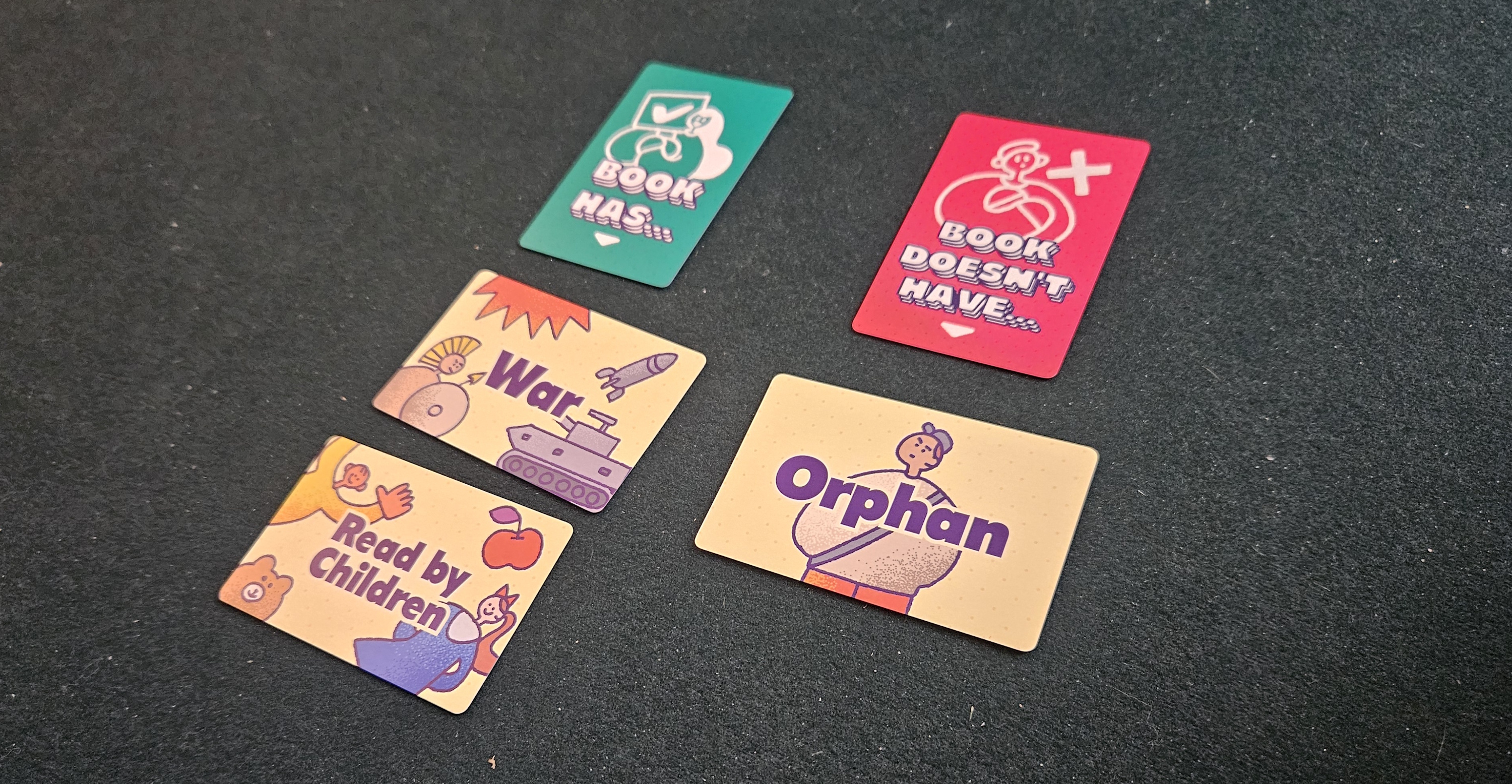
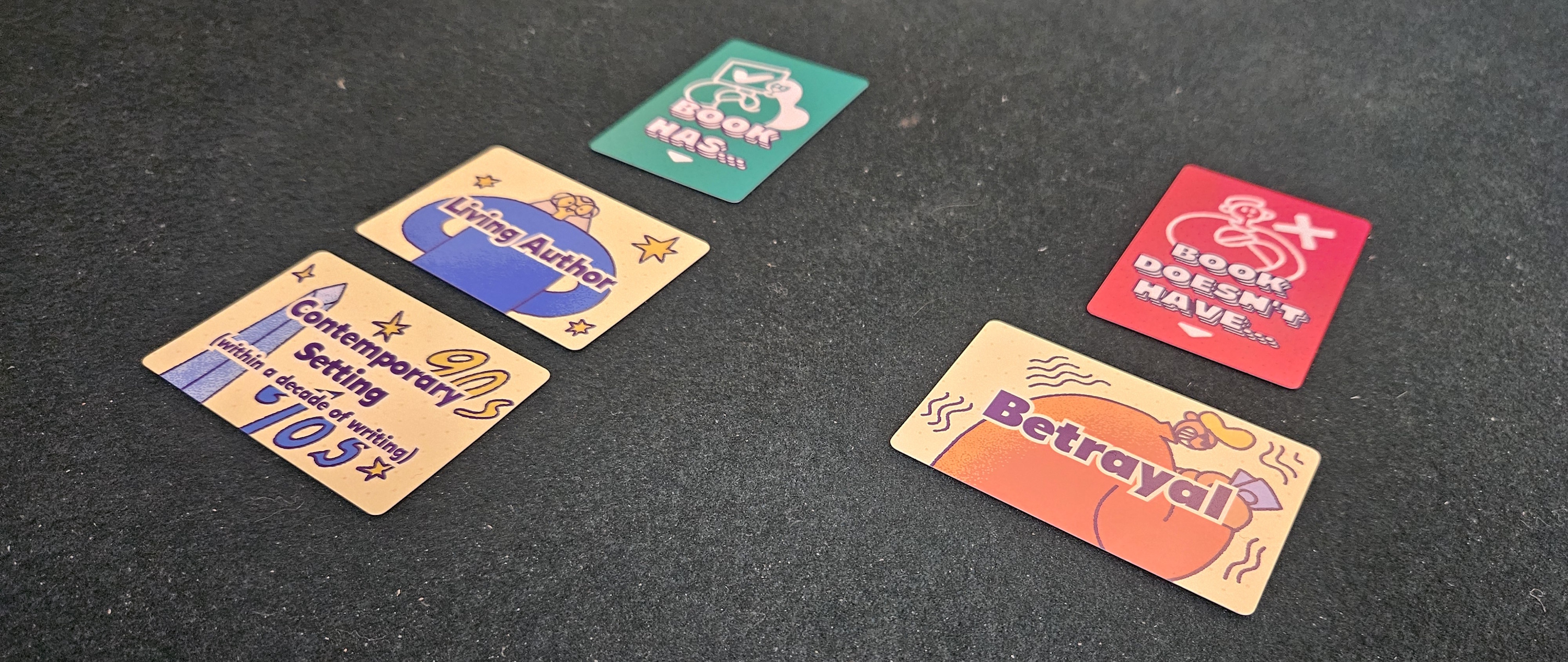
Book Club and Movie Night are teensy-tiny trivia games by Peter Hayward. Each session lasts five minutes, sometimes a run of cards will produce an impossible question, and they’re titles that will prompt the most obnoxious person in your gaming group to insist they’re activities rather than games. For all that, they’re the rarest of beasts: trivia games that put creativity and lateral thinking on the same footing as raw factoid retrieval.
Name a book!
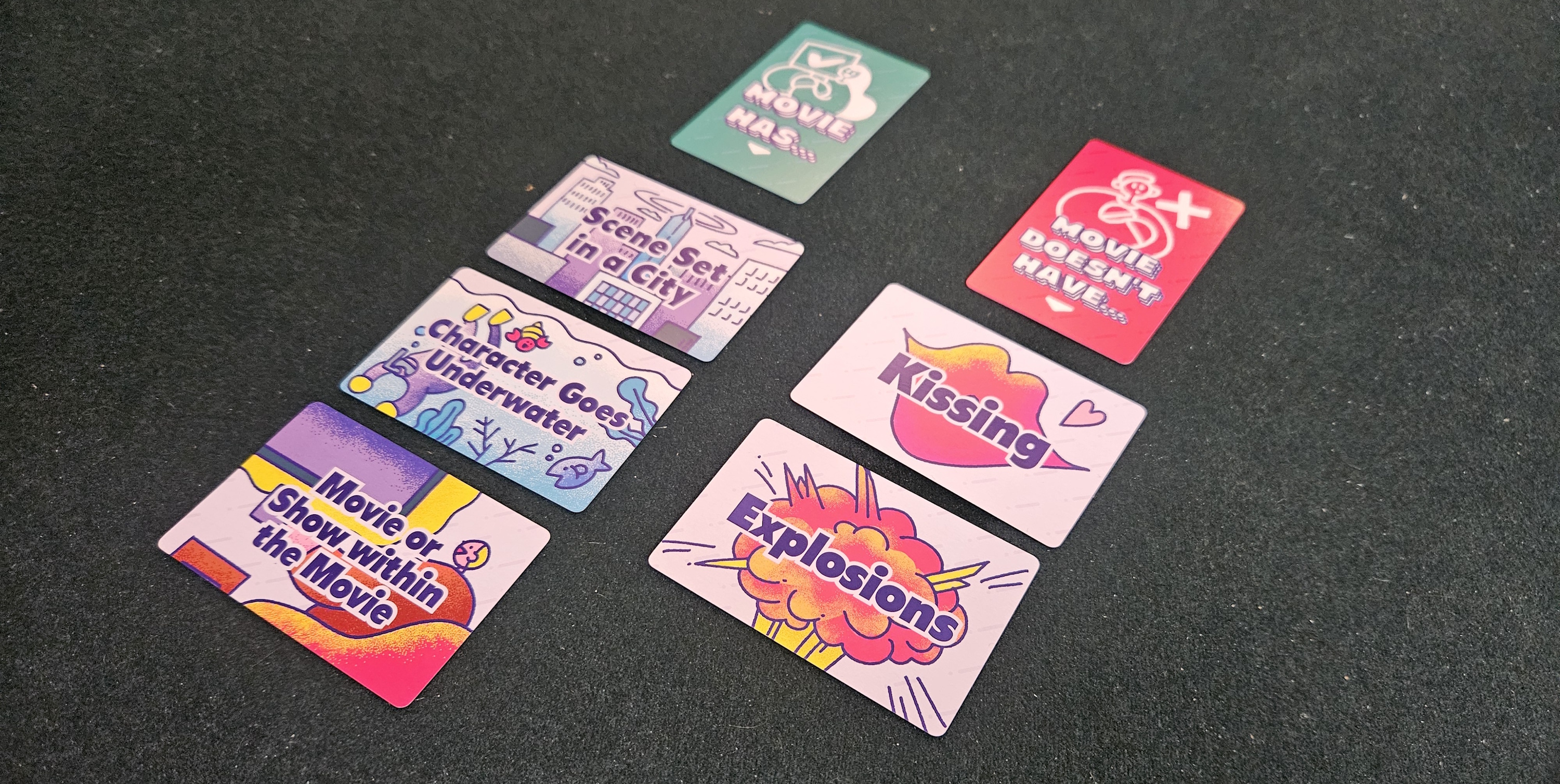
Rather than walk through the rules, let’s open with a demonstration. Movies. We’re guessing movies. So we draw a card. It says “punching.” What’s a movie that includes punching?
Rocky. Sure. Plenty of punching.
Now we draw another card. “Scene set in a city,” it reads.
At this point, we need to take stock. Does Rocky have a scene set in a city? Well, yeah. The whole thing. Philadelphia. There’s a statue. The city even renamed the steps.
So we take that card, “Scene set in a city,” and we move it into the “Movie Doesn’t Have” column. Now we need to come up with a movie that does have punching but doesn’t have any scenes in a city.
“Knockaround Guys!” shouts my friend who always remembers weird movies like Knockaround Guys. That sounds about right. We spend a minute debating whether there’s a city scene near the beginning, but none of us can remember because Knockaround Guys came out in 2001 and it wasn’t a good movie to begin with, apart from that one scene where Vin Diesel really works over that redneck. Eventually we decide that, fine, Knockaround Guys works.
Another card. “Character goes underwater.” Uh oh. Pretty sure nobody goes underwater in Knockaround Guys. (Although maybe. We can’t remember. Knockaround Guys came out in 2001 and none of us saw it more than once. Nobody did.)
So what’s a rural punching movie where somebody goes underwater? Sinners. Of course. Props to Geoff with the contemporary cut.
Fourth card. “Celebration or holiday.” Now the group starts to fracture. Because while Sinners isn’t a holiday movie, it can be argued that the juke joint is a celebration of freedom, and that one scene is a celebration of African heritage, and now we’re debating what “celebration” means in the context of “celebration or holiday.” It matters. Because if we decide that Sinners includes a celebration, our next movie can’t have a celebration, which is a lot easier than naming a rural punching underwater holiday movie.
Phantom Menace, somebody offers, making assumptions about how we’ll rule on the celebration thing, only to be roundly denounced by all the other nerds.
Uncut Gems, my pedantic friend says, which is always a treat. He says it counts for “underwater character” because Adam Sandler is underwater to loan sharks, which is pretty funny and we’re considering it, but then we remember that the whole thing is obviously set in a city. We’d kinda forgotten about that card.
Finding Dory, says the person with kids. Apparently the octopus punches something, and while the movie is basically set in Monterey, there’s some wiggle room whether the fictional version of the Monterey Bay Aquarium should be considered a city or a greater unincorporated beachfront region. Also, since we still haven’t settled the “celebration” issue, this would retroactively put that card in the negative column.
The timer goes off. That’s five minutes.
Name a movie!
Hopefully this demonstration has been helpful. Here are my takeaways.
Perhaps foremost, this is a pedantic sort of game, one where every definition means what it means right until the moment when it behooves someone to argue that it doesn’t. “One-word title.” Hyphenated or not? “Adaptation.” Isn’t almost everything in Hollywood an adaptation? “Break-up.” Does that include friendships? “Snow.” You know somebody’s going to insist that cocaine counts. Personally, I think we all know what “snow” means. But then I propose a movie in Antarctica and now we’re debating whether pack ice really qualifies as snow. Fair enough. The good news is that it’s cooperative, so players don’t often come to loggerheads. You draw a card, squabble over its meaning a bit, and then move onto the next thing.
For all that, the experience it offers is often rather uneven. Sometimes you’ll hit upon a run of cards that’s too easy, and by extension too boring. In the next session you’ll be asked to only name movies with a stand-up comedian in a lead role. Or a book in epistolary form. Or to exclude media with “and” or “the” in the title. My least favorite? Only picking books whose author has an initial in their name. Hope you want to hear a lot of Christian fantasy author suggestions.
Books are harder than movies. Not only because it’s easier to watch a movie than read a book, so most people’s pool of options will be substantially deeper, but also thank the visual nature of the medium. Whether a movie includes a cat is easy enough to answer, even if it strains our gray matter. Recalling whether a book refers to a named character’s death is… well, it’s harder to conjure. At least for me.
For the most part, these textures are compelling, but it would be inaccurate to pretend they don’t sometimes lead to frustration. Riffing on movies is a delight. The same goes for books. But suddenly stretching to recall books-within-books when you’re four cards deep… well, it depends. Everything in Movie Night / Book Club depends.
There’s also a part of me that balks at the games’ size. These are slight things, roughly the size of a deck of playing cards, but at 40 and 34 cards for books and movies respectively, their variety is thinner than I would have preferred. And, look, their real value is in how those cards combine with one another. Even with the same three or four cards, their order can matter, and the appearance of even one other card can make a huge difference. But it’s disappointing all the same to draw a duplicate after only a few sessions.
Name a book!
All told, then, Movie Night and Book Club are mixed bags. They’re snack-sized games, good for filling a few minutes, nice as stocking stuffers, but also not especially ambitious or groundbreaking. I hate to say it, but just this once: the absence of a “sports” card from Movie Night might be one of the most telling indications that this party game isn’t quite up to snuff.
Complimentary copies of Book Club and Movie Night were provided by the publisher.
(If what I’m doing at Space-Biff! is valuable to you in some way, please consider dropping by my Patreon campaign or Ko-fi. Right now, supporters can read the next installment in my series Talking About Games, this time tackling the topic of what makes a good list! Naturally, the piece includes a list.)
Golden Goal Designer: Corne von Moorsel Publisher: Allplay Players: 2 Age: 8+ Time: 15 mins Amazon affiliate link: https://amzn.to/3QnUevz Played with review copy provided by publisher After a hard-fought battle, the game is tied, and it’s down to … Continue reading →
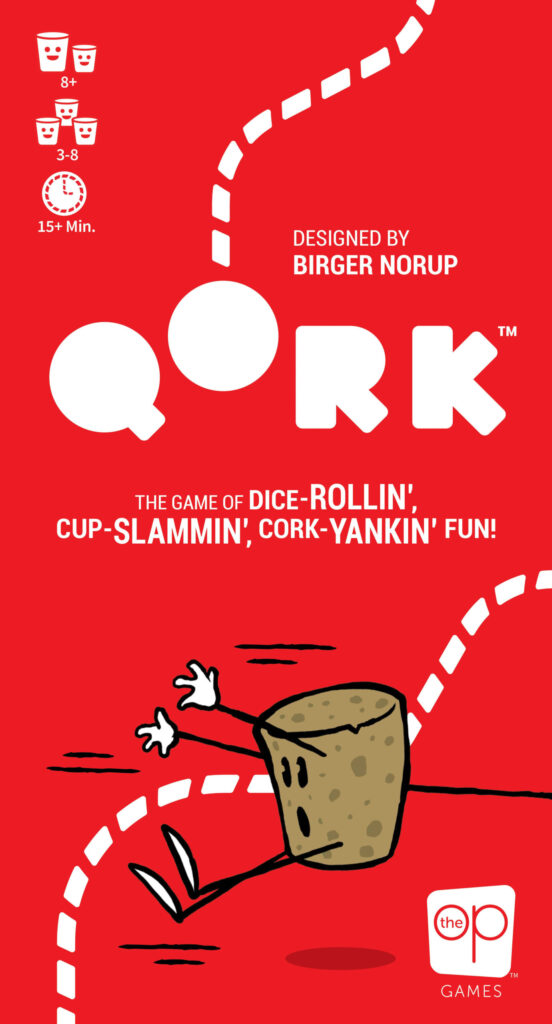
I don’t cover very many party games here at BGQ, mostly because my regular game group size is 2-3 players. That being said, when something interesting drops into my inbox, I can be convinced to dive in for a deeper look. And the latest game for me is Qork. Published by The Op, it’s a […]
Welcome to this week’s batch of crowdfunding campaigns. We have a variety of offerings here, so we hope you will find something that catches your eye. Also, if you want to chat with the BGQ team, join our Discord Server where we talk about games, movies, sports, and other fun stuff. Check it out and […]
Historically, we put our games through a gauntlet of local playtesting, development, blind playtesting, data analysis, copyediting, and proofreading, plus a few pre-production copy playtests (typically by coworker Joe and then me and my St. Louis coworkers). Most of these playtests focus on making the game as fun, functional, balanced, and intuitive as possible.
But over the last year or so, we’ve added two enhancements to this process: One, we often ask Panda to make a pre-PPC copy as soon as possible after the proofs are approved. This looks like a real copy of the game, or at least what the game could be. Two, when we get to the real PPC stage, we make 4 PPCs instead of 1, and each of them is reviewed and playtested by multiple people. Both of these help us playtest the game as a product and to increase the chances of finding anything critical that was missed during the oversight process.
In some ways, Wingspan Pocket is one of our smallest games. It’s only around 6x4x2 inches, it only takes 30 minutes to play, and it asks each player to manage only 1 row of bird cards. Yet by another metric it is our biggest game, as there are 175,000 units in the first English print run, by far the most in our 14-year history.
With that much at stake, we really, really needed to get it right.
At our January company retreat in Phoenix (the first time all 8 of us have ever been in the same place), I proudly presented to my coworkers the pre-PPC of Wingspan Pocket, the product I had carefully crafted over the last year with the designer (Elizabeth Hargrave), playtesters, proofreaders, and the graphic designer.
I say this with love, appreciation, and humility: My coworkers proceeded to tear apart every aspect of the product. Not the game design–that was fine. Rather, it was the product design (a major component of my job) that fell short of their expectations.
The following result of 3 days of conversations, playtests, and pages of notes was a vastly superior product to the pre-PPC, especially in terms of onboarding. Accessibility is important in any game, but it’s even more important when a major goal of the game is to invite anyone and everyone into the world of Wingspan.
Many of the initial discussions focused on the box itself. The original box was an awkward shape, kind of like a smaller Oceania expansion box. With 130+ cards and 60 egg tokens, we knew the game wasn’t literally going to fit in anyone’s pocket, but the box needed to fit a smaller space on a shelf (whether that shelf is yours or at a game store).
After the company retreat I actually visited Barnes & Noble to look at their small-box games to see if there was a size that felt right, displayed well, and would fit the components of Wingspan Pocket. The end result is a box that is roughly the size of my hand.
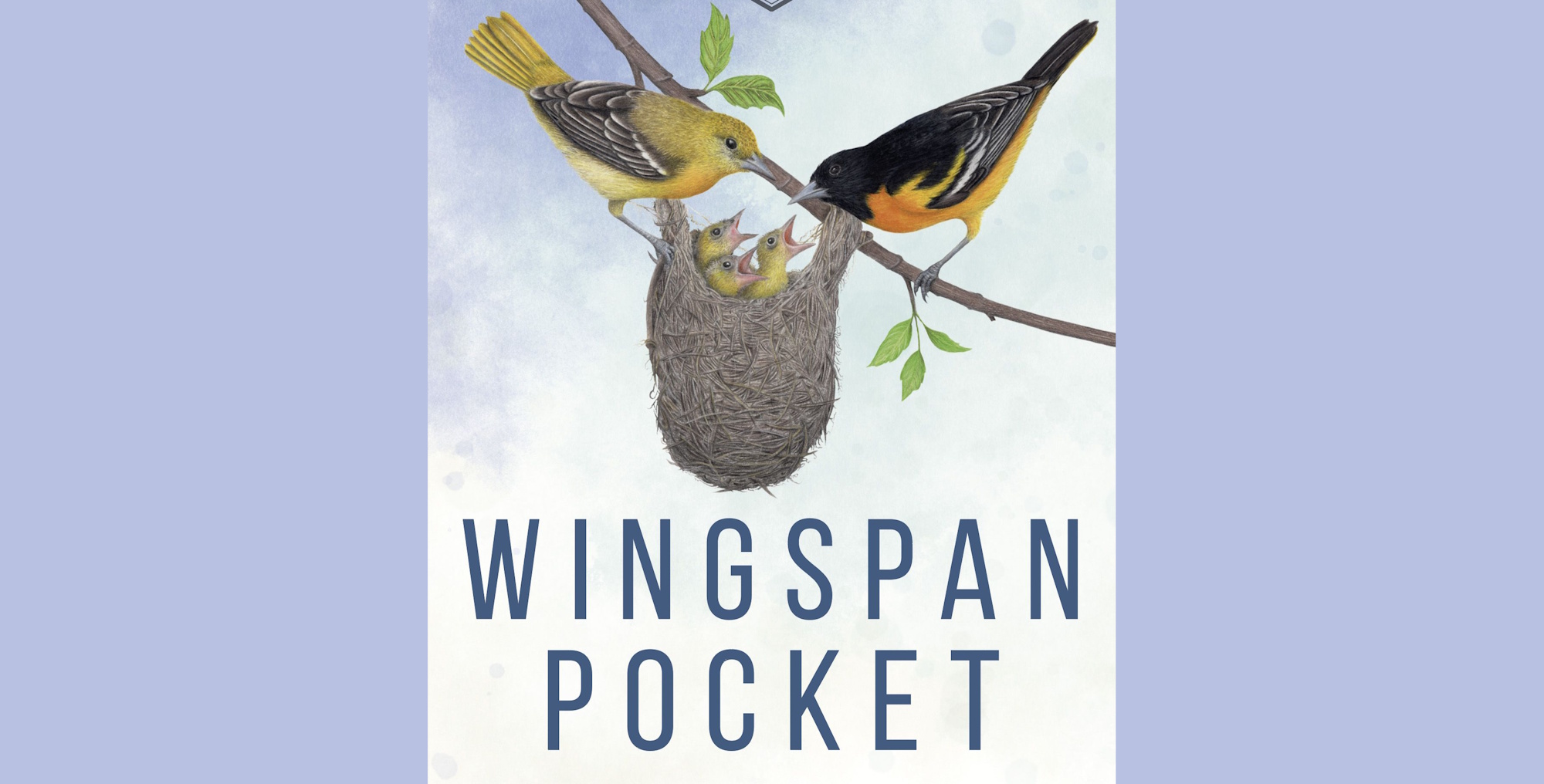
The art for the front of the box had some debate, but with the name “pocket,” I felt strongly that we should keep the illustration of the pouch nest while making the word “Wingspan” as big as possible. (Of course, we had already debated other game names like Wingspan Go, Wingspan Swift” and Wingspan Nest, but we ruled them out due to connections to Pokemon, the Wingspan swift-start pack, and the Wingspan Nesting Box.)
The back of the box also went through a number of revisions to convey the simplicity of the game. We landed on a method used by many publishers for streamlined games: Explain the game with an image and 3 short phrases.
As we played the pre-PPC, we found that the reference card needed a lot of work. My initial goal was that someone could play the game from the reference card alone and only use the rulebook for a deeper dive, but there’s still a key difference between referencing key elements of the game and actually understanding the entire game.
In revising the reference card multiple times, we also revisited the rulebook itself, especially the first page. We truly wanted Wingspan Pocket to be accessible to everyone, including those who might be daunted by a short hobby game rulebook, so right on the front page we talk about what you need for your first game and showcase a rules video QR code.
While most of the discussions focused on the product design, a few gameplay-related elements came up as well. Originally, after someone played their 6th bird, players each took an extra turn (after each player had taken the same number of turns in the game). While this didn’t bother previous playtesters, we found at higher player counts that it really didn’t feel necessary and could turn a 30-minute game into a 45-minute game. So I talked to Elizabeth about removing the extra set of turns, and she approved the change.
Also, the goal cards in the game (which score 1 VP per egg on specific types of birds) were previously the default way of playing, and the rules suggested that players remove the goals for their first game. Instead, we switched to the goals being excluded by default, and for “advanced play” you can add them. Wingspanners accustomed to goal tiles and bonus cards should have no issues adding these cards.
I don’t think we’ve ever had a product that went under the microscope to the extent of Wingspan Pocket. We collectively put our hearts and minds into this game as if it is the only game we make, and I hope the final result brings joy to your table.
I’m sure we are far from the first publisher to playtest both a pre-PPC and multiple PPCs to improve the design of a product. But I’m sharing this because maybe you aren’t aware that these are options to explore–granted, very expensive options on a per-unit basis–as you seek to increase the chances of success of your product and to reduce errors.
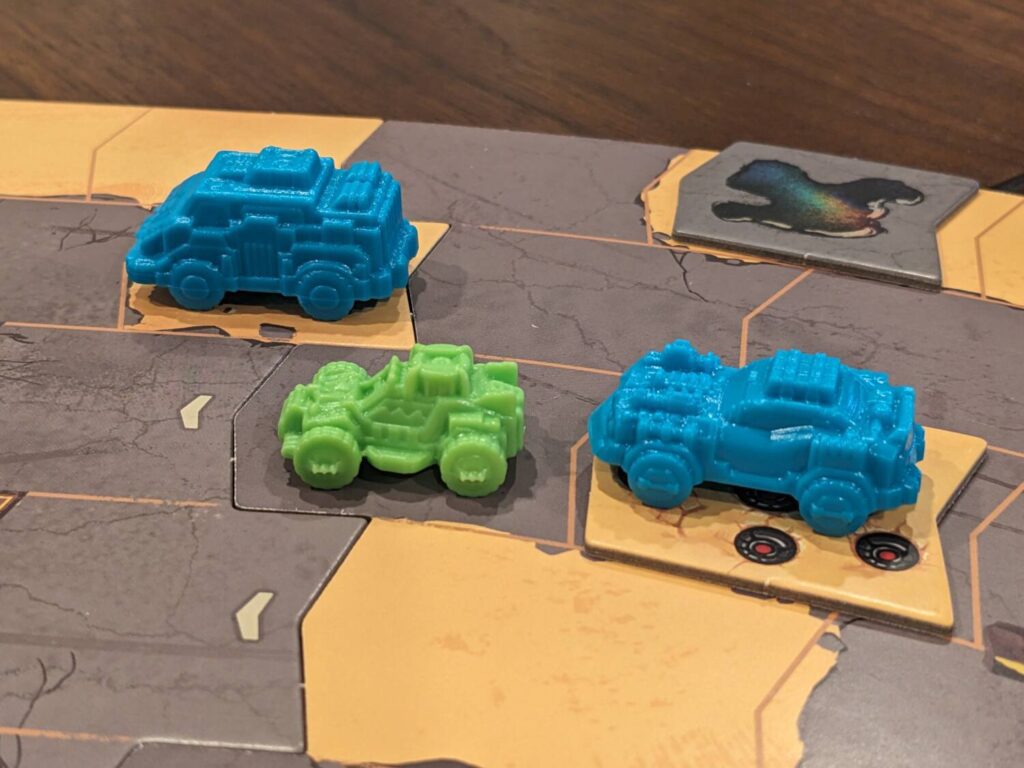
Thunder Road: Ignition is Restoration Games’ attempt to streamline the production, ruleset, and gameplay of Thunder Road: Vendetta, itself an update of the 1980s Milton Bradley game Thunder Road, designed by Jim Keifer.
I’m on record here at Meeple Mountain as saying that Thunder Road: Vendetta is perfect in every single way save for one: the game runs about 30 minutes too long, and it does that pretty consistently regardless of player count. It’s gorgeous, it’s hilarious, it is a great design, and it has almost unlimited amounts of content in its deluxe Maximum Chrome version. Between that version, and the expansion Carnival of Chaos, there might not be a better “beer and pretzels” laugher in my collection.
When Thunder Road: Ignition arrived, I immediately set it up and waited for my nine-year-old to come home. He’s loved Thunder Road: Vendetta for a couple years now, and I was sure he would want to play Thunder Road: Ignition. He saw the cover artwork (once again brought to you by Marie Bergeron) and smiled that big smile. He was home. Then he asked a simple question, which I think defines the break point of where we landed on Thunder Road: Ignition.
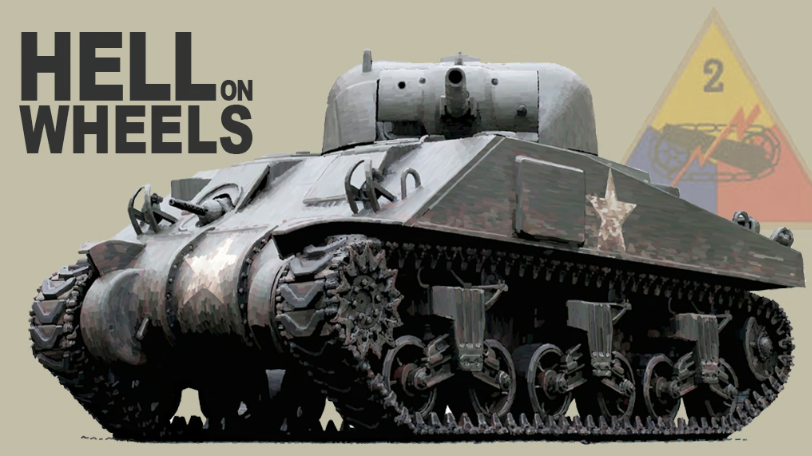
Over the past several years, we have done interviews with Matt White, publicized his games and played a few of them as well and he always has something cooking. Recently, I came across his newest offering on Kickstarter called Spearhead: Hell on Wheels – Tank Battles in Normandy. This game is a solitaire or 2-player print and play tactical game that allows players to take command of US tanks in German occupied France. I reached out to Matt and as always he was more than willing to share on the design.
Grant: What is your new project on Kickstarter called Spearhead: Hell on Wheels?
Matt: This is a brand new solitaire and co-op World War II print and play tactical wargame. In this game you are in command of a group of 3 US tanks in brutal and intense tank combat in enemy-occupied territory.
The players must lead their tanks, through unforgiving terrain, finding and then engaging the enemy in fierce fire fights. They must defeat any encountered enemy tanks and forces, whilst meeting the objectives as they move across the map.
Grant: What was your inspiration for the name? What do you want it to convey about the design?
Matt: My biggest inspiration was reading accounts from various US armored units. Keeping your tank crews alive and positioning your tanks whilst dealing with unexpected enemy positions is key to survival and success and truly seemed to be “Hell on Wheels”.
Grant: What about the battles during Normandy inspired you to make this game?
Matt: Basically I wanted to focus on and show the difficulties with the survivability of the armored crews and their vehicles during the D-Day invasion and the days after as the Allies broke out into France. That was the biggest point I wanted to make.
An American M10 Tank Destroyer.
Grant: What research did you do on the subject?
Matt: As with all my games, in trying to get the historical aspects correct both in the mechanics of the game as well as the look and feel of the art, I basically try to do lots and lots of reading! I read as much as I can on the subject, from various authors and viewpoints, and when I am not spending time playing games or making them, I basically read! This knowledge is part of the inspiration for my games as I draw upon things that I have rad and then translate them to the page.
Grant: As a tactical level wargame, what are the most important areas of focus for the design?
Matt: The positioning of your tanks in relation to where the enemy could be, and not only the tank hull but also the turret. Keeping your tank crews alive and positioning your tanks whilst dealing with unexpected enemy positions is key to survival and success. This game is point-to-point based where you must place your tank orientation and can aim the turret separately. Being able to keep the front of the hull forward towards the enemy tanks whilst hopefully being able to fire on their flank is critical.
Grant: How does the game differ in its 2 modes including solitaire and cooperative?
Matt: In the game you are in command of a number of US tanks – these can be split between players if you wish. Its quite unlike a number of solitaire WW2 tank games where you are in command of one tank. In this game you have a number which makes it really suitable for co-op play.
Grant: I know the design is a Print and Play offering. Why do you feel this model is best suited for your designs?
Matt: I like making print and play games as it forces you, as the designer, to make every component count and making the most of the physical space on a sheet of paper. I find that challenge one of the most interesting parts of the creative process. I also like the print and play model because it is very affordable for all parties, both me and the players, and allows the game to be available to anyone at anytime and on their terms.
Grant: I see that the board has a point-to-point movement layout. Why was this your chosen method of conveying information about the battlefield?
Matt: As much as I love traditional hex based games (and continue to play a lot of them), I also like point-to-point too. I like the way you can combine not only line of sight but also information about the environment in the game.
Grant: What is the meaning of the different symbols that appear on the board?
Matt: Movement is from point-to-point and where you move from a Position Point (the rectangle points) to an Observation Point (the circle points) where you will test for observation and perform the majority of combat. If combat is successful then you will be able to move to the next position point.
As you can see from the map there are multiple paths from Position Points to Observation Points and then onto other Position Points. Plus there are a variety of pros and cons to various paths to allow for a variety of terrain types and observation challenges. These paths are illustrated on the map in the shape of lines which are known as Movement & Observation Lines.
For each Movement & Observation Line there is a symbol at one end. The most common symbol is a black arrow, which denotes normal terrain and normal observation. There are other symbols which mean more difficult terrain or harder observation. These are:
Black Arrow – Normal Movement – Normal Observation
White Arrow – Normal Movement – Hard Observation
White Square – No Movement – Normal Observation
Black Circle – Difficult Movement – Normal Observation
White Circle – Difficult Movement – Hard Observation
Grant: What difficult decisions do players have to make in the game?
Matt: You will have to deal with enemies and you discover them but you don’t know where they are and so you must make some decisions based on information you do and don’t have. The player will also have several simultaneous objectives that must be obtained and will have to contend with both the German forces defending them that you know about and those that you do not.
“Lady luck” plays a part, as with any military operation, but your decisions and tactics are crucial, especially in how you position your tanks on the map when facing enemies as you cautiously roll through the environment.
A German Panther.
Grant: What dangers and threats meet the players on the battlefield?
Matt: There are a variety of dangers but not only the enemy forces as tank obstacles and mines can be a serious threat, combined with the environment itself.
Grant: What objectives does the player have to accomplish?
Matt: For each game session the objectives are randomly generated with Objective markers provided. All you have to do is safely get your tanks to those Objective markers, all the whilst dealing with the enemy!
Grant: How are hidden German units handled?
Matt: Every time you move your tanks you will need to check what they can observe and into which other points then can see. At this time you will roll on a couple of charts to see if you can see enemy units. However, just because you can’t see any doesn’t mean that they are not there.
Grant: What is the makeup of the Tank Cards? What information do they contain?
Matt: Using the Tank Cards you record the status of the major components of your tank such as the engine and tracks plus any gun jams. You also record the status of the various tank crew, all of which can have an impact in the game. Counters are provided to record all the status of both the tank and the crew.
Grant: What different types of tanks are included on both sides?
Matt: There are variety of tanks in the game with each tank having its own unique gameplay – for example the M10 tank destroyer has no hull machine gun (but does have a better anti-tank weapon). There are also Stuart M5A1 Tanks, StuG’s, Panzer IV’s, and many more.
Grant: How does combat work?
Matt: In the combat phase, you determine the order in which both your tanks and the enemy tanks fire. This is crucial to how the combat plays out as in real life WW2 tank combat, the results will favor the tank crew who can fire first on their target.
You will roll a few dice, depending on your tank positioning and other factors, and retain the highest number. You can increase your number of rolled dice by certain criteria – the more dice you roll the better! For example, if your tank turret is facing the enemy, the terrain type, the health of both the tank and the crew and if the enemy have been observed all are major factors. The enemy tanks will be doing the same, so factors such as successful enemy observation in the previous phase are crucial!
Grant: What is the goal of the game? How is victory obtained?
Matt: Your goal is to reach your various objectives on the map, whilst trying to keep your tanks and crew alive.
For each game session the objectives are randomly generated with Objective markers provided. All you have to do is safely get your tanks to those Objective markers, all whilst dealing with the enemy!
Grant: What are you most pleased about with the design?
Matt: I am most pleased to be coming to the end of the design and getting it ready for people to play! Finishing or coming close to it, is the hardest part of the development. In terms of the actual game, I really enjoy being able to get a game that has depth and is engaging that can be printed on just a few sheets of paper.
Grant: What kind of an experience does the game create?
Matt: I hope that the game creates a thoughtful representation of actual tank combat and how decisive it can be!
But that is not all. The game is modular and has several options included. As well as the map shown above, the game will also come complete with another map, additional counters and a rulebook which allows for you to create your own unique scenarios.
This map has the same points but where you will roll on tables to determine the various Movement & Observation Lines from each Position Point and Observation Point. There will be counters that you can place between the Position and Observation Points as an aid. You will be using various charts and tables to procedurally generate your map as you play, determining those gameplay elements as you progress. This type of game session will present you with a new challenge as you really have to deal with more unknown elements as you progress your tanks across the map.
Grant: What other designs are you currently working on?
Matt: I have a few games I am working on – currently working on something involving WW2 Mosquito aircraft!
For a YouTube video overview of the game, please check out Matt’s overview video here:
Thanks to Matt for his time in answering our questions and for his great little print and play games. I love it when one of these new games is brought to light as I get to oodle over the art and see what new things he has created!
A pair of tabletop game designers have launched a free, open-source colour identification system they hope could become a common accessibility standard across the board game industry.
Colour blindness affects about 1 in every 12 men, and around 1 in 200 women – roughly 300 million people worldwide – and while some board game publishers have made vigorous efforts to make their designs accessible for colour blind players, many games released each year contain challenging colour combinations.
ColorSym began as a solution created by Chris Eastridge for his design Parks & Potions, which centres on combining colours to brew potions.
Parks & Potions designer Chris Eastridge
Eastbridge told BoardGameWire, “My first attempt at adding a meaningful colorblind solution to Parks & Potions put me up against a paywall. It bothered me so much that I was determined to make a system that others could adopt, free of charge, forever.
“We want designers to think, ‘This would make my game more accessible’, and be able to use it immediately. No paperwork, no fees, no asking permission. The easier it is to adopt, the more people it can help.”
Eastbridge created an initial symbol system for ColorSym before collaborating with fellow designer Luis Francisco, the owner of Brazilian board game publisher Grok Games and co-founder of tabletop design project management platform Boardssey, to expand it into a standalone open standard.
The system assigns each colour a simple symbol which can be used alongside colours, allowing players with colour vision deficiency to distinguish components without relying on colour alone.
But unlike bespoke icon systems created by publishers for individual games, Francisco and Eastridge hope they have created a universal visual language that players can learn once and recognise across multiple titles.
The pair have released the symbols under a Creative Commons licence and the accompanying font under the SIL Open Font License, allowing publishers to adopt the system commercially without licensing fees or seeking permission.
“I don’t think any publisher wants to create a game that excludes players,” Francisco told BoardGameWire. “The problem is that there hasn’t been a free, shared standard.
“Most publishers who want to solve this end up creating their own dual-coding system, which means players have to learn a new visual language with every game.
“The other big challenge is orientation. In board games, players see components from every angle around the table. A symbol can’t mean blue from one side and red from another.
Grok Games owner and Boardssey co-founder Luis Francisco
“That’s why the omnidirectional nature of ColorSym became such a fundamental part of the project.”
The pair cited multiple ” great examples” of dual coding across the industry, including Mattel adding patterns, symbols, and even tactile clues to some of its games, and Flatout Games soing “an excellent job with continuity of their color-specific components as seen with their Calico line”.
Eastbridge said, “Most solutions for color blindness can be accomplished through using associated iconography. Things like a flame symbol for red, water drop for blue, and so on.
“Where ColorSym comes in is where color has meaning. I think, for those publishers who are looking for a solution to color specific symbology, ColorSym will bridge that gap where unnecessary theming clouds the intent.”
Eastridge said the response to ColorSym from publishers had already been “incredibly positive”, adding that Steelwing Games – the new publisher from industry veteran Scott Morris – had expressed interest in implementing the system in a future release.
And the pair hope board games will be only the beginning.
Francisco said, “One of the very first messages we received after launching ColorSym came from a colorblind person who said ‘I wish these symbols were on my shirts so I could coordinate my clothes more easily’.
“That really stuck with me. Board games are where ColorSym was born, but if it ends up helping people in everyday life too, that would be an amazing outcome.”
Eastridge added, “I feel the same way. We built it for the board game community because that’s where we live, but there’s nothing limiting it to tabletop.
“If someone starts using ColorSym in education, apps, public spaces, or clothing labels, that would be incredible. The more familiar the symbols become, the more useful they become for everyone.”
Downloads, a live specimen, and full documentation are available now at colorsym.com, while the complete source files are available on GitHub.
Editor’s note: GAMA is one of the sponsors of the BoardGameWire newsletter
The Origins Awards, one of tabletop gaming’s longest-running prizes voted on by industry professionals, has crowned its latest group of winners after whittling them down from 120 nominees.
Jon Perry’s Hot Streak continues to live up to its name as far as award wins go, adding party game of the year to a pair of Golden Geek Award wins, casual game of the year in the American Tabletop Awards, and a ‘recommended’ accolade in the Spiel des Jahres.
Railroad Tiles, designed by Hjalmar Hach and Lorenzo Silva, took Gateway Game of the Year, while Will Thompson’s Winter Rabbit was named Light Strategy Game of the Year at the award ceremony, which took place at Origins Game Fair last month.
Railroad Tiles, designed by Hjalmar Hach and Lorenzo Silva
The awards also recognised Matt Brown and Zara Reid’s conservation-themed board game Kavango with a Sustainability Award, which aim to celebrate games with thoughtful production and publishers which “have taken strides towards sustainable manufacturing to reduce the impact on the natural environment”.
Outside the board game categories, James Parks and Ben Costa’s Land of Eem won Roleplaying Game of the Year, while in the trading card and collectible game categories Riftbound: Proving Grounds won Fixed Constructible Game of the Year, while the Gudnak: Expansion Bundle took the Randomized Constructible Game award.
Goblin Hobbies’ Stampin’ Plates claimed the Paint/Hobby Accessory award, while Luis Silva’s TCG design Shard Bugs claimed Fan Favorite Game of the Year, voted on by Origins attendees.
GAMA made an effort to rectify that error with its announcement of the award winners, including not only the names of the designers but also the artists who worked on each title.
The Origins awards, which were first presented in 1975, have been in heavy flux over the past few years, going from 10 categories in 2019 to 24 in 2024 – with the make-up of those categories significantly shaken up from year to year.
GAMA briefly introduced categories in 2024 which represented its membership having expanded beyond just retailers, publishers and wholesalers – including recognition for artists, writers and media.
But those segments were quickly dropped again in 2025, with categories cut including Best Media Production, Best Game Related Writing and Best 2D Artwork – although the miniatures segment was expanded from two categories to three, covering games, the miniatures themselves, and paint and accessories.
Separate from the main slate of awards, the trade organisation also revealed its hall of fame entrants this year, awarded – like the Origins Awards – by its division the Academy of Adventure Gaming Arts and Design.
AAGAD describes itself as “a peer based network of gaming industry professionals whose mission is to promote innovation and excellence in design and production of games and game related materials”.
Individuals inducted into the hall of fame this year include Richard Borg, famous for his design of the Command and Colors system used by games including Memoir ’44, and Antoine Bauza, the creator of designs including 7 Wonders, Hanabi and Tokaido.
Magic: The Gathering, Pathfinder RPG and Dungeons & Dragons artist Wayne Reynolds was also inducted into the hall of fame.
Origins Awards 2026 – Full Results
Gateway Game of the Year Railroad Tiles Publisher: Horrible Guild Designers: Hjalmar Hach and Lorenzo Silva Artists: Francesco De Benedittis and Barla Tranquilli
Party Game of the Year Hot Streak Publisher: CMYK Designer: Jon Perry Artist: Cécile Gariépy
Light Strategy Game of the Year Winter Rabbit Publisher: Absurdist Productions Designer: Will Thompson Artists: Kindra Swafford and Jonni Ketcher
Heavy Strategy Game of the Year Speakeasy Publisher: Eagle-Gryphon Games Designer: Vital Lacerda Artist: Ian O’Toole
Cooperative/Solo Game of the Year The Lord of the Rings: Fate of the Fellowship Publisher: Z-Man Games Designer: Matt Leacock Artists: Jared Blando and Cory Godbey
Roleplaying Game of the Year Land of Eem Publisher: Exalted Funeral Designed & Written by: James Parks and Ben Costa Artists: Justin Gerard, Sean Kiernan, Anneliese Mak, Sam Mamei, Rosario Mendez and Rob Gatto
Roleplaying Game Supplement of the Year Call of Cthulhu: The Sutra of Pale Leaves – Twin Suns Rising Publisher: Chaosium Designers/Authors: Yukihiro Terada, Jason Sheets, Damon Lang, and Andrew Logan Montgomery
Miniatures Game of the Year Blood Bowl Third Season Edition Publisher: Games Workshop
Miniature of the Year Warhammer: Age of Sigmar – Festus, The Leech Lord Publisher: Games Workshop
Paint/Hobby Accessory of the Year Goblin Hobbies Stampin’ Plates Producer: Goblin Hobbies Designed by: Brent Amberger and Casey Alden
Fixed Constructible Game of the Year Riftbound: Proving Grounds Publisher: UVS Games & Riot Games Designers: David Smith and Jon Moormann
Randomized Constructible Game of the Year Gudnak: Expansion Bundle Publisher: Chaotic Great Games Designer: Tim O’Brien and Ian Oliver Artist: Vittoria Pompolani
Fan Favorite Game of the Year Shard Bugs Publisher: Shard Bugs LLC Designer: Luis Silva Artists: Ray of Sand, Nelygibi, Julio E. Jácome Paz, María Ayuso, Alma Faustica, Pietro Desirò, Ninamarie, Steve Ozminkowski, Erick Mezart

 Anmelden




/pic9597215.jpg)