The company has been one of tabletop crowdfunding’s biggest success stories over the past decade, raising tens of millions of pounds across campaigns based on major video game licences such as Resident Evil, Monster Hunter, Horizon Zero Dawn and Elden Ring.
About a third of the company’s employees are estimated to have been affected by this year’s restructure according to multiple sources who spoke to BoardGameWire on condition of anonymity – mirroring the scale of a previous round of redundancies Steamforged embarked on in 2023.
They said the staff cuts affected a range of departments across the business, including the creative, game design, production, project management, QA, marketing and commercial teams – adding that they feared the cutbacks would lead to problems delivering long-term projects.
Steamforged would not confirm the scale of the latest redundancies to BoardGameWire, but a spokesperson described the staff reduction as “carefully considered”, adding that the company “retain[s] both the internal resource and the external capabilities needed to deliver on our commitments”.
When asked for reassurance that those campaigns would be fulfilled despite the redundancies and strategic shift, a spokesperson for Steamforged told BoardGameWire, “Steamforged has never failed to fulfil a crowdfunding campaign, even during difficult times, or to make tough choices to deliver on commitments.
“Right now, 6: Siege – The Board Game is entering the final stages of production and will start shipping to supporters in July.”
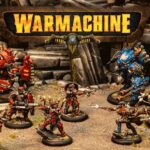
Steamforged confirmed to BoardGameWire that the redundancies were part of a decision to “reduce new board game crowdfunding activity for the moment” amid the surging growth of Warmachine, the miniatures wargame line it bought from Privateer Press two years ago alongside P3 Paints and the Iron Kingdoms roleplaying series.
Warmachine miniatures || Photo credit: Steamforged Games
The spokesperson said Steamforged had tripled Warmachine and P3 Paints revenue in the last 21 months, despite facing significant stock constraints in the first year due to heavy demand.
They told BoardGameWire, “Demand has been high and we’ve scaled production to meet it. Our US production capacity for Warmachine has increased by 70% since last March, with a 25% increase in Europe since August and new production facilities introduced in the UK in February 2026.”
The spokesperson added, “Steamforged has always had two strong sides, both retail and crowdfunding, and was originally founded as a miniatures game company. Warmachine’s growth has shown clear demand over and above expectations and has become a core focus to support that growth.
“Our board game crowdfunding projects are currently in various stages of production with the vast majority of creative work complete.
“Our intention to reduce new board game crowdfunding activity for the moment while we focus on supporting Warmachine’s growth meant we needed to restructure accordingly, which included a confidential redundancy process in Q1 of 2026 that’s now complete.”
When asked how the strategic shift towards Warmachine would affect previously announced future crowdfunds such as Tyrant, the spokesperson said, “Steamforged has always looked several years into the future and our internal roadmaps reflect that.
“As with any company, particularly one that works with other studios the way we have, that means many potential projects have been put on ice over the years as opportunities change and emerge. Some of those came to fruition later, and others didn’t.
“Tyrant was an early announcement and was always intended to be a slow build. Given our strategic focus, it’s not something we intend to move forward with in the foreseeable future.”
Asked what they expected Steamforged Games to look like as a business over the next couple of years, the spokesperson concluded, “Over the next two years, we expect Warmachine will continue its strong growth supported by our dedicated team and launch plans in the miniatures and hobby categories.”
Ein Brettspiel, das ein ganzes Menschenleben in eine gute Stunde Spielzeit packt, und in dem am Ende nicht gewinnt, wer am meisten Geld oder Wissen angehäuft hat: Mit diesem Versprechen ist der deutsche Verlag Skellig Games (Heuchelheim) mit „A Life" auf Gamefound gestartet. Die Kampagne läuft bis zum 25. Juni 2026 und war schon in den ersten Tagen deutlich überfinanziert. Grund genug, sich das Spiel jenseits der Kampagnen-Euphorie genauer anzusehen.
Eckdaten zu „A Life"
Verlag: Skellig Games (Heuchelheim)
Plattform: Gamefound, Laufzeit bis 25. Juni 2026
Spieleranzahl: 1 bis 4
Spielzeit: rund 60 Minuten (laut Kampagne; BGG nennt abweichend 45 bis 90)
Alter: ab 8 Jahren
Mechaniken: Open Drafting, Multi-Use Cards, Set Collection, End Game Bonuses
Design: Stefan Freund, Illustration: Roman Kucharski
(Maßgeblich sind die Kampagnen-Werte; abweichende BGG-Angaben sind im Text gespiegelt.)
A Life: Worum es im Spiel geht
In „A Life" begleiten ein bis vier Spielende eine Figur von der Geburt bis ins hohe Alter. Auf diesem Weg entscheiden Sie, welche Erlebnisse Ihre Figur sammelt. Dafür brauchen Sie Ressourcen: Wissen, Erfahrung, Träume und Geld. Mit diesen Ressourcen schalten Sie Erlebnisse frei, und die Erlebnisse wiederum prägen die inneren Werte Ihrer Figur. Der Clou steckt in der Schlusswertung: Welche Ressourcen Ihnen am Lebensende Siegpunkte bringen, hängt von genau diesen inneren Werten ab. Es gewinnt also, frei nach dem Verlag, nicht die reichste, klügste oder erfolgreichste Figur, sondern diejenige, die ihr Leben am besten nach ihren eigenen Werten gelebt hat.
Damit dreht „A Life" eine vertraute Eurogame-Logik um. Üblicherweise steht zu Spielbeginn fest, was Punkte bringt, und Sie optimieren darauf hin. Hier entscheidet sich erst im Spielverlauf, welche Währung am Ende zählt, weil Sie diese Bewertungsregel über Ihre Entscheidungen selbst formen.
Die Mechanik: Set Collection und Open Drafting
Laut den Mechanik-Angaben auf BoardGameGeek kombiniert „A Life" vier Bausteine: offenes Drafting (Open Drafting), Mehrzweckkarten (Multi-Use Cards), Set Collection und Boni in der Endwertung (End Game Bonuses). Konkret am Tisch heißt das vor allem zweierlei: Aus einer offen ausliegenden Auswahl picken Sie reihum Karten heraus (das ist das Open Drafting, im Grunde ein gemeinsamer Auslagestapel, an dem sich alle bedienen), und eine einzelne Karte können Sie auf mehr als eine Weise einsetzen, etwa als Ressource oder als Erlebnis (das sind die Multi-Use Cards, eine Karte mit Doppelnutzen). Im Zusammenspiel ergibt das eine nachvollziehbare Schleife: Ressourcen einsammeln, Erlebnisse auslegen, innere Werte aufbauen und so die eigene Schlusswertung formen. Das Sammeln passender Karten-Sets treibt auch ein weiteres Set-Collection-Spiel aus unserem Archiv an.
An dieser Stelle eine ehrliche Einordnung: Die Kampagnenseite beschreibt diesen Kern in Worten, legt aber die konkrete Zugstruktur, also was genau Sie in einem einzelnen Zug an Aktionen zur Auswahl haben, in Textform bisher nicht offen. Wer die exakte Aktionsökonomie wissen will, wird sie aus Kampagnentext und Regelwerk-Vorschau ableiten müssen. Wir benennen das hier bewusst, statt eine Zugfolge zu erfinden.
Das wirkt sich direkt auf eine Frage aus, die am Spieltisch zählt: Wie viel reden die Spielenden miteinander, wie viel spielt jede für sich? Ein offenes Drafting aus einer gemeinsamen Auslage legt zumindest eine indirekte Interaktion nahe. Sie sehen, was die anderen nehmen, und eine Karte, die jemand zieht, ist für den Rest der Runde weg. Ob daraus echter Druck am Tisch entsteht, etwa direkter Konflikt um Schlüsselkarten, oder ob „A Life" eher ein Nebeneinander mit gelegentlichem Zugriff aufs gleiche Material bleibt (das, was Vielspielende „Multiplayer-Solitär" nennen), lässt sich aus der Kampagne nicht beantworten. Genauso wenig sagt sie etwas über die Wartezeit zwischen den Zügen aus: Ohne offengelegte Zugstruktur ist nicht absehbar, wie viel Downtime entsteht, wenn andere am Zug sind. Beide Punkte bleiben offen, bis die fertige Regel vorliegt.
Wie zugänglich das Spiel am Ende wirklich ist, lässt sich derzeit nur vorläufig einschätzen. Die bekannten Bausteine (Drafting, Mehrzweckkarten, Set Collection) gehören zum eingängigen Eurogame-Repertoire, und der Verlag gibt das Spiel ab acht Jahren frei. Das deutet auf ein überschaubares, familientaugliches Gewicht hin. Verifizieren lässt sich diese Einschätzung aber noch nicht, weil eben die Aktionsökonomie nicht offenliegt. Wir führen die Zugänglichkeit deshalb als begründete Vermutung, nicht als belegte Tatsache.
Designer und Ausstattung
Den Autor nennt die Gamefound-Seite selbst nicht prominent, auf BoardGameGeek ist „A Life" jedoch klar zugeordnet: Verantwortlich für das Design ist Stefan Freund, die Illustrationen stammen von Roman Kucharski. Skellig Games verantwortet die deutschsprachige Ausgabe; der Verlag tritt seit Jahren mit familienfreundlichen Themen und einer Mischung aus leichten und anspruchsvolleren Titeln auf, zuletzt etwa mit seiner Kickstarter-Kampagne zu Prestige. Weitere Titel von Skellig Games sammeln wir im Verlags-Tag.
Für die Leserfrage, ob man „A Life" wegen des Teams, des Themas oder eines Wertungskniffs auf dem Schirm haben sollte, lohnt ein Blick auf den Designer. Stefan Freund hat zwar ein eigenes Designer-Profil auf BoardGameGeek, ein breites, wiedererkennbares Werk ist dort öffentlich aber nicht dokumentiert. Der prominenteste bislang sichtbare Titel ist das Stichkartenspiel „Mission: Wild Life" (EMF, 2025), also ein deutlich leichteres Format als ein kartengetriebenes Eurogame über ein ganzes Leben. Eine erkennbare Designerlinie mit vergleichbaren Titeln, an der man „A Life" messen könnte, ist nicht auffindbar. Anders gesagt: Wer hier mitfiebert, tut das wegen des Konzepts und des Themas, nicht wegen eines etablierten Autorennamens. Stefan Freund ist in diesem Genre bisher kaum öffentlich in Erscheinung getreten und bleibt damit die unbekannte Variable im Projekt.
Spielerzahl und Solo-Modus
Gamefound gibt „A Life" mit ein bis vier Personen an, ein Solo-Modus ist also vorgesehen. Wie dieser Solo-Modus funktioniert, etwa ob gegen einen automatisierten Gegner oder als reine Punktejagd gegen eine Zielmarke, geht aus der Kampagne bislang nicht hervor. Auch das benennen wir als offene Stelle, statt eine Mechanik zu unterstellen.
Ein Hinweis zur Datenlage: BoardGameGeek führt „A Life" abweichend mit zwei bis vier Spielenden und einer Spielzeit von 45 bis 90 Minuten. Maßgeblich für diese Vorstellung sind die Angaben der laufenden Kampagne (ein bis vier Personen, rund 60 Minuten); die BGG-Werte dürften ein vorläufiger Eintrag sein.
Was die Spielzeit praktisch bedeutet, sollten Sie mit einer realistischen Erwartung lesen: Die Kampagne nennt rund 60 Minuten, also eine gemütliche Stunde. Erfahrungsgemäß ist das eher die Marke für eine eingespielte Runde. Mit jüngeren Mitspielenden und in den ersten Partien, wenn die Wertungslogik noch neu ist und mehr erklärt und überlegt wird, dürfte sich die Partie eher zum oberen Ende bewegen, näher an die 90 Minuten, die BGG angibt. Wer „A Life" am Familientisch plant, kalkuliert für den Einstieg also besser einen langen Abend als eine knappe Stunde ein. Das ist eine Erwartungseinordnung, keine gemessene Angabe.
Stretch Goals: fast alles fließt ins Spielmaterial
Die freigeschalteten Zusatzziele zeigen ein klares Muster, und es lohnt sich, zwei Arten zu unterscheiden.
weitere Ziel- und Fähigkeitskarten als noch nicht erreichte Stufen (ab 27.500 Euro)
Komponenten-Upgrades und Boni (verändern nur das Material):
Box-Veredelung mit Heißfolienprägung (15.000 Euro, freigeschaltet)
Auffällig ist, dass die allermeisten Zusatzziele zusätzliche Karten und damit echten Spielinhalt liefern, nicht bloß glänzendere Komponenten. Was das wert ist, sollte man nüchtern einordnen: Mehr Ziel-, Fähigkeits- und Baby-Karten bedeuten zunächst mehr Varianz, also mehr Abwechslung von Partie zu Partie. Ob daraus auch echte Spieltiefe wird, ob die zusätzlichen Karten also wirklich tiefere Entscheidungen ermöglichen und nicht nur die Auswahl verbreitern, muss die fertige Regel zeigen. Mehr Inhalt ist erst einmal mehr Inhalt, kein Beleg für mehr Substanz.
Die Pledge-Stufen
Bei den Unterstützungs-Stufen sollten Sie eines im Blick behalten: Die Unterschiede sind nach allem, was die Kampagne offenlegt, materieller Natur, kein Stufenangebot verändert das eigentliche Spielgeschehen.
A Life Standard (45 Euro, regulär 60): die Standardausgabe des Spiels.
A Life Deluxe (69 Euro, regulär 100, Gamefound-exklusiv): Deluxe-Komponenten, laut Verlag nicht nachgedruckt.
A Life Premium (139 Euro): eine nochmals höherwertige Ausstattung.
A Life All-In (199 Euro): alle Komponenten-Upgrades zum Spiel gebündelt.
Skellig Games All-In (399 Euro): das Komplettpaket inklusive weiterer Spiele des Verlags, also weit über „A Life" hinaus.
Was die Stufen Premium und All-In im Detail an Material enthalten, schlüsselt die Kampagne in Textform nur grob auf. Wer gezielt einzelne Aufwertungen sucht (etwa Metallmünzen, Acryl-Marker oder einen Holzinsert), findet diese zusätzlich als einzeln wählbare Add-ons.
Finanzierungsstand und Einordnung
Stand 4. Juni 2026 steht „A Life" bei rund 270 Prozent der Zielsumme: etwa 27.000 Euro von angepeilten 10.000 Euro, getragen von rund 246 Unterstützenden, und das in den ersten Kampagnentagen. Das ist ein starker Start.
Zur Einordnung gehört aber auch: Ein niedriges Finanzierungsziel von 10.000 Euro ist schnell übertroffen, und eine hohe Prozentzahl sagt mehr über die gesetzte Messlatte als über die Qualität des Spiels. Das Momentum ist ein Signal, kein Gütesiegel. Wie schnell ein niedriges Ziel fällt, zeigt sich derzeit auch an einer anderen laufenden Gamefound-Kampagne. Interessant für den deutschsprachigen Markt ist „A Life" aus anderen Gründen: ein deutscher Verlag, eine deutschsprachige Ausgabe von Anfang an und ein Thema, das sich wohltuend vom üblichen Aufbau- und Eroberungskanon abhebt. Dass das Spiel zugänglich und ab acht Jahren familientauglich wirkt, ist nach den bekannten Bausteinen und der Verlags-Altersfreigabe eine plausible Einschätzung, aber eben noch keine an der fertigen Regel überprüfte Tatsache. Ob das ungewöhnliche Wertungsprinzip am Tisch trägt, wird sich erst an der fertigen Regel und in Partien zeigen. Die Idee dahinter ist es allemal wert, beobachtet zu werden.
Die Kampagne läuft noch bis zum 25. Juni 2026 auf Gamefound.
Als ich mich das erste Mal mit Believe in me! (please) beschäftigte, kam mir sofort das ikonische Video von Jesus He Knows Me in den Sinn. Die Bildsprache des Brettspiels und der erste Blick auf das Thema ließen sofort Phil Collins vor meinem geistigen Auge tanzen, mit Scheinen wedeln und um zahlungskräftige Anhänger buhlen. Meine...
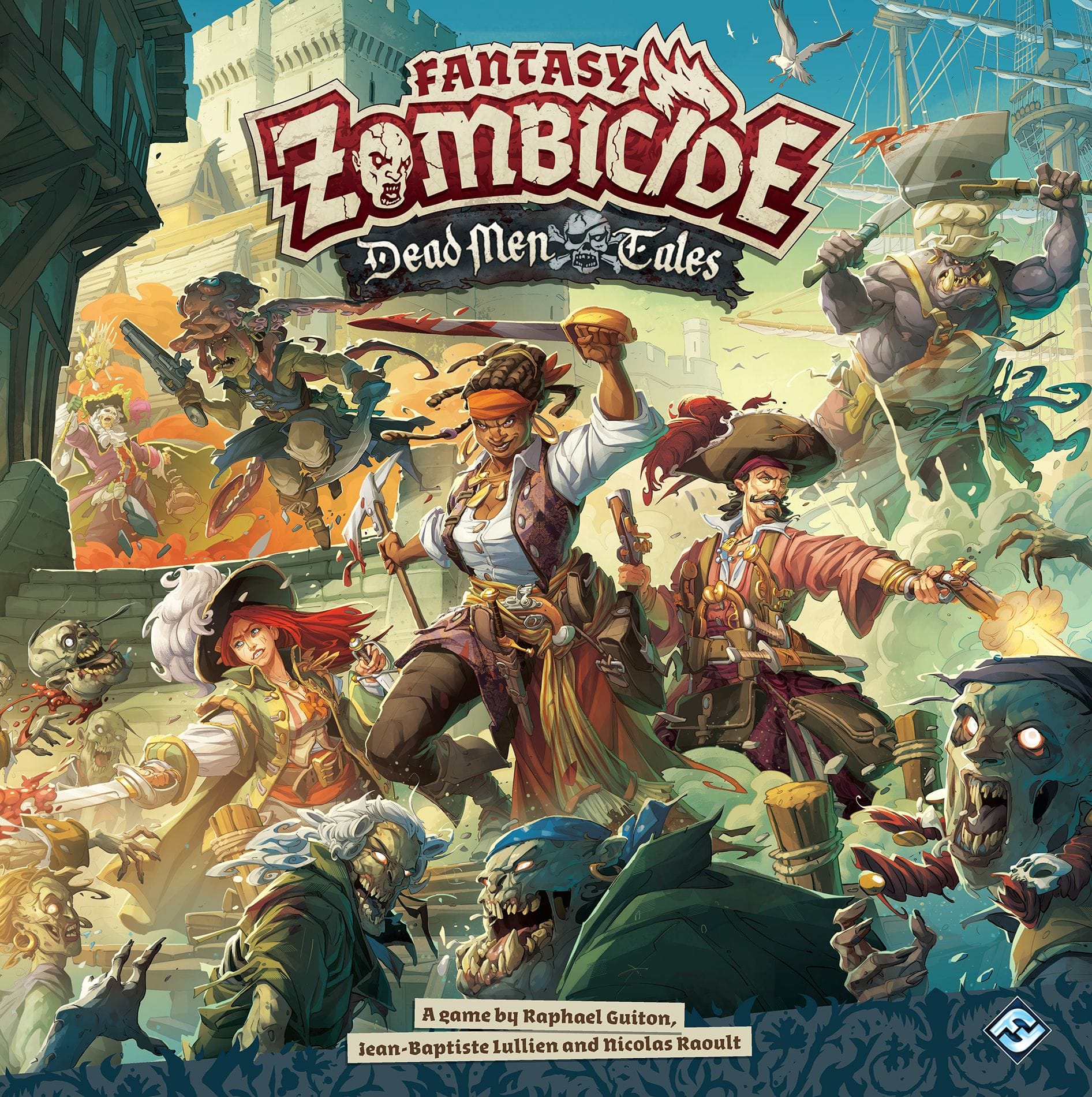
Asmodee, einer der weltweit größten Brettspielverlage, hat seine erste eigene Crowdfunding-Kampagne mit deutlichem Erfolg abgeschlossen. Zombicide: Dead Men Tales sammelte bis zum Kampagnenende am 19. Mai 2026 rund 4,1 Millionen US-Dollar von etwa 11.000 Backern auf Gamefound. Das Finanzierungsziel von 200.000 US-Dollar wurde damit gut 20-fach übertroffen. Über das Ergebnis berichtete zuerst BoardGameWire am 2. Juni 2026.
Kampagne im Überblick
Verlag: Asmodee (Creator-Account: Fantasy Flight Games)
Hinter der Kampagne steht eine Reihe von Personal- und Lizenzentscheidungen aus dem vergangenen Jahr. Im Juni 2025 übernahm Asmodee die Zombicide-Marke vom finanziell angeschlagenen US-Verlag CMON, im Oktober 2025 folgte mit Cthulhu: Death May Die eine zweite Großreihe. Beide hatten in früheren CMON-Kampagnen zusammen rund 10 Millionen US-Dollar an Crowdfunding eingespielt. Bereits im Mai 2025 hatte Asmodee zudem den ehemaligen CMON-COO David Preti eingestellt, der seither Crowdfunding und Miniaturenproduktion verantwortet.
Asmodee-CEO Thomas Koegler ordnet das Ergebnis in der Pressemitteilung des Unternehmens als Signal ein: „Diese erste Kampagne bedeutet mir viel und sendet ein klares Zeichen" (sinngemäß übersetzt), so der Konzernchef. Den Reihenrekord knackt Dead Men Tales allerdings nicht. Zombicide: Green Horde hatte 2017 gut 5 Millionen Dollar eingespielt, das Lizenz-Spin-off Marvel Zombies zuletzt rund 9 Millionen. Auffällig ist die Verlaufskurve: Bei regulärem Kampagnenende standen laut Asmodee rund 3 Millionen Dollar zu Buche, die restliche Million kam erst in den circa fünf Tagen des Gamefound-Features „Endgame" hinzu, einer verlängerten Late-Pledge-Phase.
DACH-Markt: viel Struktur, wenig Crowdfunding-Vorgeschichte
Für den deutschsprachigen Markt ist Asmodees Schwenk doppelt relevant. Über Asmodee Germany und die konzerneigenen Verlage Lookout Games, Z-Man und Fantasy Flight Games verfügt der Konzern über etablierte Vertriebs- und Lokalisierungsstrukturen. Bisher war Crowdfunding in dieser Konstellation eine Randerscheinung: Einzig Lookout Games hatte 2020 mit Grand Austria Hotel: Let's Waltz! eine eigene Kampagne durchgezogen, mit rund 383.000 Euro Volumen. Indirekte Berührungspunkte gab es über die Beteiligung an Exploding Kittens und über Gamegenic-Partnerschaften, etwa beim Sammelkartenspiel Altered.
Eine deutsche Ausgabe von Dead Men Tales ist auf der Gamefound-Kampagnenseite nicht angekündigt; ein deutscher Lokalisierungspartner wird dort nicht genannt. Für den Fachhandel im DACH-Raum stellt sich damit die Frage, wie Asmodee künftig zwischen Late-Pledge-Community und stationärem Vertrieb austariert.
FFG, Descent und Asmodees Konzernbilanz
Brisant ist der Zeitpunkt aus einem zweiten Grund. Im April 2026 stellte das Asmodee-Studio Fantasy Flight Games die Reihe Descent: Legends of the Dark ein und verwies dabei auf steigende Produktionskosten und Verluste. Ein Crowdfunding-Comeback dieser oder ähnlicher Reihen erscheint denkbar, FFG hat sich öffentlich allerdings nicht festgelegt. Auf Gamefound tritt formal Fantasy Flight Games als Creator von Dead Men Tales auf, im Marketing übernimmt Asmodee die Spitze.
Im Konzern ergeben die Zahlen ein zweischneidiges Bild. Asmodee meldete im Mai 2026 für das laufende Geschäftsjahr einen Nettoumsatzanstieg von 23 Prozent auf über 1,68 Milliarden Euro, getragen vom Vertriebsgeschäft mit Sammelkartenspielen. Das eigene Brettspielverlagsgeschäft sank dagegen um 5,8 Prozent, im ersten Quartal sogar um 9,8 Prozent gegenüber dem Vorjahresquartal. Vor diesem Hintergrund dürfte die Frage, wie tragfähig die zweite Säule Crowdfunding wird, in der Branche länger nachhallen.
Asmodee hat seine erste eigene Crowdfunding-Kampagne abgeschlossen, und sie liefert eine Ansage: Zombicide: Dead Men Tales (BGG) sammelte rund 4,1 Millionen US-Dollar auf Gamefound, gut 2.000 Prozent über dem ursprünglichen Ziel von 200.000 US-Dollar. Knapp 11.000 Backer finanzierten den Piraten-Ableger des Fantasy-Zombicide. Spielmechanisch holt der kooperative Miniaturen-Crawler das Wave-Survival-System der Reihe in ein Piratensetting. Damit ist die Kampagne, wie BoardGameWire berichtet, die größte Hauptreihen-Kampagne der Reihe seit fast einem Jahrzehnt: Zombicide: Green Horde sammelte 2017 etwas mehr als 5 Millionen Dollar, der Lizenz-Ableger Marvel Zombies hält mit rund 9 Millionen Dollar weiterhin den Reihenrekord.
Vom Vertriebsriesen zum Crowdfunder
Für Asmodee ist das Ergebnis mehr als eine starke Einzelkampagne. Der Konzern hatte sich bisher kaum am Crowdfunding versucht. Mit der Übernahme der Zombicide-IP vom angeschlagenen CMON im Juni 2025 änderte sich das. Einen Monat zuvor hatte Asmodee Ex-CMON-COO David Preti abgeworben, einen der Architekten der dortigen Kickstarter-Strategie, und ihm Crowdfunding sowie Miniaturen unterstellt. Im Oktober 2025 kam mit Cthulhu: Death May Die eine zweite crowdfunding-erfahrene Marke aus dem CMON-Portfolio hinzu (laut BoardGameWire dort zuvor rund 10 Millionen Dollar eingespielt). Dead Men Tales ist die erste sichtbare Probe aufs Exempel.
CEO Thomas Koegler nennt die Kampagne "ein klares Signal" und hebt das Vertrauen der mehr als 11.000 Backer hervor (sinngemäß übersetzt aus der Asmodee-Pressemitteilung). Crowdfunding gebe Verlagen, so Asmodee weiter, "klarere Bedarfssicht, eine direkte Verbindung zu engagierten Communities und eine gesündere Finanzplanung". So weit die Eigenwerbung; wie tragfähig das Modell jenseits einer Zugmarke ist, muss der Konzern mit den nächsten Kampagnen erst zeigen.
Was das für den DACH-Markt bedeutet
Für den deutschsprachigen Markt ist der Schwenk aus zwei Gründen relevant. Erstens steckt mit Lookout Games (Hannoversch Münden) ein deutsches Studio im Asmodee-Verbund, das bislang die einzige nennenswerte Crowdfunding-Kampagne eines Asmodee-Studios lieferte: 2020 sammelte Grand Austria Hotel: Let's Waltz! rund 383.000 Euro auf Kickstarter. Ob Lookouts Familienspiel-Profil und Asmodees neue Konzern-Crowdfunding-Strategie in der Praxis zusammenpassen, ist offen. Zweitens betrifft die Strategie Produktion und Vertrieb direkt. Werden Auflagen künftiger Großprojekte stärker an Backer-Zahlen ausgerichtet, hat das Folgen für Lokalisierung, Sprachpakete und den Versand in die EU. Auf der Gamefound-Kampagnenseite findet sich kein Hinweis auf eine angekündigte deutsche Ausgabe von Dead Men Tales.
Descent und der Druck auf das Verlagsgeschäft
Der Crowdfunding-Schwenk fällt in eine Phase, in der ein anderes Asmodee-Studio Federn lässt. Fantasy Flight Games stellte im April 2026 die Produktion von Descent: Legends of the Dark ein und nannte gestiegene Produktionskosten und hohe App-Kosten als Grund. In der Branche wird diskutiert, ob FFG den Klassiker später per Crowdfunding neu aufsetzt; bestätigen oder dementieren mag das Studio das nicht. Im Hintergrund stehen unbequeme Konzernzahlen: Asmodees Nettoumsatz stieg zuletzt zwar um 23 Prozent auf über 1,68 Milliarden Euro, doch das eigene Brettspielverlagsgeschäft schrumpfte um 5,8 Prozent im Geschäftsjahr und um 9,8 Prozent im ersten Quartal 2026.
Endgame statt Endspurt
Bemerkenswert ist auch die Plattformwahl. Dead Men Tales nutzte Gamefounds "Endgame"-Feature, das den Verkaufszeitraum offen hält, solange weiter Pledges eingehen. Zum offiziellen Ende der Kampagne standen rund 3 Millionen US-Dollar auf dem Zähler; in den anschließenden gut fünf Endgame-Tagen kam rund eine weitere Million dazu. Für Asmodee ist das ein Argument für die Plattformwahl, für Gamefound ein Schaufenstereffekt im Wettbewerb mit Kickstarter. Spannend wird, ob Lookout, Z-Man Games und FFG nachziehen und wie schnell deutsche Lokalisierungen zur Standardspur in den Pledge-Optionen werden.
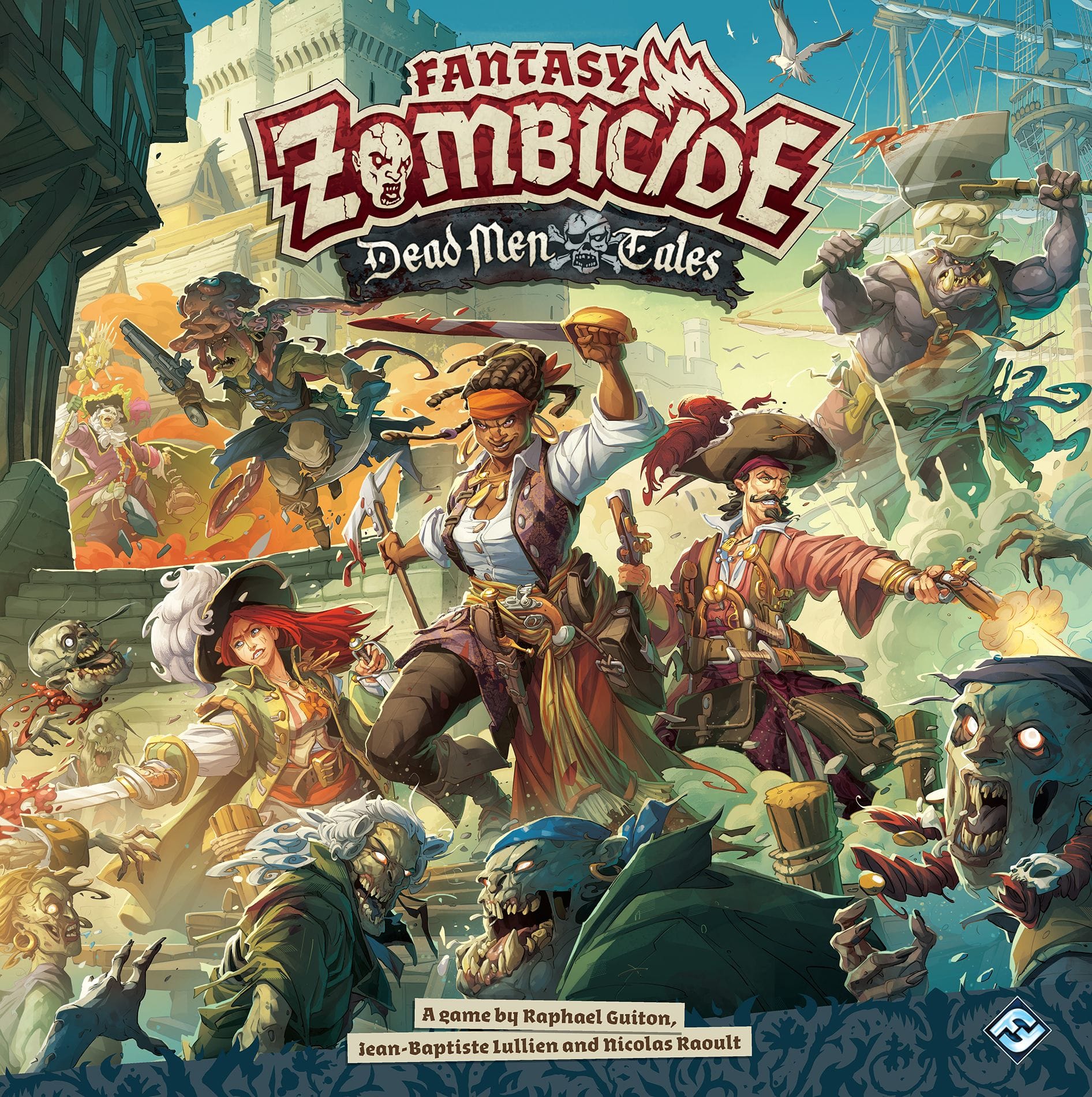
Board game giant Asmodee’s strategic push into crowdfunding has passed its first major test, with its debut campaign in the Zombicide universe raising more than $4.1m on Gamefound.
The buyout came a month after Asmodee had hired ex-CMON COO David Preti – the architect of the latter company’s growth into one of board gaming’s biggest crowdfunding-focused publishers – to head up its own newly-launched crowdfunding and miniatures strategy.
Asmodee had not publicly discussed details of its crowdfunding strategy ahead of completing the Dead Men Tales campaign, but said in a press release celebrating that success that crowdfunding “gives publishers clearer demand visibility, a direct line to engaged communities, and a healthier financial setup – with production sized to actual demand rather than to forecasts”.
It is thought FFG may resurrect Descent through a crowdfunding strategy in the future, although it is yet to confirm or deny this, saying in April, “While we don’t have anything to share at this time, there is always a possibility that we will revisit Descent in the future. It would take a different form and would not be Legends of the Dark, but this game universe is near and dear to FFG’s heart.”
Asmodee CEO Thomas Koegler said of the Dead Men Tales crowdfund, “This first campaign means a lot to me, and I think it sends a clear signal.
“Zombicide is a beloved franchise that joined the group less than a year ago, and Dead Men Tales is already proving the model works: the original Guillotine Games team back at the helm, Fantasy Flight Games executing the campaign with remarkable skill, and a community of more than 11,000 backers who chose to trust us early.
“That trust is something we take seriously. There’s still careful work ahead on delivery, a crowdfunding campaign is only as good as what arrives at your door, but I have full confidence in our teams to see it through.”
Dead Men Tales was the latest Gamefound campaign to make use of the platform’s Endgame feature, which is designed to extend the final moments of campaigns that are still actively receiving pledges even as the original countdown ends.
The Dead Men Tales campaign had collected more than $3m by the end of the official crowdfunding period, but Endgame extended the raise by more than five extra days and about $1m due to new pledges consistently being made.
Prior to Dead Men Tales, the only previous crowdfunding campaign from an Asmodee-owned company was Lookout Games’ Kickstarter for the Grand Austria Hotel: Let’s Waltz! Expansion & Deluxe Upgrade, which raised about €383,000 during the coronavirus pandemic in 2020.
Asmodee’s only other direct exposure to crowdfunding is thought to be via the company Exploding Kittens, in which it made a strategic investment short of a buyout in 2021. That business has since raised more than $977,000 in a Kickstarter campaign for Hand to Hand Wombat.
Asmodee’s own board game publishing operation, meanwhile, saw its net sales fall 5.8% in the last financial year – while net sales for the first quarter of this year were down 9.8% compared to the same period in 2025.
Welcome to this week’s batch of crowdfunding campaigns. We have a variety of offerings here, so we hope you will find something that catches your eye. Also, if you want to chat with the BGQ team, join our Discord Server where we talk about games, movies, sports, and other fun stuff. Check it out and […]
So many games, but so little time! That is the way that I feel each and every month when I get to putting this Wargame Watch feature together. I am just always salivating at the possibilities and know that I can only play a few games out of the many that are offered. But, which ones are best? Well, that is not for me to decide for you. I just connect you with the information and you get to choose. This month for the Wargame Watch, I was able to find 28 games (including the 2 games from our sponsor Draco Ideas). I was also able to find 4 games being offered on Crowdfunding through Gamefound and Kickstarter.
They make really good quality and very playable games and really have a lot to offer to wargamers.
They also this month have a new Gamefound campaign kicking off that is sure to be a main stay on my table particularly at conventions where I need a few friends to play large multi-player games. This campaign is actually a 2 for 1 as its headliner game is called Dark Kingdoms but it also offers another game in the same series in a 2nd Edition called Reconquista. You can read more information in the Pre-Order section below.
1. Dark Kingdoms / Reconquista 2nd Edition from Draco Ideas Coming to Gamefound June 2nd
I love Ameritrash games, which includes lots of area control/area influence/dudes on a map style games and some of the classic wargames that we grew up on in the Gamemaster Series such as Axis & Allies. I just love the easy flow of these games and also love the direct player interaction with attacks, negotiation, alliances and some backstabbing as well. Plus these games typically have lots of shiny bits, great looking custom dice and are always well produced so I feel as if I have got value for my dollar. Recently, I heard about a new game coming from Draco Ideas called Dark Kingdoms, which takes a look at the chaos following the Roman withdrawal from Britannia in the early 5th century and the power vacuum being filled by various tribes. And it looks really good!
From the game page, we read the following:
After the Roman withdrawal in the early 5th century, Britannia was plunged into chaos. Saxons, Angles, Jutes, and Britons fought over land, resources, and glory. In this relentless struggle, only one people would emerge victorious and raise their banner over the island.
Dark Kingdoms is a strategy and conquest game for 2 to 4 players, set in 5th-century Britannia, at the height of the clash between the Celtic peoples and the Germanic invasions.
Each player leads a faction with its own king or leader:
The Saxons of Cerdic, in the south.
The Angles of Eomer, in the east.
Hengist’s Jutes in the north.
Vortigern’s Britons, the legitimate rulers in decline.
Build settlements, fortifications, and fleets, recruit troops, and expand your domain. Manage your resources wisely (wood, iron, stone, wheat, and gold) and face your rivals in battles, raids, and sieges.
In Dark Kingdoms, it’s not enough to resist: you must prove your power by accumulating Victory Points through conquest, fame, and construction.
But the campaign also features a new edition of another classic Ameritrash style wargame called Reconquista 2nd Edition from the same designer Marco Antonio del Campo. This game is equally as beautiful as Dark Kingdoms but covers the wars between Muslims and Christians in 11th-century Spain where each player assumes the role of one of the four kingdoms in competition to control the Iberian Peninsula: Castilla y León, Aragón, Sevilla or Zaragoza.
I am reaching out to the designer to get an interview going for the blog and hope to have that up in the next few weeks. These 2 games just look great and are sure to fill that lower complexity, dudes on a map style 90-120 minute gaming experience. I am going to back both of these games and look forward to carrying them to conventions to get them played.
The Gamefound campaign is set to launch on Tuesday, June 2nd.
2. Crown & Courage from Tompet Games Coming to Kickstarter June 2nd
We have played 2 of Tompet Games previously released games with the only one we haven’t playing being their first games called Kill the King from 2016. First was Donning the Purple, which is an asymmetrical king of the hill game with a bit of worker placement that deals with the players managing the glory of wealthy and powerful Roman families, and their second game called Halls of Hegra, which is a solitaire-only wargame in the same vein as Euro-based games such as Robinson Crusoe, This War of Mine and Dead of Winter. The mechanics include worker placement, bag building, and area control/tower defense and the goal of the game is to survive wave after wave of German troops as they assault the secluded mountain fortress at Hegra.
Both of these games are excellent and they are now embarking on their fourth game called Crown & Courage that tells the story of the German invasion of Norway in 1940 and the royal family’s defiance and ultimate escape from the country to avoid capture and funding of the German war machine.
From the game page, we read the following:
The Germans have invaded Norway. The royal family must escape across the rugged countryside, evading capture at every turn. Will the king defy German demands for surrender, or will he find a way to escape, inspiring hope for Norway’s freedom?
Crown & Courage is a solitaire-only game, bringing clever, low-randomness Eurogame-inspired mechanisms together with a fresh, new perspective provided by the best wargamer traditions of illustrating history’s unique challenges through evocative gameplay.
Step into a desperate race against time as Norway collapses under the pressure of the German invasion. Your goal is simple but brutal: guide the King to safety while evacuating as much of the nation’s gold as possible.
Balance bold actions like evacuation, sabotage, and mobilization against the relentless advance of German forces. But every decision comes at a cost: stress rises, morale falters, and the enemy grows stronger. The game constantly forces you into difficult trade offs where survival often means accepting the lesser of two disasters.
German counterattacks and demands push you closer to collapse. Resources and manpower are scarce. Every turn feels like a narrow escape, and only through clever planning, sacrifice, and a bit of courage can you carve a path to freedom.
The game engine is an Order Grid which is a 3 square by 3 square box where the player will choose and place orders that come up randomly to take actions to defend against the invading German troops, move the king away from the advancing Germans, improve their orders by upgrading them and also ambushing the invaders. Such as clever and amazing way to deal with the way the player plays the game. The experience is a very tough one with lots of odds stacked against the player but their is hope as good planning, proper placement of orders on the grid and manipulation of the outcome with sabotage of German infrastructure and forces can allow the king to slip away and stay one step ahead of his pursuers.
We played a prototype copy of the game cooperatively, even though it is designed as a solitaire wargame, and were very impressed with the maturation of the game mechanics and flow of the game. Here is a link to our preview video from that experience:
The Kickstarter campaign is set to launch on Tuesday, June 2nd.
3. Advanced Company Scale System Game One:Anzio: A Lost Opportunity from Bring It On Games
We have played several games designed by Adam Starkweather in his Company Scale System (CSS). These games are really good solid chit draw systems that really puts some unknown in what groups of units can activate and even when they will activate. There are also events and if the chit cup runs dry before all of the units can activate due to the end round chit then you are just sore out of luck. You have to prepare for this inevitability and I love the concept of prioritizing your activations and making sure you activate what you absolutely have to before doing those units that would be beneficial to activate. Now Adam has created his own publishing company called Bring It On Games and they have announced their first pre-order game in a new system called Advanced Company Scale System Game One:Anzio: A Lost Opportunity. This is a huge wargame and includes 10 large maps, 20 counter sheets and tons and tons of charts, tables and player aids. This is a MONSTER wargame…no doubt about it but it looks really good.
From the game page, we read the following:
The Battle of Anzio, commencing in January 1944, was akin to forcefully opening a doorway onto Italy’s western coast. Operation Shingle, as it was designated, sought to outflank the German Gustav Line and swiftly dismantle Axis defenses. The Allies landed on seemingly tranquil beaches, almost eerily unopposed, as if the land itself was holding its breath. Despite this opportunity for a bold thrust inland, the Allies succumbed to caution, forfeiting the chance to capitalize on the situation. The beachhead, broad and flat, became both a refuge and a trap. Open fields offered no shelter from the impending storm unleashed by the Germans.
Welcome to ACSS: Anzio. A Lost Opportunity, the inaugural game in the Advanced Company Scale System (or ACSS)
The game has a ton of content and also has a ton of different scenarios including the following:
Scenarios included with the final project: Introductory Scenarios (all played on one 8 1/2” by 11” map): Operation Mr. Black Operation Mr. Green The Rock The Battle for the Factory
Beginner Scenarios (all played on one 17” by 22” map): Could, Woulda, Shoulda The British are Coming, the British are Coming The US Calvary has Arrived
Intermediate Scenarios (all played on one 22” by 34” map) Keep Moving! Gotta Get Through Faster! Here They Come! Darby’s Gamble
Advanced Scenarios (all played on one 22” by 34” map) The Battle for the Thumb The Ace of Spades Take Campoleone!
Expert Scenarios (all played on two 22” by 34” maps) They are Everywhere! Operation Fischfang Operation Seitensprung Kesselring’s Final Roll of the Dice A Killer Whale
Campaign Games (played on all the maps) Operation Buffalo Operation Shingle The Campaign for Anzio
I did notice that you can download the rules and the scenario booklet from an online OneDrive and you can also get a Vassal mod to try the game out. Here is the link to the OneDrive: OneDrive Link to Rules and Scenario Booklet
If you are interested in Advanced Company Scale System Game One:Anzio: A Lost Opportunity, you can pre-order a copy for $300.00 from the Bring It On Games website at the following link: https://bringitongames.com/shop/p/anzio-a-lost-opportunity
4. Solo Command: Market Garden from Multi-Man Publishing
Ooooh! A solitaire Operation Market Garden game….yes please…and twice on Sundays! This month, Multi-Man Publishing has several new offerings up on pre-order but none as interesting to me as Solo Command: Market Garden designed by Tetsuya Nakamura. This one originally appeared on the Japanese wargame magazine called Game Journal Magazine as Monty’s Melancholy. There is not a lot of information on the game page but more is coming and I am going to attempt to work with the designer on an interview.
From the game page, we read the following:
A new solitaire game covering OPERATION MARKET GARDEN!
Solo Command: Market Garden allows you to take command of XXX Corps and the Allied paratroopers as you try to drive your armor over the bridges and into Arnhem. Will you get there in time, or will the German reinforcements overwhelm the airborne units in the ever increasingly desperate situation?
An innovate card mechanism, which uses the decision column of the previously played card, determines which units can activate with each play of the cards, and controls the actions of the German units as they move relentlessly to try and close down the highway and prevent XXX Corps from reaching its goal.
Originally published in Japan in Game Journal Magazine as Monty’s Melancholy this solitaire game gives you the opportunity to try and capture Arnhem and control all the bridges, in a quick playing game with low complexity rules.
Aside from the box back, they did have this picture of the board on the website as well as some of the counters (not shown).
5. Advanced Squad Leader (ASL) Action Pack #22: A World At War from Multi-Man Publishing
For those of you out there that are hopelessly addicted to Advanced Squad Leader and building your ever growing collections for one of the most highly thought of tactical WWII combat systems out there, here is a new module or Action Pack that offers a ton of newly designed scenarios by Jim “The Bishop Sez” Bishop and Gary “Fort” Fortenberry for release at a tournament. These scenarios appears to be varied and cover many different theaters of World War II to offer players new and interesting experiences within the established system. The Action Pack also comes with 3 new geomorphic and back compatible maps along with 12 totally new scenarios. I also thought it was interesting that they stated that this product was “designed for the [ASL] aficionado” so if you are one you will probably know exactly what this product is.
From the game page, we read the following:
A World at War, the 22nd Action Pack for Advanced Squad Leader, contains an eclectic mix of small unit actions from 1941 to 1945, ranging across many different theaters of World War II. Scenarios span the globe from the forested highlands of Ethiopia to the jungles of Papua, New Guinea, from the steppes of the Soviet Union to the snowy forests of the Ardennes. These 12 scenarios were designed by Jim “The Bishop Sez” Bishop and Gary “Fort” Fortenberry for release at a tournament and are intended to offer movement options and tough choices for both sides. Play times are designed for a typical tournament round, with the largest best used for the last round of the day. Three double-sided 11″ × 16″ maps, each designed by Fort and painted by Charlie Kibler, round out the package. These boards are completely geomorphic and fully compatible with previous ASL mapboards, allowing new and unique terrain configurations.
• AP237 Andiamo – 6½ turns, 4 March 1941, Chakara River, near Dembecha, Ethiopia (Ethiopian vs Italian)
• AP238 Italian Crescendo – 6 turns, 28 September 1941, Petrykivka, Ukraine (Russian vs Italian)
• AP239 Buna Mission – 6½ turns, 31 December 1942, Buna Mission, Papua New Guinea (Allies vs Japanese)
• AP240 The Army It Had – 6½ turns, 1 March 1943, Sevsk, Russia (Russian vs Hungarian/RONA)
• AP241 Moreh Melee – 6½ turns, 22 March 1944, Moreh, India (Commonwealth vs Japanese)
• AP242 Seton Block – 5½ turns, 2 June 1944, Kamaing, Mogaung Valley, Burma (Chinese vs Japanese)
• AP243 Hell’s Comin’ – 6½ turns, 10 July 1944, Hauts-Vents (American vs German)
• AP244 Heavy Metal Noise – 5½ turns, 13 August 1944, Oględów, Poland (Russian vs German)
• AP245 Villains at Ville-sur-Illon – 6½ turns, 13 September 1944, Ville-sur-Illon, France (Free French vs German)
• AP246 Stumbling In Place – 6½ turns, 19 November 1944, Apweiler, Germany (American vs German)
• AP247 General’s Orders – 5½ turns, 22 December 1944, Stoumont, Belgium (American vs German)
• AP248 Black Devils of Bure – 5½ turns, 6 January 1945, Bure, Belgium (Canadian vs German)
Designed for the aficionado, Action Pack #22: A World at War is not a complete product and assumes the buyer owns the core Advanced Squad Leader game system.
If you are interested in Advanced Squad Leader (ASL) Action Pack #22: A World At War, you can pre-order a copy for $36.75 from the Multi-Man Publishing website at the following link: https://mmpgamers.com/asl-action-pack-22-a-world-at-war-p-460
As you know, the Bible of ASL has had several overhauls over the years including small changes, errata fixes and better organization and they even put the voluminous rules into a binder to make for their carrying around easier (although this 2nd Edition offering doesn’t contain the binder, charts nor the handy dividers). They are now getting a 2nd Edition of these rules with the announcement of the Advanced Squad Leader (ASL) Rulebook 2nd Edition that was put up on pre-order in early May.
From the game page, we read the following:
Back in print, now also including Chapters F, G, and W, with all rules updated through January 2026.
410 hole-punched, 8.5” x 11” pages, intended to be supplemented with additional and replacement pages as future changes may require.
Chapter Dividers with charts and a three-ring binder are both available separately or in a combined package with the rules.
World War II Tactical Level Combat ASL. The premier game system of tactical-level World War II combat uniquely combines soundness of design with attention to detail and ease of play. Built on the popular Squad Leader system, ASL has long been the ultimate in tactical wargaming. Now, ASL has just gotten better with the introduction of the ASL RULES 2nd Edition. Not only are the Rules back in full color, but the 2nd Edition also benefits from all the fine-tuning accumulated over the past 15 years. The 2nd Edition also contains material not previously included in the basic Rules, such as: more examples of play throughout, the advanced rules of Chapter E (night, weather, boats, planes, skis, convoys, etc.), the beginner’s Training Manual in Chapter K, an expanded Index, and widely-acclaimed playing aids such as the Offboard Artillery Player’s Aid and the Overrun Flowchart.
Each chapter is in a larger font for ease of reading. And all without changing how this great game is played. The fruits of 15 years of “playtesting” can be seen here in the ASL RULES 2nd Edition which incorporates all previous errata and questions & answers. Great care has been taken to clear up ambiguities in the rules while keeping the game the same.
Although the ASL RULES 2nd Edition is not a complete game by itself, when combined with its add-on modules it allows the armchair warrior to simulate practically any small-unit action from 1935-1945, opening the gateway to hundreds of unique battles spanning the globe. Combined with the Beyond Valor game module, for instance, the Rules allow you to simulate battles between Finns, Germans, Russians, and partisans from 1939 to the capture of Berlin. Furthermore, ASL’s “Design Your Own” system helps you create “what-if” battles with forces and terrain of your own choosing. The Chapter H notes on vehicles and ordnance (German and Russian notes are included) are one of the best single sources of information on the armor, vehicles, and guns actually used in battle in World War II. Other game modules separately available bring you the complete orders of battle for U.S. Army and Marines, British, Italian, Japanese, Chinese, and French forces, as well as the Minor nations that fought with the Allies or the Axis. Hand-painted mounted geomorphic mapboards are available, providing innumerable terrain configurations. Historical modules use the Rules to simulate battles and special Campaign Games on map sheets depicting the actual terrain fought over.
If you are interested in the Advanced Squad Leader (ASL) Rulebook 2nd Edition, you can pre-order a copy $38.00 from the Multi-Man Publishing website at the following link: https://mmpgamers.com/asl-rules-2nd-edition-2026-p-462
7. Advanced Squad Leader (ASL) Chapter Dividers from Multi-Man Publishing
For those who are interested in the whole enchilada with their rulebook, this is how you can add to or even complete it with the purchase of the ASL Chapter Dividers. Remember, if you are purchasing the new Advanced Squad Leader (ASL) Rulebook 2nd Edition you will need to also purchase these Chapter Dividers as they will not be included with that product but are a separate purchase. As I looked at this offering, I would think that you would really want these nicer, thick printed accessories to help organize your ruleset and to aid in game play with the included charts.
From the game page, we read the following:
ASL Chapter Dividers 2026 includes all the chapter dividers and charts for the ASL Rules (updated with all the latest changes through January 2026 and including Chapter W) in an 8.5” x 11” spiral bound booklet.
Along with the ASL rules themselves, these charts are required to play ASL and are available separately or in a combined (discounted) bundle with the 8.5”x11” hole-punched rules and a three-ring binder.
Dividers & charts are included for Chapters A, B, C, D, E, F, G, H (German/Russian), & W (Korea), plus a Quick Reference Data Chart (QRDC), OBA Player Aid, and Overrun Flowchart, as well as the counter examples from the inside of the three-ring binder.
Printed on quality cardstock and carefully spiral bound, the ASL Chapter Dividers 2026 booklet is a comprehensive and handy table-side supplement to the core rules that no devoted ASL player should be without.
If you are interested in the Advanced Squad Leader (ASL) Chapter Dividers, you can pre-order a copy $15.00 from the Multi-Man Publishing website at the following link: https://mmpgamers.com/asl-chapter-dividers-2026-p-464
8. Advanced Squad Leader (ASL) Binder from Multi-Man Publishing
And for the true completionist out there you can also get the Advanced Squad Leader (ASL) Binder on this pre-order.
From the game page, we read the following:
Back in print to accompany the updated, hole-punched, 8.5” x 11” ASL Rules 2026, this rugged three-ring binder includes counter examples on its inside covers.
Available separately or in combination with the Rules and Chapter Dividers.
Need someplace to store all of Chapter H? The rules chapters for Historical modules? Just want a spare? The ASL Rules Binder is for you.
If you are interested in the Advanced Squad Leader (ASL) Binder, you can pre-order a copy $15.00 from the Multi-Man Publishing website at the following link: https://mmpgamers.com/asl-rulebook-binder-2026-p-463
9. Vae Victis Magazine – Last Glories 1813 (Dernières Gloires) from Cérigo Editions
One of the better wargame magazines out there is Vae Victis Magazine from French publisher Cérigo Editions. This month, there are offering a new magazine that includes a game called Last Glories 1813 (Dernières Gloires) designed by Frédéric Bey. I have perused the site and it looks really great! There is an English rules edition so make sure that you choose this option or you may have to learn French quickly to play once you get your copy.
From the game page, we read the following:
Last Glories brings together three battles from the 1813 German campaign, the 48th, 49th, and 50th in the Days of Glory Series. In terms of card size and number of counters, it is the largest volume in the entire series. Note: this game is a special edition and is not included in the subscription packages.
As you know, I am quite fond of Combat Commander. I have played all of the base games including Combat Commander: Europe, Combat Commander: Pacific and Combat Commander: Mediterranean as well as scenarios from several of the Battle Packs and absolutely love the narrative that the game creates. I love the cards and how they are used for combat, there are no dice in CC, activations and events. The system is just full of chaos and fun. But, I have often wanted to play the game alone with a fully dedicated solitaire system and now I am going to get that opportunity as GMT Games has announced their Solitaire System for the game called Combat Commander: Adversary. The solitaire system is designed by Francis K. Lalumière and I cannot wait to get this one to the table in the future.
From the game page, we read the following:
Combat Commander: Adversary is a solo system that allows a human player to fight their way through any of the 24 scenarios provided with the 20th Anniversary Edition of Combat Commander against a completely automated opponent – the adversary. (The adversary works just as well with all previous editions of Combat Commander: Europe and Combat Commander: Mediterranean.)
Through a combination of control logic and guided randomness, the adversary sets up its own forces (on any map you throw at it), activates units, determines targets, advances into melees, rushes towards objectives, and certainly won’t hesitate to interrupt your turn with opportunity fire or the play of an inconvenient wire.
The system was designed with a care towards maintaining the ebb and flow – the feel – of a typical CC engagement: simple action resolutions and quick turnarounds, with surprises galore. The adversary acts logically, implementing tactics that produce results without turning into a predictable automaton. Underestimate that guy at your own peril.
The beating heart of Combat Commander has always been the Fate Deck, and this addition to the game proves no different. The adversary sits at the table (on the table, if we’re getting technical) with one of six nation-specific Fate Decks of 72 tarot-sized cards, making it possible for you to face not only an American or British adversary, but also a French adversaire, a German Widersacher, a Russian противник, or an Italian avversario.
Not only does the adversary adopt a different play style according to its nationality and the Fate Deck on which it runs, it also prioritizes different battlefield elements depending on its posture and the game state. So while you can expect the adversary to display a penchant for forming fire groups while on the attack (and, conversely, prefer to fire individual units in the role of the defender), you can’t take anything for granted.
Flip the top card of the adversary deck: If the Order is applicable – according to a specific set of conditions – place it in the green row of the adversary playmat and resolve that Order (see below). If, on the other hand, the Order is not applicable, then place it in the red row of the playmat and do nothing. Keep revealing cards and resolving Orders until a) the green row holds a number of cards equal to the adversary’s Order limit, or b) you’ve placed on both rows of the playmat a total number of cards equal to the adversary’s hand size – at which point the adversary’s turn is over. Wipe the playmat clean of any cards and other military detritus, and let the human player take a shot. (I mean, you could conceivably watch two adversaries go at each other for a while, but product enjoyment is not currently being tested within those parameters.)
The adversary will never discard per se, but it sometimes spends an entire turn unable to play any Order, hence doing nothing – which, for all intents and purposes, achieves the same effect. And yes, that’s when you whip out a Hidden Unit or Demolitions, and catch the adversary with its mechanical pants down.
Once an Order is in play, unit activation (if required, of course) always follows the same path: Reveal an additional adversary card and look at the stack of gray boxes under the ‘Ordered Unit(s)’ header. The criteria found in the box that corresponds to the Order under consideration (Advance, Fire or Move) are then fed into a simple flowchart that sets one or more units in action, often forming groups under a Leader’s command.
Now take a look at the colored box matching the adversary’s posture – red for Attack, yellow for Recon, blue for Defend – on the played Order card: those criteria are in turn fed into their own flowchart in order to yield a destination or a target. As with most solo systems, flowcharts quickly become second nature over repeated plays and familiarity with the game itself.
Other Orders are handled in a similar manner, with the simpler ones, such as Recover and Rout, requiring no more than an ordered sequence of resolution.
When it comes to Actions, the system affords the adversary several ‘reaction windows.’ Those are specific moments (including when a player unit is moving…) at which the fighting is paused and the top adversary card revealed. If the Action listed on that card applies to the situation, it is implemented and the next adversary card is revealed, and so on, until an Action is revealed that is not applicable – at which time the reaction window closes and regular play resumes.
Itching for more? The adversary system dovetails into the Combat Commander random scenario generator without a snag, promising endless action against a tireless opponent.
I am very keenly interested in this offering and am going to do some more research and plan to reach out to the system designer Francis K. Lalumière to do one of our interviews to share.
The ’40X Series is not a formal series or category of games from GMT Games. However, typically the term is used to refer to a collection of games sharing certain key characteristics such as operational level WWII campaigns that have key concepts and mechanics such as the Zone of Control Bond or ZOC Bond, Desperate Defense and a few other aspects. Typically, these are designed by Mark Simonitch and some of the games included in this category are France ’40, Holland ’44, Ardennes ’44, Normandy ’44, Salerno ’43 and North Africa ’41 to name just a few. The system is really solid and are highly playable hex and counter wargames. We have played most of them, with the few holdouts being France ’40 and Ukraine ’43 as well as theas of yet unreleased titles including North Africa ’40. This past month, GMT announced the newest entry in the series called Dinant ’40, which is designed by Michael Gustavsson (designer of FAB: Golan ’73) and tells the story of the 1940 German invasion of France during WWII.
From the game page, we read the following:
On May 12th, two days after the start of Fall Gelb (Case Yellow), Guderian’s, Reinhardt’s, and Hoth’s Panzer Corps reach the Meuse River. The most northern of the Panzer Corps (Hoth’s) is composed of the 5th Panzer Division and Rommel’s 7th Panzer Divisions. They have reached the Meuse River near the town of Dinant. The French are caught by surprise by the rapid advance of the German Army through the Ardennes and the river is lightly defended.
The situation is set. Can you as the German player cross the Meuse and start the race across France? Or as the Allied player stop the enemy juggernaut?
Dinant ’40 is a simulation game covering the first 4 days of this critical battle. Rommel’s crossing at Houx and his subsequent dash across France was immensely helpful to Guderian’s breakthrough at Sedan further south and the breaking of the French army
Dinant ’40 uses the same game system as Mark Simonitch’s Ardennes ’44 including the use of Traffic markers and DCB’s for terrain effects. Most units are battalions with a sprinkling of regiments and companies. Each turn represents approximately 6 hours with 4 turns per day (Dawn, AM, PM, and Night). Special rules include: Night Turns, Rommel, Bridging Units, Hilltops, and Tank Ratings.
I am very much looking forward to a new entry to the series and am glad to see other designers carrying the torch of these classic systems like the ‘40X Series. I will be reaching out to Michal Gustavsson for an interview after having interviewed him in 2017 for his Fast Action Battle Series #4: Crusader North Africa 1941.
12. Great Battles of History Volume VII: War Galley Deluxe Edition from GMT Games
The Great Battles of HistorySeries is a very playable (especially if you use the Simple GBoH Rules) Ancients series designed by one of the best duos in the business in the late Richard Berg and Mark Herman and I am glad to see one of these classic entries into the series getting a Deluxe Edition. This past month, GMT announced that War Galley would be getting a new Deluxe Edition and it has already made the cut with over 500 P500 orders to date.
From the game page, we read the following:
We are proud to bring War Galley back into print in a new and expanded deluxe edition featuring 37 scenarios covering the entire Trireme era. This Deluxe Edition will include the scenarios from the Salamis module and the War Galley scenarios originally published in C3I magazine with new versions for some. As a bonus, the deluxe version will also include a new thematic module featuring all the major naval battles from the Peloponnesian War!
The War Galley 3rd edition rules have been enhanced with additional examples and an Extended Example of Play and brought to the new standards in the recent Great Battles of History reprints. We plan on two scenario books: one with the original, War Galley, Salamis, and C3I scenarios and one dedicated to the new Peloponnesian War scenarios with new historical commentary.
The original War Galley maps will be reprinted with updated art with the original Salamis map separated into two half-sized maps for ease of play. The new Peloponnesian War module will add three full size back printed maps featuring Syracuse’s Great Harbor, Pylos Harbor, and other key battle locations.
War Galley Deluxe will have 10 counter sheets with roughly 8 sheets of 1” galley counters and 2 sheets of ½” counters for Squadron Commanders and information markers. The generic Red/Green background colors will be replaced with eight different background colors to simplify setup and enhance visual appeal. The galley counters will be redesigned with new art to improve readability and utility.
Rounding out the package are two 11” x 17” Player Aid Cards (one for each player), one Victory Point/Game Turn Track Display, two six-sided dice and one ten-sided dice
The expanded War Galley Deluxe scenario book includes following 23 Ancient Naval battles:
Alalia, 535 BCE (New) – new version of the C3I scenario of the same name
Lade, 494 BCE (WG)
Artemisium, 480 BCE (Salamis)
Salamis, 480 BCE (Salamis)
Cumae, 474 BCE (New) – new version of the C3I scenario of the same name
Catana, 397 BCE (WG)
Cyprian Salamis (Cyprus), 306 BCE (WG)
Mylae, 260 BCE (C3I #11)
Cyprian Salamis (Cyprus), 306 BCE (WG)
Tyndaris, 257 BCE (C3I #11)
Ecnomus, 256 BCE (WG)
Drepanum, 249 BCE (WG)
Aegates Islands, 242 BCE (WG)
Ebro, 217 BCE (C3I #12)
Cape Pachynus, 212 BCE (C3I #17)
Sapriportis, 210 BCE (C3I #13)
Clupea, 208 BCE (C3I #12)
Chios, 201 BCE (WG)
Side, 190 BCE (WG)
Myonessus, 190 BCE (WG)
Tauris, 47 BCE (WG)
Naulochus, 36 BCE (WG)
Actium, 31 BCE (WG)
Ben Hur, circa 30 CE (C3I #11)
The new Peloponnesian War module booklet includes the following 14 battles:
Sybota Island, 433 BCE
Patras, 429 BCE
Naupactus, 429 BCE
Sybota Island (Corcyra), 428 BCE
Pylos, 426 BCE
Syracuse I, 413 BCE
Syracuse Great Harbor (4 battles), 413 BCE
Cynossema, 411 BCE
Abydos, 411 BCE
Cyzicus, 410 BCE
Lesbos, 409 BCE
Notium, 407 BCE
Arginusae, 406 BCE
Aegospotami, 405 BCE
That is a great deal of remastered content, in addition to some new content and the inclusion of other source content such as the scenarios from C3i Magazine, to keep any Ancients fan busy for a while.
Ok. We didn’t have a great experience with MBT when we played it several years ago. But, since that time, I think that we have increased our wargaming knowledge and experience from 100’s of games and also matured in our understanding and familiarity with key concepts. So, I am willing to give this system another look and go in the future. But, in the meantime, they have announced a new Tri-Pack for the series including the 3 released and out of print expansions MBT: BAoR, MBT: FRG and MBT: 4CMBG. This Tri-Pack does not include the base MBT game though so you either have to own it or find a copy on the open market.
From the game page, we read the following:
Because all three of the MBT expansions are sold out and have been for some time, we are offering this Tri-Pack which includes all of the maps, counters, player aids, and rules for the three expansions. It’s everything you need, given that you own the base MBT game, to enjoy LOTS more MBT content.
Details on the three expansions included in this Tri-Pack are below:
Expansion 1: The British Army of the Rhine. The British Army of the Rhine (BAOR) was formed at the conclusion of World War II from various units of the British 21st Army Group. Positioned on the North German Plain, it is the command element of NATO’s Northern Army Group (NORTHAG). BAOR has command authority over the British 1st Corps, as well as the West German 1st Corps, US III Corps, and the French, Belgium and Dutch contingents to NATO.
This MBT expansion focuses on BAOR’s armored and mechanized forces. Battle it out in 10 new scenarios. Combine the 4 new double-sided geomorphic maps with the MBT base game maps and even the MBT FRG Expansion for more exciting battles.
Includes detailed TO&Es for the British Forces.
Expansion 2: FRG. Poised in defense of the Fatherland from the looming Soviet invasion, the West German Army’s panzer and panzergrenadier divisions are not just ghosts of their World War II namesakes. This time it is Leopard tanks, Marder infantry fighting vehicles and Jaguar tank destroyers filling out their ranks. Its 1st Corps makes up part of NATO’s Northern Army Group (NORTHAG) along with BAOR while its 2nd and 3rd Corps stands alongside the US 7th Army in NATO’s Central Army Group (CENTAG).
This MBT expansion focuses on FRG’s armored and mechanized forces. Battle it out in 10 new scenarios. Combine the 4 new double-sided geomorphic maps with the MBT base game maps and even the MBT BAOR Expansion for more exciting battles.
Includes detailed TO&Es for the West German Forces.
Expansion 3: 4CMBG. The 4th Canadian Mechanized Brigade Group (4CMBG) is the forward element of Canadian Forces Europe. Positioned at Lahr in Southern West Germany, the brigade is poised to support VII (US) Corps and II (FRG) Corps against incursions from Soviet GSFG or CGF forces.
This MBT expansion focuses on Canada’s armored and mechanized forces. Battle it out in new scenarios and combine the 2 new double-sided geomorphic maps with the MBT base game maps and the BAOR and FRG Expansions for exciting battles.
Includes detailed TO&E for the Canadian Brigade.
IMPORTANT NOTE: In order to play this expansion, the MBT basic game is required.
14. Ukraine ’43 3rd Edition Mounted Map from GMT Games
One of my complaints about wargames is that sometimes once you put your counters into a nice tray after punching and clipping them, you can never fit the whole thing back in the box. This is especially true when those games come in just a 2″ box and also have thick mounted map boards. One of the offerings this month from GMT Games may not solve this problem for one of the ’40X Series games but a mice sturdy beautiful mounted mapboard is never a bad thing and there is now an option for one for Ukraine ’43 3rd Edition.
From the game page, we read the following:
Based on player requests, we are offering mounted maps for Mark Simonitch’s Ukraine ’43, 3rd Edition. Enjoy!
This ziplock package will include two 18.25 x 34 mounted maps.
15. Napoleon’s Defiance: The Final Campaigns 1814 from Europa Simulazioni
Big Napoleonic Era wargames are always a bit of fun. They have it all, and we get to ride and march along in the footsteps of one of the greatest battlefield generals in history Napoleon Bonaparte. There is a series of games called Napoleon’s Defiance that is published by Europa Simulazioni and they have announced the final entry to the series called Napoleon’s Defiance: The Final Campaigns 1814 and frankly it looks good but also is a bit surprising how cheap it is.
From the game page, we read the following:
It is the Winter of 1813. Defeated at Leipzig in October, the “Corsican Ogre” is on the run. The war is not yet over, however. Only by bearding the Ogre in his lair, the sacred soil of France, can the Allies achieve final victory. This will not be easy. Even though the Allies have overwhelming numerical superiority, they are a Coalition plagued by political machinations and mistrust. Facing them, a reinvigorated Napoleon is still the most brilliant commander of the age and, although a shadow of its former self, La Grande Armée is unwaveringly courageous and loyal.
The Final Campaigns 1814 allows players to explore one of the most fascinating campaigns in History. Like their historical counterparts, the Allied player must hold the Coalition together and maneuver its huge armies to crush the over-stretched French forces; while the French player must make the best use of meagre resources by defending strategic locations and launching stinging counter-attacks to shake the Coalition whenever the opportunity presents itself. This is a game to be studied as well as played.
The Final Campaigns 1814 is the third volume of a projected series of games at the same scale, covering all the major campaign of the Napoleonic Wars at a strategic level.
This installment benefits from all the feedback received during the years by gamers worldwide. Basic rules can retrofit previous games. Furthermore you can link it with the previous games for an exceptional longest campaigns.
If you are interested in Napoleon’s Defiance: The Final Campaigns 1814, you can pre-order a copy for 35 Euros ($41.94 in US Dollars) from the Europa Simulazioni website at the following link: https://italianwars.net/NewSite/1814_napoleons_defiance.html
16. The Great War Volume IV: Monte Grappa 1917, The Sacred Mountain from Europa Simulazioni
One more great looking pre-order game from Europa Simulazioni this month was The Great War Volume IV: Monte Grappa 1917 – The Sacred Mountain, which covers the retreat of the Italian Fourth Army after the fight at Caporetto.
From the game page, we read the following:
November 1917, three weeks have passed since the German and Austrian breakthrough at Caporetto. The Italian Fourth Army was to the left of the Italian front and had to fight its way back to avoid being cut off by the Austro-German troops advancing on its right. Now, the Italian forces still able to fight are forming a line of resistance on the Piave River. It is just the Fourth Army that must connect the Piave line with the Asiago Plateau, and it must do so on the Monte Grappa massif. Behind it lies the Veneto plain, giving in would lead to catastrophe. After two weeks of fierce fighting in the mountains surrounding Monte Grappa, amidst fog and the first snowfalls, the Italians held firm. The best German and Austrian troops failed to prevail. As the German General von Dellmensingen acknowledged at the end of his report, the Italians can rightfully declare Monte Grappa a sacred mountain to the homeland.
Driven by player feedback, this evolving game system focuses on the dynamic interplay of action and reaction between opposing brigades and regiments. It’s a deep, interactive experience that rewards strategic planning; though it may seem daunting at first glance, the depth is well worth the effort. Mastery of artillery and a keen eye on troop morale—which wavers under the strain of battle and exhaustion—are the keys to victory.
Monte Grappa 1917, The Sacred Mountain has three scenarios:
The first scenario is the battle of November 1917. The initial situation has only Italian units on the map, scattered but able to build a defense in depth in the mountains. Austro-German forces enter from the northern edge of the map and must pursue the Italians, preventing them from organizing. It is a battle of movement, in which both sides must ration and make the best use of their scarce resources.
The second scenario concerns the battle that, from December 11th to 18th, saw the Germans and Austrians in a final attempt to break through after advancing and positioning their artillery. But ammunition was still low, the Italians had significantly strengthened their forces, and winter had already arrived with its heavy snowfalls at high altitude.
The third scenario, an introductory one-turn scenario, depicts the reconquest of Mount Tomba by the French Alpine Hunters, during their active participation in the battle of Mount Grappa.
If you are interested in The Great War Volume IV: Monte Grappa 1917 – The Sacred Mountain, you can pre-order a copy for 55 Euros ($64.09 in US Dollars) from the Europa Simulazioni website at the following link: https://italianwars.net/NewSite/1814_napoleons_defiance.html
17. Imjin War: The Japanese Invasion of Korea 1592-1593 from Serious Historical Games Coming to Kickstarter June 6th
In 2022, I became aware of a new French publisher called Serious Historical Games and one of the games in particular caught my eye in Nagashino 1575 & Shizugatake 1583: Battles of the Sengoku Jidai. We purchased a copy and played it and really enjoyed the system, including the combat, the gorgeous cover and the fantastic counter graphics. That same publisher has published a few other games such as Lace Wars Series: Volume I The Wars of the Sun King 1648-1713 and now has a new game called Imjin War: The Japanese Invasion of Korea that is going to Kickstarter soon.
From the game page, we read the following:
Imjin War relates the story of one of the toughest conflicts in the end of the 16th century, depicting the invasion of the Joseon Kingdom of Korea by the Japanese. The Japanese must capture possibly the whole of the peninsula from their Busan foothold in the South. The Korean player must repel the invasion with the help of China…
The Japanese have very numerous land forces at the start of the game, but their navy, although numerous, is weak and poorly led and their goal is to conquer all of Korea in order to reach – and conquer – China. The Korean player must first hold desperately against the initial invasion and superior enemy troops, waiting for Chinese reinforcements, counting on local rebellion, and most of all his powerful navy to alter the course of events.
Seizing the main areas, winning land and naval battles, gaining allies will prove the decisive factor in winning this war.
The game events and tactical chits allow full replay ability thanks to the numerous various situations that their create on the diplomatic, military.
Scale: One combat unit counter represents 500 (samurais) to 2,000 men (soldiers and civilian servants) or cavalry on its front (full side) and half that on its back (reduced side).
One artillery/fire wagon/siege weapon counter represents about ten guns/rocket launcher/towers and half that on its back.
One naval unit counter represents 10 light ships, 5 medium ships or one heavy or super-heavy ship and half that or reduced on its back.
Turn length: One month in fair weather (March–October); two months in inclement periods (November–February).
There isn’t a lot of additional information out there right now, nor have I found a Kickstarter preview page to point you toward, but I will update this entry once I find that.
The Kickstarter campaign is supposed to start on Saturday, June 6th.
New Release
1. Midway Solitaire from Worthington Publishing
Over the past few years, Worthington Publishing has come out with these very cool, compact and interesting solitaire travel wargames. I have played several of them and very much love their strategic depth, interesting choice laden but random and dice relying games. One that just was published and began shipping was Midway Solitaire that covers the American carrier task forces in June 1942 in the lead up to the climactic Battle of Midway.
From the game page, we read the following:
Relive the pivotal carrier battle that turned the tide of the Pacific War. Command fleets, manage aircraft strikes, and anticipate the enemy’s next move. Every die roll could change history. Midway Solitaire places you in command of the American carrier task forces in June 1942. You’ll face an automated Japanese BOT representing the Imperial Navy. Your objective is to achieve your mission goals before Japanese invasion convoys reach their destinations — Midway, the Aleutian Islands, or Hawaii — and establish forward bases threatening the American homeland.
Your decisions—and your risks—determine whether Midway becomes a historic victory…or a disastrous defeat. This is a compact, fast-playing solo wargame designed for meaningful strategic play in just 15 to 30 minutes.
2. Pacific War 1942 Solitaire 2nd Edition from Worthington Publishing
I have very much enjoyed my plays of Pacific War 1942 Solitaire and War of 1812 Solitaire and truly love these games for what they are. Easy to setup, portable, fast playing and difficult to win solitaire games. And I encourage you to get a copy before they sell out…again. The new 2nd Edition has some minor changes including the addition of order cards for the Japanese rather than the chart and seems to be greatly improved from that points.
From the game page, we read the following:
Pacific War 1942 places you in command of the Allied naval and land forces in the Pacific during World War II. The Japanese AI tries to expand its empire early in the game and overwhelm the Allies. As the Allied player you must hold and then push the Japanese back to Japan. Both sides command armies and navies throughout the entire war in the Pacific. Further, control of the sea areas greatly influences land battles and progress in the Pacific.
The first edition of this great game sold out quickly. This is the second edition. It replaces the Japanese Action Chart with Japanese Action Cards and the rules sheet with a rules booklet. The second edition box is slightly different and the game board uses an Australian flag in Australia.
3. Tarawa 1943 Solitaire from Worthington Publishing
The final game that I am highlighting this month from Worthington Publishing is Tarawa 1943 Solitaire. This game is a travel sized version of the original CDG Tarawa 1943 and I very much love that game. This game though is a bit simpler and quicker to play but still retains the same difficult choices and tough Japanese bot.
From the game page, we read the following:
Tarawa 1943 Solitaire is a travel size version of the board game classic Tarawa 1943. Tarawa 1943 Solitaire will come with counters instead of the wooden blocks and a revised map. The game still comes with the same challenging game play and full size cards!
Tarawa 1943 Solitaire is a card driven game on the invasion of Japanese controlled Tarawa by the 2nd Marine Division. Join the 2nd Marine Division as you storm the beaches of Tarawa. Japanese commander Shibazaki and his men have had a year to prepare for this moment in time.
4. Operation Goodtime, The Battle for the Treasury Islands: October-November, 1943 from High Flying Dice Games
Paul Rohrbaugh and his company High Flying Dice Games is a designer I love to follow. He is always doing games on smaller or lesser known conflicts and I just find his work to be superb and really draws me in. Recently I saw where he was releasing a game on the battles for the Treasury Islands during World War II called Operation Goodtime, The Battle for the Treasury Islands: October-November, 1943. This one really looks pretty interesting and is definitely a unique subject for a game.
From the game page, we read the following:
Operation Goodtime is a moderate complexity level solitaire play game on the battle for the Treasury Islands. The player takes on the role of the commander of the New Zealand forces seeking to wrest control of key points of Mono and Stirling Islands. These islands were key to the Allied offensive in the Solomon Islands and isolating the Japanese fortress of Rabaul. Tasked with securing these islands was the 8th New Zealand Infantry Brigade. Their amphibious assault in late October 1943 was the first conducted by that nation’s military since the 1915 Gallipoli landings in WWI. The rules govern the actions and counterattacks taken by the Japanese defenders. As the New Zealand commander, you will be challenged in taking the islands as the Japanese forces fight in terrain well suited for the defense, and as possible reinforcements gather. Can you do as well or better?
If you are interested in Operation Goodtime, The Battle for the Treasury Islands: October-November, 1943, you can order a copy for $18.95 from the High Flying Dice Games website at the following link: https://www.hfdgames.com/good.html
5. YAAH! Magazine Issue #16(including ’83 Urgent Fury – A Squad Battles Starter Kit Game) from Flying Pig Games
YAAH! Magazine (I still have no idea how to say it) is back with a new issue with #16 that is full of great articles, various scenarios for published games as well as an original game called ’83 Urgent Fury – A Squad Battles Starter Kit Game. If you don’t know, the Squad Battles Series includes great games like ’65: Squad Level Combat in the Jungles of Vietnam and ’85: Graveyard of Empires.
From the game page, we read the following:
We’re back baby! Yaah! is back by popular demand and ready to dazzle your senses with some classic topics; wargaming, board games, and of course an included game with purchase, and some new topics never before broached; history, states of the industry, and multi-generational learning. Fear not dear readers, you will not be disappointed by the changes.
The featured piece for this issue is “Pass It On” by the always wonderful Clay Meyer. How do we get kids to look up from their phones for a little bit and maybe play a game or two with folks from different generations? Can history be cool? We’ve always wondered. Find out with Clay in this unique piece from your friends at Flying Pig Games.
Speaking of history; we’ve got that this go-around too! Providing some context for FIVE, count ‘em, FIVE bonus scenarios for everyone’s favorite Gettysburg wargame, A Most Fearful Sacrifice, certified civil war geek, Nick Musgrave has a beautiful piece on the 1st Minnesota. Hopefully these guys packed some hotdish because that’s quite a haul from the Land of 10,000 Lakes to Pennsylvania. Somehow we’ve got callouts to professional wrestling in this one as well, God bless the USA.
Our final cover article is from long-time contributor Norm Lunde. Littoral Commander: The Baltic gets an in-depth review from Mr. Lunde. Historic battles need to be balanced out by futuristic battles, right? Diving into the Baltic, you get a look at the specific Red Dawn scenario where Russia invades Estonia…again.
Other futuristic articles and scenarios include Greg Porter’s review of Rising Dragon, what if China actually invaded Taiwan? Read Greg’s review and just imagine what you would do with this board in front of yourself. You too can play through an almost certain precedent for World War III! Rising Dragon’s forebear, Armageddon War gets a new scenario from Mr. Porter as well.
The featured game for this edition of Yaah! is Urgent Fury: A Squad Battles Starter Kit
Ever wanted to take a Caribbean vacation? Take in the colonial architecture, enjoy the beach, lose yourself in the leisure of island time. Unfortunately, Urgent Fury does not let you do any of that. But, you do get to engage Cuban militants in some pretty sick combat during the height of the Cold War. Brought to you from the minds of Mark H. Walker and Dr. Arrigo Velicogna PhD.
Whew! That’s a lot right? Well guess what, THERE’S MORE.
In addition to the cover items for this issue, Nick O’Neil takes us to the tumultuous first four decades of the twentieth century with Hapsburg Eclipse and V Sabotage. Interestingly enough, neither of these games are your typical wargame. V Sabotage has the player attempting to sneak around and only engage enemies when totally necessary. Think Inglorious Basterds with fewer f-bombs. A few decades earlier, Hapsburg Eclipse puts you in the driver’s seat of the Austro-Hungarian Empire during its last few years of existence. The Hapsburg Dynasty ruled in Europe for almost nine centuries. With a general consensus that the house was established in 1020 CE, its dissolution in 1918 CE might even make you root for the Central Powers! Wouldn’t 900 years have been neat?
During the same decades we have another great review from Roger Leroux. Bell of Treason is a unique game focused on diplomacy, politics, and screaming nationalists. With no focus on direct tactics instead the player must wade into the world of public opinion, international cooperation (or lack there-of), and gasp the media. After a few playthroughs, who knows, maybe you’ll think blowing things up is more effective public policy. Wrapping up our traditional reviews we have Dr. Velicogna and Mr. Lunde reviewing Die Festung Hamburg and Spruance Leader respectively. Lob shots from different sides of the iron curtain on land or at sea.
With her debut piece “Failing Forward,” Flying Pig Games’ own Denver Walker discusses the frustrations and excitement of launching Relic Wars in 2025. We’re trying again in 2026, keep your browsers open and hearts attuned folks. Reflecting on the state of the industry, those familiar will have a ball reading this perspective.
Dear readers, would you believe there is still more? Papa Yaah is coming to town, because THERE IS!
In addition to Armageddon War and A Most Fearful Sacrifice we have three additional scenarios from the Walker Clan. ‘65 Squad Battles, ‘85 Graveyard, and The Long Road all get tasteful reimaginings in Yaah! 16.
A new contributor and standing in for Peter Perla’s constant column, Brant Guillory of Armchair Dragoon’s fame will be releasing his first column under the new Yaah! banner (shoutout to Aaron Wood for this reimagining).
Y’all are in for a treat. Thanks for the continued support. Hitting the shelves in November 2025 and your hearts forever. We are so back, folks.
Also included in the magazine is ’83 Urgent Fury a Squad Battles Starter Kit game that includes:
1 x 17×22′ MOUNTED Game Board Who does mounted game boards in their magazine games? We do!
1 x sheet of thick, 1″ square die-cut counters
1 x Deck of 54 cards to drive the game
1 x Rules and Player Aid in the magazine
Also this issue includes featured scenarios for the following games:
A Most Fearful Sacrifice
Armageddon War
The Long Road
’85 Afghanistan: Graveyard of Empires
’65: Squad Level Combat in the Jungles of Vietnam….and more!
6. Old School Tactical V5: Battle for France 1940 from Flying Pig Games
Old School Tactical from Flying Pig Games is a tactical combat system that focuses on World War II to date. The game focuses on the simulation of small unit combined arms engagements where historical units, weapons, armor and vehicles will duke it out on a beautifully crafted board full of hexes. During a turn, players will go back and forth using an Impulse Point System to activate units to either Move, Assault Move or Fire. The players will play through a predetermined amount of rounds and at the end, victory points and casualty points will determine which side is the victor.
The first volume in the series was Old School Tactical Volume 1 Eastern Front 1941/1942 and focused on battles between the Russians and Germans. Old School Tactical Volume 2 West Front 1944/1945 was a follow-up effort and focused on the titanic struggle in Europe following the D-Day landings in 1944 with battles between the Americans and Germans. Then came Old School Tactical Volume 3 Pacific 1942/1945 which includes battles between the Japanese and their Special Naval Landing Force and the American Marine Corps as well as Volume 4: The Italian Theater and now Volume 5 will cover the German invasion of France during 1940.
From the game page, we read the following:
OST V5 drops you into the early days of World War II when the German blitzkrieg shattered the illusions of the Allied armies.
It isn’t about the sweeping historical maneuvers, it’s about the granular, boots-on-the-ground chaos of small unit combat. Every hex is a decision, and every decision can mean life or death your troops.
The French side commands Regular army as well as Colonial troops. Also some of the best early war tanks, such as the Char B1bis and Somua S35, are under their control.
The German opposition fields highly mobile Motorcycle troops and armored cars, as well as an allotment of early panzers
This is war the ‘Old School’ way – fast turns, tight maps and brutal outcomes.
Each box includes:
3 sheets of unit, weapon, vehicle, and condition counters including Panzer II, II, IVC, French Char B1 bis, Hotchkiss H39, infantry, colonial troops, and much more.
A large (We are talking larger than the local diner’s tables) 30″ x 41″ mounted game map, hexes are 1″ 27 luck cards, such as One More Time, Duck, and Vive la France
36 unit data cards
Full-color Playbook with 14 scenarios, including Bonne Chance – retreating French skirmish with German armor from the 2nd Panzer, Unstoppable – Char B1 bis tanks battle a variety of German panzers, and A Question of Honor – German motorcycle troops versus a shaken French ambush force.
2 x player aid cards
Color rule book
Dice
Massive box drops you into the early days of World War II when the German blitzkrieg shattered the illusions of the Allied armies.
7. Old School Tactical V5: First to Fight Poland 1939Expansion from Flying Pig Games
And if you just want more to play with there is an expansion for the base OST Volume 5 game called First to Fight Poland 1939Expansion. This does look really great though and adds some very interesting looking units and challenges for players.
From the game page, we read the following:
This is an expansion, you must own Old School Tactical V5 to play First to Fight!
First to Fight – Battle for Poland 1939
In September 1939, the uneasy peace in Europe was shattered when Nazi Germany crossed the border into Poland.
First to Fight thrusts OST players into the early days of World War II, where disciplined Wehrmacht units face off against the valiant Polish army. This game captures the struggle for survival in the fields, forests and destroyed towns as the two militaries clash in a baptism of mechanized warfare.
Poland counters the fast, mechanized forces of the Germans with their own light armour as well as their mobile horse cavalry and even armoured trains.
Whether you’re leading the Wehrmacht’s rapid advance or orchestrating Poland’s fierce resistance, every turn in First to Fight captures the urgency and tension on World War II’s first battleground.
Includes:
Full Color Scenario Book(14 Scenarios)
2 sheets for a total 204 Counters(Including the RKM wz28 Light Machine Gun, the Bofors wz37 Troop Transport, the 75mm M1897 Gun, and more!)
8. Volume II Civil War Heritage Series Army of the Potomac: Campaigns of 1862 and 1864 from GMT Games
Several years ago, Mark Herman designed a very unique and simple American Civil War game called Gettysburg that appeared in C3i Magazine #32. That game became the basis for his new Civil War Heritage Series with the first volume being Rebel Fury that focused on five battles from the Chancellorsville and Chickamauga Campaigns. He has mentioned working on a follow-up to that game for years and a few years ago we finally got it with Army of the Potomac.
From the game page, we read the following:
Army of the Potomac: Campaigns of 1862 and 1864 is the second volume in the Civil War HeritageSeries and the follow-up game to the innovative and acclaimed Rebel Fury. Army of the Potomac uses the same core rules as Rebel Fury, so players familiar with Rebel Fury will be able to jump right into the action. Each battle in Army of the Potomac is quick-set-up, quick-playing, and deeply interactive. The density of counters in each scenario is low, allowing you to see and experience the big picture of the battle.
Army of the Potomac covers the battles of Spotsylvania II, North Anna River, Cold Harbor, and the entire Seven Days battle (McClellan vs. Lee), including the prelude Seven Pines (McClellan vs. Johnson) when Johnson’s wounding brought Lee into the command of the Army of Northern Virginia. Each battle places you, the player, in the role of the Army Commander (Grant, McClellan, Lee, Johnson). You maneuver your army to find the enemy’s flanks, concentrate your forces for an attack, and determine where to commit your artillery assets.
I think that one of the most interesting parts is that this new game can be played with Rebel Fury as also included are two bonus scenarios to allow owners of Rebel Fury to fight Spotsylvania II and begin the Campaign scenario from Wilderness to Cold Harbor using their original Rebel Fury map.
9. Baltic Empires: The Northern Wars of 1558-1721 from GMT Games
This one is very much anticipated by me and I feel like I have been waiting in it forever since its announcement in 2022. Baltic Empires is a grand looking game that focuses on the conflicts between the states of the Baltic region during the early modern era. The wait is now over as the game is shipping.
From the game page, we read the following:
Baltic Empires is an approachable 2-5 player strategy game about conflicts between the states of the Baltic region during the early modern era, a transformative period of religious conflict, large scale warfare, and constant struggles for power. Players will have to develop their economy, strengthen their administration, secure trade hubs, and finally build armies to become the dominant power of the Baltics. Denmark-Norway, Sweden, Russia, Poland-Lithuania, and Prussia will fight for hegemony, using variable victory conditions that reflect their respective historical objectives.
During the 16th & 17th centuries, religious conflicts between Protestants and Catholics swept Europe, vast colonies were established by the maritime powers, and a series of wars were fought against Louis XIV’s Kingdom of France to maintain the balance of power, eventually culminating in the War of Spanish Succession. While this history might be familiar to many, the related conflicts around the Baltic Sea that took place during these centuries are less well-known.
Where did the French, English, and Dutch acquire the materials they needed to build and maintain their vast navies that won them their colonial empires? Where did they acquire the food they needed to feed their sailors and growing populations? Where did the Swedish juggernaut that suddenly emerged and changed the course of the Thirty Years War come from, and why didn’t its great power status last? How did the Russian and Prussian Empires that became so powerful in later periods first emerge on the European stage? The Baltic region was crucial to the history of Europe, and the conflict for influence over the Baltic Sea was closely intertwined with the balance of power in Western Europe. The outcome of the wars and societal transformation in the Baltic region, from the collapse of the Teutonic Order in Livonia in 1558 to the end of the Great Northern War in 1721, shaped European and world history up until the present day.
Baltic Empires presents these less well-known conflicts in a fun and accessible format, while also doing justice to the fascinating history of the Baltic Sea region during this period. The game features 5 asymmetric factions with different strengths, forces, and historical objectives, along with the capacity to develop their states by investing in economic infrastructure and recruiting key historical characters that offer unique game effects. The game also includes several scenarios for variable player counts and durations, offering additional flexibility and replayability.
10. Three Days of Gettysburg Deluxe Edition from GMT Games
A very popular series featuring one of the most gamed battles of the American Civil War! Quite the combination. And to add to that, a Deluxe Edition treatment with new counters, some new rules, new and updated maps and lots of scenarios. This is a great value for any gamer who wants to game one of the most iconic battles of the American Civil War.
From the game page, we read the following:
GMT Games and the GBACW design team are proud to announce Three Days of Gettysburg Deluxe Edition, the ultimate edition of the definitive game on the Battle of Gettysburg. First published in 1995, 3DoG has stood the test of time as one of the most popular games of the Great Battles of the American Civil WarSeries.
This series is one of the hobby’s longest-lived design concepts, springing from the legendary regimental level Gettysburg game—Terrible Swift Sword (SPI)—designed by Richard Berg in 1976. Under GMT, the rules system has remained stable but has shown remarkable flexibility to allow each game to smoothly incorporate additional rules to reflect the historical battles. The series relies on interactive chit-pull mechanics to simulate the often-chaotic nature of the 19th Century battlefield at the regimental level.
Three Days of Gettysburg Deluxe Edition will include ten plus scenarios. They range from small Skirmisher contests on half sized maps to the ultimate Gettysburg experience on four full full-sized maps depicting the entire battle, including the East Cavalry Battlefield! Other scenarios will depict both the first and second day of the struggle. Experienced players will be able to play many of the scenarios in one sitting. The 3DoG Deluxe Edition will include many exclusive rules to represent the special situations at Gettysburg, including new Skirmisher rules. However, many of the rules are optional, allowing players to decide for themselves what level of complexity they want.
New components and exclusive rules include new cavalry counters, CSA dismounted cavalry counters, corrected artillery types, two types of skirmisher units, artillery sections for some scenarios (Calef’s battery on the first day!), and artillery overshoot. The new maps continue to use Mark Simonitch’s beautiful artwork but include stonewalls, the Devil’s Den, and sloping hexes to better represent the unique terrain at Gettysburg. The large rock formations are represented differently from earlier editions, and artillery will find moving up the slopes of Little Round Top as difficult in the game as it was in the battle.
And just take a look at this big beautiful map of the game….by the talented Mark Simonitch!
As usual, thanks so much for reading along and sticking with me this month as I navigated through the many websites and game pages looking for new and interesting games to share.
Finally, thanks once again to this month’s sponsor Draco Ideas!
Am 9. Juni 2026 startet auf Gamefound die Concordia Special Edition: eine aufgewertete Neuauflage des 2013er-Strategieklassikers, den Mac Gerdts beim deutschen PD-Verlag herausgebracht hat. Hinter der Kampagne steht Awaken Realms; im Core Box steckt unter anderem eine brandneue Mittelmeer-Karte namens Mare Nostrum, die das vertraute Concordia-Spielgefühl an einer entscheidenden Stelle umbaut.
Eckdaten
Feld
Angabe
Verlag
Awaken Realms (in Lizenz von PD-Verlag)
Designer
Mac Gerdts
Spielerzahl
1 bis 5
Spieldauer
100 Minuten
Altersempfehlung
ab 14 Jahren
Plattform
Gamefound
Kampagnenstart
9. Juni 2026, 18:00 Uhr (MESZ)
Kampagnenende
30. Juni 2026, 20:00 Uhr (MESZ)
Geplante Veröffentlichung
2027
Kompatibilität
Nicht rückwärtskompatibel mit bisherigem Concordia-Material
Was Concordia mechanisch tut
Concordia ist ein friedliches Aufbauspiel im Römischen Reich für zwei bis fünf Personen, in der Spezialausgabe ergänzt um einen Solo-Modus. Jede Person beginnt mit einem identischen Kartendeck. Jede Karte tut zwei Dinge gleichzeitig: Sie löst im Spiel eine Aktion aus (Kolonisten setzen, Häuser bauen, Karten nachkaufen, Waren produzieren, Senatoren aktivieren) und zählt am Spielende Siegpunkte über die abgebildete Gottheit. Wer Mercurius-Karten sammelt, punktet für seine Warenarten; wer Saturnus-Karten hortet, für die belegten Provinzen; Vesta-Karten münzen Sesterzen in Punkte um. Die Karten werden über ein offenes Auslagensystem aus dem zentralen Forum gekauft, neue Karten verändern die eigene Aktions-Engine und steuern zugleich die Endwertung. Wer den letzten Karten- oder Hauskauf auslöst, beendet die Partie.
Diese Doppelnatur der Karten ist der Grund, warum Concordia auf BoardGameGeek seit über einem Jahrzehnt unter den ersten dreißig Spielen geführt wird (aktuell Platz 29, Strategie-Rang 24). Die Mechanik-Liste der Spezialausgabe nennt entsprechend Hand-Karten-Management über offenes Drafting, Action Retrieval, Deck-, Bag- und Pool-Building, Punkt-zu-Punkt-Bewegung, Netzwerk- und Routenbau, Set Collection sowie End-Game-Boni: die Kerngrammatik bleibt unangetastet.
"Wenn Awaken Realms mir für Concordia schon eine Premium-Box verkauft, dann nicht wegen der Miniaturen, sondern nur dann, wenn Mare Nostrum sich am Tisch wie ein neues Concordia anfühlt und nicht wie Concordia in teuer." — Tobias, Kennerspieler-Redaktion
Was die Special Edition konkret hinzufügt
Awaken Realms tauscht die klassischen Holz-Spielsteine gegen Premium-Komponenten aus: Schiffe werden als detaillierte Miniaturen ausgeliefert, prominente Charaktere als kleine Statuen. Schachtel- und Spielbrett-Illustrationen werden komplett neu gezeichnet, die Karten-Lesbarkeit überarbeitet. Nach Kritik in einem ersten Pre-Campaign-Update zum Thema KI-Bildmaterial hat Awaken Realms im Bericht von BoardGameWire öffentlich zugesagt, dass im finalen Spiel keine generativ erzeugte KI-Kunst zum Einsatz kommt; alle Illustrationen entstehen menschlich. PD-Verlag ist als Lizenzgeber an dieser Vereinbarung beteiligt.
Inhaltlich bringt das Core Box laut Verlags-Eintrag eine neue Karte sowie zwei Gameplay-Module mit. Die neue Karte heißt Mare Nostrum und stammt erneut aus der Feder von Mac Gerdts. Sie krempelt eine Concordia-Grundregel um: Es gibt keine Routen mehr, sondern Seeregionen. Wer den Architekten ausspielt, bewegt mit dem Boot zwischen den Meeresregionen und darf in allen Städten innerhalb der jeweils erreichten Region bauen. Die Land-Kolonisten verlassen die Karte komplett und ziehen auf einer separaten Sieben-Felder-Leiste am Kartenrand; auf den Feldern sammeln sie Ressourcen wie Stein, Weizen, Werkzeuge, Wein und Seide ein. Das verschiebt den taktischen Schwerpunkt deutlich vom Routenoptimieren in Richtung Regionen-Kontrolle.
Welche zwei zusätzlichen Spielmodule neben der neuen Karte enthalten sind, gibt Awaken Realms mit dem Launch der Kampagne bekannt. Ebenso die Pledge-Stufen, Preise und die Stretch-Goal-Liste; das Update zum Kampagnenstart vom 21. Mai 2026 hat das Core Box und das Startdatum enthüllt, die granulare Pledge-Aufschlüsselung folgt zum Kampagnenstart am 9. Juni. Die Gamefound-Kampagne von Awaken Realms hat bereits über 8.700 Pre-Launch-Follower angesammelt, eine ähnliche Vorlaufdynamik wie die jüngste Awaken-Realms-Kampagne Lands of Evershade, und parallel zur Ravensburger-Kooperation Labyrinth: Chronicles.
"Wenn Mare Nostrum spielerisch trägt, ist die Special Edition ein eigener Concordia-Ast; wenn nicht, bleibt sie vor allem ein teurer Showcase für ein Spiel, das mechanisch längst für sich selbst spricht." — Marko, Vielspieler-Redaktion
Sprachen und deutsche Ausgabe
Awaken Realms hat im Pre-Campaign-Update Nummer 3 die Sprachausgaben angekündigt; PD-Verlag bleibt als deutscher Originalverlag und Lizenzgeber Teil des Projekts. Welcher Vertriebspartner die deutsche Ausgabe in den DACH-Handel bringt, dürfte mit den Pledge-Stufen zum 9. Juni offiziell werden.
Wichtig zu wissen
Die Spezialausgabe ist nicht rückwärtskompatibel mit dem bisherigen Concordia-Material. Wer also bereits Salsa, Venus, Solitaria oder eine der Karten-Erweiterungen besitzt, kann diese laut Verlag nicht in die Special Edition mischen. Die Special Edition versteht sich als geschlossene Neuauflage mit eigener Komponenten-Sprache, nicht als kompatibles Upgrade-Set. Parallel kündigt Awaken Realms an, die bereits durchgeführten Special Editions von Castles of Burgundy und Puerto Rico in derselben Kampagne als Nachdruck aufzulegen.
Einordnung
Concordia gehört seit über zehn Jahren zu den am stärksten verteidigten Vertretern des deutschen Strategie-Euros: kurze Regelerklärung, scharfe Entscheidungsdichte, kaum Glück. Eine Premium-Neuauflage ist also eine zweischneidige Sache, weil das Original mechanisch nichts braucht. Awaken Realms umgeht das Risiko, indem nicht am Kernsystem geschraubt, sondern eine eigenständige neue Karte mit eigener Bewegungs-Grammatik beigelegt wird. Für Concordia-Sammlerinnen und -Sammler heißt das: Die Special Edition ist ein neuer Eintrag im Regal, kein Ersatz fürs Originalspiel. Für Neulinge, die mit Concordia liebäugeln, ist die Frage zum Launch am 9. Juni schlichter: Premium-Material und Mare-Nostrum-Modul gegenüber dem deutlich günstigeren Retail-Original beim PD-Verlag abwägen, eine Abwägung, wie zuletzt bei The Legacy of Mars zu sehen. Die Pledge-Preise entscheiden, wie sich diese Rechnung am Ende anfühlt.
"Concordia Special Edition klingt für mich nach einem schönen Erwachsenenabend mit Vielplanerei, aber nicht nach dem Spiel, das ich spontan mit meinen Kindern auf den Tisch lege." — Lea, Familienspieler-Redaktion
In Teil 4 unserer Blog-Reihe zu Witchbound stellen wir euch Thatcher Cohen, den Autor des Spiels, in einem kleinen Interview vor. Erfahrt mehr darüber, was ihn dazu bewegt hat, Witchbound zu entwickeln.
Welcome to this week’s batch of crowdfunding campaigns. We have a variety of offerings here, so we hope you will find something that catches your eye. Also, if you want to chat with the BGQ team, join our Discord Server where we talk about games, movies, sports, and other fun stuff. Check it out and […]
Auf Gamefound sucht das italienische Ein-Personen-Studio Darkkena seit dem 25. Mai 2026 nach Unterstützung für „The 30s", ein kooperatives Lovecraft-Horrorspiel für eine bis zwei Personen. Mit einem Finanzierungsziel von 4.800 Euro, einem score-getriebenen Tournament-Format und einer überwiegend bildbasierten Kampagne ist das Projekt sehenswert, lässt für deutsche Käuferinnen und Käufer aber zentrale Fragen offen.
Kurz erklärt: The 30s ist ein kooperatives Lovecraft-Horrorspiel für eine bis zwei Personen, das das italienische Solo-Studio Darkkena vom 25. Mai bis 26. Juni 2026 auf Gamefound mit einem Ziel von 4.800 Euro finanziert.
Eckdaten
Feld
Wert
Titel
The 30s
Creator
Darkkena (Rechtsperson: Roberto Lombardo)
Lead Designer
in der Kampagne nicht separat namentlich genannt
Spielerzahl
1 (Solo) oder 2 (kooperativ)
Spielzeit
15 Minuten (Score-getriebenes Tournament-Format laut Regelheft)
Alter
ab 10 Jahren
Mechaniken
Karten-Erkundung, modulare Raum-Tiles, Set-Sammeln, Ressourcen-Management (Health und Sanity), Firefight, Tournament-Scoring
Setting
1930er Jahre, Lovecraft-Universum, altes Haus
Kampagnenziel
4.800 EUR
Stand am Tag 1
1.731,76 EUR von 29 Unterstützenden, rund 36 Prozent
Laut Kampagne übernehmen ein oder zwei Spielende die Rolle von Ermittlern, die ein altes Haus betreten, um ein verschwundenes Mädchen zu finden. Das Setting orientiert sich an H. P. Lovecraft, die Inszenierung an klassischem 1930er-Jahre-Horror. Jede Entscheidung erhöht den psychischen Druck, der laut Kurzbeschreibung sowohl auf die Sanity als auch auf die Health der Figuren wirkt. Die Räume des Hauses werden modular ausgelegt, sodass jede Partie eine andere Anordnung anbietet.
Mechanik: Wie The 30s am Tisch funktioniert
Nach dem Live-Gang stellte das Regelheft die wichtigsten mechanischen Lücken zur Verfügung. Die Kampagne selbst hält sich auf der Tag-Ebene („cards", „exploration", „survival", „narrative", „cooperative"), das Manual zeigt ein konkreteres Bild.
Spielziel: The 30s ist ein score-getriebenes Tournament-Format. Wer das Haus durchsucht, sammelt Karten-Sets und löst Bonus-Aktionen aus; am Ende werden Punkte verglichen. Das ist näher an einem kompakten Punkt-Spiel als an einer durchgehenden Story-Kampagne.
Modulare Räume: Das Haus besteht aus quadratischen Raum-Tiles (im Manual unter anderem Living Room, Bedroom, Bathroom, Studio, Dressing Room, Attic und Children Room). Jeder Raum trägt drei nummerierte Suchstellen (1, 2, 3) und zeigt mit Symbolen, ob beim Betreten ein Item liegt oder eine Bedrohung wartet. Die Räume werden zur Partie zufällig angeordnet, nur die zentrale Halle bleibt fixiert.
Zwei Ressourcen: Spielende verwalten parallel Health-Tokens und Sanity-Tokens. Item-Karten können beide Werte gezielt verschieben, etwa „Astral Knowledge" (plus 2 Health, minus 2 Sanity). Permanente Effekte sind möglich, etwa „The Drawing" reduziert Sanity-Verlust gegen Monster dauerhaft um 1.
Item-Karten: Während der Erkundung gefundene Karten teilen sich in verbrauchbare und permanente Effekte. Holy Water gibt 2 zusätzlichen Schaden im Firefight, Strongbox tauscht ein Wunsch-Item gegen je 1 Sanity- und Health-Punkt, The Mirror erlaubt einen Blick auf die nächste Event-Karte und ihren Discard, The Map repositioniert einen bereits erkundeten Raum (Halle ausgenommen).
Event-Karten: Zwischen den Zügen ziehen Bedrohungen ein, etwa „Darkness". Durch Items wie The Mirror lassen sie sich vorzeitig verwerfen.
Firefight: Begegnungen mit Kreaturen werden im Kampf aufgelöst; das Tournament-Sheet vergibt einen ausdrücklichen Bonus, wenn die Spielenden „eine Kreatur mit dem ersten Schuss erlegen" (5 Punkte).
Endwertung: Gefundene Sets aus Cthulhu-Karte, Hinweis-Karten und Charakter-Karten bringen 10 (Paar), 20 (Trio), 35 (Quartett) oder 50 Punkte (Vollsatz). Nicht verbrauchte Spezial-Karten geben je 2 Punkte. Der erwähnte Erst-Schuss-Bonus kommt obendrauf.
Wer auf Regel-Ebene wissen will, was passiert, kommt also nicht mehr auf reine Tag-Lektüre an. Trotzdem bleibt die Kampagne selbst beim Schweigen, das Manual ist eigene Lektüre.
Solo gegen Koop
Die Kampagne wirbt explizit mit „A solo or 2-player cooperative experience". Das Regelheft bestätigt: Die Grundmechanik ist identisch, der Unterschied liegt im Score-Schlüssel. Solo-Spielende setzen Sets gegen die Punkte-Schwellen 10, 20, 35 und 50; das Tournament-Sheet im Koop-Modus listet eine zweite, niedrigere Punktespalte (5, 10, 17, 25) zusätzlich zur Solo-Reihe.
Beides spielt sich also als der gleiche Tile-Crawler, der Koop verteilt die Erfolgsmessung über zwei Profile. Wie genau die Doppelpunktung am Tisch wirkt, ob jede Person eine eigene Score-Linie hat oder eine geteilt wird und eine pro Charakter erhalten bleibt, wird im Sheet selbst nicht ausführlich erläutert.
Wer sich primär für Solo interessiert, bekommt also ein eigenes Score-Profil, kein eigens designtes Solo-Szenario. Bei 1-bis-2-Personen-Spielen ist das ein üblicher, aber kein zwingender Ansatz: Solo-erprobte Backer bekommen damit keinen reinen Solo-Modus, sondern das gleiche Spiel mit angepassten Punktegrenzen.
Die 15-Minuten-Frage
Die in den Kampagnen-Metadaten genannten 15 Minuten wirken zunächst unplausibel für einen Lovecraft-Tile-Crawler. Mit der Regelheft-Lektüre wird die Zahl nachvollziehbarer: The 30s ist als kompakte Punkt-Session angelegt, mit klaren Score-Stufen und ohne narrativen Bogen über eine ganze Kampagne. Ein einzelner Durchgang durch das modular ausgelegte Haus, gesammelte Set-Karten, ein einziger Firefight, dann Endwertung. Wer Lovecraft-Story-Bögen in MoM-Tradition erwartet, sollte umrechnen: The 30s liegt deutlich kürzer und ist ausdrücklich auf Wiederholung mit Score-Verbesserung angelegt.
Aufbauzeit, Regel-Link-Lektüre und das thematische Eintauchen bleiben am Tisch zu kalkulieren; die reine Spielzeit pro Durchgang von 15 Minuten ist nach Regellage realistisch.
Stretch Goals: Inhalt, Regel, Digital
Stretch Goals sind Zusatz-Inhalte, die ein Creator freischaltet, sobald die Kampagne bestimmte Funding-Schwellen erreicht. Bei einem Stand von rund 36 Prozent am ersten Tag liegen die vier angekündigten Goals von The 30s noch deutlich vor dem Spiel. Sie sortieren sich in zwei Kategorien:
Inhalt und Regel (5.000 EUR „Red Fog Rule", 7.000 EUR „Ashcroft Character", 12.000 EUR „Special Room Tile"): eine neue Regelvariante, ein neuer spielbarer Ermittler, fünf zusätzliche Raum-Tiles. Diese Goals würden das Spiel inhaltlich oder regelseitig erweitern.
Digital (6.000 EUR „STL Files"): STL-Dateien (3D-Druck-Vorlagen) der Miniaturen zum Selbstdruck. Das ist kein Komponenten-Upgrade am physischen Spiel, sondern ein digitaler Bonus für Backer mit eigenem 3D-Drucker.
Reine Komponenten-Aufwertungen (Foil-Karten, Holz statt Pappe, Premium-Boxen) sind unter den angekündigten Goals nicht zu finden. Bei 36 Prozent am Tag 1 ist allerdings selbst das erste Stretch Goal noch nicht in Reichweite, der Kampagne fehlt ein klares Polster für die Schwellenwerte ab 5.000 EUR.
Pledge-Stufen
Die Kampagne bietet sechs Stufen, davon fünf für Privatkunden (alle Backer-Preise sind Frühunterstützer-Konditionen):
Print & Play, 5 EUR Early Bird, regulär 8 EUR: rein digitales Spiel zum Selbstausdrucken inklusive Regel-Links in Englisch, Italienisch, Französisch, Deutsch und Spanisch. Mechanisch identisch zur physischen Version. Print & Play bedeutet: alle Spieldateien werden als PDF geliefert, gedruckt wird zu Hause.
The 30s game, 24 EUR First Backers / 27 EUR Early / 33 EUR regulär: physisches Grundspiel mit gedrucktem englischen Regelheft. Deutsches Regelheft nur als digitaler Link.
The 30s mit 10 Resin-Miniaturen, 48 EUR First Backers / 53 EUR Early / 58 EUR regulär: physisches Spiel plus zehn Resin-Miniaturen. Englisches Regelheft gedruckt, deutsches Regelheft nur digital. Mechanisch identisch zum Grundspiel, der Mehrwert ist ausschließlich Tisch-Optik.
The 30s FULL SET, 79 EUR, regulär 85 EUR: Vollausstattung mit elf Resin-Miniaturen, einer 60 mal 60 cm großen Stoff-Spielmatte und einem gedruckten Regelheft in der gewählten Sprache (Italienisch, Deutsch, Französisch, Spanisch oder Polnisch). Einzige Stufe mit gedrucktem deutschen Regelheft.
Wiederverkäufer-Bundle, 75 EUR: drei Grundspiele ohne Miniaturen, ausdrücklich nicht für Privatkunden.
Spielmechanisch unterscheiden sich die Stufen nicht. Wer das Spiel inhaltlich kennenlernen will, kommt mit 5 EUR Print & Play an die kompletten Regeln. Wer Resin-Miniaturen schätzt, zahlt rund 50 Euro Aufpreis für die Optik am Tisch. Wer auf Deutsch am Tisch spielen möchte, landet beim FULL SET.
Was deutsche Käufer wissen sollten
Das ist die zentrale Einschränkung dieser Kampagne für die DACH-Region: Ein gedrucktes deutsches Regelheft liegt ausschließlich der FULL-SET-Stufe für 79 EUR bei. In allen günstigeren Stufen ist die deutsche Regel nur als digitaler Link enthalten, der laut Darkkena teilweise erst zwei bis drei Monate nach Kampagnenende verfügbar sein soll. Einen DACH-Lokalisierungspartner (etwa Pegasus Spiele, Frosted Games oder Asmodee) führen die abgefragten Kampagnen-Metadaten und Reward-Beschreibungen nicht; gegebenenfalls am Seitenende oder in späteren Kampagnen-Updates auf einen Partnerhinweis prüfen.
Inhaltlich ist die Altersfreigabe „ab 10 Jahren" eine Faustzahl: Lovecraft-Horror, das Motiv des verschwundenen Mädchens und die zweigleisige Sanity-Health-Mechanik sind für jüngere Spielende und besonders sensible Familien keine sichere Empfehlung. Eltern sollten vor dem Pledge das Erklärvideo durchsehen.
Die Auslieferungstermine sind in den Kampagnen-Metadaten nicht datiert. Versandkosten in die DACH-Region werden ebenfalls nicht öffentlich aufgeführt. Beides sollte vor einem Pledge in den Kampagnen-Updates oder per Nachfrage beim Creator geklärt werden.
Lohnt sich The 30s für DACH-Käufer?
The 30s ist eine kleine Solo-Creator-Kampagne mit großem Genre-Erbe. Wer Lovecraft-Koop am Tisch sucht, hat in der DACH-Region eine etablierte Auswahl mit klar unterschiedlichen Profilen: Arkham Horror LCG ist ein kampagnengetriebenes Living-Card-Game mit Deck-Bau, Villen des Wahnsinns in zweiter Edition setzt auf eine App und tile-basierte Story-Erkundung, Cthulhu: Death May Die ist ein würfel- und kartenlastiger Action-Koop. The 30s positioniert sich klar daneben: ein kompakter, score-getriebener Tile-Crawler mit Set-Sammeln, zwei Ressourcen und einer einzelnen kurzen Sitzung pro Partie. Replay-Anreiz speist sich aus der zufälligen Raum-Anordnung, dem variierenden Karten-Pool und der Score-Optimierung, nicht aus einem Kampagnen-Bogen. Weitere Lovecraft-Brettspiele auf Würfelreich liefern Vergleichspunkte für die Genre-Einordnung.
Hinzu kommt: Roberto Lombardo beziehungsweise Darkkena tritt mit The 30s zum ersten öffentlich auffindbaren Brettspielprojekt an, weder Crowdfunding-Datenbanken noch BoardGameGeek führen ein vorhergehendes veröffentlichtes Spiel. Das ist kein Ausschlusskriterium, aber bei einem Solo-Creator ohne datierte Auslieferung der erste Backer-Filter. Konkrete Szenariozahlen oder ein verbindender Kampagnenplot sind im Regelheft ebenfalls nicht angelegt; die Spielarchitektur setzt auf wiederholbares Tournament-Format statt Story-Bogen.
Wer den Print-and-Play-Preis von 5 EUR riskieren möchte, kann das Spiel ohne große Investition kennenlernen; wer die deutsche Vollausstattung am Tisch will, zahlt 79 EUR und nimmt offene Fragen zu Auslieferung und Versand mit.
36 Prozent Funding am ersten Tag sind ein solider Start, aber kein Selbstläufer für die Stretch Goals. Beobachten lohnt sich, blind pledgen sollten DACH-Käufer eher nicht. Weitere Gamefound-Kampagnen und laufende Crowdfunding-Vorstellungen auf Würfelreich liefern die nächste Vergleichsrunde.
Update 2026-05-25: Darkkena hat nach Veröffentlichung dieses Artikels das vollständige Regelheft zur Verfügung gestellt. Die Mechanik-Abschnitte und die 15-Minuten-Einordnung sind entsprechend aktualisiert.
The Legacy of Mars bringt das Terraforming-Mars-Universum als wiederspielbare Kampagne auf Gamefound. Die Ankündigung des Spiels haben wir bereits gemeldet, hier geht es um die jetzt laufende Kampagne. Wir ordnen ein, was das Spiel mechanisch bietet, welche Pledge-Stufen Stronghold Games anbietet und worauf Sie vor einer Unterstützung achten sollten.
Eigenständiges Spiel, aber vorerst die halbe Geschichte
The Legacy of Mars ist ein eigenständiges Spiel, kein Zusatzmodul. Die Box enthält alles zum Spielen, inklusive einer Ausgabe des Terraforming-Mars-Grundspiels. Sie ist aber Teil eines größeren Bogens: Die Kampagne erzählt sieben Missionen. Die jetzt auf Gamefound finanzierte Box deckt die Missionen 1 bis 4 ab. Die Missionen 5 bis 7 sollen laut Stronghold Games als zweiter Teil Ende 2026 in einer eigenen Gamefound-Kampagne folgen. Wer nur Teil 1 kauft, kann die Kampagne nach Mission 4 mit einem Sieger abschließen. Den vollständigen Sieben-Missionen-Bogen gibt es nur mit beiden Boxen.
Als Designer nennen FryxGames und Stronghold Games Jacob Fryxelius, den Autor des Terraforming-Mars-Grundspiels von 2016. In den strukturierten Datenfeldern der Gamefound-Seite ist kein Designer hinterlegt. Die Urheberschaft ist also über den Verlag belegt, nicht über die Kampagnen-Eckdaten.
Was Sie im Spiel tun
The Legacy of Mars baut auf der bekannten Terraforming-Mars-Mechanik auf. Sie übernehmen einen Konzern und entwickeln Mars und Sonnensystem mit Projektkarten weiter. Karten kaufen Sie auf die Hand und spielen sie gegen Ressourcen aus. So steigern Sie Ihre Produktion. Das Spiel läuft über mehrere Runden, sogenannte Generationen, mit je einer Karten-, einer Aktions- und einer Produktionsphase. In der Aktionsphase führen Sie pro Zug ein bis zwei Aktionen aus. Wer eine Begrünung platziert, hebt den Sauerstoffwert und damit einen der drei globalen Parameter. Städte bringen dagegen vor allem Siegpunkte und Einkommen, ohne die globalen Werte direkt zu verschieben.
Neu sind mehrere Schichten obendrauf. Nach den bisher öffentlichen Informationen ergänzt The Legacy of Mars das Grundsystem um Bevölkerung, Arbeitskräfte, schmelzende Gletscher sowie einen wachsenden Stapel an Innovations- und Entwicklungskarten. Hinzu kommen mehrere Hundert neue Karten, neue Spielpläne und eine neue Ressource. Jede Mission spielt sich mit eigenen Parametern und einem eigenen Kartenpool. Wer eine Mission gewinnt, wird Gouverneur des Planeten und nimmt einen Bonus in die Schlusswertung mit. Diese Schichten erhöhen die Regellast spürbar. Wie viel länger das Erklären dauert und wie stark sie das Grübeln am Tisch antreiben, beziffert die Kampagne nicht. Wer schon das Grundspiel als fordernd empfindet, sollte The Legacy of Mars als deutlich schwergewichtiger einplanen.
Wie die neuen Elemente konkret im Zug eingesetzt werden, etwa die Arbeitskräfte, beschreibt die Kampagne im Fließtext nicht. Gamefound vermittelt viele Details über Bilder statt über Text. Offen bleibt auch, ob sich die Interaktion am Tisch verändert: Terraforming Mars ist im Kern ein indirektes Rennen mit begrenzter Konkurrenz um Felder und Boni, und ob die Kampagne daran etwas dreht, sagt sie nicht. An diesen Stellen bleibt die Kampagne unkonkret.
Spielerzahl, Solo-Modus, Spielzeit und Alter
Die Kampagne nennt eine Spanne von 1 bis 5 Spielenden. Ein Solo-Modus ist damit enthalten. Wie er sich über eine mehrteilige Kampagne hinweg spielt, ob also jede Mission solo bestreitbar ist und wie ein Gegner simuliert wird, beschreibt die Gamefound-Seite nicht. Das Grundspiel von 2016 hat einen etablierten Solo-Modus. Für The Legacy of Mars bleibt der Punkt offen.
Eine Spielzeit gibt die Kampagne ebenfalls nicht an, auch keine Altersfreigabe. Zur Orientierung: Das Grundspiel von 2016 dauert laut BoardGameGeek rund 120 Minuten und ist ab 12 Jahren freigegeben. Dieser Wert gilt aber nur für eine einzelne Partie des Grundspiels. The Legacy of Mars stapelt Zusatzsysteme auf dieses Gerüst und erzählt sieben Missionen. Das Zeit-Commitment liegt damit sehr wahrscheinlich deutlich höher, eine belastbare Zahl nennt der Verlag aber nicht. Planen Sie die 120 Minuten daher nicht als Richtwert für eine Legacy-Mission ein.
Legacy ohne Zerstörung
Legacy verbindet man oft mit Aufklebern und zerrissenen Karten. Genau das passiert hier nicht. Stronghold Games und FryxGames betonen, dass nichts dauerhaft verändert wird: keine Sticker, keine zerstörten Komponenten. Sie spielen die Kampagne durch, setzen sie zurück und können sie erneut spielen. Der Verlag bewirbt das Spiel deshalb als „fully replayable campaign", also als vollständig wiederspielbare Kampagne. Das unterscheidet den Titel klar von klassischen Legacy-Spielen. Technisch zurücksetzbar heißt allerdings nicht automatisch spielerisch abwechslungsreich. Die Kampagne verspricht Varianz über missionseigene Kartenpools und Parameter. Wie unterschiedlich sich ein zweiter Durchlauf wirklich anfühlt, ob also andere strategische Linien tragen, zeigt sich erst am Tisch.
Die Deluxe-Stufe legt knapp 300 3D-Plättchen bei, spielerisch ändert sich dadurch nichts. Bild: Stronghold Games / FryxGames via Gamefound
Milestones statt Stretch Goals
The Legacy of Mars nutzt keine klassischen Stretch Goals. Die Kampagne spricht stattdessen von Milestones. Eine einzeln aufgeschlüsselte Liste dieser Milestones liegt in den strukturierten Kampagnendaten nicht vor. Sichtbar ist: Die freigeschalteten Inhalte wandern als sogenannte Milestone-Promos in jede Box, unabhängig von der Pledge-Stufe. Schon die Einstiegsstufe enthält laut Gamefound alle in dieser Kampagne freigeschalteten Milestones.
Soweit erkennbar handelt es sich dabei um zusätzliches Promo-Material, vor allem Karten, also um spielerische Inhalte. Reine Komponenten-Aufwertungen wie 3D-Plättchen oder Metallwürfel laufen dagegen nicht über Milestones, sondern über die höheren Pledge-Stufen. Eine vom Verlag selbst veröffentlichte Trennung in mechanische Inhalte und Komponenten-Boni fehlt im Text.
Die Pledge-Stufen
Es gibt fünf Stufen, die Preise in US-Dollar:
Legacy of Mars (109 USD): das vollständige Spiel mit den Missionen 1 bis 4 und allen Milestones. Diese Stufe enthält die komplette spielerische Substanz.
Deluxe Legacy of Mars (249 USD): dasselbe Spiel in größerer Box mit knapp 300 3D-Plättchen und Markern. Eine reine Komponenten-Aufwertung, spielerisch identisch zur Einstiegsstufe.
Super Deluxe (409 USD): Spiel, 3D-Plättchen, Milestone-Promos, Metallwürfel und Kartenhüllen. Ebenfalls vor allem ein Komponenten-Paket.
Everything New (419 USD) und Almost Everything (549 USD): zwei umfangreiche Bündel mit zusätzlichem Terraforming-Mars-Material aus früheren Projekten. Hier kommt spielerischer Mehrwert hinzu. Allerdings beschreibt die Kampagne beide Stufen sehr ähnlich, was die Abgrenzung erschwert.
Wer The Legacy of Mars spielen will, braucht spielerisch nur die Einstiegsstufe. Die teureren Stufen verkaufen vor allem Material und Sammelobjekte. Ein Vorbehalt bleibt: Diese Box deckt nur die Missionen 1 bis 4 ab. Den vollständigen Sieben-Missionen-Bogen gibt es erst mit der zweiten Box, deren Preis Stronghold Games noch nicht nennt. Das reale Gesamtbudget für die ganze Kampagne steht also noch nicht fest.
Was Sie vor der Unterstützung wissen sollten
Die Finanzierungszahlen sind beeindruckend. Das Ziel von 20.000 USD fiel innerhalb von Minuten. Am 21. Mai 2026, an Kampagnentag 9, standen rund 1,75 Millionen USD und 7.105 Unterstützende zu Buche, also rund 8.766 Prozent des Ziels. Diese Quote ist ein Signal für Nachfrage, mehr nicht. Das niedrige Ziel war symbolisch, das Spiel faktisch vorverkauft. Über die Qualität sagt eine hohe Finanzierungsquote nichts aus.
Ein Kritikpunkt aus der Community betrifft die Aufteilung. Sieben Missionen verteilen sich auf zwei getrennte, kostenpflichtige Kampagnen. Den Preis für Teil 2 nennt Stronghold Games noch nicht. Wer den ganzen Bogen erleben will, zahlt zweimal und kennt die Gesamtkosten bisher nicht.
Für den DACH-Raum ist außerdem wichtig: Kampagne, Pledge-Stufen und Abrechnung laufen auf Englisch und in US-Dollar. Das Terraforming-Mars-Grundspiel erscheint auf Deutsch beim Schwerkraft-Verlag. Zu einer deutschen Ausgabe von The Legacy of Mars gibt es bislang keine öffentlichen Informationen. Die Auslieferung ist nach der bisherigen Berichterstattung für 2027 geplant.
Die Gamefound-Kampagne läuft noch bis zum 30. Mai 2026.
BoardGameGeek has fired advertising manager Chad Krizan after almost 20 years with the company, after he cited his personal experiences of demonic possession as grounds for rejecting an ad campaign.
In the emails, Krizan says he has been “sitting on this one and praying about what to do in this instance”, adding that “as a follower of Jesus, I routinely help people suffering from demonic oppression, and more occasionally, possession, and it’s absolutely devastating the damage he does to peoples’ lives”.
Krizan wrote, “IMO, the responsible thing to do would be to pull the entire project, as there are *way* more people that suffer this than you could possibly imagine, putting on a good face (usually enabled by dissociation), but suffering terribly behind the scenes.”
When Falling Whale replied to question the decision to ban the game on religious grounds, and asking for confirmation of which BGG advertising policy they were breaking, Krizan responded:
“Keep in mind it’s not over religion, but reality. It’s the same reason I would say a game would be in very poor taste if it featured being a sexual predator, or something that would directly trigger someone that’s been harmed by the subject matter.
“It’s about keeping BGG welcoming to everyone, and since I’m privy to this subject matter, I know firsthand that this is not friendly content, and incredibly triggering, put in front of some of the population that visits BGG.”
A statement from BGG founder Scott Alden posted on the site’s forums said, “Due to a situation in which BGG’s Advertising Manager responded inappropriately in a business email to a designer, I have decided to let him go. His response does not reflect or represent our company or the way we conduct business.”
Falling Whale’s campaign for social deduction game Possess Me, Satan runs for another 30 days, and has currently raised just over $14,000 from about 250 backers.
Ravensburger und Awaken Realms haben den Handelsstart für „Labyrinth: Chronicles" auf September 2026 datiert; die unverbindliche Preisempfehlung liegt laut Pressemeldung des Ravensburger-Newsrooms bei 149,00 Euro. Das kooperative Kampagnenspiel ist die Jubiläumsneuinterpretation des 1986 erschienenen Familien-Klassikers „Das verrückte Labyrinth" — über die Erstankündigung der Jubiläumsneuinterpretation hatten wir bereits im Februar 2025 berichtet — und stammt aus einer Gamefound-Kampagne, die Ravensburger zufolge über 12.000 Unterstützer mobilisiert hat. Als Designer nennt der Verlag Max J. Kobbert, den Schöpfer des Originals, sowie Jan Truchanowicz für Awaken Realms.
Vom Schiebepuzzle zum Koop-Kampagnenspiel
Wer das Original kennt, erkennt die Grundzutat sofort: Reihum schiebt eine Person eine überzählige Gangkarte in den Spielplan, wodurch sich Korridore verschieben und neue Wege entstehen — oder versperrt werden. Diesen Schiebemechanismus übernimmt „Chronicles" laut Spielbeschreibung auf BoardGameGeek, koppelt ihn aber an einen kooperativen Spielmodus. Statt um die Wette Schätze einzusammeln, organisieren zwei bis vier Spielende gemeinsam die Versorgung eines Feendorfs und müssen den im Labyrinth lauernden Kobolden zuvorkommen.
Dazu kommt ein fortlaufendes Kampagnenformat. Die Verlagsbeschreibung spricht von Dorfwiederaufbau, neuen Fähigkeiten und neuen Charakteren über mehrere Partien hinweg. Vom Format her bedeutet das mehrere zusammenhängende Spielabende mit Fortschritt — eine „Legacy"-Mechanik mit zerstörbaren oder permanent veränderten Komponenten kommuniziert der Verlag dabei nicht. Eine Auflistung einzelner Kapitelinhalte gibt es in der jetzt veröffentlichten Pressemeldung ebenfalls nicht; Awaken Realms hält die konkreten Kampagnen-Beats bislang zurück.
3D-Spielplan: physische Mauern statt Pappe
Das visuelle Hauptverkaufsargument sitzt auf dem Tisch: Statt eines flachen Pappspielplans liefert „Labyrinth: Chronicles" einen 3D-Aufbau mit physischen Mauerelementen. Die Pressemeldung nennt diesen Aufbau als zentrales Komponentenmerkmal, ohne genauere Materialangaben. Das passt zum Profil von Awaken Realms, deren Titel „Nemesis", „This War of Mine: The Board Game" und „ISS Vanguard" für komponentenintensive Produktionen bekannt sind. Mechanisch bewegt sich „Labyrinth: Chronicles" allerdings deutlich unter diesen Heavy-Koop-Titeln (BGG-Komplexitätswerte um 3,3–3,5) — die Komponenten-DNA des Studios trifft hier auf ein Familienspiel-Plus-Format. Für Käufer:innen, die den Klassiker im 30-Euro-Segment im Regal haben, ist das ein deutlicher Sprung nach oben — in Bauumfang ebenso wie im Preis.
Spielerzahl, Alter, Spieldauer — und die offene Solo-Frage
Die Pressemeldung listet zwei bis vier Spielende und eine Altersempfehlung ab neun Jahren. Der BoardGameGeek-Eintrag setzt das Mindestalter mit acht Jahren ein Jahr niedriger an; wer das Spiel für jüngere Mitspielende plant, sollte sich an Ravensburgers offizieller Freigabe orientieren. Eine Spieldauer kommuniziert der Verlag in der Pressemeldung nicht — laut BoardGameGeek liegt eine Partie zwischen 20 und 60 Minuten. Diese Spannweite stammt aus früher Community-Schätzung; Kampagnen-Sessions mit Dorf-Wiederaufbau und neuen Charakteren dürften eher am oberen Rand liegen.
Auch beim Solo-Modus schweigt Ravensburger. „Labyrinth: Chronicles" wird offiziell als Titel für zwei bis vier Spielende beworben; ein dedizierter Einzelspieler-Modus ist nicht Teil der Verlagskommunikation. Die BoardGameGeek-Community deutet in ihrer Spieleranzahl-Umfrage an, dass sich der Titel solo spielen lässt — die Stichprobe ist allerdings klein und kein Verlagsversprechen. Solist:innen sollten vor dem Kauf prüfen, ob ihnen das Steuern mehrerer Charaktere im kooperativen Modus genügt.
Für die Illustrationen verantwortet Awaken Realms ein vierköpfiges Team um Jakub Dzikowski, Patryk Jędraszek, Ewa Labak und Pamela Łuniewska. BGG schätzt die Komplexität auf 1,80 von 5 ein — das liegt im Familienspiel-Plus-Bereich (zum Vergleich: Carcassonne 1,92, Catan 2,32) und damit unterhalb der klassischen Kennerspiel-Schwelle. Mit Blick auf die Kampagnen-Schichten (Dorfwiederaufbau, neue Fähigkeiten, Charakter-Persistenz) könnte der Wert in der Praxis allerdings eher die Untergrenze als der Median sein, und die BGG-Stichprobe ist für einen September-Titel noch dünn.
Für die Illustrationen verantwortet Awaken Realms ein vierköpfiges Team um Jakub Dzikowski, Patryk Jędraszek, Ewa Labak und Pamela Łuniewska.
Crowdfunding-Erbe: Gamefound-Kampagne und 149 € UVP
Die Gamefound-Kampagne hatten wir im Februar 2026 ausführlich begleitet; sie ist abgeschlossen und laut Pressemeldung mit über 12.000 Unterstützern unterzeichnet. Eine öffentlich nachvollziehbare Auflistung der erreichten Stretch Goals — insbesondere die Trennung zwischen Mechanik-Inhalten wie Zusatzszenarien oder neuen Charakteren auf der einen und Komponenten-Upgrades wie Miniaturen oder Spielmatten auf der anderen Seite — kommuniziert Ravensburger in der jetzt veröffentlichten Pressemeldung nicht; die Gamefound-Kampagnenseite ist zum Redaktionsschluss nicht öffentlich abrufbar. Wer in der Gamefound-Phase nicht dabei war und auf bestimmte Stretch-Goal-Inhalte hofft, sollte die Verpackung im Handel prüfen — bei Awaken-Realms-Titeln unterscheiden sich Crowdfunding- und Retail-Editionen häufig in Komponenten- und Miniaturen-Umfang.
Mit 149 Euro UVP ordnet sich „Labyrinth: Chronicles" deutlich über den rund 30 Euro für den klassischen Familienkracher ein, bleibt aber im üblichen Preissegment für Awaken-Realms-Boxen. Das klassische „Das verrückte Labyrinth" ersetzt die Neuauflage dabei nicht — sie zielt auf einen anderen Abend: längeres Commitment, kooperatives Kampagnenformat statt klassische Sammelpartie. Eine spielerische Einordnung dieses Aufschlags ist ohne Hands-on nicht zu leisten — wir kommen im September darauf zurück.
Agent 47 verlässt den Bildschirm. Das dänische Studio MOOD Publishing bringt die Stealth-Action-Reihe von IO Interactive als kompetitives Brettspiel auf den Tisch — und sammelt auf Gamefound deutlich mehr Geld ein als geplant. Stand 19. Mai 2026 stehen 672.894 Euro auf dem Konto, rund 673 Prozent des Finanzierungsziels von 100.000 Euro. 3.093 Unterstützerinnen und Unterstützer haben bislang gepledged. Die Kampagne läuft noch bis zum 28. Mai 2026, 16:00 Uhr MESZ — also gut neun Tage.
Worum geht's bei Hitman: The Board Game?
In Hitman: The Board Game schlüpfen 1 bis 4 Spielende in die Rolle internationaler Auftragskillerinnen und -killer, die um denselben Vertrag konkurrieren. Sie reisen zwischen exotischen Schauplätzen, infiltrieren Anwesen und Veranstaltungen und versuchen, hochkarätige Ziele auszuschalten — bevor die Konkurrenz am Tisch zuschlägt.
Die Kernschleife greift eine Stilfrage auf, die schon das Videospiel prägt: lautes Vorgehen mit der Schusswaffe (vom Hersteller „guns blazing" genannt) oder die leise Variante im Stil eines „Silent Assassin". Mitspielende dürfen sabotieren, Ziele wegschnappen und den finalen Treffer setzen — das Spiel ist also explizit konflikthaltig und nicht kooperativ. Eine Partie dauert laut MOOD Publishing rund 60 Minuten, das Mindestalter liegt bei 12 Jahren.
Wie sich diese Stilfrage am Tisch konkret in Aktionen übersetzt, hält die Kampagne erstaunlich knapp: MOOD Publishing nennt die genaue Aktionsökonomie (also was eine Spielerin pro Zug machen darf), die Zugstruktur und das Auflösungssystem auf der Gamefound-Hauptseite bislang nicht im Detail. Aus der Komponentenliste lässt sich ableiten, dass Hitman: The Board Game karten- und tableau-getrieben ist: Spielende erhalten Agent Cards (vermutlich mit individuellen Profilen, denn die Kampagne schaltet im Verlauf wiederholt neue Special Agent Card Packs frei), Aufträge werden über Target Briefs und Map Event Cards in Schauplätzen mit Raum-Tiles inszeniert, dazu kommen Opportunity Cards, Weapon Cards und zusätzliche Unorthodox Tools. Das deutet auf ein asymmetrisches, karten- und ortsbasiertes Konfliktspiel hin — die konkrete Mechanik bestätigt MOOD aber bisher nicht in Textform. Zum Solo-Modus für eine Person macht der Verlag auf der Hauptseite ebenfalls keine Detailangaben; ob er als Score-Run, Automa oder Solo-Kampagne läuft, bleibt bis zum Pledge-Manager (ein Online-Formular, in dem Sie nach Kampagnenende Ihren Pledge bestätigen, Versand bezahlen und Add-ons anpassen) oder zum ersten Rezensionsexemplar offen.
Was das Spiel auf dem Tisch tatsächlich leistet, lässt sich heute nicht beurteilen. Es liegt kein Rezensionsexemplar vor, ein BoardGameGeek-Eintrag mit Bewertungen existiert mangels Druck nicht. Wir bewerten hier Konzept, Studio und Funding — nicht das Spielgefühl.
Was steckt im Karton?
MOOD Publishing bietet sieben Pledge-Stufen an (Preise in Euro, Versand kommt im Pledge-Manager dazu):
Base Game — 60 € (UVP 70 €). Das Grundspiel inklusive aller freigeschalteten Karten-Stretch-Goals.
All Gameplay — 125 € (UVP 145 €). Sämtliche Gameplay-Erweiterungen, jedoch ohne Komponenten-Upgrades wie Standees oder Miniaturen.
All Gameplay – Acrylic Standees Edition — 200 € (UVP 235 €). Wie All Gameplay plus Acryl-Standees als Spielfiguren.
All Gameplay – Miniatures Edition — 220 € (UVP 260 €). Mit voll plastischen Miniaturen.
All-In Acrylic Standees — 315 € (UVP 400 €). Alle Inhalte plus Acryl-Standees und sämtliche Komponenten-Upgrades.
All-In Miniatures — 335 € (UVP 425 €). Die Vollausstattung mit Miniaturen.
Retailer Pledge — 100 €, nur für verifizierte Händlerinnen und Händler.
Wer das Spiel rein als Spielerlebnis kaufen will, kommt mit dem Base Game oder dem All Gameplay-Pledge aus. Die All-In-Stufen lohnen sich für Sammlerinnen und Sammler, die Wert auf Miniaturen, Acryl oder die enthaltenen Box-Aufwertungen legen. Bei einem Spiel ohne Hands-on-Eindrücke ist jeder Pledge oberhalb der Einstiegsstufe ein Vertrauensvorschuss in das Studio.
Stretch Goals und David Bateson
Stretch Goals sind Bonus-Inhalte, die freigeschaltet werden, sobald die Kampagne bestimmte Geldmarken oder Zeitpunkte erreicht. Die Funding-Stufen bis 600.000 Euro sind durch. Sortiert nach Wirkung am Tisch:
Mechanische Inhalte (verändern, was im Spiel passiert):
Personal Restrictions (zwei Karten-Packs) — laut Gamefound „eine extra Herausforderung pro Spieler", also vermutlich individuelle Sonderauflagen pro Auftrag.
Smuggled Items (zwei Packs) — Start-Perks, mit denen Spielende in die Partie gehen.
Vier Unorthodox Packs — zusätzliche „kreative" Werkzeuge und Waffen, also Karten für die Action-/Inventarseite.
Easter-Egg-Karten in zwei Varianten (Opportunity- und Map-Event-Karten) — Erweiterungen der vorhandenen Karten-Decks.
Extra Agent Cards, Special Agent Card Pack und Special Agent Cards Pack 2 — zusätzliche Spieler-Charaktere mit eigenen Profilen.
Extra Target Event Cards Pack, Map Event Card Pack und Extra ICA Cards — mehr Aufträge, Map-Events und Ausrüstung.
Make-Your-Own Target Kit — Blanko-Karten, Raum-Tiles und Standees für selbstgebaute Aufträge.
Komponenten-Upgrades und Boni (verschönern oder erleichtern das Spiel):
Doppellagige Spielertableaus.
Neue Waffenkarten-Artworks (Re-Skin der Duplikat-Karten).
Brief Holder — Aufsteller, um Location- und Target-Briefs aufrecht auf dem Tisch zu platzieren.
Score Sheet mit Achievement-Stickern für Eliminationen.
Printable Tutorial Map — Druckvorlage für eine geführte Einsteigerpartie.
Offen ist das prominenteste Ziel: Ab 700.000 Euro signiert David Bateson, die englische Originalstimme von Agent 47, jede Gold Baller Collectors Card — allerdings nur in den All-In-Pledges. Zum Stand 19. Mai fehlen dafür rund 27.000 Euro. Hinzu kommen drei Mystery Unlocks an den Kampagnentagen 20, 23 und 25, also zwischen 20. und 25. Mai.
Einordnung: Wer ist MOOD Publishing?
Hinter dem Projekt steht MOOD Publishing Aps mit Sitz in Dänemark. Wer das Spiel konkret designt hat, kommuniziert MOOD auf der Gamefound-Hauptseite öffentlich nicht namentlich — eine Designer- oder Autorenzeile fehlt in den dort sichtbaren Projektdaten. Bei einer Lizenz-Adaption in dieser Größenordnung ist das eine Lücke, keine Nebensache; ob ein In-House-Team, eine externe Autorin oder ein etablierter Designer hinter dem System steht, wird der Pledge-Manager oder das erste Update klären müssen.
Eine belastbare Liefer-Bilanz für eine Produktion in dieser Größenordnung lässt sich aus öffentlich zugänglichen Quellen heute nicht abschließend ableiten. Crowdfunding-typische Verzögerungen sind möglich — Brettspielprojekte mit Lizenzbindung und vollständiger Miniatur-Produktion treffen erfahrungsgemäß auf längere Lieferzeitfenster, als die Kampagne ursprünglich verspricht. Ein verbindliches Auslieferungsdatum nennt die Kampagnen-Hauptseite nicht prominent; Pledge-Manager und spätere Update-Kommunikation des Verlags werden hier ausschlaggebend sein.
Versandkosten erhebt der Verlag nach Kampagnenende im Pledge-Manager. Details zu DACH-Versandstaffeln finden Unterstützerinnen und Unterstützer dort, nicht auf der Hauptseite.
Fazit: Für wen lohnt sich der Pledge?
Hitman: The Board Game spricht zwei Zielgruppen klar an. Erstens: Fans der Videospielreihe, die Agent 47 nun gegen Freundinnen und Freunde am Tisch verkörpern wollen. Zweitens: Spielende, die kompetitive Konflikt-Brettspiele in der 60-Minuten-Klasse mögen, in denen Mitspielende einander aktiv das Wasser abgraben dürfen. Wer Koop-Erlebnisse oder ruhiges Tableau-Building sucht, ist hier falsch.
Vor einer 60-Euro-Entscheidung gilt der übliche Crowdfunding-Hinweis: Ein Pledge ist ein Versprechen, kein Kauf. Solange kein Rezensionsexemplar vorliegt, beurteilen wir Konzept, Studio und Funding — nicht das Spielgefühl. Wer das aushält, findet hier eine der größten Lizenz-Adaptionen des Jahres auf Gamefound.
Jacob Fryxelius dreht das Terraforming-Mars-Universum auf Kampagnenformat: The Legacy of Mars soll 2027 bei FryxGames erscheinen und tauscht die einzelne Partie gegen eine Mission-zu-Mission-Erzählung. Die Crowdfunding-Kampagne läuft auf Gamefound, das Spiel rangiert seit Tagen weit oben in der BGG-Hotness.
Worum geht's?
Statt eines abgeschlossenen Spielabends erwartet die Spielenden eine Kette aus Missionen, in denen unterschiedliche Planeten und neue Seiten des Mars terraformt werden. Wer eine Mission gewinnt, wird zum Gouverneur dieses Planeten – mit Zusatzpunkten für das finale Szenario, das den Gesamtsieger ermittelt. Mechanisch baut Fryxelius auf der bekannten Terraforming-Mars-Engine auf und ergänzt sie um Bevölkerung, Arbeiter, schmelzende Gletscher und einen wachsenden Pool an Innovations- und Entwicklungskarten. Jede Mission spielt mit neuen Parametern und einem eigenen Kartenpool – laut Designer „im Grunde mehrere Spiele in einer Schachtel".
Schnellfakten
Designer: Jacob Fryxelius
Illustration: Isaac Fryxelius
Verlag: FryxGames
Erscheinungsjahr: 2027 (Crowdfunding auf Gamefound)
Spielerzahl: 1–5 (inklusive Solo-Modus)
Spielzeit: 150–300 Minuten pro Mission
Altersempfehlung: ab 12 Jahren
Mechaniken: Kampagnen-/Szenariospiel, Closed Drafting, Handmanagement, Plättchenlegen, variable Spielerfähigkeiten, Solo
DACH-Relevanz
Die deutschsprachigen Ausgaben der Terraforming-Mars-Reihe betreut traditionell der Schwerkraft-Verlag. Eine offizielle deutsche Lokalisierung von The Legacy of Mars ist bislang nicht angekündigt – sollte FryxGames den eingespielten Weg gehen, ist Schwerkraft die naheliegende Adresse. Backerinnen und Backer aus dem DACH-Raum sollten bei der Gamefound-Kampagne genau auf den späteren deutschen Vertrieb achten.
Unsere Einschätzung
Ein Kampagnenformat auf Terraforming-Mars-Basis ist nach Ares Expedition und der jüngst angekündigten Terraforming Mars: The Big Box der nächste logische Schritt – und gleichzeitig der riskanteste. Die durchschnittliche BGG-Wertung von 4,7 spiegelt vor allem Crowdfunding-Skepsis und sehr wenige tatsächliche Stimmen wider; aussagekräftiger ist die Wunschlisten-Zahl. Wir verfolgen die Kampagne weiter und schauen besonders auf die Frage, ob die Missionen narrativ tragen oder am Ende doch nur Setup-Variationen bleiben.
Welcome to this week’s batch of crowdfunding campaigns. We have a variety of offerings here, so we hope you will find something that catches your eye. Also, if you want to chat with the BGQ team, join our Discord Server where we talk about games, movies, sports, and other fun stuff. Check it out and […]
Das kooperative Titan Zero zelebriert mit wenig Aufwand intensivste Momente und erinnert damit an bekannte Größen wie King of Tokio. Ich gehe so weit und behaupte, dass Titan Zero ein King-of-Boss-Battler ist. Mitnichten ist damit gemeint, dass der Boss-Klopper der König des Genres ist, auch wenn sich der Titel sicher nicht verstecken muss, sondern,...
VANEA: Guardians of the Eldertree ist seit dem 12. Mai 2026 als Relaunch-Kampagne auf Gamefound finanzierbar. Der Düsseldorfer Verlag Forgotten Tales um Florian Molzahn sammelt bis zum 1. Juni 2026 für sein kooperatives Fantasy-Brettspiel mit Tower-Defense-, Erkundungs- und Würfelmechaniken. Das Finanzierungsziel liegt bei 59.000 Euro, am Starttag stehen rund 6.000 Euro von 32 Unterstützenden zu Buche. Das Spiel ist für eine bis vier Personen ab zehn Jahren ausgelegt, eine Partie dauert rund 90 Minuten.
Spielprinzip: Wächter, Elementarmagie und ein verseuchter Wald
Schauplatz von VANEA ist der Elderforest, eine märchenhafte Welt rund um einen mystischen Baum. Als Wächter verteidigst du den Elder Tree gegen Monster, Bosse und die sich ausbreitende „Darkmoon Rot". Im Spielverlauf erkundest du den Wald, sammelst sechs verschiedene Elementarorbs, um die zugehörigen Mächte zu meistern, und schmiedest aus Erzen mächtige Ausrüstung. Magische Orbs schalten neue Fähigkeiten frei, dazu kommt ein elementarer Begleiter pro Wächter.
Das Spiel unterstützt drei Modi: kooperativ gegen das Spiel, kompetitiv gegeneinander oder im Team. Forgotten Tales betont eine hohe Wiederspielbarkeit durch unterschiedliche Wächter, prozedural variierende Monsterjagden und freischaltbare Karten.
Die Erweiterung „Earth Phoenix" ist ab dem Gameplay-Pledge enthalten. Bildquelle: Forgotten Tales / Gamefound
VANEA-Pledges, Erweiterung und Stretch Goals im Überblick
Die Gamefound-Kampagne bietet vier Hauptstufen mit unterschiedlichem Materialumfang:
Pledge
Kampagnenpreis
UVP
Umfang
Core Game
69 €
85 €
Grundspiel mit Pappstandees
Gameplay
94 €
115 €
Core Game plus Erweiterung „Earth Phoenix"
Gameplay deluxe
134 €
180 €
Gameplay plus 65 Premium-Acrylstandees, 200 Holztokens und 42 3D-Edelsteine
VANEA All-in
189 €
270 €
Gameplay deluxe plus Miniaturen-Box mit Wächter- und Elementarbegleiter-Figuren sowie vier Twin-Bases
Das All-in-Pledge enthält alle Premium-Komponenten inklusive Miniaturen-Box. Bildquelle: Forgotten Tales / Gamefound
Wer einzelne Bestandteile separat hinzufügen will, findet im Pledge-Manager die üblichen Add-ons, darunter den Elder-Tree-Miniature inklusive vier Portalen für 25 Euro und Sprachpakete für Französisch oder Spanisch.
Bei den Stretch Goals greift Forgotten Tales auf eine Treppe ab 70.000 Euro zurück. Geplant sind unter anderem ein neues Loot-Monster per Community-Voting, zusätzliche Elder-Tree- und Fusionskarten, zwei neue Event-Felder mit x2-Effekt sowie eine neue Region ab 150.000 Euro. Ein Double-Layer-Upgrade für den Gameround- und Rot-Tracker schaltet sich bei 130.000 Euro frei. Die Kampagne auf Gamefound läuft noch knapp drei Wochen.

 Anmelden