BoardGameGeek has fired advertising manager Chad Krizan after almost 20 years with the company, after he cited his personal experiences of demonic possession as grounds for rejecting an ad campaign.
In the emails, Krizan says he has been “sitting on this one and praying about what to do in this instance”, adding that “as a follower of Jesus, I routinely help people suffering from demonic oppression, and more occasionally, possession, and it’s absolutely devastating the damage he does to peoples’ lives”.
Krizan wrote, “IMO, the responsible thing to do would be to pull the entire project, as there are *way* more people that suffer this than you could possibly imagine, putting on a good face (usually enabled by dissociation), but suffering terribly behind the scenes.”
When Falling Whale replied to question the decision to ban the game on religious grounds, and asking for confirmation of which BGG advertising policy they were breaking, Krizan responded:
“Keep in mind it’s not over religion, but reality. It’s the same reason I would say a game would be in very poor taste if it featured being a sexual predator, or something that would directly trigger someone that’s been harmed by the subject matter.
“It’s about keeping BGG welcoming to everyone, and since I’m privy to this subject matter, I know firsthand that this is not friendly content, and incredibly triggering, put in front of some of the population that visits BGG.”
A statement from BGG founder Scott Alden posted on the site’s forums said, “Due to a situation in which BGG’s Advertising Manager responded inappropriately in a business email to a designer, I have decided to let him go. His response does not reflect or represent our company or the way we conduct business.”
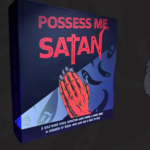
Falling Whale’s campaign for social deduction game Possess Me, Satan runs for another 30 days, and has currently raised just over $14,000 from about 250 backers.
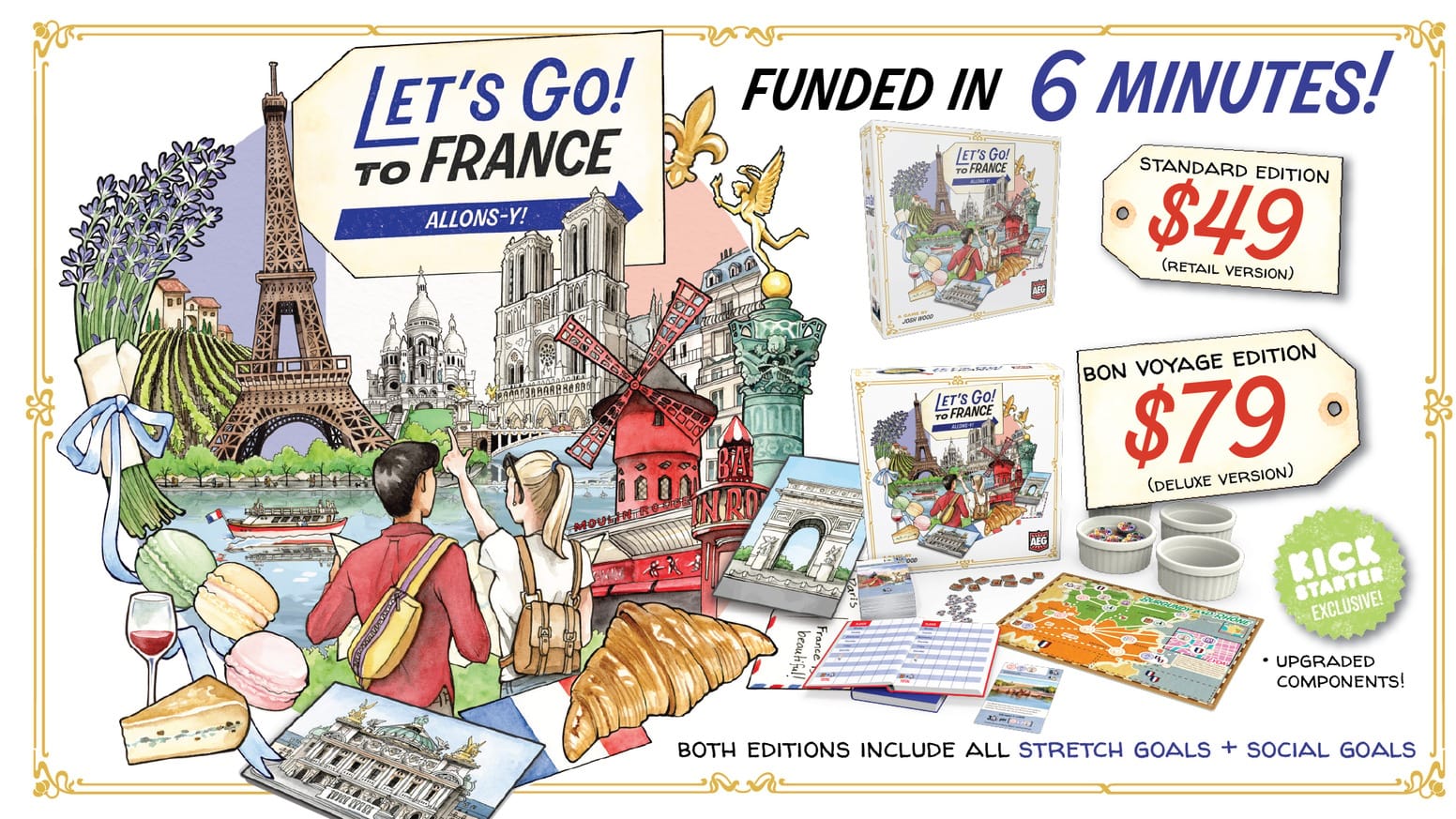
Alderac Entertainment Group (AEG) hat am 19. Mai 2026 die Kickstarter-Kampagne zum BrettspielLet's Go! To France gestartet — den direkten Nachfolger zu Let's Go! To Japan, das im DACH-Raum bei Schwerkraft Verlag als „Auf nach Japan!" erschienen ist. Innerhalb weniger Stunden hat das Projekt sein Funding-Ziel von 10.000 US-Dollar um mehr als das Zehnfache überschritten; zum Zeitpunkt dieses Beitrags stehen rund 101.000 US-Dollar von über 1.000 Unterstützenden zu Buche, die Laufzeit reicht noch bis zum 20. Juni 2026.
Eine deutsche Ausgabe ist bisher nicht bestätigt. Da Schwerkraft Verlag den Vorgänger im DACH-Raum übernommen hat, läge ein erneutes Engagement nahe — gesicherte Aussagen dazu liegen aber weder von AEG noch von Schwerkraft vor. Wer eine deutschsprachige Box möchte, sollte das im Hinterkopf behalten, bevor er die englische Kickstarter-Ausgabe pledged.
Worum es geht: „Let's Go! To France" als Karten-Reiseplaner durch Frankreich
Let's Go! To France ist ein Karten- und Reiseplanungsspiel von Alderac Entertainment Group für 1–4 Spielende, Design: Josh Wood, Illustration: Erica Ward. Sie planen eine sechstägige Reise durch eine von vier Regionen Frankreichs und draften aus über hundert Aktionskarten Ihre Tagesaktivitäten. Spielzeit: 45–60 Minuten, ab 10 Jahren.
Let's Go! To France ist ein Karten- und Reiseplanungsspiel für 1 bis 4 Spielende, eine Partie dauert laut Verlag und BGG-Eintrag 45 bis 60 Minuten (eine erste Runde mit Regelerklärung fällt erfahrungsgemäß länger aus, am Familientisch mit Erstspielenden sollten Sie eher 60 bis 90 Minuten einplanen — der Vorgänger liegt im selben Erfahrungsfenster), empfohlen ab 10 Jahren. Designer ist erneut Josh Wood, die Illustrationen stammen von Erica Ward, die schon den Vorgänger künstlerisch geprägt hat.
Mechanisch baut die Frankreich-Variante auf dem Gerüst von Japan auf, weitet es aber spürbar: Statt wie im Vorgänger einen siebentägigen Trip nach Tokio und Kyoto zu planen, bauen Sie nun eine sechs Tage lange Reise durch eine von vier Regionen Frankreichs zusammen — laut Verlagsbeschreibung zwischen Paris, der Côte d'Azur und den Loire-Schlössern. Aus mehr als hundert illustrierten Aktionskarten draften Sie pro Runde Optionen, weisen sie strategisch Tagen Ihrer Reiseroute zu und versuchen am Ende, durch passende Tag-Kombinationen, Tag-Synergien und Set-Sammlung möglichst viele Punkte zu erzielen. Der Rundenablauf bleibt damit fokussiert: gleichzeitig draften, einer Spalte des Reiseplans zuweisen, weiter — die Endwertung kommt in einer letzten Runde, in der die geplante Reise „durchgespielt" wird.
Der BGG-Eintrag zu Let's Go! To France listet als Mechaniken Closed Drafting (also Karten aus einer offenen Auslage wählen, was Mitspielende ihrerseits nicht mehr greifen können), Hand Management, Multi-Use Cards, Set Collection, Melding and Splaying (Karten gezielt auslegen und gestaffelt überlappen), End Game Bonuses, Storytelling sowie — neu gegenüber dem Vorgänger — Area Movement und Multiple Maps. Die „Area Movement"-Mechanik dürfte sich konkret auf die unterschiedlichen Frankreich-Regionen beziehen, die in einer Partie bereist werden können; in den Stretch- und Add-on-Listen tauchen unter anderem zwei zusätzliche Karten („Belgium and Burgundy") auf, die das Reisegebiet noch einmal erweitern. Ob die vier Regionen jeweils echte Routen-Trade-offs schaffen oder eher „derselbe Reiseplaner in neuem Setting" sind, lässt sich aus der Kampagnenseite bisher nicht abschließend beantworten — ein Punkt, den der Live-Test zeigen muss.
Wie viel Interaktion am Tisch entsteht? Das Hauptbindeglied ist das Closed Drafting: Was Sie aus der gemeinsamen Auslage ziehen, fehlt den anderen, und umgekehrt — also moderate, indirekte Konkurrenz statt direkter Konfrontation. Die Punktewertung erfolgt überwiegend am eigenen Reiseplan (Set-Sammlung, End-Game-Boni, „Storytelling"-Synergien laut BGG-Tags), was darauf deutet, dass mehrere Punktewege parallel offenstehen. Eine ausformulierte Beschreibung der Interaktion oder der Skalierung über zwei, drei, vier (oder mit Add-on fünf) Spielende fehlt auf der Kampagnenseite — das benennen wir explizit, da der Vorgänger laut BGG-Community zu dritt besonders gut funktioniert, sich aber sowohl im Duell als auch im Solo-Modus gespielt hat.
Ein Solo-Modus ist im BGG-Eintrag als „Solo / Solitaire Game" verzeichnet — er dürfte mechanisch dem etablierten Solo-Modus aus Let's Go! To Japan nahekommen, eine ausformulierte Beschreibung liefert die Kampagnenseite (bisher) aber nicht. Wie die Skalierung zu zweit, zu dritt oder zu viert konkret funktioniert, kommuniziert die Kampagne textlich ebenfalls kaum, sondern vor allem über Bilder und Pledge-Listen. Auch hier gilt: Schweigen der Kampagne, nicht Schweigen unsererseits.
Komplexität: Der Vorgänger Let's Go! To Japan liegt im BGG-Community-Rating bei einem Weight von 2,25 von 5 — also klar im familienfreundlichen Bereich knapp unterhalb der Kennerspiel-Schwelle. Für Let's Go! To France ist auf BGG noch kein Weight hinterlegt (zu wenige Bewertungen); aufgrund der weitgehend übernommenen Mechanik-DNA ist ein vergleichbarer Wert plausibel, einzelne neue Schichten wie das Karten-Routing über mehrere Regionen können die Einstiegshürde aber leicht heben. Praktisch: Die Regeln sollten in etwa zehn bis fünfzehn Minuten erklärbar sein, der Einstieg über eine Demo-Runde ist üblich für diese Spielfamilie.
Sprachabhängigkeit: Die Kampagnenseite macht keine ausdrückliche Aussage zur Sprachneutralität der Karten — der Vorgänger hat thematische Aktivitätskarten mit englischem Kartennamen und kurzem Text, und die Frankreich-Box folgt erkennbar derselben Designsprache. Wer ohne deutsche Lokalisierung spielen will, sollte also Karten-Englisch akzeptieren oder die mögliche deutsche Ausgabe abwarten. Eine offizielle Bestätigung zur Card-Sprachabhängigkeit liegt nicht vor.
Kickstarter-Status: in Stunden zehnfach überzeichnet
Die Kampagne ist klassisches „Funded in Minutes"-Material: Funding-Ziel waren 10.000 US-Dollar, zum Zeitpunkt dieses Beitrags zeigt die Kickstarter-Kampagne zu Let's Go! To France rund 100.973 US-Dollar von 1.015 Backern an — das entspricht über 1.000 Prozent des Ziels. Die Plattform hat das Projekt als „Projects We Love" (Staff Pick) markiert. Wer den Cluster verfolgen möchte: bei uns gibt es weitere Kickstarter-Kampagnen auf Würfelreich.
Aktuelle Zahlen sind über die Kampagnenseite direkt abrufbar; wir haben den hier zitierten Stand am 19. Mai 2026 gezogen, wenige Stunden nach Kampagnenstart.
Der eigentliche Crossover-Hook: das „Welcome Back"-Pledge
Wer wissen will, warumdie Kickstarter-Kampagne zu Let's Go! To France in so kurzer Zeit so weit über das Ziel hinausläuft, schaut am besten auf die Pledge-Tabelle. AEG hat die Stufen klar nach Zielgruppen geschnitten:
Daydreamer (5 US-Dollar) ist ein reiner Preis-Lock: kein Spiel, nur die Garantie auf KS-Preise und Exclusives. Aktuell 114 Backer.
Sightseer (49 US-Dollar) ist die Standard-Edition — Retail-Inhalt plus Stretch-/Social-Goals der Kampagne. Mit aktuell 53 Backern auffällig dünn besetzt; das spricht dafür, dass Käufer, die nur das Grundspiel wollen, eher auf den späteren Handel warten.
Bon Voyage (79 US-Dollar, KS Exclusive) ist die aufgewertete Bon-Voyage-Edition des Grundspiels mit allen Kampagnenboni. 138 Backer.
Welcome Back (99 US-Dollar, KS Exclusive) ist der eigentliche Star: ausdrücklich für Japan-Backer geschnürt, kombiniert es die France Deluxe Edition mit der gleichzeitig laufenden Erweiterung Let's Go! BACK To Japan plus allen Stretch-/Social-Goals. Mit 577 Backern ist es das mit Abstand am stärksten gepledgte Tier — mehr als die Hälfte aller aktuellen Unterstützenden landen hier.
World Traveler (159 US-Dollar, KS Exclusive) packt die Vollausstattung obendrauf — France Bon Voyage, Japan Matsuri Edition (die deluxe Variante des Vorgängers), BACK to Japan und die Passport-Erweiterung. 127 Backer.
Redaktionell ist diese Verteilung der spannendste Befund der Kampagne: AEG bündelt mit Let's Go! BACK To Japan zugleich eine Erweiterung für den Vorgänger in die Kampagne, und die Welcome-Back-Stufe wird genau von den Spielenden gewählt, die Japan bereits besitzen und nun beides gleichzeitig nachlegen wollen — Frankreich-Premiere und Japan-Auffrischung in einer Pledge-Bestellung. Wer Japan nicht hat, kann mit Sightseer oder Bon Voyage einsteigen, ohne auf Erweiterungsinhalte zu zahlen, die mit dem Grundspiel allein nichts anzufangen wissen.
Wichtige Add-ons der Kickstarter-Kampagne
Über die Pledges hinaus listet die Kampagne unter anderem die folgenden Add-ons:
5th Player Expansion (10 US-Dollar) — erweitert die Spielerzahl auf 5.
New Maps: Belgium and Burgundy (10 US-Dollar) — zwei zusätzliche Reiseregionen; in Bon-Voyage-Stufen aufwärts bereits enthalten.
Travel Journal (15 US-Dollar) — gebundenes Notizbuch für Spielprotokolle; in Bon Voyage aufwärts ebenfalls enthalten.
Rubber Player Mats (19 US-Dollar) — Naturkautschuk-Spielmatten pro Person.
Let's Go! BACK To Japan Expansion (30 US-Dollar) — drei Module für den Vorgänger; in Welcome Back aufwärts enthalten.
Let's Go! To Japan: Matsuri Edition (79 US-Dollar) — die Deluxe-Variante des Vorgängers; in World Traveler enthalten.
Stretch- und Social-Goals: Kampagne kommuniziert visuell, Text ist dünn
Die Pflicht-Trennung zwischen mechanischen Stretch-Goals (neue Aktionskarten, zusätzliche Karten, weitere Module) und Komponenten-Upgrades (Material, Verpackung, Inserts) lässt sich aus der Kampagnenseite textlich noch nicht sauber ziehen — AEG kommuniziert die Goals primär über Grafiken im Kampagnenkörper, ohne eine fließtextliche Aufschlüsselung in den Pledges. Konkret in den Pledge-Beschreibungen genannt sind die Add-on-Karten Belgium and Burgundy (Spielinhalt) und die 5th Player Expansion (Spielinhalt), während Items wie Rubber Player Mats und das Travel Journal klar als Komponenten-Upgrades einzuordnen sind.
Wir kennzeichnen das ausdrücklich als Lücke und werden in einer Update-Runde nachziehen, sobald AEG eine ausformulierte Stretch-Goal-Liste mit Texttiteln nachliefert oder ein Kampagnen-Update das Mechanik-vs.-Komponente-Verhältnis explizit macht.
Einordnung: Hotness ≠ Hype
Über tausend Prozent über Ziel in wenigen Stunden ist beeindruckend, aber kein Qualitätsbeleg — Let's Go! To Japan hat sich seit 2024 mit über 7.500 BGG-Bewertungen und einem Durchschnitt von 7,58 / 10 ein robustes Echo erspielt, und die Frankreich-Variante übernimmt vom selben Designer und derselben Illustratorin den bewährten Grundrahmen. Das ist eine glaubwürdige Ausgangslage, aber kein Vorgriff aufs Spielgefühl — eine belastbare Bewertung ist erst nach Verfügbarkeit der Regeln und Spielmuster möglich, voraussichtlich rund um die geplante Auslieferung im März 2027.
Für DACH-Leser besonders relevant: Eine deutschsprachige Ausgabe ist nicht angekündigt; Schwerkraft Verlag, der den Vorgänger lokalisiert hat (vgl. Schwerkrafts Auslieferung der deutschen Ausgabe), taucht in der Kickstarter-Kampagne bisher nicht als Partner auf. Wer auf eine deutsche Box wartet, sollte vorerst auf eine separate Ankündigung warten, bevor er pledged.

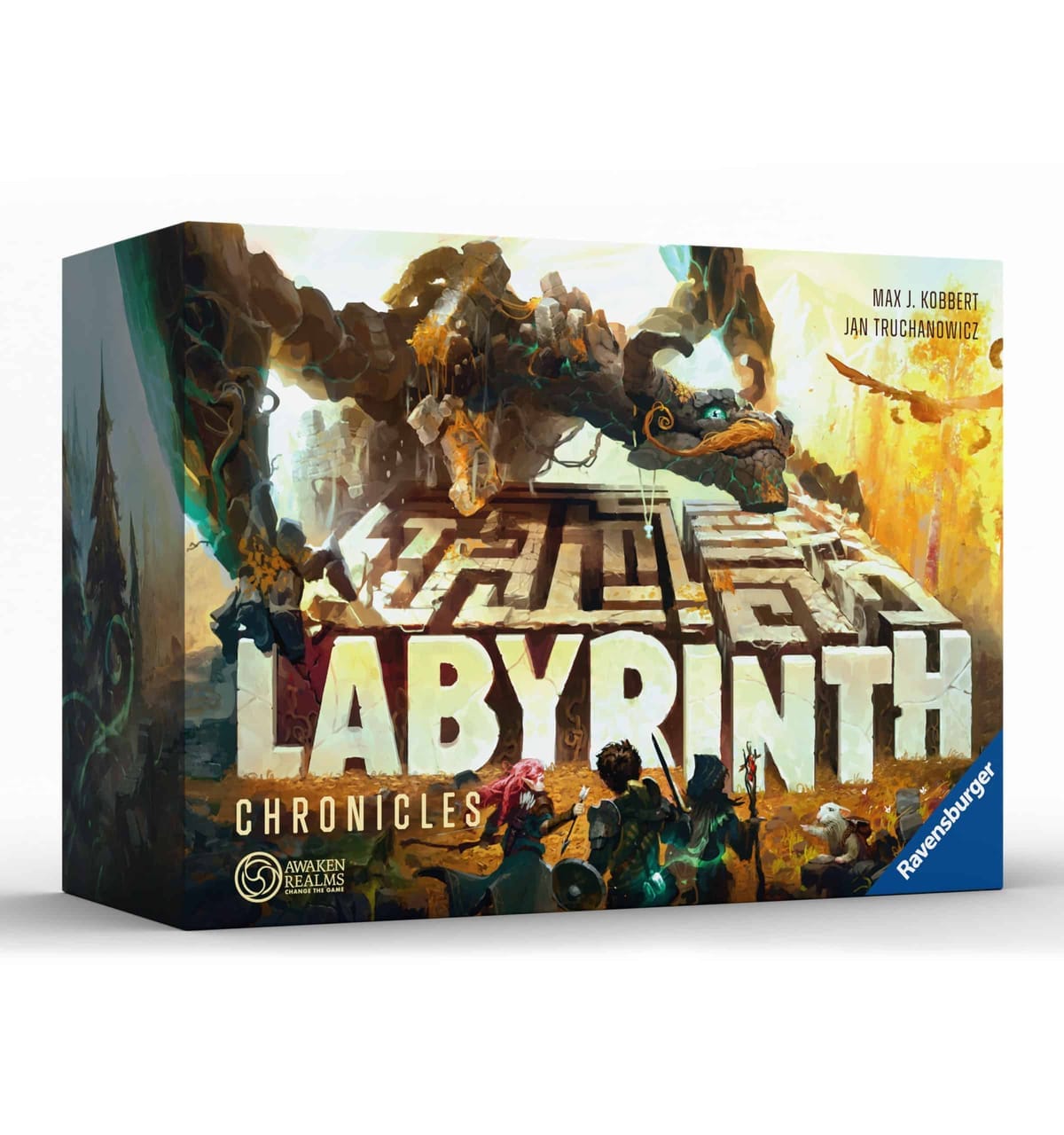
Ravensburger und Awaken Realms haben den Handelsstart für „Labyrinth: Chronicles" auf September 2026 datiert; die unverbindliche Preisempfehlung liegt laut Pressemeldung des Ravensburger-Newsrooms bei 149,00 Euro. Das kooperative Kampagnenspiel ist die Jubiläumsneuinterpretation des 1986 erschienenen Familien-Klassikers „Das verrückte Labyrinth" — über die Erstankündigung der Jubiläumsneuinterpretation hatten wir bereits im Februar 2025 berichtet — und stammt aus einer Gamefound-Kampagne, die Ravensburger zufolge über 12.000 Unterstützer mobilisiert hat. Als Designer nennt der Verlag Max J. Kobbert, den Schöpfer des Originals, sowie Jan Truchanowicz für Awaken Realms.
Vom Schiebepuzzle zum Koop-Kampagnenspiel
Wer das Original kennt, erkennt die Grundzutat sofort: Reihum schiebt eine Person eine überzählige Gangkarte in den Spielplan, wodurch sich Korridore verschieben und neue Wege entstehen — oder versperrt werden. Diesen Schiebemechanismus übernimmt „Chronicles" laut Spielbeschreibung auf BoardGameGeek, koppelt ihn aber an einen kooperativen Spielmodus. Statt um die Wette Schätze einzusammeln, organisieren zwei bis vier Spielende gemeinsam die Versorgung eines Feendorfs und müssen den im Labyrinth lauernden Kobolden zuvorkommen.
Dazu kommt ein fortlaufendes Kampagnenformat. Die Verlagsbeschreibung spricht von Dorfwiederaufbau, neuen Fähigkeiten und neuen Charakteren über mehrere Partien hinweg. Vom Format her bedeutet das mehrere zusammenhängende Spielabende mit Fortschritt — eine „Legacy"-Mechanik mit zerstörbaren oder permanent veränderten Komponenten kommuniziert der Verlag dabei nicht. Eine Auflistung einzelner Kapitelinhalte gibt es in der jetzt veröffentlichten Pressemeldung ebenfalls nicht; Awaken Realms hält die konkreten Kampagnen-Beats bislang zurück.
3D-Spielplan: physische Mauern statt Pappe
Das visuelle Hauptverkaufsargument sitzt auf dem Tisch: Statt eines flachen Pappspielplans liefert „Labyrinth: Chronicles" einen 3D-Aufbau mit physischen Mauerelementen. Die Pressemeldung nennt diesen Aufbau als zentrales Komponentenmerkmal, ohne genauere Materialangaben. Das passt zum Profil von Awaken Realms, deren Titel „Nemesis", „This War of Mine: The Board Game" und „ISS Vanguard" für komponentenintensive Produktionen bekannt sind. Mechanisch bewegt sich „Labyrinth: Chronicles" allerdings deutlich unter diesen Heavy-Koop-Titeln (BGG-Komplexitätswerte um 3,3–3,5) — die Komponenten-DNA des Studios trifft hier auf ein Familienspiel-Plus-Format. Für Käufer:innen, die den Klassiker im 30-Euro-Segment im Regal haben, ist das ein deutlicher Sprung nach oben — in Bauumfang ebenso wie im Preis.
Spielerzahl, Alter, Spieldauer — und die offene Solo-Frage
Die Pressemeldung listet zwei bis vier Spielende und eine Altersempfehlung ab neun Jahren. Der BoardGameGeek-Eintrag setzt das Mindestalter mit acht Jahren ein Jahr niedriger an; wer das Spiel für jüngere Mitspielende plant, sollte sich an Ravensburgers offizieller Freigabe orientieren. Eine Spieldauer kommuniziert der Verlag in der Pressemeldung nicht — laut BoardGameGeek liegt eine Partie zwischen 20 und 60 Minuten. Diese Spannweite stammt aus früher Community-Schätzung; Kampagnen-Sessions mit Dorf-Wiederaufbau und neuen Charakteren dürften eher am oberen Rand liegen.
Auch beim Solo-Modus schweigt Ravensburger. „Labyrinth: Chronicles" wird offiziell als Titel für zwei bis vier Spielende beworben; ein dedizierter Einzelspieler-Modus ist nicht Teil der Verlagskommunikation. Die BoardGameGeek-Community deutet in ihrer Spieleranzahl-Umfrage an, dass sich der Titel solo spielen lässt — die Stichprobe ist allerdings klein und kein Verlagsversprechen. Solist:innen sollten vor dem Kauf prüfen, ob ihnen das Steuern mehrerer Charaktere im kooperativen Modus genügt.
Für die Illustrationen verantwortet Awaken Realms ein vierköpfiges Team um Jakub Dzikowski, Patryk Jędraszek, Ewa Labak und Pamela Łuniewska. BGG schätzt die Komplexität auf 1,80 von 5 ein — das liegt im Familienspiel-Plus-Bereich (zum Vergleich: Carcassonne 1,92, Catan 2,32) und damit unterhalb der klassischen Kennerspiel-Schwelle. Mit Blick auf die Kampagnen-Schichten (Dorfwiederaufbau, neue Fähigkeiten, Charakter-Persistenz) könnte der Wert in der Praxis allerdings eher die Untergrenze als der Median sein, und die BGG-Stichprobe ist für einen September-Titel noch dünn.
Für die Illustrationen verantwortet Awaken Realms ein vierköpfiges Team um Jakub Dzikowski, Patryk Jędraszek, Ewa Labak und Pamela Łuniewska.
Crowdfunding-Erbe: Gamefound-Kampagne und 149 € UVP
Die Gamefound-Kampagne hatten wir im Februar 2026 ausführlich begleitet; sie ist abgeschlossen und laut Pressemeldung mit über 12.000 Unterstützern unterzeichnet. Eine öffentlich nachvollziehbare Auflistung der erreichten Stretch Goals — insbesondere die Trennung zwischen Mechanik-Inhalten wie Zusatzszenarien oder neuen Charakteren auf der einen und Komponenten-Upgrades wie Miniaturen oder Spielmatten auf der anderen Seite — kommuniziert Ravensburger in der jetzt veröffentlichten Pressemeldung nicht; die Gamefound-Kampagnenseite ist zum Redaktionsschluss nicht öffentlich abrufbar. Wer in der Gamefound-Phase nicht dabei war und auf bestimmte Stretch-Goal-Inhalte hofft, sollte die Verpackung im Handel prüfen — bei Awaken-Realms-Titeln unterscheiden sich Crowdfunding- und Retail-Editionen häufig in Komponenten- und Miniaturen-Umfang.
Mit 149 Euro UVP ordnet sich „Labyrinth: Chronicles" deutlich über den rund 30 Euro für den klassischen Familienkracher ein, bleibt aber im üblichen Preissegment für Awaken-Realms-Boxen. Das klassische „Das verrückte Labyrinth" ersetzt die Neuauflage dabei nicht — sie zielt auf einen anderen Abend: längeres Commitment, kooperatives Kampagnenformat statt klassische Sammelpartie. Eine spielerische Einordnung dieses Aufschlags ist ohne Hands-on nicht zu leisten — wir kommen im September darauf zurück.
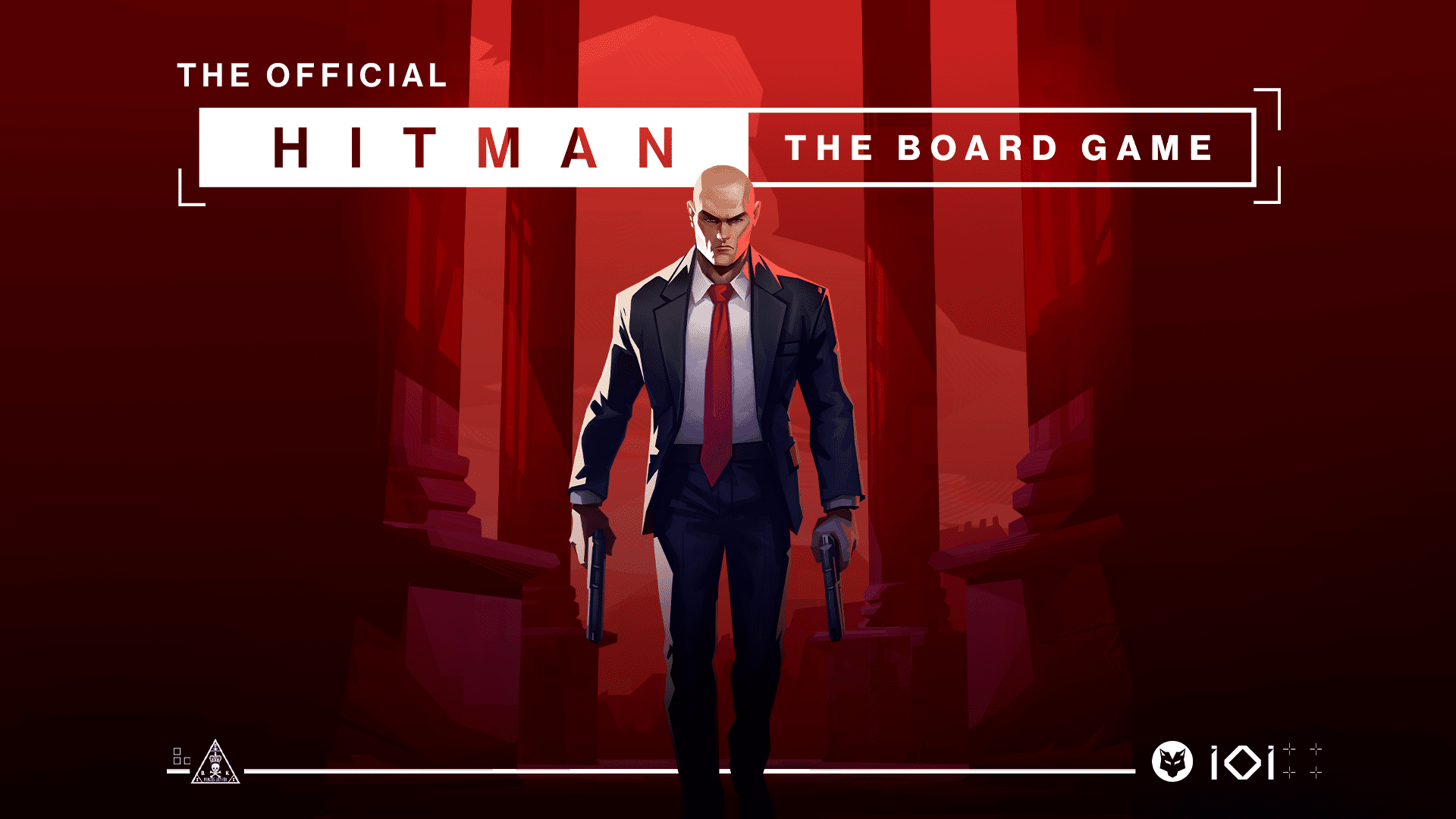
Agent 47 verlässt den Bildschirm. Das dänische Studio MOOD Publishing bringt die Stealth-Action-Reihe von IO Interactive als kompetitives Brettspiel auf den Tisch — und sammelt auf Gamefound deutlich mehr Geld ein als geplant. Stand 19. Mai 2026 stehen 672.894 Euro auf dem Konto, rund 673 Prozent des Finanzierungsziels von 100.000 Euro. 3.093 Unterstützerinnen und Unterstützer haben bislang gepledged. Die Kampagne läuft noch bis zum 28. Mai 2026, 16:00 Uhr MESZ — also gut neun Tage.
Worum geht's bei Hitman: The Board Game?
In Hitman: The Board Game schlüpfen 1 bis 4 Spielende in die Rolle internationaler Auftragskillerinnen und -killer, die um denselben Vertrag konkurrieren. Sie reisen zwischen exotischen Schauplätzen, infiltrieren Anwesen und Veranstaltungen und versuchen, hochkarätige Ziele auszuschalten — bevor die Konkurrenz am Tisch zuschlägt.
Die Kernschleife greift eine Stilfrage auf, die schon das Videospiel prägt: lautes Vorgehen mit der Schusswaffe (vom Hersteller „guns blazing" genannt) oder die leise Variante im Stil eines „Silent Assassin". Mitspielende dürfen sabotieren, Ziele wegschnappen und den finalen Treffer setzen — das Spiel ist also explizit konflikthaltig und nicht kooperativ. Eine Partie dauert laut MOOD Publishing rund 60 Minuten, das Mindestalter liegt bei 12 Jahren.
Wie sich diese Stilfrage am Tisch konkret in Aktionen übersetzt, hält die Kampagne erstaunlich knapp: MOOD Publishing nennt die genaue Aktionsökonomie (also was eine Spielerin pro Zug machen darf), die Zugstruktur und das Auflösungssystem auf der Gamefound-Hauptseite bislang nicht im Detail. Aus der Komponentenliste lässt sich ableiten, dass Hitman: The Board Game karten- und tableau-getrieben ist: Spielende erhalten Agent Cards (vermutlich mit individuellen Profilen, denn die Kampagne schaltet im Verlauf wiederholt neue Special Agent Card Packs frei), Aufträge werden über Target Briefs und Map Event Cards in Schauplätzen mit Raum-Tiles inszeniert, dazu kommen Opportunity Cards, Weapon Cards und zusätzliche Unorthodox Tools. Das deutet auf ein asymmetrisches, karten- und ortsbasiertes Konfliktspiel hin — die konkrete Mechanik bestätigt MOOD aber bisher nicht in Textform. Zum Solo-Modus für eine Person macht der Verlag auf der Hauptseite ebenfalls keine Detailangaben; ob er als Score-Run, Automa oder Solo-Kampagne läuft, bleibt bis zum Pledge-Manager (ein Online-Formular, in dem Sie nach Kampagnenende Ihren Pledge bestätigen, Versand bezahlen und Add-ons anpassen) oder zum ersten Rezensionsexemplar offen.
Was das Spiel auf dem Tisch tatsächlich leistet, lässt sich heute nicht beurteilen. Es liegt kein Rezensionsexemplar vor, ein BoardGameGeek-Eintrag mit Bewertungen existiert mangels Druck nicht. Wir bewerten hier Konzept, Studio und Funding — nicht das Spielgefühl.
Was steckt im Karton?
MOOD Publishing bietet sieben Pledge-Stufen an (Preise in Euro, Versand kommt im Pledge-Manager dazu):
Base Game — 60 € (UVP 70 €). Das Grundspiel inklusive aller freigeschalteten Karten-Stretch-Goals.
All Gameplay — 125 € (UVP 145 €). Sämtliche Gameplay-Erweiterungen, jedoch ohne Komponenten-Upgrades wie Standees oder Miniaturen.
All Gameplay – Acrylic Standees Edition — 200 € (UVP 235 €). Wie All Gameplay plus Acryl-Standees als Spielfiguren.
All Gameplay – Miniatures Edition — 220 € (UVP 260 €). Mit voll plastischen Miniaturen.
All-In Acrylic Standees — 315 € (UVP 400 €). Alle Inhalte plus Acryl-Standees und sämtliche Komponenten-Upgrades.
All-In Miniatures — 335 € (UVP 425 €). Die Vollausstattung mit Miniaturen.
Retailer Pledge — 100 €, nur für verifizierte Händlerinnen und Händler.
Wer das Spiel rein als Spielerlebnis kaufen will, kommt mit dem Base Game oder dem All Gameplay-Pledge aus. Die All-In-Stufen lohnen sich für Sammlerinnen und Sammler, die Wert auf Miniaturen, Acryl oder die enthaltenen Box-Aufwertungen legen. Bei einem Spiel ohne Hands-on-Eindrücke ist jeder Pledge oberhalb der Einstiegsstufe ein Vertrauensvorschuss in das Studio.
Stretch Goals und David Bateson
Stretch Goals sind Bonus-Inhalte, die freigeschaltet werden, sobald die Kampagne bestimmte Geldmarken oder Zeitpunkte erreicht. Die Funding-Stufen bis 600.000 Euro sind durch. Sortiert nach Wirkung am Tisch:
Mechanische Inhalte (verändern, was im Spiel passiert):
Personal Restrictions (zwei Karten-Packs) — laut Gamefound „eine extra Herausforderung pro Spieler", also vermutlich individuelle Sonderauflagen pro Auftrag.
Smuggled Items (zwei Packs) — Start-Perks, mit denen Spielende in die Partie gehen.
Vier Unorthodox Packs — zusätzliche „kreative" Werkzeuge und Waffen, also Karten für die Action-/Inventarseite.
Easter-Egg-Karten in zwei Varianten (Opportunity- und Map-Event-Karten) — Erweiterungen der vorhandenen Karten-Decks.
Extra Agent Cards, Special Agent Card Pack und Special Agent Cards Pack 2 — zusätzliche Spieler-Charaktere mit eigenen Profilen.
Extra Target Event Cards Pack, Map Event Card Pack und Extra ICA Cards — mehr Aufträge, Map-Events und Ausrüstung.
Make-Your-Own Target Kit — Blanko-Karten, Raum-Tiles und Standees für selbstgebaute Aufträge.
Komponenten-Upgrades und Boni (verschönern oder erleichtern das Spiel):
Doppellagige Spielertableaus.
Neue Waffenkarten-Artworks (Re-Skin der Duplikat-Karten).
Brief Holder — Aufsteller, um Location- und Target-Briefs aufrecht auf dem Tisch zu platzieren.
Score Sheet mit Achievement-Stickern für Eliminationen.
Printable Tutorial Map — Druckvorlage für eine geführte Einsteigerpartie.
Offen ist das prominenteste Ziel: Ab 700.000 Euro signiert David Bateson, die englische Originalstimme von Agent 47, jede Gold Baller Collectors Card — allerdings nur in den All-In-Pledges. Zum Stand 19. Mai fehlen dafür rund 27.000 Euro. Hinzu kommen drei Mystery Unlocks an den Kampagnentagen 20, 23 und 25, also zwischen 20. und 25. Mai.
Einordnung: Wer ist MOOD Publishing?
Hinter dem Projekt steht MOOD Publishing Aps mit Sitz in Dänemark. Wer das Spiel konkret designt hat, kommuniziert MOOD auf der Gamefound-Hauptseite öffentlich nicht namentlich — eine Designer- oder Autorenzeile fehlt in den dort sichtbaren Projektdaten. Bei einer Lizenz-Adaption in dieser Größenordnung ist das eine Lücke, keine Nebensache; ob ein In-House-Team, eine externe Autorin oder ein etablierter Designer hinter dem System steht, wird der Pledge-Manager oder das erste Update klären müssen.
Eine belastbare Liefer-Bilanz für eine Produktion in dieser Größenordnung lässt sich aus öffentlich zugänglichen Quellen heute nicht abschließend ableiten. Crowdfunding-typische Verzögerungen sind möglich — Brettspielprojekte mit Lizenzbindung und vollständiger Miniatur-Produktion treffen erfahrungsgemäß auf längere Lieferzeitfenster, als die Kampagne ursprünglich verspricht. Ein verbindliches Auslieferungsdatum nennt die Kampagnen-Hauptseite nicht prominent; Pledge-Manager und spätere Update-Kommunikation des Verlags werden hier ausschlaggebend sein.
Versandkosten erhebt der Verlag nach Kampagnenende im Pledge-Manager. Details zu DACH-Versandstaffeln finden Unterstützerinnen und Unterstützer dort, nicht auf der Hauptseite.
Fazit: Für wen lohnt sich der Pledge?
Hitman: The Board Game spricht zwei Zielgruppen klar an. Erstens: Fans der Videospielreihe, die Agent 47 nun gegen Freundinnen und Freunde am Tisch verkörpern wollen. Zweitens: Spielende, die kompetitive Konflikt-Brettspiele in der 60-Minuten-Klasse mögen, in denen Mitspielende einander aktiv das Wasser abgraben dürfen. Wer Koop-Erlebnisse oder ruhiges Tableau-Building sucht, ist hier falsch.
Vor einer 60-Euro-Entscheidung gilt der übliche Crowdfunding-Hinweis: Ein Pledge ist ein Versprechen, kein Kauf. Solange kein Rezensionsexemplar vorliegt, beurteilen wir Konzept, Studio und Funding — nicht das Spielgefühl. Wer das aushält, findet hier eine der größten Lizenz-Adaptionen des Jahres auf Gamefound.
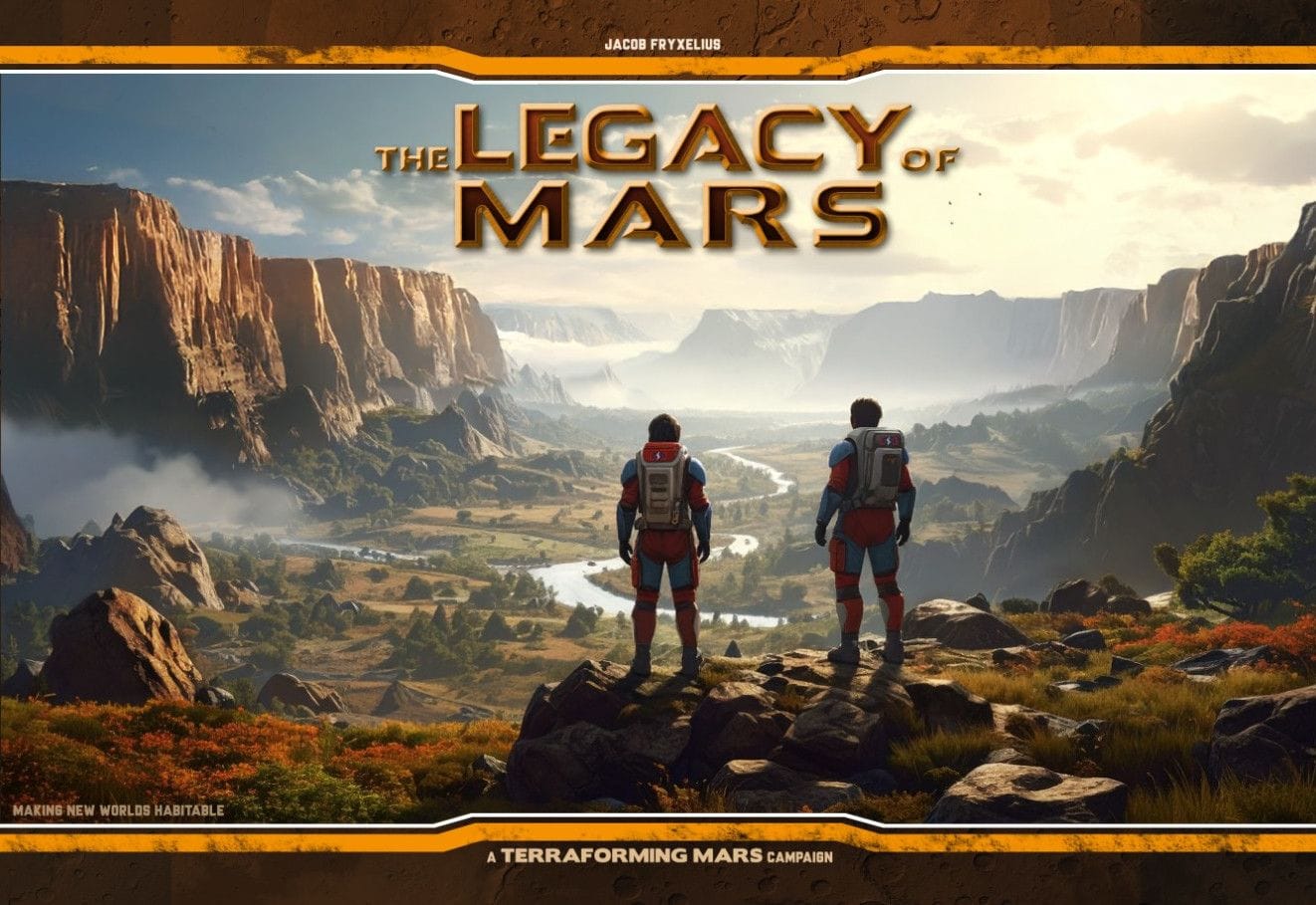
Jacob Fryxelius dreht das Terraforming-Mars-Universum auf Kampagnenformat: The Legacy of Mars soll 2027 bei FryxGames erscheinen und tauscht die einzelne Partie gegen eine Mission-zu-Mission-Erzählung. Die Crowdfunding-Kampagne läuft auf Gamefound, das Spiel rangiert seit Tagen weit oben in der BGG-Hotness.
Worum geht's?
Statt eines abgeschlossenen Spielabends erwartet die Spielenden eine Kette aus Missionen, in denen unterschiedliche Planeten und neue Seiten des Mars terraformt werden. Wer eine Mission gewinnt, wird zum Gouverneur dieses Planeten – mit Zusatzpunkten für das finale Szenario, das den Gesamtsieger ermittelt. Mechanisch baut Fryxelius auf der bekannten Terraforming-Mars-Engine auf und ergänzt sie um Bevölkerung, Arbeiter, schmelzende Gletscher und einen wachsenden Pool an Innovations- und Entwicklungskarten. Jede Mission spielt mit neuen Parametern und einem eigenen Kartenpool – laut Designer „im Grunde mehrere Spiele in einer Schachtel".
Schnellfakten
Designer: Jacob Fryxelius
Illustration: Isaac Fryxelius
Verlag: FryxGames
Erscheinungsjahr: 2027 (Crowdfunding auf Gamefound)
Spielerzahl: 1–5 (inklusive Solo-Modus)
Spielzeit: 150–300 Minuten pro Mission
Altersempfehlung: ab 12 Jahren
Mechaniken: Kampagnen-/Szenariospiel, Closed Drafting, Handmanagement, Plättchenlegen, variable Spielerfähigkeiten, Solo
DACH-Relevanz
Die deutschsprachigen Ausgaben der Terraforming-Mars-Reihe betreut traditionell der Schwerkraft-Verlag. Eine offizielle deutsche Lokalisierung von The Legacy of Mars ist bislang nicht angekündigt – sollte FryxGames den eingespielten Weg gehen, ist Schwerkraft die naheliegende Adresse. Backerinnen und Backer aus dem DACH-Raum sollten bei der Gamefound-Kampagne genau auf den späteren deutschen Vertrieb achten.
Unsere Einschätzung
Ein Kampagnenformat auf Terraforming-Mars-Basis ist nach Ares Expedition und der jüngst angekündigten Terraforming Mars: The Big Box der nächste logische Schritt – und gleichzeitig der riskanteste. Die durchschnittliche BGG-Wertung von 4,7 spiegelt vor allem Crowdfunding-Skepsis und sehr wenige tatsächliche Stimmen wider; aussagekräftiger ist die Wunschlisten-Zahl. Wir verfolgen die Kampagne weiter und schauen besonders auf die Frage, ob die Missionen narrativ tragen oder am Ende doch nur Setup-Variationen bleiben.
Angekündigt: Neu: Updates: ANGEKÜNDIGT In der kommenden Woche im Crowdfunding: Wenige Projekte sind angekündigt. Hier der Überblick über die kommende Woche: Fall Dawn Fall Dawn steht in den Startlöchern auf Gamefound und wird am 19. Mai online gehen. Fall Dawn ist ein kompetitives Dungeon-Crawler-Kartenspiel, das Erkundung, Figurenentwicklung und Bluff miteinander verbindet. Wir spielen wandernde Überlebende, […]
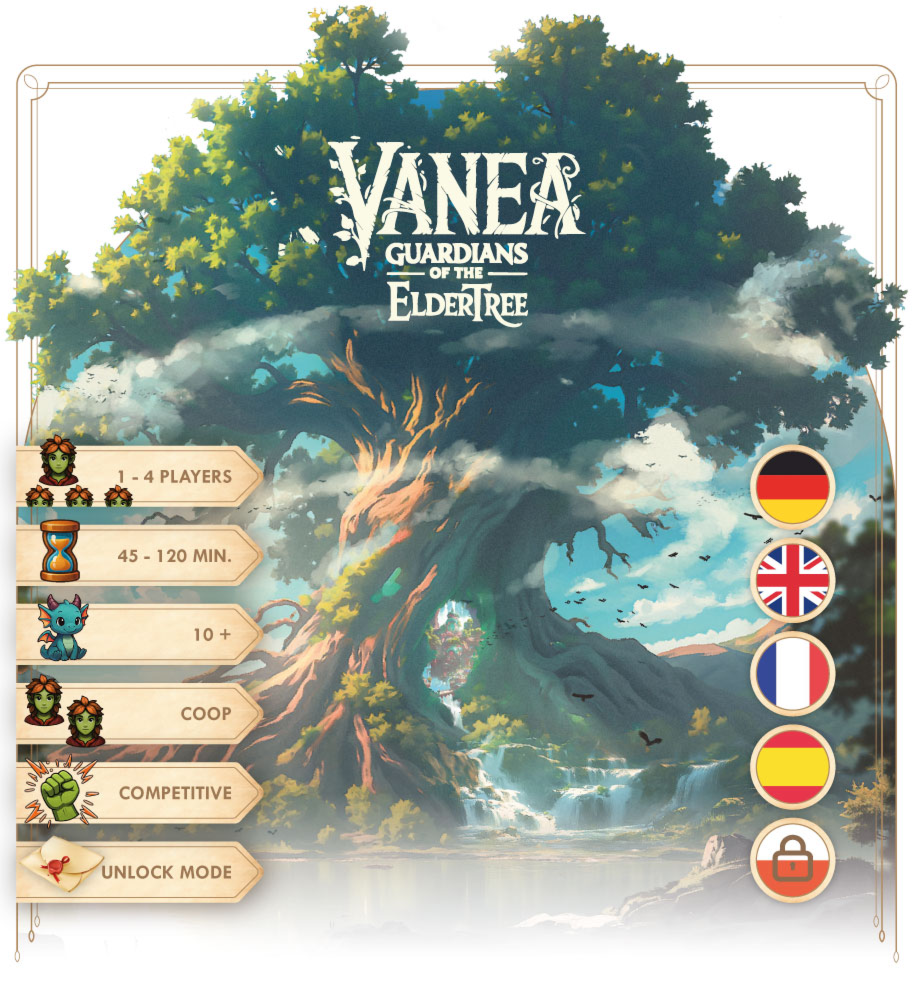
VANEA: Guardians of the Eldertree ist seit dem 12. Mai 2026 als Relaunch-Kampagne auf Gamefound finanzierbar. Der Düsseldorfer Verlag Forgotten Tales um Florian Molzahn sammelt bis zum 1. Juni 2026 für sein kooperatives Fantasy-Brettspiel mit Tower-Defense-, Erkundungs- und Würfelmechaniken. Das Finanzierungsziel liegt bei 59.000 Euro, am Starttag stehen rund 6.000 Euro von 32 Unterstützenden zu Buche. Das Spiel ist für eine bis vier Personen ab zehn Jahren ausgelegt, eine Partie dauert rund 90 Minuten.
Spielprinzip: Wächter, Elementarmagie und ein verseuchter Wald
Schauplatz von VANEA ist der Elderforest, eine märchenhafte Welt rund um einen mystischen Baum. Als Wächter verteidigst du den Elder Tree gegen Monster, Bosse und die sich ausbreitende „Darkmoon Rot". Im Spielverlauf erkundest du den Wald, sammelst sechs verschiedene Elementarorbs, um die zugehörigen Mächte zu meistern, und schmiedest aus Erzen mächtige Ausrüstung. Magische Orbs schalten neue Fähigkeiten frei, dazu kommt ein elementarer Begleiter pro Wächter.
Das Spiel unterstützt drei Modi: kooperativ gegen das Spiel, kompetitiv gegeneinander oder im Team. Forgotten Tales betont eine hohe Wiederspielbarkeit durch unterschiedliche Wächter, prozedural variierende Monsterjagden und freischaltbare Karten.
Die Erweiterung „Earth Phoenix" ist ab dem Gameplay-Pledge enthalten. Bildquelle: Forgotten Tales / Gamefound
VANEA-Pledges, Erweiterung und Stretch Goals im Überblick
Die Gamefound-Kampagne bietet vier Hauptstufen mit unterschiedlichem Materialumfang:
Pledge
Kampagnenpreis
UVP
Umfang
Core Game
69 €
85 €
Grundspiel mit Pappstandees
Gameplay
94 €
115 €
Core Game plus Erweiterung „Earth Phoenix"
Gameplay deluxe
134 €
180 €
Gameplay plus 65 Premium-Acrylstandees, 200 Holztokens und 42 3D-Edelsteine
VANEA All-in
189 €
270 €
Gameplay deluxe plus Miniaturen-Box mit Wächter- und Elementarbegleiter-Figuren sowie vier Twin-Bases
Das All-in-Pledge enthält alle Premium-Komponenten inklusive Miniaturen-Box. Bildquelle: Forgotten Tales / Gamefound
Wer einzelne Bestandteile separat hinzufügen will, findet im Pledge-Manager die üblichen Add-ons, darunter den Elder-Tree-Miniature inklusive vier Portalen für 25 Euro und Sprachpakete für Französisch oder Spanisch.
Bei den Stretch Goals greift Forgotten Tales auf eine Treppe ab 70.000 Euro zurück. Geplant sind unter anderem ein neues Loot-Monster per Community-Voting, zusätzliche Elder-Tree- und Fusionskarten, zwei neue Event-Felder mit x2-Effekt sowie eine neue Region ab 150.000 Euro. Ein Double-Layer-Upgrade für den Gameround- und Rot-Tracker schaltet sich bei 130.000 Euro frei. Die Kampagne auf Gamefound läuft noch knapp drei Wochen.
Die Backerkit-Kampagne von Renegade Game Studios für Dungeon Crawler Carl hat die Marke von 10 Millionen US-Dollar überschritten. Das Doppelprojekt aus dem skillbasierten Rollenspiel und dem Card-Crafting-Deckbuilder Unstoppable ist damit die am höchsten finanzierte Spiele-Kampagne in der Geschichte von Backerkit. Mehr als 40.000 Unterstützer haben das ursprüngliche Finanzierungsziel von 250.000 US-Dollar um über 4.000 Prozent übertroffen. Die Crowdfunding-Kampagne läuft seit dem 14. April 2026 und endet am 15. Mai 2026.
Dungeon Crawler Carl: Vom Sub-Minute-Funding zur achtstelligen Summe
Renegade hat die Kampagne am 14. April 2026 gestartet, das Finanzierungsziel von 250.000 US-Dollar fiel in weniger als einer Minute. Bereits zum Start der Deckbuilder-Kampagne standen nach 24 Stunden über 4,5 Millionen US-Dollar von rund 18.000 Unterstützern auf dem Zähler. Über das erste Wochenende sprang der Wert auf mehr als 8 Millionen US-Dollar bei rund 34.500 Backern, kurz darauf folgte das 9-Millionen-Stretch-Goal samt Community-Vote auf eine neue Sidequest.
Am 5. Mai 2026 überschritt die Kampagne die Marke von 40.000 Unterstützern und schaltete damit eine Floor-10-Mordecai-Miniatur als Gratisbeigabe für alle physischen Tiers frei. Mit dem 10-Millionen-Dollar-Meilenstein setzt sich Dungeon Crawler Carl an die Spitze der Backerkit-Bestenliste für Spiele-Kampagnen und reiht sich zugleich unter den höchstfinanzierten Crowdfunding-Projekten der Plattform überhaupt ein. Auch außerhalb der Funding-Rangliste sorgte der Titel für Aufmerksamkeit: In den ersten Kampagnentagen eroberte das Spiel Platz eins der BoardGameGeek-Hotness und verwies Schwergewichte wie Arcs oder Brass: Birmingham auf hintere Ränge.
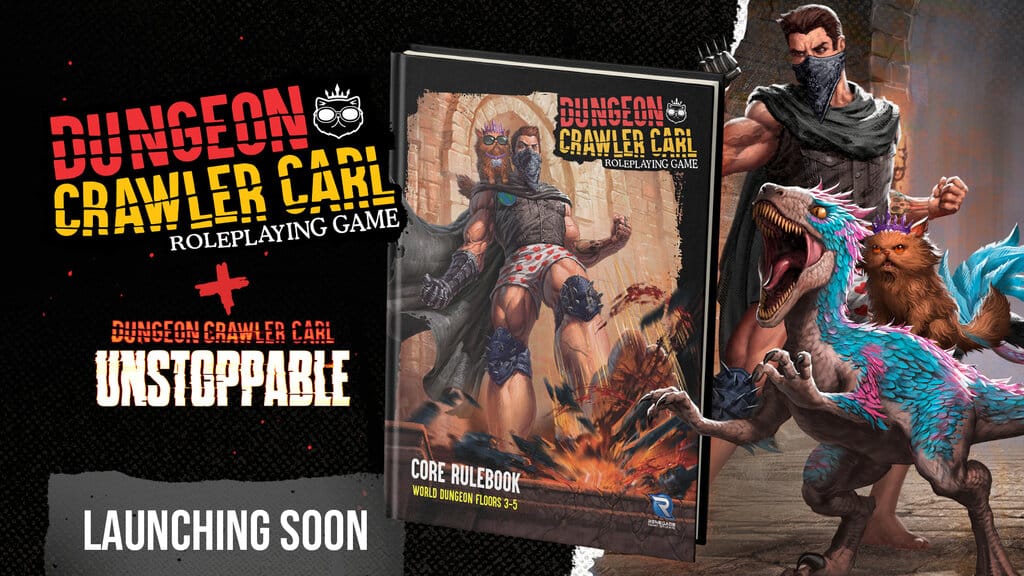
Coverartwork zu Dungeon Crawler Carl: Unstoppable – Illustration von Luciano Fleitas (Quelle: BoardGameGeek).
Die Kampagne verzeichnet damit eine Funding-Quote von mehr als 4.000 Prozent gegenüber dem ursprünglichen Ziel. Über die Pay-Over-Time-Option von Backerkit lassen sich Pledges ab 150 US-Dollar zinsfrei auf vier Monatsraten verteilen. Die Auslieferung der physischen Komponenten ist weiterhin für Oktober 2026 angesetzt, Versandkosten werden erst nach Kampagnenende über den Pledge Manager abgerechnet.
Stretch Goals, VTT-Anbindung und Ausblick für Dungeon Crawler Carl
Mit jedem Millionen-Schritt schaltet Renegade weitere Inhalte für Dungeon Crawler Carl frei, die ohne Aufpreis in den physischen Pledges landen. Auf die Mordecai-Miniatur folgten unter anderem aufgewertete Holz-Token für Unstoppable, ein digitaler PDF-Threat für das Rollenspiel, ein erweiterter Season Pass mit zehn statt sechs digitalen Content-Drops sowie freischaltbare Charakter-Journal-PDFs für alle RPG-Tiers. Die höheren Pledge-Stufen Legendary und Celestial erhalten zusätzlich kostenlose Foundry-VTT-Unterstützung und einen 10-Dollar-Gutschein für StartPlaying.Games. Damit reiht sich Foundry neben Fantasy Grounds, Roll20 und Alchemy in die Liste unterstützter virtueller Tabletop-Plattformen ein.
Inhaltlich bleibt das Doppelpaket aus skillbasiertem Tabletop-Rollenspiel und solo- beziehungsweise koop-tauglichem Deckbuilder unverändert. Beide Spiele lassen sich einzeln oder gemeinsam unterstützen. Für Unstoppable sind die Erweiterungen Crawler Chaos und The Iron Tangle über die jeweiligen Pledges abrufbar, das Rollenspiel kommt mit Starter Set, einem über 300 Seiten starken Core Book, Miniaturen-Boxen, Würfelsets, GM-Screen und Season Pass.
Mit Buch 8 der Romanreihe von Matt Dinniman, A Parade of Horribles, erscheint am 12. Mai 2026 ein neuer Band, der die Aufmerksamkeit rund um Dungeon Crawler Carl in den letzten Kampagnen-Tagen zusätzlich anheizt. Wie weit Renegade den Zähler bis zum geplanten Ende am 15. Mai 2026 noch nach oben treibt, ist offen. Sicher ist, dass das Projekt die Backerkit-Rekordliste für Spiele-Kampagnen bereits jetzt neu geschrieben hat.
Kampagnen-Eckdaten auf einen Blick: Plattform Backerkit, Verlag Renegade Game Studios, Buchvorlage Matt Dinniman, Illustration Luciano Fleitas, Kampagnenzeitraum 14. April bis 15. Mai 2026, Finanzierungsziel 250.000 US-Dollar, aktueller Stand über 10 Millionen US-Dollar bei mehr als 40.000 Unterstützern, Auslieferung Oktober 2026. Alle Details auf der Projektseite auf Backerkit.
Angekündigt: Neu: Updates: ANGEKÜNDIGT In der kommenden Woche im Crowdfunding: Wenige Projekte sind angekündigt. Hier der Überblick über die kommende Woche: Bronze Island Bronze Island ist ein Strategiespiel für 2 bis 4 Personen vor dem Hintergrund des Zusammenbruchs der Bronzezeit um 1200 v. Chr. Wir führen eine eigene Zivilisation durch eine unsichere und sich verändernde […]
Die Brettspiel-Adaption der bekannten Stealth-Action-Reihe Hitman: The Board Game läuft seit dem 30. April 2026 auf Gamefound und hat ihr Finanzierungsziel von 100.000 Euro um ein Vielfaches übertroffen. Am achten Kampagnentag stehen über 618.000 Euro von rund 2.856 Unterstützern auf dem Konto, was einer Funding-Quote von gut 618 Prozent entspricht. Hinter dem Projekt steht das dänische Studio MOOD Publishing, das die Marke um Agent 47 vom Bildschirm an den Spieltisch bringt. Bis zum 28. Mai 2026 läuft die Kampagne weiter.
Auftrag, Tarnung, Konkurrenz
Hitman: The Board Game ist als kompetitives Spiel für 1 bis 4 Personen angelegt, eine Partie dauert rund 60 Minuten. Du reist um die Welt, infiltrierst exotische Schauplätze und schaltest hochkarätige Zielpersonen aus. Anders als in der Videospielvorlage bist du dabei nicht allein: Mehrere Auftragskiller wurden auf dasselbe Ziel angesetzt und versuchen alles, um dir den entscheidenden Schuss zu vermasseln. Ob du laut vorgehst oder als „silent assassin" durch die Schatten schleichst, bleibt dir überlassen.
Der Spielablauf setzt auf Improvisation, Kreativität und Präzision. Karten für Spezialagenten, Schmuggelware und unorthodoxe Werkzeuge erweitern den Handlungsspielraum, während persönliche Beschränkungen pro Spieler eine zusätzliche Hürde liefern. Map-Event-Karten sorgen für Abwechslung auf den Schauplätzen, ein druckbares Tutorial erleichtert den Einstieg. Das Mindestalter liegt bei 12 Jahren.
Spezialagenten-Karten gehören zu den bereits freigeschalteten Stretch Goals.
Pledges, Editionen und Stretch Goals
Die Pledges beginnen bei 60 Euro für das Grundspiel. Wer den vollen Spielumfang ohne aufgewertete Komponenten möchte, greift zur Variante „All Gameplay" für 125 Euro. Die Acrylic-Standee-Edition kostet 200 Euro, die Miniaturen-Variante 220 Euro. Die beiden All-In-Pakete liegen bei 315 Euro (Acrylic Standees) beziehungsweise 335 Euro (Miniaturen) und enthalten neben dem vollen Spielinhalt sämtliche Komponenten-Upgrades.
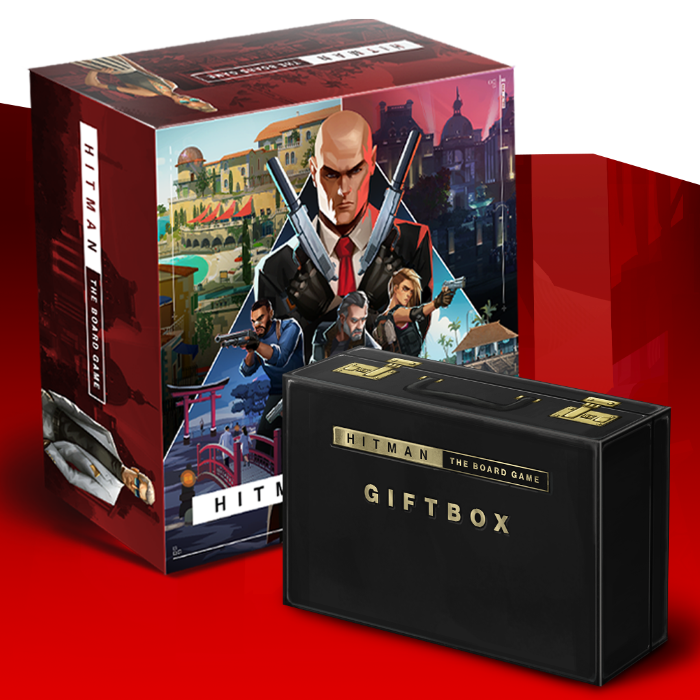
Die All-In-Miniaturen-Edition enthält alle Spielinhalte und sämtliche Komponenten-Upgrades.
Innerhalb der ersten Kampagnenwoche wurden zahlreiche Stretch Goals freigeschaltet. Dazu gehören vier Unorthodox-Tools-Packs, zusätzliche Special-Agent-Karten, ein zweites Smuggled-Items-Deck, doppelseitige Spielertableaus, Personal-Restrictions-Karten in zweiter Auflage sowie Easter-Egg-Karten. Drei „Mystery Unlocks" sind an den Kampagnentagen 11, 14 und 17 angekündigt. Weitere Funding-Schwellen ab 625.000 Euro versprechen ein drittes Special-Agent-Pack und neue Artworks für doppelte Waffenkarten.
Bezug zur digitalen Vorlage
Die Marke Hitman geht auf den dänischen Entwickler IO Interactive zurück, der mit MOOD Publishing aus dem gleichen Land stammt. Der erste Teil „Hitman: Codename 47" erschien im Jahr 2000, danach folgten „Silent Assassin" (2002), „Contracts" (2004), „Blood Money" (2006) und „Absolution" (2012). Mit der Reboot-Trilogie aus den Jahren 2016, 2018 und 2021 etablierte das Studio die Plattform „World of Assassination", die seit 2023 alle drei Episoden unter einem Dach bündelt und kontinuierlich um neue Inhalte ergänzt wird.
Die Videospielreihe ist für PC sowie für PlayStation 4 und 5, Xbox One und Xbox Series X|S verfügbar. Für die Nintendo Switch existiert eine Cloud-Version. Charakteristisch sind offene Sandbox-Levels, die zahlreiche Wege zum Ziel zulassen, vom unauffälligen Verkleidungs-Bluff bis zum offenen Schusswechsel. Genau dieses Spielprinzip überträgt MOOD Publishing nun an den Tisch.
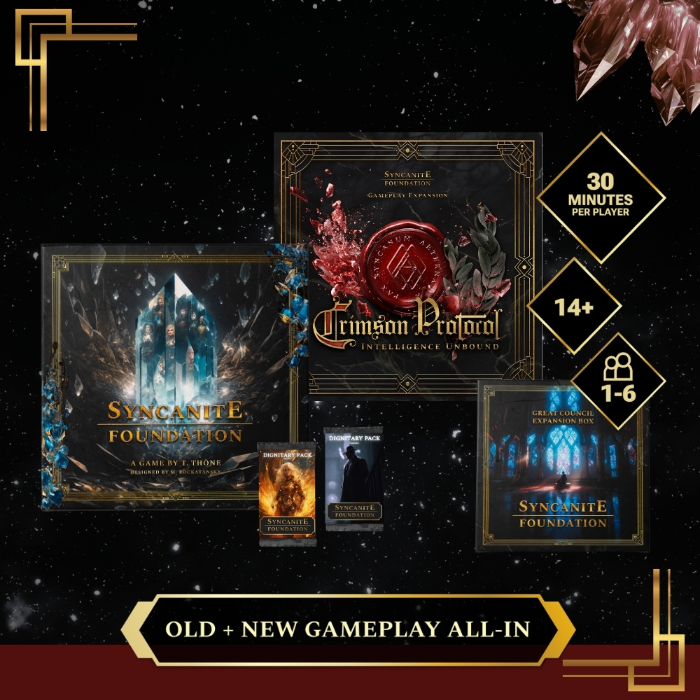
Das Dortmunder Indie-Studio Syncanite Games hat am 5. Mai 2026 die zweite Gamefound-Kampagne für das 4X-Kartenspiel Syncanite Foundation gestartet. Im Mittelpunkt steht die Erweiterung Crimson Protocol, ergänzt um einen Reprint des Grundspiels für alle, die die erste Kampagne verpasst haben. Das Finanzierungsziel liegt bei 20.000 Euro, die Kampagne läuft bis zum 31. Mai 2026.
Crimson Protocol: Inhalte der Erweiterung für Syncanite Foundation
Crimson Protocol ist die erste größere Inhaltserweiterung für Syncanite Foundation, das sich als asymmetrisches 4X-Kartenspiel mit Deduktions- und Area-Control-Elementen positioniert. Das Grundspiel ist für 1 bis 6 Spieler ausgelegt und beansprucht rund 150 Minuten Spielzeit, das empfohlene Mindestalter beträgt 14 Jahre. Die Erweiterung führt neue Mechaniken rund um das namensgebende Crimson Protocol ein und vertieft die selbsternannte „Crystal Punk"-Welt, in der politische, ökonomische und kriegerische Konflikte ausgetragen werden.
Über die rein spielerischen Inhalte hinaus erweitert Syncanite das Universum um zwei Begleitprodukte. Backer der Crimson-Protocol-Kampagne erhalten je nach Pledge Zugang zum ersten von insgesamt drei geplanten Romanen sowie zu einem Musikalbum, das in höheren Stufen auch als Vinyl ausgeliefert wird. Damit positioniert das Studio die Marke Syncanite Foundation als Multimedia-Projekt, das Spielmaterial gezielt mit Fiktion und Soundtrack ergänzt.
Der „Crimson World Builder"-Pledge bündelt Spielinhalte mit Vinyl-Album und Hardcover-Artbook.
Pledge-Stufen der Syncanite-Foundation-Kampagne im Überblick
Die Gamefound-Kampagne umfasst acht Pledge-Stufen, die sowohl Bestandsbacker als auch Neueinsteiger adressieren. Wer Syncanite Foundation bereits besitzt, steigt mit dem „Crimson Malice (Expansion All-In)" für 79 Euro ein, der ausschließlich die Erweiterungsinhalte umfasst. Die Variante „Crimson Whisperer" liefert dasselbe Paket inklusive Roman und digitalem Soundtrack für 99 Euro.
Neueinsteiger finden mit dem „Crimson Accomplice" für 139 Euro ein Einsteigerpaket aus Grundspiel und Erweiterung für 2 bis 4 Spieler. Wer das volle Erlebnis für bis zu 6 Personen sucht, greift zum „Crimson Conspirator" für 199 Euro. Die Premium-Stufen reichen über den „Crimson Puppet Master" mit Deluxe-Komponenten für 324 Euro und den „Syncane Archive Pledge" für 429 Euro bis hin zur „Council Membership" für 749 Euro, die einen lebenslangen All-In-Status sowie Zugang zu einer exklusiven Discord-Rolle und Community-Veranstaltungen umfasst.
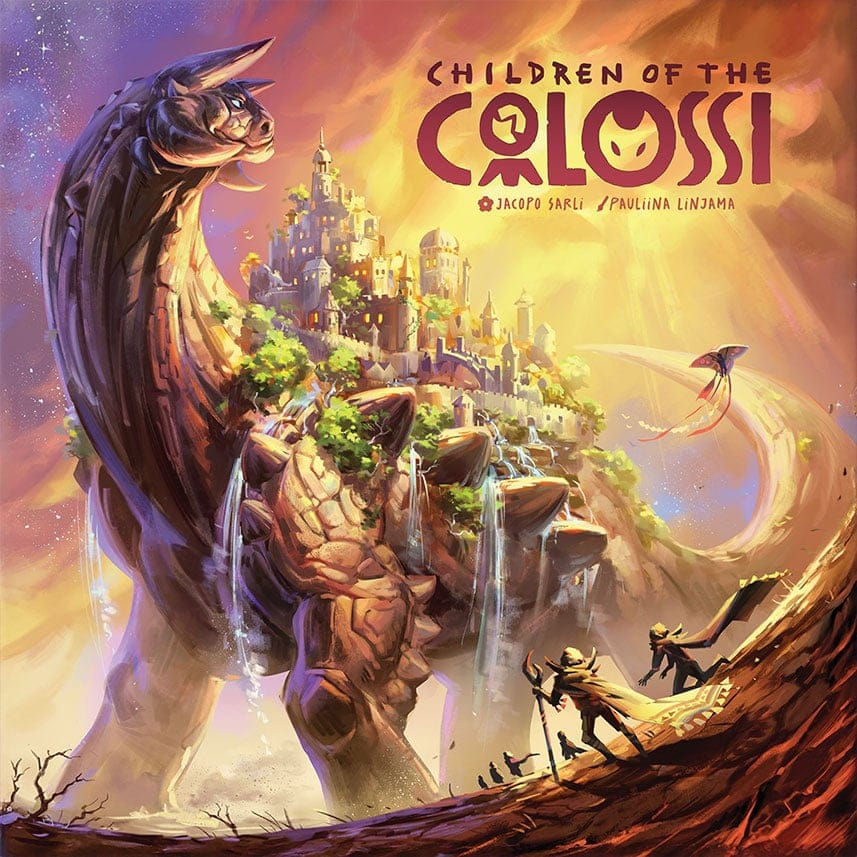
Der deutsche Verlag Giant Roc sammelt aktuell auf der Spieleschmiede für die deutsche Lokalisation von Children of the Colossi. Das Euro-Strategiespiel mit Dudes-on-a-Map-Elementen stammt vom italienischen Designer Jacopo Sarli und erschien international 2025 bei Cosmodrome Games. Die deutsche Ausgabe – auch unter dem Untertitel "Die Kolosse" angekündigt – ist über die Pledge-Stufe Mystor für 45 Euro vorbestellbar. Die Kampagne läuft noch 28 Tage.
Auf den Rücken der Kolosse: das Spielprinzip
Das Setting von Children of the Colossi ist eine postapokalyptische Welt, in der die Zivilisation zusammengebrochen ist. Die letzten Lebensräume der Menschheit liegen auf den Rücken gigantischer Kreaturen, den fünf Kolossen Orlyth, Bedelburg, Strovo, Romather und Mystor. Auf ihren Schultern wachsen Bäume, fließt Wasser und stehen prächtige Städte voller Wissen und Schätze. Doch der Zugang ist verwehrt – die Stämme der Überlebenden müssen sich ihren Platz erkämpfen.
Spielerisch verbindet Children of the Colossi mehrere bekannte Mechaniken zu einem ungewöhnlichen Konstrukt. Auf einer modular aufgebauten Karte konkurrieren zwei bis vier Spielerinnen und Spieler um Eier, die die Kolosse während ihrer Wanderungen ablegen. Aus diesen schlüpfen Neugeborene, deren Zähmung der Schlüssel zum Spielsieg ist. Die eigenen Einheiten gleiten zwischen Karte und Kolosskörpern hin und her – auf den Kolossen schalten sie über Tech-Tracks mächtige Aktionen frei, in der Wildnis darunter konkurrieren sie um die wertvollen Eier.
Pro Partie erscheinen nur drei der fünf Kolosse, was laut Verlag für hohe Wiederspielbarkeit sorgen soll. Konflikte zwischen den Stämmen werden nicht durch direkte Angriffe ausgetragen, sondern über Bannerkarten und cleveres Positionieren – ein bewusster Designentscheid, der das Euro-Profil des Spiels unterstreicht. BoardGameGeek führt das Spiel mit Mechaniken wie Area Majority/Influence, Worker Placement, Card Play Conflict Resolution und Modular Board. Eine Partie dauert 60 bis 120 Minuten, das empfohlene Mindestalter liegt bei 14 Jahren.
Designer Jacopo Sarli arbeitet bei Children of the Colossi mit den Illustratorinnen und Illustratoren Pauliina Linjama und Dann May zusammen. Die durchschnittliche Komplexität auf BGG liegt bei 2,5 von 5 – also im mittleren Bereich. Beste Spielerzahl laut Community-Empfehlungen: drei Personen.
Die Kampagne im Überblick
Die Spieleschmiede-Kampagne bietet zwei Pledge-Stufen. Mit Orlyth für 5 Euro unterstützen Backerinnen und Backer die deutsche Spieler-Community ohne Spielanspruch – eine reine Förderstufe. Wer das Spiel selbst möchte, greift zur Stufe Mystor für 45 Euro, die ein deutsches Exemplar von Children of the Colossi enthält. Als Add-on lässt sich für weitere 45 Euro ein Zusatzexemplar dazubestellen, etwa als Geschenk oder für die Spielegruppe.
Stretch Goals sind in der aktuellen Kampagne nicht ausgewiesen. Hinter Giant Roc steht ein deutscher Verlag mit Fokus auf Lokalisationen anspruchsvoller Strategiespiele – mehr Informationen finden sich auf der Verlagswebsite. Die englische Originalausgabe von Children of the Colossi auf BoardGameGeek wird derzeit von 165 Personen besessen und hat eine Wunschliste von knapp 400 Einträgen – ein solides Indiz für das internationale Interesse, an das Giant Roc mit der deutschen Ausgabe anknüpfen möchte.
Angekündigt: Neu: Updates: ANGEKÜNDIGT In der kommenden Woche im Crowdfunding: Wenige Projekte sind angekündigt. Hier der Überblick über die kommende Woche: Flockers Am 05. Mai wird auf Gamefound die Kampagne zu Blockers starten. Flockers ist ein taktisches Kartenspiel, in dem wir mit einer Schar Schneegänse möglichst schnell und weit nach Süden ziehen. Dabei müssen wir […]
Der finanziell angeschlagene Brettspielverlag CMON kündigt einen Strategiewechsel in Richtung Videospiele und Blockchain-Projekte an. Den Auftakt markiert eine Investition von 2,1 Millionen US-Dollar in den NFT-Spieleentwickler Blissful Link, hinter dem das Play-to-Earn-Spiel Capverse steht. Die Details des Deals hat CMON in einer Mitteilung an die Hongkonger Börse veröffentlicht.
Digitale Transformation als Überlebensstrategie
Laut der Mitteilung plant CMON, eigene Marken wie Massive Darkness und Super Fantasy Brawl Reborn in „hochwertige digitale Assets" zu überführen. Der Verlag begründet diesen Schritt mit der zunehmenden Verzahnung von analogen und digitalen Spielen sowie der Notwendigkeit, im Spielemarkt relevant zu bleiben und neue Einnahmequellen zu erschließen. Klassische Brettspiele sollen daneben weiterhin produziert werden, um eine „Bildschirmpause" und das direkte Spielerlebnis am Tisch zu bieten.
Die Investition sichert CMON einen Anteil von 2,2 Prozent an Blissful Link und bewertet das auf den Britischen Jungferninseln registrierte Unternehmen mit über 95 Millionen US-Dollar. Demgegenüber steht eine wirtschaftlich schwache Lage bei Blissful Link selbst: 2024 stand ein Verlust von rund 197.000 US-Dollar einem Umsatz von etwa 408.000 US-Dollar gegenüber, die Nettoverbindlichkeiten lagen bei rund 889.000 US-Dollar. Zahlen für 2025 hat CMON in der Mitteilung nicht offengelegt.
Capverse selbst ist ein blockchain-basiertes Online-Spiel, in dem Spieler NFT-Charaktere namens „Sumer" kaufen, um damit gegeneinander anzutreten. Vorstöße dieser Art sind im Brettspielsegment selten. Das Sammelkartenspiel SolForge Fusion erlaubt das Prägen von Decks als digitale Assets. Wonders of the First musste 2024 eine 1,4 Millionen Dollar schwere Kampagne von Kickstarter zurückziehen, weil die Plattform NFT-Inhalte verbietet.
Verluste, IP-Verkäufe und Crowdfunding-Comeback
Der Vorstoß in den Web3-Bereich fällt in eine wirtschaftlich turbulente Phase. CMON häufte 2024 und 2025 zusammen einen Verlust von rund 23 Millionen US-Dollar an, etwa das 5,5-Fache der Gewinne aus den neun Jahren davor. Ein unabhängiger Wirtschaftsprüfer äußerte zuletzt erhebliche Zweifel an der Fortführungsfähigkeit des Unternehmens.
Um die offenen Verbindlichkeiten von mehr als 14,3 Millionen US-Dollar aus acht noch nicht ausgelieferten Crowdfunding-Kampagnen zu bedienen, hat CMON in den vergangenen Monaten eine Reihe prominenter Marken verkauft. Zombicide ging an Asmodee, Blood Rage, Rising Sun und Ankh wechselten zu Tycoon Games, Cthulhu: Death May Die landete ebenfalls bei Asmodee. Die ehemaligen Mythic-Games-Titel Anastyr und Hel: The Last Saga gingen an Don't Panic Games.
Der CMON-Vorstand zeigt sich trotz der angespannten Lage zuversichtlich. Finanzielle Unterstützung einzelner Direktoren, der rund 2,4 Millionen US-Dollar schwere Verkaufserlös des Singapurer Büros sowie etwa 1,25 Millionen US-Dollar aus einer Aktienemission im Februar sollen die Liquidität sichern. Parallel will CMON noch in diesem Jahr seine im April 2025 ausgesetzten Crowdfunding-Aktivitäten wieder aufnehmen und die Investition in Blissful Link als Einstieg in eine breitere digitale Strategie nutzen.
The follow-up to the top ranked game on BoardGameGeek, Brass: Birmingham, was always like to attract significant attention for its crowdfunding campaign. For Roxley Games’ Brass: Pittsburgh, that interest converted into more than $9.1m, securing the biggest board game crowdfund of 2026 so far and one of the top ten tabletop gaming raises of all time. Roxley CEO Gavan Brown, who co-designed Pittsburgh alongside original Brass creator Martin Wallace, spoke to BoardGameWire about soaring past his expectations for the crowdfund, avoiding the ‘arms race’ of deluxe editions, the advantages of Gamefound over Kickstarter and overcoming the campaign’s biggest mis-step.
BoardGameWire:Congratulations on the crowdfund! It’s obviously been a massive success, in terms of raw numbers – are these the kind of levels you were anticipating prior to launch, for backer numbers and total funding, or were they above or below where you’ve ended up?
Roxley Games CEO Gavan Brown: I thought $4m was most likely. If the community and fans felt like we nailed the game, it was POSSIBLE (but highly unlikely) to hit as high as $8m. On the low end, if it funded below $2m I would have felt that we must have dropped the ball in some way, only because of how respected Birmingham is.
Roxley Games CEO and Brass: Pittsburgh co-designer Gavan Brown
I think there are plenty of people out there who would look at this campaign and say ‘well of course it performed well, it’s the sequel to the number one game on BGG’. Can you speak to the advantages you might have had going into making this game, in terms of it being a success – and also the ways in which you had to make sure you didn’t take crowdfunding success for granted?
I’ve said before that starting this project, it felt like we were making The Matrix 4. It’s going to be nearly 10 years between the two titles, so we can’t wait this long and just throw something together. Obviously, there is a cohort of fans who are going to back it regardless, because it’s Brass. On the other hand, Brass players enjoy playing a 3-4 hour economic simulation game about the industrial revolution, so needless to say, they are also some of the most savvy gamers in the hobby who would be absolutely uninterested in a cash grab. So I realized before we started that we would need to create a sequel that fires on all cylinders. Which luckily, that’s the always the objective of myself and Roxley.
How long has the development process been for this one, and what would you say were the major changes that you made as playtesting and development went on?
The research went on for years prior to me even beginning. I also kept a document where I would jot down ideas of new mechanisms and dynamics that I wanted the game to feature when they popped into my head. Heavy development for Pittsburgh started in November of 2024. I began working on it every single day of the week.
I am the type of designer who will gut an entire system if it’s not working how I want to. There is basically no level of redesign that I will refuse to undertake if I believe that the change will make the game better. There were many massive, large-scale redesigns of the system in Pittsburgh, but the largest one was fundamentally redesigning how oil was consumed.
Initially, oil was only consumed by the kerosene industry. But as time went by, we realized that this resource not being consumed by manufactured goods reduced the competition and interdependence between players, which I feel is a core defining principle of Brass. As I researched oil and its relationship with manufactured goods, I discovered that a massive amount of crude oil was also processed into lubricants used in the making of manufactured goods.
What was your professional take on the board game crowdfunding environment prior to launching – both for crowdfunding in general, and for higher-priced, deluxe games. Did you make any specific changes / have any particular strategies for the crowdfund based on your knowledge of the current environment?
The strategy of many publishers is to create deluxe editions of their games to increase average order value. They need to increase average order value because they need the product to cost enough to fuel the advertising needed to fuel the campaign. Roxley was one of the first companies to start leaning into deluxe editions of board games, simply because I (and our team) love the experience of playing games made from high-quality materials.
So to us, the Collector’s Edition represents the most pure vision of the game. While we do put immense care into the retail ‘Essentials’ version of our products, this is always done after we realize the pure vision of our Collectors Editions. To us, the Collectors Edition is the painting, and the retail is a print. Both can be beautiful, but the painting is made from different stuff.
So we win because we get to make our ideal version of the game, and it’s a win for the consumer because if we sold the Collectors Edition through retail distribution, it would need to cost over $200. Deluxe Editions across the hobby have become sort of an arms race, with endlessly scaling scope, physical size, number of boxes, vac trays, and plastic in the boxes.
Our strategy: we do not pay attention to any of this. In fact, we often do the opposite. We focus on making our games as physically small as possible to respect your shelf space. We also choose materials that feel innovative and fit the aesthetics of the game, rather than just adding more plastic miniatures (unless the creative direction or game design calls for them).
My motto regarding innovation in product and game design is: we aren’t trying to make the ‘next thing’, because someone is making that as we speak. Instead we are trying to make the ‘next next thing’. We spend a great deal of time studying manufacturing methods used outside of boardgaming. For example, yesterday I recorded a video of a nice velvet texture on the inside of a friend’s new Volvo, wondering how we could apply same texture on a vac tray.
This was your first campaign on Gamefound, after ten on Kickstarter across more than a decade. Why did you decide to switch for this campaign, and has it persuaded you to stick with Gamefound for your next one?
We do not have any allegiance to any crowdfunding platform. We see them a tool used to realize creative expression, and Roxley will always use the best tool for the job. But in recent years, Kickstarter has mostly remained the same while Gamefound has been silently innovating and refining its service.
So our decision to use Gamefound was based on them currently being the best tool for the job.
What did you find where the biggest advantages to using Gamefound as the campaign went on – and were there any aspects which you’d expected to be more beneficial than they were?
Here’s a few ways we Gamefound is currently leading over Kickstarter:
They have a built in pledgemanager
They invented pre-campaign updates, which was pivotal in precampaign hype
They allow a youtube link for the campaign video
Greater level of comment moderation
They allow mp4 videos embedded in the campaign page, which also support transparency (making them work better for dark mode), which are vastly more function
Responsive design is vastly superior to Kickstarter. When you have a Kickstarter page open on a full screen browser window, the imagery is a little 580px strip in the middle of the page. 2015 called and wants their boilerplate back.
Tools to help charge and remit sales taxes on behalf of the creators. Kickstarter simply washes their hands of this and says “It’s the creator’s problem”
Greater localization support: we can display every part of the campaign in multiple languages
They are highly responsive to the needs of their clients
What do you think was the most important thing you learned from running this campaign generally, in terms of preparing for future crowdfunds – and maybe for providing others with advice on running theirs?
Our biggest misstep was not communicating the total value of the Collector’s Edition on day one of the campaign. Every single component of the Collector’s Edition was intended to be upgraded by the end of the campaign. We wanted to ‘surprise’ everyone with these upgrades as the campaign progressed. But Brass already had a deluxe edition released previously, so while the final form of the Collectors Edition does represent immense value, the way it was initially presented did not adequately communicate this.
We corrected this by discarding the concept of stretch goals (Funding Quests), for this campaign, unveiling all of them in text form on day four, and then doing a spotlight on each one of these upgrades for each day of the campaign. This change immediately got us back on track.
My advice to other creators:
Do not be afraid of changing or redesigning your campaign.
Consider not using stretchgoals on a crowdfunding campaign for a sequel to a previous title, which likely carries preconceived consumer expectations with it.
I think one of the notable aspects of this campaign was the weekly drip-feeding of content updates and reveals from August through December last year, prior to the campaign launch. Is that a strategy you’ve employed before, what was the impact of doing things that way (in terms of e.g. backer numbers, online conversation etc), and would you make any changes to the way you approached it, in hindsight?
This is probably the best thing we did for the campaign. I don’t think any campaign had utilized prelaunch updates to the level that we had during this campaign. Usually, creators do updates talking about all the new cool components, materials, mechanics, and effort put into the game during and after the campaign. But during the campaign, you need to focus on very short concise messaging to try to get a conversion. After the campaign the customer is already getting the game, and it doesn’t help you sell more.
But talking about this before the campaign launches allows the players to form a bond with your game and your team before the campaign even launches. If they like what they hear and what they see, they will follow your campaign, which greatly increases hype, followers, and if your updates are interesting and from the heart, it will also increase sales.
There’s been discussion online from people upset at what they see as a high price level for this campaign – but then more than 37,000 people have backed it to the tune of over $9.1m. Can you speak a little to why you went the direction you did with this campaign – deluxe components, for example, rather than a more basic, more affordable production?
The Essentials Edition is priced at the exact same MSRP as we sell Brass Birmingham for in Target. It was also pointed out on BGG that after adjusting for inflation, Brass Pittsburgh: Essentials Edition is cheaper than the 2007 Treefrog Games Edition.
The Collectors Edition provides immense value, and as discussed would need to be priced at upwards of $200 if sold through retail distribution.
I hear retailers talk about margins all the time, and their need for reaching levels of about 50% for individual titles. Is the pricing of Pittsburgh going to provide any challenges on the retail side, do you think, or are you confident the numbers will work out for both Roxley and retailers of the game?
Target is regarded as having the most price-conscious demographic in the market. Brass Birmingham currently sells well in Target at $80. We don’t forsee this being any different for Pittsburgh.
How concerned are you about the impact of further US tariffs changes on producing and delivering Pittsburgh – and what kind of tariff hike could Roxley reasonably absorb before additional fees would have to be charged to backers?
The tariff situation has been evolving rapidly, and we’re keeping a close eye on it. For US backers, applicable tariffs are effectively a VAT. This is something international customers have always navigated, and now the US is in the same boat.
What were your expectations around endgame, and what impact has it ultimately had on the game and on the crowdfund for Roxley overall?
We have never done end game before, and I had never even heard of it until [Roxley director of operations Kira Peavley] said it was running for our campaign. The Gamefound folks reached out to us a few days prior to the campaign ending and suggested we create a little trinket that backers could add to their pledge in order to keep the timer going.
Because the campaign had done so well, we also decided to come up with an exclusive gift for everyone who backs copy Brass: Pittsburgh collectors edition on Gamefound. Because this gift was to be exclusive to Gamefound, it could not be gameplay related, as Roxley does not offer gameplay-related crowdfunding exclusives (we want people to be able to buy all game content after the campaign). So, we came up with the idea of doing an artfolio that would feature Brass’ artwork from Mr. Cuddington that they’ve created over the years. It will even feature a fabric cover, as you would see in a high-quality hardcover book.
When the campaign shifted to Endgame, the funding amount was $7,869,841, so it has generated over $1m in extra funding. As for how much impact it has had, that is up for debate: Some of our previous campaigns that have generated an additional 75% of additional funding while the pledge manager was open. But honestly, that doesn’t matter to us… we are very happy with the funding level we have reached, and it makes us happy to reward each of our backers with this extra item as a thank you to them.
Form Square Games has recently offered their next several games on Gamefound, one in their Limits of Glory Series called Jersey New Jersey and the 2nd game a stand-alone non-series game covering the French & Indian War called A Strong War. I think that these games are well timed with this year being the 250th Anniversary of the signing of the Declaration of Independence and I look forward to playing and exploring all of these games. I reached out to the designers of A Strong War named Mark and John Kwasny about an interview to give us a look inside the design and get more information and they were interested in answering our questions. One point about the game before we get into the interview, the title, A Strong War, refers to the type of war the Abenaki Nation threatened to unleash on the land-grabbing British in 1753. The sparks of war, ignited in 1754 near Fort Duquesne by an obscure colonel of Virginia militia, George Washington, spread quickly; soon, flames engulfed the entire globe as England and France vied for control of empire. Over the next 5 years, Regular regiments from the French and British armies, American and French-Canadian provincial units, and Native warriors all fought in a chaotic and violent series of campaigns and frontier raids that culminated in the British conquest of French Canada and the defeat of the Native Nations, most of which had sided with the French.
Grant: Mark & John welcome to our blog. First off please tell us a little about yourselves. What are your hobbies? What’s your day job?
Mark and John: First of all, thanks for inviting us to do this interview. We appreciate the interest in us and our game! I have watched many of your videos and learned a lot about different games that I have purchased or have considered buying.
We are both retired. John taught Middle School and High School history for 36 years and I taught American and Military history at the college level for 33 years. One hobby we share is playing wargames purely for fun! We have been wargaming since we first made our own game (60 odd years ago) out of a dozen decks of cards. John is an avid fisherman as well, we both read a lot, especially history, my wife and I do a lot of babysitting with our little grandchildren, and we share the unending quest for the perfect chocolate donut (we live 100’s of miles apart and whenever we can get together, we consume a generous amount of such donuts, trying different ones!).
Grant: What is your relationship to each other? How has this aided you in your design endeavor?
Mark and John: We are brothers and share similar historical interests in military history (he has an MA in Military History, and I have a PhD in Military History). But when it comes to wargames, we have vastly different views on what we like and what works for us in a game. That helped us try to incorporate different styles of play into the design. And John’s pro-French leanings and my pro-British sentiments helped us with the pursuit of play balance!
Grant: What motivated you to break into game design? What have you enjoyed most about the experience thus far?
Mark and John: About 15 years ago a person contacted us about making a game for a new game company he wanted to form. We chose the French and Indian War as the subject. Ultimately that fell through, but by then we had a game we really liked but it is a long game and thus was difficult to play a lot. We were both still working full time and had very limited gaming time. So we decided to boil it down to its essence – we wanted to make a game that gave the same feel for that war but was playable in a short time so we could actually play and complete it! (I don’t know about others, but the percentage of games I have played that I actually finished is not very high!) The key, we decided, was less resources and thus more tension for each decision. Our goal was simply to make a game we loved and could play together or with our other gaming friends. We already had all the research for the French and Indian War, so we took that earlier game and stripped it to its bones. We put ten years into this process of stripping it down: fewer rules, less units, to create more difficult decisions to use what little you have. The current version is the result of that decade of work.
Grant: What is your upcoming game A Strong War about?
Mark and John: As mentioned, it covers the French and Indian War, focusing on the fighting in North America between 1755 and 1760. The game takes a grand strategic approach with the players directing the entire war effort of the two sides through those six years.
Grant: What should the title convey about the French & Indian War?
Mark and John: Between the title, and the quote it comes from, it indicated a war to the end between British expansion, Native American defense of their lands, and French efforts to maintain control of French Canada. Either the French and their allied Native warriors would stop British expansion or they would lose everything. And therefore it was a strong war, no holds barred!
Grant: Why was this a subject that drew your interest?
Mark and John: Braddock’s Defeat has always been a subject of fascination for both of us. Childhood visits to Fort Michilimackinac, Old Fort Erie, Fort George, Presqu’ile, and other places around the eastern Great Lakes (we grew up in Cleveland and we traveled around the area back in the 1960’s), these sparked our imagination early on. The characters involved deepened this interest: Washington, Braddock, Pontiac, William Johnson, Montcalm, Langlade, St. Luc de la Corne, Robert Rogers. We have both read numerous books over the decades on the war and these people, and I studied it while in graduate school for my focus on 18th Century and American warfare.
The Wounding of General Braddock by Robert Griffing.
Grant: What is your design goal with the game?
Mark and John: History is important to us, even in a small quick game such as this one. We wanted a good feel for the war and the overall situation, and we wanted a game that sets up quickly, plays quickly, with rules that we believe can be learned relatively easily without lots of charts and details. Also important to us are the types of decisions a player makes. We want those decisions to feel reasonably plausible for that war. Too many games play like WWII no matter their actual subject. We also wanted to be true to the geography of that area of North America – deep, unending forests, rivers and lakes, paths through the woods, limited avenues of approach to the other side, the feel of the constraints imposed by the geography had to be present. And finally, we wanted to create a game that we enjoyed playing over and over and over!
Grant: What elements do you feel are most important to model in a game set in the French & Indian War?
Mark and John: We considered the key to the war were the limited movement opportunities and the limited resources available to both sides. We also wanted to show the contrast between the formal military campaigns of the regular armies, and the frontier style of raids and destruction by the partisan forces. The need to balance these two very different types of warfare and differing types of forces was key in our opinion.
Grant: What sources did you consult fur the historical details? What one must-read source would you recommend?
Mark and John: We would suggest two. First, we recommend Francis Parkman’s Montcalm and Wolfe, published in 1884. It has a wealth of information, including the use of sources no longer available. One has to be ready for the 19th century prose, of course, which can help give a true feel for how people saw each other back then but can be difficult to read here in the 21st century. The other book is Fred Anderson’s Crucible of War: The Seven Years’ War and the Fate of Empire in British North America, 1754-1766, published in 2001. It is a comprehensive study of the war.
[Editor’s Note: I own and have read Montcalm and Wolfe and very much enjoyed the overall vantage point it gave of the war and its inner workings. I also very much enjoyed the ending of the book, including a very dramatic and detailed depiction of the Battle of the Plains of Abraham and the fall of Quebec in 1759.]
Grant: What is the scale of the game? Force structure of units?
Mark and John: The game is deliberately very abstract but the forces available are modeled on the relative strengths of each side. There are yearly turns with multiple activations during each turn/year. It is a game about the Grand Strategy of the war. The focus is on the overall command of the entire theater and the allocation of your limited resources to achieve one of several possible goals. Thus, the force structure is based mostly on what we defined as five different types of combat forces available to the two sides.
Grant: What different units are available to each side? What special capabilities does each type bring to the battlefield?
Mark and John: The French player has French regular units, Canadian militia and Marine forces (referred to as Marines in the game), and frontier partisans representing Native warriors and the French Bush Rangers such as Charles Langlade. The British player has Colonial units and British regular units. Individually, each cube is equal to another cube, but the key is combining the proper types of units to maximize the bonuses in combat. For example, if a French Marine cube attacks a British Colonial cube, both sides roll a 4-sided die and high roll wins. But if the French player has a Partisan cube with the Marine, he gets a +2 bonus to his roll. Meanwhile, the British player gets similar bonuses for massing his regulars in combat. Regulars do not fight as well on the frontier, making the French Marines and Partisans even more effective out there. The most numerous forces are the British Colonial units who offer no bonuses but are present in many of the battles. Colonial units can also be used to recruit extra regular units.
Grant: What is used to represent the soldiers in the game? Why was this your preferred medium?
Mark and John: We use small wooden cubes. We like the feel and look of wooden cubes and the material feels appropriate for 18th Century warfare. Since there are so few units, wooden cubes seemed the most aesthetically pleasing and easiest way to handle the game’s needs.
Grant: How many soldier pieces does each side have? Why so few?
Mark and John: The French get three regular cubes, four Partisan cubes, and three Marine cubes, thus ten total. The British have nine Colonial cubes and four regular cubes, thus thirteen total. However, Colonial cubes can be converted into regular cubes at the risk of running out of Colonial cubes. We made it with as few units as possible so each decision on how to use each individual cube becomes critical and difficult. Overall, it gives the right feel of British army numerical superiority, the reliance of the French on their Canadian and partisan forces, and the important role of the British Colonials. Each cube is not meant to represent any specific number or specific units. It tries to represent the overall resources available to the commanders of each side.
Grant: What area of North America does the board cover?
Mark and John: The board covers from Alexandria in Virginia to Québec and the St. Lawrence River valley in Canada, and from Louisbourg and the east coast to Fort Duquesne (Pittsburgh) in the west. Thus, it covers the northeast corner of North America.
Grant: Why did you feel that point to point movement was the best choice for the design? What advantages does this give the game?
Mark and John: More and more, we like the simpler feel of point-to-point movement. We have played many hex games but as we get older and less able to manipulate stacks of units in small hexes, we find point-to-point movement physically easier to play. It was also easier to represent the difficult terrain between the two sides, and the very limited avenues available to get at each other. In effect, there are three main land routes (through Duquesne, through Oswego, and along Lake Champlain) as well as the naval option for the British. Using hexes or even areas for so few actual paths between the two sides would have created a lot of dead space. This approach fit with our goal of limited resources, limited avenues of attack, and thus tougher decisions.
Grant: What is unique about the combat system?
Mark and John: Players have very few units and thus have to use each one carefully. There are no real charts needed and though there is some luck, the players can mitigate it to a degree. This is perhaps one of the keys. You commit cubes one at a time in a battle and can call off an attack to save the remaining cubes for use later if the initial rounds of combat go badly. Perhaps the real unique aspect for us is the need to create combinations between which cubes you commit to a battle. And there are only so many combinations possible in a yearly turn, so you have to judge when to use the bigger combinations and when to cut and run. For example, the biggest combination for the French is a combined force of regulars, Marines, and Partisans. But in the first year, the French player has only one regular, so he can only use this super combo (as we always call it!) once in that year. Where does he want to commit this strong force? Does he prefer to defend a critical fort, or to raid the frontier to eliminate Colonial units, or to attack to secure control of a border location? These are the kinds of decisions we enjoy most in our combat system.
Grant: What type of strategy is needed with this focus?
Mark and John: A very careful use of the very limited resources. All games have that to an extent, but with so few units, players have to hoard their units and use them sparingly. You have to look at the whole year (one turn). You can only use each cube once a year. Committing your best forces early might gain an initial advantage but could then leave you with nothing to defend or attack with later in the year. Each battle, each combat round, and each activation has to be weighed carefully with what needs you might have against an unexpected disaster or opportunity later in the year.
Grant: How does the actual combat play out?
Mark and John: Perhaps an example is the best way to give a feel for combat. The British player declares an attack on a French fort at Oswego. He then commits three of his cubes (the maximum you can ever commit to one combat) to make the attack (two British regulars and one Colonial cube). Now the French player has to decide whether he wants to use precious resources to defend Oswego. It is not a home location, but it is next to two vital home locations, Fort Niagara and Fort Frontenac. He decides to defend with the maximum of three cubes as well (one regular, one Marine, and one Partisan). Round 1, the British player has to decide which cube to commit to the battle. He chooses one of his regulars. He could lead with the Colonial and save his regulars in case it goes badly early but leads with his power! The French player then decides which of his cubes to commit first and he starts with his Marines. Now both players roll the 4-sided die and the number rolled is the Strength gained from that cube for this combat. So if both players rolled a 3, then it is 3 to 3 after the first round. That is a tie and therefore if the combat is ended there, the defender wins ties. Instead, the British player commits his second regular and the French player decides to commit his Partisan. Both players again roll a die to determine what Strength they get for these newly committed cubes. In addition, the British player gets a +2 bonus to this roll because he has committed a second British regular. The French player gets +2 to his roll because he has two different types of cubes in this combat. The British player rolls 2 and adds his bonus to get a total of 4 Strength for this second committed cube. The French player rolls a 4 and adds his bonus to get a total of 6 Strength for this second committed cube. After two rounds, the British player has a total Strength of 7 and the French player has a total Strength of 9. If the combat ends now, the French player has a greater total Strength and would thus win. Still, the British player might at this point choose to call off the attack because he will not get any bonus for his remaining Colonial cube whereas the French player will get another bonus when he adds the regulars to the fight. The British player accepts defeat, saves the Colonial cube for use later in the year, the French player saves his regular cube, and the combat is ended.
Grant: Why did you choose to use a 4-sided die for combat?
Mark and John: We wanted to have some randomness in combat so that it was not just a math game. But we wanted to avoid wild swings of results between high and low rolls. We experimented with 6-sided dice, 4-sided dice, 3-sided dice, and 2-sided dice. Ultimately after hundreds (literally) of games, we determined for us the 2- and 3-sided dice did not offer enough randomness and combat was almost reduced to mathematics. The 6-sided dice provided too wide a variance of results. A difference between a roll of six and a roll of one overshadowed any strategy or skill in using the combinations and bonuses. Thus, we settled on a die that I personally hate, the 4-sided die (the triangular shape is hard to pick up!), because it gave us the best feel for some randomness but still allowed players’ skill and strategy to have a large impact on the results as well. Form Square Games has brilliantly come up with a way to generate a result of 1 to 4 using an 8-sided die, and that resolves my hatred of our chosen dice!
Grant: I see that each player has several paths to victory. What does this look like?
Mark and John: The multiple paths to victory offer the players strategic choices during the game and between different games. But these paths are not always compatible with each other, and thus players have to choose which to pursue and if/when perhaps to switch to another approach. The British player has two main options, either go for points gained by capturing enough French home forts to win without having to conquer all of Canada, or if his losses on the frontier become too heavy or the French gain too many points in the border locations, he has the option to switch to an all-or-nothing conquest of Canada and ignore points. The French player can also win on points early on by attacking border locations, but he can instead choose to focus more on frontier raiding to eliminate Colonials and win through the destruction of the Colonial military. It is difficult, however, for the French player to do both. Thus, the competing needs of the different paths to victory create tension for each player when determining his strategy year by year and over the course of the entire war.
Grant: What type of an experience does the game create?
Mark and John: We wanted an experience that becomes so nerve-wracking that you might just forget to drink your newly opened beer. John did this in one of our test games and it became our litmus test for how good the game was or was not. He opened a beer, we sat down to play, it was one of the better nail-biting contests, and when it was over, he declared he needed another beer. He picked up the open bottle and it was still full! He had become so immersed in the game that he had completely forgotten about his beer. That is the kind of experience we hope people get by being drawn into the excitement of a tense, quick playing game of nerves.
Grant: What are you most pleased about with the design?
Mark and John: First, we set out to create a game we enjoyed playing. Once we had done that, our next goal was for somebody else to play it and enjoy it. When Form Square Games expressed interest and said they had had others play it and respond favorably, we were ecstatic. Having them publish our game is the ultimate goal we had pursued for years. For the game itself, as mentioned above, we wanted a game that is quick to setup and play (a typical game lasts an hour or so and can be set up for a rematch in a couple minutes), and that creates tension and tough but meaningful decisions. We have played this game to completion more than any other game we have played, and still look forward to playing it again!
Grant: What other designs are you working on?
Mark and John: We have tinkered with the idea of using this system to create a game covering the American Revolutionary War. We think it would work pretty well but we have not gone very far with that. We have also designed and played a game on the Battle of Ligny in 1815, which we enjoy but it is not fully finished or tested either. We want to represent aspects of tactical combat that we have not seen in other games and have had some good results. But ultimately, these two were designed again for our own enjoyment and we have not put in the serious work yet required to transform them into publishable games.
Angekündigt: Neu: Updates: ANGEKÜNDIGT In der kommenden Woche im Crowdfunding: Wenige Projekte sind angekündigt. Hier der Überblick über die kommende Woche: Hitman: The Board Game Dieses Spiel für 1 bis 4 Personen setzt auf Konkurrenz, Taktik und ein bekanntes Videospielthema. Als Auftragskiller reisen wir um die Welt, dringen in verschiedene Orte ein und versuchen, hochrangige […]
Isaac Childres, the founder of Cephalofair Games and designer of its runaway successes Gloomhaven and Frosthaven, is stepping down from his role as CEO to focus exclusively on game design at the company.
Cephalofair’s long-time chief operating officer Price Johnson has been promoted to CEO at the publisher, while industry veteran Julie Ahern has been hired from Van Ryder Games as its new COO.
Childres founded Cephalofair in 2014 to self-publish his first game, Forge War, and struck huge success with his follow-up design, fantasy co-op campaign design Gloomhaven, which raised about $4m for its second printing on Kickstarter in 2017.
Three years later the company broke the Kickstarter funding record for a tabletop game with Childres’ successor design Frosthaven, which pulled in almost $13m from more than 83,000 backers.
Standees from Frosthaven
Childres has led the company since inception, seeing it growing from a one-person operation to overseeing a team handling design, development, writing, art direction, promotion, publishing and fulfillment.
New CEO Johnson, who joined Cephalofair in a business development role in 2017, oversaw strategic initiatives such as mass market placement of Jaws of the Lion, as well as managing marketing and production of Frosthaven as the heavily-delayed project navigated the huge disruption caused by the Covid-19 pandemic.
He has also been a high-profile voice in campaigning against US tariffs imposed by President Donald Trump over the last year, and aiming to highlight the heavy financial burden it has placed on tabletop game publishers – many of which rely on Chinese manufacturing for their titles.
Johnson will continuing to oversee strategic initiatives, business development, sales and marketing, and catalogue growth at the company following his promotion to CEO.
He said, “Working with Isaac since the early release days of Gloomhaven to grow both Cephalofair and our community has been an absolute privilege and highlight of my career.
“We have come a long way since the early days of indie game design and crowdfunding, while learning a lot about ourselves and this industry in the process.
“I can’t wait to share the exciting plans we have creatively and organizationally in this next chapter with our fans, but that starts by putting in the hard work alongside our amazing team, whom I thank for their trust and support.
“With confidence, there is no place I’d rather be… epic strategy awaits!”
A statement from Cephalofair said Childres would now focus solely on his role as lead game designer at the publisher, overseeing design and development on its entire line of games.
Julie Ahern, who replaces Johnson as COO, most recently spent almost four years as senior director of operations at Van Ryder Games, which is best known for solo horror game series Final Girl and murder mystery title Detective: City of Angels.
Titles from the Final Girl range, from Van Ryder Games
She previously spent almost 12 years at Greenbriar Games as COO and vice president, overseeing day-to-day of business operations and game development while contributing to the Folklore: The Afflication and Zpocalypse product lines.
Childres said, “Julie is my absolute favorite person in the board game industry (sorry Price!), and I could not be happier to welcome her to the team.
“I think she is the perfect fit for a needed role in this transition that allows me to focus on my core passion: designing epic, strategic games. Thanks Julie!”
Johnson added, “Growing as an organization means surrounding ourselves with professionals who not only compliment our core strengths, but exceed many of our own.
“Julie Ahern is one of those professionals I’ve long admired as a leader, innovator, and tabletop enthusiast. From coffees at conventions to shared manufacturing trips in China, I’m thrilled to finally have the opportunity to work directly alongside her as Cephalofair enters its next chapter.”
Ahern said, ““I have known and respected Isaac and Price for many years. While I loved my time at Van Ryder Games, it is a genuine pleasure to start this new adventure.
“I am thrilled to delve into the Gloomhaven universe with all its deep lore and challenging campaigns.”
Cephalofair’s most recent crowdfund saw it raise more than $5m on BackerKit for Gloomhaven Grand Festival – one of the highest-profile campaigns on the crowdfunding site to date – which included a second printing of Frosthaven, second edition of Gloomhaven and several other designs such as small-box release Gloomhaven: Buttons and Bugs.
That campaign has suffered heavy delays compared to its original timeline, however, due to both production delays and the volatility caused by US tariff policy.
The new edition of Gloomhaven, for example, only began fulfilling in May last year, despite initial estimates that it would begin fulfillment in March of 2024.
Cephalofair is currently on Wave 4 of production for the project, working on the Gloomhaven RPG, which it originally estimated would be fulfilled in July 2024.
Financially-troubled board game publisher CMON is pinning its future on a push into video game development and blockchain-based projects, beginning with a $2.1m investment in NFT game maker Blissful Link.
CMON’s board said it planned to transition its titles such as Massive Darkness and Super Fantasy Brawl Reborn into “high-quality digital assets”, adding that it believed integrating its board games with digital and Web3 technologies “would enhance the long-term commercial value of the group’s portfolio”.
The company has kicked off that shift by agreeing to acquire a 2.2% stake in Blissful Link, which operates Capverse, a play-to-earn video game built on blockchain technology in which players buy NFT ‘Sumer’ characters to battle with online.
CMON’s investment values British Virgin Islands-incorporated Blissful Link at more than $95m. Blissful Link made a loss of about $197,000 in 2024, on revenues of just over $408,000, and had net liabilities of about $889,000, according to unaudited figures provided by CMON. It did not include finances for 2025.
A statement from CMON’s board supplied to the Hong Kong stock exchange, where the board game publisher is listed, said, “Over the years, traditional board and other table top games have merged with digital ones providing digital convenience, offering online multiplayers, automated rules and apps that enhance physical play.
“The company believes that in order to continue to be relevant in the games industry and to expand the group’s revenue stream, the group would need to conduct digital transitioning and venture into video game development and Web3 projects.
“Digital transitioning would have the benefits of enhanced visual effects, have apps that handle scoring, timing etc, would enable a diversified number of players and are more accommodating to players not within the same vicinity.
“Added to this, entering into Web3 projects often emphasise social responsibility and ethical practices such as transparency and fairness on decision marking. By participating in Web3 projects, the company can demonstrate its commitment to social responsibility and sustainability.
“However, the group would continue to supplement this digital transformation as physical games would still offer a ‘screen break’ for individuals as well as foster direct face to face interaction.”
Non-fungible tokens, or NFTs, are digital assets which represent specific items – such as an illustration, trading card or piece of music – each with an individual signature stored via blockchain technology, which includes information such as who created it, who owns it, who sold it and for how much.
Two years ago CCG project Wonders of the First had to pull a $1.4m campaign from Kickstarter after falling foul of the crowdfunding platform’s ban on NFTs. The game went on to raise about $1.2m after relaunching without NFT content.
CMON, a long-time heavyweight in board game crowdfunding thanks to games such as Zombicide, Blood Rage and Cthulhu: Death May Die, slumped to a loss of more than $3m in 2024 due to falling sales for its crowdfunding campaigns.
CMON’s $23m losses across 2024 and 2025 are now almost 5.5-times larger than its profits from the preceding nine years combined, and have pressed the company into a string of asset sales as it attempts to fulfill more than $14.3m of as-yet-undelivered crowdfunding campaigns.
Those IP sales included parting with its most famous and profitable title Zombicide – which has raised more than $40m on Kickstarter since its 2012 launch – to Asmodee, as well as Blood Rage, Rising Sun and Ankh to Tycoon Games.
Last month an independent auditor hired by the company questioned whether it CMON had the resources to stay in business for the foreseeable future, saying the publisher’s $19.9m annual loss, its net liabilities of more than $3.5m and contract liabilities of over $7.5m “indicate a material uncertainty which may cast significant doubt about the group’s ability to continue as a going concern.”
CMON’s directors had a different view, however, saying in the company’s 2025 financial report that it “should be able to continue as a going concern” thanks to a trio of factors.
They include financial support from some of the directors “sufficient to finance CMON’s working capital requirements”, the roughly $2.4m proceeds from selling its Singapore office that it received in January, and about $1.25m of gross proceeds from a successful share sale in February.
CMON’s hefty liabilities are largely due to its eight undelivered crowdfunding campaigns, which are not recognised as revenue on the company’s books until they are fulfilled to backers.
Auf der aktuellen Hotness-Liste von BoardGameGeek steht ein Spiel ganz oben, das noch gar nicht erschienen ist. Dungeon Crawler Carl: Unstoppable von Renegade Game Studios hat Rang eins übernommen und verweist Titel wie Arcs, Ark Nova oder Brass: Birmingham auf weit hintere Plätze. Die Hotness misst dabei keine Qualität, sondern dynamische Aufmerksamkeit: Forenposts, Seitenaufrufe, Kommentare, Videos und Bilder aus den letzten Tagen. Wer dort oben landet, hat gerade Gesprächsstoff geliefert.
Was hinter dem Spiel steckt
Der Titel ist ein koop-fähiger Deckbuilder für ein oder zwei Personen und basiert auf dem Unstoppable-System von John D. Clair. Dessen namensgebender Grundtitel aus dem Jahr 2025 hält aktuell selbst Platz vier der BGG-Hotness. Du kämpfst dich durch die ersten drei Etagen des sogenannten World Dungeon, trittst gegen Bosse aus Nachbarschaft, Bezirk und Stadt an und baust dein Deck Schritt für Schritt aus. Zentrales Element ist das Card-Crafting, mit dem du Fähigkeiten und Ausrüstung aufwertest – jede Verbesserung stärkt allerdings auch den Boss mit.
Das Artwork liefert Luciano Fleitas, der bereits die Buchvorlage illustriert und damit einen visuellen Brückenkopf zur bestehenden Fanbase schlägt. Auf BoardGameGeek steht der Titel bei 602 Personen auf der Wunschliste, der Bewertungsdurchschnitt liegt bei 8,11 von 10 aus bislang neun Wertungen. Das Grundspiel bietet vier Schwierigkeitsgrade, verschiedene spielbare Crawler und zufällig kombinierte Bosse. Zwei Erweiterungen sind angekündigt: Crawler Chaos mit Charakteren wie Katia, Imani, Prepotente und Archie sowie The Iron Tangle, das die vierte Dungeon-Etage abbildet.
Coverartwork zu Dungeon Crawler Carl: Unstoppable – Illustration von Luciano Fleitas (Quelle: BoardGameGeek).
Die Buchreihe als Fundament
Ohne die literarische Vorlage wären weder die Kampagne noch die aktuelle Hotness-Platzierung denkbar. Dungeon Crawler Carl ist eine LitRPG-Reihe von Matt Dinniman, 2020 zunächst auf Royal Road und bei Amazon selbst veröffentlicht und 2024 von Ace Books (Penguin Random House) übernommen. Bis Dezember 2025 verkaufte sich die Serie über sechs Millionen Mal und erreichte wiederholt die Bestsellerlisten der New York Times. Erzählt wird die Geschichte eines Coast-Guard-Veteranen und der Katze seiner Ex-Freundin, die nach einer Alien-Invasion in einer intergalaktischen Dungeon-Gameshow um ihr Leben kämpfen.
Rund um die Bücher ist in kurzer Zeit ein ganzes Medienuniversum entstanden. Seit Juli 2025 läuft eine Webtoon-Adaption, Vault Comics bringt eine Graphic Novel namens Dungeon Crawler Carl: Crocodile, eine TV-Umsetzung ist angekündigt. Die Hörbücher von Jeff Hays' Soundbooth Theater haben laut Dinniman die Print- und E-Book-Verkäufe überholt. Für das Spiel bedeutet das eine Ausgangslage, die im Brettspielmarkt selten ist: eine Lizenz, deren Bekanntheit schon vor der Veröffentlichung eine hohe Grundlast an Aufmerksamkeit garantiert.
Warum der Titel gerade ganz oben steht
Die wichtigste Erklärung liefert der laufende Crowdfunding-Start. Am 14. April 2026 startete Renegade auf BackerKit eine gemeinsame Kampagne für das Kartenspiel und das offizielle Dungeon Crawler Carl Rollenspiel. Das Finanzierungsziel von 250.000 US-Dollar fiel nach weniger als einer Minute, nach 24 Stunden standen rund 4,5 Millionen Dollar auf dem Zähler. Wenige Tage später überschritt die Kampagne die Sechs-Millionen-Dollar-Marke bei über 25.000 Unterstützern, laut Renegade die bestfinanzierte Spielekampagne in der Geschichte von BackerKit.
Hinzu kommen strukturelle Faktoren, die das Ausmaß plausibel machen. Die Buchreihe bringt eine eingeschworene Fangemeinde mit, die in den vergangenen Jahren praktisch nichts Physisches zum Anfassen hatte und jetzt gleich zwei Produkte parallel bekommt. Das Unstoppable-System ist im Brettspielmarkt etabliert und hat eine eigene Sammlerschaft, die ohnehin auf neue Titel dieser Baureihe wartet. Die Kombi-Kampagne mit dem Rollenspiel erzeugt Cross-Traffic: Wer wegen der Bücher kommt, entdeckt das Kartenspiel, wer wegen Clair kommt, stolpert über die Lizenz.
Auch die Hotness-Mechanik selbst spielt dem Titel zu. Jedes Kampagnen-Update, jedes Stretch-Goal, jede Diskussion über Pledge-Stufen oder Exklusivinhalte schlägt sich in Forenposts, Kommentaren und Seitenaufrufen nieder. Mit rund 65.000 Followern auf der Vorab-Seite war die Kampagne schon vor dem Start eines der sichtbarsten Tabletop-Projekte des Jahres. In Kombination mit der hohen Anzahl aktiver Backer reicht das, um den Titel an Schwergewichten mit Jahrzehnten an BGG-Historie vorbeizuziehen.
Ob sich der aktuelle Platz halten lässt, ist offen. BGG-Hotness ist volatil und reagiert stark auf Ereignisse wie SPIEL in Essen, Gen Con oder Kampagnenenden. Wahrscheinlich ist ein Rückgang nach Kampagnenschluss am 15. Mai 2026, gefolgt von einer zweiten Welle rund um Auslieferung und Retail-Start, die laut Renegade noch für dieses Jahr geplant sind. Bis dahin bleibt Dungeon Crawler Carl: Unstoppable ein Lehrstück darüber, wie stark externe Medienreichweite inzwischen auf das Brettspiel-Ökosystem durchschlägt.
Spieldaten auf einen Blick: Spieleranzahl 1–2, solo oder koop, Designer John D. Clair, Illustration Luciano Fleitas, Verlag Renegade Game Studios, Komplexität 2,0 / 5, BGG-Schnitt 8,11 / 10, Release 2026. Alle Angaben und weitere Infos auf der BoardGameGeek-Seite zum Spiel.